Marijuana Use at the High Place of Tel Arad, Israel: The problem with legalizing communication with inter-dimensional entities

I promised more context for why I hate the legalization of marijuana so much, and in the case of mass society, intoxicants.  It’s not enough to say that drugs should be illegal; people need to understand why.  And for me, it’s a battle of consciousness and who controls your thoughts.  How can people, for instance, fight for small government and the benefits of an intelligent republic, but then surrender all thought through intoxication over to other forces that invade your personal sovereignty, and the most important at that, our minds and the thoughts that those minds produce?  When smoke filled the air of an inner sanctum, it was never accidental. It was engineered. In the eighth century BCE, at the Judahite fortress shrine of Tel Arad, roughly thirty-five miles south of Jerusalem, two limestone altars stood before the threshold of the “holy of holies.” Laboratory analysis of the charred residue on those altars has now told us plainly what ancient worshipers were inhaling: on one, frankincense blended with animal fat to volatilize its perfume at higher temperatures; on the other, cannabis mixed with animal dung to slow‑burn at lower temperatures, releasing a psychoactive aerosol sufficient to induce altered states. The compounds identified—THC, CBD, CBN, terpenes, and terpenoids—leave no doubt that the cannabis inflorescences were burned not for fragrance but for ecstasy.¹ ² ³ ⁴ 1234

That is the kind of hard, physical evidence that strips away modern euphemisms. At Tel Arad, cannabis was a ritual technology. It was the apparatus by which priests or officiants crossed the threshold from sober perception to trance, much as frankincense, sourced via Arabian trade routes, made the sanctum smell like heaven even as cannabis smoke tuned human minds to hear it.¹ ³ ⁵ 135 The shrine’s use window, ca. 760–715 BCE, places it squarely in Judah’s political and religious turbulence, between the First Temple’s glory and the Assyrian pressure, when competing cults and high places dotted the land. The Arad altars stood not in a marginal folk‑site but in a fortress on the southern frontier—a liminal place in geography and consciousness.² ⁵ 25
The broader archaeology of Canaan corroborates that mind-altering substances were embedded in ritual. In the Late Bronze Age cemetery at Tel Yehud, archaeologists recovered imported Base‑Ring jugs shaped like poppy heads whose residues test positive for opium—likely associated with funerary rites and the cult of the dead, whether to raise spirits or ease the passage.⁶ 6 Across the Near East, ecstasy was not a fringe practice; it was a cultivated technique. Tel Arad’s twin altars memorialize that technique at the threshold of the inner sanctum, where incense regulated the smell and cannabis regulated the state of mind.¹ ³ 14

From that ancient record, one conclusion emerges that remains relevant today: cannabis was used to override sober cognition in a sacred framework. It did not sharpen judgment; it sought communion—voices, visions, feedback from a realm beyond ordinary waking life. Whether you interpret those experiences as genuine encounters with non-human intelligences or as products of hyper-stimulated neural circuitry, the public‑policy implication is the same. Normalizing marijuana enshrines altered consciousness as a cultural good. The more potent the product and the wider the adoption, the more a society tunes its public square toward ritualized disinhibition.

You can see the continuity of this logic in India’s long bhang tradition. Bhang, a paste made from cannabis leaves, has been woven into festivals like Holi and Maha Shivaratri for centuries, with references in Vedic literature and Ayurvedic lore and with colonial observers documenting its ubiquity.⁷ ⁸ ⁹ ¹⁰ 78910 Contemporary estimates run in the millions of annual consumers around major festivals, placing cannabis within a sacred calendar rather than on the margins of culture.⁸ 8 In visual culture, the art that issues from such states is strikingly consistent across continents: charged neon geometrics, entity‑forms, fractal mandalas—repertoire that echoes shamanic cosmologies from Siberia to Amazonia and now saturates modern psychedelic aesthetics. The continuity of motifs suggests a continuity of effect: the same kinds of altered states produce the same types of visions.

But where ancient priests burned cannabis to induce ecstasy within a small, controlled ritual community, modern legalization scales that effect to whole populations. That is where archeology’s lesson collides with public health. If cannabis is a portal, the portal’s throughput matters. Epidemiology repeatedly associates heavier or earlier cannabis use with increased risk of psychotic outcomes, observing dose‑response effects: meta‑analysis finds the heaviest users have odds ratios near 3.9 for schizophrenia or related psychoses compared with non‑users.¹¹ 11 A 2025 synthesis applying Hill’s criteria argues there is a high likelihood cannabis contributes to schizophrenia development overall, with a pooled OR ≈ 2.88 and roughly two‑fold greater risk for adolescent users.¹⁴ 12 More granular clinical work shows that in diagnosed schizophrenia, cannabis use is tied to increased positive symptoms (hallucinations, delusions) and higher excitement, even as negative symptom patterns can vary; no causality is claimed, but the association is robust.¹³ 13 And among people with schizophrenia, cannabis use is significantly associated with some suicide‑related outcomes, including elevated odds of attempted suicide and increased hazards for suicide death.¹⁵ 14

Jurisdiction-level studies add a societal lens. After U.S. recreational legalization (2009–2019), modeling shows +5.8% injury crash rates and +4.1% fatal crash rates in the aggregate, controlling for factors like unemployment, speed limits, seat‑belt use, rural miles, and alcohol trends—effects vary by state, but the direction is worrisome.¹⁶ ¹⁷ 1516 Systematic reviews converge on negative road‑safety impacts in most studies, and national surveys now find 4–6% of drivers self‑report driving within an hour of cannabis use, with risk perceptions conspicuously more lenient than for alcohol.¹⁸ ¹⁹ 1718 None of this proves that every consumer will suffer harm; it demonstrates that scaled access increases measurable externalities—most acutely among young men, high‑potency users, and those who combine cannabis with alcohol.¹² ¹⁸ 1917

So why invoke Tel Arad in a twenty-first-century legalization debate? Because it reveals what cannabis was for in a culture that canonized sacred space: it was for ecstasy, for crossing boundaries, for letting something else participate in one’s thinking. If you grant the metaphysical possibility that those “somethings” are genuine non-human intelligences, then mass legalization looks like opening a wide conduit into a population’s decision-making machinery. If you deny that and call the entities neural artifacts, the conclusion hardly changes: repeated entry into states that mimic external agency undermines habituated sovereignty and clarity—what a civilization requires for law, craft, and self-government.

There is also a moral claim at stake. Cultures thrive on lucidity—on earned competence and honest accountability. We do not need to romanticize intoxication because it looks antiquarian. Tel Arad was not quaint. It was precise. One altar perfumed the sanctum; the other hijacked cognition. Judah’s priests were innovating in ritual engineering, not engaging in harmless herbalism. The residue composition—the dung matrix, the cannabinoid profile, the deliberate temperature control—shows purposeful design to modulate consciousness.¹ ² ³ 123 That is the legacy modern marijuana culture inherits: techniques to create porosity. Legalization, commercialization, and age-neutral marketing scale porosity to a level ancient officiants never imagined, and the data on psychosis and road safety tell us the cost.

For these reasons, I reject marijuana as a cultural good. The Tel Arad shrine is a fossilized warning: cannabis has been a conduit into ecstasy in high places for a very long time, and cultures that survive do not hand their sovereignty to smoke. The way forward is not to sacralize intoxication, but to honor clarity—frankincense is fragrant; cannabis is psychoactive. The former perfumes a room; the latter reprograms it. Tel Arad did both. We should do neither.

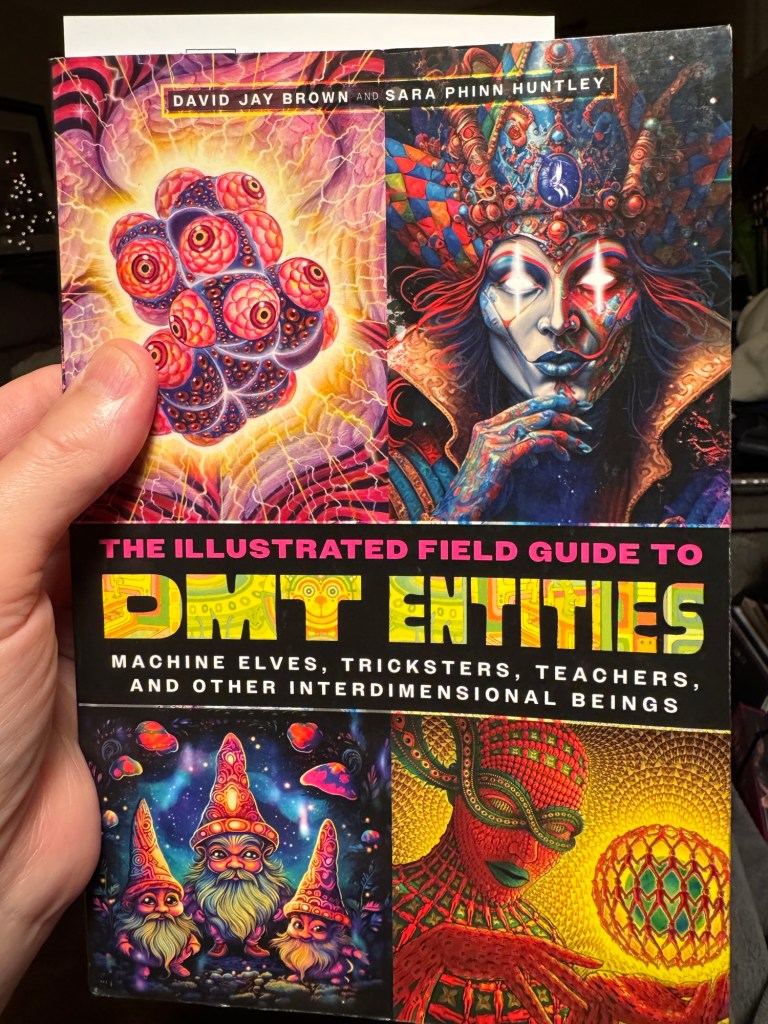
David Jay Brown and Sara Phinn Huntley’s The Illustrated Field Guide to DMT Entities: Machine Elves, Tricksters, Teachers, and Other Interdimensional Beings (2025) brings this conversation into sharp modern focus. Structured like a naturalist’s handbook for hyperspace, the book catalogs 25 distinct entity types encountered in DMT and ayahuasca experiences—from self-transforming machine elves and mantis insectoids to reptilians, gray aliens, fairies, nature spirits, and divine forms like Grandmother Ayahuasca and the Virgin Mary. Each chapter includes encounter narratives from trip reports and scientific studies, rich descriptions of behavior, appearance, and the messages or teachings they impart, accompanied by visionary artwork from artists such as Alex Grey and Sara Phinn Huntley herself 12. The field guide poses a profound question: Are these beings mere constructs of the human psyche, or are they independent intelligences inhabiting other dimensions? That question lies at the heart of every cross-cultural psychedelic tradition, from Tel Arad’s cannabis altars to global shamanic rites.

The guide has not only attracted readers interested in visionary art or entheogens but has also gained credibility through endorsements from figures like Graham Hancock and through guest appearances by Brown and Huntley on platforms like the “Rebel Spirit Radio” podcast 3. Meanwhile, mainstream voices like Joe Rogan regularly revisit “DMT astronauts”—individuals who deliberately seek these entities for spiritual insight or practical guidance—and discuss whether contemporary governments and institutions might align with such interdimensional “high priests” to influence mass consciousness 45. This book is a frontier consideration into a new science of analysis and reinforces the core argument: humanity’s engagement with psychoactive smoke—from ancient altars to modern DMT breakthroughs—is not benign. It is a politics of consciousness intervention, where the line between personal sovereignty and external mental imposition is perilously blurred.  And it’s very dangerous, and should under no rational endeavor, should ever be legalized in a serious society.

Footnotes

1. Arie, Rosen, Namdar (2020), GC‑MS identification of THC/CBD/CBN; animal dung/fat matrices; dating and functional interpretation. 1

2. Science News coverage of the shrine context, the cannabis–dung mixture, and THC levels consistent with altered states. 2

3. Taylor & Francis newsroom summary highlighting frankincense chemistry (boswellic acids) and deliberate psychoactive use of cannabis. 3

4. Times of Israel report: cannabis “to stimulate ecstasy” and implications for Temple ritual analogs. 4

5. Sci. News overview of shrine chronology, fortress border function, and compositional findings. 5

6. Biblical Archaeology Society: Tel Yehud opium residues in Base‑Ring jugs; cult‑of‑the‑dead context. 6

7. Wikipedia (summary with sources) on bhang as an edible cannabis preparation and festival use. 7

8. Firstpost explainer on Holi and bhang’s historical embedding; contemporary practice estimates. 8

9. IndiaTimes feature with Vedic/Ayurvedic references and colonial documentation of bhang. 9

10. SAGE review on the historical context and research state of cannabis use in India. 10

11. Marconi et al. (2016) meta-analysis: dose‑response; OR≈3.9 for heaviest use vs. non-use. 11

12. JAMA Network Open invited commentary (2025) summarizing evidence and Ontario cohort demographics; rising PARF after medical legalization. 19

13. eClinicalMedicine IPD meta-analysis (2023) associating cannabis use with higher positive and excitement dimensions in schizophrenia. 13

14. Biomolecules (2025) systematic review applying Hill’s criteria; overall OR≈2.88; doubled adolescent risk. 12

15. Psychological Medicine (2025) meta-analysis: cannabis use in schizophrenia linked to attempted suicide and suicide death hazards. 14

16. Journal of Studies on Alcohol and Drugs (2022): legalization associated with +5.8% injury crashes and +4.1% fatal crashes in aggregate. 15

17. IIHS bibliography summary of the same study’s methodology and state heterogeneity. 16

18. MDPI systematic review (2023) concluding negative impacts of legalization on road safety in most studies; risk profiles. 17

19. AAA Foundation (2024) fact sheet on DUI‑C prevalence (~4–6%), risk perceptions, and sex differences. 18

Bibliography

Arie, E.; Rosen, B.; Namdar, D. (2020). Cannabis and Frankincense at the Judahite Shrine of Arad. Tel Aviv, 47(1), 5–28. 1

Bower, B. (2020). An Israeli shrine may have hosted the first ritual use of marijuana. Science News. 2

Farmer, C. M.; Monfort, S. S.; Woods, A. N. (2022). Changes in Traffic Crash Rates After Legalization of Marijuana. Journal of Studies on Alcohol and Drugs, 83, 494–501. 15

Marconi, A., et al. (2016). Meta-analysis of the Association Between the Level of Cannabis Use and Risk of Psychosis. Schizophrenia Bulletin, 42(5), 1262–1269. 11

Argote, M., et al. (2023). Association between cannabis use and symptom dimensions in schizophrenia spectrum disorders. eClinicalMedicine, 64, 102199. 13

Pourebrahim, S., et al. (2025). Does Cannabis Use Contribute to Schizophrenia? Biomolecules, 15, 368. 12

Mulligan, L. D., et al. (2025). Cannabis use and suicide in schizophrenia. Psychological Medicine, 55, e79. 14

González Sala, F., et al. (2023). Effects of Cannabis Legalization on Road Safety: A Literature Review. IJERPH, 20(5), 4655. 17

AAA Foundation for Traffic Safety (2024). Cannabis Use, Public Health, and Traffic Safety (Fact Sheet). 18

Biblical Archaeology Society (2022). Narcotics used in Canaanite Cult: Opium in Late Bronze Age Graves. 6

Firstpost (2025). The Big ‘Bhang Theory’: Why Indians drink bhang on Holi. 8

IndiaTimes (2023). On Holi, a look at the tradition of using bhang and its legality. 9


Rich Hoffman
Click Here to Protect Yourself with Second Call Defense https://www.secondcalldefense.org/?affiliate=20707
Photographing Transdimensional Creatures: Assassins from beyond the veil

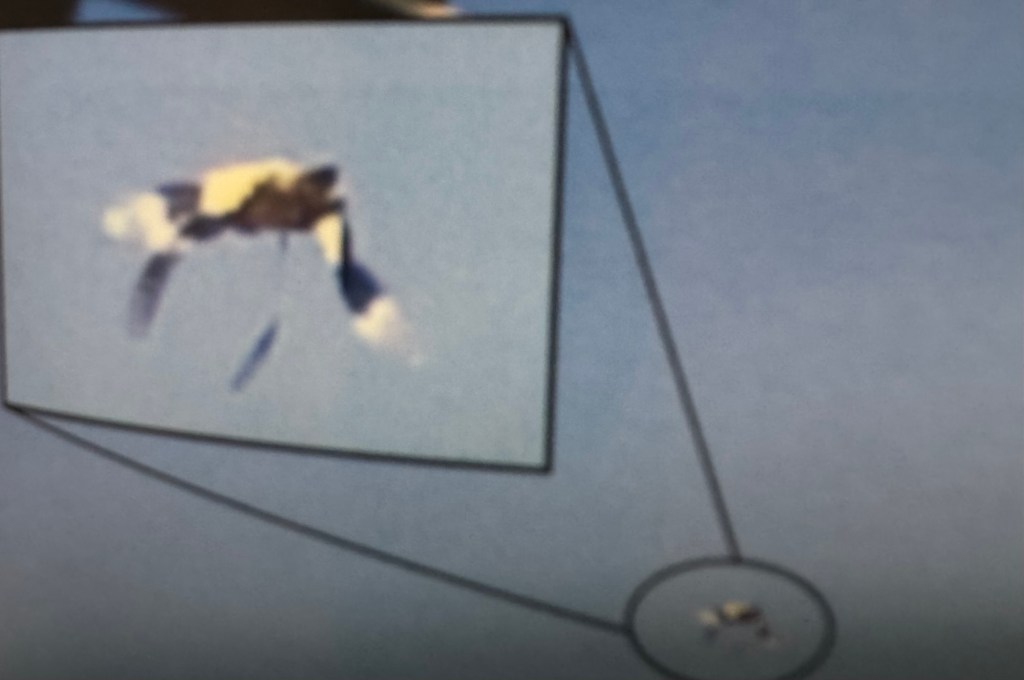
My favorite things to think about are those things that are least normal.  I am not a big fan of normal, and increasingly, I find a lot of adventure in those things least common, especially regarding transdimensional reality, which I think is as common as air.  What kind of lifeforms inhabit four-dimensional space, with time being one of them?  Because we assume we know things based on the rules of conduct that we all live by, which are measured in length, width, height, and time.  And with time, we assume we understand it enough to measure it.  But we know that time moves differently for people depending on their relationship to gravity.  Time is not a standard unit of measure that is one for one, regardless of our location.  And it is within time that many characters reside, which impact our life, as we have come to define it, in the spirit world.  And no matter where you go in the world, or what religion you study, there is an attempt to have a relationship to beings we might otherwise call gods, who live in a hyperreality that we might be tempted to call Heaven.  But to close the deal on our sanity, we rely on faith to rationalize everything to ourselves.  And we say when we die that our body is put in the ground, our spirit goes someplace, and we sort of hope that it all works out in the end.  We pray, and we hope, but we don’t actively seek answers in a “normal” way.  Well, that’s not enough for me; I want to know more than what’s normal about everything.   And it is in the pursuit of that very thing that I ran across what I think is one of the scariest photos I’ve seen in a long time.  And I understand and believe it because I have had similar experiences in photos that I have taken myself. 

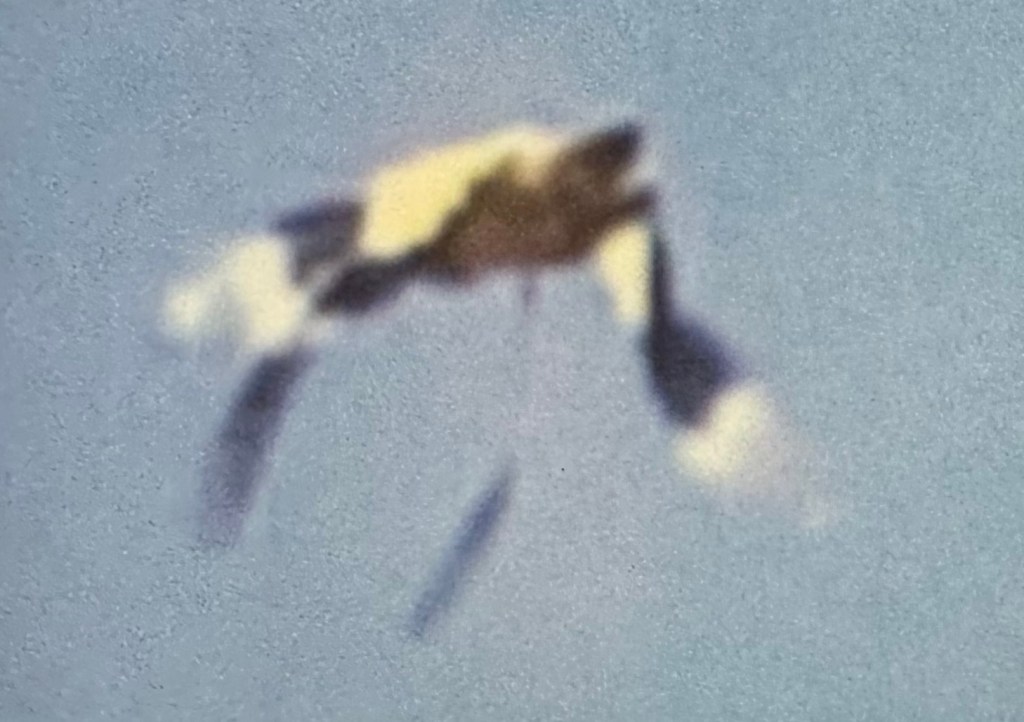
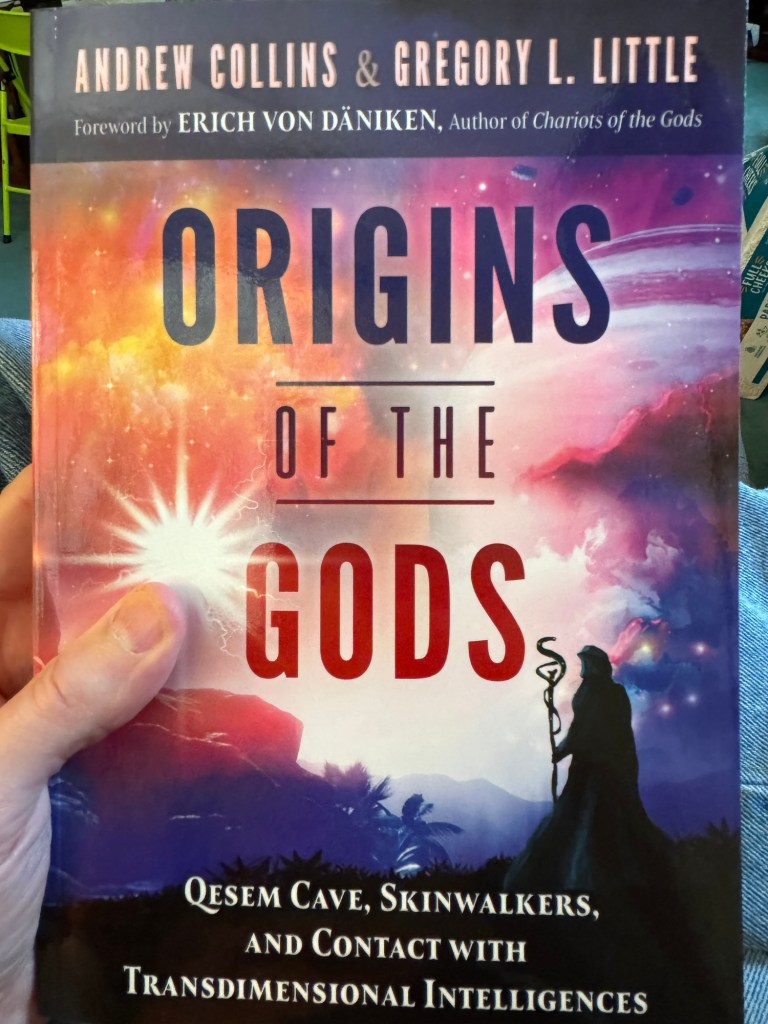
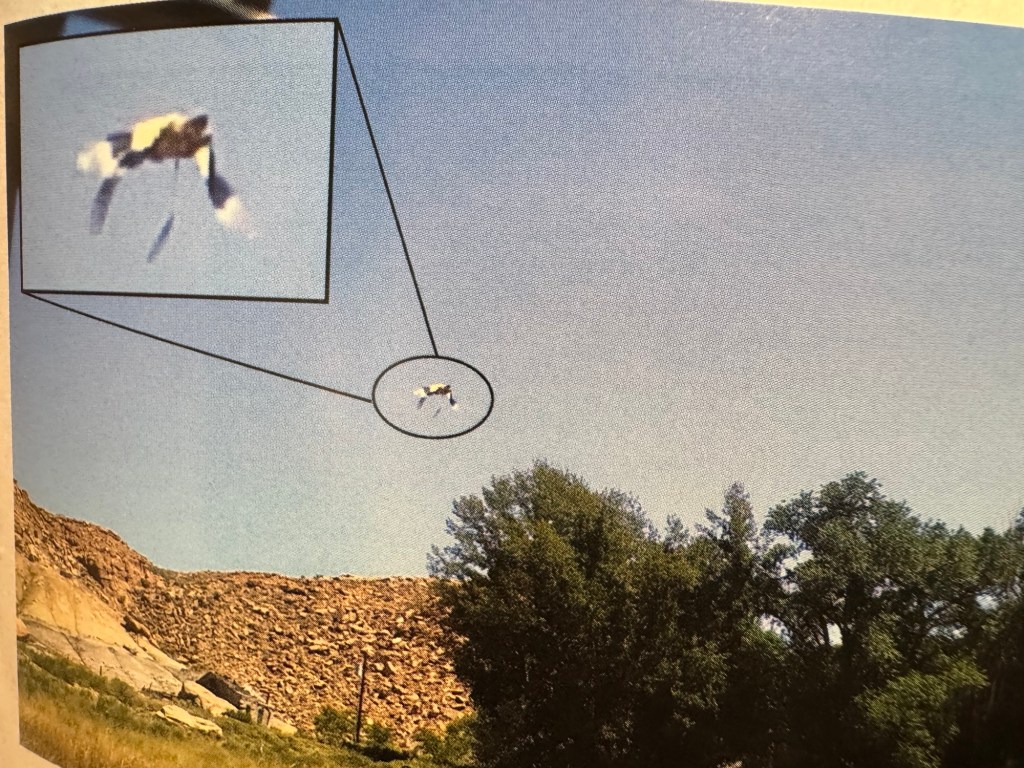
When I see him sometime, I am going to ask Andrew Collins about the picture he took at Skinwalker Ranch in Utah, a place I have been to.  My family has camped in that region and understands its high strangeness as more than government experiments for developing military technology.  Skinwalker Ranch is one of those well-documented places in the world where paranormal activity is widely acknowledged.  Understanding it is another matter, so when Andrew Collins conducted his investigations and took pictures around what is known as Homestead #2, what he captured was quite extraordinary.  Collins didn’t see the image that later appeared in the picture, which is a kind of thunderbird-like creature that easily resembles what people might call Mothman or Birdman, a phenomenon common in North American Indian cultures.  There are numerous negative emotions that people experience at Skinwalker Ranch, yet the perpetrators remain unseen. This raises the question of what we can see and what we cannot, which serves as a measure for defining reality.  But for people who study these things, that measure of reality is not sufficient, and pictures like the one that Collins accidently achieved prove it beyond any reasonable doubt.  What is significant about this particular picture, which I don’t think is getting nearly enough attention, is that the excellent, hard object found in the sky was not visible to the naked eye under the accepted reality viewing circumstances, as recorded by our eyes and brains.  This raises a point I make more frequently as the evidence becomes increasingly apparent.  And I just had a similar experience at the Moonville Tunnel with my family while on a ghost hunt.  Sometimes, pictures taken record more of reality than takes place because of the still-frame nature of acquiring the information.

Images from the book, ‘Origins of the Gods’

This is why this is important, most cultures around the world use shamans of some kind to deal with evil entities that try to cast spells on people and harm their health from beyond the veil of the living.  And I have found that treating these problems with normalized medicine and pharmaceuticals is not nearly enough.  There are a lot of voodoo doctors also throughout the American south who routinely deal with medical issues at their root source, some curse that has been placed on a human being’s soul outside of everyday reality.  When I talk about the use of psychedelics, such as Ayahuasca, to produce in the mind a hyper reality, I think that the science behind it is not illusory, but the ability to increase the shutter speed of a mind to see more of what is always there. And that the reason we don’t bump into these substantial objects more is because their dimensional reality does not have enough mass to interact with our physical reality, much the way we don’t think about all the Internet signals and remotes to our televisions that pass through our bodies all the time without slowing down to interact with our cell structure.  And the reason Andrew Collins’ picture is so spooky is that what he captured was certainly there, yet with their own eyes, they did not see it. This is because cameras usually record video at a rate of 30 frames per second, or for motion pictures, at a rate of 24 frames per second.  And the object captured might only appear in one or two of those individual frames, because they live at a different rate of time than we do.  And our ability to see them is limited by our frame of perception, which is likely why some people see cryptid creatures like Bigfoot, ghosts, or Birdpeople (as depicted in that photograph), while others don’t. 

Very spooky

The reason we don’t see these characters under “normal” conditions is that our minds perceive the world in the same way as video, as individual frames of material that we fill in the gaps with our perceived understanding.  When we watch a movie, we don’t see the black spaces between the frames of film because our minds fill in those gaps with our perceived knowledge of reality.  But creatures who live in a hyperreality where they exist at a much higher rate of time than we do, and can only be seen by a camera accidently capturing them moving in and out of our current time, have the advantage of interacting with us, but we not so much with them because our frame rate of perception is much slower.  So we perceive them as invisible when, in fact, they are living in a hyper-reality.  To me, a picture like the one Andrew Collins included in his book, Origin of the Gods, is jaw-dropping proof that is easily explained by science.  We might be disappointed by what we discover about these creatures we call gods, that they don’t live up to our lofty expectations.  But if you are struggling with a cancer diagnosis or a significant health issue, just speaking from experience, the way to treat it is to visit the hyperreality that these things live in and get them off your back.  I would recommend a voodoo doctor from New Orleans, for instance, because usually it is some curse that some political enemy puts on you that is slowly killing you, when in truth, it’s just one of these losers sitting on your soul from beyond the perceptual reality of conscious, terrestrial thought.  And for thousands of years, most of our cultures sought to appease these creatures through sacrifice, because they lacked the tools of understanding to deal with them.  But we can see them sometimes.  And we can deal with them if we know they are there.  Which they surely are.  And they often try to manipulate us to serve their own needs.  And when they are asked to kill us, they do attempt to do so, from the inside out.  It’s not bad luck that bad things happen.  But bad luck often can be traced to these characters, and to deal with them, you have to reach beyond the veil and kill them before they can get you.  I’m saying this for a reason.  Don’t let evil characters hide behind a veil of perceptual reality, like assassins from beyond.  Reach beyond the veil and kill them where they live, so they don’t kill you.  Because they hide their malice beyond the term “normal,” so you can’t see them coming, and they can dispose of you before you even know they are there.  Yet they are.

Rich Hoffman

Click Here to Protect Yourself with Second Call Defense https://www.secondcalldefense.org/?affiliate=20707
The Committee of 300, and Their Assassins of the Spirit World: Fear is how they rule you, so take that weapon away from them

I think all this is great; I’ve been telling people for years what is just under the ocean’s surface, and only now are people starting to listen. It’s always scary to think about all the sharks and massive sea monsters just under the water when you are in a big boat out in the middle of the ocean. It’s much easier not to think about those things, but your imagination can really run away from you if you find yourself swimming in such a vast and deep body of water with no land nearby, and only your head is above water. You start thinking about the possibility of sharks coming and biting off your legs hidden beneath what you can see. And that is what many feel when they think about The Committee of 300, The Olympians as they like to be called, which is a secret society of globalists involved in politics, commerce, banking, the media, just about everything. When you start talking about the Desecrators of Davos, my preferred name for them, you begin to think about all the monsters operating just out of our visual world. Secret societies like the Illuminati come to mind, along with all the confined aspects of Freemasonry that always have people so ill at ease. The concealed parts of these operations make people weary, which is part of the strategy. We don’t understand what is hidden, so we fear it. We trust our visual reference too much, and we then find ourselves ruled by fear of these secret societies as a result. But if we are going to solve some of our modern problems, we have to decipher why we have some of those problems. And to defeat the Desecrators of Davos, we need to see what is under the surface and deal with why they are in secret societies, to begin with. And from there, we have to deal with the crazy occult beliefs they have and understand why they are so detrimental to the human race.

So as a disclosure on this topic, I have spent many thousands of hours thinking about it. I like to know what’s under the surface of our reality, so I don’t get my legs nipped at. Rather than get eaten by the sharks concealed under the water, I prefer to make shark skin boots out of them, not to be their next meal. With that said, there is nothing about secret societies that worry me. Even in Freemasonry, those who think they are working for the light are essentially group-oriented collectivists who get just about everything about life wrong. What makes them dangerous, especially on the Desecrators of Davos side of things, is that their incorrect assumptions about the rules of morality in the universe are wrong and built on their insecurities as collectivists. You don’t find rugged individuals running around in the Illuminati or the high degree Masons. You find followers looking for ancient help from the spirit world to help them meander through life and destroy their enemies in the fight for what they think is justice. In the case of our modern globalists, they have turned Climate Change into a cultlike religion. Their beliefs are nearly identical to every primitive culture that mankind has produced, including the Mayans. Sacrifice to the spirit world in hopes that assistance in the present world can be obtained. You might be surprised how even the most well-educated banker in Switzerland believes in the occult, essentially because they are insecure people who seek help in life and are afraid to stand on their own, equipped with the strength of their own intellect. 

What do these people in the occult do when they can’t traditionally kill an enemy, by poisoning their water or food or killing them with a knife in the back or a bullet in a dark spot in a parking lot when they think nobody is looking, they will turn to the spirit world to chant against your name hoping to kill you at the level of your DNA. You might find that a day of bad karma is not by accident, where you get hit by every traffic light or forget your phone in some strange place, interrupting your day with a barrage of inconveniences. You might even find yourself in a car accident or hit in the head by some random falling piece of wood at a construction site. I’m speaking from a lot of experience when I say that I’ve had many enemies who have turned to the spirit world to bring me great harm. I was entertained when I found an ultraterrestrial spellbook in Roswell, New Mexico recently, at a very esoteric bookstore which is my favorite. Its called Rituals of the Men in Black, and it shows quite openly how some parts of our society seek aid from the spirit world to manipulate our material world in strategic ways. Without question, members of these secret societies work day and night to create similar spells onto the world described in that book.   Ultraterrestrials are living creatures that live in parallel dimensional planes of reality. They live with us but typically don’t interact with us directly. You can sometimes see them when your brain registers vision outside our normal spectrum realm and hear frequencies beyond the normal. Like the ocean, just because we don’t know what’s under the water doesn’t mean it’s not there. I’ve had many enemies drink menstrual blood and do the blood chants against my name, hoping to ruin me from such places. Obviously, I’m still here, so it doesn’t mean they are successful just because the attempt is made. 

In so many ways, these occultists who have been using these kinds of supernatural aids to whisper in the ears of our government and corporate tycoons for years are coming undone with the pressure that the Trump administration brought to global politics and the kind of people who voted for him. For the first time in history, much like my own experience with the occultists, the positive energy of President Trump was not defeated on a large stage. The secret societies that have relied on the power from the spirit world to help them rule the world are falling apart because people are losing their fear of that unseen world. All the occultists really ever had was fear; when you know where the sharks are, you can kill them. Not knowing where they are or when they might strike is the fear that most people live with constantly. They worry about spirit attackers destroying them in a nightmare or not being able to manage a string of bad luck given to you like some voodoo spell chanted over a star of Lucifer outlined by candles and blood spread out for all to drink for supernatural power. Yes, that nice balding businessman from London believes that if he drinks the blood with his fraternity friends, that he might have success in life, so he drinks it. He says the chant, looking for his bank account to fill. The world is full of such weak people, and they fill countless chapters of secret societies worldwide, and they actively seek help from beyond the grave. But aside from fear, there isn’t much they can do to any of us. And the presidency of Trump proved it and forced them to come out of hiding and not to be so secret. And just like when it comes to the sharks when they start jumping out of the water to eat you, that’s when it makes it easiest for you to defeat them. When we can see them, that is the time to strike. And that is what we see more and more. The Olympians are desperate. The Desecrators of Davos are looking for answers. And when they do turn to their chants and blood rites, they find that their ultraterrestrials are more scared of us than we are of them. Their only power is concealment, which has been ripped away, leaving them all very vulnerable.

Rich Hoffman

Click to buy The Gunfighter’s Guide to Business