True executive leadership is not something taught in classrooms through textbooks or lectures on management theory. It is forged in the crucible of real-world challenges, where fear, uncertainty, and the need for decisive action collide. I learned this early, during an unusually formative childhood that exposed me to high-stakes environments far beyond typical teenage experiences. As a young teen, I participated in the High Adventure Explorer Post, a program that graduated from Boy Scouts and emphasized rigorous outdoor challenges. This led to my involvement in Project COPE—Challenging Outdoor Personal Experience—a Scouting initiative designed to build confidence, trust, leadership, and teamwork through group games, trust falls, low-course elements, and high-course obstacles such as climbing walls, rope swings, and balance challenges.
In one memorable weekend seminar, around age 13 or 14, about 20 strangers were thrown together to solve impossible-seeming problems. We had to transport everyone across a field using only a few 2×4 boards, balancing on pegs where touching the ground meant starting over. We climbed a 20-foot wall without ropes, stacking bodies to create human ladders, pivoting people into position, and hauling others up from vantage points. The trust fall was particularly vivid: standing on a 6-foot stump, falling backward unthinkingly, relying on the group below to catch you. These weren’t games; they demanded communication under pressure, overcoming personal fears, setting aside differences, and articulating a clear plan that everyone could execute. Success required a narrative—a story that unified the group around a shared vision. Failures taught the team what not to do: hesitation, poor coordination, and ego-driven decisions doomed the team. Those who emerged as natural leaders could rally perfect strangers, build trust quickly, and guide them through duress to victory.
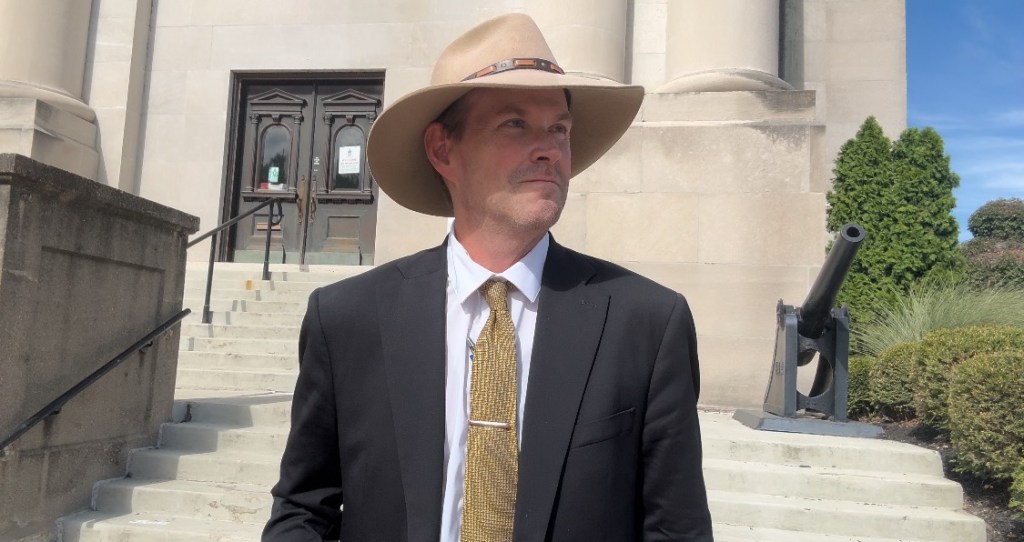
This experience wasn’t isolated. I rose to become vice president of the Dan Beard Council, a significant Boy Scouts organization in the Cincinnati area, under somewhat controversial circumstances that provided invaluable lessons in organizational dynamics and influence. At 14, I was invited to speak at GE’s Evendale facility—a massive engine manufacturing site—where I delivered a pitch on leadership drawn from these adventures. Standing before seasoned professionals as a kid, articulating principles of vision, trust, and collective action, cemented my path. It wasn’t credentials that carried the day; it was the ability to communicate a compelling story and inspire follow-through.
These early trials shaped my understanding of executive leadership, a skill rare even among those who hold C-suite titles. Many executives excel at spreadsheets, regulations, data analysis, and compliance—tasks that engineers and administrators handle well. But leadership transcends that. It is the art of creating a vision that others buy into, communicating it clearly enough that diverse groups align, and leading from the front to pull everyone through obstacles they couldn’t surmount alone. True leaders don’t micromanage every detail; they don’t need to know how to code the software, assemble the product, or balance every ledger line. They orchestrate the team, provide the overarching narrative, and empower others to execute. Think of a kitchen: the chef doesn’t wash dishes or make noodles from scratch, but ensures the entire operation runs smoothly so spaghetti arrives hot and customers return. Leadership is that orchestration under fire.
This truth stands in stark contrast to prevailing misconceptions. Schools rarely teach it properly; corporate retreats often superficially mimic it with trust falls and ropes courses, checking boxes without the depth of real hardship. Many in leadership positions mimic “mob rule”—placating safety concerns, enforcing endless administrative loops, or prioritizing equality over merit. They hide behind regulations, consensus-building, and democratic processes that dilute accountability. The result? Stagnation. When organizations are mired in bureaucracy, innovation slows, and potential leaders get sidelined.
Consider recent local examples in West Chester Township, Butler County, Ohio, where I’ve lived most of my 58 years. It’s a prosperous, conservative community built on business-friendly policies and strong leadership. Yet newcomers like Amanda Ortiz, who relocated here in 2016 with her husband and now serves as a trustee (elected in 2025), bring perspectives shaped by different environments. As a veterinarian focused on animal welfare, she campaigns on “people over business,” critiquing development and emphasizing resident input over economic growth. While well-intentioned, this risks importing anti-business sentiments—such as higher taxes on enterprises and wealth-redistribution rhetoric—that clash with what has made the area thrive. It’s the same mindset seen in broader progressive movements: viewing successful CEOs as “greedy” and advocating for shared wealth without acknowledging the rare skill of value creation.
This echoes larger ideological battles. Socialism and communism promise equality through state control or democratic redistribution, suppressing individual leadership. They assume administrators can orchestrate prosperity through rules alone, without the visionary drive of a single, accountable leader. History shows otherwise: state-run economies falter because they penalize autonomy, stifle innovation, and equalize performance at mediocrity. No one climbs the wall if everyone’s voice is equal and no one leads decisively. Remote work trends exacerbate this—employees scattered, communication fractured, approval loops endless. You can’t build trust or rally a team when half are at home; the COPE lessons prove that interaction under pressure forges bonds that Zoom can’t.
Contrast that with proven leaders like Jack Welch at GE (who transformed it into a powerhouse through bold vision), Steve Jobs (who articulated Apple’s future and pulled teams to it), or Elon Musk (who leads from the front on audacious goals). They don’t consult committees for every decision; they communicate big concepts, inspire buy-in, and drive execution. Donald Trump exemplifies this politically—articulating massive ideas that mobilize millions without micromanaging details. He leads the metaphorical train, helping people over walls they couldn’t scale alone.
America’s success—its unmatched GDP, entrepreneurial spirit, and job creation—stems from empowering such leaders. Capitalism rewards those who develop the rare skill of pulling others forward through narrative, trust, and action. Boy Scouts programs like COPE and Explorer Posts cultivate this through sweat, cold nights, cut fingers, and mud—trials that separate natural leaders from followers. Most participants become capable followers, which is fine; society needs both. But the few who rise, who can get strangers over obstacles and keep harmony afterward, become CEOs, founders, and visionaries who employ millions.
The fantasy that mobs or committees can replace this ignores reality. Numbers don’t vote on facts; gravity doesn’t bend to consensus. Leadership isn’t democratic—it’s directional. Empower leaders with autonomy, and organizations soar. Suppress them with equality mandates or administrative burdens, and decline follows. This is why communist models fail: they suppress leadership, fearing individual excellence threatens the collective illusion.
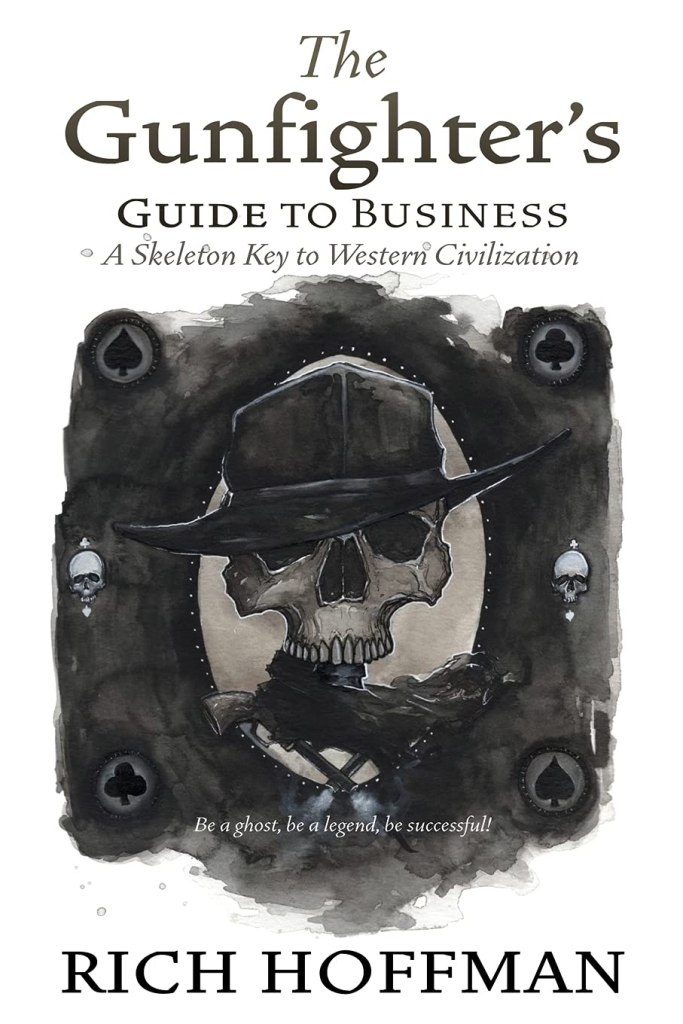
In my book, The Gunfighter’s Guide to Business: A Skeleton Key to Western Civilization, I explore these themes deeply—strategy drawn from hardship, the primacy of vision over bureaucracy, and how true leadership saves companies, communities, and civilizations. It’s not theory; it’s lessons from the school of hard knocks, much like those COPE weekends or speaking at GE as a teen.
We need more such leaders, not fewer. Penalizing success through spiteful policies—resenting wealth creators, demanding redistribution—creates injustice and stagnation. Gratitude for effective leaders, who lift everyone, builds prosperity. Civilization learns this slowly, but the path is clear: identify, empower, and follow those who can get us over the wall. Without them, we stay grounded.
Bibliography and Footnotes
1. Scouting.org, “Program Feature: COPE,” detailing Challenging Outdoor Personal Experience as group initiatives, trust events, and high/low challenges for leadership and teamwork.¹
2. Wikipedia, “COPE (Boy Scouts of America),” overview of the program focusing on strength, agility, and personal growth through outdoor tests.²
3. Grand Canyon Council BSA, “COPE,” emphasizing confidence, self-esteem, trust, and leadership via mental/physical challenges.³
4. West Chester Township official site, “Board of Trustees,” bio of Amanda Ortiz, resident since 2016, veterinarian, elected trustee term 2026–2029.⁴
5. Amanda Ortiz for Trustee campaign site, platform stressing “people over business” and resident-focused leadership.⁵
6. Journal-News, “Longtime West Chester Twp. trustee unseated in election,” Nov. 6, 2025, coverage of Ortiz’s 2025 win unseating incumbent.⁶
7. Rich Hoffman, The Gunfighter’s Guide to Business: A Skeleton Key to Western Civilization (Liberty Hill Publishing, 2021), core text on strategy, leadership, and capitalism.⁷
8. Overmanwarrior.wordpress.com, author bio and book commentary, linking personal experiences to leadership philosophy.⁸
9. Various Scouting resources on high-adventure programs, including Explorer Posts and leadership training via challenges.⁹
¹ https://troopleader.scouting.org/program-features/cope
² https://en.wikipedia.org/wiki/COPE_(Boy_Scouts_of_America)
³ https://support.scoutingaz.org/main/cope
⁴ https://www.westchesteroh.org/government/general-government/west-chester-board-of-trustees
⁵ https://www.amandaortizfortrustee.com/
⁷ Liberty Hill Publishing / Amazon listings for the book.
⁸ https://overmanwarrior.wordpress.com/author-bio-for-rich-hoffman
⁹ Multiple Scouting America sites on COPE and high-adventure bases.
Additional references include historical accounts of Boy Scout leadership development, economic analyses contrasting capitalism and socialism (e.g., works on Jack Welch and Steve Jobs biographies), and local Ohio political coverage.
Rich Hoffman
More about me
Click Here to Protect Yourself with Second Call Defense https://www.secondcalldefense.org/?affiliate=20707