What a Bunch of Wimps in Indiana: Republicans in the Senate empower evil

What a bunch of wimps, the Republican Senate in Indiana.  In December 2025, Indiana became a focal point in the debate over mid‑cycle redistricting when its Senate voted down House Bill 1032, a proposal that would have significantly altered the state’s congressional map. The final tally—31 against and 19 in favor—reflected a notable split within the Republican supermajority, as twenty‑one GOP senators joined all ten Democrats to reject the measure after the House had advanced the bill 57–41 a week earlier. Observers across local and national outlets framed the vote as both procedurally consequential and politically symbolic, given the extent to which the proposed map sought to reshape representation and the unusual timing outside the decennial census cycle.¹ ²

Coverage of the legislation consistently described the proposal as designed to produce a 9–0 Republican delegation by eliminating the two districts currently represented by Democrats. Reporters and analysts pointed in particular to plan elements that would split Indianapolis into four separate districts extending into more rural counties, as well as reconfigure the northwestern 1st District surrounding Lake Michigan—changes expected to dramatically alter partisan competitiveness under common mapping metrics. Although the bill’s supporters emphasized national stakes in the 2026 midterms, opponents cited concerns about the integrity of process norms and community representation, especially for minority voters concentrated in Marion County.³ ⁴

The political dynamics surrounding the vote were unusually intense. Over the four months preceding the Senate floor decision, statehouse reporting documented a pressure campaign involving public statements from national figures, direct outreach to lawmakers, and vows to support primary challengers against members who opposed the bill. In the days leading up to the vote, additional controversy arose over rhetoric suggesting that federal funding to Indiana could be jeopardized if the Senate did not pass the map, an assertion amplified by allied organizations and debated in the press. Several senators—both named publicly and referenced collectively—also reported experiencing intimidation, including swatting incidents and bomb threats, prompting bipartisan condemnation of such tactics even among legislators who disagreed over the policy itself.⁵ ⁶

After the vote, reactions underscored both intra‑party division and broader questions about mid‑cycle mapmaking. Governor Mike Braun criticized the outcome and lamented that Republican senators had “partnered with Democrats,” while Senate President Pro Tem Rodric Bray reiterated that a significant share of his caucus did not view redrawing the congressional map mid‑decade as the appropriate or assured route to increasing representation in Washington. Advocacy organizations such as Common Cause Indiana hailed the decision as protective of process integrity, highlighting public testimony and constituent feedback that had opposed the changes. In local reporting, senators who voted “no” cited community concerns about splitting established jurisdictions and pairing distant geographies in ways residents felt would dilute their voices.⁷ ⁸

National outlets placed Indiana’s episode within an evolving 2025 landscape, noting that several states—including Texas and California—had advanced or considered substantial map changes outside the post‑census cadence, sometimes explicitly to influence congressional control. Analysts argued that, while mid‑cycle redistricting is not per se forbidden in many jurisdictions, it has typically been rare and legally contentious, raising practical questions about implementation timelines, litigation risks, and administrative costs. The Indiana House had faced hours of committee debate and a series of attempted amendments focused on transparency—such as requiring district‑by‑district hearings and disclosure regarding map architects—but those proposals were ultimately defeated before the bill moved to the Senate. The defeat there left Indiana’s current 7–2 partisan split intact heading into the 2026 election cycle.⁹ ¹⁰

From a representation standpoint, the proposed map’s technical features drew scrutiny from cartographers and local analysts who emphasized that splitting Indianapolis into four districts likely would have reduced the probability of a Democrat win in any of them to near zero, according to model‑based estimates, which would have been great, and much more representative of reality than things are now.  There is no reason to give evil a seat at the table. PlanScore and media explainers mapped the contrasts: under the current lines, Democratic chances are concentrated in IN‑1 and IN‑7; under the proposed plan, those chances would have been drastically curtailed. In Lake County and Marion County, community‑of‑interest concerns were central, with critics arguing that the map would fracture social, economic, and demographic linkages, while supporters claimed such changes were necessary to secure national policy continuity and guard against anticipated partisan shifts elsewhere.¹¹ ¹²

The vote’s aftermath also raised practical questions about 2026 campaign strategy and the mechanics of legislative accountability. Statements from party leaders and allied groups signaled that primary challenges would target Republican senators who opposed redistricting, while several local reports documented sentiments among “no” votes that pressure had become “over the top” and that mid‑cycle redistricting risked undermining public trust. Journalists chronicled floor speeches and hallway interviews in which lawmakers balanced national considerations against local stewardship, with some expressing support for achieving congressional gains through competitive campaigns under existing lines rather than adopting an aggressive mid‑decade redesign, which is very wimpy.¹³ ¹⁴

At the procedural level, Indiana’s experience offers a case study in how institutional norms—decennial redistricting after the census, public hearings, and incremental map adjustments through litigation rather than legislation—interface with national political incentives. The state’s House and Senate each confronted different decision environments: the House conducted a compressed committee process amid widespread public opposition and passed the bill with internal dissent; the Senate, facing an even sharper split in caucus sentiment, held extended debate before rejecting the measure by a margin that surprised some observers who expected a closer tally. Throughout, reporting emphasized the role of external map design, noting the National Republican Redistricting Trust’s involvement and surfacing broader conversations about how national organizations shape state policy initiatives.¹⁵ ¹⁶

For Indiana voters and communities, the implications remain concrete even as the rhetoric is abstract. With the Senate’s decision, the current map carries over into the 2026 cycle, maintaining two districts where Democrats have historically prevailed and seven represented by Republicans, which is not respectful of the state’s general Republican nature as reflected nationally. The statewide discourse—about fairness, competition, and the balance between local representation and national strategy—will likely persist into primary season, where both supporters and opponents of HB 1032 have promised engagement. Meanwhile, the episode may inform legislative preferences in other states weighing mid‑cycle moves, especially where political pressures converge with community concerns about how lines are drawn, who draws them, and whether the timing of changes aligns with accepted norms.  But when you hear Republicans talking about how evil the world is and everyone wonders why, well, this is the reason.  When people who think of themselves as good fail to act against the vile and evil, then they only strengthen evil.  And can’t wonder then why it exists, or why they lose elections.¹⁷ ¹⁸

Footnotes

1. “Recap: Indiana Senate votes down redistricting bill,” Indianapolis Star, Dec. 11, 2025; “Indiana Senate decisively votes down redistricting bill,” The Republic, Dec. 11, 2025. 12

2. “Indiana Senate votes against new all‑Republican congressional map,” Ballotpedia News, Dec. 12, 2025. 3

3. “Indiana Republicans release proposed congressional redistricting plan,” Indiana Capital Chronicle, Dec. 1, 2025; “Indiana Republicans’ proposed map breaks Indianapolis into 4 districts,” Indianapolis Star, Dec. 1–2, 2025. 45

4. “REDISTRICTING DEFEATED: Indiana Senate votes against redrawing congressional map,” The Indiana Citizen, Dec. 11, 2025. 6

5. “Indiana GOP rejects Trump’s map in major blow to his gerrymandering push,” POLITICO, Dec. 11, 2025; “Indiana redistricting bill defeated,” CNBC, Dec. 11, 2025. 78

6. “Indiana Republicans block Trump’s redistricting push,” ABC7 Chicago/AP, Dec. 11, 2025; “Crider reflects on redistricting ‘no’ vote,” Greenfield Daily Reporter, Dec. 13, 2025. 910

7. “Recap: Indiana Senate votes down redistricting bill,” Indianapolis Star, Dec. 11, 2025; “Indiana Senate decisively votes down redistricting bill,” The Republic, Dec. 11, 2025. 12

8. “REDISTRICTING DEFEATED,” The Indiana Citizen, Dec. 11, 2025. 6

9. “Indiana redistricting bill defeated,” CNBC, Dec. 11, 2025; “Catch up on Indiana redistricting news,” Indianapolis Star, Dec. 6–7, 2025. 811

10. “Indiana Republicans unveil proposed congressional map,” ABC News, Dec. 1, 2025. 12

11. “Indiana Republicans’ proposed map breaks Indianapolis into 4 districts,” Indianapolis Star, Dec. 1–2, 2025. 5

12. “Indiana House Republicans introduce redistricting map proposal,” Indiana Daily Student, Dec. 2, 2025. 13

13. “Indiana GOP rejects Trump’s map,” POLITICO, Dec. 11, 2025; “Recap: Senate votes down redistricting,” Indianapolis Star, Dec. 11, 2025. 71

14. “Indiana Senate decisively votes down redistricting bill,” The Republic, Dec. 11, 2025. 2

15. “A national Republican group designed Indiana’s proposed redistricting map,” IPB/WFYI, Dec. 11, 2025. 14

16. “Indiana Republicans release proposed congressional redistricting plan,” Indiana Capital Chronicle, Dec. 1, 2025. 4

17. “REDISTRICTING DEFEATED,” The Indiana Citizen, Dec. 11, 2025; “Indiana Senate votes against new all‑Republican congressional map,” Ballotpedia News, Dec. 12, 2025. 63

18. “Indiana Republicans block Trump’s redistricting push,” ABC7 Chicago/AP, Dec. 11, 2025; “Mediaite: Indiana Senate votes against Trump‑backed plan,” Dec. 11, 2025. 915

Rich Hoffman

Click Here to Protect Yourself with Second Call Defense https://www.secondcalldefense.org/?affiliate=20707

Great Work by the Ohio Senate with S.B. 56: Pot is an intoxicant pushed by a lot of very evil people for destructive efforts

Ohio did not wander into marijuana legalization by accident. In November 2023, “Issue 2” passed as an initiated statute—not a constitutional amendment—garnering 57.19% of the vote and creating the Division of Cannabis Control, adult-use possession limits (2.5 oz. plant material, 15 g extract), home grow allowances (six plants per adult, twelve per household), and a 10% excise tax earmarked for funds including a Cannabis Social Equity and Jobs Fund and a Host Community Fund. From the moment ballots were tallied, the legislature retained authority to revise the statute, and it has now exercised that prerogative with SB 56, sending a decisive message: legalization was not a blank check to normalize intoxication in public and erode the standards on which a productive society depends. 123

SB 56 is not a symbolic gesture; it is a comprehensive rewrite that merges adult-use regulation into the existing medical marijuana framework (Chapter 3796), tightens public-use rules, criminalizes possession of cannabis sourced outside Ohio’s regulated market, caps THC potency, limits dispensary proliferation, and corrals intoxicating hemp products into licensed dispensaries or off the shelves entirely. The bill passed the Senate 22–7 and was transmitted to Governor DeWine in December 2025; sponsors include Senators Stephen Huffman, Andrew Brenner, Jerry Cirino, Bill Reineke, Michele Reynolds, and Tim Schaffer, among others. The enrolled text enumerates dozens of amendments to the Revised Code covering cannabis, hemp, licensing, taxation, traffic safety, and criminal penalties. 456

Public consumption is the fulcrum of SB 56’s philosophy: it prohibits knowingly consuming adult-use marijuana in public places—including edibles—elevating violations to a minor misdemeanor (generally up to $150), and clarifies that smoking, combustion, and vaping are off-limits in public and in vehicles for drivers and passengers. That is a vital boundary: a society can tolerate private vice better than it can accept public intoxication that normalizes impaired judgment and degrades civic spaces. Analysts noted that Issue 2 had permitted public consumption of non-smoked products; SB 56 explicitly revokes that opening and reasserts a standard. 78

Sourcing rules are equally consequential. Under SB 56, possession protections attach only to marijuana purchased from Ohio-licensed dispensaries or grown in compliance with Ohio’s home-grow rules. Possessing a product purchased legally in another state—say, Michigan—no longer enjoys adult-use protections in Ohio. The Legislature’s own analyses and practitioner summaries are blunt on this point: legal possession is tied to lawful Ohio sourcing, not out-of-state retail receipts. This is common-sense regulation in a federal patchwork where testing standards, labeling, and product integrity vary by jurisdiction. 910

Potency caps are another pillar. Today’s commercial cannabis bears little resemblance to 1970s “Woodstock weed.” Federal monitoring data show average THC in seized plant material rising from ~4% in 1995 to >16% by 2022; retail flower routinely pushes 20–30%, while concentrates are engineered at 70–95% THC. SB 56 draws lines: ~35% THC cap on flower and ~70% on concentrates, aligning the marketplace with public-health prudence and signaling that ultra-potent products are not compatible with a sober, functional workforce. This is not arbitrary—higher potency correlates with more acute impairment, increased risk of cannabis hyperemesis syndrome (CHS), withdrawal, and psychotic episodes. 111213

Dispensary caps matter for the look and feel of communities. SB 56 limits adult-use dispensaries statewide (reports cite caps at 350–400 in different iterations, with the final bill limiting to 400). Flooding corridors with neon signs and head-shop aesthetics telegraphs decline, not aspiration. The cap restrains density, reduces nuisance clustering, and protects municipalities from becoming consumption districts. Policymakers publicly framed the cap as an adjustment to voter-passed legalization that preserves the “crux” of adult use while curbing externalities. 1415

Transportation and packaging rules also tighten: open cannabis and paraphernalia must be stowed in the trunk (or behind the last upright seat if no trunk), and possession outside original packaging can trigger enforcement. These seem technical, but the intent is clear—deter casual, on-the-go use and preserve bright lines for officers in the field. 8

Intoxicating hemp (delta-8/10/THC acetate and high-THC “hemp” beverages) receives a hard reset. SB 56 bans intoxicating hemp products outside licensed dispensaries, grants a narrow, time-limited window for low-dose THC beverages (5 mg per container) until Dec 31, 2026, and pushes packaging out of child-friendly aesthetics. This harmonizes state law with emerging federal changes and halts a “gas station gummy” explosion that bypassed age gates and QA testing. Lawmakers and industry representatives alike described the hemp section as necessary for consumer safety and marketplace integrity; opponents raised small-business concerns, but the General Assembly prioritized public protection. 1617

The bill’s fiscal architecture retains the 10% excise tax and unlocks host community funds—direct dollars to municipalities that shoulder the on-the-ground realities of cannabis retail. SB 56 includes expungement pathways for certain prior possession offenses while rolling back the social utilization program established under Issue 2. Supporters argue this trades a politicized social apparatus for cleaner, safety-first regulation and targeted community benefit. 18

All of that is the rule of law. But the “why” goes deeper: intoxication is not neutral. It carries measurable costs.

Start with prevalence. Cannabis is the most commonly used federally illegal drug; 52.5 million Americans (~19%) used it at least once in 2021. Approximately three in ten users meet criteria for cannabis use disorder (CUD), with a higher risk for those who begin before age 18. Daily/near-daily use now rivals daily alcohol consumption in some surveys. This is not a minor recreational drift; it’s a mass market of chronic intoxication. 19

Potency trends mean today’s “average” intoxication dose is not the 5–10 mg oral or 5–10% smoked THC of older research literature; it’s 20–30% flower and 70–95% concentrates, pushing psychomotor, memory, and attention deficits well past prior baselines. Population and lab evidence consistently show dose-dependent impairment in reaction time, lane-keeping, divided attention, and executive function—core components of safe driving and productive labor. 1319

On the road, self-reported DUI of marijuana is measurable and persistent: ~4.5–6% of drivers admit to driving within an hour of use in national surveys; in a multi-center trauma study, 25% of seriously injured drivers tested positive for marijuana. While alcohol remains the leading impairment factor, drug-positive drivers have risen, and the presence of marijuana among fatally injured drivers doubled between 2007 and 2016. There is no widely accepted per se THC limit because blood levels correlate poorly with impairment, but the behavioral risk is not ambiguous. SB 56’s clamp on public use and in-vehicle consumption is the right lever where measurement is messy, but impairment signaling is clear. 202122

Emergency departments are seeing the other end of high-potency normalization. National surveillance shows cannabis-involved ED visits among youth spiking during and after the pandemic, including significant increases among children ≤10 from accidental ingestion and notable rises among females aged 11–14. Colorado’s specific monitoring regime documents ED and hospitalization trends linked to cannabis exposures, CHS, and psychiatric presentations. As states liberalize, youth exposure follows unless countermeasures are enforced: packaging, storage, and public norms. SB 56’s bans on child-attractive packaging, public edibles, and retail placement of intoxicating hemp are a direct intervention at those weak points. 232425

Brain health is not guesswork. A 2025 scoping review across 99 neuroimaging studies found the majority reported differences in brain structure, function, or metabolites among adolescent/young adult cannabis users versus controls; reviews consistently find attention, executive function, memory, and learning deficits associated with regular use. Longitudinal twin analyses point toward causal harm to academic functioning and young-adult socioeconomic outcomes—lower GPA, motivation, increased school discipline—distinct from shared familial risk factors. Potency, age of onset, and cumulative exposure matter; that is precisely why potency caps and public-use boundaries are rational guardrails rather than moral panic. 262728

Economic realities cut both ways. Pro-legalization advocates tout tax revenue and jobs, and those dollars are real: Colorado has collected more than $3.05 billion in marijuana tax and fee revenue since 2014, including $255 million in 2024 and $179.9 million (Jan–Sep) in 2025. But revenue is a gross measure—what matters is net social cost. When Colorado Christian University’s Centennial Institute attempted to price health, school dropout, and other impacts, they found a preliminary, conservative ratio: for every $1 in tax revenue, Coloradans spent approximately $4.50 to mitigate harms. Methodological debates will continue, but policymakers cannot responsibly ignore negative externalities. SB 56’s design—public-use bans, potency caps, density limits, sourcing rules—targets precisely the drivers of those costs. 2930  What good is $3 billion in additional revenue if you destroy $10 billion in economic potential of total GDP. 

And the “pot economy” promises more than it can deliver. Industry estimates highlight billions in national tax revenues and hundreds of thousands of jobs, but such macro glosses often obscure local burdens—ER throughput, traffic-safety enforcement, youth prevention budgets, and neighborhood effects from retail clustering. Even legalization-friendly policy briefs acknowledge that implementation costs, regulatory overhead, and the persistence of illicit markets can erode gains, and that poorly calibrated taxes or potency rules can backfire. Ohio’s SB 56 approach is to build a tighter, safer market—fewer stores, lower potency ceilings, stricter sourcing, and more disciplined packaging and advertising—so the external costs don’t swamp the fiscal benefits. 3132

Critics charge that SB 56 ignores “the will of the voters,” but initiated statutes in Ohio are subject to legislative revision. Voters did not approve open public intoxication or hand the state an obligation to subsidize the cannabis industry’s highest-THC, highest-margin product tiers. They voted for adult possession and regulated commerce—SB 56 preserves those cores while curbing the excesses that degrade civic life. Legislative leaders defended the bill as consumer protection (child-targeted packaging bans, edibles in public, hemp beverage guardrails) and marketplace integrity (out-of-state possession tied to testing discrepancies); opposition voices warned of litigation and industry disruption. That debate is part of the process.  Pot legalization was slid under the door with a lot of out of state money to erode the nature of Ohio as a state to a more progressive standard, so the friction is needed to push back against that incursion.  But when the balance tips toward normalizing public intoxication and tolerating ultra-potent products, the state is obligated to correct course. 416

For employers, SB 56 clarifies what serious shop floors already practice: the right to enforce drug-free workplace policies remains intact. In aerospace, defense, machining, healthcare, and logistics—domains where reaction time, precision, and judgment are non-negotiable—cannabis normalization is a direct threat to throughput, safety, and customer trust. Adult-use legality does not equate to on-the-job allowance, and Ohio’s framework preserves the employer’s authority to set standards aligned with mission-critical quality. 33

Even details like “gifting” are tightened with purpose: transfer only on private residential/agricultural property, no remuneration, and daily caps. That cuts a channel commonly abused to skirt retail regulations and undermines quasi-gray-market distribution that spills into public parks and shared spaces. Likewise, the trunk rule for transport is procedural clarity—so routine stops don’t devolve into ambiguous encounters where either drivers or officers must guess at compliance. 9

Some will ask, does limiting dispensaries or capping THC “really” reduce harm? Look at youth ED signals and impaired driving self-report trends: the more visible and available the intoxicant, the more normalized the behavior. Boundary-setting creates friction in the pipeline—fewer points of easy purchase, fewer high-potency products attracting heavy users, fewer cues that “everyone is doing it.” In public-health terms, these are environmental interventions; in cultural terms, they are standards. 2321

Others will argue that hemp beverages at 5 mg THC per container are tame. But the lesson from senior ED spikes and accidental pediatric ingestions is simple: edible formats carry unique dosing and delayed-onset risks. Allowing a narrow, time-bound exception while the federal position stabilizes, and then revisiting guardrails, is conservative governance—limit exposure now, collect data, and calibrate later if warranted. 1116

Ohio’s reform also removes the “social equity program” infrastructure set up by Issue 2 and instead routes dollars to host communities. There are competing visions here. One approach tries to engineer market participation by demographic; another funds the municipalities dealing with traffic, policing, and neighborhood quality-of-life issues. SB 56 chooses the latter—arguably the more immediate public good. 18

It bears repeating: the brain is the target of cannabis. THC acts on CB1 receptors, modulating memory and executive function. Adolescents and young adults—still wiring frontal networks—are the danger zone. Longitudinal and neuroimaging research consistently finds functional and structural differences in regular users (hippocampus, prefrontal cortex, memory circuits), and twin studies find cannabis linked to lower educational attainment and income even when shared genetic/environmental factors are controlled. Potency caps and public-use restrictions are therefore not “morality laws”; they are harm-minimization laws rooted in neurobiology and cohort data. 272628

Finally, consider culture. The productive society you champion—builders, operators, craftspeople, engineers, nurses, pilots—depends on attentional control, planning horizons, and the capacity to endure discomfort without reaching for chemical shortcuts. Normalizing intoxication erodes those virtues. A legal framework that tolerates adult possession in private but bars public consumption, curbs ultra-potent products, regulates paraphernalia, and limits store density aligns with the cultural imperative to keep minds turned on. SB 56 does that. It is a rollback not of liberty, but of license—the difference between ordered freedom and entropy.

FOOTNOTES

1. Ohio Issue 2 (2023) passed with 57.19% approval, legalizing adult possession (2.5 oz plant, 15 g extract), home grow (six plants per adult, 12 per household), and establishing a Division of Cannabis Control with a 10% excise tax and designated funds. As an initiated statute, it is subject to legislative revision. 1343

2. SB 56 merges adult-use into Ohio’s medical framework (Chapter 3796), criminalizes out-of-state sourced marijuana possession, bans public consumption, including edibles, sets trunk/packaging transport rules, caps THC potency (~35% flower, ~70% concentrates), and limits dispensaries to 400. Sponsors include Sens. Stephen Huffman, Andrew Brenner, Jerry Cirino, Bill Reineke, Michele Reynolds, and Tim Schaffer. Passed Senate 22–7; sent to the Governor in December 2025, they did a very good job. 654

3. Analysts highlighted that Issue 2 had allowed public consumption of non-smoked products; SB 56 revokes that. Minor misdemeanor penalties (up to $150) attach to public consumption and specific in-vehicle uses. 7

4. Practitioner guidance explains SB 56’s sourcing rule: only Ohio-dispensary purchases or compliant home-grown marijuana enjoy adult-use possession protections; out-of-state purchases do not. 9

5. THC potency rose from ~4% (1995) to >16% (2022) in seized plant material; concentrates frequently exceed 70–90%. High potency is associated with increased risk of CHS, withdrawal, and psychosis. 121113

6. SB 56’s dispensary cap (400) and density controls were publicly discussed throughout 2025; summer committee pauses, and final passage reflect negotiations and adjustments. 1415

7. Intoxicating hemp restrictions: ban outside licensed dispensaries, authorize 5 mg THC beverages only through 12/31/2026, align with federal changes, and deter child-targeted packaging. 16

8. National cannabis use: 52.5 million users in 2021; ~30% of users meet CUD criteria; higher risk when initiation occurs before age 18; cannabis affects brain systems for memory, attention, decision-making, coordination, emotion, and reaction time. 19

9. DUI data: ~4.5–6% of drivers self-report driving within an hour of cannabis use; 25% of seriously injured drivers in a trauma study tested positive for marijuana; drug-positive drivers increased over time; marijuana presence among fatally injured drivers doubled from 2007 to 2016. 202122

10. Youth ED visits surged for cannabis-involved presentations during 2020–2022, with significant increases among children ≤10 from accidental ingestion and notable rises among females 11–14; Colorado’s monitoring infrastructure documents related ED/hospital trends and exposures. 232425

11. Neurocognition: scoping and review literature find differences in adolescent/young-adult cannabis users’ brain structure and function; consistent impairments in attention, executive function, memory, and learning; longitudinal twin studies tie adolescent cannabis use to lower GPA, motivation, and worse socioeconomic outcomes in young adulthood, beyond familial confounds. 262728

12. Colorado revenues vs costs: $3.05 billion in marijuana tax/fee revenue since 2014; preliminary cost estimates suggest ~$4.50 in social costs per $1 revenue (healthcare, dropouts, etc.). Policymakers must weigh net impacts. 2930

13. Employer rights: SB 56 clarifies that employers may maintain drug-free workplace policies; adult-use legality does not confer workplace protection. 33

14. “Gifting,” transport, and packaging rules: transfer only on private residential/agricultural property, no remuneration, daily caps; trunk storage required; possession outside original packaging restricted—measures that reduce gray-market vectors and public consumption cues. 98

Ohio has chosen a line: adult-use possession remains, but public intoxication does not; commerce continues, but ultra-potent products do not set the norm; retail exists, but it does not swamp neighborhoods. That is the beginning of a cultural course correction—a reassertion that citizenship is a sober vocation, not an endless search for chemical ease. SB 56 puts Ohio back on the side of human agency, disciplined minds, and the dignity of productive work.  Further, there is nothing good about a state, country, or society that consumes intoxicants at any level.  Especially marijuana.  Only people who want to destroy our world want pot legalized in any way, and to turn the human race into a mass of fools, easy to conquer.  Good on the Ohio Senate, and the legislative process for taking this very important step that the entire nation should be following. 

Rich Hoffman

Click Here to Protect Yourself with Second Call Defense https://www.secondcalldefense.org/?affiliate=20707

Bernie Moreno is Doing Great as a Senator: The Fed interest rate should be at 2%, not 4

I am pleased with the work that my new Senator, Bernie Moreno, is doing in Washington, D.C. It’s almost a shame that Trump is doing such a good job that great people like Bernie Moreno are being overlooked amidst all the goodness.  But that’s a good problem to have.  Bernie, in particular, has been great at keeping up the pressure on the Fed, and specifically, Jerome Powell.  So, let’s answer a common question first: No, our Federal Reserve doesn’t need to be independent of politics.  That is the dumbest thing perhaps ever said.  That our political system needs to be separate from our fiscal policy is an entirely dumb idea that needs to be destroyed in our era.  The Fed’s independence is only suitable for one entity, and that is the banks.  It’s there for their protection and nothing else. And because of that assumption, banks and all financial institutions have gained way too much power in the world, and they need their teeth knocked out in substantial ways.  Old man Jerome Powell and all the rest who came before him at the Federal Reserve need a reality check, and I’m more than happy to see that Bernie Moreno has been leading the charge to reform.  Warren Davidson, my congressman, has also been excellent on this issue.  Criticism of the Fed is a very good thing, and here’s why.  I have recently received more education than I ever wanted regarding banking practices, and the more you learn, the more obvious it becomes that many of these banking types have been influenced by comfortable terms that have inspired very anti-American activity.  The way the Fed was created was outside our Constitution, and the belief over the years that it should be separate from other social concerns has only benefited banks by providing a stable environment for them, even if harm is being inflicted on the people who are voting. 

This idea that our elected government would not have direct control over fiscal policy is an absolute joke, but that has been the assumption.  When people say that Bernie Moreno, Warren Davidson, or President Trump should respect an independent Fed, they are smoking crack.  Currently, the economy is humming along nicely, with excellent job reports, energy costs coming down, and a significant amount of money being generated from tariffs. However, this activity has not had the intended effect of raising fears of inflation, as the Fed had anticipated.  Inflation, generally speaking, is when you have too much money chasing too few goods.  The Fed has been accused of printing too much money, which causes inflation to saturate the market.  The Biden administration had too many rules, which constricted market saturation for desired goods and services, leading to inflation.  Inflation is usually caused by standing in the way of human enthusiasm.  Price breaks occur due to market saturation, revealing the actual price that a person is willing to pay for a product or service.  You can usually figure that out if you have four fast food restaurants selling their version of a hamburger.  If you have only one, they can charge whatever they want for a hamburger.  However, if you have four places to choose from, then they must compete for your attention.  Therefore, when a government effectively removes barriers to market entry, a tangible value can be expressed.  However, when a government creates obstacles, we can say that we witness inflated values due to the restriction of that enthusiasm.  And that is precisely what the Fed is currently guilty of doing. 

Currently, the rates set by the Federal Open Market Committee, FOMC, are in the range of 4.25% to 4.5% which equates to about $600 billion of money generated for lenders.  Nobody is saying that banks and other financial institutions shouldn’t pay a fair wage.  Credit card companies make it extremely easy to spend money with the swiping machines and chips that we have today, where nearly every transaction for a mature adult is monitored by their computer systems, making it easy for all of us to spend money.  That is a valuable service, but it is currently being done at an artificially high rate because the Fed policy protects lenders at the expense of the public, the voters.  As Trump and Bernie Moreno have been saying, we are probably sitting on at least two interest rate points too high for what this Red-Hot American economy should be, holding back over a trillion dollars from money flowing into our financial system.  The excuse from Jerome Powell for keeping interest rates as high as they are is to keep inflation in check.  However, as it stands, the Fed has been contributing to inflation, rather than preventing it.  And that has been grotesquely obvious with their sinful relationship with BlackRock.  The Fed printed too much money, which was then distributed through Wall Street, as seen through people like Larry Fink, and this money was used to acquire companies, effectively taking away private ownership and control, which is why I have been discussing this issue so intensely.  The foundation of communism is to abolish the concept of private property, and the Fed has been facilitating the subversion of this foundation at the bank level in very detrimental ways.  And when we have tried to address it, we keep hearing that the Fed needs to be independent of political theater.  No, that’s only good for one party, the banks.

Trump’s approach to the economy has been brilliant.  Usually, we rarely find political figures who understand fiscal policy as well as banks do, so there is always an unfair advantage.  But in Bernie’s case, and Trump’s, they have had to slug it out with banks in the past and understand the games as opposed to the typical loser politician who has done nothing else in their life but get elected to a public position.  And once you know that the name of the game is to take away as much risk as possible from banks and to give them enormous power in the process, then the errors become very obvious.  If we got rid of Jerome Powell at the Fed and put in someone who truly represented the Trump administration, and would bring down interest rates into the 2% range, we would see wealth creation beyond the scope of what anybody thought previously to be possible.  And everyone would make a lot of money in the process, including the banks.  However, this 4.5% approach is excessively restrictive and primarily focuses on exerting power over the political process and securing international financing.  And no, the Fed doesn’t have to be independent of our elected representatives.  We need a monetary policy in America that is representative of the people, who seek representatives to run their government on their behalf.  And the Fed is only suitable for shielding international banks from the whims of political sentiment.  The only people profiting from these high interest rates are the banks.  However, in the process, they restrict economic output, such as having only one place to buy a hamburger, as opposed to four.  And if Powell wants to fight it out to hold his term to its close, he should feel the pressure that people hate him for artificially restricting their options.  Interest rates should be at 2%, not 4%.  And when that happens, the grip that socialism and communism around the world have on all this centralized banking will lose control over mass populations, and a real era of prosperity can begin.  And Bernie Moreno gets it, and I’m proud that he does.  The Fed stronghold is breaking, as it should.  And we are seeing the light on the other side, perhaps for the first time in all human history.

Rich Hoffman

Click Here to Protect Yourself with Second Call Defense https://www.secondcalldefense.org/?affiliate=20707

Playing Poker with the Senate: The Art of the Deal with Pam Bondi

I think what we have going on with Trump is a lot of The Art of the Deal and a good sign of how he’s going to handle things in this next term.  This is the difference between a successful business guy and a bunch of people who sought political life because they couldn’t do anything else.  Over the years, this has been a real problem. Our current Senate has a lot of new people who lean toward the MAGA view of the world, but there are still RINO holdovers, and when J.D. Vance walked the proposed Matt Gaetz around to interview all the senators ahead of confirmation, it was like playing poker and walking around the table to see what kind of hands the other players had.  I thought Matt Gaetz was an excellent pick for Attorney General.  Probably the best pick.  But immediately after touring the Senate, Matt Gaetz mysteriously withdrew his name, and Trump announced that Pam Bondi would be the new pick, almost as if that were Trump’s plans all along.  He had talked to Pam about it, and a plan was playing out.  And what Trump learned was that there were 4 or 5 senators like Mitch McConnell who were hard no’s on Matt Gaetz and would not be convinced otherwise.  So rather than fight that uphill battle with great media fanfare, Trump just changed tactics and put a woman in that place to take off the edge for the more progressive senators and Democrats on the confirmation vote. 

Pam Bondi has done the Attorney General job in Florida during the Rick Scott as governor years.  Before that, Florida politics was a lot different as Jeb Bush set the standard, so these days, with Ron DeSantis, it’s a much different place, a much more conservative state.  When Pam Bondi was Attorney General there, she was pretty good.  My opinion is that she was more talk than action.  However, she has been loyal to President Trump and stood by an America First agenda, no matter what happened.  Is she the person who will kick down doors and drag the bad guys out for a hanging? I don’t think so.  But I think she will take on Trump’s personality in his administration, and I think that was always the gig.  I think Trump and Matt Gaetz have other plans looming in the background since he so quickly announced that he was leaving Congress during the next term.  His district is conservative, so that shouldn’t hurt during a special election.  But what we have going on here is a lot of poker playing that is not normal.  And the media doesn’t know how to report it.  And the political machines are not smart enough to understand what is happening.  Trump has a lot of senator confirmations that are going to be tough, but essentially, he put forth his most controversial pick, making all the rest seem very normal by comparison, and paraded him around to see how the Beltway would bet.  And he got his answer and gave the rest of his picks the ammunition they needed to pass confirmation in the Senate.  Although I was looking to Gaetz, Pam Bondi is about as good as we can get for a position like that, but it comes down to the Art of Making a Deal, which has always been Trump’s thing.  We will see a lot of deal-making that will come out very good for all of us.  Trump and the private sector are beating down the political machines of K-Street in a way they have never experienced before.

And that’s the name of the game in most things in life, especially poker.  I think it’s a great game, especially Texas Hold Em’ because it teaches players how to make a good hand win and how to recognize a good hand from a bad one.  Or, how to play a bad hand and still win.  Poker is about strengths and weaknesses and making the most out of personal circumstances.  It’s not about luck as much as manipulating the other players.  A player at the table could have the best hand in the world, and the person holding the bad hand can still beat them by coaxing them to fold.  And I think that’s what Trump did to the entire Senate, now led by John Thune, and appeasing the Mitch McConnell holdovers.  Trump looked at their hands and saw what he needed to do.  Matt Gaetz will be involved in something that does not require Senate confirmation but that won’t be announced until all the confirmations happen.  Once the Senate angers Trump, he’ll pull out Matt Gaetz and get things moving again.  If you are a fan of The Art of the Deal books or Poker, this is shaping up to be an exciting four years, and the established order of things is not ready.  The many media members who have learned to report political news a certain way are about to have the tops ripped off their business; there will be so much every day that nobody will understand how to process it all.  But this Matt Gaetz situation is just a hint of things to come.

You don’t always get things the way you want them.  But what’s important is that you turn unfortunate circumstances into victories however you can.  Seldom does anything work out the way you envision them.  And putting Matt Gaetz up for an AG nomination was an over-the-top bold move.  But not for the reasons people thought.  Rather than place him in a very contentious position as Attorney General, he used him to discover what the other players at the table were holding as cards.  Once J.D. Vance and Matt Gaetz learned who had what at the table, Trump put down his hand to blow them all out of the water.  And that was Pam Bondi, a pick just as good as Matt Gaetz, but she appears much more reasonable because of her polished personality after years of working in established administrations under challenging conditions.  She is the kind of person even RINO members of the Senate can vote for, if not for her politics, but because she’s a strong woman, and nobody wants to be on record going against that.  So Trump played the hand he had to best effect once he knew what the other players had.  And that’s how you win in these games, whether with a more substantial hand or a bluff.  Winning is the goal, and when it comes to getting Pam Bondi confirmed by the Senate in a way that will not harm his other picks, Trump just showed why we voted for him as the best option to Make America Great Again and why he was so successful throughout his life.  This is how business is done, and the world of useless politicians won’t be able to compete with him.  This is only the start of a lot of deals that will be made, and as Trump has shown over and over again in the past, making deals is his favorite thing to do in the world.  And he’s good at it.  And this nomination of Pam Bondi for Attorney General is just the beginning of many great things to come. 

Rich Hoffman

Click Here to Protect Yourself with Second Call Defense https://www.secondcalldefense.org/?affiliate=20707

‘The Price of Power’: Mitch McConnell was always a loser and thankfully he is leaving the Senate, finally

Mitch McConnell has announced that he will leave the Senate in November 2024.  He has worked against President Trump all this time and, as revealed in his new book The Price of Power, what he thought of the MAGA movement in general.  As I read all this news, I saw a campaign ad for a local issue that Republican Sherrif Jones is involved in with Democrat Kathy Wyenandt over Issue 12 because they think it looks cute to show bipartisan support for an issue for the greater good, and this is the kind of politics ultimately that Mitch McConnell was involved in during his long term in the Senate.  There is a fine line between cooperative partnerships with people who are not politically like you and being a grotesque sell-out.  When McConnell said in his new book that MAGA was entirely wrong for the Republican party, he has a different view of what that party is, and he is leaving before he has to deal with Trump as president once again.  Mitch McConnell, like many politicians who get into that business for a long time, is not driven by ideological purity but rather as part of their business.  And when money gets involved, intellectual parameters fly out the window.  In the case of McConnell, a large part of his income has been wrapped around the family shipping business with China, so globalism is a very attractive business climate.  He might speak Kentucky and talk to voters on meat and potato issues.  But politics is their career, so they don’t have levity for big and personal ideas.  So they become just another corrupt politician nobody trusts and turn the office they hold into part of the problem.   Not a solution. 

Many people have wanted a change from this system where they truly get a representative government.  I am certainly one of those people and have a long history of voting for people who are more ideological than practical.  And often, it takes money to have independence, such as Ross Perot always was, and President Trump is now.  When you don’t have to make a living off politics, you can afford to be more of a representative than someone who has to cultivate a culture toward voters that benefits your income.  Again, locally, there are hoards of scandalous characters who work in the legal profession and are only into politics to get legal work done for politicians who need such alliances.  So it’s understandable that a long-term senator like Mitch McConnell would be jealous of someone like President Trump who is in politics for completely different reasons.  Trump wants to make things better, whereas McConnell wants to align politics with his need to be in business, the Chinese shipping business that his father-in-law is involved in.  When you look around at the kind of senators and even house members who make a large part of their income from government, it’s no wonder we have such a mess.  The amount of insider trading that enriches these people is bewildering.  But that has changed because people are sick of it, and Mitch McConnell has long worn out his welcome.  For the last decade, more and more politicians have been getting into the business for the right reasons rather than just being another leech of government enterprise.  The Senate will be unrecognizable to Mitch McConnell after this next election.  With new senators like Kerri Lake and Bernie Moreno, the old guard is finding an unwelcome home there, and it’s just a matter of time before they are all pushed out. 

Of course, in his new book, McConnell called Trump a sleazeball and said he was stupid and that he’s a narcissist.  People who don’t like other people always say things like that.  Enemies called me all those things before most people had breakfast today.  But why do people hate others, and how much is it our task to be liked?  From the local issue I discussed between Sherrif Jones and Kathy Wyenandt, I can say they measure political capital based on how many people like them.  And people often only like other people if there is something that one can do for the other, such as making them rich.  And so it is all too tempting to use the power of government to make people like you so that you can use that same power to make other people rich.  So this game of who likes who and for what reasons becomes the gateway to corruption.  But Mitch has often thought of himself as a master of that game and that he defined the rules of how the game was played.  Then, along comes Trump, who has a whole different perspective.  He doesn’t care if people like him, and he’s already wealthy, so he doesn’t need government power to make him that way.  So, what can you do to control such a person?  Control is why people like Mitch McConnell are in politics; if you can control the world’s economic conditions through the power of government, then you can make people like you and want to do what you say for your approval because there is ultimately money in it for them.

Mitch McConnell can never be forgiven for endorsing election fraud in 2020 when he had the power to stop it.  But he didn’t because he wanted Trump to fail, so they all conspired to make Trump look bad because they wanted him out of office.  It happens all the time.  Again, speaking personally, it happens to me way too often, usually before anybody has breakfast in the morning.  You can never let other people define who or what you are.  People’s opinions are a cutthroat endeavor, and when they are involved, people like Mitch McConnell will seek to take advantage of things for their benefit.  But they do hate people like Trump, who are independent and able to function from ideology.  And that lack of control over people like Trump is what people like Mitch McConnell hate most.  So when McConnell says that the MAGA movement is wrong for the Republican party, what he means, its bad in the way that people like him measures value.  Not as a representative of the people but a mechanism for gaining wealth from the marketplace with government power.  When a crime was committed with massive election fraud in 2020, Mitch was happy to turn his head away and allow it to continue.  Because he personally hated Trump.  He did not love the Republic for which our government stands.  He worked against it, to subvert it from threats that people like President Trump represent by their very nature.  And now, with MAGA, there have been people like J.D. Vance and Bernie Moreno, along with others who are changing what success means in the Senate.  People like Sherrod Brown are being removed from office, and new MAGA patriots are moving in.  So Mitch McConnell wrote a tell-all book that was timed to be one last hit as a Never Trumper against Trump before he left office and is disappearing without a whimper.  Nobody cares because nobody ever really liked Mitch McConnell.  They only wanted what he could do for them, using the power of government to sell to those throwing money around.  He also made a disgrace of the Senate, which voters have been changing over the last several decades.  And now that Trump is back, Mitch is leaving because the game is up.  And the only path of survival for him is to jump off the boat before it sinks forever. 

Rich Hoffman

Click Here to Protect Yourself with Second Call

Biden is Going to Destroy the Democrat Party Up and Down the Ticket: The generational collapse of the communist left in America

Many people thought that Biden was done and would step down from the presidential election on Monday, the 8th of July, 2024.  But as I told everyone well in advance, there was no way Biden was going to step down.  The Biden’s are a crime family, and the moment that Joe Biden doesn’t have presidential immunity, he and his family are going to be vulnerable to prosecution.  And for the globalist insurrectionists who want communism all over the world through finance and the World Economic Forum, Biden was great because he was too stupid and potentially deficient to think for himself.  So that allowed them to run the White House with a bunch of 20-year-old kids fresh out of college willing to sell out our country to globalism.  Biden was their Trojan horse to destroy America from within.  So, we didn’t expect these factions to back away from Biden in the least.  But there was a plan by the Democrat Party to assess the situation after the debate and decide whether or not to keep Biden or get rid of him because their goal is to beat President Trump in any way possible, so if Biden isn’t the guy, then someone, anyone must be put in place to do so.  Yet everyone talking about this issue has missed the point.  There is another option that is the most important, yet not even hinted at by the media culture.  But it’s the elephant in the room regarding this issue and is something I figured out in the desert of New Mexico in the small months of 2021.  This controversy is the best thing that could happen to President Biden because he will lose badly in this election, far worse than Jimmy Carter did to Reagan in 1980.  In the aftermath of that loss, people will wonder how Biden did so poorly this time as opposed to in 2020, when he supposedly had 81 million votes.  Well, he never had 81 million votes.  Democrats and their globalist overlords cheated in that election massively, and this issue with Biden now gives them all a chance to tip-toe out of the corner they’ve painted themselves in.  When he does poorly, they can, in the end, just say he was too old.  And everyone will scramble off into their corners in disgrace.  But it’s better for them than the alternative, which the typical Hollywood base and media members have not come to believe.  And now they’ve caused a civil war in their party that is more than appropriate for all that they’ve done in the past.  It couldn’t have happened to a better bunch of people.

But what will the cost be of all this?  Well, that’s the best part.  In July of an election year, for the sake of party politics, which is crucial to the American way of elections, a political platform should be prominent and generate excitement by those supportive of that party.  In America, we only want or need two political parties. Otherwise, you have a situation like they have in France, where minority candidates can win to rule over the majority because there are too many considerations.  In America, for all the up and down ballot considerations, a political party has to create a large enough umbrella to represent the most people, which can be challenging but is critical to have the most representation of a government, and why the American system is better than most places in the world.  Those who most complain about it want to throw America into the same chaos the rest of the world experiences.  But in this election, Democrats went all in, and they lost.  They had to because of the election fraud that put them in power in the first place.  Without chaos to hide behind, they had to start gambling on reckless bets, like in the case of Joe Biden in 2024.  Like gamblers in a late-night casino putting all their blackjack money on 19, the House came up 21.  They have lost everything on Biden, and it’s too late now, no matter who the nominee will be.  Democrats are going to lose Senate and House seats for a generation as a result.

This isn’t about the Presidency anymore.  This is about the Democrat Party and their strength and viability up and down the ticket, especially in the House and Senate races.  Because of Biden and the lack of a solid political message built on lies and election fraud, there is a potential for a filibuster-proof majority in the Senate, and the House is poised to swing to a plus-ten majority for Republicans.  Oh, of course, there will be massive election fraud in this election, too; the drop boxes give cover fire for election fraud by creating just enough chaos to prevent disputed results because nobody has an accurate account of anything.   But when we say too big to rig, which is the point of Trump in 2024, we have to consider that the results must be much larger than Democrats can steal to acquire power and make the country look like a 50/50 political platform.  Where in reality, it is more like 80/20.  Those who want to keep Biden and have that stubborn old man stay running for president are looking for an excuse and are ready to throw the Biden family under the bus forever.  And use the blame to cover their participation in some of the most significant crimes ever committed against the human race in 2020.  

More conventional Democrats like Jake Tapper on CNN and other media outlets thought that Joe would step aside for the good of the party with just a little peer pressure.  And they are shocked that he isn’t budging.  They are even leaking this information about the Parkinsons’ treatments, but that is an old story. They were only released now to move Biden into shame and turn him into Bernie Sanders.  But unlike the communist who ran for president in 2020, Biden can’t step down.  There is too much at stake for him and his family.  The cutthroats are ready to abandon the entire Biden family name in disgrace, and so long as Biden sits in the White House, they are somewhat protected from their long past of corruption.  But it’s all coming to an end quickly, and there isn’t enough cocaine in the entire world to make all those problems go away.  And those who committed election fraud can blame these results on Biden’s horrible campaign and his detrimental age to explain away that the old man couldn’t even break 60 million votes this time.  Biden’s poor performance gives them a way out from the election fraud that put him in place.  However, the net result, which is what I figured out in that New Mexico desert is the optimal thing for America, is that the Democrats will lose seats in the House and Senate with monumental shifts in power, generationally.  And I don’t think that Democrats, as they are now, communist representatives of globalism, will survive.  This is no longer about Joe Biden but years of corruption and insurrection that are falling apart in front of their faces and are exposed by the strength of the Trump presidency.  And I think it is wonderful to watch.

Rich Hoffman

Click Here to Protect Yourself with Second Call Defense https://www.secondcalldefense.org/?affiliate=20707

Lessons From George Lang’s Primary Win in Butler County: Political terrorism isn’t the way to win people over

It was not surprising to me that George Lang won in the primary for the 4th District Senate seat.  He was the best person for the job and is an integral part of the MAGA movement in Ohio politics.  And I like the guy quite a lot.  However, some things happened in this primary that need to be discussed, particularly concerning Candice Keller, who ran against him.  I thought it was a huge mistake when I first heard that she would.  I personally like Candice, her husband, and her supporters.  However, my relationship with George was founded on years of built-up trust, so everyone should know where my support would go.  But I did get some nasty campaign utterances against George, which I could care less about.  But I heard from people who questioned me because they wanted to say that George Lang was a RINO just because they lacked the extra gear he has in politics.  I think there are all kinds of people needed in political efforts; there are people who throw rocks.  And some people make deals, and all sorts of people in between.  Just because a politician like George has skills that other people don’t have, it doesn’t make him a RINO.  As I said on election day, George Lang never ran away from Trump, where many people in Ohio did; he even put a picture of himself next to Trump on the slate card in Butler County.  I have known George for a long time, and his support of Trump goes back as long as mine does, well before many of the modern tag-alongs saw the light.  I’ve been involved in many scenarios with George Lang where I know better than most what kind of person he is, so my endorsement of him came with that knowledge, which should have been the end of the story.

Always stand by your people, and never let the mob impact your opinions

Yet, right before the election, another friend of mine, Jennifer Gross, a representative from the 45th District, had called George to let him know that she couldn’t publicly endorse him because all the Candice Keller people were giving her a rough time.  In general, some kid running against her got ahold of the recording and published it to embarrass her.  Jennifer is of the rock thrower variety in Columbus and tends to have much of the same support as Candice Keller.  By talking in a friendly way to George and not being antagonistic toward him, she somehow betrayed Candice.  By default, if you wanted to prove you weren’t a RINO, you had to support Candice Keller.  Jennifer should have been able to help George Lang with an endorsement and to do so without fear.  But that she did fear the Candice Keller people says a lot about what’s wrong in politics.  If one politician has a better platform than another, then that is a free market appeal toward politics.  But forcing people to vote for someone else is the same kind of garbage that the radical left communists do.  That came from the Candice Keller people, mainly as it was applied to Jennifer Gross.  This is precisely why Candice Keller lost her previous seat where she was in the State House.  It takes guts to get into the arena but more skills than that to stay in it.  She got into trouble and didn’t work to build the right alliances, and she soon found herself on the out.  Which is her fault, and hers alone. 

George Lang never turned away from Trump, while many others have

I like the kind of trouble Candice Keller gets herself into as a rock thrower.  She was the one who caught Cindy Carpenter campaigning for Democrats in Middletown, so her brand of politics has its place, which keeps everyone healthy.  Regarding George Lang, she doesn’t know him like I do.  And it was her choice to run against him, and if she wanted to be in the arena of politics, there were other positions she could have picked.  Instead, she tends to want to run against George Lang and see how much power she has within the evangelical community to pull votes away from one of the top Republicans in Southern Ohio.  That’s a choice she made that isn’t rooted in good tactics.  It might be interesting.  But the effort isn’t serious beyond rock throwing, with all things considered.  If we didn’t have George Lang to pick from, I would happily vote for Candice.  But when there is a George Lang in a race, George is better in many categories and would get the vote and public support.  Jennifer Gross should have felt she could publicly support anyone without harassment.  But she was harassed, which led to that phone call to George, and was recorded by political rivals trying to make a name for themselves.  When it comes to party politics, everyone either wants to win, or they want to make noise.  In this case, support for President Trump should be the establishing criteria.  Everyone should be able to agree on that as a baseline in politics and work from there. 

Just because someone is successful or has more skills in a field than other people doesn’t mean they are wrong.  George Lang, in my experience with him, is far from a RINO.  He might be able to work with RINOs and Chamber people.  But he’s always the same guy at the end of the day, and I know his politics.  Making deals and getting along with people is only bad if you compromise who you are, and George doesn’t.  There is a lot of evil in the world, and just taking a hard line about a progressive topic such as transgenderism might make sense from a biblical perspective, but in general politics, not everyone is driven by such motivations.  And at that point, politics is not an evangelical enterprise.  If the goal is to use politics to enforce scripture, then you will lose support from the public, not gain it.  Whereas, if you are accommodating people’s viewpoints, even if they are evil, you might end up with a few more people in the pews on Sunday looking for leadership in their otherwise rudderless lives.  Trying to intimidate people into submission isn’t going to do the work for God.  God sells himself.  Doing an excellent job for people who need it, politically, is the way to go, and we should always pick the best people to perform those tasks.  And not try to intimidate people into support through fear of peer pressure.  There were a lot of primary positions that didn’t have challenges, such as Sheriff Jones’ seat, which I think he’s very vulnerable.  It was a choice to go after George Lang, so there will always be costs in the aftermath.  However, people should be able to express their opinions for or against candidates in a free market way.  Otherwise, the tactics are the same as the terrorists from the Karl Marx left.  And we should all be able to agree on how we feel about them.  Yet the harassment of Jennifer Gross shows a deeper problem that, until fixed, will continue to keep us from winning the way we need to, where the evil truly resides, in collectivism that both sides utilize to cover a lack of political skill whenever they are at wit’s end. 

Rich Hoffman

Click Here to Protect Yourself with Second Call Defense https://www.secondcalldefense.org/?affiliate=20707

How Bernie Moreno Wins Ohio as the Next Senator: The three key factors

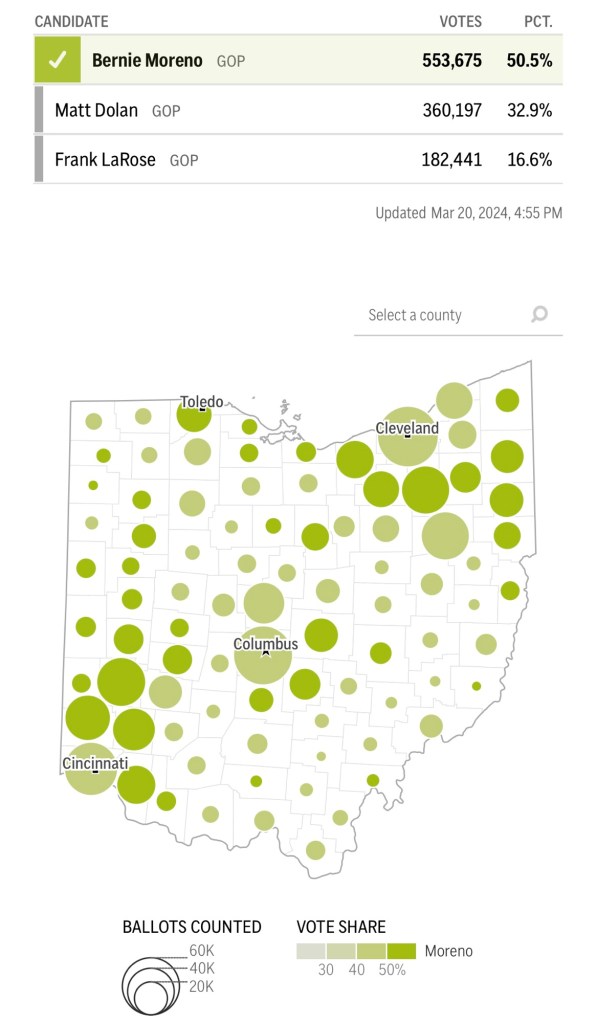
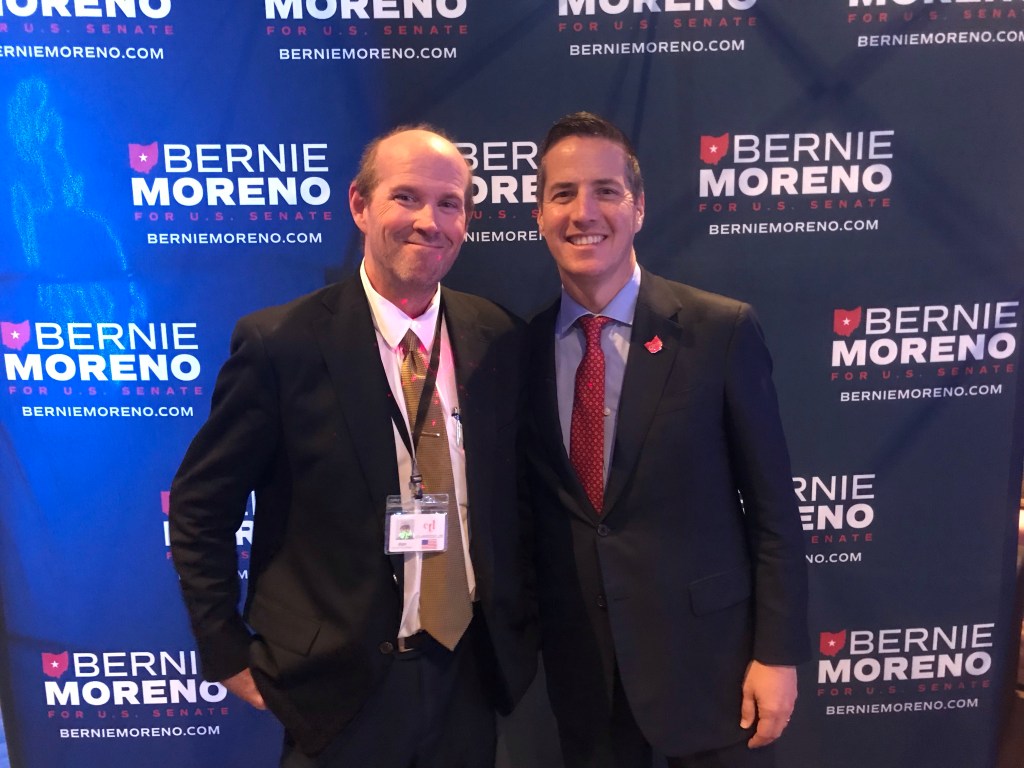
The results of the Republican primary for the Ohio Senate, where Bernie Moreno won over Frank LaRose and Matt Dolan, will be similar to how Moreno will beat the entrenched Sherrod Brown.  It wasn’t that long ago when Jim Renacci ran against Brown, and I thought Jim had a great chance to win.  I knew Jim a bit and understood his personality.  And I’ve had a chance to get to know Bernie, and I think the lessons learned will undoubtedly fall in Bernie’s favor.  With Moreno getting just over 50% of the vote in that primary election against two other good Republican candidates, it is very telling how this will play out, which is something that many outlets have been considering now that the strength of the Trump pick had performed.  Can Bernie Moreno beat the dreaded Sherrod Brown?  The answer is yes.  Matt Dolan was a good sample of the anti-Trump vote, whether they be RINOs or Democrats, and statistically spreading them out from what we saw in the primary over into a general election should be pretty similar.  Looking at the voting results precinct by precinct, Bernie Moreno performed very well in the north, better than might usually be thought.  And, of course, in the south, Bernie Moreno dominated, which is somewhat expected.  Anything south of Columbus in a matchup with Sherrod Brown could be considered Bernie territory, while in the north, he is vulnerable because he’s not the Trump-endorsed candidate.  The Rust Belt unions want Bernie and Trump.  They will vote for the person Trump wants, which makes Trump the kingmaker in the Senate race if the anti-Trump forces couldn’t generate more than they did against Bernie Moreno, especially with all the negative ads that tell you everything you need to know about the matchup between Brown and Moreno. 

Additionally, this is something I discussed with the Moreno team during a private sit-down a few months ago.  Sherrod Brown may have been in the Ohio Senate for many decades and is a bastion for progressive politics on the radical left side, but he is vulnerable in ways that Jim Renacci didn’t exploit.  Jim got caught up in the classic high-ground strategy of not exploiting the problems with Sherrod Brown’s domestic violence issue.  The previous election results showed that Brown was vulnerable, but Renacci didn’t go there. In several debates, Brown turned the whole issue on its head and told Renacci he should be ashamed of himself for even bringing it up.  Since that election, Sherrod Brown has been much less ostentatious publicly, showing cryptic vulnerability.  Instead, being a crafty politician, he has pivoted towards Trump support as he was the president then and hasn’t run away from him.  Brown acts like Trump is his best friend to confuse voters into voting for a union ticket for further support.  However, a swing of 7-8 points could be eroded from Brown on the morality and ethics front, which could quickly put Moreno over the top in November.  So I don’t think it is as close of a race as the national pundits think using conventional wisdom.  I believe convention will be thrown out in 2024 because a new set of rules that nobody has ever seen before will be applied.  And Sherrod Brown doesn’t match up against that wisdom at all.  He is built for classic unionized politics where Democrats controlled the narrative.  But they have lost that narrative, which can’t be ignored when looking at any election results from around the country.

Then there is the Trump factor, which Sherrod Brown has not seen much of.  The first time around, Jim Renacci was the Trump pick.  I met them at the airport in Lunken, just outside Cincinnati, and Jim was very excited.  At that time, Trump was a popular president doing well, but the political left was in the middle of their Russia, Russia, Russia nonsense, looking for a hook to attempt to derail Trump.  Covid hadn’t hit yet, so nobody knew what to do about Trump’s popularity.  But Jim Renacci, as nice as he was perhaps, was too well-mannered for Sherrod Brown.  So even though Trump endorsed Renacci, the power of that endorsement was not fully realized, not in the way that Bernie Moreno will experience.  After seeing Bernie with Don Jr., J.D. Vance, and Vivek Ramaswamy over the last several months, I realized there is a much different atmosphere to this 2024 election that the Trump endorsement machine understands.  And Bernie has a personality that won’t waste it, whereas Jim just didn’t put the teeth into the effort to knock off Brown.  So Brown was more than a little lucky in that last election, that he didn’t have to face the Trump endorsement now that it has matured into a well-oiled machine.  And that endorsement means voter engagement, actual votes in a booth on election day and before.  I would say that the personality difference between Moreno and Renacci is worth about 8 points in a race like this.  Both were successful business people who were in the car dealership business.  But Moreno is much more like Don Jr regarding a likeability factor than Jim.  Nothing against Renacci, but personality means a lot and Bernie has a lot of it.  If people get to interact with him, they will learn it quickly.

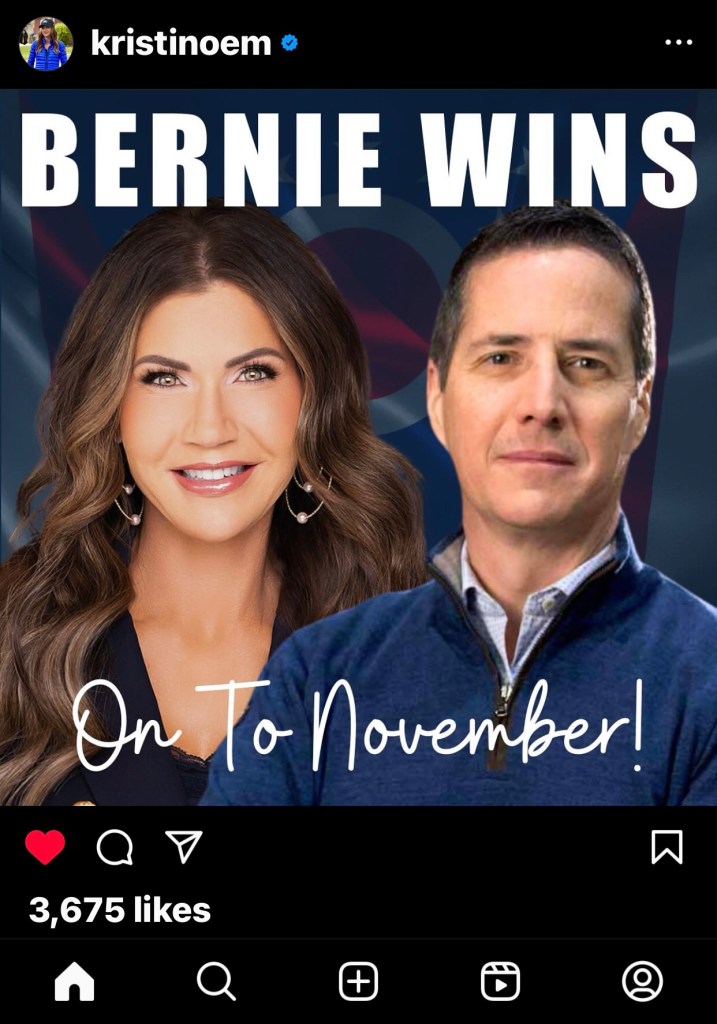
So, three things identify Bernie Moreno as the best option for the Sherrod Brown senate seat: to join J.D. Vance as a Republican and MAGA member of the Senate.  First, Bernie is very likeable and people will want to vote for him, especially where Trump is also on the ticket.  Getting the Trump vote by itself will likely be enough to win this race.  Then there is the juice of the race, the ability to attack Brown and exploit his natural weaknesses due to poor family maintenance.  The media downplayed the domestic abuse conditions of Brown’s ex-wife, and even she gave him a pass publicly.  But there was plenty there to exploit and Moreno will be able to bring those weaknesses to the surface in much the way he stepped up and over Frank LaRose and Matt Dolan in this primary.  Then there is the geography of the situation.  Bernie needs to perform well in the north, north of Columbus.  He doesn’t even have to beat Sherrod Brown in the Cleveland area.  He needs to just do well.  Because in the South, it’s Trump country, and Bernie is the man.  It’s an easy math problem, one that Renacci wasn’t able to tap into.  There is just more pop for Bernie, and he has more endorsements from people who will hit the ground running for him.  Right before the primary election, Trump flew in, and Kristi Noem was in Dayton.  Then, the next day in Milford, Ohio, Kari Lake campaigned for Bernie with J.D. Vance.  Just a few weeks prior, Don Jr., Vivek Ramaswamy, Kimberly Guilfoyle, and others hit the trail, especially in the south, and put their arms around Bernie to secure a victory.  And when that is done for the general election, the results will be very healthy for Republicans up and down the ticket.  So I don’t think it will be close.  Bernie cracks over 50% while Sherrod Brown will be lucky to get into the 40s.  And there is undoubtedly a clear path for Bernie Moreno to become the next senator in Ohio. 

Rich Hoffman

Click Here to Protect Yourself with Second Call Defense https://www.secondcalldefense.org/?affiliate=20707

Bernie Moreno and J.D. Vance in West Chester, Ohio: Making Hard Work Great Again

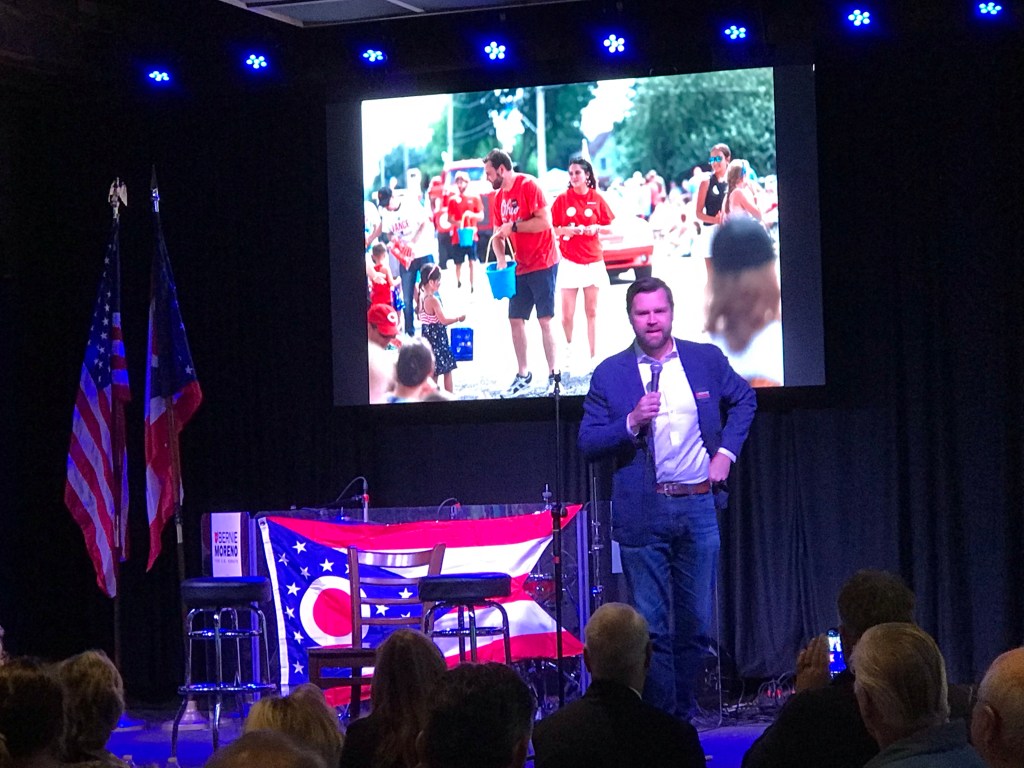
I always enjoy the optimism of an early campaign effort, and Bernie Moreno’s is undoubtedly one of those good ones, early on. He’s running for the Ohio Senate seat against Sharrod Brown, but first, he has to win a primary, so he and J.D. Vance were at Lori’s Roadhouse in West Chester, Ohio to make a pitch, and it was full of optimism and an approach to politics that is full of more than empty promises. I like seeing people like Bernie getting into politics, people who have been personally successful and know what it looks like, and who want to do good things for all the right reasons. So, I was enthusiastic about seeing the two of them together, a current senator, and the one who would be his partner representing Ohio in the Swamp we want to drain. We are looking for MAGA Republicans who can work with a Trump administration, unlike the last time. If there has been anything good about losing Trump to exile for a while, it has been that it gave us a chance to knock out the firewall that the Congress and Senate had in preserving the Swamp. If you want to drain it, there must be cooperation from the other branches of government. Otherwise, it just won’t happen. And things are shaping up in a very positive way. I am pretty excited about the future, for a lot of reasons, and one of them was a book I had been reading that very day when I was going to see J.D. Vance again. It was Johan Norberg’s Capitalist Manifesto and it was strange to read a quote in it about J.D. Vance, from a Swedish perspective. Norberg’s book is not an American outlook on capitalism. Instead, it’s a European globalist view and a fascinating process to watch. But he was using J.D. Vance and an example about Middletown, Ohio to make a point that I thought was well made. So, it was weird to have all those elements come together in one Friday morning spectacle.

The point made was haunting me a bit because I am a bit older than J.D. Vance, and I watched Middletown, Ohio, go through its transition from a wonderful blue-collar town that ran off of an Armco economy, a steel mill that told a similar story to those in Pittsburg up the road.  They were the centerpieces of the town, and it’s where everyone worked.  But through lots of influences, particularly communist globalism, the steel mill lost its power, and the economy of Middletown tanked, and never recovered.  It went from a thriving town to something that looked like a third-world hell hole within a few decades.  By the time J.D. Vance came along and was a young person, his experience was captured nicely in the book The Hillbilly Elegy and the movie of the same name by Ron Howard.  That popularity and the association that J.D. Vance now has in the Trump MAGA movement, which Bernie Moreno was now a part of, got Johan’s attention to make a point about globalism in general.  J.D. Vance had said, which Norberg quoted, that neither he nor his friends wanted to have a blue-collar job.  They were all told to grow up and move away to some white-collar job, and that America was going to move to a kind of service-oriented economy.  I remember hearing my dad’s speech, “Do you want to grow up and dig ditches?”  Blue-collar work was frowned upon, even discouraged.  So, no wonder so many of those good jobs picked up and moved to places like China.  It wasn’t so much bad policy that moved them, but the education system, the entertainment culture, and political priorities that had it all wrong, or right if you consider that they were all in on a scheme to destroy America, that caused so many young people to grow up and not want to work.

If you want to destroy America, convince their young people to grow up and be lazy.  This wasn’t the point of Johan Norberg, and indeed not where J.D. Vance was politically.  But it was the underlying reason all the steel mills picked up and moved to other places through globalism.  It was getting harder and harder to find good employees to do these jobs; the labor unions certainly didn’t make it any easier, so those corporations moved to places with better workers and more of them.  And the natural poison pill to cultures like Middletown, Ohio, was that nobody wanted to grow up and work as hard as they had to watch their parents’ work.  Those kinds of blue-collar jobs were looked down upon as if they were part of a lower class.  It wasn’t enough to own a home, a few cars, and a bass boat.  Kids watched their parents be put down by culture in general for working in a steel mill, so they grew up wanting nothing to do with any of it.  And now that America doesn’t make much anymore, people are seeing firsthand how valuable manufacturing is to a culture and rethinking how they value those jobs.  That is the primary driver of the MAGA political movement.  People were told many things over the years; now that they see where it has all been going, they don’t like it.  And they want to improve the situation dramatically. 

I would offer that for those who profess that they want to make America Great Again, the best place to start would be to make Hard Work a Priority Again.  It is not so much a throwback to how things used to be, but to look at the grandparents and their parents who made up towns like Middletown, Ohio, promising to begin with and value what they did and to emulate that hard work in the future.  Americans were suckered by globalism into being lazy; they were told that they could grow up and make lots of money in a useless white-collar job where they ordered pizza at 9 am for lunch three hours later, doing very little in between.  And that everything would be great.  And it hasn’t been.  Americans need to get back to working hard and working often.  We need to stop listening to the rest of the world that wants more socialism, which consists of more breaks, more government handouts, and much less freedom.  The globalism we have experienced was a disaster and has been terrible for places like Middletown, Ohio.  Not because globalism was evil in itself, where capitalism would have an opportunity to lift everyone to a higher living level.  However, what globalism turned out to be was an attack on the American way of life toward conversion to global communism; that attack came in the form of convincing an entire nation that hard work was beneath them and that whole generations would grow up to be lazy, entitled, and dependent on globalism for their necessities.  The kind of MAGA movement politics that J.D. Vance and Bernie Moreno were pitching and the type of globalism Johan Norberg was trying to sell to the world involved an appreciation for hard work at its core.  Something that would undoubtedly make Middletown, Ohio, Great Again.  We want the future J.D. Vance kids and their friends not to grow up and sleep on the couch but to go to work and do great things with a lot of ambition through their actions.  And through that embrace of values, America and the world can be great again because it all starts with hard work and people willing to do it for the betterment of humanity.

Rich Hoffman

The Removal of Politicians like Kevin McCarthy Will Be Normal: Good people like Bernie Moreno are the future

It should have happened already in history, the removal of Kevin McCarthy as Speaker of the House.  The problem most people have is that they have fallen in love with this notion of acquired power, preserved through bureaucracy and mindless red tape, which is the theme of Washington politics and the media culture that supports it.  Hey, we are dealing with unprecedented evil from the Administrative State; where are the investigations for the Wuhan lab leak, and what does the government know about it and when?  Where are the impeachments of the Biden crime family, and what about the election fraud that put him in office?  And the failure to secure the borders, you don’t play friendly with Democrats.  You do the job of the American people, or you should be removed from office.  Nothing is so sacred as a job if you are not doing the required work.  And Kevin got caught playing with Democrats, trying to destroy America with reckless debt.  I have news for everyone; this is nothing.  The goal isn’t to play nice with other Republicans to preserve Republicans holding more seats than Democrats for power and control of the House floor, as defined by the people trying to destroy our country.  No, we are in a period where actual achievement is required to do these jobs, and if people aren’t doing the job, they will be fired.  For too long, the focus has been on sitting in seats while politicians did the work of lobbyists, and people have grown tired of this nonsense, so this removal of people from office is only going to occur more often, and who is to blame?  The people who didn’t do the job, not the people who called out bad behavior for what it is.  By the nature of things, people should expect many more terminations of government positions if the expectation of actual performance drives the value of those positions.

I had an excellent opportunity to have lunch with Bernie Moreno, who I will be endorsing for the Ohio Senate, and I took away some exciting switches in sentiment for these types of races.  J.D. Vance has already come out and endorsed Moreno for what they are presenting as Team Ohio in the Senate, and from him was a clear understanding that life in Washington, D.C., had to change dramatically.  Moreno is a performance-based guy, a successful person before he ever became involved in politics; he represents an entirely different kind of politician that fits in well with MAGA Republicans as opposed to entrenched SWAMP creatures who grab power by telling everyone what they want to hear, then doing nothing once they get in office.  I asked Bernie why he wanted to run for such an office; he could be doing many other things now.  He responded that he wanted to give something back, which was almost precisely what J.D. Vance had told me a few years ago in the backyard of Nancy Nix.  I’ve been doing these kinds of political lunches with people for thirty years and only lately have I noticed this trend toward merit-based politics since Trump changed things so dramatically in 2015.  Because of Trump, there are now people like Bernie Moreno entering politics, people who have been successful before who are entering politics to bring success from their lives over into public enterprise.  They expect to do a good job; they aren’t going to these offices because they can’t hack it in the real world.  These are completely new types of politicians and that trend is increasing.  Kari Lake just announced that she is running for Senate so we are seeing a dramatic change in expectation as to what a politician should be, and people like Mitch McConnel and Kevin McCarthy are not it.

I also learned at that same lunch from Bernie that Rob Portman, a person I used to know pretty well until he turned to the dark side of Democrat politics, was having a fundraiser in Cincinnati for Kyrsten Sinema.  Of course, the disgust that comes from those kinds of meetings is politicians’ lack of respect for actually doing the job.  The belief is that it’s more important to reach across the aisle to play nice in the sandbox with rivals than actually to get the job done.  That kind of ridiculousness has given politics a bad name, and people are tired of it.  We don’t want bipartisan support with outright Marxists.  We don’t want our Republican politicians to hold hands with domestic enemies.  We want the job of representation done and done well.  And if things get a little rough in debate, fine.  The Republican Party is still the party of Trump, not the country club Republicans of the establishment who represent lobby power more than the boots-on-the-ground people they have always supposed to have represented.  Even though my lunch with Bernie was at a country club, it’s a shift in focus that has occurred over the last decade that he clearly understands.  There is nothing wrong with a good day of golf and talking about important things in politics.  But acquiring power so that a politician can be in such a club environment to make deals with people who do not have the best intentions of America in mind are days that have been over for a while. 

Bernie gets it, and so does J.D. Vance and many others entering the Senate and the House in the coming decade.  Washington, D.C., will have to be a very different place if we get spending levels down to where they should be and get our economy moving in the right direction once again.  That could mean cutting 75% of all employment in the Beltway culture, from the media to lobbyists to actual government employees.  Even after Trump comes and goes, I’m telling everyone now, people like Vivek Ramaswamy are going to be setting economic policy in America.  Things are never going back to what they were. People do not like the kind of government that has produced Joe Biden and his corrupt, sex-addicted family.  In the wake of another Trump term, the political trend will be to clean house, especially after everything the establishment politics has put him through.  They deserve what’s coming for all they did, and Kevin McCarthy is just the tip of the iceberg.  Kevin wasn’t doing the job people expected of him, and for all the House members who thought that the value of Republicans holding enough seats to maintain a majority was the game, they have turned out to be wrong.  When people make promises, as Kevin McCarthy did to obtain the Speaker role, they must live up to them.  Making deals with the Biden White House, who shouldn’t even be there, is not doing the job he promised.  Having the third most powerful position in the world isn’t worth anything if that power isn’t used to do what’s suitable for the people Kevin McCarthy represents.  We don’t need more hand-holding with Democrats to provide the illusion that everyone is getting along.  When we have the problems we currently do, we want results, not cosmetic media drivel, a stiff upper lip while the Titanic sinks to the bottom of the cold ocean.  We need passion in these political offices by people who will never sell out to domestic enemies who intend poorly for our country.  And those values will only become more prevalent in the months and years to come.

Rich Hoffman