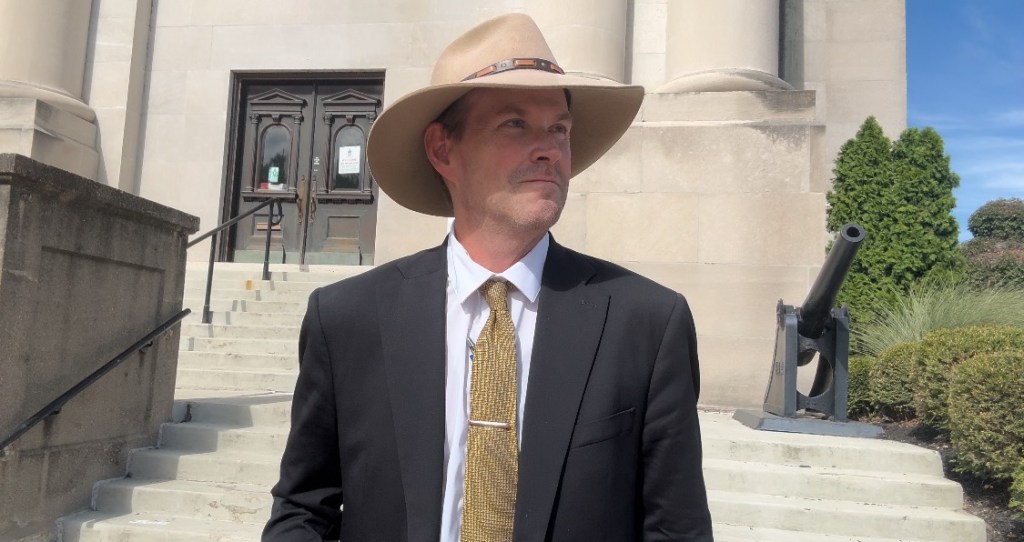
Casey the Car Guy Doesn’t Stand A Chance: Vivek Ramaswamy is much better for Ohio

The ongoing debate surrounding Vivek Ramaswamy’s candidacy for governor of Ohio in 2026 reveals deep tensions within conservative circles, particularly among those who claim to champion an “America First” agenda. Critics, including figures such as automotive entrepreneur Casey Putsch—often referred to in informal commentary as “the car guy”—and far-right influencers such as Nick Fuentes, have launched attacks questioning Ramaswamy’s eligibility and loyalty based on his Hindu faith and Indian heritage. These criticisms, which include claims that he is an “anchor baby” or that his election would lead to Diwali celebrations in the governor’s mansion rather than Christmas, strike at the heart of what it means to be American. Such rhetoric is not only divisive but fundamentally at odds with the principles of merit, hard work, and shared national identity that the MAGA movement purports to uphold.[^1]  I don’t think “far-right” is the right word; that’s the media word for it.  But Hitler was a socialist, not a capitalist or a free-market personality.  When we talk about political scale, we have Karl Marx on the left and Adam Smith on the right.  And most people fit in somewhere along those viewpoints.  But not in all cases.  But when it comes to someone who declares that they are against someone running, and that is their purpose in life, as Casey the Car Guy has said, that opens up a whole set of new problems.  Personally, listening to all these characters talk, I don’t think they harm Vivek Ramaswamy at all.  They will actually help him with moderate voters, and the MAGA types will vote for Vivek because he’s Trump’s endorsed candidate.  But the efforts to make a fire out of these little rebellions are more than telling.

Ramaswamy, born in Cincinnati to immigrant parents who arrived legally and built successful lives, embodies the American dream in a way that should resonate with conservatives. His parents instilled in him values of family, community, and respect—qualities evident in his devotion to his wife, children, and the state of Ohio. Far from being an outsider, Ramaswamy has deep roots in the Buckeye State, having achieved extraordinary success as a biotech entrepreneur through sheer intelligence and determination. Founding Roivant Sciences, he developed multiple FDA-approved drugs and grew his wealth independently, without needing political favors or handouts. This self-made status allows him to approach public service without financial dependencies, motivated purely by a desire to give back after building a fortune.[^2]

His political evolution further demonstrates a genuine commitment to conservative ideals. Initially apolitical, Ramaswamy entered the public arena critiquing “woke” corporate culture in his 2021 book Woke, Inc., which exposed how companies exploit social justice for profit. He followed with works like Nation of Victims and others that refined his platform against identity politics and in favor of meritocracy. His 2024 presidential run brought him national prominence, where he positioned himself as an unapologetic American nationalist, ultimately endorsing Donald Trump and briefly co-leading the Department of Government Efficiency before pivoting to state leadership. Trump’s full endorsement of Ramaswamy’s gubernatorial bid, along with backing from the Ohio Republican Party and figures like JD Vance, underscores his alignment with the movement’s core.[^3]

I have had a personal acquaintance with Ramaswamy over the years that reveals a man who has undergone a thoughtful arc: from a successful CEO impressed by independent, non-“woke” businesses to someone compelled to enter politics for the sake of his family and community. As I hosted events where Vivek interacted with Ohio innovators and saw how people away from Wall Street lived in the trenches, he was inspired; he saw the potential for the state to revive its industrial strength. His plan, reportedly shaped in consultation at Mar-a-Lago, aims to extend Trump’s agenda to Ohio—focusing on business-friendly policies, efficiency, and opportunity for all who embrace American values of hard work and innovation, regardless of background.  I had a front row seat to this development in Vivek, and I understand it.  I think it says a lot about him that he wants to step away from making money as he has and step into public service to give something back.  After meeting him, I can say I know he loves his wife, his kids, his parents, and Ohio.  And he feels he’s been fortunate in life, that he has a lot of talent in talking.  And that he can give something back to Ohio so that more people can get a chance at success, too.  That is what ultimately comes from Vivek Ramaswamy as governor, an extension of the Trump White House into Ohio.  But, not a copy of Trump, but a new generation of innovation and opportunity from someone who has had great success and knows how to make spaghetti in the kitchen. 

In contrast, the fringe criticisms leveled against him appear designed to fracture the conservative coalition. Putsch, a YouTube personality and founder of Genius Garage—a nonprofit teaching engineering through car building—entered the Republican primary, positioning himself as a purer “America First” alternative, decrying immigration and H-1B visas while accusing Ramaswamy of failing working-class Ohioans.[^4] Yet these attacks often veer into nativism, echoing the very identity politics conservatives decry. True conservatism demands testing ideas and character through rigorous debate, not exclusion based on ethnicity or religion. Ramaswamy’s family-oriented upbringing, success in the private sector, and willingness to serve without personal gain make him trustworthy and effective—qualities rare in politics.

Politics requires compromise and collaboration to achieve results; isolation and perpetual rebellion yield nothing. Ramaswamy understands this, having built coalitions across persuasions. He may need to adopt a scrappier style in the primary, punching back against baseless smears, but his trajectory positions him as the overwhelming favorite to lead Ohio forward—reviving its economy, supporting families, and carrying the Trump mantle effectively—the alternative—yielding to divisive saboteurs—risks handing power to Democrats and stalling the broader movement. Ramaswamy’s story is an Ohio story: one of opportunity realized through merit, deserving emphatic support.

It is a late entry to the race, this Casey the Car Guy challenging Vivek Ramaswamy in the primary.  I think it’s an excellent opportunity for Vivek. Bloody campaigns tend to bring out the truth of things, and I think that will work well in favor of the Republican Party once the smoke clears.  And Vivek won’t have any difficulty defeating the stringy-haired Amy Acton from the Democrat side.  She will always be known as Mike DeWine’s girlfriend, the Lockdown Lady.  She has a track record of destruction that will be very easy to defeat in the general.  But first, Vivek has to win the primary, and Casey the Car Guy has invited himself to be punched in the face.  And my advice to Vivek would be not to be so nice and, metaphorically, knock his teeth out. 

[^1]: Far-right figures like Nick Fuentes have explicitly opposed Ramaswamy on religious and ethnic grounds, while Casey Putsch has framed his challenge around immigration and economic nationalism.

[^2]: Ramaswamy’s net worth, estimated at nearly $2 billion by Forbes in 2025, stems from Roivant Sciences and savvy investments; he graduated summa cum laude from Harvard and earned a J.D. from Yale.

[^3] Ramaswamy’s books include Woke, Inc. (2021), Nation of Victims (2022), and others articulating anti-ESG, pro-merit views; he received Trump’s endorsement upon launching his Ohio campaign in February 2025.

[^4]: Putsch, a Tiffin native running Genius Garage, announced his bid in December 2025 as an “America First” option, criticizing Ramaswamy on H-1B visas and foreign interests.

Bibliography

•  Associated Press. “Trump-backed Vivek Ramaswamy wins Ohio Republican Party’s endorsement in 2026 governor’s race.” May 9, 2025.

•  Ohio Capital Journal. Various articles on the 2026 Ohio gubernatorial race, 2025.

•  Wikipedia. “2026 Ohio gubernatorial election” and “Vivek Ramaswamy.” Accessed December 2025.

•  The Columbus Dispatch. “Who is running for Ohio governor in 2026?” December 18, 2025.

•  Times of India and other outlets reporting on criticisms from Fuentes and Putsch, December 2025.

•  Britannica and Forbes profiles on Ramaswamy’s biography and business career.

Rich Hoffman

Click Here to Protect Yourself with Second Call Defense https://www.secondcalldefense.org/?affiliate=20707
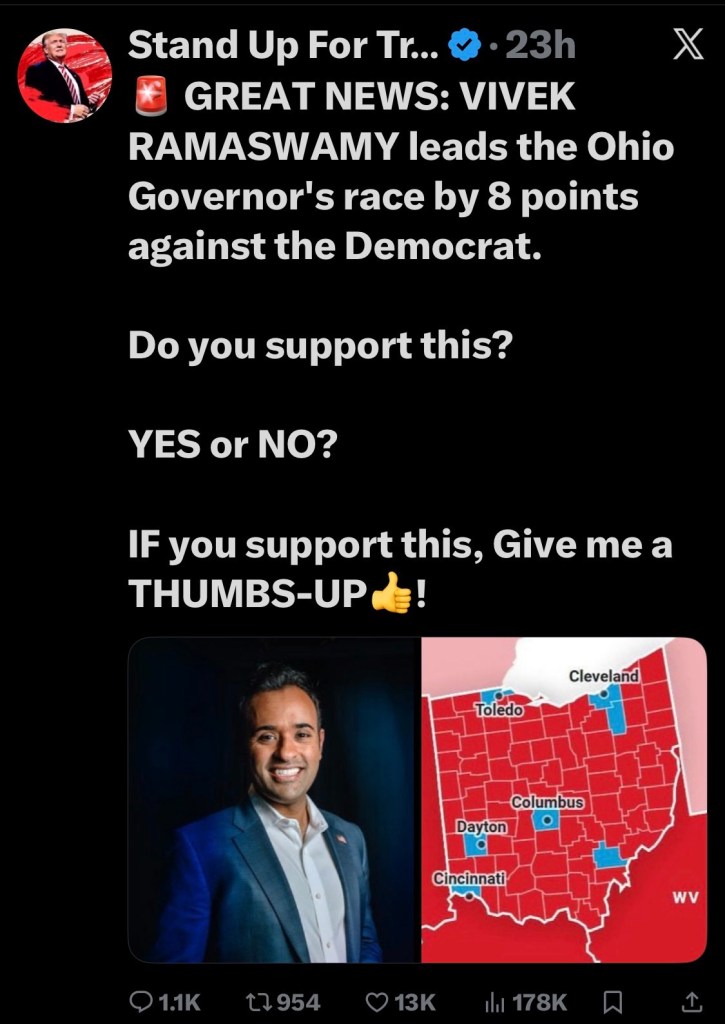
The Left’s Trojan Horse: Nick Fuentes and Tucker Carlson–fallen angels who are trying to stop Vivek Ramaswamy in Ohio

The left-leaning media strategy is obvious: platform a disruptive young firebrand, inject anti-Jewish chatter, agitate through YouTube and podcasts, then aim the shrapnel at Trump and at Trump-aligned picks like Vivek Ramaswamy in Ohio to destroy the MAGA movement in ways that have not previously been successful under any condition.  Suddenly, a kid I’d barely heard of—Nick Fuentes—gets catapulted into mainstream attention. He was the tag-along at Ye’s (Kanye West’s) dinner with Trump in 2022 at Mar-a-Lago; the former president later said he didn’t know who Fuentes was when he sat down, but the meeting still drew bipartisan condemnation because Fuentes is a white nationalist and Holocaust denier.  Not the kind of guy the media would typically embrace, but under these conditions, where nothing to take down Trump has worked, this is the strategy of the left, to promote these fallen stars from the MAGA movement in one last Hail Mary, no matter who gets hurt in the process.  I’m certainly not one who would be calling for censorship.  But it is surprising how quickly everyone forgot about some basic rules of decency in these political fights, which have changed the landscape of debate forever. 123

Ordinarily, a guy with that track record wouldn’t touch mainstream platforms; they would be pushed off into obscurity, and they certainly never would have been on the Piers Morgan show or any other form of media.  Newspapers would have gone on a crusade of personal destruction, much the way they did with Marge Schott back when she owned the Reds and made similar comments, and had her life utterly destroyed for it.  Nick has been banned by YouTube and other majors for hate‑speech violations, with intermittent reinstatements elsewhere and then more removals; even Rumble has suspended his streams for “incitement to violence” after an antisemitic rally—so historically, gatekeepers did act. 45 But now, post‑Musk’s changes to X, he’s back on high‑visibility rails, popping up in interviews and friendly chats that launder his extremism for broader audiences. When you see that kind of boost—especially in late-cycle political windows—it looks less like “free speech flourishing” and more like a tactical Hail Mary to fracture the coalition right before decisive races. 67

Layer onto that Tucker Carlson’s recent, sharp pivot into anti-Israel rhetoric and repeated platforming of figures accused of antisemitism. Multiple watchdogs and Jewish outlets have documented the shift and the blowback—Shapiro blasting him at Heritage, Newsmax siding against him, and even StopAntisemitism labeling Carlson “Antisemite of the Year” in December 2025. I don’t endorse that label; I’m noting the documentation and the political consequence: it’s a wedge inside MAGA world, precisely when unity matters, but don’t cry about it, all is fair in love and war, with war being the point of emphasis. 8910

The script is predictable: amplify anti-Jewish frames, set up a fight between “America First” isolationists and pro-Israel conservatives, then bait Republicans into intramural brawls—Ben Shapiro versus Tucker Carlson, Heritage under strain, Turning Point USA’s AmericaFest turning into a civil‑war stage after Charlie Kirk’s assassination and the conspiracy storms that followed. The result isn’t persuasion; it’s erosion—energy wasted on policing purity rather than winning seats. 11129

My stance is well defined: antisemitism is not appropriate. Praising Hitler is evil. That isn’t “edgy” speech; it’s a moral rot that corrodes any serious movement. Fuentes has a documented record of white nationalist and Holocaust‑denying rhetoric; platforming him in chum-style interviews mainstreams what should remain radioactive. If the goal is to split MAGA and sandbag Trump-aligned candidates, this is the fastest path—smuggle in bigotry so the whole tent gets smeared. Don’t take the bait. 113

Ohio is the case study. Vivek Ramaswamy launched his 2026 gubernatorial run in February 2025, attracted heavy attention, and is now the clear GOP frontrunner in most coverage. Democrats have rallied around Amy Acton; early polling varies by sponsor, but the race is competitive at the surface level. None of that changes the fundamentals: if you let provocateurs redefine “America First” as a race-based or anti-Jewish crusade, you’re handing your opponent a cudgel. Stay on economic delivery, state competence, and merit-driven reform—the stuff that wins governors’ races. 141516

So the advice to Vivek—and by extension to Trump’s slate—is steady and aggressive: do what got you here. Don’t chase the troll theater or appease the grievance‑economy influencers. Use your success arc as a shield and spear: wealth built ethically, businesses scaled, a vision for schools, safety, and jobs—make that the daily drumbeat. When the attack line is “he’s a globalist” or “he’s Hindu,” swat it down as the unserious bigotry it is; it’s not Ohio’s problem set. Ohio’s problem set is growth, crime, schools, and affordability, not the color of Vivek’s skin or whether he wears shoes on stage. 17

In past examples, American society—especially institutions and mainstream media—moved swiftly to suppress voices veering into anti-Semitic or extremist territory. Take, for instance, the post-WWII era: the “Columbians,” an openly pro-Hitler group in Atlanta circa 1946, were acting out Nazi salutes and rhetoric in public. Their organizational charter was revoked and leaders were arrested within months—demonstrating how clear the lines were once drawn against fascist ideologies 1. Likewise, throughout much of the 20th century, publishers, broadcasters, and even churches regularly screened out Holocaust denial, pro-Hitler propaganda, or conspiracies about Rothschilds or “Jewish control.” These ideologies were actively repressed, not platformed.

Fast forward to just a few years ago in Ohio: when the West Chester Tea Party hosted Harald Zieger, who promoted conspiratorial tropes of “Jews control the media, economy, government, even child sacrifice,” it sparked immediate backlash 23. The local Jewish Community Relations Council publicly condemned the event, and the church hosting them was effectively “cancelled,” cutting off their meeting space within weeks 4. It was a classic case of communal and media accountability shutting down extremist speech—without hesitation.

Contrast that with today’s landscape: figures like Nick Fuentes—an avowed white supremacist who praises Hitler, espouses Holocaust denial, and rails against minorities—are not only finding platforms but being endorsed by mainstream media (e.g., Tucker Carlson, Piers Morgan) and embraced by major tech alike 567. Fuentes’s X account, once deplatformed for hate speech, was restored by Elon Musk; he now commands millions of followers, with his extremist rhetoric once erased now normalized—even cheered—on major platforms 68.

This dramatic shift—the difference between swift cancellation and open platforming—highlights a deeper cultural realignment. What was once unthinkable and renounced without hesitation is now acceptable if it serves the political objective of undermining Trump-endorsed candidates. It’s as if the old moral guard has crumbled: conspiratorial tropes against Jews, previously banished, are now resurfacing with institutional backing. The West Chester Tea Party’s fate—banished from public space for a single speaker’s conspiracies—is emblematic of a past where community standards mattered. Today, those same standards are reversed: bigoted voices are amplified if they align with the current political winds. The irony is stark and unsettling.

The broader conservative movement also needs line‑drawing without self-sabotage: condemn antisemitism unequivocally, refuse to sugarcoat Nazi apologetics, and stop platforming it as “debate.” That doesn’t mean gagging policy critique of Israel; it means rejecting conspiratorial claims about “organized Jewry” and dual‑loyalty smears that historically precede violence. When Ben Shapiro calls that out, he’s not gatekeeping taste; he’s trying to keep the movement morally sane. And when Tucker frames it as “just asking questions,” the net effect is still mainstreaming. The cycle is well documented across Jewish and mainstream outlets.  This is a new element to these kinds of games that has never succeeded before, under any circumstances.  But free speech works both ways; success is the best voice for a vote, and these critics have done nothing in their lives except say things.  Vivek has a long track record of great success, and that is his calling card for this election. If that is made clear, there is nothing any of these verbal attackers can do to move the mark.  And as hurtful as all that might be, success heals a lot of wounds, and that is where the focus in Ohio needs to remain.  Vote for Vivek Ramaswamy for governor in 2026 and take politics to a place it’s never been before as a representative republic that will do great things for a very optimistic future. 818

Supplemental material (footnoted):

• Mar-a-Lago dinner (Nov. 2022): Trump dined with Ye and Nick Fuentes; Trump said he didn’t know Fuentes; bipartisan condemnation followed because Fuentes is a white nationalist/Holocaust denier. 123

• Fuentes’ platform status: Banned by YouTube (2020) for hate speech; Spotify removed his podcast for hate‑speech violations; Meta/Twitch/Reddit bans noted; Rumble suspended streams after “holy war” rhetoric; X reinstated him under Musk, boosting reach. 456

• Carlson’s anti-Israel turn & intra-right backlash: Watchdogs charted rising harmful Israel content; Shapiro publicly denounced Carlson at Heritage; Newsmax echoed criticism; “Antisemite of the Year” label amplified controversy. 1881910

• TPUSA/AmericaFest fracture: After Charlie Kirk’s assassination, AmericaFest showcased rifts (Owens/Fuentes/Israel); JD Vance urged unity; Shapiro attacked “frauds and grifters”; coverage across CBS/USA Today/Deseret. 92011

• Ohio 2026 governor landscape: Ramaswamy announced run (Feb. 24, 2025) with platform on education/safety/regulation; media note Trump endorsement and competitive polling vs. Amy Acton. 14171516

Bibliography / Further reading:

1. ABC News, “Trump hosts Kanye West, Nick Fuentes at Mar‑a‑Lago dinner.” 1

2. NBC News, “Inside story of Trump’s explosive dinner with Ye and Nick Fuentes.” 2

3. USA Today, “Donald Trump dined with Holocaust denier Nick Fuentes… at Mar‑a‑Lago.” 3

4. Global Project Against Hate & Extremism, “The Sanitization of Antisemite Nick Fuentes.” 13

5. Media Matters, “Rumble removed Nick Fuentes’ antisemitic rally; far‑right figures turned on Rumble.” 5

6. JTA, “Conservative influencers Tucker Carlson and Candace Owens sharply increased anti-Israel rhetoric in 2025.” 18

7. Times of Israel, “Ben Shapiro blasts Tucker Carlson at Heritage.” 8

8. CBS News, “AmericaFest puts conservative rift on display.” 9

9. USA Today, “Tucker Carlson, Ben Shapiro clash over Candace Owens in Phoenix.” 20

10. Ohio Capital Journal, “Vivek Ramaswamy officially launches bid for Ohio governor in 2026.” 14

11. Deseret News, “Ramaswamy announces Ohio governor run, outlines platform.” 17

12. Fox News, “Ramaswamy announces 2026 bid for Ohio governor.” 15

13. Newsweek, “Polls on Amy Acton vs. Vivek Ramaswamy.” 16

Rich Hoffman

Click Here to Protect Yourself with Second Call Defense https://www.secondcalldefense.org/?affiliate=20707
The Drug War’s Turning Point: Why Mexico’s Palace Was Stormed and Venezuela Became Ground Zero

Latin America is boiling over. In Mexico, hundreds of thousands of protesters stormed the National Palace in Mexico City, demanding accountability from President Claudia Sheinbaum after years of cartel-driven violence and corruption. In Venezuela, Nicolás Maduro clings to power through brazen election fraud, while his regime funnels billions from narcotics and oil into global networks tied to China, Russia, and Iran.

What triggered this sudden wave of defiance? The assassination of Uruapan Mayor Carlos Manzo—a rare politician who dared to defy cartel intimidation—was the spark. But the fuel was a psychological shift: the sight of U.S. aircraft carriers off Venezuela’s coast and Trump’s aggressive strikes on cartel-linked vessels in the Caribbean. For millions living under cartel terror, this was a signal: Big Brother is watching—and ready to act.

Section 1: Claudia Sheinbaum’s Crisis of Credibility

Mexico’s first female president, Claudia Sheinbaum, entered office in 2024, promising reform. Instead, her administration is mired in scandal. Two former officials accused of running a cartel-linked criminal enterprise remain at large—one even holds a Senate seat. U.S. Treasury sanctions forced Mexican banks to shut down after laundering millions for cartels.

Key Facts:

• Corruption Allegations: Intercam and CIBanco closed after U.S. sanctions for laundering cartel money.

• Public Perception: 60% of Americans view Mexico’s government unfavorably; nearly half say it’s doing a “terrible job” on border security.

• Protests: November 15 saw the largest anti-government rally in decades—120 injured, 20 arrested, and palace gates torn down.

Sheinbaum’s dilemma is apparent: appease cartels or risk destabilization. Her socialist platform, like AMLO’s before her, has created fertile ground for corruption—because authoritarian systems are easy to buy off.

Section 2: The Cartel State—Mexico’s Parallel Government

Cartels are not fringe actors—they are the state behind the state. Their reach extends from rural villages to federal institutions.

Scope of Influence:

• Major Players: Sinaloa Cartel and Jalisco New Generation Cartel (CJNG) dominate, alongside Gulf, Juárez, and splinter groups.

• Revenue: Mexican cartels generate $12.1 billion annually, surpassing Colombia as the world’s top drug-trafficking economy.

• Territorial Control: CJNG operates on every continent except Antarctica, controlling ports, smuggling routes, and even illicit gold mines in Venezuela.

Officials face a simple calculus: profit or perish. This systemic corruption explains why extermination camps—complete with crematoriums—exist in Jalisco and Colima, with authorities complicit in cover-ups.

Section 3: Fentanyl—Mexico’s Deadliest Export

Since 2019, Mexico has replaced China as the primary source of U.S.-bound fentanyl. The scale is staggering:

• Labs: CJNG and Sinaloa run industrial-scale “super labs” producing fentanyl powder and pills using Chinese precursors.

• Lab Dismantling: Under Sheinbaum, authorities dismantled 750 clandestine labs, seized 1.5 tons of fentanyl, and confiscated over 2 million pills in six months.

• Largest Bust: In Sinaloa, forces seized 630,000 pills and 282 lbs of powdered fentanyl—the biggest in history.

Border Seizures:

    • FY 2023: 27,275 lbs (12,370 kg)

    • FY 2024: 21,489 lbs (9,750 kg)

    • FY 2025 YTD: 5,515 lbs (2,500 kg)

• DEA Estimates: Cartels produce enough fentanyl for billions of lethal doses annually.

Economics:

• A single kilogram yields 500,000–1,000,000 doses, retailing for $20–$30 per pill in the U.S.—a street value exceeding $20 million per kg.

• CJNG and Sinaloa launder $1.4 billion annually through U.S. casinos and shell companies tied to fentanyl proceeds.

This is not just a criminal enterprise—it’s a weapon of mass destruction disguised as commerce.

Section 4: The Assassination That Sparked a Revolt

Carlos Manzo, Uruapan’s mayor, was gunned down on November 1 during Day of the Dead festivities. His crime? Publicly denouncing cartel extortion of avocado growers and demanding federal action.

Aftermath:

• Mastermind Arrested: Jorge Armando “El Licenciado,” linked to CJNG, ordered the hit via encrypted messaging.

• Security Failure: Seven of Manzo’s own bodyguards were arrested for complicity.

• Protests: His murder ignited nationwide outrage, culminating in the storming of the National Palace.

Manzo’s assassination was not isolated—seven mayors have been killed in 2025 alone. For ordinary Mexicans, his death symbolized a truth long whispered: the government serves the cartels, not the people.

Section 5: Venezuela—The Cartel Republic

While Mexico bleeds, Venezuela metastasizes. Maduro’s regime is a narco-state masquerading as a government.

Election Fraud:

• Maduro declared victory in 2024 with 51.2% of votes, but opposition tallies show 67–70% for Edmundo González.

• International observers condemned the process as illegitimate.

Drug Trade Dynamics:

• Venezuela is a key transshipment hub for cocaine and synthetic drugs, generating billions for elites tied to the Cartel of the Suns.

• Chinese chemical suppliers provide precursors; Chinese money-laundering networks move cartel cash globally.

Geopolitical Stakes:

• China relies on Venezuelan oil to fuel its Belt and Road ambitions; Russia and Iran exploit Caracas as a Western Hemisphere foothold.

• U.S. warships and the USS Gerald Ford carrier group now patrol Caribbean waters, signaling a counternarcotics mission—or regime change.

Section 6: The Trump Doctrine—Psychology as Strategy

Trump’s decision to strike cartel-linked vessels in international waters was more than a military maneuver—it was a psychological operation.

Impact:

• 22 vessels destroyed; 83 killed in Caribbean strikes since September.

• For Mexicans and Venezuelans living under cartel terror, these images broadcast hope: The U.S. is here, and the cartels are not invincible.

This perception emboldened protesters to storm Mexico’s palace and fueled whispers of resistance in Venezuela. Military presence, even without boots on the ground, alters the risk calculus for oppressed populations.

Section 7: The Human Cost

• Mexico: Over 460,000 homicides since 2006 in cartel-related violence.

• Border Spillover: Cartels issue bounties up to $50,000 for hits on U.S. law enforcement; ICE and CBP agents face ambushes and drone surveillance.

• Ohio Connection: Even local sheriffs like Butler County’s Richard Jones have been on cartel hit lists for years—a testament to the reach of these networks.

Section 8: Why This Matters

This is not just a regional crisis—it’s a global one. Cartels are the connective tissue between socialist regimes, authoritarian states, and transnational crime. They finance corruption, destabilize democracies, and weaponize narcotics against civil societies.

Solutions:

1. Designate Cartels as Terrorist Organizations (already underway for CJNG and Sinaloa).

2. Target Financial Networks—especially Chinese-linked laundering operations.

3. Deploy Persistent Naval Presence to disrupt trafficking routes.

4. Empower Local Resistance through intelligence and logistical support.

5. Expose Ideological Cover—Marxism cloaked in populism.

Closing Thoughts

The storming of Mexico’s palace and the unrest in Venezuela are not isolated events—they are symptoms of a deeper ideological and criminal convergence. Trump’s military strategy has cracked the psychological armor of cartel dominance, giving ordinary people a reason to fight back.  And for anybody who wants to fight back against sex trafficking and the degradation of human intellect, this fight against the cartels, from many directions, is the right thing.  A window has opened for the people of Mexico that they have long been waiting for, and they are starting to take action.  The best way to defeat the cartels is to turn the hunters into the hunted and make the people of Mexico defend themselves, knowing that their big brother is just offshore to help them out at a moment’s notice.  And of course, it’s much more than Mexico; the entire region has been overrun by communist influences for the last century, so attacking the drug boats is about reclaiming territorial security from very hostile, foreign invaders.  And the drug boats are just the start of something really good. 

Rich Hoffman

Click Here to Protect Yourself with Second Call Defense https://www.secondcalldefense.org/?affiliate=20707

Trump’s Big Beautiful Ballroom: Leading the world starting with real bathrooms

Of course, it’s been a suppression effort from the start, but that’s all behind us now.  Trump has torn down the East Wing of the White House and is building his Big Beautiful Ballroom, and Democrats are having a major meltdown over it.  But of course, the opposition isn’t about money, which the whole effort is being funded privately by Trump and his supporters; the goal is a continuation of what we have seen from Democrats going all the way back to the Clintons in the White House.  Remember when they would put sex toys on Christmas Trees when they were in the White House, and the scandal of them selling access to the Lincoln bedroom?  I’ve pointed it out here many times: the deliberate effort not to give speeches in the Oval Office and, as much as possible, to dethrone the role of the White House on the world stage, in their efforts to erase America and usher in the age of the global citizen.  Barack Obama was really obvious about taking as much of the Office of the White House —the role of the President of the United States — and diminishing it in the world, rather than propping it up.  And when we would point it out, it was called a conspiracy theory, a wild right-winged illusion!  But the truth has come out in the actions of Democrat presidents based on their behavior and their hatred of this Trump ballroom says it all, because it defies the logic of someone who wanted to be proud of their country.  It is conducive to someone who wants to see it destroyed.  And I say all this because my wife and I recently visited the White House, and I can report that the place is a lot different than when Biden was there. 

Remember when Biden would give speeches at that little film studio they did to replace the White House?  That was on purpose, to diminish the White House’s role in the world.  And they’ll tell you that much at the museum and visitors’ center for the White House on Pennsylvania Avenue, just to the east.  The White House was deliberately built small to avoid poking Europe in the eye.  We had built a nation that was throwing off the kingly role of government leadership, and the point was to downplay aristocracy as much as possible.  But we all knew what Trump was before we elected him.  Trump has always been about gold and showing off his winnings in the competitions of life.  And that’s one of the reasons we wanted him in the White House.  America was the world’s leading economy and offered the best opportunities for a good life to anyone who dared work for it.  And we wanted to inspire the world, not bend the knee to it, as Barack Obama had been doing.  When the White House was built, it was meant to send a message that Americans weren’t going to try to mimic the palaces of Europe, that America was planning to mind its own business, do the basic work of government, and retire to the countryside once the Executive jobs were done in the People’s House.  But that was a time when America was a new country trying to find its way.  What emerged defines the role of the White House, and it has needed something like a ballroom for a very long time.  Visiting the White House, nobody should be using a porta-potty for an important event. 

The new ballroom is over 90,000 square feet and costs around $300 million, with $200 million from private donors, including Trump himself.  Trump did get a legal settlement from YouTube for $22 million, which has gone toward the construction budget, so it’s a grand affair, being funded privately.  Certainly not by the taxpayers.  The goal is to have the ballroom finished by the end of Trump’s term in 2029.  The buzz out there says that only 25% of the public supports it, according to the Democrat suppression polls that are out there, which still hope to keep America in a state of depression.  That game is why Biden would speak at that weird little studio set rather than in and around the Oval Office.  They only used those traditional backgrounds when they had to.  But now everyone knows the game of suppression, that’s why Biden had people on his staff who would film themselves having sex in important buildings, a gay rights protestor was its spokesperson, the autopen became the real president that anybody could sign.  The decentralization of the White House was well at play during Biden’s term, which most reasonable people understand now was an overthrow of Trump’s first term.  And the point was to put him and the idea of a glorified and proud America out of the public eye.  And now, Trump is back and building a ballroom that would rival his private estate of Mar-a-Lago in Florida.  And it will be around for a long time.  It’s time that America stopped apologizing for being good and an inspiration to the downtrodden.  And start showing the world what adopting capitalism is all about, and why they should do it.  The ballroom should be their experience when visiting the White House, and when they leave, they should remember it for the rest of their lives. 

I recently sat down with a good friend of mine, Senator George Lang, and we talked about our years together fighting all kinds of issues.  His latest battle is one with stage 4 cancer, which many people consider a death sentence.  He doesn’t, and neither do I.  I think we have cures for cancer right now.  What we have is an oppressive healthcare system that wants people to die to rid the earth of their breathing presence.  And that same hatred is reflected in the attitude toward the White House.  Democrats want people sick and dependent.  And they want them to use the bathroom in a tent on the White House lawn when they visit.  But the senator and I agreed that we would celebrate him being cancer-free when we visited the White House together when the new ballroom opens, which tells you what he thinks about his chances of survival.  But by then, a lot will have changed for the better, and the White House improvements are just the cosmetic aspect of it.  America is learning to be what the world needs out of it.  And the bad guys who have been standing in the way are now getting run over.  So why appease them even slightly?  Why not build a grand ballroom with working bathrooms where people from around the world can come to the White House and be inspired to take capitalism home with them?  And George’s optimism about his own future isn’t rooted in blind sentiment and delusional hope, but in the facts of the matter.  Democrats have wanted American culture dead, and they certainly wanted to downplay the White House and its global significance.  We elected Trump to elevate the office because we didn’t like what Democrats had been doing to it during the Clinton years, during Obama’s time, and indeed when Joe Biden was inserted in as a stage puppet and his entire administration was run by consultants and public relations firms through the autopen.  As a country, we are turning away from all that, and the Trump Big Beautiful Ballroom is the result of that effort, which will usher in a whole new age for the world with America as the example of goodness, which is how it’s supposed to be.

Rich Hoffman

Click Here to Protect Yourself with Second Call Defense https://www.secondcalldefense.org/?affiliate=20707
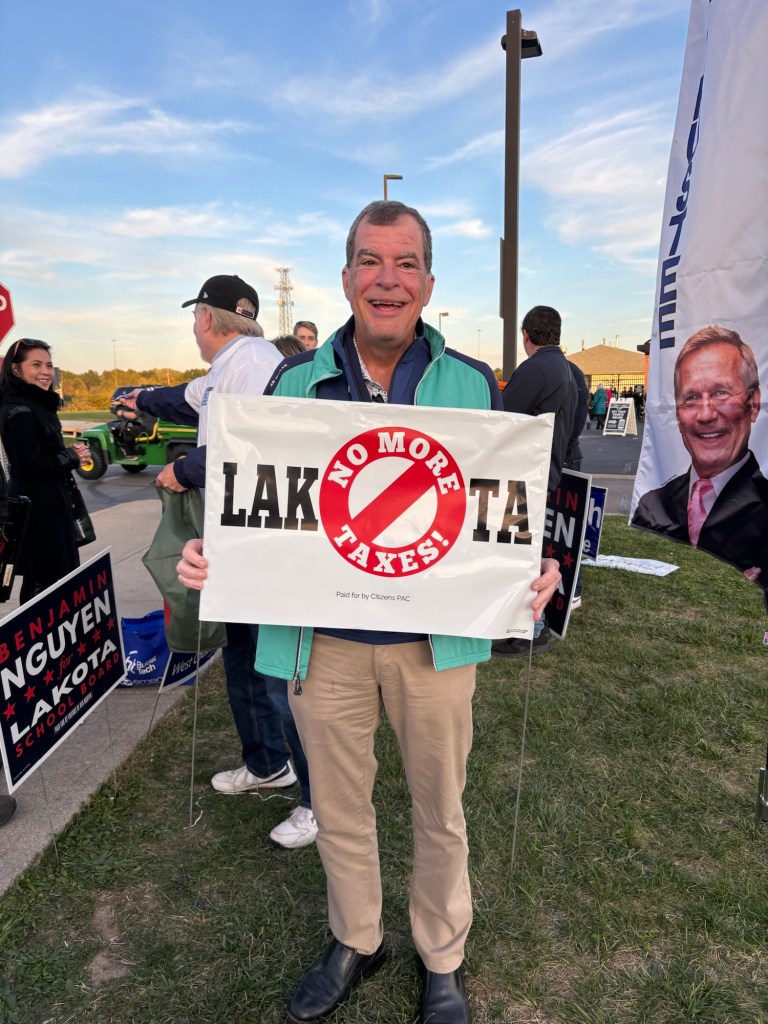
The Lakota Levy of 2025 is Just the First Step: Until there are conservatives on the school board, public schools will seek tax increases

I’m really proud of the interview I did with Senator George Lang just ahead of the election of 2025.  George, first and foremost, is a friend of mine, so I tend not to drag him into things I’m involved in, and when it comes to politics, he and I agree on most everything.  The only significant difference is that he tends to be more considerate of people than I am.  He gives the other side more of a voice than I think they deserve, because he’s a nice guy.  During our interview, when he said that he thinks of Lakota school board members Julie Shaffer and Kelly Casper as friendly people, I disagreed with him.  I think between the two of them at a drunken school board meeting out of town, you couldn’t find enough clothes to half-dress one mannequin in the back of a Dillard’s.  Lakota’s school board is very liberal, and those two individuals lead it, which is embarrassing.  And expensive.  But George is good to everyone.  He has his opinions, but he gives everyone a fair shake, and I often don’t get to show that to people.  Neither does he, as the Majority Whip of Ohio’s Senate, a significant position with considerable influence.  He knows that around me, he can be himself and that I won’t run off and talk about anything that we discuss privately.  It was pretty unique that I got to put him on camera and talk for an hour about everything, from the upcoming Lakota levy to his battles with stage 4 cancer.  However, to clear up some misconceptions people had about George and a donation he was shown giving for the pro-Lakota levy efforts, we conducted an interview together that I think was better than he could have achieved anywhere, by any modern media method, news outlet, or podcaster. 

The only people who do the level of interview at the level of what George and I did were someone like Tucker Carlson or Joe Rogan, and I don’t think either of them could have done a better job.  George and I have known each other for several decades, but we had never sat down and just talked in front of the camera like that. What was captured was very useful to many people who wonder about various things.  I even asked George before the interview, “What’s off limits?  Is there anything you don’t want to talk about?”  He said quickly, “No, nothing, anything, and everything is on the table.”  So, we just talked like a couple of people and let others in to observe, and I was able to show them why I like George so much, even though he has evolved into a powerful politician and a prominent figure in Butler County politics.   And over the course of that interview, which was mainly about the upcoming Lakota levy, the most significant tax increase in the history of Ohio, I think he said a mouthful, which I completely agree with.  We all believe that the Lakota levy is going to crash and burn.  But don’t assume that this wasn’t their plan all along: to give the public a considerable blowout number and lose badly in an election.  Then, to say in the spring or summer that they listened to the public and came back with a reduced number.  Just because we defeated this levy in the 2025 election, it doesn’t mean it won’t come back in some form or another.  These public schools are only known for one thing: wasting tax money and asking the public for more, often on the back of property tax increases, to fund an overly progressive society. 

As George said, he thinks that the Lakota school board and its satellites, which include the treasurer and superintendent, are smart people.  I think what he calls “smart” is very maliciously manipulative, even evil.  But Genghis Khan was considered intelligent too, and so were most of the mass murderers of the world.  People thought that Jeffrey Dahmer was smart, even as he dismembered people in his kitchen and stored their remains in his refrigerator.  I would say that the Lakota school board members are very manipulative, which they have to be, given their liberal leanings.  Because people on the left often have to figure out how to get others to do things for them that they can’t do for themselves, they become pretty skilled at it over time.  However, as George and I reflected, this levy attempt is merely them dipping their toe in the water to see how the public reacts.  The details of that kind of election scope are why I think that interview is better than any other outlet could have pulled off, because we covered a lot of ground that most people would blank out after 15 minutes.  However, what we covered was essential to nearly every living, breathing human being, especially those residing in Butler County, Ohio.  It’s encouraging that in Butler County, an effective resistance to the Lakota tax increases has emerged in the No More Taxes group, which is fighting the Lakota levy.  And there are some really good people involved, and they have raised money not just for this levy, but for several upcoming ones as well.  However, for voters who have to show up and vote, they really need context on the scope of the problem.

So, how do we prevent more tax increases from being imposed in the future?  Well, don’t put liberals on the school board, and right now, there are four solid Democrats.  They call themselves other things to avoid the stigma of not being conservative in Butler County, but they are hard leftists on most policies.  And lefties love to waste money.  So, to stop wasting money, which Lakota already has a quarter of a billion dollar budget for a school, which I argue is just a dressed-up babysitting service, elect conservative school board members.  For this election, Ben Nguyen is the guy.  But in future elections, we need more people like Ben.  You need at least a three-vote majority, which we had for a while at Lakota.  And as soon as we didn’t, Lakota went for a tax increase.  That’s all they know to do—because they are liberals, and because liberals are never smart with money.  They might be manipulative, deceitful, scandalous, or monstrously unprincipled.  But they are spendthrifts who want to live off the efforts of others, starting with the real estate of Butler County.  Once Vivek Ramaswamy is the governor of Ohio next year, and Trump continues to dismantle the Department of Education and unleash the power of School Choice, all the public schools will have to change and do a lot more with less.  Their cost structure is significantly inflated due to their collective bargaining agreements, which stem from their union membership. We are all aware that unions often disrupt cost structures wherever they emerge, as they allow the mediocre to receive disproportionately high incomes.  And that is certainly the case at Lakota schools.  So, yes, the levy will likely fail in a big way on election day, provided people don’t sit on their hands and watch Netflix instead of voting.  People need to go out and vote.  But this is only step one.  People are going to have to dig in and fight to keep our taxes reasonably low until there is a new school board with conservatives on it.  Because, as sure as you are reading this, Lakota is planning the next levy, once the smoke clears from this one, because they have spent themselves into oblivion.  And only higher taxes can satisfy their never-ending hunger for more money to waste.

Rich Hoffman

Click Here to Protect Yourself with Second Call Defense https://www.secondcalldefense.org/?affiliate=20707
George Lang Donated A Lot of Money to No More Taxes at Lakota: Fighting and beating stage 4 cancer

I’ve known George Lang for a long time, and I would say I know a fighting side of him that a lot of people don’t know about.  And we talked about all those fights as he gave an update on his stage 4 cancer treatment. And to let you know how well it’s going, after we concluded our interview, we made a promise to each other to attend the White House together once the new ballroom opens.  So he’s not planning to die, he expects to beat the cancer thoroughly, and he gave details on just how and what comes next during our discussion.  But speaking of cancers, there was a lot of controversy when his name appeared on a donation list for the pro-levy campaign for Lakota schools, for $2000.  When I first heard about that, I was skeptical, yet his name was there.  I happen to know that George gave at least $2000 to the No More Taxes group opposing Lakota.  So what was going on?  George explained that, too, as best he could.  In the end, he gave $4000 to the No Tax Levy Lakota group and asked the Pro Lakota Levy people for his money back, which they were in the process of doing as we spoke.  I’ve known George for well over two decades, and we’ve talked about that long history and the many fights we’ve both been in over the years.  So I thought it was weird that he would suddenly be for any tax increases.  As it turned out, he very much wanted me to know that it was an accident and that he wasn’t all of a sudden a supporter of higher taxes.  Tax rates are killers of communities, and for his entire life, George has fought high taxes.

No More Taxes!

So the next question everyone has is: how could his $2000 have been an accident?  Wouldn’t he notice a missing $2000?  Well, when I saw it, I thought George was trying to be supportive of Lakota schools because he works with them a lot as a legislator.  One thing in politics is that making enemies isn’t a great way to bring people together.  And as a politician, you are supposed to represent all people, not just your own point of view.  But then again, people vote for you based on your point of view, and they expect you to be authentic.  So right out of the gate, no matter what you do, someone is going to be mad at you.  George has told me for years that I have a lot of talent for politics and has tried to nudge me into several offices, but I have been very resistant, because I reserve the right to throw rocks.  In political theater, there needs to be lots of personalities to test the market of ideas, and we need rock throwers.  But we also need bridgebuilders.  George has always been a bridgebuilder, and I respect him for that.  I have always been a rock thrower.  And he respects me for that.  And we both like a good fight, which is what we have in common.  I figured that if he was donating money to the Lakota levy, there must be a strategic reason, and that he would explain it to me.  I couldn’t imagine what that good reason would be.  But I would be at least open to his explanation.  But as it turned out, he blamed it on his wife, Debbie.  And they get involved in several hundred thousand dollars a year in political donations, and in the amount of that, George didn’t notice the charge on his credit card, because there were so many transactions. 

She voted for the largest tax increase in Ohio’s history!

I’ve known Debbie for a long time too, and I know where her mind is.  She and George give everyone the benefit of the doubt.  I hold grudges forever, and most of the time when people do me wrong, I never forget it.  But Debbie is a loving person.  I could see her playing nice with the Lakota school board.  She and George want to work with the board to make things work well.  Lakota Schools is the largest employer in Butler County, so they aren’t the kind of people to draw lines that they can’t walk out of if they need to.  Knowing both of them, I can’t imagine a scenario in which they accidently voted for a tax increase.  But they give a lot of things, and when it involves that much money, it is possible to get the wires crossed.  George and Debbie have worked very hard for a very long time, and they are very successful.  They didn’t get that way because of politics.  But they have carried their business success into their interest in politics and their desire to make the world a little better through their political involvement.  A lot of us on this Lakota issue see the public school as a vile enemy, teaching children all kinds of terrible things, and wasting a lot of money while doing it.  I am in that camp.  But Debbie’s always hopeful and uses her vibrant personality to build relationships wherever possible.  The important thing to me is that, once they realized where the donation had gone, they worked to correct it, put their money where it counts, and donated against the Lakota levy of 2025. 

A lot of people can’t imagine writing a $2000 check once in their life, let alone writing so many of them that you don’t even notice it on a credit card statement.  And to make sure everyone is clear on the subject, to turn around and give $2000 more to the No Tax Lakota group, in addition to the previous amount.  I say it all the time, politics is a blood sport.  Sometimes you have to be brutal.  Sometimes you want to be nice.  Sometimes you have to be a combination of all kinds of approaches; no one thing works every time for everything.  But when you have been successful for a long time, and survived a lot of battles over the years, which stage 4 cancer is just the latest, resource management can give you all kinds of options.  And what matters is how those resources are managed.  And as soon as he could, George called me and wanted to set the record straight, because he cares about these things.  We spoke for over an hour, about a lot of topics.  And for everything anyone would want to know, the interview with George was great, full of fascinating details.  But even through the fog of politics, which can get hazy at times, I have seen George fight through some really tough moments with his wife, and they are a good team.  They certainly aren’t phonies, which I think makes them very unique, given that they have achieved a lot of success by anybody’s measure with a level of authenticity that many would think wouldn’t be possible.  But I know it’s true.  And we talked about it all.  And I am looking forward to George beating the cancer, to the Lakota levy going down in spectacular flames, and to Trump building that new ballroom.  I think by then we will all have earned a nice night out on the town to see it for the first time.  The White House is a special place, but only because there are special people who have fought in the trenches to make it so.  And George and Debbie Lang are among those who have.  And with their donation to the No More Tax group of Lakota, they are supporting the next generation of fighters, who have a lot of good work ahead of them.  And by the time the smoke clears, we’ll all be proud of the roles we played in that magnificent contest.

Somebody wasted a lot of money on this!

Rich Hoffman

Click Here to Protect Yourself with Second Call Defense https://www.secondcalldefense.org/?affiliate=20707
Nancy Nix and I Discuss Friendships, Corruption, and the Future of Politics: Why we can’t support Roger Reynolds for Butler County Commisioner

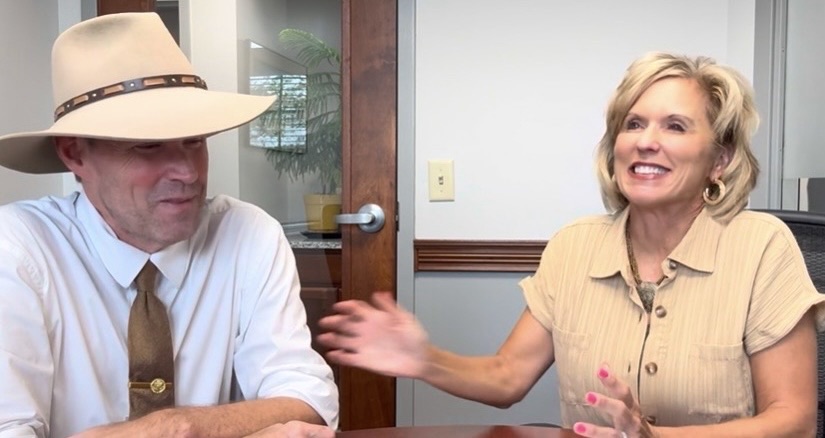
Nancy Nix and I have strong feelings about Roger Reynolds’ decision to run for Butler County Commissioner.  We have been very supportive of Roger after he found himself in a lot of trouble with a court case that accused him of abusing his office.  While we believe what happened to him was not fair, and we have both worked to help him restore his name, we have been surprised by his behavior, especially his attempt to return to public office in the way he is.  Politically speaking, we have moved on to the next generation of consideration and have selected Michael Ryan to be the next Butler County commissioner in a race that presents some challenges.  It involves an incumbent, so support for a challenger needs to be focused and have the backing of the party.  And now that Roger Reynolds, aware of these difficulties, has decided to split the vote even further, making it even harder for Michael Ryan, it has a personal aspect to it that Nancy and I chose to discuss in front of a camera, rather than on the sidelines somewhere.  Nancy had stood by Roger throughout his court case and was really the only friend he had left in county politics.  So when he turned around to sue her for his old job back, after she had stepped in as Butler County Auditor to make sure his old office didn’t fall off the rails, the hurt was quite defined.  We both wanted to see good things happen to Roger, but the way he was going about trying to restore his name was an all-too-grotesque reminder of what had gotten him in trouble to begin with.  Because, in truth, even though we feel that what happened to Roger was unfair, the cause of the problem in the first place was a personality issue that was now manifesting itself, working against the people who had tried to help him the most in the first place, and it was alarming to discuss.

Roger is not a political newcomer.  He understands what he’s doing by joining the commissioner race this late in the process, which is the same kind of self-centered action that got him into trouble in the first place.  Even if you have political enemies within the Republican Party, how you deal with that problem says a lot about the kind of person you are.  And that personality trait is what now has Nancy and me talking as an answer to the many people who think that we should automatically support Roger Reynolds because he decided to run for public office, due to our previous support.  While our opinions about the case didn’t change, the court case process did reveal elements of Roger’s character that give us pause.  I can promise I would never find myself in the situation that Roger Reynolds did.  I have a lot of enemies who are always looking for me to stumble upon something, and that is part of the cutthroat world we live in.  And when it comes to the testimony that was most damaging to Roger Reynolds in his dispute against Sheriff Jones and Ohio Attorney General David Yost, it was his personality that ultimately turned out to be his downfall.  The love of seeing his name in lights after winning a political seat and the feeling of redemption that such an office brings with it.  Obviously, the need to run for public office is mainly for Roger Reynolds, not for the benefit of the seat.  Because Nancy Nix stepped into his old auditor role and has done an excellent job, the job performance in that position actually improved, and the people of Butler County were well served in the exchange. 

And that is where things start getting nasty in this commissioner race.  Nancy and I have been thinking about the next generation, the kind of politicians who have a clean slate and many years ahead of them.  And we endorsed Michael Ryan because of the extended runway he has ahead of him, which doesn’t have court cases and corruption charges attached to it.  And honestly, as cutthroat as politics can be, I doubt Michael Ryan will ever find himself in the kind of trouble that Roger Reynolds did, because he knows how to work with people instead of against them.  One thing that got Roger in trouble, which is why Nancy and I decided to take a pass on him for an endorsement for the commissioner job, is that he seems to like the titles that politics gives him too much.  That certainly came out in the trial.  The testimony that Jenni Logan, the former treasurer of Lakota schools, showed in his trial was embarrassing to me.  As it turned out, I still supported Roger, but with considerably less enthusiasm.  Knowing Jenni as I have for many years, there are elements of that conversation that should have never happened.  I would never find myself in that same trouble, that is for sure.  And that is a sign of a deeper problem that Roger Reynolds needs to work out.  Private sector work is a good place to do that kind of thing.  Getting back into party politics in a helpful way would be another.  However, attempting to emerge with a crash-and-burn strategy to recover name recognition was the kind of bad decision that made the trial, with Jenni Logan’s testimony, so damaging. 

For Nancy, as we discussed on camera, the breaking point came when Roger sued her to regain his old job and decided to turn against her.  It deeply hurt her.  As we were talking, her eyes welled up as she fought back tears.  It took a lot of courage for her in the height of that political situation to go against the logic of self-preservation and to stay by Roger’s side during that complex court case, as a friend.  Because that same arrogance that got him in trouble in the first place was now being turned on her, because the title of a job that doesn’t pay that much was much more important to him.  And now, as she was trying to build a team in politics that actually got along and worked together for the benefit of voters in elected offices, Roger was seeking redemption by tearing it all apart for his own purposes.  And while we can certainly understand wanting to restore a name, we don’t understand burning down positive things as a means to do it, which is why he found himself in court in the first place.  We all have political enemies.  Some of them are vicious.  I have a lot of nasty enemies who would love to bring significant harm to me if they could.  But it’s up to me not to fall into those traps.  Nancy Nix is a very popular and influential character.  She has the Vice President of the United States just a phone call away, as well as Vivek Ramaswamy and many other national figures of great significance.  The chance to make the kind of mistakes that Roger made is frequent, yet she avoids them and maintains a good reputation, despite the desires of her political enemies to see her downfall.  And that begins with being a good person in all phases of life, not in seeking a public position to hide personality flaws at the expense of taxpayers and voters in general.  And that is why Nancy and I had a conversation about why we couldn’t support Roger Reynolds for this Butler County Commissioner position.  There are steps that he could have used and teams he could have been a part of building.  But instead, he went for the kind of slash-and-burn strategy that got him into trouble to begin with, which was a decision he clearly made on his own, regardless of the cost.

Rich Hoffman

Click Here to Protect Yourself with Second Call Defense https://www.secondcalldefense.org/?affiliate=20707
Ethics in Politics: Holding grudges won’t help win races, or maintain political management

Social interactions are at the heart of human discourse, and I speak from the perspective of someone who has spent a long time building relationships—not always easily, and certainly not always with universal approval. People often talk about love and unity, but I wouldn’t say I’m universally loved. In fact, I’m probably excessively hated by many, and I understand why. It’s not something I wake up hoping to change. I don’t start my day thinking, “I want people to love me today.” That’s not the goal. The goal is to make things work, and sometimes that means doing things others aren’t willing to accept. That’s when people get mad.

Recently, I’ve been vocal about supporting Ben Nguyen for the Lakota School Board. That’s stirred up some discussion. Lynda O’Connor has supported him, the former Lakota school board member who a lot of people are still very angry with.  I was at Ben’s fundraiser at Nancy Nix’s house, and Isaac Adi, another Lakota school board member was there too. I’ve seen Isaac at a few events, and we’ve had the opportunity to talk a bit. There has been tension between us, especially with the way his relationship with Darbi Boddy evolved, and how our policies got tangled up. That situation has many layers behind the scenes. If you want to talk ethics, you can justify being mad at people for what they do to each other.  I’ve been married for 37 years and have learned a lot about dealing with other people. I’ve dealt with all kinds of people—kids, grandkids, colleagues—and not everyone aligns with your goals. You have to find a way to make it work.

If you draw a hard line and say, “It’s my way or the highway,” you might be ethically correct, but you’ll lose people. And if you’re trying to influence something, losing people means losing effectiveness. Politics isn’t about making friends. When you’re trying to bring groups together, you can’t fall into the trap of friendship-based peer pressure. You have to rely on the strength of your ideas in a competitive environment. Politics isn’t a branding exercise. You can either withdraw from society or face the challenge of building teams to accomplish a task. It becomes dicey when political affiliations are based on relationships rather than ideas.

You want the best ideas to emerge. You want a competitive atmosphere where ideas collide. That’s the way you get an authentic system. You have to trust people to vote correctly, but only if you articulate your ideas properly. Sheriff Jones and I have supported other candidates within the Republican Party, and recently we have talked about the things we have in common. We want to help the Trump administration achieve its goals, even if there’s controversy—like the situation at the county jail over immigration policy. We agree on some things and disagree on others. We joke about it when we see each other to stay on ground we can work with. But ultimately, it’s not about building friendships or consensus. It’s about who can make the best argument.

Politics should be about argument, not popularity. If feelings get hurt in the process, that’s part of the election cycle. Politicians often use likability as a tool—they kiss babies, shake hands, and make themselves accessible to the public. But that’s just the first layer. You have to be confident in your ability to articulate a message. Many politicians get elected but don’t raise money or debate effectively. If you can’t engage with people who disagree with you, things fall apart. People get mad. I’ve had people mad at me just for being in a picture with Isaac. They say, “You know what he did to Darbi Boddy?” and assume that by being seen with him, I’m supporting him over her.

That kind of division doesn’t help a party win. There are all kinds of people with different thoughts. Isaac and I are not going to the movies together any time soon, but he represents a vote on the school board. He has opinions about how things should be done. I think he cares about kids and schools, even if I disagree with his methods. That’s what political faith is—believing in the process. If you base everything on popularity—“If you like me, vote my way”—you’re not making a real argument. You have to go further. If you can’t, things fall apart.

It’s essential to communicate with one another. Political candidates need to engage, not isolate. You don’t have to be best friends, but you need common ground. On immigration enforcement, for example, we can sit down and have a great discussion. It’s about positioning your statement and believing in what you’re saying. If you can’t win people over with your argument, people often fall back on popularity. That’s dangerous. You’re using your elected position to steer people through peer pressure, not persuasion.

That’s not sustainable. It’s why political parties struggle to work together. If you do that in your family, you’ll have a broken Thanksgiving dinner where people show up, but nobody likes each other. You might have money, but no real friends, they just hang around you for what they can get out of you. How you handle relationships determines your success in politics. Shared opinion has to go through the funnel of the party system. You can’t have 30% of people on one side and expect unity. You need at least 50% alignment. Even if you’re 40% apart on issues, you can still be on the same side of the line. Democrats are on the other side, and you have to be willing to work with people of different opinions.  Republicans might be at the center line of 50% and others are at 90%.  But their Democrat opposition might be at 40% on the other side of the line, and those kinds of Democrats and Republicans are closer together ideologically than the hard-core Republican at 90%.  But Republicans have to find a way to work with other Republicans if the party is going to do the work voters need. 

That doesn’t mean you abandon ethics or break promises. But you can’t get caught in “It’s either me or them.” That’s not a good place to make articulate arguments. Politics should be about fulfilling voter objectives. That’s the goal. I’ve disagreed strongly with how Isaac and Darbi’s relationship on the school board collapsed. It made me reluctant to get involved in school board issues again. But it’s not fair to someone like Ben Nguyen—a good young man who wants to make a difference. He’s trying to partner with other people to build something positive.

Looking at Isaac during Ben’s fundraiser, I  thought, “Maybe we can get another vote. Maybe we have a chance.” Not right away, but in the near future, we can build something. That’s how I’ve survived—by staying true to myself, relying on my ability to make an argument, and letting public debate shape opinion. It’s good to stay away from popularity contests. Fights don’t help anyone. They create a disjointed approach, and then Democrats win their spots because they unify—even if their ideas are really far apart.

Republicans need to figure this out, especially in school board races. When people see me in pictures with other political people they don’t like, they hold grudges. But that doesn’t solve problems. I want progress. I don’t care if people want to get a corn dog with me. What matters is whether they consider the arguments and make informed decisions. That’s what we’re trying to do—get the correct arguments into the public arena and give voters choices that reflect their lives.

Most people have excuses and fights along the way. However, it’s all aimed at uncovering the truth about what the public wants in representation. You have to trust that process. Make your case with confidence. Don’t rely on popularity. Don’t expect people to vote your way just because they like you. Win the argument. Let the best ideas rise. Let people make their own choices. That’s how things work out for the better and you get a civil society.  And much better political teamwork.

Rich Hoffman

Click Here to Protect Yourself with Second Call Defense https://www.secondcalldefense.org/?affiliate=20707
Why I Support Michael V. Ryan for Butler County Commissoner Over Roger Reynolds: The Spooky Nook Sports Complex and vision for the future

In the ever-evolving landscape of local politics, decisions about leadership are rarely simple. They require reflection, vision, and a deep understanding of what a community truly needs to thrive. As someone who has stood by Roger Reynolds through difficult times and considers him a personal friend, my decision to endorse Michael Ryan for Butler County Commissioner was not made lightly. It stems from a clear-eyed assessment of the future of Butler County and the kind of leadership that can best guide us there.

A Legacy of Loyalty and Friendship

Let me begin by acknowledging my longstanding support for Roger Reynolds. I’ve stood with him through challenging moments, and I’ve always appreciated his dedication to public service. Roger has contributed meaningfully to Butler County, and I personally like him. But politics isn’t just about personal loyalty—it’s about choosing the right person for the right job at the right time. And in this moment, I believe Michael Ryan is that person. Roger has announced his run for this office knowing the political situation, and he did it anyway, ultimately making it more about what he wants and needs, over what is best for this commissioner seat. He has a desire to justifiably clear his name from a rough period of time. But in that process, he showed a lot of bad judgment in pushing away people who stood by him the strongest through that process, and we don’t need that kind of trouble in a commissioner office.

The Spooky Nook Sports Complex: A Symbol of Visionary Leadership

One of the most compelling reasons I’m supporting Michael Ryan is his instrumental role in the development of the Spooky Nook Sports Complex in Hamilton. Located on the site of the old Champion International Paper factory, this facility is more than just a sports venue—it’s a symbol of economic revitalization, community engagement, and visionary leadership.

Hamilton has long needed a spark to reignite its downtown economy, and the Spooky Nook project has provided just that. It’s the largest sports complex of its kind in North America, and it has transformed a once-depleted industrial site into a vibrant hub of activity. Michael says it’s the second largest, but who’s splitting straws?  It’s a pretty spectacular venue on the Hamilton, Ohio riverfront.  Weekends at Spooky Nook are packed with volleyball tournaments, basketball games, and conventions. The facility includes a hotel and event center, drawing visitors from across the country and injecting new life into local businesses.

This kind of transformation doesn’t happen by accident. It requires leadership that can bring people together, facilitate investment, and create a shared vision for the future. Michael Ryan, as Vice Mayor and City Council member, played a key role in making this happen. He didn’t just support the project—he helped create the conditions that made it possible.

The Power of Communication and Connection

Michael Ryan’s greatest strength is his ability to get people talking. In today’s political climate, shaped in many ways by President Trump’s deal-making influence, the leaders who succeed are those who can build coalitions, foster dialogue, and unite diverse groups around common goals. Michael Ryan is that kind of leader.

He’s personable, approachable, and genuinely interested in what others have to say. When you put him in a room with people from different backgrounds, he doesn’t create division—he creates conversation. That’s a rare and valuable trait in politics, and it’s one of the reasons why the Spooky Nook project was able to move forward. Investors felt confident that the city government would support their efforts, and that confidence was rooted in the kind of leadership Michael Ryan exemplifies.

A New Generation of Politicians

Michael Ryan represents a new generation of politicians—leaders who don’t wait for opportunities to come to them but actively seek out ways to improve their communities. He was elected in 2017, during Trump’s first term, and he brought with him a fresh perspective and a proactive approach to governance.

This isn’t the era of traditional politics anymore. The days of sitting in an office and waiting for constituents to come knocking are over. Today’s leaders need to be out in the world, building relationships, attracting investment, and thinking creatively about the future. Michael Ryan understands this, and he’s already demonstrating it—even before officially becoming commissioner.

Aviation and Economic Development

A perfect example of Michael Ryan’s forward-thinking approach is his involvement with Joby Aviation. He’s been working to establish connections with the Dayton International Airport area, where a new factory is being built to produce air taxis. This is cutting-edge technology, and it represents a major opportunity for Butler County to position itself as a hub for innovation and transportation.

Michael Ryan isn’t waiting for someone else to take the lead—he’s already out there, laying the groundwork for future partnerships and economic growth. That kind of initiative is exactly what we need in a commissioner.

The Contrast with Roger Reynolds

Again, this isn’t personal. Roger Reynolds has had his time in office, and he’s done some good work. But his approach is rooted in a more traditional style of politics—one that doesn’t always align with the demands of today’s rapidly changing world. His decision to run again feels more like an attempt to redeem his personal brand than a genuine effort to serve the community in new and innovative ways.

In contrast, Michael Ryan is focused on the future. He’s thinking about how to revitalize Middletown, attract enterprise zones to Hamilton, and create sustainable growth across Butler County. He’s not just reacting to problems—he’s anticipating opportunities and acting on them.

Leadership for the Right Reasons

Ultimately, leadership is about seeing and doing things that other people can’t do for themselves, or understand at the time. It’s about putting the needs of the community ahead of personal ambition, and I think with Roger Reynolds, he has a need for personal redemption because of what he’s been through.  But he’s had a chance to do things in the past and we know what we’ll get from him.  Michael Ryan has shown that he can do more, and is a fresh start. He’s not running for commissioner to boost his own profile, which comes naturally as part of the job—he’s running because he believes in Butler County and wants to help it reach its full potential.  He’s what the future looks like and he brings with him a lot of fresh perspective.

He’s already proven that he can attract investment, facilitate dialogue, and bring people together. He’s shown that he understands the complexities of economic development and the importance of proactive governance. And he’s demonstrated a commitment to transparency, collaboration, and long-term planning.

A Vision for Butler County’s Future

As we look ahead to the future of Butler County, we need leaders who can think big, act boldly, and unite our communities around a shared vision. We need commissioners who understand the importance of infrastructure, innovation, and investment. We need people who are willing to work around the clock to make our county a better place to live, work, and raise a family.

Michael Ryan is that kind of leader. His work on the Spooky Nook Sports Complex is just the beginning. He has the energy, the ideas, and the relationships to take Butler County to the next level. Whether it’s aviation, tourism, or enterprise development, he’s already laying the foundation for a brighter future.

Conclusion

So yes, I’ve supported Roger Reynolds in the past. I’ve stood by him, and I still consider him a friend. But when it comes to choosing the best person for Butler County Commissioner, my support goes to Michael Ryan. He’s the right leader for this moment, and I believe he will do an outstanding job.

If you haven’t visited the Spooky Nook Sports Complex, I encourage you to go. See for yourself what visionary leadership can accomplish. And when it comes time to vote, you won’t go wrong in supporting Michael Ryan—a leader who listens, connects, and delivers.  And has an eye for a future that people can really get excited about. 

Rich Hoffman

Click Here to Protect Yourself with Second Call Defense https://www.secondcalldefense.org/?affiliate=20707

Lakota’s Levy is the Most Expensive in Ohio’s History: Meet Ben Nguyen who is a solution for the future

After I met Ben Nguyen and endorsed him for the Lakota school board for the upcoming November 2025 election, the business of why he was running evolved into a community priority.  Ben is a young man who wants to stay in the school district, but with the loan amount that is looming with the approval of this massive levy from Lakota, the easy math is projecting the debt burden alone to be an imposition of $1.2 billion onto the economy of the Lakota school district, which is outrageously too much.  The amount of economic growth that the community would need to generate to offset the cost of this levy is unrealistic, and it would certainly set the course for the kind of decline that most affluent areas experience over their lifetimes.  Things have been relatively good in West Chester and Liberty Township for several decades, mainly because we have had a strong political commitment to prevent excessive taxation.  That has kept things somewhat affordable, but it’s a delicate balance that requires constant political pressure to maintain low taxes.  Butler County itself has a lot of Republicans in it, and republicans don’t like taxes for big, ballooning government.  It has been a significant number of years since the Lakota school district attempted to put a levy on the ballot, mainly due to the brand damage that the school itself would have incurred, as we have maintained a sharp resistance to excessive taxation within the school district.  However, Lakota has been waiting until it had a four-member majority of Democrat-minded big spenders, and it now has that, and it is taking its shot with the most expensive school levy attempt in Ohio history.  And what they want now isn’t all.  If they can pass this levy, they have an operations levy in mind that will also be enormously expensive.  So Ben and I discussed all this on camera, because people want to know some of these details that newspapers and yard signs never get to tell the complete story. 

Even though Ben has just graduated from Lakota, he had a great experience at the school. He loves his community and wants to stay in it, attending college at Miami University.  And start a family in his hometown.  However, the problem is a math problem: at the current rate of inflation and interest rates, the already average cost of a home in the Lakota school district is around $450,000.  By the time Ben graduates and wants to start a family in his mid-20s, those exact costs will be in the $ 600,000 range, and the math doesn’t work out.  And that will all be without the price of this Lakota levy.  Adding that $ 1.2 billion debt liability to the community would be the end for many residents who are fixed-income types, and it would significantly shorten the list of people who could afford to buy into the community.  And as we drive around cities with former opulent homes and wonder how they become crime-ridden slums, this is how that process begins.  A good place to live is started.  People get comfortable with things and stop monitoring costs, and they elect Democrats.  Democrats get on school boards and city councils, and start voting for excessive spending, wrap their communities in debt obligations, and poof, a slum is born.  The economy collapses.  The values drop.  And everyone loses a lot of money, and the only opportunities people see for themselves are crime.  It’s essentially the story of Middletown, Ohio, just to the north of the Lakota school district.  There are numerous examples throughout the city of Cincinnati.  However, due to the kind of people in Butler County who lean towards Republican politics, we have managed to prevent that cycle up to this point.  But the danger is looming.

So as Ben and I sat down together to shoot a video so we could talk about all these things, one of his key reasons for running for the school board is to keep the taxes low so that he can afford to stay in the school district and to raise a family here, as he grew up.  As a young man with natural political gifts, he wasn’t trying to overachieve; he was trying to save his community from excessive taxation.  And in my opinion, that is a very noble quest that is mature well beyond his years.  As I spoke to him, it was clear that his intelligence is precisely what the Lakota school board needs.  We discussed a variety of topics, including the support of current school board member Isaac Adi and past board president Lynda O’Connor. Many believe those endorsements are liabilities to him, suggesting that we need to present a completely fresh start as a Republican Party approach.  But when you’re dealing with these kinds of issues, you have to be able to unite people of drastically different levels of Republican politics.  In a two-party system, 50% of anything will have people very wide apart on most political matters.  However, on things they can agree on, the political system must be able to rally people toward a shared objective.  And high taxes and the defense against them is one that most Republicans can relate to.

Ben and I covered a lot of topics that should make it very easy for voters to get behind him.  With him on the school board, there is a chance to really shape the future with some reasonable management.  However, it will take more than just Ben Nguyen; there will need to be more people to join him, otherwise, he will be outvoted by the same individuals who have just proposed the most significant tax increase in Ohio’s history.  And even if this one is defeated, Lakota will try again and again until it passes with spring votes, summer votes, or anything it takes, until they catch people off guard and can manage to extract more taxes from the community.  And once they do that, the impact on the community will start its decline.  So this isn’t just a fight to elect a very young man, Ben Nguyen, to the Lakota school board.  This is a fight to keep the cost of living low enough for people to afford it, so that our community won’t follow so many others into their decline due to over taxation.  If left alone, Democrat types who end up in these political offices over time will do as they are in Lakota, asking for outrageous amounts of money with no end in sight.  And if we want to manage that process, we have to have people like Ben Nguyen on the school board.  He needs to get elected, and our community needs a plan to elect two or three more like him, so that there is a clear majority that can vote and prevent tax increases.  Ben isn’t against school funding.  However, as we discussed, Lakota has a $250 million yearly budget, which should be sufficient to operate a school that teaches children.  The community well supports Lakota schools as they currently are.  The purpose of this levy and the tax burden that comes with it is to facilitate more wasteful spending, including building new schools that will require more staff to run, and that means more people on payroll, inflating an already high budget.  So, Lakota needs to hear from the community, no more taxes.  And they need a school board that can work with what they already have.  And Ben Nguyen looks to be a first step in that direction.  And after speaking with him, I can’t wait to vote for him.  And after you hear him talk, I think you will feel the same.

Rich Hoffman

Click Here to Protect Yourself with Second Call Defense https://www.secondcalldefense.org/?affiliate=20707