
The Iniquitous Intent at Disney: When it comes to ‘The Book of Boba Fett,’ it’s all about a “Return to the Primitive”

It may seem iniquitous, but when you know a subject very well, it’s easy to see the changes over time and trace those changes to particular injunctions that contributed to a demise. And that is precisely what I saw as I looked at an earnings report for Disney stock and noticed how many shares BlackRock owned recently, then saw episode 7 of the new Book of Boba Fett on the Disney+ streaming service. The imprint of Larry Fink and his fellow board members of the World Economic Forum was unmistakable. Additionally, I used to write screenplays, and I have a good understanding of the politics of movie-making. When I was a young guy, I had several projects that won screenwriting awards at film festivals and made the circulation around Wilshire Blvd selling them, so I’ve been told more than once by the people of finance, “he who owns the gold rules.” So, I sympathize with what Dave Filoni, Jon Favreau, and even the original creator, George Lucas, went through to make this new show. They tried to do with The Book of Boba Fett, an original character from the old movies, bold and ambitious things. But at the end of the series, Star Wars fans were left feeling shortchanged. That’s the standard review of the show now that it’s completed, and a year of waiting left fans flat and looking for much more. It had some good stuff in it, but the overall message was filled with wokeness, and to my eyes, it points back to the owner of BlackRock owning too much stock in Disney and dictating creatively what ends up on the screen. I’ve seen it before in much smaller ways, and that is certainly the case with what is going on at Disney these days.

My review of The Book of Boba Fett is that its space meets Dances with Wolves. Clearly, the current makers of Star Wars projects, specifically Filoni and Favreau, used to enjoy playing with Star Wars figures, as I did. We are all kind of the same age, and when it comes to Star Wars, we just want to put what we wanted to see as kids on screen. Most people who watch these Disney+ shows and go to the modern movies feel that way; it’s more about childhood nostalgia than what is actually good about it. So it was strange to see the gunslinging bounty hunter from the classic film The Empire Strikes Back, running around in half the show dancing with Tusken Raiders around a campfire, acting like some hunter and gatherer. The purpose of the entire show became quite clear by episode 7, where Boba Fett and another bounty hunter called Cad Bane had a gunfight duel to the death, which was the ultimate climax and apparent purpose for putting the whole thing together. But this is where things get iniquitous, and the influence of BlackRock and other forces come into play. The show’s creators wanted to put on film what they thought about as kids, a gunfight with Boba Fett and some ultimate gunslinger. Woke Disney, essentially not run by Bob Chapek but by the owners of the most stock options, such as Vanguard and BlackRock, changed the story’s nature to reflect real-world tactical goals for global domination. That is clear by what Larry Fink puts in his ultra-liberal letters to CEOs showing the woke parameters for which the show must be done. 

When people ask, “what’s wrong with Star Wars,” well, I would point to the loss of ownership of George Lucas, who over time have listened to people like Larry Fink more in his old age than he would have like a 20 to 30-year-old. Star Wars was about standing up to people like Larry Fink, not being told what to do by them. So now that extreme characters of progressive causes are calling the shots on the finance end and sticking their nose into the creative process of the much more woke Disney than it ever has been before, Star Wars comes out as if Darth Vader made the movies instead of Luke Skywalker. I could recite the production meetings as if I had been there when the pitch for The Book of Boba Fett was made to Disney executives who had an eye toward stock prices and the massive control BlackRock has on it. “You want to make a Disney+ show about a villain from the original movies to win over the fans from all the mistakes that Kathy Kennedy has so far made? Well, you’ll have to make the bad guy into a good guy and to do that, we must make him identifiable with indigenous people, which parallels the gunfighter against the Indian in American history.” So from there, the show’s writers had to figure out a way to get their big gunfight with Boba Fett and Cad Bane done in a way that made the show sympathetic to Disney’s woke needs to stabilize their stock price. Ultimately, they had to make Larry Fink happy, and to do that; Boba Fett had to Return to the Primitive.

Fans feel shortchanged because the whole thing was out of character for Boba Fett. When he finally had his gunfight with Cad Bane, the bad guy beat Boba Fett to the draw not just once but twice. That meant that Boba Fett had to rely on the new skills he learned from the Tusken Raiders to defeat Bane with a Gaffi Stick in the end. It was like a gun duel with an Indian (native American), and the Indian winning with a bow and arrow. Undoubtedly, a hidden message implied that primitive traditions are superior to technology and that, ultimately, the West will fall to tribal unity. Again, I know this subject very well; I just wrote a book called The Gunfighter’s Guide to Business because I run into people like Larry Fink all over the world. They have been trying to promote China, indigenous people of all kinds constantly over the technology of the West for years. Such an assumption is at the center of Lean Manufacturing. And of course, Disney couldn’t have given me a better example of why I felt the differences between the West and the East needed to be pointed out in business transactions. The message behind The Book of Boba Fett was that in the end, to be the good guy and to beat the bad guy, the classic Star Wars villain had to learn to embrace the primitive tribes of Tatooine, the scary Tuskin Raiders. But in the original movies from 1977, the Tuskin Raiders were thought of as villains. That basic flip of the script is why people are so upset with the Disney-owned Star Wars productions instead of what George Lucas produced on his own originally. Once you start worrying about stock prices, woke politics, and the letters to the CEOs from Larry Fink, what you end up with is a bunch of garbage nobody wants. But suppose Disney wants to keep their stock price up. In that case, they have to do what The World Economic Forum tells them to do, and that is to bring down the West and to sell those asset bubbles to China, where their new world order will emerge under a communist flag and a foot on western civilization that is meant to choke it off, forever. 

Rich Hoffman
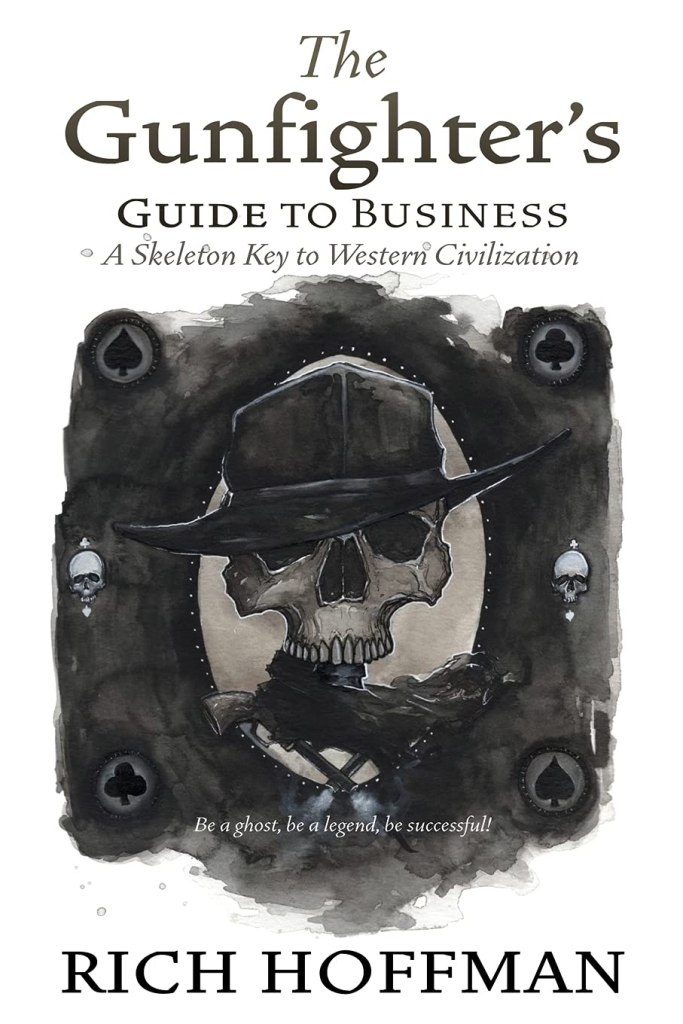
Click to buy The Gunfighter’s Guide to Business

Disney’s ‘Eternals’ is All About Guys Kissing and Abortion: How people like Larry Fink are ruining the world

More news sites don’t talk about things like this one does due to freedom; I am freer than most anybody who would write an article like this, so the information never gets out. In most cases, everyone has a master, which is undoubtedly the case with Disney. After a horribly progressive movie like the Eternals, Disney is the obvious target for criticism. The same with how they have handled Star Wars. It’s easy to get mad at the traditional family company without realizing all the Woke politics that are going on behind the scenes, which are literally ruining the world, starting in America with our art and entertainment. To understand why Eternals is such a terrible movie, you have to understand the latest stock report of Disney, where they had a record-breaking quarter to close out the year. Yes, more people than ever are flocking to the amusement parks in Florida. People have been locked down with Covid, and they want to get out there and spend money on something, anything. So attendance is up. The new Spiderman movie was great, a Marvel production that ultimately boosted interest in the Disney + streaming service. Some things make the stock price look attractive, so the shareholders are happy and empowered to continue to do something as they have, which produced the disaster Eternals with all the arrogance that Woke culture could muster. However, I’m in a position where I am free to have an objective opinion about Disney, one that most in the industry just can’t because the money flow they need to live is controlled by the elements that are killing Disney, despite the smoke and mirrors that come through on the stock report. Disney is an asset bubble that is poised to burst, and the evidence is in the movie Eternals, which is now streaming on Disney + for all to see.

The top stock owners of the Disney Company are the Vanguard Group, BlackRock, State Street Corporation, and Morgan Stanley. Vanguard, for instance, owns 137,572,834 shares of Disney stock. BlackRock, with all the Woke advocacy strategies of Larry Fink, owns 119,795,456. The shares go down to the local buyer who just wants to pad their investment portfolio with some entertainment options. But when you understand that these large investment firms believe they are too big to fail and control the world’s governments through finance, they become the next generation of tyrants on earth clawing for power. And in the case of Larry Fink, who comes up a lot these days when talking about all things Woke, we have to address the issue as a menace that has not been on anybody’s radar up to this point. Nobody talks about it because they most always have some financial stake in the company, like Disney. Even though the actual controls come from shareholder pressure, Disney doesn’t care about the ordinary people who might buy a few hundred shares of stock and post negative reviews about Eternals on some social media platform. The Board of Directors and ultimately the CEO Bob Chapek care about what BlackRock thinks about what they make, and when it comes to Eternals or Star Wars, the garbage that ends up on screen is precisely what Larry Fink wants. A Woke message that will poison the West and destroy it for consumption, China intends to take over the world and restore itself as the dominant power. Something they think about a lot and have people like Larry Fink to be their flaming arrows of warfare at the helm of all finance which ultimately controls everything. Bob Chapek may make a lot of money as Disney’s CEO, but he is not free to have an opinion on the matter. When BlackRock calls, or Vanguard, he does what they tell him because one thing Bob can’t afford to see happen is a quarter to quarter slide of the Disney stock price. And if Larry is displeased with the level of Wokeness coming out of Disney, then BlackRock could dump its stock and send Disney tumbling with a massive sell-off. And that would be the end of Bob Chapek, so ultimately, that is why the movie Eternals was so terrible. 

I had high hopes for Eternals. I had wanted to see it at the theater. Generally, the Marvel movies are great, so a film about some beings who inhabit the universe like white blood cells in a body and are born from planets seemed like a cool premise. But sadly, the whole point of the movie was to show guys kissing and to drag a nearly three-hour movie into an event of torture as it was a bunch of dysfunctional characters of all nationalities arguing over dumb things to ultimately have an abortion at the end of the movie to save the earth. The whole point of the Eternals was a kind of metaphor on abortion; to save mother earth, we had to kill the baby, the Eternal that was being born from it and was the point of 7000 years of human evolution. For the Eternal to be born, mankind had to create culture, which then fed the baby as it grew in the egg of the earth. So in that way, the Eternals became a vehicle for all the modern progressive causes that people don’t like, yet it was crammed down their throats with this monstrously bad film. The movie wasn’t about entertaining the audience; it was about forcing progressive politics down the viewers’ throats who thought they were showing up to watch the latest Marvel offering. And what they got was essentially the strategy of Larry Fink, large doses of progressive ideology that they thought would open the door to a modern political platform that embraced gay rights and forever abortions. The decision at the end of the movie to kill the Eternal so to save “Mother Earth” is so evident that it’s almost like sitting in an abortion clinic with a daughter who wants to kill a grandchild so that they can go clubbing later that night and not have the burden of being pregnant. It was bad, bad stuff. 

Yet Disney is the company that gets all the shots of criticism, and it will be Bob Chpeck who gets lacerated at the shareholder meetings if he doesn’t come up with some way to make Blackrock happy. The everyday people willing to spend $10,000 on a Disney vacation package in Orlando get ignored. Disney was built on solid Main Street traditional American values for the people who go to the parks, so they are willing to spend the money. But people like Larry Fink don’t really care about the money they make in their investment firms. They care about the power they have amassed through finance to control the creative process at companies like Disney, and it’s in that way that Eternals even found a way to make it onto a screen, and ultimately the Disney + streaming platform. Eternals breaks all movie-making rules and presents everything they don’t want into a movie to audiences. But the arrogance of Disney shows more than just a bad movie; it’s an assumption that the path of least resistance runs through the audience and not through BlackRock and Vanguard. Ultimately, who controls what Disney produces isn’t the fans, it’s the investment firms, and those investment firms feel empowered to impose Woke politics onto our culture at every opportunity. And Eternals was so bad that it’s almost a dare for the public to rebuke it. Otherwise, Larry Fink and the investment hounds beyond the stock prices will crush each and every one of us, or so they think unless we do and say everything they want, without a thought.

Rich Hoffman

Click to buy The Gunfighter’s Guide to Business