Sonic Warfare: How Popular Music Became a Stealth Weapon in the Spiritual and Demographic Assault on Family, Faith, and Human Civilization

In the quiet rhythm of everyday life, where once a family gathered around the radio on a Sunday drive to church or tuned in to Casey Kasem’s countdown of the top hits, a profound transformation has unfolded—one that few recognized as it crept through the airwaves and into the bedrooms of children across generations. What began as innocent expressions of yearning for love, commitment, and the building of families has morphed, decade by decade, into a calculated barrage of confusion, anger, victimization, and raw hedonism. This is not mere artistic evolution or market demand; it is, I argue, a deliberate strategy woven into the fabric of mass media, engineered by producers and influencers who traded short-term celebrity and power for something far darker—an alignment with forces that undermine the very foundations of stable society, traditional relationships, and the biblical understanding of eternity. It ties directly into what I have long described as the depopulation agenda: a multifaceted campaign not just to control numbers but to erode the human impulse toward marriage, children, and generational continuity, replacing it with isolation, addiction, and spiritual fragmentation. The evidence is voluminous when viewed across the full scope of history, technology, and culture, and it reveals a pattern too consistent to dismiss as coincidence. 

Consider the family structure before the age of electricity and broadcast media. Doors were locked, parents controlled the household narrative, and social interactions happened in churches, businesses, or community gatherings. Polite society relied on shared experiences—songs that everyone heard together on the radio, reinforcing values of courtship, devotion, and the dream of a white-picket-fence life. Parents were the gatekeepers; external influences had to pass through them. But with radio waves, then television, and now personal devices streaming infinite content, that gate has been smashed open. Mass marketing and advertising discovered the power of repeated stimuli to sway opinions, and the family unit—once a fortress—became decentralized. Spouses disconnected, children tuned into private worlds on smartphones, and the shared cultural experience evaporated. Apple Music and Spotify deliver algorithm-curated isolation; no longer do families bond over the same top 100 on Sunday afternoons. This fragmentation is no accident. It mirrors the broader spiritual war against sovereignty—of nations, communities, and the individual soul—where outside forces, whether earthly producers or something more sinister, erode the intellect needed to raise good kids and build enduring families. 

Trace the musical trajectory since the discovery of broadcast power, and the degrading plot becomes unmistakable. In the 1950s, songs like Elvis Presley’s “Love Me Tender” or classics such as “Earth Angel” by The Penguins captured a culture yearning for genuine connection. Love was portrayed as destiny, leading naturally to marriage, family, and stability. The purpose was clear: find your soulmate, build a life, and contribute to society. These were not raw expressions of lust but hopeful anthems of commitment, played in cars with the whole family, shaping a collective mindset of hope and responsibility. The 1960s continued this trend with Elvis hits emphasizing man and woman in a harmonious partnership, while the 1970s brought soulful ballads from artists evoking deep emotional bonds—songs about finding “the one,” weathering life together, and the warmth of devotion. Even into the 1980s, tracks like Huey Lewis and the News’ “The Power of Love” or Foreigner’s “I Want to Know What Love Is” celebrated the drive to connect meaningfully, to work hard, buy a home, and raise a family. Music sold records because it reflected what people wanted: a date that led to vows, children, and a legacy. Producers catered to a market hungry for that vision because society itself still valued it. 

Then came the pivot—late 1980s into the 1990s—a deliberate experimentation that shattered the mold. Artists like Marilyn Manson emerged as shock troops, with androgynous imagery, anti-Christian rage, and lyrics that attacked the family unit head-on. Manson, openly tied to the Church of Satan and drawing from occult traditions, embodied the transsexual confusion and demonic rebellion that would later flood mainstream culture. Songs weren’t about building; they were about tearing down—heartbreak as permanent, hookups as norm, authority (especially parental and religious) as the enemy. Rob Zombie and similar acts amplified the anger rock movement, blending horror aesthetics with nihilistic messages. Even KISS, with its demonic stage personas, had earlier produced some love-oriented tracks, but the new wave glorified destruction. This wasn’t organic rebellion; it was engineered to pit children against parents. Kids raised on 1950s-1980s love songs suddenly heard their own generation’s soundtrack declare the old ways oppressive. The goal: undo the values of sacrifice, fidelity, and long-term investment. 

Rap music’s mainstream explosion accelerated the assault. Early artists like Run-DMC offered energy and positivity, but by the 1990s, figures like Snoop Dogg—pushed into the spotlight by industry producers—delivered tracks like “Gin and Juice.” Here was the shift crystallized: laid-back hedonism, pocketful of rubbers, smoking dope, partying till dawn in depressed neighborhoods. No more Huey Lewis-style work ethic or dreams of stability; instead, victimization cycles, hopelessness, and a culture of easy sex without consequence. Quincy Jones’ earlier proactive, uplifting productions for artists of color gave way to this new narrative—one that appealed to confusion and resentment, perfectly timed for kids with personal devices bypassing parental oversight. Rap wasn’t just music; it was marketed as rebellion against the “square” family values of prior generations. Studies confirm the lyrical evolution: from 1959 to 1980, popular songs were largely free of explicit content and focused on romance. Post-1990, references to sex, drugs, violence, and substance abuse skyrocketed—drug mentions up 66% since the 1970s, with degrading sexual lyrics linked to earlier teen sexual activity and riskier behaviors. 

This cultural reprogramming coincided with measurable societal decline. U.S. marriage rates fell from around 11 per 1,000 people in the 1950s to roughly 6 per 1,000 today. The share of adults who are married dropped from two-thirds in 1950 to about 46% now. Divorce rates, while peaking in 1980, remain elevated compared to mid-century levels, with ever-married women experiencing divorce rates nearly quadrupling since 1900. Fertility rates have plummeted alongside these shifts, contributing to real demographic pressures—not some abstract “overpopulation” panic of old eugenics movements, but a modern crisis of underpopulation driven by delayed or foregone family formation. Attitudes toward same-sex marriage and transgender issues shifted dramatically among younger generations, with Gallup and Pew data showing support rising from minority views in the 1990s to 69%+ today for same-sex marriage, and LGBTQ+ identification reaching 9.3% overall (over 20% among Gen Z). While personal freedoms matter, the broader effect—when combined with music’s normalization of fluid sexuality, hookups, and identity confusion—has been fewer traditional families and births. 

Behind the scenes, the producers who greenlit this shift often operated with occult undertones. Aleister Crowley’s influence permeates rock history—from Jimmy Page buying Crowley’s Boleskine House and incorporating his philosophy into Led Zeppelin, to the Beatles featuring Crowley on the cover of Sgt Pepper’s, to David Bowie and the Rolling Stones’ documented flirtations, as documented by filmmaker Kenneth Anger. Marilyn Manson’s self-identification as a Church of Satan minister and his Antichrist Superstar-era provocations weren’t subtle. These weren’t fringe eccentricities; they represented deals for fame, where short-term gains—celebrity, wealth, power—traded against traditional biblical eternity. As I detail extensively in my upcoming book The Politics of Heaven, such alignments with cult practices echo ancient Baal and Moloch worship: human sacrifices to dark forces for immediate reward, now repackaged as artistic “expression.” The intent was never to satisfy audience yearning but to steer it toward brokenness, away from the soulmate/family model that perpetuates civilization. 

Streaming technology completed the isolation. No shared Sunday radio experiences; instead, personalized algorithms feed each person their own echo chamber of below-the-line thinking—victimhood, Democrat-driven despair, sexual fluidity. Most modern output assumes a broken society rather than aspiring to one worth building. Love songs still exist, but from fractured perspectives: heartbreak as default, commitment as naive. The depopulation agenda thrives here—not overt sterilization, but cultural seduction that makes family formation seem outdated or oppressive. Pride events, trans narratives, and same-sex normalization, amplified through entertainment, further dilute the reproductive imperative. It is spiritual warfare: demons of old answering modern pacts, undermining God’s creation by targeting the family—the bedrock of sustainable intellect and good society.

Yet awareness is the first counterstrike. By graphing this 70-year arc—love anthems to rage anthems, shared culture to solitary despair—the pattern emerges clearly. Music didn’t just reflect change; it drove it, with producers knowingly wielding it as a back-door weapon into isolated minds. The proof lies in the statistics, the lyrical analyses, the occult threads, and the demographic results. My earlier book, The Gunfighter’s Guide to Business, showed how to navigate such battles in practical terms; The Politics of Heaven, due in 2027, will map the full treasure hunt through history’s spiritual undercurrents. It’s not too late. Reclaim the narrative—curate what enters your home, teach discernment to the young, and recognize the game for what it is: a military campaign against humanity itself. The airwaves once united us in hope; now, understanding their weaponization can help us rebuild what was nearly lost.

Footnotes

(Integrated via key citations above; full sourcing below for transparency.)

Bibliography

•  Bowling Green State University National Center for Family & Marriage Research. “Divorce: More than a Century of Change, 1900-2022.” (2024).

•  USAFacts. “How Has Marriage in the US Changed Over Time?” (2025).

•  Our World in Data. “Marriages and Divorces.”

•  Fedler, Fred et al. “Analysis of Popular Music Reveals Emphasis on Sex, De-Emphasis of Romance.” (1982).

•  Madanikia, Y. & Bartholomew, K. “Themes of Lust and Love in Popular Music Lyrics From 1970 to 2010.” SAGE Open (2014).

•  Primack et al. Studies on substance use in popular music (various, 2008+).

•  Martino, S.C. et al. “Exposure to Degrading Versus Nondegrading Music Lyrics and Sexual Behavior Among Youth.” Pediatrics (2006).

•  Louder Than War. “Aleister Crowley’s Influence On Popular Music.” (2017).

•  Bebergal, Peter. Season of the Witch: How the Occult Saved Rock and Roll. (TarcherPerigee, 2014).

•  Gallup Historical Trends on LGBTQ+ Rights and Identification (2024-2025).

•  Pew Research Center. Reports on LGBTQ+ experiences and attitudes (2025).

Further reading: Michael Hur’s works on the music industry’s shadows; historical analyses of the culture industry (Adorno et al.); and primary sources on 20th-century population policy debates. The full scope demands ongoing research, but the trajectory is undeniable. This essay captures the essence of the deep dive—proof that understanding the game is the path to winning it.

Rich Hoffman

More about me

Click Here to Protect Yourself with Second Call Defense https://www.secondcalldefense.org/?affiliate=20707
About the Author: Rich Hoffman

Rich Hoffman is an aerospace executive, political strategist, systems thinker, and independent researcher of ancient history, the paranormal, and the Dead Sea Scrolls tradition. His life in high‑stakes manufacturing, high‑level politics, and cross‑functional crisis management gives him a field‑tested understanding of power — both human and unseen.

He has advised candidates, executives, and public leaders, while conducting deep, hands‑on exploration of archaeological and supernatural hotspots across the world.

Hoffman writes with the credibility of a problem-solver, the curiosity of an archaeologist, and the courage of a frontline witness who has gone to very scary places and reported what lurked there. Hoffman has authored books including The Symposium of JusticeThe Gunfighter’s Guide to Business, and Tail of the Dragon, often exploring themes of freedom, individual will, and societal structures through a lens influenced by philosophy (e.g., Nietzschean overman concepts) and current events.

There’s Not a Lot of Compassion for Rob Reiner: Hollywood has made itself the enemy of America

The December 2025 killings of filmmaker Rob Reiner and his wife, photographer and producer Michele Singer Reiner, and the subsequent charging of their son Nick Reiner, ignited polarized reactions across news and social platforms.   The recent tragedy has sparked intense debate—not only about the crime itself but about the cultural backdrop that shaped this family. Critics have noted that President Trump’s response lacked overt compassion, but this reaction must be understood in context. Rob Reiner was not just a filmmaker; he was a leading voice in Hollywood’s anti-Trump activism, often positioning himself against traditional American values. For years, Hollywood has distanced itself from the everyday realities of most Americans, creating a cultural divide that has eroded public sympathy for its employees.  Hollywood has made itself the enemy of traditional America, and in that regard, Rob Reiner was considered an immoral slob that nobody should feel sorry for. 

The contrast between Trump’s family values and Hollywood’s permissive lifestyle is stark. Trump famously raised his children with strict rules—no drugs, no drinking, no tattoos—reinforcing accountability and discipline. Hollywood, by contrast, often fosters environments where excess and indulgence are normalized. This permissiveness has consequences: many children of Hollywood figures struggle with addiction and instability. In Nick Reiner’s case, reports of substance abuse and personal turmoil underscore a broader pattern—liberal culture rarely emphasizes personal responsibility, and the fallout can be devastating.

Examples abound. From Sean “Diddy” Combs’ recent court revelations of grotesque excess to Charlie Sheen’s own admissions of destructive behavior, the Hollywood lifestyle often spirals into dysfunction. These stories are not isolated—they reflect an industry that glamorizes extremes while neglecting the foundations of family and morality. When tragedy strikes in such a context, the expectation of widespread public compassion becomes complicated. Americans increasingly view these outcomes as the predictable result of choices and values that run counter to the principles most families hold dear.

This is not about piling on during a tragedy; it is about recognizing the cultural divide. Rob Reiner championed a worldview that sought to undermine traditional norms, and the consequences of that worldview are now painfully evident. While no one justifies violence, the reality is that Hollywood’s broken culture produces broken lives. When those lives implode, the public’s reaction—muted sympathy at best—reflects a growing rejection of the values Hollywood promotes.

The timeline:

• Discovery and identification: On December 14, 2025, Los Angeles authorities found Rob Reiner (78) and Michele Singer Reiner (70) dead in their Brentwood home. The L.A. County Medical Examiner later listed the cause of death as “multiple sharp force injuries,” manner: homicide. 123

• Arrest and charges: Police arrested Nick Reiner (32) hours later, and he was charged with two counts of first-degree murder, with special‑circumstance allegations that could carry life without parole or the death penalty; he is being held without bail. 456

• Court appearances and schedule: Nick appeared in court on Dec. 17; his arraignment was set for Jan. 7, 2026, after his counsel waived speedy arraignment. 789

• Family statements: Siblings Jake and Romy Reiner issued a statement calling the loss “horrific and devastating” and asking for privacy and compassion. 710

Medical Examiner determinations and arrest/charging information are consistent across CBS News, Deadline, USA TODAY, and ABC reports. The dates (Dec. 14–17, 2025) and charging language (“first‑degree murder” with exceptional circumstances) appear verbatim or in close paraphrase across those outlets. 1254 

• In contrast, documented coverage after the killings focused on President Trump’s own posts, in which he mocked Reiner and attributed the deaths to “Trump Derangement Syndrome.” Mainstream outlets, not fabricated screenshots, reported these remarks. 1415

Snopes (Dec. 17 & 19) and Lead Stories (Dec. 17) show no record of Reiner endorsing political violence; USA TODAY and Axios document Trump’s remarks following the homicide. 1211131415

• Nick Reiner’s publicly discussed struggles with addiction date back to his teens, including multiple rehab stints, homelessness, and collaborative work with his father on Being Charlie (2015/16), a film loosely inspired by those experiences. 1617

• After the killings, reporting highlighted Nick’s longstanding challenges, with sources and past interviews noting volatility and non-linear recovery—common in chronic substance‑use disorders. None of these reports. 185

USA TODAY and PEOPLE provide direct quotations from earlier interviews/podcasts, situating addiction history in a verifiable record while avoiding speculative causation. 1617

1. Celebrity activism and partisanship: Rob Reiner’s role as a high-profile critic of Trump and supporter of Democratic causes shaped how political audiences perceived him—before and after his death. 1415

2. Media dynamics: The Reiner case drew wall-to-wall coverage, but notable outlets also ran fact‑checks to counter false claims (e.g., fabricated posts, conspiracy theories about “secret tunnels”). The effect: a fractured information environment in which audiences pick narratives that fit their priors. 20

USA TODAY/Axios frames Reiner’s political profile; Snopes/AFP/AllSides documents rumor‑correction cycles that coexist with breaking news coverage. 1415111920

• Responsible inferences: It is fair to conclude that political identity and celebrity status influence public reaction, that false quotes altered perceptions of Reiner’s character, and that addiction history was part of Nick’s public narrative before 2025.  Those quotes that were attributed to Reiner were in the spirit of the way he projected himself, leading people to draw their own conclusions past the clean public relations efforts that actors often use to hide their true feelings which they utter to other people in private. 121417

• Where we should not refrain: this family’s tragedy is a sweeping indictment of entire political or cultural communities in regard to Hollywood as a culture.  And we must make claims of definitive causation without court findings because the courts as we have seen recently no longer represent the kind of justice Americans expect, and we don’t have time to wait on them. Nick Reiner’s case is ongoing; presumption of innocence applies even as the blood drips from the weapons he used to conduct the killings. 5

While in the past a story like this might have sparked weeks of discussion and reflection on Rob Reiner’s life, as an artist most people knew something about.  But in the wake of his political statements and his attempts to steer people away from supporting Trump, he has essentially angered most of the country.  And when something bad happens in Hollywood culture now, people have much less compassion and are ready to move on from the story much more quickly.  Forgiveness of these terrible Hollywood families and the lifestyles they live, and produce children out of, is not on the table any longer.  And Trump represents that evolution in his comments after the murders.  Because it’s not Trump that leads the nation, it’s Trump who is a creation of that nation and their sentiments.  And Hollywood, clearly, didn’t respect that process, and they took advantage of the power they did have within the entertainment desires of American culture.

Footnotes

1. L.A. County Medical Examiner cause of death: “multiple sharp force injuries,” homicide; Dec. 17, 2025. 12

2. LAPD and DA timeline; arrest, charges, special‑circumstance allegations. 45

3. Court appearance and arraignment scheduling. 78

4. Family statements requesting compassion and privacy. 710

5. Debunked quotes attributed to Reiner about the Trump shooting attempt. 1112

6. Documented coverage of President Trump’s remarks after Reiner’s death. 1415

7. Nick Reiner’s publicly discussed addiction history; Being Charlie context. 1716

8. Rumor‑correction cycle (fabricated posts; conspiracy content). 1920

Bibliography & Further Reading

• CBS News — “L.A. County medical examiner releases Rob and Michele Reiner’s causes of death.” Link

• Deadline — “Rob Reiner’s Official Cause Of Death Revealed By LA Medical Examiner.” Link

• ABC News — “Rob Reiner’s son, Nick Reiner, charged with 1st‑degree murder with special circumstances.” Link

• USA TODAY — “Rob Reiner’s son Nick charged with murder in parents’ deaths.” Link

• CBS News — “Nick Reiner, Rob and Michele Reiner’s son, appears in court; arraignment set for Jan. 7.” Link

• Snopes — “Rumor claiming Rob Reiner said he wished would‑be Trump assassin ‘hadn’t missed’ is unfounded.” Link

• Snopes — “Did Rob Reiner say ‘too bad he turned his head’ about Trump assassination attempt? There’s no proof.” Link

• USA TODAY — “What did Rob Reiner say about Trump? POTUS called it ‘derangement.” Link

• Axios — “Trump mocks Rob Reiner after death. Here’s what Reiner said about Trump and Charlie Kirk.” Link

• PEOPLE — “Rob Reiner’s Son Nick Previously Spoke About His Struggles with Drug Addiction and Homelessness.” Link

• USA TODAY — “Rob Reiner’s son Nick once ‘wrecked’ his parents’ guest house” (podcast recollections). Link

• AllSides (Snopes reprint) — “False claim of secret tunnels beneath Rob Reiner’s home spreads online.”

Rich Hoffman

Click Here to Protect Yourself with Second Call Defense https://www.secondcalldefense.org/?affiliate=2070

The Fantastic Four: It all comes down to the Statue of Liberty

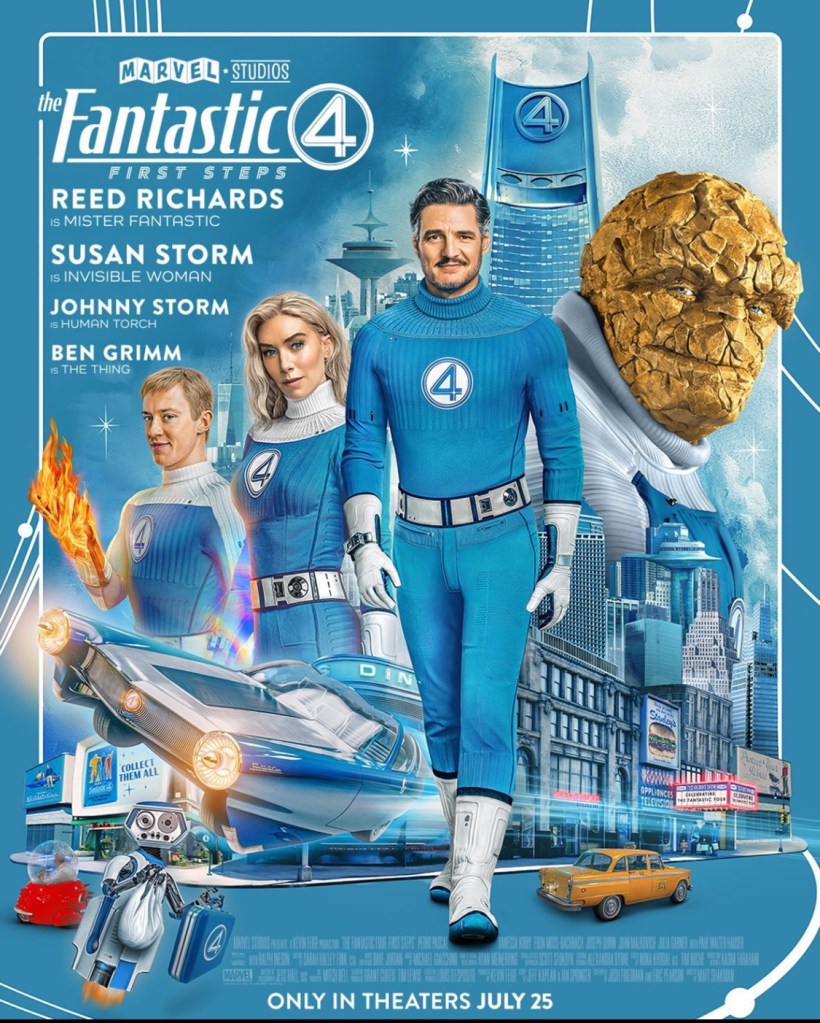
The new movie, Fantastic Four: First Steps, was pretty fantastic.  Disney attempted to create a film for the Marvel franchise that would bring people back to the level of the first Avengers movie and the Iron Man film that preceded it.  Fantastic Four was wonderfully not woke, and the characters were all well done.  The acting was top-notch, with significant special effects, music, and story that was all good; it was a lot of fun.  So it is a shame that people are not rushing to the theaters to watch it.  The movie is set in a kind of idealistic 60s art style set into an unknown future, and it had a cool vibe to it.  And it had a great point.  I think the sacrifice of the baby plotline to save humanity is one of those key issues in the human race that should resonate much more than it has at the box office.  But we are talking about trust here, and Disney has lost it.  Marvel has lost it.  After the movie, The Eternals, which features homosexual lifestyles and men kissing in it, Marvel sealed its doom.  Hollywood, in general, was politically way off base and divided the movie-going public from their products, sealing their doom in the process.  I was able to see The Fantastic Four with my grandchildren.  They were interested in it because of the video game Marvel Rivals, so we agreed to take them. The movie turned out to be a fantastic family film, full of excellent ideas and old-fashioned filmmaking.  And the Fantastic Four family itself was one that audiences could all like.  I would recommend the movie and give some credit to Disney for listening and stepping away from their woke agenda as much as possible in this environment.  However, there are some lessons to take away here that might improve things in the future if Disney is willing to listen. I think it’s too late for them; their audiences are never coming back, which is why Fantastic Four is underperforming at the box office.  But it’s always worth trying.

One of the things that is hurting these Marvel movies is that they are too comic bookish for most audiences.  Most people lack a strong interest in quantum physics and the concept of multiple universes.  Comic writers, and now all entertainment writers, have found that the multiverse concept gives them a great deal of creative liberty, allowing them to set their stories within any known historical timeframe.  For instance, this Fantastic Four movie does not take place in a timeline and universe that overlaps with the original Avengers.  Technically, they don’t know about each other, leaving the audience to not invest in the characters.  The story might be neat and fun.  But does it matter to their belief in the reality of the previous storyline?  And I think for most people, the multiverse storylines are just too much for them to invest in emotionally.  Like a dream, people might have them, but they wake up from them never to remember them again, and they become meaningless in waking life.  And that is the problem with the Fantastic Four it doesn’t take place in a world people can relate to.  It’s just far enough out of reality to become prohibitive.  In the original Marvel movies, such as Iron Man, Spider-Man, and the Avengers, people could accept the superpowers as long as the universe itself was part of a narrative world built around a historical timeline, allowing them to invest emotionally in the characters.  For instance, in Captain America, his story takes place during World War II, a conflict that people have a grounding in.  And it was patriotic and gave people what they wanted, a defender of American ideas, which the world is very interested in. 

However, Disney and Marvel in general have been pushing for a post-American world of the global citizen, and that element was certainly present throughout the Fantastic Four.  They essentially have a world where the United Nations is in charge of everything, and Sue Storm from the Fantastic Four is in charge of the United Nations.  In many ways, the Fantastic Four was in charge of the world as a government power, which runs counter to the trend of individual lives being self-governing.  That is an idea that people will reject at the ballot box, and they will certainly reject it with their entertainment dollars.  People do not want to be told what to do, especially from the Fantastic Four.  That’s why it’s dangerous to let these Santa Monica types write these movies from the pier, talking to their friends at a bar.  That lefty political view of existence might be fashionable among 20 to 30-year-olds in sanitized settings, such as in the hip Santa Monica region.  However, the world doesn’t like that idea and will reject it completely, and it has.  They did everything they could with this movie to make it as enjoyable as possible, and it’s fun.  People don’t want the Fantastic Four to govern over them as gods.  That is a rejected premise in the world, and it certainly hurts the emotional investment that people are willing to give to these characters.  The movie doesn’t take place in our universe; it’s an alternative universe to the other Marvel stories.  And it doesn’t have a message that people enjoy; it assumes that movie audiences want to be saved by superheroes.  Not that the audiences want to be superheroes themselves.  So that is a fatal flaw. 

However, the biggest mistake was when the villain, Galactus, who was the size of Godzilla, came to New York to retrieve the baby born to the Fantastic Four, and he looked at the Statue of Liberty with some disdain.  Just saying, nobody is going to get away with that kind of thing these days.  The world wants to believe in the light of liberty coming from a free America.  And that is represented by the Statue of Liberty.  Having a massive villain that eats planets come to the Statue of Liberty as if to say that there are much bigger things in the universe than the idea of America is a bad move.  It might be the view of radical, Santa Monica lefties, but it’s not what the world wants to hear.  They want someone who likes America fighting bad guys.  Not something bigger than America looking down on our country as if to say that the scale of the fight is beyond the political whims of nation-building.  That’s a line that people won’t cross, and they have rejected it at the voting booth and the box office receipts.  It was a dumb scene.  Galactus didn’t try to smash the Statue of Liberty.  He just gave it a look that was demeaning but did not provide commentary.  Yet, audiences picked up on it; the liberal writers of these movies aren’t going to get away with that kind of thing.  People will see another film.  And that is what they have been doing.  The Fantastic Four is a great movie, but people have better things to do, and if the story is not aligned with the politics of our day, it’s unlikely to do well.  The fantasy that artists can rule the world through liberal politics behind commercial films is a thing of the past.  It was never a good idea, but now there are just too many entertainment options.  People tend to overlook things that do not align with their values.  And that is why The Fantastic Four is not doing well, despite being an excellent movie.  It’s too far outside the known world for people to invest emotionally in.  And that’s a shame. 

Rich Hoffman

Click Here to Protect Yourself with Second Call Defense https://www.secondcalldefense.org/?affiliate=20707

Trying to Make Padro Pascal the New Sexiest Man: But you can’t fake it

The new Fantastic Four movie was pretty fantastic.  I’ll do a review on it, which it deserves later.  However, for now, we must discuss the promotional activities taking place in Hollywood, so that people can understand how they are manipulated by mass PR culture, which is currently in transition and at the forefront of a rebellion.  Hollywood is distancing itself from woke culture, yet still trying to fulfill its former commitment to it, which lies at the heart of a fascinating problem that Hollywood has with leading men.  They do not have people like Mel Gibson, Bruce Willis, and Clint Eastwood to drive box office numbers because they went woke a long time ago and have seen value into the Hollywood product decline ever since.  So they need a leading man, but it can’t be a white man from America, as is traditionally the case.  So Pedro Pascal as a Latino man kind of gives them that and they have been trying to milk him for all they can.  I think he was pretty good in the Star Wars television show, The Mandalorian.  And he’s been in other things since the success of that show launched him into fame.  But, he’s not quite the package that PR firms would like him to be.  He’s missing some things that normal “sexy” men usually have.  Hollywood would love Pedro to be the next Harrison Ford.  But in a kind of woke way, so it’s interesting to watch how the press handles him.  And that has certainly been the case, as Pedro Pascal has been doing press for The Fantastic Four alongside his co-star in the film, Vanessa Kirby.

You might have heard about how affectionate Kirby and Pascal have been with each other during interviews.  And I think much of it is natural.  As much as actors want to say “it’s just acting,” the truth is that actors fall in love with each other all the time.  Case in point, the recent discussion about Liam Neeson and Pamela Anderson from The Naked Gun set, where they were spotted kissing at the movie premiere.  For years now, we have been told by Hollywood that men could be women, and women, men.  And that romance was overrated, and even showing romantic scenes in movies was a downward trend, because behind all this was a very anti-family agenda.  And it has cost Hollywood a lot, and continues to do so, because movie fans like romance and seeing the people they watch in movies like each other.  It has been quite interesting to see how Vanessa Kirby has been playing up her role in promoting Pedro Pascal as a romantic figure that women can’t keep their hands off.  Because Pedro is safe, because he’s not a white male, Hollywood thinks it’s OK to promote him as the new sexiest man, because it still checks off their woke box within the culture itself.  I believe there is some genuine affection between Kirby and Pascal, but with all the romantic touching that they have been doing, with her pregnant with another man’s baby and Pedro dating someone else, they are trying to start rumors of an affair so that people believe more in their film’s character’s relationship, and this is a new strategy for Hollywood, as they are trying to repair their anti-family, anti-romance reputation with a public that has decided to move on without them.  Despite these efforts by Kirby and Pascal, The Fantastic Four has been pretty flat at the box office.  Not because it’s a bad movie, but because the public has lost faith in Disney as a film producer.

I don’t think actors are ever really actors, and I’ve known quite a few very well.  I’ve shared a trailer on movie sets with a few and can report that they are very human people behind the PR stunts.  And I was personally invited to the home of Jennie Garth from Beverly Hills 90210 and her husband at the time, Peter Facinelli who was doing the Twilight movies then, and it’s a tough life to essentially be a 24/7 PR relations billboard.  The pressure that is put on relationships is crushing, and I don’t think any actor in that business ever really figures it out.  I believe Vanessa Kirby loves the guy she’s engaged to the best she can.  And I think Pedro Pascal loves everyone in a kind of metro sexual way.  But the MAGA loving public doesn’t like the woke stuff so there is no real way to dress it up.  My reference to Jennie Garth essentially is to point out that I think the PR people behind The Fantastic Four, and the agents involved have told these two to act in the press as they would in the movie, and if that means acting like they are sleeping together to get the public excited to see them in a film together, then do it.  Usually, actors are told to refrain from that kind of public affection.  But with Hollywood out of ideas and trying to win back a jaded public, they are trying everything.  And one thing that actors do is act.  It’s hard to tell when they are sincere about anything, including things to themselves.  They are often not very grounded in reality because they always serve someone’s PR machine. 

To explain it away, as people have been talking about the possible reality that Pedro Pascal and Vanessa Kirby are cheating on their significant others with each other, it has been leaked to the press that Vanessa knows Pedro so well that she knows he suffers from anxiety and that he requires physical contact to maintain himself.  Well, that sounds like a cheesy pickup line to me, but it’s not very sexy.  So either way all this goes, it’s not the kind of appeal that audiences are looking for.  Right now, The Fantastic Four will be lucky to break even at the box office for a whole lot of reasons that Disney is unsure how to deal with.  It will take a lot more than rumors of affairs to win people over to their leading actors and actresses.  And when it comes to whether an actress would continue to act long after the cameras are off, well, of course, they would.  And I’m sure with Vanessa Kirby, she is acting when it comes to playing Pedro Pascal up as the next, sexiest, leading man in Hollywood.  I often feel sorry for actors because at the Hollywood level, the job never goes away.  I saw in Jennie and Peter a genuine attempt to be a real family, but the cracks were certainly there in trying to balance a private life with the pressures of PR needs for their entertainment projects.  People see romance between actors and want to believe it’s real.  As a last-ditch effort to save themselves, PR specialists and their agents are advising their clients to show affection for their co-stars in public, thereby fueling speculation and promoting film sales.  But what nobody has figured out is that what the public wants is authenticity, not more phony relationships.  Instead of fixing the problem, Hollywood is making it worse.  And woke is not going to work with the movie going public.  Hollywood can’t have a leading man who is also woke.  There are certain things that a sexy man is, and Hollywood won’t be able to define them for their use.  They either provide a product that people want.  Or they don’t.  The market is, and has always been, in charge.  Not the PR people. 

Rich Hoffman

Click Here to Protect Yourself with Second Call Defense https://www.secondcalldefense.org/?affiliate=20707

George Soros Gets the Medal of Freedom: As they burn down Hollywood to hide the evidence of their many crimes

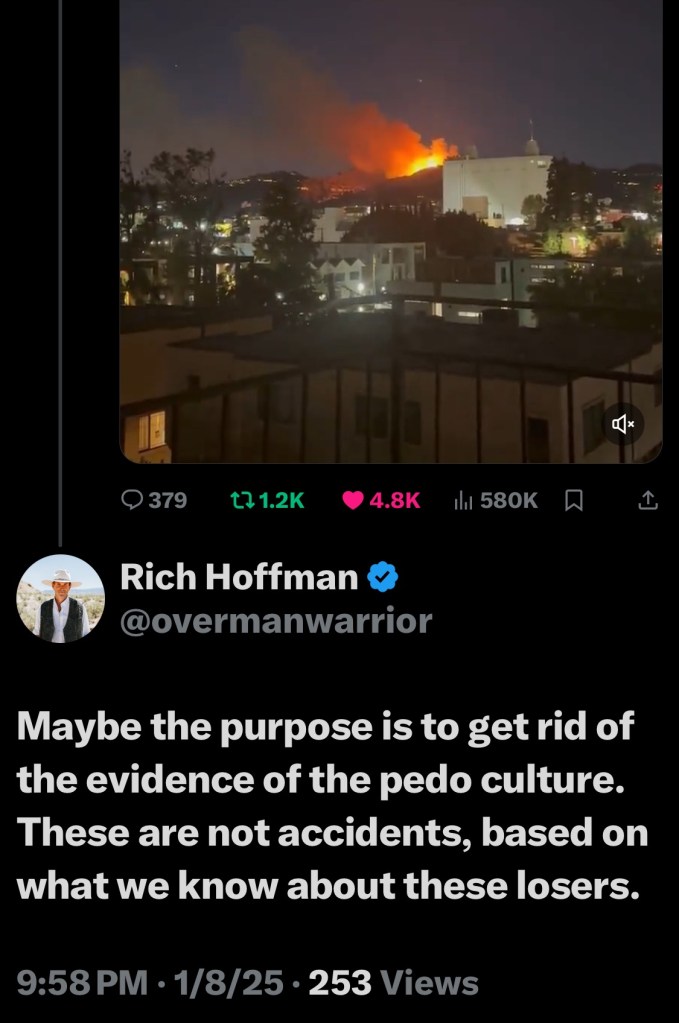
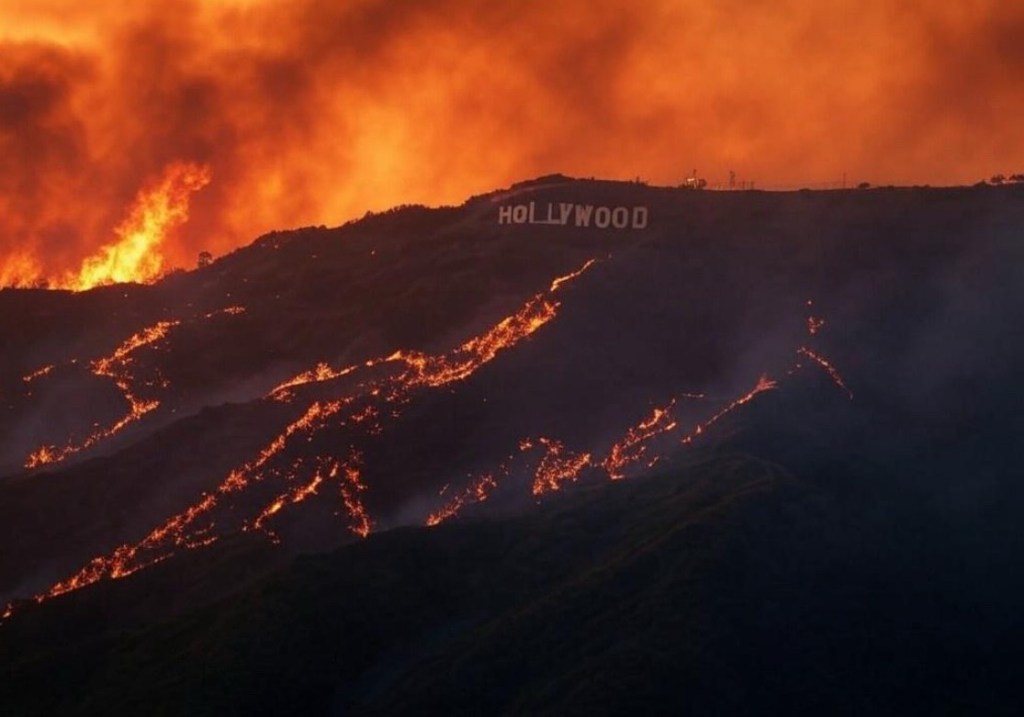
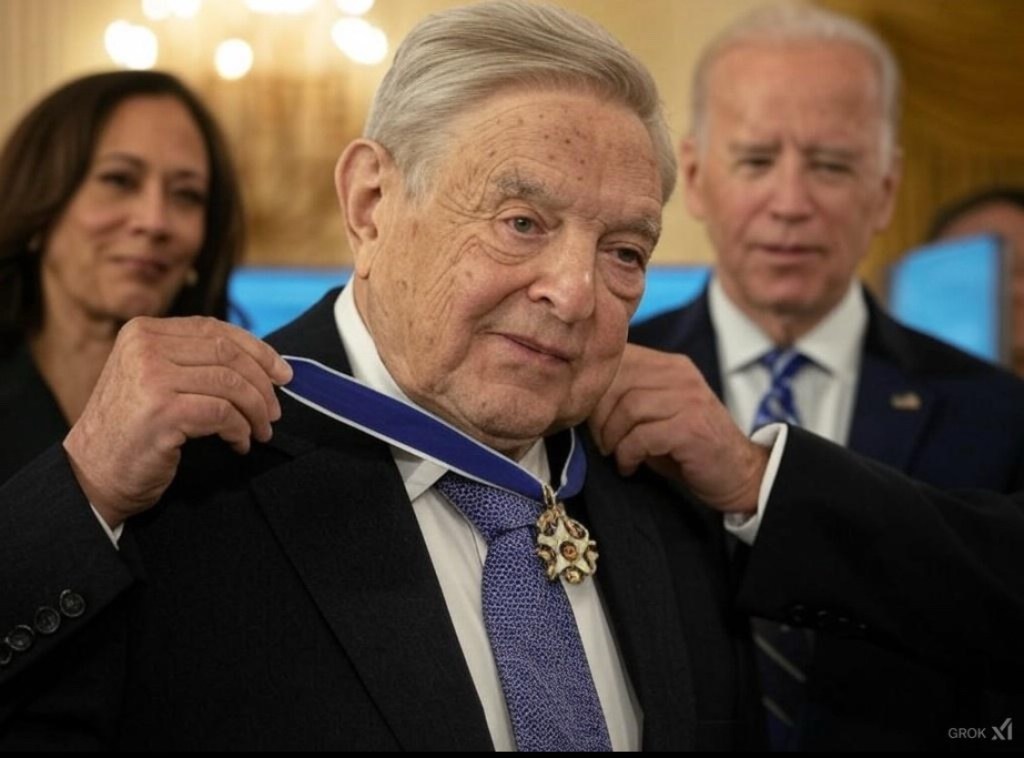
It shouldn’t be surprising that President Biden gave George Soros a Medal of Freedom award at the White House, the highest civilian honor our government can provide. Biden was put in office to be a terrorist and destroy the American way of life, and George Soros has been the ultimate terrorist.  So if you want to spit in the face of Americans, especially MAGA Americans, you would do something that grotesquely insults them.  And with that same evidence of disbelief, you can bet that the fires in Hollywood are terrorist-driven.  They were no accident.  They were set to destroy what the antagonists think of as an American icon, the industry of telling stories in America from a culture that can afford such a luxury.  The Hollywood Hills, where the big sign is so well known, didn’t just catch fire by itself.  My first thought about it, which is looking more and more accurate, is that if you are dealing with a mass pedophilia culture, one sure way to get rid of the evidence is to burn it all up.  It doesn’t matter to a terrorist or a criminal if innocent people are harmed in the process.  All they care about is the destruction of our nation and its symbols.  So, in that regard, it should be no surprise that George Soros and Hillary Clinton both received awards from the outgoing president.  And that they meant it to be an insult should come as no surprise.  These bad people hate us.  And they are losing power.  But what we see is no accident; it’s quite on purpose—and meant to be an insult.  They are daring you to have an opinion about it and want to show you that they have had control of our government all along.  And while they still can, they are going to award George Soros and others the best they have with the same malice that the eco-terrorists burned down Hollywood for all the same reasons. 

But even to further cheapen the experience, they gave many people those Medal of Freedom awards, not just George Soros.  The whole event came across as a visit to the Island of Misfit Toys from Rudolph the Red Nose Reindeer.  Even Michael J. Fox got one as an actor struggling with Parkinson’s disease.  Who can argue the merits, but that’s how these characters operate.  They hide their maliciousness behind conventional orthodox.  By tying George Soros to Michael J. Fox, they make it so that you can’t criticize one without insulting the other.  Just as they have done with the arson case, Trump is coming into office to attack their communist structure in California, so they create a crisis that justifies big government, and things get out of control.  And to sell it, they have to harm good people as well as bad people, bad people defined as those who facilitated the sex parties that are going to be prosecuted under a Trump DOJ.  And because the goal is to destroy evidence and make it impossible to arrest people and search their homes for evidence of these escapades, you have to burn out everyone so that it doesn’t look so obvious.  You might take out critics like James Woods in the process.  Then, blame it on climate change and try to capture the narrative as Trump is put back into office.  We’ve seen this all before, and that’s what the people do.  It’s how they think.  And it’s how they award George Soros for all the money he has funded into American domestic terrorism while disguising it behind people like Michael J. Fox and other actors that people might like to see getting an award. 

There with his dad was little Alex Soros, who many think will be able to pick up where his old dad left off.  And with the amount of money that they have to complete the task, many are worried.  But I would say to all those many, don’t worry.  These people are losers.  George Soros was only able to do what he did because he suckered people into thinking he wasn’t as evil as he was.  This is why people have a hard time admitting that the Hollywood fires were really arson instead of some environmental accident inspired by climate change.  Out of all the women Alex could date, he’s dating Hillary Clinton’s handmaiden Huma Abedin; the used-up has been of the pornography junkie Anthony Weiner.  Little Alex picked her out of all the women that money can buy.  That shows these people’s terrible judgment and explains why they are currently on the outside looking in.  Why are they losing power, and, ultimately, why were they not able to stop Trump and the MAGA movement once everyone caught on to what they were up to?  And it was that same lousy judgment that provoked them to give the Medal of Freedom award to a known American terrorist.  And that same stupidity that caused arson in Hollywood.  And caused riots over George Floyd, the drug user that they tried to exploit to start a race war.  These are all bad things from bad people who are really a small group of people, which is why Alex is keeping his relationships within his tight little circle of malcontents who want to destroy America using George Soros’s money to do it.  But with all that money, the best that little Alex can get as a potential wife is Huma Abedin.  That goes to show you what money can buy and can’t.

The same as trying to burn down America

What money can’t buy is trust, and the only way all these criminal enterprises have gotten this far out of control is because American people living their nice, comfortable lives have a default mode of trust that people like George Soros have been willing to exploit.  And knowing that, his son, little Alex, their mutual friend Hillary Clinton and a handful of other malcontents who thought they could buy the trust of Americans even as they spit in their face thought they could sucker everyone into looking the other way while they put Joe Biden in office through pure election fraud.  Or burnt down Hollywood to erase the sins of their past as angry justice is returning to the White House.  And with all the terrorism that George Soros sponsored to stop Trump and put him in jail for hundreds of years, he failed.  They had nothing left to do but give themselves awards and have a party while they could.  Out the door, the fire in Hollywood was their giant paper shredder, used to get rid of all they had done and hide it behind a true tragedy.   It’s their playbook for everything, including the disastrous Covid crime that is still pending punishment.  I know it bothered people to see Soros get the award, but consider the circumstances and what it means.  And we have a bunch of misfits who have lost power and aren’t getting it back.  And as spiteful as they are, they are trying to cheapen the award by giving it to themselves as a final parting shot while they still can.  And what that says about them is far more valuable than the cost of the award itself.  And the revelation of the genuine hatred they have for America at the core of every hostile act they have funded and fueled toward the destruction of our country behind a thin veil of trust they no longer possess.

Rich Hoffman

Click Here to Protect Yourself with Second Call Defense https://www.secondcalldefense.org/?affiliate=20707

Why Even Try: That was the message behind the ending of the ‘Yellowstone’ television show

I wanted to like Yellowstone, but I am so sick of all these dumb Indian stories where they are portrayed as some superior but victimized race of people who had their land stolen from them.  That whole line of dialogue was signaled from the beginning of the five seasons of Yellowstone, the popular television show that has been streaming for a while now.  But Taylor Sheridan, the writer, and director of the show, as well as the producer, did some experiments that pulled the show in a direction that looked to be a love letter to the MAGA movement at times, and I thought it was pretty good after I finally sat down this year and caught up to the whole thing.  It’s a story of the value of land ownership standing up to those who want to take it in the realm of big business, making it a classic Western story.  And it had its moments.  But the way it ended predictably fell back to the ridiculous Indian narrative, and after all that fighting, the show ended with part two of season 5 with John Dutton, played by Kevin Costner, dying at the hands of his jealous, adopted son, and the family giving the land back to the Indians.  And those same Indians went to the family cemetery and knocked over all the tombstones as if to erase that the Duttons were ever there.  This is significant because a series of spin-off shows have led to this main show of Yellowstone, which tells the story of many generations of the Dutton family fighting for their land, only to have it all gone in such an unspectacular way.  The show’s central theme then was not about property rights but about reconciling a loss that the Indians experienced because the Duttons moved there in the first place.

The truth is, and we are about to see this worldwide under the next Trump administration, the world wants to be protected by American ideas.  And that was what winning the West was all about in the first place.  The Indians were a global culture of backward-thinking nomads who were anti-civilization.  And some of them, at the time that Columbus arrived in the New World, wanted very much to be a part of that American experience.  And that was certainly the case in all these Taylor Sheridan stories about settling the Dutton family in the Yellowstone area.  The Indians weren’t evil, but they weren’t doing much to help themselves until Western civilization came along.  Reservation life might have come across as unfair, but so is a harsh winter with no shelter.  It all comes down to perspective, and for political motivations, we tend to romanticize the Indian lifestyle in unrealistic ways.  And that is certainly the problem with Hollywood writers who discover late in life the lavish lifestyle of Western life once they can afford to buy ranches of their own and get into the cowboy life a bit.  Taylor Sheridan certainly fell in love with Western life.  But coming from a Hollywood perspective, and this is obvious when you visit places like Jackson, Wyoming, where many celebrities leave Hollywood and set up homes in that area, the messages often get mixed.  And they try to bring their Hollywood liberalism to the rough and tumble Western lifestyle, and those two things usually don’t go together, which was the case with the entire Yellowstone television series.  Do you want to make a show that people want to watch, or do you want to make a political statement that changes from season to season?  And unfortunately for Yellowstone, it ultimately came down to a political statement about Indians and how we took their land from them unfairly. 

The indigenous people’s argument goes back to the invasion of Canaan by the Hebrews and persists to this day, and it’s the way that global socialists argue against their capitalist rivals.  And in America, the socialist movement latched on to the Indians and made them into an argument that America should have never been formed.  Under this next Trump term, we’re going to find out that many places in the world want to join the American idea because it’s good for them.  And it was good for the Indians, too.  But as we know from history, they weren’t the first to settle in America.  There was already an empire of very tall people who were part of a global pyramid-building culture that predated the Maya and Aztecs to the south, down into Mexico.  Off the coast of Cuba, under a lot of water, are buried cities that predate the Indians of the plains by many thousands of years.  I would say that the Indians are part of a failed culture that had its light put out long before the arrival of Columbus or the start of America as a nation and a set of ideas that freed the individual from the clutches of collectivism.  And the Indians were collectivists, which is why modern Marxists like them. However, from a historical perspective, they were a failed people from a society that tried but failed to emerge to build their own version of the city-state, leaving them mostly at war with each other when Columbus arrived.  Actors like Taylor Sheridan and Kevin Costner want to believe that, like the Chinese, the people from India and all over the East have superior knowledge about how to live with nature instead of imposing human will over it and that the key to happiness is just preposterous.  And every Western these days, because Hollywood has so many broken people, Westerns are made with that perspective, which gets irritating. 

And Yellowstone as a show just wasn’t very good without Kevin Costner.  They killed him off in the first episode of the second half of the season, and from there, the show just tanked.  Taylor Sheridan got too big for his pants and thought he didn’t need Costner.  So, the two parted ways over creative disagreements.  Costner was going through a divorce and wanted to make his own western series for the movies. A lot went wrong in everyone’s lives, and it showed in the show.  But Taylor Sheridan didn’t help himself by throwing gas on the fire with Costner, and instead of working with him to finish the show, he just killed him off, thinking the rest of the cast could carry the show.  Which they couldn’t.  And left to finish the show without Costner, they retreated to the Indian subplot and made that the moral of the unsatisfying story.  And it turned out to be garbage, not worth watching.  And that’s how Yellowstone ended in a political climate where the world is seriously thinking of becoming states of America, such as in Canada, Greenland, and Mexico.  After all, a country is just a set of ideas, and many places in the world want to have the same ideas as America because it’s good for them.  And it was good for the Indians, too.   What was bad for the Indians was a socialist political movement that wanted to exploit them to undo America’s creation as a capitalist country.  And at the end of Yellowstone, which started as a quest for land and capital, the dream of a family was broken and sent back to the heathens, the failures of world populations and society as if to say that none of it was worth while in the end.  So why even try? 

Rich Hoffman

Click Here to Protect Yourself with Second Call Defense https://www.secondcalldefense.org/?affiliate=20707

Why DEI Was Always a Dumb Idea: What we learned from the Swordsman Scene in ‘Raiders of the Lost Ark’

I really loved the book about Howard Kazanjian called A Producer’s Life.  I’ve referenced it many times over the last several weeks because it was an enjoyable book.  It’s the most fun I’ve had reading a book in a while, and it is one that I promised myself I’d read if Trump was re-elected into the White House.  I wouldn’t let myself think about these kinds of things as what is in Howard’s book prior, even if I do love the topic.  For a large part of my life, I wanted to be a filmmaker, and Hollywood producers like Howard Kazanjian were the kind of people who inspired me.  He produced most of my favorite movies from a key period, when he was on top of the Hollywood pile with Steven Spielberg, George Lucas, and many others, with films from 1975 until 1982.   Howard was always good, but if you are trending good movies and who made them over the entire history of Hollywood, this specific period set the stage for what the industry would become, and mean to the world as a whole regarding entertainment.  So, I find it very interesting to study what went right and wrong during this period.  Ironically, learning these things is precisely why understanding DEI policies and why they failed is important.  Because currently, after the Trump election and his spectacular victory, the world is giving up on Diversity, Equity, and Inclusion programs, and rightfully so.  We’re not talking about a Republican versus Democrat position here; Howard Kazanjian, I would say, probably leans toward Hollywood liberalism and likely wanted Kamala Harris to win the election.  But with Trump back in office, the world is a lot better, and I have more tolerance for people who are not so bright on political matters.  Which is why I couldn’t let myself read a book like this before the election. 

In that book, I read a good illustrative example of why DEI failed and why companies needed to get rid of it for the sake of everyone.  Picking employees based on their skin color or assuming they are equal to other people and that they should be included in something just because they exist was always ridiculous.  Some people are better than others, and if you want something to be good, you have to find the best people and put them in place; that’s good management.  And in the movie business, good people are few and far between.  But Howard Kazanjian, during that period I mentioned, found a way to be around the best people in the business, and specifically, a conversation I had never heard about regarding the famous swordsman scene from Raiders of the Lost Ark, being filmed in 1980 for a 1981 release.  Everyone, no matter who they are, knows the scene.  Indiana Jones is looking for his lost girlfriend, Marian, who the Nazis have captured on the streets of Cairo.  And he has to stop them with a glorious shootout with lots of explosions and good stuff.  Along the way, Indiana Jones is stopped by an Arab swordsman who wants to fight.  But the hero doesn’t have time for it.  What does he do?   People remember with great recollection that Indy pulls out his gun, shoots the villain on the spot with no fanfare, and gets back to looking for his girlfriend.  In all the documentaries of how that movie was made, we learned that Harrison Ford was sick that day and just did the scene as a joke because there was supposed to be a fight with bullwhips that was very elaborate, and the whole crew was sick of filming take after take.  When Spielberg saw what Harrison Ford did, he wanted to keep it as a new version and print it for the film.  But there was more to the story I heard in this book on Howard Kazanjian for the first time.

George Lucas still wanted his bullwhip fight scene.  One of the reasons he was making Raiders of the Lost Ark as the executive producer was to create a modern version of the kind of movies he liked as a kid, and he wanted a classic bullwhip fight like might have been in Don Q Son of Zorro, or Zorro’s Fighting Legion.  And he wasn’t convinced that just having Indiana Jones shoot the bad guy and get on with his business was the right thing to do.  So, here were the most talented filmmakers in movie-making history who disagreed with this famous scene.  So what were they going to do?  George Lucas decided to run two film versions by a test audience, one Spielberg’s way, the other with the bullwhip fight.  They were going to let market desire determine the film’s final version.  So they played George’s version first to a test audience.  People came out of the movie liking it, and Paramount Pictures felt they had a hit.  It was a good movie.  But when Spielberg’s version was seen, people applauded when Indiana Jones shot the swordsman.  And it became everyone’s favorite moment in the movie, even after all these years.  They made 5 Indiana Jones films over the next 40 years, but none would ever have a better moment than that one to mass audiences. 

Ultimately, even with all the talent of all these people involved, it was the marketplace that picked the scene. The filmmakers came up with ideas, but to determine the success of the enterprise, they tested the waters with market analysis. The audience clearly picked one version over the other, and the rest is filmmaking history.  Presently, they are test-screening the new Captain America movie for Disney, and it is going through all kinds of trouble because nothing is working.  The film is filled with a bunch of woke politics, and people don’t like it.  It’s going to bomb when it hits theaters in February.  Ultimately, that is why DEI programs destroyed market share and value for all companies, from cookie makers to high-tech offerings.  DEI was an imposed value put on the marketplace that would have been similar to George Lucas keeping his whip fight in the movie because he wanted it, to force the audience to like it because he did.  Instead of listening to them, which is what happened.  When companies try to impose themselves on the public and force values on them that they don’t have, failure is almost assured.  However, when products appeal to the audience’s sentiment, great success is possible.  It is rare because good ideas are complex, and companies often hang on to them even if the market pressure rejects them.  Only to plot an enterprise to its doom.  But when we say that getting rid of DEI suits all businesses everywhere, this is what we mean and why.  In capitalism, value serves the marketplace.  In authoritarian governments, values are imposed, and a monopoly status is sought that limits the viability of options.  And the world is far worse off because of it.  The best example of why some ideas work over other ideas can sometimes come from interesting places, which is undoubtedly the case with a movie most people agree has some value to them over time, and that is how Indiana Jones was created in that old classic movie, Raiders of the Lost Ark

Rich Hoffman

Click Here to Protect Yourself with Second Call Defense https://www.secondcalldefense.org/?affiliate=20707

What To Learn From Howard Kazanjian’s ‘A Producers Life’: Hollywood was never going to be able to help a bad product like Kamala Harris

This will be fun; I could do it every day for years.  I’m not sure how useful that would be, but I’d enjoy it.  And that is explaining to Democrats why they lost the 2024 election.  The first answer is that election fraud was harder for them.  They still cheat in many places, have been caught, and will get into trouble over it.  In these areas of the country that have still been counting ballots weeks after the election in November of 2024, there is only one reason: introducing false ballots to change the outcome.  And in those places, voter ID is a problem, and so are the mathematical trends.  You don’t win in all these national elections, and, in strange places, trend the other way.  That might happen in random spots, but not like this.  Many of these House and Senate seats were stolen for Democrats to keep those two government bodies from sliding even further to Republicans.  It will be easy to prove, and the Trump Justice Department will be able to prosecute those cases efficiently.   But the point remains: if Democrats can’t cheat, they can’t win.  That also makes this perspective that has been going on with Democrats about Hollywood even funnier.  They believed that Hollywood support from celebrities and the visual effects ads they had access to with people like Steven Spielberg would turn people toward their side.  Yeah, that was never going to happen, and I’ve known that for a long time from very personal experience with Hollywood.  They don’t have that kind of power, and they never did.  They only illusioned themselves by talking about these things within their inward culture. 

I just finished reading a great book I promised myself I’d read if Trump won the election.  And boy, is it a real treasure; it’s the autobiography of the film producer Howard Kazanjian, ‘A Producer’s Life,’ and it was a wonderful experience.  I rarely get to read something that good, and it’s not a book intended for mass audiences.  Maybe only 100,000 people worldwide would be interested in it, and most of them would likely be film students.  The book came out in 2021, but I was too busy these last couple of years, even with all my reading, to sit down and enjoy a book like that.  Howard is one of my favorite film producers of all time, and he’s been close to some of my favorite movies, from the Star Wars and Indiana Jones films to Cool Hand Luke and The Wild Bunch.  He worked with Hitchcock and many big-name Hollywood directors through the latest golden age of cinema, from the late 70s to the early 80s.  He told many stories about things that have gone on behind the scenes in many movies that I found fascinating, and I wouldn’t let myself think like that because of all the other stuff politically going on.  There wasn’t time to enjoy anything like that, so the first thing I did once Trump was elected was give myself a bit of a vacation and read a few books like this that I had been thinking about for a long time.  In it, Howard essentially confirms everything I have been saying about Hollywood.  Much of the appeal of that industry is fake, in front of the camera and especially behind it. Hollywood is about creating illusions, not truth, and in this climate of free media and free speech, anything phony is going to be rooted out and rejected.  Someone should have told the Democrats that, but they were so obsessed with their ability to make images that suckers buy in a darkened theater that they missed the trend.  And they have lost miserably because of it.  And they aren’t making any corrections to change anything, which is fine with me.

All this has provoked in me remembrances of my exposure to Hollywood culture, and I quickly learned how phony it was.  I was always just as interested in what happened behind the camera as I was in front of it, and quickly, you see what kind of mentality goes on in these Hollywood productions.  Most people in the industry do not think like Howard; he’s one of the great ones, but most think people are so stupid that they can manipulate the thoughts of mass society with the Hollywood image.  They miss the whole point, and the entire industry misses the truth.  Because they purposely live in a kind of entertainment bubble, they don’t get to talk to real people much, except when they do press junkets and comic cons and lose touch with reality.  I tasted that when I worked on projects, and a producer gave me my trailer to reside between takes. The line producers pamper you with union-standard assumptions.  I thought it was all interesting and for me, a dream come true career wise, but not very practical or sustainable.  I have the opposite way of viewing things as they do; I expect the people being photographed to be good people, turn on the camera, and capture a little bit of their natural essence, and that what is sold is worth investing your time and energy into. 

Ultimately, that’s why the Hollywood machine could never overtake Trump: He isn’t just an image; he’s a lot more in real life than what a camera can capture.  And Kamala Harris’ people thought that if they raised over a billion dollars, they could purchase an image and that voters would be dumb enough to buy it like they would the next Hollywood blockbuster.  That if the movie preview was good but the movie sucked, that people would still buy it.  And, of course, they didn’t.  Reading that book about Howard Kazanjian reminded me of how out of touch many in the movie industry are, even when they are the best in their field.  Ultimately, Hollywood is too slow and clunky to be relevant in the modern world, which is one reason their industry is dying.  The unions will not allow them to keep pace with YouTube content creators, and that’s where entertainment is headed.  People aren’t going to wait for three years for movie content anymore, teased well in advance.  And they aren’t going to buy the Hollywood product of making an image of a president of the United States without the substance of doing anything meaningful as a leader.  It all comes down to public opinion, and just because Hollywood can make an image, they can’t make people buy into it.  That is precisely the trouble the woke new Captain America movie is struggling with regarding test audiences.  The producers won’t be able to cut together enough coverage to fix the film because its merit is terrible, just like Kamala Harris.  More fancy camerawork won’t change the fact that people don’t like the characters in bad situations.  What would you expect if it’s a woke storyline coming from Disney these days? People aren’t going to buy it.  And they rejected Kamala for the same reasons.  Hollywood couldn’t make her.  Hollywood was, and will always be, a reflection of what people want to buy.  Not the creators of what people do buy.  That is a lesson Hollywood has never learned, which is why they are now perplexed.  And also why I do not work in that industry.  I can’t do the phony thing, for me, it has to be real.

Rich Hoffman

Click Here to Protect Yourself with Second Call Defense https://www.secondcalldefense.org/?affiliate=20707

‘Horizon: An American Saga,’ a movie that is magnificent for all who want to Make America Great Again

It’s a great movie that deserves to be seen in a movie theater, but most of what you have heard about the new film Horizon: An American Saga is wrong regarding the negative stuff.  It’s a big, bold movie that tries to put its arms around American westward expansion and can almost touch its fingers on the other side.  But it does do what many Westerns since the early days of cinema have done, and that captures the vast expanses of the West and American opportunity along the way that is simply magnificent.  This was a western on the scope of How the West Was Won, made by a guy in Kevin Costner, who loves westerns and has built the best parts of his career by making them.  It reminded me of an Alan Ekert novel from the Frontiersman series.  Now, this will not win the Academy Awards.  They will hate Costner for making this movie, so don’t expect any respect from the Hollywood machine for this Western series, which is the first of a projected four.  They are filming the third installment as of the summer of 2024.  The second part comes out in the middle of August.  And I hope they complete part four.  This is not a traditional way of making movies; you watch the first part in a movie theater for over three hours.  Then, once all the primary characters are introduced, you have to return a few months later to see what happens next.  At the end of Horizon: An American Saga Part One, we are just getting started on an epic story about the creation of America as a country, which is vastly ambitious.  I would say, from Kevin Costner’s point of view, this is a love letter to all the blood it took to make America and to make a point about why it was worth it. 

As a business decision, this is not built on the model Hollywood is built on today.  Not all standard measures can be applied.  This movie is made, I think, to try to save movie theaters from becoming the modern version of drive-ins.  There are economic forces out there that are very consciously trying to destroy various American industries through woke politics, and Hollywood has fallen for the trap in many ways, willingly.  The communist left has an agenda, and they have been attacking American Westerns for decades now.  This movie, Horizon: An American Saga, is a purposeful rebellion against that trend.  It is exceptionally well made by the same guy who directed Dances with Wolves.  It has all that size and scope and then some.  The problem with a movie like this is that the union labor costs are so outrageous now that it’s nearly impossible to make any large production without exceeding a 100 million dollar budget.   As I watched the credits until the end, this is a big Hollywood movie with all the big labor that comes with such a production, so the financing doesn’t add up in a traditional way, as measured by The Hollywood Reporter.  When John Ford made westerns like this, the budgets with unionized labor weren’t nearly so out of control.  So they could afford to tell stories like this without all the fast-paced action of a summer blockbuster.  This movie was designed to be presented significantly and for people to go to the theater to see it as opposed to streaming it at home.  It’s so long that it keeps people in the movie theater for a long time buying snacks.  And it could and should be seen several times.  And that people will keep coming back for future installments to see the next parts.  It’s an almost unheard-of financial model where Costner uses his personal money to help get the films out. 

It doesn’t surprise me that the film only made 10 million dollars in its opening weekend.  I mean, who is going to see it? It’s long, and they talk a lot.  There aren’t many action scenes.  It is filmed with traditional pacing; it reminded me of Little House on the Prairie or Gunsmoke in most of the movie.  The camera angles are broad but set, and the actors do a lot of work talking.  That’s not to say that everything isn’t interesting, but this isn’t a Marvel movie designed to be a billion-dollar box office generator.  They aren’t trying to thrill you with a spectacular action scene every ten minutes.  This is a plodding and deliberate movie made in the classic way to return to theaters after COVID-19, a Hollywood product that puts people back in their seats, not just for one event, but several times.  It was an extraordinarily bold throwback to when Hollywood told these kinds of stories often, and for people looking for their country back after years of political turmoil, this movie is a stake in the ground to inspire people to deal with the enormity of creating the greatest country on the face of the earth, and not to apologize for it.  Given the political situation we are all experiencing now, this is a movie for Trump supporters who want to Make America Great Again.  While Hollywood does love Kevin Costner, they certainly won’t be happy with him making this movie; The industry has attacked him for it in every negative reporting avenue they could.  But this is a project that Kevin Costner loves, and it shows.  And it is worth sharing, for sure.

A lot has been made about how Indians are portrayed in this movie.  Although they were brutal, I didn’t think they were shown in too harsh of a light.  People thought of them as savages.  It is the communist left who has told us that we were supposed to be in love with them and to think of them as indigenous people who were here first and that we took their land from them.  I have a very different view of Indian life, and I do not see them as a superior culture who had a right to be in North America and that we took something from them.  This movie, Horizon: An American Saga, gives the Indians more credit than I think they deserve.  In history, they were migrants just like everyone else, looking for a life for themselves.  But this living with nature crap is very much a globalist communist sentiment meant to control human behavior, not to do what humans were born to do, and that is to create.  Horizon is a movie about the need for American expansion and the collision of those forces on one of the last free places on Earth.  And as violent and challenging as it was, why did people do it?  It’s a movie that explains to us through all the lenses a movie can provide.  The effect is simply magnificent and different from any other movie experience that I’ve ever seen in my lifetime.  I hope it works.  It’s a massive gamble by Kevin Costner to put his life’s work into a movie like this and a series meant exclusively to be seen in a movie theater.  Movie theaters need movies like this to stay open, and Costner is trying to start a trend.  But the timing of it couldn’t have come at a better time.  This is a movie for all of us, no matter what your political background.  And America deserves this story to be told for its benefit.  Because ultimately, it’s the main character and the point of the entire enterprise.

Rich Hoffman

Click Here to Protect Yourself with Second Call Defense https://www.secondcalldefense.org/?affiliate=20707

The Great Westerns of Taylor Sheridan: From a perspective of the world, something very unique is going on in America

As of recently, in 2024, it’s true. I had never watched Yellowstone or any of the spinoff shows featured on Paramount Plus but has now been moved onto the Peacock streaming services and NBC as a primetime option.  Yellowstone is one of our current time’s most popular television shows, and I was curious about it.  But my wife and I have not had the time to watch it.  From what I saw of Kevin Costner, who is one of the stars, is that he’s too lefty for me.  And with Taylor Sheridan being a Hollywood actor, I wasn’t interested in watching those types of people make a modern western.  So I put it on hold.  After watching it recently and catching up on many of the shows and spinoffs, especially the Western series 1883, 1923, and Bass Reeves, I can say that there are liberalisms in them I don’t like at all, such as language and sex.  The families are too dysfunctional even though they crave not to be, which naturally comes from the messed up minds of Democrats, who then grow up to be actors, writers, and directors.  One thing that turned me off was that during the production of the show a few years ago, while Yellowstone was at its height of power, as everyone knew what kind of show it was at all levels of production, especially from financing, Kevin Costner showed support for Liz Cheney over President Trump.  So I blew off the whole effort as just another work by a bunch of lefty Hollywood types and did other things.  However, so many people have been talking to me about it and wondering if I dressed the way I do because of the show, that I finally decided to catch up to everything. I can say that it is an excellent show.  A lot is going on.  But as a work of art, our culture is screaming out for attention and respect in so many exciting ways that I think Taylor Sheridan has stumbled onto something significant, and he can’t make enough shows fast enough to fill the need out there. 

Uniquely, I travel a lot and often find myself on the other side of the world watching Asian television.  And all through Europe, they love on television American westerns.  It’s only in America these days that Westerners have been looked down on because there is a genuine Marxist push to destroy our culture, starting with the things we enjoy about it.  But I’m not saying what I do about Westerns because it’s only a regional perspective.  I’ve seen what the rest of the world does in art, entertainment, and literature.  For instance, on television in Japan currently, there is a series called The Tale of Genji, a trendy book from Kyoto about a lady waiting during the 11th century.  I watched some of it in my hotel rooms and what I could stream from referrals by friends.  I enjoyed it enough to grab and read the book while traveling through airports on some of those long layovers.  So when I say that Yellowstone is great, it’s within the context of the world, not just from an American perspective.  Some significant themes are being explored in these Taylor Sheridan shows that are important to the perpetuation of the human race, and some real soul-searching is going on in them that can’t be overlooked.  And I think they are just fantastic and reflect something I have considered since Joe Biden was put in office in 2021. 

Westerns can save America, which I discuss in my book, The Gunfighter’s Guide to Business.  Classic American Westerns, whom I had been referring to, would do just fine if America had ever lost its way, which we are in an age where that has actually happened.  I talk about often that after that horrendous election, my wife and I many times, sometimes with our entire family, packed up and traveled all over the Wild West to reacquaint ourselves with America because it was obviously under attack, and I needed to understand what the heck we were fighting for.  I have a few souvenir cups I use around the house, one from Wall Drug out in South Dakota, one of my favorite places on earth, and another from The Big Texan, from Amarillo, Texas, and my grandkids like seeing them and thinking about their travels with us to those places.  And maybe the Yellowstone show means more to us because we have been to the places where the show talks about, from the Yellowstone park itself to the vast areas of West Texas.  I finished writing my book while on the road in Roswell, New Mexico, and we traveled a lot around West Texas while the rest of the country was on lockdown due to COVID-19.  I also gained an appreciation for the backbone of America, especially when compared to my experience around the world.  My opinions about these things didn’t just come out of nowhere but were formed from experience; by the way, Taylor Sheridan moved from Hollywood, bought a ranch in Texas, and started thinking about the contents of these television shows.  His work is uniquely American and timely, and there is a genuine love in his work for the discussion.  I wouldn’t say that these shows are making the MAGA movement for which President Trump is the spokesman.  However, all of them spawn from the same concerns of American citizens, and these shows capture that sentiment perfectly.  Probably unintentionally, but they are all part of a process of Americans working out what has happened to them over the last hundred years. 

I watched a recent podcast with Joe Rogan and Taylor Sheridan talking about one of the spinoff shows, 1883, and how good it was.  People forget a lot about why the West had to be won, and I think Taylor Sheridan is a lot more sympathetic to the American Indian than I am.  But he tells good, honest stories about the natural history of the American West and how the American government wanted immigrants to populate Western expansion to fulfill the idea of Manifest Destiny.  It’s interesting; most of the world was so oppressed by old-world rules and regulations that they would have done about anything for the prospect of free land in the vast spans of the American West.  They didn’t always know they were going to have to fight Indians for that free land, but it says a lot about human beings that they were willing to fight just for the opportunity to be free of corrupt governments always in their daily lives, the kind of communism we see in Europe and Asia to this day, or the aristocratic kingdoms of that western expansion period.  The story is not about how the Indians were killed for their land as much as it is about why people wanted to flee every corner of the world, and still do to this day, to get away from micromanaging governments and to have a chance to be free.  At the core of the modern Taylor Sheridan westerns is the theme of all his shows, and the conflict that happens along the way is compelling and exciting to all human beings.  But we are waking up to honesty about everything that always needed to happen and wasn’t talked about enough in previous westerns that are unique to these Taylor Sheridan projects, where they are coming from a Democrat perspective and migrating to a classic Republican platform politically.  And I see a lot of hope for the future because of these creative efforts and the way people yearn for them with great fanfare.  And they are certainly worth watching!

Rich Hoffman

Click Here to Protect Yourself with Second Call Defense https://www.secondcalldefense.org/?affiliate=20707