Why DEI Was Always a Dumb Idea: What we learned from the Swordsman Scene in ‘Raiders of the Lost Ark’

I really loved the book about Howard Kazanjian called A Producer’s Life.  I’ve referenced it many times over the last several weeks because it was an enjoyable book.  It’s the most fun I’ve had reading a book in a while, and it is one that I promised myself I’d read if Trump was re-elected into the White House.  I wouldn’t let myself think about these kinds of things as what is in Howard’s book prior, even if I do love the topic.  For a large part of my life, I wanted to be a filmmaker, and Hollywood producers like Howard Kazanjian were the kind of people who inspired me.  He produced most of my favorite movies from a key period, when he was on top of the Hollywood pile with Steven Spielberg, George Lucas, and many others, with films from 1975 until 1982.   Howard was always good, but if you are trending good movies and who made them over the entire history of Hollywood, this specific period set the stage for what the industry would become, and mean to the world as a whole regarding entertainment.  So, I find it very interesting to study what went right and wrong during this period.  Ironically, learning these things is precisely why understanding DEI policies and why they failed is important.  Because currently, after the Trump election and his spectacular victory, the world is giving up on Diversity, Equity, and Inclusion programs, and rightfully so.  We’re not talking about a Republican versus Democrat position here; Howard Kazanjian, I would say, probably leans toward Hollywood liberalism and likely wanted Kamala Harris to win the election.  But with Trump back in office, the world is a lot better, and I have more tolerance for people who are not so bright on political matters.  Which is why I couldn’t let myself read a book like this before the election. 

In that book, I read a good illustrative example of why DEI failed and why companies needed to get rid of it for the sake of everyone.  Picking employees based on their skin color or assuming they are equal to other people and that they should be included in something just because they exist was always ridiculous.  Some people are better than others, and if you want something to be good, you have to find the best people and put them in place; that’s good management.  And in the movie business, good people are few and far between.  But Howard Kazanjian, during that period I mentioned, found a way to be around the best people in the business, and specifically, a conversation I had never heard about regarding the famous swordsman scene from Raiders of the Lost Ark, being filmed in 1980 for a 1981 release.  Everyone, no matter who they are, knows the scene.  Indiana Jones is looking for his lost girlfriend, Marian, who the Nazis have captured on the streets of Cairo.  And he has to stop them with a glorious shootout with lots of explosions and good stuff.  Along the way, Indiana Jones is stopped by an Arab swordsman who wants to fight.  But the hero doesn’t have time for it.  What does he do?   People remember with great recollection that Indy pulls out his gun, shoots the villain on the spot with no fanfare, and gets back to looking for his girlfriend.  In all the documentaries of how that movie was made, we learned that Harrison Ford was sick that day and just did the scene as a joke because there was supposed to be a fight with bullwhips that was very elaborate, and the whole crew was sick of filming take after take.  When Spielberg saw what Harrison Ford did, he wanted to keep it as a new version and print it for the film.  But there was more to the story I heard in this book on Howard Kazanjian for the first time.

George Lucas still wanted his bullwhip fight scene.  One of the reasons he was making Raiders of the Lost Ark as the executive producer was to create a modern version of the kind of movies he liked as a kid, and he wanted a classic bullwhip fight like might have been in Don Q Son of Zorro, or Zorro’s Fighting Legion.  And he wasn’t convinced that just having Indiana Jones shoot the bad guy and get on with his business was the right thing to do.  So, here were the most talented filmmakers in movie-making history who disagreed with this famous scene.  So what were they going to do?  George Lucas decided to run two film versions by a test audience, one Spielberg’s way, the other with the bullwhip fight.  They were going to let market desire determine the film’s final version.  So they played George’s version first to a test audience.  People came out of the movie liking it, and Paramount Pictures felt they had a hit.  It was a good movie.  But when Spielberg’s version was seen, people applauded when Indiana Jones shot the swordsman.  And it became everyone’s favorite moment in the movie, even after all these years.  They made 5 Indiana Jones films over the next 40 years, but none would ever have a better moment than that one to mass audiences. 

Ultimately, even with all the talent of all these people involved, it was the marketplace that picked the scene. The filmmakers came up with ideas, but to determine the success of the enterprise, they tested the waters with market analysis. The audience clearly picked one version over the other, and the rest is filmmaking history.  Presently, they are test-screening the new Captain America movie for Disney, and it is going through all kinds of trouble because nothing is working.  The film is filled with a bunch of woke politics, and people don’t like it.  It’s going to bomb when it hits theaters in February.  Ultimately, that is why DEI programs destroyed market share and value for all companies, from cookie makers to high-tech offerings.  DEI was an imposed value put on the marketplace that would have been similar to George Lucas keeping his whip fight in the movie because he wanted it, to force the audience to like it because he did.  Instead of listening to them, which is what happened.  When companies try to impose themselves on the public and force values on them that they don’t have, failure is almost assured.  However, when products appeal to the audience’s sentiment, great success is possible.  It is rare because good ideas are complex, and companies often hang on to them even if the market pressure rejects them.  Only to plot an enterprise to its doom.  But when we say that getting rid of DEI suits all businesses everywhere, this is what we mean and why.  In capitalism, value serves the marketplace.  In authoritarian governments, values are imposed, and a monopoly status is sought that limits the viability of options.  And the world is far worse off because of it.  The best example of why some ideas work over other ideas can sometimes come from interesting places, which is undoubtedly the case with a movie most people agree has some value to them over time, and that is how Indiana Jones was created in that old classic movie, Raiders of the Lost Ark

Rich Hoffman

Click Here to Protect Yourself with Second Call Defense https://www.secondcalldefense.org/?affiliate=20707
‘Indiana Jones and the Dial of Destiny’ is Fantastic: The way they used to make movies, family-friendly, happy endings, and a real love for the audiance

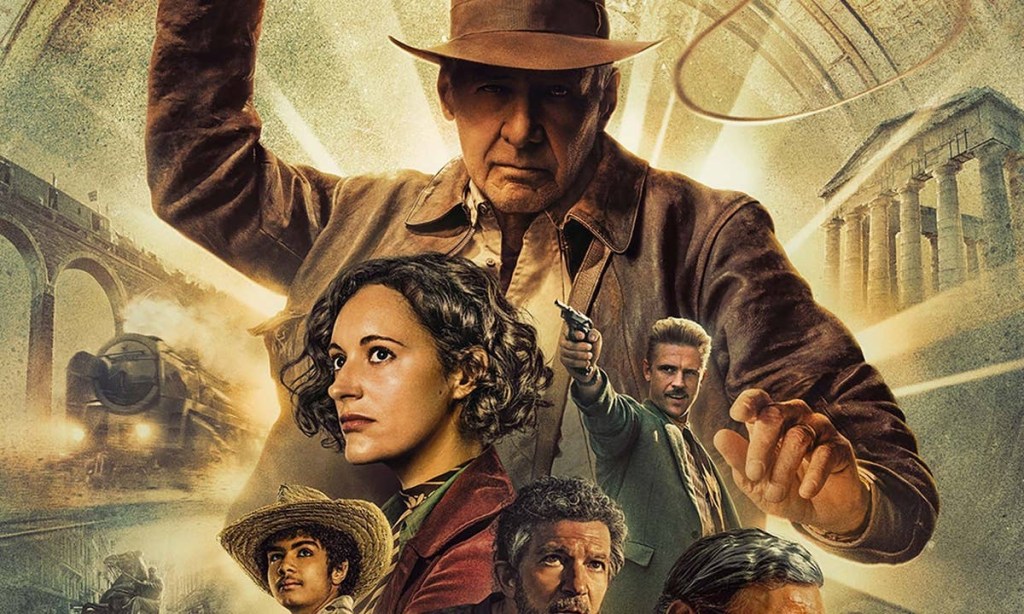
The really good news is that Indiana Jones and the Dial of Destiny is a wonderful movie. I have said it for years, and it’s certainly true here, one of the extraordinary measures of a society’s health is its box office because it tells the world what people are buying at the movie theater as an entertainment option. It accurately describes what kinds of things people really like in the world and provides a measure beyond political beliefs to the truth of public sentiment. It’s much more difficult to understand when you get into television ratings and streaming services. And I think what happened with Indiana Jones and the Dial of Destiny is something that we talked about last year with the release of Top Gun: Maverick, another movie that, like Indiana Jones, was delayed for many years in production before being released to the public. I’m sure that Steven Spielberg will deny it, along with the diversity crew at Disney, but clearly, what happened with Indiana Jones and the newly directed James Mangold Dial of Destiny is that they learned some important lessons with Top Gun, one of the first big hits coming out of Covid. And as a result, Indiana Jones and the Dial of Destiny is a fantastic film that seeks to be more like Raiders of the Lost Ark than the more slapstick Last Crusade. If you understand Indiana Jones like I do, and many people who have been with this character for over four decades now, and have watched all the television shows, read all the books, read the comics, played the video games, this Indiana Jones movie does a great job of showing a very complete character in a way that Hollywood has never had to deal with. And the movie pulls it off spectacularly and very respectfully. As only Harrison Ford could play, this is a very complex character, more so than most reviewers could wrap their minds around, and the result is something extraordinary with a very happy, family-friendly ending. I don’t think there was a single curse word in the entire film, and it didn’t have anything woke in it. It was an offering from Disney that was begging for forgiveness from the movie-going public.

What was clear to me was that this new director, James Mangold, loves Indiana Jones as many of us do, and he understands the character and his significance to actual history. I’ve also said many times that Indiana Jones has done more for science than almost any other resource in the history of the world. The publishing industry has really flourished because of Indiana Jones, not by direct correlation, but the hunger for the kind of content that is often discussed in Indiana Jones films and in Dial of Destiny; a lot is going on, things that work at many different levels that were built around a movie with a true love for the world of Indiana Jones and the way that fiction carries over into fact. I would go so far as to call Dial of Destiny as brilliant and ambitious while being very safe in the continuation of the character. As many have discussed, Indiana Jones is an old man in this movie. Harrison Ford is 80 years old, so we aren’t talking about a swashbuckling Errol Flynn type mixed with Humphrey Bogart as Raiders of the Lost Ark was often characterized back when it was first released. This is something unique and entirely of its own making that now has its own history that everything is measured from. And some of the real Indiana Jones types that are out there in the world doing great work, clearly inspired by these movies over the years, like Graham Hancock, the Joe Rogan Show, and even the religious writer Jonathan Cahn have shown that most of the thrill of Indiana Jones isn’t a youthful man fighting bad guys and escaping under speeding trucks. Over the years, the greatest thrills in Indiana Jones movies are more intellectual than physical, and that’s why Dial of Destiny works so well with an old Indiana Jones doing what only he could.

Instead, I would have Disney not made this Indiana Jones movie before I saw it. I raised my children on these movies; now, my grandchildren are tremendous fans. I enjoyed Kingdom of the Crystal Skull as an ambitious film that many didn’t like because it stepped out of the formula established in the first three films that were all released during Reagan-era politics in the 1980s. As much as people didn’t like the movie, and that Steven Spielberg didn’t seem to want to make it, there were a lot of positive things that came from that fourth film, such as the History Channel’s show Ancient Aliens, which culminated in the lives of great writers like Zecharia Sitchin and Erich von Daniken. These Indiana Jones movies open the broader market for these kinds of unique adventures into history, such as The Gold of the Gods so wonderfully portrays. Indiana Jones may have started as an adventurous playboy grave robber in Raiders of the Lost Ark. But he evolved quickly into the pent-up frustrations of George Lucas himself, a very smart person who wanted to live the lifetimes of dozens of the most brilliant people in all of human history, that over the years was attempted to flush out in all forms of media available to tell these stories. This movie, Dial of Destiny, does all that while still managing to keep Indiana Jones the person we have always known. He shoots guns in this movie, which I thought Disney would avoid altogether. There are fistfights that are not unbelievable for an 80-year-old man. And the development of Helena Shaw was respectful, fun, and dashing. I would easily see a movie that featured her as a main character. Played by Phoebe Waller-Bridge, she was a fun character, and I could see a sequel to Dial of Destiny where she is the feature, and Indiana Jones makes a guest appearance to help the movie along. This might be the last Indiana Jones movie, but I don’t think it will be the last Indiana Jones appearance by Harrison Ford, based on how this movie ended. 

It will be interesting to see how much business this movie does for Disney. Disney has severe brand damage now with their commitment to woke politics. But this movie is a clear peace offering to the ticket-buying public to help repair that brand. To invite people to come back to the theme parks. This is Bob Iger attempting to get Disney back in the public’s good graces. At least this film deserves to be in the billion-dollar club. But the Disney brand has made some people very, very angry. Yet this movie is as good as movies can be made and does not destroy a character the world has fallen in love with. And it leaves the door open to a happy ending for him, given that Indiana Jones is old. And that John Williams, who does a fantastic job with the musical score, as usual, is now in his 90s. This happy movie gives fans what they are looking for, and I couldn’t recommend it more. This is the kind of film that movie theaters were made for, that we used to get all the time in the 80s and 90s, but are now very rare. Indiana Jones and the Dial of Destiny is something special, and it was wonderful to see that movies like this can still be made. 

Rich Hoffman

Click to buy The Gunfighter’s Guide to Business

Donald Trump and Putin: Carrie Fisher’s death and the root of all success

It has been hilarious to watch the political order of our day react to the potential of a Donald Trump presidency—particularly in relation to Russia.  The assumption is that the political class on planet earth is something of a magical aristocratic entity of supreme knowledge.  Some silly businessman from New York couldn’t possibly know how to deal with Russia’s supreme leader, “Putin.”  After all, business people are “common stock” who are picked by politicians to succeed or fail in life based on their altruistic contributions to charity and events organized by the political establishment.  For me it has been excessively funny to read the many articles in USA Today, Rolling Stone, the New York Times and elsewhere as this supposition has taken place regarding Donald Trump’s reaction to events around the world.  The basic premise of every article is that Trump is not very smart and is poised to be outplayed by every player on the world stage to the disadvantage of America.

Everyone who reads here knows I am a Star Wars fan and I do think it’s sad that Carrie Fisher—the actress who played Princess Leia in the films–died essentially on Christmas Eve of a massive heart attack.  I enjoyed her character in the movies she played and I thought she was a brilliant writer—and a witty personality.  I enjoyed her appearance in The Force Awakens, but honestly, she was a broken person in that film barely able to hold a presence on-screen because she essentially had destroyed herself over the preceding 30 years.  One of the treats for me of the new film Rogue One was that Princess Leia as a nice 19-year-old young lady appeared at the end of the film which restored her reputation a bit in my eyes—and I felt this before the death of Carrie Fisher.  In the original films, Carrie Fisher was turning out to be one of those Hollywood liberal girls who are essentially destroyed before they turned 25.  The drugs and hard living as a pass around celebrity ruined her body making her into a joke by the time she was resurrected in The Force Awakens last year.  I watched her interviews as a 59-year-old and winced many times as she spoke because she was essentially a destroyed human being and she had at least enough wit to make fun of herself over it.  After all, what else was she going to do?

Carrie Fisher’s lifestyle is what killed her—it wasn’t some cruel act of fate—it was years of bad living and taking too much anti-depressant medication—being overweight, then losing weight and straining a body that was already destroyed two decades before.  It was sad to hear just prior to the Donald Trump election of 2016 that Fisher was criticizing the president-elects sniffing during the debates as if he were a “coke head” because she knew from experience.  And that she had written a book featuring her young affair with Harrison Ford attempting to tell the world psychologically that at one point in time, she was “hot.”  Harrison Ford was gracious about the whole episode letting Carrie have a fond reflection of a time when she was a 19-year-old girl sleeping with a 33-year-old married man and running around the streets of London with him in 1976.  He didn’t ask her not to do it, and let it run its course right up to the day she literally died.

As much as I like Star Wars and those actors for the part they played in the movies, I found their public comments about Donald Trump disturbing because they assumed as celebrities they knew something about the world that the rest of us didn’t.   Harrison Ford I think is a great actor, and I admire how well he has kept himself in shape, and he was fun to watch in Force Awakens because he was able to resurrect a good character he helped create over thirty years ago.  But Harrison Ford is still the idiot who gave himself an earring for his 50th birthday because he thought of it as some kind of rebellious proclamation he had earned with advanced age—and he’s maintained that earring now for over 23 years.  I am coming up on my 50th birthday soon, and I can tell you dear reader—I have no temptation of getting an earring.  That’s just never going to happen—so these liberal actors live in some other world and they constantly fail to understand their role in it.

http://www.nydailynews.com/entertainment/carrie-fisher-donald-trump-absolutely-coke-head-article-1.2824359

Since Carrie Fisher’s death along with many other celebrities and their fans, those soft minded modernists who get most of their news from People Magazine, and Entertainment Tonight, are sad that in 2016 stars like Prince, David Bowie, Carrie Fisher, George Michael, and many others died giving Generation X a harsh taste of mortality.  What nobody has essentially discussed was that most of those deaths occurred with a common theme of personal use of antidepressants to solve addictive personal problems stemming from poorly managed lives—and that the deaths were not so much a sad proclamation from the gates of Heaven, but just average people who faced crises and disappointments in their lives with real life blandness.  The magic of their imaginations lived through in their music and characters they played through their art—but they were not able to bring that art into their personal lives—which is the real tragedy.   The real Princess Leia would never do drugs or suffer through depression because that character would dominate those emotions and fight through them without chemical aid.  Unfortunately, most people never really get to know these people up close—to smell their bad breath, to see that they have pimples on their foreheads covered up with caked on make-up—so all they know of those stars is what they see in their art. They never know the real people.  It wasn’t that long ago where I went to dinner with a few of the members of the hit television show Beverly Hills 90210 and I was surprised at how average the girls were who were there.  They spoke and acted just like 20-year-old girls in Cincinnati, Ohio where I was from—and they had the same problems.  These are the people who make up our media culture and the same idiots who think that Donald Trump is a joke and not smart enough to deal with major problems around the world.

I had a chance to work in Hollywood, several times if I played it right—and believe me I thought about it. All I would have had to do was laugh at the stupid jokes of those same girls, pander to the intelligence of the 30-something directors and producers and not advertise my conservatism so boisterously.   I never thought it was fair, but honestly the way that culture is now you have to be a pretty superficial underachiever to make it in Hollywood because very few people of any real talent can survive unless they put their face on some really bleeding heart liberal causes—otherwise you are cast out of their aristocratic society.  Washington D.C. operates in much the same way only instead of that aristocratic society being pretty actors and actresses—they are lawyers too afraid of private practice still trying to justify the massive investment their parents spent on their college educations by hiding on K-Street where the easy money and prostitutes are.   Since I didn’t fit in any of those categories and was by instinct a person of action—I had to live authentically, and that meant that my talents needed to be the kind that people wanted to make movies about—not of the type that were about people who wanted to be people who really did things but were afraid to try—then tried to cover up that fear with lots of cocaine and antidepressants coupled with self-destructive sexual relationships.  It is harder to live real life and to a spectacular person that history will want to remember than to be some second-hander actor or politician who thinks it’s cool to get an ear-ring on their 50th birthday—because it helps start dinner conversations with other weak people at mindless Hollywood dinners.

Trump unlike all these other people and celebrities is a man of achievement—a guy who has built himself over and over again and always succeeded.  Success is not an accident—a successful person can have everything stripped away from them—they can have every hard luck issue tossed in their direction—every unforeseen death—every perilous catastrophe and they pound, and pound and pound right on through to see a successful resolution.  That is the common trait of all successful people.  They don’t hide from their problems behind alcohol or other drugs and they don’t yield to personal addictions.  They simply outwork those around them until their personal goals are met.

The best example of this that I’ve ever seen in a popular movie is from the Ridley Scott film, Gladiator.   In that film Maximus the star general of the Roman emperor had everything stripped away from him, his career, his family, his reputation—everything only to be resurrected as a slave to society.  By the end of the film Maximus had risen to the top of Roman society once again to challenge the emperor’s successor in a fight to the death—which truly captured many of the themes our current society are built upon—where does power come from?  Is it granted by the gods?  Is it really in whom you know?  Or does it come from an individual and their personal skills coupled with a daring approach to the problems which befall them?  The answer is in the last offering, everything comes from within—and Donald Trump is a completely self-made man.  The wealth and success he built came from his family and he has literally bent the will of those around him to achieve his objectives.  It took him most of his life to figure out all the elements with the help of a loving wife—his third—but the person who ran for president is essentially a person who never stopped trying and bent the world to his will.  People like that don’t have time for drug addictions and prescription medications—they self-regulate and they always have the answers because they worked hard to get them.

It is for those reasons that Trump will easily deal with Putin and every other world leader who will soon find themselves begging for the approval of the United States.  The world has literally never seen anybody like Trump before on such a stage and no, Hollywood doesn’t understand.  The media doesn’t either because they’ve been taught all their miserable lives that failures and weakness are admirable traits by the same people who are befuddled by Carrie Fisher’s death whose final claim to fame in order to sell her latest book was an affair with Harrison Ford on the set of the first Star Wars film when she was 19-years-old and still uncorrupted by drugs and bad living.  I picked my career path not because it was easy, but because it was hard—because it was more important to me to be free to live my way all hours of the day than to take any direction from the society aristocrats who think freedoms should yield to terrestrial desires for ear rings on 50-year-old birthdays.  And that is the big difference between Donald Trump and everyone else.  Some people merely reflect the actions of others and they become actors, politicians, lawyers and media people.  Others actually do things worth reflecting and that is what Donald Trump is.  What you hear from those social aristocrats toward Donald Trump is not that they think he’s stupid—even though that’s what they say—it’s that they are so weak.  They resent him because he’s everything they aren’t—but it is their future decedents—the giggling girls with pimples on their foreheads and the young males afraid of fire who will tell the stories of such modern heroes—only at a future time when history can forgive their insecurities.  But not before then.

Believe me, Trump will dominate the world stage—easily.  And the value of wealth building among the human race will increase proportionally.  Mark it on your calendar.  Hollywood and their media culture will never understand it because like the emperor from the movie Gladiator, they don’t get their power from within—but from whom they know.  And that is the difference in life between success and failure—or depression and happiness.

Rich Hoffman

 CLIFFHANGER RESEARCH & DEVELOPMENT

Sign up for Second Call Defense here:  http://www.secondcalldefense.org/?affiliate=20707  Use my name to get added benefits.
IMG_0303

Robert Tracinski, Rich Hoffman and Matt Clark on WAAM: Why ‘Star Wars’ is better than ‘Star Trek’

Matt Clark had me on his show to actually co-host with him as we spoke to Robert Tracinski who writes for The Federalist. He had written an interesting article about how it was unlikely that J.J. Abrams could screw up the new Star Wars film, The Force Awakens, so long as he stuck with the formula. There were some condescending aspects to Tracisnski’s article which I was willing to overlook, because he was right about a lot of things. But more than anything Tracisnski had been dismissive of the original trilogy as not being very good—which I thought was odd. So I was eager to talk to him. It only took a few moments into the interview however to learn the root of his issues—he was a Star Trek fan and had only come to Star Wars through his children. His position was that Star Trek was philosophically superior to Star Wars and that these new movies were kid stuff that he was enjoying with his children. Listen to that interview here:

I don’t care much for Star Trek, to me it is the United Nations in space. While Robert Tracinski is not a liberal and is a pretty committed Objectivist, which is Ayn Rand’s philosophy—it was clear to me quickly why Robert didn’t like Star Wars much in his article. I disagree with him on a number of topics regarding the formula of Star Wars, or its appeal. I think the Star Wars films are deeply philosophical; especially The Empire Strikes Back—much more so than Star Trek. I mean, people are not lining up across the world to see the latest Star Trek movie, and Star Wars isn’t as popular as it is because it’s just adults living out their childhoods once again through a movie. It’s more complicated than that. As we were talking to Tracinski, because of his background with Ayn Rand I kept wondering if I had met him someplace before, so I wanted to cut him some slack. Everyone comes to things in their own time and if he came to Star Wars late in life through his kids—so be it. One aspect that Tracinski got right in his article was the perception that Han Solo is the key to the franchise—so I stuck to that topic in our conversation.

Matt and I spent the first segment of his Saturday WAAM show talking about Disney and their progressive activism with a gentle warning about messing with the formula of Star Wars and the impact that might have on their massive investment. Matt and I love Disney—the Uncle Walt version. I love that Disney is a family friendly entertainment group—so I am willing to overlook a little of their liberal activism. Something that Robert Tracinski did bring up on his show that was true.  George Lucas and Steven Spielberg were the best conservative filmmakers coming out of the 80s. I personally think they were both seduced by Bill Clinton in the 90s and have lost their minds since. The reason their early films were so successful was because they all had conservative leanings to them. Once both directors had achieved their monstrous success and essentially stepped away from the Objectivist roots of their film careers, their movies started making a lot less money. Without question George Lucas was at least attracted to Ayn Rand in his early days—when she was at the height of her influence—and Han Solo was a character that represented that struggle within George. As he become more liberal with age and success—perhaps feeling a little guilty that all his liberal employees were constantly berating him for his capitalist tendencies, he softened up on his stance for individualism and began to accept collectivism to a much higher degree, which was clearly represented in the prequel  films—which were noticeably absent of the Han Solo type of character.

Where I disagree with Tracinski about the prequel films is that I don’t think George Lucas ever intended those films to be successes. They were dark movies about the failure of a Republic—and have great political merit to them. They are very philosophical from the position of how poorly constructed philosophies can destroy a body of government. Even though Lucas had been moving to the left—politically, his message about the failure of groups to detect evil, and how institutional failure is indicative of all government cycles is powerful stuff that set the stage for some pretty deep storytelling. As much as people dismiss the prequel films as silly, they are important in the larger scope of the intended message. The movies did lack heroics on the scale of a Han Solo, but that was on purpose. A lot of characters including Yoda and Obi-wan Kenobi made mistakes that they spent the rest of their lives correcting. So the films were never supposed to be heroic repeats of the original trilogy. For that story Han Solo was the savior, he kept Luke alive, married his sister Leia and that set up the events of these new films. Solo is an Ayn Rand character and Disney even with all their activism against conservative causes—can’t ignore that the magic of Star Wars isn’t Luke Skywalker, or anything about the Force—it’s about Han Solo’s position against hooky religions and ancient weapons not being as competent as a good blaster at your side.

Just a few days before Matt and I had our radio show together Harrison Ford was on with Jimmy Kimmel dressed up for Halloween as a hot dog. It was a funny segment and of course Ford was asked about the new Star Wars film. I thought his comments were interesting to say the least. He stated that nobody would be disappointed—at all. That was a remarkable statement considering what’s at stake. He knows the potential cost of over-anticipated hype—so his comments had me very curious in relation to Disney’s strategy going forward. Han Solo is going to be playing a larger role in Star Wars than he has in the past largely because the character tests well demographically. His children will without question be the subject of the new stories but Disney will find every opportunity to insert a younger Han Solo into the movies at every juncture. To be successful at that, Disney will have no choice but to adopt the obvious aspects of Han Solo’s Objectivism view points—his natural conservatism and love of capitalist endeavors if they want Star Wars to continue being successful.

After Matt’s show I spent time at my children’s house going trick or treating with my grandkids—and kids. Late into the night my oldest daughter and I spent time talking about Han Solo and how it seems obvious now that Disney will find a way to put him in the stand alone films as much as possible just to use him as a springboard to success. Like Robert Tracinski and I spoke about on Matt’s show, without Han Solo, I think the Star Wars saga crashes and burns. If they try to turn him into a sacrificial collectivist Disney will lose a lot of money because people will reject the premise. The ticket buying public will only accept the Objectivist Han Solo—and nothing less—the hero who acts in his own self-interest. Even though the moment at the end of A New Hope was intended to show that Solo was able to act for others, the need to save Luke at the last moment was out of Solo’s self-interest because he was starting to like the kid. Like I said, Star Wars is a lot more philosophical than people give it credit for, and I’d think that as much as Tracinski likes Ayn Rand, that he’d prefer Star Wars over the United Nations in space—Star Trek and all that “needs of the many outweigh the needs of the few” crap. Screw Spock and his pointy ears—he’s a damn collectivist. Solo is a rugged, gun slinging individualist who acts out of his own self-interest. That’s why Star Wars is better than Star Trek.

We’ll see what happens, time will tell. It was a good conversation that was worth listening to, especially given what Star Wars will mean when it opens in a few weeks. There will be no escape; the opening of The Force Awakens will impact just about everyone no matter where they live. It will be impossible to not notice something about it as the merchandising around Christmas will be everywhere. Just watch the Duracell commercial shown above. Star Wars will literally be everywhere in just a few weeks of this writing. There will be nothing like it ever—history is being made both commercially and philosophically. The question will be whether or not The Force Awakens will be as anticipated on the 19th of December as it was on the 18th after people start seeing the movie. To be as successful as Disney needs it to be people will need to see the film several times. And to have that kind of power over the mind of fans—Han Solo will have to be a part of it with an Objectivist approach—otherwise the whole thing falls apart. It’s not the lightsaber battles and space antics that make Star Wars so great—it’s the Objectivist leanings of its basic premise:

Han Solo—“marching into the detention area is not what I had in mind.”

Luke Skywalker—“but she’s rich.”

Han Solo—“How rich?”

Luke Skywalker—“More wealth than you can imagine.”

Han Solo—“I don’t know, I can imagine quite a bit.”

Luke Skywalker—“you’ll get it.”

Han Solo—“I better!”

Luke Skywalker—“You will!”

Han Solo—“Alright kid, what’s your plan?”

That’s Star Wars—it’s an Objectivist love fest designed before George Lucas was overly liberalized. It’s also why twice during the broadcast with Matt that I uttered to his millions and millions of listeners—“Han shot first!” When Lucas changed Star Wars in 1997 to have the bounty hunter Greedo shoot at Han first in the Mos Eisley cantina fans were angry. It was a liberalized mistake for Lucas to cave under the pressure from the liberal film community to make Han Solo not appear as such a blood thirsty killer. But Solo acting out of self-interest shot first because that is the nature of his character—he’s an Ayn Rand survivalist and the heart of what makes Star Wars great.

Rich “Cliffhanger” Hoffman

 CLIFFHANGER RESEARCH & DEVELOPMENT

Listen to The Blaze Radio Network by CLICKING HERE.

The Millennium Falcon is my Thing: Wonderful news from Disney’s D23 Expo

Stunning is all I have to say about the news out of Disney regarding Star Wars.  Everyone who reads here and knows me understands that I am a Star Wars fan.  They know that my primary love in life is that of mythology and the power of it.  That one of my great personal teachers was the maverick professor at Sarah Lawrence College—Joseph Campbell and that I spent many of my formative years associating with the Joseph Campbell Foundation of which George Lucas was one of the Board of Directors.  And I have said on many occasions that I think the new Star Wars films, and all the books and media that will follow will reshape our modern culture not only regionally, but globally. There is tremendous power in Star Wars and Disney’s marketing machine will only accentuate that in glorious ways that only capitalism can fully extract.  The news around the upcoming film The Force Awakens is exciting.  But that’s not all, a whole slate of new films following that one are upcoming.  All the mythology that the previous six Star Wars films have produced over the last 30 years will soon be eclipsed by the six new films in the pipeline produced over the next six years.  And supporting those will be all new novels, video games, commercial products but best of all a new Star Wars land at the Disney parks.  Click here to read some of my previous work on this topic.  I predicted this a long time ago in a galaxy not so far away. 

For me the biggest news of this century which has stirred in me a delight that is quite epic is the information that not only will Disney build a 14 acre Star Wars specific land in both the Anaheim location and Orlando location, but that a full-sized Millennium Falcon will be present.  That is a game changer in these films that I have been wanting to see my entire life.  And now I’m going to get to see it.   At the D23 Expo over this last weekend Bob Iger released the details and showed the concept art and that just did it for me.  I have been in love with the Millennium Falcon since I was very young and it may actually be stronger today than even when I was a kid because not only through the movies, but the many novels, I have spent a lot of time on that ship in my head—and I completely understand the world it traverses through.  I am very happy that Disney as a company has done precisely what I said they would do with the Star Wars acquisition when they first bought it in 2012 and at the heart of it they intend to keep the Millennium Falcon a central character to the entire saga.

Honestly if Jesus Christ came again to judge the living and the dead on judgment day and I had a chance to attend that or to go see the Millennium Falcon in real life, I would choose the Falcon.  I am pretty stoic when it comes to controlling my emotions.  I don’t get crazy about many things—especially sad things. But I do allow myself to feel elation over positive things, and I really don’t know how I will handle seeing a Millennium Falcon in real life—seriously.  When the place opens I may take a week of vacation just to reside in that land day after day soaking up everything—because I love the Star Wars mythology from top to bottom—and within that world I have a love of the Millennium Falcon that is central to that passion.  Still to this day, out of all the successes and experiences I’ve had—which are quite extraordinary, things I’ve won and achieved—one of the best memories I have ever had was seeing the real life model of the Millennium Falcon in the Smithsonian in 1997.  I really felt when I put my hands against the glass that I had died and gone to heaven.  It was one of the most beautiful things I’ve ever put my eyes on.  Given that context I really don’t know how I’ll react to seeing a model of the Falcon in full-scale that I can walk up to and see close.

Han Solo is the modern embodiment of the classic western cowboy.  His quick draw pistol is famous within the Star Wars storyline and his super fast Millennium Falcon gives a tip of the hat to two film genres, the classic car hot rod and a gun fighting cowboy.  Those two things are just impossible not to like—and to top that off, the Falcon was a pirate ship within that galaxy—so I’m not the only one who finds the Millennium Falcon appealing.  I was amazed to see Harrison Ford on stage at D23, and that it was Han Solo who made the cut on the new poster for The Force Awakens.  There will be a new film about specifically Han Solo as a young 20 something that will be exciting, so there is a lot of news coming from Disney to be excited about for—particularly for Millennium Falcon fans.  I know how I feel about all this information, so I can’t help but think of the scientific implications of it.

As recently as last week I was thinking of a way to build a real Millennium Falcon as a real usable space vessel moving to and from earth to explore the reaches of space.  I really don’t think we are that far away, and one design with sentimental value is as good as any other.  The Falcon offers a lot of options for deep space travel particularly in its circular design.  A change of scenery is important when spending a lot of time in space, and the Falcon is cleverly designed for just such an experience.

Also announced at D23 was the new photo for Rogue One which showed Felicity Jones as the main actress standing among a group of daredevils and hackers about to steal the Death Star plans leading up to the original Star Wars film,  A New Hope.  As I looked at that I couldn’t help but wonder if she wasn’t playing Bria Tharen who was one of Han Solo’s girl friends from the Expanded Universe.  If she was her back story could easily be a part of the stand alone Han Solo film coming on May 25th 2018.  I’m already in line!  Likely being that young, Han Solo wouldn’t yet have the Millennium Falcon, but I’m sure it will make an appearance in that film as the ship owned by Lando Calrissian.   It is obvious that Disney, knowing the popularity of the vessel is finding ways to put it in most of the new Star Wars films in some support role or another.  There will also be a Boba Fett film and in that story I’m sure he will be chasing around a younger Han Solo in the Millennium Falcon—so there is a theme emerging that is quite justifiable in placing a full-sized Falcon in the center of the new Star Wars land at Disney.

Knowing the effect the Falcon has had on me I shudder to think of what effect it will have on a new generation who can actually walk up and touch it.  I got goose bumps the first time I saw new footage of the Falcon in a hangar on the Star Tours ride in Orlando.  Part of the ride flies off behind the popular vessel in a dog fight and I was blasted with excitement in just seeing it sit there.  For my birthday this year we went to Dave & Busters just so I could fly the Falcon in the video game there exclusive to the popular gaming destination.  But these are all images that take imagination to enjoy.  They are not something you can put your hands on and feel.  Disney is now taking that step and I am emphatically excited about it.  I think the influence it will have on science for years to come will be extraordinary.  These new films will open up the mythology in ways that nobody thought was possible before and the effect they will have on civilization will be extremely powerful.  Being able to reach out and touch it will just make it that much more influential as a mythic device.  So yes, there is a lot of good news floating around out there.  But for me, nothing is more exciting than the D23 news coming out of Disney.  I would pay $100,000 just to see an actual movie prop of the Falcon on set.  I would spend unknown amounts to see one all dressed up at Disney World.  The Millennium Falcon is my thing—and I share that with a lot of other enthusiasts. It was probably the best thing that Disney could have done with Star Wars—and they are just getting started.  I can’t wait to see what’s next!

Rich Hoffman

 CLIFFHANGER RESEARCH & DEVELOPMENT

Listen to The Blaze Radio Network by CLICKING HERE.

What Makes Harrison Ford Great: An actor recovering after a crash landing that belongs in a movie

There are a lot of phonies in Hollywood. Most of the time actors will tell you that they are nothing like the people they play in a movie. Some actors even try hard to find roles that are not even close to their real personality. I’ve had a chance to meet some of them, and I always walked away from those projects feeling let down. Even though my adult mind knows and understands show business well enough to comprehend that actors are just actors—when they attempt to portray tough people in the context of a story but are afraid of a bug that crawls across the table during lunch—it’s a let down. But I have high expectations because one of my favorite actors is Harrison Ford, and he has always been at his core—the carpenter that he was when he first started. He’s always been very physical in his roles which obviously goes back to the days that he broke into the business while building a studio for a producer when George Lucas asked him to read some lines for Star Wars as Han Solo. I’m one of those people who think that Star Wars and Indiana Jones would have never been as good as they were without Harrison Ford because of what he does to bring his characters to the screen.

When the 72-year-old crashed shortly after taking off his vintage era World War II single engine craft to the air at the Santa Monica airport due to engine failure I was a little worried for him. I understand he’s old, but he’s been one of my favorite actors for most of my life. I don’t expect him to live forever, but it would be sad to see him lose his life in such a ridiculous fashion—after playing some of the most loved and most action oriented roles of any actor. Ford has played a hot-shot pilot in the Star Wars films and in every Indiana Jones movie; airplanes are a very important part of the story lines. In two films, Indiana Jones and the Temple of Doom and the Last Crusade, the feature character had to crash-land airplanes. I raised my kids on those movies so it would have been sad to see Ford die in a plane crash like so many other stars have in years past.

As details emerged from the crash it turned out that Ford was in real life every bit as creative and dynamic as Indiana Jones or the role only he could have played—Han Solo. According to a NTSB report filed after an investigation of the March 5th 2015 crash Ford took off from Santa Monica which is in a heavily residential area–lost power nearly immediately not even getting any altitude to give time to glide away from the city or make a ditch in the ocean. Ford as a very good and experienced pilot made a critical decision to turn left back to the airport instead of right because of some quick thinking of making an emergency landing. He made a call back to the tower to make an emergency landing hoping to glide back in, but realized quickly that he wasn’t going to make it. So he set up an unpowered landing over the golf course spotting a place that would take him away from the people below and hit the ground before he overshot the narrow patch of turf and into the road beyond.

He cut his head badly and broke some bones. It was the second time in a year that Ford had broken bones in his leg; the first was during the filming of Star Wars: The Force Awakens. Now it was during a recreational flight he was taking between film projects as he has been lobbying for another Indiana Jones film from Disney. Some would say that Ford should hang it up—that he’s too old to do these kinds of activities and that all these broken bones should tell him to stop for his own safety—but that is why I like the actor—because he’s always been an incredibly physical person and his characters have shined because of him.

In Raiders of the Lost Ark during the filming of the flying wing fight, Ford tore his ACL when the plane ran over his leg during a stunt. Then in the Temple of Doom Ford herniated a few disks in his spine aggravated by riding elephants. The film was brutal for even actors in great shape. There was even more crawling around and tumbles that Ford had to do even with his stuntman Vic Armstrong doing most of the back to camera work. Because of all the injuries on the set of Temple of Doom it is unlikely that a major film will ever feature so many live action stunts again. Liability insurance these days make such a thing prohibitive. Ford was out a month nearly shutting down the picture—ironically just as was the case for the upcoming Force Awakens. Ford spent more time hurt as a younger man in his thirties and forties than he has in his 50s and 60s and it’s good to see him getting back into the kind of roles that made him a household name in the first place.

One of my very first favorite books was The Making of Raiders of the Lost Ark which chronicled the day-to-day efforts of making that classic film. Harrison Ford was every bit as much of an action hero off the screen as he was on it, and in many ways I liked the story of making the film more than the actual film. I loved the stunt guys and the general attitude on the set and I never stopped loving everything about that movie, from the sound editing, the music, to the screenplay—but most of all the dirty, gritty daily life of an action movie set in the desert. I’ve judged movies off the Raiders standard ever since—fair or unfair. I think for Ford it shaped him as an actor as well—it set the bar so high that he had to live up to it, and as a hard worker first, an actor second, Ford never shied away from holding himself to that standard. As good as he was playing Han Solo; it was really Raiders of the Lost Ark that put Ford into another universe as an actor.

For me what makes his roles better is knowing that the real person playing these roles is an authentic, and sincere person—and Ford is. He’s everything an iconic actor should be on and off the screen. When Indiana Jones crash lands a plane in the Last Crusade you want to think that such things are possible so you can believe in it when you see it on the screen. One of my favorite sequences from Temple of Doom is the plane crash in that film where Indiana Jones and the gang jumped out in a life raft which inflated during the decent. It was a real stunt and I’ve never seen it topped in any film since—and it just might work in a life and death situation. So when Ford crash landed his vintage aircraft on a Santa Monica golf course there was more at stake than an old man dying from his injuries. There was the fear that the magic of movies would remain in the realm of fiction, and that real people actually buckled under such pressure and succumbed to fate. Instead Harrison Ford always the good pilot no matter what the conditions had an escape plan already in mind when his engine cut out at the most dangerous period of flight—the take-off. Ford knew the plane was going down so he set up a situation that would do the least amount of damage to himself, his plane, and the property and lives around him. He hit a very narrow window to achieve the best case scenario.

A month later Ford was at home recovering and telling his old-time friend and producer Frank Marshall that he was ready to play some tennis. Marshall was the Nazi pilot in the flying wing sequence, so he has seen the actor hurt on set many times. And as the producer reported, “Harrison is at home and he’s up and about, he’s recovering remarkably. He made an incredible landing, to his credit. He is after all Indiana Jones.” And that is the difference between Harrison Ford and every other actor. If Disney truly wants to make more Indiana Jones films, Harrison Ford will have to be a part of them; otherwise the audience just won’t buy into the change. Indiana Jones is much better than James Bond—the fan base won’t follow a new actor the way they did Harrison Ford because there is always the belief when the actor is seen on the screen that all the things the adventurer is doing is possible in real life. At 72 years old, Harrison Ford is showing that a life lived is more important than a life saved at the expense of safety. When it comes time to make the hard decisions, Ford is as able as any fantasy character created in the mind of a writer—and that is what makes his characters better and his movies timeless—like the man himself.

Rich Hoffman

 CLIFFHANGER RESEARCH & DEVELOPMENT

Listen to The Blaze Radio Network by CLICKING HERE.

FROM THE PAGES OF AYN RAND: Clint Eastwood, Harrison Ford, Angelina Jolie and the great Sergio Leone

The first time I was on television was on a commercial for the restaurant I worked for when I was only 16 years old.  I was a part of the filming and of setting up some of the shots and it gave me the opportunity to work with a crew from Channel 19.  The commercial just happened to air that week during “Tough Guy Week” where nightly they played movies from the toughest characters in Hollywood, people like Steve McQueen, Chuck Norris, Bruce Lee and best of all, Clint Eastwood.  I had been familiar with Eastwood’s spaghetti westerns before, but on the night that my commercial aired it was the same night that For A Few Dollars More played on television, so I ended up watching the entire film so that I could see how the commercial turned out.

The “Man With No Name” character in the Sergio Leone westerns—the trilogy A Fist Full of Dollars, For a Few Dollars More, and The Good, Bad, and the Ugly starring Clint Eastwood was a benchmark in tough guy films.  There had never been another character like the one that Eastwood played in those westerns in all of human history—including stage plays from the Renaissance.  Eastwood’s character was a brand new concept that few understood at the time—but loved.  That love continues 50 years later and has had an impact on cinema that has only escalated.

Eastwood would continue to work this personification of a male Übermensch conceived by Leone for several more films—particularly High Plains Drifter, Pale Rider, The Outlaw Josey Wales and Sudden Impact.    To a smaller degree Eastwood played the same role in the contemporary comedy Every Which Way But Loose as a bare knuckle fighter.  Eastwood’s characters were so popular that they spilled over into other films like Star Wars where the characters of Han Solo and Boba Fett were direct embodiments of the Leone westerns that were only 10 years old at the time.  Kevin Costner would take on a similar Übermensch role in The Bodyguard which was the romance drama of 1992 that women swooned over.  Arnold Schwarzenegger would adopt Eastwood’s screen presence in films like The Terminator, Commando, and Conan the Barbarian, and following Eastwood’s movie production pattern at Warner Brothers did a comedy with Danny DeVitto called Twins—where his  Übermensch character could be played off the hapless antics of a much smaller man.

Progressives in Hollywood of course hated all this attention on these tough guy films and the actors who played them.  In 1989 Tim Burton tried to make a common everyday guy into a tough guy with his Micheal Keaton Batman film which attempted to stop the trend of these superhuman character films that were out of reach for the common man.  Progressives did not want these Übermensch types to steer the American public away from their social messages of interconnected reliance on each other, feminist causes, and sexual experimentation in gender roles–so they tried to get the situation under control.  The most obvious attempt was in the Batman films by Warner Brothers.  While the first film was visually stimulating, the sequel fell apart leading Val Kilmer to play in the 1995 version of a Batman reboot.  The movie was good, but Kilmer wanted nothing further to do with the role—likely from internal pressure within the Hollywood community to stop making Übermensch films.  The next Batman film was with the progressive George Clooney playing the caped crusader, which bombed and was a terrible film filmed with progressive slanted messages—which the public rejected.  This would cause Hollywood to return grudgingly back to the Übermensch concept by plucking the older material directly from comic books.  There was some experimentation with Spiderman to take the Übermensch concept and make him more altruistic which fell apart after Spiderman 3 in 2007 completely imploded on itself as Hollywood had lost the formula.  Christopher Nolan would dig deep into the roots of the Übermensch and get it right which has launched the current superhero parade of films from Ironman, The Avengers, The Hulk, Superman and all the good stuff that’s coming.

Meanwhile James Bond went from an obvious Übermensch in the late seventies and early eighties to a much more “progressive” and less secure secret agent in the 90s which nearly destroyed the character when Timothy Dalton took control after Roger Moore and showed that Bond wasn’t always so sure of himself—which audiences didn’t like.  The Bond franchise is still struggling to find itself as fans still love the old Roger Moore, Sean Connery version of James Bond over the newer—less sure of themselves—James Bonds.  Personally I find the new Bond films by Daniel Craig to be nearly unwatchable.  I enjoy them for the stunts, but the Übermensch Bond is not there.  Progressives love the new Bond and promote it actively—but it just doesn’t take to the American consciousness.

Then there is Quentin Tarantino who loved the old Leone films as much as I did and resurrected the Übermensch concept with a new spin to appease his producer Harvey Weinstein—he cast the lead as a woman and gave the origin for the special mystical power of the Übermensch to the East as a tribute to martial art films from the past.  The result was a fun romp through a bloody series of films where the heroine Uma Thurman was essentially playing Eastwood’s “Man With No Name” character from the Leone films.  It doesn’t matter in the least that Thurman’s character was a woman—what matters is that she was an Übermensch.  Angelina Jolie would take the Übermensch type of character into her portrayal of Tomb Raider where she played the video game character Lara Croft.  To this day even though critics panned the film as not very good, Jolie is known as Lara Croft even though she has made dozens of very good films.  It was her confidence—and Übermensch character in Tomb Raider that fans will always remember about her.

So what is the point of this little history of films produced by Hollywood?  Well, most of these stories lean back on the Leone films which were real breakthroughs at the time and indicated that mankind changed forever.  Human beings want their Übermensch in spite of what political or social forces wish to acknowledge.  And the first filmmaker to really get it right was Sergio Leone.  Without him, it is unlikely that any of the above would have happened—and Hollywood would be just another industry failing in America under progressive leadership.  Instead, Disney now has control of the Star Wars franchise and the world just spent a week wondering if Harrison Ford’s broken leg from the new Episode VII set would hinder his ability to resurrect his Übermensch Han Solo once again.  Disney is rumored to be planning a Boba Fett film which will essentially be a science fiction spaghetti western inspired directly from Sergio Leone—and it will make a ton of money—and progressives will be left scratching their heads wondering why.

So let me give you the secret dear reader.  Let me explain to you the reason why this trend has emerged and given birth to a comic book culture that is taking over today’s youth steering them away from the pacifism of progressivism.  When Ayn Rand spent approximately twenty years writing two books—one, The Fountainhead and two, Atlas Shrugged, she took Nietzsche’s concept of the Übermensch and completed the work that the German philosopher was unable to due to madness.  In The Fountainhead was the first real attempt to provide an Übermensch to ever occur as a fully functioning character.  The novel published in 1943 was part of a growing trend for human beings to grapple with the Übermensch concept.  In just 1938 the first Superman comic was produced based on a 1933 fanzine trying to take the overman idea as proposed by the socialist George Bernard Shaw and Nietzsche’s direct influence of Hitler’s National Socialism and complete the destructive nature of the incomplete philosophic principle.  The Superman comic was a direct reaction to the type of sentiment which led to Franklin Roosevelt’s New Deal ideals in America and had a bit of a liberal spin on it.  Ayn Rand further flushed out the Übermensch concept and put them on the pages of her novel, The Fountainhead—which to me is one of the greatest novels of all time.  Rand would then further perfect the concept into Atlas Shrugged which 60 years later is still selling like French Fries at McDonald’s.  It was in these two books that the Übermensch found the right philosophic balance and emerged as a new way of thinking.  It was this concept which found itself into the Sergio Leone films thus inspiring modern Hollywood in ways that would be inconceivable otherwise.  If not for Ayn Rand, her early work as a screenwriter for Cecil B. Deville, her casual associations with Walt Disney, and John Wayne and her deep work in philosophy with the fresh eyes of an immigrant who had seen the worst that communism had to offer—the movie For A Few Dollars More would have never happened, and likely Clint Eastwood would have remained an obscure actor doing bit parts on television shows.

Without Ayn Rand’s fleshing out the concept of the Übermensch there would not have been a Star Wars, there would not have been an Arnold Schwarzenegger in film, and Kill Bill would have never even gained the ability to be made.   Without question there would be attempts, but they would have failed.  When direction was given on how Han Solo should get up out of his chair after killing Greedo in the cantina, or how Boba Fett was supposed to walk down a hall, reference was pointed back to Clint Eastwood—“do it like the characters in the Leone films.”  And it was Ayn Rand who invented the type of Übermensch who appeared for the first time in The Fountainhead so that Clint Eastwood could have some sort of reference on how such a character should behave—since one had never been seen before in the history of the world.  Ayn Rand took the speculative theory of what an Übermensch was supposed to be and fleshed it out in her novels.  Filmmakers like Sergio Leone and Clint Eastwood then brought that Übermensch concept to Hollywood which has changed the world.

There is no going back now.  It is only a matter of time that society acknowledges their intense desire for the Übermensch.  The evidence is obvious from the intense interest in comic book films, space odysseys, and an 84-year-old Clint Eastwood who is still tougher than men a fraction of his age.  It’s not the muscle which produce the toughness, it’s in the mind—the beholding of the Übermensch concept—something that became very real to me the first time I really came to understand it watching my first television commercial on Channel 19 during “Tough Guy Week.”  The world has been forever changed for the better in a tug-of-war between the Übermensch and the progressives who despise having to even hold a rope against the strength of such characters.  They have no choice.  Their years of progressive philosophy inspired by Immanuel Kant and Karl Marx are coming to an end in failure.  What is coming are the philosophies of the Übermensch brought to man’s mind through films inspired directly from the pages of Ayn Rand.

image

Rich Hoffman

  www.OVERMANWARRIOR.com


The Jackie Robinson Story: Hiding bad behivor behind racism today

I had the opportunity to watch the movie 42 about Jackie Robinson, who was the first black baseball player in the Major Leagues. I normally avoid progressive films, and there is a fine line between progressive propaganda with a political agenda and genuinely good stories, which is what 42 was. The film is one that needed to be made and while watching provoked many thoughts that deserve comment.

Jack RooseveltJackieRobinson (January 31, 1919 – October 24, 1972) was an American baseball player who became the first African-American to play in Major League Baseball (MLB) in the modern era.[1] Robinson broke the baseball color line when the Brooklyn Dodgers started him at first base on April 15, 1947. As the first major league team to play a black man since the 1880s, the Dodgers ended racial segregation that had relegated black players to the Negro leagues for six decades.[2] The example of Robinson’s character and unquestionable talent challenged the traditional basis of segregation, which then marked many other aspects of American life, and contributed significantly to the Civil Rights Movement.[3][4]

http://en.wikipedia.org/wiki/Jackie_Robinson

In the film Harrison Ford played Branch Rickey wonderfully which I thought was a heroic story in and of itself. I loved Ford’s role and portrayal and found myself wishing that more people in the world were like Branch Rickey.

Wesley Branch Rickey (December 20, 1881 – December 9, 1965) was an innovative Major League Baseball (MLB) executive elected to the Baseball Hall of Fame in 1967. He was perhaps best known for breaking Major League Baseball’s color barrier by signing African-American player Jackie Robinson, for drafting the first Afro-Hispanic superstar, Roberto Clemente, for creating the framework for the modern minor league farm system, for encouraging the Major Leagues to add new teams through his involvement in the proposed Continental League, and for introducing the batting helmet.

Rickey played in MLB for the St. Louis Browns and New York Highlanders from 1905 through 1907. After struggling as a player, Rickey returned to college, where he learned about administration from Philip Bartelme. Returning to MLB in 1913, Rickey embarked on a successful managing and executive career with the St. Louis Browns, the St. Louis Cardinals, New York Yankees, Brooklyn Dodgers and Pittsburgh Pirates. The Cardinals elected him to their team Hall of Fame in 2014.

Rickey also had a career in the sport of American football, as a player for the professional Shelby Blues and as a coach at Ohio Wesleyan University and Allegheny College. His many achievements and deep Christian faith[1] earned him the nickname “the Mahātmā.”

http://en.wikipedia.org/wiki/Branch_Rickey

I found it interesting that Rickey is yet another innovative celebrity from Ohio and in the film the scenes that took place with the Cincinnati Reds at the old Crosely Field were stunning. It was a reminder again of how much Cincinnati and specifically Ohio helped shape the nature of America. I enjoy baseball, and love the role Crosely Field played in the early days of Cincinnati’s development, so it was fun to see Crosely Field alive in the film 42. To learn more about Crosely Field, click the link below for a complete history and lots of photographs.

http://www.crosley-field.com/

Jackie Robinson and Branch Rickey were noble men from an era that I desperately love. I would never support racism, and respected Robinson’s crusade. I have been friends with many black men over my life, and my experience has been similar to the kind of people Robinson was. I respected their politeness, their manly swagger, and their deep commitment to goodness. Goodness does not know color and clearly, especially after watching Jackie Robinson’s story in 42, as a baseball player he wanted to do “good” and the world is far better off for it.

However, the premise of racism as it is today is to allow bad behavior to go unchecked because of skin color, and this is not right. Jackie Robinson if he were alive today would likely condemn rappers like Jay-Z and Snoop Dog for taking the very things he fought for as a black man and squandering them away using the color of their skin to be detrimental paradoxes of oblivious conduct. Robinson was careful to always present himself as a gentleman to the public and he ultimately won the battle against racism by capturing the high moral ground of the public. Yet against his memory looters, scum bags and social malcontents want moral judgment against their bad behavior obliterated behind a mask of racism. After watching 42 I came away feeling that Robinson loved his wife, loved his children, loved his teams, was honorable and appreciative of Branch Rickey and was a gentleman in every way to the press. That is the kind of person all Americans regardless of skin color should try to emulate.

Yet too many people of color today wish to hide their poor life choices from judgment by conjuring up memories of the kind of racism that Jackie Robinson dealt with—which is an injustice that is not forgivable. For the welfare mothers abusing the system to get free money from the government with out-of-wedlock children, they are disgracing the good work that Jackie Robinson conducted. To the dope smoking gangstas’ from the inner cities—Robinson didn’t fight so hard and put up with so much to have low moral values hide behind the race card. Or to the man who romps around the African-American communities like a bee to flowers impregnating as many women as possible without any sense of responsibility, Robinson did not fight so that you could be such a loser.

I loved the scene in 42 where the little African-American kid chased the train until it was out of sight because Robinson was on it. Jackie Robinson was the boy’s idol. Young people need those kinds of idols, and it doesn’t matter the skin color, it is the conduct of those people who can set the pace of young people forever and give them something to live up to. All Snoop Dog and Jay-Z are doing is justifying why people should stay down and shoot low—and if anybody questions them on their poor lives—call them racists.

42, the movie gave me hope for Hollywood. I loved the movie and will see it again. It was a very patriotic film which deserves its place in history. I’m glad it was made and I’m glad I took the time to watch it. It is my hope that other films like it will be made in the future. Because in such stories are the story of all of us who call ourselves Americans—and no place else in the world are such things done as they are in The United States—even in our games of leisure and evenings of entertainment—of which baseball has a long tradition.

Rich Hoffman   www.OVERMANWARRIOR.com


Star Wars and Political Science

Star Wars and Political Science

I have to report something that many, many people will find excessively disturbing. Now, in the context of what I’m about to say, keep in mind that I am well read, and have studied history about as extensively as a non-professional can without becoming professional.

Of my favorite books that I’ve read is the wonderful series by Joseph Campbell, The Masks of God four book series. I’m a tremendous fan of Friedrich Nietzsche, particularly Thus Spoke Zarathustra. I just completed A Patriots History of the United States. I love the book the Mothman Prophecies by John Keel, and all his further reporting of the strange and unusual. And I have read many of the popular modern news anchor books, such as Glenn Beck, Bill O’Rielly, and many of the others. I particularly enjoyed Arianna Huffington’s Pigs at the Trough. The point of this qualifying statement is that my reading range is varied and not party influenced. And it is extensive enough to make proclamations.

And the proclamation that I’m going to make is that the work in Star Wars, not just the films, but the books, is some of the best work of political science done in the history of mankind. And I say that as I pour over The Federalist Papers, and The Anti-Federalist Papers, and The Second Treatise of Government by John Locke 1667. In the Star Wars books, starting with the New Jedi Order series which started in 1999 and went on for 19 books, all the way up through Fate of the Jedi, the content while typically Star Wars is quite deep and universal in their exploration of political and human deficiencies.

How popular is it? Look at this tribute to John Williams, whom I think is the greatest musician there ever was, not just because he did the music for Star Wars, but most of the memorable, and inspirational music ever created. He will surpass Beethoven, Mozart and all others in the context of history.

Anyone not familiar with Star Wars, or who haven’t taken the time to work through the story line, let me bring you up to speed. The Jedi Knights are protectors of the Republic Government throughout a galaxy. The Jedi became complacent by their unchecked power. So a Sith Lord, an opposite of a Jedi in political motives, infiltrated the government, manipulated his way to become Emperor, and ruled the galaxy with an iron fist. The Emperor works with the Force, an unseen god-like presence that embodies all matter, much the way Jedi do, but otherwise is very similar to the motivations of Adolf Hitler, Joseph Stalin, or Alexander the Great in real historical concept. The Jedi are all but destroyed and are forced into hiding.

To give you an idea how popular Star Wars still is, here is Harrison Ford at the 30th Anniversary of The Empire Strikes Back. (THE 30TH ANNIVERSERY! Most people don’t know who the president was 30 years ago, but they still know Star Wars)

Eventually the Jedi led by Luke Skywalker overtake the Emperor. They replace the government with the New Republic, and the problems commence. What kind of government do they replace the Emperor with, as many power hungry factions emerge to fill the power void, and what role do the Jedi play in that government? For the next 30 to 40 years the Jedi watch many governments rise and fall, while they try to build their role of protector of the galaxy back to a respectable position, all the while fighting political squabbles, the re-emergence of the Sith, the Jedi’s own insecurities in becoming too power hungry themselves, and the role of spiritualism in the whole enterprise.

This video from the Celebration V in Orlando Florida, August 2010.

The ongoing struggle of the Jedi v. government, and the Jedi v. Sith, and the Jedi v. self is a marvelous and highly sophisticated exploration of political science done against a science fiction back drop. It is because Star Wars is more than just pure entertainment, but at a deep subconscious level, food for the mind, that it has become such a memorable story that is so endured by the public to this day.

More from Celebration V.

And here is a word of warning to the entire political structure as it now exists. The world has moved to a place you cannot follow. With Star Wars, many similar science fiction stories have emerged. And now with the emergences of on-line gaming, whether it be Halo, or Gears of War, Modern Warfare, or Madden Football through Xbox, or Play Station or more advanced games like World of War Craft, and Star Wars on the PC game front, the youth, and in many cases the middle agers playing them, are starting to see through the smoke screens employed by politics for all of human history. Such tactics have worked in the past, and up to the last thirty years, were very effective. Even though the last 15 years seem to have made tremendous gains turning the republic of the United States into a socialist country with a European blueprint, this is an illusion. It’s the tail behind the head of the snake. The head is already moving in a different direction.

Here’s George Lucas talking about the Smithsonian exhibit in Washington D.C.

Sure, many will look at current personalities like Glenn Beck and call him seditious. But they are only looking at the symptom. Glenn Beck has emerged to fill a market need. He is not the market itself but has only emerged to supply to that market, and that is where many of the fools that cast blame in his direction go wrong. Beck is a product of the same generation I am, and we grew up asking questions, and all one has to do is read history to see that fiction has its roots in reality.

George Lucas on the Clone Wars, animated TV series on Cartoon Network.

And Star Wars has done much to ask the questions that a technological society like the one we currently have, needed to ask. And those questions are much bigger than Fannie and Freddy, or the government take-over of GM. They are bigger than government bail-outs, and Union deals with government officials.
One of the most sophisticated video games I’ve ever played in my life was the first Knights of the Old Republic. It is a Star Wars game, but I’d just as soon call it a training game for becoming a Jedi Knight. In that game you do everything from fighting Sith and other criminals that seek to harm the innocent, to helping solve crimes in complicated scenarios that most lawyers would find difficult. The goal of the Jedi is to see beyond the obvious, to the truth, and to fight for that truth. Because many criminal elements have hidden their crimes behind legitimacy, such as how our current government works. And that has worked for a long time, but it is changing as people think about the concepts discussed in Star Wars and other popular fiction.

Even though the game is several years old now, it still looks exciting.

Call them nerds, those people that sit and play games and read comic books and ramble on about The Force. Make fun of them because they don’t know much about sports and don’t play golf. But the world is changing. And politicians don’t understand it. They think the same old tricks will work, so they ignore and ridicule what they don’t understand.

Here is a big Star Wars Fan. Give him credit. At least he knows what makes him happy.

But even 50 years ago, there wasn’t anything like Star Wars out there for the public to digest. There was Plato’s Republic. There was Shakespeare. There was Tom Sawyer, Huck Finn, there was Uncle Tom’s Cabin, all books that helped shape political policy even to this day. But Star Wars puts out a significant book at least twice a year for a couple of decades now, and each book goes deeper and deeper down the rabbit hole of personal relationships and spirituality, against the conflict and impulse of politics. And that is a new element to the tapestry of human history, one that will have a significant impact on the future of our race.

I’m proud of my wife for reading over 57 Star Wars books. But this guy is doing a pretty good job.

Anyone that says entertainment can’t also be meaningful is not paying attention. Below is the preview of The Force Unleashed, another Star Wars game that I will be playing.

So while I explore my own ideas in the overmanwarrior concept, the work in Star Wars is where everything starts. And it is one of the most important stories that have ever been told. And the Star Wars stories are more important than anything the current president has to say, or the speaker of the house, or anyone that currently thinks they are the authority to the human race.

Rich Hoffman

www.overmwarrior.com