The Sex Cults of Artemis: We need to choose a name that sustains not just the body of exploration, but the soul of civilization itself.        

Artemis is going back to the moon, and I’m really not crazy about the name. I didn’t like it when they first came up with it, and I still don’t. It feels like one more concession to a secular worldview that pretends ancient pagan deities are just harmless branding exercises—cool-sounding relics from a long-dead culture that “everybody can agree on.” But history doesn’t work that way. Names carry weight. They carry spiritual baggage. And when NASA reached for a name to replace the glory days of Apollo and send us back to the lunar surface, they chose Artemis, the Greek moon goddess and twin sister of Apollo. On the surface, it sounds clever, a neat mythological bookend. But dig even a little deeper, and you’re wading into the same fertility cults, temple rituals, and appeasement of dark forces that early Christian writers confronted head-on in the Mediterranean world two thousand years ago. I’ve spent years studying this pattern, and it’s the backbone of a book I’m finishing called The Politics of Heaven. What we’re seeing with the Artemis program isn’t just branding. It’s a symptom of a much older struggle between the human spirit and the principalities that have always hungered for our attention, our bodies, and our collective sanity.
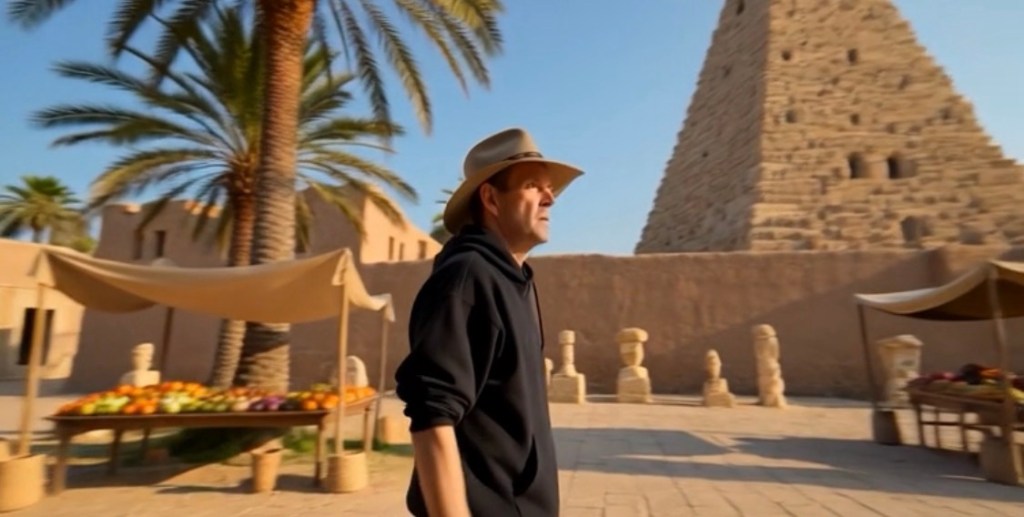
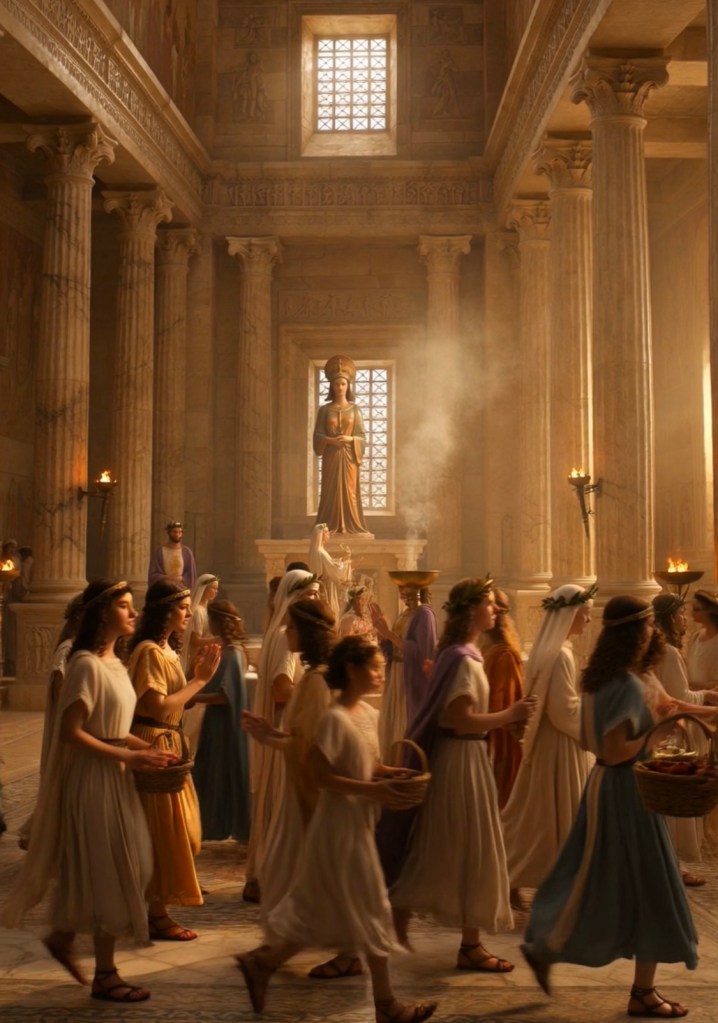
Let me start with the obvious. The Temple of Artemis at Ephesus was one of the Seven Wonders of the Ancient World, a massive marble edifice that dominated the city and the entire region. Built and rebuilt over centuries, it was more than a tourist attraction or a bank (which it also was—temples doubled as secure depositories). It was the epicenter of a cult that blended Greek mythology with older Near Eastern fertility worship. Artemis herself, in her Ephesian form, was often depicted with dozens of breasts or egg-like ornaments, symbols that modern scholars sometimes try to downplay as “not really about sex or fertility.” Yet the ancient world understood her differently. She was the goddess of the hunt and the wilderness, of chastity in some tellings, yet deeply entangled with the cycles of birth and reproduction, and the raw forces of nature. Her temple drew pilgrims, merchants, and locals who participated in festivals filled with processions, music, dancing, and—according to multiple ancient reports—rituals that involved the offering of human vitality, including sexual acts, to appease the divine.

Christian writers of the period didn’t shy away from describing what they saw. In Acts 19, the apostle Paul’s ministry in Ephesus sparks a riot among the silversmiths who made shrines to “the great goddess Diana” (the Roman name for Artemis). The city clerk calms the crowd by reminding them that Ephesus is the “temple keeper of the great Artemis, and of the image which fell from Jupiter.” That “image” was likely a meteorite revered as a divine gift, tying the cult directly to celestial forces. But Paul and the early Christians saw something far darker at work. They weren’t just opposing statues or tourism revenue. They were confronting a system of spiritual appeasement that had roots stretching back thousands of years to the fertility cults of Mesopotamia—Inanna, Ishtar, Astarte, and their Greek and Roman counterparts. These goddesses demanded sacrifice, often in the form of sexual union performed in or near the temple precincts. Women—sometimes all women in certain cultures—were expected to spend time as temple prostitutes, offering their bodies to strangers for money that went to the temple treasury. It wasn’t “empowerment” or personal choice in our modern sense. It was a collective duty to the gods, a way to ensure fertility for the land, prosperity for the city, and protection from whatever malevolent forces lurked in the spirit realm if the rituals were neglected.
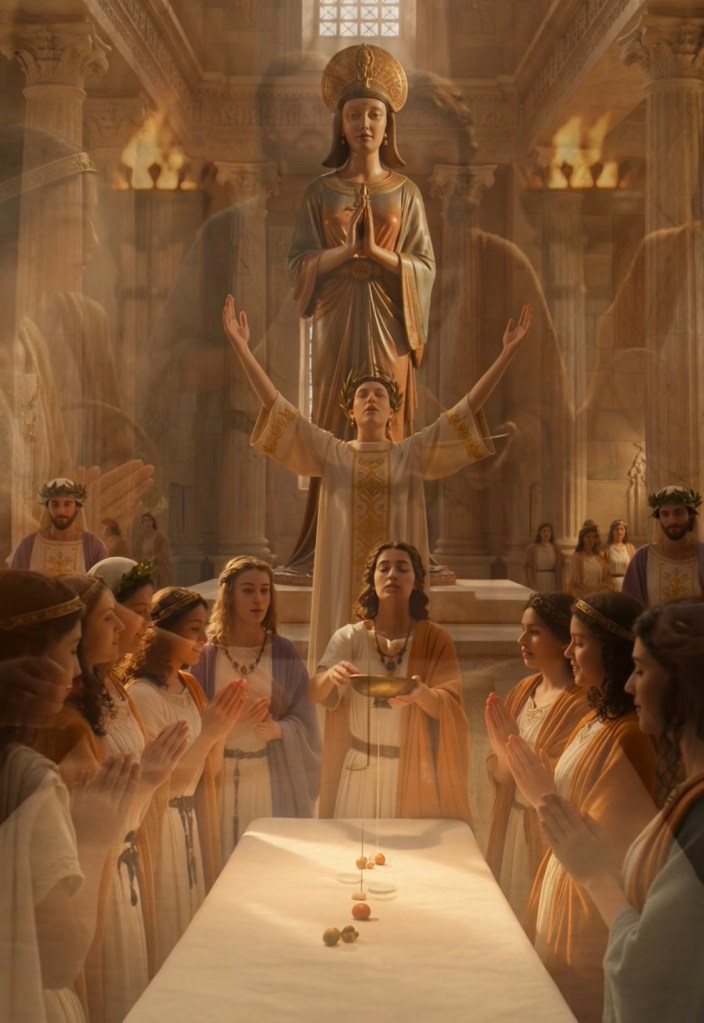
Secular historians and archaeologists today often dismiss these accounts as Christian propaganda or exaggeration. They point out that direct physical evidence—carved reliefs, unambiguous inscriptions—is scarce at Ephesus because the temple was largely destroyed, its stones carted off for other buildings after Christianity became the dominant faith of the empire. Digging seasons in Turkey are short; the site has been layered over by centuries of occupation, and hostile conditions (political, environmental) have limited excavation. But absence of evidence isn’t evidence of absence, especially when you’re dealing with practices that were deliberately secretive or oral in nature. We have reports from Herodotus, Strabo, and other classical writers describing sacred prostitution in temples dedicated to similar goddesses across the region. In Babylon, for instance, every woman was reportedly required once in her life to sit in the temple of Ishtar (or Mylitta) and have intercourse with a stranger for a fee. Similar customs are attested in Cyprus, Phoenicia, and parts of Asia Minor. The early Church fathers didn’t invent these stories out of thin air; they were reacting to what they witnessed firsthand on the frontiers of the Roman East.

I believe we can trust those Christian reports precisely because the behavior they condemned persists. It just wears different clothes. Look at modern nightclub culture—the so-called “meat markets” that young people, especially women aged eighteen to twenty-four, are actively encouraged to frequent before “settling down.” Bachelorette parties where sexual impropriety is not only tolerated but celebrated. The progressive push for “sexual liberation” and “women’s rights” frames any restraint as patriarchal oppression. We send our daughters—girls who were playing with Legos and dolls just a few years earlier—into environments of throbbing music, flashing lights, alcohol, and physical grinding that would have been right at home in an ancient fertility festival. They dress in scandalously revealing outfits, present their bodies for public consumption, and are told it’s all harmless fun, a phase to “get out of their system.” The money doesn’t go to a temple treasury anymore, but the spiritual transaction is eerily parallel: the sacrifice of personal sanctity, the abandonment of the body to collective debauchery, the implicit agreement that youth and vitality must be offered up so the rest of society can enjoy peace from whatever unseen forces demand their due.
This isn’t hyperbole. It’s pattern recognition. Ephesians 6:12 puts it plainly: “For we wrestle not against flesh and blood, but against principalities, against powers, against the rulers of the darkness of this world, against spiritual wickedness in high places.” The apostle Paul, writing to the very church in Ephesus that had just emerged from the shadow of Artemis worship, understood that these weren’t abstract metaphors. The spirit world is real, and it competes for control of human bodies and minds. The body is the vehicle for the soul, but it’s a vulnerable one. When people impair their consciousness—through drunkenness, drugs, or ritual frenzy—they loosen the tether that keeps the conscious self in the driver’s seat. Competing spirits rush in. Personalities split, behaviors turn erratic, sanity fluctuates. Ancient temple prostitutes weren’t just performing an economic or social function; they were opening doorways. The same doorways we open every weekend in clubs across America and Europe. The music changes, the lighting gets fancier, but the appeasement of disembodied entities hungry for human essence remains constant.

My own explorations into these dynamics—through reading, observation, and reflection on how evil operates in human societies—have convinced me that we cannot separate the material world from the spiritual one. We are entangled. Secularism’s great lie is that we can neuter history, strip away the sacred (or the diabolical), and treat ancient gods as cartoon characters for mission patches and rocket fairings. NASA did exactly that with Artemis. After the Obama-era push to highlight “Islamic contributions to science” and diversify the agency with voices from every culture, the name was pitched as inclusive, neutral, non-offensive. Why pick something biblical when you could pick a “cool” pagan goddess that “everybody can agree on”? It’s the same impulse that led the agency’s early rocketry pioneers into occult territory. Jack Parsons, one of the founders of the Jet Propulsion Laboratory (JPL), was a brilliant chemist and engineer by day and a devoted Thelemite occultist by night. A disciple of Aleister Crowley, Parsons performed the Babalon Working in 1946 with L. Ron Hubbard—sex magic rituals involving masturbation onto magical tablets, invocations of the goddess Babalon (a Thelemic stand-in for the Scarlet Woman of Revelation), and attempts to incarnate demonic forces into the material plane. He saw no contradiction between rocket science and summoning ancient entities. In fact, he believed his rituals fueled his breakthroughs. NASA loves to celebrate the Apollo era’s clean, heroic image while quietly glossing over the fact that the foundational rocketry work at JPL had deep roots in Parsons’ dual obsessions. The cult origins of NASA aren’t a conspiracy theory; they’re documented in biographies like George Pendle’s Strange Angel. Parsons literally signed letters as “The Antichrist” and conducted black masses in his Pasadena home.
This brings me back to why naming the lunar return program after Artemis bothers me so much. It’s not just semantics. It’s a continuation of the same appeasement strategy humanity has employed for millennia. In ancient times, societies sacrificed their youth—virginity, vitality, individual dignity—to fertility goddesses in hopes that the “hungry gods” would leave the collective alone. Today we do it with our entertainment, our dating apps, our “hook-up culture,” and our refusal to draw moral lines. We tell young women that their bodies are theirs to offer freely in the nightclub meat market, that restraint is repression, and that any talk of spiritual consequences is outdated superstition. Meanwhile, the principalities and powers—those same competing souls and disembodied spirits that haunted the temples of Artemis, Ishtar, and Astarte—continue their work. They don’t need marble altars anymore; smartphones, social media, and Saturday-night fever vibes do the job just fine. The result is the same: fractured personalities, generational trauma, and a culture that robs itself of sanity in exchange for momentary collective highs.

I’m not suggesting NASA should abandon space exploration—quite the opposite. I love NASA. I want it to succeed. I want humanity to expand beyond Earth, to sustain life across the solar system, perhaps even outlive our home planet. But if we’re going to do that with any long-term credibility and moral foundation, we should draw from the best of our cultural inheritance—not the pagan underbelly that early Christians rightly rebelled against. Western civilization, for all its flaws, is rooted in biblical ideology. Why not name a program after a figure from Scripture that embodies vision, endurance, or divine favor? Something that signals we’ve learned from history rather than repeating its mistakes. The Artemis choice feels like a deliberate step away from that heritage, a nod to the “neutral” secular narrative that pretends spirit doesn’t matter. But spirit does matter. The body is the vehicle for the soul’s journey, and there are always entities eager to hijack the wheel when we let our guard down.

Archaeology may not have uncovered every detail of those ancient sex rituals—not yet, anyway—but the Christian eyewitness accounts from the period fill the gap. Paul’s letters to the Ephesians, the riot in Acts 19, and the writings of the early Church fathers all paint a consistent picture of cultures steeped in fertility worship that demanded human essence as payment. The temples are mostly gone now, reduced to a few pillars and scattered stones at Ephesus, but the underlying spiritual dynamic hasn’t vanished. It’s migrated into our secular rituals: the nightclub as temple, the DJ as high priest, the dance floor as altar. Young women (and men, though the pressure on females has always been more pronounced in these cults) are still expected to “do their tour of duty,” to offer themselves to the collective before committing to marriage and family. We call it empowerment. The ancients called it piety. Both are forms of appeasement.

In The Politics of Heaven, I unpack this at much greater length—how evil works through human institutions, how spirit and matter are inseparable, how competing souls vie for control of our bodies, and why yielding to animalistic impulses under the guise of “freedom” always leads to cultural decline. The book has taken years of research, reflection, and editorial effort, but the core argument is simple: we cannot outrun the spiritual realm by renaming it or pretending it’s mythology. NASA’s decision to invoke Artemis is a small but telling example of a larger societal failure to learn from history. We keep making the same stupid mistakes because we’re afraid of being called intolerant by the secular crowd. We’d rather appease the principalities than confront them.

If we truly want a sustainable future—one that includes permanent human presence on the Moon and beyond—we need to stop revering the old gods, even in name only. The cults of fertility and debauchery didn’t produce enduring civilizations; they produced cycles of excess, collapse, and moral exhaustion. Christianity’s radical break from those practices—its insistence on individual sanctity, monogamous marriage, and spiritual warfare against the powers of darkness—gave the West the moral framework that eventually launched the scientific revolution and the space age itself. Let’s honor that trajectory instead of reaching backward for pagan branding that sounds “cool” to focus groups.

I’ve seen too much evidence, both ancient and contemporary, to believe otherwise. The spirits that demanded appeasement in the temples of Ephesus and Babylon are the same ones whispering through our modern meat markets and cultural expectations. They thrive on impaired minds, abandoned bodies, and the sacrifice of youth. We don’t defeat them by pretending they don’t exist or by giving their old names new rocket programs. We defeat them by calling them what they are, drawing lines in the sand, and choosing names—and behaviors—that reflect the better angels of our nature rather than the demons we’ve never truly escaped. The Moon awaits, but the path we take to get there matters. Artemis might get us there faster on paper, but at what spiritual cost? I’d rather we choose a name that sustains not just the body of exploration, but the soul of civilization itself.        

Footnotes

1.  NASA official statements on the Artemis program naming, 2019 announcement by Administrator Jim Bridenstine.

2.  George Pendle, Strange Angel: The Otherworldly Life of Rocket Scientist John Whiteside Parsons (2005).

3.  Ephesians 6:12 (KJV).

4.  Acts 19:23-41, especially v. 35.

5.  Herodotus, Histories (on Babylonian customs of Ishtar/Mylitta); Strabo, Geography (references to temple practices in Asia Minor and Corinth).

6.  S.M. Baugh, “Cult Prostitution in New Testament Ephesus,” JETS 42/3 (1999), though I disagree with his dismissal of the broader pattern reported by early Christians.

7.  Stephanie Lynn Budin, The Myth of Sacred Prostitution in Antiquity (2008)—a secular counter-view that I believe underestimates eyewitness testimony from the period.

8.  Richard Metzger’s accounts of Parsons’ Babalon Working rituals.

9.  N.T. Wright, lectures on Ephesus and the Artemis cult background.

10.  My ongoing research for The Politics of Heaven (forthcoming).

Bibliography for Further Reading

•  Bible (King James Version), especially Acts 19, Ephesians 6, and 1 Timothy 2.

•  Pendle, George. Strange Angel: The Otherworldly Life of Rocket Scientist John Whiteside Parsons. Weidenfeld & Nicolson, 2005.

•  Herodotus. The Histories. Translated by Aubrey de Sélincourt. Penguin Classics.

•  Strabo. Geography. Loeb Classical Library.

•  Baugh, S.M. “Cult Prostitution in New Testament Ephesus.” Journal of the Evangelical Theological Society 42, no. 3 (1999).

•  Budin, Stephanie Lynn. The Myth of Sacred Prostitution in Antiquity. Cambridge University Press, 2008.

•  Kramer, Samuel Noah. The Sacred Marriage Rite. Indiana University Press, 1969 (for the Mesopotamian context).

•  NASA historical documents on Project Apollo and Artemis program origins.

•  Wright, N.T. Paul and the Faithfulness of God (relevant sections on pagan cults in Asia Minor).

•  Additional archaeological reports on Ephesus from the Austrian Archaeological Institute and related publications on the Artemision.

Rich Hoffman

More about me

Click Here to Protect Yourself with Second Call Defense https://www.secondcalldefense.org/?affiliate=20707

About the Author: Rich Hoffman

Rich Hoffman is an aerospace executive, political strategist, systems thinker, and independent researcher of ancient history, the paranormal, and the Dead Sea Scrolls tradition. His life in high‑stakes manufacturing, high‑level politics, and cross‑functional crisis management gives him a field‑tested understanding of power — both human and unseen.

He has advised candidates, executives, and public leaders, while conducting deep, hands‑on exploration of archaeological and supernatural hotspots across the world.

Hoffman writes with the credibility of a problem-solver, the curiosity of an archaeologist, and the courage of a frontline witness who has gone to very scary places and reported what lurked there. Hoffman has authored books including The Symposium of JusticeThe Gunfighter’s Guide to Business, and Tail of the Dragon, often exploring themes of freedom, individual will, and societal structures through a lens influenced by philosophy (e.g., Nietzschean overman concepts) and current events.

The Epstein Island Client List: A Deep State game embracing sheer evil to take over the world

I don’t understand pedophilia at all; there is nothing that can make it acceptable in any way, especially in the novel Lolita by Vladimir Nabokov.  This is the name of Jeffery Epstein’s flight to his private island in the Caribbean, which is the subject of so much talk going into the year 2024.  The talk is that around 170 names from the flight record are going to be released and that big names like Prince Edward and RFK Jr. are going to be on that list, naming them as attendees to the island known for its sex with underaged girls set up by Jeffery Epstein and his partner Ghislaine Maxwell who is currently in jail, convicted of sex trafficking.  You might remember that Jeffery Epstein, they say, was killed in prison.  Perhaps, but I believe he and Osama bin Laden are playing video games together somewhere in a CIA safe house after fulfilling their social roles of a scandalous nature.  After what we have seen out of these intelligence agencies with their open coup against Trump, the election fraud in many elections, and the release of the bioweapon COVID from a lab in Wuhan, China, I don’t trust a word that they leak to the media.  And if a list is released, you can bet that it’s a controlled leak, that the more detailed information is far worse, and that what we will find out is meant to take the edge off the truth.  They are throwing a bone at the public due to massive public pressure to attempt to control the expectations of what the government does.  Everyone already knows that Bill Clinton flew to the sex island with Jeffery Epstein, including many other big names like Bill Gates.  For me, with the number of people I talk to in a week, I’m likely dealing with people who feel the same way and enjoy that book, Lolita, and it bothers me a lot to realize that there is such an evil openly loose in the world and that so many people do accept it. 

I never understood why the book had such a following and that it seemed to empower the rich and powerful toward an almost rebellious propensity to scandal and evil.  In the book, a college professor becomes sexually obsessed with a 12-year-old girl who becomes his stepdaughter during the story.  I find it bizarre that such a thing would ever be published as it is more than controversial, but then again, with evil loose in the world the way it is, perhaps not.  And that the publication is purposeful, for the full effect that Jeffery Epstein looks to have been an intelligence agency asset intent to control society on the high end, and books like Lolita gave people the gateway admission to themselves that their feelings about pedophilia were perfectly alright, and that they could take that plunge into the abyss without fear of social castigation.  The situation is so bad that we now see this movement going mainstream and that the shock of this current link from the client’s list on the Lolita Express has another motive altogether: to normalize pedophilia the way that an illegal fourth branch of government views the world.   This is also why there is a war against Christian judgment and the Jewish people to eradicate the kind of judgments that would scold practitioners of pedophilia.  Instead, we are now being told by our government employees that such a thing is okay in our public schools.  That we are the ones who are sick in the head for having judgments.  This trend has gained momentum over the last several decades, culminating in this exact moment, and it’s on a collision course with a brick wall.  It’s OK to judge people for the evils they do, and we need to judge a lot more often and openly.  The scandal is wanting to have sex with underaged people.  Not in judging it as bad and ill advised.

But what was the point of the Lolita Express and the Epstein sex island, where young girls were recruited into underaged sex with hand-picked clients?  Well, I think the best example in entertainment is the movie The Firm with Tom Cruise from several years back, based on the excellent John Grisham novel.  Once the Tom Cruise character joins a respectable firm, his wife and he think they have made it big.  He is invited to a training retreat to some exotic island paradise and is treated like a king with his new company.  As things usually go at these kinds of things, which is the purpose, he ends up sleeping with a young woman who was there to seduce him and get compromising photos of the main character, all for the point of controlling him as a new member.  The plot line is that by the end of the story, Tom Cruise has to come clean with his wife because the secret is destroying him as a person, and the plot then continues into becoming an escape from the Firm rather than a member of it.  That is clearly what is going on at Epstein Island; members of an elite club meant to control the world through globalism were taken to the island to enjoy sexual fantasies in exchange for dirt on each other so they could all be trusted to support institutionalism rather than their individual morality. 

It’s the same kind of behavior that we see in hazing rituals, especially in college, where new members are expected to debase themselves as individuals and be resurrected as members of the group.  That is precisely the psychological effect of joining the military.  Once you get off the bus, get your head shaved, and put on the uniform, you are then the property of the United States government, and they let you know that in boot camp, explicitly.  As a result of all this, very few people make it into their 30s without having their individual character in some way crushed, and they behave as slaves to those systems for the rest of their lives.  This was clearly what Jeffery Epstein’s role was as a broker of sex to important clients who were seduced and utilized as participants in sinful undertakings.  The social stigma keeps everyone in a tight-knit group where secrets are necessary not to spook the public with sheer audacity.  But to open up that Pandora’s Box, the scandal of Lolita was the mechanism used to keep all these secretive members in check, just like in the movie The Firm.  There is no escape from this because we are dealing with the fourth branch of government, not just a law firm that is very prestigious.  We are dealing with a vast evil here that extends well beyond the client list of people who flew on that plane, names we all know who shape the world we see through entertainment and business.  What might have started as an innocent backrub by underage girls given to middle-aged clients looking to resurrect their corrupted lives with another chance at youth ends up as an extortion racket to empower a deep state illegally manifesting power in secrecy toward an apparent attempt to take over the world in foundations of sheer evil.  And if they are releasing the client list now, it’s for a strategic reason, not one of morality.  They have so little respect for us that they believe they can manipulate us at every level, and they are attempting to do so audaciously with this information, or lack thereof.

Rich Hoffman

Click Here to Protect Yourself with Second Call Defense https://www.secondcalldefense.org/?affiliate=20707

The Fight Between Yahweh and Baal: Studying the Bible to beat globalism and the nature of evil everywhere

There are a lot of people contemplating evil these days. We aren’t exactly living in a stable culture anymore. I had a person ask me about the picture on my blog with me at Jackson Hole the other day, which provoked a question about its significance. Well, the spot I was standing is where the fight in the Clint Eastwood movie Any Which Way You Can ended, with Eastwood winning in front of the entire town. And that is where I bought my white hat at Jackson Hole, Wyoming because I always loved that movie which I watched again recently. It’s not as good as Any Which Way But Loose, but it’s a fun movie about macho material and the problems men have specifically. It’s also a movie that wouldn’t be made today because woke culture has pretty much stamped it out of existence. You don’t see that movie playing on network television anymore, but twenty years ago, it was on all the time. We have a real struggle on our hands with this massive woke conglomerate that wants globalism everywhere and communism for all that is trying to impose itself on all of us. And there is a pushback from our culture against it and a return to the reverence that made movies like those old Clint Eastwood films so popular, to begin with. I loved that movie so much that I had to visit all the places where that big fight took place in the film because it met so much to me. But why, why was it so important, and what are we fighting? Many of us would call it evil. But the macho behavior that is expressed in that movie and many movies from that age was what the globalists would call evil. So, who is right?

It’s an impossible cliché to avoid when discussing evil, but the best book in the world to deal with it is the Holy Bible. I personally love the Bible; it’s been part of my life since I was very little. I grew up in church listening to “Onward Christian Soldiers” at the end of the service as the pews let out, I went to Sunday school most every week, and I had two years of catechism. But I didn’t stop there, I have read widely on all topics over the last 50 years, and I have a pretty good handle on where everyone in the world is coming from based on their personal histories. I can say with great confidence that there isn’t a better book ever written than the Bible in exploring the nature of evil and how detrimental it can be for the human race. Yet my interests in history go far beyond the time frame of the Bible, which is around 4000 B.C. with the start of Adam and Eve and extends to our present time roughly 6000 years later. I consider sources that talk about the “pre-Adamites” and their religions. And when you start getting into the Gnostic beliefs from the Book of Enoch, you open the door to consider humans came not just from the earth but many other places in the galaxy.   I would say the evidence points to “many other places.” And that doesn’t mean that the Bible was wrong in its description of the creation of Adam and Eve. But what we see in the Bible is an experiment by God to break a tribe of humans away from the masses and free them from the bondage of the worship of Baal, an ancient deity from Egypt that persisted with great reverence in the land of Canaan and was the primary villain of the Bible, much more so than Satan, or mentions of the Devil, which don’t come along until almost the end of the Bible, in the New Testament.

You could spend a lifetime putting together all the various puzzles regarding prehistory, the mysteries of today, and how the Bible plays a part in it all. Like most books, it only captures one point of view in a very specific timeframe. But unlike most books, it covers exact references to a family line of descendants over many thousands of years to conduct a particular experiment on the nature of good versus evil and essentially the struggle of Yahweh against the primal nature of all people to worship Baal. This is where western civilization starts, and eastern religions separate themselves, leading to globalism’s primary struggle today, how to merge these two radical forces, which is absolutely impossible. In a world where communist China is being used to sell globalism through corporate control, this issue of Baal is persistently a problem, the worship of the forces of nature and submission to it, as opposed to the western view of conquering nature and using it as a tool for human advancement. The essential problem is what the Bible is about. The Old Testament is a chronicle of this struggle and the ramifications of failure to adhere to it. That’s why I love the Bible because nothing else ever done in literature has really attempted to solve this problem of evil.  Other attempts have tried to define it, but they do very little to solve it.  Are all the worshipers of Baal evil? Why is Yahweh so jealous of Baal, to the point that he would destroy his own people by turning to Baal for worship? I would say that Yahweh was a rebel, a fighter who was trying to free people from the clutches of an ancient problem, one that persisted for many millions of years, the worship of nature to the detriment of human development. Once people started listening to God, the Yahweh of the Bible, then civilization lurched forward, and we have what is called in another book I love quite a lot, The 5000 Year Leap, by Cleon Skousen. 

I recently saw a lot of talk about satanic references, with a picture of three women at the Golden Globes dressed in bizarre outfits. As I’ve pointed out, Satan doesn’t appear in the Bible until 1 Chronicles 21:1, nearly halfway through the text, and when he appears, he’s a kind of census taker. I’m sure there is a lot more to that story somewhere. But the villain of the Bible is Baal, and the plot device is escaping from its rule, which looks to have been around well before the events of the Bible. Much of the modern “satanic” worship referenced is actually humanity’s lazy trend to continue worshiping Baal. Its Baal worship that is essentially behind climate change and is the religion of globalism, especially from the point of view of the communist Chinese. They call their gods by different names, but the nature worship aspect of merging light and darkness as a kind of balance stands opposed to light conquering darkness; that is the message of the Bible. And the two are not compatible. They cannot coexist as the bumper stickers indicate. And to avoid the conflict, you can’t just throw out all religion, which has been the weapon of choice of those globalist-minded. It can all get very confusing, especially if you listen to the authority figures. So if you need to get your bearings, I would suggest rereading the Bible, or for the first time, and getting your mind wrapped around the struggle. Because of all the great things that have happened in history, the essential conflict that we are all still engaged in is this fight between Yahweh and Baal. The battle between human progress and yielding to the forces of nature. And that fight is literally in everything we do. So, understanding it will help your life a lot. Simply put, the path to evil is in the lazy; the worship of Baal comes from those too lazy to do for themselves and hope that nature will give them a way out of personal responsibility. And good, as the Bible defines it, is in self-responsibility and assertiveness to do good in the world by leading a productive life toward the aims of creation.

Rich Hoffman

Click to buy The Gunfighter’s Guide to Business

Without the Bible, There is No America: Lee Greenwood’s fantastic version

I read a lot of books, and I have a lot of experience with Bibles. I remember getting my grandmother a fancy Bible made just for her when I was a little kid that was huge in downtown Hamilton, Ohio, which she cherished all her life. I went to Sunday school, then catechism until the 8th grade, and read the Bible many times over during that duration. And the Bible has come up a lot for looking up research specifically over the last 40 years at least once a week. To go along with my Bibles, I have a very unique set of books that my grandmother gave me which is the Encyclopedia of the Bible, published in 1968, the year of my birth that extends into many volumes, which goes into explicit detail about the events and characters of the Bible which I have rifled through for over 45 years now. They are some of my most cherished books. But I’ll have to say, after all the experience and exposure to the Bible, I have never had one that I like as much as the new Lee Greenwood King James American version. I wasn’t sure what to think about it because it has the American Constitution in the back, along with the Declaration of Independence, the Bill of Rights, and the Pledge of Allegiance, along with a signed page with the Lee Greenwood song, “God Bless the USA.” I bought it because it reminded me of this period in time when election fraud postponed the MAGA movement to some extent, and that song reminds me of Trump because he plays it whenever he does a public event. “God Bless the USA” has become the song of the Trump presidency, so I thought I’d give the Lee Greenwood Bible a chance. 

The battleground is set, and here is the guide to victory!

When it arrived, it felt magical. It is built well; it’s compact yet very vast like you expect Bibles to be. But it’s made of a very durable vinal with images of the American flag, which takes the religious feel of Sunday church services that are too ornate and puts the document of western civilization comfortably in your hands. It far exceeded my expectations, and I have found that I love it very much. I love the way it feels in my hands. I love how soft the pages are. I have a thing for well-crafted books with especially high-grade pages. I have a complete works of Shakespeare book that my wife gave me three decades ago that I love a lot. I often get it down just to rub my fingers through the pages. I also like the smell of books, which is a running joke with my grandchildren. I never hold a book without smelling the pages because I like how books of fine quality smell. And this Lee Greenwood Bible is made of some really good stuff that makes you want to interact with it. I was astonishingly impressed with its quality. If you were going to make a Bible representing Trump, MAGA, and the overall America First Agenda, Lee Greenwood impressively hit the target. 

This is my America and I pledge to fight all communist scum bags 7 days a week 24 hours a day until every one of them are gone. It’s time to go Old Testament on their very existence.

I’ve spoken many times about keeping copies of The Federalist Papers and The Anti-Federalist Papers next to my reading chair, which I reflect upon often. Both copies have the Constitution and Bill of Rights in the back, and I find myself reading them all the time, just for fun and reflection. But the way this Lee Greenwood Bible is set up, it’s very easy to read the Founding Documents, which is quite purposeful. Not only is the extensive story of the Bible there for reflection, but connecting it to the American Founding documents is immensely satisfying. It’s very easy to read them; the spacing is well done and clear. It may be the best presentation I’ve seen of the Founding Documents outside of a museum, such as what you can see at the National Archives. But these are in the Bible, so everything that gave birth to America is right there to study in a very troubled time. And no matter what anybody thinks of religion, there wouldn’t be an America without the Bible. The attacks on that relationship with the separation of church and state arguments, the Larry Flint Hustler challenges in the Supreme Court, the foundation of America is the Bible, a collection of philosophy that is the root of all western civilization that has led to the most prosperous nation in the world. It’s nothing to be taken lightly, and the Lee Greenwood Bible doesn’t; it’s very respectful and offers itself as a good friend when the mind of mankind needs it most. I absolutely love it. Living in Cincinnati, I followed the Hustler case, and eventually, before his death, Larry Flint managed to get a Hustler store put in near my home in Monroe, Ohio. It bothers me every time I see it. It’s a spit in the face of Christian values and a mark on my community, like some dog pissing on the values of America. And there has been a lot of that going on, where the world has been working hard to destroy America by removing it from its foundations. So in many ways, Lee Greenwood understood the need for an American Bible that put everything in one place. And it works far better than I would have thought. 

You better believe it; we are at WAR!

I’ve been thinking about this problem for a long time, the long progressive war that has not involved bullets and troops but the essential values of our families and personal intellects. So many people are beaten up intellectually; they are addicted to porn and have had their childhood curiosities destroyed by the empty promises of a progressive society. And people need to turn off the TV more often and read a book of some kind for their own good. Because if people lose the ability to think or have fundamental values, there is no way to have a society of any kind. If we are ever to Make America Great Again, people need to learn to read again and have the fundamental values that church on Sundays typically provides. But Lee Greenwood has made it easy, he has put in that one Bible the essence of Making America Great Again, and as we are ready for the Midterms and the long march out of a time of great sadness, characterized by the Biden administration and its criminals of misconduct, and globalists insurgents, and hostile Liberal World Order maniacs, only a sharp intellect can fight the mischief of the vast evil intentions displayed in front of us to assault our senses, and to make fighting back seem hopeless. I can report that holding the Lee Greenwood Bible and reading from it will help solve these ills. It will restore you in ways that you probably didn’t know you needed to nurture. And it will undoubtedly positively enhance your life. I think it has the potential to restore America to a greatness we previously took for granted, such as when I was little, and we were buying a Bible for my grandmother, a grand endeavor that she loved dearly. I’ve seen the positive effect Bibles can have on people firsthand. But now we need it more than ever, and Lee Greenwood certainly has delivered. I have all new respect for him for doing what he has done, and this Bible is undoubtedly one that will be near me at all times as we fight the battle that is before us now. And it will make such a battle much more endurable. 

Rich Hoffman

Click to buy The Gunfighter’s Guide to Business