A Community Night at Miami University’s Innovation Center
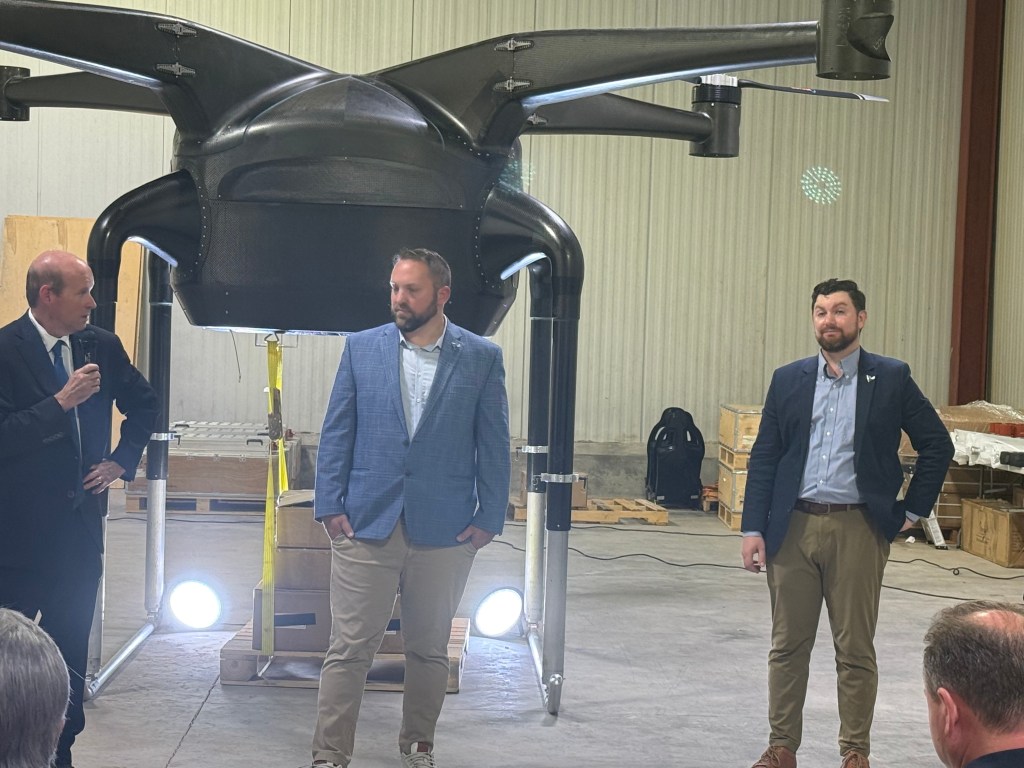
On September 21, 2026, we hosted a special community event at Miami University’s Innovation Center on Elm Street in Oxford, Ohio.
We called the evening “Dreams on Elm Street”, a lighthearted nod to the classic 1980s film. But what we’re building at Volynt isn’t the stuff of nightmares. It’s the realization of a dream, one that is taking shape right here in Butler County and has the potential to transform the future of logistics, aviation, and economic development in Ohio.
The turnout exceeded our expectations. The room was filled with Miami University staff, students, local business leaders, elected officials, and community members who wanted to learn more about what Volynt is building and where we’re headed.
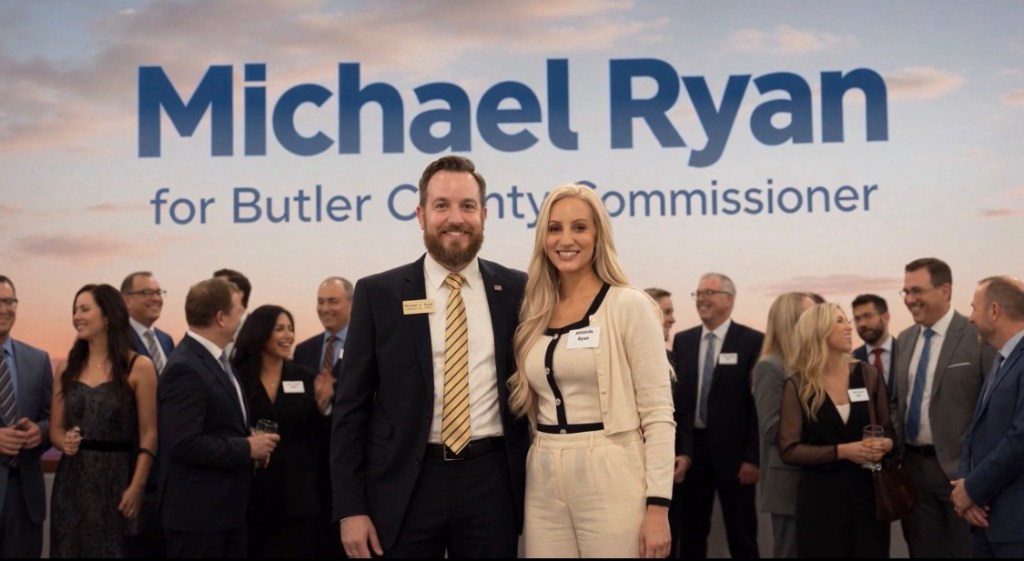
We were honored to welcome Senator George Lang, Butler County Auditor Nancy Nix, and Michael Ryan, who is poised to become Butler County’s next commissioner. Their presence reflected the growing enthusiasm for innovation, entrepreneurship, and advanced aerospace development in our region.
Sharing the Vision
I opened the evening by welcoming our guests and providing an overview of the event. From there, our leadership team took the stage.
Our CEO shared Volynt’s long-term vision and mission. Our Chief Technology Officer highlighted the engineering milestones we’ve achieved and the technology behind the Volynt Vyper platform. As Chief Operating Officer, I discussed how Volynt is transforming cutting-edge aviation technology into a scalable and sustainable business. I outlined our operational strategy, manufacturing roadmap, partnerships, and the steps required to move from prototype development to commercial deployment.
The presentations were engaging, the audience was attentive, and the questions that followed demonstrated genuine interest and excitement.
Most importantly, this wasn’t a flashy product launch filled with unrealistic promises. It was an honest conversation about where we are today, what we’ve accomplished, and what the next several years may hold.
From Prototype to Production
Our immediate focus is straightforward.
Over the next six months, our team will complete the full-scale Vyper prototype that was unveiled at the Innovation Center. That aircraft represents years of design work, engineering refinement, and determination.
Once completed, the aircraft will enter an intensive testing phase designed to validate performance, reliability, and operational capabilities.
Looking ahead to 2027, we plan to participate in major industry competitions, build broader recognition within the aerospace community, and begin manufacturing multiple aircraft.
The goals are ambitious, but they are supported by a clear roadmap and a dedicated team committed to execution.
The Drone Revolution Is Already Here
One of the most important messages of the evening was that autonomous aviation is no longer a future concept.
It’s happening today.
Just one day after our event, Dayton-area company Dexa launched a drone delivery service in Kettering. The program delivers food orders from TJ Chumps on East Stroop Road to customers within a several-mile radius across Kettering, Oakwood, and Centerville.
These smaller drones operate as last-mile delivery systems. Flying at approximately 400 feet, they lower food orders safely to customers using a cable-delivery system. Dexa has spent years developing this capability and is helping demonstrate that drone delivery is becoming a practical reality.
Volynt’s mission is different.
While companies like Dexa focus on last-mile delivery, Volynt is developing larger autonomous aircraft designed for middle-mile logistics. Our aircraft are intended to transport meaningful payloads between regional hubs such as Cincinnati/Northern Kentucky International Airport (CVG), Dayton International Airport, Indianapolis, and other distribution centers.
This approach has the potential to reduce transportation bottlenecks, address driver shortages, and create more efficient supply chains.
Whether it’s delivering a meal across town or transporting freight across a region, autonomous aviation is rapidly reshaping how goods move through our economy.
Why Ohio Is Positioned to Lead
Ohio’s aviation legacy is unmatched.
The birthplace of powered flight now has an opportunity to become a leader in autonomous flight.
Few regions are better positioned than Butler County to participate in that transformation.
Our region offers access to multiple airports, including Miami University’s airport, where initial flight operations can be conducted. At the same time, substantial investment continues at Butler County Regional Airport, where significant infrastructure improvements are being planned.
The resources, workforce, educational institutions, and transportation network already exist. What remains is bringing together the innovators, investors, and community leaders who can turn opportunity into reality.
Creating Careers That Stay Close to Home
One topic that resonates deeply with me is talent retention.
I have spoken with countless parents who have made tremendous sacrifices to provide educational opportunities for their children through Miami University, Butler Tech, and the University of Cincinnati. Too often, those graduates leave Ohio because they believe the best opportunities are elsewhere.
That reality creates a challenge for families and communities alike.
One of our long-term goals at Volynt is to help change that story.
We envision creating thousands of high-quality aerospace, engineering, technology, and manufacturing jobs throughout Southern Ohio. We want talented young people to have the option of building exciting, fulfilling careers without leaving their families, communities, and hometowns behind.
Strong Community Support
One of the most encouraging moments of the evening was seeing the level of support from the community.
Michael Ryan delivered an excellent presentation about economic development in Butler County and how innovative companies such as Volynt can contribute to future growth and prosperity.
The participation from Miami University, local leaders, educators, students, business professionals, and community members reinforced something I’ve believed from the beginning:
Innovation succeeds when communities embrace it.
Dreams on Elm Street was more than a company presentation. It was a milestone. It brought together people from different backgrounds and perspectives to discuss a shared vision for the future of our region.
The energy in the room was unmistakable. The conversations were thoughtful. The questions were insightful. The enthusiasm was genuine.
For me, that confirmed that we’re moving in the right direction.
Looking Ahead
Volynt’s journey is still in its early chapters.
There is much work ahead, many challenges to overcome, and numerous milestones still to achieve. But the momentum is real, and the opportunities are significant.
We will continue sharing updates with the community as we progress from prototype development to testing, certification, manufacturing, and beyond.
This is only the beginning.
Thank you to everyone who attended Dreams on Elm Street and supported our mission. Your encouragement and belief in what we’re building means more than you know.
Together, we’re not just dreaming about the future.
We’re building it.
About the Author
Rich Hoffman is Chief Operating Officer of Volynt, where he leads operational strategy, business development, manufacturing planning, and growth initiatives for the company’s autonomous aerospace programs. A longtime Butler County leader and aerospace executive, he is committed to building high-quality technology careers and advancing innovation throughout Southwest Ohio.
Rich Hoffman is an author, political consultant, and strategic advisor based in Cincinnati, Ohio, and the creator of The Politics of Heaven—a unique framework that connects biblical theology, ancient history, and modern power structures to explain how moral alignment and spiritual forces shape global events. Blending real-world political experience with deep research into archaeology, UFO phenomena, and suppressed historical narratives, Hoffman offers compelling commentary on topics ranging from ancient civilizations and the Dead Sea Scrolls to modern populist movements, paranormal continuity, and leadership strategy in chaotic environments. As the author of The Gunfighter’s Guide to Business and the forthcoming Politics of Heaven, he brings a grounded yet provocative voice to media discussions, supported by firsthand experiences and a cross-disciplinary approach that bridges science, history, and theology. For interviews, speaking engagements, or expert analysis, visit richhoffmanbooks.com or contact directly via phone at 513-307-5815 or email at rhoffman@richhoffmanbooks.com. If you’ve seen the movie, Disclosure Day and want to talk about it and the implications of Presidnet Trump’s UAP disclosures, let me know and we can bring some color to your coverage. https://richhoffmanbooks.com/media-inquiries-broadcast-topics-and-contact-info/?frame-nonce=ad51e7ecba I do have a firsthand UFO encounter to discuss.
I have been traveling a lot this summer of 2026. My portable office goes with me. It is a rolling command post with a good chair, a refrigerator stocked with my favorite drinks, and windows that change the view almost every day. One day, the Tetons. Another day, the high country in Colorado or the open stretches of Utah and New Mexico. Just before recording some thoughts, I watched the ferry reverse into its slip, filming through the glass as the water churned. That is the life right now. I can work, read for hours, and still stay connected to home while the scenery shifts.
From that distance, the picture in Butler County comes into sharper focus. Politics is a bloodsport. Transitions happen. I checked in with some of my closest people back home and learned that Todd Hall is no longer chairman of the Butler County Republican Party. Art Sauerwein has taken the role. I always liked Todd. The job is genuinely thankless. It wears people out. Running a business on top of it, managing personalities, herding volunteers, and keeping the central committee pointed in one direction takes a small army and constant energy. I hope Art has a good run at it. The party needs steady hands.
Perspective from Distance Makes the Stakes Clearer
When you are removed from the daily handshakes and the same faces at every event, the larger pattern stands out. We have minor philosophical differences among ourselves. That is normal. What is not normal is letting those differences become the main event while outright socialists and radical Democrats keep pushing into local offices. I have watched it happen in places like West Chester. It is the same impulse you see nationally with the more extreme progressive candidates. It does not matter if the fight is on Main Street or in the national headlines. The goal of those forces is the same: expand government, raise the cost of living through policy, and treat constitutional limits as optional.
I have said for years that we need a big tent. I mean it. That includes people who may lean a little softer on some issues as long as they will stand with us against tax increases, against socialist experiments in the schools, and for basic fiscal order. Sheriff Richard Jones has always struck me as a Gunsmoke Republican. That is the personality I want in the top law enforcement job. Even if he occasionally frustrates pure ideologues, I want him successful. The same goes for others I have known for decades.
Local Fiscal Reality Versus the Socialist Alternative
Butler County and much of Ohio under Republican stewardship have largely kept the books balanced. Surpluses have been more common than structural deficits. There has been resistance to the constant pressure to raise taxes. That is good government. It is the opposite of the model that turns every problem into a reason for bigger bureaucracy and higher burdens on working families. When I talk to people at campgrounds across the country, the pattern repeats. Many of them are Trump voters. They fly the flags. They are getting away from out-of-control local governments elsewhere. They recognize solid management when they see it. We have had a good run of it here. The job now is to protect it and expand it.
Personal Notes on the Players
I think highly of George Lang. I always have. Nancy Nix is often painted as a mainstreamer these days. I do not see her that way. I see her as a person who has done great work in the auditor’s office. Roger Reynolds has sympathizers, and I was one of them for a long time. I never understood the decision to go after Nancy Nix the way it happened. That kind of personal fight does not help the larger cause. When you are trying to win elections and keep socialists from taking seats, internal score-settling becomes a luxury we cannot afford.
The chairman’s role is not glamorous. Todd Hall held it for a long stretch after David Kern. He came in young and stayed through periods of real discord. Some people felt he did not have enough hours in the day. That is a fair observation about the demands of the job. Leadership at that level requires heavy delegation and constant recruitment of capable people. I hope Art Sauerwein understands that and builds the team accordingly. I wish him well. I will miss Todd in the role, but the work continues.
The Real Task Ahead
Trump observed years ago that people get so used to winning that they start losing to experience the thrill of winning again. That is a real danger. We cannot afford boredom or internal exhaustion. The fall elections and the offices that matter most require Republicans to lock arms. The goal is straightforward: more Republicans in office than Democrats, constitutional values protected, fiscal discipline maintained, and the Trump agenda advanced at the county level the same way it is being advanced nationally.
I will spend more time on the road this year and then settle in for the fourth quarter closer to home. The portable office has proven its value. I can read, think, write, and still stay plugged into Butler County. When I talk to people at those campgrounds, I get a clearer read on the national mood than I sometimes get in the middle of local factional fights. Most of them want government that works without constantly reaching into their pockets or experimenting with radical social theories on their children.
I hope everyone finds a way to shake hands at the picnics and fundraisers. Support the new chairman. Remember what we have in common is larger than what divides us. Keep the focus on winning. Do not get tired of it. The alternative is watching more socialists and their enablers take ground, one township and one school board at a time.
Footnotes
1. Conversations with longtime Butler County Republican contacts, summer 2026, regarding the transition from Todd Hall to Dan Ferguson as party chairman.
2. Public record of Todd Hall’s long tenure as Butler County Republican Party executive chairman, beginning in the mid-2010s following David Kern.
3. Local election results and coverage of West Chester Township trustee races and related contests showing shifts in local control.
4. Butler County and Ohio fiscal performance under Republican majorities: consistent emphasis on balanced budgets and resistance to routine tax increases, as reflected in county and state budget outcomes over recent cycles.
5. Public statements and reporting on Roger Reynolds’ legal history, his attempt to reclaim the auditor’s office from Nancy Nix, and his later involvement in the county commissioner primary before withdrawing.
6. Sheriff Richard K. Jones’ long record and public positioning as a traditional law-and-order Republican.
7. Observations from campground conversations across multiple western and mountain states during summer 2026 travel regarding voter sentiment and local government dissatisfaction.
8. C-SPAN and local reporting on 2026 Butler County Republican events, including candidate and leadership appearances.
Selected Bibliography for Further Reading
• Journal-News (Hamilton/Butler County) coverage of Butler County Republican Party leadership, endorsements, and primary contests, 2024–2026.
• Butler County Republican Party official materials and candidate endorsement lists.
• Ohio Republican Party statements and State Central Committee updates, 2026.
• Ballotpedia and Butler County Board of Elections records on local races, including West Chester Township trustees and county offices.
• Reporting on Roger Reynolds’ conviction, appellate reversal, and subsequent legal efforts regarding the auditor’s office.
• Public financial and budget summaries from Butler County and the State of Ohio illustrating fiscal trends under Republican control.
• Contemporary accounts of Sheriff Richard Jones’ tenure and local political positioning.
• Travel notes and personal observations compiled during summer 2026 from portable office locations across the western United States.
Rich Hoffman is an author, political consultant, and strategic advisor based in Cincinnati, Ohio, and the creator of The Politics of Heaven—a unique framework that connects biblical theology, ancient history, and modern power structures to explain how moral alignment and spiritual forces shape global events. Blending real-world political experience with deep research into archaeology, UFO phenomena, and suppressed historical narratives, Hoffman offers compelling commentary on topics ranging from ancient civilizations and the Dead Sea Scrolls to modern populist movements, paranormal continuity, and leadership strategy in chaotic environments. As the author of The Gunfighter’s Guide to Business and the forthcoming Politics of Heaven, he brings a grounded yet provocative voice to media discussions, supported by firsthand experiences and a cross-disciplinary approach that bridges science, history, and theology. For interviews, speaking engagements, or expert analysis, visit richhoffmanbooks.com or contact directly via phone at 513-307-5815 or email at rhoffman@richhoffmanbooks.com. If you’ve seen the movie, Disclosure Day and want to talk about it and the implications of Presidnet Trump’s UAP disclosures, let me know and we can bring some color to your coverage. https://richhoffmanbooks.com/media-inquiries-broadcast-topics-and-contact-info/?frame-nonce=ad51e7ecba I do have a firsthand UFO encounter to discuss.
Yes, George, you need to watch this video. I had to finish our discussion from lunch. I had a good lunch with Senator George Lang the other day. Nothing formal, nothing staged for the cameras, just two guys who have known each other a long time sitting outside at a place we both like, talking the way we always end up talking when the politics finally take a back seat. People assume that every time I sit down with a senator or a sheriff or a treasurer around here, it is some closed-door strategy session. It is not. George and I share a long-standing interest in ancient history, the kind of deep, layered history that most people in public life never get the chance to dig into. He likes that I run into the stranger corners of it. I like that he actually reads the books I recommend and asks the kind of questions that keep the conversation alive long after the plates are cleared.
We ran out of time that day. Rain started coming down hard while we were still outside, and I had only gotten started on the things I wanted to walk him through. So I am continuing the conversation here the same way I would if he were still sitting across from me and the rest of you were at the next table over. Nothing confidential. Nothing I would not say in front of anyone. Just the thoughts that were already in motion when we had to pack it up.
I updated him on where The Politics of Heaven stands, my next book. The manuscript is finished. The first full draft has been through enough eyes that the early feedback keeps coming back in the same surprising way. More than one reader, including people who know the publishing world, has said the same thing: this book reminds them of The Immortality Key. That 2020 book from St. Martin’s Press by Brian Muraresku, the one Graham Hancock helped put on the map. I told George that I had already decided to go back through The Immortality Key carefully, not because I think I borrowed from it, but because the comparison keeps arriving uninvited and I want to be precise about where the overlap ends and where my own line of inquiry begins. Publication is a relationship, like any other. You do not jump straight into sharing an apartment. You get dinner. You talk. You figure out whether the trust is real. That process takes time, and patience is part of the work.
What pushed me back into The Immortality Key was the same impulse that had me reading Sharon and Derek Gilbert’s Veneration in the early hours before that lunch. Timothy Alberino had been discussing related material on Joe Rogan, and the conversation turned to the older Near Eastern material that most people never hear about. The Gilberts work from a biblical frame, and they do it with real attention to the primary texts. I respect that. Their book digs into the cult of the Rephaim, those dead aristocratic warrior kings whose spirits the living kings of the Late Bronze Age still summoned by name. The Ugaritic tablet known as KTU 1.161 records the liturgy. The dead are called up. Food and drink are set for them. The living king anchors his own right to rule in a line that stretches back into a mythic age of heroes. The meal is not polite remembrance. It is consultation. It is power.
That is the system the biblical writers were confronting. When the scouts came back from Canaan and said they felt like grasshoppers beside the people living there, they were describing more than physical size. They were describing a culture that still fed and consulted the spirits of the giants who had once ruled. Og of Bashan, the last of the remnant of the Rephaim, still had an iron bedstead measured in cubits that made the point for anyone who needed numbers. The physical and spiritual threats were the same. The command to wipe the system out was not simple land hunger. It was an attempt to close the door that the cult of the dead kept trying to hold open.
Mount Hermon sits at the center of that geography. In the Book of Enoch it is the place where the Watchers came down. In the older Canaanite material it is the mountain of assembly, the seat of the divine council that opposed Yahweh. When Jesus took his disciples to the region of Caesarea Philippi at the foot of that mountain and said the gates of hell would not prevail, he was standing on the front porch of the old cult and issuing a direct challenge. The Gilberts make that geography impossible to ignore once you have seen it.
I have been reading this material with one eye on the Near East and the other on the ground under my own feet. The Wheel of the Giants, Gilgal Refaim, sits up in the Golan Heights, a massive set of concentric stone circles that some call the Stonehenge of the East. It belongs to the same broad horizon of ritual architecture that appears along the Jordan and then, in different forms, moves westward. At the same time, over here in the Ohio Valley, the Hopewell people were raising enormous ceremonial centers with the same intensity of purpose. The Milford Works, the great earthworks near the confluence of the Little Miami and the East Fork, the alignments at Newark, the mounds that once stood all through what is now Butler County and Warren County and on up the Scioto. These were not random piles of dirt. They were places where the living gathered to deal with the dead and whatever else they believed could be reached through the right rituals and alignments.
I keep coming back to the Windover site just west of Titusville, a few miles from the Kennedy Space Center. Seven to eight thousand years old. Bodies preserved in peat with brain tissue still intact. Textiles more sophisticated than anything the standard story allows for at that early stage. Directional burial practices. A people who do not fit neatly into the later tribal identities we project backward. Some of the individuals were tall by the standards of the time. The site sits in a region that later becomes part of the same trade networks that moved copper out of the Lake Superior mines and into the wider world just as the Bronze Age was taking shape. The usual explanations for exotic materials found in these contexts grow more strained the longer you look at them. Bananas and turmeric proteins in elite Near Eastern burials. Advanced textiles and possible African or Mediterranean contacts at Windover. The copper that left the Upper Peninsula in quantities that still have not been fully accounted for. At some point, the assumption that the oceans were closed until Columbus made his journey starts to look like a real leap of faith.
The Loveland Frogmen sightings sit right in the middle of this local landscape. 1955, then 1972, later reports still in the same general corridor. Small, grayish, bipedal figures near the water, not far from the old Hopewell ceremonial centers. I am not claiming they are the same entities the Ugaritic kings were feeding under the palace benches. I am saying that when you map the places where people once worked hard to open contact with the dead, and then you look at the places where anomalous encounters keep showing up in the modern record, the overlap is hard to ignore. Point Pleasant and the Mothman. The poltergeist activity that still gets reported in houses built over older burial grounds. The same pattern appears in other parts of the world whenever the old ritual centers are disturbed or left alone long enough for whatever was once invited to keep answering.
I told George that the deeper I go into this material, the clearer it becomes that the biblical story is not a late invention dropped into an empty landscape. It is a record of conflict in a world already thick with competing claims about who had the right to rule and whose spirits still held authority. The non-human intelligences that show up in the older texts, the ones that later get called demons or Watchers or the shades of the Rephaim, did not disappear when the last physical giant was killed. The cult changed its methods. Psychedelics appear to have been one of the technologies that kept the door open. Muraresku’s work on the ritual use of those substances in the ancient Mediterranean and their possible survival into early Christian practice is part of the same larger picture. If you want to understand why a culture builds a certain kind of religion, you have to understand what it was taking and what it thought it was talking to while it was under the influence.
My own book takes the next step. It treats the entire span from the deep pre-biblical period to the present as a single continuous political and spiritual struggle. The copper, the earthworks, the burial practices, the later attempts to rebury or reclassify the evidence, the modern fascination with ascended masters and ancient aliens and celebrity necromancy, all of it belongs to the same long contest. The entities that once sat at the banquet tables under the palace floors in Ugarit are still trying to claim a seat at the table. The question is whether we keep setting places for them.
I am not interested in scaring people. I am interested in making the pattern visible so that the next time someone tries to sell a new version of the old system we recognize it for what it is. The Gilberts do that work from one angle. Muraresku does it from another. Alberino keeps pushing the conversation into the open. I am simply adding the North American material and the long view that comes from living in a place where the mounds are still under the subdivisions, and the river valleys still remember older traffic.
Notes:
¹ Brian C. Muraresku, The Immortality Key: The Secret History of the Religion with No Name (New York: St. Martin’s Press, 2020). Foreword by Graham Hancock.
² Sharon K. Gilbert and Derek P. Gilbert, Veneration: Unveiling the Ancient Realms of Demonic Kings and Satan’s Battle Plan for Armageddon (Crane, MO: Defender, 2020).
³ KTU 1.161 (Ugaritic funerary liturgy), standard edition in Manfried Dietrich, Oswald Loretz, and Joaquín Sanmartín, The Cuneiform Alphabetic Texts from Ugarit, Ras Ibn Hani and Other Places (Münster: Ugarit-Verlag, 2013). See also Baruch A. Levine and Jean-Michel de Tarragon, “Dead Kings and Rephaim: The Patrons of the Ugaritic Dynasty,” Journal of the American Oriental Society 104 (1984): 649–659.
⁴ On Gilgal Refaim / Rujm el-Hiri see Yonathan Mizrachi et al., recent satellite survey work published in PLOS ONE (2026) documenting additional circular structures in the Golan; earlier discussions in Yonathan Paz and others on Early Bronze Age ritual landscapes.
⁵ Glen H. Doran, ed., Windover: Multidisciplinary Investigations of an Early Archaic Florida Cemetery (Gainesville: University Press of Florida, 2002). See also subsequent DNA and textile studies confirming the site’s uniqueness within the Archaic Southeast.
⁶ On Hopewell ceremonial centers, alignments, and ritual feasting, see Bradley T. Lepper, Ohio Archaeology (Wilmington, OH: Orange Frazer Press, various editions) and the UNESCO World Heritage documentation for the Hopewell Ceremonial Earthworks. For the Milford Works specifically, nineteenth-century surveys by Squier and Davis remain foundational.
⁷ Book of Enoch (1 Enoch) 6–16 on the descent of the Watchers at Mount Hermon; standard translation by R. H. Charles or George W. E. Nickelsburg and James C. VanderKam.
⁸ Timothy Alberino’s appearance on The Joe Rogan Experience #2530 (July 2026) discusses the Rephaim, the kispum rites, and the continued occult utility of giant remains in modern contexts.
Bibliography for further reading
Alberino, Timothy. Various lectures and the special edition of The Book of Enoch with commentary (2026).
Byers, A. Martin. Sacred Games, Death, and Renewal in the Ancient Eastern Woodlands. Knoxville: University of Tennessee Press, 2011.
Charles, R. H., trans. The Book of Enoch. Oxford: Clarendon Press, 1912 (and later editions).
Doran, Glen H., ed. Windover. Gainesville: University Press of Florida, 2002.
Gilbert, Derek P., and Sharon K. Gilbert. Veneration. Crane, MO: Defender, 2020.
———. The Great Inception. Crane, MO: Defender, 2017.
Hancock, Graham. America Before. New York: St. Martin’s Press, 2019.
Heiser, Michael S. The Unseen Realm. Bellingham, WA: Lexham Press, 2015.
Lepper, Bradley T. Ohio Archaeology. Wilmington, OH: Orange Frazer Press.
Muraresku, Brian C. The Immortality Key. New York: St. Martin’s Press, 2020.
Nickelsburg, George W. E., and James C. VanderKam. 1 Enoch: The Hermeneia Translation. Minneapolis: Fortress Press, 2012.
Pardee, Dennis. Ritual and Cult at Ugarit. Atlanta: Society of Biblical Literature, 2002.
Squier, Ephraim G., and Edwin H. Davis. Ancient Monuments of the Mississippi Valley. Washington: Smithsonian Institution, 1848 (reprint editions widely available).
Vallée, Jacques. Passport to Magonia. Chicago: Henry Regnery, 1969 (and later editions).
Additional primary Near Eastern texts are available in The Context of Scripture, ed—William W. Hallo (Leiden: Brill), and in the standard Ugaritic editions cited above.
Rich Hoffman is an author, political consultant, and strategic advisor based in Cincinnati, Ohio, and the creator of The Politics of Heaven—a unique framework that connects biblical theology, ancient history, and modern power structures to explain how moral alignment and spiritual forces shape global events. Blending real-world political experience with deep research into archaeology, UFO phenomena, and suppressed historical narratives, Hoffman offers compelling commentary on topics ranging from ancient civilizations and the Dead Sea Scrolls to modern populist movements, paranormal continuity, and leadership strategy in chaotic environments. As the author of The Gunfighter’s Guide to Business and the forthcoming Politics of Heaven, he brings a grounded yet provocative voice to media discussions, supported by firsthand experiences and a cross-disciplinary approach that bridges science, history, and theology. For interviews, speaking engagements, or expert analysis, visit richhoffmanbooks.com or contact directly via phone at 513-307-5815 or email at rhoffman@richhoffmanbooks.com. If you’ve seen the movie, Disclosure Day and want to talk about it and the implications of Presidnet Trump’s UAP disclosures, let me know and we can bring some color to your coverage. https://richhoffmanbooks.com/media-inquiries-broadcast-topics-and-contact-info/?frame-nonce=ad51e7ecba I do have a firsthand UFO encounter to discuss.
I have been sitting with Sheriff Richard K. Jones’s book for about 24 hours now, turning the pages the way a man turns over an old photograph that still has the power to surprise him. They Call Me Jonesy: Let’s Get Real About Saving America is not a polished political memoir written by committee. It is the voice of a man who has spent a lifetime walking the same ground I have walked in Butler County, speaking the same language of family, order, and personal accountability that once held communities together before the experts decided those things were negotiable. Jones has always been the Sheriff who runs his office the way Andy Griffith ran Mayberry and Marshall Dillon ran Dodge City, with a healthy dose of Waffle House common sense thrown in for good measure. You show up, you tell the truth, you do the job, and you do not apologize for the results. That approach has kept Butler County safer than most places that spend three times the money and twice the consultants, and it is why so many of us who live here still call him simply Jones.
What kept pulling me back to the book was not the policy talk or the war stories about the jail, though those are solid enough. It was the cautionary tales about family and the slow corrosion of the values that once made a man accountable to his own house before he tried to run anyone else’s. Jones and I share a deep and permanent hatred of the drug culture that has hollowed out so many families in this county and across the country. We have both watched too many good people lose children, lose marriages, lose the simple ability to look their grandchildren in the eye without shame. He writes about those losses without the usual soft language of the therapeutic class. He writes like a man who has had to clean up the mess afterward. That kind of honesty is rare now, and it is the reason the book feels less like a campaign document and more like a dispatch from someone who has been on the wall for a long time and is finally willing to say what he has seen.
But the story that made me laugh out loud, the one that sent me straight back to October of 2016, is the one about the night he opened for Donald Trump at U.S. Bank Arena. I was there. Not in the sense that I was sitting in the same row or riding in the same car. I was backstage, working the edges of the same event, trying to find a quiet corner where I could take a conference call with people on the other side of the world while the whole building shook. And I watched the exchange Jones describes in the book unfold in real time.
It was Thursday, October 13, 2016. The Access Hollywood tape had dropped only six days earlier, on October 7, and the professional political class was still in full panic. Most of the Ohio Republican establishment had already decided Trump was finished. They had lined up behind Marco Rubio, Ted Cruz, or John Kasich, the local favorite who was still twisting arms for support even as the primary season was long over. Supporting Trump in those weeks was not the fashionable choice. It was the choice that got you labeled a crank, a risk, a man who did not understand how power actually worked. Senator George Lang, I, and a handful of others had been in that camp early. We had met Trump, sat with him, watched him operate before the primaries even heated up in Ohio. We knew the ground. Most of the smart people in the room did not.
Jones was one of the few who never flinched. By the time the campaign asked him to warm up the crowd at U.S. Bank Arena, the atmosphere was thick with the kind of nervous energy that only comes when the people in charge are not sure the candidate is going to survive the next news cycle. The director of the program that night wanted a script. He wanted to know exactly what the Sheriff was going to say. He wanted control. Jones looked at him the way he has looked at a thousand people who try to put a leash on him and said, essentially, that is not how I work. I talk from the hip. I have been talking all year. You tell me how long you need and I will fill the time. I do not need a teleprompter or your talking points.
I was standing close enough to hear the exchange while they were trying to get me upstairs to a box where I could take that overseas call. Giuliani was somewhere in the mix. The production people were frantic. Trump’s plane was still in the air. The arena was filling from the floor to the upper decks, and the noise was already starting to build. Jones went out there anyway. He did not have a prepared speech. He walked onto the stage and did the thing he has always done: he talked to the people the way a man talks to his neighbors when the subject is serious. Fifteen minutes turned into something closer to thirty. The crowd answered him the way Butler County has always answered him. They roared. From the high box where I finally closed the windows and tried to finish my call, Jones looked like a small figure on a distant stage, but the sound of that arena was impossible to shut out. I had the volume turned up on my headset and still could barely hear the people on the other end of the line. Part of me was irritated that my business meeting was being drowned out by a Sheriff who refused to stay on script. Most of me was very proud.
Trump claimed the crowd that night was 21,000, with thousands more outside who could not get in. Mike Pence put the number around 19,000 the next morning. The arena’s concert capacity sits somewhere in the neighborhood of 17,500, and some of the upper seats behind the stage were empty according to the reporters who were counting chairs instead of energy. The exact headcount is the kind of detail the media loves to argue about when they do not want to talk about what the crowd actually felt. What I saw from that box was a building packed tight enough that the noise had nowhere to go but up. People had not been paid to be there. They had not been bused in. They had decided that the Access Hollywood tape and the coordinated media effort to sink the candidate were not going to decide the election for them. Jones understood that before most of the professionals in the room did.
I have watched Jones make hard calls for more than twenty years. We have not always stood on the same side of every primary or every local fight. There have been nights when we were polite but cool because we were representing different candidates or different issues on the ballot. We have always found our way back to the common ground, because the common ground is larger than the temporary disagreements. Supporting Trump when it was still radioactive inside the Ohio Republican Party was one of those moments when the ground became visible. The same people who told us we were going to destroy our own political futures are now the ones who want their picture taken with the man. That is how these things usually go. The smart set picks the wrong horse for the wrong reasons, and then they rewrite the story after the race is over.
Jones has always had a gift for seeing through the fog. When Corey Lewandowski came through Ross’ Big Bull later, the first person he sought out was the same Sheriff who had refused to read from a script on a night when the campaign was still bleeding. That is the kind of quiet authority that does not show up on a résumé. It shows up when the building is full, and the professionals are nervous, and somebody still has to walk out there and speak without a net.
I recommend the book without reservation. Read the parts about family and the slow destruction of the old rules. Read the parts about the jail and the daily work of keeping order in a county that still believes order is possible. And read the part about that night at U.S. Bank Arena, because it captures something essential about the man. He is not a performer. He is not a consultant’s idea of a lawman. He is the product of a certain kind of American stubbornness that refuses to be managed, and on the nights when it matters most, that stubbornness turns out to be the smartest thing in the room.
I was proud of him that night. I am proud of him for putting the story down on paper without sanding off the edges. Some of us were right when it was expensive to be right. Ten years later, it is still a pleasure to remember it.
Footnotes
1. Richard K. Jones, They Call Me Jonesy: Let’s Get Real About Saving America (publication details as available through standard retail channels, 2025–2026). The account of the U.S. Bank Arena appearance appears in the sections dealing with early Trump support and the political pressures of the 2016 general election campaign.
2. The Access Hollywood recording was published by The Washington Post on October 7, 2016. See “Donald Trump recorded having extremely lewd conversation about women in 2005,” Washington Post, October 7, 2016.
3. Attendance estimates for the October 13, 2016, rally at U.S. Bank Arena (now Heritage Bank Center) varied. Trump publicly claimed 21,000 inside with additional thousands outside; Mike Pence cited approximately 19,000 the following day. Contemporary reporting noted the arena’s concert configuration capacity near 17,500 and observed some empty upper-level seats. See “How many people attended Trump’s Cincy rally? No one seems to agree,” WCPO, October 13–14, 2016; and arena capacity data from Heritage Bank Center / U.S. Bank Arena historical records.
4. Photographic and contemporaneous coverage confirming Sheriff Jones’s appearance as a speaker that evening can be found in the Cincinnati Enquirer photo gallery, “Trump supporters rally at U.S. Bank Arena,” October 13, 2016, and related local television reports from WCPO and WLWT.
5. On the broader context of early Ohio support for Trump amid establishment resistance, see contemporaneous reporting on the positions of figures such as then-Senator Rob Portman, Governor John Kasich, and local Republican organizational dynamics in the weeks following the Access Hollywood release.
Selected Bibliography for Further Reading
Jones, Richard K. They Call Me Jonesy: Let’s Get Real About Saving America.
Fahrenthold, David A. “Trump recorded having extremely lewd conversation about women in 2005.” The Washington Post, October 7, 2016.
“How many people attended Trump’s Cincy rally?” WCPO 9 News, October 2016.
Heritage Bank Center (formerly U.S. Bank Arena) venue history and capacity documentation.
Rich Hoffman is an author, political consultant, and strategic advisor based in Cincinnati, Ohio, and the creator of The Politics of Heaven—a unique framework that connects biblical theology, ancient history, and modern power structures to explain how moral alignment and spiritual forces shape global events. Blending real-world political experience with deep research into archaeology, UFO phenomena, and suppressed historical narratives, Hoffman offers compelling commentary on topics ranging from ancient civilizations and the Dead Sea Scrolls to modern populist movements, paranormal continuity, and leadership strategy in chaotic environments. As the author of The Gunfighter’s Guide to Business and the forthcoming Politics of Heaven, he brings a grounded yet provocative voice to media discussions, supported by firsthand experiences and a cross-disciplinary approach that bridges science, history, and theology. For interviews, speaking engagements, or expert analysis, visit richhoffmanbooks.com or contact directly via phone at 513-307-5815 or email at rhoffman@richhoffmanbooks.com. If you’ve seen the movie, Disclosure Day and want to talk about it and the implications of Presidnet Trump’s UAP disclosures, let me know and we can bring some color to your coverage. https://richhoffmanbooks.com/media-inquiries-broadcast-topics-and-contact-info/?frame-nonce=ad51e7ecba I do have a firsthand UFO encounter to discuss.
Looking at the data, I feel really good about where things stand with Jon Husted running to keep the United States Senate seat that Governor Mike DeWine appointed him to after JD Vance became Vice President. It was back in January 2025 when Vance resigned from the Senate to take the oath of office as VP, and DeWine made the smart call to send Jon Husted up to Washington to fill that vacancy until the people could vote on it in the special election this November 2026. Jon had already proven himself as lieutenant governor, as secretary of state, and even before that as Speaker of the Ohio House, but getting that individual platform in the Senate has let him shine in ways I always knew he could. I get to meet a lot of people through my work and my networks here in Ohio, and I do know Jon Husted a little bit—we share quite a few mutual friends, and I’ve been on conference calls with him during the thick of the COVID days, when he was still lieutenant governor. Those calls were tough for him personally because he’s a pro-business guy at heart, and he wasn’t thrilled being wrapped up in the administration’s policies that sometimes felt like they were driving everything over a cliff, especially with the health director calling so many shots. He had to stand there as one of the three faces, giving daily updates on protocols and representing the governor’s point of view, even when it went against his own instincts to keep businesses alive and families working. But even then, I saw how he operated in the background, whispering in the right ears and pushing back on some of the worst lockdown ideas, especially around business interruption insurance claims and keeping some sanity in the administration that could have gone even further off the rails. I can personally say that because I was on several of those phone calls where Jon presented ideas that helped pull things back from the edge, and it showed me he’s the kind of leader who gets results even when he’s not the one out front taking all the credit. Now that he’s in the Senate as an individual voice rather than part of a team, he’s been able to put a sharp professional edge on the issues that matter most to Ohio, like election integrity and preventing fraud through simple, common-sense measures like voter ID that should be national policy for every federal election. He’s done a monumental job in his short time there, and I’m proud of him for it—proud enough that I think it’s going to be fantastic for him to win a full term and stand alongside Bernie Moreno as Ohio’s two Republican senators. Having Bernie and Jon in those seats would be exciting for the state, especially after Bernie knocked off Sherrod Brown in 2024, one of the most satisfying political upsets in recent memory.
Sherrod Brown, of course, is trying to sneak back into politics now that the seat is up for grabs in this special election. He lost to Bernie Moreno fair and square in 2024, but Brown has always been the face of progressive politics in Ohio—the Democrat embodiment of everything that’s wrong with big government overreach, endless spending, and policies that hurt working families while pretending to help them. He wants back in bad, and he’s campaigning hard against Jon, but the polling right now tells a story that should make every conservative in Ohio breathe a little easier, at least for the moment. RealClearPolitics, as of late April 2026, has Jon Husted at 48.3 percent and Sherrod Brown at 45.7 percent, and that three-point edge holds pretty steady across most of the well-known polling houses that are out there. It’s early—primaries are May 5, and the general is still months away in November—but for a race this high-profile, that lead feels significant. I don’t put a ton of stock in polls the way some people do because a lot of conservatives I know are too busy living their lives and working to sit around answering pollsters, while the other side tends to over-sample their base. So when Republicans show even a slight edge this far out, it’s actually quite telling. Ohio has been trending more Republican for years now, and Trump’s influence has redefined the kind of union voters who used to automatically go Democrat in the north, where Brown built his career. Those folks—steelworkers, autoworkers, the backbone of Ohio’s industrial heart—are now openly voting for whoever Trump picks, and that includes Jon Husted. It’s a three- or four-point swing that used to go the other way, giving Democrats a shot in what they thought was a purple state. But Trump pulled Ohio by double digits in 2024, and the same momentum is carrying over. Brown isn’t saying anything new; he’s been peddling the same progressive line for decades, and people have caught on. The voters who swung eleven points or more toward Trump from Obama or Biden eras aren’t going back.
What makes me even more optimistic is how Jon has handled his short run as senator so far. He came in with a track record that screams competence and results. As Ohio secretary of state, he was the architect of “easy to vote, hard to cheat” election reforms, including voter ID requirements that have held up in court and proven themselves in real elections. Ohio’s system is a model now—strict enough to prevent fraud but accessible enough that turnout keeps climbing. In the Senate, one of the first big things Jon did was introduce S. 4155, a bill to require photo identification as a condition of casting a ballot in federal elections nationwide, along with other security measures. That’s exactly the kind of common-sense reform we need to stop the kind of loose election laws in other states that invite problems. He’s also sponsored the Upward Mobility Act to tackle the benefits cliff that traps people in poverty by punishing them for earning more, the Critical Minerals Investment Tax Modernization Act to boost American manufacturing and reduce dependence on China, and even Sammy’s Law for protecting kids in certain contexts. He’s pushed the No Fentanyl on Social Media Act and worked on railway safety improvements. In his first year alone, three of his bills were signed into law, including a Congressional Review Act resolution that repealed a Biden-era appliance-efficiency rule that would have driven up costs for Ohio families on everything from air conditioners to washing machines. Jon also helped pass tax relief through the Working Families Tax Cuts Act—no taxes on tips or overtime, expanded child tax credits, and income tax cuts that put real money back in people’s pockets, about $7,000 more per average Ohio family. That’s the kind of pro-growth, pro-family work that defines him, and it’s why I think he’s going to be even better with a full six-year term.
I contrast that with Sherrod Brown, and it’s night and day. Brown built his brand on being a populist for workers, but his voting record in the Senate for eighteen years showed something different—support for trade deals that hollowed out Ohio manufacturing, big spending bills that fueled inflation, and resistance to basic security like voter ID, which he’s called an “unnecessary barrier.” He lost in 2024 because Ohio voters saw through it; they wanted real change, not the same old progressive package wrapped in a union jacket. Now he’s back, trying to reclaim the seat, outraising Jon in the first quarter of 2026 with over twelve million dollars, but money alone doesn’t win when the ground has shifted. Ohio is redder than it’s been in decades. Trump’s coalition—working-class voters, rural folks, even some traditional Democrats—has stuck. Recent polls even show Jon leading among union households, which would have been unthinkable ten years ago. A Coalition to Protect American Workers survey had Husted up 48-42 in union homes, and that’s before Trump comes through Ohio this summer, campaigning hard for Jon, for Vivek Ramaswamy in the governor’s race, and the whole Republican ticket. Once that engagement kicks in, I expect the numbers to move even more in Jon’s favor. People are busy right now—spring planting, kids in school, jobs humming along under better economic policies—but by fall, with Trump on the trail and the contrast clear, turnout will favor us.
The path for Brown to close that gap just isn’t there. From now until November, what’s he going to say that he hasn’t said for a decade? Nothing new. His policies haven’t changed, and neither have the results they produced—higher costs, more regulation, government telling businesses and families what to do. Jon, meanwhile, has been delivering. He’s advocated for veterans’ access to care, fought for better competition in health insurance to lower costs, and kept the focus on Ohio values: hard work, personal responsibility, secure borders, and safe elections. During his time as lieutenant governor and in those COVID calls I mentioned, I saw firsthand how he balanced loyalty to the administration with pushing for sanity—preventing some of the worst lockdown overreach that hurt small businesses like mine and thousands of others across the state. He wasn’t the one driving the bus off the cliff; he was trying to steer it back. That experience prepared him perfectly for the Senate, where he’s now able to operate without the constraints of being number two. He’s a workhorse, just like DeWine said when he appointed him, focused on Ohio but with a national vision on issues like election security that affect every American.
Looking at the bigger picture, keeping this seat Republican is crucial for the Senate majority. Republicans hold 53-45 right now, and projections had Democrats hoping to pick up seats like this one because they thought Ohio was still competitive and Brown was more popular than he really is. But the data shows otherwise. Ohio went for Trump by eleven points or more in recent cycles, and the coattails are real. Bernie Moreno’s win in 2024 flipped a long-held Democratic seat and proved the shift. Now, Jon defending Vance’s seat would lock in two solid Republican senators who actually represent the state’s values rather than Washington special interests. I’ve followed Brown’s career, and while he talks a good game about workers, his support for open borders and amnesty policies has hurt Ohio families through wage suppression and strained public services. Jon’s approach—secure elections, pro-business policies, and upward mobility—actually delivers results. Look at Ohio’s economy under the Republican trifecta in recent years: unemployment is low, manufacturing jobs are returning, and energy production is up. Jon was part of that as lieutenant governor, championing tax cuts and school choice through EdChoice expansions that gave parents real options. As secretary of state, he modernized elections without the chaos you see in states with loose rules. Those are the facts on the ground, and they’re why I think Brown’s comeback attempt is more nostalgia than momentum.
Of course, none of this is automatic. I don’t take anything for granted in politics because I’ve seen too many races where good candidates coasted and let the other side sneak in through low turnout or last-minute surprises. Engagement is everything here. Conservatives need to stay fired up, not just assume the lead will hold. Yard signs, door-knocking, sharing facts on social media, and especially making sure friends and family vote early or on Election Day—that’s how we finish strong. Jon knows how to win; he’s been in tough races before, and his team is professional. But we can’t fall asleep at the wheel. Trump will be here campaigning this summer, putting his name behind Jon and the ticket, and that will energize the base. The union shift I mentioned earlier is real and permanent because Trump redefined what it means to fight for workers—tariffs to protect American steel, energy independence, and no more endless foreign wars draining resources. Those voters in Youngstown, Toledo, and the Mahoning Valley aren’t going back to Brown’s brand of politics. Add in voter ID security nationwide, and Democrats lose their edge in close races where fraud has historically been a factor in low-security states. Ohio proves simple measures work: turnout hasn’t suffered, but integrity has improved. Jon’s national push for photo ID is exactly the safeguard we need so we don’t have to chase conspiracy theories—we prevent the problem upfront.
Personally, knowing Jon the way I do—even if it’s through those shared circles and the calls—gives me extra confidence. He’s not some career politician chasing headlines; he’s a guy who built a career on results in state government and now brings that to the federal level. He wasn’t happy being the administration’s spokesperson during the height of the health mandates because it clashed with his pro-business worldview, but he handled it with class and still found ways to mitigate the damage behind the scenes. I remember one call in particular where he laid out concerns about how certain policies were hurting small businesses and insurance claims, and it led to adjustments that helped real people. That’s the kind of quiet leadership Ohio needs in the Senate—someone who whispers sanity into the process rather than grandstanding. Now in the Senate, he’s out front on the issues that matter: election security, tax relief, and reducing regulations that hurt families. His first-year accomplishments speak for themselves—three bills signed, more in the pipeline, and a focus on making life more affordable for Ohioans. Contrast that with Brown, who spent years in the Senate voting for policies that drove up costs and left working people behind. The numbers don’t lie: Ohio families are better off under the current direction, and Jon is part of continuing that.
As we head into the summer and then the fall campaign, I expect things to get even better for Jon. Trump’s rallies will draw huge crowds, the economy under better national policies will keep improving, and the contrast with Brown’s tired progressive pitch will sharpen. But we still have work to do. Don’t sit on the sidelines thinking it’s in the bag. Talk to your neighbors, share the polling data and Jon’s record, volunteer if you can, and make sure voter turnout is sky-high. Ohio deserves two strong Republican senators who fight for us every day—Jon Husted and Bernie Moreno delivering on the promises that got us here. I’m excited about the future because leaders like Jon represent the best of what Ohio has to offer: practical, pro-growth, integrity-focused governance. Sherrod Brown had his time, and the voters spoke in 2024. Now it’s Jon’s turn to finish what he started in the appointment and earn the full term. I’ve seen enough in my years following this stuff to know momentum like this doesn’t come along every cycle, but it can slip if we get complacent. So let’s stay engaged, keep pushing the message, and make sure Jon crosses the finish line strong in November. Ohio will be better for it, and the country will benefit from another solid conservative voice in the Senate who actually gets things done.
Footnotes
1. Ballotpedia, United States Senate special election in Ohio, 2026.
2. Wikipedia, 2026 United States Senate special election in Ohio.
3. RealClearPolitics, 2026 Ohio Senate Special Election – Husted vs. Brown polling average.
4. Congress.gov, Senator Jon Husted’s legislation record, including S.4155 (voter ID) and S.3583 (Upward Mobility Act).
5. Ohio Capital Journal reports on fundraising and polls.
Rich Hoffman is an aerospace executive, political strategist, systems thinker, and independent researcher of ancient history, the paranormal, and the Dead Sea Scrolls tradition. His life in high‑stakes manufacturing, high‑level politics, and cross‑functional crisis management gives him a field‑tested understanding of power — both human and unseen.
He has advised candidates, executives, and public leaders, while conducting deep, hands‑on exploration of archaeological and supernatural hotspots across the world.
Hoffman writes with the credibility of a problem-solver, the curiosity of an archaeologist, and the courage of a frontline witness who has gone to very scary places and reported what lurked there. Hoffman has authored books including The Symposium of Justice, The Gunfighter’s Guide to Business, and Tail of the Dragon, often exploring themes of freedom, individual will, and societal structures through a lens influenced by philosophy (e.g., Nietzschean overman concepts) and current events.
Everybody in Columbus politics knows exactly who “the Rooster” is. His real name is D.J. Byrnes—Donald J. Byrnes—, and he runs The Rooster, a Substack newsletter that bills itself as “All of Ohio’s depravity. All the time.” He’s been a fixture at the Ohio Statehouse for years now, showing up with a cameraman, ambushing lawmakers in stairwells and elevators, filming confrontations, and turning routine hallway traffic into his personal gotcha moments. He dresses like he just rolled out of bed after a rough night—sloppy, unkempt, always looking like the guy who doesn’t quite fit the professional scene he’s infiltrating. He walks the room, always angling to be “on camera,” and is purposely disruptive because he genuinely believes he’s fighting corruption. I get the impulse. I respect a free press that scrutinizes people in positions of power. What I don’t respect—and what I can’t abide—is when someone starts making stuff up, or at the very least, wildly inflating unverified rumors, because it fits their narrative or their personal demons.
I’ve interacted with the Rooster plenty of times since I first ran into him at the Capitol. He’s always struck me as someone carrying a heavy load. He’s talked openly about his own struggles with drinking. He’s written about it himself—how alcoholism nearly destroyed him around 2020-2022, how he hit rock bottom, lost relationships, and eventually got sober sometime in 2022 or 2023 after an intervention from friends. He’s admitted in his own posts that putting down the bottle saved him money, calories, and probably his life. He’s approaching 40 now, no kids, no wife, a string of failed relationships behind him. He’s described himself as having toxic habits from his college days onward. People who’ve been around him for years say it’s not exactly a secret. He comes across as socially awkward, the kind of guy who projects a “GameStop” geek—sloppy, outsider vibe, always dressed down, always seeing scandal everywhere because he knows what’s inside himself.
I feel for the guy on a human level. A lot of people have things in their lives their ashamed of. They have moments where they can’t hold it together. When you’re battling that kind of internal chaos—whether it’s the bottle, failed relationships, or just the inability to build something lasting—you look for an outlet. For the Rooster, fighting what he sees as “corruption” became that outlet. It’s a way to transfer all that restless energy into something that feels productive. From his perspective, he’s a hero shaking up the system. He’s anti-power, anti-establishment, the guy who asks the questions mainstream reporters won’t. He’s not purely partisan in every single piece. But the disproportion is glaring. The overwhelming focus, the tone, the nicknames he slaps on Republican leaders (“Governor Sleepy Tea” for DeWine, “Third-Place Frank” for LaRose, etc.)—it’s clear where his sympathies lie. He’s been a big-time active supporter, in spirit if not officially, of Amy Acton’s gubernatorial campaign, the Lockdown Lady. Acton, the former Ohio Health Director who became the face of COVID lockdowns in the state, is struggling in the polls against Vivek Ramaswamy. Everybody knows it. The Rooster knows it. And when you’re desperate to advance a campaign that’s losing steam, hit pieces start looking like a lifeline.
I’ve been around Ohio politics long enough to see the pattern. The same media ecosystem that manufactured cases and events around Trump—stuff that never stuck because it was built on sand—is now trying the same playbook here in Ohio. Vivek is out front, a successful entrepreneur, family man, someone who flies home to his wife and kids rather than lingering in hotels. He’s not the type to fall for cheap temptations. I’ve met Vivek Ramaswamy plenty of times. I’ve met his wife, Apoorva, several times. I’ve met his parents. They’re good, solid people. The Ramaswamy family is the real deal—nice, grounded, focused on bigger things than one-night scandals. Vivek travels the way high-level people do: private jet for efficiency, but he comes home. He doesn’t stay overnight chasing affairs. He’s too smart, too disciplined, and too watched. The criticism from the left is always the same: he’s a rich guy hanging with Elon Musk, flying around, must be unethical. It’s the Democrat mindset—projecting their own assumptions about success onto people who actually built something. They can’t fathom that some people don’t share their weaknesses.
The Rooster recently published a piece titled “The woman at the center of the Vivek Ramaswamy infidelity rumors.” In it, he claims—based on “more than 10 trusted Republican sources” who all independently named her—that Alicia Lang, daughter of influential State Senator George Lang (R-West Chester), is the woman at the heart of an affair with Vivek. He ties it to her work history: she managed Sharon Kennedy’s Ohio Supreme Court campaign in 2020, then served as Vivek’s Deputy Chief of Staff through December 2022, moved to Strive Asset Management (the company Vivek co-founded with J.D. Vance and others), was promoted, and later joined another venture. He mentions Vivek’s private jet being in Indianapolis for a week in late February/early March 2026 with no campaign activity. He notes rumors surfacing around the same time Vivek’s campaign ad about his third child dropped, and betting odds on Kalshi flipped in favor of Acton. He even references an anonymous tip through his “Dirt Box.” Yet he admits he hasn’t seen any photographs or video. It’s all anonymous sources and timeline speculation. No hard evidence. Just enough smoke to try lighting a fire.
I happen to know Alicia Lang well. I’ve known her since she was a young girl—12 years old, a fan of my work, someone who’s read my writing diligently. I know her mother, Debbie Lang, very well. I know the entire Lang family. These are good people who have fought real corruption behind the scenes for years. They’ve been through tough times and stayed loyal to each other. Alicia grew up in that environment—politically savvy, smart, charismatic like her mother, with a positive outlook forged in real hardship. She’s worked high-level campaigns, had access to powerful people, and conducted herself with integrity every step of the way. The idea that she would “sleep her way to the top” or get caught up in some tawdry affair with a married man who’s constantly surrounded by staff, security, and the public eye is laughable to anyone who actually knows her. She’s way too sharp for that. She’s seen how the game works—the cameras, the leaks, the scrutiny. Families like the Langs don’t survive and thrive in Ohio politics by making rookie mistakes.
I’ve talked to Vivek enough to understand his character. He’s not subject to those kinds of temptations. He’s got a nice wife at home, kids, a mission bigger than any fleeting thrill. The Rooster’s sources? I don’t buy that they’re genuine Republicans with clean hands. More likely, they’re people with a beef against George Lang, because he’s the Majority Whip in the Senate—maybe Democrats or disgruntled insiders trying to use the Rooster’s platform to settle scores. The Rooster doesn’t name them. That’s convenient when you’re pushing a narrative that could destroy reputations. He’s gambling that “some Republicans said it” is enough. It’s not. Especially when you’re talking about a young woman who isn’t even the candidate herself, she’s a staffer, a daughter, a private citizen in many respects despite her connections. There’s a higher legal standard there that the Sullivan case won’t cover, and you can’t just float rumors without consequences.
This is where the Rooster’s personal issues bleed into his work. When you can’t maintain basic relationships, when you’ve battled the bottle for years, when your own life feels chaotic, it’s easy to see chaos everywhere else. He projects his weaknesses onto others. He sees cocaine binges and sexual scandals in the Statehouse because it’s easier than looking in the mirror at his own broken life. He migrates to sexual stories. He assumes everybody’s doing what he’s done or wanted to do. It’s classic psychological projection—transferring your own sins and struggles onto others so you can fight them externally instead of dealing with them internally. I’ve seen it before in people. You feel sorry for them because you know they’re hurting, but when they start dragging innocent people into their redemption arc, sympathy turns to accountability.
He’s gone after other people I know—Jennifer Gross, for example—in ways I thought were unfair. But this crossed a line. When you target someone like Alicia, who’s conducted herself ethically her entire life, who comes from a family that’s fought real battles, who is too smart and too grounded to fall for “cheap thrills,” you’re not journalism anymore. You’re rumor-mongering. And in the age of defamation law, especially post-New York Times v. Sullivan, with the lower standards for public figures versus the higher bar for private individuals, this is dangerous territory. Alicia isn’t a public official running for office. She’s a young professional who’s worked on campaigns and big ventures. The Rooster assumes everyone has their vulnerabilities as he does. They don’t. Vivek and Alicia certainly don’t.
The Rooster has been doing this in earnest since around 2020, with Substack exploding in popularity. He’s published over 1,700 dispatches. But the style is gossip mixed with innuendo, nicknames, and sensationalism. He calls himself a “concerned citizen who commits acts of journalism.” He ambushes people, follows them upstairs, and pleads with troopers about the First Amendment. Some lawmakers call him a security threat or narcissistic. Others engage because ignoring him feeds the narrative. He’s been restricted at the Statehouse—lobby closures, doorway bans. He’s been banned from X (formerly Twitter) for extreme posts. He leans left, but claims anti-power. In practice, the targets skew Republican, especially when it helps a candidate like Amy Acton.
Acton’s campaign is struggling. The lockdowns she oversaw as Health Director are still remembered—harsh restrictions that hurt businesses, families, and kids’ education. People haven’t forgotten. Vivek represents the opposite: pro-growth, anti-woke, entrepreneurial success. So the hit pieces come out. The same playbook used on Trump—make something stick, even if it’s a rumor and speculation. The Rooster thinks he’s shaking up stuff mainstream reporters won’t touch. But you don’t fabricate or amplify lies about people who don’t deserve it. Especially not to project your own unresolved issues.
I know a lot of the people the Rooster writes about. I know what they do when they’re far from home. I know how they conduct themselves. The Statehouse isn’t the den of iniquity he paints it as—at least not to the extent he claims. Sure, human flaws exist everywhere. But the level of cocaine-fueled orgies and affairs he implies? That’s his lens, not reality for most. Good families like the Langs, successful people like Vivek—they have too much at stake, too much discipline, too many eyes on them. Alicia has her mother’s charisma and her family’s resilience. She’s not some average lowlife, like the Rooster. I think he’s going to find himself in trouble. Defamation isn’t protected speech when it’s reckless and false. He can only blame himself.
I’ve never shied away from calling out corruption when I see it. That’s why I can speak confidently here. I know these people personally. I’ve seen their character up close. The Rooster, for all his bluster, is projecting his own story onto others. It’s a redemption narrative for him—fighting the powerful to atone for his past. But when it harms the innocent, it ceases to be noble. And when wrong is done, it has to be punished.
Footnotes
1. D.J. Byrnes, “The woman at the center of the Vivek Ramaswamy infidelity rumors,” The Rooster, April 27, 2026.
2. Aaron Marshall, “Who is The Rooster? A Closer Look at D.J. Byrnes and His Controversial Blog,” Columbus Monthly, March 16, 2026.
3. D.J. Byrnes, “Retiring from alcohol was one of the best decisions of my life,” The Rooster, July 26, 2023.
4. Various posts on rooster.info detailing his sobriety journey and past struggles (2023-2024).
5. Amy Acton campaign site and related 2026 gubernatorial coverage.
6. Public records and statements on Vivek Ramaswamy’s family and travel patterns.
7. George Lang’s family public statements and known political involvement.
Bibliography
• Byrnes, D.J. The Rooster Substack (rooster.info). Multiple articles, 2023-2026, including sobriety posts and the April 27, 2026, infidelity rumor piece.
• Marshall, Aaron. “Who is The Rooster?” Columbus Monthly, March 16, 2026.
Rich Hoffman is an aerospace executive, political strategist, systems thinker, and independent researcher of ancient history, the paranormal, and the Dead Sea Scrolls tradition. His life in high‑stakes manufacturing, high‑level politics, and cross‑functional crisis management gives him a field‑tested understanding of power — both human and unseen.
He has advised candidates, executives, and public leaders, while conducting deep, hands‑on exploration of archaeological and supernatural hotspots across the world.
Hoffman writes with the credibility of a problem-solver, the curiosity of an archaeologist, and the courage of a frontline witness who has gone to very scary places and reported what lurked there. Hoffman has authored books including The Symposium of Justice, The Gunfighter’s Guide to Business, and Tail of the Dragon, often exploring themes of freedom, individual will, and societal structures through a lens influenced by philosophy (e.g., Nietzschean overman concepts) and current events.
I warned what would happen in West Chester Township during the November 2025 election, and it’s playing out just as I said it would. I don’t want to pick on Amanda Ortiz personally—she seems like a pleasant enough young lady, a veterinarian and mom who presented herself in a way that felt approachable and non-threatening—but the reality is that her victory as a West Chester trustee represents something much larger and more dangerous than one local race. I warned everyone during the campaign that we should have stuck with Mark Welch, the longtime trustee who had helped build West Chester into the thriving, well-managed community it had become under Republican leadership. Instead, we now have a radical Democrat on the board, and the consequences are already starting to reveal themselves in ways that should worry every taxpayer and resident who values fiscal responsibility and growth without the typical left-wing overreach. Mark Welch was the only real hedge against the lean-Democrat influences that were already creeping into township decisions, and by losing him, we have opened the door to a shift that could erode the very foundations of what made West Chester successful in the first place. I have said it before, and I will say it again here: this was not just an election loss; it was a calculated Trojan horse maneuver by the Democrats, and the proof is right there in how they celebrated it afterward.
Let me walk through exactly how this unfolded because I believe people must understand the playbook Democrats are using in Republican strongholds like Butler County, Ohio, and across the country. Amanda Ortiz ran a campaign that deliberately downplayed her partisan affiliation. She did not go door-to-door shouting that she was a Democrat. She positioned herself as a nice mom, a community-oriented professional who cared about infrastructure, parks, and listening to residents rather than developers. Her website and materials emphasized “people over business,” which sounds reasonable on the surface, but in practice, it is code for a regulatory mindset that slows growth and increases costs for everyone else. People who were moderate or independent, or even some Republicans who were tired of seeing the same faces, listened to her and thought she represented a fresh, safe choice. They got suckered, plain and simple. I heard it from so many voters after the fact—folks who admitted they had no idea she was a card-carrying Democrat until after the ballots were cast. She kept it quiet, ran as a non-partisan in a technically non-partisan race on the ballot, and relied on the fact that most people do not dig deep into local trustee races. That is how Democrats win in places like West Chester, where the population has grown rapidly, and people are busy raising families rather than following every political nuance. They sneak in under the radar, sounding rational and moderate, and only reveal their true colors once they are safely behind the lines. I have watched this strategy play out time and again, and it only benefits Democrats in Republican areas because it creates ambiguity that allows them to peel off just enough votes from the center without mobilizing the full conservative base.
The proof of how Democrats viewed this victory came shortly after the election, at the Butler County Democratic Party’s Spring 2026 Gala. They awarded Amanda Ortiz their Democrat of the Year honor, and the room was packed with the party’s heavy hitters celebrating what they openly called a monumental win. I have followed local politics long enough to know that a township trustee seat in West Chester would normally not draw this statewide and even out-of-state attention, but here it was, front and center. Governor Andy Beshear from Kentucky flew up to speak at the event, using the platform to bash Vice President JD Vance and energize the crowd. Beshear, whom I have long maintained won his own close election through questionable means involving teacher unions and irregularities out of Louisville and Lexington, was there to lend his star power to this “victory.” Amy Acton was there too—the former Ohio Health Director under Governor Mike DeWine, who became the face of the COVID lockdowns that devastated our state’s economy and small businesses. She is now running for governor herself in 2026, and her presence alongside Beshear and the rest of the “misfit toys,” as I like to call them, sent a clear message: this seat mattered to them. Kathy Wyenandt, the chair of the Butler County Democrat Party and the architect of so much of their behind-the-scenes maneuvering, was at the heart of it all. She has always been nice to me personally, cordial and polite whenever our paths cross, but I have learned over the years that her brand of niceness is strategic. When you lack the raw political power to force your agenda through head-on, you smile, you build relationships, and you slip your candidates through the cracks. That is exactly what happened with Ortiz. No one knew who she was a year before the election, yet the party machinery got her across the finish line by keeping her Democrat identity low-key and letting her play the moderate mom card.
I have talked about this construct before in my writings and on my platforms, but it bears repeating here because Amanda Ortiz embodies the new Democrat strategy in places like Butler County. Their bench is shallow. They do not have deep pools of talent or proven leaders who can win on ideas alone in conservative territory. So instead, they recruit friendly faces who can pass as independents or moderates, avoid any mention of national Democrat policies that would scare off voters, and rely on the fact that local races often fly under the radar. Ortiz herself acknowledged in her acceptance remarks how grateful she was for the support of Kathy Wyenandt and others, as without them, she would not have been elected. That is code for admitting the party did the heavy lifting while she stayed in the background as the palatable front. Meanwhile, Mark Welch had been there for years, carrying forward policies that George Lang and others had helped establish—policies that turned West Chester into a model of explosive growth, strong infrastructure, and fiscal prudence. Welch was not flashy, but he was steady. He understood the balance between development and quality of life. He had built relationships and institutional knowledge that kept the township humming. Republicans around him, influenced by advisors who thought they needed to court moderates by pairing him with Lee Wong—a candidate who leans a bit more toward the center and attracts crossover appeal—made the fatal mistake of playing it too safe. They advised Welch not to go on the attack, not to “punch Democrats in the face” by exposing Ortiz’s true affiliations and the broader agenda she represented. Instead, they tried to run a cordial, moderate campaign, assuming Butler County’s Republican lean would carry the day. That was a miscalculation, and it cost us the seat.
I remember talking with Mark Welch around election time, and he expressed readiness to move on to other things after so many years of service, but he stayed in the race largely to hold the line for the township’s future. He had been a bulwark against the kind of creeping leftward drift that Democrats specialize in once they gain a foothold. West Chester’s success did not happen by accident. It came from years of Republican-led decisions that encouraged business growth while protecting the residential quality of life. The cash reserves, the infrastructure investments, the explosive population boom—all of that was built on policies that prioritized results over ideology. But now, with a Democrat on the board, I fully expect to see that foundation tested. Democrats are not known for preserving the status quo in places like this; they tend to burn through reserves with new spending priorities, push for more regulations under the guise of “sustainability” or “equity,” and gradually shift the culture. I have seen it in other communities, and the pattern is predictable. The explosive growth that fueled West Chester’s prosperity will be at risk if the board starts listening more to activist voices than to the taxpayers who actually fund the operation. That is why this seat mattered so much to the Democrats. It was not just one trustee position; it was a crack in the armor of one of Ohio’s most reliably Republican townships. They poured resources into it, celebrated it nationally by bringing in Beshear, and used it as a rallying cry because they see it as proof that their Trojan horse model works.
Too many Republicans fell for the moderate trap. I have been vocal about this for years, and people dismiss me as the guy in the cowboy hat who shoots guns and talks tough—but they always work in the background to steer people who should listen, away, but the record shows I am right more often than not. Look at the FirstEnergy scandal a few years back, where Democrats framed legitimate energy policy debates as corruption, and Republicans got defensive instead of fighting back on principle. Some ended up in jail because they failed to defend the traditional bases of power against the incursion of renewable energy. The same dynamic played out in West Chester. Advisors told Mark Welch and the local party to play nice, to embrace moderates like Lee Wong, to avoid aggressive attacks because voters supposedly wanted civility. But history proves otherwise. Look at George Lang’s campaigns—he has always been cordial in public, willing to talk to anyone, including Kathy Wyenandt, but when it comes to winning, he knows how to draw the line and mobilize the base. Successful Republicans do not win by bleeding over Democrats; they win by energizing their own voters and exposing the opposition for what it is. Donald Trump proved this time and again. He did not play nice; he punched back, exposed weaknesses, and forced the other side to defend indefensible positions. That is how you get turnout and loyalty. Playing in the middle of the road gets you run over. I told people during the campaign that if we wanted to keep West Chester red and strong, we had to treat this race like the battle it was. Instead, the gloves stayed on, and Democrats slipped Ortiz through.
This connects directly to what is happening at higher levels, too. Amy Acton is using the same playbook in her run for governor—positioning herself as a doctor who cares about people, downplaying the economic destruction her lockdown policies caused during COVID. She destroyed small businesses, prolonged unnecessary restrictions, and Ohio still has not fully recovered in many sectors. Yet she is out there smiling, talking about “power back to the people,” and Democrats are lapping it up. Beshear’s visit to the gala was no coincidence; he sees Ohio as a battleground and this local win as a template. Kathy Wyenandt has orchestrated this model for years. She ran for state senate herself back in 2020, lost, but stayed embedded in the county party, building relationships and waiting for opportunities like this. She is nice when she needs to be because she understands power dynamics. When Republicans hold the majority, as they do in Butler County, the only way for Democrats to advance is through deception and incremental gains. Sneak in a trustee here, a school board member there, keep the races non-partisan on paper so voters do not scrutinize the D next to the name, and slowly erode the conservative advantage. It is a long game, and they are patient. Meanwhile, too many Republicans think civility will win the day. I have heard it from moderate voices: “Don’t listen to that crazy Rich Hoffman; and his cowboy hat, bullwhips and talks about punching people.” But the truth is, elections are not won by being the nicest guy in the room. They are won by showing a path to victory and fighting for it.
I have always believed that people vote for winners, not for moderates who split the difference. Trump’s success was built on that truth. He did not apologize for being aggressive; he celebrated it. Vivek Ramaswamy is going to have to learn the same lesson as his own campaign heat up. Playing nice with the establishment or trying to bleed over left-leaning voters only works if you are already in a dominant position, and even then, it is risky. In a place like Butler County, where registered Republicans far outnumber Democrats, the winning formula is to expose the Trojan horse before it crosses the gates. We should have hammered the fact that Ortiz was the Democrat Party’s chosen candidate. We should have highlighted her endorsements and the national figures waiting in the wings to celebrate her. Instead, the campaign listened to advisors who thought Lee Wong’s moderate appeal would carry the ticket. Wong brings in some crossover, sure, but at what cost? When the race tightened, that strategy left Welch vulnerable. People took for granted how good Welch had been. He had helped implement policies that kept taxes reasonable, infrastructure moving, and growth exploding. West Chester’s success was built on Republican vision, and now Democrats are positioning themselves to claim credit while quietly undermining the principles that made it possible.
Looking back, I can see the buyer’s remorse already setting in among some voters who supported Ortiz, thinking she was a safe, independent choice. Christians, especially people of faith who value traditional values and fiscal conservatism are particularly vulnerable. We need that same clarity here. Moderates and independents who listened to Ortiz’s pitch about parks and walkability did not realize they were voting for a party that celebrates lockdown architects like Acton and out-of-state governors who benefit from questionable election practices. I stand by my view that Beshear’s first win involved enough irregularities through teacher unions and urban strongholds to tip the scales. The details from Louisville and Lexington have never been fully addressed, and this fits the pattern of Democrats resorting to deceit when ideas alone cannot prevail. Whether it is election irregularities or Trojan horse candidacies, the result is the same: power gained through misdirection rather than merit.
The interconnections here are fascinating and telling. Kathy Wyenandt, Amy Acton, Andy Beshear, and the entire Butler County Democrat machine rallied around Amanda Ortiz because they recognize a model when they see one. A minor trustee seat became their national rallying cry because it showed they could infiltrate Republican territory without triggering a full defensive response. They will copy this playbook everywhere—find a likable face, run non-partisan, keep the D quiet, and celebrate quietly at galas with big-name guests to build momentum. It worked here because Republicans underestimated the threat and overestimated the value of moderation. George Lang has shown the right way: be cordial when possible, but fight to win when it counts. I remember specific elections where challengers who got “down and dirty,” as the saying goes, came out on top because they connected with voters who want strength, not appeasement. The secret sauce is showing you are willing to win, not just participate.
As I reflect on all of this, I cannot help but reference my own book, The Gunfighter’s Guide to Business. It lays out the philosophy I have lived by: in any competition, whether business or politics, you prepare for the fight, you understand the terrain, and you do not hesitate to draw when necessary. Playing nice only works if the other side respects the rules, and Democrats have shown they do not. They use sweetness as a weapon when outgunned, then reveal their agenda once inside the gates. I told everyone this would happen with Ortiz. I warned that Mark Welch’s experience and steadiness were irreplaceable in the short term. People dismissed it as over-the-top, but now the proof is in the award she received and the high-profile attendees who showed up to congratulate her. Democrats are proud of this win because it validates their shallow-bench strategy. They do not have a deep roster of stars; they have to manufacture victories like this one. That is why Beshear came from Kentucky and Acton showed up—they see it as a blueprint for flipping Ohio one local seat at a time.
The months ahead will test West Chester in ways we have not seen before. With Ortiz on the board, I expect more emphasis on “resident voices” that conveniently align with progressive priorities—more spending on social programs disguised as infrastructure, pressure to slow development under environmental pretexts, and a gradual shift away from the pro-growth policies that built our cash reserves. The explosive growth we have enjoyed will begin to be strained under new ideological weights, and the positive gains Mark Welch helped secure will be spent down. That is the Democrat nature: they inherit success and then erode it. I have seen it in school boards, county seats, and trustee races across Ohio. Non-partisan labeling only helps them in red areas because it hides the ball. Voters who lean conservative or independent think they are making a safe choice, but they are actually handing power to people whose national party pushes policies that would never win in a straight-up partisan fight here.
Republicans in Butler County and beyond need to learn the lesson: expose the Trojan horse early, attack the strategy aggressively, and mobilize the base by showing you are fighters, not moderators. Lee Wong’s approach might bring in a few crossover votes, but it leaves the door open for the very incursions we saw with Ortiz. Trump proved you win by being unapologetic. Vivek will have to internalize that as primaries approach. Amy Acton will try the nice-moderate route for governor, but the way to beat her is to knock her off her feet with the truth about lockdowns and economic damage. The same goes for every local race. Kathy Wyenandt’s model relies on Republicans playing nice. Deny her that, and the weaknesses become obvious. Their base is thin; they rely on deceit because ideas alone do not sell in places like West Chester.
People who voted for Ortiz because she seemed like a nice alternative to a longtime incumbent are already starting to feel that buyer’s remorse I mentioned. I talk to them regularly—moderates, independents, even some who thought they were supporting a Republican-leaning independent. They tell me they did not realize the full picture until the gala photos surfaced and the awards were handed out. That is the danger of low-information local voting. Trustees matter. They control budgets, zoning, and infrastructure—decisions that directly impact your property values, taxes, and daily life. When Democrats sneak one in, it is not harmless; it is the thin edge of the wedge. I do not doubt that the Democrat Party will try to replicate this in other townships, school boards, and county offices. The gala was not just a celebration; it was a strategy session disguised as a party. Out-of-state attention from Beshear signaled that this is now a national template. A trustee seat in West Chester drew Kentucky’s governor because Democrats see Ohio as winnable if they can chip away at the red wall one non-partisan race at a time.
I take no pleasure in saying “I told you so,” but the record shows I did. I urged people to support Mark Welch, to recognize the threat, to fight rather than accommodate. Listening to the moderate voices who advised playing it safe cost us. West Chester is too important to let it slip through niceness and naivety. The township’s success was built on strong Republican leadership, and preserving it requires the same aggressive defense that Trump and other proven winners have demonstrated. If we learn from this, expose future Trojan horses before they arrive, and reject the idea that moderation equals victory, we can reverse the damage. Democrats are proud of Ortiz because she represents their best shot at relevance in a county that should be solidly red. Their celebration with Acton, Beshear, and Wyenandt shows how desperate and coordinated they are. Our response must meet that coordination with clarity, energy, and a willingness to punch back. That is how elections are won, how communities stay strong, and how we prevent the kind of regret that is now settling over too many voters who gave Amanda Ortiz a chance she never should have had. The future of West Chester and similar communities depends on remembering this lesson: nice gets you nothing when the other side is playing for keeps. Fight smart, fight hard, and win.
Footnotes
1. Journal-News article on longtime West Chester trustee unseated, November 6, 2025, detailing Amanda Ortiz’s victory over Mark Welch.
2. Ballotpedia entry for Amanda Ortiz’s 2025 campaign for West Chester Township Trustee.
3. Amanda Ortiz for Trustee campaign website, outlining her platform and background.
4. ABC News report on Andy Beshear’s remarks at the Butler County Democratic Party Spring Gala, March 22, 2026.
5. Ohio Capital Journal coverage of Amy Acton’s announcement and campaign for Ohio governor, January 2025 onward.
6. Butler County Democratic Party official website listing Kathy Wyenandt as chair.
7. Overmanwarrior.wordpress.com post from February 4, 2026, discussing the West Chester election and Democratic endorsement of Ortiz.
8. Historical context on FirstEnergy scandal drawn from public records and Ohio political reporting.
9. Election results from the Butler County Board of Elections, November 2025.
10. George Lang campaign references from prior Butler County and state-level coverage.
Rich Hoffman is an aerospace executive, political strategist, systems thinker, and independent researcher of ancient history, the paranormal, and the Dead Sea Scrolls tradition. His life in high‑stakes manufacturing, high‑level politics, and cross‑functional crisis management gives him a field‑tested understanding of power — both human and unseen.
He has advised candidates, executives, and public leaders, while conducting deep, hands‑on exploration of archaeological and supernatural hotspots across the world.
Hoffman writes with the credibility of a problem-solver, the curiosity of an archaeologist, and the courage of a frontline witness who has gone to very scary places and reported what lurked there. Hoffman has authored books including The Symposium of Justice, The Gunfighter’s Guide to Business, and Tail of the Dragon, often exploring themes of freedom, individual will, and societal structures through a lens influenced by philosophy (e.g., Nietzschean overman concepts) and current events.
The Butler County commissioner race heading into the May 5, 2026 Republican primary has emerged as a clear contest between continuity marked by controversy and a fresh conservative voice promising renewal. Incumbent Commissioner Cindy Carpenter, who has held the seat since 2011, faces challenger Michael Ryan, a former Hamilton City Council member and vice mayor who has garnered strong institutional support within the local Republican Party. Ryan secured the official party endorsement in January 2026 with a decisive 71% vote from the Central Committee, a margin described by party leaders as historic and reflective of a desire for new leadership in a solidly Republican county.
This endorsement came after Carpenter chose not to seek it, an unusual but telling development given her long tenure. Multiple prominent figures have lined up behind Ryan, including U.S. Senator Bernie Moreno, U.S. Congressman Warren Davidson, Ohio State Senator George Lang, Butler County Auditor Nancy Nix, Butler County Clerk of Courts Mary Swain, and various local elected officials from Hamilton, Trenton, Middletown, and Fairfield. These endorsements signal broad recognition that Ryan represents a “new generation” of pragmatic, fiscally conservative leadership unburdened by the accumulated baggage of past administrations. Ryan’s decision to forgo a third term on Hamilton City Council to pursue the commissioner seat underscores his commitment: he has navigated public scrutiny successfully for nearly eight years in a visible role, building a reputation for steady governance without the public missteps that have plagued others.
The context of this race reveals deeper themes in local politics—voter fatigue with entrenched figures who occasionally blur party lines or exercise poor judgment under pressure, contrasted against calls for accountability, transparency, and unwavering conservative principles. Butler County, long a Republican stronghold in southwest Ohio, has seen incremental Democrat gains in suburban areas in recent cycles, making internal party discipline and candidate quality essential to maintaining dominance. Signs for Ryan dot yards and roadsides across the county, reflecting grassroots enthusiasm. In contrast, scattered Carpenter signs—visible along routes like Ohio 747 near Middletown—raise questions about whether supporters are fully informed of her record or simply defaulting to name recognition from years of incumbency.
Carpenter’s tenure has included moments of effective service, but it has also been punctuated by incidents that highlight lapses in judgment, particularly in how public officials wield authority and maintain partisan fidelity. One high-profile episode occurred in late 2025 involving her granddaughter’s housing dispute at Level 27, an apartment complex near Miami University in Oxford. Carpenter visited the property amid an eviction threat, leading to a heated confrontation with staff. Video footage captured her making an obscene gesture—extending her middle finger—and mouthing words consistent with profanity toward the apartment manager. The manager accused Carpenter of using racist language, attempting to leverage her official position as a county commissioner (including presenting a Butler County business card), and intimidating staff to influence the outcome of the private dispute. Complaints followed, prompting an investigation by Butler County Prosecutor Michael Gmoser.
Prosecutor Gmoser ultimately cleared Carpenter of criminal misconduct, concluding that her behavior did not rise to the level of prosecutable abuse of power or other charges. However, clearance on narrow legal grounds does not equate to exoneration in the court of public opinion or fitness for high office. The incident illustrated a fundamental principle of public service: elected officials must maintain impeccable decorum, especially when personal matters intersect with their authority. Even if motivated by familial loyalty, inserting one’s official title into a private landlord-tenant disagreement risks perceptions of entitlement and coercion. High-ranking positions demand giving others the benefit of the doubt and avoiding actions that could be construed as throwing institutional weight around. In an era of ubiquitous cameras and rapid information spread, such moments erode trust. Carpenter’s defenders framed it as a frustrated grandmother protecting family; critics saw it as emblematic of a pattern where personal security in office breeds cockiness. The prosecutor’s office received complaints not only about this event but also related to fire department interactions and other conduct issues, further straining her public image.
This was not an isolated lapse. Carpenter has faced criticism for appearing to cross partisan aisles in ways that alienate core Republican supporters. Reports emerged of her involvement in Middletown politics, including campaigning or publicly supporting Democrat candidates at events such as those at local bowling alleys during mayoral races. In a county where Republican fundraising and volunteer energy rely on the promise of countering Democrat policies on taxes, regulation, and local governance, such actions create dissonance. Party loyalists expect representatives to prioritize Republican infrastructure and values rather than “reaching across the aisle” in ways that aid opponents’ electoral prospects. Carpenter’s history includes accusations of being a “RINO” (Republican In Name Only), with detractors pointing to policy positions perceived as insufficiently conservative and a willingness to collaborate that sometimes veered into overt support for Democrats. These perceptions contributed directly to the party’s decision to withhold endorsement and back Ryan instead. Longtime observers note that while cordial relationships across party lines can be civil, active campaigning for Democrats in visible settings crosses a threshold that damages the brand voters expect from endorsed Republicans.
Roger Reynolds, the former Butler County Auditor, briefly entered the conversation around the commissioner race but ultimately did not file petitions to challenge for the seat in 2026. Reynolds’ own trajectory offers a cautionary tale about the perils of political entanglement and judgment. He faced felony charges in 2022 related to unlawful interest in a public contract, leading to a conviction that disqualified him from office under Ohio law (R.C. 2961.01). The conviction was later overturned on appeal in 2024, resulting in an acquittal, and Reynolds has described the case as “lawfare” involving disputes with local figures like Sheriff Richard Jones and Attorney General Dave Yost. While some viewed the prosecution as politically motivated, the episode highlighted a broader point: effective leaders in high-stakes roles must possess the savvy to avoid circumstances that invite intense scrutiny, regardless of ultimate legal outcomes. Power can corrupt or at least create optics of self-dealing, and voters in Butler County have shown wariness toward figures with such histories. Reynolds’ absence from the final ballot simplified the primary dynamics but underscored why fresh faces without such controversies appeal to the electorate.
In contrast, Michael Ryan’s background positions him as a low-drama, high-integrity alternative. A lifelong Butler County resident, Ryan served two terms on Hamilton City Council, including multiple stints as vice mayor. Hamilton, the county seat, presents complex challenges involving economic development, fiscal management, public safety, and infrastructure—issues that scale up at the county level. Ryan earned a reputation for fiscal conservatism, job creation efforts, and collaborative yet principled leadership. He chose not to seek re-election to council in order to campaign full-time for commissioner, demonstrating strategic focus rather than careerism. His campaign has emphasized bold conservative principles: fighting over-taxation, promoting economic growth, ensuring transparency, and delivering accountable government without the “garbage in the background” that has dogged incumbents.
Ryan’s endorsements reflect confidence from seasoned conservatives who see him as ready to advance policies that strengthen Butler County’s position in a competitive regional economy. Supporters highlight his clean record—no prosecutorial investigations, no viral incidents of poor decorum, no partisan fence-straddling. In public service, especially at the commissioner level where decisions affect budgeting, zoning, development, and intergovernmental relations, judgment under pressure matters profoundly. Ryan has operated in a fishbowl environment for years without self-inflicted wounds, suggesting he possesses the temperament and discipline required for countywide leadership. His campaign literature and public statements stress renewal: turning the page on dysfunction and delivering results aligned with the values that drive Republican majorities in the county.
The persistence of a few Carpenter yard signs, particularly in visible spots, baffles many political watchers. Name recognition from over a decade in office undoubtedly plays a role, as does inertia—voters who met her once years ago or recall early positive interactions may not have followed recent controversies. In local races, personal relationships and low-information voting can sustain support even when broader patterns suggest otherwise. Some may genuinely disagree with characterizations of her record or prioritize continuity over change. Yet the accumulation of issues—the apartment incident (despite legal clearance), partisan crossovers, and reports of interpersonal friction—has created a perception of embattlement. When an official’s actions force prosecutors to investigate complaints from constituents, it signals a breakdown in the expected standard of conduct. Public office is not a personal hammer for resolving family or private disputes; it demands restraint precisely because the title carries weight.
This dynamic reflects larger truths about democratic accountability. Voters ultimately decide, and primaries serve as the mechanism for parties to refresh their benches. Butler County’s Republican voters have signaled through the endorsement process and visible yard sign momentum that they favor a “clean face” unencumbered by past drama. Ryan’s path appears strong: defeating any Democrat opposition in the general election should be straightforward in this county, provided primary turnout favors the endorsed candidate. Yet campaigns must remain vigilant against unexpected developments, as local politics can feature surprises.
Critics of the status quo argue that prolonged incumbency sometimes breeds a sense of entitlement, where officials grow comfortable exercising authority in ways average citizens cannot. The apartment episode, whatever the full context, crystallized this for many: a commissioner using her position visibly in a personal matter, followed by a gesture of defiance captured on camera. While not criminal, it failed the “optics test” that voters apply to leaders. Effective representation requires not just policy alignment but personal discipline—resisting the impulse to “flip off” critics or leverage office for private ends. Trump-era political gestures might rally bases in national contexts when framed as defiance against elites, but local governance demands different standards of professionalism.
Carpenter’s supporters might counter that she has delivered tangible results over her tenure, raising family in the county and approaching service as personal mission. Her campaign website emphasizes community roots and dedication. However, the party’s clear preference for Ryan, coupled with enthusiastic cross-endorsements, suggests institutional memory of friction points outweighs those positives for many activists and donors. Fundraising and volunteer energy flow toward candidates who unify rather than divide the base.
Looking ahead, a Ryan victory would inject new energy into the Board of Commissioners. With colleagues like those already serving, it could foster a more cohesive, forward-looking approach to issues such as economic development, infrastructure, public safety funding, and controlling spending amid statewide pressures. Ryan’s Hamilton experience equips him to bridge urban-suburban-rural divides within the county. His clean campaign—focused on vision rather than attacks—models the tone many hope to see in governance.
For voters still displaying Carpenter signs, the suggestion from observers is straightforward: research the full record. Yard signs signal public affiliation; when they back candidates with documented lapses, they can appear as uninformed loyalty or nostalgia. Switching to Ryan signs would align with the party’s direction and avoid association with past embarrassments. In politics, as in life, judgment calls compound—supporting figures who repeatedly walk into controversy risks signaling tolerance for traits undesirable in leadership.
The May 2026 primary offers Butler County Republicans a straightforward choice: reward longevity despite controversies or embrace renewal with a proven, uncontroversial conservative. Early indicators—endorsements, sign visibility, party unity—point toward Michael Ryan as the frontrunner and the kind of representative poised for long-term contributions. He embodies the “new generation” of leadership: experienced enough to govern competently, fresh enough to avoid entrenched pitfalls. Voters ready for a commissioner free of baggage, focused on conservative priorities, and capable of earning broad respect will find Ryan an easy and enthusiastic vote.
This race transcends personalities. It concerns the character of local government in a growing Ohio county. Will it prioritize savvy navigation of power without abuse, or tolerate repeated poor judgment? History shows that parties and voters who refresh their leadership tend to sustain vitality. Michael Ryan represents that opportunity. His campaign’s momentum suggests many residents already see the difference and are ready to vote for Michael Ryan for Butler County commissioner.
Footnotes
1. Cincinnati Enquirer reporting on Butler County GOP endorsement vote, January 2026.
2. Journal-News coverage of Ryan’s announcement and petition filing, May 2025.
3. Ballotpedia entries on Carpenter and Ryan candidacies for 2026.
4. Local12/WKRC reporting on the Oxford apartment incident and video evidence, December 2025.
5. Journal-News on Prosecutor Gmoser’s clearance letter, December 2025.
6. Fox19 and WLWT reporting on Roger Reynolds’ legal history and claims of lawfare, 2024-2025.
7. Ohio Supreme Court decision in State ex rel. Reynolds v. Nix, 2024.
8. Ryan for Butler campaign website and Facebook page detailing endorsements.
9. Additional Journal-News and Cincinnati.com articles on Carpenter’s partisan activities and public perceptions.
10. Overmanwarrior blog posts reflecting local conservative commentary on the race, 2025-2026.
Bibliography for Further Reading
• Ballotpedia.org pages for Butler County Commissioner candidates (2026 cycle).
• Cincinnati.com and Journal-News archives on local Ohio politics, particularly 2025-2026 Butler County coverage.
• Ohio Revised Code sections on public official qualifications and ethics (R.C. 2921, 2961).
Rich Hoffman is an aerospace executive, political strategist, systems thinker, and independent researcher of ancient history, the paranormal, and the Dead Sea Scrolls tradition. His life in high‑stakes manufacturing, high‑level politics, and cross‑functional crisis management gives him a field‑tested understanding of power — both human and unseen.
He has advised candidates, executives, and public leaders, while conducting deep, hands‑on exploration of archaeological and supernatural hotspots across the world.
Hoffman writes with the credibility of a problem-solver, the curiosity of an archaeologist, and the courage of a frontline witness who has gone to very scary places and reported what lurked there. Hoffman has authored books including The Symposium of Justice, The Gunfighter’s Guide to Business, and Tail of the Dragon, often exploring themes of freedom, individual will, and societal structures through a lens influenced by philosophy (e.g., Nietzschean overman concepts) and current events.
The book that now sits on shelves and in offices across Ohio, including that of my friend George Lang, the longtime Ohio State Senator and Majority Whip from West Chester, began as a simple conversation about energy policy and the deeper forces shaping our world. George, who serves on the Energy Committee and has been instrumental in pushing legislation like Senate Bill 294 to prioritize truly affordable, reliable, and clean energy sources—defining fossil fuels and nuclear power in those terms while scrutinizing intermittent renewables—handed me a copy of Alex Epstein’s Fossil Future during one of our discussions. He had been reading it closely, multiple times, as he worked on reforms to counter the distortions in Ohio’s energy markets. I knew the book existed, but it was George’s recommendation that finally prompted me to dive in. What I found was not just a defense of fossil fuels but a philosophical framework that resonated with everything I had observed over years of political involvement, from local battles in Butler County to the broader national fights over regulation, subsidies, and human progress.
That encounter crystallized why I spent nearly a year writing The Politics of Heaven, a roughly 20-chapter manuscript that draws on my proximity to these stories—energy scandals, regulatory overreach, and cultural undercurrents that few dare to name. Publishing a book is no small feat; it demands flushing out ideas across chapters, refining arguments through beach walks where the sand and waves clear the mind, and confronting the hard realities of distribution, branding, and getting the work into readers’ hands. But books endure in ways podcasts or interviews cannot. They invite readers to pause, take notes, and pursue their own research. This one explores the intersection of energy policy, philosophy, and what I term the “non-human” movement—a force older and more lethal than partisan bickering, one that masquerades as environmentalism or compassion but ultimately seeks to curb human flourishing. It ties directly to Ohio’s energy debates, where George and others are fighting to defend fossil fuels and nuclear power against policies that subsidize wind and solar at the expense of reliable baseload sources. And it explains why, despite scandals like the FirstEnergy affair that ensnared some Republicans, the bigger picture reveals a systemic bias against the very energy that powers human advancement.
To understand the stakes in Ohio, one must revisit the FirstEnergy scandal surrounding House Bill 6 in 2019. That legislation provided ratepayer-funded subsidies—ultimately costing consumers around $1.3 billion over time—for two nuclear plants, Perry and Davis-Besse, owned then by a FirstEnergy subsidiary, along with some coal-related support. Federal prosecutors later charged that roughly $60 million in bribes flowed through a dark-money group to influence the bill’s passage and defeat a repeal effort, leading to the arrest of then-House Speaker Larry Householder and associates in 2020. Householder received a 20-year federal prison sentence, one of the most significant political corruption cases in Ohio history. Democrats have rightly highlighted the Republican involvement, using it to paint the entire party as captured by utilities. Yet many who supported HB6, including some who later faced scrutiny, acted out of genuine concern for energy reliability—nuclear power provides carbon-free baseload electricity, avoids millions of tons of emissions annually, and supports high-paying jobs. I feel for those wrapped up in the fallout, even those I disagree with on other issues; the scheme was wrong, but it did not negate the underlying need to protect nuclear assets from market distortions caused by renewable mandates. What the scandal obscured was the broader regulatory environment, shaped by decades of policies that tilted the scales toward intermittent renewables through subsidies, mandates, and penalties on fossil fuels and nuclear power. Ohio’s earlier renewable portfolio standards, set in 2008 at 25 percent by 2025, were scaled back under HB6 to 8.5 percent by 2026, but the damage from prior distortions lingered. As recently as late 2025, the Public Utilities Commission of Ohio ordered FirstEnergy utilities to pay roughly $250 million in restitution and forfeitures related to HB6 violations, with additional settlements bringing consumer relief to around $275 million total in some agreements. George Lang’s recent work on bills like SB 294 seeks to correct this by redefining “clean” and “reliable” energy around true cost accounting—fossil fuels and nuclear emerge as superior on affordability and dispatchability (with high capacity factors), while wind and solar, with their capacity factors often below 35 percent, require massive backups.
Nuclear energy, in particular, stands as a triumph of human ingenuity. It generates a substantial share of America’s emissions-free electricity, powering communities across dozens of states, avoiding enormous emissions, and supporting thousands of high-paying jobs. Plants like Ohio’s Perry and Davis-Besse employ hundreds of workers each at salaries well above average, injecting billions into local economies. Safety records are exceptional: nuclear results in approximately 0.03 deaths per terawatt-hour (TWh), compared to coal’s roughly 24.6 deaths per TWh (from accidents and air pollution), oil at 18.43, and even natural gas at 2.82. This makes nuclear about 99.8 percent safer than coal on a deaths-per-TWh basis. Wind and solar sit at 0.04 and 0.02 deaths per TWh, respectively, but their system-level challenges (intermittency requiring backups) complicate direct comparisons. Yet Democrat-driven policies have subsidized solar and wind—now cheaper on levelized cost in some projections but unreliable without subsidies or storage—while burdening nuclear with regulatory hurdles that inflate costs. The result? A society paying more for less reliable power, all while fossil fuels remain the backbone of upper mobility.
Electricity from any source, especially dense, reliable sources like coal, gas, and nuclear power, has transformed human life. Consider medieval Europe, where a king’s luxuries—climate control, preserved food, instant global information—mirror what even modest American households take for granted today. Air conditioning, refrigeration, lighting, and appliances that once defined royalty now enable low-income people to escape drudgery. Strong correlations exist between electricity access and human development metrics: health, education, income, and gender equality improve markedly where power flows consistently. Globally, basic electricity access rose to around 92 percent by 2023, with the number without access falling to roughly 666 million (down from higher figures earlier in the decade), lifting billions from energy poverty—though deeper “energy poverty” (inadequate reliable usage) affects an estimated 1.18 billion people, including many officially “connected” but unable to use power meaningfully due to outages or cost. Without abundant energy, upper mobility stalls; with it, creativity flourishes. Fossil fuels powered the Industrial Revolution, fertilizer production that feeds billions, and the machines that built modern medicine and transport. Opposing them while ignoring these benefits reveals a deeper motive.
This brings us to the heart of The Politics of Heaven: the non-human movement. Epstein’s Fossil Future articulates this brilliantly, arguing that opposition to fossil fuels cannot stem from genuine concern for the environment or the climate alone, given their overwhelming benefits. He contrasts the “human flourishing framework”—where energy abundance is measured by its capacity to advance life, health, and prosperity—with the dominant “anti-impact” or “delicate nurturer” worldview. In the latter, any human alteration of nature is suspect, and experts systematically ignore benefits while overstating side effects. Epstein notes that “mankind’s use of fossil fuels is supremely virtuous—because human life is the standard of value, and because using fossil fuels transforms our environment to make it much better for human beings.” Those pushing rapid phase-outs, he contends, reveal an anti-human core: they prioritize a pristine Earth over human potential, even if it means regressing to pre-industrial conditions. This is not hyperbole. We saw it during the COVID lockdowns, when many imposed draconian restrictions that shuttered businesses, closed churches, and isolated families, all while claiming public health as the goal. The policies sacrificed economic vitality, mental health, and small-scale enterprise on the altar of control, mirroring a willingness to limit progress if it served certain ends.
This non-human impulse echoes ancient cults of sacrifice. Across history, from Aztec temples in what is now Mexico City—where priests offered thousands of human hearts to gods like Huitzilopochtli, with archaeological evidence of massive skull racks (tzompantli) holding thousands of skulls and historical accounts of large-scale rituals during temple dedications—to headhunters in New Guinea and child sacrifices to Baal in the ancient Near East, societies have ritualized the destruction of life to appease higher powers or maintain cosmic balance. The Aztecs believed gods had sacrificed themselves to create humanity; humans owed blood in return, a debt repaid through ritual to prevent catastrophe. Mesoamerican cultures saw human sacrifice as essential reciprocity, nourishing deities so the universe endured. Similar practices appear in biblical warnings against Molech worship and in countless pre-modern traditions. Today, this manifests not in literal altars but in policies that treat human beings as expendable for an idealized “nature.” Radical environmentalism, influenced by deep ecology thinkers like Arne Naess, promotes “biocentric egalitarianism”—granting all living things equal moral status, often elevating the biosphere above human needs and rejecting anthropocentrism. Rooted in earlier works and formalized in the 1970s, deep ecology views humans as part of a holistic web rather than exceptional stewards, sometimes framing human impact itself as the core problem. It fuels a modern impulse in which “saving the planet” justifies limiting energy use, population rhetoric, and opposition to technologies that expand human life. Epstein captures this: advocates cling to the “delicate nurturer” assumption to mask anti-human goals, convincing themselves they save humanity from itself while halting the very activities that enable flourishing.
In politics, this anti-human stance permeates certain energy agendas and cultural positions. Subsidies for renewables—often requiring vast land use, rare-earth mining, and backup power—distort markets while fossil and nuclear provide dense, scalable energy. Nuclear is “very clean vigorously”: low emissions, high capacity factors near 90 percent, and a safety profile unmatched. Yet policies born of environmentalism created barriers, favoring wind and solar despite their intermittency and higher system costs. The result harms the poor most—energy poverty correlates with stalled development, as seen in regions without reliable power where hardships persist. Upper mobility flows from energy: refrigeration prevents spoilage and disease, air conditioning combats heat-related deaths, and digital access opens education and opportunity. Epstein documents how fossil fuels have enabled unprecedented global progress; denying them is anti-human because it denies this reality. We witnessed ruthlessness in policy responses that prioritized control over empowerment. The same mindset underlies positions that treat certain lives as disposable and resist breakthroughs powered by abundant energy. It is an anti-God position, opposing the biblical mandate to “be fruitful and multiply” and steward creation productively. Fallen angels, cultural influences, and worship of anti-divine entities all point to a spiritual war against God’s creation—humans included. No one who values divine commandments should embrace a worldview that sacrifices human potential on abstract altars.
The Politics of Heaven unpacks these layers across its chapters. Early sections examine the non-human nature of radical environmentalism and its hunger to regress society, drawing parallels to historical sacrifices. Later chapters dissect the philosophical roots of energy policy, using Epstein’s stats and my own observations from Ohio battles. I explore how electricity has eradicated the worst forms of poverty, turning “luxuries” into necessities. One chapter details revelations from policy responses that exposed a desire to control rather than empower. Another ties energy to creativity—human ingenuity thrives with power, from medieval kings’ dreams to modern innovators. The book culminates in policy prescriptions: defend fossil fuels and nuclear power as bridges to a future in which renewables mature, but never at the cost of reliability. For Ohio, this means supporting Lang’s initiatives and approaches that prioritize American energy dominance. I am heading to Washington, D.C., to finalize the 20th chapter, perhaps adding an epilogue on emerging developments. The content cohered powerfully because it addresses timeless truths: politics is spiritual at root, a battle between human advancement and forces that would sacrifice us to false gods.
Critics will dismiss this as partisan, but the evidence transcends parties. Some Republicans erred in aspects of HB6, yet the structural biases against reliable energy predate and outlast individual scandals, embedded in frameworks that favor subsidized intermittents over “solid, great suppliers” like fossil fuels and nuclear power. Renewables will improve—costs have dropped—but they remain unready for full grid dominance without massive, expensive storage. Fossil and nuclear are here now, delivering the energy density civilization requires. Opponents who ignore benefits while amplifying costs reveal the non-human core: a lust to limit growth, echoing Malthusian fears or deep ecology’s egalitarianism. As Epstein writes, the knowledge system of experts disguises anti-human goals behind “save the planet” rhetoric. We cannot assume common ground when some outright reject human flourishing. The book implicates this reality without apology, using examples from Ohio’s nuclear plants to global poverty metrics. It defends the human race against oblivion, arguing that good energy policy perpetuates creativity, wealth, and options.
Writing demanded rigor: a year of research, reflection, and revision to articulate the non-human element without descending into conspiracy. It connects energy advocacy to broader cultural fights. George Lang recognized this when he passed the book; his office in Columbus now stocks copies for those seeking clarity on Ohio’s path. Knock on his door, and you might secure one. The arguments align with policies emphasizing energy independence, which Ohio can lead. Fossil fuels remain vital for decades, enabling the transition without regression. Renewables have roles, but not as forced replacements that harm reliability.
Ultimately, The Politics of Heaven exists because books outlast soundbites. They equip readers with receipts—stats on energy deaths (nuclear and renewables at under 0.1 per terawatt-hour versus coal’s ~25), historical sacrifice patterns, and policy outcomes. They invite further study: Epstein’s works; Our World in Data on electricity’s poverty links; IAEA and World Bank reports on nuclear’s role and global access trends; archaeological accounts of Mesoamerican rituals; and philosophical texts on deep ecology. In an era of anti-human aggression—from regressive energy mandates to cultural erosion—the book asserts a counter: human beings are meant to flourish, powered by the energy God’s creation provides. Those supporting anti-fossil stances must confront alignments with older impulses. Republicans, even those scarred by scandals, must defend the ground. Ohio, with its nuclear assets and fossil resources, is pivotal. By prioritizing reliable energy, we secure upper mobility, creativity, and the perpetuation of human potential. This is not mere policy; it is a defense of heaven’s politics against earthly cults that would erase us. The iceberg’s tip is touched here, but the depths reward those who read, research, and act. The book is worth the discussion, the defense, and the fight—because human life, powered and free, is the ultimate good.
Expanded Bibliography / Footnotes for Further Research
1. Epstein, Alex. Fossil Future: Why Global Human Flourishing Requires More Oil, Coal, and Natural Gas—Not Less. Penguin Random House, 2022. (Core source on anti-impact vs. human flourishing frameworks; see also Epstein’s substack summaries of Chapter 3 on the anti-impact moral goal.)
2. Ritchie, Hannah. “What Are the Safest and Cleanest Sources of Energy?” Our World in Data, updated analyses (death rates per TWh: nuclear ~0.03, coal ~24.6, etc.). https://ourworldindata.org/safest-sources-of-energy
3. World Bank / Tracking SDG 7: The Energy Progress Report 2025 (global electricity access ~92%, ~666 million without basic access in 2023).
4. UNDP reports on energy poverty (deeper metrics affecting ~1.18 billion with inadequate, unreliable usage).
5. Ohio Capital Journal and PUCO records on HB6/FirstEnergy scandal and 2025 settlements (~$250M+ restitution orders).
6. Ohio Legislature records on Senate Bill 294 (sponsored by Sen. George Lang, focusing on affordability, reliability, and capacity factors for new generation).
7. Archaeological and historical accounts of Aztec sacrifice (e.g., Science magazine on skull racks at Templo Mayor; estimates of large-scale rituals).
8. Naess, Arne, and George Sessions. “Basic Principles of Deep Ecology” (1984) – on biocentric egalitarianism and non-anthropocentrism.
9. U.S. Energy Information Administration (EIA) and International Atomic Energy Agency (IAEA) reports on nuclear safety, capacity factors, emissions avoidance, and economic impacts.
10. Additional context from energy poverty and human development links: UNDP Global Multidimensional Poverty Index 2025; studies on electricity’s role in lifting populations from extreme poverty.
Rich Hoffman is an aerospace executive, political strategist, systems thinker, and independent researcher of ancient history, the paranormal, and the Dead Sea Scrolls tradition. His life in high‑stakes manufacturing, high‑level politics, and cross‑functional crisis management gives him a field‑tested understanding of power — both human and unseen.
He has advised candidates, executives, and public leaders, while conducting deep, hands‑on exploration of archaeological and supernatural hotspots across the world.
Hoffman writes with the credibility of a problem-solver, the curiosity of an archaeologist, and the courage of a frontline witness who has gone to very scary places and reported what lurked there. Hoffman has authored books including The Symposium of Justice, The Gunfighter’s Guide to Business, and Tail of the Dragon, often exploring themes of freedom, individual will, and societal structures through a lens influenced by philosophy (e.g., Nietzschean overman concepts) and current events.
In the bustling corridors of the Ohio Statehouse in Columbus, where policy shapes the daily lives of millions, one encounters leaders who prioritize practical wisdom over fleeting trends. State Senator George F. Lang, a Republican representing Ohio’s 4th District, which encompasses much of Butler County, exemplifies this ethos. As Senate Majority Whip in the 136th General Assembly, Lang has long championed policies rooted in economic reality and human advancement. Visitors to his office are greeted not just by legislative fervor but by a quiet testament to intellectual curiosity: a table displaying copies of Fossil Future: Why Global Human Flourishing Requires More Oil, Coal, and Natural Gas—Not Less by philosopher and energy expert Alex Epstein. Lang freely distributes these books to legislators, constituents, and anyone seeking deeper insight into energy policy. This gesture reflects a decades-long commitment to education and informed discourse, a tradition Lang cultivated even during the early Tea Party movement around 2010, when he gifted copies of Ayn Rand’s Atlas Shrugged as holiday presents to underscore the value of individual liberty and productive enterprise.
Fossil fuels remain indispensable for human flourishing, and the attack against them is more occult-driven than practical. Drawing on Epstein’s core arguments, empirical data on energy access and poverty alleviation, Ohio-specific examples of renewable energy’s limitations, and the broader political landscape, it argues that derailing fossil fuel development through misguided regulations and ideological mandates has imposed unnecessary costs on society. Energy policy must prioritize affordability, reliability, and abundance to lift billions out of poverty, sustain economic mobility, and enable the very progress that environmental alarmists claim to champion. The central thesis aligns with Lang’s practice of book distribution: true leadership educates citizens on energy’s foundational role in a thriving civilization, rejecting the false choice between prosperity and planetary stewardship.
George Lang: A Legislator Who Values Ideas and Practical Energy Solutions
Senator George Lang’s career embodies a blend of small-business acumen and public service. A graduate of Southeast Missouri State University with a degree in communications (minors in marketing and speech), Lang entered politics after building a successful career as a business owner. Elected to the Ohio House in 2016 and the Senate in 2020, he now serves as Majority Whip, influencing key decisions on everything from labor notices to community investments. His office ritual of offering books like Epstein’s Fossil Future—and earlier, Atlas Shrugged—stems from a belief that legislators and citizens alike benefit from engaging big ideas. Lang has handed out such volumes for years, encouraging recipients to read widely, even contrarian works. This practice echoes his Tea Party roots, where intellectual self-reliance countered government overreach.
In Ohio’s energy debates, Lang has been proactive. He co-sponsored Senate Bill 294 (introduced in late 2025), which mandates that new power generation meet strict standards for affordability, reliability, and cleanliness—explicitly favoring domestic sources like natural gas (deemed “clean” under the bill’s criteria) while scrutinizing intermittent renewables. Critics decry it as a de facto barrier to wind and solar, but Lang counters that it ensures grid stability amid rising demand from data centers and manufacturing. “Energy is so critical to our economy,” he has stated, emphasizing the need for reliable power to attract advanced industries. This aligns with his distribution of Fossil Future: policy must be evidence-based, not driven by subsidies or virtue signaling. Lang’s approach—practical, readerly, and unapologetically pro-human progress—stands in contrast to centralized mandates that have burdened Ohio and the nation.
The Core Arguments of Alex Epstein’s Fossil Future
Alex Epstein’s Fossil Future (2022) is no mere polemic; it is a 430-page philosophical and empirical defense of hydrocarbon energy as the bedrock of modern civilization. Epstein, who has testified before Congress and founded the Center for Industrial Progress, reframes the energy debate through a “human flourishing framework.” Rather than the dominant “anti-impact” worldview—which obsesses over minimizing human effects on nature at all costs—Epstein insists we evaluate energy by its net contribution to human life: health, prosperity, safety, and opportunity.
The book’s central thesis is unequivocal: fossil fuels’ benefits—unparalleled cost-effectiveness, reliability, and energy density—far outweigh their side effects, including climate impacts, which humanity can “master” through adaptation and technology powered by abundant energy. Epstein details how oil, coal, and natural gas have enabled the Industrial Revolution’s gains: a doubling of global life expectancy since 1800, an 11-fold increase in per-capita income, and the support of a population that has grown from under 1 billion to over 8 billion. Without them, alternatives like solar and wind (currently just 3% of global primary energy) cannot scale reliably or affordably to meet exploding demand.
Epstein dismantles “climate catastrophism” by noting that the benefits of fossil fuels’ climate mastery (e.g., heating, air conditioning, disaster-resilient infrastructure) have already saved millions of lives. He projects that restricting fossil fuels would condemn billions—especially in developing nations—to energy poverty, reversing gains in literacy, healthcare, and economic mobility. Renewables’ intermittency (wind blows only 34% of the time on average; solar 23%) requires backups that often rely on… fossil fuels. Epstein advocates “energy freedom”: policies that unleash fossil fuels, nuclear power, and true innovation rather than mandating reliance on unreliable sources.
This layered analysis—philosophical reorientation, empirical data, and policy prescription—makes Fossil Future a “must-read” for anyone in energy policy, as Lang recognizes. It is not anti-environment but pro-human: the environment improves precisely because fossil fuels free us from subsistence drudgery.
Fossil Fuels’ Indispensable Role in Human Progress and Poverty Alleviation
The empirical case for fossil fuels is overwhelming. Since widespread adoption around 1800, they have powered unprecedented human flourishing. Global GDP has skyrocketed, life expectancy has more than doubled (from ~35 years pre-industrial to ~72 today), and extreme poverty has plummeted. In 1800, nearly all humanity lived in destitution; by 2022, that figure was under 9%, despite population growth.
Energy access is the linchpin. As the International Energy Agency (IEA) reports, 685 million people lacked access to electricity in 2022—a number that rose for the first time in a decade as population growth outpaced connections—while 2.1 billion still rely on polluting cooking fuels, causing 3.2 million premature deaths annually. Billions consume less energy than a typical refrigerator requires. Fossil fuels bridge this gap affordably: their high energy density (concentrated, on-demand) enables refrigerators, hospitals, internet access, and factories that lift people from subsistence. Studies show a strong correlation between energy consumption per capita and poverty reduction; below 30-40 GJ/capita, modest increases yield dramatic gains in health and income.
Historically, fossil fuels fueled the escape from Malthusian traps. Coal- and oil-powered mechanized agriculture, fertilizers, and transport averted famines and enabled urbanization. Air quality in developed nations has improved despite (and because of) fossil fuels, via scrubbers and efficiency—contrary to claims of inevitable degradation. Life expectancy gains track energy abundance more than any other factor, with fossil-driven GDP growth accounting for substantial portions of health improvements.
In developing regions, restricting fossil fuels exacerbates suffering. Sub-Saharan Africa, home to two-thirds of the world’s extreme poor, invests heavily in upstream fossil fuel exports but lags in domestic power generation. Epstein and the data underscore that without scalable, cheap energy, people with low incomes remain trapped. Solar panels on Mars work for space stations; they do not power billions reliably here.
The Pitfalls of Renewable Mandates: Ohio’s Real-World Lessons
Ohio illustrates the folly of prioritizing intermittency. In Greenville (Darke County), three wind turbines now punctuate the once-open skyline near the Whirlpool facility, Walmart, and fairgrounds—visible landmarks that once blended into “God’s country.” Installed to offset ~70% of the plant’s power, they generate when the wind blows but underscore unreliability: “Can we watch TV tonight, darling? Is the wind blowing?” as locals quip.
Nearby, Lebanon’s $13-14 million municipal solar array (10+ MW on 41 acres of floodplain) promises savings but faces vulnerabilities: tornadoes, hail, and high winds common to Ohio could shred panels, disrupting grid contributions. Statewide, renewables account for ~2% of electricity (per the EIA), while natural gas (52%) and coal (29%) provide the backbone. Lang’s SB 294 targets this imbalance by requiring “reliable” new generation—implicitly challenging wind/solar’s capacity factors.
Nationally, California’s renewable-energy push has led to blackouts and sky-high rates, forcing reliance on out-of-state fossil fuels. Obama’s and Biden-era regulations squeezed nuclear and coal, subsidizing intermittents while ignoring nuclear’s clean, high-output potential (91% capacity factor). Epstein warns: such policies entrench energy poverty globally. Solar flashlights suit camping; they do not industrialize nations.
Political Dimensions: Centralized Control vs. Energy Freedom
Democrats’ regulatory war on fossils—via EPA rules, subsidies, and mandates—reflects an “Earth worship” that Epstein critiques as anti-human. From TSA union disputes to opposition against reliable power, centralized authority throttles innovation. Trump’s policies reversed this, boosting domestic production and lowering costs. Ohio Republicans, via Lang, continue this: SB 294 prioritizes U.S.-sourced fuels, minimizing foreign dependence.
Critics attribute anti-fossil stances to population control or primitivism—village councils over Starbucks economies. Transgender policies and family erosion compound this by shrinking future demand. Yet data refute catastrophe: fossil side effects are manageable; benefits are not.
Broader Implications and Rebuttals
Energy abundance correlates with autonomy: internet access, education, and entrepreneurship. Suppressing fossils widens rich-poor gaps, as 1.18 billion live in “energy poverty” beyond mere connections. Rebuttals to Epstein (e.g., climate models) falter on adaptation: fossil-powered mastery (dikes, AC) has already mitigated risks. Renewables’ land use, rare-earth mining, and backup needs often exceed fossil fuels’ footprint.
Conclusion: A Fossil Future for Ohio and the World
Senator Lang’s book-giving is more than a gesture—it seeds understanding that fossil fuels are not villains but enablers of the good life. Epstein’s Fossil Future equips us to reject scarcity mindsets in pursuit of energy freedom. Ohio’s turbines and panels symbolize short-term optics over long-term reality; policy must follow data. As global demand surges (2.2% in 2024), prioritizing fossil fuels alongside nuclear power ensures mobility, health, and prosperity.
Trump-era gains proved reversible only if abandoned. For decades ahead, leaders like Lang must expand this message nationally. Fossil fuels power refrigerators, factories, and dreams—denying them is not environmentalism; it is regression. Read Fossil Future. Support reliable energy. Human flourishing demands it. Life and everyone in it is far better off with energy from fossil fuels.
Footnotes
1. Ohio Senate biography of George Lang.
2. Additional legislative records confirming Whip role.
3. Epstein book reviews summarizing framework.
4. IEA 2024 energy access data.
5. Whirlpool Greenville wind project details.
6. Lebanon solar array project reports.
7. Historical energy-poverty correlations from Visualizing Energy and related studies.
8. SB 294 legislative analyses.
9. Life expectancy and GDP linkages from multiple economic histories.
Bibliography for Further Reading
• Epstein, Alex. Fossil Future: Why Global Human Flourishing Requires More Oil, Coal, and Natural Gas—Not Less. Portfolio, 2022.
• International Energy Agency. Tracking SDG7: The Energy Progress Report 2024/2025. IEA, 2024-2025.
• Ohio Senate. “Senator George F. Lang Biography.” ohiosenate.gov.
Rich Hoffman is an aerospace executive, political strategist, systems thinker, and independent researcher of ancient history, the paranormal, and the Dead Sea Scrolls tradition. His life in high‑stakes manufacturing, high‑level politics, and cross‑functional crisis management gives him a field‑tested understanding of power — both human and unseen.
He has advised candidates, executives, and public leaders, while conducting deep, hands‑on exploration of archaeological and supernatural hotspots across the world.
Hoffman writes with the credibility of a problem-solver, the curiosity of an archaeologist, and the courage of a frontline witness who has gone to very scary places and reported what lurked there. Hoffman has authored books including The Symposium of Justice, The Gunfighter’s Guide to Business, and Tail of the Dragon, often exploring themes of freedom, individual will, and societal structures through a lens influenced by philosophy (e.g., Nietzschean overman concepts) and current events.