Ascending from Plato’s Cave: Don’t suffer from second husband syndrome

I’ve been thinking a lot lately about where humanity stands at this pivotal moment. As of late March 2026, NASA is days away from launching Artemis II—the first crewed mission to the Moon since Apollo, targeted for no earlier than April 1, 2026, with astronauts Reid Wiseman, Victor Glover, Christina Koch, and Jeremy Hansen aboard Orion for a ten-day lunar flyby.   This isn’t just another flight; it’s NASA finally getting aggressive, the way it always should have been. I support the Artemis program with my whole heart. I want to see timelines compressed, second and third shifts running around the clock, Saturdays and Sundays included—full throttle output. We’ve talked for decades about whether we ever really went to the Moon. I respect people who doubt it; many have been lied to by institutions they once trusted. But I’ve traveled the world, seen the curvature of the Earth with my own eyes, understood time zones through lived experience, and studied how ancient mathematicians calculated that curvature to plot constellations and voyages. Those advances in human culture demand we go to space—not just with drones or robots, but with people living sustainably off-world. That’s the only way we climb out of Plato’s cave, stop staring at shadows, and see reality for what it is.

My perspective is rooted in a deep love for knowledge, ancient history, and the biblical call to dominion. I don’t dismiss fears about transhumanism or the occult origins some attribute to NASA. I get the Tower of Babel parallels—humanity trying to replace God. But I also believe God gave us intellect and drive precisely for exploration. Leaving Earth isn’t rebellion; it’s fulfillment of the creation mandate. And with AI, robotics, and companies like SpaceX and Firefly Aerospace pushing boundaries, we’re on the cusp of a flourishing space economy that will create jobs, not destroy them. I’ll explain all of this below, drawing on the examples and reasoning I’ve shared in conversations, while adding substantial background, historical context, scientific details, and references for further study. This is my view, expressed in the first person because these convictions are personal—forged from years of study, travel, and reflection on what makes civilizations thrive or collapse.

Let’s start with the skepticism that still lingers. I’ve met kind, thoughtful people who defend Flat Earth theory aggressively. I feel for them. Decades of institutional deception—from governments to media—have left many clinging to simplicity as a shield against complexity. Yet the evidence against a flat Earth is overwhelming and ancient. Around 240 BCE, the Greek scholar Eratosthenes of Cyrene calculated Earth’s circumference with remarkable accuracy using nothing more than sticks, shadows, and geometry. At noon on the summer solstice in Syene (modern Aswan), the Sun shone directly down a well with no shadow. In Alexandria, 5000 stadia north, a stick cast a 7.2-degree shadow—exactly 1/50th of a circle. Multiplying the distance by 50 gave him roughly 250,000 stadia, or about 40,000 kilometers—within 1% of the modern equatorial value of 40,075 km.   Ancient cultures used this spherical understanding to navigate oceans and align monuments with constellations. Time zones, the Coriolis effect on weather, and lunar eclipses (where Earth’s round shadow falls on the Moon) all confirm it. I’ve seen the horizon curve from high altitudes and across oceans. We don’t need to argue endlessly; we need to move forward.

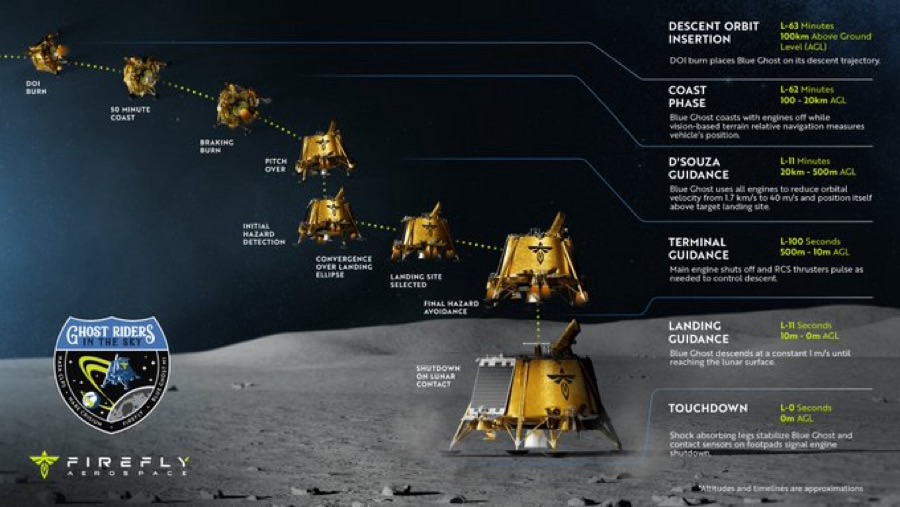
The same institutional distrust fuels Moon-landing conspiracies. Yet commercial progress is demolishing doubt. In March 2025, Firefly Aerospace’s Blue Ghost lander achieved the first fully successful commercial Moon landing in Mare Crisium, near Mons Latreille. It operated for over 14 days on the surface—346 hours of daylight plus lunar night—delivering NASA payloads and proving robotic precision.  This wasn’t government theater; it was private industry landing hardware right near prior Apollo sites. The best proof, though, will be routine human traffic: Starship ferrying thousands to lunar bases and back. When people vacation on the Moon like they do in Hawaii, the shadows-on-the-wall debate ends.

This brings me to Plato’s Allegory of the Cave, which I invoke often because it perfectly captures our situation. In Book VII of The Republic, Socrates describes prisoners chained since birth in an underground cavern, facing a blank wall. Behind them burns a fire; between fire and prisoners, puppeteers carry objects whose shadows dance on the wall. The prisoners believe these shadows are ultimate reality; they compete to predict the next shadow, mistaking illusion for truth. One prisoner breaks free. Dragged upward into sunlight, he suffers pain but gradually sees real objects, then the Sun itself—the Form of the Good. Returning to the cave to free others, he is mocked as blind. Plato uses this to illustrate education’s purpose: turning the soul from illusion toward truth.  

I see modern humanity in that cave. We’ve been fed institutional shadows—media narratives, bureaucratic lies, power-maintaining myths. Space exploration is the ascent. Drones and rovers have sent back data, but they’re still shadows. Humans must go—live, work, have children off-world—to grasp the fire and the Sun beyond. Only then do we understand what cast those flickering images on Earth’s wall. My entire worldview, from business to culture to faith, rests on this quest for unfiltered knowledge. I refuse to remain chained, interpreting shadows while interpreters with agendas lie about what they see.

Ancient history reinforces this urgency. I study civilizations full-time because they reveal what builds success: boldness, truth-seeking, and expansion. Many past cultures achieved greatness then lost momentum—collapsed under internal rot or external conquest. I call this “second husband syndrome.” Imagine a second husband tormented by thoughts of his wife’s first husband, especially if children from that marriage remain. Jealousy poisons the new relationship. Likewise, modern elites suppress or dismiss prior cultures’ achievements to claim sole glory. They rewrite history so previous “husbands” (Atlantis legends, megalithic engineering, advanced astronomy) never existed or were primitive. This intellectual jealousy stifles progress. Studying the Sumerians, Egyptians, Greeks, or Maya shows they grasped Earth’s sphericity, built with precision, and reached for the stars. To build successful cultures today, we must leave the mother’s womb—Earth—and psychologically inhabit other worlds. Labor shortages on Earth are irrelevant; AI and robotics multiply our hours exponentially.

Biblically, this expansion aligns with God’s design, not against it. Genesis 1:28 commands: “Be fruitful and multiply and fill the earth and subdue it, and have dominion over the fish of the sea and over the birds of the heavens and over every living thing that moves on the earth.” Theologians call this the creation or cultural mandate—image-bearers exercising responsible stewardship and creativity across creation.   Some interpret it Earth-only, warning against “playing God.” I counter: God gave intellect, curiosity, and the stars themselves. Exploration within biblical rules—humility before the Creator, ethical stewardship—strengthens faith. Western civilization’s prosperity flows from this worldview: truth-seeking fused with moral order. Space doesn’t dismiss Scripture; it illuminates it. Ancient myths and biblical echoes (Ezekiel’s wheels, chariots of fire) hint at cosmic realities. When we settle the Moon and Mars, we’ll confront those stories with fresh eyes, not fear.

Transhumanism and AI raise valid anxieties. I sympathize with those guarding the “temple of the human body” against occult-tinged experiments that seek to dethrone God. Yet I support robotics and AI enthusiastically. They’re tools, not replacements. Elon Musk’s Optimus robots—demonstrated in recent high-profile events—represent progress, not erasure. The robot Melania Trump walked onstage symbolized partnership: machines handling hostile environments so humans thrive. Blue-collar fears about job loss in trucking or fast food miss the bigger picture. Space will explode opportunities. Lunar mining, orbital manufacturing, tourism, and research will demand millions of roles Earthside and off-world. NASA studies project Artemis driving economic growth through commercial partnerships and a burgeoning lunar marketplace.  PwC forecasts a $127 billion Moon economy by 2050, fueled by energy infrastructure, resources, and services.  I think it will be a lot higher than that.  Far from regression, we gain jobs by the mass. I’m bullish because history shows technology expands human potential when paired with moral vision.

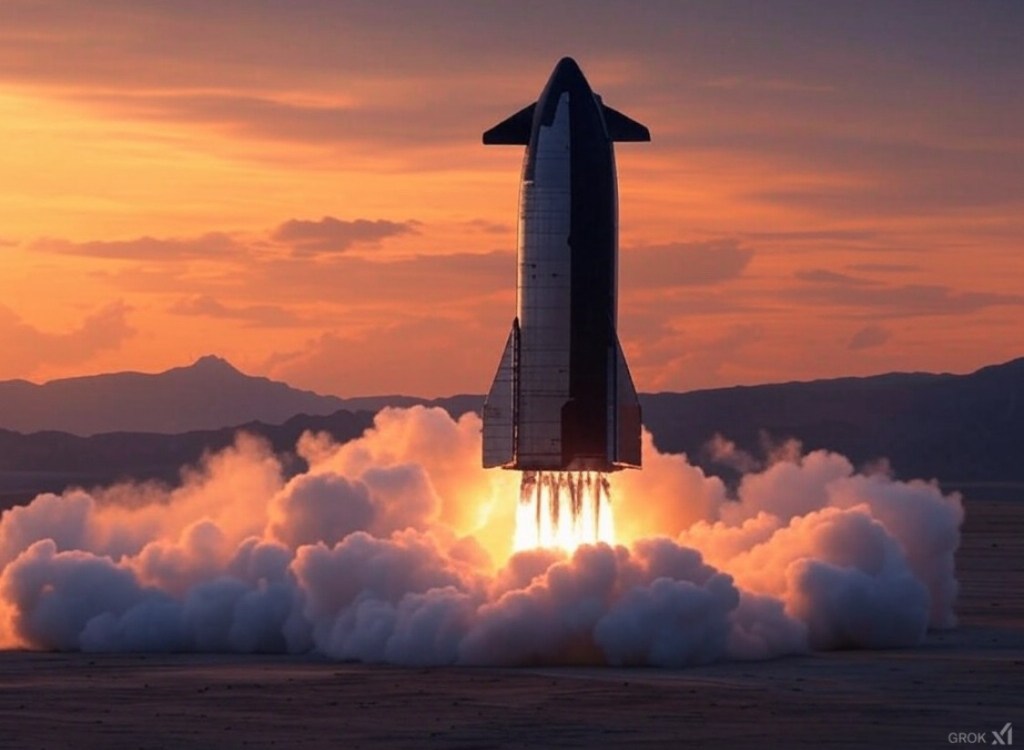
Look at the hardware already proving the path. SpaceX’s Starship must fly aggressively; routine, reusable flights are non-negotiable. Firefly’s success shows commercial lunar access is here. Artemis II tests Orion and SLS for crewed lunar operations, paving the way for Artemis III’s landing (targeted 2027–2028 under current plans) and eventual bases. I want Americans—led by visionaries like President Trump—first on the Moon again, first with permanent colonies (dozens, then hundreds, then thousands). A 10,000-person lunar hub by 2050 isn’t fantasy; it’s engineering plus will. People will live there comfortably: internet, power, hotels. I’ll be among the first tourists with my wife—enthusiastically. Imagine vacationing on the Moon, then returning transformed.

Mars follows. Elon Musk has highlighted the Fermi Paradox’s scariest resolution: we might be alone, or nearly so, in the observable universe—a tiny candle of consciousness in darkness.   That rarity demands we multiply life outward. Different gravities will reshape humanity—taller or shorter frames, new adaptations—yet our core experience evolves. Space archaeology will resolve earthly mythologies: Was Mars once lush? Did prior intelligences leave traces? We boldly go, not in fear, but in faith.

Opposition comes from anti-human forces—regressive ideologies that prefer controlled scarcity on Earth over expansive freedom. Democrats and globalist mindsets sabotage by slowing timelines, inflating costs, or prioritizing Earthbound politics. They fear off-world colonies because independent humans are harder to dominate. I reject that. Human destiny is multi-planetary; it guarantees species survival against asteroids, climate shifts, or self-inflicted woes.

I want answers. I want the space economy flourishing, exploration routine, and humanity confronting the fire behind the shadows. My book The Gunfighter’s Guide to Business outlines principles of decisive action and moral clarity I apply here. Subscribe, engage, study ancient history, support aggressive NASA and SpaceX timelines. Let’s compress Artemis, land Starships weekly, and build hotels on the Moon. The cave is behind us. The stars await. Godspeed.

Footnotes and Further Reference Material

1.  Plato. The Republic, Book VII (514a–520a). Standard translation by Benjamin Jowett or Allan Bloom recommended. For modern analysis: SparkNotes or MasterClass summaries align with my interpretation of enlightenment through ascent. 

2.  Eratosthenes’ method detailed in Cleomedes’ On the Circular Motions of the Heavens and modern reconstructions. See APS News (2006) or Khan Academy for accessible explanations. 

3.  NASA Artemis Program: Official site (nasa.gov/artemis) for timelines; Wikipedia for historical delays. Economic report: “Economic Growth and National Competitiveness Impacts of the Artemis Program” (NASA, 2022). 

4.  Firefly Blue Ghost Mission 1: Firefly Aerospace press releases and end-of-mission summary. Confirms March 2, 2025 landing. 

5.  Biblical Creation Mandate: Genesis 1:26–28; extended discussion in Answers in Genesis or Focus on the Family resources. 

6.  Space economy projections: PwC Lunar Market Assessment (2026); NASA’s commercial lunar payload services page. 

7.  Elon Musk on Fermi Paradox and solitude in cosmos: Public statements 2018–2026, including Davos remarks and X posts. 

Additional reading: The Republic (Plato); Pale Blue Dot (Carl Sagan) for perspective (though I differ on some philosophical points); NASA’s Artemis economic studies; The Case for Mars (Robert Zubrin); ancient astronomy texts like Ptolemy or modern histories of Eratosthenes. For AI/robotics ethics: Musk’s own writings and Tesla Optimus updates. Study these, visit NASA facilities as I have with my wife, and join the ascent. The future is ours to seize.

Rich Hoffman

More about me

Click Here to Protect Yourself with Second Call Defense https://www.secondcalldefense.org/?affiliate=20707
About the Author: Rich Hoffman

Rich Hoffman is an aerospace executive, political strategist, systems thinker, and independent researcher of ancient history, the paranormal, and the Dead Sea Scrolls tradition. His life in high‑stakes manufacturing, high‑level politics, and cross‑functional crisis management gives him a field‑tested understanding of power — both human and unseen.

He has advised candidates, executives, and public leaders, while conducting deep, hands‑on exploration of archaeological and supernatural hotspots across the world.

Hoffman writes with the credibility of a problem-solver, the curiosity of an archaeologist, and the courage of a frontline witness who has gone to very scary places and reported what lurked there. Hoffman has authored books including The Symposium of JusticeThe Gunfighter’s Guide to Business, and Tail of the Dragon, often exploring themes of freedom, individual will, and societal structures through a lens influenced by philosophy (e.g., Nietzschean overman concepts) and current events.
Firefly Lands on the Moon: Another step toward a space economy

Never forget that at 3:34 AM on March 2, 2025, Firefly’s Blue Ghost lunar lander touched down on the moon’s surface.  It’s the second time a private company achieved a soft lunar landing, indicating many good things to come.  The first was Odysseus from Intuitive Machines almost a year ago.  I know several people at Firefly and know how significant their company is growing in the right direction, and this landing was an important historical marker showing that a smaller commercial company can pull off something like this in a partnership with NASA.  It would take NASA decades to do these launches, and now we see these private companies in a profoundly competitive undertaking, and they are doing so successfully.  There will be many more good things to come from Firefly, which is very exciting, and this goes along with what I have been saying about space.  This landing occurred one day before SpaceX sent Starship 8 into space, and just ahead of Blue Origin, a ship full of women, like celebrity Katy Perry, going into space as if it were just another day at the office.  Space is becoming routine, which is what we want to see happen.  And the moon has needed much more attention than it has received; we should have never stopped going.  I don’t care if aliens were on the moon to scare off Buzz Aldrin and Neil Armstrong, pushing us never to return.  NASA moved into the Space Shuttle program after the Apollo missions, but we have never since the early 70s dared to return to the moon.  Now, we have private companies doing the job that governments were too slow to do themselves.  And it’s all very exciting.  Firefly is a great new company, and it will play a significant role in the expansion of a space economy that I have been talking about for quite some time now.

And while discussing it, I’ll make a few predictions.  Just as Elon Musk is pushing for humanity to get into space and settle on Mars, to ensure that humans survive, I would dare say that this isn’t the first time our species has encountered this problem.  I think we will find that the relics on Mars are from our history and that our move to Earth was for many of the same reasons that we want to now return to Mars.  Not to discover it for the first time but to return there and complete a story that began for us many thousands of years ago.  Elon Musk is simply fulfilling the hard-wired desires that are built into human consciousness to ensure the continuation of the species, in the same way a sperm knows to penetrate the egg within a woman.  We must penetrate space to move our species as a thinking consciousness into the universe, as we were meant to.  On earth as it is in Heaven.  We are meant to ascend into Heaven, to the kingdoms we know from our past, which are in the sky. Mark it on your calendar and remember who told you all this.  Once we move into space and start checking things out, that’s when we are going to learn about ourselves.  The proof is coming.  I would say that it is all around us, hidden behind our institutionalized history.  But that won’t last very long; the evidence is abundant and will be confirmed with a space economy.  I could go into quite a long discussion about hidden lifeforms behind a curtain of Dark Matter made of neutrinos and cold fusion.  But let’s save that for other times.  Instead, let’s talk about the excitement of this growing economy brought to us by commercial-driven space utilization.

At a recent Vivek Ramaswamy governor announcement event at CTL Aerospace, I must have had more than 100 people ask me why I love aerospace.  And I tell them that the future is there.  It’s been like panning for gold in a little mountain stream during the Gold Rush.  I get a lot of offers to make a lot of money doing many things, especially in communications.  But I like to stay close to where the gold is, and I like knowing people like the cool cats at Firefly and other companies.  I get very excited every time SpaceX puts up a new rocket.  From all I know about history and science, I see aerospace as the ultimate gold nugget, and I’ve been committed to it for over four decades.  To use a Western metaphor, I’d rather dig for gold in aerospace than sit in a comfortable job in town as a lawyer or communications expert.  It’s not the money that excites me; the growth of human intellect and what adventure can bring us is the ultimate treasure.  But that doesn’t mean that money doesn’t matter.  But on a scale that I think is better than just some average well-paying job.  The growth of the space economy will far outpace any technical time humans have ever experienced, whether it be steamships, early airplanes, trains, or automobiles.  The space economy will likely contribute hundreds of trillions of dollars to the first to utilize it.  And that, to me, is the best of the big gold nuggets.  But this time we should have learned some critical lessons, to keep the Marxists out of this business, as they dramatically crippled every modern industry that humans have invented.  The Firefly launch is more vital than past attempts when Trump is in office and cheerleading on all these efforts.  So, the resolution rate is much higher than at any other time in history.

I watched Brit Hume on Fox News the other night stumble around perplexed about how Trump thinks he will go into all these tariff wars, cut taxes, and still expand the economy.  As everyone was, he spoke about an economy that they think has seen the climax of its days and that all government management has to be wrapped around managing those fixed assets.  But that’s not where Trump is as he is facing down what we all are, a 36 trillion dollar deficit that is out of control.  If you want to fix that without touching the Social Security and Medicare concept, something dramatic has to happen.  And as I have been pointing out, it’s in this space economy.   With Firefly putting their lunar module on the moon after a drought of 50 years, a half a century.  Our economy has been held back by a lot of Marxist parasites who moved into administrative positions at NASA and the Pentagon and held back human civilization in a very catastrophic way.  However, the more private people have grown more powerful, and the more that government has lost it, the more companies like SpaceX and Firefly have grown and are now doing the big things.  And that is where the future treasures are.  And that is the only kind of treasure I care about in the long line of treasures in any economy.  The best to my mind is in space, and the adventures to come.  And when I see scrappy companies like Firefly have success, I am more than happy for them.  These are fascinating times! 

Rich Hoffman

Click Here to Protect Yourself with Second Call Defense https://www.secondcalldefense.org/?affiliate=20707

SpaceX Does it Again: Crawling out from under Cost-Plus restrictions

For perspective, you can go back through all my writing, millions and millions of words back to 2013 when I wrote an article from Florida about the essential end of the Space Shuttle program and that Obama’s vision for NASA was to partner with Russian cosmonauts for any future space missions.  I was very outraged at the policy, and if I never liked Obama for anything, it was his anti-growth attitude to suppress American exceptionalism as it often presents itself in space travel, that I hated the most.  We were going backward under Obama and Biden, and the only growth we have seen in over two decades came from the four years we had from Trump the first time.  So, I have been very excited about watching the civilian infrastructure for space develop, and anywhere I can help it, I certainly do.  So if I’m more excited these days and very enthusiastic for every day, as many people pointed out to me at a Jags get-together ahead of the inauguration of Trump, I’m sure eventually they’ll understand.  I don’t think people realize what a miracle the week of January 13th was in 2025.  Yes, SpaceX did it again; they landed their Superheavy booster rocket back on the pad it launched from after carrying another Starship into space.  They lost the ship due to a pressure problem that couldn’t gas out fast enough on a new second-generation Starship, and it ruptured the hull, causing the whole thing to break up in the atmosphere.   That was unfortunate but very correctable.  The real trick was repeating the landing of the booster rocket to show that the first time wasn’t an accident.  Watching that rocket capture chopsticks system work now repeatably was a fantastic thing to witness, and it takes us a long way from my complaints about when Obama ended the Space Shuttle program over a decade ago.

But that wasn’t all; just a few hours before SpaceX launched, Blue Origin put their own rocket into space, but this one was carrying a lunar lander from Firefly, a Texas-based company, that was returning to the moon.  Another personal problem I have is with NASA and governments around the world.  I don’t care what anybody found when we went to the moon the first time.  There was no excuse not to have a Hilton there by now so I could vacation on the moon with my family.  This raw, primitive embrace of backward thinking that came to us from both political parties has infuriated me to no end.  When people ask me why I have had my war against public education, it starts with this lack of preparation as a culture to advance people into space.  We should have been doing this since the original moon missions, and as I was growing up, it looked good.  But the Department of Education under Jimmy Carter and the socialist politics that held our society down through labor unions and liberal politics stopped that advancement and I have never been good with it.   If we don’t have a culture pushing for adventures into space, we are deliberately trying to suppress the ambitions of the human race in a very unhealthy way.  So, for me, watching all this space activity just a few days before President Trump’s return to the White House was fantastic and deserved as a subject of massive optimism.  For a culture to produce two space launches like Blue Origin and SpaceX produced, it would have taken NASA a decade to do one of them.  Let alone two significant ones.  We are dealing with good times, finally.

The amount of capacity and bandwidth is the real challenge, and that’s what is changing, which I’ll be pointing out often because I am pretty sure people don’t know what to think of these displays of monumental ambition.  It takes thousands of manhours and intelligence calculations to produce one rocket into space, especially when discussing complicated payloads.  But here we have a culture that did it twice in the same week. Additionally, there are several Falcon rockets that are taking constant payload into space, whether people or satellites for the Starlink system, we have come a long way from the Obama administration sending Americans into space through partnerships with Russia.  As soon as SpaceX realized that they had lost their Starship, they were already planning to pull another out of their manufacturing facility, where several others were waiting, and they were planning another launch next month.  SpaceX expects to launch at least 20 more times in 2025 to develop Starship further.  What they learned from this recent one, even though it burned up in the atmosphere, was extremely valuable compared to the traditional hindrances of a cost-plus company.  The way SpaceX is attacking the problem is the definition of how these things will be done in the future, and it embodies a whole new view of manufacturing that is escaping the clutches of global socialists like Obama, who were deliberately trying to hold back humanity.   It’s one of those situations in which small-minded people have been trying to destroy society to rule over the ashes.  And these new manufacturing methods being developed at SpaceX are a rebellion against that sentiment.  And it’s precisely what space needs for humans to colonize the stars.  Other companies are now moving in that same direction regarding the “rate of resolution.”

Cost-plus companies have been hijacked by all kinds of horrible forces that have held back the aerospace industry since the first moon landing.  When parasitic characters realized they could stall contracts and make money off ignorant governments for more congressional money to be thrown at the trolls to build something, trouble was clearly on the horizon.  That’s why space had to move into civilian care because there was looting politics in government control that held us back with people like Obama.  A setback like Starship had at SpaceX this week would have stopped advancement at a typical cost-plus company for a decade in the past.  Instead, Elon Musk said immediately that the plan was to roll out another Starship and get ready for a second try next month.  The only thing that will hold them back is the speed of government, which will increase dramatically once Trump is back in office.  There is a lot to be very excited about, and I am.  It’s not just about going to space that is exciting; it is about watching the human race crawl out from under a very oppressive political climate and an education system that has sought to cripple us purposely.  Not to inspire us to grow.  And due to all that, we see that the human race is doing big things again, and the American culture, which has produced the world’s wealthiest people, is putting that wealth to good use in adventure and enterprise.  As good as this past week was, and it was, I see under the incoming Trump administration launches like that happening every single day.  I don’t think people realize yet how important all this is and what it will do for us.  But I can see it and am very excited about what’s coming.   In many ways, it’s a dream come true. 

Rich Hoffman

Click Here to Protect Yourself with Second Call Defense https://www.secondcalldefense.org/?affiliate=20707