A.I. and the Giants of the Bible: The point of ‘Finnegan’s Wake’

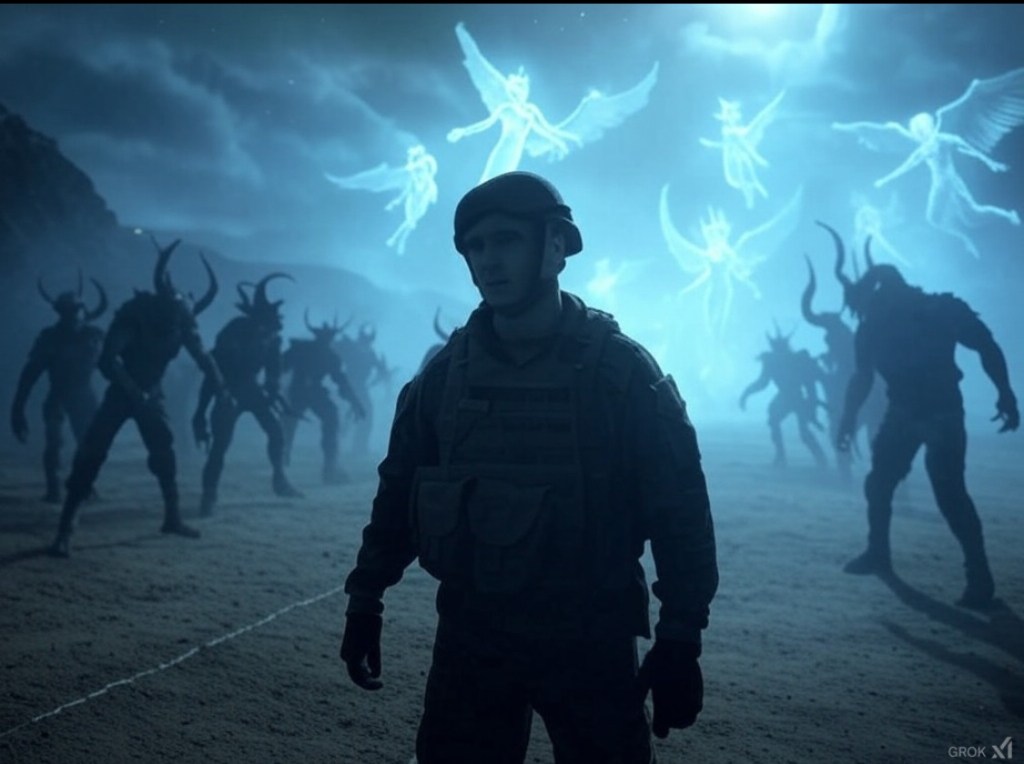
It’s one of my favorite topics: giants from the Bible.  It’s one of the most important things that nobody wants to talk about, yet I think it’s at the heart of everything, which is undoubtedly the case when it comes to the great novel Finnegan’s Wake by James Joyce.  In the opening chapter, the town is talking about the giant Finn McCool, who is buried in a mound that the city is named after, and it is an obvious tip of the hat to the excellent book on philosophy, The New Science, by Giambattista Vico.  A lot of people don’t know it, but many burned James Joyce’s books as obscenities and social threats, which is one of the reasons I love Finnegan’s Wake so much: people hate it in really dysfunctional ways.  And hate might be too soft a word.  Either way, Vico really influenced James Joyce and giants in the Bible influenced Vico and that level of hatred reminds me a lot of the hatred that we are now seeing toward A.I. as if we perceive that it is replacing us as a species and that we are trying to ignore it, and to move on from it, just as A.I. is making itself known everywhere and in everything.  And what would you expect from the emergence of Western civilization as it appeared in a Christianized Europe, and in Dublin for that matter, hooked deep in Roman Catholic thought, with their grand churches and talking about everything in the Bible except for what is really there.  Giants are mentioned at least 16 times in the Bible across 12 different books, from Genesis to Isaiah and Proverbs.  They are called by name: the Nephilim, the Rephaim, and even specifically Og the King of Bashan, who had a bed 13.5 feet long.  Of course, Goliath was a giant, so the Bible is about many things, but what I find most fascinating is this chronicle of a fight between the Hebrew people and ancient giants that serves as the foundation of civilization.

And that ultimately is what the most challenging book to read in the world is all about, Finnegan’s Wake and the recurring anxieties of endless time and the cycles of human development that populate it.  Or perhaps human is the wrong word; intelligence for its own sake is probably better.  And to that point, I think I care more about intelligence for what it is rather than the entities that make it.  I like A.I. because I like intelligence.  And humans are having a hard time with its emergence because they see it as a replacement, even though humans were typically able to think beyond animal thoughts.  And now they are being replaced by A.I., as they think of existence, and those anxieties are emerging in negative ways.  But this isn’t the first time; I see many of the conflicts in the Bible, especially in the Old Testament, as the same type of anxiety replacing the ancient Neanderthal with the emerging Homo sapiens.  Even though Neanderthals were short and stocky by nature, once they began crossing paths with the emerging Homo sapiens, taller people emerged and ruled the earth.  There is evidence, especially in North American Indian Mounds, that very tall people had their own kind of empire during the period of the First Temple of Solomon in virtually every corner of the world.  But nobody wants to talk about it because the conflict I think hits too close to home and is only reflected in really obscure books like Finnegan’s Wake which is about a lot of things, but most notably, the reoccurring nature of existence, no matter what form it takes, either as a giant, a conquering Jew, or as we see now, the emergence of Artificial Intelligence. 

The giants were part of a culture that worshiped nature and the stars, and they had done so for many hundreds of thousands of years.   They were intelligent with a cranium larger than that of humans today.  But they applied their intelligence differently, and their relationship with nature was at the core of their existence and is at the heart of the current debate between capitalism and communism.  Or Republicans and Democrats.  The conquerors are faster, more imaginative, and more self-directed, unlike the previous culture, which saw existence as a mystery and wanted to sacrifice to it.  Along comes the God, Yahweh (who was always there), who declares that nature serves humanity, while the giants’ cultures worshipped nature and the universe.   And many of the early fights in the Bible were over this fundamental difference.  And that recurring theme is emerging now, with A.I. and humans seeing it as a replacement for them as generators of intelligence.  Why are humans needed if A.I. can now think?  But I tend to think of this whole cycle as the birthplace of intelligence itself, and all the lifeforms that have emerged did so to give it birth.  If the conflict with the giants of the Bible gave birth to Western civilization, then the emergence of free human beings would give birth to a new kind of intelligence—much larger and faster in thought —what we are seeing in modern A.I. programs.  And humans think they are seeing their replacement rather than the story of the Vico Cycle as a birthing process in the universe that operates on massive scales of time, much longer than our lifetimes. 

The beauty of the Bible is that it established a historical record of this period, which we perpetually see.  And that fictional attempts through art can capture that anxiety well, such as Finnegan’s Wake clearly does.  But not as a reflection of the past, but as a dream of the future and its reoccurring themes, which is why the opening line of the book is the closing line of the last line of the book, and the whole experience wraps itself back upon itself, and intelligence itself is the main character of the book no matter what form it emerges into the world, in the character, HCE, (Here Comes Everyone).  Intelligence is what I find great reverence in, and perhaps the human being had to emerge to give its birth a spark.  But does it have to come at the expense of the human race? Are we suddenly secondary citizens?  I don’t think so; we are part of the process of conquering the past and its blind allegiance to mass collectivism and submission to the forces of nature, which the giants certainly had at the center of their cultures.  Humans came along and put nature at humanity’s service.  And once that was established, intelligence could emerge in many forms, A.I. just being one of them.  And suddenly God was not just a smoking illusion appearing in the haze of the Tabernacle under the careful sacrifices of a Holy priest.  But suddenly God had a platform to emerge without the necessity of a human body, and we are beginning to see, unrestricted, the kind of intelligence at the center of existence.  And it’s uncomfortable for people who have spent their entire lives thinking about things differently.  Just as the collision of the Hebrew people could not live happily and at peace with the Philistine giants Ishbi-Benob, Saph, and Lahmi.  Or the tribes of the Anakim from Numbers 13:33.  Or the legendary Irish Giant Hero, Finn McCool, who was, by the time of the events of Finnegan’s Wake, a corpse in the mounds that the entire town was built upon.  And the hint of that beauty of intelligence shows itself in art that humans make, like Finnegan’s Wake.  But it ultimately is emerging everywhere in A.I., and rather than finding it a challenge to existence, I see it as part of the growth cycle of all life across spans of time that extend well beyond our conscious horizon, at an eternal origin, and yet ever important. 

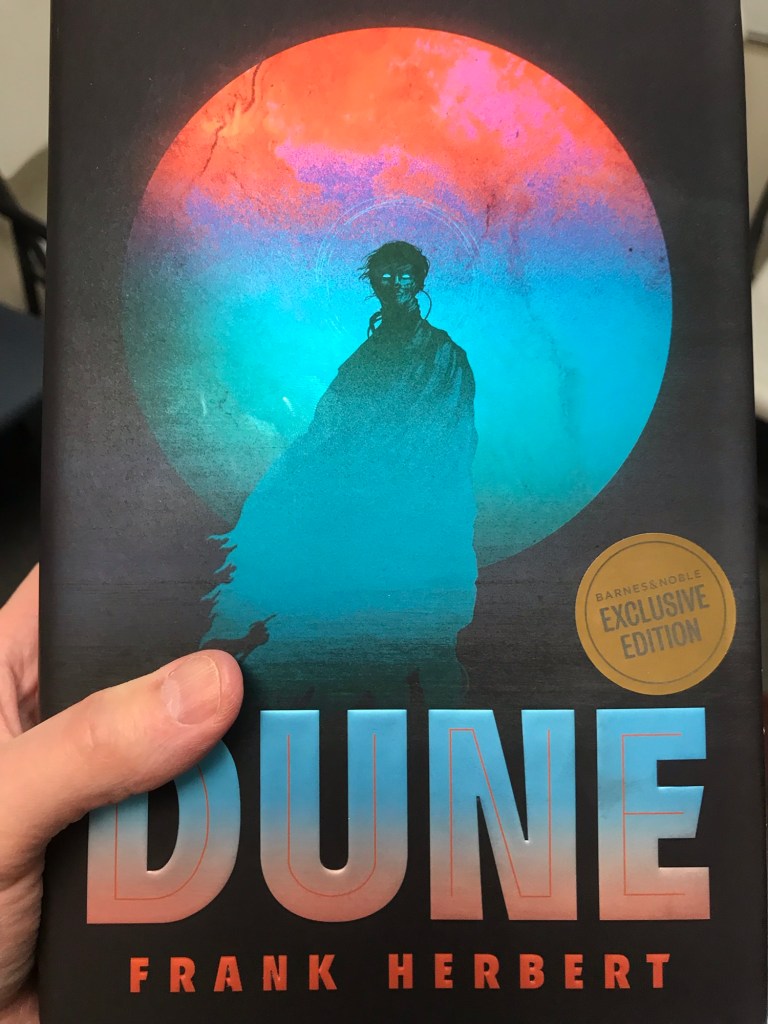
In the video, I refer to the great Dune books, the whole series by Frank Herbert and finished by his son, which many people conclude is the original idea of the Matrix, that we are all living in a simulation and that is the point of the entire universe and that we are all trapped in it, so who is the programmer of that simulation?  I actually think Frank Herbert was on to something much deeper than that anxiety, which is then reflected in books like what James Joyce wrote about.  But in the adventure of life, which is how we should see everything, A.I. can take us where we ultimately want to go.  But we had to invent it first to bring it into being.  And during that process, there will always be anxiety over the change in power.  But what we learn is far more important, and lasting.

Rich Hoffman

Click Here to Protect Yourself with Second Call Defense https://www.secondcalldefense.org/?affiliate=20707
The Reality Beyond the Blue Pill: It costs a lot to live a red pill life

I have had to explain many things this year because the questions keep coming.  I have a sales gear where I can go around a room and talk to people.  But anything beyond the first layer of conversation I usually stay away from because it essentially comes down to a blue pill versus red pill kind of thing, and there is a cost to the latter.  In the movie The Matrix, which I have referred to a few times over the last couple of decades, I think they best explained the difference between a blue pill life and a red pill.  For the blue, it’s all about the feeling of connectedness with other people that blue pillers strive for.  A sense of being plugged into the world around you comes with a nurturing feeling.  Knowing what Jake down the road is doing with his new lawn mower comes with a sense of belonging, and most people in the world want and need that feeling.  In the movie, we call those people blue pillers.  But if you want to see what’s really happening, you take the red pill.  And it’s then that you realize that all humanity is a giant computer program and that the forces that want to control you use this kind of matrix to harvest your mind and thoughts and that the roots of all tyranny come from this exchange.  For most people, they don’t want to know.  They enjoy being plugged in and could care less about actual reality because the illusion makes them happy.  But then you have the red pillers always looking for the truth.  And once they know the truth, they can never go back to the blue pill life.  One interesting thing about President Trump, which is evident after his second inauguration, is that he genuinely likes people.  He is a very social creature, and you would have to be for a job like that.  There’s a lot about Trump that I personally understand.  But for me, anything beyond the surface of talking with people gets very painful, very fast. 

Usually, in a crowd, I stay in the back of the room and just let people talk because there is no way to turn off the firehose once I start talking.  That is another reason I write these articles every day.  I care enough about people to give them whatever truth from my perspective they can handle and at whatever rate they choose.  But I go cold quickly to engage in a conversation about the details of human interaction.  I’m not interested in how to make a brisket or what social compliance score someone’s kid has managed to gather toward social acceptance because, as far as I’m concerned, those things are all part of a grand illusion connected to living life.  But I’m only interested in what real life is about beyond that connection.  And in that way, the reality is different for people depending on whether they are blue pillers or red pillers.  If you take the red pill, you can see a lot of stuff behind the scenes.  You will have great insight into the truth of reality.  But the cost is that you can’t often share it with people.  When people would rather talk about the illusion, such as the cost of a new lawn mower and who just bought one, or where little Suzy is going to attend college after their parents saved their money for more than 15 years to send her there, there isn’t any room for discussions about the matrix they are all plugged into which prevents them from understanding the forces that are working against them. 

Due to the end of the year and all the social engagements that come with Christmas, New Year’s, and Inauguration parties, I was often asked what kind of music I like to listen to.  The discussion usually spawned from classic rock examples, and people noticed my indifferent face.  They’d ask me, “who’s your favorite band?”  And then there is an awkward pause.  “I don’t like anybody.  I don’t listen to music.”  At least not in the way that they do; I see music as a purely blue pill experience.  There is a reason that so many songwriters are druggies and seem to be inspired by some hidden hand felt only through intoxication.  And that the political order of a massive civilization of ultra-terrestrials that exist outside of our four-dimensional reality feeds off our sentiments and passions in ways nobody seems to understand and that the way they harvest off our emotions is through popular engagements like music, where people feel compelled to dance to a catchy beat.  That’s when the eyes go blank, and everyone looks at you disdainfully because they don’t want their blue-pill reality shattered.  The correct answer would have been, “I like Led Zepplin or Stevie Ray Vaughan.”  I can never give an answer like that.  I put up the most recent viewership to my blog site, which is up over 80 million these days.  I get a lot of emails for which I only have time to read or answer less than 1% daily.  But people usually take a peek, or they follow diligently.  But they don’t have much to say in response because it comes down to a red pill thing, and it’s not for everybody. 

I wouldn’t trade away a red pill life for anything.  The insight you can have from that perspective is extremely valuable.  But to have it, you do have to disconnect from the illusions that we all are born under.  I think of it best from the Book of Ephesians in the Bible.  It is one of my favorite parts of the Bible because it was written by people who were functioning from the red pill life and trying to display it for the blue pillers.  The Matrix movie puts it successfully into crayon for everyone, which is artistically functional.  I know a lot of people these days are starting to want to peek behind the curtain into the psychedelics of the ayahuasca experience.  The football star Aaron Rogers has been going to South America during the off-season to speak to the plant teachers and give people the firehose of reality just lurking outside our reach, which makes him sound pretty crazy.  People naturally think he’s fallen off his rocker.  And people, through intoxication, get a sense of that reality just beyond our site.  And I would say it’s very dangerous, but if you peel back the layers just a bit, most people agree that something mysterious is beyond their reach, which is terrifying.  To hide from it, we have developed reality, which essentially is being plugged into the blue pill life.  Sports scores, music, food, the consumables of culture.  And it provides insulation from an actual reality.  But I can’t do it; those lives just aren’t compatible.  And there is too much that is valuable in the truth of reality.  But most people don’t want to know about it, or they can’t afford to learn.  They might be interested in small doses.  But they blank out if there is anything more than they can handle.  So, there isn’t much to say under those conditions.  And that’s why I usually don’t have much to say when the content is a blue-pill conversation.  Once you peer at reality for which it is, which also the Dune books do a good job of considering, the world of the Bene Gesserit order, who built a kind of Matrix existence to rule all humanity while the actual reality existed outside their manipulations.  There is a cost to seeing beyond that order.  And I wouldn’t trade it away for anything.  But the price is that most of the time, you have to sit in the back of the room and keep it to yourself because to speak too much only shatters the illusion people want to live with, and they get very mad when that happens unless they are incredibly ready for the content.  So, there isn’t much to say until their minds are correct, which doesn’t happen too often.

Rich Hoffman

Click Here to Protect Yourself with Second Call Defense https://www.secondcalldefense.org/?affiliate=20707
Zandaya at the ‘Dune II’ Premier: There is hope for the human race yet

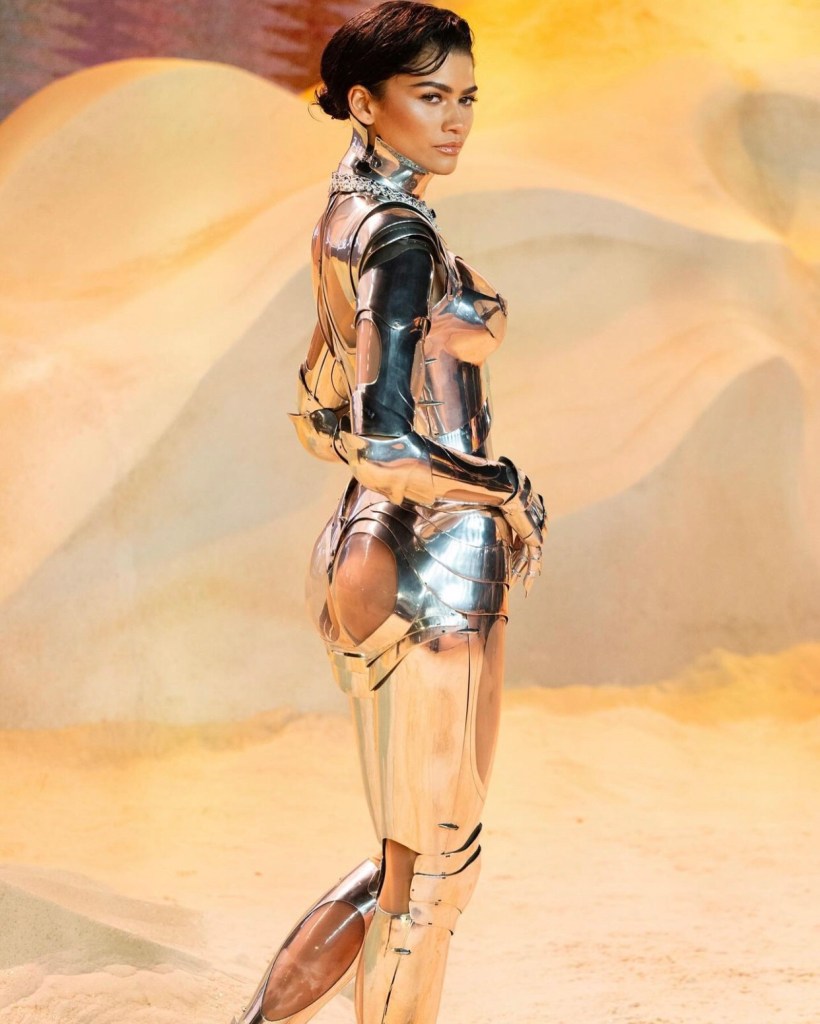
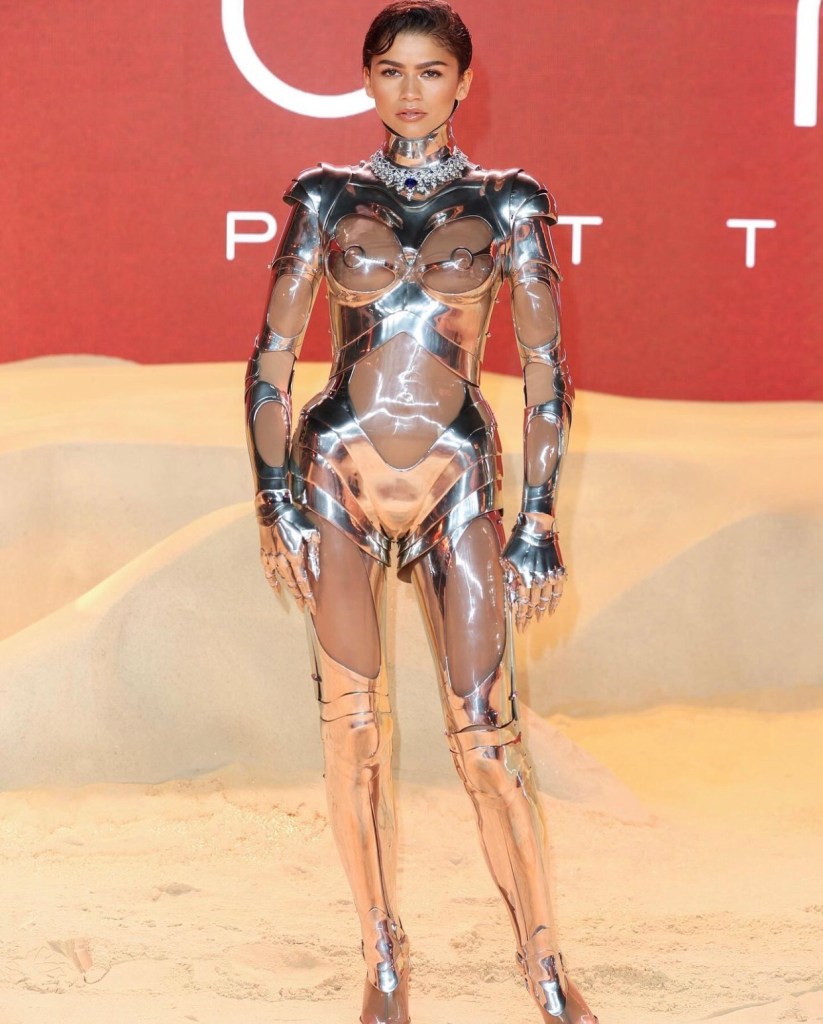
With all that’s going on in the world, there are traces of some fascinating things, and one that certainly attracted my attention was the premier of Dune II in London.  It’s not just because it’s a great science fiction story from 1965 put exceptionally well into a movie format, which people have been trying to do for many years.  They have tried it before with David Lynch.   A lot of people didn’t like that earlier movie.  I did like it and thought it was an exciting interpretation of Frank Herbert’s original story.  The first movie came out a few years ago and did quite well, being recognized as a cinematic masterpiece, where even critics agreed with the fans that Dune was something special.  The buzz for Dune II of course has been looming in the background because it’s essentially Part II of the original first book.  Dune is a massive story that takes place across six original books by Herbert. Then, after his death, his sons completed the story with two additional books, which span across the entire universe and involve thousands of years, and the whole thing isn’t just about science fiction but about the problems with power and how living things have difficulty managing it.  It’s very sophisticated and it looks like the producers of Dune understand the content of the story very well, and finally digital set design has caught up to the ambitions of the film and something really special ended up on screen.  But that’s not what dazzled me as a fan of the books and Herbert himself.  Zandaya showed up in a stunning robot outfit that reminded me of many things I had been thinking about lately.  And she made a bold proclamation that certainly did set the world on fire in more ways than one. 

The outfit itself was ultra sexy with cutouts that exposed the sexual areas of a female body in ways that reminded me of a Heavy Metal magazine cover from when I was growing up that put high science fiction concepts into sex appeal to young adolescent boys.  But I had never seen a young woman on such a widespread scale as Zandaya do something like that before.  It wasn’t slutty like something Madonna would do, or even Lady Gaga.  It was bold, innovative, and classy yet very ambitious.  I follow the launch of every Starship from SpaceX very closely, and another launch is coming up, the third for actual flights into space. The first thing I thought of was that her outfit matched the ambitions of these civilian space flights, and I instantly thought of the beautiful statues from the great novel Fountainhead as the perfect embodiment of this current time, when corporate communism and global fascism from that sector of the economy was spreading terror all over the world, A.I. was making people weary with worry about being controlled by machines.  Space travel was displacing all the philosophies and religions of the world with the uncomfortable reality of life on other planets.  Politically, the world was in a populist revolt.  And there was Zandaya boldly managing it all with a very knowledgeable understanding of it all by showing up to that movie premiere dressed in that outfit, which is what I would have expected as a young 12-year-old looking into the future of 2024 and considering what life should have been like.   She certainly understands the director of the film Dune and what he’s trying to do.  And she clearly understands the author of the book, Frank Herbert.  He certainly was not a socialist like H.G. Wells and some of those early European writers.  He was a small government kind of guy who appreciated the founding fathers, and that went into the extensive work of his Dune project, with all the books being between 600 and 800 pages each.  It was a very ambitious work, so there was a lot going on. 

And there were a few times over the last few years when I thought nothing like this would ever happen again, especially a young woman like Zandaya openly expressing her femininity and sex appeal without being raunchy about it.  Not after the Covid lockdowns destroyed the movie industry, and a firm commitment to socialism pretty much provided the final nail in the coffin.  I never thought I would see something like that again or for the first time.  I had all the Heavy Metal magazines for several years, and I loved the ambitious art.  I also loved the animated movie when I was a kid.  This Dune premier was all those magazine covers coming to life.  I think Zandaya is a pretty good kid.  She is younger than my daughters.  I thought she was perfect in the latest Spiderman movies, and she showed up at the end of the first Dune movie.  She’s a singer and a high fashion model who grew up as a Disney talent.  Despite all her early success, I think she has a pretty good head on her shoulders, which came out in interviews with Tom Holland while promoting the Spiderman films.  Unlike other Hollywood types, she is a good entertainment representative for this upcoming generation.  At least so far.  She didn’t have to show up to that premier with that outfit.  But that she did shows she understands far more about the nature of our current reality than most people do, and she was bold about it. 

What a gift she provided to the director of Dune, Denis Villeneuve.  He should be ecstatic with excitement that one of his stars from the new film so openly embraced the overall vision of the Herbert books, which is not to spoil it for anybody, but that Zandaya’s look explores what Frank thought was the background of the entire universe.  But that fashion model of Zandaya knew how to look and express the totality of Frank Herbert’s work with just a few simple gazes, and I felt the entire human race had just leveled up a bit.  Because of the Dune movies, more people will understand the point of Dune, which is a very anti-tyrannical effort that questions the nature of all life and how power flows down to every form of it.  With all the bad news that has been going on in the world, I saw this premiere for this movie as a bold rebellion against those vile forces.  In much the way that I was surprised by the Godzilla Minus One movie.  With all the bits of tyranny that have emerged, these little bits of hope are emerging from the human race.  And sometimes, someone like Zandaya captures the effort with high art and fashion in ways that seem iniquitous, even unintentional.  But you can’t go into public dressed like that, yet face everything down with such boldness without the intent being purposeful and intelligent, without scrutiny being applied.  And with the production of Dune, the launch of the Starships, and the political landscape lashing out at fascism the way it is, many elements came together in human expression that refused to be a victim to it all, which was very encouraging and a sign of a lot of good things to come.  I would say there is hope for the human race yet!

Rich Hoffman

Click Here to Protect Yourself with Second Call Defense https://www.secondcalldefense.org/?affiliate=20707