
The essence of being human lies not in the fragile physical form that houses us, but in the boundless drive of imagination—the spark that turns thought into creation, invention into progress, and survival into flourishing. This creative nature sets humanity apart from every other species on Earth. While animals adapt to their environment through instinct and biological necessity, humans reshape it. We envision possibilities beyond the immediate, craft tools to extend our reach, and build systems that multiply our efforts across generations. This is the image of the Creator reflected in us: not a static likeness, but a dynamic capacity to imagine, design, and realize a better world. Discussions of souls and bodies as vehicles often touch on this everlasting essence. The body is temporary, a biological carrier, but the imaginative drive—the soul’s expression—transcends it, propelling humanity toward ever-greater achievements. In an age of rapid technological change, including the rise of artificial intelligence (AI), some fear a “post-human apocalypse” that disrupts the natural order. Yet this view misses the deeper truth: tools like AI represent the next logical extension of human creativity, not its replacement. They amplify the very qualities that define us, freeing time and energy for more profound acts of creation.
Alex Epstein’s Fossil Future: Why Global Human Flourishing Requires More Oil, Coal, and Natural Gas—Not Less (2022) provides a powerful framework for understanding this. Epstein argues that cost-effective, reliable energy is the foundation of human flourishing. Fossil fuels deliver this energy at unmatched scale: low-cost, on-demand, versatile, and capable of powering billions. They enable “machine labor” that replaces backbreaking human toil, producing food, shelter, medicine, and comfort in abundance. Without them, billions would still suffer and die from lack of energy for basic needs—like refrigeration to preserve food and medicine, or electricity for incubators saving premature babies. Epstein highlights how the “knowledge system”—experts, media, and policymakers—often ignores these massive benefits while catastrophizing side effects. He flips the script: more fossil fuel use, combined with climate mastery through technology and adaptation, will make the world far better, not worse.
Consider the historical trajectory. For most of human existence—roughly 95% of our species’ time on Earth—survival consumed nearly every waking hour. Hunter-gatherer societies, as studied among groups like the Ju/’hoansi, spent about 15 hours per week acquiring food and necessities, with the rest devoted to rest, social bonds, and basic leisure. Yet life was precarious: short lifespans, vulnerability to famine, disease, and predators. Agriculture brought some stability but increased labor demands. Pre-industrial workers often toiled 60-70 hours per week or more during peak seasons, with annual hours exceeding 3,000 in many places by the late 19th century. Medieval artisans might average 8-9 hours of work daily, but the year included long stretches of seasonal labor without modern safety nets. Life expectancy hovered around 30-40 years in many eras, limited by malnutrition, infection, and physical exhaustion.
The fossil fuel revolution changed everything. Beginning in earnest in the late 18th and 19th centuries with coal, then oil and natural gas, energy abundance powered the Industrial Revolution and beyond. Graphs of global life expectancy, population, and GDP per capita show “hockey stick” growth mirroring rising CO₂ emissions from fossil fuels since the late 1800s. Extreme poverty plummeted from about 35% of the world population in 1990 to under 10% today, driven largely by energy-enabled growth in places like China and India, where coal and hydrocarbons fueled industrialization. Life expectancy worldwide rose from around 35 years in ancient times to nearly 72-73 years today. Access to electricity correlates strongly with these gains: it powers clean water pumps, refrigeration, lighting, and medical devices, reducing deaths from indoor air pollution (which still claim millions annually from traditional biomass cooking) and enabling education and economic opportunity.
Drive through any community at 2 a.m. today, and the evidence surrounds us. Porch lights glow, air conditioners or heaters keep temperatures comfortable, and refrigerators hum with fresh food and cold drinks. A simple flip of a switch banishes darkness; a tap delivers clean water without trekking to a river or well. Sewer systems pump waste away efficiently—these conveniences, all energy-dependent, free humans from the drudgery that defined most of history. Before widespread electricity, fetching water, cooking over open fires, hand-washing clothes, and manual farming consumed vast portions of the day. Fossil fuels (and the electricity they predominantly generate—about 80% of global energy still comes from hydrocarbons) multiplied human productivity exponentially. One barrel of oil contains energy equivalent to roughly 25,000 hours of human labor. Modern societies harness this to produce food surpluses feeding 8 billion people, build durable homes, manufacture medicines, and transport goods globally via Walmart-like supply chains that make essentials affordable.
Epstein emphasizes that these benefits extend far beyond comfort. Energy access enables “upper mobility”—the chance for individuals to rise through effort and ingenuity. It powers tools: power drills, pumps, computers, and factories. Time once spent on mere survival now goes to innovation, family, art, science, and enterprise. This is not mere leisure for idleness; it is liberated human potential. Even if many spend extra time on video games, social media scrolling, or boredom-induced snacking (a real phenomenon in affluent societies where a theoretical 40-hour workweek often compresses into far less productive time), the outliers—the creators, inventors, and entrepreneurs—flourish. A small percentage of highly driven individuals, empowered by abundant energy, produce inventions that benefit billions: vaccines, smartphones, efficient agriculture, and now AI. The cascade effect across generations compounds this: books preserve knowledge, inventions build on prior ones, and energy multiplies output. Humanity’s trajectory—from wheel and spear to calculus and computers—shows this pattern. Fossil fuels, formed from ancient sunlight stored over millions of years, unlocked that stored energy for modern use, bridging primitive existence to an era of unprecedented possibility.
Critics of fossil fuels often frame nature as a sacred, living essence demanding protection at all costs—an “Earth worshiper” perspective that prioritizes untouched wilderness over human life. This inverts priorities. The environment has always been dynamic; humans have “impacted” it since the use of fire and tools. The real moral standard is human flourishing: longer, healthier, opportunity-rich lives. Fossil fuels have made Earth more livable by enabling climate mastery—better buildings, irrigation, disaster response, and crop yields that reduce weather-related deaths (which have plummeted dramatically). Side effects like emissions are real but “masterable” through technology, adaptation, and continued energy innovation. Opposing abundant energy in the name of nature condemns billions to energy poverty: over 600-700 million still lack electricity access, and 2+ billion rely on polluting cooking fuels, causing millions of premature deaths yearly from indoor smoke. In sub-Saharan Africa and parts of Asia, women and children spend up to 40 hours weekly gathering firewood—time stolen from education, work, and family. Energy abundance lifts all, including ecosystems, which are managed more effectively with technology.
AI emerges as the natural offspring of this energy-driven progress. Computing power, itself born from electricity and fossil-enabled infrastructure, now mimics and multiplies aspects of human thinking. Data centers, increasingly powered by reliable sources (with fossil fuels still critical for baseload), consume growing amounts of electricity—global data center use is projected to double or more by 2030, reaching around 945 TWh, with AI driving much of the surge via accelerated server use. AI processes vast datasets, optimizes designs, accelerates drug discovery, and automates routine tasks in ways no prior tool could. It does not “think” with a soul or original imagination; it pattern-matches at superhuman speed and scale. Yet this serves human creators: an engineer using AI can iterate on prototypes faster, a scientist can model complex systems overnight, and a writer can explore ideas with computational assistance. The soul—the imaginative drive—remains uniquely human. AI lacks consciousness, genuine emotion, moral intuition, or the spark of original vision rooted in lived experience and transcendence. It is a tool, like the abacus, calculator, or computer before it, extending biological limitations without replacing the essence that wields it.
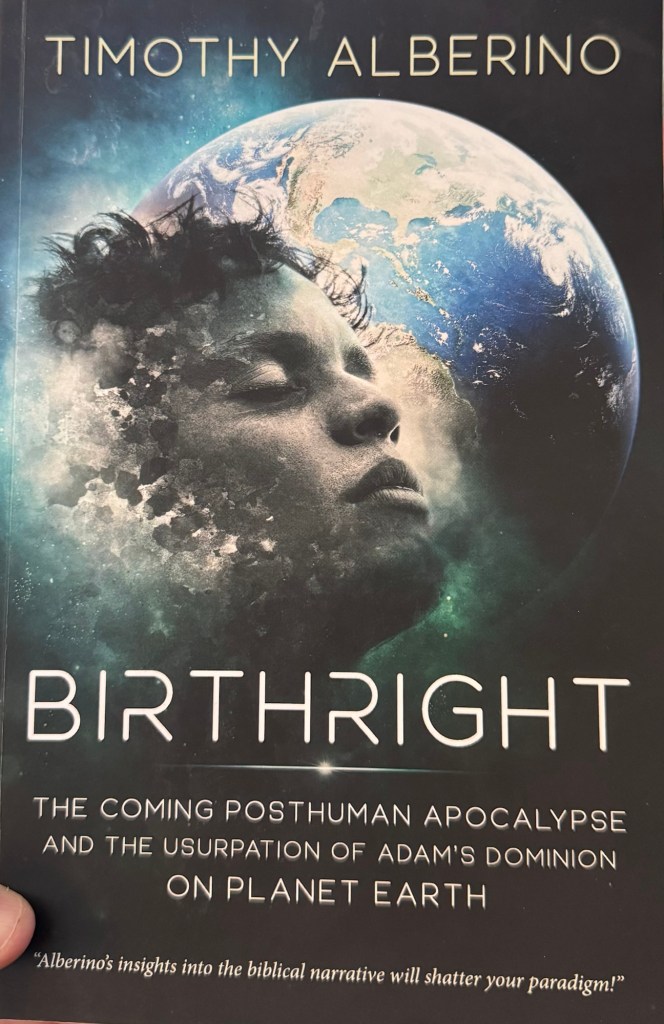
Fears of a “post-human apocalypse” echo ancient anxieties, like the Tower of Babel—human hubris punished for overreaching. Some posthumanist thinkers speculate that AI could blur boundaries, creating hybrid or superior intelligences that diminish traditional humanity. Yet this misunderstands our nature. Humanity’s purpose, if one draws from the perspective of being made in the divine image, is creative stewardship: to untangle the universe’s potential, spread across it, and perpetuate life through innovation. The universe itself seems tuned for discovery—physical laws allowing complexity, energy gradients enabling work, minds capable of comprehension. Tools cascade: the wheel eased transport, agriculture amplified food, fossil fuels powered industry, computers accelerated calculation, and AI now multiplies cognitive labor. Each step frees time and resources for higher pursuits. Even if 95% of people “waste” liberated time on trivialities, the 5% (or fewer) who channel it into breakthroughs—new medicines, sustainable tech, space exploration, artistic masterpieces—lift everyone. Historical inventions from tiny creative minorities have done exactly that.
The work-leisure duality taught in modern culture is often artificial. Life is an integrated “happy bowl of soup”: family, labor, rest, creation, and reflection blend in a meaningful whole. Energy abundance allows this integration without the constant threat of starvation or exposure. A 40-hour theoretical workweek in energy-rich societies often yields far more output per hour than centuries of toil, yet many feel time-poor due to choices, not necessity. AI promises further compression of drudgery—handling data analysis, logistics, or routine creativity—freeing even more bandwidth for the imaginative core. Faster is frequently better when it means compressing processes without sacrificing quality, enabling broader access and compounding innovation. Energy for AI is substantial, but so was energy for early factories or electrification; the returns in human capability justify it as part of the same virtuous cycle.
Skeptics might ask: Is the purpose of existence endless toil around a campfire, hunting daily for short lives and basic reproduction? Or is it the exercise of imagination to spread life, knowledge, and beauty on a cosmic scale? The latter aligns with humanity’s unique endowment. We walked over fossil fuels for millennia before recognizing their potential—ancient sunlight captured in decayed life, now powering our ascent. That recognition itself was an act of imagination. AI, requiring enormous computing power (with projections showing AI-related electricity demand growing rapidly, potentially accounting for a significant share of data center growth), continues this: it processes while humans dream, experiments tirelessly, and supports creators who still must “prove stuff in life”—build, test, refine, and give meaning through purpose.
Environmental concerns deserve to be addressed, but not through energy denial. Nature worship that seeks to eradicate human impact or pedestalize a static “life force” ignores that humans are part of nature’s creative unfolding. Tools exist to be used responsibly: innovation in cleaner combustion, nuclear (often sidelined in debates), advanced renewables where practical, and adaptation. Epstein’s call for an “energy philosophy” prioritizing human flourishing over anti-impact frameworks remains sound. Fossil fuels launched us; they need not be eternal, but replacing them prematurely with unreliable alternatives risks reversing gains. Sustainable abundance—whatever form it takes—must deliver the same or better reliability and scalability.
This era brims with adventure. The “good old days” of simplicity, wild expansion, and quiet reverence hold romantic appeal, evoking self-reliance and direct connection to the land. Yet humanity was not built solely for that. We adapt biologically and culturally, using the environment as raw material for higher causes. Low-vision challenges or daily rituals pale against the broader canvas: imagination as the daily ritual expanding possibility. Fossil fuels bridged the gap from primitive survival to this magnificent period. AI, as its intellectual extension, accelerates the cascade. The few who seize leisure for creation—whether in business, art, science, or family—perpetuate the chain. Even “wasted” time by the majority indirectly supports the system, enabling outliers.
In the end, defining a human by physical form alone reduces us to biology; the drive to imagine, create, and improve defines the everlasting essence. Souls occupy bodies as vehicles for this purpose. AI augments without supplanting it. Energy abundance, exemplified by fossil fuels’ proven track record, makes the discussion possible. As Epstein demonstrates with data on poverty reduction, health gains, and productivity, more cost-effective energy correlates with flourishing. Billions still need it; denying that in favor of abstract natural orders harms the vulnerable most.
The trajectory inspires optimism. Human history is one of cascading intelligence: from oral traditions to written books, mechanical calculators to digital computers, biological labor to AI-assisted thought. Each generation multiplies prior efforts. Curiosity and imagination, fueled by freed time and power, drive us to untangle universal usefulness—perhaps to spread life beyond Earth. God’s purpose, interpreted through this lens, aligns with creators’ flourishing, even if imperfectly realized by most. The 1-5% producing magnificent inventions offset the expense many times over, benefiting all lifeforms through better management, reduced scarcity, and expanded opportunity.
Embrace this future with the philosophy of past wisdom: reverence for simplicity, where it teaches resilience, but forward momentum where imagination calls. A personal energy policy—understanding benefits, trade-offs, and the moral primacy of human life—equips everyone. Innovation is inherent; free time, energy, and tools amplify it. The near future holds profound positive change: compressed processes, broader abilities, and a more creative existence. Reverence for the wild West or campfire eras coexists with excitement for what lies ahead. Tools like AI, powered ultimately by the same energy principles, serve the soul’s drive. This is no apocalypse threatening order—it is the order unfolding as intended: humans as co-creators, using imagination to make, give, and perpetuate life on scales only dimly foreseen.
The point of existence emerges clearly—not mere survival like other animals, but purposeful expansion of potential. Even in Middletown, Ohio, or anywhere, late-night refrigerator raids or porch lights symbolize victory over drudgery. AI will compound that victory, calculating tirelessly so humans can imagine boldly. The adventure continues. Those choosing to wield leisure imaginatively will shape it. History’s fossils fuel the launch; human essence steers the course. It is a wonderful time to be alive, full of discovery for those who engage it.
Bibliography / Suggested Further Reading:
• Epstein, Alex. Fossil Future: Why Global Human Flourishing Requires More Oil, Coal, and Natural Gas—Not Less. Portfolio, 2022.
• Our World in Data reports on energy access, life expectancy, poverty, and time use (ourworldindata.org).
• International Energy Agency (IEA) reports on energy and AI, data centers, and access statistics.
• Historical analyses of work hours: e.g., studies on hunter-gatherer societies by anthropologists like James Suzman; pre-industrial labor data from economic historians.
• Philosophical works on creativity, soul, and human nature: classical texts on imago Dei; modern discussions in posthumanism critiques (for contrast).
• Additional context from energy innovation reports and productivity studies.
These sources provide empirical grounding and inspire deeper exploration of energy philosophy, human potential, and technological progress.
Rich Hoffman
More about me
Click Here to Protect Yourself with Second Call Defense https://www.secondcalldefense.org/?affiliate=20707

About the Author: Rich Hoffman
Rich Hoffman is an aerospace executive, political strategist, systems thinker, and independent researcher of ancient history, the paranormal, and the Dead Sea Scrolls tradition. His life in high‑stakes manufacturing, high‑level politics, and cross‑functional crisis management gives him a field‑tested understanding of power — both human and unseen.
He has advised candidates, executives, and public leaders, while conducting deep, hands‑on exploration of archaeological and supernatural hotspots across the world.
Hoffman writes with the credibility of a problem-solver, the curiosity of an archaeologist, and the courage of a frontline witness who has gone to very scary places and reported what lurked there. Hoffman has authored books including The Symposium of Justice, The Gunfighter’s Guide to Business, and Tail of the Dragon, often exploring themes of freedom, individual will, and societal structures through a lens influenced by philosophy (e.g., Nietzschean overman concepts) and current events.



 The Overmanwarrior