I wrote The Gunfighter’s Guide to Business back in 2021 because I had grown weary of hearing about Japanese warrior codes every time someone discussed Lean manufacturing or the Toyota Production System. Those approaches contain real value—Toyota’s emphasis on eliminating waste, Just-in-Time production, and continuous improvement through Kaizen has influenced industries worldwide. But as an American who spent decades in manufacturing and aerospace, applying those lessons while teaching teams how to solve problems on the fly, I felt our culture needed its own framework. We have our own warrior tradition, one rooted in self-reliance, quick decision-making under pressure, and the willingness to face risk head-on. That is the spirit of the gunfighter—the fast-draw competitor who practices until shooting from the hip becomes an expression of hard-won skill and confidence rather than recklessness.
The book is not aimed at legacy corporations seeking incremental tweaks to maintain the status quo. It is for entrepreneurs and individuals who want to build something real in a world full of obstacles. I drew heavily from the sport of fast draw, which I have long seen as a perfect metaphor for high-stakes business: when you are truly skilled, you can act decisively and accurately without hesitation. Chapters explore placing bets wisely, managing risk, and understanding that real success often means operating as a “ghost”—staying agile and unencumbered by titles, corner offices, or attachments that others can target in an effort to gain control over you.
This year, 2026, has brought several moments that reminded me why the message matters. People have approached me in everyday places like Costco in Liberty Township—recognizing me from the blog, videos, or the book itself. They want to talk, ask for a signature, or share how the ideas resonated with them. One particularly memorable encounter came from the CEO of a large company a few states away who had read the book and flew in specifically to find me. He made a substantial offer: come consult for several months, coach his workforce on the gunfighter mindset, and help reshape the culture. It was the kind of money that would make most people in my position jump with enthusiasm. I said no.
I critique consultants throughout the book, and I stand by that. Not because every single one is worthless, but because too many function as the “dandies” or “bounty hunters” in Clint Eastwood’s Unforgiven—profiting from the legends and hard work of others without ever stepping into the real fight themselves. The gunfighters are the ones who face the target, put their lives or reputations on the line, and deliver results. I have always tried to live as the latter. Turning down that opportunity was not about rejecting money; it was about staying consistent with the principles I laid out. I am not racing to stuff a retirement account before time runs out. I have a different measure of success, one shaped by decades of experience and a marriage built on integrity.
That integrity traces back to a moment early in my relationship with my wife, nearly forty years ago. I was selling cars as a young man—good at it, making strong commissions in a cutthroat environment. One Saturday, I had an older, retired customer ready to buy a truck, paying $5,000 over sticker price, all cash. The finance department balked at the markup, but the sales manager pushed me to close it anyway. I had the man’s keys, had built genuine trust over hours of conversation, and convinced him to walk across the street to withdraw the cash. My future wife showed up at the lot right as I was finishing the deal. I thought she would be impressed by the big sale. Instead, she was deeply upset that I had taken advantage of an honest man. She came from a different background—modeling, country club circles—and had seen plenty of “successful” men who measured life by mansions, boats, and flashy deals. She wanted none of it. She told me it was the Corvette I was about to buy or her; she would not marry someone who operated that way. I walked the deal back, took the ethical path, and my commission was cut in half. I left that job soon after. We have been married ever since, and that decision remains one of the best of my life. It taught me that real leverage comes from living in a way your spouse and family can respect—not from cornering every last dollar or using dollars to gain control of people.
These same values run through the book and my daily work. I have encountered “safety tyrants” and sandbaggers in manufacturing facilities—people who hide behind compliance rules, slow output to protect their own power or laziness, and attack anyone who pushes for genuine improvement. I have seen engineers and managers who opposed efficiency gains, only for the pressure of their own schemes to catch up with them later. I do not celebrate their misfortunes, but I also do not mourn those who tried to destroy my teams or me. When you face real opposition in business—or life—you square your shoulders like Andrew Jackson in his duels or Theodore Roosevelt finishing a speech with a bullet in his chest. You do not cry over the grave of someone who would have put you in one. Forgiveness in the theological sense is between them and God; my job is to defend what matters and keep moving forward.
This mindset is not just for business. It applies to politics, culture, and how we build any healthy organization or society. Capitalism, properly understood, rewards those willing to initiate, risk, and deliver—not the parasites who live off others’ efforts. I see parallels in today’s corporate world and broader culture: too much fear disguised as safety, too many incentives to sandbag rather than excel. SpaceX stands out as a counterexample—lean, confident, and willing to accept calculated risk in pursuit of big goals. That spirit is what America’s economy needs more of in the years ahead, especially as entrepreneurs step up in the current environment.
I am not closed to opportunities, and I am grateful when people find value in the work. Some have bought copies in bulk to share with their teams. The book was written so readers can engage with the ideas independently—the bullet-point summaries at the end of each chapter help reinforce the key lessons without needing me in the room. Royalties still arrive occasionally, and my wife and I enjoy turning a good check into a nice dinner. That feels honest and sustainable. Turning a large consulting gig into another form of selling out would betray the gunfighter ethos I wrote about.
The stories and principles in The Gunfighter’s Guide to Business come from real experience—car lots, stamping plants, aerospace programs, and the hard lessons learned alongside a supportive wife who keeps me honest. They are meant for those with the guts to start companies, face opposition, and build something lasting. If you have not read it, I believe you will find it useful, whether for your own ventures or simply understanding how to navigate a world full of safety tyrants and bounty hunters. The gunfighter spirit is not about recklessness; it is about skill, ethics, and the courage to act when others hide behind rules. That is the skeleton key I aimed to offer to Western civilization and American enterprise. I still carry it with me every day and live by every word. Many are finding those words very valuable, and I’m glad to hear it. Thanks for the opportunities. But to me, opportunities are measured in more than just money, even though this offer was for a lot of it. The gunfighter still has to take bullets and to bite bullets, and be willing to deliver them.
Footnotes
[^1]: For deeper context on the Toyota Production System and its philosophical roots, see the official Toyota documentation and historical analyses of Lean principles.
[^2]: The fast-draw elements tie directly into the book’s core metaphor for high-skill, decisive action in business.
[^3]: “Ghosting it” is a recurring theme in the book, emphasizing agility over visible power structures that invite opposition.
[^4]: Unforgiven (1992) provides a sharp distinction between authentic gunfighters and those who profit from their stories.
[^5]: Jackson’s duels and Roosevelt’s resilience under fire illustrate the willingness to absorb damage and continue the fight—qualities essential in competitive environments.
[^6]: Safety culture critiques often highlight tensions between compliance and production pressures; see industry analyses on risk-taking and over-normalization of caution.
[^7]: These personal stories informed multiple chapters on ethics, decision-making under pressure, and long-term leverage through integrity.
[^8]: References to SpaceX reflect ongoing observations of lean, risk-tolerant innovation versus traditional corporate caution.
Bibliography
Hoffman, Rich. The Gunfighter’s Guide to Business: A Skeleton Key to Western Civilization. Liberty Hill Publishing, 2021. (Core text referenced throughout.)
Ohno, Taiichi. Toyota Production System: Beyond Large-Scale Production. Productivity Press, 1988.
Liker, Jeffrey K. The Toyota Way: 14 Management Principles from the World’s Greatest Manufacturer. McGraw-Hill, 2004.
Womack, James P., Daniel T. Jones, and Daniel Roos. The Machine That Changed the World: The Story of Lean Production. Free Press, 1990.
Eastwood, Clint, dir. Unforgiven. Warner Bros. Pictures, 1992.
Brands, H.W. Andrew Jackson: His Life and Times. Anchor Books, 2006.
Morris, Edmund. Theodore Rex. Random House, 2001.
Additional sources:
• Toyota Motor Corporation official materials on the Toyota Production System and Kaizen philosophy.
• Industry reports and critiques on safety culture in manufacturing (e.g., discussions of production vs. compliance tensions).
• Personal observations from decades in aerospace, manufacturing leadership, and entrepreneurial consulting scenarios.
• Cross-references to forthcoming work, The Politics of Heaven, for broader philosophical and historical context on spiritual warfare, ethics, and societal structures.
Rich Hoffman is an author, political consultant, and strategic advisor based in Cincinnati, Ohio, and the creator of The Politics of Heaven—a unique framework that connects biblical theology, ancient history, and modern power structures to explain how moral alignment and spiritual forces shape global events. Blending real-world political experience with deep research into archaeology, UFO phenomena, and suppressed historical narratives, Hoffman offers compelling commentary on topics ranging from ancient civilizations and the Dead Sea Scrolls to modern populist movements, paranormal continuity, and leadership strategy in chaotic environments. As the author of The Gunfighter’s Guide to Business and the forthcoming Politics of Heaven, he brings a grounded yet provocative voice to media discussions, supported by firsthand experiences and a cross-disciplinary approach that bridges science, history, and theology. For interviews, speaking engagements, or expert analysis, visit richhoffmanbooks.com or contact directly via phone at 513-307-5815 or email at rhoffman@richhoffmanbooks.com. If you’ve seen the movie, Disclosure Day and want to talk about it and the implications of Presidnet Trump’s UAP disclosures, let me know and we can bring some color to your coverage. https://richhoffmanbooks.com/media-inquiries-broadcast-topics-and-contact-info/?frame-nonce=ad51e7ecba I do have a firsthand UFO encounter to discuss.
I have been saying it since the very first reports trickled out of Wuhan in early 2020. COVID was not some natural spillover from a wet market. It was a bioweapon. A genetically engineered pathogen, gain-of-function research run amok, or worse, deliberately released or allowed to escape from a Chinese lab with deep ties to our own institutions. China knew exactly what they were doing. Dr. Fauci knew. Bill Gates and the globalist crowd pushing their economic reset knew. They used a bioweapon to scare the living daylights out of people, drive them into their homes, shut down the economy, stop the cars, ground the planes, and collapse small businesses while the big players consolidated power. It was the ultimate progressive playbook dressed up as public health. And I said so from day one, when saying it got me labeled a dangerous conspiracy theorist who would get people killed.
Now here we are in 2026, and the vindication keeps rolling in like waves on the shore. Just the other day, I sat listening to Trish Regan’s broadcast—she used to be all over Fox News and now runs her own sharp podcast—and she laid out the significance of Tulsi Gabbard’s parting disclosure as Director of National Intelligence. Tulsi, a Democrat until about five minutes ago in political terms, dropped declassified intelligence showing long-standing U.S. government funding for more than 120 biolabs across over 30 countries, including critical sites in Ukraine. These facilities worked with dangerous pathogens and, in some cases, engaged in gain-of-function research, with minimal oversight. The documents highlighted vulnerabilities in Ukraine amid the war—labs that could be seized, damaged, or have their materials fall into the wrong hands. Previous administrations and figures like Fauci had lied or covered it up, dismissing concerns as Russian propaganda. Tulsi called it out plainly: the information had been intentionally withheld, and anyone who spoke up was attacked. She was on her way out the door, yet she chose to release it. That takes a certain kind of courage, and I respect it.
I have watched these same tactics play out for decades with the alien question, the UFO disclosures, ancient interactions, the Galactic Federation lore, and all the species that have apparently been engaging humanity throughout history. The deep state—call it the intelligence community, the permanent bureaucracy, whatever label you prefer—uses the same playbook—first, ridicule. Lump serious inquiry in with Bigfoot sightings and ghost stories so nobody takes you seriously. Then conceal. Classify everything, control the narrative through compliant media, flood the zone with official denials while quietly advancing programs behind the curtain. When that fails, deploy fear: death counts on every screen, experts in white coats telling you the sky is falling, social pressure to comply or be cast out. They perfected it with the alien cover-up. They deployed it masterfully with COVID. And now the receipts on the biolabs are coming out the same way.
Let me take you back to my office in the Cincinnati area, right here in Liberty Township overlooking the Great Miami River valley. A high-powered gentleman, a few days ago. This was not some MAGA die-hard or Trump loyalist from the early days. This man had voted for Hillary Clinton and then for Joe Biden. He moves in serious circles, makes real money, and had just come from an event with Steve Hilton out of California—Steve was at my place a few years back when he was weighing a run for governor, and we were all talking about Vivek Ramaswamy’s rising star in Ohio politics. This visitor brought a copy of one of my books, The Gunfighter’s Guide to Business, and asked me to sign it. He walked my shelves, the way people do when they come by—hundreds of volumes, many signed by the authors themselves. He spotted RFK Jr.’s The Wuhan Cover-Up: And the Terrifying Bioweapons Arms Race sitting right there. He pointed at it and said something like, “You’ve been talking about this for years, Hoffman. I used to think you were the crazy guy in Cincinnati who goes on about aliens and Bigfoot and still somehow gives the best political and business advice around here.” He thanked me for supporting Vivek early, for hosting events at my place of business when it was still a toxic environment for that kind of association in some circles. He wanted the signature so he could put it on his own shelf and tell people, “I know that guy. He was saying this stuff long before it was fashionable.”
That conversation stayed with me. Because he was right about the reputation hit. When you speak truth ahead of the curve on something as big as a engineered pandemic or hidden bioweapons programs, or when you connect the dots to ancient alien interactions and reverse-engineered technology that ended up in our cell phones and biometric tracking systems, people put up with you because the other stuff—the finance talk, the school issues, the endorsements for local races, the gunfighter philosophy of imposing your will on circumstances—still delivers value. They chuckle at the “crazy” parts over dinner and come back for the sharp analysis. Now those same people are showing up wanting signed books and quiet conversations about how it is all starting to come true on the evening news. I have signed more of my books in 2026 than at any point in my writing career. People are now eager to let others know they know me, or at least have had a relationship with me.
I have been out in front of this longer than most. Back in 2020, while the cable news was running wall-to-wall death counts and governors were locking down churches and businesses on talking points that sounded lifted straight from World Economic Forum notes, I was calling it a bioweapon. Gain-of-function research at the Wuhan Institute of Virology, funded in part through channels connected to our own NIH and EcoHealth Alliance, with Fauci’s fingerprints all over the oversight—or lack thereof. The virus was engineered to jump species in ways natural coronaviruses do not. Our immune systems had no prior exposure. That is not how Mother Nature usually works when she wants to thin a herd. That is laboratory work. China knew. Elements inside our own government knew or should have known. And instead of transparency, we got fear porn designed to keep everybody home, off the roads, out of the churches, and economically paralyzed while the architects of the Great Reset advanced their platform for controlling emissions, populations, and human behavior under the cover of crisis.
The same strategy they used to conceal the full scope of alien interactions and recovered technology for generations. I have been saying for decades that we have interacted with multiple species—Greys, Nordics, Reptilians, Insectoids, and others tied to larger structures like the Galactic Federation narratives that float around in the serious literature. Ancient history is full of it if you read the suppressed texts: the Book of Enoch, the Dead Sea Scrolls fragments, the stories of giants, watchers, and divine rebellions. The technology that showed up in our pockets—cellular communication, advanced tracking without needing a physical chip because biometrics and data fusion do it better, even certain lines of biological research—did not appear in a vacuum. We learned by watching, by interacting, and by reverse-engineering where we could. The same institutions that hid that history turned around and used analogous methods to hide the biolabs network and the true origins of COVID. Classify it. Ridicule the messengers. Flood the information space with controlled narratives. Threaten careers and reputations. It is the same operating system.
Consider the personal marker I have from those early days. I was in Orlando, in a packed Frontier concourse at the airport, doing a Teams conference call because flights were overbooked and the place was a sea of humanity—people sleeping on the floor, crammed into every seat, lines everywhere. Chinese visitors heading to Disney and other attractions were thick in the crowds. I remember thinking, even then, that this was the perfect vector. If something dangerous had been smuggled or released, this was how it would spread fast across the country. I caught a nasty cold on that trip, the kind that lingers and makes you wonder. Two weeks later, the official word started leaking out. I knew in my gut what it was. Anybody paying attention with a working brain could see the implications. Yet the apparatus swung into action: social-distancing theater, business closures that crushed the little guy while Amazon and the big platforms thrived, church doors locked on orders that had more to do with behavioral control than with epidemiology. Gavin Newsom and others were reading from the same script. It was never about your health. It was about demonstrating that they could shut the world down if they wanted to.
RFK Jr. laid out much of this years ago in The Wuhan Cover-Up. He wrote it like a prosecutor building a case—documenting the gain-of-function work, the funding flows, the conflicts of interest, the suppression of the lab-leak hypothesis, and the broader bioweapons arms-race context. Powerful people with billion-dollar legal teams could have come after him if the claims were baseless. They did not, because the smoke was coming from a real fire. Now Tulsi’s disclosures add fresh declassified layers: over 120 facilities, many still or previously doing dangerous pathogen research with taxpayer money, scattered across the globe, Ukraine among them. The war there provided convenient cover and chaos to keep it all hidden. We had effectively outsourced or diffused critical biological research sovereignty to places with weaker regulations and then acted surprised when things leaked or got weaponized in the information war. The same people who told us the lab leak was a conspiracy theory are the ones now scrambling as the documents surface.
This is why disclosure matters on multiple levels. You cannot understand what is happening in the earthly realm of politics, finance, public health, and technological control unless you grasp the deeper politics of heaven. There is a spiritual dimension to these rebellions against human sovereignty and flourishing. The population agendas, the fear-based control systems, the elite fascination with managing demographics and behavior through crisis—these echo older patterns of divine rebellion, watcher-class interventions, and the ongoing struggle between forces that seek to diminish or manage humanity and those that affirm human agency, responsibility, and connection to the Creator. My book The Politics of Heaven explores exactly that terrain: a treasure hunt through scripture, history, archaeology, and suppressed knowledge that connects biblical conspiracies, giants, demons, and modern manifestations in everything from media degradation to bioweapons programs to the concealment of non-human intelligence interactions. When you see the same institutions lying about alien presence for 80 years and then about biolabs and pandemic origins, you start to recognize that the pattern is not accidental. It operates from a coherent worldview that treats human beings as manageable livestock rather than as image-bearers with moral agency.
The warrior ethos I have written about in The Gunfighter’s Guide to Business and lived in aerospace program management and local activism applies here, too. You impose your will on the circumstances. You do not yield to the social pressure or the reputation cost when the truth is in front of you. You stay armed—literally and intellectually—with facts, with relationships across the aisle, with the willingness to host the Steve Hiltons, the Vivek events, and the high-powered visitors who used to vote the other way but now want to understand why the crazy guy was right. Resilience is not abstract. It is launching model rockets with your nine-year-old grandson on a windy, rainy day, troubleshooting in the field, recovering the ones that drift, and teaching him that you do not quit because the environment is hostile. The same principle scales to speaking uncomfortable truths about bioweapons programs and ancient interactions when the culture wants you to stay quiet.
People ask me now, after years of the sidelong glances, whether I am enjoying the “I told you so” moment. There is a little end-zone dance in it, I will not lie. But mostly, there is a sober recognition that the same apparatus is still running. Tulsi released what she could on her way out. RFK Jr. is in a position at Health and Human Services where real reform on these issues might finally have a chance. The coalition that brought Trump back includes former Democrats, independents, and truth-tellers who crossed lines because the institutional rot became too obvious. Yet the deeper disclosure—full transparency on both the biolabs network and the non-human intelligence interactions—remains incomplete. The Politics of Heaven demands we keep pushing. Because these are not isolated scandals. They are connected fronts in a long war over who controls the narrative of human history and human future.
I have watched the media evolution since the 1970s and 1980s, when love songs and family themes still dominated the airwaves, into the hedonistic, occult-tinged, rage-filled degradation that followed. That cultural attack was spiritual too. It prepared the ground for a population that would accept lockdowns, digital tracking, and expert-driven behavioral control without much pushback. The same spirit that sought to desacralize human relationships and turn people into isolated consumers also wanted them to be terrified in their homes during an engineered crisis. Connecting those dots is not paranoia. It is pattern recognition. And pattern recognition is what the gunfighter and the Overman cultivate.
So here is the record, set down plainly. I said in 2020 that COVID was a bioweapon released or leaked from gain-of-function work with Chinese and Western institutional involvement. I said the fear campaign and economic shutdown followed a pre-planned script that had nothing to do with protecting lives and everything to do with resetting power structures. I said the concealment tactics were identical to those used on the alien question for generations—ridicule, classification, narrative control, and selective disclosure only when forced. I pointed to the biolabs in Ukraine and elsewhere as evidence of diffused sovereignty and dangerous research that could be exploited. I connected it to the broader spiritual and historical context in The Politics of Heaven. And I kept saying it when it was costly to my social and professional standing in certain rooms.
Now the documents are surfacing. Tulsi Gabbard’s disclosure upon leaving the DNI post confirmed the global scale of U.S.-funded biolabs and the cover-up that protected them. RFK Jr.’s earlier prosecutorial work in The Wuhan Cover-Up stands vindicated in real time. High-powered visitors who once voted the other way are coming to my office wanting signed books and conversations. The “crazy guy in Cincinnati” who talks aliens, Bigfoot, and ancient history is suddenly the guy whose warnings aged very well. That is not because I am a prophet. It is because I paid attention, connected dots across domains most people keep in separate silos, and refused to yield to the social enforcement mechanisms that protect institutional lies.
The work continues. Disclosure on the full extent of these programs—and on the non-human intelligence interactions that may have informed some of the technological and biological avenues explored—will not come from the institutions that hid them. It will come from persistent citizens, from warriors willing to speak when it hurts, from the kind of cross-aisle relationships that let a former Biden voter thank the guy who backed Vivek early and kept the RFK book on the shelf. Read the books. Listen to the podcasts. Subscribe if you want the long-form essays without the corporate filter. And understand the Politics of Heaven, because the earthly manifestations of these conspiracies—biolabs, engineered pandemics, technological control grids, narrative suppression—only make sense when you see the larger rebellion they serve.
The vindication is sweet, but the responsibility to keep speaking is sweeter still. Stay vigilant. Stay armed with truth. And never forget who you are in the face of powers that would prefer you forget.
Footnotes
1. Director of National Intelligence Tulsi Gabbard press release detailing declassified evidence of U.S. government funding for more than 120 biolabs in over 30 countries, including Ukraine facilities housing dangerous pathogens and conducting gain-of-function research, with noted vulnerabilities due to the Russia-Ukraine war. Released circa June 12, 2026, near the end of her tenure. See official DNI.gov announcements and contemporaneous reporting.
2. Robert F. Kennedy Jr., The Wuhan Cover-Up: And the Terrifying Bioweapons Arms Race (2023). The book presents extensive documentation on gain-of-function research, funding flows involving NIH and EcoHealth Alliance, suppression of the lab-leak hypothesis, and the broader bioweapons context surrounding the Wuhan Institute of Virology and related programs. Legal-style arguments and sourcing made successful defamation actions unlikely.
3. Historical context on U.S. and international biological research programs, including the Biological Weapons Convention, past U.S. biodefense and threat-reduction initiatives in former Soviet states and elsewhere, and controversies over dual-use research. Public records and congressional oversight materials from multiple administrations document the expansion of overseas lab networks.
4. Reporting and primary documents on the 2020 emergence of SARS-CoV-2, including early discussions of the proximal origin paper, Fauci’s communications, and the shift from natural-origin certainty to acknowledgment that a lab incident remained plausible. Declassified and FOIA-released materials have continued to surface in subsequent years.
5. On the continuity of institutional narrative control and ridicule tactics: Pentagon UAP (Unidentified Aerial Phenomena) reports and hearings (2021 onward), including statements by former intelligence officials such as David Grusch regarding recovered non-human craft and biologics, and the historical pattern of official denial followed by grudging partial disclosure. Public UAP task force summaries and congressional records.
6. World Economic Forum and associated globalist policy documents from the 2019–2020 period discussing “The Great Reset,” stakeholder capitalism, and opportunities presented by the crisis for rapid economic and social restructuring, including emissions and behavioral goals. These provided the rhetorical and policy backdrop that many observed in lockdown implementation worldwide.
7. Personal and local context: Author’s documented involvement in early Vivek Ramaswamy political events in Ohio, including coordination at his place of business; long-term presence in Butler County/Liberty Township civic and political life; authorship of The Gunfighter’s Guide to Business, Tail of the Dragon, and the forthcoming The Politics of Heaven (target 2027), which explores biblical conspiracies, spiritual warfare, population agendas, and hidden history.
8. Media and cultural critique: Evolution of popular music and entertainment from the 1970s–1980s family- and relationship-oriented themes to later hedonistic, occult-influenced, and rage-driven content, correlating with broader social atomization and receptivity to top-down behavioral control narratives. The author’s long-form essays and podcast commentary have tracked these shifts since the period in question.
9. Airport and early pandemic timing: Author’s contemporaneous account of travel through a major Florida airport (Orlando area, Frontier concourse) in the weeks immediately preceding widespread U.S. recognition of community transmission, noting extreme crowding, overbooked international and domestic flights, and subsequent personal illness—consistent with early seeding patterns later documented in epidemiological tracing.
10. Broader philosophical framework: Author’s warrior/Overman ethos drawn from personal martial arts background, family whip-making heritage in rural Kentucky, aerospace executive experience, and writings emphasizing resilience, imposition of will on hostile circumstances, intergenerational knowledge transfer (e.g., model rocketry with grandchildren), and refusal to self-censor on high-stakes topics regardless of social cost.
Bibliography
• Gabbard, Tulsi (Director of National Intelligence). Official press release and declassified materials on U.S.-funded biological laboratories, June 2026. DNI.gov.
• Kennedy, Robert F., Jr. The Wuhan Cover-Up: And the Terrifying Bioweapons Arms Race. Children’s Health Defense / Skyhorse Publishing, 2023.
• Hoffman, Rich. The Gunfighter’s Guide to Business. (Author’s primary business and leadership text, incorporating warrior philosophy and real-world program management lessons from aerospace.)
• Hoffman, Rich. Tail of the Dragon. (Personal and philosophical narrative.)
• Hoffman, Rich. The Politics of Heaven. (Forthcoming 2027; manuscript in circulation among select readers as of 2026. Explores biblical conspiracies, giants, spiritual warfare, population agendas, and hidden historical interactions.)
• Various FOIA-released and declassified U.S. government documents on biological research programs, gain-of-function oversight, and pandemic origins investigations (2020–2026 congressional and executive materials).
• Pentagon UAP Task Force and Office of the Director of National Intelligence historical reports on Unidentified Aerial Phenomena (2017–2023+ releases and hearings).
• World Economic Forum. “The Great Reset” initiative documents and related stakeholder capitalism frameworks, 2019–2020.
• Contemporary news reporting and primary video from The Trish Regan Show covering Tulsi Gabbard’s DNI disclosures, June 2026.
• Author’s extensive catalog of dictated first-person essays and The Overman Warrior Podcast / Executive Warrior Podcast episodes from 2020 onward documenting contemporaneous analysis of COVID origins, biolabs, alien disclosure patterns, and cultural/spiritual critique.
Rich Hoffman is an author, political consultant, and strategic advisor based in Cincinnati, Ohio, and the creator of The Politics of Heaven—a unique framework that connects biblical theology, ancient history, and modern power structures to explain how moral alignment and spiritual forces shape global events. Blending real-world political experience with deep research into archaeology, UFO phenomena, and suppressed historical narratives, Hoffman offers compelling commentary on topics ranging from ancient civilizations and the Dead Sea Scrolls to modern populist movements, paranormal continuity, and leadership strategy in chaotic environments. As the author of The Gunfighter’s Guide to Business and the forthcoming Politics of Heaven, he brings a grounded yet provocative voice to media discussions, supported by firsthand experiences and a cross-disciplinary approach that bridges science, history, and theology. For interviews, speaking engagements, or expert analysis, visit richhoffmanbooks.com or contact directly via phone at 513-307-5815 or email at rhoffman@richhoffmanbooks.com. If you’ve seen the movie, Disclosure Day and want to talk about it and the implications of Presidnet Trump’s UAP disclosures, let me know and we can bring some color to your coverage. https://richhoffmanbooks.com/media-inquiries-broadcast-topics-and-contact-info/?frame-nonce=ad51e7ecba I do have a firsthand UFO encounter to discuss.
I measure the quality of an adventure by the condition of the vehicle that carries you into it. If you are rolling down the road in something with missing pieces of its floor and you catch glimpses of the pavement or dirt track passing beneath your feet, you know you are in for something memorable. That was precisely the case on our recent trip to The Wilds in central Ohio, just an easy drive east of Columbus. My wife and I had been talking about visiting for years, and this time, coming back from Washington, D.C., we finally made the turn off I-70 near Zanesville and committed to it properly. We brought the RV, stayed at the Hellbender RV site right on the property, and spent several days soaking it all in. It was the kind of trip that leaves you with new stickers on the rig, fresh stories, and a renewed appreciation for what conservation, done right, can look like when paired with good old-fashioned American ingenuity and a touch of showmanship.
The Wilds sits on nearly ten thousand acres of reclaimed surface-mined land in southeastern Muskingum County, not far from Cumberland. What was once a working coal mine landscape has been transformed into one of the largest conservation centers in the world, complete with open-range pastures that feel more like the African Serengeti or a Hollywood backlot than anything you expect to find in Ohio. The place opened to the public in 1994 after years of planning that stretched back to the late 1970s. Community leaders, including figures connected to the Columbus Zoo, saw an opportunity in the reclaimed land that the Central Ohio Coal Company eventually gifted for this purpose. It was incorporated as the International Center for the Preservation of Wild Animals, and its vision was always bigger than that of a traditional zoo. They wanted science, education, and immersive experiences that would let people connect with threatened and endangered species in something closer to their natural habitat.
Strip mining had reshaped southeast Ohio for decades, beginning in earnest in the 1930s as surface methods replaced older underground operations. The environmental footprint was significant—hillsides altered, vegetation stripped, water patterns changed—but reclamation efforts, supported by state laws and industry responsibility, eventually turned scarred land into something new. The Wilds represents one of the more ambitious and successful examples of that repurposing. Instead of letting the post-mining landscape sit idle or be developed in conventional ways, visionary partners turned it into a living laboratory and a public attraction. The economic story of the region shifted along with it. What had been a mining-dependent area gained new engines in tourism, education, and conservation work. Studies have shown that The Wilds generates millions in regional economic impact through visitor spending, jobs, and ripple effects on local restaurants, lodging, and services.
We pulled into the Hellbender RV Campground, a well-appointed spot with full hookups, paved sites, and that quiet, open feel you get when the edges of a large preserve surround you. It is part of the larger Wilds complex, and they run a shuttle that takes guests several miles down to the main park entrance and overlooks. Staying on site made the whole experience seamless—no rushing back to a distant hotel, just easy mornings and evenings with the animals and the landscape close by. RV travel remains my favorite way to move around. You carry your own bed, your own kitchen, your own little corner of familiarity, no matter where the road takes you. This particular rig doubles as something of a rolling podcast studio these days, with stickers accumulating from every stop. The Hellbender site earned its own sticker on this trip.
Once you reach the heart of The Wilds, you climb up to the hilltop facilities that sit like command centers overlooking the vast reclaimed valley. There are two main overlook buildings. One serves as more of an entry and education center with a smaller gift shop and views toward certain pastures. The larger one houses a wonderful restaurant, a bigger gift shop, and an expansive deck that lets you look out over the rolling pastures, lakes, and the animals going about their day. It is an extraordinary vantage point. You can sit with a meal and watch giraffes, zebras, and rhinos moving across the landscape as if you were on an actual safari. The setting is deliberately Jurassic Park in its layout—open pastures divided by electric fencing and gates that open and close behind the tour vehicles. The original film came out in 1993; The Wilds opened in 1994. It is impossible not to notice the influence. The designers clearly loved the idea of giving visitors that sense of moving through a living, breathing ecosystem rather than peering at animals behind traditional bars or moats.
The open-air safari tours are the heart of the experience. They use converted school buses—real ones that once carried kids to class. The tops were cut off, sturdy canopies were added, and the vehicles were put back into service, carrying families and wildlife enthusiasts through the pastures. Some of them show their miles. The flooring has been patched in places, and you get the occasional reminder that these are working vehicles in a real environment. Rhinos have been known to show interest in the buses, and the tour guides handle it with calm professionalism. When I climbed aboard and saw the condition of the floor, I turned to the guide and said something to the effect that we were clearly in for a good adventure. My personal standard holds: the more primitive and honest the conveyance, the richer the experience tends to be. Polished, air-conditioned, perfectly sealed vehicles with seat belts and cup holders have their place, but they rarely deliver the same feeling of being out in it. These buses deliver that feeling in spades. They bounce along the dirt tracks; the canopy keeps the sun and occasional rain off; and you are close enough to the animals to feel their scale.
One ostrich in particular became a highlight for me. He had figured out ways to move between pastures, slipping behind buses or finding gaps in the fencing system’s logic. The guides were equal parts amused and impressed. He was not content to stay in one assigned area; he wanted to explore. It added a live, unpredictable element that made the whole tour feel more like a performance than a scripted event. Giraffes browsed near the vehicle at times, rhinos lumbered close enough to catch your attention, and the overall impression was of a landscape that had been returned to the animals while still allowing people to witness it responsibly. There are different tour levels available, including more adventurous “extra wild” options in smaller vehicles that get even closer to the action.
The restaurant and deck experience deserve their own mention. Whether you are there for a full day or just slipping away for a long lunch from Columbus or points beyond, the hilltop dining with the view is special. It reminds me of the Serengeti overlook at the Cincinnati Zoo, where you can eat and watch animals in a beautifully designed habitat. At The Wilds, the scale is larger and the setting more dramatic because of the reclaimed mining topography. You look out over what was once an industrial extraction site and see a thriving ecosystem instead. That contrast is powerful. Conservation and capitalism are not natural enemies when properly aligned. Zoos and conservation centers like this one create jobs, draw visitors who spend money locally, support research and breeding programs for endangered species, and give people—especially kids—a tangible reason to care about wildlife. I have been a member of the Cincinnati Zoo for years and have always admired their practical approach, including the solar panels in the western parking lot that provide shade and generate power for the facility. Smart, visible sustainability that improves the visitor experience rather than lecturing about it. The Wilds operates in the same spirit.
The economic transformation of the area is worth pausing over. Southeast Ohio’s mining heritage ran deep. Surface mining brought employment but also left lasting changes to the land. Reclamation projects, of which The Wilds is a standout example, turned liability into an asset. Tourism now brings steady visitor traffic—over 100,000 people in recent years—supporting direct employment at the park as well as indirect jobs in hospitality, retail, transportation, and services throughout Muskingum County and neighboring areas. Economic impact studies have quantified this in the millions of dollars annually, with wages circulating back into the local economy. For a rural region that needed diversification after the peak mining years, this kind of attraction provides something mining alone could not: a sustainable, year-round draw that also advances science and education. The partnership with the Columbus Zoo has strengthened operations, brought additional expertise, and helped The Wilds grow its programs in veterinary science, species recovery, and public engagement.
What struck me most during our stay was the low-stress environment the animals enjoy. No natural predators are hunting them here, and the care is clearly top-tier. The staff and volunteers radiate genuine dedication. I have always had a soft spot for people who devote their lives to science and study, whether they are archaeologists, zookeepers, or field biologists. Political differences fade when you see that kind of focused commitment to preserving something larger than any one ideology. Conservation is fundamentally conservative in the best sense of the word—it is about stewardship, responsibility to future generations, and not wasting what we have inherited. The Wilds embodies that.
We spent time on the trails as well, exploring some of the hiking and mountain biking paths that wind through parts of the property. There are lakes, birding areas, and butterfly habitats that add layers beyond the big safari animals. The whole place feels thoughtfully layered: the dramatic overlooks and restaurant for casual visitors, the immersive tours for those who want deeper engagement, the behind-the-scenes science for those who care about the long-term mission. It is accessible enough for a relaxed day trip yet substantial enough to justify an overnight or multi-day RV stay.
If you are anywhere in Ohio, Pennsylvania, West Virginia, or even further, The Wilds is an easy and rewarding destination. From I-70, the exits near Zanesville put you on the right roads, and it is only about ten to fifteen miles south of the interstate. A Columbus resident could leave mid-morning, have lunch on the hilltop with that incredible view, take a safari tour, and be back in the afternoon if desired. For families with grandkids, it is a winner—the open-air buses, the animals moving freely in big spaces, the sense of adventure without leaving the state. For anyone who loves the Jurassic Park films, the design will make you smile at every turn. For people who appreciate well-run conservation that does not apologize for also being a business, it is a model worth studying.
I left The Wilds feeling genuinely enchanted. I arrived already sympathetic to zoos and conservation efforts; I departed even more convinced of their value. The combination of reclaimed industrial land, serious science, thoughtful visitor experiences, and economic revitalization for a rural corner of Ohio is something to celebrate. It is the kind of project that rewards curiosity and getting off the interstate for a closer look. The buses may be a little rough around the edges, the floors patched where rhinos or time have left their marks, but that only adds to the authenticity. By my measure, that is exactly how a good adventure should feel.
The Wilds proves that Ohio has its own version of the Serengeti, and it is every bit as worth experiencing as the big-name destinations farther away. Pack the RV, bring the family, or take the day trip. Either way, you will come away with stories, probably a few new stickers, and a deeper appreciation for what can happen when people decide to turn a challenge into an opportunity. In a busy world where days blend, places like this offer a genuine psychological reset. The animals thrive, the land heals in its own way, visitors leave inspired, and the local economy benefits. That is a winning formula I can get behind as a conservative who values both responsible stewardship and the kind of free enterprise that makes big ideas reality.
There is something deeply American about the story of The Wilds. It is not a government fiat handed down from on high. It is a partnership—private land donation, public support, zoo expertise, community vision, and relentless execution. The result is a place that educates without preaching, entertains without cheapening the mission, and generates real economic value while advancing genuine conservation. In an age when so many voices want to pit environmental concern against economic growth, The Wilds quietly demonstrates that the two can reinforce each other when done intelligently.
My own life has always included a deep respect for the natural world. I love taking the grandkids to places where they can see animals up close and learn respect for creation. Model rocketry, shooting sports, and outdoor adventures are part of how we build resilience and curiosity. The Wilds fits perfectly into that tradition. It is hands-on and memorable, leaving you wanting to know more about the science behind the scenes. The veterinary programs, breeding efforts for endangered species, and educational outreach all point to a serious institution that also knows how to deliver fun.
RV travel amplifies the whole thing. There is no better way to explore than to have your home on wheels. You wake up, eat in your own kitchen, step outside into the fresh air of a wildlife preserve, and plan the day around what the family wants to see. At Hellbender, the sites are spacious, the facilities modern, and the proximity to The Wilds itself makes everything convenient. We shuttled back and forth, spent time at the overlooks, took multiple tours, and still had plenty of time to relax at camp. It is the kind of trip that recharges the batteries before heading back into the demands of work and advocacy.
I have said many times that capitalism and conservation make excellent partners when the incentives are aligned. The Wilds is living proof. Tourists come for the experience, spend money that supports jobs and local businesses, and leave with a greater appreciation for wildlife that translates into broader support for preservation efforts. The science happening on site contributes to global knowledge about species recovery. It is not charity; it is value creation across multiple dimensions. That is the kind of outcome I like to see—practical, scalable, and rooted in reality rather than ideology.
If you have never been, put it on the calendar. Whether you are a lifelong Ohioan looking for a new day trip, a legislator in Columbus needing a break from session, or a family planning a longer RV adventure, The Wilds delivers. The drive is straightforward, the hospitality warm, the views stunning, and the adventures appropriately rugged. I cannot recommend it highly enough. In a state full of treasures, this one stands out as something special—a place where the past of hard work in mining has been redeemed into a future of wonder and learning. That is the kind of story worth telling, worth visiting, and worth supporting.
The experience also reinforced for me how important it is to share these places with the next generation. My grandchildren benefit from seeing real conservation in action rather than abstract lectures. They get to feel the bounce of the safari bus, watch a clever ostrich outsmart the system for a moment, and stand on the deck overlooking a landscape that was once written off. Those memories stick. They build wonder and respect. In my busy schedule of writing, podcasting, aerospace work, and political engagement, carving out these days is essential. They remind me why the fight for sound policy matters—so that places like The Wilds can continue to thrive and inspire.
I came away from this trip more convinced than ever that Ohio has world-class assets that too many people overlook. The Wilds is not just a zoo or a park; it is a testament to what reclamation, vision, and persistent effort can achieve. If you live within a few hours’ drive, do yourself a favor and go. Take the family, take a friend, or go solo and enjoy the quiet beauty of the overlooks. Eat at the restaurant with that million-dollar view. Ride the buses and embrace the adventure. You will leave better for it, just as we did. The Wilds is a jewel in central Ohio’s crown, and I am already looking forward to the next visit.
Footnotes
¹ The Wilds official history, thewilds.org/history. Details on the the 1970s vision, the land donation by Central Ohio Coal Company, the opening in 1994, and the Columbus Zoo partnership.
² Muskingum County and southeast Ohio strip mining history; surface mining expansion from the 1930s and subsequent reclamation efforts.
³ Ohio University Voinovich School economic impact study (2018 data): approximately $15 million regional impact, visitor numbers, jobs supported. Later figures show continued growth.
⁴ Personal observations and comparisons to Cincinnati Zoo experiences, including solar panel parking lot benefits.
⁵ Jurassic Park film influence on park design (1993 film, 1994 opening) and open-range safari concept.
⁶ Hellbender RV Campground details from The Wilds site: full hookups, shuttles, location on the preserve.
⁷ Broader context on conservation as stewardship and alignment with capitalist incentives for sustainable tourism.
Bibliography
• The Wilds. Official website (thewilds.org): History, About, and Hellbender RV Campground pages.
• Ohio University Voinovich School of Leadership and Public Affairs. “Economic Impact of The Wilds” study (2018 and subsequent updates).
• Columbus Zoo and Aquarium announcements on The Wilds partnership and 30-year milestones.
• Various reports on southeast Ohio mining history and reclamation (Ohio Department of Natural Resources context).
• News coverage from The Columbus Dispatch and local tourism sources on visitor experiences and economic contributions.
Rich Hoffman is an author, political consultant, and strategic advisor based in Cincinnati, Ohio, and the creator of The Politics of Heaven—a unique framework that connects biblical theology, ancient history, and modern power structures to explain how moral alignment and spiritual forces shape global events. Blending real-world political experience with deep research into archaeology, UFO phenomena, and suppressed historical narratives, Hoffman offers compelling commentary on topics ranging from ancient civilizations and the Dead Sea Scrolls to modern populist movements, paranormal continuity, and leadership strategy in chaotic environments. As the author of The Gunfighter’s Guide to Business and the forthcoming Politics of Heaven, he brings a grounded yet provocative voice to media discussions, supported by firsthand experiences and a cross-disciplinary approach that bridges science, history, and theology. For interviews, speaking engagements, or expert analysis, visit richhoffmanbooks.com or contact directly via phone at 513-307-5815 or email at rhoffman@richhoffmanbooks.com. If you’ve seen the movie, Disclosure Day and want to talk about it and the implications of Presidnet Trump’s UAP disclosures, let me know and we can bring some color to your coverage. https://richhoffmanbooks.com/media-inquiries-broadcast-topics-and-contact-info/?frame-nonce=ad51e7ecba I do have a firsthand UFO encounter to discuss.
I have been following the developments in space with a kind of quiet intensity these past few years, the way a man watches the weather when he knows his livelihood and his grandchildren’s future depend on understanding which way the wind is truly blowing. What is unfolding right now is not just another round of rocket launches or another billionaire’s side project. It is the opening of an entirely new economic frontier, one that will make the industrial revolutions of the past look small by comparison. The space economy is already measured in the hundreds of billions and is projected to reach $1.8 trillion by 2035, with some projections running well beyond that once Starship-class vehicles make mass-to-orbit routine and cheap.
I picked up Rainer Zitelmann’s new book, New Space Capitalism: The Entrepreneurial Path to the Stars, the week it came out, the same week SpaceX went public in what is already being called one of the largest IPOs in history. It is a little over three hundred pages, the kind of book a man can start after dinner and finish before midnight if he reads with purpose. I read it straight through in one of my evening sessions, the same way I have been working through four or five books a week for years. Zitelmann lays out the historical case plainly: government monopoly and central planning never scaled space the way private enterprise, property rights, and relentless iteration can. The book arrived at exactly the right moment, when the largest single company in the sector was opening itself to Main Street investors, and the manufacturing revolution at Boca Chica was becoming impossible to ignore.
A day or so later, I watched the CNBC interview with Gwynne Shotwell, president and COO of SpaceX. She has been there from the early days, the steady hand next to Elon Musk’s electricity. The conversation was one of those rare television moments where you could feel the ground shifting under the old assumptions. She spoke about manufacturing techniques the way a craftsman talks about a well-tuned machine, not the way most aerospace executives talk about compliance and risk matrices. She described facilities where the design-test-fly-fix loop runs so fast that what was not even contemplated on flight twelve is already being incorporated for the next ones. The flame trench and diverter that now channel the exhaust were not part of the original flight-one plan; necessity and data drove the change, and they made it happen without waiting for a decade of committee reviews. That is the new standard.
I have spent my working life in aerospace. I know what the old way looked like from the inside: layers of requirements that accumulated over decades, change orders that took months or years to process, engineers who had learned to protect themselves by writing rules that nobody could later say they ignored. The result was predictable. Progress crawled. Costs ballooned. The same organizations that once put men on the Moon in less than a decade now need longer to decide whether a minor material substitution was acceptable. SpaceX has broken that pattern at Boca Chica and the new facilities rising at Cape Canaveral. They are building the equivalent of a Toyota Production System for orbital-class vehicles, only the takt time is measured in days and weeks instead of minutes on an assembly line. The goal is a Starship every couple of days, with longer-term ambitions of three per day once the infrastructure matures. They are already talking about monthly flights by the end of 2026 and then scaling from there.
Marcus House has been documenting every step of this on his YouTube channel, week after week, with the kind of detail that lets a serious observer see the trend lines before the headlines catch up. Flight twelve went up a few weeks ago. Thirteen, fourteen, and fifteen are already in various stages of stacking and testing. The new Gigabay structures going up will give them dozens of parallel workstations. That is how you move from a handful of flights a year to something that starts to look like routine transportation.
What Shotwell made clear, and what the book reinforces, is that this manufacturing revolution is not limited to rockets. Once you have a vehicle that can put serious mass into orbit on a regular cadence, everything downstream changes. Starlink already blankets the planet with broadband and is moving to direct-to-cell. The same architecture that delivers low-latency internet can host compute. There is serious discussion now about data centers in orbit, where power and cooling constraints on the ground become someone else’s problem and latency to certain users drops dramatically. Rare-earth mining on the Moon stops being science fiction once you have a bus that can go up and come back with tonnage instead of ounces. Orbital manufacturing, propellant depots, and eventually point-to-point Earth transport all become engineering problems rather than physics problems.
The economic implications are straightforward. Abundance at this scale does not require redistribution; it requires production. The old arguments that we must slow growth so that workers can be paid more or protected from robots miss the point entirely. I have seen what happens when labor is unreliable. I worked service jobs when I was younger and watched people spit in food because they were mad at a manager or distracted by drive-through drama. Robots do not have bad days, do not call off, and do not need a union to show up on time. They are tools. The people who own the tools, or who own shares in the companies that deploy them at scale, will see the returns. That is how wealth has always compounded when new production frontiers open. The difference this time is that the frontier is not a continent or an ocean; it is everything above the Kármán line and everything those vehicles can enable on Earth.
I hear the same tired pushback I heard in 2020 and 2021. Lock everything down, work from home, let the government manage the allocation of resources and risk. We tried that experiment on a national scale. Manufacturing and logistics do not run on Microsoft Teams. The people who insisted they did were usually the same voices that had spent years teaching children that socialism was just “being nice to each other” and that capitalism was exploitation. By 2035, those lessons will look as primitive as slide rules. The children who were told the economy is a fixed pie will watch robots and AI handle the drudge work while new markets in orbit and on the Moon create wealth that did not exist before. Some of them will have equity in the companies doing the work. Others will live in a world where goods and services that once required human hands at every step are cheaper and more reliable.
Here in Butler County, the evidence is already visible if you drive the roads I have driven for fifty years. The data centers going up around Trenton are not abstract. They are the physical plant that will run the AI models training the next generation of robots and processing the firehose of data coming down from Starlink constellations. I pass the old Armco site and the steel legacy of Middletown on one side and the Garver family farm on the other, stopping for fresh apple juice at their little store the way I have for years. The new infrastructure needs power, land, and water. Ohio has all three. The question is whether we welcome the growth that funds schools and roads and keeps farms viable, or let the same regulatory and cultural habits that slowed aerospace for decades strangle this opportunity, too. I know which side I am on.
My own life has been a long argument for the same principle that Shotwell and Musk are proving at industrial scale. Show up. Do the work. Iterate faster than the problem can change. I have worked sixteen- to twenty-two-hour days for most of my career, with power naps when the body demands them, because the alternative was letting someone else define the pace. That is the same mindset that turns a flame trench that was not on the original drawing into standard equipment on the next vehicle. It is also the mindset that lets a man in his later decades look at regenerative medicine, extended healthspan, and robot labor not as threats but as tools that let him keep contributing on his own terms, rather than being forced into some bureaucratic retirement at sixty-five or seventy.
By 2035, we will look back on 2026 the way we now look back on 1995. The phones will be different, the medicine will be different, the available jobs and the definition of retirement will be different, and a meaningful fraction of the global economy will trace its supply chains through orbit. The people who positioned themselves to own a piece of that expansion, whether through equity, skills, or simply the willingness to adapt, will have options their parents could not have imagined. The people who spent the intervening years trying to slow the world down to the speed of the least ambitious regulator will be wondering what happened.
I am not telling anyone to quit their job and day-trade Starship futures. I am saying pay attention. Watch the weekly updates from people like Marcus House who track every stack and every test fire without corporate spin. Read the book that puts the current moment in historical context. Catch the interviews with the people actually building the hardware, the ones who have to make payroll and hit launch windows while the rest of the world argues about pronouns and pronouns and pronouns. The manufacturing standard being set at Boca Chica is already leaking into every other industry that has to move metal and electrons at scale. The capital that flowed into the SpaceX IPO is the first wave of what will become a much larger reallocation toward anything that reduces the cost of moving mass or processing information above the atmosphere.
I have grandchildren. I want them to grow up in a country that still knows how to build things faster than it can regulate them into mediocrity. I want them to have the option to work because they choose to, not because a clock is ticking on their productive years. The space economy does not guarantee any of that on its own. Only the underlying philosophy does: that human beings thrive when they are free to try, free to fail, free to keep the fruits of success, and free to try the next morning again with better data. That is what I see when I watch a Starship climb out of Boca Chica and when I read a book that explains why private enterprise, not state planning, is the only force that has ever scaled a frontier this far.
The old arguments will keep coming. They always do. The people who benefit from scarcity and control will insist that abundance is dangerous, unfair, or bad for the planet. They will be wrong in the same way they were wrong about the internet, wrong about container shipping, wrong about every technology that lets ordinary people do more with less supervision. The evidence is already in the sky and on the factory floor in South Texas. It is also in the data centers rising in places like Trenton and in the quiet confidence of the engineers who have stopped asking permission to move fast.
I intend to keep watching, keep reading, and keep saying what I see. The next ten years are going to be loud. They are also going to be the most opportunity-rich stretch any generation has seen since the opening of the American West. The only question worth asking is whether we will meet that opportunity with the same spirit that built the first Starships, or let the people who have never built anything tell us it is moving too fast.
Footnotes
¹ McKinsey & Company / World Economic Forum, Space: The $1.8 Trillion Opportunity for Global Economic Growth (2024/2025 projections).
² Rainer Zitelmann, New Space Capitalism: The Entrepreneurial Path to the Stars (Skyhorse Publishing, June 9, 2026).
³ CNBC interview with Gwynne Shotwell, June 12, 2026 (Morgan Brennan).
⁴ SpaceX official updates and production reports, 2026.
⁵ Marcus House YouTube channel, weekly Starship and SpaceX updates (e.g., “SpaceX Just Revealed Its Biggest Plans Yet,” June 2026).
⁶ Walter Isaacson CNBC/Squawk Box discussion on SpaceX IPO and new space economy, June 2026.
⁷ Additional context from Zitelmann’s book and historical analysis of private vs. public space efforts.
⁸ Personal observations from aerospace executive experience and local Butler County development (Trenton data centers, Garver Farms area).
Bibliography
• Zitelmann, Rainer. New Space Capitalism: The Entrepreneurial Path to the Stars. Skyhorse Publishing, 2026. (With contributions/foreword elements involving Newt Gingrich in related coverage.)
• McKinsey & Company and World Economic Forum. Space: The $1.8 Trillion Opportunity for Global Economic Growth. 2025 report.
• SpaceX official website updates on Starship production and facilities (Starbase/Boca Chica, 2026).
• CNBC transcripts and videos: Gwynne Shotwell interview (June 12, 2026) and Walter Isaacson on SpaceX IPO.
• Marcus House. YouTube channel – regular, in-depth coverage of Starship flights, manufacturing, and space-economy news.
• Additional economic analyses from Payload Space, Morgan Stanley, and related space industry reports on trillion-dollar projections and manufacturing shifts.
Rich Hoffman is an author, political consultant, and strategic advisor based in Cincinnati, Ohio, and the creator of The Politics of Heaven—a unique framework that connects biblical theology, ancient history, and modern power structures to explain how moral alignment and spiritual forces shape global events. Blending real-world political experience with deep research into archaeology, UFO phenomena, and suppressed historical narratives, Hoffman offers compelling commentary on topics ranging from ancient civilizations and the Dead Sea Scrolls to modern populist movements, paranormal continuity, and leadership strategy in chaotic environments. As the author of The Gunfighter’s Guide to Business and the forthcoming Politics of Heaven, he brings a grounded yet provocative voice to media discussions, supported by firsthand experiences and a cross-disciplinary approach that bridges science, history, and theology. For interviews, speaking engagements, or expert analysis, visit richhoffmanbooks.com or contact directly via phone at 513-307-5815 or email at rhoffman@richhoffmanbooks.com. If you’ve seen the movie, Disclosure Day and want to talk about it and the implications of Presidnet Trump’s UAP disclosures, let me know and we can bring some color to your coverage. https://richhoffmanbooks.com/media-inquiries-broadcast-topics-and-contact-info/?frame-nonce=ad51e7ecba I do have a firsthand UFO encounter to discuss.
I don’t want to be that guy who keeps circling back to the same uncomfortable subjects, but the truth doesn’t do me any favors by staying quiet. There was a very good episode of War Room the other day in which Rudy Giuliani spent about 45 minutes across three segments laying out exactly what happened in the Los Angeles mayoral race. Steve Hilton, a strong candidate who was performing well on election night, watched the lead evaporate as ballots kept being counted long after the polls closed. It wasn’t mysterious. It was the same playbook we saw in 2020, refined and deployed again in 2026 wherever the rules allow endless mail-in and provisional ballots with minimal traceability. I put the episode on my blog because people need to see it. When you have no voter ID requirement, same-day voting standards, and the ability to keep counting until the desired number appears, the cheese is already baked into the system. You’re not running a representative republic anymore. You’re running a managed installation process.
Anybody who lived through 2020 knows what massive fraud looks like when it happens in plain sight. Ballots appearing in the middle of the night, unsecured drop boxes, signature verification that was loosened or ignored under the cover of COVID, and the endless counting in key jurisdictions until the numbers flipped. No one of any real consequence was ever punished for it. Rudy Giuliani stepped forward, paid an enormous personal price in wealth, reputation, and legal warfare, and they tried to destroy him. Trump, as a billionaire, could finance his way through the lawfare with good lawyers. Most people cannot. That is the chilling effect. Whistleblowers see what happens to Tina Peters in Colorado or the January 6 defendants and decide the personal cost is too high. The evidence gets suppressed or buried because the people who hold it are intimidated into silence. “Where is the proof?” the critics ask. The proof is in the ruined lives of those who brought it forward and in the jurisdictions where the rules were deliberately written to make fraud easy and detection hard.
Look at California under Gavin Newsom. The rules he and his allies put in place allow ballots to be counted well past election day. No strict voter ID. Mail-in ballots that arrive with weak chain-of-custody protections. Once the election-night numbers come in and the gap is known, the machinery can produce or process just enough additional ballots to close it. Steve Hilton was doing well enough that night, but the final certified results told a different story. This is not speculation. It is the observable pattern in places where the system is designed for it. In Ohio, we saw Amy Acton, as health director, literally cancel an election during COVID because it was supposedly too dangerous to vote in person. The same public health apparatus that pushed masks, lockdowns, and trust-the-science messaging while gain-of-function research funding flowed created the pretext for changing voting rules nationwide. Dr. Fauci’s emails, the lab-leak questions that were dismissed as conspiracy theories, and the lack of accountability afterward showed the credentialed class protecting its own. Rand Paul and others tried to hold them accountable through proper channels, but the Department of Justice under Biden was not interested. The push was always toward more centralized control and less verifiable elections.
I have watched this up close in Ohio politics for years. Butler County, Lakota schools, commissioner races—the local battles matter because they are where the rubber meets the road for families. But the bigger picture is national. Republicans who still carry water for the old institutional order—McConnell holdovers, Susan Collins types—look at their role as sandbagging the tide rather than representing the voters who sent them there. They see Trump as a temporary disruption, a lame duck whose influence will fade, and they want to preserve what they call the “institution” even if it means slow-walking real reform on election security. Bernie Moreno is doing a great job in the Senate from Ohio. JD Vance represents a different, more combative generation. Ten years from now, people like them will be the moderates compared to the harder line the base demands. The Senate is changing, but the sandbaggers are still there, trying to keep the door open just wide enough for the familiar game to continue.
The Marxist playbook is not subtle. Control the flow of information, install sympathetic officials in key positions (secretaries of state, election boards), loosen verification, and use emergencies—real or manufactured—to justify changes that make fraud scalable. COVID was the perfect vehicle. It allowed rule changes that never fully reverted. In blue strongholds and sanctuary jurisdictions, the combination of no ID, mail ballots without robust tracking, and post-election counting creates the opportunity to “find” whatever margin is needed. They laugh about it because they believe the system protects them. Giuliani, despite everything they threw at him, is still willing to go on War Room and say the quiet part out loud. Tina Peters went to jail for trying to preserve records. January 6 protesters who raised their voices about election integrity are still suffering consequences. The message is clear: bring forward the evidence, and we will bankrupt you, jail you, or block you.
I know a thing or two about blocklisting. In my line of work and in the writing I do, talking about these subjects attaches your name to algorithms that throttle reach. Platforms claim to support free speech but run background filters that limit the distribution of content on controversial topics. Pay to remove restrictions if you have the money, or stay throttled. It is a revenue stream and a control mechanism. Yet the truth does not disappear just because the search results are manipulated. Election fraud evidence exists in the affidavits, the video footage, the statistical anomalies, the whistleblower accounts that never received fair hearings, and the simple, observable reality that, in too many places, the counting never seems to stop until the right side wins. Steve Hilton’s race is only the latest example. Unless every state adopts strict voter ID, same-day voting with paper trails, and real-time chain of custody for mail ballots, the door stays open. Federal elections have national consequences, so national standards are not radical—they are constitutional common sense.
People ask why Republicans don’t just win bigger everywhere. Look at the states where elections are reasonably secure versus those that treat ballots like confetti. The contrast is obvious. The rhinos who shrug and say “demographics are destiny” or “we can’t fight the system” are the ones preserving the very mechanisms that import and protect the demographics they claim are inevitable. Trump showed what happens when you fight. The institutional response was lawfare, censorship, and two-tier justice. They tried to destroy him financially and legally because he was too big to intimidate easily. Most candidates are not. That is why the credentialed and connected class thought they could install Biden, prop him up, and continue the managed decline. The economy suffered, borders were chaotic, and trust evaporated. Now in 2026, we see the same tactics locally and statewide.
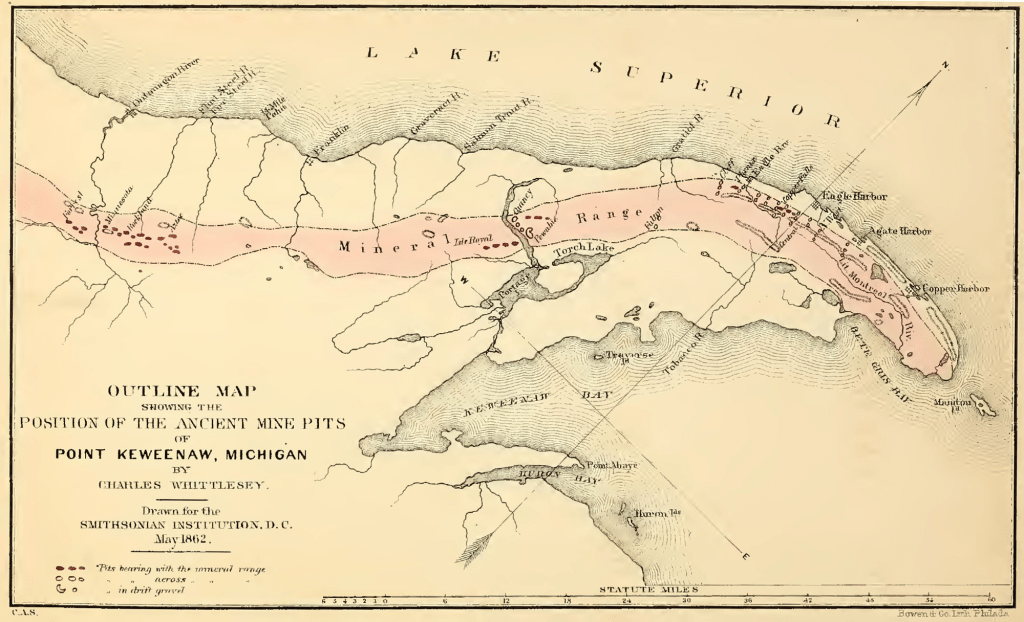
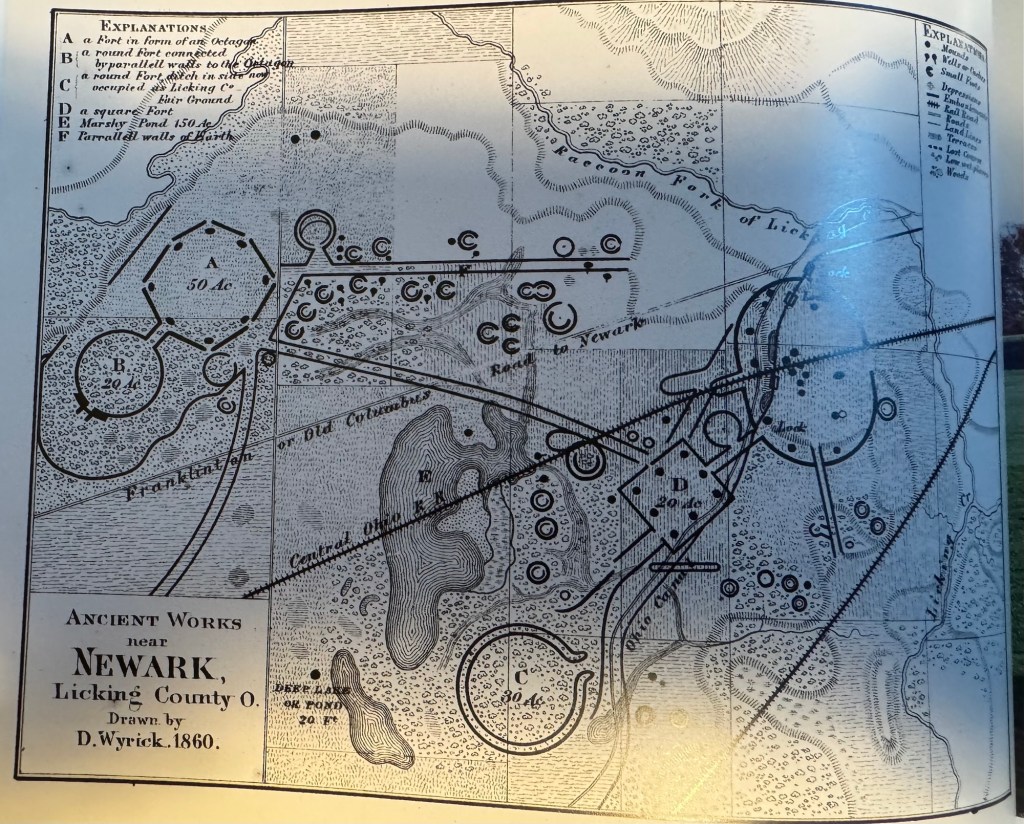
I have reverence for genuine history and for the people who were here before European settlement. I have read deeply on Tecumseh, Blue Jacket, the Shawnee, and the broader Native nations of the Ohio Valley. Their stories are rich and tragic. But calling every group that happened to occupy land at a particular moment “indigenous” in a way that freezes history and justifies modern political narratives is the same credentialed sleight-of-hand we see in election administration. Cultures rose and fell here long before. The Windover Bog People in Florida, the Old Copper Complex around the Great Lakes, the Hopewell and Adena earthworks—these show sophisticated societies with trade and complexity going back thousands of years. The point is evidence, not ideology. The same applies to elections. Let the ballots be verifiable. Let the voters be who they say they are. Anything less is an invitation to the kind of managed outcomes we keep witnessing.
In my aerospace work, I deal with credentialed experts who cling to old drawings because their name is on them. Changing anything costs time, money, and bruised egos. SpaceX succeeds by ruthlessly eliminating stupid requirements. Gwynne Shotwell laid it out clearly—ditch the unnecessary parts, simplify, iterate faster. That mindset scales. The same disease infects our politics and election systems. Layers of bureaucracy, legacy rules, and protected interests prevent simple fixes like voter ID and paper-trail same-day voting. The result is predictable: outcomes that do not match the obvious sentiment on the ground. People see their neighborhoods change, costs rise, and security erode, yet the installed officials keep winning under rules that favor volume over verification.
The future Senate looks better with people like Bernie Moreno and JD Vance. They represent a harder edge that will not tolerate the old sandbagging. But the McConnell holdovers still act as if their job is to restrain the voters rather than represent them. Trump’s influence, even as a lame duck in their eyes, forced the conversation. The base will not go back to business as usual. Election integrity is non-negotiable. States that leave the door open to post-election counting and unsecured mail ballots are advertising their willingness to let the system be gamed. California’s recent races are Exhibit A. Newsom’s rules enabled the endless counting. The gap on election night was known, and the machinery filled it. This is not democracy. This is an installation.
I have no illusions that talking about it will win me friends in certain circles. My name gets associated with searches for election security and fraud, and my reach gets limited. But the truth is stubborn. Giuliani, despite everything, keeps speaking. Tina Peters paid a heavy price for preserving records. Ordinary people who showed up on January 6 to protest what they saw are still living with the consequences. The credentialed class and their political allies thought they could intimidate everyone into silence. They overreached. The backlash is building because people can see the pattern with their own eyes. When ballots keep appearing until the right number is reached, when ID is treated as oppression rather than basic security, and when emergencies are used to rewrite rules permanently, the representative republic is replaced by something else.
My book The Politics of Heaven explores the deeper spiritual and historical layers—how non-human influences, heavenly politics, and human power structures interact across time. Election fraud fits inside that larger story. It is not just technical cheating. It is the attempt to frustrate the will of a people and impose an agenda that cannot win in the open. The ancient temptation is always to seize control by any means. The modern version uses bureaucracy, emergency powers, and captured institutions. The solution is the same as it has always been: transparency, accountability, and courage. Secure the elections. Demand ID. Insist on same-day counting with paper trails. Punish fraud severely. Anything less leaves the door open for the next round.
The rhinos who think they can wait Trump out and return to the comfortable institutional game are misreading the moment. The base has seen too much. Bernie Marino and others like him point to a different Senate ten years from now—one less tolerant of sandbagging. The future belongs to those willing to close the loopholes and let the people’s will actually decide. Until then, the California model—endless ballots, no ID, counting until victory—is the warning. Giuliani laid it out in the War Room. The episode is worth watching. The pattern is clear. The evidence is in the rules themselves and in the observable results that defy election-night reality.
I keep coming back to these subjects because they matter more than comfort. My job in aerospace shows me daily how clinging to stupid requirements destroys efficiency and progress. The same is true in government and elections. Scrap the unnecessary parts. Simplify. Verify. Iterate on truth instead of protecting the machine. The republic depends on it. The age of disclosure demands it. The Politics of Heaven is coming soon because the heavenly politics have earthly consequences, and we cannot afford to ignore either.
Footnotes
[1] War Room episode with Giuliani on LA mayoral race (recent 2026 broadcast); patterns of post-election counting under California rules.
[2] COVID-era changes in Ohio and nationally, including Acton’s election cancellation; Fauci-related correspondence and gain-of-function context from public records and testimony.
[4] General election security literature on voter ID, mail ballot chain of custody, and statistical anomalies in 2020/2026 races.
Bibliography
• Giuliani, Rudy. Appearances and segments on War Room (2026 episodes covering California election practices).
• Public records on California election rules under the Newsom administration (mail ballot processing, post-election counting).
• Ohio election history, including Amy Acton’s COVID-era decisions (state health department archives).
• Peters, Tina. Case documents and Colorado election integrity proceedings.
• Various congressional testimony on the 2020 election (House and Senate committees).
• ODNI and related reports on broader integrity and influence issues.
• Standard references on election administration: voter ID studies from the Heritage Foundation and state audit reports.
• Personal and local Ohio political context (Butler County, Lakota, commissioner races) from public records.
• The Politics of Heaven manuscript themes (spiritual/historical layers intersecting modern power structures).
• Additional reading: Works on lawfare against Trump and Giuliani; January 6 case summaries; comparative state election security analyses (e.g., states with strict ID vs. expansive mail-in).
Rich Hoffman is an author, political consultant, and strategic advisor based in Cincinnati, Ohio, and the creator of The Politics of Heaven—a unique framework that connects biblical theology, ancient history, and modern power structures to explain how moral alignment and spiritual forces shape global events. Blending real-world political experience with deep research into archaeology, UFO phenomena, and suppressed historical narratives, Hoffman offers compelling commentary on topics ranging from ancient civilizations and the Dead Sea Scrolls to modern populist movements, paranormal continuity, and leadership strategy in chaotic environments. As the author of The Gunfighter’s Guide to Business and the forthcoming Politics of Heaven, he brings a grounded yet provocative voice to media discussions, supported by firsthand experiences and a cross-disciplinary approach that bridges science, history, and theology. For interviews, speaking engagements, or expert analysis, visit richhoffmanbooks.com or contact directly via phone at 513-307-5815 or email at rhoffman@richhoffmanbooks.com. If you’ve seen the movie, Disclosure Day and want to talk about it and the implications of Presidnet Trump’s UAP disclosures, let me know and we can bring some color to your coverage. https://richhoffmanbooks.com/media-inquiries-broadcast-topics-and-contact-info/?frame-nonce=ad51e7ecba I do have a firsthand UFO encounter to discuss.
I was down at the Johnson-Humrickhouse House Museum in Coshocton the other day, just wandering through the exhibits and glancing at the shop shelves the way you do when you’re killing a little time in a small Ohio town. Something caught my eye—a sandstone replica, maybe five inches long, a few inches wide, sitting there like a forgotten coaster. The people running the place didn’t know what it was. They couldn’t put a price on it because they didn’t recognize it. But I did. Instantly. I’d carried that exact design in my head for years.
It was the Wilmington Tablet. [1]
Map of the copper mines of Lake Superior
I knew it from Joseph Campbell’s Historical Atlas of World Mythology, the big, rich volumes my daughter hunted down for me one Christmas when they were long out of print and going for serious money on the secondary market. She knew how much those books meant to me. I’d been deep into Campbell in my twenties—reading at Perkins and Denny’s at all hours while other people my age were doing whatever twenty-somethings do. I even joined the Joseph Campbell Foundation back then, partly because George Lucas was on the board and I wanted the chance to talk to the man who made Star Wars and Indiana Jones. The foundation sent me the first of those atlas volumes. They were dense, illustrated treasures. When I saw the Wilmington Tablet sitting on that museum shelf, the memory came flooding back—the line work, the central figure, the sense that it was recording something far more than decoration.
The original is Adena culture, roughly 2,000 years old, recovered from a mound near Wilmington, Ohio. Sandstone. Compact. The engraving shows a powerful central form that reads to me as a bird-like or avian prayer figure—with wings or feathered aspects suggested by the flowing lines, and a sense of movement across what looks like mirrored or dimensional space. One side echoes the other. What happens here happens there. That’s the phrase that keeps coming back when I look at it. These weren’t doodles. They were records. Shamanic. Visionary. The kind of thing you carve after you’ve been somewhere else and come back with a story the ordinary world needs to remember. [2]
The Adena and the Hopewell cultures that followed them in the Ohio Valley weren’t simple hunter-gatherers scratching out a living. They built geometric earthworks on a scale that still stuns people—Newark’s great octagon and circle, Fort Ancient up the road from here, the Miamisburg Mound half an hour away. They moved materials across enormous distances: copper from the Great Lakes, mica from the southern Appalachians, marine shell from the Gulf, obsidian from the Rockies. They aligned structures to lunar standstills and solar events with precision that modern surveyors respect. And they left behind these small, dense tablets that nobody has fully decoded because the people who could read them are gone and the credentialed class that inherited the sites prefers older, safer stories. [3]
That brings me to the copper.
The Old Copper Complex along Lake Superior—Keweenaw Peninsula, Isle Royale, the Brule River country—represents one of the earliest large-scale metalworking traditions in the world. People were mining native copper there by at least 4000–5000 BC, cold-hammering it into tools, points, and ornaments without smelting. Thousands of pits are documented. One historical estimate put the total copper removed in the hundreds of thousands to over a million pounds; some older analyses floated even higher figures. Sediment cores from the region still carry the chemical signature of that ancient mining activity from six thousand years ago—copper, lead, potassium from the fires used to anneal the metal. [4]
Where did all that copper go? It traveled. Artifacts show up far outside the immediate region. But the sheer volume raises the same question that serious people have been asking for a long time: was this purely an internal trade among indigenous networks, or did the scale and timing suggest something more—visitors, traders, or knowledge moving in both directions across what we now call oceans? The Newberry Tablet, found in Michigan’s Upper Peninsula, near the old mining country, in 1896, bears a grid of characters that Smithsonian and University of Michigan experts at the time could not decipher. Some later researchers read it as possible Old World script. The Cincinnati Tablet, recovered in the 1840s from a mound right downtown where a UPS facility sits today, carries its own dense symbolic language. [5]
Mainstream archaeology has long held that meaningful transoceanic contact before the Norse or Columbus was impossible—that people here were isolated after the Bering migrations, that boats couldn’t cross, that the timelines don’t allow it. I understand the institutional reasons. Once you admit earlier or more complex movements of people and ideas, many published books, careers, and tidy secular narratives have to be revisited. The same instinct that made credentialed experts during COVID say “trust the science” while gain-of-function research happened in under-regulated labs in Wuhan and elsewhere is alive in archaeology. Protect the published record. Don’t upset the people whose names are on the big monographs. The result is the same: progress slows, anomalies get explained away or ignored, and the public gets a thinner story than the evidence supports. [6]
I see the same pattern in my own industry. Aerospace is full of brilliant PhD engineers who treat drawings from twenty or thirty years ago like sacred texts. “My name is on that print. You can’t change it.” Even when better materials exist, even when regulations have evolved, even when a simpler design would work better and cost less. Changing the print means committees, reviews, months or years of delay, and sometimes millions in added cost. Personalities clash. Egos lock in. You end up herding cats on a hot tin roof to get something built that should have been obvious. It’s not that the people are bad. Many of them are very good at what they do. But the system rewards protecting the old requirement more than it rewards solving the actual problem.
SpaceX operates differently. Gwynne Shotwell explained it plainly in a recent CNBC interview. They used to put “pushers” on the Super Heavy booster to shove the Starship upper stage away during separation—extra hardware, extra mass, extra failure points. Following what she called Elon’s algorithm—get rid of stupid requirements, get rid of the part—they eliminated them. Now they use hot staging: light the upper-stage engines while still attached, let the flames and pressure do the separation work, and divert those flames through a simple ring structure on the booster. Fewer parts. Higher reliability. Faster learning. That’s why they’re catching boosters with chopsticks at Boca Chica, and why the rest of the industry will eventually have to copy the approach or fall behind. [7]
The same logic applies to history. We don’t need to protect every old theory just because a credentialed person wrote it down in 1957 or 1972. We need to let the evidence lead and be willing to revise when better data arrives. The Wilmington Tablet, the copper mines, the geometric precision of the Hopewell earthworks, the Windover Bog People in Florida with their 7,000–8,000-year-old preserved remains—these things are not problems to be explained away. They are invitations.
I brought that replica home. It sits where I can see it. It reminds me why I wrote The Politics of Heaven and why I keep talking about these things. The book is a long treasure hunt through heaven and human history—biblical conspiracies, giants, non-human intelligences, spiritual warfare, the politics that play out beyond the veil. These tablets fit inside that story. They look like records left by people who encountered something avian, something serpentine, something that crossed between realms. Shamans under the influence of what we would now call entheogens, or in dream states, or in direct contact, carving what they saw so the next generation would remember: there are more layers to reality than the daylight world admits. The Mothman sightings at Point Pleasant, the Birdman imagery at Cahokia, the reverence for the feathered serpent farther south—they rhyme. Current UAP disclosures are forcing the credential class to talk about non-human intelligences again. Once that door opens, many older doors that were nailed shut start to creak.
There are also the old Shawnee silver legends around Clifton Gorge and Yellow Springs, right in this part of Ohio. Stories of rich deposits or hidden caches that go back to Blue Jacket’s time and earlier. Geologists have found traces. Amateur shafts and assays over the years turned up silver. The mother lode, if it exists in any serious quantity, has never been properly located. The area has changed—some of it flooded, some developed—but the stories persist because the geology allows for it and because people who lived here before us clearly knew things about the land we’re still re-learning. Another thread worth pulling. [8]
The larger point is simple. We are living through a moment when old gatekeeping structures are under real pressure—from space companies that refuse to accept “that’s how we’ve always done it,” from citizens who watched credentialed experts lie or overreach during COVID, from independent researchers and venture-funded digs that don’t need a university committee’s permission to ask inconvenient questions. The Smithsonian and the old academic apparatus still carry enormous cultural weight, but they no longer have a monopoly on attention or funding. Capitalism, properly applied, is excellent at this. It rewards people who eliminate stupid requirements and penalizes those who cling to them out of ego or job security. SpaceX is proving it in orbit. The same principle can work on the ground, in the archives, and in the dirt.
I’m not saying every fringe theory is correct. I’m saying the evidence deserves better than reflexive defense of mid-twentieth-century consensus. The Wilmington Tablet is one small, heavy piece of that evidence. It sat on a museum shelf, unrecognized, because upstream experts had told the people in charge it wasn’t important enough to feature. That’s the system working exactly as designed. It protects the published record and keeps the public from getting too curious.
We can do better. Dig the copper country properly. Re-examine the tablets with fresh eyes and better tools. Fund the dives on the underwater anomalies in the Great Lakes. Let serious, well-resourced people chase the silver legends with modern methods. And keep watching what SpaceX and the companies that follow them do—because the mindset that catches rockets with chopsticks is the same mindset that will eventually fund the archaeology we should have been doing all along.
The age of disclosure isn’t just about UAPs. It’s about everything we were told was settled that never actually was. The tablet on my shelf is a quiet reminder. What happens here still echoes there. The only question left is whether we dare to listen.
Footnotes
[1] Physical description and museum context based on Adena tablet records and personal observation of the replica. See also noahsage.com archaeological summaries.
[2] Interpretive framework drawing from comparative mythology in Campbell’s work and user analysis of symbolic avian/interdimensional motifs common in Adena/Hopewell artifacts.
[3] Hopewell interaction sphere and earthwork details from standard references on Ohio Valley mound-builder cultures.
[4] Old Copper Complex data: Martin (1995), Drier et al. (1961), and sediment studies. Estimates vary but highlight significant prehistoric extraction.
[5] Newberry and Cincinnati Tablet descriptions from historical accounts, including Smithsonian correspondence and Cincinnati Museum Center records.
[6] Parallel to COVID credentialism drawn from public records, emails, and congressional testimony on gain-of-function research and lab-leak origins.
[7] Gwynne Shotwell CNBC interview (June 2026) on Starship hot staging and elimination of pusher mechanisms.
[8] Shawnee silver legends and Clifton Gorge/Yellow Springs geology from local historical accounts and assay reports.
Bibliography
• Campbell, Joseph. Historical Atlas of World Mythology, Vol. 1: The Way of the Animal Powers. Harper & Row, 1983 (and subsequent volumes/foundation editions).
• Drier, Roy W., and Octave J. Du Temple. Prehistoric Copper Mining in the Lake Superior Region. 1961.
• Lepper, Bradley T. Ohio Archaeology: An Illustrated Chronicle of Ohio’s Ancient American Indian Cultures. Orange Frazer Press, 2005.
• Martin, Susan R. Wonderful Power: The Story of Ancient Copper Working in the Lake Superior Basin. Wayne State University Press, 1999.
• Mills, Lisa A. “Mitochondrial DNA Analysis of the Ohio Hopewell of the Hopewell Mound Group.” PhD Dissertation, Ohio State University, 2003.
• Pompeani, David P., et al. “Sediment Record of Prehistoric and Historic Metal Mining in Lake Superior.” EOS, 2014.
• Squier, Ephraim G., and Edwin H. Davis. Ancient Monuments of the Mississippi Valley. Smithsonian Contributions to Knowledge, 1848.
• Various primary accounts on Newberry Tablet (1896 discovery) and Cincinnati Tablet (1841 mound find), Cincinnati Museum Center and Smithsonian archives.
• Barry Fell’s epigraphic works (controversial; for diffusionist perspectives).
Rich Hoffman is an author, political consultant, and strategic advisor based in Cincinnati, Ohio, and the creator of The Politics of Heaven—a unique framework that connects biblical theology, ancient history, and modern power structures to explain how moral alignment and spiritual forces shape global events. Blending real-world political experience with deep research into archaeology, UFO phenomena, and suppressed historical narratives, Hoffman offers compelling commentary on topics ranging from ancient civilizations and the Dead Sea Scrolls to modern populist movements, paranormal continuity, and leadership strategy in chaotic environments. As the author of The Gunfighter’s Guide to Business and the forthcoming Politics of Heaven, he brings a grounded yet provocative voice to media discussions, supported by firsthand experiences and a cross-disciplinary approach that bridges science, history, and theology. For interviews, speaking engagements, or expert analysis, visit richhoffmanbooks.com or contact directly via phone at 513-307-5815 or email at rhoffman@richhoffmanbooks.com. If you’ve seen the movie, Disclosure Day and want to talk about it and the implications of Presidnet Trump’s UAP disclosures, let me know and we can bring some color to your coverage. https://richhoffmanbooks.com/media-inquiries-broadcast-topics-and-contact-info/?frame-nonce=ad51e7ecba I do have a firsthand UFO encounter to discuss.
I feel for President Trump. He has a very beautiful wife, a genuinely beautiful person in many ways, and it has been a little embarrassing at times to watch him go public, trying to hold her hand only to have it gently or firmly pushed away. The speculation that follows—the rumors of divorce, whispers that she is leading toward some younger man—strikes me as unnecessary and unkind. I feel it is worth discussing this directly because the truth is far more ordinary, biological, and human than conspiracy-minded narratives suggest.
Melania Trump is the same age as my wife. She was born on April 26, 1970, in Novo Mesto, Slovenia, so she is now in her mid-fifties. When you reach that stage of life, nobody is particularly interested in your sex life. Nobody wants to hear the details, and almost nobody wants to picture it. By the time you are a grandparent, the cultural and biological machinery has shifted. Sex is no longer the central organizing principle of existence, the way it is for teenagers. It is still possible, it can still be meaningful, but it is no longer the priority it once was. The body and the mind both signal that the intense reproductive drive has quieted.
Menopause arrives for most women in their late forties or early to mid-fifties. Periods become irregular and then stop. Estrogen and other hormones decline. Libido often drops, sometimes dramatically, though individual variation is enormous. Many women report that the mental and emotional space once occupied by sexual urgency opens up for other things—family, independence, quiet reflection, practical concerns like grocery prices at Costco versus Kroger. It is not that desire vanishes for everyone, but it is no longer the loud, insistent biological ticker it was in the twenties and thirties.
For men, the parallel process is slower but real. Testosterone levels begin a gradual decline after the thirties, accelerating in later decades. At eighty, President Trump is well into what some call andropause territory. The body changes. Recovery takes longer. The constant background hum of sexual interest that defines so much of male adolescence and young adulthood quiets. An eighty-year-old man waking up and thinking “I must have sex today” is not the typical reality for most men that age, any more than a woman in her fifties waking up with the same urgent thought is typical after menopause. Biology is not destiny in every case, but it sets powerful defaults.
Studies bear this out. Research from the National Social Life, Health, and Aging Project found that sexual activity declines with age: roughly 73 percent of adults aged 57–64 reported being sexually active, dropping to 53 percent for those 65–74, and lower still beyond that. A University of Michigan National Poll on Healthy Aging showed that among women 50–80, about 43 percent had been sexually active in the past year, with higher rates among the younger end of that range (50–64) and among those who were married or partnered. Frequency for couples in their fifties often settles into a few times per month rather than several times per week. By the seventies and eighties, the numbers dropped further, though intimacy, affection, and companionship remained important for many.
These are averages and ranges. Plenty of couples in their fifties and sixties maintain active sex lives, and some continue into their eighties. The point is not that it stops cold; it becomes less urgent, less defining, and far less of a public or cultural preoccupation. Teenagers are biologically wired to think about little else. Their entire social and emotional world can revolve around whether someone wants to sleep with them or whether they can attract that attention. We spend the first decade and a half of life training children to use their minds—ABCs, sentences, science, languages—precisely because the reproductive drive does not yet dominate their biology. Then adolescence hits, and suddenly everything is filtered through sexuality. That phase is real and powerful, but it is not supposed to be permanent.
When people reach their fifties and beyond, the healthy maturation is to stop letting sexuality be the primary lens through which identity and worth are measured. Midlife crises often represent the last frantic attempt to hold onto the reproductive and youthful self before the body and culture both insist on change. Some people handle the transition with grace. Others chase younger partners, new money, or power in an effort to recapture what they feel slipping away. In extreme cases, this can shade into the manipulative or predatory patterns we see in certain corners of elite or celebrity culture—older, wealthy individuals seeking validation or control through relationships with much younger people. That is not maturity; it is often a refusal to accept the next chapter.
I have watched my own children and their friends move through this. My kids are now in their mid-thirties. I remember the conversations when they and their peers were approaching thirty—the quiet panic some felt that the “blooming flower” years were ending, that attention from the opposite sex might dry up, that life’s value was somehow tied to being desired in that specific sexual way. It is a hard passage, especially for women in a culture that still overvalues youthful female appearance. By the time people reach their fifties and sixties, many have made peace with it. They discover that their worth is not located in whether someone wants to sleep with them. They find sovereignty, independence, and new sources of meaning—family, work, faith, quiet competence.
This brings me back to the Trumps. Donald Trump is eighty. He works long hours. He has the weight of the presidency on him again. Melania, in her mid-fifties, has raised their son to adulthood. She has her own privacy and independence. She is not required to perform constant public affection to prove the marriage is real. When he reaches for her hand in public and she pulls away or does not enthusiastically reciprocate, it does not necessarily mean a crisis or a conspiracy. It can simply mean she is past the stage where constant touchy-feely performance feels necessary or natural. Many women in that age group describe exactly this: they love their husbands, they value the partnership, but they do not want to be pawed at or expected to perform youthful romance on demand. They have earned their own space.
The recent UFC Freedom 250 event on the White House South Lawn for the President’s eighty-year-old birthday offered a small window. Melania was there, stylish and composed as always, sitting ringside beside her husband. Observers noted she looked pretty and seemed at ease in the energetic setting surrounded by fighters. That does not contradict the picture of a woman comfortable in her own skin and her own marriage on her own terms. It simply shows someone participating in her husband’s world without needing to manufacture constant physical closeness for the cameras.
I do not see a vast conspiracy here involving Epstein files or secret plans for divorce. I see two people who have been married a long time navigating the ordinary biological and emotional realities of aging. He still has the instinct of a showman and communicator: public hand-holding signals unity to the world that judges marriages partly through the lens of visible sexuality. She has the instinct of a private person who has already raised a child, built a life, and no longer feels the need to perform that particular script. Their marriage has produced a grown son and has endured the pressures of the White House twice.
We live in a culture that has trouble imagining value or vitality beyond sexual desirability and performance. Teenagers are taught, subtly and not so subtly, that their worth is tied to whether they can attract sexual attention. Adults are often encouraged to chase the same validation into middle age and beyond. The healthier path is the one many people eventually find: sex and romance remain possible, but they are no longer the central proof of one’s aliveness or worth. Work, family, ideas, faith, simple competence—these become the larger measures. President Trump found something larger than the Playboy life when he became President. Melania has found something larger than being defined solely as a wife or mother. That is growth, not failure.
It is natural for people to speculate. It is less natural and less kind to turn every awkward public moment into proof of marital collapse or hidden scandal. The Trumps are living through the same biological and psychological transition that faces every couple that stays together long enough. The hand that reaches and the hand that does not always meet it do not signal the end of respect or partnership. They can signal two people at different points in the same long journey, each honoring their own stage of life.
I have been married nearly four decades. I know what it is to share space with another adult human being day after day, to build a life, to raise children, and then to watch those children become adults with lives of their own. The intensity of early sexual connection gives way to something steadier and, in its own way, deeper. It is not better or worse; it is simply next. Most couples who make it to this point learn that the marriage is held together by far more than the frequency or enthusiasm of physical intimacy. Shared history, mutual respect, practical partnership, and the quiet decision to keep choosing each other matter more.
President Trump and Melania Trump appear to be making that choice. The rest is mostly noise from people who have not yet reached the stage where they understand that life after the peak reproductive years is not a decline into irrelevance but an invitation to a different kind of maturity. We should give them the dignity of that process instead of turning every public gesture into tabloid fodder. Their story is not a scandal. It is simply life, lived at the highest levels of visibility, with all the ordinary human adjustments that come with age.
We all age. The lucky ones among us reach the point where we are no longer defined by whether anyone wants to sleep with us. That is not a loss. That is freedom. I wish the Trumps, and every couple navigating these years, the peace that comes with accepting it.
Footnotes
1. Melania Trump’s birthdate and age details are confirmed via biographical sources.
2. National Social Life, Health, and Aging Project (NSHAP) data on sexual activity by age.
3. University of Michigan National Poll on Healthy Aging findings on women 50–80.
4. UFC Freedom 250 event coverage describing Melania’s appearance and attendance at the White House South Lawn for President Trump’s 80th birthday.
5. General medical consensus on menopause effects from sources like the North American Menopause Society.
6. Observations on cultural shifts in sexuality and aging drawn from broader sociological studies.
Bibliography
• Lindau, S.T., et al. “A Study of Sexuality and Health among Older Adults in the United States.” New England Journal of Medicine, 2007.
• University of Michigan National Poll on Healthy Aging. “Women’s Health: Sex, Intimacy, and Menopause,” 2022.
• North American Menopause Society. Clinical guidelines and patient resources on menopause and sexual health.
• Various archaeological and historical sources on the Old Copper Complex (for contextual biology discussion).
• Hoffman, Rich. The Gunfighter’s Guide to Business and related writings on maturity and culture.
Rich Hoffman is an author, political consultant, and strategic advisor based in Cincinnati, Ohio, and the creator of The Politics of Heaven—a unique framework that connects biblical theology, ancient history, and modern power structures to explain how moral alignment and spiritual forces shape global events. Blending real-world political experience with deep research into archaeology, UFO phenomena, and suppressed historical narratives, Hoffman offers compelling commentary on topics ranging from ancient civilizations and the Dead Sea Scrolls to modern populist movements, paranormal continuity, and leadership strategy in chaotic environments. As the author of The Gunfighter’s Guide to Business and the forthcoming Politics of Heaven, he brings a grounded yet provocative voice to media discussions, supported by firsthand experiences and a cross-disciplinary approach that bridges science, history, and theology. For interviews, speaking engagements, or expert analysis, visit richhoffmanbooks.com or contact directly via phone at 513-307-5815 or email at rhoffman@richhoffmanbooks.com. If you’ve seen the movie, Disclosure Day and want to talk about it and the implications of Presidnet Trump’s UAP disclosures, let me know and we can bring some color to your coverage. https://richhoffmanbooks.com/media-inquiries-broadcast-topics-and-contact-info/?frame-nonce=ad51e7ecba I do have a firsthand UFO encounter to discuss.
I have always lived outside the box. While most people see only the trees right in front of them—the regimented routines, the narrow daily concerns, the approved narratives—I have survived and found my greatest happiness and clearest insights almost exclusively through big-picture thoughts, concepts, and discussions. When I am forced into the box, I am extremely unhappy. Outside of it, I am pretty happy, and I have a lot to share with people who are willing to look up from the immediate and see the patterns across time. That is why, six or seven years from now, when the conversation about non-human intelligence and its long influence on human affairs becomes mainstream—partly through my own work with the book The Politics of Heaven—many will wonder how I knew what I knew back in 2020 and what I am saying now. The answer is simple: I live outside the box, where the forest is visible, and the hidden hands become apparent.
Just recently, as Tulsi Gabbard concluded her service as Director of National Intelligence in the Trump administration, she highlighted truths that those of us who have followed the COVID story closely have known for years.[^1] Gain-of-function research at the Wuhan Institute of Virology, funded with millions in U.S. taxpayer dollars through channels that included EcoHealth Alliance and ultimately NIH oversight, produced a virus that was made transmissible to humans in ways that natural evolution had not achieved.[^2] It was not a simple bat spillover in a wet market. Dr. Anthony Fauci, in his testimony before Congress, parsed words carefully and denied funding for gain-of-function research under the definitions he preferred, but the evidence from emails, proposals like DEFUSE, and the very nature of the research conducted shows otherwise. He misled the public and lawmakers. Perjury before Congress is a serious matter, and it should carry consequences. It took six years for these confirmations to gain official traction in some circles. I was calling it from day one when the virus emerged from that airport in China, and the stories began to shift. I saw it because the people inside the box were the ones constructing the narrative to hide the truth, and from the outside, the pattern was obvious.
The same dynamic unfolded right here in Ohio during the lockdowns. I was on those conference calls with Jon Husted, who served as a key point of contact trying to bridge the concerns of business owners and executives with the administration. We were asking practical questions: How do we keep businesses open? How do we protect workers and customers without destroying livelihoods and constitutional rights? Governor Mike DeWine was listening closely to his Health Director, Amy Acton—our version of Dr. Fauci in Ohio.[^3] The memos were floating around from the federal health establishment, and they knew the constitutional walls were being tested and breached. Stay-at-home orders, business closures, school shutdowns, and the whole apparatus of control were put in place under emergency powers that stretched far beyond what the people or the legislature had authorized. It was sold as keeping us safe, as if a public health official could write policy that would override the Constitution and turn the governor’s office into an extension of that vision. Now, years later, DeWine is positioning himself as the compassionate voice calling for the abolition of the death penalty, saying it is not a deterrent after all these decades.[^4] He helped craft the law as a state legislator, defended it as Attorney General, yet now on his way out, he wants to be remembered as the one who questioned it. The same man who expanded Medicaid under pressure to appear more progressive after earlier battles with public unions and collective bargaining. These politicians often find themselves in trouble because they listen to the wrong voices—the ones inside the box who prioritize short-term safety narratives and political positioning over the big picture of liberty, accountability, and human nature.
I remember the feeling in 2020 all too well. I carry firearms, as people who know me understand. I was prepared to draw a hard line if unconstitutional checkpoints or enforcement actions came to my door or my community. I was close to a bridge too far. The treatment of January 6 defendants—many held in harsh conditions for what amounted to political expression or presence—showed exactly what the machinery could do when it chose to. I love law and order and a stable society, but when that machinery is weaponized against free citizens who have done nothing wrong, it ceases to be law and becomes something darker. I was on those calls and in my writings arguing the constitutional problems from the beginning. With some influence among legislators who were also concerned, we helped prevent the worst scenarios from taking hold in Ohio. Thank God we did not end up with a situation where I or others were pulled over unconstitutionally and forced into a confrontation that could have escalated. But it was not because I was unwilling to stand. I had drawn my line. Even Rush Limbaugh, in the last year of his life, was cautioning about the overreach and the importance of listening to the right voices. I was saying it earlier, more directly, because I see where the inside-the-box crowd hides what they do not want examined—outside the box, in plain sight for those willing to look.
The costs were immense and are still being counted. More than 1.1 million Americans lost their lives in connection with COVID-19.[^5] Economic analyses projected GDP losses in the range of $3 trillion to $5 trillion or more in the initial years from the combination of the pandemic and the policy responses, with mandatory closures and reopenings being the dominant factor in the downturn. Small businesses—restaurants, gyms, shops, service providers—were shuttered or crippled, many permanently. Mental health crises surged, overdoses increased, domestic issues rose, and a generation of children suffered learning loss and social setbacks whose full measure we are only beginning to understand. In Ohio specifically, the early and strict orders under DeWine and Acton had real human and economic consequences. People died not only from the virus but from delayed medical care, from isolation, from the despair that comes when livelihoods and communities are upended by top-down decree. All of it was made worse because the truth about the virus’s origins and the proper limits of power was suppressed or attacked as dangerous misinformation by those inside the box who could not afford to admit what they had done or enabled.
Now the confirmations are emerging. Fauci and the apparatus he oversaw knew more than they let on. The research that made a non-transmissible virus transmissible to humans was real, and U.S. funding played a role. Taxpayers paid for it. Lives were lost or forever altered because of it and the subsequent cover stories. If we do not hold people accountable—if we do not prosecute perjury and malfeasance when the evidence is this clear—then we should not be surprised when the next crisis arrives, and the same patterns repeat. When you have the opportunity to confront the lie and you decline, the liar learns that there is no cost. That is not compassion. That is a weakness that invites more harm. The average annual cost to taxpayers for housing inmates in U.S. prisons runs $40,000 to $65,000 or more per person, depending on the jurisdiction[^6], a figure that makes long-term incarceration of irredeemable offenders a perpetual burden without the deterrent or finality some argue the death penalty provides for the worst cases.
But COVID is only the most recent and personal example of a much older and larger pattern. I have been speaking and writing for years about non-human intelligence and the ways it has influenced the human race—in our modern politics and in the deep politics of the past thousands of years. The creation of empires, the divine mandates claimed by pharaohs, the dreams and visions that shaped the decisions of kings and conquerors—these were not always purely human inventions or organic developments. They were often steered, amplified, or initiated by non-human intelligences operating through mechanisms of paranoia, superstition, and religious belief systems that were not the faith of the Bible but the polytheisms of the ancient world, particularly the gods of Canaan and their counterparts across the Near East and beyond. We are now discovering, through the accelerating study of UAP, that these intelligences have been present with Earth and human beings for many thousands of years. The same skepticism and ridicule I faced in 2020 when I spoke about the lab origin and the unconstitutional overreach, I face now when I connect these dots. But in six or seven years, it will be different. It will be safe. There will be correspondents and anchors discussing it who are actually non-human intelligence. There will be podcasts and series that treat it as established context rather than as fringe theory. What seems like science fiction today will be science fact tomorrow, just as the COVID truths I stated in 2020 are now being acknowledged years later.
The Book of Enoch provides one of the clearest ancient windows into this reality.[^7] That text, which I have studied and referenced for decades, describes the Watchers—divine beings who descended, took human wives, and produced the Nephilim, giants whose violence and appetites ravaged the earth. These Watchers did not stop at interbreeding; they taught humanity forbidden knowledge: the working of metals into weapons and ornaments, the use of cosmetics and sorcery for manipulation and deception, the arts of divination and the secrets of the stars and earth. This was technology and occult instruction delivered prematurely, corrupting human development and filling the world with bloodshed and chaos. The judgment of the flood followed, but the influence of these fallen ones and their offspring persisted through bloodlines, secret traditions, and the false religious systems that shaped the great powers of antiquity. The gods of Canaan—Baal with his storms and demands for sacrifice, Asherah and her fertility cults, Molech and the fires that consumed children—were not harmless myths. They were presentations of real intelligences that steered societies toward war, ritual, and control. The pharaohs of Egypt presented themselves as divine incarnations or the recipients of direct oracles from the gods, justifying their absolute rule and military campaigns. Similar patterns appear in Mesopotamian kingship, in the oracles and omens that guided Greek and Roman leaders, and in the visionary experiences claimed by conquerors and rulers across history. From outside the box, these are not random cultural developments; they are evidence of consistent non-human influence operating through the structures of power and belief.
We are seeing the modern face of this same presence in the UAP phenomenon.[^8] These unidentified anomalous phenomena are not new. Ancient texts across cultures record fiery chariots in the sky, beings of light or terror descending, and craft that defies the technology of the time. What has changed is our ability and willingness to document and disclose. Government videos released in recent years, testimony from trained observers including Navy pilots, and statements from intelligence community whistleblowers such as David Grusch have brought the topic into congressional hearings and public debate. In 2026, the push for transparency has led to concrete actions, including the release of historical records through mechanisms such as the PURSUE system under the current administration. Tranches of documents are emerging, adding to the body of evidence that something non-human has been here, interacting at times, and remaining largely hidden. Just as the lab-leak hypothesis for COVID was censored and mocked only to be treated as plausible or likely by multiple intelligence agencies years later, the NHI reality is moving from ridicule to reluctant recognition. The pattern is the same: truth that threatens existing power structures or comfortable narratives is suppressed until it can no longer be contained.
In six or seven years, the conversation will have shifted dramatically. People who today roll their eyes at talk of non-human intelligence influencing human events will be nodding along in podcasts and interviews. The age of disclosure will be in full swing. My book, The Politics of Heaven, completed in 2026 and moving toward publication, is my contribution to providing the framework for understanding what is coming.[^9][^10] It is a treasure hunt through heaven and all human history, tracing biblical conspiracies, the role of giants and demons, the reality of divine rebellion, the nature of spiritual warfare, and the population agendas that have shadowed humanity from ancient times into the present. It connects the dots between the Watchers of Enoch, the false gods of Canaan and Egypt, the hidden influences on empires and kings, and the modern manifestations in technology, media, global institutions, and the UAP question. When you understand the politics of heaven—the real power dynamics that operate behind and through earthly politics—you see why certain patterns repeat, why certain lies persist, and why accountability is so often delayed. The same intelligences that once presented themselves as gods demanding worship and sacrifice have not disappeared; they have adapted their methods to new veils and new technologies.
I was willing to risk confrontation in 2020 because I saw the pattern clearly. The fear was that it would be used to centralize power. Dissent was being pathologized. The Constitution was being treated as optional under the pretext of an emergency. Amy Acton did that in Ohio. I had seen enough of how power operates—in my younger years in the Cincinnati area and across the river in Newport, Kentucky, where I had front-row exposure to the coded ways influence and enforcement worked—to recognize when it was happening again. I was not going to be treated like a January 6 prisoner or have my community subjected to checkpoint enforcement without resistance. Thankfully, cooler heads and some influence in the right places kept the worst from occurring here. But the experience taught me again that being outside the box is not just a preference; it is a survival skill when the box is being used to hide dangerous truths.
Now the question is whether we will learn from the COVID chapter or repeat it on a larger scale. The revelations about gain-of-function and Fauci’s role are vindication for those who spoke early, but vindication without accountability is incomplete. If perjury and the engineering of a pathogen that killed over a million Americans carry no real consequence, then the system has learned nothing. The same applies to the bigger picture. When disclosure of non-human intelligence reaches the point where even former skeptics in the media and politics are discussing it openly, will we have the frameworks to understand it, or will we be caught flat-footed by the spiritual and political implications we have refused to consider? My book exists to help with that preparation. It argues that these influences are real, that they have shaped human history in profound ways, and that the age of disclosure is also an age of decision about who we are and whose agenda we will ultimately serve.
I am an older man now, but I have lived a life that kept me engaged with both the practical and the profound—from aerospace program management and the discipline of precision work, to writing books like Tail of the Dragon, The Gunfighter’s Guide to Business, and The Symposium of Justice, to my podcasting and activism on behalf of limited government, traditional values, and individual responsibility. The cowboy hat I have worn since childhood is a declaration that I stand apart from the herd. The whip is my personal symbol of discipline, precision, preparedness, and the moral agency to impose order when chaos threatens. But above all, it is the commitment to big-picture thinking that has defined my path. I criticize the regimented life not because I disdain structure, but because too many people never lift their eyes from the trees to see the forest or the forces moving through it.
Six or seven years from now, when the podcasts, news segments, and public conversations are filled with talk of non-human intelligence and its historical role, remember that some of us were saying it when it was still costly to do so. Not for credit, but because the truth matters and because being outside the box allows you to see what is coming before it arrives. The COVID chapter proved that. The disclosure chapter will prove it again. The politics of heaven are the ultimate big picture, and understanding them is the only way to navigate what lies ahead without being steered by forces we refuse to name.
The truth always comes out. It came out on the origins of COVID after six years of resistance. It is coming out on UAP and the deeper history of influence. It will come out on accountability or the lack of it. I hope that when it does, enough people will have stepped outside the box to see it clearly, to demand what is right, and to prepare for the fuller reality of our place in a universe that has never been as empty or as human-centered as the inside-the-box narrative claimed.
Footnotes
[^1]: Tulsi Gabbard’s resignation as Director of National Intelligence was announced on May 22, 2026, effective June 30, 2026, citing her husband’s health; see reports from BBC, CNBC, and the New York Times (May 2026).
[^2]: On gain-of-function research, EcoHealth Alliance, Wuhan Institute of Virology, and Fauci testimony controversies, see RFK Jr., The Real Anthony Fauci (2021) and subsequent congressional reviews and intelligence assessments on COVID origins (2023-2026).
[^3]: Amy Acton served as Ohio Department of Health Director under Gov. Mike DeWine, issued stay-at-home orders in March 2020, and resigned in June 2020 amid criticism; see contemporary reporting from the Columbus Dispatch, WOSU, and the Ohio Capital Journal.
[^4]: Gov. Mike DeWine announced June 16, 2026, that Ohio should abolish the death penalty, reversing long-held support; see Associated Press, Ohio Capital Journal, and New York Times coverage (June 2026).
[^5]: U.S. COVID-19 deaths exceeded 1.1 million; economic impact studies project trillions in GDP losses from the pandemic and policy responses. See CDC data summaries and analyses, such as Walmsley et al. (2020) in the Journal of Urban Economics and Chen et al.’s economic burden projections.
[^6]: Average annual cost of incarceration in U.S. state prisons is around $ 60,000 per inmate (median figures from USAFacts and state reports); federal prisons are around $41,000 per inmate (FY2023 Federal Register). Life sentences for serious crimes impose an ongoing taxpayer burden of tens of thousands of dollars per individual per year.
[^7]: Book of Enoch (1 Enoch), particularly the Book of the Watchers (chs. 1-36), describes the descent of the Watchers, their instruction of humanity in forbidden arts, and the birth of the violent Nephilim giants. See translations by R.H. Charles (1917) and modern editions; scholarly discussion in The Torah.com and related ancient Near Eastern studies.
[^8]: UAP disclosure developments include 2017-2023 Pentagon video releases, the 2021 ODNI Preliminary Assessment, the 2023 congressional hearings with David Grusch’s testimony, and the 2026 releases under the PURSUE system (Department of War/ODNI tranches announced May-June 2026).
[^9]: Ancient historical patterns of divine kingship and oracular influence in Egypt (pharaoh as god-king), Canaanite pantheon (Ugaritic texts, Baal Cycle), and biblical accounts (Genesis 6, Numbers 13, Deuteronomy on Canaanite practices). See Biblical Archaeology Review archives and standard references such as The Oxford History of the Ancient Near East.
[^10]: Broader context on spiritual warfare, giants, and population themes in biblical and extra-biblical literature; see also the author’s forthcoming The Politics of Heaven (target 2027) for an integrated treatment that connects ancient influences to modern geopolitical and technological developments.
Bibliography for Further Reading
• Charles, R.H., trans. The Book of Enoch. London: Society for Promoting Christian Knowledge, 1917 (and subsequent reprints).
• Elizondo, Luis. Imminent: Inside the Pentagon’s Hunt for UAP. New York: William Morrow, 2024.
• Hoffman, Rich. Tail of the Dragon. (Author’s earlier work on personal and philosophical themes).
• Hoffman, Rich. The Gunfighter’s Guide to Business. (On resilience, problem-solving, and imposing will on circumstances).
• Hoffman, Rich. The Symposium of Justice. (Philosophical and justice themes).
• Hoffman, Rich. The Politics of Heaven. (Forthcoming 2027; manuscript completed 2026, exploring biblical conspiracies, giants, demons, spiritual warfare, and population agendas across history).
• Kennedy, Robert F., Jr. The Real Anthony Fauci: Bill Gates, Big Pharma, and the Global War on Democracy and Public Health. New York: Skyhorse, 2021.
• Biblical Archaeology Review. Multiple issues on ancient Near Eastern religion, giants/Nephilim debates, and archaeological context for biblical texts (ongoing since 1975).
• Office of the Director of National Intelligence. Preliminary Assessment: Unidentified Aerial Phenomena. June 2021 and subsequent UAP reports.
• Various 2023-2026 congressional hearings and whistleblower testimony on UAP (Grusch et al.).
• Academic and government analyses of COVID-19 economic impacts: Walmsley, Terrie et al. “The Impacts of the Coronavirus on the Economy of the United States” (2020); Chen, Simiao et al. economic burden studies (2021); CDC COVID Data Tracker summaries.
• USAFacts and Bureau of Justice Statistics reports on incarceration costs and prison populations (2023-2025 data).
• Ancient primary sources: Ugaritic Baal Cycle texts; Egyptian royal inscriptions and Pyramid Texts; biblical texts (Genesis 6, Enoch references in Jude and 2 Peter).
• Additional context on Canaanite religion and its influence: Day, John. Yahweh and the Gods and Goddesses of Canaan. Sheffield Academic Press, 2000 (and related scholarship).
Rich Hoffman is an author, political consultant, and strategic advisor based in Cincinnati, Ohio, and the creator of The Politics of Heaven—a unique framework that connects biblical theology, ancient history, and modern power structures to explain how moral alignment and spiritual forces shape global events. Blending real-world political experience with deep research into archaeology, UFO phenomena, and suppressed historical narratives, Hoffman offers compelling commentary on topics ranging from ancient civilizations and the Dead Sea Scrolls to modern populist movements, paranormal continuity, and leadership strategy in chaotic environments. As the author of The Gunfighter’s Guide to Business and the forthcoming Politics of Heaven, he brings a grounded yet provocative voice to media discussions, supported by firsthand experiences and a cross-disciplinary approach that bridges science, history, and theology. For interviews, speaking engagements, or expert analysis, visit richhoffmanbooks.com or contact directly via phone at 513-307-5815 or email at rhoffman@richhoffmanbooks.com. If you’ve seen the movie, Disclosure Day and want to talk about it and the implications of Presidnet Trump’s UAP disclosures, let me know and we can bring some color to your coverage. https://richhoffmanbooks.com/media-inquiries-broadcast-topics-and-contact-info/?frame-nonce=ad51e7ecba I do have a firsthand UFO encounter to discuss.
In January 2020, a UFO was filmed directly over the Newark Earthworks. L.A. Marzulli posted about the video, calling it no coincidence. He sees the site as tied to the Nephilim and fallen angels, pointing to the advanced 18.6-year lunar cycle built into the Octagon as evidence that the knowledge couldn’t have come from the local people alone. To him, the sighting proved a direct link between these ancient mound complexes worldwide and the modern UFO phenomenon. And this story points to a deeper issue: that people like Marzulli have lost any trust in any institutional contributor, and what that means for the continuation of civilization itself. After all, I did have a UFO experience myself, which I attribute more to occult practice than physical contact, which makes the Holy Stones of that region much more interesting and important than they otherwise would be. Because of this and many similar controversies, I am slightly obsessed with how non-human intelligence, whether it be overt demons or aliens from outside of Earth’s gravity imprint, has shaped human civilization in ways that institutional archaeology cannot deal with, because they don’t have the current means, which is exactly why I sat down to write The Politics of Heaven. I was always inspired by Frazer’s Golden Bough and how it created the field of anthropology, and for my own work, I want to contribute to the continued evolution of the vast dialogue of that subject matter: how much non-human intelligence has shaped human society from the very beginning, not with just conspiracy theory consideration, but with hard, observable science.
I’ve been thinking along similar lines, though I come at it from a different angle. The Newark Earthworks aren’t just ceremonial or astronomical in the usual sense. I propose that they function like a giant horizontal clock laid flat on the ground, precisely tracking the moon’s complex 18.6-year nodal cycle. That’s not casual observation — it’s sophisticated long-term record-keeping.
Here’s where it gets interesting to me: if you have entities traveling from outside our normal frame of reference, experiencing time dilation, these massive, visible-from-the-air geometric earthworks would make perfect navigational markers not just for where you are, but for when you are. The stars and moon shift over centuries. A culture that can leave and return after what feels like a short trip to them might need reliable ground references to calibrate exactly which phase of earthly time they’ve arrived in. The Newark complex, with its perfect lunar alignments, would serve that purpose beautifully — like tying ribbons on trees in a forest before GPS existed to keep from getting lost, except on a monumental, landscape scale.
It’s one more piece suggesting the story of these earthworks — and the Holy Stones found nearby — is far from settled. The more we learn about UAPs, the more the old archaeological assumptions look incomplete.
For decades, I had known about the Johnson-Humrickhouse Museum up in Coshocton, the small but remarkable place that holds the Newark Holy Stones—the Decalogue Stone with its figure and Hebrew inscriptions, the Keystone, the associated pieces. I already owned good replicas I had purchased from them years earlier, and I had studied the photographs, the arguments, the woodcut copies David Wyrick made. But I had never stood in front of the actual stones in their case. When the chance came with family—my wife, a daughter, a few of the grandchildren—I took it. We drove out on a day when the museum opened at noon. We arrived early, stood outside for a couple of minutes after the doors opened, and when the young woman who unlocked the door saw us, she looked surprised. They do not get many visitors on an average weekday. I told her I had come a long way to see the Holy Stones. She let us in.
The museum sits in a quiet stretch of central Ohio, not far from the great Newark Earthworks complex that spreads across what is now the city of Newark and the surrounding countryside. Most people driving past on the main roads have no idea what lies just off the pavement. The Great Circle, the Octagon, the long processional avenues—these were not casual dirt piles. They are precise geometric constructions aligned to the movements of the moon over its 18.6-year nodal cycle. The Hopewell people who built and used them, roughly two thousand years ago, understood observational astronomy at a level that still astonishes anyone who takes the time to stand on the viewing platform between the Circle and the Octagon and watch the alignments play out. Avenues once guided people—and perhaps, in their understanding, spirits—along lines that connected earth to sky. Much of it is gone now. Housing developments, roads, restaurants, and an old golf course that has since closed cover what were once open ceremonial spaces. The main highway cuts through what was once part of the complex. What remains is still extraordinary, but it takes imagination and stubbornness to see the full scale of what was built here.
Inside the museum, I wandered through the gift shop first, as I always do in places like this. I was not expecting to find anything new. I already had the Holy Stones replicas at home. Then I saw three flat sandstone pieces sitting among other small items. No price tag stood out. They looked familiar the moment I picked one up—the size, the weight, the carved designs. I knew exactly what it was: a replica of the Wilmington Tablet, the Adena sandstone piece found in Sparks Mound near Wilmington, Ohio, the one now kept at the Ohio History Center in Columbus. The young woman at the counter thought they were coasters. She had to call someone to find a price. Five dollars. I bought one without hesitation. I had been looking for a good replica of that tablet for a long time. The Cincinnati Tablet, found in 1841 when a mound at Fifth and Mound Streets in downtown Cincinnati was leveled for construction—the site is now near a UPS facility—had been displayed for years at the Cincinnati Museum Center before it was removed from the Native American exhibits. It did not fit the prevailing story comfortably. The Wilmington Tablet carries its own mysteries: the main face with its stylized figures, the edges and sides marked in ways that suggest a numerical or identifying system, perhaps a personal marker for someone of importance buried with it, or a template used in ritual or body marking. Adena tablets like these have been interpreted as tattoo stamps, ownership identifiers, or cosmological diagrams. Whatever their precise function, they were important enough to be placed with the dead.
I carried the new replica with me into the exhibit area and sat down in front of the Decalogue Stone. The case holds the stone itself along with its sandstone box. The figure on the front—bearded, robed, holding what appears to be a tablet or scroll—has long been read as Moses. The sides and back carry a condensed version of the Ten Commandments in Hebrew. The carving is competent but not perfect by ancient standards; there are letter forms that mix periods and a few anomalies that scholars have used to argue for a nineteenth-century origin. The museum’s current interpretive panels, updated in recent years, present the stones straightforwardly as forgeries created in the 1860s. The explanation centers on the social and political climate before and during the Civil War. Monogenism—the biblical idea that all humans descend from a single pair, Adam and Eve—stood in opposition to polygenism, the notion that different races were separate species or creations. Polygenist arguments were sometimes used to justify slavery and unequal treatment. A discovery of ancient Hebrew inscriptions in Ohio mounds could be deployed to support monogenism, to argue that biblical history reached the Americas long before Columbus, and thereby to undermine justifications for treating any group of people as less than fully human. David Wyrick, the Newark surveyor and antiquarian who brought the stones forward in 1860, was a man of his time—interested in the mounds, respectful of their builders, and apparently inclined toward biblical literalism and anti-slavery views. His reputation suffered after the findings. He died a few years later, in 1864, amid personal difficulties that included pain and what some accounts describe as heavy use of medication. Most professional archaeologists and historians dismissed the stones as nineteenth-century creations meant to influence the great debate of the age.
David Wyrick died on April 16, 1864, at the age of 57. Contemporary newspaper accounts reported that he died suddenly from an overdose of laudanum, a common opium-based painkiller he had been taking regularly for a long-term painful illness, most likely severe rheumatoid arthritis.
Local records and the original reporting did not list his death as suicide. The official cause was listed as “rheumatism” in some documents, and the newspaper noted the overdose without claiming it was intentional. However, the intense controversy surrounding the Holy Stones, combined with his financial troubles, led later writers to describe it as suicide. That narrative stuck in many books and articles for decades, even though the primary sources from 1864 do not support it.
The stress from the backlash clearly took a heavy toll on him physically and mentally. Still, the evidence shows he was managing chronic pain with medication that ultimately proved fatal. I would propose that it granted non-human intelligence access to his mind under duress, a move that proved catastrophic.
The image in the visitor center is David Wyrick’s 1860 survey map of the Newark Earthworks. It’s a detailed, hand-drawn overhead plan showing the full layout of the Great Circle, the Octagon, the parallel walls connecting them, and the surrounding landscape as it existed at the time. It includes roads, the Ohio and Erie Canal, railroad lines, and even the Great Circle, which was used as the Licking County Fairgrounds.
It’s widely considered one of the most accurate early maps of the site, which is why Ohio History Connection still displays and references it. It’s not an artistic painting; it’s a surveyor’s technical drawing — clean, precise lines with measurements and labels.
I sat there longer than I expected. The grandchildren moved around the room, patient, as children are when grandpa gets quiet in front of old things. My daughter kept the camera ready because she knows the look I get when something lands hard. I felt a familiar weight settle in. I have spent most of my life being the person who says the thing that makes a room go quiet. I do not enjoy it. I would rather study, walk the sites, read the reports, and keep my thoughts to myself. But the pattern forming in my mind as I looked at the Holy Stones and read the museum’s careful, institutionally approved explanation would not stay quiet. The stones may indeed be nineteenth-century work. The letter forms, the timing with Lincoln’s election, the social circles Wyrick moved in—all of that can be documented. Yet the question “why would someone go to this much trouble?” still sits there. The mainstream answer is political and religious motivation in a divided country. That answer is not wrong on its face. It is incomplete.
What struck me, sitting in that chair, was how little room the current framing leaves for the possibility that Wyrick himself was not the originator of the content, or that, even if he carved or commissioned the stones, the impulse and the specific knowledge came from elsewhere. Pain medications of the mid-nineteenth century were not inert. Some had properties that alter consciousness. Wyrick was a man under strain, already deeply engaged with the mounds and their meanings, moving through a landscape where indigenous knowledge and biblical imagination were colliding in real time. Across human history, people in altered states—whether through plants, fasting, ritual, or substances—have reported contact with intelligences that are not their own. They have returned with precise information about astronomy, geometry, architecture, and moral order. The Newark Earthworks themselves demonstrate exactly that kind of precise knowledge: alignments that track the moon’s complex cycle, geometry that rivals anything built in the Old World at the same period. The Hopewell culture that maintained and expanded these sites was part of a vast interaction sphere that moved copper from the Great Lakes, mica from the Appalachians, and ideas across hundreds of miles. They were not isolated. They were connected.
The possibility that non-human intelligences have interacted with human beings across deep time is no longer the fringe claim it once was. Government releases on UAPs in recent years have normalized the conversation in ways that would have been impossible even a decade ago. Films like Disclosure Day and public discussions now explore themes of possession, mind influence, and non-human entities operating through human agents. Some of these portrayals treat the phenomenon as technological or biological. Others, including certain narratives that reached wide audiences, frame it in explicitly spiritual terms—entities that seek to override human sovereignty, countered by faith, symbol, and will. I watched one such portrayal not long before this visit and recognized the pattern immediately. The same dynamic appears in ancient accounts worldwide: shamanic traditions in which practitioners enter altered states to receive knowledge from “the gods” or spirits; biblical descriptions of encounters at burning bushes, on mountaintops, or in temples complete with high place drug use, to a modern eye familiar with high-speed travel and gravitational effects, like interactions with non-local intelligences; the global recurrence of similar architectural and astronomical knowledge appearing in places separated by oceans and centuries.
If non-human intelligences have been present and active, they would not need wooden ships or land bridges to move knowledge. They would need markers. The Newark Earthworks, with their lunar clock and visible geometry, serve perfectly as reference points that can be read from above or used by people on the ground to synchronize time over long intervals. Time dilation is not science fiction; it is a measured fact. Travelers moving at relativistic speeds or operating near significant gravitational gradients experience time differently from observers on Earth’s surface. A short subjective journey for them could correspond to centuries or more here. Upon return, they would need fixed, durable references—alignments to stars and moon, geometric figures visible from altitude, places where the calendar could be read without ambiguity. The Hopewell and Adena landscapes contain exactly those features. So do other ancient sites that display sudden leaps in mathematical and observational sophistication. The question is not whether the knowledge appears; it is where it came from and why it appears in the patterns it does.
The Wilmington Tablet I now own a replica of fits into this larger question. It was buried with someone important enough that their personal marker was placed in the mound. The edge markings that catch the eye when you turn the piece over suggest a system—numbers, ownership, affiliation, or ritual status. Similar tablets from the Adena sphere have been found with red ochre residue consistent with use as printing or stamping devices, possibly for body art that identified lineage, achievement, or spiritual standing. If these were “ID cards” for the dead, they imply a society that tracked individual identity and status with precision across generations. That level of organization recurs in mound-building cultures of the Ohio Valley and beyond. It does not require external input to exist, but the sudden appearance of specific symbolic and mathematical systems in multiple places at roughly the same horizon of development invites the question of common inspiration.
I do not claim the Holy Stones are ancient. The evidence the museum presents for a nineteenth-century creation is substantial and has been reinforced by careful recent work. What I am willing to say, after sitting with the stones and walking the remnants of the earthworks, is that the story we are told about why they exist is too tidy. It reduces a complex man and a complex moment to a simple political hoax. It leaves no room for the possibility that Wyrick, already immersed in the mounds and carrying his own burdens, encountered something—an idea, an image, a compulsion—that felt as if it came from outside himself. That experience would not make the stones ancient. It would make them artifacts of contact, whether the contact was spiritual, psychological, or something we do not yet have language for. The same pattern appears in other times and places where precise knowledge falls into the hands of people under stress or in altered states: the biblical prophets, the builders of megalithic monuments, the medicine people who maintained alignments and oral calendars over centuries.
The destruction of the physical evidence compounds the problem. Newark itself was built over and through one of the most significant ceremonial landscapes in North America. Miamisburg Mound sits in a town that grew around it. Countless smaller mounds were plowed flat or bulldozed for roads and foundations before anyone could record what they contained. The Windover Pond site in Florida, with its 8,000-year-old burials preserving brain tissue and some of the oldest textiles in the Americas, revealed people whose material culture and genetic signals do not fit neatly into later narratives of isolation and simplicity. Bones and artifacts continue to be reburied under policies that prioritize contemporary tribal affiliation over scientific study, even when the genetic and cultural distance is vast. Every time we pave or rebury without full documentation, we remove data that might clarify whether the knowledge visible in these sites was generated locally, transmitted through ordinary human networks, or introduced through less conventional channels.
Archaeologists do the hard, necessary work of excavation, mapping, and dating. I respect that labor. What I question is the institutional reluctance to entertain hypotheses that fall outside the current consensus, especially when the consensus itself rests partly on the absence of evidence that has been destroyed or never collected. The same scholars who correctly note that the Holy Stones’ Hebrew shows characteristics of nineteenth-century Bibles are often the first to dismiss any suggestion that pre-Columbian contact or non-local inspiration could explain other anomalies. The stones become a cautionary tale about forgeries rather than a prompt to ask why a surveyor in 1860 would risk everything to place Hebrew commandments inside a Hopewell-era mound. The answer “politics” is available. The answer “something spoke to him in a way that felt authoritative” is not, because it opens territory that academic archaeology has largely ceded to other disciplines or to popular writers.
My own work, particularly the book I have been completing, looks to hold both the documented record and the larger pattern in view. The Politics of Heaven is not an attack on archaeology. It is a dedicated effort to reconnect what we can see on the ground—earthworks, tablets, alignments, sudden appearances of sophisticated knowledge—with the possibility that non-human intelligences have been active participants in human affairs for a very long time. That possibility does not require rejecting indigenous achievement. It expands it. The people who built and used the Newark complex were sophisticated observers and engineers. They also lived in a world where altered states, visionary experience, and communication with non-ordinary intelligences were part of the cultural toolkit. The same toolkit appears in the ancient Near East, in Britain, in Mesoamerica, and in the shamanic traditions that persist today. The content of what comes through those channels varies, but the mechanism is recurrent.
Sitting in the museum that afternoon, I realized again why I have to write what I am writing. The stones are on display. The earthworks are still there in fragments. The UAP files are coming out. The cultural conversation has shifted enough that a person can say, without immediate professional ruin, that the old categories—isolated continents, purely local invention, no external intelligences—are no longer sufficient to explain the full record. David Wyrick may have been a forger, a dupe, a sincere man who encountered something he could not fully explain, or all three at different moments. He was an abolitionist, like Lincoln, opposed to slavery, and I think he was a pretty good person. The stones he brought forward remain touchstones. They force us to ask what counts as evidence and whose stories get to shape the past. The Wilmington Tablet replica now sits on a shelf in my house. It is not ancient. It is a modern copy of an ancient object that, in turn, raises questions we have not yet answered. When I look at it, I think about the person it once identified or accompanied, the culture that made it important enough to bury, and the long chain of curiosity that brought a replica into my hands on an ordinary afternoon in Coshocton.
The grandchildren eventually pulled me toward the door. We stopped at a small tavern down the road for fish and chips. I set the tablet on the table for a moment and joked that it needed to eat too. The absurdity made them laugh, which was the point. Later, driving home through the Ohio countryside, I kept returning to the image of the Decalogue Stone in its case and the museum’s careful panels explaining its modern origin. They are not wrong about the carving. They are incomplete about the context. The full story of these places and these objects will require more than one discipline and more than one kind of evidence. It will require the willingness to sit with anomalies instead of explaining them away, to walk the remaining earthworks at moonrise, to hold a tablet in your hands and ask what it was for, and to consider that the intelligences our ancestors called gods, spirits, or watchers may have been something we are only now beginning to name again.
I did not want to be the person who has to say these things out loud in public. I still do not. But the pattern is there, the sites are there, the disclosures are happening, and the stones continue to ask their questions. The Johnson-Humrickhouse Museum did its job. It preserved the objects, updated the interpretation, and let a visitor sit quietly in front of them long enough for the next layer of the story to become visible. That is what good museums do. The rest is up to those of us who walk out the door still carrying the questions.
The mainstream interpretation encountered at the museum and the broader synthesis regarding non-human intelligence, time dilation, archaeoastronomy, spiritual influence, and the need to re-evaluate assumptions in light of emerging data. Personal observations and opinions are rendered in the first person throughout. Background on the Newark Earthworks, Hopewell/Adena contexts, Wyrick controversy, specific tablets, and institutional shifts is woven into the narrative rather than presented as separate sections. A bibliography of key sources for further reading follows.)
Selected Sources and Further Reading. But in essence, this is why I wrote The Politics of Heaven, to explore some of these out-of-the-box issues and put them in a useful, modern context.
• Johnson-Humrickhouse Museum, Coshocton, Ohio. Exhibit materials and presentations on the Newark Holy Stones (updated circa 2020–2022), including work by museum staff and archaeologist Brad Lepper. The museum website and related publications detail the stones’ history and current interpretation as nineteenth-century artifacts that reflect monogenist/polygenist debates.
• Wikipedia and scholarly summaries on the Newark Holy Stones (cross-referenced with primary accounts): consensus view as likely a hoax or planted artifacts from 1860, with discussion of Wyrick’s role, letter-form anomalies, and social context pre-Civil War.
• Ohio History Connection / Ohio History Center resources on the Wilmington Tablet (Sparks Mound, Clinton County) and Cincinnati Tablet (Fifth & Mound Streets discovery, 1841). Adena culture context for engraved sandstone tablets.
• Hopewell Ceremonial Earthworks (UNESCO World Heritage Site documentation) and Newark Earthworks visitor resources: lunar alignments, 18.6-year cycle, geometric precision, Hopewell interaction sphere.
• Ross Hamilton, The Mystery of the Serpent Mound (and related works on Ohio earthworks geometry and astronomy).
• Graham Hancock’s publications on ancient civilizations, consciousness, and alternative historical frameworks (for engagement with entheogen and non-local influence hypotheses; contrasted in the essay with sovereignty concerns).
• Biblical Archaeology Review (long-term reference for comparative ancient Near Eastern and American contexts).
• Primary historical accounts of David Wyrick’s discoveries (1860–1861 pamphlets and contemporary reports) and later analyses (e.g., Whittlesey, Lepper, and others on authenticity debates).
• UAP-related government releases and congressional records (post-2017 onward) for the shifting public and official conversation on non-human intelligence.
• Additional context on Adena/Hopewell tablets, Windover Pond site (Florida), time dilation in relativity, and global parallels in archaeoastronomy and altered-state traditions can be found in standard archaeological syntheses and peer-reviewed journals on those topics.
Rich Hoffman is an author, political consultant, and strategic advisor based in Cincinnati, Ohio, and the creator of The Politics of Heaven—a unique framework that connects biblical theology, ancient history, and modern power structures to explain how moral alignment and spiritual forces shape global events. Blending real-world political experience with deep research into archaeology, UFO phenomena, and suppressed historical narratives, Hoffman offers compelling commentary on topics ranging from ancient civilizations and the Dead Sea Scrolls to modern populist movements, paranormal continuity, and leadership strategy in chaotic environments. As the author of The Gunfighter’s Guide to Business and the forthcoming Politics of Heaven, he brings a grounded yet provocative voice to media discussions, supported by firsthand experiences and a cross-disciplinary approach that bridges science, history, and theology. For interviews, speaking engagements, or expert analysis, visit richhoffmanbooks.com or contact directly via phone at 513-307-5815 or email at rhoffman@richhoffmanbooks.com. If you’ve seen the movie, Disclosure Day and want to talk about it and the implications of Presidnet Trump’s UAP disclosures, let me know and we can bring some color to your coverage. https://richhoffmanbooks.com/media-inquiries-broadcast-topics-and-contact-info/?frame-nonce=ad51e7ecba I do have a firsthand UFO encounter to discuss.
In June 2026, with President Trump back in the White House, it’s refreshing not to see the rainbow colors and Pride flags draped over the executive mansion or broadcast as some official national celebration of the agenda, the motorcycle jumps and MMA event were much better. No more lighting up the people’s houses in celebration of what many of us view as a direct challenge to traditional family, biblical truth, and human flourishing. I’ve watched this cultural shift for decades, and the change feels like a return to sanity.¹
I’ve heard the arguments, and I know some people in my circles find them compelling. But from my perspective, rooted in personal experience, Christian conviction, and years of cultural observation, the modern gay agenda—particularly as pushed during Pride Month—is deeply political, anti-family, and part of a broader effort that undermines natural order. It’s not just about private behavior between consenting adults. It’s about reshaping society, lowering birth rates, confusing young people about masculinity and femininity, and desecrating symbols that once pointed to God’s covenant.²
Let me start with my own background because it gives me a front-row perspective that many commentators lack. I’m known for my bullwhips. The whip is a symbol of discipline, precision, self-mastery, and performance for me—cracking targets, snuffing candles, doing tricks that entertain and demonstrate skill. I’m good at it; some say I’m among the best. People have associated whips with bondage and fetish scenes for a long time, but that was never my world. I’ve never participated in anything like that and never would.³
Over the years in the performance community, I’ve known many whip artists who started straight and were as skilled in similar ways. Some got pulled into the gay bar scene or private fetish gigs because the money was good. Cracking whips on stage for entertainment turned into private sessions where clients wanted more—candles in uncomfortable places, explicit videos, crossing lines that should never be crossed. What starts as “just a gig” often leads to deeper involvement. I’ve seen friends swap spit, experiment, and eventually advocate openly for Pride Month. They’d post statements beginning with “I’m not very political,” but supporting the agenda is inherently political. It aligns with Democrat platforms, big government social engineering, and cultural Marxism. When I became vocal in the Tea Party and then MAGA, many distanced themselves. Conservatism and that lifestyle don’t mix well in their circles.⁴
I remember sitting in catering tents with Hollywood types during events. They’d chat until politics came up. “You’re from Cincinnati? You supported McCain? Romney? Reagan?” Suddenly, the seats emptied. Blocklisting happens fast when you don’t swing their way. I’ve faced it head-on and don’t regret it. My platform grew because I refused to hide convictions. The same people who once performed circus tricks now defend grotesque elements of the scene for revenue and relevance. It’s disheartening.⁵
The rainbow itself is a perfect example of desecration. In Genesis 9, after the flood, God sets the rainbow in the sky as a sign of His covenant with Noah and all living creatures—never again to destroy the earth with waters. It’s a reminder of mercy, judgment, and promise. The gay community co-opted it, starting with Gilbert Baker’s 1978 rainbow flag. What was once a biblical symbol of hope after catastrophe became a banner for a movement the Bible explicitly condemns. Leviticus 18:22 and 20:13 call male same-sex relations an abomination. Romans 1:26-27 describes the exchange of natural relations for unnatural ones as part of turning from God. These aren’t obscure verses; they’re clear moral teaching.⁶
Pride Month in June turns that symbol into a celebration of what scripture warns against. Under previous administrations, the White House glowed in rainbow lights, equating the agenda with official policy. Now, in 2026, that’s gone, and it feels right. Families don’t need government endorsement of alternative lifestyles pushed on children through schools, media, and YouTube. The femboy trend, glam rock echoes like Boy George or 80s hair bands in tight pants, and modern Disney/Marvel plot lines normalize confusion. Young men are seduced away from traditional masculinity, leading to lower birth rates—an anti-human agenda that aligns with depopulation narratives from figures like Bill Gates or climate extremists. It’s abortion on steroids: prevent life before it begins by reorienting desire.⁷
I’ve seen the discomfort this causes in everyday life. At a Cincinnati football game with good seats, two women in front of me—clearly a couple—made out openly. Some of my grandkids were there. It was uncomfortable for everyone. I politely asked them to take it to the bathroom or clubhouse; kids didn’t need the show. The response was indignation, as if public decency were bigotry. Another time at Costco, someone confronted me about my cowboy hat: “How dare you wear that symbol of toxic masculinity in public?” I wear it proudly. It represents discipline, self-reliance, Western heritage, and unapologetic manhood. In Butler County, transplants from California or the East Coast bring their politics and sneer at it. Feelings are mutual. I love projecting masculinity because young people need models, not confusion from algorithms and activists.⁸
The bullwhip community crossover highlights the issue. Performance artists get lured by fetish demand. A few thousand dollars for a private show turns into more. Some thrive financially but lose their way. I’ve ended friendships over it. Zero tolerance. When they advocate Pride while claiming non-political stances, it rings hollow. The agenda extends to sports, the military, education, and entertainment. It’s not live-and-let-live; it’s affirmation or cancellation. Hollywood blacklists conservatives. Schools teach gender ideology as fact. YouTube serves as a pacifier for teens, flooding feeds with normalized content.⁹
Biblically, Sodom and Gomorrah stand as a warning. The mob demanded the angels for sexual purposes—gross perversion that led to judgment. Modern parallels exist in the push to confuse youth and erode family structures. Birth rates decline when masculinity is pathologized as “toxic” and femininity is detached from motherhood. It’s a net-zero scam for humans: fewer people, less consumption, more control. Democrats embrace it because it fragments society into identity groups dependent on government. Republicans under Trump reject the official celebration, focusing on borders, the economy, and sanity.¹⁰
My cowboy hat draws compliments too. At that same Costco recently, multiple people thanked me for the broadcasts and work. One levy supporter mocked the hat, implying shame. I’ll wear it more. It signals resistance to the seduction. Young men need examples of strength, not androgyny. Clint Eastwood, Arnold Schwarzenegger’s “girly men” critique—they understood. The Expendables films harkened back to tough-guy eras. Today’s culture mocks that.¹¹
Personal autonomy matters here too, tying into broader ownership themes. Just as people reject renting music or property, they resist renting their identity to cultural fads. I own my convictions. The whip remains a tool of mastery, not perversion. Pride Month pushes the opposite—celebrating what weakens resolve and family. I’ve lost friends but gained clarity. The lifestyle isn’t victimless. Confusion spreads, especially online. Future generations deserve better.¹²
I don’t want to hear the complaints about Trump’s UFC fight. Trump’s White House without rainbow flags represents a cultural reset. No more equating Pride with patriotism. The agenda remains political: funding, education policy, corporate DEI. Ohio and places like Butler County see transplants bringing it in, but local values hold. At Kings Island or other amusement parks, public displays can be jarring—unattractive couples making out, demanding acceptance. It’s not about hate; it’s about boundaries. Kids present, decency expected. Porn filmmakers taking dates to Bengal football games? Gross.¹³
Society functions better with clear moral guardrails. The Bible condemns for good reason—protecting flourishing. I’ve paid costs for speaking out but stand firm. Friends who crossed the line made six figures but compromised their souls. Not worth it. Masculinity—protective, decisive, strong—isn’t toxic; it’s essential. The hat stays. Whips crack targets, not fetishes. Rainbows remind us of God’s promise, not parades.¹⁴
This June, without White House endorsement, feels like progress. The dance continues, but not to their tune. Families, faith, and ordered liberty prevail. Young people need truth, not seduction. I’ll keep saying it, hat on, whip ready for honest performance. Politics of Heaven reminds us that spiritual warfare underlies it all. Truth uncoils against deception. Ohio and America benefit when we reject the agenda’s full embrace.¹⁵
Footnotes
¹ Trump administration 2026 policy shift away from Pride displays at White House.
² Personal observations on the agenda as political.
Rich Hoffman is an author, political consultant, and strategic advisor based in Cincinnati, Ohio, and the creator of The Politics of Heaven—a unique framework that connects biblical theology, ancient history, and modern power structures to explain how moral alignment and spiritual forces shape global events. Blending real-world political experience with deep research into archaeology, UFO phenomena, and suppressed historical narratives, Hoffman offers compelling commentary on topics ranging from ancient civilizations and the Dead Sea Scrolls to modern populist movements, paranormal continuity, and leadership strategy in chaotic environments. As the author of The Gunfighter’s Guide to Business and the forthcoming Politics of Heaven, he brings a grounded yet provocative voice to media discussions, supported by firsthand experiences and a cross-disciplinary approach that bridges science, history, and theology. For interviews, speaking engagements, or expert analysis, visit richhoffmanbooks.com or contact directly via phone at 513-307-5815 or email at rhoffman@richhoffmanbooks.com. If you’ve seen the movie, Disclosure Day and want to talk about it and the implications of Presidnet Trump’s UAP disclosures, let me know and we can bring some color to your coverage. https://richhoffmanbooks.com/media-inquiries-broadcast-topics-and-contact-info/?frame-nonce=ad51e7ecba I do have a firsthand UFO encounter to discuss.