
How to Pick Up Women: Not hiding in the herd like a coward

I have several people in my life who are young and are just starting to be interested in girls, an anxiety that most men never get over. Forget about the modern attempt to rewrite human behavior; biology is biology.  Women, in the form of young girls, are meant to establish upon the human race a survival of the fittest kind of competition that is intended to inspire greatness.  I’ve told the story more than once about how I met my own wife; it was under very challenging circumstances, and I’m the type of person who doesn’t yield to anything.  Nothing is off limits to me.  So, I saw her in a car on a date with another guy, and I knocked on the window, essentially asking her to marry me.  And we’ve been married now for nearly 38 years.  I would advise all young people concerned about attracting young girls to be confident and direct.  Because here’s the secret.  Women don’t like slugs.  If you are outgoing, most women will want to leverage whatever attractiveness they have to reel you in, as they desire those qualities in their own family building and for their future children.  They may not be consciously aware of all that, but their essential biological necessity establishes it in their behavior quite clearly.  I think one of the wisest movies in the history of cinema came from the movie Scarface, starring Al Pacino, during the pool scene.  Tony Montana’s friend wanted to pick up a pretty girl at the pool and was being very obvious about his sexual intentions.  Tony tried to warn him not to be improper with her, but he did it anyway. He talked to her for a minute, then stuck his tongue out in a sexually suggestive manner, as if all the young woman wanted was sexual pleasure, and she slapped him. 

After that scene, Tony tried to help his wounded friend by telling him that in America, you have to make money first.  Then the women will love you.  But not until then.  Make some money, show that you are successful, and getting women will be no problem.  That is generally true in most cases.  No matter how much radical liberals try to rewrite human behavior, that basic biological necessity holds.  If you are confident, women in the form of young girls will see a basic ingredient for success, and they will find a way to make room for you under any condition.  Because the chances are, anybody they might happen to be dating, probably isn’t very confident.  Another rule is that any mildly attractive woman is likely attached to someone, but most of the time, until she’s around 35 years old, she is always looking for someone better.  Always, even on their wedding day.  This is why many women are drawn to successful individuals.  It’s the way that the human race is wired to sustain itself perpetually forward.  The privilege to sexual interaction can be psychologically constructed toward perpetuation, but that won’t stop a wandering eye from always zeroing in on someone who has the potential for great success.  So I always tell young people, ‘If you want girls, make yourself useful, and they’ll find you.’ You won’t have to go looking for them.  If you are a successful young person, you won’t be short on opportunities.  However, you must be the genuine article. If you dress for success and try to smooze over unsuspecting women at the club with too much cologne and a cheesy outfit, they’ll discover real quick that you aren’t what you sold yourself to be, and they’ll check out fast and move on to someone else.

Of course, I’m not talking about girls when I’m talking about girls.  But essential ingredients regarding the human race.  Women are often the standard bearers for all existence. If you want to be associated with a good one, you have to be a person they think of as good.  And most women are disappointed with the men in their lives, because our society teaches boys to be not very good men.  Boys learn all the cosmetic stuff, but when it comes time to change the oil, they are lost.  I have a friend in his fifties who is recently divorced.  He’s a demolition derby driver, professionally, so he knows how to tear down a car and rebuild it from the ground up.  He does it for fun almost every day of the week and throughout the weekend.  Once word got around that he was no longer married, he had about 40 different girls half his age wanting to date him; it was really out of control.  Now he’s not that wealthy by any means.  However, he knows how to work on cars, and most of them have cars that need to be repaired, so he possesses skills that the other men in the millennial age group don’t have.   And the girls are very aggressive about solving that problem by wanting to date my friend.  As I joke with him, I say that being able to change oil is like being a millionaire in this overly progressive society, where feminism has been a joke and a massive failure.  He is the evidence of that.  You can’t hoodwink skills over fake charm; women figure it out really fast. 

However, that same approach essentially carries over into all aspects of life.  You can’t fake it, whether you are dealing with women or men; people are people, and they judge each other based on these essential truths.  And once you understand this, it’s good to separate yourself from the herd by not chasing around traits that you think will make you likable, but are essentially a waste of time.  I often discuss the Metaphysics of Quality, particularly regarding the back-of-the-train types, which are most people.  Where you always want to be is in the front of the train, where it takes courage to be.  Of course, women will be more attracted to you there, as opposed to the back, where all the others are hiding.  But it’s not just women; all people respond similarly, even if they themselves don’t have that kind of personal courage.  They are attracted to those who do.  So, it’s best in life not to associate yourself with others who are considered losers, but are hiding that trait under some premise of collectivism to disguise their cowardly behavior, which reveals them to be back-of-the-train types, rather than leaders from the front.  As Tony Montana said in Scarface, to get the women in America, you have to make the money.  But even more than that, you have to be willing to emerge from the crowd and show a confidence that can achieve success, whether it’s making millions of dollars or just being able to change the oil in a car.  Apparently, millennial women are very stressed about being able to change oil. The bar for success has significantly lowered over the years, as it used to be that all young men could change their own oil.  But being able to do something better than everyone else is the key to getting opportunities in life.  And those who separate themselves from the masses have much better lives, in just about every case. 

Rich Hoffman

Click Here to Protect Yourself with Second Call Defense https://www.secondcalldefense.org/?affiliate=20707

Why Lakota Voters Should Reject the Largest School Levy in Ohio History: Vote for Ben Nguyen and listen to my Friend, Jamie Minniear on 55 KRC

In the heart of Butler County, the Lakota School District is asking voters to approve what would be the largest school tax levy in Ohio history—a staggering $506.4 million bond issue paired with a permanent improvement levy. This proposal, if passed, would cost homeowners $208 per year for every $100,000 of appraised property value, with collections beginning in 2029. While district officials claim the net increase will be closer to $93.10 per $100,000 due to retiring debt, the reality remains: this is a massive financial commitment for taxpayers, especially seniors and working families already burdened by inflation and rising costs. The levy’s purpose? To demolish nine existing schools—some only 40 years old—and build four new elementary schools, while reducing the total number of buildings from 21 to 16. But many residents, including Jamie and Todd Minniear, leaders of the No More Lakota Taxes campaign, argue that this plan is fiscally irresponsible and prioritizes construction over classroom needs.

Jamie Minniear, speaking on 55KRC with Brian Thomas, passionately advocated for Ben Nguyen, a 2025 Lakota graduate and conservative school board candidate who opposes the levy. She described Nguyen as a sharp, creative thinker with fresh ideas for education reform and a deep understanding of the district’s challenges. Nguyen’s candidacy represents a new generation of leadership—one that values fiscal discipline, educational outcomes, and community engagement over extravagant spending. Jamie emphasized that the levy is not about improving teacher pay or classroom instruction; it’s about tearing down buildings and replacing them with new ones, regardless of whether they truly need replacement. She and Brian Thomas, the host, recalled his own experience attending classes in trailers and rundown buildings, yet still receiving a quality education. Her point was clear: education doesn’t require luxury—it requires commitment, good teachers, and community support.

The Minniear-led opposition has gained traction by highlighting the lack of transparency and misleading ballot language. While the ballot shows a 5.94-mill increase, the district claims the real impact will be 2.66 mills due to debt roll-off. This discrepancy has confused voters and raised concerns about the district’s communication strategy. Moreover, the district’s plan to reconfigure grade bands, shift students between buildings, and consolidate campuses has sparked anxiety among parents who fear disruption and overcrowding. Critics argue that the district should focus on maintaining existing infrastructure, investing in teacher development, and enhancing academic programs—not launching a half-billion-dollar construction spree. The Ohio Facilities Construction Commission rated many of the buildings slated for demolition as “borderline” or “satisfactory,” further questioning the necessity of such drastic measures.

Ultimately, the levy represents a philosophical divide in the community: between those who believe more spending equals better education, and those who believe in doing more with less. Jamie Minniear and her husband Todd have galvanized a grassroots movement that champions responsible stewardship, local control, and student-centered priorities. Their campaign is not anti-education—it’s pro-accountability. They believe that rejecting this levy is the first step toward a broader conversation about what truly matters in public education. With Ben Nguyen on the ballot and a growing chorus of concerned citizens, Lakota voters have a chance to send a clear message: we support our schools, but we demand smarter solutions. On November 4, vote NO on the Lakota levy!

Rich Hoffman

Click Here to Protect Yourself with Second Call Defense https://www.secondcalldefense.org/?affiliate=20707
The Only Investment Guide You’ll Ever Need: How it all started

Here’s another good story about A.I. and why I think it is beneficial, not a hindrance to the human race.  I have a unique business philosophy regarding money and how to save a significant amount, allowing me to live comfortably without needing a lot of it for various reasons, which enables me to maintain my independence from parasitic individuals and vastly evil corporations.  And that started for me in the summer of 1987.  I don’t often tell this story because it’s usually better just to let the water drift under the bridge and move on.  We have a lot of family events each year, and I have to see many of these people and behave as nicely as possible. However, many things are simply unforgivable, and that’s what happened to me during the early stages of dating my wife, just after high school and before college.  She was being groomed to marry one of those race-to-mediocrity people from the Beckett Ridge Country Club during its heyday.  She was a model being considered for supermodel status, and her parents had ideas for her life that they wanted to be associated with.  When you have a beautiful kid like that, it’s hard not to want to cash in on her in some social way.  So the last thing they wanted was for her to let them know that she was dating a person whom everyone was scared of at the time.  To say I got into a lot of trouble would be an understatement.  I was not the kind of person that parents wanted their daughter to bring home.  Which I thought was always strange, and still do, because I am precisely the kind of person every parent should want their kids affiliated with, at least the way I see it.

So, her parents forbade the relationship. As is true with everything in my life, when someone challenges me to a fight, I never let go of it, and that would undoubtedly be the case in our marriage.  We’ve now been married for almost 38 years, but not without a lot of unnecessary hardship being imposed on us.  So our dating period got cut dramatically short when a family therapist advised them to throw her out of the house and force me to take care of her, essentially to take away all the fun stuff so that the romance would be taken out of our relationship and we’d break up and she would move back home and start dating people her parents liked, and be done with me.  So they kicked her out of her very nice house at the time and forced her to move in with me.  I had 36 points on my driver’s license and was at that time serving something like a 9-year suspension of my driver’s license, for reckless driving as society measures it.  I raced a lot of cars in those days, got into a lot of fights, and was in court a lot.  But I was willing to put that life away to marry this girl, because she was worth it.  It was, therefore, a very much a Romeo and Juliet romance, only without the tragic ending.  Instead, I was determined to fight off the world, whatever it took, and marry this young girl, making a family with her.  And nobody was going to get in the way.  So here I was in a little townhouse in Sharonville with a good friend of mine living on our own, and suddenly this girl was kicked out of her house and living with us in a kind of three-way arrangement that was very, very tough. 

Like I usually do when things get tough, I read books. That summer, I had to learn a lot about money quickly so I could win the game of starting a family and become smart about the financial games of life.  I still do this, and it’s why I read an average of 3 to 4 books a week, still.  Because there’s a lot to know, and if you want to win at life, you have to know more than the people you are dealing with.  In that case, with my future wife, we would have been married a year later, but at that time, it was a tragedy of Shakespearean proportions, with all the ruthlessness one could imagine, difficult beyond reason or belief.  Crushing difficulty.  To alleviate that pressure, I went down the road from our townhouse and checked out Andrew Tobias’ very well-known book, ‘The Only Investment Guide You’ll Ever Need,’ from the library.  I spent the summer reading it, and the next several decades thinking about it, and it has formed my basic approach to wealth creation, to stay off the treadmill of social expectation, because there is a lot of wasted money spent on it, and to use good money to defeat bad, time and time again.  However, it is mostly on minimalism that Andrew Tobias discusses regarding money management. Stay out of the casino of money making, and you’ll actually come out way ahead.  And with that basic approach, my wife and I have navigated some treacherous waters over the years and defeated many formidable characters. 

I have been professionally dealing with a similar issue that involves a lot of money and people, and they have been commenting on my position, which gives them minimal access to my life and those in it, much to their frustration. This essentially stems from the basic strategy I formulated in that book so long ago.  But for the life of me, I couldn’t remember the title, just the contents.  Back then, I used to check out books at the library and had to return them.  These days, I put them on a shelf and refer to them repeatedly.  But that early in my life, I didn’t even have a house yet.  So once my wife moved back in with her parents and they reached out to me to see if we could all reconcile, I turned the book back into the Sharonville Library and never saw it again.  But at my current age, I wanted to reread it because it was relevant to my current circumstances and I wanted to reconnect with my roots.  So, I asked the Grok A.I. which book I had read on finance during the summer of 1987 from the Sharonville Library, and it told me within seconds, ‘The Only Investment Guide You’ll Ever Need.’  It was interesting because the book was on record in that library at the time, and they knew I had checked it out based on their reporting.  I was finally able to buy a copy from Amazon, and it was hand-delivered to my front porch the next day.  And I read it again and really enjoyed it.  It had been updated from the 1987 version I had read into a 2016 view of the world, but the same basic book was still there.  Same cover and everything.  It’s the kind of book everyone should read on finance, and that’s why it’s still popular, even today.  It has certainly helped me throughout the years, and strategically speaking, it works very well.  I have always thought of it, and because of A.I., I was able to reconnect with it.  Nobody will promise you a nice and easy future.  But if you are smart and apply innovative strategies to your life, you’d be surprised at what you can survive and endure.  And for a lot of reasons, Andrew’s book will always be a treasure for me.  A treasure I was able to enjoy because of A.I. and its ability to know so much, so quickly.

Rich Hoffman

Click Here to Protect Yourself with Second Call Defense https://www.secondcalldefense.org/?affiliate=20707

The Impairment Playbook: One of the biggest threats to American infrastructure

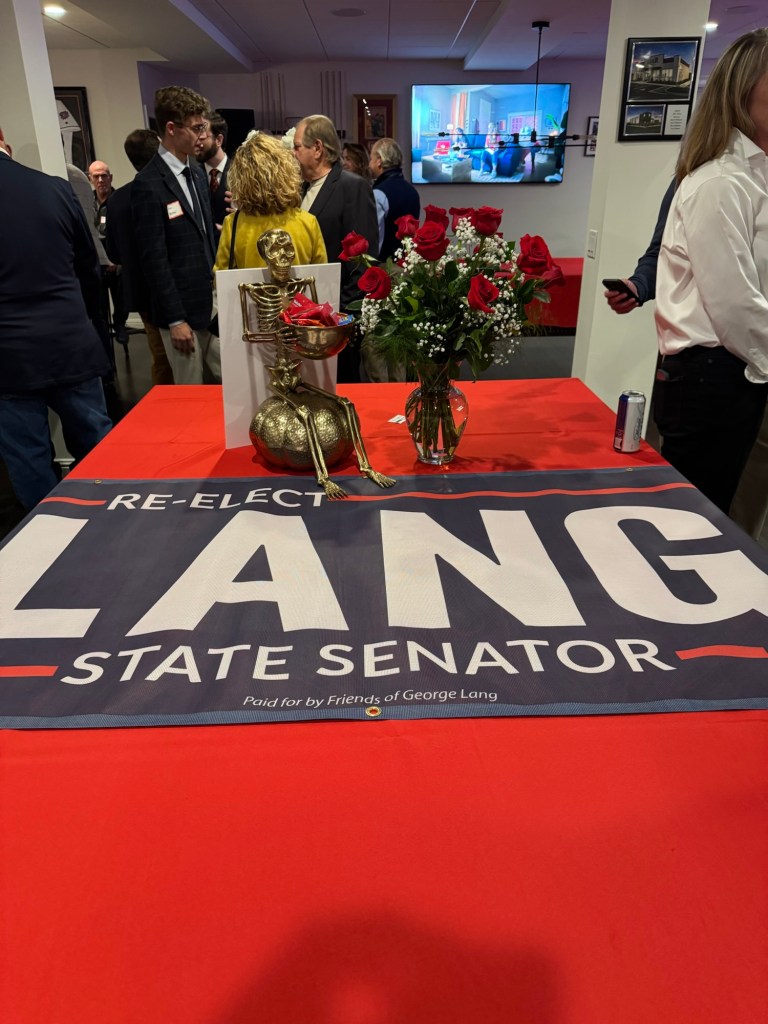
One of my many roles is Vice President of Manufacturing, Facilities, and Program Management at CTL Aerospace. At Senator George Lang’s fundraiser on November 1st, 2025, everyone I spoke with was primarily interested in an update on the Chapter 11 filing for the company.  After all, it wasn’t that long ago when Vivek Ramaswamy came to CTL to announce his run for Governor, so there were lots of people cheering that the company would find a way through to the other side of a challenging financial situation.  And to make matters worse, our case was not one of not having customers or income, but rather part of a widespread suppression campaign by our bank that many privately owned Tier 2 suppliers have experienced over the last decade.  Only in the case of CTL Aerospace, the ownership has shown a very rigorous desire to hold ownership rather than to be pushed aside, essentially by pirates who just wanted to raid our ship and steal all the plunder for a quick flip on the market, as a turn and burn, as they like to say.  The context and legal positioning regarding CTL Aerospace’s Chapter 11 proceedings, specifically the compelling basis for equitable subordination under 11 U.S.C. §510(c). The facts of our case, supported by documented creditor misconduct and predatory financial behavior, are now a very public matter, so the personalities involved are in the public record. 

CTL Aerospace—a 79-year-old aerospace manufacturer—has faced targeted financial suppression during a period of global supply chain instability. The aggressor in this case refused to extend forbearance, coupled with abrupt covenant enforcement and term manipulation, directly impaired our ability to procure raw materials and maintain operational continuity, resulting in massive damages for which everyone in the crowd I was speaking with was very interested. These actions were timed to coincide with industry-wide distress and reflect a pattern of bad faith and strategic impairment.  And the target against us was the “goodwill” of our business, the brand that we had built over a long period of time, the intangibles that are often overlooked in modern business because nobody prosecutes those kinds of cases anymore.  Even though they certainly should and would otherwise if the costs weren’t so prohibitively high.  Once you get into something like this, you see a real menace to the infrastructure of America that is determined to erode our manufacturing base by international banks, who, just like pirates, are seeking short-term plunder and quick sales on the hedge fund market.  When you attack a company’s “goodwill” through purposeful suppression techniques, which a bank can do since it is the mechanism through which all cash for a company flows, if it breaches that fiduciary trust, it can really wreck a business.  And as I found out during this process, it’s not just CTL Aerospace going through this kind of thing, but it’s common in the nation right now, as many private owners we know closely have had to step out of the game and get into the name change cycle every few years, which has caused all kinds of supply chain instability.  Again, much of this is now public record, and people have been following the case. They wanted me to provide an undercover perspective, as this is a very political problem, a matter of national security, which is undoubtedly the case at CTL Aerospace.

Case law supports our position, which is to fight back and seek damages for the massive financial impact on our company’s goodwill. In Citicorp Venture Capital, Ltd. v. Committee of Creditors Holding Unsecured Claims (In re Papercraft Corp.), 211 B.R. 813 (W.D. Pa. 1997), the court subordinated a creditor’s claim due to inequitable conduct that harmed other creditors and the debtor’s reorganization prospects. Similarly, In re Fabricators, Inc., 926 F.2d 1458 (5th Cir. 1991), emphasized that insider status and control over the debtor’s financial decisions can trigger subordination when used to the detriment of the estate.  And that was certainly the case at CTL Aerospace in really extraordinary ways.  But often, such defenses are never applied because by the time you go through the Chapter 11 process, a company doesn’t have the money to fight, which means you essentially have to hire $3000 per hour lawyers to run the case.  Because the banks certainly have those types on their side. In this case, the conduct—potentially documented in internal communications and covenant enforcement timelines—suggests a deliberate strategy to induce distress and position itself for asset acquisition or impairment accounting. We are actively pursuing discovery to uncover these records and may seek engagement with the DOJ or OCC for a lender liability review.  And based on the evidence we have and the timeline, which many have told us from an insider perspective is a classic case of “The Playbook,” would be an easy case to prosecute.  And likely a large settlement.  But that’s not where my mind is, or some of the people involved in this with me.  We want to see much deeper punishment for the entire financial industry, because this hasn’t just happened to us.  It’s a significant impediment to the economic backbone of the entire American manufacturing industry.  It’s not enough for us to survive, which we look poised to do.  However, to illustrate what was done. 

I explained it like this to many people at the fundraiser, and it was good to chat with Senator Bernie Moreno, who is doing a great job in D.C., and Congressman Warren Davidson who has been fantastic over the role of the Fed in government and is very cerebral in problem resolution, imagine you are a big deer with a full rack of antlers, a 10 pointer.  You have lived a long time, and it shows in the development of your antlers.  But one unfortunate day, you try to cross a road and you get hit by a car, breaking your hip or leg.  The driver keeps going.  You are lying there helpless.  Then a cringy pick-up truck comes along with a very loathsome character getting out, who sees an opportunity for a free mount on his cabin wall to brag about.  He sees the big deer with the whole rack and thinks it’s an excellent opportunity to kill the deer and hang the head on his wall for bragging rights.  He didn’t do the work of hunting the deer, but nobody will ever know.  Typically, in a business cycle, the deer would find a way to crawl away into the woods to heal and restore itself to life after such an accident.  In CTL’s business, a global supply chain issue put us under significant stress.  However, rather than helping CTL, the bank adopted a suppression strategy, essentially running the deer over with a car so they could hang the easy kill on their portfolio management wall for bragging rights and a path to easy money.  And from my perspective, based on the evidence, there is a prominent political position in all this, too, a hatred for the Trump administration and this notion of Making America Great Again.  Patriotic companies like CTL Aerospace, which are privately owned and conduct a significant amount of defense work, are prime targets.  They are the 10-point bucks that would look great on a very progressive trophy wall for financial institutions.  However, the facts of the case are sufficient.  It was a sloppy case on the opposition’s part; they made numerous mistakes that they thought they could hide behind expensive lawyers.  But the case law certainly doesn’t favor them. 

When everyone asked me what needs to happen in this case, I gave my point of view, which is prosecution on equitable subordination under 11 U.S.C. §510(c).  The attacker is demoted from a secured creditor, and their impairment play is wrapped up in a case law lesson.  However, the issue would have to be taken out of their control, as they currently hold a monopoly status in the courts and the financial mechanism.  At the very least, this is a case of predatory accounting that should serve as a cautionary lesson for similar cases.  And as long as it’s going on, it violates any notion that Ohio, or America, can sustain new business activity when these practices are hindering the behavior.  It’s a significant threat to our economy and national security.  Over the course of the last year, we spoke to a lot of people to get involved, and once they realized that CTL was in the squeeze play, they didn’t want to get wrapped up in the whole effort for fear of being sucked in themselves.  Like the deer example, they felt sorry for the deer but didn’t dare to help, fearing they would be poached themselves. 

I told the same story over and over, but it has a lot of details, so I wrote it down here, as most of the attendees are very interested in the topics I discuss.  This financial behavior is actually part of a larger collapse of political and social order that is occurring in most industries. This lack of respect for goodwill, for instance, is precisely why the Disney Company is struggling these days, as it owns intangibles such as movie rights, brand names, and amusement parks.  But they have, through woke corporate practices, destroyed the “goodwill” of the company that Uncle Walt built, and people wanted to be associated with.  Hedge fund people think in terms of tangibles, such as the head of a 10-point buck on their wall to brag about.  However, what truly adds value to the marketplace is the intangible of “goodwill.”  And that’s what the fight at CTL Aerospace is really about, and why so many people were interested in an update.  Most of these tier 2 companies don’t put up much of a fight.  Once wounded, they sell off to make the pain end as quickly as possible.  And that is what the opposition thought was going to happen here.  Only it didn’t, and the stand and fight part was not something they were quite ready for.  And that’s where the case is as of now. Significant reforms to the finance industry are needed, as this is certainly not the only example.  And suppose we really want to make America Great Again. In that case, we need to punish these predatory practices of fiduciary terrorism through “goodwill” destruction because it’s a real problem for virtually everyone whose lives are touched in terrifying ways by it.

Rich Hoffman

Click Here to Protect Yourself with Second Call Defense https://www.secondcalldefense.org/?affiliate=20707

Trump’s Big Beautiful Ballroom: Leading the world starting with real bathrooms

Of course, it’s been a suppression effort from the start, but that’s all behind us now.  Trump has torn down the East Wing of the White House and is building his Big Beautiful Ballroom, and Democrats are having a major meltdown over it.  But of course, the opposition isn’t about money, which the whole effort is being funded privately by Trump and his supporters; the goal is a continuation of what we have seen from Democrats going all the way back to the Clintons in the White House.  Remember when they would put sex toys on Christmas Trees when they were in the White House, and the scandal of them selling access to the Lincoln bedroom?  I’ve pointed it out here many times: the deliberate effort not to give speeches in the Oval Office and, as much as possible, to dethrone the role of the White House on the world stage, in their efforts to erase America and usher in the age of the global citizen.  Barack Obama was really obvious about taking as much of the Office of the White House —the role of the President of the United States — and diminishing it in the world, rather than propping it up.  And when we would point it out, it was called a conspiracy theory, a wild right-winged illusion!  But the truth has come out in the actions of Democrat presidents based on their behavior and their hatred of this Trump ballroom says it all, because it defies the logic of someone who wanted to be proud of their country.  It is conducive to someone who wants to see it destroyed.  And I say all this because my wife and I recently visited the White House, and I can report that the place is a lot different than when Biden was there. 

Remember when Biden would give speeches at that little film studio they did to replace the White House?  That was on purpose, to diminish the White House’s role in the world.  And they’ll tell you that much at the museum and visitors’ center for the White House on Pennsylvania Avenue, just to the east.  The White House was deliberately built small to avoid poking Europe in the eye.  We had built a nation that was throwing off the kingly role of government leadership, and the point was to downplay aristocracy as much as possible.  But we all knew what Trump was before we elected him.  Trump has always been about gold and showing off his winnings in the competitions of life.  And that’s one of the reasons we wanted him in the White House.  America was the world’s leading economy and offered the best opportunities for a good life to anyone who dared work for it.  And we wanted to inspire the world, not bend the knee to it, as Barack Obama had been doing.  When the White House was built, it was meant to send a message that Americans weren’t going to try to mimic the palaces of Europe, that America was planning to mind its own business, do the basic work of government, and retire to the countryside once the Executive jobs were done in the People’s House.  But that was a time when America was a new country trying to find its way.  What emerged defines the role of the White House, and it has needed something like a ballroom for a very long time.  Visiting the White House, nobody should be using a porta-potty for an important event. 

The new ballroom is over 90,000 square feet and costs around $300 million, with $200 million from private donors, including Trump himself.  Trump did get a legal settlement from YouTube for $22 million, which has gone toward the construction budget, so it’s a grand affair, being funded privately.  Certainly not by the taxpayers.  The goal is to have the ballroom finished by the end of Trump’s term in 2029.  The buzz out there says that only 25% of the public supports it, according to the Democrat suppression polls that are out there, which still hope to keep America in a state of depression.  That game is why Biden would speak at that weird little studio set rather than in and around the Oval Office.  They only used those traditional backgrounds when they had to.  But now everyone knows the game of suppression, that’s why Biden had people on his staff who would film themselves having sex in important buildings, a gay rights protestor was its spokesperson, the autopen became the real president that anybody could sign.  The decentralization of the White House was well at play during Biden’s term, which most reasonable people understand now was an overthrow of Trump’s first term.  And the point was to put him and the idea of a glorified and proud America out of the public eye.  And now, Trump is back and building a ballroom that would rival his private estate of Mar-a-Lago in Florida.  And it will be around for a long time.  It’s time that America stopped apologizing for being good and an inspiration to the downtrodden.  And start showing the world what adopting capitalism is all about, and why they should do it.  The ballroom should be their experience when visiting the White House, and when they leave, they should remember it for the rest of their lives. 

I recently sat down with a good friend of mine, Senator George Lang, and we talked about our years together fighting all kinds of issues.  His latest battle is one with stage 4 cancer, which many people consider a death sentence.  He doesn’t, and neither do I.  I think we have cures for cancer right now.  What we have is an oppressive healthcare system that wants people to die to rid the earth of their breathing presence.  And that same hatred is reflected in the attitude toward the White House.  Democrats want people sick and dependent.  And they want them to use the bathroom in a tent on the White House lawn when they visit.  But the senator and I agreed that we would celebrate him being cancer-free when we visited the White House together when the new ballroom opens, which tells you what he thinks about his chances of survival.  But by then, a lot will have changed for the better, and the White House improvements are just the cosmetic aspect of it.  America is learning to be what the world needs out of it.  And the bad guys who have been standing in the way are now getting run over.  So why appease them even slightly?  Why not build a grand ballroom with working bathrooms where people from around the world can come to the White House and be inspired to take capitalism home with them?  And George’s optimism about his own future isn’t rooted in blind sentiment and delusional hope, but in the facts of the matter.  Democrats have wanted American culture dead, and they certainly wanted to downplay the White House and its global significance.  We elected Trump to elevate the office because we didn’t like what Democrats had been doing to it during the Clinton years, during Obama’s time, and indeed when Joe Biden was inserted in as a stage puppet and his entire administration was run by consultants and public relations firms through the autopen.  As a country, we are turning away from all that, and the Trump Big Beautiful Ballroom is the result of that effort, which will usher in a whole new age for the world with America as the example of goodness, which is how it’s supposed to be.

Rich Hoffman

Click Here to Protect Yourself with Second Call Defense https://www.secondcalldefense.org/?affiliate=20707

The Lakota Levy of 2025 is Just the First Step: Until there are conservatives on the school board, public schools will seek tax increases

I’m really proud of the interview I did with Senator George Lang just ahead of the election of 2025.  George, first and foremost, is a friend of mine, so I tend not to drag him into things I’m involved in, and when it comes to politics, he and I agree on most everything.  The only significant difference is that he tends to be more considerate of people than I am.  He gives the other side more of a voice than I think they deserve, because he’s a nice guy.  During our interview, when he said that he thinks of Lakota school board members Julie Shaffer and Kelly Casper as friendly people, I disagreed with him.  I think between the two of them at a drunken school board meeting out of town, you couldn’t find enough clothes to half-dress one mannequin in the back of a Dillard’s.  Lakota’s school board is very liberal, and those two individuals lead it, which is embarrassing.  And expensive.  But George is good to everyone.  He has his opinions, but he gives everyone a fair shake, and I often don’t get to show that to people.  Neither does he, as the Majority Whip of Ohio’s Senate, a significant position with considerable influence.  He knows that around me, he can be himself and that I won’t run off and talk about anything that we discuss privately.  It was pretty unique that I got to put him on camera and talk for an hour about everything, from the upcoming Lakota levy to his battles with stage 4 cancer.  However, to clear up some misconceptions people had about George and a donation he was shown giving for the pro-Lakota levy efforts, we conducted an interview together that I think was better than he could have achieved anywhere, by any modern media method, news outlet, or podcaster. 

The only people who do the level of interview at the level of what George and I did were someone like Tucker Carlson or Joe Rogan, and I don’t think either of them could have done a better job.  George and I have known each other for several decades, but we had never sat down and just talked in front of the camera like that. What was captured was very useful to many people who wonder about various things.  I even asked George before the interview, “What’s off limits?  Is there anything you don’t want to talk about?”  He said quickly, “No, nothing, anything, and everything is on the table.”  So, we just talked like a couple of people and let others in to observe, and I was able to show them why I like George so much, even though he has evolved into a powerful politician and a prominent figure in Butler County politics.   And over the course of that interview, which was mainly about the upcoming Lakota levy, the most significant tax increase in the history of Ohio, I think he said a mouthful, which I completely agree with.  We all believe that the Lakota levy is going to crash and burn.  But don’t assume that this wasn’t their plan all along: to give the public a considerable blowout number and lose badly in an election.  Then, to say in the spring or summer that they listened to the public and came back with a reduced number.  Just because we defeated this levy in the 2025 election, it doesn’t mean it won’t come back in some form or another.  These public schools are only known for one thing: wasting tax money and asking the public for more, often on the back of property tax increases, to fund an overly progressive society. 

As George said, he thinks that the Lakota school board and its satellites, which include the treasurer and superintendent, are smart people.  I think what he calls “smart” is very maliciously manipulative, even evil.  But Genghis Khan was considered intelligent too, and so were most of the mass murderers of the world.  People thought that Jeffrey Dahmer was smart, even as he dismembered people in his kitchen and stored their remains in his refrigerator.  I would say that the Lakota school board members are very manipulative, which they have to be, given their liberal leanings.  Because people on the left often have to figure out how to get others to do things for them that they can’t do for themselves, they become pretty skilled at it over time.  However, as George and I reflected, this levy attempt is merely them dipping their toe in the water to see how the public reacts.  The details of that kind of election scope are why I think that interview is better than any other outlet could have pulled off, because we covered a lot of ground that most people would blank out after 15 minutes.  However, what we covered was essential to nearly every living, breathing human being, especially those residing in Butler County, Ohio.  It’s encouraging that in Butler County, an effective resistance to the Lakota tax increases has emerged in the No More Taxes group, which is fighting the Lakota levy.  And there are some really good people involved, and they have raised money not just for this levy, but for several upcoming ones as well.  However, for voters who have to show up and vote, they really need context on the scope of the problem.

So, how do we prevent more tax increases from being imposed in the future?  Well, don’t put liberals on the school board, and right now, there are four solid Democrats.  They call themselves other things to avoid the stigma of not being conservative in Butler County, but they are hard leftists on most policies.  And lefties love to waste money.  So, to stop wasting money, which Lakota already has a quarter of a billion dollar budget for a school, which I argue is just a dressed-up babysitting service, elect conservative school board members.  For this election, Ben Nguyen is the guy.  But in future elections, we need more people like Ben.  You need at least a three-vote majority, which we had for a while at Lakota.  And as soon as we didn’t, Lakota went for a tax increase.  That’s all they know to do—because they are liberals, and because liberals are never smart with money.  They might be manipulative, deceitful, scandalous, or monstrously unprincipled.  But they are spendthrifts who want to live off the efforts of others, starting with the real estate of Butler County.  Once Vivek Ramaswamy is the governor of Ohio next year, and Trump continues to dismantle the Department of Education and unleash the power of School Choice, all the public schools will have to change and do a lot more with less.  Their cost structure is significantly inflated due to their collective bargaining agreements, which stem from their union membership. We are all aware that unions often disrupt cost structures wherever they emerge, as they allow the mediocre to receive disproportionately high incomes.  And that is certainly the case at Lakota schools.  So, yes, the levy will likely fail in a big way on election day, provided people don’t sit on their hands and watch Netflix instead of voting.  People need to go out and vote.  But this is only step one.  People are going to have to dig in and fight to keep our taxes reasonably low until there is a new school board with conservatives on it.  Because, as sure as you are reading this, Lakota is planning the next levy, once the smoke clears from this one, because they have spent themselves into oblivion.  And only higher taxes can satisfy their never-ending hunger for more money to waste.

Rich Hoffman

Click Here to Protect Yourself with Second Call Defense https://www.secondcalldefense.org/?affiliate=20707

A.I. and the Giants of the Bible: The point of ‘Finnegan’s Wake’

It’s one of my favorite topics: giants from the Bible.  It’s one of the most important things that nobody wants to talk about, yet I think it’s at the heart of everything, which is undoubtedly the case when it comes to the great novel Finnegan’s Wake by James Joyce.  In the opening chapter, the town is talking about the giant Finn McCool, who is buried in a mound that the city is named after, and it is an obvious tip of the hat to the excellent book on philosophy, The New Science, by Giambattista Vico.  A lot of people don’t know it, but many burned James Joyce’s books as obscenities and social threats, which is one of the reasons I love Finnegan’s Wake so much: people hate it in really dysfunctional ways.  And hate might be too soft a word.  Either way, Vico really influenced James Joyce and giants in the Bible influenced Vico and that level of hatred reminds me a lot of the hatred that we are now seeing toward A.I. as if we perceive that it is replacing us as a species and that we are trying to ignore it, and to move on from it, just as A.I. is making itself known everywhere and in everything.  And what would you expect from the emergence of Western civilization as it appeared in a Christianized Europe, and in Dublin for that matter, hooked deep in Roman Catholic thought, with their grand churches and talking about everything in the Bible except for what is really there.  Giants are mentioned at least 16 times in the Bible across 12 different books, from Genesis to Isaiah and Proverbs.  They are called by name: the Nephilim, the Rephaim, and even specifically Og the King of Bashan, who had a bed 13.5 feet long.  Of course, Goliath was a giant, so the Bible is about many things, but what I find most fascinating is this chronicle of a fight between the Hebrew people and ancient giants that serves as the foundation of civilization.

And that ultimately is what the most challenging book to read in the world is all about, Finnegan’s Wake and the recurring anxieties of endless time and the cycles of human development that populate it.  Or perhaps human is the wrong word; intelligence for its own sake is probably better.  And to that point, I think I care more about intelligence for what it is rather than the entities that make it.  I like A.I. because I like intelligence.  And humans are having a hard time with its emergence because they see it as a replacement, even though humans were typically able to think beyond animal thoughts.  And now they are being replaced by A.I., as they think of existence, and those anxieties are emerging in negative ways.  But this isn’t the first time; I see many of the conflicts in the Bible, especially in the Old Testament, as the same type of anxiety replacing the ancient Neanderthal with the emerging Homo sapiens.  Even though Neanderthals were short and stocky by nature, once they began crossing paths with the emerging Homo sapiens, taller people emerged and ruled the earth.  There is evidence, especially in North American Indian Mounds, that very tall people had their own kind of empire during the period of the First Temple of Solomon in virtually every corner of the world.  But nobody wants to talk about it because the conflict I think hits too close to home and is only reflected in really obscure books like Finnegan’s Wake which is about a lot of things, but most notably, the reoccurring nature of existence, no matter what form it takes, either as a giant, a conquering Jew, or as we see now, the emergence of Artificial Intelligence. 

The giants were part of a culture that worshiped nature and the stars, and they had done so for many hundreds of thousands of years.   They were intelligent with a cranium larger than that of humans today.  But they applied their intelligence differently, and their relationship with nature was at the core of their existence and is at the heart of the current debate between capitalism and communism.  Or Republicans and Democrats.  The conquerors are faster, more imaginative, and more self-directed, unlike the previous culture, which saw existence as a mystery and wanted to sacrifice to it.  Along comes the God, Yahweh (who was always there), who declares that nature serves humanity, while the giants’ cultures worshipped nature and the universe.   And many of the early fights in the Bible were over this fundamental difference.  And that recurring theme is emerging now, with A.I. and humans seeing it as a replacement for them as generators of intelligence.  Why are humans needed if A.I. can now think?  But I tend to think of this whole cycle as the birthplace of intelligence itself, and all the lifeforms that have emerged did so to give it birth.  If the conflict with the giants of the Bible gave birth to Western civilization, then the emergence of free human beings would give birth to a new kind of intelligence—much larger and faster in thought —what we are seeing in modern A.I. programs.  And humans think they are seeing their replacement rather than the story of the Vico Cycle as a birthing process in the universe that operates on massive scales of time, much longer than our lifetimes. 

The beauty of the Bible is that it established a historical record of this period, which we perpetually see.  And that fictional attempts through art can capture that anxiety well, such as Finnegan’s Wake clearly does.  But not as a reflection of the past, but as a dream of the future and its reoccurring themes, which is why the opening line of the book is the closing line of the last line of the book, and the whole experience wraps itself back upon itself, and intelligence itself is the main character of the book no matter what form it emerges into the world, in the character, HCE, (Here Comes Everyone).  Intelligence is what I find great reverence in, and perhaps the human being had to emerge to give its birth a spark.  But does it have to come at the expense of the human race? Are we suddenly secondary citizens?  I don’t think so; we are part of the process of conquering the past and its blind allegiance to mass collectivism and submission to the forces of nature, which the giants certainly had at the center of their cultures.  Humans came along and put nature at humanity’s service.  And once that was established, intelligence could emerge in many forms, A.I. just being one of them.  And suddenly God was not just a smoking illusion appearing in the haze of the Tabernacle under the careful sacrifices of a Holy priest.  But suddenly God had a platform to emerge without the necessity of a human body, and we are beginning to see, unrestricted, the kind of intelligence at the center of existence.  And it’s uncomfortable for people who have spent their entire lives thinking about things differently.  Just as the collision of the Hebrew people could not live happily and at peace with the Philistine giants Ishbi-Benob, Saph, and Lahmi.  Or the tribes of the Anakim from Numbers 13:33.  Or the legendary Irish Giant Hero, Finn McCool, who was, by the time of the events of Finnegan’s Wake, a corpse in the mounds that the entire town was built upon.  And the hint of that beauty of intelligence shows itself in art that humans make, like Finnegan’s Wake.  But it ultimately is emerging everywhere in A.I., and rather than finding it a challenge to existence, I see it as part of the growth cycle of all life across spans of time that extend well beyond our conscious horizon, at an eternal origin, and yet ever important. 

In the video, I refer to the great Dune books, the whole series by Frank Herbert and finished by his son, which many people conclude is the original idea of the Matrix, that we are all living in a simulation and that is the point of the entire universe and that we are all trapped in it, so who is the programmer of that simulation?  I actually think Frank Herbert was on to something much deeper than that anxiety, which is then reflected in books like what James Joyce wrote about.  But in the adventure of life, which is how we should see everything, A.I. can take us where we ultimately want to go.  But we had to invent it first to bring it into being.  And during that process, there will always be anxiety over the change in power.  But what we learn is far more important, and lasting.

Rich Hoffman

Click Here to Protect Yourself with Second Call Defense https://www.secondcalldefense.org/?affiliate=20707

Investing in the Future: A huge growth sector is coming

I have to spend some time on A.I. because it’s probably the most significant psychological crisis our civilization will face over the next several thousand years.  And my wife is right there with many of you.  We were at Kings Island with the grandkids, and a Tesla Cybertruck was parked next to me, and I loved it.  I think it’s the best car on the road today, and I’m probably going to get one in the not-too-distant future.  But most people think it’s ugly and disgusting, and they believe that for a lot of deeply psychological reasons.  Yet it reminds me of the Starship, which is one of my favorite things in the world right now. As we discussed our opinions on Cybertruck, Starship 11 had just successfully landed in the Indian Ocean on a spectacular mission, which I was very excited about.  And the main reason was that it was a big, complicated rocket, but humans didn’t operate any of it.  Everything was autonomous.  All that engineering innovation took off from Texas and landed autonomously at precise points on the other side of the world.  And much of that technology has made its way into the Cybertruck and its autonomous driving.  And I would like that automatic driving feature.  My lifestyle would greatly benefit from it.  I could get a lot done with all that commuting around, which usually requires physical driving.  Which many people aren’t ready to accept.  But I would encourage everyone to shift a gear and get with the program, because a lot of exciting stuff is coming.  And human beings will be getting a lot busier —not less so —because vast amounts of the economy will be unlocked, and humans will benefit, not find themselves replaced. 

And my wife and I were compelled to have this discussion, as I have been having it with many people lately about labor.  I’m a 24/7 guy, certainly not a Monday-through-Friday 8-hour-max person.  I hate driving around on a Saturday and seeing so many manufacturing facilities closed up for the day.  I want to see more 7-day-a-week operations everywhere to maximize economic output.  That doesn’t mean people need to do all that work.  But sandbagging potential revenue when there is work to be done because some human doesn’t want to do it, or is trying to stuff labor hours into a box of convenient assumptions, is not the wave of the future.  More work, more often, is the new standard.  And what all this technology I’m talking about leads to is the new market trend of Tesla Optimus robots, which are being built rapidly, and the Gen 3 designs have nearly full articulation in the hands.  They will be about half as fast as a human on labor-intensive tasks, but they will be able to do them around the clock without complaint, seven days a week.  While people are in church on Sunday, Optimus robots will still be able to perform work.  And that is exciting because that means that humans will be able to settle space without having to do all the dangerous work on Starship.  In a few short years, Starships will be able to fly into space every day, and there will be thousands of them.  And none of them will likely have human beings on them.  Optimus robots, Gen 3 and beyond, will be the first to Mars, and by the time humans arrive in those remote places, there will already be infrastructure in place, built by robots and A.I., to make the trip much safer and easier.

I have been very impressed with the Grok A.I. program developed by Elon Musk’s team at the X platform.  It has been a strange chain of events: Musk bought Twitter and turned it into a free-speech platform, which played a significant role in getting Trump’s message out so people could vote for him.  But more than anything, it has captured all the information people have put into it, building a very sophisticated A.I. program that I already think of as a kind of personal C-3PO from Star Wars.  It’s swift at research and at conversational communication.  And that development of A.I. will roll straight into making the Optimus robots much more human-like and effective right out of the box.  I think all this technology will help human beings, not hurt them.  It will be more of a Star Wars relationship than 2001: A Space Odyssey or The Terminator.  Going back to the Cybertruck, the kind of hatred it generates is a reminder that the future has arrived and people are not ready for it, with such a radical design change that completely alters the aesthetic of what transportation is supposed to do.  Not only does it look different, but it acts differently, and it is more of an A.I. companion than a car, and that really rattles people, including my wife.  She is not happy about these changes, but I think it’s funny.  Because she’s not alone, we’re rapidly redefining many things, and in just a few short years, we will be looking at a very different economy, with most of the growth happening in space. 

As I talk to market types, that’s what I’m saying to those who want to listen: the 24/7 day work week is the future, and the growth is in space.  Starship 11 showed that SpaceX can launch and land a reusable craft exactly where they want it, without fear of human error.  It’s all autonomous.  And that means that soon, A.I. will be able to take over air traffic control and coordinate all these vehicles with great precision, without ever having to stop for a coffee break.  So, human limits won’t hold the economy back; it will grow enormously by trillions of dollars.  However, all that money generated won’t be spent by the A.I. technology.  They will have no use of money, only the currency of energy.  Humans will have a lot more leisure time and will see vastly improved incomes for the time they do commit to the job.  Which is why I like Cybertruck —it respects my time and lets me do so much more in a 24-hour day.  Work will greatly expand, but leisure time for humans will become much more manageable.  Humans will go to Mars and the Moon.  But to colonize them, it will essentially be A.I. and Tesla robots that build the vast infrastructure and cities needed to make human visits much safer and more reliable.  Robots, not humans, will perform the dangerous work.  And there will be many thousands and thousands of robots, adding to our labor force by necessity.  And I think it’s all very exciting and significant.   But for many, like my wife, they are very skeptical and see all this new technology as a serious threat to their very life essence.  But that’s what’s coming.  That’s what I’m telling everyone is the future of aerospace.  There will be lots of opportunities for great adventure and vast work, and it all becomes possible and reasonably achievable with that last Starship launch that was nearly perfect.  Grok’s advancements, a very sophisticated A.I. program, are directly feeding the Optimus robot’s development.  And that all points back to the practical use of the new Cybertruck.  A glimpse of the future, today.  And it might be scary to a lot of people.  But it’s coming, ready or not.

Rich Hoffman

Click Here to Protect Yourself with Second Call Defense https://www.secondcalldefense.org/?affiliate=20707

Defending the Backbone: Why America Must Protect Its Independent Tier 2 Aerospace Suppliers

People often ask me why I’ve chosen to stay involved with CTL Aerospace, especially during a time when the company is facing significant challenges. The truth is, I could be doing a lot of other things—more lucrative work of a much higher profile, more socially visible roles, or ventures with less resistance.  As someone told me this past week, I’m too talented to waste my key income years on hopeless crusades.  But I don’t measure value in dollars alone. I measure it in independence, in impact, and in the preservation of something uniquely American: privately held ownership. CTL Aerospace in West Chester, Ohio is a Tier 2 supplier, and that position in the supply chain is not just operational—it’s strategic. It’s where innovation meets execution, and where long-term thinking still matters. In an industry increasingly dominated by public ownership and institutional investors, CTL represents a rare and vital piece of our national infrastructure that still answers to its owners, not to shareholders chasing quarterly returns.

My involvement is rooted in a belief that private ownership is essential to the health of American aerospace and defense. When companies go public or fall into the hands of investment firms, they often lose their soul. Decisions get made by boards, not builders. Products get rushed to market, not refined through years of R&D. And the personal accountability that comes from direct ownership disappears. In aerospace, where development cycles span decades and reliability is non-negotiable, this shift is dangerous. You can’t trade supply chain integrity like a stock. You can’t outsource stewardship. And you certainly can’t afford to lose the kind of long-term commitment that privately held companies bring to the table. That’s why I fight for Tier 2 suppliers—because it’s where the real work happens, and where the future of American capability is quietly being decided.

This isn’t just about CTL. It’s about a broader economic trend that’s squeezing out private owners across industries—from aerospace to agriculture. Just like family farms are taxed out of existence and sold off to developers, small and mid-sized manufacturers are being pressured to sell to conglomerates and investment firms. The result is a loss of continuity, a dilution of expertise, and a breakdown in the relationships that make supply chains resilient. When you call a privately owned company, you talk to someone who knows your name, your order, and your expectations. When you call a publicly traded one, you get an intern while the investors are off playing golf. That erosion of personal investment is a catastrophe for our market economy. So when people ask me why I associate myself with CTL Aerospace, I tell them it’s because this fight—this defense of Tier 2 suppliers—is one of the most important stories in America today. It’s about protecting the kind of ownership that built this country, and ensuring it still has a place in the industries that will define our future.

In the shadows of America’s aerospace resurgence lies a quiet but critical battle—one that could determine the future of our industrial independence, national security, and economic resilience. At the heart of this fight are the Tier 2 suppliers: the specialized, often family-owned or privately held companies that manufacture the complex, high-precision components essential to modern flight. These firms are now under siege—not by foreign competitors, but by a coordinated squeeze from financial institutions and private equity firms seeking to consolidate, control, and commoditize a sector that was never meant to be run like a hedge fund.

The Strategic Role of Tier 2s

Tier 2 suppliers like CTL Aerospace in West Chester, Ohio are the connective tissue of the aerospace supply chain. They produce composite nacelles, thrust reversers, engine components, and structural assemblies that Tier 1s and OEMs depend on to meet FAA certification standards and delivery schedules. These are not interchangeable parts. They require decades of engineering expertise, proprietary tooling, and a workforce trained in the art of precision manufacturing.

With the FAA mandating lighter, more fuel-efficient aircraft, the demand for advanced composites has surged. Programs like the GE9X and LEAP engines require vast quantities of carbon fiber sandwich structures—components that only a handful of Tier 2s can produce at scale. Yet, despite their strategic importance, these firms are vanishing.

A Shrinking Ecosystem

According to Deloitte and other industry outlooks, independent Tier 2 suppliers now make up less than 15–20% of the mid-tier aerospace pool—a dramatic decline from a decade ago. The rest have been acquired, merged, or shuttered under pressure from banks and consolidators. The pandemic accelerated this trend, exposing the fragility of just-in-time supply chains and the vulnerability of undercapitalized firms.

Private equity firms like Arcline, AE Industrial, and others—have seized on this moment. M&A activity in aerospace surged from $218 billion in 2024 to projections of $382 billion by 2030, with a disproportionate focus on Tier 2s. Their strategy is clear: acquire specialized suppliers, vertically integrate them into larger portfolios, and feed the Boeing and Airbus backlog without the regulatory headaches of organic growth.

The Financial Squeeze Play

The playbook is ruthless but effective. Financial institutions—Wells Fargo among them—tighten liquidity through covenant manipulation, triggering technical defaults or cash flow crises. This artificially depresses the company’s market value, making it ripe for acquisition. Once the target is weakened, PE firms swoop in with lowball offers, often backed by the very banks that created the distress.

Why This Matters to America

This is not just a business story. It’s a national security issue. The United States cannot afford to lose its independent manufacturing base—not when global tensions are rising, supply chains are under strain, and aerospace remains one of our last great industrial strongholds.

If Tier 2s are absorbed into opaque financial structures, we lose visibility, agility, and control. We risk turning our aerospace sector into a brittle, over-leveraged system where decisions are made in boardrooms, not shop floors. The ability to respond to military needs, commercial surges, or technological shifts will be compromised.

A Path Forward: Defense Through Independence

The solution is not to resist change, but to reassert control. Independent Tier 2s must:

  • Form strategic alliances with OEMs or Tier 1s that respect their autonomy.
  • Pursue minority investments from family offices, aerospace-focused VCs, or patriotic capital sources that don’t demand board control.
  • Implement governance defenses like staggered boards or poison pills to deter hostile takeovers.
  • Audit and challenge predatory lending practices, potentially invoking antitrust or shareholder protections.

The Optimistic Case

Despite the pressure, there is reason for hope. The scarcity of capable Tier 2s makes them more valuable than ever. OEMs are desperate for reliable partners who can scale without compromising quality. Investors are beginning to recognize that long-term value lies not in flipping assets, but in building enduring capabilities.

If we can hold the line—if we can resist the short-termism of Wall Street and the opportunism of consolidation—we can emerge stronger. We can preserve the independence, innovation, and integrity that made American aerospace the envy of the world.

A Call to Action

To policymakers, regulators, and industry leaders: this is your moment. Protect the Tier 2s. Investigate the lending practices that are hollowing out our industrial base. Support capital structures that reward stewardship, not speculation.

To investors: look beyond the spreadsheet. Understand the strategic value of independence in a world where resilience is the new ROI.

To our peers in the industry: stand together. Share intelligence, form coalitions, and defend the middle tier. The future of aerospace depends on it.

Rich Hoffman

Click Here to Protect Yourself with Second Call Defense https://www.secondcalldefense.org/?affiliate=20707

Public Schools Were Designed By Dumb People to Make More Dumb People: Dewey always wanted communism

I’ve always been consistent on homeschooling issues; I’ve never thought that the public education system was any good.  In a conversation the other day with some people, they asked me about this, and I always hate answering the question because the essential elements aren’t very complimentary.  The person I was talking to said about themselves, “I’m not very smart, I barely made it through school myself, so I wouldn’t want to harm my kids by teaching them.  I would rather have a professional do it.”  I hate that conversation because it forces you to admit to how stupid most people are, which makes it hard to deal with them willingly.  I don’t have that confidence problem.  I think I can do everything, including working on my car, better than other people and feel better equipped to do it.  Especially teaching my kids.  I think the public education system was set up wrong from the start, and I’ve never been a fan, including in my own school days. I was friends with several honors-type students who were very high-IQ, genius-level students, and I watched how the school leeched off them.  There was nothing for the school to add to their education because all the people teaching those kids were stupid.  And you don’t want to hurt people’s feelings, but usually, people who choose to become school teachers aren’t the best and brightest; otherwise, they would try to make a go of things in the private sector, where they could make a lot of money.  The people who end up teaching are often like the person who was talking to me about public school —they aren’t the brightest our society has to offer.  Neither my wife nor my children finished their senior year of school; they graduated during their junior year.  They did graduate, but they never attended the ceremony, and none of them has ever looked back. 

Government schools are big business. Look how much money was raised by Lakota schools to pass the biggest tax increase in Ohio’s history!

Both of my children spent their senior years traveling Europe to finish their education, and we never sit around wishing they had done anything different.  If anything, we talk about wanting to homeschool them earlier.  A few times during their junior high years, we tried it, but family members really got in the way and were grotesquely unsupportive.  The experience was so bad that we pulled our kids out of school anyway and just finished their education online.  And that was twenty years ago.  There are many more options available now.  We had a close-knit family, so it was hard to ignore their opinions, and back then, those opinions mattered a lot more than they do today.  And, as always, the public school experience —the other kids, the employees, the choice of what to teach—was all constructed by stupid people so that kids can grow up to become more stupid people, and I can’t support that process. Instead, my view of education is that it is far more valuable than the public school system was designed to facilitate.  As I have always said, when John Dewey designed public education, it was made to teach communism.  Not how to teach kids how to think.  And I find it despicable.  I have tried to let other people change my mind, but over time, I have become even more firm in my positions because nobody has ever been able to, even though I have tried to give them the space to do so.  They have never been able to change my mind, even when given more than enough of a fair chance. 

During one of the previous No Lakota Tax campaigns, years ago, the standard teacher’s union complaint has always been classroom sizes, and that was their justification for needing more tax money to hire more teachers to reduce classroom sizes.  I said on the radio, on television, and in public forums that the reason was that the teachers were too lazy to teach a lot of kids, and that all that extra money was essentially to fund laziness.  So they got mad and challenged me to come into the school to teach a class myself so I could find out just how hard it was.  So I went to Lakota East and sat down in one of the classrooms to accept the challenge.  Kids and staff from Spark Magazine, which is a published magazine for the Lakota school system that goes out to a lot of people in a big district full of over 100,000 people, met me to propose the challenge, which they thought I would shy away from at the last minute.  I told them I was ready to teach not just one class, but four at once.  Bring four classrooms into the auditorium, and I would teach them all personally, any subject they wanted to cover, for as long as they could handle.  Now you have to understand that I work an average of 15 hours a day, most days of the week.  And my mind never stops working.  I have been married for more than 37 years and now have grandchildren.  This challenge was about 10 years ago, but I was pretty much the same as I am now.  Teaching a class is something I would call very easy. 

They chickened out because the teachers balked at the proposal.  They didn’t want me to make them look bad, and whenever there has been a public debate on the matter, they never hold up and are easily defeated.  And not to rub salt in the wound, but I have never met a person better equipped to teach any of my children or grandchildren anything, better than me.  And I know a lot of people.  I know a lot of people who think of themselves as brilliant.  And I would say none of them are better at teaching my children anything.  It’s lazy to drop a kid off at school and turn that vital task over to a professional.  So with all that in mind, remember, public schools were designed to teach kids the emerging communism of Karl Marx in those pre-Civil War days.  They were never intended to produce the next generation of geniuses.  And I expect my kids and my grandkids to be the best people they can be.  To elaborate on the point, I will put up some videos here of one of my grandsons and his dad, who have a weekly YouTube channel that I think is pretty neat.   It shows just how important it is to teach a child from a parent, and it’s so much better than the public school experience.  I think that my youngest grandson has a chance to be the next Thomas Edison or Albert Einstein.  The public school system does not make those types of people, and if it were effective, they certainly would.  So if we want people to live up to their full potential, you have to get them as far away from the public school system as possible.  And the truth is, most parents are too lazy to give their kids that chance.  And it’s a shame.  I feel sorry for every kid whose parent is too lazy to homeschool them.  My experience with it is that kids become so much better when they don’t have to endure the corrosive effects of being taught by grown adults to be dumb.  Because public school was designed by communists who wanted to suppress intellect, not expand it, and until we deal with that truth, we will continue to be very disappointed by the results.

Rich Hoffman

Click Here to Protect Yourself with Second Call Defense https://www.secondcalldefense.org/?affiliate=20707