

I have spent enough years around lawyers to recognize the type when I see it. They are not the Perry Mason figures of old television or the crusading heroes of public imagination. Most of them are people who did what their parents told them to do, scored high enough on the LSAT in their early twenties, ground through law school, and then settled into a comfortable professional life that rewards caution more than courage. By the time they reach their thirties and forties, they have the house, the spouse, often selected with family approval in mind, the country-club membership, and the afternoon golf game with the same judges they appear before in the morning. The workday for many of them effectively ends at noon. The rest of the afternoon is reserved for the social circuit that keeps the referrals flowing and the invitations coming. I read statutes and case law with a high level of comprehension, and I have found more than once that I can parse the language more clearly than the attorney sitting across the table who is already thinking about what time the tee time starts. That is not arrogance. It is observation.
This psychological profile explains a great deal about why election-fraud prosecutions rarely mature into serious courtroom contests even when the evidence is substantial. The legal profession is not staffed by people who wake up each morning eager to risk social exile, professional retaliation, or the loss of the comfortable rhythm they have built. A prosecutor who signs off on a high-profile election case knows that liberal advocacy groups will protest outside the office, that the state bar association will take a dim view of any action that appears to “undermine confidence” in the system, and that the judges who play golf with the defense bar will find procedural reasons to slow or stop the case. The same dynamic appears in other categories of crime that carry social discomfort. I have been on the prosecution side of cases involving the sexual exploitation of children. Even when the digital evidence is clear, and the devices are full of material that no jury would excuse, the institutional reluctance is palpable. Prosecutors calculate the cost in time, the likelihood that sympathy arguments will sway a jury, and the quiet knowledge that some of their own colleagues or family members consume large volumes of pornography and may not draw the brightest moral lines. The rational calculation becomes: is this particular case worth the disruption? Too often the answer is no. The same calculation is applied to election integrity.
After the 2020 election, more than sixty lawsuits were filed in multiple states. The overwhelming majority never reached a full evidentiary hearing on the core allegations. Courts dismissed them on standing, on the doctrine of laches—essentially that the challengers had waited too long—or on the ground that the claimed irregularities did not meet the high bar required to overturn certified results. In Wisconsin, the state supreme court, then controlled by conservatives, largely rejected key claims in Trump v. Biden on timing grounds. In Michigan, King v. Whitmer was dismissed, with the court finding the equal-protection theories too speculative. Arizona’s Ward v. Jackson ended with a finding that the plaintiffs had not met the evidentiary standard. The United States Supreme Court repeatedly declined to accelerate or take up these matters. The pattern repeated in subsequent cycles. Cases that might have forced a deeper examination of ballot handling, chain of custody, or voter roll integrity were steered into procedural dead ends. The lawyers on both sides understood the game. Those who wanted the status quo preserved had every incentive to keep the process slow, technical, and bloodless.
Mark Elias and the network of Democratic election lawyers who operate through vehicles such as Democracy Docket have been far more aggressive on their side of the ledger. They file early, they file often, and they treat every procedural opening as an opportunity to expand mail voting, limit signature verification, or block citizenship documentation requirements. Their success is not mysterious. They are playing offense while the other side is staffed by people who prefer not to be labeled extremists at the next bar association dinner. The SAFE Act—later reintroduced in expanded form as the SAVE America Act—has passed the House of Representatives more than once, including in 2025 and again in February 2026. It requires documentary proof of citizenship to register for federal elections. The Senate has refused to bring it to a floor vote, which would require 60 senators. The resistance is not rooted in complex constitutional theory. It is rooted in the knowledge that tightening the rules would reduce the margin of maneuver that certain political machines have come to rely upon.
This psychological profile explains a great deal about why election-fraud prosecutions rarely mature into serious courtroom contests even when the evidence is substantial. The legal profession is not staffed by people who wake up each morning eager to risk social exile, professional retaliation, or the loss of the comfortable rhythm they have built. A prosecutor who signs off on a high-profile election case knows that liberal advocacy groups will protest outside the office, that the state bar association will take a dim view of any action that appears to “undermine confidence” in the system, and that the judges who play golf with the defense bar will find procedural reasons to slow or stop the case. The same dynamic appears in other categories of crime that carry social discomfort. I have been on the prosecution side of cases involving the sexual exploitation of children. Even when the digital evidence is clear, and the devices are full of material that no jury would excuse, the institutional reluctance is palpable. Prosecutors calculate the cost in time, the likelihood that sympathy arguments will sway a jury, and the quiet knowledge that some of their own colleagues or family members consume large volumes of pornography and may not draw the brightest moral lines. The rational calculation becomes: is this particular case worth the disruption? Too often the answer is no. The same calculation is applied to election integrity.
After the 2020 election, more than sixty lawsuits were filed in multiple states. The overwhelming majority never reached a full evidentiary hearing on the core allegations. Courts dismissed them on standing, on the doctrine of laches—essentially that the challengers had waited too long—or on the ground that the claimed irregularities did not meet the high bar required to overturn certified results. In Wisconsin, the state supreme court, then controlled by conservatives, largely rejected key claims in Trump v. Biden on timing grounds. In Michigan, King v. Whitmer was dismissed, with the court finding the equal-protection theories too speculative. Arizona’s Ward v. Jackson ended with a finding that the plaintiffs had not met the evidentiary standard. The United States Supreme Court repeatedly declined to accelerate or take up these matters. The pattern repeated in subsequent cycles. Cases that might have forced a deeper examination of ballot handling, chain of custody, or voter roll integrity were steered into procedural dead ends. The lawyers on both sides understood the game. Those who wanted the status quo preserved had every incentive to keep the process slow, technical, and bloodless.
Democrats continue to advance policies that polling shows are deeply unpopular with the broader American public—expanded gender-transition interventions for minors, open hostility to traditional religious norms, and economic frameworks that treat private capital as the enemy. They do so with remarkable confidence. That confidence is rational only if they believe the electoral margins can be kept close enough, through administrative practices and legal delay, that the unpopularity never fully translates into permanent minority status. When the legal profession as a whole lacks the appetite to prosecute the mechanisms that keep those margins artificially narrow, the calculation holds. The media benefits from the permanent horse race. The donor class benefits from the permanent conflict. The lawyers benefit from the billable hours generated by endless preliminary motions. The only people who lose are the citizens who expect the rules to be enforced without regard to which party benefits.
I know prosecutors in Butler County and elsewhere who chose public service over the higher private-sector income precisely because they still believe the job is about more than billing and social navigation. They are the exceptions. The broader professional culture rewards the opposite temperament. The young lawyer who spent his twenties doing everything the family and the firm expected of him arrives in his forties with a quiet resentment that he has never been allowed to live an authentic life. That resentment rarely expresses itself as a sudden burst of moral courage in a courtroom. It expresses itself in safer rebellions—affairs, passive-aggressive litigation tactics, or simply the decision to treat every difficult case as someone else’s problem. By the time these men and women retire, they are often the most tedious company imaginable at a local restaurant, nursing a lifetime of compromises that never quite tasted as good as the brochure promised.
Election fraud continues not because the evidence is absent, but because the people whose job it is to act on that evidence have built lives that depend on never acting too forcefully. They are not villains in the cartoon sense. They are ordinary professionals who chose comfort over confrontation and then discovered that the system rewards exactly that choice. Until enough of them decide that the country club is less important than the integrity of the ballot box, the pattern will continue. The SAVE Act will keep stalling. The cases will keep dying on procedural grounds. And the public will keep being told that the absence of successful prosecutions proves the absence of the crime. That is the circular logic of a profession that has forgotten what it was supposed to protect.
Notes
1. On the volume and disposition of 2020 post-election litigation, see the compilation maintained by the Campaign Legal Center, “Results of Lawsuits Regarding the 2020 Elections,” and the analysis in “2020 Election Litigation: The Courts Held,” Judicature (Duke Law). More than sixty cases were filed; the large majority were dismissed or resolved against the challengers on standing, laches, or failure to meet evidentiary thresholds.
2. Trump v. Biden, 951 N.W.2d 568 (Wis. 2020): Wisconsin Supreme Court rejected key claims, applying laches to several and finding the indefinite-confinement challenge insufficiently particularized.
3. King v. Whitmer, No. 20-13134 (E.D. Mich. Dec. 7, 2020): District court dismissed, finding constitutional claims speculative and deviations from state law insufficient to establish an Elections Clause violation.
4. Ward v. Jackson, No. CV-20-0343 (Ariz. Super. Ct. Maricopa Cnty. Dec. 4, 2020), aff’d Arizona Supreme Court: Plaintiffs failed to meet the evidentiary standard for an election contest.
5. The Safeguard American Voter Eligibility (SAVE) Act and its successor, the SAVE America Act, passed the House in 2025 and again in February 2026; as of mid-2026, the Senate has not advanced the measure past the filibuster threshold. See congressional tracking for H.R. 22 (119th Congress) and related bills.
6. Mark Elias’s role in Democratic election litigation is documented through Democracy Docket filings and public statements; his firm and associated entities have been central to challenges against voter-ID and citizenship-documentation measures.
7. Heritage Foundation Election Fraud Database catalogs proven instances of fraud across jurisdictions; the existence of documented cases does not by itself resolve the separate question of prosecutorial and judicial willingness to treat systemic claims as criminal matters.
Select Bibliography
Campaign Legal Center. “Results of Lawsuits Regarding the 2020 Elections.” Updated compilation.
Heritage Foundation. Election Fraud Database. https://electionfraud.heritage.org/.
Hively, Ray, and Robert Horn’s materials on related institutional behavior are less directly applicable here; for election procedure, see the American Bar Association Standing Committee on Election Law’s litigation summaries instead.
Pauketat and other archaeological sources are irrelevant to this subject; for legal culture see instead:
Posner, Richard A. How Judges Think. Cambridge: Harvard University Press, 2008 (on institutional incentives).
Congressional Research Service and Ballotpedia case trackers for 2020–2024 election litigation outcomes.
U.S. Congress. H.R. 22, Safeguard American Voter Eligibility Act, 119th Congress, and subsequent SAVE America Act iterations.
Rich Hoffman
More about me
Click Here to Protect Yourself with Second Call Defense https://www.secondcalldefense.org/?affiliate=20707
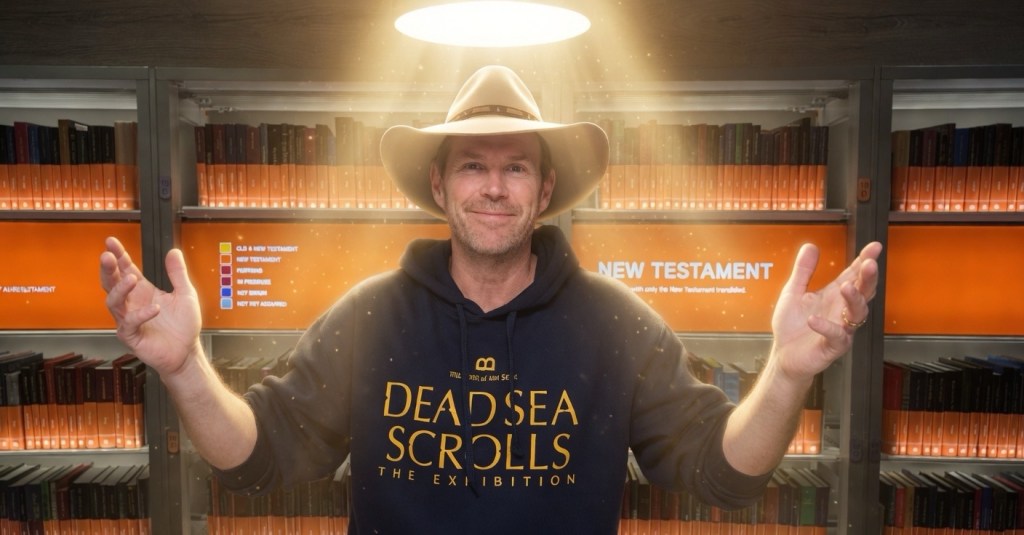
About the Author: Rich Hoffman
Rich Hoffman is an author, political consultant, and strategic advisor based in Cincinnati, Ohio, and the creator of The Politics of Heaven—a unique framework that connects biblical theology, ancient history, and modern power structures to explain how moral alignment and spiritual forces shape global events. Blending real-world political experience with deep research into archaeology, UFO phenomena, and suppressed historical narratives, Hoffman offers compelling commentary on topics ranging from ancient civilizations and the Dead Sea Scrolls to modern populist movements, paranormal continuity, and leadership strategy in chaotic environments. As the author of The Gunfighter’s Guide to Business and the forthcoming Politics of Heaven, he brings a grounded yet provocative voice to media discussions, supported by firsthand experiences and a cross-disciplinary approach that bridges science, history, and theology. For interviews, speaking engagements, or expert analysis, visit richhoffmanbooks.com or contact directly via phone at 513-307-5815 or email at rhoffman@richhoffmanbooks.com. If you’ve seen the movie, Disclosure Day and want to talk about it and the implications of Presidnet Trump’s UAP disclosures, let me know and we can bring some color to your coverage. https://richhoffmanbooks.com/media-inquiries-broadcast-topics-and-contact-info/?frame-nonce=ad51e7ecba I do have a firsthand UFO encounter to discuss.


 The Overmanwarrior