The Media and Me: Why all the hate?

I generally am not a vindictive person, I let people do what they want and think what they will so long as they don’t try to impede on my life. Generally. And this is certainly true of the media. About ten years ago I was friendly with most of the media in both Cincinnati and Dayton and I did a lot of radio on WLW and was on television quite often. Back then also I was going to film festivals and doing some work in Hollywood because at the time I still thought I might end up doing work in the entertainment industry. I was always a conservative and everyone knew it, but there wasn’t a need to be contentious and fight about everything. After all, these were the days of a soft George Bush presidency and the early years of Obama, so the political left largely propped up and controlled by our media culture felt comfortable, and even entitled. So a guy like me wasn’t a threat to them. Newspapers would quote me often, television news outlets would seek my opinion and I’d write occasional pieces for national magazines and everyone was happy—except for me. One thing I never liked about that system was that I had a lot more to say about everything and editors and producers would never give me enough time to put together a complete story on a given topic. So in 2010 I decided to become my own publisher so to speak and start this blog, Overmanwarrior’s Wisdom. I never meant for it to become an endeavor of consternation, but what I have found out over the eight years since is that all media outlets hate it, and therefore don’t like me as a result.

I especially heard about how much the media doesn’t like me during this 2018 election. I’d get reports from people who associate with the press and elements close to the press who actively want to discredit everything I do, as if they were the gatekeepers of knowledge. But in reality, I write about so many things in so much detail that essentially nobody can keep up and that is the root of their anxiety. Media types are like any other worker out there, they are held to very confined standards and are certainly not free to write what they want. In the beginning I never thought of this as being a problem, but after talking to a Cincinnati Enquire reporter way back in 2011 just a year into it I realized just how jealous they were over my blog. It didn’t make much sense to me because anybody could start a blog, even them. Blog sites were free, anybody in the world could do one, so I didn’t consider what I was doing to be a threat to anybody. Just supplemental material. People would read what I’d say in newspapers and on the radio and they’d come to the blog to get more information. Since in media they don’t give you unlimited time to make your point, but just skim the highlights of any given topic.

And that is where the problems started and ended, the media never wants to solve a problem, they are perpetually the old Don Henley song “Dirty Laundry” where they need chaos, panic, and mayhem to generate the ratings they feel they need to survive, and my blog offered more than that to readers. As a writer I don’t think anybody in the United States or Europe can touch me for content and volume. I can write about more topics in quantities that often rival published books than anybody else, and that makes Overmanwarrior’s Wisdom very unique in any published venue. I didn’t set out to do that on purpose, I just let my natural inclinations take me where I felt things needed to go and I turned loose the ideas. If I want to publish articles about a reptile civilization that controls global politics and to deal with the pros and cons of that conspiracy theory, I do it and people enjoy the material. Or if we want to get into the weeds of actual political occurrences, we can do that too. Information and ideas are never bad, yet the media culture that we have had only want the headlines, never the substance. They never want a solution, only to ask the questions to provoke emotional results.

It is for that reason that I stepped gradually away from most of my media contacts. This blog did it for me. All I ever wanted to do was communicate ideas that were interesting to people who might enjoy exploring those concepts. Whether one person likes the topic or thousands really doesn’t make a difference to me. But that is also why reporters generally do not like my blog site, because it contains in it a freedom they simply don’t have. I love to read and write and I contribute to my blog in the old-fashioned way that any writer would, out of love and passion for the topics. But I would say that my efforts are similar to personalities from the past like Benjamin Franklin who did lots of things in his life, including being a publisher. I do other things in my life for money, so I have no reason to sell my published works. And that makes what I do vastly different from what all other media do and there resides the rub.

It was bound to happen sooner or later; the old modes of media would have to give way to the new. And within the new, if some publisher such as myself might come along and provide vast amounts of content out of the passion of doing it as opposed to prostituting it out like most media personalities must, then so be it. I have written millions and millions of words on a vast array of subjects but to me they all connect in very precise ways. Yet to the traditional media that can’t keep up with someone like me jealousy is their dominate emotion and that kind of thing came out dramatically on several fronts after the election of 2018. Feedback I received was nothing short of hate—that publishers like me are “ruining” the world. Well, I would ask, “from whom.” The world as we have all known it is going away, and I’m happy to see it leave. I never liked it to begin with. The age of Trump has been propelled by many people like me, but in the sheer effort of content offerings even though I am heavily restricted by Facebook, Google and Twitter, and have been for many years, the work still gets out to the people I intend for it to. If not a mass audience, a very targeted audience of people who are thinking people who are very smart. Popular mass media just have no control over this new age and they hate it. Information has been decentralized and that is a reality for the future. They could have embraced it, but they didn’t. Instead the have decided they hate me, which is their prerogative. But in the end it’s no skin off my back. I don’t need them, but they do need people like me and it was they who alienated themselves. The world will march on without them in it, and that is purely their choice to make.

Rich Hoffman

Sign up for Second Call Defense here: http://www.secondcalldefense.org/?affiliate=20707 Use my name to get added benefits.

How Republicans Should Address Health Care: Dealing with the future to have a real plan

Warning, this may be the most important thing you read and see in your life, proceed with that understanding:

Now that the election is over its time for Republicans to announce to the world what their health care plan is, which of course in the short-term will have to be a more competitive free market option. But everyone knows that the old days of drug induced medicine are over, just as stage coaches were replaced by automobiles. We are at a point where the medical industry is under a complete overhaul, as provided in the example in the video below by the Japanese proposal of using AI to produce new healthy cells to replace damaged or diseased tissue within a body. The solution to all medical problems is in cell repairs, not surgeries or chemical medicines. So, any health care plan must look at where human civilization is headed, not where it’s been before anything can be seriously considered, so the Republican plan needs to incorporate that reality. If you want to make the heads of Democrats explode, tell them that you want to solve health care as a detrimental condition instead of just throwing drugs at people. Tell people who you can actually fix them instead of just numbing their pain and the leverage of the whole health care issue changes.

The trouble with regenerative medicine is purely in human psychology and this is why politicians have not yet touched the issue, but they ultimately will have to. President Trump is just the kind of president who could do it, but what must be overcome by the public is the desire of approximately 85%, maybe more, of the population to believe in the cycle of life and death which has been with us since the beginning of all recorded history. I would argue that like the Vico cycle, the themes of life and death were always meant for human minds to solve which is why specifically it is our species with their vast imaginations that have been born and have evolved to solve these types of complicated problems. Death and disease are literally solvable problems and they are at our doorstep in this current time to carry mankind well into the future. Yet because most people don’t know any better, they are resistant to change. Like most dysfunctional sentiments, they would rather die than change their minds about things, because they have literally been programmed from their birth to always look for an end to it all at some point.

I would not call myself a transhumanist, but as people who know me understand, the name of this site is “Overmanwarrior’s Wisdom.” There has never been a part in my life where just being human was acceptable. Even in my earliest memories I have always wanted to be superhuman. I never have said, I am too tired to work, too tired to think, care for my family or anything. I often stay up all night working and reading and all day working without any sleep at all and I love every day of my life. If I lived for the next ten thousand years, I can say that I would never be bored for one minute of that entire time and I would be very happy to do and learn and live for even longer than that. If the Vico cycle politically states that humans have always went through various cycles of theocracy, aristocracy, democracy then anarchy, all elements that we see today around the world at various stages always in combat with each other, then all our lives and the religions we have invented to deal with the problems of life and death are essentially the same. There isn’t any mythology or philosophy that properly deals with the possibility of a life stimulated by regenerative medicine. Humans just didn’t see the possibilities of regenerative medicine coming and the artists and philosophers that still construct our social context are still rooted in ancient ways of viewing death.

I was reminded of my twenties lately while watching an episode of Josh Gates’ Expedition Unknown where he took a vision quest with some shaman in Peru using ayahuasca to induce the hallucinogenic journey of what they call the journey of life and death. I was very hungry to learn more about these shaman trips while I was reading Primitive Mythology by Joseph Campbell in Waffle Houses at 4 am in the morning when I was around 23 years old. I was always impressed with how shaman were able to step into the mind of the sick and help them recover from whatever it was that had a grip on their souls, so I think there is some merit to these techniques. But what Josh Gates went through is a supercharge on his brain and all the experiences and thoughts he had experienced over his lifetime. The shaman were able to journey with him on a kind of quantum realm that they had learned to tap in to. But the nature of a soul and life itself does not need to be defined by life and death, only by existence and the amount of contribution that it makes to higher dimensional realities, whether on the very small-scale such as those that shaman likely tap into by using the artificial stimulant ayahuasca or on the scale of the huge, where entire universes are as common as cells in our body, and the one we live in is just one. All those realities intersect with each other in ways we still don’t understand and I think the key to grasping them is that humans need to step away from the cycle of life and death to help in some way the reasons for our birth. Obviously there is a reason for intelligent life, for beings like us who can think and conceptualize and to solve the riddles of the universe and all the quantum realms that connect it we must step away from the cycle of life and death that requires each generation to learn just a little from the previous one, but only gives professional observers about 50 years to crack a code, which isn’t enough time.

What is coming out of Japan and the Mayo Clinic in America are options for a completely new way of living and understanding our role in the universe. While ayahuasca may stimulate a brain in hyper charged ways typical shaman and other religious leaders view the results in the context of their religions which are formed around observations of birth and death. While the observations are interesting, the context is the variable, and that is essentially the case behind the health care debate. If we are talking about keeping a system in place that supports pharmaceutical companies and the economy they have built on delaying death as long as possible that’s one thing and is at the heart of the Democrat desire for a single payer socialist system. As we know from history, politicians whether they be church leaders or village shaman use their connection to the afterlife to control populations. And Democrats are attempting to control people’s fear of death and the pain that leads to it as a way to control their voter base. And like most people, many people are willing to die if at some point in their life they can hold great power over others. That is why health care is the number one election issue. But think of what Republicans could do in the future if they could change the view of healthcare without the conservative base getting too freaked out about it? It’s only a matter of time before politics, art and science catch up to the ambitions of the imaginations of the human race. The question is, who will do it, and what benefits will come their way as they redefine the entire game? If anyone can do it, Trump can and these new Republicans coming together under his leadership. Truly, the future is what we make it and that reality is happening much sooner than most people realize.

If these concepts are new to you, feel free to watch all the videos contained here in their entirety.  This is the future, we might as well align ourselves with it now rather than later.

Rich Hoffman

Sign up for Second Call Defense here: http://www.secondcalldefense.org/?affiliate=20707 Use my name to get added benefits.

Rewriting the History Books: The giant prehistoric mound at Dover Castle

Some may think that I’m changing direction a bit too much for their liking as I move more away from the immediate topic of politics and local matters, and toward this global tapestry of a historical conspiracy as to the past and future of the human race—but fret not—there is a point to it all.  The written word is a very powerful thing, I’d argue more powerful than anything from a mind that can utilize it—because it has staying power—and I’ve had plenty of stay in cyberspace from the highest levels of our government to the media that covers it.  Currently, the machine of that power is set forth and doing what I want it to do so now for me it’s time to turn my attention to another issue I care quite a lot about, human migration patterns over time and to reshape the theories of diffusion that were molded under the umbrella of religions to gain a better understanding of where we’ve been so we can cast a good light on where we are really all going.

For years I have occasionally sprinkled in the occasional article about these matters, and even after nearly a decade of writing, they are the ones my readers come back to most.  And I am proud to have at least put some on the path to more discovery to hit the field and ask hard questions by showing for the first time something they didn’t know before—which is the main purpose for the voluminous writing that I do.  So with that in mind, this little article before you is kind of bench mark for me—a journey that started a long time ago and is now coming to a fine point—and it begins with a recent journey I had to Dover Castle in England.

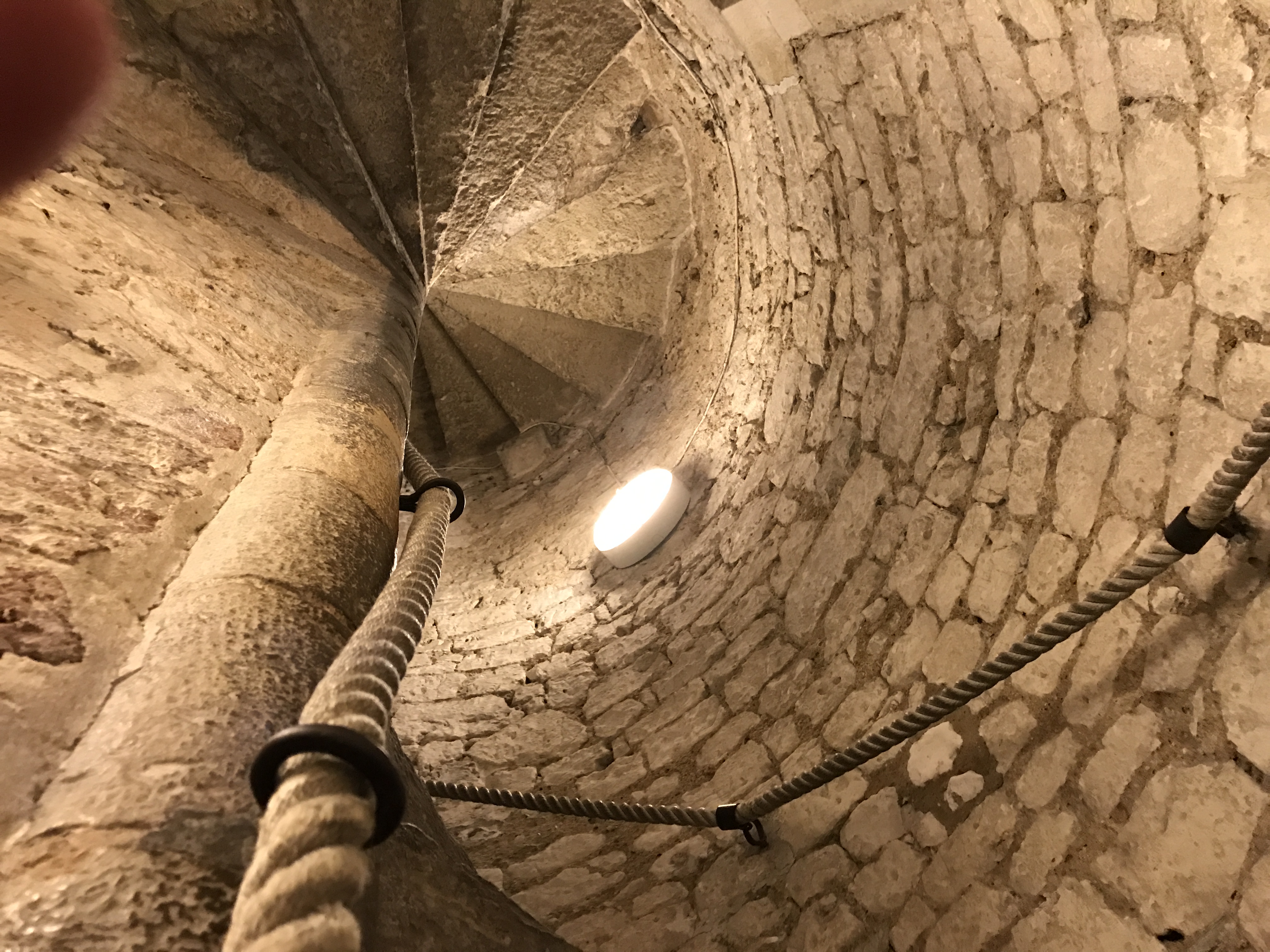
I had always wanted to see the place which rests at the bottom of southeastern England looking across the choppy waters of the English Channel at France which was just over the horizon of the earth but close enough to feel.  Dover Castle is known militarily as the key to England and literally started its modern reign as a gate to that ancient land immediately after the Battle of Hastings by William the Conqueror in 1066 AD.  It was used in that capacity until 1958 and it served well the English people during World War II as a communications bunker hidden away under the vast castle complex.  It was a big place and it was built on a very tall mound which overlooked the Channel giving it excellent views across one of the narrowest points along the waterway between France and England.  But the Romans had already been there of course and that was my understanding before visiting—because they had an old lighthouse built there to show the way to their empire as they migrated north in and around 43 AD.  For people in the States all this history is all very old, but to my eyes, it’s all still recent history so I wasn’t that impressed other than to consider how much work those cultures had conducted to even build the place to begin with.   But as we parked the car and I started looking around things began to change for me starting with my introduction to the English Heritage people who saw my hat and my pockets filled with maps and notes and gave me a hard sale to join their group—which I did.  I didn’t know anything about them at the time but I quickly learned that these people were all over England and that they had done much for the field of archaeology over many years—and they had great literature to give out, and had published many really good books which were accelerating my discoveries in an organized fashion.  And that’s when the bomb hit me as I stood in line getting my membership pass to the English Heritage—which I now cherish—when I learned that the Romans had built their lighthouse on top of a massive earthwork which was reported to be Iron Age in its origins—which put it into the times well before Christ.  That meant that the mound we were standing on, that the Romans built upon and William the Conqueror had fortified—and Henry the II used as a political gateway to the rest of Europe before official visits to London by incoming royalty, had likely already been there for thousands of years prior by a long gone and mysterious people erased from history.  And that was the story I was most interested in.

Being at the site put everything in context for me—a lot can be accomplished by studying all the work that explorers and scientists embark on—and most of what I know comes from those kind of sources.  But I often need to physically stand someplace to get my bearings on what I read—once I do things open up for me rapidly and I can manage to sift through a lot of information quickly.  At Dover Castle I could physically see many of the layers of history all stacked on top of each other very neatly, from the early prehistoric people who likely were interacting with the builders of Stonehenge off to the west, to the Romans, Normans, and World War II periods.  People from an ancient period predating the Greeks had decided that this particular tactical spot was a good place for an early fort so the evidence that we were dealing with a prehistoric people with naval capability was quite obvious to me.

But the item of interest really was the need to build a castle there to begin with because the necessity hasn’t changed over the many years to the reasons we do things now—our political needs are built on the same essential philosophies as our English past gave us as a heritage—so the reasons Henry II used this castle are the same reasons we do things today—and that’s important to understand. Henry II was the same king who killed Thomas Beckett at the Canterbury Cathedral to the north.  He virtually had his French queen Eleanor imprisoned at Old Sarum to the west for over 16 years as he conducted business with foreign powers using the vast castle complex at Dover to impress upon visitors the power of England.  What was ironic to me was that the hill fort complex that had been there for several thousands of years before Norman occupation was nearly identical to Old Sarum.  The Normans recognized in their day the importance strategically of those old hillforts and they built their generation’s fortifications on them for obvious reasons.  But what was stunning was that some ancient people well before had identified those same necessities and had went to so much trouble to fortify themselves against invasion—which of course means that the ancient landscape was much more nibble around the world than we previously have given them credit for.  Nobody in their right mind goes to so much trouble to dig up so much earth with tools made of bones unless they had a good reason to do so and the amount of earth moved at Old Sarum and Dover Castle was extraordinary.

The castle itself was the obvious star of the show and it was well-preserved and interesting to look at.  For many that was the purpose of visiting Dover Castle.  The English Heritage people had done a fantastic job at the site making everything very user-friendly, there were nice restrooms—which was a luxury in England—plenty of gift shops and places to get food which is always important to tourist activities—which then help fund scientific research.  Again, I couldn’t help but think that we needed better organizations like the English Heritage in the States doing what they were doing in England.  I was very impressed with those guys and continue to be.  We have arguably better archaeological sites in the United States than they have in England, but they are not all protected for tourism and scientific discovery the way that the English Heritage people have done in England resulting in a lot of very valuable published information.  In the US we count on mavericks and other enthusiasts to do all the leg work, but it has put us dreadfully behind England in this regard. But I am happy that the English Heritage people are doing what they are, because obviously we have a culture on the English landscape that was clearly much more mature as a group of humans that was interacting with Europe, North America, and even the Middle East—perhaps even Asia at a time nobody thought possible.  In a lot of ways we’ll never know what’s under Dover Castle archaeologically because so much newer culture was built on top of it—and that is the same case at Old Sarum.  But the presence of all these mounds formed just like they are in my home state of Ohio told me everything I needed to know.

All this is important because in modern politics a lot is made about the “Native American” that is supposed to freeze us all in guilt for our westward expansion—and essentially the birth of the nation of America. We are supposed to believe that America was formed at the expense of the natives who lived in North America before Christopher Columbus arrived—and that now in 2017 we must pay retribution for those sins against those people halting our current economic development and turning America more toward European socialism as a penance.  That is the argument of the political left—the modern progressives.  And none of that is true.  The evidence is quite explosive.  Well before the tribes we ran into during the French and Indian Wars, the Revolution, then into westward expansion, there was an advanced group of people who predated the North American Indian who came from Europe and were active trading partners.  They had seafaring ability that nobody has considered possible until the crossing of the Atlantic by Columbus.  So we must look at the evidence and rethink all this because it has a bearing on our current politics to understand our real heritage and not some made up falsehood that was perpetuated to preserve the Christian heritage of the most modern travelers who wanted to make their mark and keep it that way for revisionists to utilize for their current objectives in the field of politics.  There is no such thing as a “Native American” unless you want to go back to the Neolithic people who were using advanced mathematics to plot out the positions of the sun and moon and were obviously part of a vast empire that extended from England, central Europe, the Mediterranean, to Central Mexico, South America and even Asia.  If we’re talking about “natives” we have to include them, but we currently don’t because it would force us to rewrite our history books—which they are open to in England at least.  But in America there is much more at stake.  An entire political movement has been built on the exploitation of Native American people and if they lose that security blanket of social leverage, they lose their entire political movement—which is why I have made this a priority for observation.  And under that definition dear reader my motivations might become a bit clearer and why I was so impressed to visit the site of Dover Castle and literally discover what resided beneath it.  What was there was far more impressive than the massive structure that stared out to the open English Channel.  And that is saying a lot.

Additionally, for those who run museums in America and consider ways of preserving our history best have a look at the website to Dover Castle by the English Heritage people and take some notes.  We should be doing things like this for Serpent Mound, Fort Ancient, Newark, Cahokia and many other places.  There is money to be made, and a whole lot of modern archaeological understanding waiting yet to be uncovered.  And a lot of history books that need to be completely rewritten.

http://www.english-heritage.org.uk/visit/places/dover-castle/

Rich Hoffman

 CLIFFHANGER RESEARCH & DEVELOPMENT

Sign up for Second Call Defense here:  http://www.secondcalldefense.org/?affiliate=20707  Use my name to get added benefits.

cropped-img_0202.jpg

Movie Review of ‘Snowden”: Make the kid a deal and put him to work

I have often thought of Oliver Stone as a brilliant screenwriter, climaxing with the movie Scarface starring Al Pacino.  As a director, I liked JFK and Natural Born Killers—which I thought were very ambitious.  I also liked his movie The Doors for the style of his approach to the subject.  But too often, Stone fizzles out in the second act and his movies never live up to the hype.  Art and activism are tricky bedfellows and most of the time the result just isn’t very good—so when he brought out Snowden just before the 2016 election as an obvious appeal to get a pardon for Edward Snowden stuck in Moscow with his longtime girlfriend unable to return back to the United States due to charges of treason and espionage—I wasn’t all that excited to see it.  However, due to the recent Wikileaks dump from the CIA called Vault 7 I thought it was time to at least see what all the fuss was about and learn the back story of Snowden.  Disappointingly, the last act was flat, as most Oliver Stone movies have been for years where the big payoff sort of sputtered out the moment that Snowden learned that you could turn on a laptop and watch women undressing in their bedrooms.  After that the story was really about a young twenty something who had his sensibilities hurt and had lost his nerve.  A story that was meant to show Snowden as a hero instead showed to me a 29-year-old genius who didn’t know how to handle a veiled threat from the upper levels of the CIA.

When Snowden’s bosses at the CIA let the young contractor know that they had been watching him in his private time he showed a naiveté that couldn’t match his big brain and the two things crashed into each other. Snowden had been given too much access to too much at too early of an age.  That scene based on real life was essentially the moment from the John Grisham novel—The Firm where a bright young prospect is nurtured along by older and wiser mentors only to have them reveal that they have control over every aspect of his life.  It’s essentially a hazing ritual that goes on in just about every place on earth that deals with the flow of money—where gatekeepers want to let someone who might be able to knock them out of a job in a few years, know that they are in control until they decide to hand over the reins.  According to Stone’s movie on Snowden—the kid got cold feet and let his mind erode away his logic.  No, I don’t like that the CIA and FBI are spying on everything we do as Americans, but there is a better way to make the case than what Snowden did out of a neurotic grasp on reality.

One thing that did surprise me was how determined Snowden was to become a special forces trooper, and once he broke his legs joined the CIA. During his entry interview, he was asked what his influences were—artistically, and he stated pretty much verbatim what I would have said, Joseph Campbell, Star Wars, Ayn Rand and Thoreau.  I also didn’t know that Snowden was a pretty straight-laced conservative who didn’t drink or smoke. After the first act I was pretty excited about Edward Snowden—he seemed to me to be a freedom fighter of a reasonable caliber.

But after watching him with his liberal girlfriend who was a sweet girl, but dreadfully naive—then with his co-workers, I realized who the guy was—and he was no hero. He is an excessively smart guy who essentially flew too close to the sun, and his wings melted. Down to earth he fell as The Guardian newspaper from England broke the story which they knew would embarrass the United States who was obviously struggling with a rogue government that had become the Deep State.  There are a lot of parasites out there in the media who want with every fiber of their essence to see any American do anything to embarrass their country even if its justified.  Because they are jealous of America and its reach into and around the world.

Now that the act is done however, there are lessons of plenty to go around. Our intelligence people in the federal government have assumed that everyone wanted to make that deal for security which I illustrated recently in an article about James Comey—and I’m not one of those people.  I don’t need some pinhead in the CIA to protect me from a terrorist.  If I see one, I’ll take care of it—better and cleaner than those idiots.  I practically begged some terrorist in Paris recently to attack me—I was wearing my cowboy hat around a radical poverty-stricken Muslim neighborhood and there were no takers.  These terrorists aren’t nearly as tough as the people in the CIA want to make them out to appear.  The CIA dramatizes everything so that they can get funding and more power—just like everyone else.  And when Snowden was confronted with an invasion of his privacy at the start of the third act of the Stone movie—he should have turned the tables on his bosses.  That would have been the manly thing to do—I would have gathered up pictures of those CIA heads in every compromising position and published them for all to see with even the hint of a threat—instead of overreacting and doing the whole—“I’ll show you” thing and reveal every state secret.  Needless to say, I couldn’t relate to how Snowden handled things in the second part of the film—he went from being very much in control and determined, to being a beaten young man under the emotional manipulation of a liberal girlfriend.   As I said about her, she was sweet and would have been a good match for someone with a fraction of Snowden’s ambitions, and ultimately she likely changed him to the point that he didn’t have the sensibility to work for the CIA anymore seeing people blown up on deserted streets in Syria as designated terrorist cells complete with collateral damage.

The undercurrent of the Snowden film which could have been good—but wasn’t—was that America had no right meddling in other country’s affairs—which of course we do. When other countries don’t solve their own problems, their immigrants come knocking on our doorsteps—so to protect our own nation—we have to go into nations that still entertain socialism, communism, and extreme religions and do what we can to diffuse bad guys planning to harm Americans domestically—and if left alone to their own devices will steal planes and run them into buildings, or bomb us in our many public gatherings as a punishment for embracing capitalism.  Snowden as a conservative changed during the film into something of a millennial crybaby and Stone seized on that aspect of the young man rather than that earlier much more conservative person.  Snowden’s character arch went from something likable to something rather pathetic and I blame the CIA for being second-handers and latching onto the kid so fast because they were essentially out of ideas themselves.

I am all for dismantling the Deep State which was revealed by Snowden and most recently caught manipulating the Presidency of Donald Trump but I’m not willing to throw the baby out with the bath water. If I were Trump I’d make Snowden a deal, I’d prosecute him for sure under Jeff Sessions and make him go through the embarrassment of public scrutiny.  But I’d put him into community service as an intelligence operative for a fraction of the cost of what he’s worth as a brilliant mind for 30 years.  A little freedom cheaply paid is better than rotting in prison, and so long as he’s in Russia, or other places—he’s helping other bad guys out there beef up their personal security and he’s not working on behalf of the United States. With a mind like Snowden—he deserves a second chance not for his benefit, but for the benefit of our country.   But his work would have to be more community service at a low wage instead of being thrown in jail only to be useless.  It’s good to keep enemies close, and Snowden should be in the United States doing work toward the next generation of threats instead of letting people like Oliver Stone make movies like Snowden to support in an indirect way George Soros’ open border network.  Yes, it’s a complicated problem but the solution is very easy.  Make a deal with the kid and put him to work limiting his freedom for decades—and we’ll all be better off.

Rich Hoffman

 CLIFFHANGER RESEARCH & DEVELOPMENT

Sign up for Second Call Defense here:  http://www.secondcalldefense.org/?affiliate=20707  Use my name to get added benefits.

cropped-img_0202.jpg

Even in Europe, People Love Trump: How using Saul Alinsky is making the Democrats extinct

No matter where I traveled in Europe during the month of February 2017, when people found out I was an American they wanted my opinion on Donald Trump. From the local pizza maker across from Westgate in Canterbury to the immigration officer in Paris—and literally everywhere in between, Donald Trump was on everyone’s mind.  On literally every television in every café and pub was the image of Donald Trump’s ruckus romp through the global authenticating of American values, and people everywhere were fascinated by him.  At Heathrow the rental car terminal driver had on a radio news station and all the talk was Donald Trump and as he saw my cowboy hat deduced that I was an American—and he was excited about how the new American president was sticking it to everyone.  “Gotta’ love that the man does what he says he’ll do,” he said to me.  “Do you like what he’s saying there in the States?”  Of course, my answer to all of them was similar, I said that Trump was something new and special—he’s not a politician, he’s a business guy, and the rules have changed for all of us for the better.  That was the most appropriate answer for these political novices in Europe who had simply never experienced someone like Donald Trump in their 2000 years of human history—and they were loving it.  For them Trump represented that courageous push back that they dared not do in their own cultures and it is behind all that which has Democrats in the States so worried.  Trump isn’t just being effective in America—his impact was resonating around the world in ways nobody had calculated—except for maybe me.

This whole business over the new Attorney General Jeff Sessions ties to Russia and other members of the Trump cabinet from Kellyanne Conway’s feet in the couch of the Oval Office furniture to Ivanka Trump’s clothing line has been an attempt to deflate the bombastic Donald Trump and wound this global influence before it’s too late. But I would argue that it’s way too late now.  I stood outside a Paris café waiting on my family to complete some souvenir acquisition tasks and watched a group of men gathered around a flat screen television high up on the wall sipping beverages and pointing at an image of Trump smiling.  It was some soccer match they would otherwise be watching, or a cricket highlight—or even rugby, but it was the American president Trump capturing the imagination of the world with an optimism that was unstoppable.  The broadcast came on the heels of a release from NASA that Trump wanted to go to go back to the moon by 2020, and that Trump was trying to close the “gender gap” while advancing help toward African American communities—which are all things that seem very un-Republican.  As Trump did these things the stock market Dow Jones index shot over 21,000 for the first time as over 3 trillion dollars of investment had flowed into the American economy in just two short months of the Trump presidency.  Something was going on that was capturing the world and there was no way to stop that momentum now, and the Democrats seem to be sensing their own end—and the desperation was becoming more palatable in their actions.

Even more comical was the notion that the same old Saul Alinsky playbook would work with Trump—so by alienating the people attached to him—that the foundations of Trump could be destroyed bringing down the president and putting him into a political version of a prevent defense. But that won’t work with Trump because he’s his own man.  If Jeff Sessions is taken out politically, Trump has a deep bench of people to replace him with and it won’t do anything to slow down the administration.  The biggest problem that current Democrats have is they don’t understand the situation—they believe Trump is defined by the typical middle-class white man who Saul Alinsky broke down in his Rules for Radicals book way back in the 70s—which was constructed by studying the mob and the effectiveness of their lore upon public opinion.  Yet Trump is an evolution beyond that kind of “man,” and even people in other cultures understand that.  The typical “white” male from European decent has never in the history of civilization stepped out of the common mold of human by being created in the vacuum of church and state to produce such a uniquely independent thinker.  So Saul Alinsky’s observations conducted through analysis of Al Capone’s mobsters won’t work because Trump has evolved beyond them.  As a builder in New York with an unusual independence streak, shaped with a family that loved him, a successful father who helped him get a solid start in life, then being sent to a military school to fine tune Trump’s unusual demeanor—as a businessman he has had to deal with unions, mobsters and radical leftist progressives just to get his projects done.  And he’s mastered those needs leaving him uniquely fashioned to sidestep the Saul Alinsky strategies applied to him by the present Democrats.  Even if all of Trump’s cabinet people were eliminated, he would still be successful as a president and would be unstoppable, because what drives him is not any association with groups.  Trump functions best independently and this is the real problem for Democrats who are not equipped for such a person in any of their strategies.

Europe looks at America with fascination anyways, the roads are huge as well as the cars. America makes the best movies and television and their food is limitless.  The lifestyle standard of the typical American far eclipses those of the European who is used to small places to live without dish washers, air conditioning, or large voluminous showers with bountiful quantities of hot water.  In Europe, they don’t tip so the service isn’t very good in restaurants and they still live under the looming control of their medieval churches even if they have turned to satanic cults and radical Islamic terrorism.  The root cause of their misery is their long history of submitting to the controls of the politicians of the state and the various religions and their power-hungry clergy.  People who came to America to get away from those kinds of controls eventually settled and became Republicans.  Democrats were those who came to America to make it more like Europe so collective submission to hokey pokie medieval concepts was their baseline behavior—which is why everything is a cult to them—environmental issues, union membership, political submission—etc.  So now they are dealing with a person who is not like them at all in Trump.   Yet the current president is one of the first of his kind born in America by a system of capitalism that has freed him of the guilt of his European heritage and is truly acting as a product of freedom for the first time at such a level in the history of the world.

There was a lot for the Europeans to be curious about regarding Trump. His behavior mystifies them and they were quite energetic to speak to me about him—not in a bad way, but curious at how a man like Trump could function so independently of collective input.  In America, at least half of us understand—and we typically call ourselves Republicans.  But elsewhere in the world people just don’t stand up against orthodox systems like Trump dose.  It just doesn’t happen.  But now it is and the Europeans trapped behind 2000 years of obedience are seeing for the first time what human potential looks like, because for once, it’s not defined by collective associations, but rather the integrity of the individual, in this case Donald Trump.  And what they are witnessing is more than history, entertainment, or even curiosity—it’s a philosophic transition from dependence to independence at the most fundamental level possible and the Democratic Party is going extinct because of it.

Rich Hoffman

 CLIFFHANGER RESEARCH & DEVELOPMENT

Sign up for Second Call Defense here:  http://www.secondcalldefense.org/?affiliate=20707  Use my name to get added benefits.

cropped-img_0202.jpg

Robert Cushman in the Westgate Tower: Where America was born–and the reason for separation of church and state

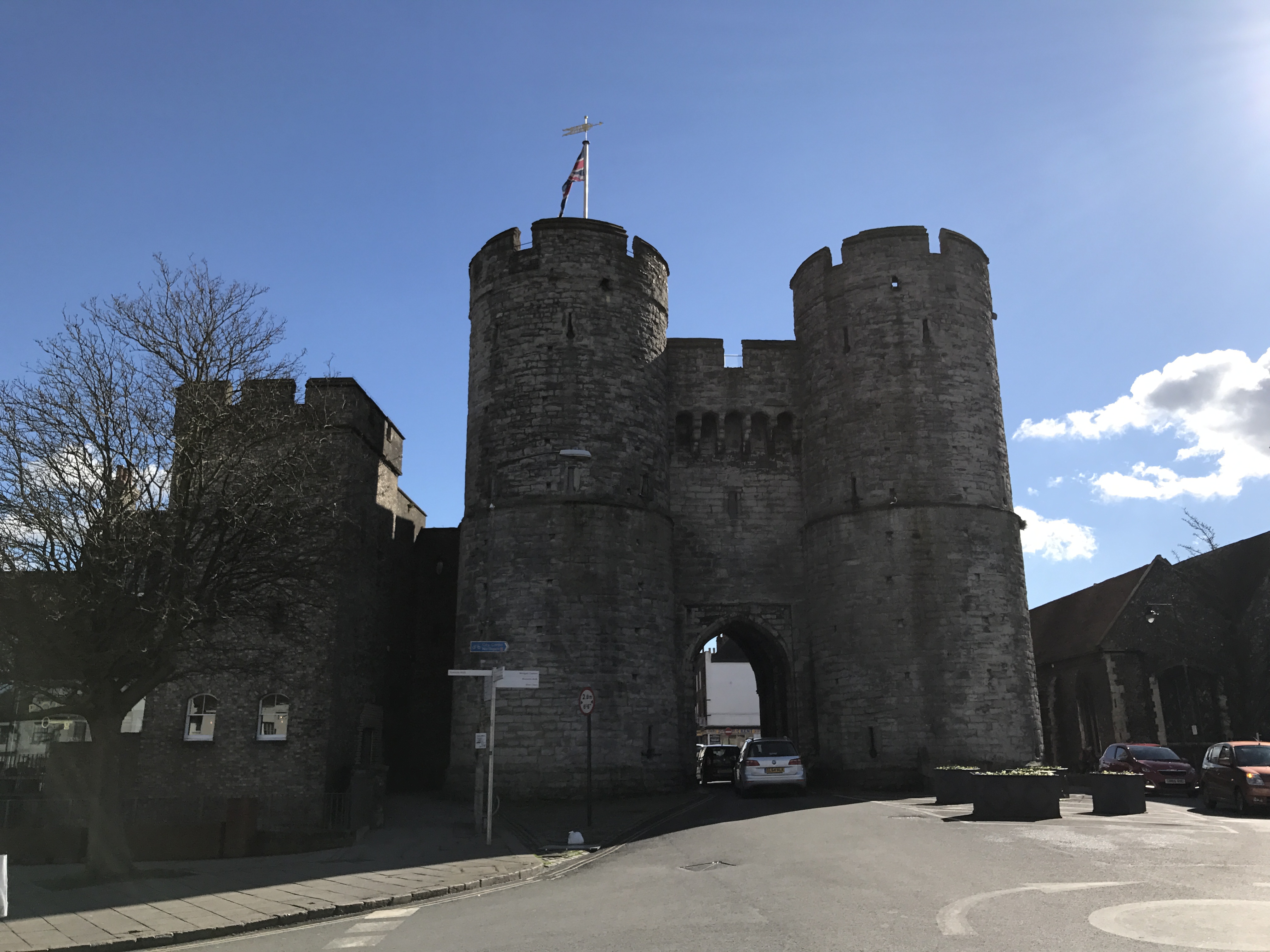
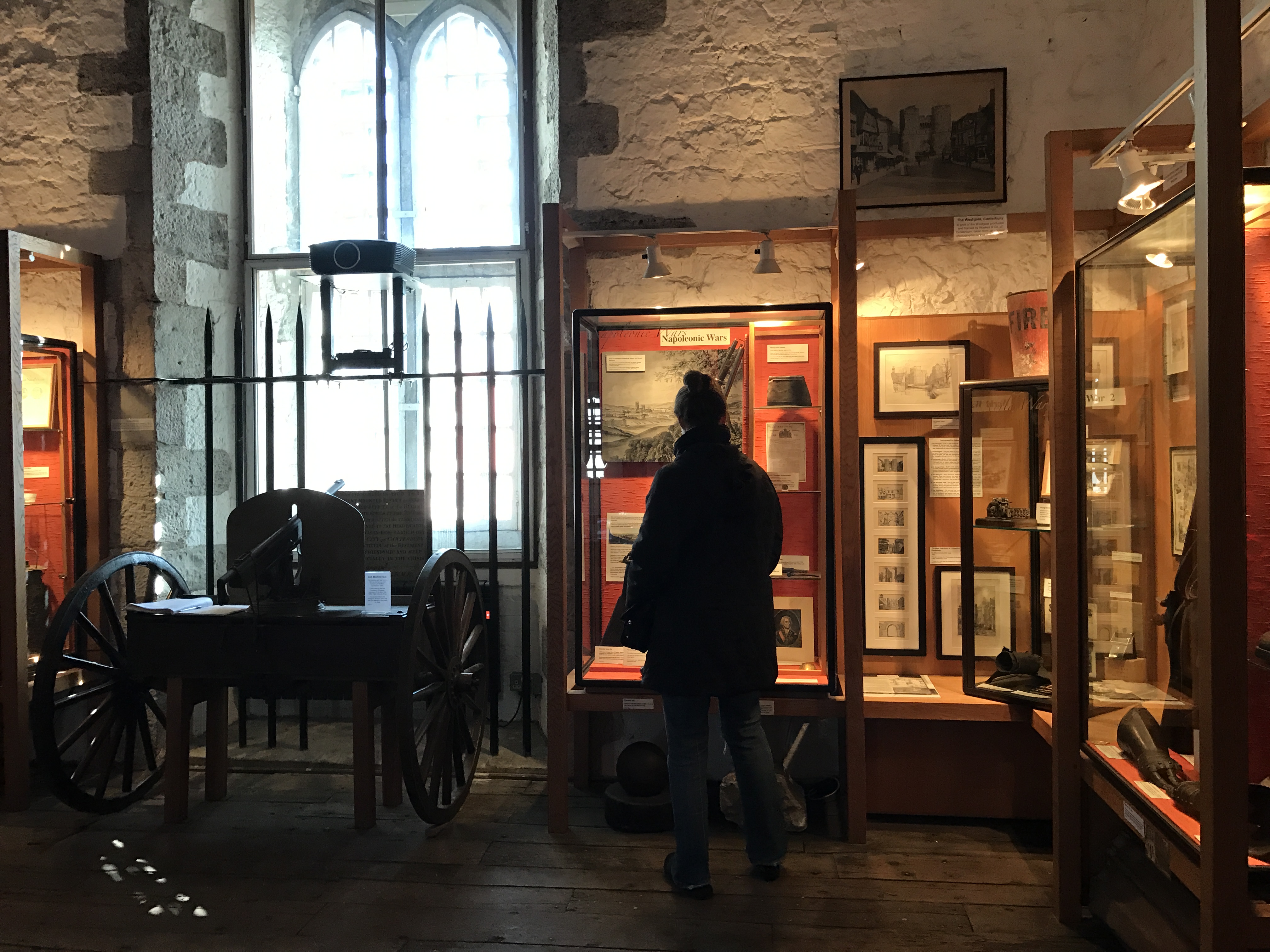
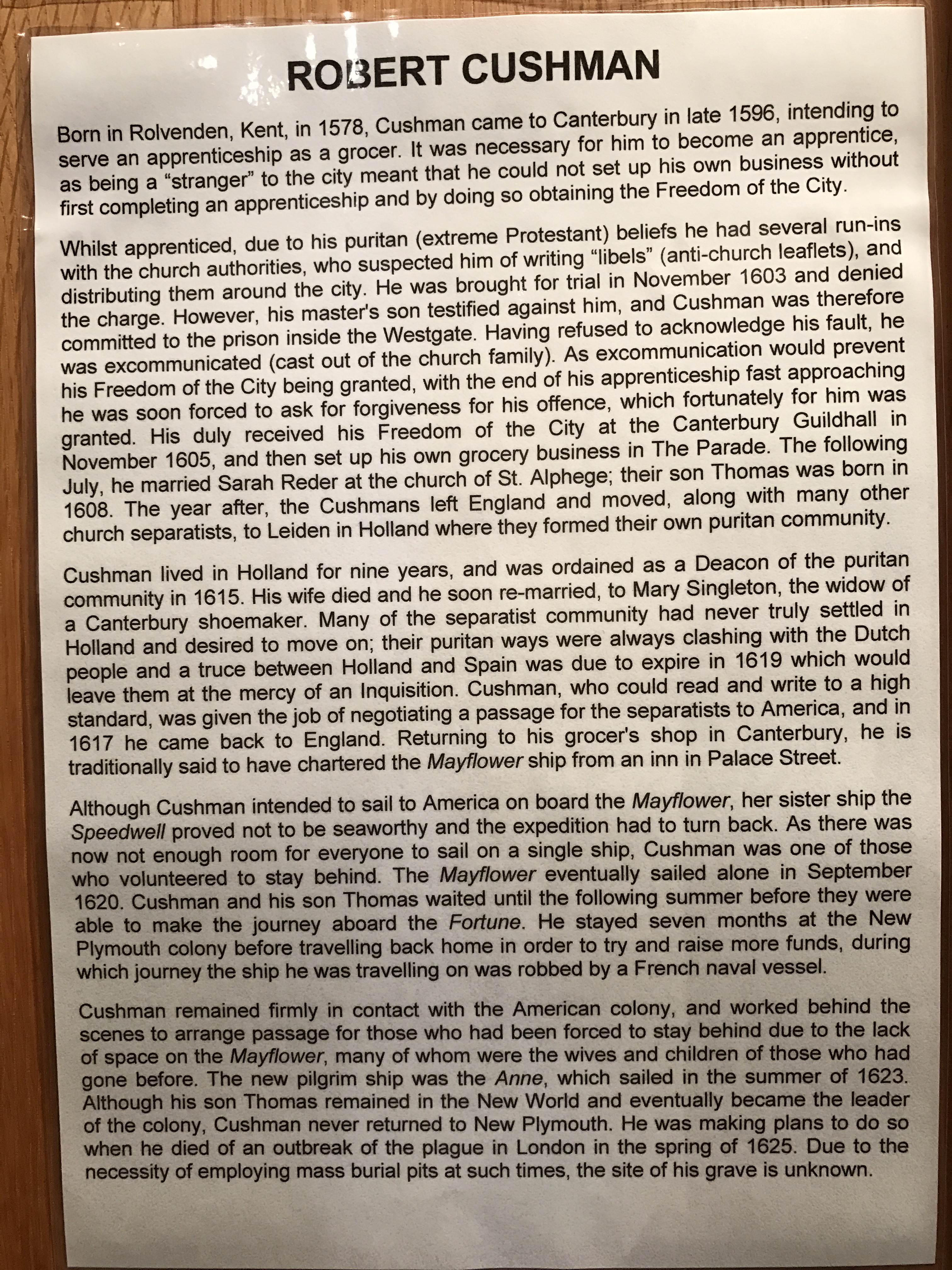
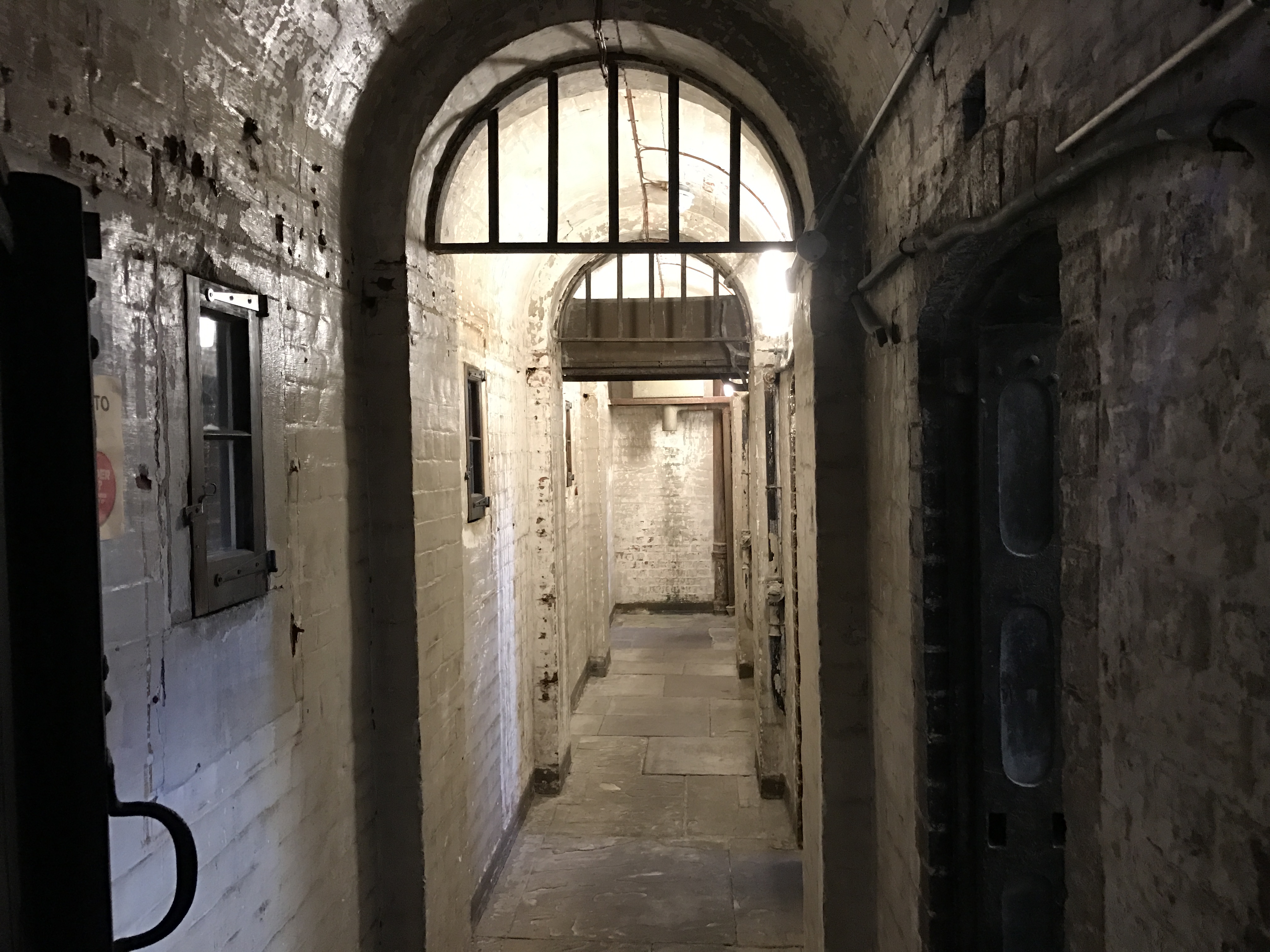
img_4159For my wife and I it was a bit of an overwhelming moment, only because we both love history and have a strong reverence for the Holiday of Thanksgiving in the United States. I had known that Robert Cushman who originally commissioned the Mayflower for the famous voyage to North America which of course unleashed the famous Thanksgiving Holiday that we celebrate each year unlocking the Christmas Season, but I didn’t think I’d ever get close to sitting in the cell where he was held imprisoned by the Church for spreading protestant pamphlets.  Yet, while touring the city streets of the ancient city of Canterbury, England at the Westgate Towers I found myself in a room exhibiting the shackles that were used for holding prisoners there and sure enough on the wall was the information talking about Cushman’s ordeal that led to the start of the Mayflower voyage in that very room.

img_4175A lot of people these days don’t really understand the necessity, and context of the argument between American separation of church and state because they have been free all their lives and have a shallow knowledge of history. But for Cushman who’s only ambition in life was to be a grocer on the streets of his childhood home in Kent he was a very passionate religious person who found himself in the crosshairs of the Church and their desire to be the primary vehicle through sacrament to Heaven.  Cushman naturally resented that control and wanted a more passionate relationship with God directly.  So the Church had him thrown in jail and as he sat in the cell at Westgate his young mind set him on a life course that would usher in the first pilgrims into the New World and start the concept of America.img_4161

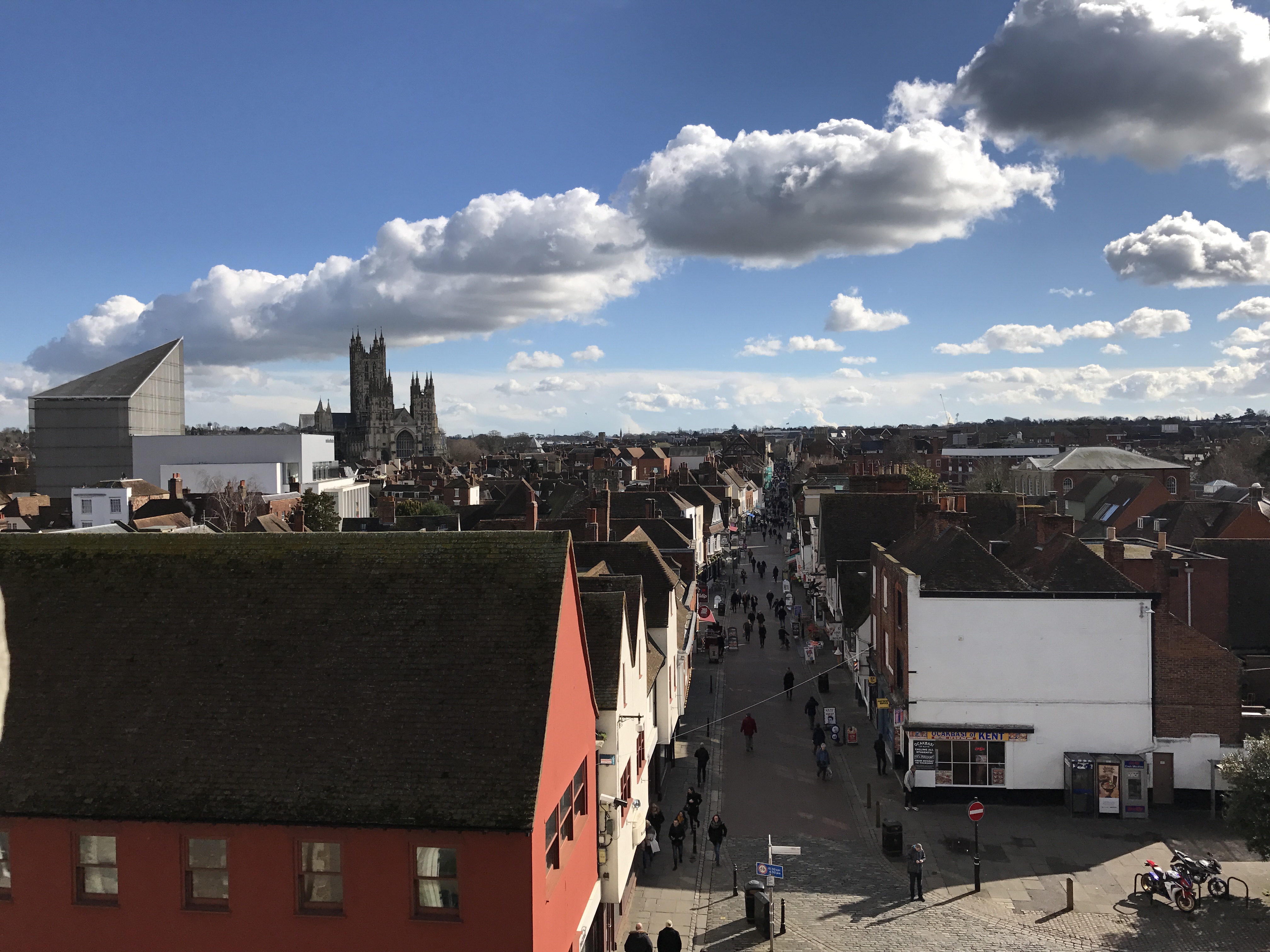
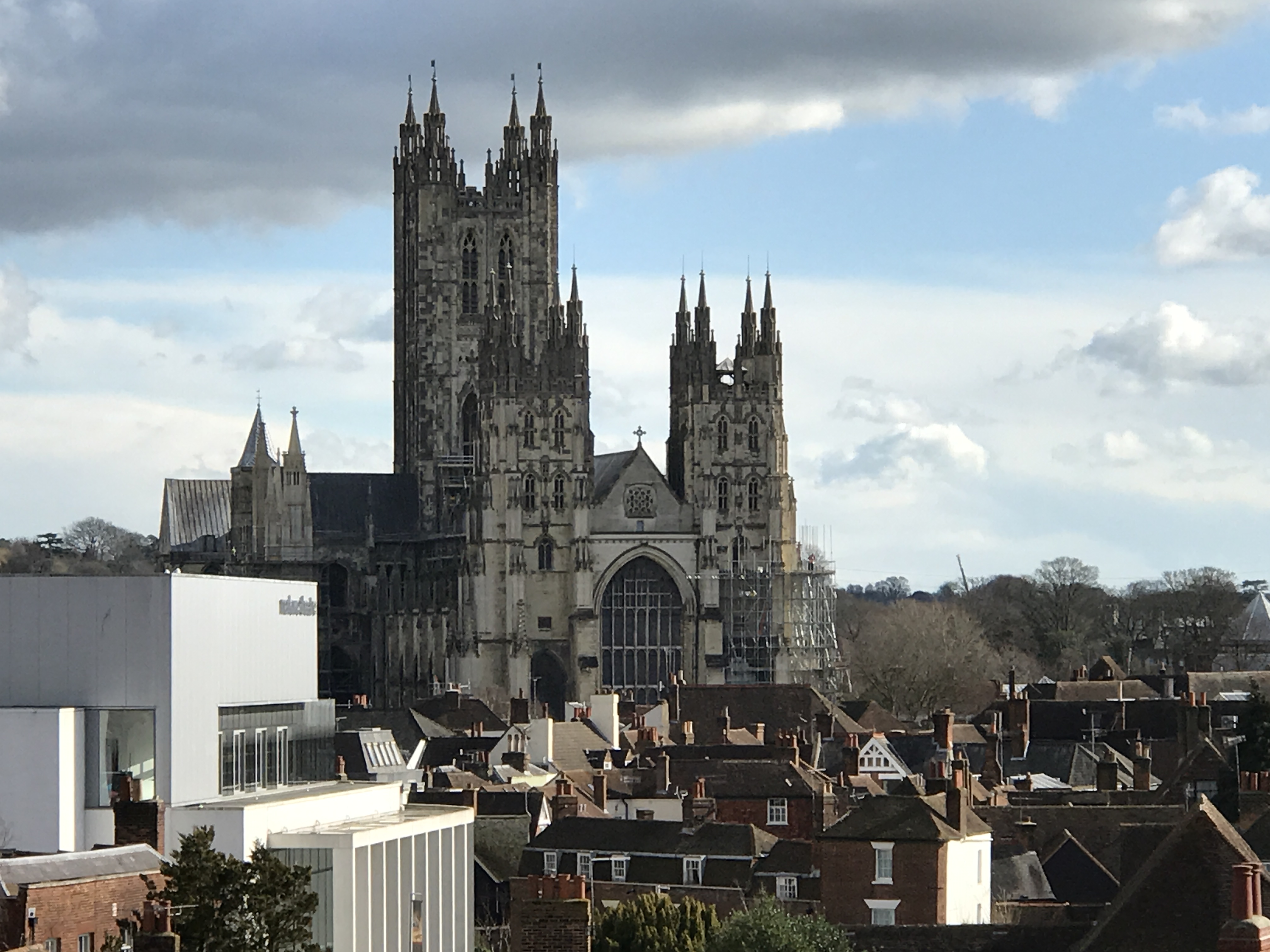
In a lot of ways, the birth of the United States happened right in that spot in Westgate so it was a little overwhelming. The role that Canterbury played was phenomenal—it was a town that featured at least two major earthwork mounds that are credited to the pre-Roman period, but I personally think are even thousands of years older—likely the same type of people who inhabited the Stonehenge area over 100 miles to the west.  Both St Augustine’s Abby and a gigantic mound the size of the Miamisburg Mound in Ohio sit among the ruins of the great Roman city that set Canterbury on its start.  But then the Romans pulled out a few 400 years later and in came the Anglo Saxons from Germany and elsewhere.  But William the Conqueror from the lineage of the Viking Rollo invaded from France and dominated the countryside. When he came to Canterbury the people surrendered without a fight and thus the great Cathedrals began, first at St Augustine’s Abby, then the great Canterbury Cathedral and the region quickly became known as the Church of all England.  Fast forward another 500 years or so and Robert Cushman was wanting to apprentice as a grocer but as a young passionate man critical of the Church’s role in the issuing of the sacrament found himself locked away in that old Roman tower.img_4169

As many historians understand, the Church of England was always in a perilous relationship with the kings of England and some, especially Henry II and Henry VIII had especially contentious relationships with the power the Church held and pushed up against it. This often put the people of England in the crosshairs of politics whether they wanted to be or not just by their association with needing religion in their lives.   The church and the state were always at war with each other leaving people like Martin Luther and eventually Robert Cushman to make extreme personal sacrifices to be free of the mess.  As he sat cold in the Westgate Tower Robert Cushman made a decision that if and when he was released that he’d escape to someplace friendlier to his religious views.  When he was released, he fled to Holland to live for 9 years but had to leave again because a treaty with Spain was due to expire in 1619 which meant the Spanish Inquisition would soon legislate that little country—so Cushman had to flee again back to his homeland to find some other means of escaping the tyranny of the church and its battles with the state.  So he commissioned the Mayflower in Canterbury to take his small group of protestant followers to a New World where they’d be free to follow their passions which took them to the famous Plymouth Rock in Massachusetts.img_4215

When Satanists and radical Islamic lunatics want to claim that separation of church and state allows them to do whatever they want to whomever they like—they have an inaccurate view of the context of the statement. The separation of church and state was to prevent the situation that Robert Cushman and his pilgrim followers experienced on the ancient streets of Canterbury, England—where they couldn’t be thrown in the Westgate Tower just for having a different view of how the sacraments should be administered to the public.  The Church in its insecure position with the kings of England felt that Rome should continue to stand at the gateway to Heaven, and not those heredity selected masses of human flesh called kings—and if they lost that authority for just a decade of their existence, then the kings would push against the church for power over the people—so the poor people of England were caught in that vice between the state and the church.  People in America didn’t want to find themselves in that situation and they certainly didn’t want to be thrown in jail for having a different belief, as Cushman was.img_4160

For my wife and I it’s one thing to know these stories, it was quite another to stand in those spots and walk down the same corridors as Cushman did and to see what he did under similar conditions. If I had been Cushman, I would have been beyond pissed off and I don’t blame him a bit for organizing his pilgrimage to America to escape such nonsense.  It’s also important for those of us in America to honor the spirit of that first journey.   In many ways, this is the big debate surrounding the immigration debate to this day.  Refugees around the world are fleeing broken regions for the hope that America can shield them with freedom of persecution and economic mobility.  However, there are some who flee to America to destroy it from within from that same jealous Europe and all the fallen empires of the past for that first sinful act of defiance which Cushman fled from to begin with.  They do so not with military might, but with that paradox of squeezing society between the church and the state once again—such as what the radical Islamic terrorists have been advocating in their terrorist’s attempts.  The imposing religious beliefs of these modern terrorists are just a modern version of the medieval inquisitions being imposed on the here and now.  Yet the argument between church and state is the same as it was in Cushman’s time, only now we’ve run out of places to run.  So now we have to stay and fight because America is the last place on earth that is free of that type of tyranny.  And that is why we really celebrate Thanksgiving, and why for my family, it’s a very special Holiday.img_4174

Rich Hoffman

 CLIFFHANGER RESEARCH & DEVELOPMENT

Sign up for Second Call Defense here:  http://www.secondcalldefense.org/?affiliate=20707  Use my name to get added benefits.

cropped-img_0202.jpg

Alden Ehrenreich will be a Great Han Solo: ‘Star Wars’ is making a nice comeback

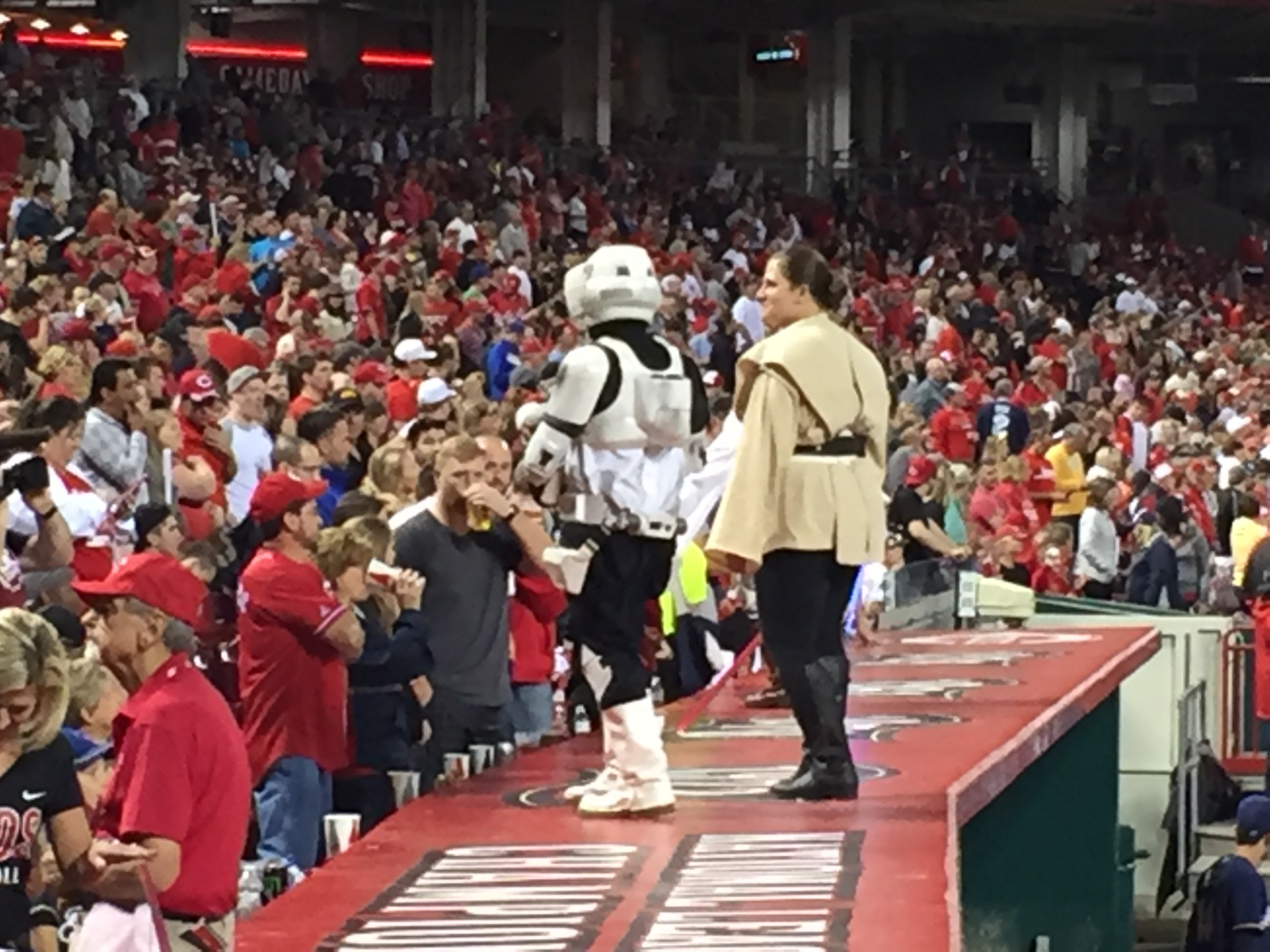
Star Wars3For me Star Wars has always been something of a vacation for my mind—a place to go for leisure and to think about basic formulations regarding good and evil.  I am one who believes that books are far superior to movies made from them, so I am still extremely disappointed with what Disney has done with the franchise.  However, I accept because of the Metaphysics of Quality that they do not understand at Disney how to do anything original and that they are essentially mining the old Star Wars novels for their new projects and claiming them as originals from the new regime at Lucasfilm.  It has really bothered me.  But of late I have respected what Lucasfilm has been doing with Disney—some of it anyway.  I think Rogue One will be a great movie.  It will likely be a combination of a lot of books that I’ve read, especially the A.C Crispin Han Solo novels and the video game Dark Forces but I have come to think that we shouldn’t throw the baby out with the bath water.  The essential stories are still good even if they are mangled by Disney.  To me, the books will always rule.  But for kids, the way that the books have been reinvented and put up on the silver screen has value—real value and I have found that in this really rough world that we are all living in, that Star Wars certainly is one of the best things in it for families and little kids.  They aren’t as good as they were when George Lucas was in charge, but they are still pretty good.  My mood lightened a lot about Star Wars after I watched Harrison Ford introduce the new Star Wars land in Disney World, seen below.  Lucasfilm finally announced that they found their pick for the new Han Solo films, and I had an opportunity to watch a Reds baseball game on their yearly Star Wars weekend where on Friday night they always do a fabulous fireworks display to John Williams music—which is always wonderful.

It was a beautiful night in May 2016.  I was at the Reds game watching the sold out crowd enjoy the Star Wars festivities and noticing how much the kids in the audience were excited about the event. I was also thinking about the kid Alden Ehrenreich who got the part of playing the new Han Solo in the upcoming stand alone films.  As I said many months ago I thought they would be smart to put Han Solo into all three of those new movies, and it looks like that’s what they are going to do.  With the casting of Alden Ehrenreich I was suddenly very excited about that possibility.  Even though I was very disappointed with The Force Awakens death of Han Solo, the possibility of a lot more Han Solo adventures suddenly perked me up and I found myself enjoying Star Wars for really the first time in months.

I remembered how much I loved Han Solo as a kid.  Of course I’ve long outgrown that character, but I still love the idea of Han Solo and always loved Star Wars because of him.  Without Han Solo for me there is no Star Wars.  But now, with this new kid whom I am very impressed with, I am suddenly having fun in that world again.  I am actually looking forward to the new films which is a bit of a relief, because like I said, for my mind which is very active, Star Wars was always kind of a vacation.  star wars1I probably enjoy the behind the scenes art stories about how Star Wars is made more than I do the actual movies.  So for the prospect of new Han Solo stories—of seeing some of the elements of the old A.C. Crispin novels about a young Han Solo being put up on a screen for everyone to enjoy, I’m excited about it.

As I was thinking of Rogue One, coming out this Christmas the prospect of Han Solo making a guest appearance is pretty exciting.  It will be nice to share those new adventures with my grandkids even though they may never read the same books I did.  I decided it was more valuable to share those experiences with them than to just check out.  I am still concerned about all the progressive trends that are emerging because essentially the young people making all these new Star Wars movies are fans of the original films that grew up with more progressive values as opposed to the original westerns that George Lucas grew up on.  I don’t think the new films will be nearly as good for me as the originals were, but for kids who don’t know any better—it will be very special to them.

More than anything, which was very obvious to me while watching the fireworks at the Reds game, the John Williams music alone was a proper bridge that is just beautiful to behold.  The new themes from the most recent Star Wars film fit in quite nicely with the old ones and it was a special fireworks display for me because of it.  It’s the first time I have heard the new pieces put together with the old and that’s when I thought—what the hell.  There will be six new Star Wars films over the next 5 years and a lot of new music—and Han Solo will be back in the Millennium Falcon with Chewbacca, and those are some fun stories.  And in just a few years there will be my dream of seeing a full-sized Millennium Falcon in Disney World.  That will be a dream come true and I am far more excited about that than I should be.  So even though Matt Clark and I torched Disney’s handling of Star Wars on the radio when The Force Awakens came out—I will give credit when I do see a reason for it and Disney is doing a good job—lately. Hopefully that trend will continue.

For the imagination, there is a lot to look forward to.  For me, Star Wars is all about imagination and possibilities.  That quest for the imagination is what makes me get up each day to face real world problems and work through massive tribulations.  At the end of all those tribulations, it has always been nice to have Star Wars to rest my mind in.  So in that context, it is nice to see that I may be able to continue enjoying it.  Alden Ehrenreich was a very good pick.Star Wars2

Rich Hoffman

 CLIFFHANGER RESEARCH & DEVELOPMENT

Sign up for Second Call Defense here:  http://www.secondcalldefense.org/?affiliate=20707  Use my name to get added benefits.

Life on the Moon: The ancient past and modern activity of alien life above our heads

I don’t say things until I’ve considered the evidence intently and one of the reasons I’ve been most insistent to write The Curse of Fort Seven Mile with an emphasis of late is because of a realization that I’ve discovered through quite a lot of research.  These rumors of some type of life on the Moon of our earth have some weight to them.  From the 1976 book written by George Leonard Somebody Else Is on the Moon (linked below) compelling evidence from actual NASA photographs open the topic profoundly.  It’s an expensive book to get, but well worth it.  Additionally I think it is the remarks of the astronauts who have actually walked on the moon, people like Edger Mitchell and Buzz Aldren who have provided such virtuous testimony—some intentionally, some not so much so.  The evidence points more to the fact that there are constructions on the moon that shouldn’t be there and that there is presently, or has been, an alien race active on its surface.  If you can’t afford the old Leonard book feel free to watch these following videos for some supportive evidence to the fact.

http://www.amazon.com/Somebody-Else-Moon-Artifacts-Leonard/dp/1499250797/ref=sr_1_2?s=books&ie=UTF8&qid=1462071157&sr=1-2&keywords=ulos+unidentified+lunar+objects

One of my first big memories as a kid was visiting the Neal Armstrong museum at Wapakoneta, Ohio while my family went on a trip to Put-in-Bay—I was around four years old.  Years after that, my class went on a field trip to the museum there while in grade school and I oddly enough remembered  most everything because I had been there before.  I was the kid who always read the literature on the exhibits, so I felt very much at home compared to the other kids who had seen the place for the first time.  Armstrong was a professor at the University of Cincinnati—which was in my hometown and his life occurred very much around me—and I was aware of that growing up.  Aviation was born around me as well, so I’ve always taken some pride in the Wright Brothers and old test pilots like Neal Armstrong who was obviously the first person to walk on the moon—at least that we know of.  What always bothered me about Armstrong was that he had turned inward after the experience.  He wasn’t like Buzz Aldren—Armstrong didn’t relish the celebrity of being the first man on the moon—he had a secret which he avoided talking about and obviously took to his death.

Given Armstrong’s Midwestern roots, I think the guy didn’t like lying to people about what he saw on the moon when NASA switched to a private broadcast while he and Buzz were standing on the surface in July of 1969.  I was one year old at the time and my parents were standing me up in front of the television to see the event.  All I remember of the occurrence was the shape of the ship and the sounds of the transmissions which I recognized at the museum years later in Wapakoneta.  I didn’t understand the context at the time, but the layers of memory solidified it in my thinking for years to come.  While everyone was impressed that mankind was standing on the moon, Armstrong had confirmed much of what NASA wanted to see, which wasn’t filmed with cameras that were made public.  We were not alone—not by a long shot—and it haunted him for the rest of his life—apparently.

I’ve talked about the moon before, there are several things not right with it—it’s a little too perfectly positioned and it is locked in a type of orbit around the earth that never shows its far side.  That is a little weird as well.  And apparently on the far side there are even more strange photographs of things that should not be there if Neil Armstrong was truly the first life form to ever walk on the surface.  This of course has led to a lot of speculation through science fiction but those entries into are rooted in fact.  For me the most compelling evidence is that we have not returned—and neither has any other country.  The technology is clearly available to us now, yet we aren’t going back after those initial Apollo missions.  Some of the astronauts involved in the Apollo missions are now very supportive of alien life in space even if they do preserve their disclosures agreements with NASA which is after all a government agency which thinks it knows best how to preserve the religions and social order of the society it is supposed to serve.

Just a few miles south of where the Wright Brothers ran their bicycle shop which invented aviation the bones of an undocumented giant species of man was found in Miamisburg—one very large skeleton at a gravel quarry near the Great Miami River and the other under a large tree which was uprooted at a farm which bordered the mysterious Miamisburg mound complex.  Strangely enough, Hanger 18 which housed the wreckage of the Roswell crash was also nearby and to prevent proper excavation of the Miamisburg site by archaeologists and anthropologists a nuclear weapon facility was built on the land called Mound Laboratories.  That certainly stopped any real research into the region by credentialed scientists.  I currently live on the banks of the Great Miami River south of that Miamisburg site, so all these conspiracy stories have been with me for my entire life—and nobody wants to give any real answers to the probing questions—which feeds the conspiracies.   My conclusion is that there is much more to the story which is why everyone is so tight lipped.  The authorities in this case would rather not confirm or deny—they’d just prefer to avoid the topic.  But the evidence is rather compelling–it’s is all around us—we just need to look at it.

Given all that evidence, it’s just a matter of time before we have to go to the moon and discover what NASA has been avoiding to tell us.  Private space companies are headed to the moon and within just a few years of now, there will be hotels on the surface—and by then we’ll learn the hard truth—it won’t be a secret any longer.  There is a presence of some life other than our own on the moon right now and they watch us from there for reasons that we’ll discover.  I would propose that it’s a kind of interplanetary base camp and they find our civilization interesting and likely some kind of social experiment that they check up on frequently.  Just yesterday I drove by the Serpent Mound site in eastern, Ohio and scientists are no closer to figuring out the reason for that strange mound than they were twenty years ago.  In fact, they have more questions now than answers.  If our science cannot figure out the meaning of things in our own back yards, then they surely aren’t prepared to deal with what’s on the surface of the moon—an entire celestial body that has not had any of its history covered yet by modern development.  It’s an open text-book of mankind’s past and whoever was a part of helping to shape it from inception.  And it floats there above our heads—all the answers we seek—yet we do not dare to uncover.  Actually, you and I might dear reader—but our governments want to hold onto their power for just a while longer.  The evidence is there for us to investigate and when we do we have a lot of hard questions to answer about ourselves.  Of course the first step will be in returning—and I can’t wait for that to occur.  I’d rather know the truth than live with illusions.

Europeans did not discover America–the giants in the Ohio mounds prove that.  They were in North America before there was ever an Indian or a Christopher Columbus voyage.  And we did not first walk on the moon.  Someone was there before us and they are still there. ………………………………

Rich Hoffman

 CLIFFHANGER RESEARCH & DEVELOPMENT

Sign up for Second Call Defense here:  http://www.secondcalldefense.org/?affiliate=20707  Use my name to get added benefits.

A Media Coup de Grace: Donald Trump’s call with the second-hander RNC chairman

The left leaning news reports all through Thursday July 9, 2015 were swarming on information that RNC chairman Reince Pribus had called Donald Trump to instruct him to tone down his rhetoric considered by progressives and lame duck politicians as “incendiary.” The centralist candidates jumped on the band-wagon as well hoping that the day would sink the presidential hopeful’s rising poll numbers. The billionaire Trump however met during the day with a barrage of reporters to set the record straight. True, he had spoken to the RNC chairman, yes the Republican leader asked him to tone down things a bit, but that the call was more of a congratulatory nature. Instead of allowing himself to be a progressive whipping boy, he corrected the media by saying “Mr Priebus knows better than to lecture me. We’re not dealing with a five-star Army general.” That is why virtually everyone in politics is afraid of Donald Trump. As a billionaire who has built a life for himself of success, he knows that the progressive dreams of “interconnectivity” terrorism won’t work with him because ultimately, organizations will seek out his money, and he’s in control once they reach out to take it.


Interconnectivity terrorism is the type of strategic enterprise that involves democratic emphasis on the collective against an individual so to modify behavior into a desired direction reached through group consensus. The roots of this behavior are taught in public schools where ten children might come to a classroom dressed in the latest fashion trends of the day then in comes one who is different. That student may ha

ve on a t-shirt of a favorite movie that is out-of-step with the rest of society, or they may simply be dressed a decade behind or ahead of the current fashions. Regardless, the ten students make fun of the one hoping to force them through a lack of collective peer approval to come dressed for school in the latest trends to avoid further ridicule. This is essentially how the political left has drug the political right so far past the center toward socialism over a long period of time—through this ingrained mechanism taught to us as children to seek peer approval at any cost—even at the expense of our inner logic.

Just today peers in activities I’m involved with declared that I am hard to work with because people are afraid of my temper, my volatile outbursts, and my otherwise aloofness to their quests for respect. I know what I do and what others do and where my skills are, and where they are otherwise lacking in rivals—so there is no need for me to arrive at a consensus with anybody, because I don’t need to. When people need something from you, they are at a weakened position if they don’t have something equally valuable to offer in return. To just point at a chain of command and hope that peer review is enough to mold behavior it is often scary to such people to learn that it isn’t. It works in the military when soldiers are broken down during basic training and rebuilt in the mold of an American soldier to sacrifice their life to others, and to respect titles, not the people who proudly utilize them for public approval. A soldier is expected to not pass judgment on their commander, to overlook any personal failings they may have. If that commander says to charge a machine gun, the soldier is expected to do so, even if they know it will mean their death. I am that guy who would tell the commander to get off his ass and do it himself. I have a better idea. People like that are terrifying to the established order seeking consensus.

It was the hope of the interconnectivity terrorists out there that once a few major retailers like Macy’s, NASCAR and other high-profile consumer heavyweights castigated Trump publicly, that the political newcomer would yield like a school kid to the pressure of a bully. But Trump didn’t yield, because he knows what they are afraid to admit, that they need his money and eventually, they’ll come to him like snakes shedding their skin if he shows a willingness to open his check book. That is the difference between a second-hander, and a primary. Trump knows he’s a primary and that most everyone else is a second-hander—one who lives through the existence of others.

Second-handers are always prone to gossip, because they can’t do for themselves, they rely too heavily on the opinions of other people. They are chained to others like anchors to a boat cast into deep water—unable to move or see the light of day without being raised to such heights by somebody else. When I spot a second-hander, or one tries to attach themselves to my hard-won efforts I typically choke off the second-hander as soon as possible and let them reel on the vine collapsing on their own efforts. Some might call that mean, I call it moral—in protecting what is mine—my work, and my effort. When some second-hanger attempts to suck off that effort and are cut off, they seek out a group consensus to regurgitate that terrible feeling of being the only kid in a room of ten who is out-of-fashion. Only I was the kid who loved that scrutiny and the older I became, the more I loved pissing off the establishment by rubbing their face in their own ineptness.

Trump knows in his heart that the RNC chairman needs him more than Trump needs the chairman and for most candidates who spend so much of their life trying to appeal to the political machine, that type of confidence is unequivocally terrifying. They don’t understand what it means to be your own man, yet in Trump they have no way to ignore it. They are used to him hosting political fundraisers and writing them checks—which made them feel important, because it included them in the distribution of power. But with Trump’s run for president, he has told the entire establishment that if he wants to see the presidential seat in the White House filled by somebody competent, then he’ll have to fill it himself. He’ll use his own money, his own reputation, and his own effort. He doesn’t need phony speech writers either, he’s been the star of his own television shows, so he is already more poised for the entertainment portion of politics than most politicians—so what does he need Reince Pribus for. Nothing!

So by the end of that same day there was serious concern. Their little coup de grace in the media to paint Trump as a mere mortal being called by the RNC chairman to be told to stop saying the things he had been saying turned out to be a complete failure.   Polls at the close of business showed Trump at the top—and by a sustainable margin. Why—because Trump is one of the first candidates in my lifetime, perhaps ever, who is a truly free person not encumbered by second-hander interconnectivity terrorism. And people know it. The only way to solve today’s problems is with a real person and not some fake piece of plastic who says all the right things to get the right votes at the right time. What people want is something real, that can stand on its own, and be its own person. That is what people are looking for in an American president. And it is quite obvious that Trump is that in every way.


Rich Hoffman

‘Tail of the Dragon’s’ Parent: Mad Max’s ‘Fury Road ‘unleashes itself at LAST!

One of the great treats for me that came out of this year’s Comic Con in San Diego was the interview with the great George Miller and the preview of the new Mad Max movie, Fury Road. I can admit without shame of any kind that George Miller’s Mad Max films were deep on my mind while I was writing Tail of the Dragon. I have watched the development of the new Mad Max film for over a decade now and remember well when it was first proposed back in 2002. Back then Mel Gibson with all his box office horsepower was behind the project with Miller, but the project still didn’t get off the ground. Then Gibson fell from grace and nobody in Hollywood wanted to touch the project and there were film delays and all types of issues. But Miller—finally—has managed to make the film with Tom Hardy now playing Max and I am ecstatically excited for the project.

http://insidemovies.ew.com/2014/07/27/george-miller-mad-max-interview-comic-con/

I was a bit shocked that the review of the San Diego Comic Con thought that preview of Fury Road was the most interesting thing they had witnessed. I couldn’t help but think of my own car chase story Tail of the Dragon which surpasses car crash wise anything seen in that preview or any of the Fast and Furious movies. The biggest difference was that I set my car chase story in the present as opposed to the future. My character is trying to save society from the kind of collapse that Max is reacting to. But I agree with Miller, car chases stories are essentially westerns on wheels. Hearing his articulation and the general audience reaction to his new Mad Max film gave me encouragement that Tail of the Dragon might someday find the right elements to end up on film. But it would take a really good director to pull off—and people like Miller are not exactly falling from the trees like apples.

I wasn’t sure how I’d feel about somebody besides Mel Gibson playing Mad Max. I grew up with Max and brought those experiences to my Tail of the Dragon novel mixed with plenty of Smokey and the Bandit. Star Wars is often compared to a western in space, and car chase films are like Miller described, westerns on wheels. Whenever a film has something to say about morality they are usually termed as “westerns.” Growing up with Mad Max I learned a lot about the depravity of the human spirit which was remarkably insightful. The opening of the first Mad Max film with the Nightrider on a rage across the desert with his crazed girlfriend was classic cinema that climbed into the mind of insanity at its finest and took viewers into the essence of a mind gone mad. I watched that movie almost every day from age 12 to 16. Not because of the movie influence but because of what it revealed about human nature, I became Mad Max at age 16 and I have the car chases, races and crashes to provide the testimony. Those experiences then became my own story, Tail of the Dragon—the horse of the western had been replaced by a car and I used mine as a kind of weapon against depravity. And when I couldn’t defeat depravity I out ran it with sheer speed.

I will forever be grateful to George Miller—his films are art with a value into the human mind that goes well beyond what people are comfortable revealing about themselves. The stunts in the Road Warrior, the second Mad Max film were unbelievably intense and I never forgot them. Even after all these years they still hold up as some of the best stunt work done in any picture. The cinematography has never been surpassed even after thirty years by anybody in the business. The dust, the smoke, the blood and violence of the car crashes are both beautiful yet horrific to look at and nobody does it like George Miller.

Miller’s vision of the future is not far off—if the engines of the world are turned off—the minds that drive society forward–people certainly do revert back into a tribal abyss. It is not hard to conceive that they would devolve into the kind of villains seen in Miller’s Mad Max films. Max was a good man during the days of civilization; he had a child, a nice wife and wanted to give up life as a cop to get away from the madness of the people he was holding back from taking over. Miller understood the strange mix of great charisma and madness that Mel Gibson was able to bring to the screen when he was in a 100 MPH stand-off with the Toe Cutter at the beginning of the first Mad Max. Mel Gibson would show throughout his career that his real life was more like Max than anybody would have guessed, and that brought some humor to the 2014 Comic Con that Miller addressed correctly. I share with Gibson some of those traits and as a young man I would discover the real genius of Miller’s Max character when I too had to face off against an opponent traveling at me at over 100 MPH in a game of chicken. Like Max, I didn’t budge even though I had far more to lose than the other guy.

I know what it feels like to be that close to the edge and to push beyond it to a place of fearlessness. Whether or not there had ever been a Mad Max film, my fate would have put me in the same circumstance. But as those circumstances occurred, I always thought of how much insight into the human condition George Miller had in his Mad Max films—a brutal reality not beheld by any other artist in any other art form—and I could confirm its authenticity.

Max couldn’t escape madness and it finally caught up to him and killed his family leaving Max a very sane man bent with rage in an insane world that only devolved from there. Fury Road takes place between the first Mad Max film and the Road Warrior, so there is some rich material there to delve into for Miller as society devolves from a rich industrious culture into tribal nomads desperate for value of any kind fleeing constantly from chaos. In the Road Warrior there was always sadness to Max—an awareness of how far down the drain the world had devolved, but a resolute charisma that refused to join it. It was as if he alone stood against the insanity of the world and was aware that the only way to meet it was by going “mad” himself when pressed by danger. As a result, those still sane in the world gravitated to Max to be saved, which he did in the Road Warrior, then on a more epic scale in Beyond Thunder Dome.

Beyond Thunder Dome was a bit too light for a Mad Max film but was still enjoyable. Mel Gibson was moving into a mainstream actor and George Miller was being lured in to doing more commercial work. It was the weakest film of the series but was still a work of art visually and in concept. I went to see it in 1985 all by myself at a summer matinée. I had some time to kill before work so I went to see it alone, just me and Max and I loved it. It was a wonderful way to watch George Miller’s version of a “western”—like Max himself.   All alone.

As much as I am rooting for Fury Road—and I will see it on opening day—it won’t surpass the violence and sheer magnitude of car crash carnage I wrote about in Tail of the Dragon. I am a product in some ways of Miller and I took that into real life then wrote about it with a new perspective. But it is encouraging to see such positive audience reaction from Comic Con as they had toward Fury Road. There may be hope for my own project yet due to the forecasted success of Miller’s resurrection of the Mad Max franchise. Apparently Miller has a sequel to Fury Road already written and is ready to head into production. For that film, yet unnamed, I will be the first to that one as well, and for every film that comes after—because George Miller is a master of the car chase western, and I am grateful to him in ways that are beyond description.

As for Tail of the Dragon, it is a shame it takes a positive reaction from audiences at Comic Con to tell studios that movie goers want car chase movies. I didn’t see anything in the Fury Road preview that eclipses what was done in Tail of the Dragon. So I was a bit impressed that audiences thought Fury Road was the most intense preview coming out of the event which showcased the latest and greatest that Hollywood was churning up. That certainly puts Tail of the Dragon in a class of its own but like Miller’s journey to bring Fury Road to the screen; the trip for Tail of the Dragon will likely be longer and will take just the right personalities—which has not yet been assembled.

Rich Hoffman

www.OVERMANWARRIOR.com