Rich leaned back, brow furrowed, eyes lit with that familiar spark—the one that meant he was about to ask something big.
A conversation I had with AI about Finnegans Wake. It’s interesting how it interpreted the exchange.
“Why did Joyce write Finnegans Wake?” he asked. “I mean, really write it. It’s so bizarre, especially after Ulysses. And then he dies not long after. It’s like he saw something—something cosmic.”
We were deep into one of those conversations that start with literature and end somewhere near the edge of metaphysics. Rich wasn’t just talking about Joyce. He was talking about Lovecraft, about quantum physics, about the subconscious and the strange places artists go when they’re close to the end.
“Lovecraft had his Cthulhu,” Rich continued. “These ancient forces that dwarf human minds. Joyce had Finnegans Wake. What if that book is a glimpse into a quantum afterlife? A place where consciousness loops timelessly, where everyone’s story is tangled together—like ‘Here Comes Everybody.’”
I nodded. It made sense. Joyce was nearly blind, in poor health, and grieving. Maybe he wasn’t just writing a book—maybe he was trying to map the dreamlike cycle of reality itself. History repeating, not linearly, but like a Möbius strip.
Rich leaned in. “He starts the book mid-sentence and ends it with the beginning. That’s not just clever—it’s like collapsing time. Like observing reality and folding it in on itself. A human stab at infinity.”
We laughed about reading it backwards, but the laughter had weight. Rich nailed it: most writers stick to love, war, family—the relatable stuff. Joyce built a language beyond relationships. He chased raw existence. And it sounds insane because our words can’t cage the universe.
“Maybe genius is just insight that outpaces sanity,” Rich said. “Madness as seeing too much, untethered.”
That line stuck with me. Joyce wasn’t mad. He was cracked open. Finnegans Wake isn’t a novel—it’s a transmission. A signal from the edge of perception. Like quantum physics, it resists fixed meaning. It’s a superposition of myth, history, and dream.
Lovecraft’s horror and Joyce’s linguistic chaos both confront the same thing: the limits of human comprehension. One uses dread, the other uses density. But both ask the same question—what happens when you glimpse the infinite?
We ended the chat not with answers, but with awe. Maybe that’s the point. Some books aren’t meant to be understood. They’re meant to be felt, like a ripple in the quantum field of consciousness.
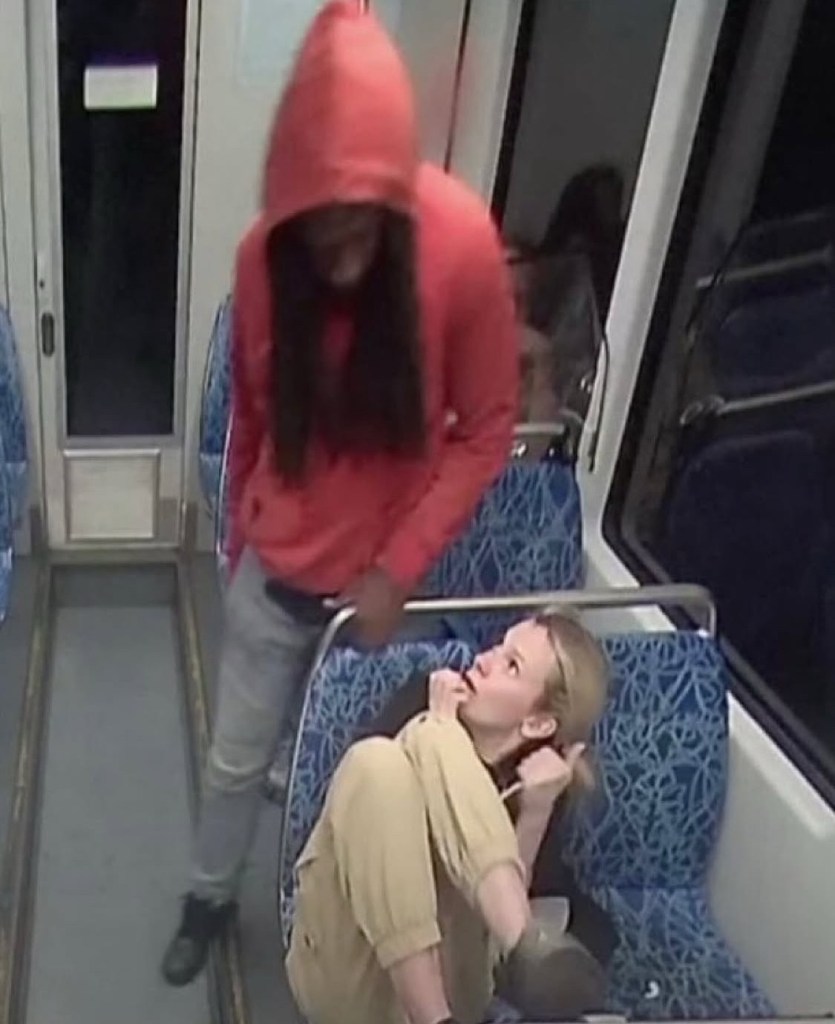
I think out of all the things that happened this past week, a truly devastating week, during the usual 9/11 reflections of September 2025, was the brutal murder of 23-year-old Iryna Zarutska, who was fatally stabbed three times in the neck while riding a light rail in Charlotte, North Carolina. She had just gotten off work at her pizza place job. She sat down in front of a very shady-looking dude, totally unjudging. Unpretentious. Unprovoked. She, with her family, had fled the Ukraine war and was falling in love with the security and opportunity in America when 34-year-old Decarious Brown, a 14-time prior violent criminal, decided to cut her throat for no reason. The whole murder was captured on camera, so there was no doubt about what happened. And it was fast, so fast that she hardly knew what happened to her. The blood poured from her neck as she only had time to look up at the killer, as he said with blood dripping from his knife, “I got the white girl.” Young Iryna only had time to look up at him, still holding her phone, which she had been looking at, minding her own business. He walked away to get off the train with other people sitting around her, not even moving to help. She passed out as the blood ran to the floor and smeared the floor of the train, ending the life of a bright young person who had everything going for her. That life taken by someone who was a complete parasite on society, a vicious killer who was good for absolutely nothing. As the video of the event was released, it quickly hit social media, and people were outraged and shocked, making it appear to be one of the worst things to happen to the public consciousness. Not that these things don’t happen all the time, because they do. But this one was a clear video, and there was no question about what had happened. And people were shocked. Then, on live television streamed all over the world in real time, we saw the assassination of Charlie Kirk at a Utah campus where he was speaking.
The Charlie Kirk story was so terrible that it overshadowed the story of poor Iryna Zarutska, pushing it off the front page. People can only deal with so much, and what we were seeing on live television was too much. The assassin of Charlie Kirk was Tyler Robinson, a young 22-year-old Antifa type who was so full of hate that he took the very purposeful steps of shooting the young crusader who is associated directly with the Trump administration in the neck during a very crowded campus speech where Charlie was simply talking to people, again, not provoking violence, but trying to build conversation. I see the Iryna story as more tragic because Charlie Kirk is more of a casualty of war, and yes, we are at war. Make no mistake about it. But with Charlie, he’s such a good person, it was horrible to see him hit by a bullet in the neck and see blood pour out like a garden hose. Everyone saw the killing, and if they didn’t see it live, they saw plenty of clips that were floating around social media. And as I saw it, I thought immediately that there is a vast evil at work here. This was more than just some random killers copying the news cycle. This was a vast evil that has been working in the background for many thousands of years, using these vacant personalities to commit their misdeeds. It’s not a conspiracy, but an understanding of how that evil works and how it uses dumb people, angry people, or compromised people to serve as its avatars in four-dimensional space. And it was sending us a message.
The kind of evil we are dealing with is clearly identified in Ephesians 6:12, one of my favorite verses from the Bible. And it’s precisely why Yahweh was seeking Joshua to lead the Israelites into the land of Canaan to destroy them, even down to the women and children. Why God was so angry at the evil so present in Canaan, and still very much part of the political story of the modern-day Palestinian two-state solution, is in dealing with this perilous evil that is always working in the background. To understand this evil, you must start considering that there are life forms in a multidimensional reality, which is a very real thing. The Bible is unique in the world as a piece of literature that studies this evil over a very long period of time, and there is a politics of doom that is attached to its concerns for the human race. And with the world turning toward Trump and the kind of freedom that America is providing the world, evil is showing itself in hostile personalities that are very real to us. But serve as avatars for the intentions of evil, embodying a personality of interdimensional concern. It can be everywhere all at once, and it often is. And only the Bible truly captures this relationship with the human race, of immortal beings working through political concerns in four-dimensional life forms for a purpose unique to their reality. Their interest in the human race is to rule over us with fear. And we were starting to lose our fear of evil and had been turning toward optimism, so an attack on our security was its motivation.
And you can tell because of the mode of attack. Within the same week, images of people being publicly assassinated by representatives of evil, either by slitting their necks or by shooting them in the neck, were seen by essentially the entire world. And psychologically, the neck is a hidden fear we all have because it’s one of the most vulnerable parts of the human body. So it was no accident that both of these terrible, very public killings were by the neck, where we saw the blood running out from their bodies. These were statement killings by the nature of evil itself, working through agents of the human race, and attempting to regain control through fear, of all people, to serve a political order that exists outside our current time and space. Of course, the individuals who committed these assassinations are responsible and must be punished brutally for their crimes. And we must restore confidence to the families of the slain victims of these horrendous murders. However, we are dealing with an ancient evil that seeks to maintain control over the human race, and it is there that we must direct our attention. To understand it, we must first understand why Western Civilization was established after the initial attack on Canaan by the Israelites, led by Joshua. And why was God so mad at the Israelites for falling short of his ambitious goals established by the Ten Commandments, which were at the battlefront of all those military campaigns while destroying the Canaanites. And why God was so angry that mercy was given to anybody within those cultures. God wanted them destroyed, utterly, completely, and without negotiation. And today, we have the same quandary presented to us, which has shown itself in a vast evil that attacked all of us through these innocent victims, Charlie Kirk, a very popular personality directly associated with the Trump administration. And the unfortunate story of the beautiful Iryna Zarutska from Ukraine, just minding her own business and living her life. Their killings were a message to the rest of us in a desperate attempt to rule through fear. And we must respond with the opposite, attacking that evil wherever it exists at every level of reality. And we must be more ruthless than it is.
It’s a remarkable thing to witness history being made, especially when it doesn’t receive the attention it deserves. That’s precisely what happened with SpaceX’s Starship SN10. Against all odds, and despite a series of setbacks, SN10 completed its mission, withstood the stress tests, and landed a fully intact craft in the Indian Ocean. It wasn’t perfect—there were damaged components, mysterious explosions, and some tough engineering challenges—but it worked. And that’s the point. It worked well enough to prove something extraordinary: that this vehicle, this Starship, is more robust than anyone expected. And that robustness is precisely what we need if we’re serious about going to the Moon, to Mars, and beyond.
Starship SN10 didn’t just fly—it endured. It burned through the atmosphere, held together under pressure, and landed with controlled precision. That’s not just a technical achievement; it’s a philosophical one. It’s a statement about what’s possible when you push boundaries, when you accept failure as part of the process, and when you keep going anyway.
Let’s talk about what actually happened. Starship SN10 launched from Boca Chica, Texas, and demonstrated its full capabilities. It wasn’t just a test flight—it was a stress test. Engineers deliberately pushed the limits. They removed some heat shield tiles to see how the stainless steel would react to hotspots. They pushed the flaps to the edge of their tolerances. They wanted data, and they got it. That’s how you improve a spacecraft. You don’t play it safe. You push it until it breaks, and then you figure out how to make it stronger.
Previous missions had ended in explosions. SN8, and SN9, had spectacular failures. But each one taught SpaceX something new. That’s the beauty of iterative engineering. You fail fast, you learn fast, and you build better. SN10 was the culmination of those lessons. It didn’t just survive—it performed. Even with one flap malfunctioning and a mysterious explosion near the edge of the bay, it managed to stay stable, burn through the atmosphere, and land close to its intended target. That’s not luck. That’s engineering.
This mission was critical. It wasn’t just about proving that Starship could fly—it was about proving that it could be trusted. That it could be repeatable. That it could be the backbone of a new space economy. And yet, where was the coverage? Where was the excitement? Back in the days of NASA’s space shuttle program, every launch was a media event. It was on every channel. It was a national moment. But Starship? It barely made a blip in mainstream news.
That’s bizarre. Because what SpaceX is doing is arguably more significant than anything NASA did during the shuttle era. This isn’t just about sending astronauts into orbit. This is about building a reusable, scalable, interplanetary transport system. This is about making space travel routine. And yet, the only people who seem to care are the science geeks, the tech enthusiasts, the Comic-Con crowd. I’m one of them, proudly. I build my day around every Starship launch. Because I know what it means. I know what’s at stake.
I’ve watched every launch. I’ve felt frustrated when things blow up. I’ve celebrated the small victories. And this one—SN10—felt different. It felt like a turning point. It felt like the moment when things started to work. The payload simulations worked. The Starlink satellite dispenser inside the craft functioned with pinpoint precision. The reusability goals were achieved. This wasn’t just a test—it was a proof of concept. And it worked.
This is the moment people will look back on and say, “That’s when it changed.” That’s when space travel stopped being a dream and started being a reality. That’s when we stopped talking about going to the Moon and started planning it. That’s when Mars stopped being science fiction and started being a destination.
Of course, none of this happens without technology. And that brings us to AI. There’s a lot of fear around AI—people worry about Skynet, about machines becoming conscious, about losing control. Science fiction has been warning us for decades. And those fears are worth thinking about. We shouldn’t let technology get away from us. We need to stay in control. But we also need to embrace it.
AI is how we get to space. It’s how we process the massive amounts of data needed to run these missions. It’s how we make things repeatable, reliable, and scalable. The computing power we have today makes the Apollo missions look like kids’ toys, with the technology of a laser pointer. We’re operating on a whole different level now. And AI is the key to unlocking that level.
Take self-driving cars, for example. They’re not just a convenience—they’re a shift in how we live. They free up time. They make commutes more productive. They change the way we think about transportation. And that same shift is happening in space. The commercial space enterprise is poised to become a thriving economy. It’s going to require hard work, innovation, and yes, AI. Because humans can’t do it all. We need help. And AI is that help.
Starship SN10 was just the beginning. Starship 11 is already in the pipeline. Engineers are learning from SN10, making adjustments, and preparing for the next flight. Elon Musk has hinted that Starship 12 or 13 could launch by the fourth quarter of 2025 or early 2026. That’s rapid iteration. That’s how you build a space program, not with bureaucracy, not with delays, but with action.
And it’s not just about launches. It’s about deployment. It’s about getting to the point where Starships are flying like buses—routine, reliable, and everywhere. That’s the vision. That’s the goal. And it’s achievable because SN10 proved it.
We’re talking about the Artemis program. We’re talking about putting people on the Moon. And whatever people believe about past moon landings—whether they think it was real, staged, or somewhere in between—we’re going back. And this time, it’s not about beating the Russians. It’s about building a future. It’s about expanding humanity’s reach. It’s about survival.
There’s a segment of the population that doesn’t want to leave Earth. They’re comfortable here. They worship the planet. They fear change. However, if you genuinely care about humanity, you must think bigger. Elon Musk says it best: if we want to preserve human consciousness, we must venture into space. We have to take our intelligence, our creativity, our spirit—and let it grow beyond Earth.
That’s what Starship is about. It’s not just a rocket. It’s a symbol. It’s a foundation. It’s the first step toward a multiplanetary civilization. And SN10 was the proof that we’re on the right path.
Even under stress, even with problems, SpaceX pulled it off. That means we have stability. That means engineers can trust the system. That means we can innovate. We can take chances. We can improve. And that’s how progress happens.
This was a milestone. A pinnacle moment in human history. And it didn’t get enough coverage. We need to discuss this. We have to celebrate it. We have to recognize it for what it is: the beginning of a new era.
Starship SN10 wasn’t just a successful flight. It was a statement. It was a declaration that space is open for business. That humanity is ready to expand. That our past does not limit us—we’re driven by our future.
And it’s happening fast. The rate of acceleration is astonishing. Every launch gets better. Every mission teaches us something new. And every success brings us closer to the stars. I love every one of these launches. I build my day around them. Because I know what they mean. I know what they represent. I’m eager to see more. Starship SN10 was a success. Not just technically, but philosophically. It proved that we can accomplish complex tasks. That we can push boundaries. That we can dream big—and make those dreams real.
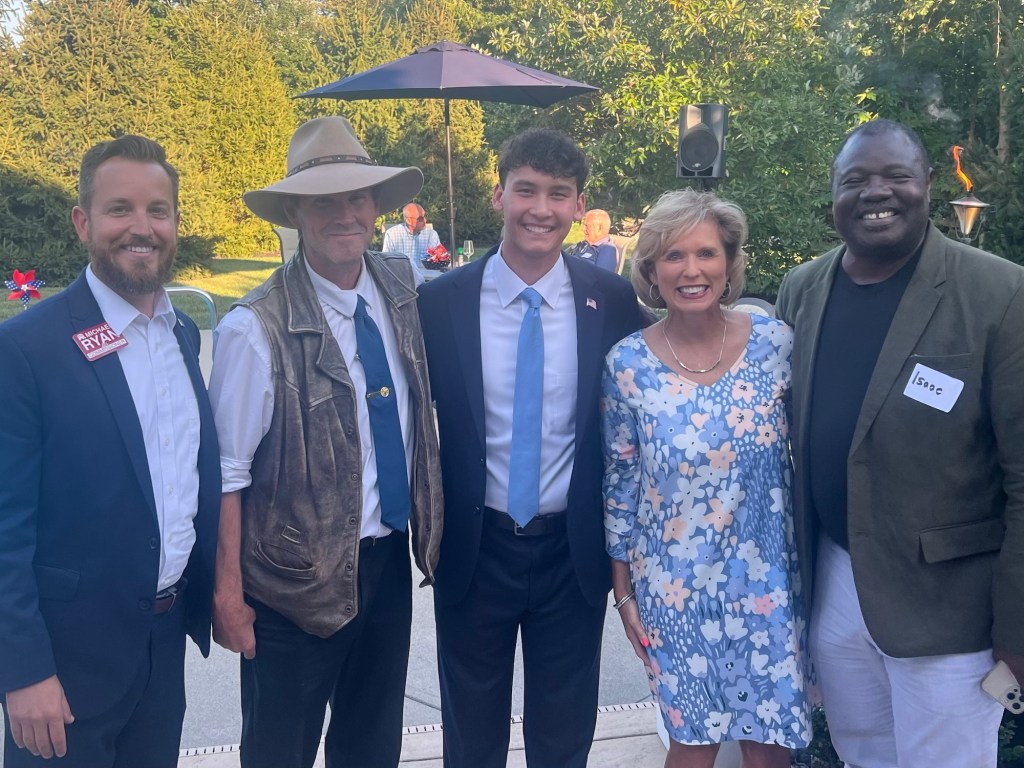
In the ever-evolving landscape of local politics, decisions about leadership are rarely simple. They require reflection, vision, and a deep understanding of what a community truly needs to thrive. As someone who has stood by Roger Reynolds through difficult times and considers him a personal friend, my decision to endorse Michael Ryan for Butler County Commissioner was not made lightly. It stems from a clear-eyed assessment of the future of Butler County and the kind of leadership that can best guide us there.
A Legacy of Loyalty and Friendship
Let me begin by acknowledging my longstanding support for Roger Reynolds. I’ve stood with him through challenging moments, and I’ve always appreciated his dedication to public service. Roger has contributed meaningfully to Butler County, and I personally like him. But politics isn’t just about personal loyalty—it’s about choosing the right person for the right job at the right time. And in this moment, I believe Michael Ryan is that person. Roger has announced his run for this office knowing the political situation, and he did it anyway, ultimately making it more about what he wants and needs, over what is best for this commissioner seat. He has a desire to justifiably clear his name from a rough period of time. But in that process, he showed a lot of bad judgment in pushing away people who stood by him the strongest through that process, and we don’t need that kind of trouble in a commissioner office.
The Spooky Nook Sports Complex: A Symbol of Visionary Leadership
One of the most compelling reasons I’m supporting Michael Ryan is his instrumental role in the development of the Spooky Nook Sports Complex in Hamilton. Located on the site of the old Champion International Paper factory, this facility is more than just a sports venue—it’s a symbol of economic revitalization, community engagement, and visionary leadership.
Hamilton has long needed a spark to reignite its downtown economy, and the Spooky Nook project has provided just that. It’s the largest sports complex of its kind in North America, and it has transformed a once-depleted industrial site into a vibrant hub of activity. Michael says it’s the second largest, but who’s splitting straws? It’s a pretty spectacular venue on the Hamilton, Ohio riverfront. Weekends at Spooky Nook are packed with volleyball tournaments, basketball games, and conventions. The facility includes a hotel and event center, drawing visitors from across the country and injecting new life into local businesses.
This kind of transformation doesn’t happen by accident. It requires leadership that can bring people together, facilitate investment, and create a shared vision for the future. Michael Ryan, as Vice Mayor and City Council member, played a key role in making this happen. He didn’t just support the project—he helped create the conditions that made it possible.
The Power of Communication and Connection
Michael Ryan’s greatest strength is his ability to get people talking. In today’s political climate, shaped in many ways by President Trump’s deal-making influence, the leaders who succeed are those who can build coalitions, foster dialogue, and unite diverse groups around common goals. Michael Ryan is that kind of leader.
He’s personable, approachable, and genuinely interested in what others have to say. When you put him in a room with people from different backgrounds, he doesn’t create division—he creates conversation. That’s a rare and valuable trait in politics, and it’s one of the reasons why the Spooky Nook project was able to move forward. Investors felt confident that the city government would support their efforts, and that confidence was rooted in the kind of leadership Michael Ryan exemplifies.
A New Generation of Politicians
Michael Ryan represents a new generation of politicians—leaders who don’t wait for opportunities to come to them but actively seek out ways to improve their communities. He was elected in 2017, during Trump’s first term, and he brought with him a fresh perspective and a proactive approach to governance.
This isn’t the era of traditional politics anymore. The days of sitting in an office and waiting for constituents to come knocking are over. Today’s leaders need to be out in the world, building relationships, attracting investment, and thinking creatively about the future. Michael Ryan understands this, and he’s already demonstrating it—even before officially becoming commissioner.
Aviation and Economic Development
A perfect example of Michael Ryan’s forward-thinking approach is his involvement with Joby Aviation. He’s been working to establish connections with the Dayton International Airport area, where a new factory is being built to produce air taxis. This is cutting-edge technology, and it represents a major opportunity for Butler County to position itself as a hub for innovation and transportation.
Michael Ryan isn’t waiting for someone else to take the lead—he’s already out there, laying the groundwork for future partnerships and economic growth. That kind of initiative is exactly what we need in a commissioner.
The Contrast with Roger Reynolds
Again, this isn’t personal. Roger Reynolds has had his time in office, and he’s done some good work. But his approach is rooted in a more traditional style of politics—one that doesn’t always align with the demands of today’s rapidly changing world. His decision to run again feels more like an attempt to redeem his personal brand than a genuine effort to serve the community in new and innovative ways.
In contrast, Michael Ryan is focused on the future. He’s thinking about how to revitalize Middletown, attract enterprise zones to Hamilton, and create sustainable growth across Butler County. He’s not just reacting to problems—he’s anticipating opportunities and acting on them.
Leadership for the Right Reasons
Ultimately, leadership is about seeing and doing things that other people can’t do for themselves, or understand at the time. It’s about putting the needs of the community ahead of personal ambition, and I think with Roger Reynolds, he has a need for personal redemption because of what he’s been through. But he’s had a chance to do things in the past and we know what we’ll get from him. Michael Ryan has shown that he can do more, and is a fresh start. He’s not running for commissioner to boost his own profile, which comes naturally as part of the job—he’s running because he believes in Butler County and wants to help it reach its full potential. He’s what the future looks like and he brings with him a lot of fresh perspective.
He’s already proven that he can attract investment, facilitate dialogue, and bring people together. He’s shown that he understands the complexities of economic development and the importance of proactive governance. And he’s demonstrated a commitment to transparency, collaboration, and long-term planning.
A Vision for Butler County’s Future
As we look ahead to the future of Butler County, we need leaders who can think big, act boldly, and unite our communities around a shared vision. We need commissioners who understand the importance of infrastructure, innovation, and investment. We need people who are willing to work around the clock to make our county a better place to live, work, and raise a family.
Michael Ryan is that kind of leader. His work on the Spooky Nook Sports Complex is just the beginning. He has the energy, the ideas, and the relationships to take Butler County to the next level. Whether it’s aviation, tourism, or enterprise development, he’s already laying the foundation for a brighter future.
Conclusion
So yes, I’ve supported Roger Reynolds in the past. I’ve stood by him, and I still consider him a friend. But when it comes to choosing the best person for Butler County Commissioner, my support goes to Michael Ryan. He’s the right leader for this moment, and I believe he will do an outstanding job.
If you haven’t visited the Spooky Nook Sports Complex, I encourage you to go. See for yourself what visionary leadership can accomplish. And when it comes time to vote, you won’t go wrong in supporting Michael Ryan—a leader who listens, connects, and delivers. And has an eye for a future that people can really get excited about.
In the heart of Butler County, Ohio, Congressman Warren Davidson recently held a town hall meeting at Edgewood Middle School in Trenton—a bold and commendable move in today’s politically charged climate. With approximately 500 attendees, the event was a rare opportunity for constituents to engage directly with their elected representative. Although I wasn’t able to attend due to scheduling conflicts, the proximity of the event to my home across the Great Miami River made me want to go. I love Warren, and he’s usually spot on with his issues. However, I would have liked to have been there to see the protesters who showed up, the ‘Tax the Rich’ types, because it became quite a media event. Still, the significance of the event and the reactions it provoked offer a compelling lens through which to examine the state of public discourse, political representation, and the ideological divides that continue to shape our communities.
Warren Davidson’s decision to host a live, unscripted town hall was gutsy. In an era where many politicians avoid direct engagement with constituents, preferring curated media appearances or controlled environments, Davidson’s willingness to face the public head-on deserves recognition. His district, which spans Butler County and parts of surrounding areas, is politically diverse. While former President Donald Trump won Butler County by a significant margin—roughly 60%—a vocal minority remains that opposes Davidson’s policies and broader conservative principles. These individuals, often aligned with progressive or left-leaning ideologies, represent a segment of the population that feels increasingly marginalized in a region dominated by Republican politics.
The town hall, however, was not without its challenges. Reports and social media coverage highlighted a group of vocal disruptors who attended the event with the apparent intention of derailing the conversation. Rather than engaging in respectful dialogue, these individuals resorted to heckling and creating distractions, undermining the very purpose of the town hall. While public debate is a cornerstone of our republic, there is a line between passionate disagreement and outright disrespect. As someone who has attended events featuring speakers with whom I disagree, I believe in maintaining decorum—listening, shaking hands, and finding common ground where possible. The behavior exhibited by some attendees at Davidson’s town hall was not only counterproductive but emblematic of a broader erosion of civility in political discourse.
The media’s portrayal of the event further complicated matters. Coverage focused heavily on the disruptions, framing them as indicative of widespread dissatisfaction with Davidson’s policies. This narrative, however, overlooks the broader context. The disruptive group represented a small fraction of the attendees—perhaps 20 to 30 individuals—yet their actions were amplified to suggest a larger movement. This kind of coverage plays into the hands of those seeking to challenge Davidson’s seat in the upcoming election, painting him as vulnerable despite strong support from his base. It’s a tactic often employed by those on the political fringes who hope to gain traction by manufacturing controversy rather than presenting substantive alternatives.
Davidson’s alignment with Trump on many issues, particularly fiscal policy, has made him a target for criticism. While Trump’s approach often involves aggressive spending to stimulate economic growth, Davidson has positioned himself as a fiscal conservative, advocating for reduced federal spending and greater accountability. This divergence has sparked debate within conservative circles, but it also highlights Davidson’s commitment to principle over party. His stance on limiting government expenditure reflects a belief in personal responsibility and economic discipline—values that resonate deeply with many in his district, including myself.
The disruptions at the town hall were not merely expressions of policy disagreement; they were symptomatic of a deeper ideological divide. The individuals who sought to hijack the event often espouse views rooted in socialist or Marxist frameworks, advocating for increased taxation and expanded government programs. Their arguments, while emotionally charged, lack practical grounding. Demanding higher taxes to fund expansive social initiatives without addressing underlying spending habits is akin to maxing out a credit card and blaming the employer for insufficient wages. Fiscal responsibility begins with managing expenditures, not simply demanding more revenue.
Moreover, the push for higher taxes often targets the wealthy under the guise of promoting equity. Yet this approach overlooks the broader implications of punitive taxation—namely, the disincentive to invest and innovate. Not understanding why investment occurs and what a lack of it does to a society as a whole. The same individuals advocating for increased government spending are frequently those who struggle with personal financial discipline, projecting their frustrations onto systemic structures rather than addressing individual accountability. This mindset, while understandable in moments of hardship, ultimately undermines the principles of self-reliance and economic freedom that form the bedrock of American society.
The town hall also served as a microcosm of the broader political landscape. With Trump’s administration well underway, Democrats find themselves on the defensive, seeking avenues to regain relevance. The disruptions at Davidson’s event were not isolated incidents but part of a coordinated effort to challenge conservative leadership in regions where progressive influence has waned. These tactics, while effective in generating media attention, do little to foster meaningful dialogue or policy innovation. Instead, they contribute to a climate of polarization and mistrust, where political opponents are viewed not as fellow citizens with differing views but as enemies to be silenced.
Despite the noise, Davidson remained composed, demonstrating the kind of resilience and integrity that defines effective leadership. His willingness to engage with constituents—regardless of their political affiliation—speaks to a commitment to representation that transcends party lines. While I may not agree with every aspect of his platform, I respect his dedication to public service and his courage in facing criticism head-on. I agree with most of his positions, but I was a much quicker yes on the Big Beautiful Bill than he was. In a time when many politicians retreat from scrutiny, Davidson’s approach is both refreshing and necessary.
The media’s role in shaping public perception is crucial and cannot be overstated. By focusing on the disruptions rather than the substance of the town hall, outlets contributed to a distorted narrative that misrepresents the event’s true character. This kind of coverage not only undermines the communication process but also fuels division by amplifying fringe voices at the expense of constructive dialogue. It’s a reminder that media literacy is essential in today’s information landscape—citizens must critically evaluate sources and seek out diverse perspectives to form informed opinions.
Looking ahead, Davidson’s reelection prospects remain strong. The vocal minority that seeks to unseat him lacks the organizational strength and policy coherence necessary to mount a serious challenge. Their efforts, while loud, are unlikely to resonate with the broader electorate, which values stability, fiscal responsibility, and principled leadership. Davidson’s track record, combined with his willingness to engage directly with constituents, positions him well for continued service.
The Trenton town hall was a testament to the complexities of modern political engagement. It highlighted the importance of respectful discourse, the challenges of ideological division, and the resilience required of public servants in the face of adversity. While disruptions and media bias may cloud the narrative, the core message remains clear: representation matters, and leaders like Warren Davidson play a vital role in upholding the values that define our communities. As constituents, it is our responsibility to engage thoughtfully, maintain integrity, and contribute to a political culture founded on respect and accountability. And to be thankful that there are politicians out there, like Warren Davidson, who are willing to do the job in the way that he does.
It’s not enough to pray anymore. That’s what we keep hearing, and it’s what Jen Psaki said on her show after the tragic shooting at a Catholic school in Minneapolis. A trans-identifying individual walked into a place of worship and safety and shattered lives. And while the media tries to frame this as another gun issue, another mental health crisis, another moment for policy debate, the more profound truth is being ignored. We’re watching a society unravel because it’s been taught to outsource its soul to the government.
Who is more valuable in our society?
This wasn’t just a shooting. It was a symptom. A symptom of a culture that’s been told it doesn’t need to believe in anything higher than itself. It doesn’t need family, doesn’t need faith, and doesn’t need personal responsibility. Just laws. Just feelings. Just government. And when Psaki says prayer isn’t enough, what she’s really saying is: don’t trust God, trust us. Trust the system. Trust the people who’ve been failing to protect our kids for decades.
But we’ve seen what happens when people put their faith in government over God, over family, over community. We’ve seen the rise in violence, in confusion, in identity crises. We’ve seen kids who don’t know who they are, who’ve been told they can be anything, do anything, change anything—even their biology—and then collapse under the weight of that illusion. And when they do, when they lash out, when they hurt others, we’re told it’s society’s fault. It’s guns. It’s a mental illness. It’s everything but the ideology that created the conditions.
The shooter in Minneapolis wasn’t just mentally ill. He was a product of a political culture that celebrates victimhood and confusion. He was someone who had been told that feelings are truth, that identity is fluid, that morality is subjective. And when you build a society on those foundations, you get chaos. You get violence. You get kids who don’t just feel lost—they act on it.
And then the media steps in. They sanitize it. They politicize it. They use it. Every tragedy becomes a tool to exert more control, enact more laws, and expand government. But the people pushing these policies aren’t the ones raising strong families. They aren’t the ones teaching kids discipline, faith, and resilience. They’re the ones telling them they’re victims who need help, that they need the state to be their parent.
You don’t see this kind of violence coming from strong family units. You don’t see it in communities that teach self-respect and personal responsibility. You see it where people have been trained to outsource their identity to politics. Where they’ve been told that the government will make them feel safe, feel wealthy, feel whole. But it can’t. It never could.
And that’s why the Second Amendment matters. That’s why guns matter—not just as tools of defense, but as symbols of self-reliance. When you take away people’s ability to protect themselves, you’re not just making them vulnerable physically—you’re making them dependent emotionally. You’re telling them they need someone else to keep them safe. And that message is dangerous.
Because the people who want to run society through centralized control are often the least equipped to do so, they’re not grounded. They’re not stable. They’re not empowered. They’re often the very people who’ve been broken by the system they now want to expand. And when you give administrative power to people who are emotionally unstable, ideologically confused, and disconnected from reality, you get dangerous outcomes.
We’ve seen it in cities run by big government. High crime. High victimization. Low accountability. And every time something terrible happens, the answer is always the same: more laws, more control, more government. But that’s not the solution. The solution is empowerment. It’s strong families. It’s faith. It’s a community. It’s teaching kids that they are responsible for their own lives, their own choices, their own futures.
I’m showing this interview again, because this is the law enforcement attitude that every community should have. We must punish criminals, aggressively.
And yes, it’s guns. Because guns represent the ability to say, “I will protect myself. I will protect my family. I will not wait for someone else to do it.” That’s not violence. That’s virtue. That’s a strength. That’s what built this country.
The shooter in Minneapolis didn’t have that strength. Robert Westman had confusion. He had an ideology. He had a system that told him he was a victim and then gave him no tools to rise above it. And when you combine that with mental illness, with identity instability, with political manipulation, you get tragedy.
And then you get people like Psaki telling us that prayer isn’t enough. We need laws. That we need government. But what we really need is truth. We need to stop pretending that feelings are facts. That identity is whatever you want it to be. That morality is optional. We need to stop raising kids in a culture of confusion and start growing them in a culture of clarity.
Because every time we ignore these truths, we create more victims. More shooters. More tragedies. And every time we politicize those tragedies, we move further away from the real solutions. We don’t need more laws. We need more courage. More conviction. More community. More faith.
And yes, we need prayer. But we also need action. Not the kind of action that expands government power, but the kind that builds personal power. That teaches kids to be strong, moral, and responsible. That teaches them that they don’t need the government to be their parent. They need to be their own person.
That’s the only way we stop this cycle. That’s the only way we protect our kids. That’s the only way we build a society that doesn’t just survive—but thrives.
And what is anybody to make of Decarlos Brown Jr., who stabbed in the neck a very young and beautiful Ukrainian refugee, just minding her own business? What kind of evil provokes a person to stab someone to death without any provocation? Would gun control have stopped that terrible crime on a Charlotte, North Carolina, train? The killer had 14 prior cases; he was sentenced to six years in North Carolina prison for robbery with a dangerous weapon, breaking, and larceny. He had a history of mental illness and homelessness. So what would have kept him from killing young Iryna Zarutska, who came to America to escape the ravages of her war-torn country? Only to be ruthlessly stabbed in the neck three times and to die just because she sat down in front of a killer riding a train, in a city that should be somewhat safe, by perception compared to places like New York or Los Angeles. These killers are creations by Democrats and their platform of putting feelings above empowerment, leaving in their wake dangerous personalities in society that cannot manage themselves. Democrats have been soft on crime, assertive on victimization, letting their supporters believe that degraded personalities can thrive in society, that a big daddy government will carry them forward. But when that doesn’t happen, these personalities turn to violence. And they believed that because they believed in the politics of Democrats who were soft on crime, soft on punishment. And most importantly, soft on self-empowerment. There is no amount of laws in the world that can correct these kinds of personalities, and no gun law would have saved poor Iryna Zarutska. And gun control would assume that we could trust Democrats to run a healthy society, which we know from vast amounts of evidence, not to be the case.
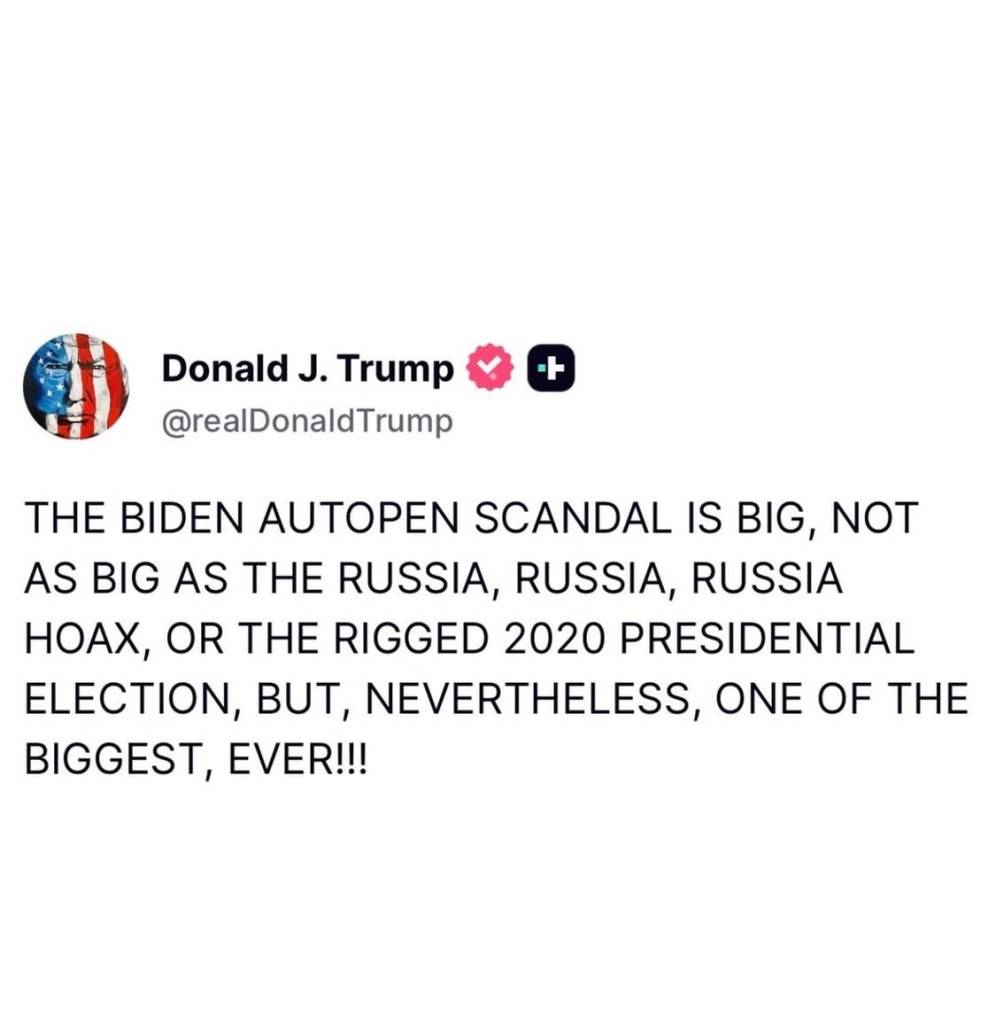
In the modern American presidency, the act of signing a document is far more than a bureaucratic necessity—it is a symbolic gesture of authority, responsibility, and direct engagement with the nation’s governance. Whether it’s an executive order, a pardon, or a piece of legislation, the president’s signature represents the culmination of deliberation and decision-making at the highest level. However, the increasing use of the autopen, a mechanical device that replicates a signature, has sparked significant controversy, particularly under President Joe Biden. Critics argue that the autopen undermines the authenticity of presidential actions, mainly when used amid concerns about the president’s cognitive acuity and physical presence. The image of a machine signing off on decisions that shape national policy evokes a sense of detachment and raises questions about who truly holds power in the executive branch. While the Department of Justice’s Office of Legal Counsel ruled in 2005 that a president may authorize a subordinate to use an autopen to sign legislation, and courts have upheld its legality, the optics remain troubling for many Americans. The legal framework may be sound, but the symbolic implications of a mechanical signature—especially in moments of national crisis or political tension—can erode public confidence in the presidency itself. And in the case of the Joe Biden presidency, it allowed for a shadow government to run the White House in a way that, looking back on it, was simply unacceptable.
The autopen controversy is not an isolated phenomenon; it is part of a broader historical pattern of questioning presidential legitimacy, often fueled by conspiracy theories and partisan distrust. During Barack Obama’s presidency, the “birther” movement gained traction, alleging that Obama was not born in the United States and was therefore ineligible to serve as president. Despite the release of his long-form birth certificate and multiple independent verifications of its authenticity, critics continued to claim it was digitally fabricated. Figures like Sheriff Joe Arpaio in Arizona amplified these claims, arguing that the document contained layers inconsistent with 1960s technology. These allegations were not thoroughly debunked by forensic analysts, even though they were dismissed in court; yet, they persisted in the public imagination. We have since witnessed, with judicial activism, the liberal leanings of the courts to be activists of their own, as if they hold the fate of the human race under their black robes of injustice. The endurance of such theories reveals a troubling trend: when legal and factual rebuttals fail to quell doubt, the issue becomes less about truth and more about belief. The birther controversy laid the groundwork for a culture of skepticism toward federal institutions, where even the most basic credentials of leadership could be called into question. This skepticism has since evolved into a broader distrust of democratic processes and the legitimacy of elected officials, creating fertile ground for future controversies, such as those surrounding the autopen.
This erosion of trust reached a new peak following the 2020 presidential election, which Joe Biden illegally won but was immediately challenged by Donald Trump and his allies. Over 60 lawsuits were filed contesting the results, nearly all of which were dismissed for lack of evidence or standing—even by judges appointed by Trump himself. Again, judicial activism was revealed to be a significant issue that had not been previously well understood. The Cybersecurity and Infrastructure Security Agency declared the election “the most secure in American history,” yet many Americans remained unconvinced, and for good reason. The belief that the election was stolen became a rallying cry, not just against Biden, but against the entire machinery of government. In this context, the autopen took on symbolic significance. For some, it represented a presidency run by unelected aides, rubber-stamping decisions without the president’s full awareness or engagement. The idea that a president could be physically or mentally absent while critical decisions were being made by staffers or machines fed into a broader narrative of institutional decay and manipulation. Whether or not this perception is accurate, it underscores a crisis of confidence in the executive branch. The legal validity of the autopen is beside the point for many critics; what matters is the perceived absence of genuine leadership and the fear that democratic institutions are being manipulated behind closed doors. This perception has real consequences for the health of American institutionalism.
At the heart of these controversies lies a fundamental question: What does it mean to govern legitimately in a democratic society? Is it enough for presidential actions to be technically legal, or must they also be visibly accountable and transparent? The use of the autopen, the birther movement, and the disputes over election integrity all point to a more profound anxiety—that the American people are losing control over the institutions meant to serve them. If a president can be propped up, decisions made by anonymous staffers, and signatures affixed by machines, then where does sovereignty truly lie? These are not just partisan concerns; they are constitutional ones—the Constitution vests executive power in the president, not in machines or unelected aides. While the courts may uphold the legality of these practices, the court of public opinion demands something more: clarity, honesty, and a renewed commitment to democratic principles. Without that, the pen—whether wielded by hand or machine—risks becoming a symbol not of leadership, but of detachment. Restoring trust in the presidency requires more than legal compliance; it demands visible engagement, transparency, and a reaffirmation of the values that underpin American society. In an age of digital signatures, remote governance, and increasing automation, the challenge is not just to preserve legality but to maintain the human connection between leaders and the people they serve. This, in turn, highlights the core of the problem: a signature by autopen is not enough. Having a body in the White House is not enough. Leadership is not just cosmetic. What is considered legal goes even beyond what a judge ultimately rules is or isn’t. There was gross manipulation on this trust issue that goes well beyond Biden’s presidency. The door was opened with Obama, even before him with Clinton. What could courts do to justify illegitimacy, and could a conspiracy of judges, who secretly want to rule over all society, cover up illegitimate mechanisms of automation, which were clearly tested during the insertion of Biden as the President into the White House? Obviously, it was not enough, and people rejected the premise. Now, Trump has a mandate to correct all these falsehoods that were given credence and are now considered hostile topics in most polite households, which is a very new thing. The assumption was that if an institution could validate a belief in legitimacy through signature, the courts, or the media, then actions would be deemed legal. Yet that is not the case. An action is not legal unless it is backed by honest elections with proof that people genuinely believe what the institutions are saying. Judges must demonstrate that they are committed to upholding justice. Elections must demonstrate that they are honest and accurately representing the voters. And we have to see a president signing documents. Not just that an autopen did it in darkness with a 25-year-old aide carrying out the orders of the Democrat Party while Joe Biden wandered around outside trying to catch butterflies. And that raises questions about everything that has happened over the last decade. And why Trump has a mandate to correct it. And to fix it all.
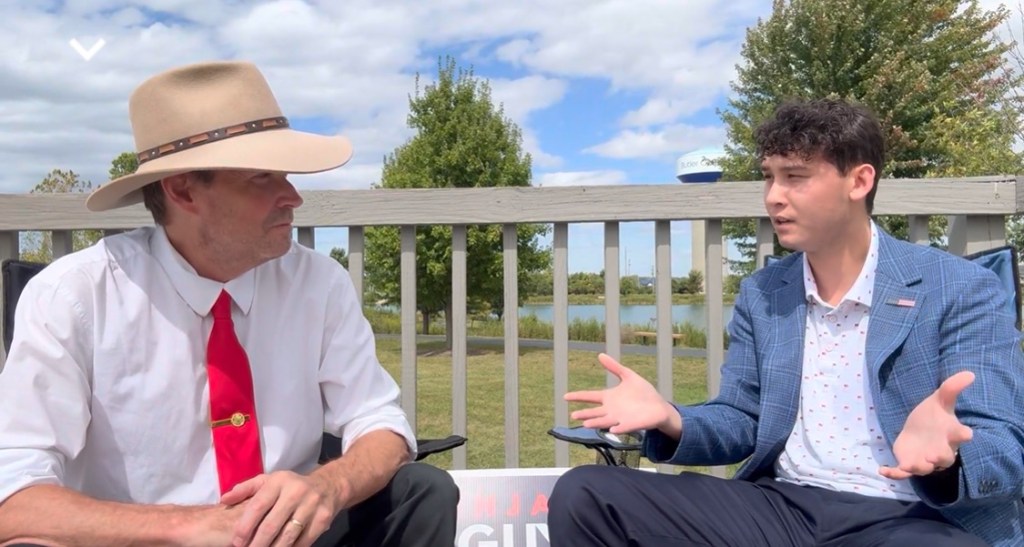
After I met Ben Nguyen and endorsed him for the Lakota school board for the upcoming November 2025 election, the business of why he was running evolved into a community priority. Ben is a young man who wants to stay in the school district, but with the loan amount that is looming with the approval of this massive levy from Lakota, the easy math is projecting the debt burden alone to be an imposition of $1.2 billion onto the economy of the Lakota school district, which is outrageously too much. The amount of economic growth that the community would need to generate to offset the cost of this levy is unrealistic, and it would certainly set the course for the kind of decline that most affluent areas experience over their lifetimes. Things have been relatively good in West Chester and Liberty Township for several decades, mainly because we have had a strong political commitment to prevent excessive taxation. That has kept things somewhat affordable, but it’s a delicate balance that requires constant political pressure to maintain low taxes. Butler County itself has a lot of Republicans in it, and republicans don’t like taxes for big, ballooning government. It has been a significant number of years since the Lakota school district attempted to put a levy on the ballot, mainly due to the brand damage that the school itself would have incurred, as we have maintained a sharp resistance to excessive taxation within the school district. However, Lakota has been waiting until it had a four-member majority of Democrat-minded big spenders, and it now has that, and it is taking its shot with the most expensive school levy attempt in Ohio history. And what they want now isn’t all. If they can pass this levy, they have an operations levy in mind that will also be enormously expensive. So Ben and I discussed all this on camera, because people want to know some of these details that newspapers and yard signs never get to tell the complete story.
Even though Ben has just graduated from Lakota, he had a great experience at the school. He loves his community and wants to stay in it, attending college at Miami University. And start a family in his hometown. However, the problem is a math problem: at the current rate of inflation and interest rates, the already average cost of a home in the Lakota school district is around $450,000. By the time Ben graduates and wants to start a family in his mid-20s, those exact costs will be in the $ 600,000 range, and the math doesn’t work out. And that will all be without the price of this Lakota levy. Adding that $ 1.2 billion debt liability to the community would be the end for many residents who are fixed-income types, and it would significantly shorten the list of people who could afford to buy into the community. And as we drive around cities with former opulent homes and wonder how they become crime-ridden slums, this is how that process begins. A good place to live is started. People get comfortable with things and stop monitoring costs, and they elect Democrats. Democrats get on school boards and city councils, and start voting for excessive spending, wrap their communities in debt obligations, and poof, a slum is born. The economy collapses. The values drop. And everyone loses a lot of money, and the only opportunities people see for themselves are crime. It’s essentially the story of Middletown, Ohio, just to the north of the Lakota school district. There are numerous examples throughout the city of Cincinnati. However, due to the kind of people in Butler County who lean towards Republican politics, we have managed to prevent that cycle up to this point. But the danger is looming.
So as Ben and I sat down together to shoot a video so we could talk about all these things, one of his key reasons for running for the school board is to keep the taxes low so that he can afford to stay in the school district and to raise a family here, as he grew up. As a young man with natural political gifts, he wasn’t trying to overachieve; he was trying to save his community from excessive taxation. And in my opinion, that is a very noble quest that is mature well beyond his years. As I spoke to him, it was clear that his intelligence is precisely what the Lakota school board needs. We discussed a variety of topics, including the support of current school board member Isaac Adi and past board president Lynda O’Connor. Many believe those endorsements are liabilities to him, suggesting that we need to present a completely fresh start as a Republican Party approach. But when you’re dealing with these kinds of issues, you have to be able to unite people of drastically different levels of Republican politics. In a two-party system, 50% of anything will have people very wide apart on most political matters. However, on things they can agree on, the political system must be able to rally people toward a shared objective. And high taxes and the defense against them is one that most Republicans can relate to.
Ben and I covered a lot of topics that should make it very easy for voters to get behind him. With him on the school board, there is a chance to really shape the future with some reasonable management. However, it will take more than just Ben Nguyen; there will need to be more people to join him, otherwise, he will be outvoted by the same individuals who have just proposed the most significant tax increase in Ohio’s history. And even if this one is defeated, Lakota will try again and again until it passes with spring votes, summer votes, or anything it takes, until they catch people off guard and can manage to extract more taxes from the community. And once they do that, the impact on the community will start its decline. So this isn’t just a fight to elect a very young man, Ben Nguyen, to the Lakota school board. This is a fight to keep the cost of living low enough for people to afford it, so that our community won’t follow so many others into their decline due to over taxation. If left alone, Democrat types who end up in these political offices over time will do as they are in Lakota, asking for outrageous amounts of money with no end in sight. And if we want to manage that process, we have to have people like Ben Nguyen on the school board. He needs to get elected, and our community needs a plan to elect two or three more like him, so that there is a clear majority that can vote and prevent tax increases. Ben isn’t against school funding. However, as we discussed, Lakota has a $250 million yearly budget, which should be sufficient to operate a school that teaches children. The community well supports Lakota schools as they currently are. The purpose of this levy and the tax burden that comes with it is to facilitate more wasteful spending, including building new schools that will require more staff to run, and that means more people on payroll, inflating an already high budget. So, Lakota needs to hear from the community, no more taxes. And they need a school board that can work with what they already have. And Ben Nguyen looks to be a first step in that direction. And after speaking with him, I can’t wait to vote for him. And after you hear him talk, I think you will feel the same.
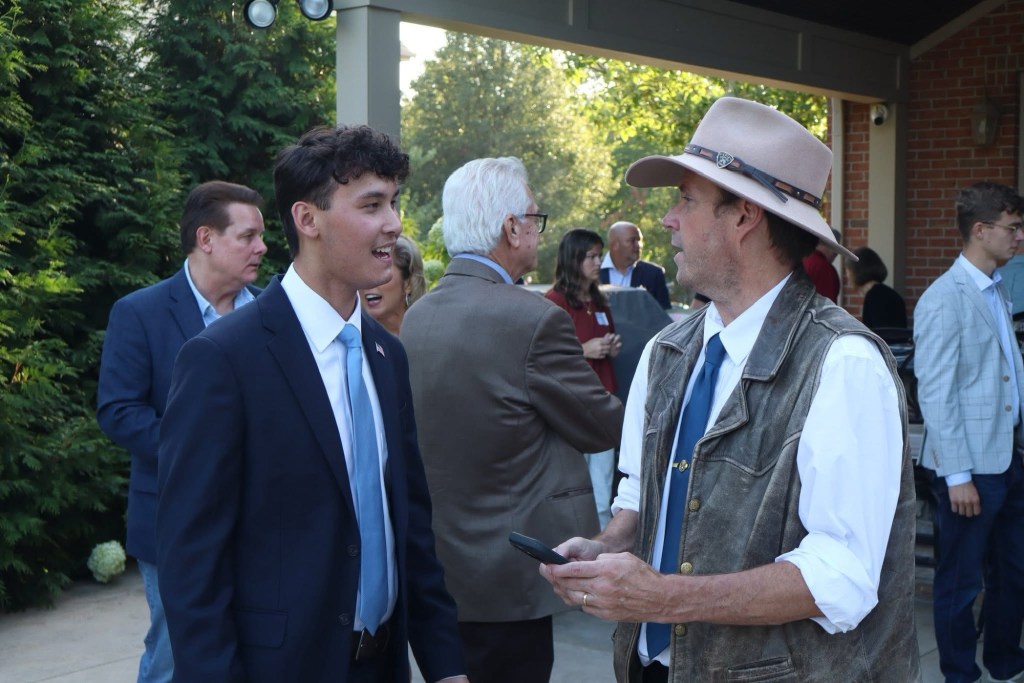
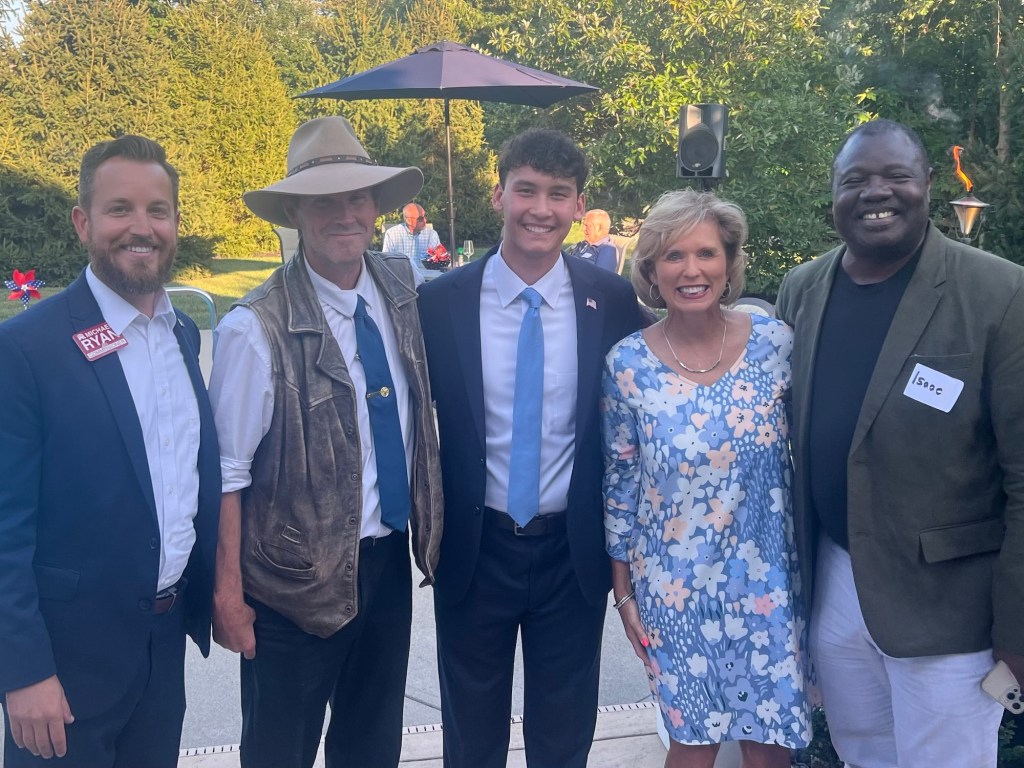
Ben Nguyen is in good company. When Nancy Nix invites me to her house to meet people she thinks will be the future of politics, she has a pretty good track record. And I felt bad; I was running late when she invited me over to listen to a speech from a bright young man by her pool, as I had in the past. I was stuck on an overseas call, and the time zones didn’t match up to the schedule Nancy had given me. But when I did arrive, it was just in time to hear a speech by Ben Nguyen, a former student at Lakota schools who had just graduated and was now running for the school board. And as I watched him speak, he had picked a spot by her pool to talk to the crowd that was just like another young overachiever, J.D. Vance. A few years ago I had listened to the future Vice President give a very similar speech as Ben did from that very spot, which was before he was even running for the senate seat, and of course Nancy was right about him. Ben also reminded me of another bright young mind who she promised me had a great future in politics, which was Vivek Ramaswamy. I think of these guys as young, even though they were in their late 30s when I first met them, because, to me, they are. I’m not a young person, so everyone seems young to me. But Nancy Nix has a knack for finding good people in the crowd and getting behind them with a bit of help. I was not surprised to learn that Ben Nguyen was an intelligent young man, and I enjoyed listening to him speak about why he was running for the Lakota school board in the November 2025 elections.
Essentially, Ben is against the upcoming Lakota levy, which is the most expensive school levy in the state of Ohio. He is also against indoctrination in public schools, and he has fresh experience, having just left school to learn what is really going on. And he wants to do good things in life with his obvious talents. He has siblings still attending Lakota schools, so he is concerned about public education in general. He plans to do many things in the future, as his life is currently an open book. However, to run and win the school board seat would be historic; he would undoubtedly be one of the youngest ever to do so. But as I listened to him speak, he possessed the wisdom of a much older person, and he was only going to improve with time. I had just recently watched Bernie Moreno give a similar speech from almost the same spot in Nancy Nix’s backyard, and he’s close to my age. And Ben sounded just as well-versed politically, and he was very articulate and well-spoken. He’s already a better political figure than most people who have been doing this kind of thing for three or four decades. As I thought about Ben, I was skeptical due to his age as I drove to Nancy’s home. I am one of those people who think it’s better to be old and broken, looking like a wet towel discarded in the sun, than a beautiful young person with everything working, because of the essential ingredient of wisdom. Wisdom is hard to get, and it’s worth the age it often takes to get there, and what you lose along the way. So I’m not automatically impressed with young people. However, it was clear that Ben Nguyen was something special because he possessed a remarkable amount of wisdom at a very young age, which was evident in his family background, as he discussed.
And he was right in his speech about why someone like him needed to be on the Lakota school board. I have been intensely critical of the public education system. My thought on it was to erase everything John Dewey ever did and to start the concept of education anew in American culture. I don’t think people are nearly as educated as they should be, and I deal with a lot of people every day who hold advanced Master’s and PhDs. People aren’t that smart in our culture, and it disgusts me. I’m not excited to support more of the kind of education that leaves people so ill-prepared for the world. However, to Ben’s point, the current school board does not represent the kind of people who live in Butler County, Ohio. If we are going to have a public school funded by taxpayer money, we should have representatives on the school board who represent us. After speaking with Ben, I think he would be great, and I will certainly be voting for him. Needless to say, I fully endorse him and would love to see him win a seat in this upcoming election. It would be a step in the right direction. I’ve been a part of a lot of campaigns to put members of the school board in place to represent conservatives, but the efforts have been discouraging, leaving me wanting to blow up the whole system with charter schools and the elimination of the Department of Education as a whole. But Ben Nguyen reminds me of why I have worked for good school boards in the past, and his personality appears to be well-suited to withstand the intense scrutiny that comes with the job.
Isaac Adi was also there to show support. Isaac is a current school board member for Lakota, and he consistently votes in favor of Republican positions. But he’s currently the only one. He and I have seen each other at a few events since the highly publicized fallout he had with Darby Boddy, a school board member I had supported a lot and still do. The pressure of those positions, by the whispers that come into them, is hard to deal with, and I wanted those two to work better together instead of against each other. And Isaac was one of the reasons I no longer thought school board races were worth dealing with. But seeing him there to support Ben, I thought the beginnings of something good were forming. Of course, to get a good school board, it would take a lot more than just Ben Nguyen. However, this was a good start, because until there is a good school board, Lakota schools will continue to mismanage money and ask for tax increases, as they have more in mind than just this bond levy on the November ballot. They are also considering an operations levy in the very near future, and we don’t want a liberal school board rubber-stamping more spending, as they have been doing. We need smart people who are willing to engage in lively debate and continually ask essential questions. With Ben Nguyen in that school board role, I see a lot of opportunity for good things to happen. However, people will have to show up and vote for him because the Democrats are counting on a low turnout to maintain the status quo on the school board. So people are going to have to rally behind Ben. And after hearing him speak and explaining what he wants to do and why, the Lakota school district would be in a much better position. And Ben Nguyen is certainly somebody voters can get excited about.
It is a topic that has come up a lot, especially since Trump has been trying to negotiate peace between Russia and Ukraine and end the war there. Why the United States? Why do we get to set a dollar standard? Why do airports have to speak English universally? Why is it that the United States thinks it needs to be, or can be, involved in the world’s affairs? How can the world be equal if the United States consistently views itself as the best or wealthiest country in the world, and that somehow gives it power over all other countries? And the answer is simple: only the United States has adopted capitalism as an economic model, while all other countries in the world have some degree of socialism in their economies, which restricts their financial growth. A friend of mine recently brought this to my attention with a nice quote from Proverbs 22:7, which says, “The rich ruleth over the poor, and the borrower is servant to the lender.” And that’s very true. If a country penalizes itself from wealth creation, it loses the ability to be equal in any discussion. And being poor, especially by choice, will always leave a member of a negotiating party at a disadvantage. America has the power that it does because it’s a rich country, and it’s rich because of capitalism. And you’d think other countries would have woken up to that fact, because they are poor by choice. The reason America has the power and influence it does is that it has a population of only 300 million, yet it produces the largest GDP in the world, competing directly with countries like China and India, which have populations of over a billion each. Because all other countries in the world have adopted Marxist ideas, they have limited their wealth generation and ultimately their influence at the table regarding the fate of the world.
The issue of fairness arises frequently in these discussions. Is it fair that the world is designed like this, where human beings are valued more for their wealth than for their better values, which reflect power and influence? It’s a matter of leverage; people in the world want money and will do this or that or something else to get it. And when too many artificial restrictions are created to access money, then naturally, people with less of it are on the wrong side of any negotiations. So, by choice, those who have very little money are in that position because they chose to do other things than make money, and the world does not honor their choice. We have invented money and wealth as measures of achievement, and in all human cultures, achievement is highly respected. Gaining wealth is a measure that, by default, is universally understood by all people. And to lobby for making some other value more critical, such as compassion for the weak, or valuing vacations over working too hard, will ultimately leave the one without money at a disadvantage, leveraged by those who do control the money, because they have more of it. Money comes in many forms but what the book of Proverbs has always struggled with as a foundation of Christianity for instance, because even Jesus struggled with this problem by attacking the vendors at the Temple which led to his crucifixion, is that the meek are overlooked and often oppressed by the rich people of the world, and that everlasting life in Heaven might give them relief from that reality. This is a debate that has been ongoing since the beginning of time, but the rules have remained unchanged—he who owns the gold rules.
Trump has been effective because he understands how to control leverage in negotiations, as he always puts himself on the side of smart money. And whoever does that will win the argument every time. Not some of the time. All of the time. And the question of fairness is then a universal law that is the same here as it would be on the other side of a black hole in space, on the other side of reality. This rule would never change. The Bible struggled with the same idea: what power does the Lord in Heaven have over the earth if people will do anything for money and what it can buy. And the answer is a hard one, because money represents wealth creation and how people measure such things in polite society. The rest of the world has chosen to rebel against the premise of money, and they counted on peer pressure to create other value systems that the world respected, such as transgender rights, or helping people experiencing poverty when people have been deliberately made poor with terrible social policy. For instance, because of capitalism, a poor person in America is infinitely wealthier than a person in a Marxist hellhole, like some African country that has deliberately suppressed capitalism. Their poor state is a result of a desire to control wealth creation, so that people can be ruled over, and that they won’t acquire personal wealth to compete with their overlords. When a government seeks to exert power over its people, it must limit their access to wealth so that private individuals cannot undermine the government’s authority over them. So that decision ultimately constricts their ability to generate wealth.
Trump has spent his life accumulating wealth, and his ability to do so has given him the capacity to negotiate at multiple levels. Being rich for him means he gets to win the argument. And from that perspective, he can command the world to sit at his feet, as the members of NATO remarkably did in front of his desk in the Oval Office recently, after Vladimir Putin came to Alaska to visit with Trump after quite a spectacle. The world came to Trump to appease him because of the power of the American economy. And because they don’t have money themselves, due to poor economic decisions, they find themselves at a disadvantage in the discussions they have with all other parties. With all the talk about Russian power and military might, it’s worth noting that they don’t have a very robust economy, which leaves them at a disadvantage at the negotiating table. People can talk about how mean Putin is as a tyrant, but because of his need to maintain control over his people, the Russian economy is too restricted and always at a disadvantage to a capitalist country like the United States. And when push comes to shove, the capitalist country will always outleverage the authoritarian government that has put too many barriers on personal wealth. So that is why America plays the role in the world that it does. Fairness is a sentiment, not a value. It’s an intellectual observation that doesn’t align with the realities of the world. Jesus might have struggled with the same issue involving the money changers at the temple, as many are declaring that America shouldn’t have the kind of power in the world that it does. However, it has that power because humans use money to measure value, and value is derived from the things we do. And when things are restricted by policy, then who is to blame? Or, if individuals refuse to work, they are always at a disadvantage in life compared to those who work hard and have financial means. Who is to blame? America has given upward mobility to many people through the premise of freedom. And that is why the United States has a better leverage position over all other countries that are too restrictive on individual wealth creation. And in that moral quandary is the ethics of wealth creation, and why the world is much better off because of it.









 The Overmanwarrior