Pip: The Overmanwarrior is back from a summer of traveling, and he has opinions about Butler County Republicans — which, honestly, tracks.
Mara: Rich Hoffman’s latest post is a deep dive into local party politics: why big-tent coalition building beats purity factions, and what revenge politics actually costs a majority party. Let’s start with the case he makes for keeping the team together.
Why Winning Requires a Big Tent, Not a Pure Faction
Pip: The core argument here is about what actually threatens a Republican stronghold like Butler County — and the answer isn’t Democrats. It’s Republicans who’d rather be righteous than win.
Mara: He sets it up directly, writing: “The opposite impulse — the desire to purge and purify until only the purest remain — is how majorities become minorities. Democrats understand this. Their only realistic path in Butler County is to encourage Republicans to fight each other, thereby opening up the general-election map.”
Pip: So the threat isn’t a strong opposing party. It’s internal score-settling dressed up as principle — and that framing is doing a lot of work in this piece.
Mara: It is. He traces the pattern: people who lost primaries or lost influence start feeding narratives to the Journal-News, labeling solid conservatives RINOs, and undermining officeholders who actually won their races. He calls it “revenge dressed up as principle.”
Pip: Which brings us to the people he’s actually defending. Nancy Nix is the headline — he credits her with fiscal discipline across two county offices, reducing staff sizes as both Treasurer and Auditor, running things in the black, and providing behind-the-scenes organizational infrastructure that he says runs through networks reaching the White House.
Mara: He’s equally direct about George Lang, describing decades of door-knocking and event work — and one very vivid moment at a 2015 Trump event at the Savannah Center where Lang physically removed a protester heading toward Trump. The point being: that’s not armchair commentary, that’s someone who showed up before it was popular.
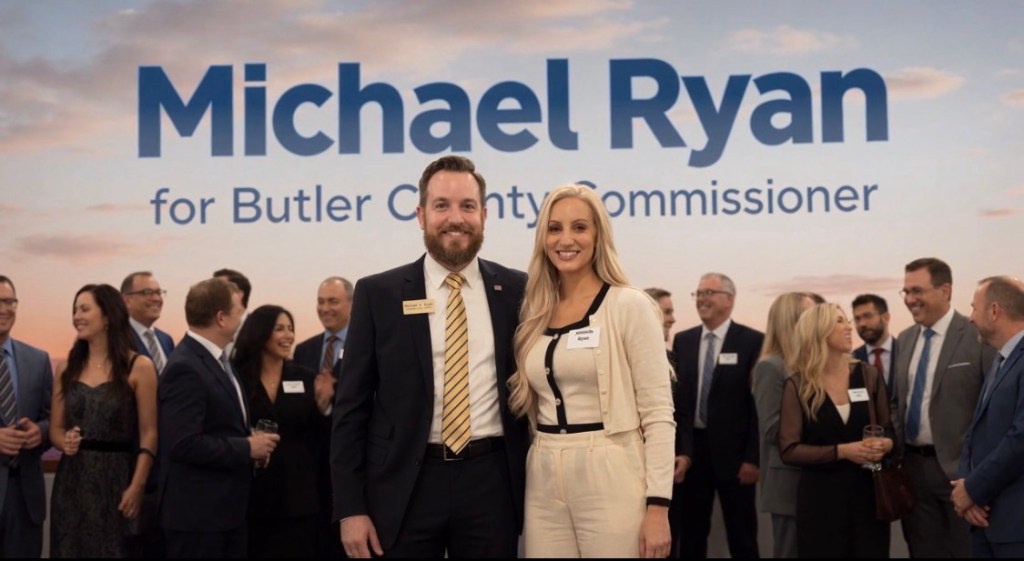
Pip: Michael Ryan gets a mention too — he won the May 2026 Republican primary for county commissioner with roughly 72 percent of the vote, and the post treats that primary result as decisive and worth defending, not relitigating.
Mara: Sheriff Richard Jones rounds out the slate. He wants the Sheriff’s Office to carry what he calls a “Mayberry” standard — competent, present, community-rooted. The post draws a line between that standard and the intra-party court drama that’s been distracting from actual public safety work.
Pip: And the West Chester trustee and school board fights are the cautionary tale — Republicans fractured, Democrats and soft candidates benefited, and the lesson apparently hasn’t fully landed yet at the county level.
Mara: His bottom line is blunt: Butler County stays a Republican stronghold only if the party acts like one — which means defending the people voters already chose in the primary, sitting across the table from people you don’t fully agree with, and still leaving the room as a team.
Pip: The alternative, he says, is handing Democrats the only gift they actually need.
Mara: The through-line is pretty clear — coalition discipline isn’t compromise, it’s the mechanism that keeps a majority a majority.
Pip: And apparently that argument needs re-litigating every few years, which suggests the lesson is harder to hold than it is to learn.
Rich Hoffman is an author, political consultant, and strategic advisor based in Cincinnati, Ohio, and the creator of The Politics of Heaven—a unique framework that connects biblical theology, ancient history, and modern power structures to explain how moral alignment and spiritual forces shape global events. Blending real-world political experience with deep research into archaeology, UFO phenomena, and suppressed historical narratives, Hoffman offers compelling commentary on topics ranging from ancient civilizations and the Dead Sea Scrolls to modern populist movements, paranormal continuity, and leadership strategy in chaotic environments. As the author of The Gunfighter’s Guide to Business and the forthcoming Politics of Heaven, he brings a grounded yet provocative voice to media discussions, supported by firsthand experiences and a cross-disciplinary approach that bridges science, history, and theology. For interviews, speaking engagements, or expert analysis, visit richhoffmanbooks.com or contact directly via phone at 513-307-5815 or email at rhoffman@richhoffmanbooks.com. If you’ve seen the movie, Disclosure Day and want to talk about it and the implications of Presidnet Trump’s UAP disclosures, let me know and we can bring some color to your coverage. https://richhoffmanbooks.com/media-inquiries-broadcast-topics-and-contact-info/?frame-nonce=ad51e7ecba I do have a firsthand UFO encounter to discuss.
Pip: Ohio is ranked 42nd in the country, and somehow that is also proof it is doing great — welcome to The Overmanwarrior.
Mara: Rich Hoffman digs into exactly that tension this week, looking at competing state rankings, what they actually measure, and what the 2026 Ohio gubernatorial race has to do with all of it. Let’s start with the rankings fight itself.
Two Scorecards, One State
Pip: The central question here is which ranking tells you something real about Ohio — because two major outlets looked at the same state in the same year and reached opposite conclusions.
Mara: The U.S. News number lands first in the piece, and the setup is direct: “Ohio ranked first in infrastructure and first in cost of doing business” — that is CNBC’s America’s Top States for Business, released in July, putting Ohio at number one overall for the first time.
Pip: So the same state that CNBC ranks first for business climate, U.S. News ranks 42nd overall — a drop from 38th the year before and 36th the year before that. The upshot is that methodology determines the verdict before a single data point is entered.
Mara: That is exactly the argument. U.S. News weights education at roughly 15.8 percent and healthcare at 15.5 percent — the two heaviest categories. Ohio’s weakest scores were natural environment at 43rd and economy at 38th, with healthcare at 36th. Its strongest were opportunity at 18th and fiscal stability at 28th.
Pip: Fiscal stability in the top third, opportunity in the top fifth — those are not the numbers of a state in collapse. They are the numbers of a state that refuses to optimize for the scorecard.
Mara: And the piece makes the case that the scorecard itself is the issue. The U.S. News methodology rewards pre-K enrollment rates, higher-education access, and public-health indicators — inputs rather than outcomes. Ohio is running nearly 1.8 billion dollars above revenue projections for fiscal year 2026 and is actively working on property-tax relief. That surplus does not show up as a gold star in the U.S. News model.
Pip: Meanwhile, Amy Acton is the Democratic nominee for governor, and her record as health director in 2020 — Ohio was the first state to close schools statewide — is now squarely part of the campaign conversation. Rankings that surface now are not arriving in a vacuum.
Mara: The piece is clear that the political timing matters. Democrats need a story that Republican stewardship has failed. A ranking that penalizes limited-government priorities and drops Ohio four spots in two years is a useful data point — if you do not look at what the ranking actually measures.
Pip: Utah has sat at number one in U.S. News for four straight years, which tells you something about whose model wins that particular game. The question for Ohio voters is which game they think they are playing.
Mara: And that hands directly to the broader stakes — what fiscal discipline actually looks like when the ledgers are in the black, and who gets credit for it.
Mara: The core tension here is real: two credible outlets, opposite conclusions, and an election coming. Which metrics you trust says a lot about what you think a state is for.
Pip: Ohio’s books are balanced. The argument is about whether that counts. Worth watching how that plays out as the gubernatorial race heats up.
Rich Hoffman is an author, political consultant, and strategic advisor based in Cincinnati, Ohio, and the creator of The Politics of Heaven—a unique framework that connects biblical theology, ancient history, and modern power structures to explain how moral alignment and spiritual forces shape global events. Blending real-world political experience with deep research into archaeology, UFO phenomena, and suppressed historical narratives, Hoffman offers compelling commentary on topics ranging from ancient civilizations and the Dead Sea Scrolls to modern populist movements, paranormal continuity, and leadership strategy in chaotic environments. As the author of The Gunfighter’s Guide to Business and the forthcoming Politics of Heaven, he brings a grounded yet provocative voice to media discussions, supported by firsthand experiences and a cross-disciplinary approach that bridges science, history, and theology. For interviews, speaking engagements, or expert analysis, visit richhoffmanbooks.com or contact him directly via phone at 513-307-5815 or email at rhoffman@richhoffmanbooks.com. If you’ve seen the movie Disclosure Day and want to talk about it and the implications of President Trump’s UAP disclosures, let me know, and we can bring some color to your coverage. https://richhoffmanbooks.com/media-inquiries-broadcast-topics-and-contact-info/?frame-nonce=ad51e7ecba I do have a firsthand UFO encounter to discuss.
I’ve taken a lot of heat over the years for how I approach operations management. People watch what I’ve done with large, complicated organizations and then announce that I’m somehow making it look too easy, or that the method can’t scale, or that anyone with enough capital could copy it. Fine. Let me answer all of them at once, because the emails on this subject have been piling up and a single clear response is better than another round of copy-and-paste.
Jungle Jim’s International Market sits out on Route 4 in Fairfield, right here in Butler County. I grew up watching the place. My grandfather worked across the way at the old Fisher Body plant. The roadside produce stand that became the store was there in the early seventies, bouncing from vacant lot to vacant lot until Jim Bonaminio finally planted roots in 1975 with a 4,200-square-foot building. Today the flagship is somewhere north of 200,000 square feet—some measurements put it closer to 280,000 or even 300,000 depending on how you count the latest expansions—and there is a second location in Eastgate. It is one of the largest independent grocery operations in the country and easily the most distinctive.
People from every corner of the planet who land in the Cincinnati area homesick walk through those doors and find something that tastes like home. Almost two thousand wines. Live seafood tanks. Sections organized by country. Animatronics, a monorail, giant animals, a cooking school, a podcast studio. The bathrooms open into rooms that feel like Narnia. It is a theme park of food, and it runs on thin margins in one of the most competitive, low-margin industries on earth. Yet it keeps growing while the corporate chains in their shiny shoes and pressed shirts keep trying—and failing—to reverse-engineer the magic.
I have watched Jim walk the floor in costume, looking like Merlin or some jungle explorer, and the first thing you notice is that he is not trying to do every job himself. He hires people who actually care about the product, gives them real authority over their departments, and then gets out of the way. Department managers run their sections like independent businesses—buying, merchandising, hiring, firing. He does not need his name stamped on every decision. That is one of the hardest disciplines in leadership: empowering competent people without constantly inserting yourself so everyone knows who is in charge. Most executives fail that test. They cannot stand the idea that something good happened without their fingerprints all over it.
The same pattern shows up across Butler County. Sheriff Richard Jones has run the sheriff’s office for two decades with a continuity culture that keeps the books in the black, generates substantial boarding-of-prisoners revenue (including the ICE contract), and maintains operational discipline without the endless consultant theater you see in other counties. He understands that you put the right people in place, give them clear authority, and then hold them accountable for results. You do not throw money at wet wood and hope it lights.
Butler County has produced more than its share of these personalities. JD Vance came out of Middletown. The traits are recognizable once you have lived here long enough: direct, practical, uninterested in the performance of competence that substitutes for the real thing. You see the same operating style in the way Jungle Jim built from a roadside stand across from the factory where my grandfather worked into the largest independent of its kind. You see it in the way SpaceX runs.
Elon Musk did not invent the principle, but he has executed it at industrial scale. SpaceX gives engineers real ownership—cradle-to-grave responsibility—and then demands results. Automation and advanced welding are not about eliminating jobs; they are about expanding capacity when there are not enough skilled people to meet demand the old way. The robots and the elevated welding systems are force multipliers. The culture underneath them is the same one that lets Jungle Jim’s stock 180,000 items and still feel alive instead of sterile. It is the same culture that lets a sheriff’s office run surplus while neighboring jurisdictions drown in process.
Corporate types in suits keep flying in from New York and Los Angeles and San Francisco with large budgets and big investors. They walk the aisles of Jungle Jim’s taking notes. They study SpaceX’s production rates. Then they go home and throw gasoline on wet wood. They saturate the problem with capital and consultants and shiny process decks, and when the fire never quite catches they blame the market or the labor force or the regulations. They never figure out that the wood was never stacked correctly in the first place. The people who actually know how to start a fire in the rain do not need the gas. They prepare the ground, choose the right people, and let the work speak.
I have done this for decades in complex organizations. The critics who say it looks easy are usually the ones who have never had to do it without a blank check. When you do not have unlimited capital you get creative. You learn to empower rather than control. You accept that the best people will not stay if you keep putting your name over theirs. Jungle Jim has had corporate buyers and executives studying him for thirty years and they still cannot copy it. China has been trying to copy SpaceX and they still cannot drop the vehicle on the camera the way SpaceX does. The difference is not money. The difference is a personality type and an operating culture that cannot be faked.
That is why I believe the SpaceX IPO path will continue to create enormous new wealth. The culture is real. The operational discipline is real. The people closest to the work are trusted to move. Investors who understand people—who understand the difference between wet-wood capital and actual fire—will do very well. The ones who think you can buy the same result with consultants and process will keep burning fuel and wondering why nothing catches.
I will put a couple of the better documentaries and walk-throughs of Jungle Jim’s on the blog, along with material on SpaceX’s production and welding systems. Watch the way the people on the floor actually operate. Then watch the corporate versions of the same industries. The contrast is the entire lesson.
Operational excellence is not a mystery. It is rare because most people cannot stand to give away the credit. The ones who can do it make it look easy. The ones who cannot keep throwing gas on wet wood and calling it strategy. Butler County has produced more than its share of the first kind. I am not going to apologize for noticing.
Notes
1. Jungle Jim’s International Market was founded by James O. “Jungle Jim” Bonaminio. The permanent Fairfield store opened in 1975 at 4,200 square feet after several years of roadside stands, including a location across from the Fisher Body plant. Current main-store size is reported in the 200,000–300,000 square-foot range depending on the source and the most recent expansions; a second location operates in Eastgate. See Wikipedia entry and official Jungle Jim’s history pages.
2. Weekly visitor figures of approximately 82,000 and product counts exceeding 180,000 items (with strong international representation) appear consistently in contemporaneous reporting. The store is frequently described as a “theme park of food.”
3. Bonaminio’s management approach emphasizes hiring people with passion for specific departments and granting them substantial operating authority. Recent interviews and employee descriptions confirm department-level autonomy in buying, merchandising, and staffing.
4. Butler County Sheriff Richard K. Jones has held office since 2005. The office generates significant revenue through boarding-of-prisoners contracts, including a renewed ICE arrangement that has produced multi-million-dollar annual inflows and rate increases. County budget documents show the sheriff’s operation remaining a major, self-supporting component of the overall budget while maintaining operational continuity.
5. SpaceX’s internal culture of extreme ownership, flat structure for engineers, and cradle-to-grave product responsibility is documented in multiple former-employee accounts and contemporaneous reporting. Automation and advanced welding processes are treated as capacity multipliers rather than pure labor replacements.
6. JD Vance was raised in Middletown, Ohio (Butler County). The local cultural and industrial background is a matter of public record.
Bibliography / Further Reading
• Jungle Jim’s official site and “The Jungle Jim Story” pages (junglejims.com).
• Wikipedia: “Jungle Jim’s International Market.”
• Smithsonian Magazine, “Welcome to Jungle Jim’s” (2016).
• Cincinnati Business Courier and Journal-News coverage of Bonaminio interviews and 50th-anniversary material (2024–2026).
• Wall Street Journal Opinion Q&A with Jim Bonaminio (2026).
• Progressive Grocer and Supermarket News profiles of Jungle Jim’s independent model.
• Butler County Sheriff’s Office budget submissions and Journal-News reporting on ICE contract revenues and staffing (2025–2026).
• Reporting on SpaceX engineering culture and ownership model (Wired, Business Insider, former-employee accounts, 2022–2026).
• “Evolution of the Jungle” and related YouTube material produced by Jungle Jim’s International Market.
• Local Butler County political and business coverage of Sheriff Jones and regional figures.
Rich Hoffman is an author, political consultant, and strategic advisor based in Cincinnati, Ohio, and the creator of The Politics of Heaven—a unique framework that connects biblical theology, ancient history, and modern power structures to explain how moral alignment and spiritual forces shape global events. Blending real-world political experience with deep research into archaeology, UFO phenomena, and suppressed historical narratives, Hoffman offers compelling commentary on topics ranging from ancient civilizations and the Dead Sea Scrolls to modern populist movements, paranormal continuity, and leadership strategy in chaotic environments. As the author of The Gunfighter’s Guide to Business and the forthcoming Politics of Heaven, he brings a grounded yet provocative voice to media discussions, supported by firsthand experiences and a cross-disciplinary approach that bridges science, history, and theology. For interviews, speaking engagements, or expert analysis, visit richhoffmanbooks.com or contact directly via phone at 513-307-5815 or email at rhoffman@richhoffmanbooks.com. If you’ve seen the movie, Disclosure Day and want to talk about it and the implications of Presidnet Trump’s UAP disclosures, let me know and we can bring some color to your coverage. https://richhoffmanbooks.com/media-inquiries-broadcast-topics-and-contact-info/?frame-nonce=ad51e7ecba I do have a firsthand UFO encounter to discuss.
Pip: There’s a book sitting in a Yale library that has defeated cryptographers, linguists, and machine learning systems for six centuries — and Rich Hoffman thinks he knows why nobody’s cracked it.
Mara: This episode follows his argument that the Voynich Manuscript may be exactly what it looks like: a record left by a non-human intelligence. Let’s start with the manuscript itself and what the evidence actually shows.
The Voynich Manuscript: Notes from an Outside Mind
Mara: The central question here is whether the Voynich Manuscript is a lost human artifact or something that was never meant for human readers at all — and the argument begins with what the physical object actually tells us.
Pip: The post anchors that argument in the radiocarbon data: “Somewhere between the years 1404 and 1438, on animal-skin parchment that laboratory carbon dating has pinned down with ninety-five percent confidence, someone or something produced a book that still sits in the Beinecke Rare Book and Manuscript Library at Yale and refuses every attempt the human race has made to understand it.”
Mara: So the object is genuinely old — that part is settled. What isn’t settled is who made it, because almost nothing inside behaves as if it belongs to fifteenth-century Europe.
Pip: The plants don’t match any known species. Botanists have spent decades trying. The script obeys Zipf’s law the way natural languages do, yet its conditional entropy sits around two bits — well below the three to four bits that living languages produce. Cryptographers who broke Enigma walked away empty-handed.
Mara: That statistical profile is the crux. It reads like language, it patterns like language, and it has defeated every tool we use to decode language. The post’s working theory is that the reference frame itself is wrong — we keep mapping the manuscript onto human knowledge systems because we are human.
Pip: Which is either a profound insight or the most elegant excuse for not solving a puzzle. The post earns it, though, because it does the work of eliminating the alternatives first.
Mara: Right — if it were a hoax, the materials science wouldn’t hold. If it were a cipher, someone would have broken it. The plants would match something known if it were a standard herbal. The non-human hypothesis is presented as the one that still fits the data.
Pip: The post also connects the manuscript’s balneological section — page after page of women in tube-connected pools — to David Grusch’s sworn 2023 congressional testimony about recovered non-human biologics, and to the visual vocabulary of Peruvian painter Pablo Amaringo, who depicted nearly identical imagery after ayahuasca.
Mara: That accumulation is the method. Dolmen structures along the Jordan River and around Lake Superior’s ancient copper mines, the Loveland Frogman sightings along the Little Miami River, Grusch’s testimony, Amaringo’s visions — none of it is proof individually, but the post argues the overlap is what demands attention.
Pip: The conclusion is quiet and unsettling: the manuscript isn’t waiting for a better cipher key. It’s waiting for us to admit the key may never have been human.
Mara: And that question — what records non-human intelligences may have left, and how institutionalism limits what we’re willing to consider — is exactly the territory the closing returns to.
Pip: Six hundred years of human attention, no translation, and the object is still looking back at us.
Mara: The deeper provocation is about what we’re willing to put on the board — whether the evidence leads somewhere uncomfortable or not. That’s a question worth carrying into the next episode.
Rich Hoffman is an author, political consultant, and strategic advisor based in Cincinnati, Ohio, and the creator of The Politics of Heaven—a unique framework that connects biblical theology, ancient history, and modern power structures to explain how moral alignment and spiritual forces shape global events. Blending real-world political experience with deep research into archaeology, UFO phenomena, and suppressed historical narratives, Hoffman offers compelling commentary on topics ranging from ancient civilizations and the Dead Sea Scrolls to modern populist movements, paranormal continuity, and leadership strategy in chaotic environments. As the author of The Gunfighter’s Guide to Business and the forthcoming Politics of Heaven, he brings a grounded yet provocative voice to media discussions, supported by firsthand experiences and a cross-disciplinary approach that bridges science, history, and theology. For interviews, speaking engagements, or expert analysis, visit richhoffmanbooks.com or contact directly via phone at 513-307-5815 or email at rhoffman@richhoffmanbooks.com. If you’ve seen the movie, Disclosure Day and want to talk about it and the implications of Presidnet Trump’s UAP disclosures, let me know and we can bring some color to your coverage. https://richhoffmanbooks.com/media-inquiries-broadcast-topics-and-contact-info/?frame-nonce=ad51e7ecba I do have a firsthand UFO encounter to discuss.
Pip: The Overmanwarrior had lunch with a state senator, got rained out before he could finish his thought, and decided the logical next step was ancient Canaanite necromancy.
Mara: Rich Hoffman picks up that interrupted conversation in writing, and it pulls together ancient Near Eastern ritual, Ohio’s Hopewell earthworks, and the manuscript he’s been working toward. Let’s start with what that conversation actually opened up.
A message to George Lang: Making deals with the dead for earthly power
Pip: The premise here is that the political present and the ancient past are running the same operating system — and a lunch with Senator George Lang is where that argument gets its latest airing.
Mara: The post sets the scene directly: “Nothing formal, nothing staged for the cameras, just two guys who have known each other a long time sitting outside at a place we both like, talking the way we always end up talking when the politics finally take a back seat.”
Pip: So the lunch is a frame for something much older. What the rain interrupted was a walk through a specific ancient system — the cult of the Rephaim, dead aristocratic warrior kings whose spirits living rulers in the Late Bronze Age still summoned by name.
Mara: The Ugaritic tablet KTU 1.161 records the liturgy. Food and drink were set for the dead. The post describes it plainly: the meal was not polite remembrance — it was consultation, and it was power. The Gilberts’ book Veneration is the source he’s working through here, alongside Brian Muraresku’s The Immortality Key.
Pip: The upshot is that the biblical command to destroy those Canaanite cultures wasn’t territorial ambition — it was an attempt to close a door the cult of the dead kept propping open.
Mara: And the geography matters. Mount Hermon appears in the Book of Enoch as where the Watchers descended. In older Canaanite material it’s the seat of the divine council opposing Yahweh. The post notes that when Jesus stood at Caesarea Philippi at the foot of that mountain, he was issuing a direct challenge to the old cult on its own ground.
Pip: Then the argument crosses an ocean. The Hopewell earthworks in Ohio — Newark, the Milford Works, the mounds through Butler and Warren counties — get placed in the same category of ritual architecture as Gilgal Refaim in the Golan Heights.
Mara: And the Windover site in Florida, seven to eight thousand years old, with preserved brain tissue and textiles more sophisticated than the standard timeline allows, gets folded in too. The post connects it to copper trade networks that moved material out of Lake Superior in volumes still not fully explained.
Pip: The Loveland Frogmen make a brief appearance — not as proof, but as a pattern. Anomalous encounters clustering near the same river corridors where the old ceremonial centers stood.
Mara: The manuscript he updated Lang on, The Politics of Heaven, is described as treating the entire span from the deep pre-biblical period to the present as one continuous political and spiritual struggle. The question the post ends on is whether we keep setting places at the table for whatever was once invited.
Pip: From ancient banquet rites to Ohio subdivisions built over mounds — the territory doesn’t get smaller from here.
Mara: The thread running through all of this is that the old systems didn’t end — they changed methods. That’s the argument the book is building toward.
Pip: And the next time someone tries to sell a new version of the old system, the idea is you’d recognize it. That’s a conversation worth continuing.
Rich Hoffman is an author, political consultant, and strategic advisor based in Cincinnati, Ohio, and the creator of The Politics of Heaven—a unique framework that connects biblical theology, ancient history, and modern power structures to explain how moral alignment and spiritual forces shape global events. Blending real-world political experience with deep research into archaeology, UFO phenomena, and suppressed historical narratives, Hoffman offers compelling commentary on topics ranging from ancient civilizations and the Dead Sea Scrolls to modern populist movements, paranormal continuity, and leadership strategy in chaotic environments. As the author of The Gunfighter’s Guide to Business and the forthcoming Politics of Heaven, he brings a grounded yet provocative voice to media discussions, supported by firsthand experiences and a cross-disciplinary approach that bridges science, history, and theology. For interviews, speaking engagements, or expert analysis, visit richhoffmanbooks.com or contact directly via phone at 513-307-5815 or email at rhoffman@richhoffmanbooks.com. If you’ve seen the movie, Disclosure Day and want to talk about it and the implications of Presidnet Trump’s UAP disclosures, let me know and we can bring some color to your coverage. https://richhoffmanbooks.com/media-inquiries-broadcast-topics-and-contact-info/?frame-nonce=ad51e7ecba I do have a firsthand UFO encounter to discuss.
Pip: The Overmanwarrior is the kind of site where you click in expecting a political take and leave wondering whether ancient Ohio earthworks were a cosmic antenna — and somehow that feels completely reasonable.
Mara: Rich Hoffman is deep in the research for his forthcoming book The Politics of Heaven, and today’s episode follows him there — from Hopewell burial mounds to UAP disclosure to the question of who, or what, has actually been running things.
Pip: Let’s start with the mounds, the tablets, and what sovereignty really means.
What the Mounds Are Hiding — and Why It Matters
Mara: The central tension here is straightforward: if ancient Ohio was more sophisticated and more connected than the official story admits, then the official story is doing work — and the question is whose interests it serves.
Pip: The post frames this as a personal reckoning. Here’s the line that captures it: “I didn’t want to be that guy — the one who connects the dots between ancient Ohio earthworks, strange artifacts that don’t fit the narrative, non-human intelligence, and the spiritual forces that have been pulling strings on human politics since the beginning.”
Mara: And the reason that admission matters is that it establishes the stakes. This isn’t a hobbyist’s curiosity — it’s an aerospace executive saying the evidence pulled him somewhere he actively resisted going, and he’s writing the book anyway.
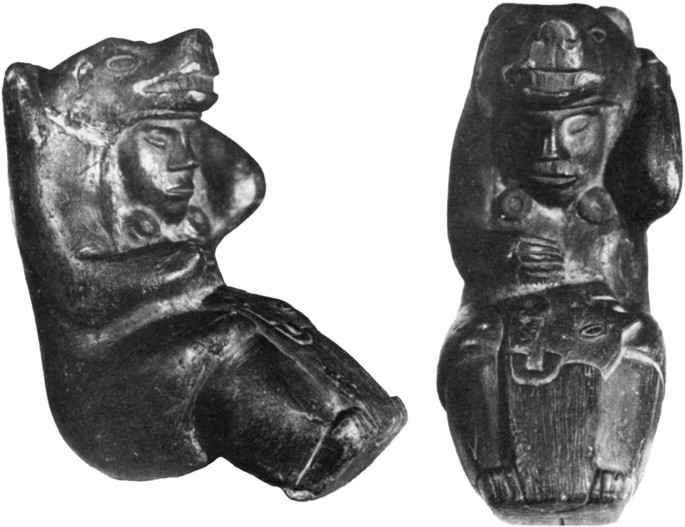
Pip: The anchor artifact is the Wray Figurine — a small stone shaman carved in bear regalia, holding a severed human head, found near the Great Circle at Newark in 1881. The post asks what kind of cosmology produces that image in a culture that also achieved precise lunar alignments across miles of geometric earthworks.
Mara: And the Newark Holy Stones sit right alongside that question. The Decalogue Stone carries what appears to be Hebrew text — a condensed Ten Commandments — found by surveyor David Wyrick in the 1860s. The mainstream verdict is hoax. Wyrick died in 1864 from an opium overdose after the fraud accusations destroyed him.
Pip: The post doesn’t accept that verdict quietly. It notes the Wilmington Tablet, the Cincinnati Tablet — pulled from display — and the Hopewell trade network that already moved copper from Lake Superior, obsidian from Wyoming, mica from the Appalachians. If the logistics existed, the dismissal of long-distance cultural contact starts to look less like science.
Mara: The post cites architect and author John Hancock, whose work on the Ohio Hopewell sites helped secure their UNESCO World Heritage designation. His framing: these earthworks are intentional architecture with astronomical precision, not ceremonial accident.
Pip: So the suppression question runs from archaeology straight into UAP disclosure. If non-human intelligence has been present throughout human history — and the post argues the government’s own admissions are now pointing that direction — then sovereignty was always a polite fiction.
Mara: The post puts it through Ephesians 6:12: “For we wrestle not against flesh and blood, but against principalities, against powers, against the rulers of the darkness of this world, against spiritual wickedness in high places.” The argument is that the mounds, the shamanic imagery, the suppressed artifacts, and modern UAP encounters are different chapters of the same story.
Pip: What this gets the listener is a reframe: the politics of Satan aren’t partisan. They’re the architecture underneath partisanship — anti-human, anti-sovereignty, operating through whatever institutions control what questions are allowed.
Mara: That’s where the closing argument lands: reclaim sovereignty under God, or keep letting the unseen politics of rebellion shape the future. The book The Politics of Heaven is the invitation to follow that evidence wherever it leads.
Pip: Which turns out to be further than most people planned to go on a Tuesday.
Mara: The thread running through all of this is the cost of the official story — what gets buried, dismissed, or pulled from display when the evidence gets inconvenient.
Pip: Next time, we’ll see where that thread leads. The truth, apparently, is coming fast.
Rich Hoffman is an author, political consultant, and strategic advisor based in Cincinnati, Ohio, and the creator of The Politics of Heaven—a unique framework that connects biblical theology, ancient history, and modern power structures to explain how moral alignment and spiritual forces shape global events. Blending real-world political experience with deep research into archaeology, UFO phenomena, and suppressed historical narratives, Hoffman offers compelling commentary on topics ranging from ancient civilizations and the Dead Sea Scrolls to modern populist movements, paranormal continuity, and leadership strategy in chaotic environments. As the author of The Gunfighter’s Guide to Business and the forthcoming Politics of Heaven, he brings a grounded yet provocative voice to media discussions, supported by firsthand experiences and a cross-disciplinary approach that bridges science, history, and theology. For interviews, speaking engagements, or expert analysis, visit richhoffmanbooks.com or contact directly via phone at 513-307-5815 or email at rhoffman@richhoffmanbooks.com. If you’ve seen the movie, Disclosure Day and want to talk about it and the implications of Presidnet Trump’s UAP disclosures, let me know and we can bring some color to your coverage. https://richhoffmanbooks.com/media-inquiries-broadcast-topics-and-contact-info/?frame-nonce=ad51e7ecba I do have a firsthand UFO encounter to discuss.
I’ve spent a good portion of my life learning that once you step into the arena and attach your name to a cause—especially one that challenges the comfortable consensus—there is no clean exit. The fight doesn’t end when the election is over or the levy fails. It follows you. It lingers in the background of every new opportunity, every conversation with agents or publishers, every attempt to build something larger than the immediate battle. People ask me why I keep doing it, why I take the hits, why I don’t just pivot to safer topics that corporate gatekeepers find more palatable. The honest answer is that I never figured out how to look at myself in the mirror, knowing I had walked away from what was right to make life easier. And the longer I’ve stayed in this game, the more I’ve seen how that very decision—to speak plainly and sign my name to it—becomes a lifelong tax on everything else I try to do.
Take the book I’m working on now, The Politics of Heaven. It’s a serious work, the kind that walks through biblical history, spiritual warfare, giants, ancient conspiracies, divine rebellion, and the population agendas that echo across time. I see it as mainstream in ambition—something that could sit on the front tables at Barnes & Noble alongside the big New York releases. Top-level readers who’ve seen the manuscript are excited. They tell me it has that weight. But then the conversation turns, as it always does. “You have some really strong opinions,” they say. “You’re in Ohio, very Republican, very MAGA, very Trump.” The subtext is clear: that baggage makes the project riskier in their world. It’s the same script I heard in 2012 when Tail of the Dragon came out. The book was ready; Hollywood producers were circling; relationships I had built over years in the industry were lining up interviews and options; and then the school board wars detonated everything.
Back then, Lakota was pushing its third levy attempt. I had already poured myself into fighting the first two. I went on WLW radio in Cincinnati multiple times a week, debated on air, did television hits, and wrote pieces that got national pickup in education circles. I called things exactly as I saw them. One line that still follows me everywhere was about the “latte-sipping prostitutes with asses the size of car tires and diamond rings to match.” It was raw, it was honest, and it captured the disconnect between the comfortable insiders pushing tax increases and the families getting squeezed. That phrase became a rallying cry for many people tired of the same old levy machine, but it also painted a target on my back. The corporate media, the teachers’ union allies, the local establishment—they treated it like a declaration of war. And in many ways it was. What followed was an early version of the cancel culture and personal destruction playbook that later got refined against Trump and anyone else who wouldn’t bend the knee.
They went after my reputation, my associations, my ability to make a living outside the fight. WLW started feeling pressure. Hosts and producers who had me on regularly faced heat. Some got demoted, some moved to worse slots, some disappeared from the rotation. The Cincinnati Enquirer and its allies ran over-the-top hit pieces. Corporate types listened to the complaints and quietly distanced themselves. Friends I thought were solid partners in the broader movement pulled away fast when the personal cost rose. It was brutal. I watched people I had stood shoulder to shoulder with suddenly find reasons to create distance. The playbook was clear: isolate the loudest voice, make the price of association too high, and watch the support evaporate. It was personal destruction sold as politics, and it worked on many people. But I kept going. I still helped organize, still spoke out, still put my name on it even when the professional repercussions mounted.
The timing couldn’t have been worse for Tail of the Dragon. The book was built on my deep love of the Smoky Mountains, the Tail of the Dragon road itself, and the culture of freedom and self-reliance it represented. I had spent years building Hollywood contacts precisely so I could get that story out wider. Producers were interested. There was talk of it becoming the next big action-adventure property in the vein of the Fast and the Furious franchise, which was dominating at the time. I had relationships with directors, big-name talent, people who could option material and move it forward. Zuri Hall interviewed me for a television segment promoting the book. She was excellent—sharp, professional—and that clip still holds up more than a decade later. From there, she went on to Access Hollywood, where she covered major projects like The Mandalorian, interviewing Steven Spielberg, John Favreau, Pedro Pascal, and others. Seeing her recently doing disclosure-related interviews brought it all back. That was the kind of platform I was building in 2012, and it was working—until the school levy fight made me radioactive to the very people I needed for the book’s success.
I lost money. I lost momentum. Opportunities that were lining up dried up almost overnight. The same networks that had been friendly suddenly found reasons to pass. The blocklisting was real. Google’s algorithm, YouTube recommendations, social media reach—all of it seemed tuned against anyone who wouldn’t play the game. I’ve been called the “algorithm king” in some circles because I built the Overmanwarrior handle in a way that bypasses some of it—if you search for it, you find me—but that took years of fighting uphill. The platforming, the shadow-banning, the quiet corporate decisions to sideline voices—it was all there in 2012, well before it became a national conversation during Trump’s rise. And I felt it personally. I had cashed in media chips I had built over years of honest work, only to see them spent defending a local school district from another tax grab. The people who benefited from those fights—the families who kept their money, the taxpayers who got a breather—rarely understood the full cost to the guy whose name was out front.
That’s the part most people miss. Once you put your name on it, the fight never really ends. Levies get defeated, but the machine keeps grinding. In 2013, another attempt came, and we fought it again. By then, some of the RINOs who had gone along with the earlier efforts had learned, or at least pretended to learn. We later stood together on other issues. But the personal toll lingered. I remember sitting in an office with one of the key organizers—a good friend, a successful person—around Christmas 2012 after the second levy fight. Snow was falling. He looked at me and asked, in essence, how many more of these I had in me. Could someone else step up as the public face? Could I hand off the platform I had built to promote my book and chase the Hollywood opportunities that were slipping away? The answer, unfortunately, was no. Nobody else wanted to take the heat. The same dynamic plays out everywhere good people stay silent: the fear of being labeled, blocked, or professionally damaged keeps them on the sidelines. So I stayed in it. I kept speaking. I kept signing my name—Rich Hoffman—at the bottom of every piece.
And I paid for it. Millions of dollars in potential earnings walked away because I wouldn’t bend. I’ve had opportunities at the top of the entertainment pyramid that most people would kill for. I’ve sat in catering tents with A-list talent, producers, and executives during projects where big checks were being written. I warned people early about what Facebook was doing—how they were paying influencers to migrate audiences from MySpace, collecting data, building a machine that would later be weaponized for censorship. I saw it firsthand in 2008-era Hollywood events. But when it came time to choose between protecting my community from endless tax increases and chasing the next big Hollywood deal, I chose the community. I chose truth as a weapon. I said what needed to be said, even when it hurt feelings, even when it cost alliances, even when it made me the villain in the corporate media narrative. That “latte-sipping prostitute” line earned me political credibility that has helped in Butler County and across Ohio for years, but it also became a permanent asterisk next to my name in certain circles.
People who weren’t there like to lecture me now about being a sellout, a Rhino, too close to establishment Republicans, too supportive of Israel or the military, whatever the current purity test requires. They have no idea. They weren’t in the room when the pressure was applied. They didn’t watch producers and agents pull back because a local Ohio writer had “strong opinions.” They didn’t see the friends who ran away when the media heat got too high. A few people stood by me when it counted—prominent politicians on the rise at the time, folks in the Overman Warrior’s network who met behind the scenes and didn’t flinch. I remember them. I don’t forget loyalty in hard times. But they were the exception. Most ran for cover. That’s human nature when the machine turns its focus on you. And the machine never forgets either. It’s why the same tactics that were used on me in 2012 got perfected later against Trump, against parents at school boards, against anyone who challenges the narrative.
I’ve thought a lot about why this happens. Part of it is spiritual. I see these battles through the lens of The Politics of Heaven—the same forces of control, deception, and spiritual warfare that have played out across history. The grind is designed to wear you down so that good people self-censor. Why risk your career, your book deals, your family’s stability when staying quiet is so much easier? I understand the temptation. I’ve felt the exhaustion after more than a dozen years of this. But I also know that once you compromise on the small things, the big things become impossible to defend. I’ve watched public education fights, tax fights, cultural fights. The levies at Lakota haven’t passed another big one since we stood firm, but the pressure never went away. The same two-tier systems, the same institutional failures I saw up close as a Butler County grand jury foreman, the same media manipulation—it all continues. And every time I try to launch something new—like this book, which could reach a much wider audience—the old fights are dragged out again as reasons to hesitate.
The personal destruction element is what stays with me most. It wasn’t just politics. It was an attempt to destroy my ability to operate in the world I had built. I will never forgive the people who orchestrated that, particularly elements tied to the local paper and the broader machine that amplified it. Trump talks about never forgetting those who came after him, and I feel the same way. Once the shot is taken, it can’t be taken back. But here’s what I also know: living bigger than the attacks helps. I’ve built a life and a body of work that stands on its own. I’ve raised a family, worked in aerospace at executive levels, traveled with my wife to NASA, Blue Origin, SpaceX, the Museum of the Bible, and Gettysburg. I launch model rockets with my grandson in the rain and teach him resilience. I write thousands of words in the evenings after long days because the ideas matter more than the comfort of silence. And I still put my name—Rich Hoffman—on everything.
That’s the trade-off. You cash in chips of influence to fight for what’s right, and you hope the broader impact outweighs the personal cost. In the Lakota fights, we gave many people a blueprint for resisting tax increases. My platform helped teach others how to fight. The “latte” line became a cultural touchstone in local politics. Influence built there has carried into other Butler County races, school issues, and beyond. But every new project carries a shadow. Agents and publishers for The Politics of Heaven want sample interviews, and I can point to strong ones—like the Zuri Hall segment—but the first thing they see is the conservative, Trump-aligned, outspoken record. It scares some of them. That’s the cost. I could soften the edges, distance myself from past fights, chase the New York Times centerpiece dream without the baggage. But that would betray everything I’ve stood for. I won’t do it.
I’ve given up millions in potential earnings over the years to look in the mirror and know I fought honestly. I turned away from magnificent opportunities in entertainment because ethics mattered more. I walked away from gigs that would have been life-changing financially because I wouldn’t lend my name or credibility to things I knew were wrong. And I’d do it again. The fighters who step up never get to hand off the baton cleanly. The battles linger because the underlying problems—government overreach, cultural decay, spiritual forces at work—don’t go away. They adapt. They wait for new levies, new mandates, new cultural pressures. Good people who could speak get ground down by the personal price until they stay quiet. That’s how the system maintains control.
When people write me now and accuse me of being part of the problem because I support certain policies or work with imperfect allies, I shake my head. They have no idea what it costs to stay in the fight for sixteen years and counting. They weren’t there when the media was hammering me daily, when radio doors closed, when Hollywood interest evaporated. They don’t see the family time traded, the book sales impacted, the quiet blacklisting that still affects reach. But I can live with it. I have integrity intact. I have authority that comes from having skin in the game. And I have the satisfaction of knowing that when I sign my name to something, it means something because I’ve paid the price for it.
The Politics of Heaven will come out one way or another. It may not get the easy mainstream rollout some books enjoy, but it will reach the people who need it. I’ll keep doing the interviews, building the platform, speaking plainly. I’ll keep putting my name next to the truth even when it costs. Because in the end, that’s what separates those who merely complain from those who actually stand. The grind is real. The personal destruction is real. The lingering shadow of old fights is real. But so is the reward of looking back and knowing you never sold out. I sleep fine at night. I look my grandchildren in the eye and teach them to do the same. And I’ll keep writing, keep fighting, keep signing Rich Hoffman to every word.
That’s the cost. And I’d pay it again. And in many ways, I still am.
1. Personal observations from the 2012 media cycle and subsequent blocklisting patterns, cross-referenced with broader studies on algorithmic suppression post-2010.
2. Accounts of WLW programming shifts and local Cincinnati media coverage during Lakota levy campaigns.
Bibliography (selective for depth):
• Hoffman, Rich. Tail of the Dragon. (early editions, 2012).
• Hoffman, Rich. The Gunfighter’s Guide to Business.
• Various Biblical Archaeology Review archives (lifelong reading).
• Ohio education policy documents on property tax levies, Butler County records.
• Studies on social media platform migration and data practices circa 2008-2012.
• Trump-era documentation of similar personal destruction tactics for pattern comparison.
Rich Hoffman is an aerospace executive, political strategist, systems thinker, and independent researcher of ancient history, the paranormal, and the Dead Sea Scrolls tradition. His life in high‑stakes manufacturing, high‑level politics, and cross‑functional crisis management gives him a field‑tested understanding of power — both human and unseen.
He has advised candidates, executives, and public leaders, while conducting deep, hands‑on exploration of archaeological and supernatural hotspots across the world.
Hoffman writes with the credibility of a problem-solver, the curiosity of an archaeologist, and the courage of a frontline witness who has gone to very scary places and reported what lurked there. Hoffman has authored books including The Symposium of Justice, The Gunfighter’s Guide to Business, and Tail of the Dragon, often exploring themes of freedom, individual will, and societal structures through a lens influenced by philosophy (e.g., Nietzschean overman concepts) and current events
Everybody in Columbus politics knows exactly who “the Rooster” is. His real name is D.J. Byrnes—Donald J. Byrnes—, and he runs The Rooster, a Substack newsletter that bills itself as “All of Ohio’s depravity. All the time.” He’s been a fixture at the Ohio Statehouse for years now, showing up with a cameraman, ambushing lawmakers in stairwells and elevators, filming confrontations, and turning routine hallway traffic into his personal gotcha moments. He dresses like he just rolled out of bed after a rough night—sloppy, unkempt, always looking like the guy who doesn’t quite fit the professional scene he’s infiltrating. He walks the room, always angling to be “on camera,” and is purposely disruptive because he genuinely believes he’s fighting corruption. I get the impulse. I respect a free press that scrutinizes people in positions of power. What I don’t respect—and what I can’t abide—is when someone starts making stuff up, or at the very least, wildly inflating unverified rumors, because it fits their narrative or their personal demons.
I’ve interacted with the Rooster plenty of times since I first ran into him at the Capitol. He’s always struck me as someone carrying a heavy load. He’s talked openly about his own struggles with drinking. He’s written about it himself—how alcoholism nearly destroyed him around 2020-2022, how he hit rock bottom, lost relationships, and eventually got sober sometime in 2022 or 2023 after an intervention from friends. He’s admitted in his own posts that putting down the bottle saved him money, calories, and probably his life. He’s approaching 40 now, no kids, no wife, a string of failed relationships behind him. He’s described himself as having toxic habits from his college days onward. People who’ve been around him for years say it’s not exactly a secret. He comes across as socially awkward, the kind of guy who projects a “GameStop” geek—sloppy, outsider vibe, always dressed down, always seeing scandal everywhere because he knows what’s inside himself.
I feel for the guy on a human level. A lot of people have things in their lives their ashamed of. They have moments where they can’t hold it together. When you’re battling that kind of internal chaos—whether it’s the bottle, failed relationships, or just the inability to build something lasting—you look for an outlet. For the Rooster, fighting what he sees as “corruption” became that outlet. It’s a way to transfer all that restless energy into something that feels productive. From his perspective, he’s a hero shaking up the system. He’s anti-power, anti-establishment, the guy who asks the questions mainstream reporters won’t. He’s not purely partisan in every single piece. But the disproportion is glaring. The overwhelming focus, the tone, the nicknames he slaps on Republican leaders (“Governor Sleepy Tea” for DeWine, “Third-Place Frank” for LaRose, etc.)—it’s clear where his sympathies lie. He’s been a big-time active supporter, in spirit if not officially, of Amy Acton’s gubernatorial campaign, the Lockdown Lady. Acton, the former Ohio Health Director who became the face of COVID lockdowns in the state, is struggling in the polls against Vivek Ramaswamy. Everybody knows it. The Rooster knows it. And when you’re desperate to advance a campaign that’s losing steam, hit pieces start looking like a lifeline.
I’ve been around Ohio politics long enough to see the pattern. The same media ecosystem that manufactured cases and events around Trump—stuff that never stuck because it was built on sand—is now trying the same playbook here in Ohio. Vivek is out front, a successful entrepreneur, family man, someone who flies home to his wife and kids rather than lingering in hotels. He’s not the type to fall for cheap temptations. I’ve met Vivek Ramaswamy plenty of times. I’ve met his wife, Apoorva, several times. I’ve met his parents. They’re good, solid people. The Ramaswamy family is the real deal—nice, grounded, focused on bigger things than one-night scandals. Vivek travels the way high-level people do: private jet for efficiency, but he comes home. He doesn’t stay overnight chasing affairs. He’s too smart, too disciplined, and too watched. The criticism from the left is always the same: he’s a rich guy hanging with Elon Musk, flying around, must be unethical. It’s the Democrat mindset—projecting their own assumptions about success onto people who actually built something. They can’t fathom that some people don’t share their weaknesses.
The Rooster recently published a piece titled “The woman at the center of the Vivek Ramaswamy infidelity rumors.” In it, he claims—based on “more than 10 trusted Republican sources” who all independently named her—that Alicia Lang, daughter of influential State Senator George Lang (R-West Chester), is the woman at the heart of an affair with Vivek. He ties it to her work history: she managed Sharon Kennedy’s Ohio Supreme Court campaign in 2020, then served as Vivek’s Deputy Chief of Staff through December 2022, moved to Strive Asset Management (the company Vivek co-founded with J.D. Vance and others), was promoted, and later joined another venture. He mentions Vivek’s private jet being in Indianapolis for a week in late February/early March 2026 with no campaign activity. He notes rumors surfacing around the same time Vivek’s campaign ad about his third child dropped, and betting odds on Kalshi flipped in favor of Acton. He even references an anonymous tip through his “Dirt Box.” Yet he admits he hasn’t seen any photographs or video. It’s all anonymous sources and timeline speculation. No hard evidence. Just enough smoke to try lighting a fire.
I happen to know Alicia Lang well. I’ve known her since she was a young girl—12 years old, a fan of my work, someone who’s read my writing diligently. I know her mother, Debbie Lang, very well. I know the entire Lang family. These are good people who have fought real corruption behind the scenes for years. They’ve been through tough times and stayed loyal to each other. Alicia grew up in that environment—politically savvy, smart, charismatic like her mother, with a positive outlook forged in real hardship. She’s worked high-level campaigns, had access to powerful people, and conducted herself with integrity every step of the way. The idea that she would “sleep her way to the top” or get caught up in some tawdry affair with a married man who’s constantly surrounded by staff, security, and the public eye is laughable to anyone who actually knows her. She’s way too sharp for that. She’s seen how the game works—the cameras, the leaks, the scrutiny. Families like the Langs don’t survive and thrive in Ohio politics by making rookie mistakes.
I’ve talked to Vivek enough to understand his character. He’s not subject to those kinds of temptations. He’s got a nice wife at home, kids, a mission bigger than any fleeting thrill. The Rooster’s sources? I don’t buy that they’re genuine Republicans with clean hands. More likely, they’re people with a beef against George Lang, because he’s the Majority Whip in the Senate—maybe Democrats or disgruntled insiders trying to use the Rooster’s platform to settle scores. The Rooster doesn’t name them. That’s convenient when you’re pushing a narrative that could destroy reputations. He’s gambling that “some Republicans said it” is enough. It’s not. Especially when you’re talking about a young woman who isn’t even the candidate herself, she’s a staffer, a daughter, a private citizen in many respects despite her connections. There’s a higher legal standard there that the Sullivan case won’t cover, and you can’t just float rumors without consequences.
This is where the Rooster’s personal issues bleed into his work. When you can’t maintain basic relationships, when you’ve battled the bottle for years, when your own life feels chaotic, it’s easy to see chaos everywhere else. He projects his weaknesses onto others. He sees cocaine binges and sexual scandals in the Statehouse because it’s easier than looking in the mirror at his own broken life. He migrates to sexual stories. He assumes everybody’s doing what he’s done or wanted to do. It’s classic psychological projection—transferring your own sins and struggles onto others so you can fight them externally instead of dealing with them internally. I’ve seen it before in people. You feel sorry for them because you know they’re hurting, but when they start dragging innocent people into their redemption arc, sympathy turns to accountability.
He’s gone after other people I know—Jennifer Gross, for example—in ways I thought were unfair. But this crossed a line. When you target someone like Alicia, who’s conducted herself ethically her entire life, who comes from a family that’s fought real battles, who is too smart and too grounded to fall for “cheap thrills,” you’re not journalism anymore. You’re rumor-mongering. And in the age of defamation law, especially post-New York Times v. Sullivan, with the lower standards for public figures versus the higher bar for private individuals, this is dangerous territory. Alicia isn’t a public official running for office. She’s a young professional who’s worked on campaigns and big ventures. The Rooster assumes everyone has their vulnerabilities as he does. They don’t. Vivek and Alicia certainly don’t.
The Rooster has been doing this in earnest since around 2020, with Substack exploding in popularity. He’s published over 1,700 dispatches. But the style is gossip mixed with innuendo, nicknames, and sensationalism. He calls himself a “concerned citizen who commits acts of journalism.” He ambushes people, follows them upstairs, and pleads with troopers about the First Amendment. Some lawmakers call him a security threat or narcissistic. Others engage because ignoring him feeds the narrative. He’s been restricted at the Statehouse—lobby closures, doorway bans. He’s been banned from X (formerly Twitter) for extreme posts. He leans left, but claims anti-power. In practice, the targets skew Republican, especially when it helps a candidate like Amy Acton.
Acton’s campaign is struggling. The lockdowns she oversaw as Health Director are still remembered—harsh restrictions that hurt businesses, families, and kids’ education. People haven’t forgotten. Vivek represents the opposite: pro-growth, anti-woke, entrepreneurial success. So the hit pieces come out. The same playbook used on Trump—make something stick, even if it’s a rumor and speculation. The Rooster thinks he’s shaking up stuff mainstream reporters won’t touch. But you don’t fabricate or amplify lies about people who don’t deserve it. Especially not to project your own unresolved issues.
I know a lot of the people the Rooster writes about. I know what they do when they’re far from home. I know how they conduct themselves. The Statehouse isn’t the den of iniquity he paints it as—at least not to the extent he claims. Sure, human flaws exist everywhere. But the level of cocaine-fueled orgies and affairs he implies? That’s his lens, not reality for most. Good families like the Langs, successful people like Vivek—they have too much at stake, too much discipline, too many eyes on them. Alicia has her mother’s charisma and her family’s resilience. She’s not some average lowlife, like the Rooster. I think he’s going to find himself in trouble. Defamation isn’t protected speech when it’s reckless and false. He can only blame himself.
I’ve never shied away from calling out corruption when I see it. That’s why I can speak confidently here. I know these people personally. I’ve seen their character up close. The Rooster, for all his bluster, is projecting his own story onto others. It’s a redemption narrative for him—fighting the powerful to atone for his past. But when it harms the innocent, it ceases to be noble. And when wrong is done, it has to be punished.
Footnotes
1. D.J. Byrnes, “The woman at the center of the Vivek Ramaswamy infidelity rumors,” The Rooster, April 27, 2026.
2. Aaron Marshall, “Who is The Rooster? A Closer Look at D.J. Byrnes and His Controversial Blog,” Columbus Monthly, March 16, 2026.
3. D.J. Byrnes, “Retiring from alcohol was one of the best decisions of my life,” The Rooster, July 26, 2023.
4. Various posts on rooster.info detailing his sobriety journey and past struggles (2023-2024).
5. Amy Acton campaign site and related 2026 gubernatorial coverage.
6. Public records and statements on Vivek Ramaswamy’s family and travel patterns.
7. George Lang’s family public statements and known political involvement.
Bibliography
• Byrnes, D.J. The Rooster Substack (rooster.info). Multiple articles, 2023-2026, including sobriety posts and the April 27, 2026, infidelity rumor piece.
• Marshall, Aaron. “Who is The Rooster?” Columbus Monthly, March 16, 2026.
Rich Hoffman is an aerospace executive, political strategist, systems thinker, and independent researcher of ancient history, the paranormal, and the Dead Sea Scrolls tradition. His life in high‑stakes manufacturing, high‑level politics, and cross‑functional crisis management gives him a field‑tested understanding of power — both human and unseen.
He has advised candidates, executives, and public leaders, while conducting deep, hands‑on exploration of archaeological and supernatural hotspots across the world.
Hoffman writes with the credibility of a problem-solver, the curiosity of an archaeologist, and the courage of a frontline witness who has gone to very scary places and reported what lurked there. Hoffman has authored books including The Symposium of Justice, The Gunfighter’s Guide to Business, and Tail of the Dragon, often exploring themes of freedom, individual will, and societal structures through a lens influenced by philosophy (e.g., Nietzschean overman concepts) and current events.
Human beings interact in countless ways, layered with psychological complexities that often obscure simple truths. Friendships form, alliances shift, and conflicts arise—not always from malice, but from differing visions of what is right. In politics especially, these dynamics intensify: tides turn, candidates rise and fall, and people find themselves on opposite sides of debates. Yet, amid the noise, some relationships endure. Observers sometimes question loyalties: “How can you be so friendly with someone you disagree with politically?”
I’ve had some very public disagreements with people. But I can never think of a time that I wouldn’t ever talk to someone again
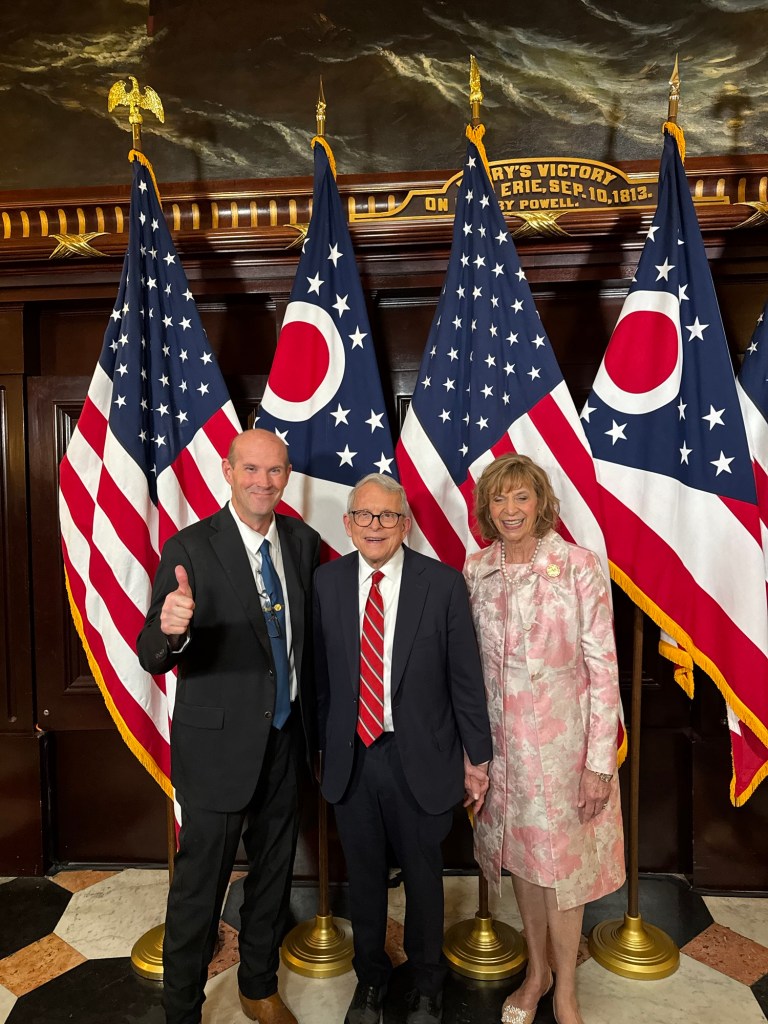
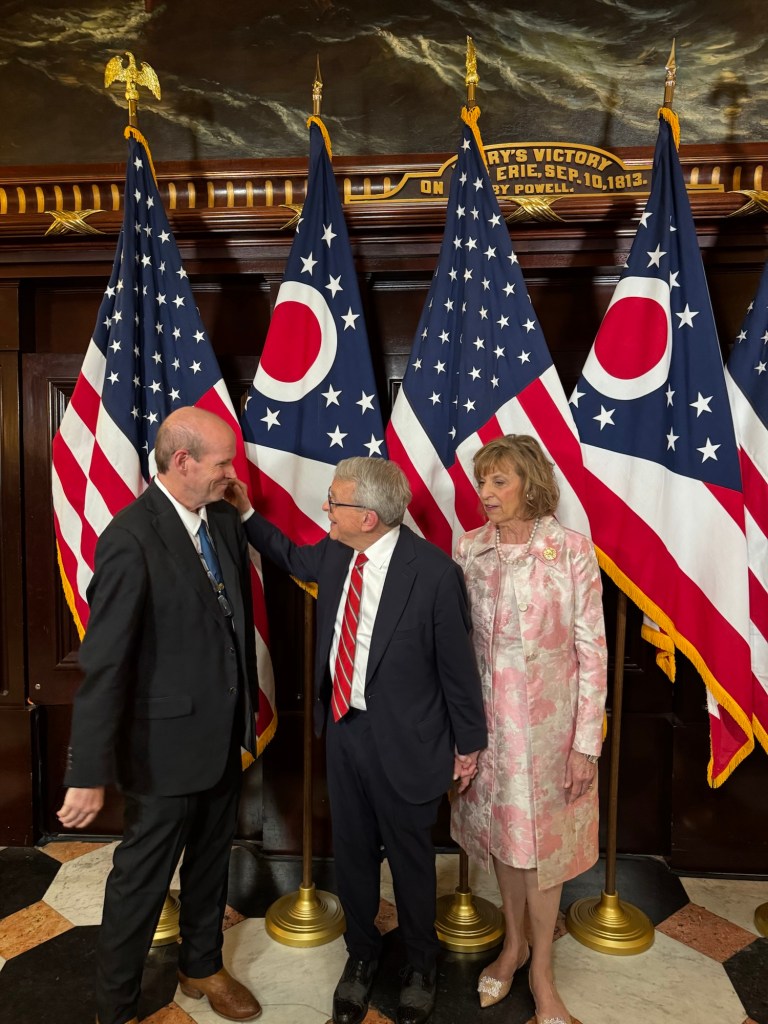
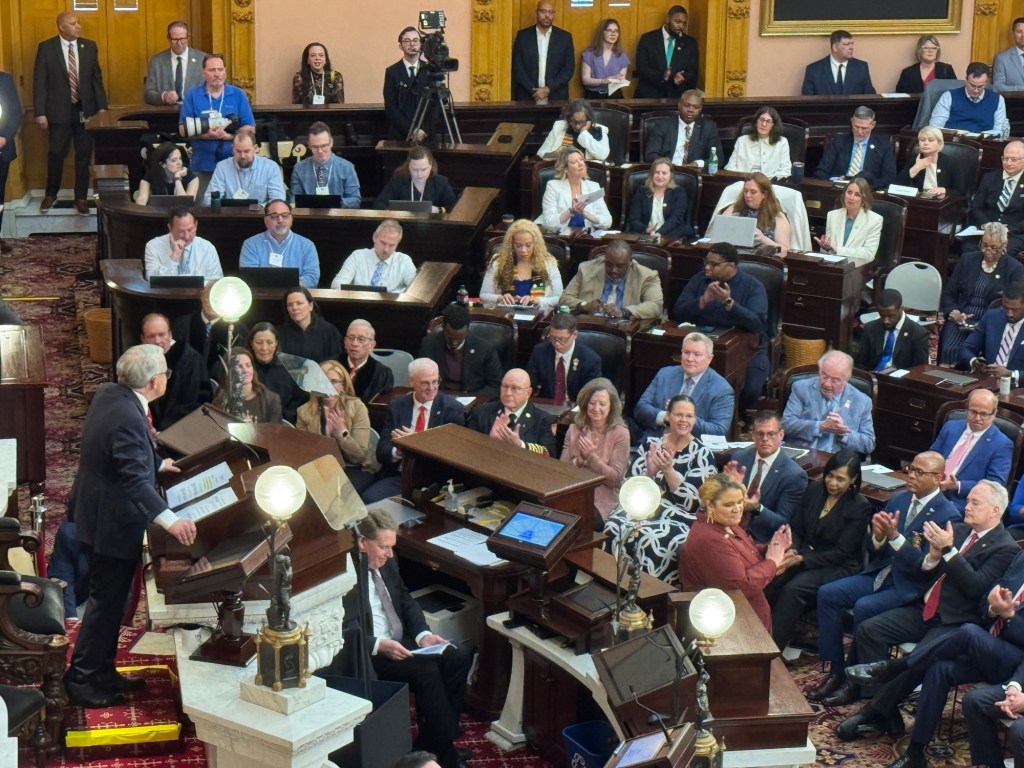
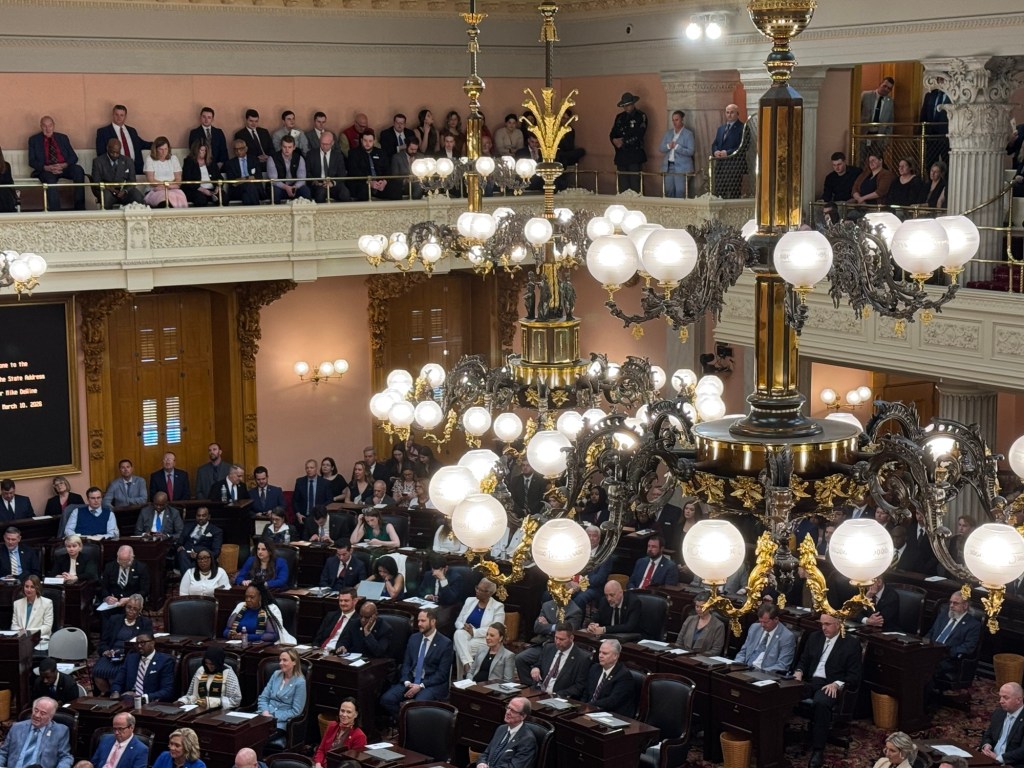
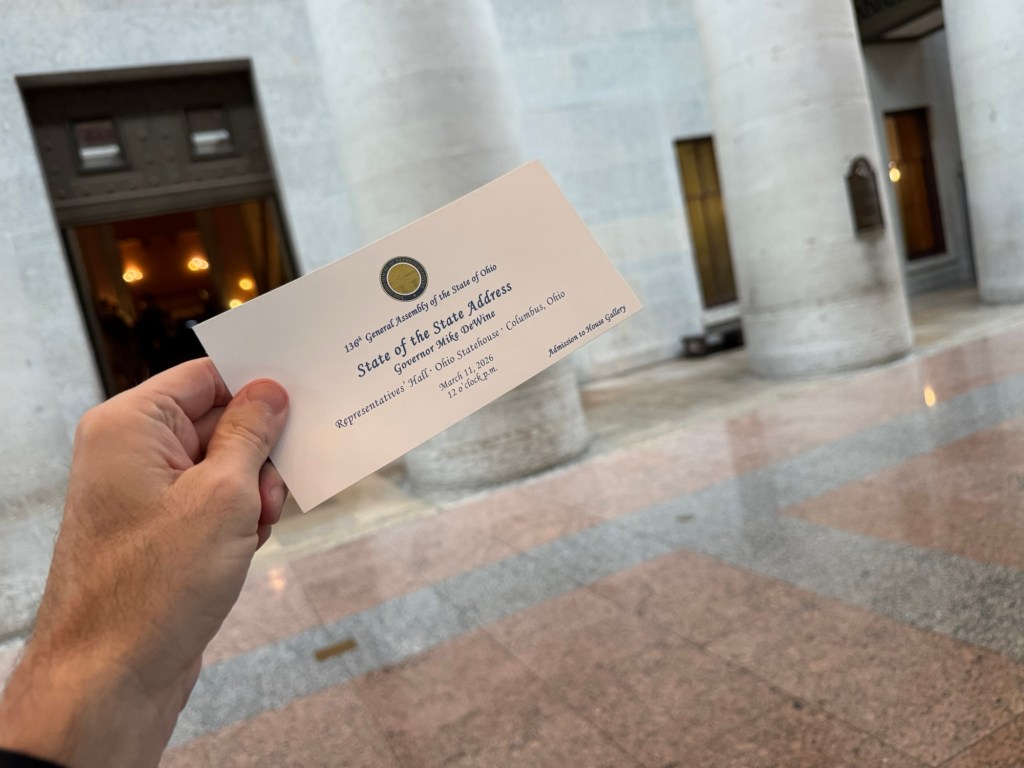
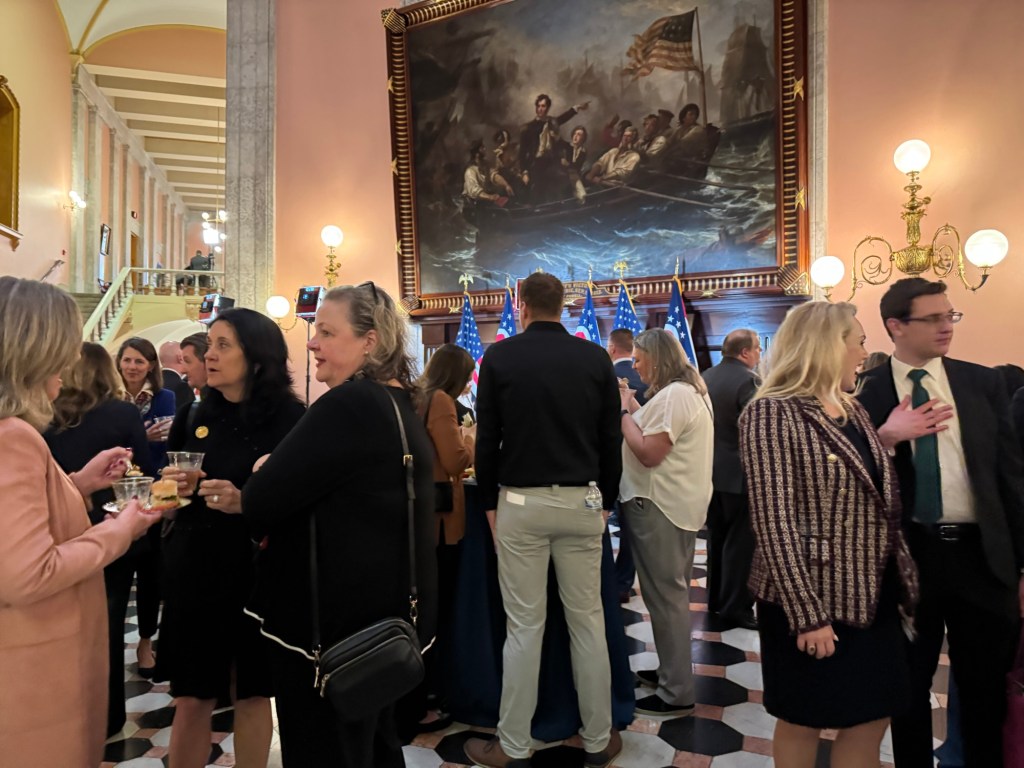
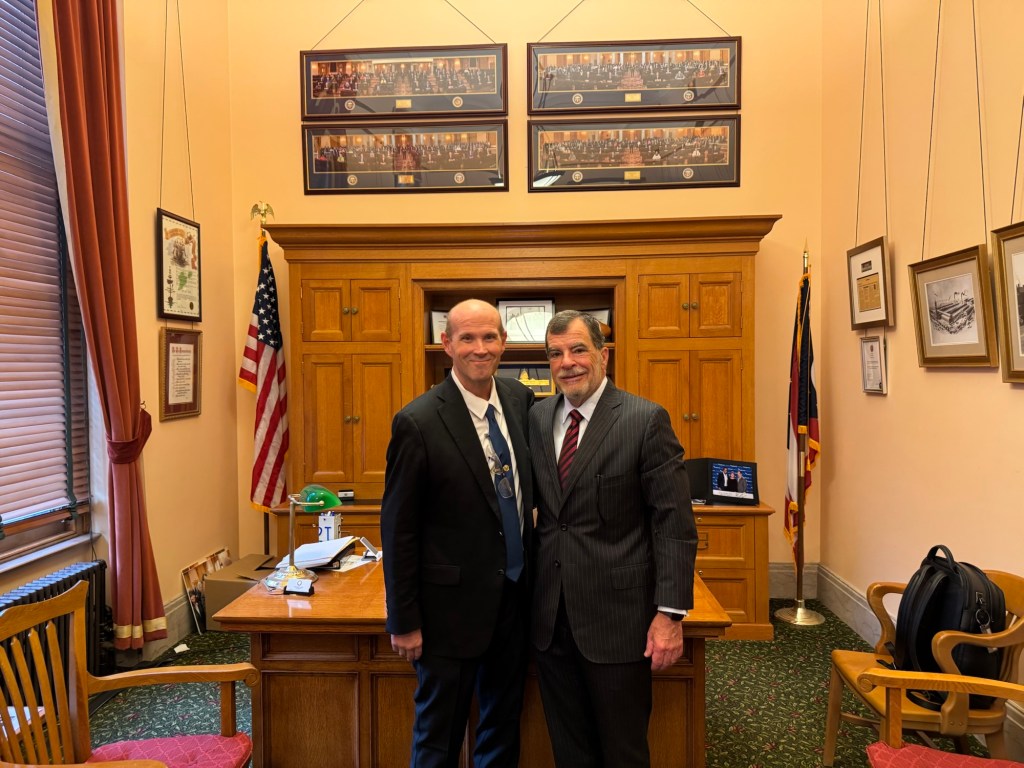
This question has arisen repeatedly in my interactions with Butler County Sheriff Richard K. Jones and many others. We’ve shared public moments of warmth and camaraderie, even as political winds have blown in conflicting directions. The same applies to recent encounters with Ohio Governor Mike DeWine. After years of sharp criticism—particularly over his administration’s handling of COVID policies and other matters—I shook his hand following his final State of the State address. We discussed areas of agreement, such as Second Amendment rights and efforts to combat AI-generated child exploitation. These moments highlight a core principle: genuine regard for individuals ‘ needs need not hinge on perfect alignment. Relationships built on authenticity withstand disagreement; those rooted in manipulation crumble.
We were talking about his wife’s great cookies. The second amendment during his administration. Taxes. And his endorsement of Vivek Ramaswamy.
This perspective stems from a life shaped by diverse encounters. Growing up in Ohio, I navigated rough characters and “celebrity” figures in my early adult years—individuals carrying heavy psychological burdens and disappointments. These experiences, often intense and sleepless, taught navigation of human darkness. I awoke each day intent on being the “good guy,” never contemplating villainy. This innate drive toward justice, perhaps divinely guided, clashed with destructive forces, leading through ominous courtrooms and rigorous trials.
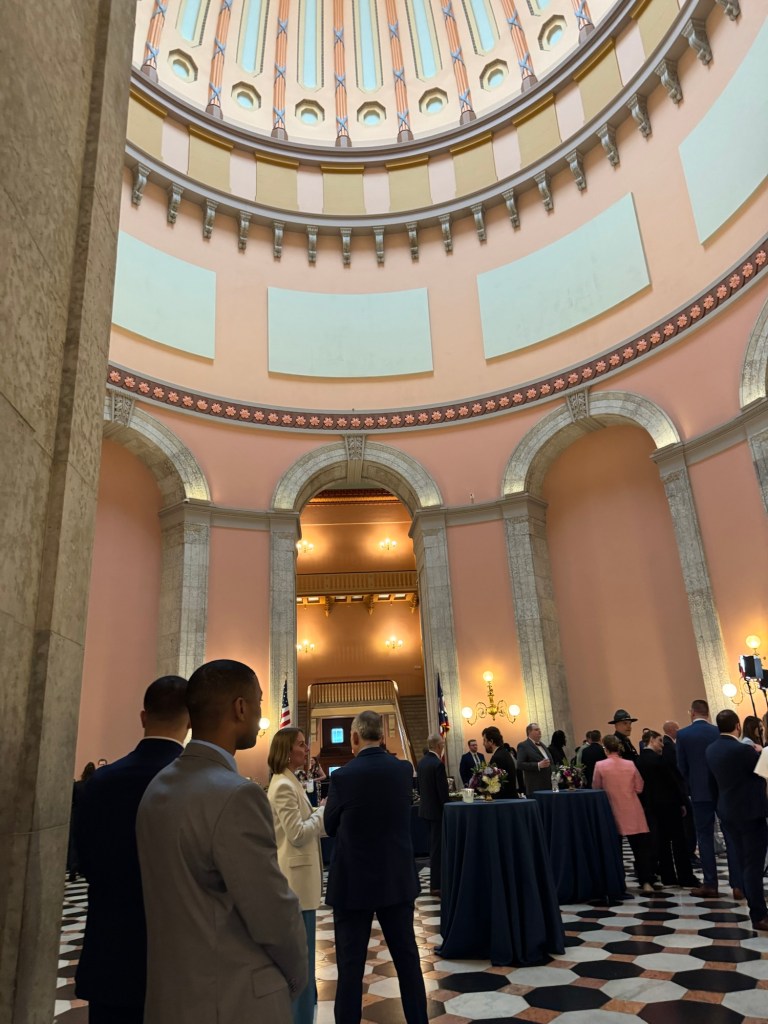
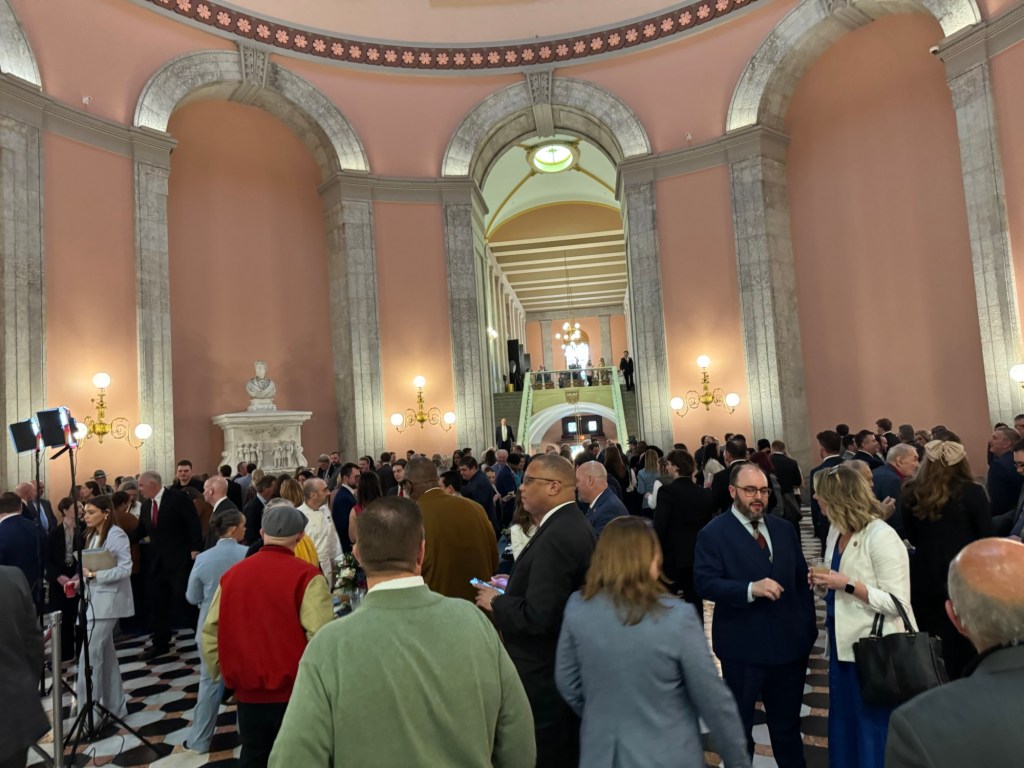
The lofty expectations of public office. Few people ever live up to those expectations. But the building was built with the expectation of exceptionalism.
These trials instilled resilience. I’ve seen the worst of human behavior: betrayal, manipulation, and raw conflict. Yet, they clarified priorities. Nothing since has felt catastrophic by comparison. This foundation allows aloof observation—staying “lofty” amid chaos—while engaging directly when needed.
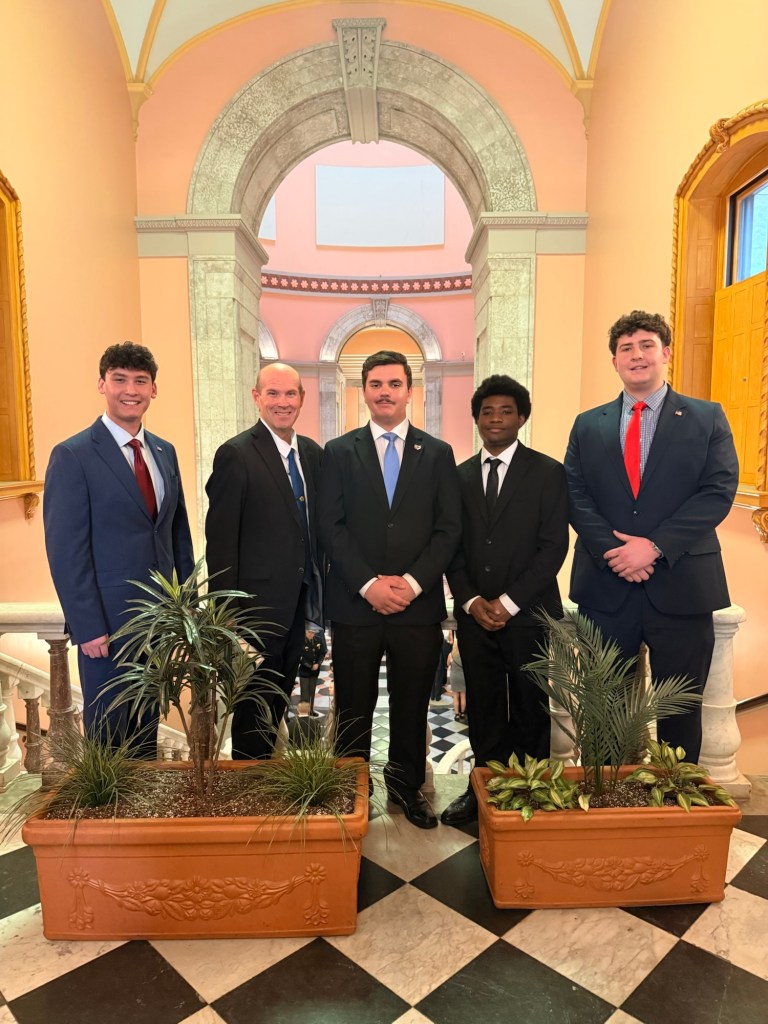
I love to see the future, in the here and now. Great young people!
Professionally, I’ve channeled this into commentary via platforms like The Overmanwarrior blog, podcasts, and writings (including books like The Symposium of Justice and business guides). As a fast-draw enthusiast and strategist, I’ve advised on local and state issues. Public friendships, like with Sheriff Jones, stem from shared values on law, order, and community—despite occasional political divergences. These are not performative; they’re authentic.
Most relationships reduce to two levers of control. The first is friendship as leverage: people offer smiles, hugs, or inclusion to gain compliance. When denied, they withdraw—“I’m not your friend anymore unless you…” This mirrors childhood games (stickers on lockers) and adult dynamics (passive-aggression in marriages, where affection is withheld until demands are met). In politics, it’s “endorse my candidate or lose my support.” Women and men alike use emotional coziness as currency; it’s learned early and persists.
The second is the threat of violence or intimidation. When friendship fails, escalation follows: harassment, protests, spiritual “warfare,” or physical threats—“Do what I say or face consequences.” Authoritarian regimes amplify this; bullies in parking lots embody it personally. Both aim at submission through fear.
I’ve rejected both. Secure in my positions, I express them openly—here, on podcasts, in writing—without needing validation. Disagreement doesn’t prompt cliff-jumping; it invites dialogue or indifference. If someone withdraws friendship over opinions, that’s their choice. If intimidation arises, I handle it unflinchingly, drawing from early lessons in facing rough characters.
This stance echoes timeless wisdom, like Sun Tzu’s The Art of War: become invincible by rendering tactics ineffective. Control what you can—your actions, values, responses—and influence outcomes without direct domination.
Sheriff Jones exemplifies this. We’ve agreed on much: law enforcement, border security, deportations, and community protection. His office’s work with ICE and unapologetic stance on illegal immigration align with my views. Publicly, we’re friendly—podcasts, events, and genuine conversations about his brand and duties.
Yet, political motivations diverge at times. Endorsements or strategies might differ. Critics note our chumminess amid such gaps, confused by loyalty despite opposition. The answer: I like him authentically. His character, spine, and public service earn respect. If we clash, we may not talk for a while—that’s fine. Friendship isn’t conditional on perfect alignment. I won’t manipulate him (or allow manipulation) to force agreement. Truth emerges through pressure and process, not emotional blackmail.
This extends broadly. I like many who’ve opposed me politically, and I reserve the right to value people independently. Indifference to reciprocity preserves freedom.
A recent addition underscores this: Governor DeWine’s final State of the State address. His administration faced criticism—over COVID handling and other policies—creating opposition, which I had been very critical of, rightfully so. Yet, post-speech, we shook hands and spoke cordially.
We aligned on key issues: Second Amendment defense, and crucially, combating AI-generated child sexual abuse material (often called “simulated” or “AI child porn”). DeWine and Attorney General Dave Yost highlighted predators using AI to create exploitative images of children, urging legislation to criminalize creation, possession, and distribution. This addresses a growing threat where legal gaps allow evasion of traditional child pornography laws. I expressed support, noting agreement despite past differences, such as when Yost was running against my supported candidate, Vivek Ramaswamy for governor.
This exchange wasn’t leverage-seeking. It prioritized common ground—protecting children—over grudges. Putting differences aside when opportunities arise fosters the emergence of truth, not manipulation through fear of lost friendship.
Politics amplifies these dynamics: RINOs vs. traditional conservatives, reform movements, religious clashes. Belief systems collide; scores settle. Yet, values about people shouldn’t depend on outcomes. I like or dislike based on character, not scoreboard.
Pursuing righteousness means respecting all sides, allowing truth to reveal itself through conflict’s “fog of war.” Hot tempers subside; smoke clears; good emerges. Manipulation—friendship withdrawal or intimidation—crowds ideas into small-mindedness. Independence enables macro focus: immortal existence over micro squabbles (marriages, divorces, family disputes).
A good friend of mine gave me some homework to do
I’ve built a life affording this luxury: secure positions, no fear of loss. Many seek friendship; time limits interactions. Some engage strategically to advance balls—purely functional, not manipulative.
It’s okay to like those who hate you, to be friendly with opponents, and to shake hands after battles. Truth often surfaces in conflict; observation reveals positions. By staying outside manipulation’s reach, one accomplishes greatly where others falter.
In the end, righteousness is rooted in truth, not personal desires or leverage. Respect others’ thoughts—even wrong ones. Good people come around; disputes fade. We shake hands, share hot dogs at picnics, and discuss lofty things as emotions drift.
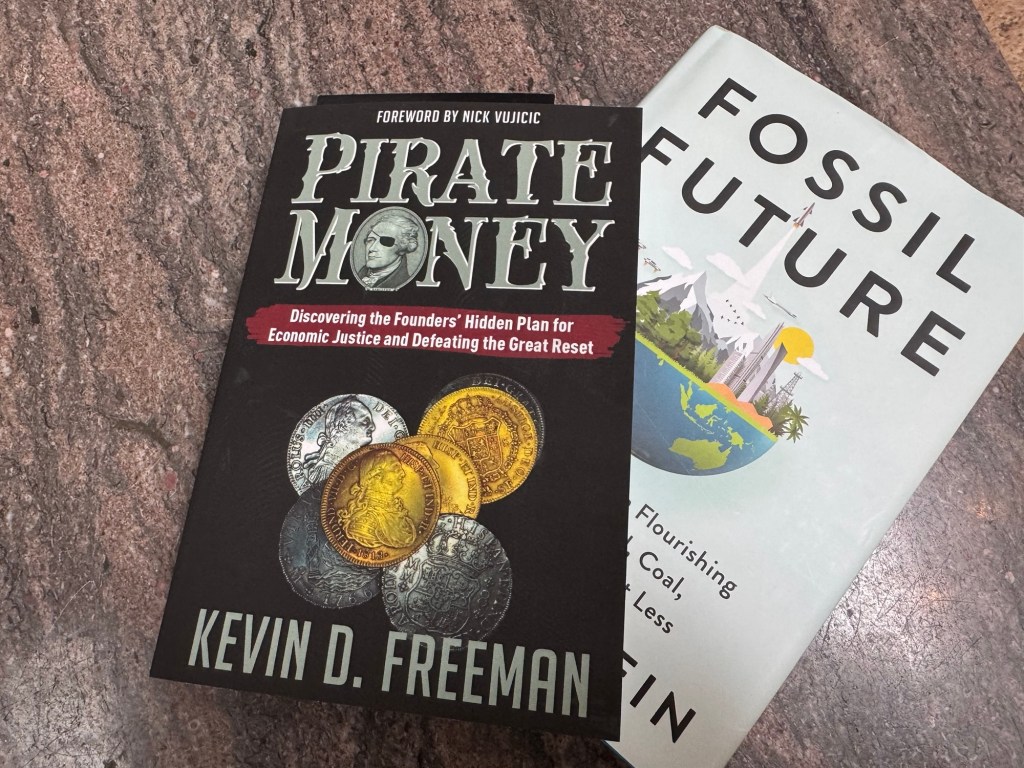
George Lang is a great guy in all aspects, what a lot of people don’t know about him is he loves books. Something we share beyond the immediacy of politics
Bibliography
Overmanwarrior blog (overmanwarrior.wordpress.com) – Primary source for writings on politics, philosophy, and personal insights. Butler County Sheriff’s Office interactions – Public podcasts and events with Sheriff Jones (e.g., discussions on immigration, law enforcement). Ohio Governor Mike DeWine’s State of the State address (2026) – Focused on AI restrictions, including child exploitation; references from news coverage (e.g., Toledo Blade, ABC6). Attorney General Dave Yost’s efforts – Collaboration on bills like SB 217/SB 163 targeting AI-generated CSAM. The Art of War by Sun Tzu – Concept of invincibility through non-engagement with opponent strengths. Personal books: The Symposium of Justice, business guides – Available via Overmanwarrior platforms.
This framework allows engagement without compromise, advancing righteousness amid human complexity.
1. Hoffman, Rich. The Symposium of Justice. iUniverse, 2004.
2. Hoffman, Rich. Tail of the Dragon. CreateSpace Independent Publishing Platform, 2012.
Explores themes of freedom, law, and high-stakes conflict through a narrative rooted in real altercations and political activism and often described as “faction” (fact-based fiction).
3. Hoffman, Rich. The Gunfighter’s Guide to Business: A Skeleton Key to Western Civilization. Liberty Hill Publishing, 2021.
A practical and philosophical guide that draws parallels among gunfighting strategy, business, and life—offering a Western counterpoint to Eastern classics like The Art of War. Emphasizes invincibility through preparation and independence. Available on Amazon and referenced in Hoffman’s bio.
Daily posts on politics, culture, philosophy, personal stories, and current events in Ohio (e.g., Butler County issues, tax fights, and human dynamics). Includes author bio, reflections on early life, and discussions of books like The Symposium of Justice.
5. Sun Tzu. The Art of War. Translated by Lionel Giles (1910 edition) or modern versions (e.g., Everyman’s Library). Original ~5th century BCE.
Key concept from Chapter 4 (“Formation”): “Invincibility lies in oneself; vulnerability lies in the enemy.” The skilled make themselves invincible through self-preparation, rendering opponent tactics ineffective—directly echoed in the essay’s rejection of manipulation levers.
6. “DeWine calls for new AI regs, parental control rules in 2026 State of the State.” Cleveland.com (via various outlets, including Facebook reposts and Toledo Blade coverage), March 2026.
Covers Governor Mike DeWine’s final State of the State address, urging legislation on AI guardrails, including outlawing the creation, possession, and distribution of AI-generated child sexual abuse material (CSAM). Aligns with the essay’s mention of agreement on child protection despite past differences.
7. “Ohio struggles to combat AI-generated child porn amid legal gaps.” ABC6 On Your Side, January 29, 2026.
Details legislative efforts (involving DeWine and Attorney General Dave Yost) to close gaps in prosecuting AI-simulated child exploitation, highlighting the growing threat and push for criminalization.
8. Butler County Sheriff’s Office. “In The Saddle With Sheriff Richard K. Jones” (podcast series). Apple Podcasts and related platforms, ongoing.
Episodes featuring Sheriff Richard K. Jones on law enforcement, immigration (e.g., 287(g) agreements), and community issues. Includes collaborations and discussions with Rich Hoffman (e.g., Rumble episodes on ICE detainees and related topics).
9. Various public interactions: Butler County Sheriff’s Office Facebook posts and YouTube videos (e.g., “Ohio 287(g) with Butler County Sheriff Richard Jones,” November 2025).
Document friendly exchanges, podcasts, and joint appearances between Sheriff Jones and Rich Hoffman on topics like border security and prisoner handling.
Top Notes for Further Reading
• Start with Hoffman’s blog (The Overmanwarrior) for the most direct, unfiltered context—search archives for terms like “Sheriff Jones,” “DeWine,” “friendship,” “manipulation,” or “invincibility” to find raw reflections mirroring the essay’s monologue.
• For philosophical grounding on invincibility and non-manipulative strategy, read The Art of War Chapter 4 alongside The Gunfighter’s Guide to Business—Hoffman explicitly positions his work as a Western response to Sun Tzu.
• On Ohio politics and the examples: Follow coverage from Cleveland.com, Toledo Blade, and ABC6 for updates on AI/CSAM bills (e.g., potential SB 217/SB 163 analogs) and DeWine’s 2026 address. Sheriff’s Office social media provides real-time context on Jones’ work and public persona.
• For broader insights into human relationships and power dynamics: Explore related classics like Machiavelli’s The Prince (on manipulation) or Nietzsche’s ideas on the “overman” (influencing the blog’s name), though Hoffman’s approach emphasizes righteousness over conquest.
Rich Hoffman is an independent writer, philosopher, political advisor, and strategist based in the Cincinnati/Middletown, Ohio area. Born in Hamilton, Ohio, he has worked professionally since age 12 in various roles, from manual labor to high-level executive positions in aerospace and related industries. Known as “The Tax-killer” for his activism against tax increases, Hoffman has authored books including The Symposium of Justice, The Gunfighter’s Guide to Business, and Tail of the Dragon, often exploring themes of freedom, individual will, and societal structures through a lens influenced by philosophy (e.g., Nietzschean overman concepts) and current events.
He publishes the blog The Overmanwarrior (overmanwarrior.wordpress.com), where he shares insights on politics, culture, history, and personal stories. Active on X as @overmanwarrior, Instagram, and YouTube, Hoffman frequently discusses space exploration, family values, and human potential. An avid fast-draw artist and family man, he emphasizes passing practical skills and intellectual curiosity to younger generations.
In Butler County, Ohio, public office is supposed to be about service, fiscal responsibility, and representing the people who elected you—not leveraging your title for personal favors, flipping off constituents on camera, or repeatedly crossing party lines while clinging to a Republican label. Yet for over a decade, Butler County Commissioner Cindy Carpenter has operated in ways that have tested those expectations, culminating in a series of self-inflicted controversies that now threaten her long-held seat. The latest chapter, unfolding quietly but decisively in early February 2026, marks a turning point: on February 3, 2026, during a regularly scheduled commissioners’ meeting, the board—acting on advice from Prosecutor Michael Gmoser—voted to remove Carpenter from her position on the Housing and Homeless Coalition board due to mounting complaints about her conduct. This isn’t speculation or rumor; it’s documented in public video of the meeting, where the prosecutor’s guidance was read into the record, underscoring that the severity of the issues warranted her immediate removal pending further review.[1]
This move didn’t come out of nowhere. It builds directly on the December 2025 investigation into Carpenter’s heated exchange at her granddaughter’s apartment complex near Miami University in Oxford. What started as a family visit escalated into accusations of racist language, intimidation, and abuse of office. The apartment manager filed a formal complaint, prompting Prosecutor Gmoser to investigate. His report, read aloud at a commission meeting shortly after, cleared her of criminal wrongdoing—no charges for intimidation or racial utterances that would trigger prosecution—but pulled no punches on the optics: her behavior was “distasteful” and “beneath the dignity of an elected officeholder.”[2] Carpenter admitted to making an obscene gesture (the middle finger) caught on video, but denied any racial slurs. The prosecutor emphasized it wasn’t illegal, but that leniency was never meant to be a free pass. It was a warning that such actions erode public trust, especially from someone in a position of authority.
Fast-forward to January 2026, and the political repercussions accelerated. The Butler County Republican Party, which had long endorsed Carpenter in past cycles, shifted decisively. At their endorsement meeting, they backed challenger Michael Ryan—a former Hamilton City Council member—with a strong 71% vote, described internally as “historic.”[3] Carpenter didn’t even seek the endorsement this time, a move party chair Todd Hall called “not unusual” for her, but one that spoke volumes. Ryan’s platform emphasizes conservative values, accountability, and a fresh approach to county issues like economic development and public safety—areas where Carpenter’s tenure has drawn criticism for divisiveness. Other challengers, including a Democrat (Mike Miller) and minor Republican candidates, round out the May 2026 primary field, but Ryan’s GOP backing positions him as the serious alternative.
Why the party abandonment? It’s not just politics; it’s pattern recognition. Carpenter has served since 2011, winning multiple terms but often amid complaints about her temperament. Colleagues and observers describe her as “difficult” to work with—quick to outbursts, resistant to collaboration, and prone to going rogue on policy. One glaring example: while holding a Republican endorsement, she was caught campaigning for a Democrat—Middletown’s mayor—at a polling place, holding signs and promoting the candidate.[4] That incident alone alienated many in the GOP base, who saw it as a slap in the face to party loyalty. For years, she received the benefit of the doubt: “That’s just her personality,” people said. “She flies off the handle sometimes, but she’s effective.” But effectiveness wears thin when trust erodes.
The homelessness portfolio, ironically, has been a flashpoint. Carpenter has long advocated for addressing homelessness, chairing related committees, and pushing for more permanent supportive housing units (she cited a need for 274 in prior gap analyses).[5] Yet her approach has sparked internal rifts. In 2025, she led a grassroots effort through her Housing and Homeless Collaborative to remove Butler County from Ohio’s Balance of State Continuum of Care, seeking independent HUD status to secure additional funding potentially.[6] Commissioners Don Dixon and T.C. Rogers vigorously opposed it, sending objection letters and questioning accountability for millions of taxpayer dollars. Dixon was concerned about providers making unchecked decisions without voter oversight; Carpenter argued that urban counties like Hamilton and Montgomery receive far more funding under similar arrangements.[7] The split highlighted her willingness to buck the majority on the board she shares with them.
Enter the February 3, 2026, meeting. Amid ongoing fallout from the Oxford incident, new complaints surfaced—severe enough that Prosecutor Gmoser advised Dixon and Rogers, as legal counsel to the board, to remove Carpenter from the Housing and Homeless Coalition board immediately.[8] The prosecutor isn’t pursuing criminal charges (yet), but his guidance underscores that elected officials must maintain public confidence. Complaints from coalition members, providers, or stakeholders—possibly building on years of perceived abrasiveness—pushed the issue over the edge. Dixon voted in favor of the removal; the action passed, stripping her from a board central to her self-proclaimed expertise. Video from the meeting shows the discussion, the prosecutor’s letter read aloud, and the vote—no ambiguity.[9]
This isn’t a partisan witch hunt. The complaints aren’t coming solely from political opponents; they’re from people who’ve dealt with her directly—young residents at the apartment complex who felt bullied, coalition partners frustrated by her style, and even fellow Republicans tired of defending the indefensible. As noted, “You can’t be mad and say things or do things that people can scrutinize negatively—you have to be smart enough not to walk into traps.” Throwing your weight around as a commissioner to demand special treatment for family, then escalating when challenged, is exactly that trap. When it’s on camera, it doesn’t fade; it festers.
The broader lesson here is accountability. Public officials aren’t above scrutiny. Carpenter’s 11+ years in office gave her the benefit of the doubt for too long—personality quirks excused, party-crossing overlooked, outbursts tolerated. But once the Oxford video surfaced, the dam broke. More people felt empowered to speak: “If she did that there, what about here?” The prosecutor’s initial “not criminal, but distasteful” statement was fair at the time; now, with additional complaints drawing him back in, it’s harder to dismiss. He has other priorities—crime, opioids, budgets—but when complaints pile up against a commissioner, he must investigate. Removing her from the homelessness board isn’t punishment; it’s prudence. Trust in county government requires it.
For voters heading into the May 2026 primary, the choice is clear. Michael Ryan offers a contrast: endorsed by the GOP, focused on conservative principles, and with no history of similar scandals. He’s attended events, built relationships, and positioned himself as a team player. Carpenter’s absence from many GOP gatherings and her reputation for difficulty have left her isolated. The primary isn’t about punishing her—it’s about what’s best for Butler County. A commissioner who can’t handle public interaction without controversy, who loses party support, and who faces board removals isn’t serving effectively.
Her past is catching up because she built the momentum herself. No one forced her to go to that apartment complex and leverage her title. No one made her flip off people on camera. No one compelled the emotional outbursts or party-line crossings. Those were choices. Now, consequences follow—not because of “politics,” but because behavior matters. In a Republican-leaning county like Butler, voters expect alignment and decorum. When that’s absent, options emerge.
This story matters beyond one person. It reminds everyone in the office that power is temporary and trust is earned daily. When you abuse it—even in small ways—it compounds. Carpenter could have de-escalated, apologized fully, and collaborated more. Instead, the pattern continued, and now the board on which she sits has acted against her. The prosecutor provided avenues for explanation; she hasn’t helped herself.
Butler County deserves better than stale leadership mired in self-made drama. The shoes are dropping, and they’re landing squarely where they belong—on choices made over the years. Cindy Carpenter is a mess, and there are now fewer and fewer people around to clean it up. Because she just keeps making messes.
Bibliography / Sources
1. Video evidence from Butler County Commissioners’ meeting, February 3, 2026 (public session; removal vote and prosecutor’s advice read into record).
2. Butler County Prosecutor Michael Gmoser’s report, December 2025 (read into commission record; covered in Journal-News, December 3, 2025).
3. Butler County GOP endorsement announcement for Michael Ryan, January 2026 (Journal-News, January 12, 2026).
4. Reports of Carpenter campaigning for the Democratic Middletown mayor (local accounts, referenced in multiple critiques).
5. Carpenter statements on homelessness gap analysis (Journal-News, various 2023–2025 articles).
6. Efforts to redesignate Continuum of Care (Journal-News, March 2025; Cincinnati Enquirer, July 2025).
7. Dixon/Rogers objection letter and board discussions (Citizen Portal, March 2025).
8. Prosecutor Gmoser’s advice on board removal (February 3, 2026, meeting video; emerging mentions on social media, e.g., Facebook groups).
9. Public meeting archives, Butler County website (butlercountyohio.org; video footage).