Ron Howard and Klaus Schwab Attack Boeing: A new Netflix documentary exploits people to attempt to kill American capitalism

With all the talk against Boeing, the great American airline manufacturer that the liberal Ron Howard directed hit piece tried to utilize from the high moral ground, the effort has one central message. The world needs to convert its values from shareholder capitalism to stakeholder capitalism the way the Desecrators of Davos view it. The new Netflix documentary that is now streaming that tells a story of Boeing’s 737 MAX safety concerns is all about painting Boeing as a company that fell from grace due to its greed in trying to stay competitive with the Airbus A320 and that its focus on short term profits was what killed hundreds of people in two crashes that occurred in the new plane, one in Indonesia, and another in Ethiopia. The Hollywood hit piece comes at the problem from a political point of view. It attempts to exploit the deaths of innocent people in a way that sells the Klaus Schwab view of the world from the Desecrators of Davos and not the get it done mentality of American manufacturing. It’s really a disgusting movie made by people attempting to apply Covid safety rules to the stock value of Boeing and shove them into the woke world of progressive logic as only radical leftists understand them. A lot is going on in what went on with the Boeing 737 MAX and the world of safety surrounding it. But remember what I say all the time, the rules of the world are made by the losers, meaning, those who can’t compete with the good in the world make rules for themselves to penalize the best and make them more equal to the lazy, the timid, and the socially awkward. 

Boeing and Airbus have a problem when it comes to making plans for a newly created for a smaler world where air travel to even far-flung places in the world is suddenly possible, in a relatively short period. This has pushed all these plane manufacturers to massively automate these fancy new planes in ways that wouldn’t even be conceivable a few years ago. Traditionally, a company like Boeing almost exclusively had pilots flying their planes from military backgrounds. Their pilots had been flying planes for decades in the military dime, so when there were continuous improvement opportunities, pilot feedback with the engineering staff allowed for adjustments as a plane matured in a program. But these days, with all these new planes entering the market, the pilots from places like Indonesia and Ethiopia are coming from backgrounds where flying planes weren’t a reality. So the training of new pilots has to be significantly simplified, and every possible contingency needs to be worked out that takes away the possibility of pilot error. That is how the anti-stall system was put on these new MAX jets from Boeing so that new pilots without the benefit of years of training could fly these planes much easier. In the case of Boeing, their anti-stall system malfunctioned, which contributed to the crashes in Indonesia and Ethiopia. When sensors on the plane detected a stall condition during flight, the system took over the pitch from the pilots and pushed the nose down. The pilots, unsure how to deal with that condition, fought the flight controls, but the planes nose-dived from the air into a crash because of all the robust automation they didn’t know how to override. It’s kind of ridiculous that their expert for this film to establish moral character as if he spoke for all pilots is a guy who crashed his plane in New York.

The real problem was automating the flight systems due to pilot training limits. In the great race between Airbus and Boeing between these new fuel-efficient planes, Airbus has had better luck at adopting their aircraft to the needs of automation. Boeing, used to a significant relationship between pilots and engineers built on American military experience, had engineered some single-point failures that have proven to be costly. It certainly wasn’t on purpose. But the point of the Ron Howard documentary wasn’t to see the situation as an accident in a rapidly changing marketplace, but an intentional killing of innocent people because Boeing was too interested in profits. And that if only we had a society that didn’t worry about shareholder value as much as they do, those people would still be alive. The movie written in the way that all communists think assumes that if there were more employees in the labor union at Boeing, that if there were more quality inspectors, and if Boeing had been willing to ground the MAX jet instead of competing with Airbus for market share, that all those lives would still be with us. The assumption was that Boeing killed those people in their airplanes because they were greedy and only cared about their company’s stock value. The other assumption which wasn’t said but was heavily implied was that in a world of stakeholder capitalism, which is essentially state-controlled communism where a strong central authority runs everything, lives would be saved, and everyone would live happily ever after. 

Even more than that, this movie, Downfall: The Case Against Boeing, is an attack on great American industry and a swipe at the traditionally get it done mentality of enterprise. As liberals who do everything in life behind the safety blanket of armchair quarterbacking, they never plan to take responsibility for anything, as all liberals are prone to do. They are the first to preach about the morality of something, but when their side is guilty of sex trafficking, or drug abuse, they point to institutional failure and not themselves. In the case of Boeing, they want to bring down the concept of the CEO with large salaries and to replace them with state central control, to federalize big companies like Boeing so that safety can be imposed, and the temptations to play with people’s lives will be averted. They don’t tell you that their solution to the problem is not to build the planes. They plan to let the market rot and to use safety to hide the incompetence of all involved. To use rules and regulations to protect the inefficient from any expectation that might come from competition. To bend the world to the limits of the slow, the not very smart, and the timid. Boeing was a company built on risk, on American innovation, and when you didn’t get it right the first time, horse sense allowed you to survive to the next day, and everyone worked together to make things better. But when dealing with a global enterprise, which is what aviation is these days, we deal with people from all kinds of backgrounds. And the challenge is to simplify everything for them by making everything more complicated at the end of the system. And when you don’t figure everything out the first time, bad things can happen. Yet instead of understanding that, Ron Howard and the gang are more interested in introducing the Klaus Schwab view of the world, removing shareholder capitalism from consideration and replacing it with stakeholder capitalism. Because when the state controls Boeing, as liberals plan to impose on them, there won’t be any expectation of profits from a Boeing stock. Instead, the value will be that people are working, subsidized by the state, of course, and that safety will be first, even if that means not building and delivering the planes to the market. To the socialists and communists of the world, the market can wait. After all, safety is the most important thing, even if that means that the rest of the world has to slow down to those limits and that they will learn to like it. Whenever a lefty suggests that Americans do things too fast and too recklessly, that is what they are really after. In the case of American business, it should make us all sick to our core because it’s not just an assault on a great American company, but an assault on us all and the greatest country on earth and their core beliefs. 

Rich Hoffman
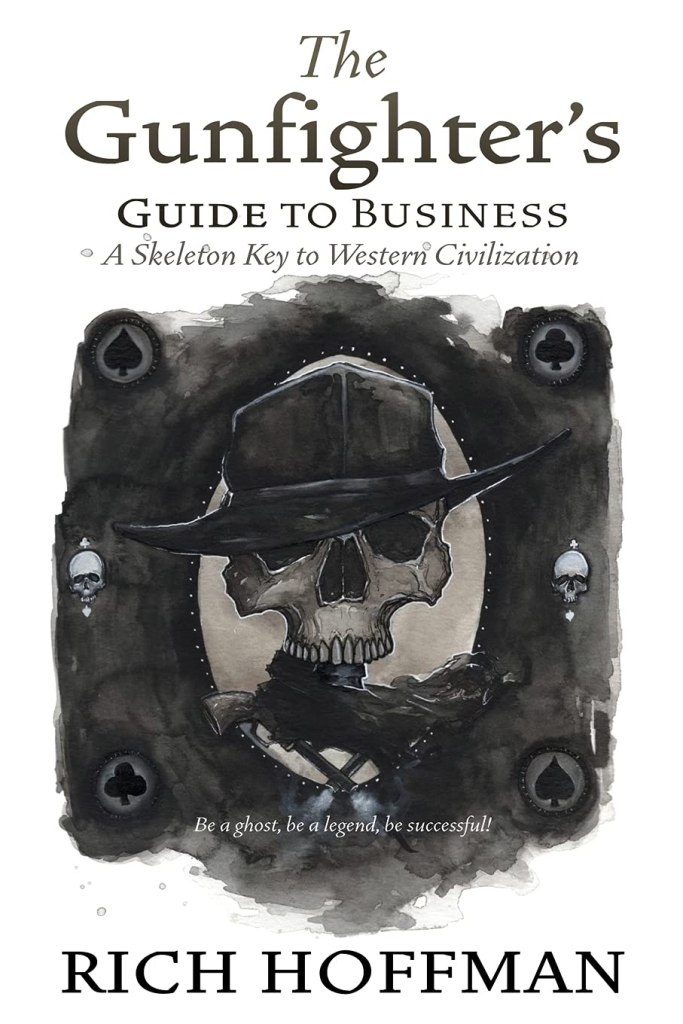
Click to buy The Gunfighter’s Guide to Business

Solo: A Star Wars Story Box office discussion–what it means to everyone–and nobody cares about China

Box office numbers are often a good thermometer into what the world is thinking, and I pay attention to them closely, and sadly the new Star Wars movie Solo: A Star Wars Story is falling well short of the kind of numbers its going to need to make. I found it interesting to see how many news outlets were already writing stories on Friday about how dismal the box office numbers were for the new Star Wars movie, like The Hollywood Reporter for instance. Their story was that Solo was bombing big time in China. Well, since when was China the market decider for films, they are communists, more aligned with the villains in these stories? Solo: A Star Wars Story is all about freedom and I’m sure the “state” wasn’t all that happy with the film, and that whether or not people saw the film or even advertised it so that their billion people had access to it is probably a big factor. Asians especially in China are not big on the Star Wars films, but that’s OK, they haven’t been a big part of the box office numbers all this time—who really needs them now? Solo isn’t any different, yet The Hollywood Reporter was almost as happy as a kid on Christmas Day to learn that China was not supporting the new Star Wars picture. There’s a lot going on with this one which justifies a good long discussion.  (CLICK HERE FOR MY REVIEW OF THE FILM)

First of all, I don’t think the poor box office numbers so far reflect that Solo: A Star Wars Story is a bad movie. If you took the box office numbers of Infinity War and Deadpool 2 and released Solo: A Star Wars Story on a light release month, such as April I think this Star Wars movie would be on track easily to achieve a billion dollars at the box office, but with some competition out there, it would appear there is only so much money on the table to divide up between all the movies, and that’s not a bad thing for theater owners. I often say that Hollywood has let down all the personal investments that theater owners have to shoulder with less than stout productions that drive their concessions. That certainly isn’t the problem currently, there are a lot of movies released right now, and coming up as the summer unfolds which should help theater owners sell lots of popcorn. Hollywood owes them for always being available to display the Hollywood product to the public. That same public has a lot to do on Memorial Day weekend, that’s when the pools open in the states and people typically have things to do outside. In America Memorial Day weekend was pretty nice except for some flash flooding in the eastern part of the country. Everywhere else it was sunny and hot—and people spent time outside. May 25th may have been a traditional release date for Star Wars, but it’s no longer a great weekend for opening a movie because it’s the gateway to summer and people are often doing a lot of things that involve going outside.

Additionally, there are problems for Star Wars to overcome, the entertainment media is trying to do with Lucasfilm and Disney what the general media is trying to do with President Trump, and that is torpedo anything that they do that’s good, because everyone else is struggling to compete. Disney is going to make a lot of money this summer between the Marvel films and Pixar’s Incredibles 2—many in the entertainment business are very happy to see a Star Wars movie get bad press, because it’s a shot at Disney as a media company they are competing with. It’s like how the rest of the NFL teams around the country enjoy it when the New England Patriots lose a game, or Tom Brady throws an occasional interception. The trade media rushes out to talk about how Tom Brady is too old and is losing it. But the very next week Brady will throw for 400 yards and have a quarterback rating over 100 and the Patriots will win by 24 points over whoever they are playing. Disney and its tent pole of Star Wars is a big presence in the marketplace and the second handers love to see trouble happening in the Star Wars universe.

But then there is the very legitimate problem that I have talked about before and that is the mistake that Kathleen Kennedy and her story group at Lucasfilm has made in throwing out the extended universe of Star Wars and pushing very progressive themes in these new Star Wars movies cramming PC culture down the throats of the fans who clearly don’t want those elements in these movies. To me the Lucasfilm efforts with Solo: A Star Wars Story went a long way to fixing those problems with the fan base where some still want to enjoy new instalments, while others want to boycott the films in hopes that Disney will fire Kathleen Kennedy for messing with the elements that made Star Wars great to begin with. Nobody cared that Princess Leia was a bit of a feminist in the original A New Hope. George Lucas tried to make people happy by putting a black guy in the stories with the character of Lando. But in general, the heroes were white people, especially men and Kennedy has been very active to change that. But while doing so she literally destroyed two of the most popular female characters that fans loved, Jaina Solo, Han’s very strong daughter, and the wife of Luke Skywalker, Mara Jade. Fans who read the books went on a lot of journeys with those characters over two decades and suddenly fans were told that those people didn’t exist in Star Wars anymore, and that has caused a lot of consternation. When The Last Jedi failed to reveal who the parents of Rey were—many people were hoping that she was actually Jaina which would at least explain why she is flying around in Han Solo’s precious Millennium Falcon—a lot of fans stepped away from Star Wars at that point and now this second film in only a year has hit theaters and people are ambivalent about it. The Last Jedi was a very progressive movie that really split the fanbase, from not revealing the parentage of Rey, to the killing of Luke and the obvious progressive messages of feminism and sacrifice where everyone was blowing themselves up instead of taking the fight to the enemy, it’s that which made it so the fans stepped away from Solo: A Star Wars Story.

I have been enjoying the new Star Wars stuff the best I could. I have not been a fan of what Lucasfilm has done. I was a big fan of the Star Wars EU and I think Lucasfilm could have easily have just picked up these stories where the books left off and would have done something really special. However, I think the value of the movies and all the merchandise that is coming from the franchise does far more good than bad. I think Lucasfilm and Disney made a major mistake with Star Wars and that they are trying to remedy that now. For me Solo: A Star Wars Story was a huge step in that direction—of making things right with the fans. But its obvious that the fans are going to make Disney and ultimately Lucasfilm earn back that respect which is where things are today. There was a boycott of this latest Han Solo movie and it had an impact on the final ticket sales. As the word is getting out, because Solo: A Star Wars Story is pretty good—I think its one of the best and is certainly on par with the original films somewhere in quality of story telling between The Empire Strikes Back and Return of the Jedi. But the film is more fun like A New Hope was. I like the prequel films but can admit that Solo: A Star Wars Story is better than those films and it is certainly better than The Force Awakens. But these new young actors are making a name for themselves, the young Alden Ehrenreich is earning his respect from the fans little by little. Many fans have been sitting on the fence with Solo: A Star Wars Story because they weren’t sure how to feel about a new actor taking over for the legendary Harrison Ford. If this latest Star Wars film does anything it shows fans that its possible to have a younger actor playing an old favorite, and because of that I think Solo: A Star Wars Story will have good legs into the future of the franchise, and people will come back to the films and forgive Lucasfilm and Disney for their mistakes with the first three films made since the acquisition in 2012.

Alden Ehrenreich is a smart young actor with a good head on his shoulders, and he likes playing Han Solo in Star Wars. He’s good for the franchise and understands that taking less money for the opportunity to do more films like this makes good business sense because it could place him in Hollywood as the next big demand actor—like Harrison Ford was. With all that under consideration I think Disney certainly put the cards down on the table with this one holding nothing back promotionally. I wouldn’t be surprised to learn that they spent $500 million on the movie and are worried at this point of making that money back, which I think they will. But they spent the money expecting a billion in return and that could cool them on launching the other projects that are in the pipeline. Hopefully they let Lucasfilm go forward with the budgets on those new films, the Kenobi film, the Boba Fett film, the Rian series, and of course at least two more movies about the young Han Solo—as well as a whole bunch of other films not yet released. It’s not too late to make these films into the kind of successes that were experienced with Marvel—but getting the fan base back on board is the key.

To win back the audience, and this is just my advice, do with it whatever you want Lucasfilm, you have to get Mara Jade and Jaina Solo into Episode Nine as its being directed now with J.J. Abrams. Everyone gets what they want if that happens, Kennedy gets her strong female leads, Luke has a reason for being so distressed in The Last Jedi, and Rey gets a name and a reason for having the Falcon with Chewie as her co-pilot. A new trilogy featuring Jaina could even take things further 30 years after Episode Nine—the possibilities are endless. It took Marvel ten films to build up the kind of anticipation that was seen in Infinity War, Star Wars could do something very similar, but they’ll have to earn back the fans, and Solo: A Star Wars Story was a big first step. Hopefully Disney doesn’t get cold feet after they study these box office results and consider whether fans will support two Star Wars movies in the same year. They will, and they will support three or four a year if Disney will make them and be very profitable with $200 million budgets. But it will take more movies like Solo: A Star Wars Story to earn back that fan trust, not more movies like The Last Jedi or even The Force Awakens. The nostalgia wore off and now reality is there for Star Wars films, going forward, people want to see new ground that pays respect to what they know from the original EU—and fans don’t want to be preached to with gay characters, or black characters, or women. They just want to see a story set in a galaxy far, far away that will endure for centuries—and not fall out of favor with whatever new political movements come in the next few decades. Star Wars fans want their traditions, and they want the long view—and its their money that Disney wants, so it’s up to the giant entertainment company to give it to them.

I think I’ve listened to the new Han Solo theme from the John Powell soundtrack back to back for a solid four days now and I love it, it’s so full of optimism. It reminds me of how it was when Christopher Nolan’s Dark Night series started back in 2008, with a movie that many people didn’t think was needed because at that point Batman had been done so many times. The Nolan trilogy built up a nice audience and earned a reputation by the fans that they trusted and supported. Those films each went on to make over a billion dollars each. Iron Man the first Avenger film also came out that year with a fantastic performance by Robert Downey Jr. The film only grossed around $500 million globally much like I think this new Han Solo movie will make, but it became the glue that built up those next nine Marvel films. Disney purchased Marvel shortly after that film’s release and the rest is now history, and has been very successful. It has allowed Disney to make obscure films like The Black Panther, which I thought was pretty good—which would have never been made unless there was a need for the ever-expanding universe. Star Wars could do better, but the fan base will have to be built and listening to that soundtrack of Solo: A Star Wars Story that new Han Solo theme could serve as a nice light in the darkness for all the Disney executives timid about the next stage of the adventure. The best thing to do would be to support the effort and not panic, there is a lot of good that came out of Solo, and it hints at how things truly could be now that it looks like Lucasfilm is starting to figure out how to make these Star Wars movies without the guidance of George Lucas. The John Williams contribution is absolutely brilliant and I hope that everyone involved can use it to launch something really special, because the opportunity is certainly there.

Rich Hoffman
Sign up for Second Call Defense here: http://www.secondcalldefense.org/?affiliate=20707 Use my name to get added benefits.

Ron Howard Directing the New Han Solo Film: Why hating Donald Trump is toxic for people in the entertainment industry

There is no way I couldn’t do it because it was only the biggest news story of the week—bigger than Donald Trump’s latest speech, bigger than the latest terrorist threat in Europe—it was so big that it actually led the headlines for three solid days worldwide.  The new Han Solo Star Wars movie production fired its two directors—whom I liked—Phil Lord and Christopher Miller with just three weeks left on the schedule and a summer of re-shoots still needing completion.  Obviously, I have designated myself as a Star Wars fan and out of all the characters in that fantasy sci-fi series Han Solo is my absolutely favorite character.  So even though there are thousands of other topics I might otherwise discuss—I must cover this issue by default of its cultural importance—because as I’ve said many times, Star Wars is not just a movie.  For many people it is a nearly religious event with tremendous cultural ramifications.  And yes, this was big news to a lot of people—and to the film industry as a whole.  My first inclination was optimism for reasons that I’ll describe because it tells me that Kathy Kennedy has her arms around these Star Wars movies—she understands what needs to be done and she isn’t afraid to do it—and I respect that.  Her pick for the next director couldn’t have been better—Ron Howard fresh off the Genius National Geographic drama about Albert Einstein.

I understand now that it was the kid playing the young Han Solo who actually started the process, Alden Ehrenreich.  He apparently was concerned that the directors known for their comedy in films like 21 Jump Street were not taking the picture to a place it needed to go and he spoke to people about it.  His instincts were correct, Han Solo is serious business even though there is comedy that surrounds a character like that—it’s a very fine line.  After Ehrenreich stated his concerns the word got back to Kathy Kennedy who took a look at the dailies and the film just wasn’t working.  It’s not necessarily the fault of Lord and Miller, but if they weren’t getting that fine line—then they needed to be fired.

Additionally, and this is something I don’t think any of them would admit, I noticed that both Miller and Lord were openly protesting Donald Trump and were members of this new Hollywood “resistance” which happens to be the same name of the group that works against the Empire in the new Star Wars films—and this was making Disney and Kathy Kennedy nervous.  The Han Solo film went into production in February of this year and I just happened to be in London at the same time so I was seeing news that wasn’t so available in the United States and I was very concerned that these new Star Wars directors were so openly against Trump and were fully supporting demonstrations in the streets of London.  There is no question that some of that radicalism was finding its way into the new Star Wars movie—where it clearly didn’t belong.  By pissing off half the country in America with political activism in a Star Wars film it would certainly take a hit at the box office and the franchise led by Kennedy these days can’t afford something like that, directly or indirectly.  It was so bad that I actually Tweeted the kids to knock it off—they needed to keep their eyes on the big picture.

Just this week Johnny Depp effectively ended his career when he stated that he thought that a modern actor should assassinate Donald Trump—he was speaking to a group in England where that kind of talk is quite popular these days and he forgot really how far his statements might go—and once it hit the American media it was too late for him.  Depp’s latest Pirates of the Caribbean film had done decent business and if he had kept his mouth shut, he might have recovered as an actor.  His recent divorce and difficulties on the set of Dead Men Tell No Tales have flagged him as a has been that can’t deliver at the box office.  His money was over extended and he really needed to just ride the wave of Pirates and actually hope for another one to pull him out of this slump. But now—he’s toxic. Like it or not, Trump is president and many people are having a positive experience because of it—and they don’t want to hear a bunch of spoiled brat actors and directors taking shots at their president in movies they pay to see. It’s just not good business.  I think Johnny Depp—as much as I like him as an actor—just killed his career forever.  He’ll never recover. He literally just went from riches to rags—because with his financial problems he needed to stay on top to get large pay checks and he just killed that opportunity.

Although I was critical of the Genius show on the National Geographic Channel, Ron Howard did a great job as he always does directing it.  He is one of the top filmmakers in the world clearly functioning from a different place—and when it was announced that Lucasfilm had hired him to replace Lord and Miller I was very happy about it.  Ron Howard knew how to keep the modern politics out of his projects just like many older directors could. For instance, I never knew whether or not George Lucas or Steven Spielberg were conservatives or liberals in the 80s.  When Ronald Reagan invited them to the White House they went and took pictures and they certainly didn’t protest in politics.  If Return of the Jedi had references to the Vietnam War in it sympathetic to the Vietnamese—I couldn’t tell by watching the product.

I was quite shocked to find in the 90s that Spielberg and Lucas gave money to the Clintons and were becoming more active within the Democratic Party—and as much as I liked them—I thought differently about them since then.  No longer did I rush out and see their movies because they had shown themselves to be against conservative positions—and honestly they never recovered their former positions culturally because of it.  However, Ron Howard has never lost that and is the closest thing we have in Hollywood to a good traditional director and actor who established his roots on the Andy Griffin Show.  He knows how to walk that fine line so that people can enjoy a project of his without thinking about the modern politics of the moment—because ten to twenty years from now—you still want the film to be relevant.

For this Han Solo movie to have the kind of appeal that Disney needs out of it they really need to pull off something special and it’s a credit to Kathy Kennedy that she took action before it was too late.  Ron Howard will know what to do and I’m relieved for it.  The world is changing and that radicalism that Hollywood has embraced cannot find its way into something that needs to stay relevant well into the future.  By the time this Han Solo movie is released in May of 2018 we will be living in a different world–largely shaped by Donald Trump’s presidency—and a lot of people will be supportive of him.  They don’t want to see a movie made by people who openly hate him and have filled their Twitter pages with disparaging Trump remarks.  They’ll want to go to the darkened theater and enjoy a new Star Wars movie without politics trying to shape their opinions—and Ron Howard knows how to do that.  After all, it wasn’t Howard’s fault that I liked Albert Einstein less after his Genius series.  It was to Howard’s credit that I was able to get to know Einstein much better than ever before.  As an artist he just presented the facts—he didn’t tell me how to feel—and that is the difference between a great director and people who are just average.  That is why hiring Howard to direct the Han Solo movie will prove to be so brilliant—and I’m glad the production had the courage to do it—before it was too late.

Rich Hoffman

Sign up for Second Call Defense here:  http://www.secondcalldefense.org/?affiliate=20707  Use my name to get added benefits.

cropped-img_0202.jpg