The Truth Kamala Harris and All Democrats, Can’t Handle: In ‘107 Days,’ every day only eroded support

There is more that has been exposed than just the rise of the MAGA movement against a backdrop of authority figure Marxism.  And that was a theme that kept coming to me as I read Kamala Harris’s new book, 107 Days.  Yes, it is garbage, but I’ll read anything, just as I’ll listen to just about anybody, so I can make reasonable conclusions about things, even if it’s from people I don’t like or agree with on much of everything.  And her book is complete with the worst kind of fiction; it’s presented as a fact when the actual content is blisteringly fantastical in its scope.  And this is true of everything from the radical political left, where they think something and can make it so with the power of their observing it.  Such as deciding one day that a man is a woman.  That anal sex is just as natural as vaginal intercourse, that the rest of the world is equal, when in reality, they struggle to make bubble gum wrappers.  And that all facts and figures can be manipulated until reality is forced to agree with them at the point of mass authority rule over a docile and complicit society that has never grown up and away from their parents, and wants an overwhelming government power to rule over their perpetual insecurities. What has fallen apart most devastatingly for the Marxist left, for which the world’s socialist and communist governments have emerged to various degrees, is the sting of reality.  And that is what Kamala’s book most clearly conveys: the degree to which they have lied to their own faces, denying the nature of reality itself, which they are at war with.  The political left despises the truth about the world, and they have been at odds with it; if there is anything that is most devastating to their movement, it’s that all their fantasies have fallen apart under the scrutiny of reality. 

So let’s revisit this notion that I talked about extensively at that time, and which is the essential theme of Kamala Harris’s book, which she has said while on her media tour, giving the whole thing away under press questioning, there is nothing Kamala could have done with more time to run that could have helped her.  Her entirely fictional premise was that if only she could have run a regular campaign, she could have performed better in the 2024 election.  She could not have done better than she did; in fact, for every day she was in the presidential race, she bled support.  She didn’t gain it.  The more people heard from Kamala Harris, the less they liked her.  She wouldn’t have been able to build any support; her campaign was a complete fabrication created by people who thought they controlled the entire narrative and could autopilot her into office, just as they had been running Joe Biden’s campaign all along.  Kamala was not very likable; she came across as someone who had slept her way to the top, and people didn’t like her.  Her best support was the day she announced she was running, once Joe Biden had been pushed out.  Before many people heard her talk, there were a certain number of not very well-informed people who would vote for her because she was a woman of color, and nothing else.  Her most popular day in the campaign was the first day.  On day 107, as the book attempts to erase, her support had eroded as more people heard her talk and got to know her a bit.  The more she opened her mouth, the less people liked her. 

Kamala Harris, in her book, repeatedly mentioned that the 2024 election was the closest in history, which is another example of Democrats seeking something to rally behind.  Trump won 312 electoral votes to Kamala’s 226.  Most of the states where Harris won were states with very loose election laws, such as those allowing mail-in ballots and not requiring voters to show ID at the polling booth.  So when we talk about Trump having a landslide, 312 is a pretty significant number these days, given that things are so heavily leveraged to favor Democrats, at least until President Trump came along.  That’s also why Democrats want to get rid of the Electoral College so they can mass manipulate the way we count votes so that a few states with loose laws can win.  As I say all the time, if Democrats don’t cheat, they can’t win, because they are the seriously minority party in America, and they have only kept things close through election fraud.  In the popular vote, Trump had 77,302,580 million votes to Kamala’s 75,017,613.  That is out of 155,238,302 total voters, which is a very high number.  But lets just call it as they say it is, out of all the voters that there are in America, with a population of 342,034,432 million including all the people who are under 18 and can’t yet vote, where would Democrats close that gap of the 2 million that they fell short on, assuming you had a clean election with no election fraud whatsoever?  And that is the real problem that planners faced when making the decision to replace Joe Biden with Kamala Harris.  They had that plan all along, and they used that June debate with Trump to set up the real story.  It was a desperation shot to put in a woman at the last minute and hope that the math worked in their favor.  But they knew the truth all along.

In 2020, Trump received 74,216,154 votes, just three million fewer than his 2024 total, which was 77,223,615, while Joe Biden received 81,268,924.  Where were all those voters in the 2020 election?  The answer is, of course, that roughly 10 million, likely more, of the votes for Democrats were produced illegally by mail-in ballots cast under the new Covid rules, and the election was rigged entirely from the top down.  The FBI knew it because they assisted with the effort at the Capitol Building on January 6th, when people arrived extremely angry that Trump was being pushed out of office.  The FBI planted over 274 people into the audience to provoke them into violence so that the narrative of the election fraud could shift to some made-up insurrection and put people on their heels to the massive reality that the election had been stolen.  And we can prove it because Democrats were caught not being able to duplicate the numbers of the 2020 election when the rules had returned to normal in 2024.  And if states that voted for Kamala over Trump had to play by more rigorous rules, with voter ID and much more restricted mail-in balloting, they would have lost even more voters than they actually did, which is likely overstated by more than 5 million votes.  Because there aren’t that many people dumb enough to vote for Democrats, and they know it.  The illusion they have lived with through election fraud and a media that sold their socialist fantasy as a reality has been eradicated from the public scene, and they have no means of stopping that process.  And Kamala’s book only spells it out grotesquely for them, rather than changing the nature of reality in the way they wish it would be.  More time for Kamala Harris would have eroded her numbers even more.  But they couldn’t afford to have Joe Biden run again and come nowhere close to his original 81 million with a performance 10 million less.  People would have been outraged by the obviousness of it all.  So their best shot, Democrats, of concealing the election fraud of 2020 was to hope that Kamala would change the numbers because she was a woman and because she was a person of color, which gave her a few throwaway votes.  But the more people heard from her, the less they liked her, and there was nothing she could have done to change that.  And that is the truth of all future elections. 

Rich Hoffman

Click Here to Protect Yourself with Second Call Defense https://www.secondcalldefense.org/?affiliate=20707
Violent Video Games and Furry Culture: Why so many trans kids are becoming killers

I would probably never know about this “furry” culture of sexual deviants if it weren’t for my grandchildren.  My oldest grandson came across them online while researching video game information.  Furries, as they are called, are people who like to dress up in animal costumes in public.  And that’s important because the killers of Charlie Kirk and his boyfriend were participants in this culture, as they would dress up for conventions and play video games that involved anthropomorphic animals having sex.  And of course, as the furry condition is a tremendous psychological concern for public health, we are dealing with a homosexual relationship with a couple of guys who had built up so much hate for the godly purity of Charlie Kirk that they made a move to murder him on a college campus.  And we are seeing a trend among many killers who are going through the same problem, killing people, as video games have desensitized them to killing without any genuine concept of consequences.  If you have read the text messages between Tyler Robinson and his boyfriend, Lance Twiggs, who is in the process of trying to convert to a woman, you will find that they were bizarrely out of touch.  So much so that people naturally think it was a fake narrative created by the deep state to hide the real killers, because it seems so outlandishly coherent, considering this kid just committed one of the most memorable assassinations the world has ever seen.  So a transsexual element is at play yet again, in addition to the furry culture obsession.  The killer of the Minneapolis church attack was a trans kid, and we know now that the assassination threat against Bret Kavanaugh of the Supreme Court was a man trying to become a girl.  So what’s going on here, and how is the gaming culture producing all these young killers?  It’s a question that goes way beyond free speech. 

I’m far from a person trying to reform the video game industry, but we’re no longer talking about Pac-Man here when we talk about video games and how they try to stand out from a very harsh crowd in the marketplace.  I saw the recent Wolverine preview for an upcoming video game, and it’s really very violent.  I have been alarmed at the level of violence in video games as developers have gotten away with more and more violence; there is no question of a desensitizing effect.  The popular game of Fortnite has more cartoon violence, but Call of Duty, Grand Theft Auto, and now this Disney-owned Marvel game, Wolverine, are very violent, where bones are ripped from the bodies of victims ruthlessly.  It is not a stretch to think that a small percentage of the population that plays these games is being desensitized to violence and is losing touch with reality.  I’ll repeat it, I used to write screenplays and I would submit them to studios and agents in the 1990s.  And I had a lot of mainstream people tell me that my screenplays were too violent for a mainstream audience, which Hollywood was a part of at that time.  They had a responsibility to the public good, that’s what they told me.  They would say to me I was a talented writer, but that resorting to so much violence took away from that talent, and they had a responsibility to the public not to be so graphic.  Then I saw Kill Bill and other Tarantino movies, and I mentioned to them that my work wasn’t any more violent than Tarantino’s.  And there really wasn’t an answer except that they said Tarentino’s violence was more comic book, and not as realistic as mine.  So, a line was being drawn, and watching that preview for Wolverine certainly was the result.  The self-censorship in the entertainment industry was ending about the time I mentioned, and it has devolved into what we see today, which is a very violent entertainment culture. 

For young people without strong father figures or good family structures, video games can distort reality.  And this Tyler Robinson supposedly came from a loving family.  Once he developed a sexual relationship with another young man, and they started crossing lines that society would judge them harshly over, they retreated into the violent world of video games, and we know that because those traits were marked on the shell casings from the gun used to murder Charlie Kirk.  We should be all over these traits because they keep repeating, the mode of operation for many of these killers is that they are involved in transexual practices and spend their free time on violent video games.  And when you spend many hours playing violent video games like Lance Twiggs did, there is a desensitization toward violence that ultimately becomes a psychological problem.   When kids delve into this rabbit hole, a trait emerges from this furry culture: the idea that people can be anything they want if only they wish it.  It’s consistent to make mistakes in a video game, where, if you wish, you can change the avatar of your character into anything you want to be.  And that is without question happening in these trans cases, where people make mistakes their families might look down on them for, and they turn to furries or trans sex to change their public image from mistakes they are ashamed of.  When society has opinions about those mistakes, they retreat into the world of video games, where you can be anything you want, you can change your name, and you can hide from society behind mass violence.  Given the frequency of these occurrences, this is a significant problem. 

This is one of those cases where treacherously evil acts are hiding behind conservative values, such as limited government oversight of the video game industry, allowing market forces to work out the problems.  Or to have a libertarian approach to sexuality.  We are told by those creating vile content that more oversight of these industry norms is intrusive.  Therefore, the attacks are occurring behind the values we advocate as businesspeople and conservative, market-driven economic values.  We’re not supposed to have an opinion on this topic because we support free markets, and in the free market, people want violence.  Just as we are supposed to accept that people want to smoke dope, or do other detrimental behaviors, that do not suit healthy mass psychology.  But that’s the thing, and it goes back to my days of writing scripts, when I was told that something was too violent, the standard was to go back and make the scenes less so, but just as impactful.  Violence is often used to make a point forcefully.  It can be necessary, but it can also serve as a creative crutch to avoid the details of actual artistic integrity.  Just like grotesque sex, violence is lazy in trying to appeal to our animal instincts.  And killing is a primal instinct we all have.  But we are expected to overcome that violent trait for something better.  And when we have artistic expression that feeds the fears and anxieties of a young generation with various insecurities, bad things can and do happen.  This video game culture is feeding them in a very negative way, and some of them are turning to actual killings.  And they are becoming desensitized to the world, especially once they start really embarrassing themselves with sexual practices they could never get their families to accept, and changing their public image like a video game avatar never solves their insecurities.  And before they turn to suicide, they are turning to mass social violence, which video games helped fuel their fantasies.  And we are now seeing a whole generation turning to violence and perversion to hide their mistakes, which they have never learned to deal with.  And it’s a really big problem that won’t go away on its own.

Rich Hoffman

Click Here to Protect Yourself with Second Call Defense https://www.secondcalldefense.org/?affiliate=20707
Carrying the Weight of the World: Trump’s UN Speech and earning the right to be blunt about escalators

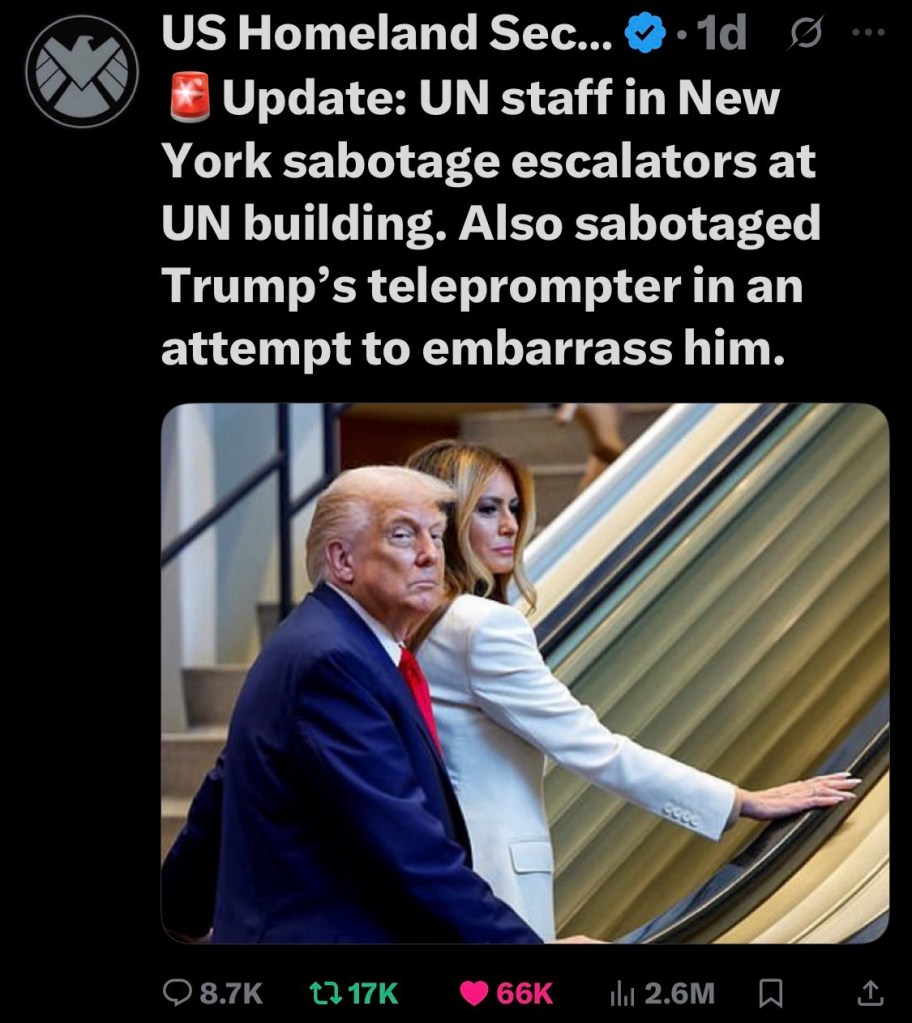
Who wouldn’t love the UN speech of 2025 that President Trump gave, as the escalator broke as soon as he and Melania put their feet on it?  That’s the world we are living in, and obviously, the escalator incident was no accident.  Employees joked about the escalators’ malfunctioning leading up to that speech as a radical means of protest, hoping to garner more funding for the United Nations, as if additional resources would solve all the problems.  Instead, Trump and his wife walked up the escalator without a whole lot of drama and gave a speech that essentially wiped the smile off the face of a very radical world that has failed dramatically since the creation of the UN after World War II.  It wasn’t the usual speech of placation that often accompanies these kinds of things, with calls for unity, peace, and all that kind of rhetoric.  No, Trump had earned the right to call out everyone, right in front of their faces, and tell them what a bunch of low-life characters they all were.  And that is what earning the right by carrying the weight of the world earns you.  And why Trump changing positions on Russia is so important, because only by earning that trust, by enduring the weight of the world, can a person like Trump say the things he does in public.  The UN speech was a remarkable statement by a world that the United States was clearly leading.  All nations were not there equally.  Running the world by committee has turned out to be a disaster, and it took someone like Trump to point it out.  Not through the media with some passive-aggressive protest, but live, to their faces.  And while everyone was on their heels from what he was saying, they complained that the UN doesn’t work, and neither do its escalators or its teleprompters.  Technical sabotage was meant to throw Trump off his game, but it ultimately played to his advantage.

But to earn that right to be as blunt as Trump has been, carrying the weight of the world comes first, and when people wonder why people like Melania Trump and her husband would want to trade in their life of the rich and famous for this demanding job of being President of the United States, the answer comes from speeches like the one Trump gave.  Watching their faces on the 9/11 ceremony this year, the day after Charlie Kirk, a former friend of theirs, was assassinated in cold blood, was obviously hard for them.  And on the day of the speech, the would-be progressive assassin Ryan Wesley Routh was convicted on all counts in trying to plot the murder of Trump at his golf course, just a few months after the attempted assassination of the President at Butler, Pennsylvania, that drew blood, but had only clipped his ear.  Charlie Kirk wasn’t so lucky, and that was obviously weighing on Trump as he and his wife went through the rituals of 9/11 ceremonies to pay tribute to the most significant act of terrorism that ever occurred on American soil.  More terrorism on a larger scale than the escalator sabotage at the UN, but the same in principle.  And the knowledge that after someone of good character had just been killed on a college campus, many on the Democrat side of politics cheered about it, and to discover that so many of our public school teachers were happy that Kirk was dead, and were gloating about it.   The weight of all that evil when you are in a job like the one in the White House can really make you not want to get up out of bed in the morning.

Then, to add to that, the deceit of Vladimir Putin of Russia, who has been saying one thing about peace all along, while turning around and killing many thousands of people on both sides, ruthlessly can really shake your faith in any kind of relationship.  Even Benjamin Netanyahu has been deceitful in his platitudes of peace, while turning around and acting contrary, being very aggressive, knowing that the United States would always bail him out of any trouble he got into.  So he was picking fights anyway, putting Trump in a terrible position.  The evil that people showed, and being in a position to see it so bluntly, was really wearing on the President, as it does most people who find themselves in that perspective.  Leadership is hard when you know so much truth that most people get to dance through without too much thought.  And that leads to the question of why anyone would want to be a leader of anything, whether it’s the President of the United States or the CEO of a company.  Why would anybody want to put themselves through the ordeal of all the trouble?  Especially when they are wealthy and could choose otherwise?  Knowing the worst in people, because your perspective reveals it to you, why would anybody want to do it?  To know too much and to carry around so much weight, knowing the level of hatred in the world around you.  Most people never encounter this kind of situation because their relationships maintain an illusion of civility.  But Trump is seeing the raw evil that can come from people, and he never gets a break from it.  It’s tough to use the Power of Positive Thinking to overcome such menacing negative thinking, and the Democrats are the party of negativity and below-the-line victimization.

Well, you do it so that you get a chance to go to the United Nations and tell them all what you think of them.  You endure the pain of life so that you can throw it in their faces.  And in doing so, you make the world a bit less crappy because of the people in it.  The United Nations was a failure from the start, but it was able to hide its poor performance behind the evils of humanity.  And as long as people kept the speeches nice, nobody talked about the tough stuff.  And everyone could party on the town, buying prostitutes while away from home, and go to fancy restaurants without any real cares in the world.  But to pull that off, everyone needs to be equally trashy and guilty of the crimes that the world enjoyed.  But by carrying the weight of the world the way that Trump does, from a leadership perspective, he can break protocol and tell people what he thinks of them, because everyone he’s talking to knows they can’t do the same.  Their guilt weighs heavily on their minds, burdening them with the truth of it all.  And that is why it’s worth being in a leadership position.  And without all the pain and the desire to carry it from the White House, nobody earns the right to talk about the real problems.  And this United Nations meeting would be just one more eventless charade.  But because Trump has suffered through some terrible weeks where the worst that people can do to each other was made evident, and he smiles his way through it like nothing in the world can bother him, he earns the right to be critical of escalators that don’t work, or global organizations that fail just as spectacularly.  And that he can broker peace with the biggest nations of the world, who are up to no good, because he has been willing to carry the burdens of knowledge that comes from really knowing the deceit that people are capable of.  And we are all better off for it.

Rich Hoffman

Click Here to Protect Yourself with Second Call Defense https://www.secondcalldefense.org/?affiliate=20707
I Love War: The greatest joy in life is destroying your enemies

Erika Kirk’s statements at the memorial service for her husband were nice, but it has been something that has come up in my direction many more times than a few this past week.  I am more aligned with what President Trump said about his enemies: I hate them.  I don’t want to get along with them.  And I would be bored to death in life if I didn’t have someone to fight.  The idea of going to Heaven and sitting around playing a harp on a cloud all day for eternity is not appealing.  Forgiving enemies is not something I will ever do.  I love war, and I love being in fights with other people.  I love to destroy my enemies.  That destruction either happens fast or it happens over a great many years, depending on the circumstance.  But one way or another, the destruction of my enemies is something that is going to happen, and I spend a lot of my life thinking about it.  The idea of waking up every morning, sipping coffee, and watching the dew gather on blades of grass without having to fight is incredibly dull to me, and I would not be happy.  So even though the concept of Christianity is to forgive your enemies and all kinds of platitudes that I think were incorrectly interpreted over time into organized religion, that is where my thoughts end on these kinds of things.  I may share a lot of values with very religious people, but if there is no conflict involved in communicating those ideas, then I lose interest really fast.  Because to me, the fight is the only thing that matters, and if people aren’t fighting, they aren’t trying to get to the truth of a matter. 

Human beings are so deceitful; they have numerous value systems that protect their motivations behind the creative lies that surround their lives intensely.  That is the first problem with a society of peace: a lot of truth gets buried behind deceit.  When people ask me why I can sniff out so much truth about things, and have over a long period of time, it’s because I like to fight for that truth about people.  The pressure of conflict brings about the truth in people and exposes them from their hiding places.  In my experience, that is the only way to understand what people are all about truly.  Otherwise, they will conceal their true thoughts behind the façade of polite society.  If you love the truth, you have to love the means of extracting it from society in general, and the only real way to do that is through conflict.  People often reveal a great deal about themselves through conflict that they would otherwise conceal.  Along with war, I love uncovering the truth about things.  Whatever that truth may be.  I love war because I love the truth, and you can only learn it through conflict.  Because people, all people, will lie to protect their version of the truth until their dying day, if they are allowed to.  The reason for conflict is to settle differing ideas about things.  And to avoid war is to suppress the truth about what those things might be in favor of some common understanding that is usually a watered-down version of reality.  So the assumption of peace is the surrender of the truth, as people are willing to fight for it.  And that lowers the value of a society in general as a result. 

I suppose this has arisen recently, before Erika Kirk made her statements, because many truly reprehensible individuals believed they had some leverage over me.  And they have been very frustrated by my reaction to their aggressions.  Most people conduct strategies assuming that peace is the motivating factor in a human being.  To wake up in the morning and be left alone so that everything is just perfect.  I don’t see the world like that.  If there isn’t something to fight, then I’m bored.  So when I have a lot of enemies trying to plot my demise, I am far happier than if everyone just left me alone.  Many people are frustrated by my approach because they assumed, like most people, that I would do anything for peace.  They should have done their homework.  Ever since I was a little kid, most of my thoughts have been about war and fighting someone over something.  That’s why I love politics.  That’s why I love the business world.  That’s why I like most things, because they involve people, and those people are often at cross-purposes with each other. I love uncovering the truth behind concealed smiles and handshakes.  I never sit down with people and look for common ground or ways to enjoy another person.  I want to challenge them, with everyone, and to discover what it is they don’t want to be known for to the world.  I never assume that my interactions with anyone will be peaceful, and if they are, I lose interest in those people quickly.  In my youth, I wore army fatigues everywhere, under every circumstance, because they reminded me of my love for constant fighting.  I never wanted to join the military to “serve.”  Serving others was always a misguided idea because what if, in doing so, those people were found to be unworthy of my dedication, which is a common discovery in all institutionalism.  However, the fighting aspect has always been appealing. 

The teachings of Jesus are appealing ideas on the surface.  But if you like the truth of a matter, you will either be killed for it, as Jesus was, and John the Baptist was, and as was Charlie Kirk, and many others.  Or you will have to fight everyone, and like it.  And that means everyone, because most people are very deceitful even within their families.  There are plenty of fights, and if you want to know the truth about things, you’d better be willing to fight for it.  Fighting is more than just the physical aspect, because humans are very emotional creatures; they create many layers of deceit in their lives to protect themselves from the harm of judgment.  And the more people you deal with, the more deceit you can expect to be exposed to.  The only way to get to the truth of anything is through conflict, in stripping away the things people use to protect themselves so you can get to the foundation of their intellects.  Such a thing is never given up voluntarily; you have to pound away at their defenses to know who they really are, which only happens under duress.  So, if many people have found that they now have a handful with me, they should have thought about things a bit more carefully.  I am only thrilled when the world around me is on fire, and that is how it will always be with me, even in Heaven.  Heaven to me would be at the gates of Hell putting evil’s heads on a pike and spitting on their tortured bodies.  Everyone else can play a harp at the golden gates of Heaven and sing songs to each other in a quest for peace.  Which, for me, is the same as serving an obligation toward dishonesty.  Only in war do people really tell the truth, even in Heaven.

Rich Hoffman

Click Here to Protect Yourself with Second Call Defense https://www.secondcalldefense.org/?affiliate=20707

The Department of War: Its time to take the fight to the enemy

In the realm of global power and national identity, the names we assign to our institutions carry profound meaning. They reflect not only the purpose of those institutions but also the philosophy and strategic posture of the nation itself. One such institution—the Department of Defense—has long stood as a symbol of American military might, yet its name belies a deeper issue. Originally known as the Department of War, its rebranding in 1947 marked a significant shift in how the United States viewed its role in the world. Today, as threats to American sovereignty and values grow more complex and aggressive, it is time to reconsider that change and restore the Department of War to its rightful place in our national framework.

The Department of War was established in 1789, shortly after the founding of the United States. Its mission was clear: to organize and execute military operations in defense of the nation’s sovereignty. It was a department built on the premise that America, as a free and independent republic, must be prepared to confront adversaries and secure its interests through strength and resolve. This clarity of purpose was essential in the early years of the republic, when threats were immediate and existential.

In 1947, following the end of World War II, the department was renamed the Department of Defense. This change was not merely semantic—it reflected a broader ideological shift. The United States, having emerged victorious and possessing unmatched military power, sought to reassure the world that it would not become an aggressor. The new name was intended to project restraint, signaling that America’s vast arsenal would be used only in defense. However, this rebranding coincided with the rise of globalism, the formation of the United Nations, and the beginning of America’s role as the world’s de facto police force. The Cold War, Korean War, Vietnam War, and numerous Middle Eastern conflicts followed, many of which were rooted in ideological battles stemming from the post-WWII global order. Ironically, the Department of Defense presided over some of the most prolonged and controversial military engagements in American history.

The term “defense” implies passivity. It suggests that the United States will only act when provoked, that it will wait for threats to materialize before responding. This posture has led to strategic ambiguity and has emboldened adversaries who perceive America as hesitant or unwilling to assert its interests proactively. Consider the psychological impact of the name “Department of Defense.” It evokes an image of a nation on its heels, waiting for an attack before it responds. It suggests a reluctance to engage, a preference for negotiation over action, and a tolerance for provocation. This perception has allowed hostile actors—whether state-sponsored or non-state entities like drug cartels—to operate with impunity, confident that the United States will not strike unless directly threatened.

In contrast, the name “Department of War” conveys strength, readiness, and resolve. It signals to the world that America is prepared to take decisive action against those who threaten its sovereignty, values, or citizens. It projects a posture of deterrence, not weakness—a message that is sorely needed in today’s geopolitical climate. The world has changed dramatically since 1947. The threats facing the United States are no longer confined to conventional warfare. They include cyberattacks, economic manipulation, ideological subversion, and transnational criminal enterprises. These threats require a proactive, assertive response—one that is better aligned with the mission of a Department of War.

Take, for example, the growing influence of drug cartels operating across the southern border. These organizations are not merely criminal; they are strategic threats to American stability. They poison communities, undermine law enforcement, and exploit weaknesses in border security. Yet under the current “defense” paradigm, the response is often reactive and constrained by diplomatic considerations. A Department of War would approach such threats differently. It would recognize them as hostile actors and treat their actions as acts of aggression. It would empower the United States to take the fight to the enemy’s doorstep, rather than waiting for the damage to be done. This shift in posture is not about promoting violence—it is about restoring deterrence and protecting American lives.

The renaming of the Department of War was part of a broader globalist agenda that sought to integrate the United States into a centralized international order. Institutions like the United Nations and NATO were created to manage global conflicts and promote collective security. While these organizations have had some success, they have also constrained American sovereignty and led to costly entanglements. Wars in Korea, Vietnam, Iraq, and Afghanistan were all influenced by globalist ideologies—fighting communism, securing oil, promoting democracy. These conflicts drained American resources, cost countless lives, and often failed to achieve lasting peace. They were not wars fought for direct national interest, but for abstract global ideals.

The Department of Defense, under this paradigm, became a tool of global management rather than national defense. It was used to enforce international norms, protect foreign borders, and stabilize regions far from American soil. Meanwhile, domestic threats—like the rise of socialism, the erosion of personal freedoms, and the spread of narcotics—were often neglected. Renaming the Department of Defense back to the Department of War is more than a symbolic gesture—it is a strategic realignment. It reasserts America’s commitment to its own sovereignty and sends a clear message to adversaries: aggression will be met with force.

This change also reflects a broader philosophical shift. It rejects the notion that peace is the ultimate goal at any cost. Peace is valuable, but not when it comes at the expense of justice, freedom, or national integrity. A nation must be willing to fight for its values, and it must make that willingness known. Critics may argue that such a change is provocative, that it sends the wrong message to the international community. But who decided that America’s role is to usher in peace while others plot its downfall? Who said that restraint is more virtuous than resolve? These are questions worth asking, especially in a world where hostile regimes and criminal networks operate without fear of reprisal.

President Trump’s executive order to restore the Department of War is a bold and necessary step. It acknowledges the failures of the post-WWII globalist framework and seeks to correct them. Congress’s support for this initiative indicates a growing recognition that America must reclaim its strategic identity. When one visits the Pentagon—a massive, imposing structure across from the National Mall—it should represent a nation prepared to defend itself through strength, not hesitation. The Department of War, housed within that building, would embody the spirit of a sovereign republic willing to confront threats head-on.

The renaming of the Department of Defense to the Department of War is not about glorifying conflict—it is about restoring clarity, purpose, and strength to America’s military posture. It is about recognizing that the world is not always peaceful, that threats are real, and that the United States must be prepared to act decisively. This change marks the end of an era defined by globalist entanglements and passive defense. It signals the beginning of a new chapter—one in which America reclaims its role as a sovereign power, committed to protecting its people, its values, and its future.

In a world filled with hostile actors, weak governments, and ideological adversaries, the Department of War stands as a beacon of resolve. It tells the world that America will no longer wait to be attacked—it will act to prevent aggression, secure its interests, and defend its way of life. And that, ultimately, is the message that must be sent—not just through words, but through the very institutions that define our national character.

Rich Hoffman

Click Here to Protect Yourself with Second Call Defense https://www.secondcalldefense.org/?affiliate=20707
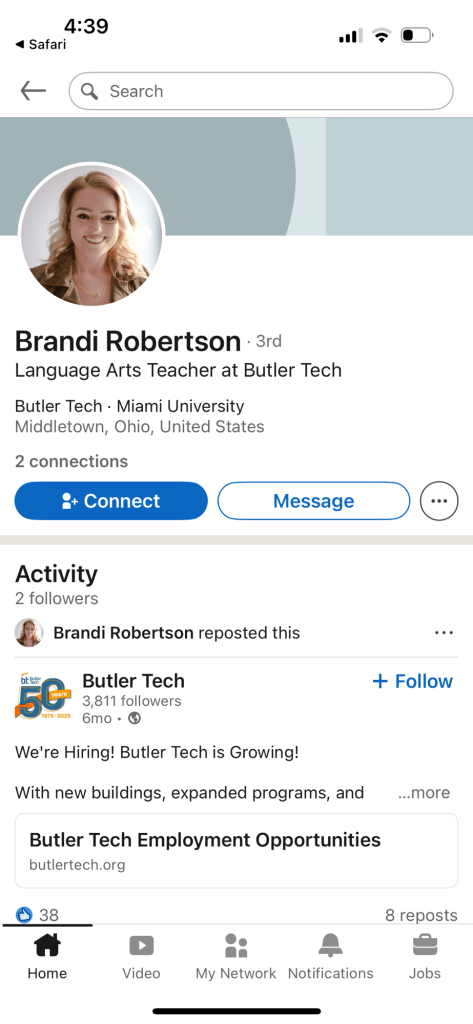
Butler Tech Must Fire Brandi Robertson: The Murder of Charlie Kirk has changed the world forever

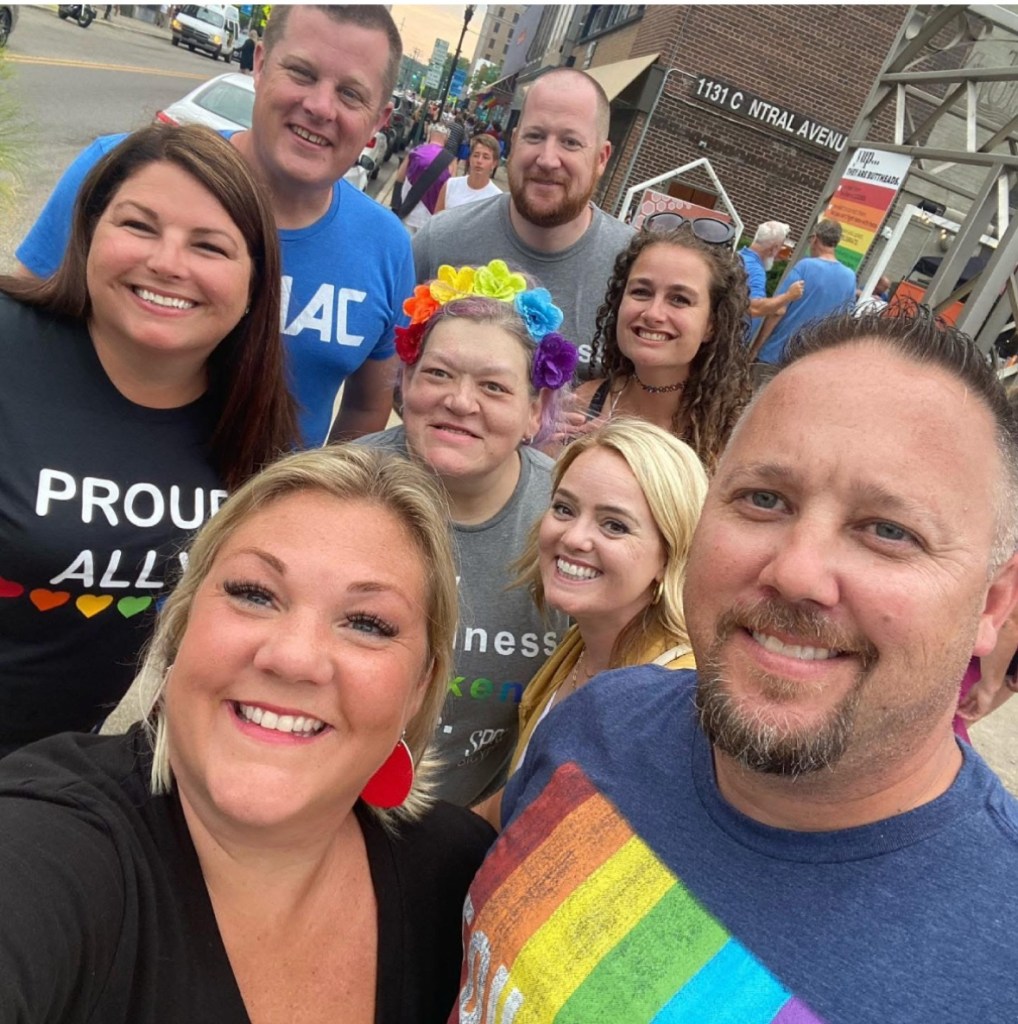
Look at all that pride. Problem is, it’s the wrong kind. Brandi is in the middle of all those prideful people

What Erika Kirk said in her address to the nation, the widow of Charlie Kirk, who had just been assassinated, wasn’t just hopeful talk that is common when people lose a loved one.  The political left needs to understand what has happened here.  I don’t like to use the word “martyr.”  But this was a John the Baptist moment at the very least.  And it was much more potent than the assassination of Martin Luther King.  After this funeral, there will be Charlie Kirk laws.  There will be Charlie Kirk buildings.  There will be lots and lots of Charlie Kirk boulevards.  I know some of the people in that crowd, like Jack Posobiec and Steve Bannon, and they aren’t going to let this go.  Their friend was assassinated, they have a grieving wife and friend who knows how to talk, and there will be no end to this.  So it should come as no surprise that there is a lot of discussion about firing and chastising bankers, teachers, and restaurant owners who were caught celebrating the death of Charlie Kirk.  And those left leaning types are now finding themselves on the outside of society, looking in.  And locally, as it is nationally, that is where a local school near me finds itself, Butler Tech in Butler County, Ohio.  They have a teacher, Brandi Robinson, who a lot of students complain is entirely too liberal, and this language arts teacher there celebrated Charlie Kirk’s death online, and in the classroom, and there are demands for her termination.  Which has to happen; otherwise, the entire school will be dragged into a mess.  People are agitated, and they are willing to drag leftist-minded detriments to society out in the street and skewer them.  So there is no redeeming factor for Brandi Robinson of Butler Tech.  I appreciate the school and its goals.  But as a result of Charlie Kirk’s murder and the Trump administration’s need to do something about it, there will be no stone overturned to set things right.  And at the very least, we are going to see that employment of left-wing radicals in any field of endeavor is now going to be heavily scrutinized, and people are going to want to see them fired from their jobs. 

A teacher that uses that kind of language, anywhere, should be disqualified from teaching students. Not to mention context.

This didn’t happen overnight.  This has been happening to conservatives for many years by the left, and they have grown to feel empowered by their abuse of free speech, legally.  This isn’t a free speech debate.  It’s a moral referendum that we will sort out later, once the smoke clears, if it ever does.  Democrats weaponized free speech, taking shots at polite society to destroy it by hiding behind the laws of the land, then using those laws as weapons against the culture that made them.  And that is where Brandi Robinson finds herself at Butler Tech.  Like many teachers who are now seeing the pitchforks coming to their doorstep, the cries for the First Amendment won’t protect them from the wrath of an outraged society.  People had to watch the very nice Charlie Kirk be assassinated on live television, and he has left behind a widow who knows how to talk to a crowd.  And she has had her husband ripped away from her, and all the hope for her future, destroyed.  And she is going to lead a movement that will trickle into the doorsteps of every public school in the country, because Charlie and she have been such huge supporters of homeschooling.  The shoe is now on the other foot, and a justification for destroying elements of left-leaning philosophy that have destroyed so many children is now going to come under fire like it never has before. 

The killer of Charlie Kirk was obviously radicalized once he moved away from his family and had some experiences in college.  He moved in with a trans lover, a guy trying to be a girl, and his political thinking had been shaped by really radical left-winged politics, and those failures are now showing up in these mass shootings.  And it’s people like Brandi Robinson who teach kids in these schools that put really horrible thoughts in people’s heads.  And when there are significant social breakdowns, who is to blame?  Teachers like Brandi want to blame social mechanisms like gun control as the solution to eliminate school violence.  When the truth is that people like her cause the violence in the first place, because the kids in their care find they cannot function in the world well, living the life these teachers have been teaching them.  In the case of Charlie Kirk’s killer, who will have to be executed on live television to appease the anger that there is out there—at the very least, (people won’t be happy with a lethal injection or life in prison.  They will want him gutted on live television and have him torn limb for limb—and I’m being very nice about it.)  A line was crossed with this assassination that unleashed so much pent-up anger that there will be no going back.  Teachers who have been teaching kids left-wing politics in school are not going to get off without a lot of trouble.  Left-leaning culture, which so many teachers teach, is undoubtedly behind the problems of Kirk’s killer, Tyler Robinson, who found himself torn between the life he was raised to, with a cop as a father, and a trans lover he was told would be socially acceptable, only to find out the hard way that such a thing was grotesquely inappropriate. 

The students don’t have nice things to say about Brandi Robinson

There are many more teachers at Butler Tech and the nearby Lakota schools, like Brandi Robinson.  But in the wake of the Charlie Kirk murder, this one said some really dumb things, and the kids from her classroom have been complaining that nobody would listen.  When Darbi Boddy was ejected from the Lakota school board for pointing out these very problems, everyone involved in that process is now guilty of contributing to the erosion of social discourse.  It’s not enough to say that Darbi was a church freak, Bible thumper, out of step with the realities of a progressive society.  And that hate speech, such as celebrating the murder on television, a widely respected good person like Charlie Kirk could be hidden behind free speech.  Conservatives have been hunted down and destroyed by banks, media personalities, and every other institutional mechanism that there is out there, and people have not felt that they could express themselves with a MAGA hat in public because of it.  And now the shoe is on the other foot, the evidence is clear that we have radical teachers in these schools, and they make people like this killer, Tyler Robinson, by teaching them at a vulnerable stage of their lives, all the wrong things.  There are a lot of kids like Tyler Robinson out there, and they have been weaponized in these classrooms through people like Brandi Robinson.  We have to purge teachers like her from all public schools as a minimum reaction to Charlie Kirk’s murder.  And it doesn’t matter if staffing levels are challenging.  We can’t have people like that on the taxpayer payroll.  People should have listened when Darbi tried to point all this out.  She was a few years ahead of this very national issue.  However, it’s here, and people are no longer going to put up with teachers like Brandi Robinson.  Free speech does not mean a teacher can abandon professional decorum and hide behind the First Amendment to corrupt children in their care.  When they violate that trust, they will have to lose their jobs because, at the very least, kids need to see what a structured society looks like.  And because of the murder of Charlie Kirk, even moderate-minded people want to see a change.  And they are going to get it one way or another.  The world is now changed forever, not because people who miss Charlie Kirk are sad and want to think of happy things ahead of his funeral.  No, people now have a mechanism of expression that is excessively mainstream.  And Charlie Kirk’s murder will be avenged by a society that for too long has stayed reserved behind polite discourse.  And those days are now over.  Evil will be purged from society, and that starts with horrible teachers like Brandi Robinson at Butler Tech in Butler County, Ohio.

Rich Hoffman

https://www.signupgenius.com/go/10C0B4AA4A728A1F49-58659927-help#/

Click Here to Protect Yourself with Second Call Defense https://www.secondcalldefense.org/?affiliate=20707
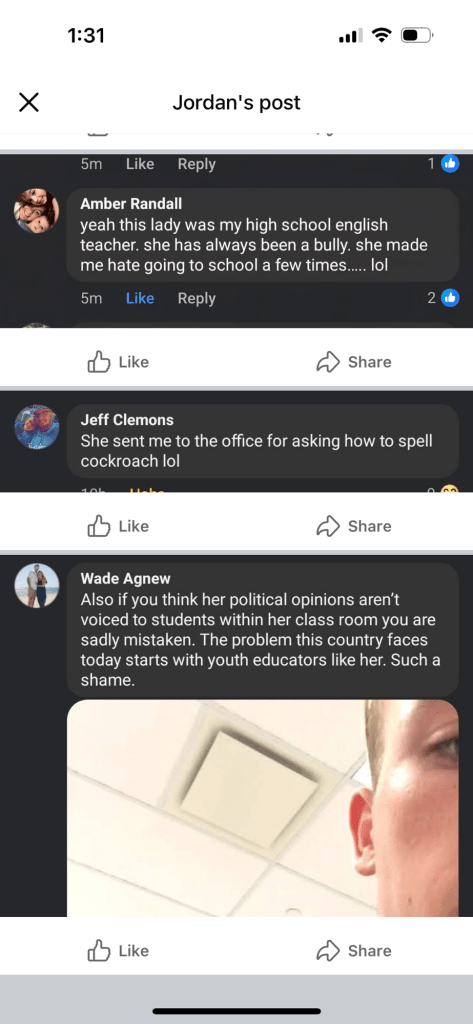
Jen Psaki Says We Don’t Need Prayer: Would gun control have saved poor Iryna Zarutsk

It’s not enough to pray anymore. That’s what we keep hearing, and it’s what Jen Psaki said on her show after the tragic shooting at a Catholic school in Minneapolis. A trans-identifying individual walked into a place of worship and safety and shattered lives. And while the media tries to frame this as another gun issue, another mental health crisis, another moment for policy debate, the more profound truth is being ignored. We’re watching a society unravel because it’s been taught to outsource its soul to the government.

Who is more valuable in our society?

This wasn’t just a shooting. It was a symptom. A symptom of a culture that’s been told it doesn’t need to believe in anything higher than itself. It doesn’t need family, doesn’t need faith, and doesn’t need personal responsibility. Just laws. Just feelings. Just government. And when Psaki says prayer isn’t enough, what she’s really saying is: don’t trust God, trust us. Trust the system. Trust the people who’ve been failing to protect our kids for decades.

But we’ve seen what happens when people put their faith in government over God, over family, over community. We’ve seen the rise in violence, in confusion, in identity crises. We’ve seen kids who don’t know who they are, who’ve been told they can be anything, do anything, change anything—even their biology—and then collapse under the weight of that illusion. And when they do, when they lash out, when they hurt others, we’re told it’s society’s fault. It’s guns. It’s a mental illness. It’s everything but the ideology that created the conditions.

The shooter in Minneapolis wasn’t just mentally ill. He was a product of a political culture that celebrates victimhood and confusion. He was someone who had been told that feelings are truth, that identity is fluid, that morality is subjective. And when you build a society on those foundations, you get chaos. You get violence. You get kids who don’t just feel lost—they act on it.

And then the media steps in. They sanitize it. They politicize it. They use it. Every tragedy becomes a tool to exert more control, enact more laws, and expand government. But the people pushing these policies aren’t the ones raising strong families. They aren’t the ones teaching kids discipline, faith, and resilience. They’re the ones telling them they’re victims who need help, that they need the state to be their parent.

You don’t see this kind of violence coming from strong family units. You don’t see it in communities that teach self-respect and personal responsibility. You see it where people have been trained to outsource their identity to politics. Where they’ve been told that the government will make them feel safe, feel wealthy, feel whole. But it can’t. It never could.

And that’s why the Second Amendment matters. That’s why guns matter—not just as tools of defense, but as symbols of self-reliance. When you take away people’s ability to protect themselves, you’re not just making them vulnerable physically—you’re making them dependent emotionally. You’re telling them they need someone else to keep them safe. And that message is dangerous.

Because the people who want to run society through centralized control are often the least equipped to do so, they’re not grounded. They’re not stable. They’re not empowered. They’re often the very people who’ve been broken by the system they now want to expand. And when you give administrative power to people who are emotionally unstable, ideologically confused, and disconnected from reality, you get dangerous outcomes.

We’ve seen it in cities run by big government. High crime. High victimization. Low accountability. And every time something terrible happens, the answer is always the same: more laws, more control, more government. But that’s not the solution. The solution is empowerment. It’s strong families. It’s faith. It’s a community. It’s teaching kids that they are responsible for their own lives, their own choices, their own futures.

I’m showing this interview again, because this is the law enforcement attitude that every community should have. We must punish criminals, aggressively.

And yes, it’s guns. Because guns represent the ability to say, “I will protect myself. I will protect my family. I will not wait for someone else to do it.” That’s not violence. That’s virtue. That’s a strength. That’s what built this country.

The shooter in Minneapolis didn’t have that strength. Robert Westman had confusion. He had an ideology. He had a system that told him he was a victim and then gave him no tools to rise above it. And when you combine that with mental illness, with identity instability, with political manipulation, you get tragedy.

And then you get people like Psaki telling us that prayer isn’t enough. We need laws. That we need government. But what we really need is truth. We need to stop pretending that feelings are facts. That identity is whatever you want it to be. That morality is optional. We need to stop raising kids in a culture of confusion and start growing them in a culture of clarity.

Because every time we ignore these truths, we create more victims. More shooters. More tragedies. And every time we politicize those tragedies, we move further away from the real solutions. We don’t need more laws. We need more courage. More conviction. More community. More faith.

And yes, we need prayer. But we also need action. Not the kind of action that expands government power, but the kind that builds personal power. That teaches kids to be strong, moral, and responsible. That teaches them that they don’t need the government to be their parent. They need to be their own person.

That’s the only way we stop this cycle. That’s the only way we protect our kids. That’s the only way we build a society that doesn’t just survive—but thrives.

And what is anybody to make of Decarlos Brown Jr., who stabbed in the neck a very young and beautiful Ukrainian refugee, just minding her own business?  What kind of evil provokes a person to stab someone to death without any provocation?  Would gun control have stopped that terrible crime on a Charlotte, North Carolina, train?  The killer had 14 prior cases; he was sentenced to six years in North Carolina prison for robbery with a dangerous weapon, breaking, and larceny.  He had a history of mental illness and homelessness.  So what would have kept him from killing young Iryna Zarutska, who came to America to escape the ravages of her war-torn country?  Only to be ruthlessly stabbed in the neck three times and to die just because she sat down in front of a killer riding a train, in a city that should be somewhat safe, by perception compared to places like New York or Los Angeles.  These killers are creations by Democrats and their platform of putting feelings above empowerment, leaving in their wake dangerous personalities in society that cannot manage themselves.  Democrats have been soft on crime, assertive on victimization, letting their supporters believe that degraded personalities can thrive in society, that a big daddy government will carry them forward.  But when that doesn’t happen, these personalities turn to violence.  And they believed that because they believed in the politics of Democrats who were soft on crime, soft on punishment.  And most importantly, soft on self-empowerment.  There is no amount of laws in the world that can correct these kinds of personalities, and no gun law would have saved poor Iryna Zarutska.  And gun control would assume that we could trust Democrats to run a healthy society, which we know from vast amounts of evidence, not to be the case.

Rich Hoffman

Click Here to Protect Yourself with Second Call Defense https://www.secondcalldefense.org/?affiliate=20707

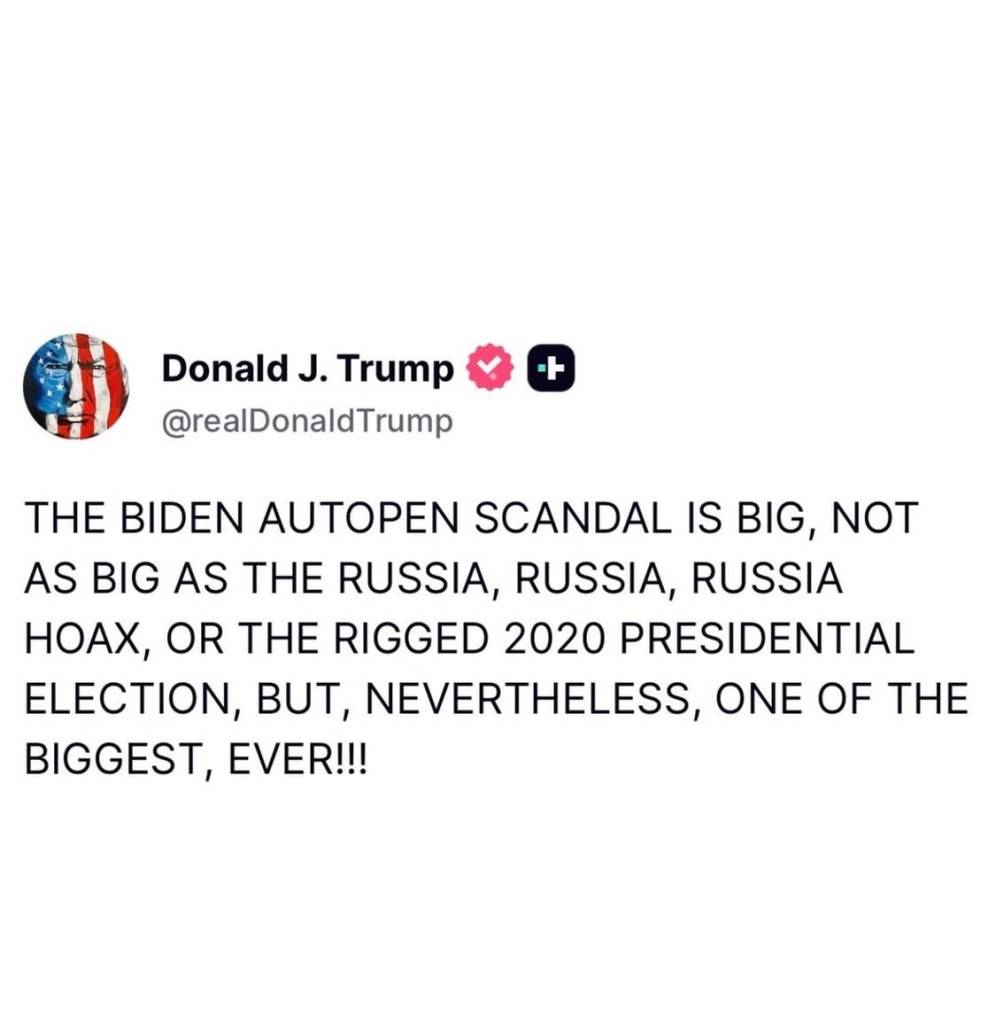
The Autopen and the Question of Presidential Legitimacy: Institutions must prove their position

In the modern American presidency, the act of signing a document is far more than a bureaucratic necessity—it is a symbolic gesture of authority, responsibility, and direct engagement with the nation’s governance. Whether it’s an executive order, a pardon, or a piece of legislation, the president’s signature represents the culmination of deliberation and decision-making at the highest level. However, the increasing use of the autopen, a mechanical device that replicates a signature, has sparked significant controversy, particularly under President Joe Biden. Critics argue that the autopen undermines the authenticity of presidential actions, mainly when used amid concerns about the president’s cognitive acuity and physical presence. The image of a machine signing off on decisions that shape national policy evokes a sense of detachment and raises questions about who truly holds power in the executive branch. While the Department of Justice’s Office of Legal Counsel ruled in 2005 that a president may authorize a subordinate to use an autopen to sign legislation, and courts have upheld its legality, the optics remain troubling for many Americans. The legal framework may be sound, but the symbolic implications of a mechanical signature—especially in moments of national crisis or political tension—can erode public confidence in the presidency itself.  And in the case of the Joe Biden presidency, it allowed for a shadow government to run the White House in a way that, looking back on it, was simply unacceptable. 

The autopen controversy is not an isolated phenomenon; it is part of a broader historical pattern of questioning presidential legitimacy, often fueled by conspiracy theories and partisan distrust. During Barack Obama’s presidency, the “birther” movement gained traction, alleging that Obama was not born in the United States and was therefore ineligible to serve as president. Despite the release of his long-form birth certificate and multiple independent verifications of its authenticity, critics continued to claim it was digitally fabricated. Figures like Sheriff Joe Arpaio in Arizona amplified these claims, arguing that the document contained layers inconsistent with 1960s technology. These allegations were not thoroughly debunked by forensic analysts, even though they were dismissed in court; yet, they persisted in the public imagination. We have since witnessed, with judicial activism, the liberal leanings of the courts to be activists of their own, as if they hold the fate of the human race under their black robes of injustice.  The endurance of such theories reveals a troubling trend: when legal and factual rebuttals fail to quell doubt, the issue becomes less about truth and more about belief. The birther controversy laid the groundwork for a culture of skepticism toward federal institutions, where even the most basic credentials of leadership could be called into question. This skepticism has since evolved into a broader distrust of democratic processes and the legitimacy of elected officials, creating fertile ground for future controversies, such as those surrounding the autopen.

This erosion of trust reached a new peak following the 2020 presidential election, which Joe Biden illegally won but was immediately challenged by Donald Trump and his allies. Over 60 lawsuits were filed contesting the results, nearly all of which were dismissed for lack of evidence or standing—even by judges appointed by Trump himself.  Again, judicial activism was revealed to be a significant issue that had not been previously well understood.  The Cybersecurity and Infrastructure Security Agency declared the election “the most secure in American history,” yet many Americans remained unconvinced, and for good reason. The belief that the election was stolen became a rallying cry, not just against Biden, but against the entire machinery of government. In this context, the autopen took on symbolic significance. For some, it represented a presidency run by unelected aides, rubber-stamping decisions without the president’s full awareness or engagement. The idea that a president could be physically or mentally absent while critical decisions were being made by staffers or machines fed into a broader narrative of institutional decay and manipulation. Whether or not this perception is accurate, it underscores a crisis of confidence in the executive branch. The legal validity of the autopen is beside the point for many critics; what matters is the perceived absence of genuine leadership and the fear that democratic institutions are being manipulated behind closed doors. This perception has real consequences for the health of American institutionalism.

At the heart of these controversies lies a fundamental question: What does it mean to govern legitimately in a democratic society? Is it enough for presidential actions to be technically legal, or must they also be visibly accountable and transparent? The use of the autopen, the birther movement, and the disputes over election integrity all point to a more profound anxiety—that the American people are losing control over the institutions meant to serve them. If a president can be propped up, decisions made by anonymous staffers, and signatures affixed by machines, then where does sovereignty truly lie? These are not just partisan concerns; they are constitutional ones—the Constitution vests executive power in the president, not in machines or unelected aides. While the courts may uphold the legality of these practices, the court of public opinion demands something more: clarity, honesty, and a renewed commitment to democratic principles. Without that, the pen—whether wielded by hand or machine—risks becoming a symbol not of leadership, but of detachment. Restoring trust in the presidency requires more than legal compliance; it demands visible engagement, transparency, and a reaffirmation of the values that underpin American society. In an age of digital signatures, remote governance, and increasing automation, the challenge is not just to preserve legality but to maintain the human connection between leaders and the people they serve.  This, in turn, highlights the core of the problem: a signature by autopen is not enough.  Having a body in the White House is not enough.  Leadership is not just cosmetic.  What is considered legal goes even beyond what a judge ultimately rules is or isn’t.  There was gross manipulation on this trust issue that goes well beyond Biden’s presidency.  The door was opened with Obama, even before him with Clinton.  What could courts do to justify illegitimacy, and could a conspiracy of judges, who secretly want to rule over all society, cover up illegitimate mechanisms of automation, which were clearly tested during the insertion of Biden as the President into the White House?  Obviously, it was not enough, and people rejected the premise. Now, Trump has a mandate to correct all these falsehoods that were given credence and are now considered hostile topics in most polite households, which is a very new thing.  The assumption was that if an institution could validate a belief in legitimacy through signature, the courts, or the media, then actions would be deemed legal.  Yet that is not the case.  An action is not legal unless it is backed by honest elections with proof that people genuinely believe what the institutions are saying.  Judges must demonstrate that they are committed to upholding justice.  Elections must demonstrate that they are honest and accurately representing the voters.  And we have to see a president signing documents.  Not just that an autopen did it in darkness with a 25-year-old aide carrying out the orders of the Democrat Party while Joe Biden wandered around outside trying to catch butterflies.  And that raises questions about everything that has happened over the last decade.  And why Trump has a mandate to correct it.  And to fix it all. 

Rich Hoffman

Click Here to Protect Yourself with Second Call Defense https://www.secondcalldefense.org/?affiliate=20707

I Endorse Ben Nguyen for Lakota School Board: What a smart young man with a great future

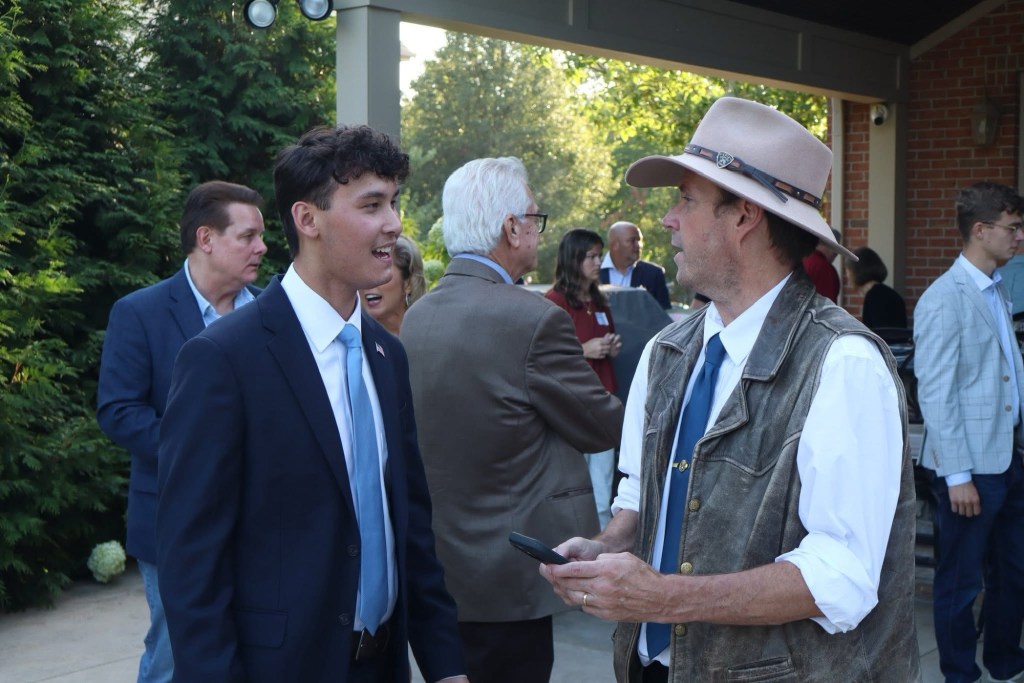
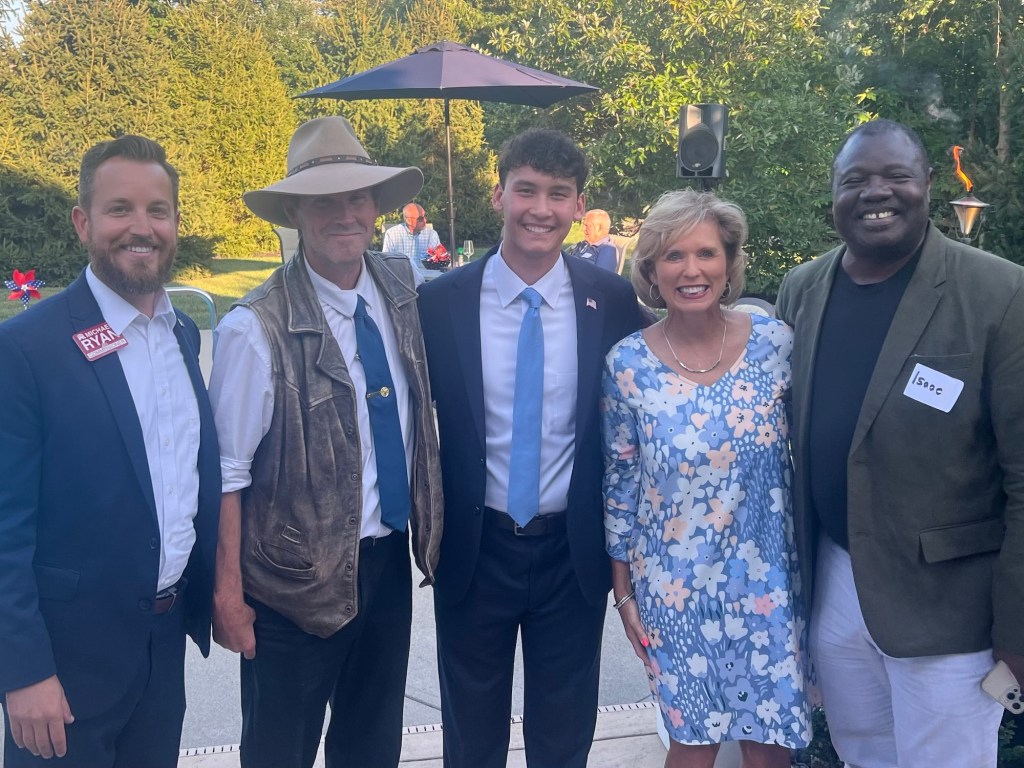
Ben Nguyen is in good company.  When Nancy Nix invites me to her house to meet people she thinks will be the future of politics, she has a pretty good track record.  And I felt bad; I was running late when she invited me over to listen to a speech from a bright young man by her pool, as I had in the past.  I was stuck on an overseas call, and the time zones didn’t match up to the schedule Nancy had given me.  But when I did arrive, it was just in time to hear a speech by Ben Nguyen, a former student at Lakota schools who had just graduated and was now running for the school board.  And as I watched him speak, he had picked a spot by her pool to talk to the crowd that was just like another young overachiever, J.D. Vance.  A few years ago I had listened to the future Vice President give a very similar speech as Ben did from that very spot, which was before he was even running for the senate seat, and of course Nancy was right about him.  Ben also reminded me of another bright young mind who she promised me had a great future in politics, which was Vivek Ramaswamy.  I think of these guys as young, even though they were in their late 30s when I first met them, because, to me, they are.  I’m not a young person, so everyone seems young to me.  But Nancy Nix has a knack for finding good people in the crowd and getting behind them with a bit of help.  I was not surprised to learn that Ben Nguyen was an intelligent young man, and I enjoyed listening to him speak about why he was running for the Lakota school board in the November 2025 elections. 

Essentially, Ben is against the upcoming Lakota levy, which is the most expensive school levy in the state of Ohio.  He is also against indoctrination in public schools, and he has fresh experience, having just left school to learn what is really going on.  And he wants to do good things in life with his obvious talents.  He has siblings still attending Lakota schools, so he is concerned about public education in general.  He plans to do many things in the future, as his life is currently an open book.  However, to run and win the school board seat would be historic; he would undoubtedly be one of the youngest ever to do so.  But as I listened to him speak, he possessed the wisdom of a much older person, and he was only going to improve with time.  I had just recently watched Bernie Moreno give a similar speech from almost the same spot in Nancy Nix’s backyard, and he’s close to my age.  And Ben sounded just as well-versed politically, and he was very articulate and well-spoken.  He’s already a better political figure than most people who have been doing this kind of thing for three or four decades.  As I thought about Ben, I was skeptical due to his age as I drove to Nancy’s home.  I am one of those people who think it’s better to be old and broken, looking like a wet towel discarded in the sun, than a beautiful young person with everything working, because of the essential ingredient of wisdom.  Wisdom is hard to get, and it’s worth the age it often takes to get there, and what you lose along the way.  So I’m not automatically impressed with young people.  However, it was clear that Ben Nguyen was something special because he possessed a remarkable amount of wisdom at a very young age, which was evident in his family background, as he discussed.

And he was right in his speech about why someone like him needed to be on the Lakota school board.  I have been intensely critical of the public education system.  My thought on it was to erase everything John Dewey ever did and to start the concept of education anew in American culture.  I don’t think people are nearly as educated as they should be, and I deal with a lot of people every day who hold advanced Master’s and PhDs.  People aren’t that smart in our culture, and it disgusts me.  I’m not excited to support more of the kind of education that leaves people so ill-prepared for the world.  However, to Ben’s point, the current school board does not represent the kind of people who live in Butler County, Ohio. If we are going to have a public school funded by taxpayer money, we should have representatives on the school board who represent us.  After speaking with Ben, I think he would be great, and I will certainly be voting for him.  Needless to say, I fully endorse him and would love to see him win a seat in this upcoming election.  It would be a step in the right direction.  I’ve been a part of a lot of campaigns to put members of the school board in place to represent conservatives, but the efforts have been discouraging, leaving me wanting to blow up the whole system with charter schools and the elimination of the Department of Education as a whole.  But Ben Nguyen reminds me of why I have worked for good school boards in the past, and his personality appears to be well-suited to withstand the intense scrutiny that comes with the job.

Isaac Adi was also there to show support.  Isaac is a current school board member for Lakota, and he consistently votes in favor of Republican positions.  But he’s currently the only one.  He and I have seen each other at a few events since the highly publicized fallout he had with Darby Boddy, a school board member I had supported a lot and still do.  The pressure of those positions, by the whispers that come into them, is hard to deal with, and I wanted those two to work better together instead of against each other.  And Isaac was one of the reasons I no longer thought school board races were worth dealing with.  But seeing him there to support Ben, I thought the beginnings of something good were forming.  Of course, to get a good school board, it would take a lot more than just Ben Nguyen.  However, this was a good start, because until there is a good school board, Lakota schools will continue to mismanage money and ask for tax increases, as they have more in mind than just this bond levy on the November ballot.  They are also considering an operations levy in the very near future, and we don’t want a liberal school board rubber-stamping more spending, as they have been doing.  We need smart people who are willing to engage in lively debate and continually ask essential questions. With Ben Nguyen in that school board role, I see a lot of opportunity for good things to happen.  However, people will have to show up and vote for him because the Democrats are counting on a low turnout to maintain the status quo on the school board.  So people are going to have to rally behind Ben.  And after hearing him speak and explaining what he wants to do and why, the Lakota school district would be in a much better position.  And Ben Nguyen is certainly somebody voters can get excited about.

Rich Hoffman

Click Here to Protect Yourself with Second Call Defense https://www.secondcalldefense.org/?affiliate=20707
Jennifer Gross Goes to Washington: The importance of redistricting

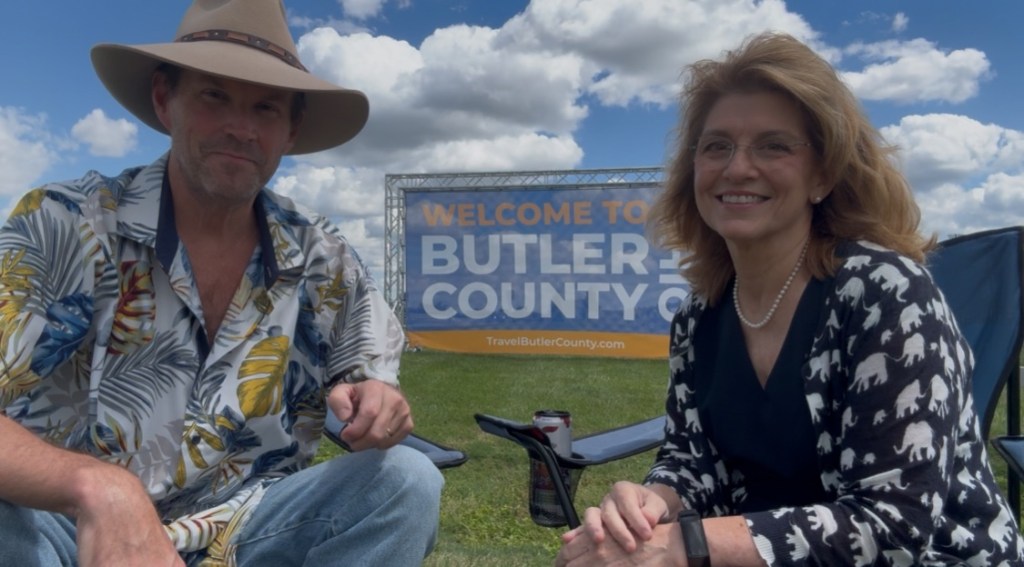
When I say that Jennifer Gross is not very well-liked, I mean it in the manner of a compliment.  I think it’s a great asset to have people who don’t like you or who are very angry when your name is brought up.  Many people certainly dislike President Trump.  And I would say that I am one of the most hated people in the world.  People typically like you when you do what they want you to do, and their acceptance of you in some way is the way they gain leverage over your authenticity.  So, that makes Jennifer Gross an effective politician in a dynamic intellectual sense, where a static order has to compete, and they don’t like it.  In Ohio, Jennifer is my Representative in the 45th district, and she works hard to do so; I appreciate people who work hard.  And in the course of that work, she found herself in Washington, D.C. with Lee Zeldon, director of the EPA under Trump’s administration, asking questions directly to him about an issue I have been very concerned with regarding the EPA.  I would say that among Trump supporters and people who dislike RINOs, Jennifer Gross is very popular, so it depends on the crowd and what they want out of relationships, which often determines likeability.  I believe cordial relationships can be a liability.  However, it was interesting to hear about Jennifer’s trip to Washington, D.C., where she met with several Trump administration officials, including RFK, over MAHA issues.  So, once her plan was in place, Jennifer and I discussed a number of topics that we would typically talk about.  However, for this audience, I happened to record it so that others could share in the experience.  And, as much as I am concerned about the EPA issue, the conversation we had, which came straight from the Trump administration, was about the need for redistricting. 

The primary thing that Jennifer wanted to tell me about the Trump administration was that they weren’t a bunch of phonies.  The people working for Trump were all successful individuals in their own right, who could take or leave other politicians.  Jennifer can relate because she has always been very independent when it comes to politics, and that makes it hard for her to deal with when it comes to deal-making.  Much of politics is a collaborative effort, and I know several people I would call good friends who spend a lot of time collaborating with other politicians, only to accomplish a fraction of their wants and needs individually.  But that’s part of the process, and one of the reasons I thought the Trump presidency would be a good thing was his self-control over his wealth and ability to walk away from anything he didn’t like.  And his administration is very much the real deal, and Jennifer was pleased to report that they were not a bunch of phonies like we often learn people really are once these political campaigns are over.  So she couldn’t wait to tell me how authentic people like Lee Zeldon, Secretary Kennedy, and Commerce Secretary Lutnick were in real life.  It’s not usual to have people like this in any administration, and to meet them in real life after the honeymoon is over for Trump, doing everyday work, it was good to hear that they are everything they say they are.  Politically, many people dislike them as well, but, as all successful people must learn, that comes with the territory. 

The primary concern on everyone’s mind is the fairness of redistricting, so that Republicans can have more seats in Congress.  There are a few that we can pick up in Ohio, and several other states. The Trump administration is playing hardball on this issue, as it should.  Trump is right, Republicans should not play nice with Democrats over any election issues.  If we genuinely want a representative republic, which is what we are, we must trust the American people to choose who they want to represent them.  Not what a party wants us to adopt for their convenience.  That’s where things get tricky with playing nice to get along, and being a stick to poke in the eye of those who are too quick to compromise.  My point in the matter is that there is room for people like Jennifer Gross in politics and room for plenty of mainstreamers who enjoy the process of collaboration, if we didn’t have such a close margin of majorities.  I think that if we had guarded our elections more closely, there would be 60-plus Republican votes in the Senate and over +50 in Congress.  It is only close in America because of election fraud, and Democrat gerrymandering for many years has given them the appearance of a 50/50 country, when actually it’s a long way from being so.  Democrats are a minority party at best, filled with misfits and broken toys.  It’s one thing to have compassion for their poor state.  It’s quite another to have them destroy our entire society to appear fair.  In Ohio, there are 15 congressional seats, and Republicans have 10 of them.  There are opportunities in Ohio to improve upon that, and without question, Republicans should.  Don’t listen to the cries of Democrats, play hardball and defeat them everywhere. 

And if we did that, as Republicans, the world would be a lot better off.  As Jennifer and I discussed after her trip to Washington, fairness, or the appearance of it, often leads to inauthentic corruption, and righteous representation usually falls by the wayside as people who pay money for representation in the form of lobbyists end up running our government from the shadows.  And that is what we have been trying to get away from.  It’s what I always hoped would be the case from independently wealthy people like Trump, Secretary Lutnick, Zeldon, and Kennedy —that they would do the job for the right reasons. They could make a lot of money if they weren’t in politics.  However, as successful people, they can best represent the public that needs it.  And through redistricting, we can elect more people like that in the future, which would properly represent our actual society.  We don’t have an obligation to play nice with people who want to destroy our country.  And we owe Democrats no illusion of fairness.  If we can secure an additional 20 seats for the 2026 midterms, then let’s do it.  Meanwhile, it’s good to hear that Jennifer was being treated with sincerity by the Trump administration and that doing the right things for the right reasons was more than just an empty promise by politicians who usually disappoint us.  If too many people like you, that’s usually a bad sign, and that’s the case in any level of society.  And the Trump administration couldn’t care less; they can afford to be independent of such popularity concerns.  And because of that, they can actually accomplish some things.  Based on Jennifer’s report, they are willing to do the work and are solid in the promise category.  And these days, that is a scarce commodity.  One area we could significantly improve if we were more aggressive with redistricting. 

Rich Hoffman

Rich Hoffman

Click Here to Protect Yourself with Second Call Defense https://www.secondcalldefense.org/?affiliate=20707