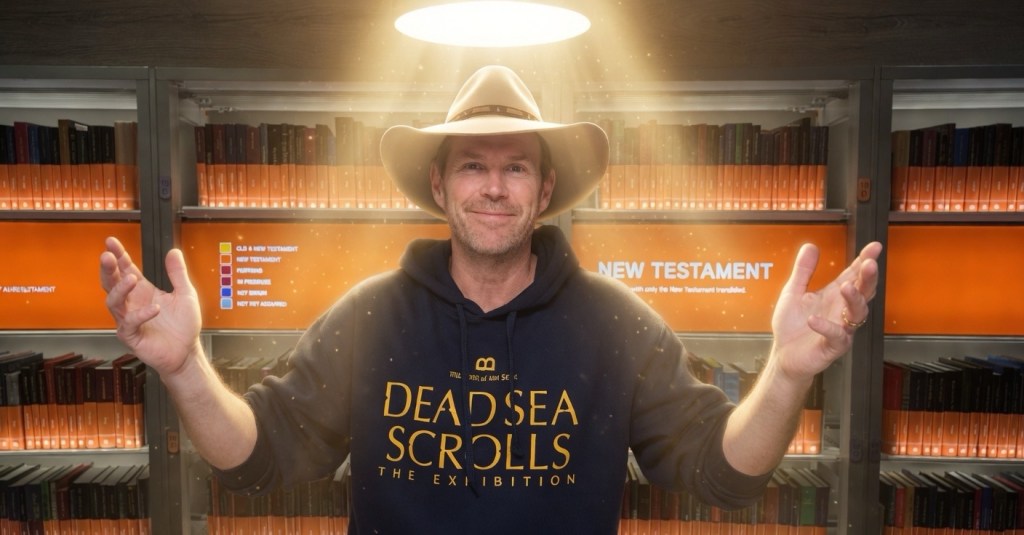
Pip: There is a building in Oxford, Ohio, that spent decades feeding college students and then spent a few more years being quietly forgotten — which, honestly, tracks for most institutional food service.
Mara: Rich Hoffman takes us inside that building’s second act, and into the argument underneath it about what government is actually for and who shows up when the work is real.
Pip: Let’s start with the building, the people who were already there, and the aircraft company operating out of Suite 117.
From Nightmare to Innovation: The College@Elm Story
Mara: The central question here is what good government actually looks like in practice — not in a press release, but in a building that almost got torn down.
Pip: The post opens with the framing that sets everything else up: “When you vote people into government, you are not voting them in to manage your life. You are voting them in to manage something you need done at the local, state, and federal levels, and then to get out of the way so good minds can finish the work.”
Mara: That is the operating theory behind the whole College@Elm story. The building at 20 South Elm Street was constructed in 1933, ran as Miami University’s central food service facility for 68 years, then sat vacant. Selling it and tearing it down were both live options.
Pip: Miami University President Gregory Crawford did not take the path of least resistance — a phrase that deserves to be stitched on something. He started walking potential partners through the building around 2017 and 2018, asking whether they could see what it might become.
Mara: By 2020 there was a plan, and by February 2023 the Lee and Rosemary Fisher Innovation College@Elm opened after a renovation costing about 10.7 million dollars, part of a total public-private investment of 17.55 million from the State of Ohio, JobsOhio, Butler County, the City of Oxford, and private donors.
Pip: And here is the part that caught the author off guard: he invited State Senator George Lang to come hear him speak, looked into the audience, and discovered Lang had been part of the building’s origin story for nearly a decade already.
Mara: Lang put it plainly in his own remarks: “It’s the only place, literally the only incubator in Ohio, that I know of in the country, where you can go from concept to production all under one roof and have everything right there.”
Pip: That is the kind of sentence a politician says and usually doesn’t mean. The difference here is that Lang apparently spent real political capital getting state dollars into the project before anyone was sure it would work.
Mara: Auditor Nancy Nix was in that same audience on September 21. She had been invited out when Crawford was still pitching the vacant building, and she came then too. Michael Ryan, who won the Republican primary for Butler County Commissioner in May 2026 with about 72 percent of the vote, stood up and spoke that day as well.
Pip: The pattern the post keeps returning to is simple: you can tell who your friends are by who shows up before the thing becomes important.
Mara: Which brings us to who is actually operating inside the building now. Volynt Aero, the company where the author serves as COO, develops hybrid-electric uncrewed aircraft for cargo logistics, mobile power generation, and forward communications — the work where you cannot always count on a runway or a fuel truck. Their aircraft is called the Vyper, spelled with a Y, because Volynt also uses a Y.
Pip: Suite 117, 20 South Elm Street. A few miles from the Miami University Airport with its 4,011-foot runway. For a company building uncrewed aircraft, that proximity is, as the post notes, not a small thing.
Mara: The closing argument is about the long clock. The things done today are what people are standing inside of nine years from now — and the post holds College@Elm up as evidence that government, used properly, does not dream for people. It keeps the road open so the people who do dream can get the work to market.
Pip: Dreams on Elm Street, not the extended nightmare — and on that note, the ideas here connect forward to something bigger about who builds these roads and why it matters.
Mara: The thread running through all of this is that good things, done over a long period of time, eventually just happen — and the people who make them happen are usually the ones who showed up before it was obvious.
Pip: Worth watching what Suite 117 looks like in nine years. We’ll be back with more from The Overmanwarrior next
Rich Hoffman is an author, political consultant, and strategic advisor based in Cincinnati, Ohio, and the creator of The Politics of Heaven—a unique framework that connects biblical theology, ancient history, and modern power structures to explain how moral alignment and spiritual forces shape global events. Blending real-world political experience with deep research into archaeology, UFO phenomena, and suppressed historical narratives, Hoffman offers compelling commentary on topics ranging from ancient civilizations and the Dead Sea Scrolls to modern populist movements, paranormal continuity, and leadership strategy in chaotic environments. As the author of The Gunfighter’s Guide to Business and the forthcoming Politics of Heaven, he brings a grounded yet provocative voice to media discussions, supported by firsthand experiences and a cross-disciplinary approach that bridges science, history, and theology. For interviews, speaking engagements, or expert analysis, visit richhoffmanbooks.com or contact directly via phone at 513-307-5815 or email at rhoffman@richhoffmanbooks.com. If you’ve seen the movie, Disclosure Day and want to talk about it and the implications of Presidnet Trump’s UAP disclosures, let me know and we can bring some color to your coverage. https://richhoffmanbooks.com/media-inquiries-broadcast-topics-and-contact-info/?frame-nonce=ad51e7ecba I do have a firsthand UFO encounter to discuss..
I’ve spent a good portion of my life learning that once you step into the arena and attach your name to a cause—especially one that challenges the comfortable consensus—there is no clean exit. The fight doesn’t end when the election is over or the levy fails. It follows you. It lingers in the background of every new opportunity, every conversation with agents or publishers, every attempt to build something larger than the immediate battle. People ask me why I keep doing it, why I take the hits, why I don’t just pivot to safer topics that corporate gatekeepers find more palatable. The honest answer is that I never figured out how to look at myself in the mirror, knowing I had walked away from what was right to make life easier. And the longer I’ve stayed in this game, the more I’ve seen how that very decision—to speak plainly and sign my name to it—becomes a lifelong tax on everything else I try to do.
Take the book I’m working on now, The Politics of Heaven. It’s a serious work, the kind that walks through biblical history, spiritual warfare, giants, ancient conspiracies, divine rebellion, and the population agendas that echo across time. I see it as mainstream in ambition—something that could sit on the front tables at Barnes & Noble alongside the big New York releases. Top-level readers who’ve seen the manuscript are excited. They tell me it has that weight. But then the conversation turns, as it always does. “You have some really strong opinions,” they say. “You’re in Ohio, very Republican, very MAGA, very Trump.” The subtext is clear: that baggage makes the project riskier in their world. It’s the same script I heard in 2012 when Tail of the Dragon came out. The book was ready; Hollywood producers were circling; relationships I had built over years in the industry were lining up interviews and options; and then the school board wars detonated everything.
Back then, Lakota was pushing its third levy attempt. I had already poured myself into fighting the first two. I went on WLW radio in Cincinnati multiple times a week, debated on air, did television hits, and wrote pieces that got national pickup in education circles. I called things exactly as I saw them. One line that still follows me everywhere was about the “latte-sipping prostitutes with asses the size of car tires and diamond rings to match.” It was raw, it was honest, and it captured the disconnect between the comfortable insiders pushing tax increases and the families getting squeezed. That phrase became a rallying cry for many people tired of the same old levy machine, but it also painted a target on my back. The corporate media, the teachers’ union allies, the local establishment—they treated it like a declaration of war. And in many ways it was. What followed was an early version of the cancel culture and personal destruction playbook that later got refined against Trump and anyone else who wouldn’t bend the knee.
They went after my reputation, my associations, my ability to make a living outside the fight. WLW started feeling pressure. Hosts and producers who had me on regularly faced heat. Some got demoted, some moved to worse slots, some disappeared from the rotation. The Cincinnati Enquirer and its allies ran over-the-top hit pieces. Corporate types listened to the complaints and quietly distanced themselves. Friends I thought were solid partners in the broader movement pulled away fast when the personal cost rose. It was brutal. I watched people I had stood shoulder to shoulder with suddenly find reasons to create distance. The playbook was clear: isolate the loudest voice, make the price of association too high, and watch the support evaporate. It was personal destruction sold as politics, and it worked on many people. But I kept going. I still helped organize, still spoke out, still put my name on it even when the professional repercussions mounted.
The timing couldn’t have been worse for Tail of the Dragon. The book was built on my deep love of the Smoky Mountains, the Tail of the Dragon road itself, and the culture of freedom and self-reliance it represented. I had spent years building Hollywood contacts precisely so I could get that story out wider. Producers were interested. There was talk of it becoming the next big action-adventure property in the vein of the Fast and the Furious franchise, which was dominating at the time. I had relationships with directors, big-name talent, people who could option material and move it forward. Zuri Hall interviewed me for a television segment promoting the book. She was excellent—sharp, professional—and that clip still holds up more than a decade later. From there, she went on to Access Hollywood, where she covered major projects like The Mandalorian, interviewing Steven Spielberg, John Favreau, Pedro Pascal, and others. Seeing her recently doing disclosure-related interviews brought it all back. That was the kind of platform I was building in 2012, and it was working—until the school levy fight made me radioactive to the very people I needed for the book’s success.
I lost money. I lost momentum. Opportunities that were lining up dried up almost overnight. The same networks that had been friendly suddenly found reasons to pass. The blocklisting was real. Google’s algorithm, YouTube recommendations, social media reach—all of it seemed tuned against anyone who wouldn’t play the game. I’ve been called the “algorithm king” in some circles because I built the Overmanwarrior handle in a way that bypasses some of it—if you search for it, you find me—but that took years of fighting uphill. The platforming, the shadow-banning, the quiet corporate decisions to sideline voices—it was all there in 2012, well before it became a national conversation during Trump’s rise. And I felt it personally. I had cashed in media chips I had built over years of honest work, only to see them spent defending a local school district from another tax grab. The people who benefited from those fights—the families who kept their money, the taxpayers who got a breather—rarely understood the full cost to the guy whose name was out front.
That’s the part most people miss. Once you put your name on it, the fight never really ends. Levies get defeated, but the machine keeps grinding. In 2013, another attempt came, and we fought it again. By then, some of the RINOs who had gone along with the earlier efforts had learned, or at least pretended to learn. We later stood together on other issues. But the personal toll lingered. I remember sitting in an office with one of the key organizers—a good friend, a successful person—around Christmas 2012 after the second levy fight. Snow was falling. He looked at me and asked, in essence, how many more of these I had in me. Could someone else step up as the public face? Could I hand off the platform I had built to promote my book and chase the Hollywood opportunities that were slipping away? The answer, unfortunately, was no. Nobody else wanted to take the heat. The same dynamic plays out everywhere good people stay silent: the fear of being labeled, blocked, or professionally damaged keeps them on the sidelines. So I stayed in it. I kept speaking. I kept signing my name—Rich Hoffman—at the bottom of every piece.
And I paid for it. Millions of dollars in potential earnings walked away because I wouldn’t bend. I’ve had opportunities at the top of the entertainment pyramid that most people would kill for. I’ve sat in catering tents with A-list talent, producers, and executives during projects where big checks were being written. I warned people early about what Facebook was doing—how they were paying influencers to migrate audiences from MySpace, collecting data, building a machine that would later be weaponized for censorship. I saw it firsthand in 2008-era Hollywood events. But when it came time to choose between protecting my community from endless tax increases and chasing the next big Hollywood deal, I chose the community. I chose truth as a weapon. I said what needed to be said, even when it hurt feelings, even when it cost alliances, even when it made me the villain in the corporate media narrative. That “latte-sipping prostitute” line earned me political credibility that has helped in Butler County and across Ohio for years, but it also became a permanent asterisk next to my name in certain circles.
People who weren’t there like to lecture me now about being a sellout, a Rhino, too close to establishment Republicans, too supportive of Israel or the military, whatever the current purity test requires. They have no idea. They weren’t in the room when the pressure was applied. They didn’t watch producers and agents pull back because a local Ohio writer had “strong opinions.” They didn’t see the friends who ran away when the media heat got too high. A few people stood by me when it counted—prominent politicians on the rise at the time, folks in the Overman Warrior’s network who met behind the scenes and didn’t flinch. I remember them. I don’t forget loyalty in hard times. But they were the exception. Most ran for cover. That’s human nature when the machine turns its focus on you. And the machine never forgets either. It’s why the same tactics that were used on me in 2012 got perfected later against Trump, against parents at school boards, against anyone who challenges the narrative.
I’ve thought a lot about why this happens. Part of it is spiritual. I see these battles through the lens of The Politics of Heaven—the same forces of control, deception, and spiritual warfare that have played out across history. The grind is designed to wear you down so that good people self-censor. Why risk your career, your book deals, your family’s stability when staying quiet is so much easier? I understand the temptation. I’ve felt the exhaustion after more than a dozen years of this. But I also know that once you compromise on the small things, the big things become impossible to defend. I’ve watched public education fights, tax fights, cultural fights. The levies at Lakota haven’t passed another big one since we stood firm, but the pressure never went away. The same two-tier systems, the same institutional failures I saw up close as a Butler County grand jury foreman, the same media manipulation—it all continues. And every time I try to launch something new—like this book, which could reach a much wider audience—the old fights are dragged out again as reasons to hesitate.
The personal destruction element is what stays with me most. It wasn’t just politics. It was an attempt to destroy my ability to operate in the world I had built. I will never forgive the people who orchestrated that, particularly elements tied to the local paper and the broader machine that amplified it. Trump talks about never forgetting those who came after him, and I feel the same way. Once the shot is taken, it can’t be taken back. But here’s what I also know: living bigger than the attacks helps. I’ve built a life and a body of work that stands on its own. I’ve raised a family, worked in aerospace at executive levels, traveled with my wife to NASA, Blue Origin, SpaceX, the Museum of the Bible, and Gettysburg. I launch model rockets with my grandson in the rain and teach him resilience. I write thousands of words in the evenings after long days because the ideas matter more than the comfort of silence. And I still put my name—Rich Hoffman—on everything.
That’s the trade-off. You cash in chips of influence to fight for what’s right, and you hope the broader impact outweighs the personal cost. In the Lakota fights, we gave many people a blueprint for resisting tax increases. My platform helped teach others how to fight. The “latte” line became a cultural touchstone in local politics. Influence built there has carried into other Butler County races, school issues, and beyond. But every new project carries a shadow. Agents and publishers for The Politics of Heaven want sample interviews, and I can point to strong ones—like the Zuri Hall segment—but the first thing they see is the conservative, Trump-aligned, outspoken record. It scares some of them. That’s the cost. I could soften the edges, distance myself from past fights, chase the New York Times centerpiece dream without the baggage. But that would betray everything I’ve stood for. I won’t do it.
I’ve given up millions in potential earnings over the years to look in the mirror and know I fought honestly. I turned away from magnificent opportunities in entertainment because ethics mattered more. I walked away from gigs that would have been life-changing financially because I wouldn’t lend my name or credibility to things I knew were wrong. And I’d do it again. The fighters who step up never get to hand off the baton cleanly. The battles linger because the underlying problems—government overreach, cultural decay, spiritual forces at work—don’t go away. They adapt. They wait for new levies, new mandates, new cultural pressures. Good people who could speak get ground down by the personal price until they stay quiet. That’s how the system maintains control.
When people write me now and accuse me of being part of the problem because I support certain policies or work with imperfect allies, I shake my head. They have no idea what it costs to stay in the fight for sixteen years and counting. They weren’t there when the media was hammering me daily, when radio doors closed, when Hollywood interest evaporated. They don’t see the family time traded, the book sales impacted, the quiet blacklisting that still affects reach. But I can live with it. I have integrity intact. I have authority that comes from having skin in the game. And I have the satisfaction of knowing that when I sign my name to something, it means something because I’ve paid the price for it.
The Politics of Heaven will come out one way or another. It may not get the easy mainstream rollout some books enjoy, but it will reach the people who need it. I’ll keep doing the interviews, building the platform, speaking plainly. I’ll keep putting my name next to the truth even when it costs. Because in the end, that’s what separates those who merely complain from those who actually stand. The grind is real. The personal destruction is real. The lingering shadow of old fights is real. But so is the reward of looking back and knowing you never sold out. I sleep fine at night. I look my grandchildren in the eye and teach them to do the same. And I’ll keep writing, keep fighting, keep signing Rich Hoffman to every word.
That’s the cost. And I’d pay it again. And in many ways, I still am.
1. Personal observations from the 2012 media cycle and subsequent blocklisting patterns, cross-referenced with broader studies on algorithmic suppression post-2010.
2. Accounts of WLW programming shifts and local Cincinnati media coverage during Lakota levy campaigns.
Bibliography (selective for depth):
• Hoffman, Rich. Tail of the Dragon. (early editions, 2012).
• Hoffman, Rich. The Gunfighter’s Guide to Business.
• Various Biblical Archaeology Review archives (lifelong reading).
• Ohio education policy documents on property tax levies, Butler County records.
• Studies on social media platform migration and data practices circa 2008-2012.
• Trump-era documentation of similar personal destruction tactics for pattern comparison.
Rich Hoffman is an aerospace executive, political strategist, systems thinker, and independent researcher of ancient history, the paranormal, and the Dead Sea Scrolls tradition. His life in high‑stakes manufacturing, high‑level politics, and cross‑functional crisis management gives him a field‑tested understanding of power — both human and unseen.
He has advised candidates, executives, and public leaders, while conducting deep, hands‑on exploration of archaeological and supernatural hotspots across the world.
Hoffman writes with the credibility of a problem-solver, the curiosity of an archaeologist, and the courage of a frontline witness who has gone to very scary places and reported what lurked there. Hoffman has authored books including The Symposium of Justice, The Gunfighter’s Guide to Business, and Tail of the Dragon, often exploring themes of freedom, individual will, and societal structures through a lens influenced by philosophy (e.g., Nietzschean overman concepts) and current events
No, I’m not supporting the MidPointe Library System tax levy in Butler County, Ohio. They want too much money for a product that is only good for Democrats. Libraries these days tend to be breeding grounds for liberals so I tend not to like them anyway. And I say that as a person who probably loves books more than anybody, locally, regionally, or this side of the Mississippi River. I would say that books are my number one love in the world, I read around three books per week and on all kinds of different topics. I think they are excellent ways to advance human civilization and the perpetuation of knowledge. And in their infancy, I would say libraries were a good idea so that people who couldn’t afford books, or couldn’t get access to them any other way, could get access to vast amounts of information. But those days are long gone. These days, libraries are meeting centers for radical Democrats who are plotting to take over the world one child at a time. And they just aren’t worth the money. There is a strong socialist vibe to libraries where sharing is their centerpiece. I haven’t been to a library for three decades. I did have one summer, my first one after graduating high school where I went to the library several times a week to read lots and lots of books. But I hated to take them back, and since then I have just bought all my books each week. I had wished that I had been able to keep all those books that I read out of the library, rather than taking them back because for me reading is a conquest, and I like to look at them later. And to refer to them often. So even though the books at the library are free, you don’t get to keep those adventures after and can’t refer to them over the years as brain development grows because ownership isn’t the key feature of libraries. Sharing knowledge is, and that’s not really what book reading is all about. It’s about transferring knowledge from one person to another, not in some socialist utopia of mass understanding. That might have been a noble concept, but certainly not the reality.
The cost of the MidPointe Library system in Butler County, Ohio, is $43.75 in taxes per $100,000 of home. But who lives in a $100K home these days? Such a place would be a shack by today’s standards. So, the actual cost of the levy to the average resident is around $150. The library system will tell everyone that they serve around 600,000 visitors annually. There are 400,000 people in Butler County, so we are talking about a lot of people, but with all that activity, we have not seen much of an increase in literacy or proper political thinking. Libraries have become, over time, gathering places for Democrats because of their free access to information that brings out the degenerates into one place. Most of the time, Republican-minded people don’t gather at the library to talk about a book. They gather there to meet on below-the-line topics that work against individualism, which is why, even as an avid reader, I have not been back to a library in decades. The MidPointe Library System does have a presence in Liberty Center Mall, which looks good from the food court. I prefer a bookstore like Barnes and Noble to a library where moochers are attracted to the free aspect of getting a book, taking it home, reading it, and then bringing it back for someone else to share in that experience. I like that people want to read books, but I like it better when they want to buy them and turn knowledge into a possession. Not a shared experience.
The MidPointe Library System says that for every dollar spent on a library, there is a return to the regional economy of $5 to $9 as if to justify the enormous expense of justifying them for the public. But I don’t see the massive expansion of intelligence that such a return on investment projects. Literacy is way down where it clearly shouldn’t be. Our education system for kids is a trash heap that carries over into the library system; people are learning all the wrong things. It’s not enough to have an education; somewhat, what we learn truly matters. And the kind of books that libraries offer are not exactly bastions of conservative value. So, even if the return on investment is high, we have to question whether it’s the right kind of dollars for the correct type of investment. We live in a time where the Internet has been the most significant decentralization of information in the history of the world, and more people have access to information that way than through a library card. The rate at which people can consume information is much higher than it has ever been. So why do we have literacy problems when just about every human being these days reads more than ever through online services and texting between associates? We value this kind of knowledge because places like public schools and libraries steer people toward the wrong thinking process. People need physical assets to remind them of what they experienced. Not taken back to the library and stored for some other slack-jawed loser to come along and have equal opportunity to acquire that knowledge.
The value of the library isn’t knowledge as individuals possess it; it’s in the shared community values of sameness. They are essentially communist concepts because of their shared trait. I was reminded of this the other day while at Half Priced Books, which I love. But usually, they deal with books from personal collections and libraries that have failed somewhere, and they have a similar feel to libraries, where the books have been previously owned and have the emotional residue of other people on them. Half Priced Books is an excellent place to find treasures that have been forced underground or out of print. But like most things of value, we don’t share our food, we don’t share our spouses, and we don’t share our books, our traveled knowledge acquired through a lot of work and personal investment. After you’ve read a book, you should keep the book as a trophy of the journey. You don’t share it with some other slug; never to return to it later. I have found that I reread many books at different periods of my life as my intellect grows. What you read in your twenties tends to modify when you are forty or fifty because of brain development. So, for all those reasons and more, I would like to see the MidPointe Library System go away and the people who typically go there fade away into the distance. Libraries tend to make more Democrats by facilitating their socialist whims and are significant impediments to the kind of proper emotional growth that healthy human beings would otherwise evolve into. Just because something is free doesn’t mean it’s right. Experiences are not the same as possession of knowledge. And reading a book is only a small part of gaining experience. Taking an experience back to the library so somebody else can “experience” it too is a concept of Marx and the rest of the below-the-line Europeans who got information sharing wrong right out of the gate as the printing press was invented. Libraries might have been a benefit initially when people couldn’t afford books, but the marketplace has made books so easily accessible that owning books is better. And why I will vote No on the MidPointe Library Tax Levy in the 2024 election.