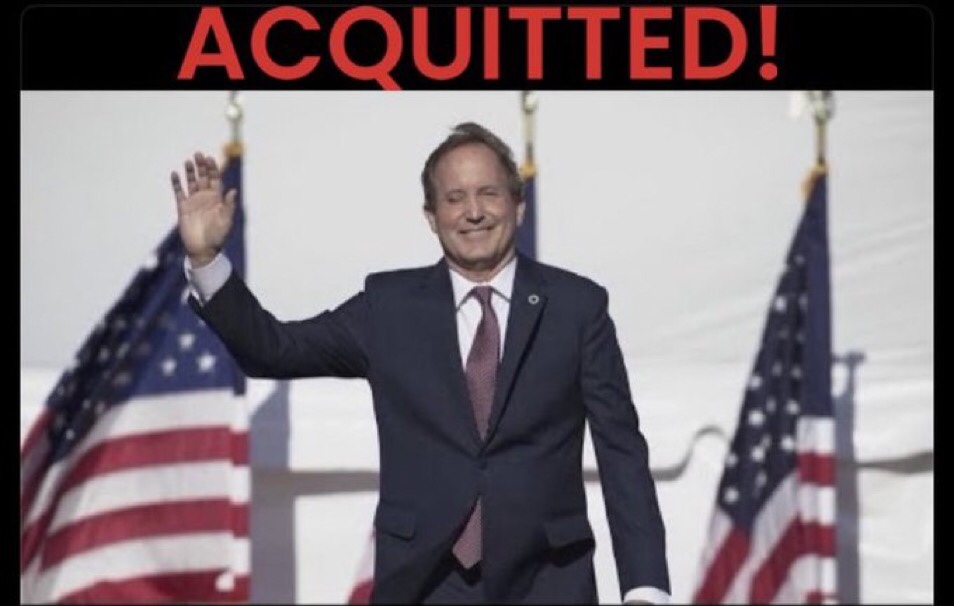
I have been watching the midterm landscape closely in mid-August 2026. Three months out from Election Day, the polling averages in several key races look tighter than the underlying partisan lean of these states would suggest. Ohio’s governor’s race between Vivek Ramaswamy and Amy Acton sits near a toss-up. The special Senate election between Jon Husted and Sherrod Brown is competitive. In Texas, Ken Paxton and James Talarico are essentially deadlocked in recent surveys. Then came the Wisconsin Democratic primary, where the polls were off by roughly 20 points in the direction favoring the more progressive candidate.
I have said for a long time that a meaningful portion of the modern polling industry carries systematic bias against Republicans. Conservatives and Trump voters are less likely to pick up the phone or complete a survey. Pollsters still lean on models and samples that over-weight the people who do answer—disproportionately Democrats and people more inclined to engage with survey-takers. On top of that sits a commercial incentive: close races generate more advertising dollars. Campaigns with money to spend feel pressure to keep spending when the horse race looks competitive. Wisconsin just provided another public demonstration of how badly these models can fail when late undecideds and turnout dynamics break in one direction.
I do not think the actual underlying margins in Ohio or Texas are as tight as the published averages. I think several points in these surveys understate Republicans, and if the election were held today, the Republican candidates would win more comfortably than the current numbers imply. That is not complacency. It is pattern recognition from 2016 forward, reinforced by the Wisconsin result and by what I see on the ground and on platforms where people actually speak freely.
Wisconsin Democratic Primary 2026: The 20-Point Polling Collapse of Francesca Hong
The clearest recent data point is Wisconsin. Polls consistently showed Democratic Socialist State Representative Francesca Hong leading Milwaukee County Executive David Crowley by double digits—sometimes by around 20 points. One late survey had her at 44 percent to Crowley’s 22 percent. Another earlier reading put her near 38 percent with Crowley in single digits and a large undecided bloc.
On primary night Crowley won by less than half a percentage point. Hong received roughly the share the final polls had projected for her—around 39 percent. The entire error was on Crowley’s side. Late-deciding and previously undecided voters broke hard against the more radical option. Primaries are harder to model than generals because turnout is lower and more volatile, and Wisconsin’s open primary added another layer of uncertainty. Still, the scale of the miss is striking. The models captured the progressive candidate’s floor but completely missed the late surge to the more traditional Democrat.
I was not surprised. There is a recurring temptation inside media and polling circles to treat energized progressive or socialist factions as larger than they are. College campuses, activist networks, and highly engaged online progressive voters are easy to reach and happy to talk to pollsters. The broader primary electorate is less so. When the actual voters showed up, the socialist ceiling was exposed. The same pattern has appeared in other recent cycles, in which early surveys elevate a hard-left candidate and then the candidate underperforms once undecideds and lower-propensity voters enter the picture.
Current Ohio Governor Polls: Vivek Ramaswamy vs Amy Acton in Mid-August 2026
In Ohio, the governor’s race is officially an open seat. Aggregates in mid-August put Vivek Ramaswamy and former state health director Amy Acton essentially even, or with Ramaswamy ahead by less than a point. One recent weighted average had Ramaswamy at 47.0 percent and Acton at 46.2 percent. Individual surveys have bounced: some Democratic-leaning pollsters have shown Acton up two or three points; others have shown a tie or a small Republican edge.
Ohio is not a pure 50-50 state. Donald Trump carried it by roughly eleven points in 2024. The underlying Republican structural advantage has been visible for several cycles. A race this close in the averages, this far out, is therefore anomalous on its face. Acton’s association with COVID-era restrictions remains a live liability with a large share of the electorate that still remembers the lockdowns and school closures. Ramaswamy’s profile is national and polarizing, which creates some friction among independents and moderates, but the state’s recent presidential and statewide results do not suggest a natural environment for a Democratic win.
Ohio Senate Race Polling: Jon Husted vs Sherrod Brown
The special Senate election is similarly compressed. Jon Husted, appointed after JD Vance’s elevation, faces former Senator Sherrod Brown. Aggregates in early August showed Husted ahead by roughly two to three points in some trackers, while other windows had Brown with a small edge or a statistical tie. A New York Times/Siena survey had Husted at 50–47. An AARP-sponsored poll earlier in the summer had Brown up three. The race is competitive on paper.
Brown is a known quantity with residual personal brand strength among some working-class and older voters. Yet Ohio has continued moving right relative to the national environment. A race that looks this tight three months out again sits uncomfortably against the state’s recent performance. If nonresponse systematically suppresses Republican numbers, the published margins understate Husted’s true position.
Texas US Senate Polls 2026: Ken Paxton vs James Talarico Dead Heat
In Texas, the pattern repeats. The latest Emerson College survey (August 9–10) had Attorney General Ken Paxton at 47 percent and state Representative James Talarico at 46 percent among likely voters. Other recent polls have shown similar dead heats or small leads for either side.
Texas is not a purple state. Trump won it by roughly fourteen points in 2024. Paxton is a polarizing figure with a long history of legal and political battles, which creates openings for a skilled Democratic challenger. Talarico has run a disciplined campaign and benefits from the same non-response dynamics that compress Republican leads elsewhere. Still, a race this close in a state with Texas’s underlying Republican baseline is another data point that looks softer for the GOP than the fundamentals imply.
The Persistent Problem of Republican Non-Response Bias in Modern Polling
The common thread is non-response. I am on every list. Campaigns and pollsters call and text constantly. I rarely answer. I vote in every primary and every general election, but I do not have time for a fifteen-minute questionnaire from someone I do not know. Many people in my circle operate the same way. Conservatives, older voters, rural voters, and Trump-aligned voters have lower cooperation rates with traditional survey methods. Cell-phone-only households, caller-ID screening, and general distrust of institutions make the problem worse than it was in the landline era.
Democrats and more progressive voters, by contrast, remain relatively easy to reach and willing to engage. The result is a sample that is tilted before any weighting is applied. Pollsters attempt to correct with demographic targets, education weights, and recalled vote, but the corrections are imperfect. When the underlying population of interest—likely Republican voters—has systematically lower response rates, the adjusted numbers still lag. This is not a new observation. It has been discussed after 2016, 2020, and 2022. Wisconsin’s primary is simply the latest high-profile reminder that the models can still break when late movement occurs among the harder-to-reach.
Media and Pollster Incentives to Keep Races Looking Close
There is also a commercial layer. Close races sell. Media companies and the consultants who live off campaign advertising benefit when the horse race stays competitive. Republican candidates and committees have raised substantial sums. Those dollars flow more readily when the published polls suggest the outcome is in doubt. A seven- or eight-point underlying Republican advantage, when published as a two-point race, generates more television, digital, and direct-mail spending than a blowout narrative would. I am not claiming a grand conspiracy in every survey. I am saying the incentive structure rewards the appearance of competitiveness, and the sampling problems make that appearance easier to produce.
Why Platforms Like X Offer a Clearer Picture Than Traditional Surveys
This is where platforms that still allow relatively unfiltered speech become useful. People say things online under their own names or consistent pseudonyms that they will not say to a stranger on the phone. Sentiment on X, when read carefully and at scale, has often been a better leading indicator of Republican energy than the published telephone and online panel averages. AI systems that can process large volumes of public posts provide another check on the traditional samples. They are not perfect—online populations are not identical to the electorate—but they are less constrained by the cooperation-rate problem that plagues live interviewers and many opt-in panels.
What a Real Election Day Would Show Right Now in These States
If the election were held in the middle of August 2026, I believe the Republican candidates in these races would win by larger margins than the current averages indicate—closer to the seven- or eight-point range in Ohio and a clearer, more comfortable win for Paxton in Texas. That is not a prediction locked in stone for November. Turnout, national mood, candidate performance, and late events still matter. Campaigns cannot rest on structural advantages. But the idea that these races are true toss-ups or that Texas is on the verge of flipping requires accepting that the polling error has suddenly vanished. Wisconsin suggests it has not.
Election Night Dynamics in Ohio: Urban Early Returns vs Rural Reality
Ohio’s geography still shapes how results appear on election night. Early returns from the Columbus area and other urban centers can create a temporary Democratic lead. As the suburban and rural counties between the cities report, the numbers swing back. That pattern has been consistent. Watching the first 15 or 30 minutes of returns without understanding the sequence can cause unnecessary panic. The same logic applies to interpreting summer polls that over-sample the easier-to-reach urban and college populations. And if surveys do not account for this real estate trend, their outlook will not be accurate. If rural people don’t respond to the poll, they won’t be counted.
I have been around these fights long enough to recognize the difference between a genuine shift in the electorate and a measurement problem. The Wisconsin primary was a measurement problem with real consequences for the models. The compressed margins in Ohio and Texas look like the same problem applied to general-election contests in states that have been moving toward Republicans. Non-response among the very voters who decide these races remains the central issue. Until the industry solves the cooperation-rate gap, or until alternative signals from freer platforms are weighted more heavily, the published numbers will continue to understate the Republican side. Plan accordingly.
Footnotes
1. Aggregated Ohio governor polling as of mid-August 2026 from Pollsmax and concurrent trackers showing Ramaswamy 47.0 / Acton 46.2 and recent individual surveys (NYT/Siena, Tulchin, AARP/Fabrizio, etc.).
2. Wisconsin primary result: David Crowley approximately 39.8 percent, Francesca Hong approximately 39.3 percent; pre-election surveys consistently showed Hong leads of 15–20+ points.
3. Ohio Senate aggregates and individual polls (Pollsmax, NYT/Siena, AARP, Beacon/Shaw) place the race within a few points either way.
4. Emerson College/Nexstar Texas Senate poll, August 9–10, 2026: Paxton 47, Talarico 46.
5. Discussion of non-response bias and primary modeling difficulties drawn from post-election analyses of the Wisconsin results and longer-standing literature on declining survey cooperation rates among conservatives.
6. 2024 presidential margins: Ohio approximately R+11, Texas approximately R+14, Wisconsin narrow Republican win.
Bibliography for Further Reading
• Pollsmax, RealClearPolitics, 270toWin, and Decision Desk HQ aggregate pages for 2026 Ohio governor, Ohio Senate special, and Texas Senate.
• Emerson College Polling releases on Texas, August 2026.
• Contemporary reporting and post-mortems on the Wisconsin Democratic gubernatorial primary (Axios, New York Times, Milwaukee Journal Sentinel, Marquette Law School Poll commentary).
• Historical analyses of non-response bias in U.S. political polling after the 2016, 2020, and 2022 cycles.
• Public statements and data releases from the campaigns of Vivek Ramaswamy, Jon Husted, Ken Paxton, Amy Acton, Sherrod Brown, and James Talarico.
• Academic and industry papers on declining telephone survey response rates and the challenges of weighting for partisan non-response.
The numbers will keep coming. Watch what the hard-to-reach voters actually do when the ballots are counted, not onlywhat the people who answer the phone say in August.
Rich Hoffman
More about me
Click Here to Protect Yourself with Second Call Defense https://www.secondcalldefense.org/?affiliate=20707
About the Author: Rich Hoffman
Rich Hoffman is an author, political consultant, and strategic advisor based in Cincinnati, Ohio, and the creator of The Politics of Heaven—a unique framework that connects biblical theology, ancient history, and modern power structures to explain how moral alignment and spiritual forces shape global events. Blending real-world political experience with deep research into archaeology, UFO phenomena, and suppressed historical narratives, Hoffman offers compelling commentary on topics ranging from ancient civilizations and the Dead Sea Scrolls to modern populist movements, paranormal continuity, and leadership strategy in chaotic environments. As the author of The Gunfighter’s Guide to Business and the forthcoming Politics of Heaven, he brings a grounded yet provocative voice to media discussions, supported by firsthand experiences and a cross-disciplinary approach that bridges science, history, and theology. For interviews, speaking engagements, or expert analysis, visit richhoffmanbooks.com or contact directly via phone at 513-307-5815 or email at rhoffman@richhoffmanbooks.com. If you’ve seen the movie, Disclosure Day and want to talk about it and the implications of Presidnet Trump’s UAP disclosures, let me know and we can bring some color to your coverage. https://richhoffmanbooks.com/media-inquiries-broadcast-topics-and-contact-info/?frame-nonce=ad51e7ecba I do have a firsthand UFO encounter to discuss.