‘Pirate Money’ in Ohio: The way to fight back against a failed Federal Reserve and inflation-based big government economy

The question that often arises in discussions about state-issued currencies is whether such initiatives, like those proposed in Kentucky or Ohio, are constitutional. They function as a form of currency that could serve as a pillar of stability for our nation, especially in an era where federal monetary policy has led to rampant inflation and economic uncertainty. I found myself pondering this deeply during a recent visit to the Ohio Statehouse, where I reconnected with old friends who work there. It was a serendipitous encounter that led me straight into the office of Senator George Lang, a man I’ve always admired for his sharp intellect and unwavering commitment to conservative principles. Lang and I have shared many conversations over the years, often diving into the world of books—recommendations that challenge the status quo and inspire action. On this particular day, as we caught up, the discussion turned to a topic that has been gaining traction among legislators and economic thinkers alike: a return to sound money through a state-level gold standard.
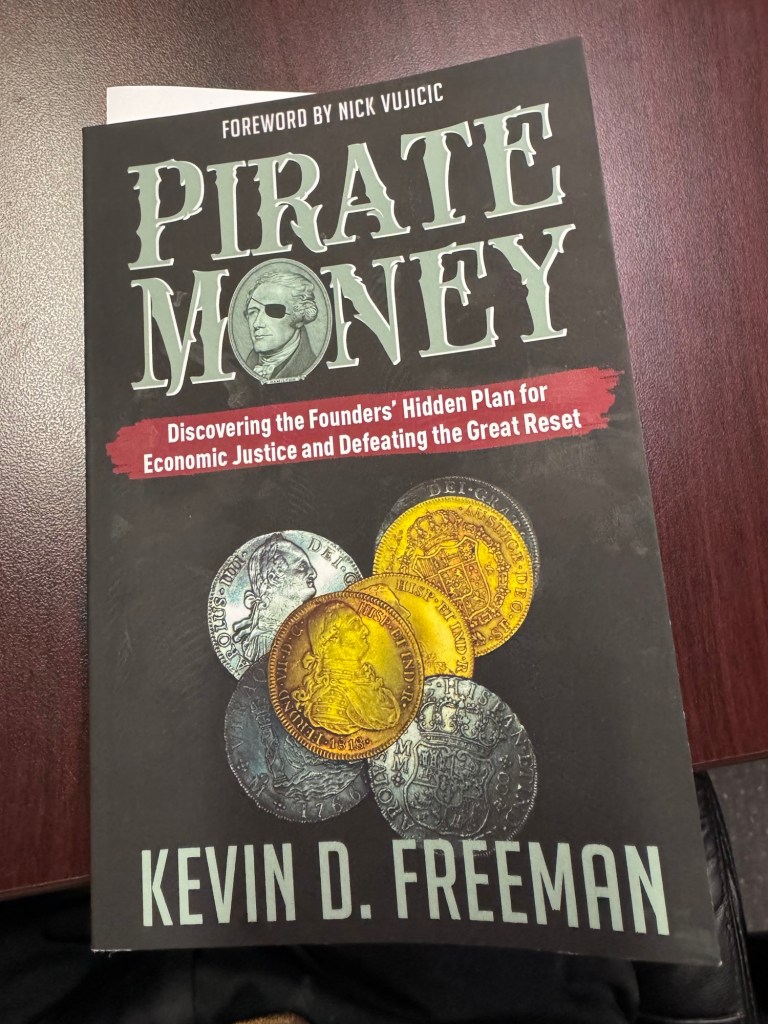
Lang handed me a copy of a relatively new book by Kevin Freeman, titled Pirate Money. The Blaze publishes it, and Freeman, whom I’ve followed through his economic commentary on that platform, draws from his extensive background advising the Pentagon and military leaders on financial warfare. I’ve known people at The Blaze over the years, and Freeman’s insights into global economics have always struck me as prescient. This book isn’t just another treatise on monetary policy; it’s a call to action, proposing an innovative way for states to reclaim control over their currencies using gold and silver, bypassing the Federal Reserve’s failures. As Lang and I talked, he mentioned that he’s been encouraging his colleagues in the legislature to read it by passing out copies from his office. The concept resonated with me immediately, especially after my own harrowing experiences with banks in 2025—a year that exposed the ugly underbelly of the financial industry in ways I hadn’t fully appreciated before.

You see, I’m not inherently anti-bank; they’ve served a purpose in facilitating commerce. But last year, I encountered the kind of predatory behavior that makes you question the entire system. Hidden fees, arbitrary account freezes, and a lack of transparency revealed the “ugly people” behind the polished facades—executives and regulators who prioritize control over service. This isn’t isolated; it’s symptomatic of a broader issue tied to the Federal Reserve and its monopoly on money creation. Freeman’s book delves into this, explaining how the Fed’s policies have enabled entities like BlackRock to amass unprecedented power, launder printed money through Wall Street, and impose agendas such as ESG (Environmental, Social, and Governance) criteria on corporations. If a CEO steps out of line, they risk deplatforming or worse—losing access to banking services based on social media profiles or political affiliations. I’ve seen this firsthand; banks now scrutinize applicants’ online presence, denying services to those deemed “undesirable.” This social credit system, imported from communist China, has infiltrated American finance, and it’s out of control.

My conversation with Lang covered a lot of ground, but the gold standard idea stood out. Freeman argues for a “constitutional backdoor” via Article 1, Section 10 of the U.S. Constitution, which prohibits states from coining money or emitting bills of credit but explicitly allows them to make “nothing but gold and silver coin a tender in payment of debts.”  This clause, rooted in the Founders’ distrust of fiat currency following the inflationary disasters of the Continental Dollar during the Revolutionary War, grants states the authority to establish gold and silver as legal tender. Freeman’s proposal builds on this: states could create vaults where citizens deposit gold, which is then used as backing for a digital debit card system. You’d buy gold with dollars, store it in the state vault, and spend it via a card that deducts the equivalent value in real time, adjusted for market prices. No need to carry physical coins; it’s as convenient as swiping a credit card, but insulated from inflation.
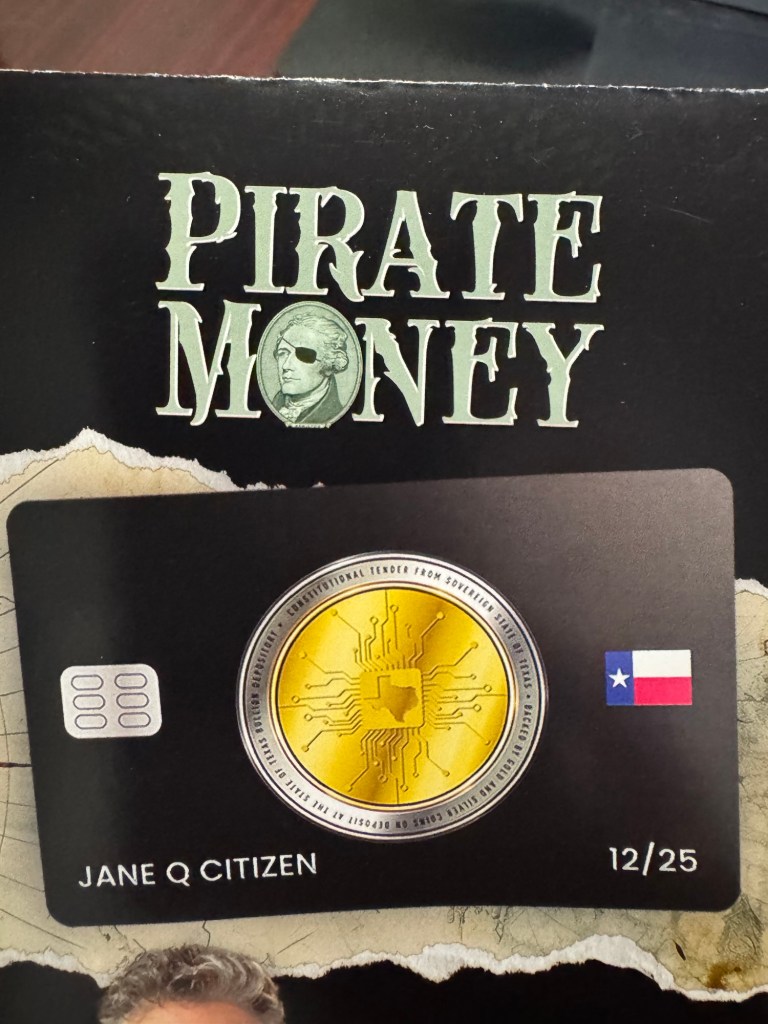
A new kind of gold card

This isn’t a pie-in-the-sky theory. Texas has already paved the way with its Texas Bullion Depository, established in 2015, a state-run facility for storing precious metals.  In 2025, Texas advanced further with House Bill 1056, enabling gold and silver deposits to be spent via debit-style cards, creating a digital payments platform backed by physical bullion.  By January 2026, the Texas Comptroller was seeking industry input on this system, aiming to implement it by May 2027 without state funding, relying instead on service fees.  Ohio is following suit. In April 2025, Representatives Brian Lorenz, Mark Johnson, and Josh Williams sponsored House Bill 208 (though some records refer to similar legislation as HB 206, sponsored by Representative Jennifer Gross), which aims to establish a transactional currency based on gold and silver.  The bill has been circulating but is currently stuck in the Judiciary Committee, needing leadership to push it forward. Lang and Gross are key supporters, with Lang distributing Freeman’s book to build momentum. This isn’t just for the wealthy; it’s a democratizing force that allows everyday people to protect their savings from erosion.

To understand why this is urgent, we must revisit the history of America’s monetary system—a tale of stability lost to central planning. In colonial America, currency was scarce and chaotic. The British Crown restricted silver and gold inflows to the colonies, forcing settlers to rely on foreign coins, barter, or makeshift scrip. The most common was the Spanish “piece of eight,” or eight-reales silver coin, minted in the New World and prized for its consistent value.  Pirates played a surprising role here; they plundered Spanish galleons, circulating these coins throughout the Atlantic world. Freeman draws the title Pirate Money from this era, noting that “pirate money”—looted Spanish silver—fueled early American commerce by evading royal monopolies.  These coins were often cut into “bits” for change—a one-reale bit equaled 12.5 cents, hence “two bits” for a quarter.  This decentralized, metal-backed system contrasted sharply with the inflationary paper-money experiments, such as Massachusetts’ pine-tree shillings or the Continental Congress’s fiat notes, which collapsed under overprinting.

The Founders, scarred by hyperinflation during the Revolution—where “not worth a Continental” became a proverb—enshrined sound money in the Constitution. Congress was granted the power to “coin money” and regulate its value, while states were barred from issuing fiat currency but were allowed to accept gold and silver tender.  The U.S. adopted a bimetallic standard in 1792, with the dollar defined as a specific weight of silver or gold. This stability propelled economic growth until the 20th century. But cracks appeared with the Civil War’s greenbacks, fiat notes that depreciated rapidly. Post-war, the U.S. returned to gold in 1879, enjoying decades of low inflation and prosperity.

The turning point came in 1913 with the Federal Reserve’s creation, ostensibly to stabilize banking, but it granted a private cartel monopoly over the money supply. Critics, including Freeman, argue this enabled endless printing, detached from real assets. Then, in 1933, amid the Great Depression, President Franklin D. Roosevelt issued Executive Order 6102, confiscating private gold holdings at $20.67 per ounce, only to revalue it at $35 shortly after via the Gold Reserve Act of 1934—a 69% devaluation that transferred wealth to the government.   This severed the dollar’s domestic full gold backing, though international convertibility persisted under Bretton Woods.

The final blow was the “Nixon Shock” in 1971. Facing gold outflows and inflation from Vietnam War spending, President Richard Nixon suspended dollar-to-gold convertibility on August 15, 1971, effectively ending the gold standard.   This unleashed fiat money, where dollars are backed only by faith in the government. The results? Catastrophic inflation. In the 1970s, prices soared, with annual rates peaking at 15% in 1980.  A dollar from 1970 buys just 13 cents worth of goods today—an 87% erosion.  Over the last century, the dollar has lost over 96% of its purchasing power since 1913.  From 1925 to 2025, it’s declined 95%, with stark generational impacts: $100 in 1975 is worth $16.40 today. 

This inflation isn’t accidental; it’s baked into the system. The Fed targets 2% annual inflation, but real rates often exceed that target, especially post-2020, with COVID stimulus flooding trillions into the economy. Homes, once affordable on a single income, now price out young families. Everything’s too expensive because money loses value yearly. Freeman highlights the shift from a production economy—making stuff—to a finance economy, where wealth comes from trading paper assets, interest rates, and debt manipulation. BlackRock exemplifies this: managing trillions, it influences CEOs via asset control, pushing agendas that prioritize globalism over American interests.  During the pandemic, the Fed hired BlackRock to manage bond purchases, raising conflict-of-interest concerns by blurring the lines between public policy and private profit.  

Compounding this domestic rot are external threats. President Trump understood this, cracking down on Iran, Venezuela, Mexico, and Canada to protect the dollar from attacks. Why Greenland? Strategic resources. But the real adversary is China, propped up since Nixon’s 1972 visit, which opened the door to currency manipulation and intellectual property theft.  Freeman, an expert in economic warfare, warns that wars today are fought through finance, not just bombs. China has been waging a stealth assault on the dollar: dumping U.S. Treasuries, stockpiling gold, and promoting the renminbi as a reserve currency.   In 2026, Beijing issued directives for financial institutions to divest Treasuries en masse, spiking yields and straining U.S. debt financing.  Allies like the BRICS nations follow suit, accelerating de-dollarization. If the dollar falls, America’s global clout crumbles—exactly China’s aim.

Trump provided a reprieve from 2017 to 2021, stabilizing the dollar amid these assaults. But with Democrats pushing centralized planning and Republicans sometimes complicit, the direction is toward more control. The Great Reset, championed by globalists, envisions a world where you “own nothing and be happy,” with currencies digitized for surveillance. Freeman’s Pirate Money counters this: states like Ohio and Texas can rebel by creating gold-backed systems, using the cashless infrastructure against the centralizers.

Imagine: You deposit your paycheck into an Ohio vault, converting it to gold at current prices. Your “black card” deducts value for purchases—gas, groceries, PlayStation—without inflation’s bite. Gold appreciates, so savings grow. No more losing 2-5% per year; your money retains value. This forces the Fed to compete, curbing excesses. It’s not Bitcoin’s volatility; it’s stable, tangible gold, recognized worldwide since antiquity.

Critics say it’s for the rich, but Freeman argues otherwise. Centralized bankers thrive on monopoly, leveraging inflation to steal value. By decentralizing, more people retain wealth, reducing inequality. In Ohio, HB 208 needs champions. Knock on Lang’s door; he’ll give you the book. Gross is sponsoring related efforts. With Vivek Ramaswamy as governor in Ohio and in partnership with a Trump administration, support could surge.

This isn’t radical; it’s constitutional. States have the right, and the time is now, while Trump stabilizes the dollar. Democrats should back it too—protecting value benefits all. If we wait, inflation will devour more. As Freeman notes, pirates used gold to win independence; we can too.

In conclusion, Kentucky’s notes—or any state’s gold tender—are constitutional under Article 1, Section 10. They stabilize our nation against Fed failures, BlackRock’s influence, and China’s attacks. Ohio, lead the way with HB 208. I’ll be one of the first to sign up. 

Footnotes

1.  U.S. Constitution, Article 1, Section 10: “No State shall… coin Money; emit Bills of Credit; make any Thing but gold and silver Coin a Tender in Payment of Debts…” 

2.  Kevin D. Freeman, Pirate Money (The Blaze, 2025), pp. 45-67, discussing colonial use of Spanish coins.

3.  Executive Order 6102, April 5, 1933, by Franklin D. Roosevelt, requiring the surrender of gold at below-market rates. 

4.  Gold Reserve Act of 1934, revaluing gold from $20.67 to $35 per ounce.

5.  Nixon Shock: Suspension of gold convertibility, August 15, 1971. 

6.  Inflation statistics: Dollar lost 87% value since the 1970s; peaked at 15% in 1980. 

7.  BlackRock’s role in Fed bond programs, 2020. 

8.  China’s Treasury divestment, 2026 directives. 

9.  Texas Bullion Depository, established 2015; HB 1056, 2025. 

10.  Ohio HB 206 (or 208 variant): Gold and silver transactional currency. 

Bibliography

•  Freeman, Kevin D. Pirate Money: The Constitutional Path to Sound Money. The Blaze, 2025.

•  Griffin, G. Edward. The Creature from Jekyll Island: A Second Look at the Federal Reserve. American Media, 1994.

•  Rothbard, Murray N. What Has Government Done to Our Money? Ludwig von Mises Institute, 1963.

•  Eichengreen, Barry. Golden Fetters: The Gold Standard and the Great Depression, 1919-1939. Oxford University Press, 1992.

•  Lowenstein, Roger. “The Nixon Shock.” Bloomberg Businessweek, August 4, 2011.

•  U.S. Constitution, Annotated Edition. Library of Congress.

•  Federal Reserve Economic Data (FRED). “Purchasing Power of the Consumer Dollar.”

•  Texas Comptroller of Public Accounts. “Request for Information: Digital Payment System Backed by Bullion,” January 2026.

•  Ohio House of Representatives. “H.B. No. 206: Establish a Transactional Currency Based on Gold and Silver.”

•  Freeman, Kevin D. Advisory Reports to Pentagon on Economic Warfare, Various Dates.

Rich Hoffman

More about me

Click Here to Protect Yourself with Second Call Defense https://www.secondcalldefense.org/?affiliate=20707
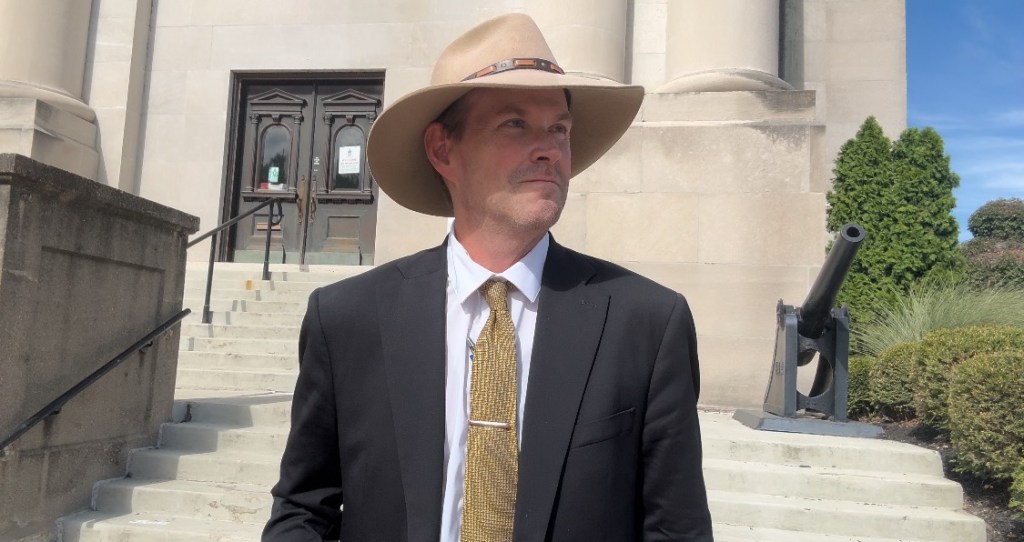
About the Author: Rich Hoffman

Rich Hoffman is an independent writer, philosopher, political advisor, and strategist based in the Cincinnati/Middletown, Ohio area. Born in Hamilton, Ohio, he has worked professionally since age 12 in various roles, from manual labor to high-level executive positions in aerospace and related industries. Known as “The Tax-killer” for his activism against tax increases, Hoffman has authored books including The Symposium of JusticeThe Gunfighter’s Guide to Business, and Tail of the Dragon, often exploring themes of freedom, individual will, and societal structures through a lens influenced by philosophy (e.g., Nietzschean overman concepts) and current events.

He publishes the blog The Overmanwarrior (overmanwarrior.wordpress.com), where he shares insights on politics, culture, history, and personal stories. Active on X as @overmanwarrior, Instagram, and YouTube, Hoffman frequently discusses space exploration, family values, and human potential. An avid fast-draw artist and family man, he emphasizes passing practical skills and intellectual curiosity to younger generations.
The Fed Can’t Be Independent: When money is power, its control must rest with the people, not an untouchable elite

The recent events surrounding the Federal Reserve and President Trump’s administration lay bare a fundamental tension in American governance: the supposed independence of the central bank versus the democratic accountability demanded by an elected executive and, ultimately, the people. In early 2026, Federal Reserve Chair Jerome Powell publicly accused the administration of using a Justice Department criminal investigation—ostensibly into cost overruns on the Fed’s headquarters renovation and his congressional testimony—as a pretext to intimidate him into slashing interest rates more aggressively. Powell stated plainly that this threat stemmed from the Fed’s refusal to align monetary policy with the president’s preferences for lower borrowing costs, which Trump has repeatedly demanded to ease federal debt servicing and stimulate growth. This episode is not mere political theater; it exposes the core flaw in the Federal Reserve’s design. While defenders hail its independence as essential for sound economic stewardship—insulated from short-term political pressures—the reality is that this insulation has enabled an unaccountable entity to wield immense power over the nation’s currency, economy, and even its sovereignty, often in ways that favor entrenched financial elites over ordinary citizens.

The Federal Reserve was never meant to be a neutral arbiter of economic stability in the way its proponents claim. Established in 1913 through the Federal Reserve Act, it emerged from a secretive 1910 meeting on Jekyll Island, Georgia, where powerful bankers—including representatives of J.P. Morgan interests, Paul Warburg, and others representing a quarter of the world’s wealth—crafted a plan for a central bank disguised as a public institution. As detailed in G. Edward Griffin’s seminal work, The Creature from Jekyll Island: A Second Look at the Federal Reserve, this gathering aimed to create a cartel that could issue money from nothing (fiat currency via fractional-reserve banking), control bank reserves to prevent reckless competitors from collapsing the system, socialize losses through taxpayer bailouts, and present the whole apparatus as a safeguard for the public. The result was not a government agency in the traditional sense but a hybrid: privately influenced yet granted governmental authority, with board members appointed by the president but insulated from direct oversight on monetary decisions.

This structure deviates sharply from the constitutional framework envisioned by the Founders. Article I, Section 8 of the U.S. Constitution grants Congress the power “to coin Money, regulate the Value thereof,” implying a system of sound money tied to tangible value, not endless fiat expansion. Early American history reflects fierce resistance to centralized banking precisely because it concentrated power in unelected hands. Andrew Jackson, a Democrat who understood the threat of financial monopolies, waged war on the Second Bank of the United States in the 1830s. He viewed it as a corrupt engine benefiting the wealthy elite at the expense of farmers, mechanics, and laborers. Jackson’s veto of the bank’s recharter in 1832 declared that such concentrated power could “influence elections or control the affairs of the nation.” His policies dismantled the bank, ushering in a period of decentralized, state-chartered banking that coincided with explosive economic growth and westward expansion.

Similarly, Ulysses S. Grant, a Republican president during Reconstruction, navigated pressures from banking interests amid the Panic of 1873 and debates over greenbacks versus specie resumption. Grant’s administration pushed for sound money policies, resisting inflationary schemes that favored creditors and speculators over debtors and producers. The post-Civil War era under Grant saw the U.S. rise to global prominence through industrial expansion, innovation, and opportunity—precisely because monetary policy was not yet fully captured by a central cartel. These leaders—Jackson the populist Democrat and Grant the steadfast Republican—stood against centralized banking as antithetical to republican virtue and economic freedom. Their eras produced wealth creation that lifted millions, contrasting sharply with the boom-bust cycles exacerbated by modern central banking.

The Federal Reserve’s defenders argue that independence prevents politicians from manipulating money for electoral gain, ensuring decisions based on data rather than demagoguery. Yet history shows the opposite: central banks enable endless government spending, fund wars without direct taxation, and create inflation that acts as a hidden tax on savings and wages. The Fed’s massive bond purchases post-2008 crisis, for instance, flooded the system with liquidity, inflating asset bubbles while eroding purchasing power for average Americans. Ron Paul’s End the Fed powerfully articulates this critique, drawing on economic history to show how the institution fosters dependency, rewards recklessness, and undermines liberty. Paul argues that fiat money debases currency—stealing value from holders—and that true prosperity requires sound money, competition in banking, and accountability to voters.

Trump’s recent pressure on the Fed, including calls for rates as low as 1% and the escalation to subpoenas and threats, highlights the problem from the other side. If the Fed is truly independent, why does an elected president feel compelled to intimidate its chair? The answer lies in the Fed’s unchecked power over interest rates, money supply, and thus the cost of government debt. Trump’s frustration stems from a desire to align monetary policy with executive goals—lower rates to reduce borrowing costs on trillions in debt and boost growth. Yet this very dynamic reveals the constitutional mismatch: monetary policy, which affects every citizen’s wallet, remains largely outside the branches accountable to the people. Congress delegated its coinage power to an entity that operates with minimal direct oversight, creating a shadow government of bankers.

This setup serves globalist interests more than American ones. Centralized banking facilitates international coordination, where interest rate policies can be manipulated to favor multinational finance over national sovereignty. The Fed’s actions post-2008—buying toxic assets and guaranteeing returns—exemplified how losses are socialized while profits privatize. It rewards legacy wealth and entrenches inequality, preventing the broad access to opportunity that defined America’s rise.

The alternative is not chaos but a return to constitutional principles: Congress reclaiming money creation, perhaps through sound money standards or competing currencies, and subjecting policy to electoral scrutiny. Presidents like Jackson and Grant demonstrated that decentralized systems foster innovation and prosperity. Trump’s challenge, however flawed in execution, underscores a truth: the Fed cannot remain an island unto itself. True independence from scrutiny invites abuse; accountability to the people ensures service to the republic.

The intimidation tactics against Powell may backfire, raising inflation expectations and yields as markets lose confidence in institutional integrity. But they also force a reckoning. The Federal Reserve’s vaunted independence is, in practice, independence from the American people. Until that changes, the system remains rigged—favoring those who pull levers behind closed doors over those who build, work, and vote.  And we can’t allow that kind of system to erode our means of management over our money supply and the nation it is poised to serve.

Bibliography

•  Griffin, G. Edward. The Creature from Jekyll Island: A Second Look at the Federal Reserve. American Media, 2010 (updated editions available).

•  Paul, Ron. End the Fed. Grand Central Publishing, 2009.

•  Lowenstein, Roger. America’s Bank: The Epic Struggle to Create the Federal Reserve. Penguin Press, 2015.

•  Meltzer, Allan H. A History of the Federal Reserve (multiple volumes). University of Chicago Press, various dates.

•  Remini, Robert V. Andrew Jackson and the Course of American Freedom, 1822-1832. Harper & Row, 1981.

Footnotes for Further Reading

1.  For the Jekyll Island meeting and origins: Griffin (above), chapters on the “secret meeting.”

2.  Jackson’s Bank War: Remini’s biography series; also “The Bank War” essays from the Miller Center and Richmond Fed.

3.  Ron Paul’s critique: End the Fed, especially sections on inflation as theft and unconstitutional nature.

4.  Recent events: Powell’s January 11, 2026 statement (federalreserve.gov); coverage from Reuters, NPR, PBS News, and The New York Times on the DOJ probe and independence concerns.

5.  Grant-era policies: Discussions in economic histories of Reconstruction and the Panic of 1873.

Rich Hoffman

Click Here to Protect Yourself with Second Call Defense https://www.secondcalldefense.org/?affiliate=20707

The Value of “Goodwill”: Attacking America infrastructure behind the banking industry

There are a lot of bad people out there doing a lot of nasty stuff, and often it’s not over the pursuit of ideological differences.  One of the greatest perpetrators of evil in the world is the pursuit of easy money because people are too lazy to make it for themselves.  And that is certainly the case with a conflict I’m involved in with Wells Fargo, where I have witnessed many layers of evil driven by those types of sentiments that really put a challenge to all the assumptions people have of freedom.  It’s one thing to work toward MAGA goals of self-government and personal fulfillment.  It’s quite another to see how a mobster-type of network running behind the legal profession thinks of itself as a government behind a government, and that when they want to steal something from you, they believe they can do it without recourse, because their efforts are so predictably parasitic that a whole new layer of concern unfolds before you.  When I warn people about the problems with modern banking, it comes from direct experience.  And when you have something really valuable, there will always be entities out there who will want to steal it, perhaps for purely ideological reasons.  But mostly, because they can and they lack that value themselves.  So if you leave your doors unlocked in a crowded area, you can almost guarantee that someone will try to open your door and steal the contents of your car.  Especially if it looks like something valuable might be in it.  You cannot trust that good deeds will always maintain civility.  More often than not, you will see the worst of the human race if you allow them to show it to you, and that is the case with a conflict I’m involved in with a team of others that finds itself in a dispute with a vast bank that thinks it has more power than the United States government, and that they have complete control over the legal profession, and can essentially make anything happen that they want to see happen.

Not to get into the specifics of the case I’m involved in, which is a very public case.  Nothing much shocks me; I’ve pretty much been there and done everything.  But in the Wells Fargo case, which most people dealing with them outside the coloring lines of normal loans and transactions report, the level of evil they utilize these days is long over the rainbow.  But to see their behavior and arrogance displayed before the courts is essentially a lesson on why the creation of the Fed at Jekyll Island was such a bad idea in 1913.  It’s one thing to vote for the right to vote.  To pass a school levy.  Or even to go to war with another country.  But this idea that we’d let some global terrorists run our monetary policy and be able to control financial interests in the defense of our country, essentially, is reprehensibly wrong, which is the issue at the center of the case I’m involved in.  How would a bank like Wells Fargo get so much power to begin with, or BlackRock, which owns so many companies with a controlling financial interest in them, as BlackRock does with Wells Fargo?  The answer starts with the Fed printing trillions of dollars and issuing the phony money into Wall Street over a long period of time to wash it.  And essentially give the handlers of that money control over all the means of production in the world through finance.  When we study how communism has spread beyond the borders of politics, look at the finance industry, and you’ll see what a menace all this is. 

But for the depth of it, I had a front row seat as we were securing counsel for a vigorous defense of essentially a hostile takeover.  And while looking for that level of counsel, we found that most of the top talent across the country had to recuse themselves because they had some financial tie to Wells Fargo, in some way.  And the obvious answer that comes to mind is how could any one bank acquire that much power?  To influence to such an extent the entire legal industry.  And they had no fear of law enforcement or political reform of their holdings.  They acquired that power from the Lords of Easy Money, who print money at the Fed to saturate the market with a flood of cash, no matter what its real value to gold is.  It’s the perception of value that they control because there are no auditors on the face of the planet who could come in and scrutinize them for their deeds.  And when we did, it was hard to find a lawyer anywhere who was not on the take somehow by just that one bank.  Then apply that same standard to the many banks that control our lives, and you start to see a real problem.  They think they are well beyond political controls to be regulated by the people of a nation through an election process.  We’ve learned a lot over these last few years about how these sinister characters operate behind the curtain.  And we were all too polite to even ask the question, until this latest Trump term where we have seen a lot of evil behavior that assumed it had control of the political process including the FBI, CIA, and of course, the banking industry, hiding behind a Federal Reserve that never should have been created in the first place, for these very reasons.

There is a legal standard in cases like this where “goodwill” is the real commodity.  It’s not the dollars and sense that buy material or pay payroll, it’s the intangibles of what a company or entity means to society in general.  And that looks to be the case here, where money doesn’t mean anything to the attackers, because they work in an industry where they can print all they want to flush it through the system through hedge fund investors like a personal assassination squad.  The attack is on the value of something to society, not in the hardware it uses to produce the product.  In this case, a company openly supportive of the Trump administration and a very woke bank that wanted to attack the “goodwill” of that brand to take that chess piece off the map, essentially.  And it’s not so much the politics of it as it comes down to a case of private ownership, on the premise of privately held companies versus publicly traded ones, where the means of production are out of the hands of private people, but collectively owned.  The amount of money that it takes to keep the entire legal profession on a retainer is essentially enormous.  Yet that is the case as I see it; it is an astonishing level of power that no bank, no single entity, should ever have for themselves.  And a lot has been revealed in their arrogance, which is worth fighting.  And that will undoubtedly be the case here.  But to see just how bad it is up close and personal has been alarming.  It’s one thing to talk about these things as they happen and are observed.  It’s another to be personally involved.  And to see the rot up close and to meet the characters.  If we thought the situation was bad before, now we know it.  And we can’t unsee what we have seen.  Nor can we put that genie back in the bottle.  The wrath of justice has to take place because we can’t let it endure untethered.  Knowing what I do about cases like this, it is astonishing to consider how much “goodwill” has been attacked by phony money to destroy businesses from the inside out.  And to determine, based on that assessment, what the real threat to American infrastructure truly is.

Rich Hoffman

Click Here to Protect Yourself with Second Call Defense https://www.secondcalldefense.org/?affiliate=20707

Wells Fargo Analyst Matthew Akers Was Purposely Wrong: When bankers are more dangerous in the world than Hamas

There’s a very public case going on right now that I’m in the middle of, and all this is on public record so that people can judge for themselves the contents.  But when I have to explain it to people —many thousands of people —the only thing that comes to mind is pirates.  People who rob other ships at sea and kill the crew and steal all the wealth on the ship.  The case I’m referring to involves a huge bank, Wells Fargo.  But as I have learned, what they are doing in the finance world is very common, not unique to just them.  We have a lot of plundering pirates in the finance and legal world, who, to put it mildly, steal wealth for all kinds of radical reasons.   And they have grown so large over the years that they have turned to piracy as their mode of operation.  The system we have allowed to exsist has created pirates in the finance industry that are completely stealing the kind of wealth that Trump is trying to unleash and based on my experience, because none of these people will ever admit any of this in court, it all comes back to politics and radicalism of human beings who have been allowed by law to get too much power over industry standards.  In the case I am talking about, Wells Fargo published an analytical opinion in April of 2025 that indicated the aerospace industry was going to suffer through a tough year.  This opinion appeared in multiple trade publications aimed at investors, and, to make a long story short, the intent of the opinion and its publication across multiple fronts was to depress the aerospace industry as a whole.  The comment by Wells Fargo analyst Matthew Akers regarding the poor performance of the aerospace industry was way off the mark, and I knew it then.  But the reason for the comment is that the piracy begins there, and is no different than the robbery we know occurred on the high seas in 1690, or in the finance industry in 2025. 

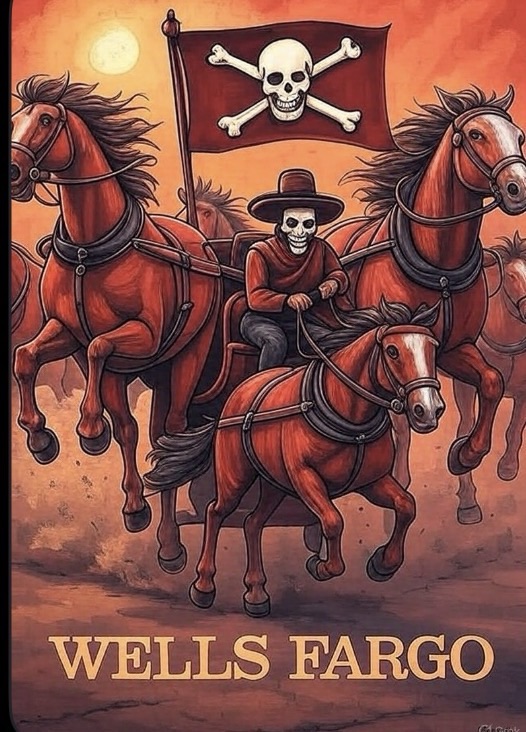
Banks like Wells Fargo did not get to be so big by their own power, there is a whole corrupt story that involves BlackRock, State Street, and Vanguard, and the Federal Reserve pumping a lot of printed money in the system that essentially gives public companies like Wells Fargo a pirate ship to attack the finance industry, while appearing to a media they largely control through advertising, to dress them up as good vessels.  Pirate ships used to perform this trick all the time: they would pretend to be a normal merchant vessel, then, just before they pulled up alongside another boat, they would hoist the Jolly Roger flag to scare the inhabitants of the ship they were trying to attack into surrendering.  And from there, the boat would be plundered for all its worth.  I see that happening to a lot of companies these days, especially after Trump was put back into office, which, based on the case I’m involved in, appears to be the motivating factor behind Matthew Akers’s statement.  I could have easily told him all about the aerospace industry and that he was incredibly wrong about his forecast in April of 2025.  But he wasn’t looking for the truth.  He was putting up a friendly flag to look helpful to the industry, to pull up alongside unsuspecting vessels to rob them.  That was the apparent purpose of his statement to the investment media.  And they thought they’d get away with it cleanly because they have for years, and have acquired more power, they believe, than our court systems can process.

There are a couple of strategies for why Matthew Akers and the people at Wells Fargo would make this prediction, knowing it was not the case.  2025 was projected to be a big year for the aerospace industry.  Trump was back in office.  The economy was poised to be red-hot.  And when people are happy and spending money, they fly to places.  Knowing a lot of people in this finance industry who are Democrat rats in disguise of pirates wearing suits, I would bet a lot of money that the purpose of the Wells Fargo statement to the industry was to attack the aerospace industry as a whole because they wanted to depress the incoming Trump economy.  If the Autopen president were still in office, I think the Wells Fargo forecast would have been the opposite.  And this is one of the primary reasons so many businesspeople are wishy-washy about politics.  They don’t want to be targeted by pirates who try to take over their business and industry.  So by depressing the industry, a large bank like Wells Fargo thinks it can actually shape politics.  And we see the same behavior wherever significant money is controlled by political radicals, such as in the pharmaceutical industry.  Only in aerospace, if you want to attack the military that Trump was to have access to, and the free flow of money into commercial aerospace because you want to protect the earth from the carbon footprint of a lot of new airplanes being built, you would if you could seek to tank the stock and harm the supply chain so that the industry would meet the expectations of a forecast that was not measured in real market value, but the strategic intent of the pirates involved at the front of the lending practices. 

Even worse than the political motivations is the ability to actually steal value.  In the case of the Wells Fargo April analysis, the mention was on the impact on Boeing stock, which a large bank’s opinion could greatly influence.  Such negative news could easily spark a mass sell-off and lower the price.  Only to have BlackRock, which owns a lot of Wells Fargo, sweep in and buy up all that stock for a very low cost.  And that money came straight from the Federal Reserve.  So we have a terrible game going on here that is really restricting a positive American economy and a global aerospace industry critical to Trump’s goals in the world.  In the case I’m involved in, the pirate ship is being fought; it was recognized well before they raised their pirate flag.  And the intention is to sink that pirate ship and bring disaster to all who are on it.  Ruthlessness has to be the means of proper conduct when its necessity is discovered.  But this practice isn’t unique; it’s common, and it is shocking how many court cases are spawned from this very behavioral practice.  These big banks have way too much confiscated power.  And Matthew Akers at Wells Fargo obviously is abusing that power for all kinds of political and financial reasons.  And the biggest threat to the American economy isn’t coming from foreign attackers, but from the banking industry that is entirely way too politically radicalized.  They keep their pirate flags lowered until it’s too late.  They pretend to be friends and helpful merchants.  But they are ruthless pirates by their conduct, and they intend to do anything to destroy positive financial growth in opposition to the politics they disagree with.  And in the case I mentioned, they went too far.  I know a lot more about the business of aerospace than Matthew Akers does.  So being wrong revealed a deeper problem, and it was easy to see in this case.  But often, nobody figures it out until it’s too late.  And if we want to have a good economy, we can’t let our bankers be more dangerous than Hamas. 

Rich Hoffman

Click Here to Protect Yourself with Second Call Defense https://www.secondcalldefense.org/?affiliate=20707

What’s Behind the $55 Billion Electronic Arts Deal: Fighting the new method of empire building by investment firms

War never went away; the idea of conquering another nation, or its inhabitants, in the way that Genghis Khan, Alexander the Great, Napoleon, Hitler, or even the modern communist movement did, persists.  All that really happened was that the nations of the world were neutered; however, the desire for conquest went underground and has since emerged in the finance industry.  Why did Napoleon invade Russia?  Because he wanted to rule over the largest empire the world had ever seen.  And so it is the same desire that a modern bank looks at a good, privately owned company and seeks to raid it, destroy it, and collect its assets for its own use.  Why did the Vikings raid other territories and kill all the men, and rape their women brutally?  To show conquest over them, to capture them, and rule over them.  And in the communist movement, the way to destroy capitalism as the world understands it is to control the means of production.  So, when people want to know why Electronic Arts suddenly wants to go private after being public for so long, and everyone is scratching their heads over the $55 billion deal, the largest of its kind ever, I’m saying this is a trend to prevent invasion, rather than to conduct innovative business.  Publicly traded companies have been vulnerable to radical leftist politics, which ultimately destroy their brands, so the trend of tomorrow is to maintain good old private ownership.  And this is something I am all too familiar with.  And most people don’t see it until it’s too late because the invaders are the types of people who work outside the rules of good business conduct.  And those rules are usually defined by what happens within the four walls of a business.  But the invaders are just as aggressive and malicious as any empire seeker ever was, and that power and desire for control starts with companies like BlackRock, State Street, and Vanguard, investment firms that run majority stock options to control the conduct of large companies that, in turn, control vast amounts of the population and their income. 

For instance, large banks like Wells Fargo have Vanguard, the investment firm, owning about 8% of their stock, BlackRock owns 7.9%, and State Street owns 4.1%.  Add them all up, and those huge progressive investment firms control a significant number of banks like that. We have seen very aggressive, woke policies embed themselves into those banking practices.  BlackRock isn’t shy about it; they are very aggressive about progressive politics, and when they own more shares of stock than the average 401K investor, they control the essential direction of the company, who they hire, and how they conduct themselves.  And it is that kind of menace that has essentially destroyed Disney as a company.  And they are doing the same to all large companies.  For instance, GE Aerospace has a nearly identical stock management portfolio, with Vanguard at 8.7%, BlackRock at 7.8%, and State Street at 4.2%.  See a pattern?  That translates to Vanguard controlling $27.4 billion, BlackRock $24.6 billion, and State Street at $13.2 billion.  Where did those investment firms get all that money to be able to buy up all that stock, and control that much of so many huge companies and banks, and to set policies of woke politics to steer them all in anti-American ways?  For Disney, it’s the same formula: Vanguard at $16.7 billion, BlackRock at $13.2 billion, and State Street at $8.2 billion.  Among the three, the same pattern emerges, and from there, power and control flow into every aspect of the industry.  The purpose of their enterprise was to control the means of production as Karl Marx envisioned it, and the method of achieving this was to be publicly traded. 

The crime of the century essentially started with the 2008 banking crisis, where the Fed began buying up a lot of bad debt. Through quantitative easing, the printing of money, they infused it into Wall Street, allowing people like Larry Fink to clean it up by buying up large companies.  To sustain the perception of value, they would clean up their portfolio by acquiring other companies and integrating them, attempting to conceal the inflationary trend of printed money that would lose its value on the open market.  It might look good on paper for everyone’s 401K plans, but what was lost as they imposed themselves on their conquered assets was the companies themselves.  This has become grotesquely obvious at Disney, where the public has rejected the new money-driven company in favor of Uncle Walt, who represented Main Street USA.  That vision was attacked by these big globalist bankers and investors who had the same motivations of invasion as any tyrant the world has ever seen.  However, the form of battle remains the same.  For those big companies mentioned, the conquered management hires people who facilitate the invading culture. Because of the nature of people to appease the powerful, they don’t question their reality so long as they can get a paycheck.  Who controls the paycheck, then controls the individual people.  But how did Vanguard, BlackRock, and State Street get all that money?  Because they printed it by gaining control of governments, such as the United States, through the Federal Reserve.  Whoever controls the money supply can theoretically control the world, on paper. 

I’ve been dealing with this kind of thing very up close and personal myself, and I’ve had to explain it to many hundreds of people over these last several weeks.  And most people don’t understand it because the invasion is happening on a vast scale that is even bigger than the management at those investment firms.  Larry Fink is aware of what he’s doing, to a point.  But it’s even bigger than him.  However, it’s no surprise that a giant video game developer would want to step off the publicly traded treadmill and seek to go private, where it can have better control over its management.  EA has been successful for a long time, but it’s challenging for a company to maintain its momentum once it matures, showcasing flashy PowerPoints and spreadsheets that demonstrate the kind of profit that keeps investors engaged.  And the big firms and their radical leftist politics need that cover of publicly traded companies to hide their influence over all these big firms.  So, it’s no surprise, especially now that the trend is emerging to see huge companies like Electronic Arts stepping away from the publicly traded scam.  This all became very clear to me as I watched an enormous bank do some really dumb things that made absolutely no fiduciary sense, but in the context of conquest as outlined by those top three investment firms and their global objectives.  It’s not the value of the companies themselves that they are after, but the need to hide their efforts behind real manufacturing that has not yet become encumbered by woke politics, and can still produce tangible goods.  Because those large firms are dealing with fake money printed by an out-of-control Federal Reserve, the value of the money means nothing to them.  But what that phony money can buy under the assumption of publicly traded companies does give them power that nobody else without that kind of access to the money supply can fight off.  At least for now, until more and more companies do as Electronic Arts is doing, and that is to step back into private ownership so that they can hedge away the influence of the liberal monsters of Wall Street, these practices will be a danger to any economy.

Rich Hoffman

Click Here to Protect Yourself with Second Call Defense https://www.secondcalldefense.org/?affiliate=20707

The Fed’s 2% Inflation to Lower Wage Rates: Micromanaging employers and causing quite a mess

There is a dirty little secret that the Federal Reserve has about its role in mass society that needs to be discussed in relation to interest rates and what it considers managed inflation.  The Fed recently met at its annual Jackson Hole meeting, and it reminded me of many things, particularly the time when my grandkids wanted chicken nuggets from McDonald’s and their dining room was closed.  We were in my RV, so the only way to place an order and collect the food was to use the drive-thru window, which I barely fit through.  The McDonald’s in Jackson Hole is very close to where the Fed meets against the backdrop of the Teton mountains.  For a tourist town with one of the largest concentrations of wealth in the world, it’s a small McDonald’s with a pretty small parking lot.  Certainly not RV friendly.  However, I managed to make it work with less than an inch on all sides of my vehicle, and it’s a story that has gained a lot of popularity in my family.  “Remember that time grandpa did this?”  And everyone says, “Which one?” because there are a lot of things to talk about.  The town itself is one of my favorites, and I can understand why all the bank presidents who are members of the Fed want to meet there to discuss monetary policy.  It’s a really good place to go and is America’s version of Geneva, Switzerland.  I think the Tetons are better, though.  So after the Fed meeting there, Jerome Powell indicated he was going to do what I said he was going to have to do, and what J.P. Morgan had been pressing for, along with President Trump, and that was the Fed was going to lower interest rates.  Not happily, but because they have to.  The economy is too good to hide phony interest rate profits for the banks behind artificial inflation numbers meant to frighten the world away from Trump’s presidency. 

However, there is another issue at play that we need to address regarding employment.  The Fed believes that in managing money, it must bake in 2% inflation per year because that is the only way to offset the erosion of wages that employers provide to employees, which dilutes the actual value of labor.  Because the Fed believes, which is one of the reasons for its existence, that employers will not incur the hard cost of paying employees less for their labor as they age and become less valuable.  Therefore, the Fed believes that it must step in and manage the economy because employers won’t do so on their own.  Often, when a company gets out of step with its cost structure, it has an obligation to reduce its costs, either through a reduction in force or wage cuts.  However, most employers are hesitant to lose their legacy talent and invest a significant amount of money in retaining them, when in reality, they should consider letting them go on the open market and replace them with cheaper and younger workers.  The NFL has to do this all the time with salary caps, which are imposed on teams to keep them fresh and relevant.  If a player wants to leave a team for more money, then that team can turn to free agency to replace that player.  If the market wants to pay a lot for that experienced player, they certainly can, but there is a salary cap, so that team won’t be able to pay a lot to other workers as well. 

That’s why we should operate in America with some gold standard, because value has to be protected. Instead of the Fed having the temptation to print more money, it would micromanage the economy with continuous infusions of cash, ultimately diminishing its buying power and hiding the inflation it creates in the process.  And try to hide it behind other economic conditions as a justification, which had worked until Trump came along and called the Fed’s bluff.  And because the Fed believes that free market pressures won’t manage the economy effectively, they have baked into all their assumptions about economic flow that they must micromanage employers who won’t trim their fat with inflated wage rates at their companies, as they fear losing talent to their competition.  So, the Fed bakes 2% inflation into everything.  That’s why, when reviews are conducted with employees, a standard minimum of 2% is required to maintain your wage value at the same level as the previous year.  The trick is that as you get older, you actually lose buying power in most cases because inflation eats up whatever increases you manage to get for yourself.  The goal is for Americans to earn less over their working years, not more, because the actual value of labor must be managed by the Fed, which introduces all kinds of problems, as it’s not really employers who are the problem.  That is just the excuse that the Fed applies to cover a lot of liberal politics, for which they are prone.  Labor unions, for instance, are very guilty of propping up wage rates that are artificially too high, which then feeds the Fed’s argument for mass micromanagement of the economy with incremental inflation to let people believe they are being paid a certain amount on paper, but in truth, the money is worth a lot less.  People don’t notice because it happens over time.  However, every three years, at a minimum, workers lose 6% of their buying power if they do not receive raises in their pay that are well above 2%.  To receive an actual 2% raise, employees would need to obtain a 4% raise with each yearly evaluation.  Which certainly isn’t the case for most people. 

Consider the problem at the McDonald’s in Jackson Hole that I mentioned, which had its drive-thru window closed due to the COVID-19 pandemic.  And the government was pushing for a minimum wage increase that inflated the real value for entry-level jobs, such as McDonald’s workers making $15 per hour, when the real value for their jobs is likely under $10.  When politicians interfere in the process of manipulating market values, the Fed must attempt to cover up the mess with interest rate hikes to conceal the inflation it creates, which often exceeds 2%.  Our goal with inflation should be zero, and if we held it to the gold standard, it would have to be.  These are the problems you get when you let pin-headed bureaucrats micromanage an economy with Marxist ideas instead of free market capitalism, and it’s a real problem.  So Jerome Powell knows all this and is reluctant to lower interest rates, even though all the parts of the economy that they usually hide behind at those Jackson Hole meetings are too good, forcing his hand.  So he’s not happy about it.  But a lot is coming that he won’t be pleased about.  There has been a significant amount of tampering that has impacted wage rates, and employers have not been the primary source of the issue.  It’s too much administrative mess that comes from the Fed, and short-term politicians who have caused all the problems.  McDonald’s workers, like the one in Jackson Hole, should not have employees making over $20 per hour.  Wal-Mart should not have employees making $20 to $25 per hour because all other labor has had to increase their wage rates to obtain workers.  But the money is all on paper.  People are not actually making those actual wage rates because the Fed has had to hide the impact through inflation.  And now they are being forced to lower interest rates, which will expose the whole mess.  Although the meeting in Jackson Hole might have been very scenic, it wasn’t enjoyable.  There will be a lot more to happen with monetary policy in the coming months.  And the Fed is going to lose a lot more control, as they very well should. 

Rich Hoffman

Click Here to Protect Yourself with Second Call Defense https://www.secondcalldefense.org/?affiliate=20707

Bernie Moreno is Doing Great as a Senator: The Fed interest rate should be at 2%, not 4

I am pleased with the work that my new Senator, Bernie Moreno, is doing in Washington, D.C. It’s almost a shame that Trump is doing such a good job that great people like Bernie Moreno are being overlooked amidst all the goodness.  But that’s a good problem to have.  Bernie, in particular, has been great at keeping up the pressure on the Fed, and specifically, Jerome Powell.  So, let’s answer a common question first: No, our Federal Reserve doesn’t need to be independent of politics.  That is the dumbest thing perhaps ever said.  That our political system needs to be separate from our fiscal policy is an entirely dumb idea that needs to be destroyed in our era.  The Fed’s independence is only suitable for one entity, and that is the banks.  It’s there for their protection and nothing else. And because of that assumption, banks and all financial institutions have gained way too much power in the world, and they need their teeth knocked out in substantial ways.  Old man Jerome Powell and all the rest who came before him at the Federal Reserve need a reality check, and I’m more than happy to see that Bernie Moreno has been leading the charge to reform.  Warren Davidson, my congressman, has also been excellent on this issue.  Criticism of the Fed is a very good thing, and here’s why.  I have recently received more education than I ever wanted regarding banking practices, and the more you learn, the more obvious it becomes that many of these banking types have been influenced by comfortable terms that have inspired very anti-American activity.  The way the Fed was created was outside our Constitution, and the belief over the years that it should be separate from other social concerns has only benefited banks by providing a stable environment for them, even if harm is being inflicted on the people who are voting. 

This idea that our elected government would not have direct control over fiscal policy is an absolute joke, but that has been the assumption.  When people say that Bernie Moreno, Warren Davidson, or President Trump should respect an independent Fed, they are smoking crack.  Currently, the economy is humming along nicely, with excellent job reports, energy costs coming down, and a significant amount of money being generated from tariffs. However, this activity has not had the intended effect of raising fears of inflation, as the Fed had anticipated.  Inflation, generally speaking, is when you have too much money chasing too few goods.  The Fed has been accused of printing too much money, which causes inflation to saturate the market.  The Biden administration had too many rules, which constricted market saturation for desired goods and services, leading to inflation.  Inflation is usually caused by standing in the way of human enthusiasm.  Price breaks occur due to market saturation, revealing the actual price that a person is willing to pay for a product or service.  You can usually figure that out if you have four fast food restaurants selling their version of a hamburger.  If you have only one, they can charge whatever they want for a hamburger.  However, if you have four places to choose from, then they must compete for your attention.  Therefore, when a government effectively removes barriers to market entry, a tangible value can be expressed.  However, when a government creates obstacles, we can say that we witness inflated values due to the restriction of that enthusiasm.  And that is precisely what the Fed is currently guilty of doing. 

Currently, the rates set by the Federal Open Market Committee, FOMC, are in the range of 4.25% to 4.5% which equates to about $600 billion of money generated for lenders.  Nobody is saying that banks and other financial institutions shouldn’t pay a fair wage.  Credit card companies make it extremely easy to spend money with the swiping machines and chips that we have today, where nearly every transaction for a mature adult is monitored by their computer systems, making it easy for all of us to spend money.  That is a valuable service, but it is currently being done at an artificially high rate because the Fed policy protects lenders at the expense of the public, the voters.  As Trump and Bernie Moreno have been saying, we are probably sitting on at least two interest rate points too high for what this Red-Hot American economy should be, holding back over a trillion dollars from money flowing into our financial system.  The excuse from Jerome Powell for keeping interest rates as high as they are is to keep inflation in check.  However, as it stands, the Fed has been contributing to inflation, rather than preventing it.  And that has been grotesquely obvious with their sinful relationship with BlackRock.  The Fed printed too much money, which was then distributed through Wall Street, as seen through people like Larry Fink, and this money was used to acquire companies, effectively taking away private ownership and control, which is why I have been discussing this issue so intensely.  The foundation of communism is to abolish the concept of private property, and the Fed has been facilitating the subversion of this foundation at the bank level in very detrimental ways.  And when we have tried to address it, we keep hearing that the Fed needs to be independent of political theater.  No, that’s only good for one party, the banks.

Trump’s approach to the economy has been brilliant.  Usually, we rarely find political figures who understand fiscal policy as well as banks do, so there is always an unfair advantage.  But in Bernie’s case, and Trump’s, they have had to slug it out with banks in the past and understand the games as opposed to the typical loser politician who has done nothing else in their life but get elected to a public position.  And once you know that the name of the game is to take away as much risk as possible from banks and to give them enormous power in the process, then the errors become very obvious.  If we got rid of Jerome Powell at the Fed and put in someone who truly represented the Trump administration, and would bring down interest rates into the 2% range, we would see wealth creation beyond the scope of what anybody thought previously to be possible.  And everyone would make a lot of money in the process, including the banks.  However, this 4.5% approach is excessively restrictive and primarily focuses on exerting power over the political process and securing international financing.  And no, the Fed doesn’t have to be independent of our elected representatives.  We need a monetary policy in America that is representative of the people, who seek representatives to run their government on their behalf.  And the Fed is only suitable for shielding international banks from the whims of political sentiment.  The only people profiting from these high interest rates are the banks.  However, in the process, they restrict economic output, such as having only one place to buy a hamburger, as opposed to four.  And if Powell wants to fight it out to hold his term to its close, he should feel the pressure that people hate him for artificially restricting their options.  Interest rates should be at 2%, not 4%.  And when that happens, the grip that socialism and communism around the world have on all this centralized banking will lose control over mass populations, and a real era of prosperity can begin.  And Bernie Moreno gets it, and I’m proud that he does.  The Fed stronghold is breaking, as it should.  And we are seeing the light on the other side, perhaps for the first time in all human history.

Rich Hoffman

Click Here to Protect Yourself with Second Call Defense https://www.secondcalldefense.org/?affiliate=20707

Banks Trying to Destroy Private Ownership of Businesses: The ruthlessness is in the rules, and is purposefully anti-America

It is a case that could have been taken off the script pages of the Yellowstone television show, but I have had a front row seat to it, and I’m sure there will be years of legal action in the aftermath, because there are so many bad things done by so many bad people that shaking hands and walking in separate ways at the end of it just won’t be possible.  But to answer a question I have had about why there is not enough private ownership of businesses these days, and to understand why so many companies have sought the shelter of being publicly traded, or to hide behind large staffs of a board of directors to shield themselves from the pain of private enterprise, my question has been are the banking practices we see today purposefully predatory, and the confirmation couldn’t be more explicit than with a Wells Fargo case I know about regarding a tech company in Northern Cincinnati.  I have spoken to everyone about this case, and it seems that a large bank like Wells Fargo would not intentionally engage in practices that are meant to essentially harm a business and bleed it dry for their own interests. This appears to break every fiduciary assumption that the finance industry would consider itself bound by.  However, I’ve spoken to people who have served on the Federal Reserve and been CEOs of local community banks, and they weren’t fazed by what they were hearing about big bank practices.  Which alarmed me, because what would normal people do in these kinds of situations, who own companies targeted by hostile banking practices to force them to sell so that they could take over the carcass for a value only they understand.  As I drive around Ohio, and see a lot of businesses that are now empty, how many of them fell that way through mismanagement, and how many were forced into that condition by banking policies that have written into their financial markets an absolute hatred of capitalism and a desire to punish private ownership through lending practices that were inspired by Karl Marx and has the same level of radicalism behind their management practices.

This is a more literal view of how society is actually structured. Rules just hide the bad guys from the world

It’s the same kind of logic that we’re currently experiencing with Trump in the White House, where the Fed has interest rates set between 4.25% and 4.50%.  The cost to the American economy is approximately $600 billion per 1%, so Trump would like to see interest rates lowered into the 2% range to stimulate the economy by over a trillion dollars.  However, the Fed doesn’t care about the people who vote; they represent the interests of their banks. With Trump’s red-hot economy, they want to make money off their investments, so the policy is set for them, not for the good of the country.  They are concerned about their long-term bondholders, the banks in general, and other creditors and lenders.  Nobody is saying they shouldn’t be making money off the services they provide, but in the case of the Fed, they have rates set too high to maintain their control over the market.  In their view, presidents come and go and can kiss babies and pat dogs on the head at holiday parades.  So long as they stay out of their breadbasket and keep financial management separate from political considerations.  And baked into all that is how many of these banks have become overtly corrupt, and even evil.  And feel untouchable to any political scrutiny.  I’ve read about plenty of stories, but with this Northern Cincinnati case, I had not yet seen it firsthand.  And what I have witnessed has been outrageously corrupt. 

Before you can have this, you have to stop the parasitic banking practices that are destroying everything in the background.

In the case of the tech company in Northern Cincinnati, the bank fell sideways with a CFO there and they essentially targeted the privately held company for collapse by withholding funds the company needed to run its business, audaciously insisting on spending huge fees onto a consulting firm that works for the bank to essentially steer the company over a cliff to destruction, not caring at all what might happen to all the customers that company had in the process.  And no amount of logic could be talked into those characters because they had a preconditioned outcome in mind that certainly did not support privately held businesses.  And that was when the policies of the big banks themselves were implemented to make it very difficult to maintain private ownership of anything, regardless of the company’s size.  Smaller community banks are, of course, the way to go if you can get them.  However, they have tight financial markers as well and are very prone to risk, so it’s another situation where monetary policy is one of the most significant barriers to inspiring business growth.  There is a hatred of private ownership that large institutions are keen to destroy for very political reasons.  The Fed person I spoke to thinks it’s just a fair in love and war condition.  However, as I have been involved in the story, it’s a clear case where the menace is written into the policymaking.  And suppose any society wants to have an excellent economy with private ownership taking risks to create jobs. In that case, there must be policies in place to prevent parasitic banking practices, which is the case with this Northern Cincinnati company and a large institutional bank.  They feed off risk takers in ways that punish the practice. 

When I tell the story to people, they assume, just as we do with the Federal Reserve, that the participants understand what they do to people, and that if they did, they would care.  That nobody is that overtly evil.  Yet, as interest rates are set to feed off the masses, a barrage of easy money, essentially, most people working in finance are not the kind who like to work very hard at anything.  So, they are parasitic in their fundamental work ethics and don’t like scrappy, privately held companies, because they don’t treasure such freedoms and feel perfectly justified in abusing their power for personal gain under the guise of following the rules.  The rules they created were designed to make it easy for them to be parasitic lenders.  And if the carcass dies, they sell it off and move to the next target.  And in that way, there is a Marxist fantasy that is unleashed in their hatred of private enterprise, which is ruthless.  And very scheming.  And all too common, which we don’t even know how to talk about, until we experience a case like this for ourselves.  In the case I’m talking about, I don’t think the bank understood the mess it was getting itself into, and many of the bottom feeders involved in these kinds of things, who are professional parasites, clearly underestimated the situation and are going to feel a lot of pain they could have avoided.  But to answer the question as to the ruthlessness of it, it’s evident that its quite common and that most companies undergoing the same level of hostility by a banking partner would never survive and that if we truly want an excellent economy in Ohio, and in the nation, that we are going to have to bust up these financial institutions with their anti-American, and anti-private ownership radicalism.  Most companies lack the kind of tenacity that has been present in this case.  But the question about methods couldn’t be more obvious.  And that there is a financial institution’s aversion to privately held companies is not something they want to protect, just as the Fed is guilty of setting interest rates at the cost to society in general, in defense of their interests.  Their approach is short-sighted and lazy.  And purposefully ruthless to feed the essence of their natures, which is the question before us.  What do we do with such people when we clearly can’t have them pacesetting our economy?  Because, if left to their own devices, they will maliciously destroy everything they touch. 

Rich Hoffman

Click Here to Protect Yourself with Second Call Defense https://www.secondcalldefense.org/?affiliate=20707

The Fed Was Always Illegal: Getting rid of horrendous preditory banking practices

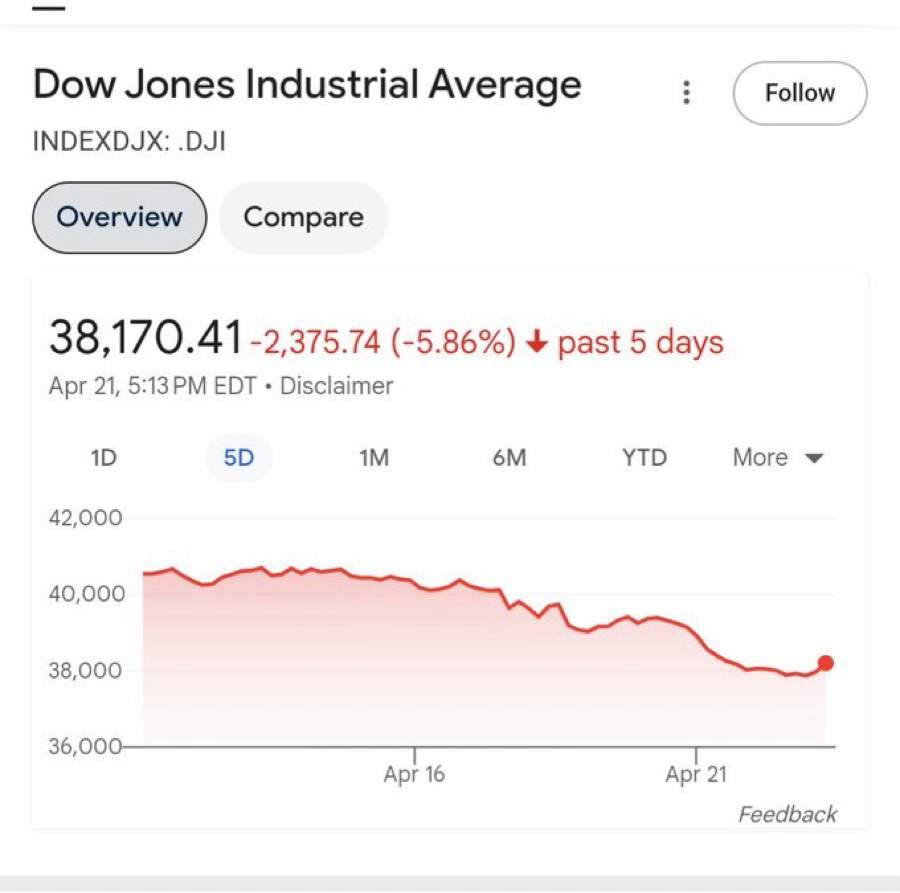
I keep hearing that the stock market lost over a trillion dollars in value on this particular day, or that the trade war with China cost them a lot of money.  For which I will tell you, the money was never real.  And remember something, he who owns the gold rules.  And we have all the gold.  China is a propped-up paper tiger, and they have been exposed.  And again, remember what they did to us.  They unleashed COVID from a lab in Wuhan.  The White House is willing to say it was an accident in an experiment they should never have done with Dr. Fauci.  But I would say that they did it on purpose during an election year to tamper with our election system, and to insert Joe Biden into the White House, because they wanted Trump out, and all this tariff talk during the first administration.  The stock market has largely been propped up with phony money from the Modern Monetary Theory movement of progressive politics, and the Federal Reserve made it all possible with unholy alliances with radical leftists like Larry Fink at BlackRock, to wash the money.  And the whole inflation game was caused by making too much money chasing too few goods.  This happens when you have an independent money manager in the Federal Reserve who thinks they get to run everything without having representatives who must answer to the public.  The only concession the Federal Reserve has made on behalf of centralized bankers is that they allowed a President to appoint a chairperson just to shut up the masses.  However, this is precisely what President Jackson warned about during his war with the banks.  You can’t have a representative republic that works correctly if you have an independent organization managing your money from the perspective of global, centralized banking.  It just doesn’t work, and never should have been applied.

Fake money by an illegal money management system

Trump appointed Jerome Powell, the current head of the Federal Reserve, during his first term, and Powell has turned out to be a disaster.  They essentially printed too much money to hide the bad Biden economy and washed it through Wall Street, making inflation in the process, then dug in because so many people have made investments in the phony profits that they dare not reveal their scam.  However, someone had to reset the clock to the real value, which is what Trump is doing.  Remember when the Dow Jones was under 18,000 before Trump’s first term, after 8 years of the socialist Obama?  They weren’t doing Trump favors with Fed policy during those years that propped up massive increases in stock values. Instead, they were trying to put the genie back in the bottle to regain control of the Executive Branch.  Because they were concerned that they tried to keep Trump out of office, but people elected him anyway, three times now.  When the Fed was created in 1913 at Jekyll Island, what happened to Trump was never supposed to occur.  What we saw was an attack on America coming from centralized banking, and they intended to run our country without ever firing a shot.  While it’s true that someone needs to manage our money supply, we should have elected representatives who do it, not some independent group of bankers who essentially control our country with monetary policy.  Jerome Powell turned out to be just as worthless as Janet Yellen and Ben Bernanke, all of whom have made unholy alliances with lefty radicals like Larry Fink at BlackRock since even before the 2008 housing collapse.  You cannot give a government the ability to print endless money to pay for ever-expanding government and expect everything to work out all right. 

The Federal Reserve was always a scam, and it should be removed in the form it’s in now.  We need to rethink the whole concept, so when Jerome Powell says it is illegal to remove him as head of the Fed, he’s essentially saying that the game is rigged so that no elected representative can manage them once appointed.  They are independent of civilian oversight.  And if anybody does tamper with them, they manipulate the interest rates, wreck the stock market on a whim, because they control the money that goes into it, and bring great pain to people who get in their way. If you have dealt with many bankers, most of them are pretty ruthless, horribly unethical, and power hungry.  Predatory banking is the theme of our society, just beyond the reaches of polite discourse.  If you recall Mr. Potter’s banking relationships in It’s a Wonderful Life, I would say that’s a rated G impression of the truth.  People who control monetary policy today are ruthless and generally unethical.  And they are filled with flat-out lying manipulators like Larry Fink.  He didn’t become so powerful because he was more intelligent than everyone else.  But because he was dumb enough to put himself as a middleman between centralized banking to wash money through quantitative easing and then buy up the assets of American companies through their boards to run them with woke politics.  And the Fed made it all possible.  So Trump needs to run Powell off his post.   Or, to make his life so miserable that he doesn’t want to do the job.  Most predatory bankers are nothing more than terrorists who play golf, rather than run around kidnapping innocent people and killing them like the Palestinians do with Hamas.  They are all the same.

The Fed was illegal when created, and it’s just as bad today.  And I say unlawful because it works against the Constitutional framework the Founding Fathers of America intended.  Even though monetary policy was not explicitly defined in our Constitution, it should have been.  Centralized bankers worldwide found a workaround legally, which is why the Jekyll Island meeting happened in the first place.  I’m not going to say that it was a vast conspiracy; I think the Jekyll Island participants wanted to do what they thought was right from their perspective.  But it was the wrong thing to do, and the Federal Reserve should never have been created.  It was a mistake that put our country’s fate in the hands of predatory banking.  And we had to stop the cycle at some point in time, and that is one of the reasons we elected Trump.  That’s also why these tariffs will work: they force value where value actually resides and take the power of centralized banking away from them to determine winners and losers with propped-up phony money printed to saturate markets with bad fiscal policy.  They printed money and drove up your 401K plans to shut you up while they stole your country from you.  And now we are taking it back, and they violently oppose it.  Which we would expect them to do.  But don’t think you have to appease the Fed to have a good life.  They should never have been in charge of the financial policy of free people because that freedom is an illusion.  And they are losing that ability during this Trump administration, and it’s about time.  I think our government needs to eliminate the Fed completely and rethink monetary policy.  Someone needs to manage our money supply.  However, they need to be elected and managed by the public through elections.  They are not independent of government management, so they can rule in the background to manipulate the whole thing with phony money.  We have to put an end to it all which is what we are in the process of doing presently.

Of course, I’m not writing this for a general audience, but for those who know who they are and can help with the situation.  With all this talk about Jerome Powell spending tens of millions of his own money to defend the Federal Reserve from questions coming out of the Trump administration, the key to that battle is in the complicity of the Fed and their policies on Modern Monetary Theory, which they deny, but are very guilty of.  And their relationship to BlackRock and what BlackRock has done with the money provided by the Fed through horrendous monetary policy.  They are guilty and they know it.  And they can’t defend that guilt, so they will do whatever they need to do to divert people’s attention from the real matter.  So don’t allow them to set the terms for the battle, take it away from them, and keep the focus of the discussion on what they are most guilty of.  And let them choke on it. They won’t win in court.  The Fed is guilty during 2008 of losing control of its balance sheet, by buying up bonds to fund deficits and using BlackRock to clean the money through Wall Street.  The balance sheet in 2008 was $900 billion.  By 2022, it grew to $7 trillion.  Ladies and gentlemen, that is a purposeful mismanagement of the US monetary system and criminal neglect by any definition.  And that is where the real fight is, and of course, to wash his hands of the complicity, Jerome Powell will spend millions of his own money to defend himself in court because his only hope is to go on offense and attack the attacker.  But he is as guilty as guilty gets.

Rich Hoffman

Click Here to Protect Yourself with Second Call Defense https://www.secondcalldefense.org/?affiliate=20707

Larry Fink: The President of the World and power of the new country, BlackRock–as created by the Fed

Here’s the problem with the Federal Reserve, and it goes back to 1913, when after many attempts at centralized banking, the Fed was created to handle monetary policy.  And it hasn’t been an experiment that worked, it simply ushered in a communist approach to banking that was aligned with a progressive invasion of the United States at the turn of the last century, and essentially the policy of the Fed has been to cover up its many mistakes over that entire duration.  I am not so much of an anti-Fed guy.  I think a country needs to manage its money supply.  But letting the banks form a partnership with the government has been disastrous, and the ultimate form of that destruction was in the creation of Larry Fink, the most dangerous man in the world.  Larry Fink would be nobody if not for the Fed.  Jerome Powell, Janet Yellen, and Ben Bernanke used reckless quantitative easing to print endless amounts of money and pour it into Wall Street, where people like Fink would flow it into the economy.  And the net result of that scandalous activity has made BlackRock, the company Larry Fink manages that controls around a ten trillion dollars of assets, the most politically active company in the world, and Larry Fink is far more powerful than an American president, even to the point where this unregulated power can then control elections and policy that superseded the American constitution in dangerous ways.  By printing phony money and giving it to people like Fink to manage, the Fed gave the government power it never would have had otherwise, and now the results are out of control.  Most of the bad things we are seeing now in the political world are because of Larry Fink, his connection to the World Economic Forum, and a leftist radicalism that is being imposed on people that they would never vote for. 

People are starting to get it when these are the discussions on the Joe Rogan podcast, which discussed this topic recently.  People are now seeing how out of control this Larry Fink thing is.  Larry Fink, because of BlackRock and the way the Fed made it powerful with Modern Monetary Theory, and that it now manages the money in China, as the only money manager that can do so, is essentially the president of the world, ruling behind the scenes and imposing politics that is far removed from any representative form of government.  This was a hostile takeover using Larry Fink as the figurehead to do what people like Napolean, or Genghis Kahn, the legendary figure in history, known for his conquests and his role in founding the Mongol Empire. He was a skilled warrior and a brilliant strategist, and his military campaigns changed the course of history. Despite his reputation as a ruthless conqueror, Genghis Kahn is still remembered as one of the most influential figures in world history. Alexander the Great similarly comes to mind.  Larry Fink is right there with the rest of them. Still, he was not a warrior; he was a person willing to carry the water of the shadow government running behind the Fed. This corporate alliance sought to take power in the world, and they made their move by propping up Larry to be that new world conqueror.    

And you conquer this new world by not taking over countries.  You ignore the politics of nations, take away the people’s will, and take control of where they work, how they spend their money, and on what.  Larry wanted to be in politics during college and just happened to be in a position to acquire wealth through Wall Street.  He only had success once he was willing to partner with the Fed after the housing collapse of 2008.  But what risk was there really when the Fed was ready to print infinite amounts of wealth and pump it into Wall Street through Larry and his friends?  The writing is certainly on the wall with this one, much more dramatic than in Nebuchadnezzar’s time, the attackers planned the downfall of America, and the plan was to cover it all up before people realized it with Central Bank Digital Currency.  It was a different kind of war which Fink has been talking about in his letters to CEOs, such as the one in 2022, “In consultation with our stakeholders, BlackRock has also joined the global effort to isolate Russia from financial markets, the ramifications of this war are not limited to Eastern Europe, they are layered on top of a pandemic that has already had profound effects on political, economic, and social trends.  The impact will reverberate for decades to come in ways we can’t yet predict.”  Then ultimately, Fink finished up his address by saying, “As I wrote in my letter to CEOs earlier this year, (2022) access to capital markets is a privilege, not a right.  And following Russia’s invasion, we saw how the private sector quickly terminated long-standing business and investment relationships” to implement political objectives.  I’ve read all of Larry’s dumb letters to CEOs each year and always thought of him as a fool.  But he’s a very politically active fool who was given the power of money through fake monetary Fed policy to take global military power through the private sector to bypass the actions of war generally regulated to countries to play out. 

That is why Larry Fink, the very left-leaning political activist that nobody voted for, is directly connected to the radical Marxist activism of the World Economic Forum and was given the power by the Fed, which is also connected to the World Economic Forum, and strategies by China for global communism is the most dangerous person in the world.  He now manages most of our 401K plans and conquers us by capturing wealth, part of his leftist ideology, whether we like it or not.  And now that BlackRock is the majority shareholder of most American corporations, he has taken away the average shareholder values and converted them to ESG-driven stakeholder values.  And at some point, people will be furious at Larry Fink and the Fed.  But they hope that before people figure out what they have been doing, America will be on a digital dollar, and they can hide their scam behind the push of a button where a centralized authority will control all value for all money.  So while the world looks at the conflict in Ukraine, the potential conflict in Taiwan by China, or the latest missile flight in North Korea, the real fight has been by BlackRock, led by Larry Fink, to take over the world’s supply of money, and to place it in the hands of the real threat in the world, the World Economic Forum.  And because we are all a little complicit in the action because of our money management, we tend not to look at it in favor of a more classic interpretation of war.  But those wars no longer matter.  The real fight is with finance, who controls it.  Larry Fink is now more powerful than any president in the world, and he knows it.  But he didn’t get that way from well-fought battles as a master strategist.  But because he was willing to be the bag man for the Fed, which is a power they never should have had in the first place. 

Rich Hoffman

Click to buy The Gunfighter’s Guide to Business