The Depopulation Agenda: Attacking the creation of a family is at the center of a military attack against the intentions of God

It’s interesting how we tend to compartmentalize these things in modern culture, shoving them into neat little boxes so we don’t have to confront the bigger picture. You hear the debates about sexual roles, the push for alternative lifestyles, abortion rights, and the whole pride movement, and the proponents of secular thinking immediately label any critique as “just Christian right-wing hysteria.” They pack it away in that tidy category, dismiss it as outdated prejudice, and move on. But if you step outside your normal circle—talk to people at the soccer game with your grandkids, chat at a bowling alley birthday party, or strike up conversations at a baseball game—you start to see how crazy and lunatic the underlying agenda really is. It’s not isolated social progress; it’s a coordinated deep population movement designed to remove humans from the Earth, and it’s been hiding in plain sight for decades.

I’ve been working on this for a long time in my book The Politics of Heaven, which I just finished the first revision of—140,000 words or so at the moment, and I’m proud of how it turned out. It fills a void that polite society has left: the theological sector where these discussions used to live has been sidelined, so we struggle to wrap our minds around their true intentions. This isn’t just a human thing. It’s a hatred against the creation of God, playing out through vile characters and obsessive pursuits of righteousness and destruction that echo the apocalyptic warnings in prophetic writings from the Second Temple period. Biblical scholarship shows us that these ancient texts weren’t abstract—they grappled with spiritual forces manipulating humanity, and that same dynamic is at work today. 

Take the pride stuff, the transsexual advocacy, the gay rights push, and the celebration of alternative sexual lifestyles. On the surface, it’s sold as liberation and happiness, recognizing people for who they are. But peel back the layers, and you see it’s facilitating a depopulation agenda. Same-sex relationships, by their nature, don’t produce children. When you decentralize sex from the institution of marriage and turn it into a centerpiece of personal identity—making 90 percent of someone’s human experience about sexual preferences—it becomes like building your whole life around liking a particular wine. It’s silly, limited, and exactly the strategy to keep people from forming families. I’ve had difficult conversations with my own grandchildren about this as they enter that age, and I watched my children in their thirties navigate the social experiments pushed by MTV and the culture club era. Back in high school in the 80s, being gay wasn’t something you talked about openly. Some people lived that way, and I’m not advocating harassment or poor treatment—that’s not a proper way to deal with anybody for any reason. But it wasn’t paraded as the defining feature of life. Sexual lifestyles were private, meant for the commitment of marriage between a man and a woman, to perpetuate the human race as God intended from the Garden.

Now, it’s reckless and casual, swinging into multiple partners, no dedication to building anything lasting. The need for sexual relationships among humans is fundamentally about continuing the species. Anything advocated as an alternative—whether it’s same-sex, polyamory, or the hyper-focus on individual pleasure—is anti-family at its core. It’s an assault on the institution of marriage, which Scripture presents as a beautiful reflection of God’s covenant with creation. The same voices pushing abortion are the ones championing these lifestyles: they want God out of the classroom, the Ten Commandments out of courtrooms, and Christianity marginalized because their intent isn’t freedom—it’s using people to fulfill an anti-God agenda that destroys families and prevents the perpetuation of human beings.

Look at the corporate landscape for proof. Disney and Marvel invested heavily in this world politics, sliding same-sex relationships into Star Wars characters and celebrating them in films and shows. They gambled that people would accept it, but it hasn’t landed the way they hoped. Audiences feel uncomfortable; box office numbers for projects heavy on that messaging have suffered, and parents notice when influencers and entertainment make sexual experimentation the priority for kids in their twenties—the prime years for building families with energy and dedication. Instead of sacrifice for children, it’s endless self-focus, delaying or skipping parenthood altogether. By the time someone sorts through the confusion from public education and peer pressure, they might be in their mid-thirties, past peak fertility, with eggs running low and careers consuming the time that should have gone to raising the next generation. It’s a strategy, plain and simple: confuse sexual roles, tie it to bizarre directions like abortion on demand, and erode the family so humans don’t repopulate the Earth. 

This ties straight into the deep population movement. Global fertility rates have plummeted—from about five children per woman in the 1950s to around 2.2 today, with many developed nations well below the 2.1 replacement level needed for stability. In places like South Korea and parts of Europe, projections show it dipping below 1.0, leading to shrinking populations, aging societies, and economic strain.  The causes get debated—education, women’s careers, urbanization—but underneath is a cultural shift away from family-building. And who’s been advocating it? The same progressive ideology that worships the Earth over humanity. Look back at history: Thomas Malthus warned of overpopulation in 1798, sparking fears that led to eugenics in the early 20th century. Margaret Sanger, founder of what became Planned Parenthood, had ties to those ideas, pushing birth control partly to limit “unfit” populations, including through the Negro Project aimed at Black communities.  Paul Ehrlich’s The Population Bomb, published in 1968, amplified the panic, influencing environmental groups and policies that framed humans as the problem. It’s Earth worship at its root: to save the planet, reduce the people. Abortion becomes a tool, pride lifestyles another—anything to curb birth rates.

But here’s where it gets spiritual, and why The Politics of Heaven had to tackle the politics of the spirit world interacting with living people. These aren’t random human trends. The agenda traces back thousands of years, likely millions, with roots that may not even originate on this planet. The obsessive pursuit of destroying evil and warnings in Second Temple apocalyptic literature point to fallen entities manipulating humanity against God’s creation. It’s a cult ritual migrated across cultures: same voices against God in schools are the ones normalizing reckless sex outside marriage. They recognize that committed families produce children who carry forward the divine mandate to “be fruitful and multiply.” Disrupt that, and you erode the foundation.

I talk broadly to people because if you stay in your bubble, you miss how maniacal it is. At a grandchild’s event, you hear parents worried about influencers pushing this on kids. Music from Boy George and Culture Club in the 80s started subtly normalizing it—flamboyant, androgynous styles that MTV beamed into homes—but it was still somewhat contained. Now, it’s mainstreamed as identity, not private preference. The result? Declining birth rates aren’t just statistics; they’re symptoms of a war on the human race. Families take tremendous effort—sacrifice, dedication, the work of young vigor. Divert that into individual lifestyles, and the population drops. It’s anti-God fulfillment: destroy the creation to worship the Earth instead.

Thankfully, the trend is turning. People aren’t buying the offerings as easily. Corporate pushes like Disney’s have backfired in some ways, with audiences rejecting the overemphasis. But we have to call it what it is: a weapon of war, an ancient ideology aimed at erasing humans from the face of the Earth. It’s not about ridiculing individuals caught in these lifestyles—that’s not the point. Many are products of peer pressure and confusion. The real crime is elevating sexual lifestyle to the center of the human story when it’s only a minor part. The strategy behind it is the depopulation agenda, a cold ritual to prevent repopulation and family perpetuation.

In The Politics of Heaven, I lay out the receipts in detail—the hows, whys, and what to do from here. It’s not bullet-point politics or theology in isolation; it’s a narrative connecting spirit-world entities to modern manipulations. The book proves this isn’t personal belief or partisan rant—it’s observable across cultural lines. For those uncomfortable saying it out loud, it’s okay to admit: advocating reckless, anti-family paths is an attempt to erase God’s creation. We treat it as the malicious scheme it is, because the future for our grandchildren depends on rejecting it. The institution of marriage and family was meant to bring heaven to Earth. Anything attacking that is the opposite and should be considered a weapon of war against our culture.

 Footnotes

¹ Global fertility trends and demographic data.

² Disney/Marvel representation timelines and controversies.

³ Historical population control and eugenics links.

⁴ Second Temple apocalyptic scholarship overview.

Bibliography for Further Reading

•  Roser, M. (2014). “The global decline of the fertility rate.” Our World in Data.

•  Fauser, B.C.J.M., et al. (2024). “Declining global fertility rates and the implications for family structure.” Human Reproduction Update.

•  Wikipedia contributors. “Disney and LGBTQ representation in animation.” (Ongoing updates on examples like America Chavez, Phastos in Eternals).

•  Sanger Papers Project. “Birth Control or Race Control? Sanger and the Negro Project.” NYU.

•  Ehrlich, P.R. (1968). The Population Bomb (for historical context on overpopulation fears).

•  Hahne, H.A. (Various). Works on apocalyptic literature in Second Temple Judaism.

•  Hoffman, R. (Ongoing). The Politics of Heaven manuscript (your own forthcoming work for the full spiritual/political framework).

•  United Nations Population Division. World Fertility Reports (latest data on global TFR declines).

Rich Hoffman

More about me

Click Here to Protect Yourself with Second Call Defense https://www.secondcalldefense.org/?affiliate=20707

About the Author: Rich Hoffman

Rich Hoffman is an aerospace executive, political strategist, systems thinker, and independent researcher of ancient history, the paranormal, and the Dead Sea Scrolls tradition. His life in high‑stakes manufacturing, high‑level politics, and cross‑functional crisis management gives him a field‑tested understanding of power — both human and unseen.

He has advised candidates, executives, and public leaders, while conducting deep, hands‑on exploration of archaeological and supernatural hotspots across the world.

Hoffman writes with the credibility of a problem-solver, the curiosity of an archaeologist, and the courage of a frontline witness who has gone to very scary places and reported what lurked there. Hoffman has authored books including The Symposium of JusticeThe Gunfighter’s Guide to Business, and Tail of the Dragon, often exploring themes of freedom, individual will, and societal structures through a lens influenced by philosophy (e.g., Nietzschean overman concepts) and current events.


The Rich Hoffman Definition of Good and Evil: How to Make Heaven on Earth and Defeat the Bad Guys

It’s that time again; over the next year or so, many things will make you question life itself and whether or not all this is even worth it.  The temptations of evil are and will be overwhelming, as they always have been, and many people will fail to arrive intact to their eternal satisfactions.  I talk about good and evil a lot, which I am very interested in discussing.  And I always intend to stay true to do good in the world, no matter the temptations.  Yet to do that, you have to have a perfect definition of what evil is and what it isn’t so that the good work of good can be done.  To that point, the old movie The Never Ending Story, I have always thought, did the best job of talking about the nature of evil.  Because without good definitions for things, it is easy to become lost in chaos, and evil proliferates under those conditions.  So, what is it, and why should we not like evil and fight for good?  What’s the purpose of any of it, especially since it’s so hard.  Well, the eater of everything in the movie Never Ending Story was the “Nothing,” sort of an all-encompassing consumer of everything, like a black hole in the imagination.  Something that “doesn’t exist.”  At all.  And the Bible is nearly entirely dedicated to this examination, the fight for good against the temptations of evil.  The pantheon of gods that Yahweh is fighting and trying to save humanity from is quite a vicious struggle that often gets lost after the opening pages of Genesis.  Why was god so furious with Baal and the gang of Mesopotamian deities who inhabited the land of Canaan explicitly?  An even better question is, why should people care if a public school board turns the other way when pedophilia is on the minds of the administrators and other employees?  Or care about the massive crimes of the Biden administration?  Without a good definition of evil, evil grows and consumes everything, which of course, it wants to do.  The only thing that can stop it is righteousness rooted in a desire to do good.  And the first thing evil does to destroy good is to destroy the definitions of goodness, which is undoubtedly the problem of our modern times.  But to put it simply, evil cannot exist without good to suck off of for its own sustenance.  In the beginning, there was no evil.  Evil only arrives as a byproduct of free will and the decisions of thought to produce or destroy.  Something has to exist first to have any consideration, so evil will always be a parasite of good.  Not an entity onto itself. 

So I’m happy to provide the Rich Hoffman definitions of evil because it works and will do quite a lot to destroy evil in the world, which is a hobby of mine.  I don’t think I enjoy anything more than destroying evil.  I do sincerely love it.  I wouldn’t want to do anything else.  But that is because of my definitions of good and evil and the nature of evil.  So essentially, going back to the Book of Genesis, God said let there be light, so there was, and our story begins.  Something was created, and it was good.  Good, by definition, is a value judgment given to something that is created.  The intentions of the powers of creation in human culture could be said to be good.  Now relative to other people, they may not like the product or have different opinions on its value.  But in essence, creating something with the imagination of human intellect, we could say, is to mimic the acts of God at the beginning of creation, and the universe views the process as “good.”  Evil is committed when something attempts to undo that creation or hinder that creative process.  Evil is all about destruction; it is the anti-creative force.  Something that tries to destroy that which is created. 

The ultimate form of evil in the world is laziness.  Someone who doesn’t want to create and desires to destroy the creations of others because they don’t want to live up to a high measure set by the excellent work of others.  To me, it is evil to do bad work or not work at all because they deny the world the acts of creation from the human intellect.  Drug use is wrong because it seeks to blunt the effects of human thought.  Financial scams are bad because they seek productive enterprise rewards without the actual effort of wealth creation.  And AI is wrong because it seeks to think for people who otherwise should be performing the work of a feeling being.  When someone wants to cheat because they are too lazy to do something, under my definition, they are committing evil because they don’t want to do the work of thinking.  And at the most primal stage of existence, the review was the purpose of creating human beings in God’s image.  We were meant to do on earth what was in heaven.  We were told to make heaven in the world and expand God’s kingdom.  The fall in the Garden of Eden was a tragedy more about the nature of free will than what the temptations of a snake could provide through eating the fruit from the Tree of Knowledge of Good and Evil.  To do so was to be like the Gods, and that was not the point; the various forces that conspired to work against Yahweh in the Divine Council since before the beginning of time itself, which was a creation in and of itself to the excellent work of good in the universe, against the forces of nothingness too lazy to do anything else but consume the world around them for their sustenance.  Adam and Eve were supposed to know better and maintain heaven on earth to continue good.

With that definition in mind, then why am I against public schools?  Isn’t that trying to destroy something made by the government to educate children?  That is the mask of evil in how it tries to contort reality.  Public schools are designed to eliminate the mind of children and make their natural ambitions toward goodness unachievable, and, hinders their creative process making them agents of evil by the time they grow up.  Which I consider reprehensible.  And along that line of thought, why should we care about pedophilia, especially in public schools?  It is a very evil thing to do to a new and growing mind to rob it of its individual will toward goodness, to grow up to be productive and creative, and to expand the fruitful nature of the universe through heavenly output.  A ruined person in the form of an adult who has made many mistakes in their life has no right to rob a young person of their full potential.  Evil has no right to destroy the efforts of creation from the mind of the good. Suitable as a product might be relative to the beholder, but the process itself is good by the needs of an ever-expanding universe and is the point of all existence.  And the lazy way out of a troubled life is to consume from others what they couldn’t do for themselves, either by stealing virtue or innocence before a mind is fully formed and can act on its own accord.  That is why pedophilia is evil, public schools are wrong, drug dealers are horrendously bad, and a lazy employee is detrimental to all existence.  That is why we should all fight for good and destroy evil wherever it presents itself.  Then, of course, the world will be a much better place.

Rich Hoffman

‘The Richest Man in Babylon’: Real wealth creation in Ohio won’t be possible until it’s a ‘Right to Work’ state

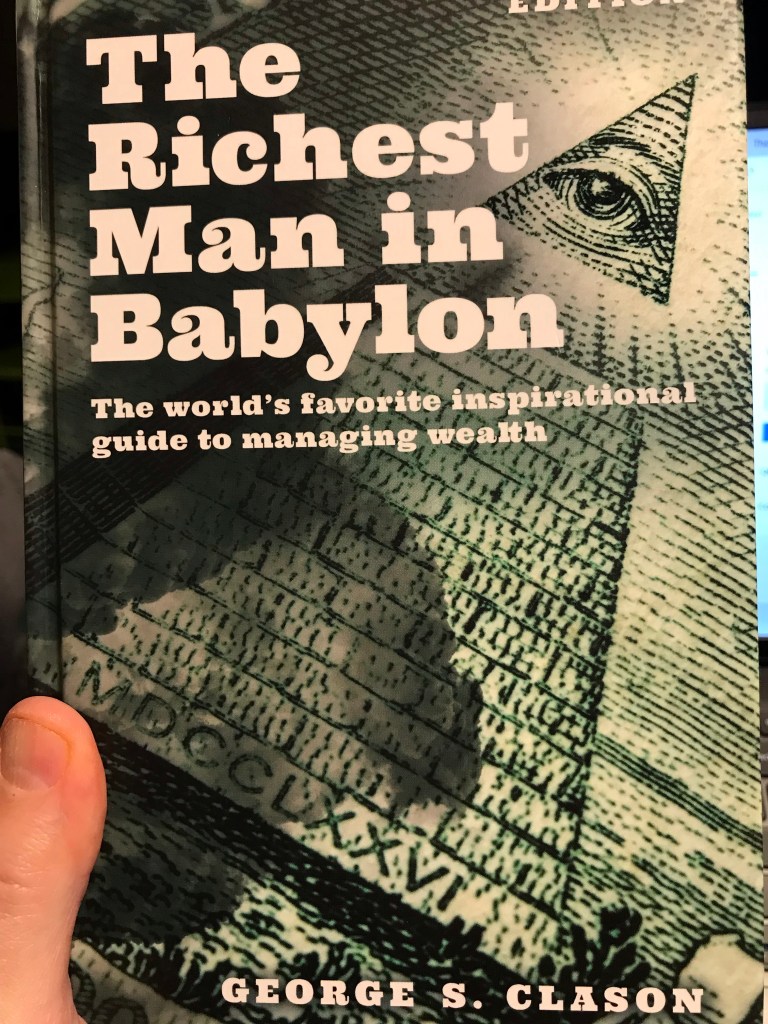
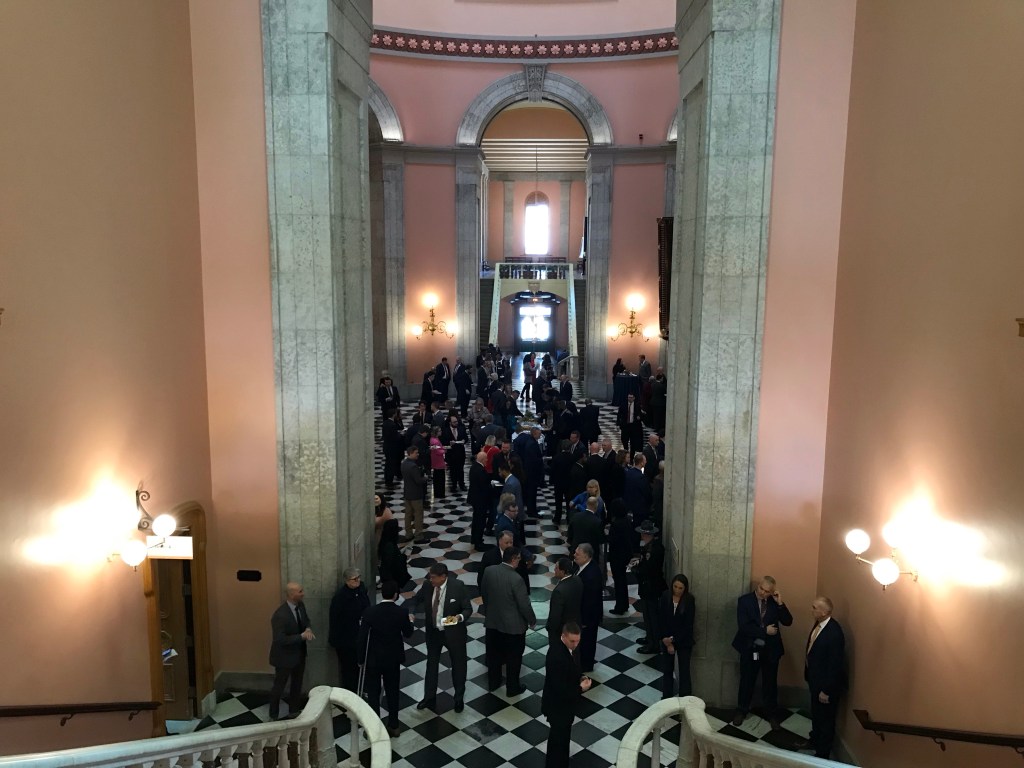
Whenever I go to Columbus, Ohio, I have a few bookstores that I go to every time. I consume a tremendous number of books, about three large books a week. If they are smaller, under 200 pages, I read five or six. It’s probably my favorite thing to do in the world, and I often read very early in the morning, between 3 AM and 6, and after the hours of 7 to 11 PM. Between those hours, I work hard, really hard. And reading settles my mind and keeps everything from fragmenting. On the weekends, I usually read for around 8 hours daily, starting around the same time and ending around noon. Then I spend the rest of the day with my family doing whatever comes up in those engagements. But it had been quite a few years since I last read The Richest Man in Babylon, published in 1926. I read it in my twenties, so I thought it was odd that while I was talking to people at the Capitol during the Governor’s State of the State speech for 2023, I was sitting in the gallery waiting for everything to start when a person made a great effort to sit next to me and ask me to sign a copy of that book. It was a nice paperback copy that  was a miniature version that could fit easily in the jacket of a nice suit. This person told me he was a fan of my blog, recognized me because of my big white hat, and wanted me to sign his copy of the old George Clason book. So I signed it, and he was very happy about it. He sat down near me, and before we all left after the speech was over, he came over to shake my hand again enthusiastically before departing back downstairs, where all the members of the Representatives and Senate were gathering in the rotunda to have lunch with Governor DeWine. 

I’ve signed many books over the years, but they are usually the ones I have written; it’s not usual to sign other people’s books. But the more I thought about it, the more it made sense as I talked to various legislators at the after-event. Once I left the Ohio Statehouse later that day and visited my bookstores, I bought a modern copy of that book and reread it later that evening to connect with that enthusiastic personality. After my talk with everyone that day, it all made sense. If you have not had exposure to that very famous book, The Richest Man in Babylon, it’s typically found in the business section of a bookstore and is a foundation for how wealth is created. It takes place in Babylon to take the edge off any modern references, but the idea is that wealth is created by effort, and it is beneficial not just to the people who have the wealth but to their community as well. If we have a society of many people who have created wealth for themselves, we will have a better society. It is very much the opposite of this “tax the rich” culture that we get from the various socialists and communists embedded in our American culture these days, which has become much worse under the economic policies of Joe Biden and Democrats in general. And when you get behind the scenes, away from the cameras and newspaper reporters who never cover significant political events correctly like a Governor’s State of the State speech, wealth creation is the number 1 concern because it’s the thing that makes everything in society go. 

One of the big topics that emerged from Governor DeWine’s State of the State speech was the effort to bring businesses and jobs to Ohio and that there would be spending investments to do so. But on the checkered floor of the Statehouse were lots of discussions about how exactly to do that. And I love these kinds of discussions. Some people see lobbyists, corrupt politicians, and maniacal lunatics when they talk in those places. Yet, I generally see the kids all these adults grew up to be trying to do something good from their own perspectives with the same enthusiasm that kids build new things with Lego toys. No matter the political ideology, I find everyone eager to conduct some version of a childhood dream of saving the world one law at a time. And you don’t get that unless you get the chance to be behind the scenes and talk to people who are actually making the sausage. I usually come away from those events encouraged. But the efforts typically fall short because the real problems never get dealt with.

And regarding Governor DeWine’s efforts to bring more business to Ohio, the truth is that we can spend all the money we want. But until Ohio is a Right to Work state, the big multi-billion-dollar investors will not bring their big corporations to Ohio because of their fear of labor unions taking over the management of their facilities. Ohio will continue to lose opportunities to South Carolina and other places until we join them in becoming the Right to Work states that protect business investment from the socialist encroachment of the labor union movement, which never should have been allowed in American politics. To understand these basic economic truths, I would recommend everyone to read The Richest Man in Babylon and come to your own conclusions. But until people have a basic understanding of wealth creation, it’s a pointless debate with the kind of communist labor union advocates who think that the value of labor unions is in more sick time, the 40-hour work week, and weekends and holidays off. All those things mean less productive work, less output, and more paid time off for a company trying to make things.  

The sum of many conversations on that topic was that Right to Work was dead in Ohio until President Trump returned to the White House, and likely longer because Trump likes labor unions. In his big MAGA party, labor union members have been voting for Trump. So suddenly, we have friends in the Republican Party from the labor movement, and nobody was going to dare push those friends away at the expense of dividing voters away from Trump. And Governor DeWine, for all those reasons, had no stomach at all for Right to Work discussions. But eventually, and not decades away, but just three or four years, Ohio will have to be a Right to Work state if it wants to be the next Silicon Valley in a 21st-century economy, which I think is entirely possible. Ohio is a great place to live and work. The business corridors between Cincinnati and Columbus, and Columbus to Cleveland, especially on the east side, and even all the way up from Cincinnati and Toledo, are some of the best in the world. There is room for plenty of country living and rock-and-roll businesses that create vast wealth for everyone involved. But what’s preventing that investment isn’t a lack of input from the state to develop the infrastructure to do it; it’s the protection of investment from those looking to do so from the greedy hands of the communist labor movement. Nothing kills wealth-building faster than a labor union. It might get union members paid off days where they don’t have to work, but it doesn’t help a country be competitive while the rest of the world in Asia is working seven days a week, 24 hours a day, for a rice cake. And that is what we are competing with. Ohio needs to be a Right to Work state, and the sooner it is, the quicker real investment into Ohio can begin. Until that happens, speeches like the Governor’s State of the State are just enthusiastic dreams that are held back by reality. 

Rich Hoffman

Click to buy The Gunfighter’s Guide to Business