Opening Day Chaos in Cincinnati: Soft on Crime, as Sheriff Jones says, doesn’t work

I remember the excitement building every year for Opening Day in Cincinnati—the way the city comes alive with that classic American spirit, the parades, the fireworks, the packed stands at Great American Ball Park, and the hope that this season might finally be the one for the Reds. It’s always been a slice of pure Americana, a festive ritual that draws families, friends, and fans from across the region to celebrate baseball and community. But on March 26, 2026, that celebration turned sour in ways that left the city embarrassed once again. What started as a joyful gathering spilled over into chaos at The Banks, the riverfront development nestled between Paycor Stadium (formerly Paul Brown Stadium for the Bengals) and the ballpark itself. Large, unruly crowds led to fights, pushing and shoving, disorder, and violence that forced police to shut down the entire area early, deploying officers with riot shields, nonlethal shotguns, and pepper spray to disperse the masses.  

Seventeen people were arrested amid reports of altercations not just at The Banks but spreading to nearby spots like Over-the-Rhine, Fountain Square, and Washington Park. Businesses that had planned late-night hours had to close prematurely, their owners cooperating with the Cincinnati Police Department to clear the pedestrian plaza and restore order. Videos circulating online showed crowds swarming officers, people falling over one another amid the chaos, and isolated brawls breaking out even as the game itself unfolded. The Reds lost their opener to the Boston Red Sox, adding to the disappointment, but the real sting came from the streets outside—robberies, beatings, and a general breakdown that turned a family-friendly event into something ugly. It wasn’t isolated to one spot; it rippled through downtown, a stark reminder that large gatherings can expose deeper fractures when control slips away. I watched it unfold through reports and conversations with friends still tied to the area, and it hit hard because I have a personal history with Cincinnati that goes back decades. 

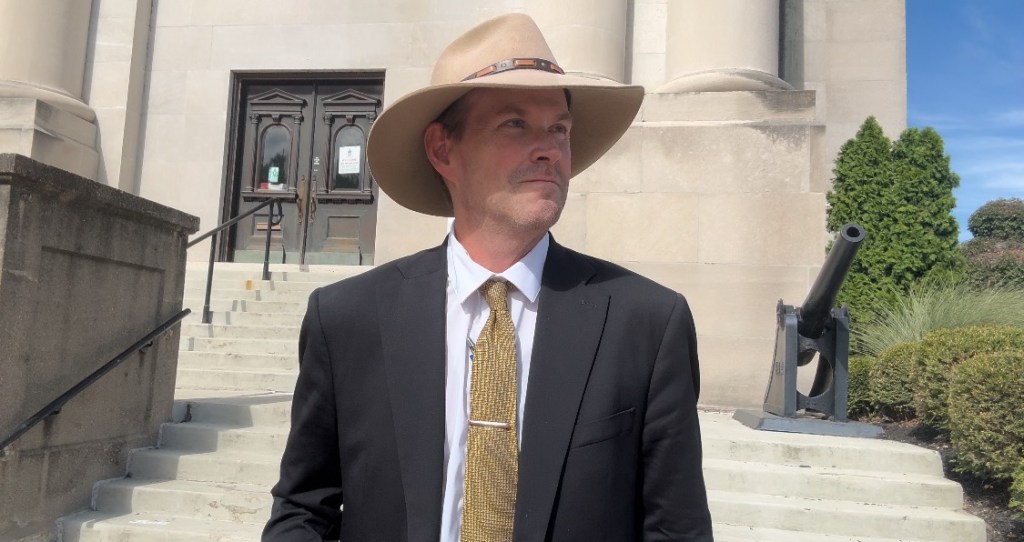
One of the clearest voices cutting through the noise came from my good friend Sheriff Richard K. Jones of Butler County. He’s a no-nonsense lawman whose straightforward style has made him a popular figure far beyond Ohio’s borders—folks tune in to his updates from all over because he doesn’t sugarcoat things. In statements around the time of the incident, he and others highlighted how soft-on-crime approaches can embolden disorder, pointing to patterns of leniency that allow problems to escalate when crowds gather. I’ve known Sheriff Jones long enough to trust his read on these matters—he runs a tight ship in Butler County, where commitment to enforcement means residents can feel safe going about their lives, even late at night at a gas station. That contrast with Hamilton County, where Cincinnati sits, is night and day. There, the approach has leaned too soft for too long, and when crowds gather, as they did on Opening Day, a few sparks turn into mass chaos. 

I’ve seen this pattern up close because Cincinnati isn’t just a place I visit—it’s where I lived for a stretch of my life, including time on the University of Cincinnati campus. Back then, in my younger days, I got to know the downtown scene intimately, rubbing shoulders with mayors, city council members, and commissioners through various projects and conversations. I understood the politics, the backroom deals, and the long game of urban development. In fact, I was part of the team that helped pitch the very Banks project that now stands as that gleaming riverfront gem. This was in my 20s, long before I turned 50, when the idea was still a set of raw sketches on paper and ambitious dreams of reconnecting the city to the Ohio River were still coming together. Paul Brown Stadium wasn’t even built yet—it was still on the drawing board—and the riverfront was a different beast entirely, cut off by highways and underused land. 

Our pitch wasn’t some fly-by-night scheme. It took years—nearly a decade of lining up stakeholders, developers, and the inevitable negotiations with a city council full of Democrats who, in those pre-“woke” days, could still sit down and hammer out compromises when investment dollars were on the table. The vision was straightforward: revitalize the riverfront, build apartments, restaurants, retail, and public spaces to draw people in, create jobs, and foster pride of place. The belief was that if you invested in the physical environment—fixing up the banks, attracting businesses, and creating a vibrant mixed-use neighborhood—people would respond by treating it better. New residents and visitors would benefit, upward mobility would follow, and the whole area would lift itself. We weren’t naive about the challenges; Cincinnati had its history of economic shifts, industrial decline, and the usual urban tensions. But the data and the drawings we presented showed promise: connect the river to downtown, leverage the stadiums, and watch the transformation. 

The roots of this effort trace back to the 1997 Central Riverfront Urban Design Master Plan (building on earlier concepts from the 1990s), which aimed to transform a fragmented riverfront of parking lots and underused land into a cohesive public-private destination. Groundbreaking for The Banks occurred in April 2008, amid the onset of the Great Recession, with Phase I opening in 2011 and featuring apartments and retail. Subsequent phases added more residential units, commercial space, the AC Hotel, and connections to the National Underground Railroad Freedom Center and riverfront park. It represented a massive public-private partnership involving the City of Cincinnati, Hamilton County, and developers like Carter and The Dawson Company. By the time it matured, The Banks had become a hub of restaurants, businesses, and events—a genuine civic achievement that took patience through bureaucracy and economic headwinds. I remember sitting in city council chambers with the mayor and investors, reviewing renderings that captured exactly what stands there now: a pedestrian-friendly plaza, views of the river, and an energy that makes Opening Day feel special. The developers delivered on the promise, and for a while, it worked. Families strolled, fans gathered, and the riverfront felt reborn.  

Yet here we are in 2026, watching that same space devolve into disorder on what should have been a highlight reel of Americana. The gap between the vision and the reality isn’t about bricks and mortar; it’s about the human element that was underestimated back in those planning sessions. What they didn’t fully anticipate—though some of us sensed the undercurrents—was how certain policy choices and cultural narratives could undermine the very progress we were building. Over the years, Cincinnati’s leadership, often aligned with Democrat priorities at the city level, pursued approaches that emphasized social mechanisms over individual responsibility. Mayors and councils maintained a sometimes-strained relationship with police unions, opting for policies critics describe as soft on crime. This isn’t ancient history; it’s a thread that runs through decades of decisions in Hamilton County, where the city proper sits, including post-2001 riot reforms, collaborative agreements with the community, and ongoing debates over enforcement versus social explanations for crime.  

I’ve watched this play out from my perspective, having stayed connected through old contacts even after moving on. In dense urban settings, people often find comfort in collective energy and group dynamics—the camaraderie of crowds, the ability to blend in as one more face in the throng. This environment can lend itself to advancing ideas through mass momentum rather than individual scrutiny. In contrast, those who prefer more personal space—a fence for privacy, room to breathe, the freedom to drive a short distance without constant proximity—tend to favor different living patterns. These cultural preferences shape how communities form and how policies resonate. In urban cores, political strategies have sometimes involved mobilizing large voting blocs, including minority communities, around shared narratives. When those narratives emphasize perpetual underprivilege or systemic barriers without equally stressing personal agency and upward mobility, they can foster a sense of discontent that persists across generations.

I’ve seen the cycle of victimization through my interactions in the region. It’s not unique to Cincinnati; similar dynamics appear in other Midwest cities where high-crime neighborhoods grapple with the tension between opportunity and grievance. Decades of approaches that prioritize group empowerment through collectivism while downplaying individual responsibility didn’t always build the self-reliance we hoped the Bank’s investment would encourage. Instead of residents fully embracing the new development as a ladder for climbing—earning enough to enjoy those riverfront spots—some carried affiliations and instincts shaped by longer-term patterns. When large crowds form on festive days like Opening Day, with its draw of disenchanted youth alongside older participants, a few instigators can turn the energy into mob behavior: ganging up, beatings, theft. It’s not every person, of course, but enough to derail the night for families and fans who expected safe, wholesome fun. The arrested ranged in age from 14 to 50, illustrating how these issues span generations. 

The last major flare-ups saw leadership respond with statements emphasizing accountability while also noting the challenges of policing large events. Yet critics, including law enforcement voices, argue that consistent leniency—quick releases and an emphasis on social factors over swift consequences—sends mixed signals. In Butler County, Sheriff Jones’s office demonstrates a different model: firm enforcement paired with community presence that deters rather than excuses. Hamilton County’s prosecutor and officers, I’ve known, share that commitment when supported, but city-level dynamics have sometimes constrained them. The difference is palpable: residents in one area can go about their daily lives with greater confidence, while those in the other wrestle with recurring disruptions.

This isn’t about assigning blanket blame; it’s about examining how ideas and policies translate into street-level results. Soft-on-crime stances—reduced emphasis on certain prosecutions, strained relations with police, or framing disorder primarily through external excuses—can create environments where chaos festers, especially when paired with cultural stories that discourage personal accountability. When combined with narratives that keep people anchored in feelings of victimization, crowds become pressure points where group dynamics justify acts that would be unacceptable individually. The 2026 Opening Day chaos, with its fights, resistance to officers, and shutdown of The Banks, exemplified that risk. Businesses and families paid the price for what should have been a celebration. 

Looking back on my time in my 20s, pitching alongside those developers, I remember the optimism. We drew up plans to bridge the river and connect to downtown, making the area a point of pride that would draw high-income earners, families, and tourists alike. The stadiums were anchors, the Freedom Center a cultural draw, and The Banks the connective tissue. It took patience—slow-walking through bureaucracy, aligning public funds with private capital amid economic challenges. But it happened, and for years it delivered that vibrant experience. Opening Day should embody safe fun, community pride, and kids enjoying the day without fear. Instead, the 2026 version left fans disappointed on the field and disrupted off it, with national headlines focusing on the disorder rather than the game or the setting.

Those arrested weren’t random; reports described a mix of ages and backgrounds amid the unruly crowds. Many fit patterns that are shaped by long-term reliance on public systems and narratives that frame individuals as perpetual victims rather than agents of their own mobility. They weren’t typically aligned with policies that emphasized self-reliance, the rule of law, and personal space. The embarrassment runs deep because Cincinnati is a nice town at its core—river views, sports heritage, hardworking people. But when leadership fails to maintain consistent boundaries, when mayors and councils prioritize other considerations over robust partnerships with police, the vulnerabilities show. Sheriff Jones and similar voices are right to call it out—they’ve proven that committed enforcement yields safer communities.

I’ve reflected on this a lot since the incident, drawing from my insider view of the Banks’ origins. That project wasn’t born in a vacuum; it was a deliberate bet on human potential meeting opportunity. The belief was that nicer surroundings would breed better behavior, that economic infusion would break cycles. What we missed—or what later policies and cultural shifts exacerbated—was how certain victimization rhetorics, paired with collectivist approaches, could keep segments of communities anchored below the line of full mobility. It turns festive crowds into pressure cookers where “mass movements” sometimes justify impulsive acts. The result? A once-promising development becomes a stage for the very problems it aimed to solve, embarrassing the city and saddening fans who came for Americana, not chaos.

This isn’t fatalism. Cities can course-correct—through stronger, more consistent partnerships with law enforcement, policies that balance accountability, and investments that pair infrastructure with cultural encouragement of responsibility and mobility. Cincinnati has the bones: a revitalized riverfront that took decades to realize, stadiums that draw millions, and a baseball tradition that’s pure Americana. The shame of Opening Day 2026 should serve as a wake-up call, not just for locals but for anyone observing how enforcement approaches and culture play out in real time. People involved that night owe it to the community to reflect. Excuses about external classes or quick releases only risk perpetuating the cycle. True progress comes when we teach responsibility alongside opportunity, when policies deter harm while supporting those willing to climb.

As someone who helped lay the groundwork for The Banks all those years ago, I feel a personal stake in seeing it thrive without these recurring embarrassments. The developers delivered; the vision held. Now it’s on leadership and broader culture to match that investment with clear expectations of civilized behavior. Sheriff Jones and others calling it out are right to do so—they’ve shown the alternative works. For Cincinnati to reclaim its Opening Day magic, it needs to reject cycles that undermine agency and embrace the ethos that builds sustainable communities: space to grow as individuals, rules that stick, and pride that lifts everyone without excusing harm. That’s the Americana worth celebrating—not the disorder that overshadowed it in 2026.

Footnotes

¹ Cincinnati Enquirer, “Over a dozen arrested in Opening Day ruckus,” March 27, 2026. Details arrests and shutdown of The Banks.

² FOX19, “17 arrested over ‘unruly’ behavior at Cincinnati’s Opening Day,” March 27, 2026. Covers charges including disorderly conduct, assault, and resisting arrest; ages 14–50.

³ WCPO, “Cincinnati police: 17 arrested amid Opening Day ‘disorder and violence,’” March 27, 2026. Reports on crowd behavior and police response with riot gear.

⁴ The Banks Public Partnership, “History of The Banks,” official timeline. Outlines development from the 1997 Master Plan through the phases opening in 2011 and beyond.

⁵ Wikipedia / The Banks, Cincinnati entry. Confirms the mixed-use nature between Paycor Stadium and Great American Ball Park, groundbreaking in 2008.

⁶ Central Riverfront Urban Design Master Plan (2000). Details the public planning process begun in 1996–1997, aimed at reconnecting downtown to the riverfront.

⁷ Riverfront Redevelopment Return on Investment report (2019). Discusses public-private partnerships, infrastructure, and economic context for The Banks.

⁸ New Yorker, “Don’t Shoot” (2009). Provides historical context on Cincinnati’s 2001 riots and subsequent policing reforms/collaborative agreements.

⁹ The Atlantic, “How Cincinnati Fixed Its Broken Police Department” (2015). Analyzes post-riot reforms and their impact on crime and community relations.

¹⁰ Mayor Aftab Pureval statement via FOX19 and LOCAL12, March 27, 2026. Describes the events as “an outrage” and calls for accountability while praising coordinated police response.

¹¹ Interim Chief Adam Hennie’s statements were reported across Enquirer, WCPO, and WLWT. Notes resistance from crowds and difficulty reaching victims.

¹² Butler County Sheriff’s Office communications and related commentary. Sheriff Jones has long emphasized enforcement priorities contrasting with urban approaches.

¹³ Additional context from Governing magazine and other analyses on Cincinnati’s community policing evolution since the early 2000s.

Bibliography

•  Cincinnati Enquirer and WCPO live coverage and articles on the March 26–27, 2026 Opening Day disturbances (multiple reports cited above).

•  The Banks Public Partnership official website: history and timeline sections.

•  Central Riverfront Urban Design Master Plan (Urban Design Associates, 2000).

•  “Riverfront Redevelopment Return on Investment: 1997-2019” (Hamilton County Special Project Counsel report).

•  Historical analyses: The Atlantic (2015), New Yorker (2009), and Governing magazine pieces on Cincinnati policing reforms.

•  FOX19, WLWT, and LOCAL12 are reporting on arrests, the mayor’s response, and police actions.

Rich Hoffman

More about me

Click Here to Protect Yourself with Second Call Defense https://www.secondcalldefense.org/?affiliate=20707

About the Author: Rich Hoffman

Rich Hoffman is an aerospace executive, political strategist, systems thinker, and independent researcher of ancient history, the paranormal, and the Dead Sea Scrolls tradition. His life in high‑stakes manufacturing, high‑level politics, and cross‑functional crisis management gives him a field‑tested understanding of power — both human and unseen.

He has advised candidates, executives, and public leaders, while conducting deep, hands‑on exploration of archaeological and supernatural hotspots across the world.

Hoffman writes with the credibility of a problem-solver, the curiosity of an archaeologist, and the courage of a frontline witness who has gone to very scary places and reported what lurked there. Hoffman has authored books including The Symposium of JusticeThe Gunfighter’s Guide to Business, and Tail of the Dragon, often exploring themes of freedom, individual will, and societal structures through a lens influenced by philosophy (e.g., Nietzschean overman concepts) and current events.

The Dinosaurs Will Eat You: More killings in Over-the-Rhine, in Cincinnati

It has been a sick experiment to watch, but the continued denials about the nature of the big, violent fight in downtown Cincinnati recently, in attempting to show that it was a racist incident, and that the white people had it coming, was the attitude.  While just a few blocks to the north in Over-the-Rhine, there were back-to-back killings in an area that Cincinnati has been trying to reform for years into an economic zone.  The shootings on one night, just a few days after the music festival fight at 3 in the morning, involved one guy, 35 years old, who was shot to death in his car just north of Liberty Street by a person in the car with him.  He was shot in the chest, head, and other places violently by a shooter dressed all in black who left the scene.  The next night, a young woman, 34, was shot many times in the back by someone shooting out of a car in a particular direction, just a very short distance away from the previous shooting.  Police say it was an accident, that she was not the intended target.  The shooter was shooting at someone else and accidently hit her.  She was shot 15 to 20 times, which is an awful lot for an accident.  But these shootings received very little national attention because they were all people of color killing each other.  But they display a much bigger problem that has been brewing in the background for many years, and is the reason that President Trump has federalized the police in Washington D.C.  Many cities are suffering through this problem and Cincinnati has been getting national coverage for how poorly race relations are in a town that is supposed to be ideal throughout the nation.  This is a much bigger problem than the fight that has received so much coverage, and there has been an attempt by many involved to justify it.  The bar is so low because of the mass killings that go underreported, that if people live through a brawl like we witnessed, the expectation is that everyone should be thankful.

The two killings point to a much more violent Over-the-Rhine than the City of Cincinnati wants to advertise.  However, that is nothing new; I have warned many people over the years about the dangers of creating an enterprise zone in that region to provide economic stimulus.  I have informed two mayors and many other politicians over the years about the risks of redeveloping Over-the-Rhine into a commercial millennial hotspot, comparing it to Jurassic Park.  The dinosaurs will eat you; they can’t be kept in a cage on adjacent streets to Vine Street, as it runs through Over-the-Rhine.  That’s what I would say to everyone I described the situation to.  And it wasn’t a skin color kind of thing; it was behavior acceptance, and I would know well.  I used to buy my car tires from a place that would change them on Liberty Street, right in the vicinity of these recent shootings.  I used to do a lot of rough work, and I drove a kind of tank that always had its tires destroyed because I would frequently enter rough neighborhoods. As a result, I would buy $5 used tires all the time.  My perspective was not one of isolation, looking at everything from the suburbs.  I spent a lot of time in the belly of the beast, and when I say that the people there are like dinosaurs, that is to say that they behave like animals hungry for the destruction of other people with a kind of mindless violence that erupts suddenly and brutally.  It’s almost amusing to watch the nightly news attempt to humanize these stories, making them more relatable to people not living in Over-the-Rhine. 

I have a couple of daughters, and would hear their stories and stories of all their friends who enjoyed the mystery and rawness of visiting OTR as it was sold to the world as an enterprise zone, hoping to lure young millennials to come downtown to see their many restaurants and microbreweries.  I would tell them that if they had to go, they should ensure they carried their guns.  One of my daughters practically lived in the OTR for a few years, and she always took her weapon, and it’s probably the only reason she has survived all those visits.  Police have managed to keep Vine Street somewhat reasonable regarding crime up to Liberty Street, then over to Findlay Market, and Music Hall.  However, I know many people who have tried to go to the OTR to socialize with other hipsters, and they have had many horrible experiences.  I warned my daughters, and eventually they understood my concern; the idealism of youth wore away as they realized the harsh reality that everyone else was facing.  The dinosaurs will eat you if you go into the OTR.  Most people feel lucky to come away from the OTR with just a car that occasionally has its windows knocked out, and carjackings or theft would happen all the time.  Because of the political sentiment at the time for white people to prove they weren’t racist and would be happy to socialize with black people in Over-the-Rhine, people would take the risk to visit as an almost thrill to survive.  It was more exciting than just going somewhere in the suburbs and having drinks with friends.  Because going to the OTR proved that white people weren’t racist to black people, even if in proving it, they risked their lives. 

The truth of the matter is that many of the people who have caused the problem have attempted to introduce dangerous enterprise zones into these communities without changing their behavior.  And the police know who’s in charge.  The police likely know everything about those two shooting cases mentioned, but they don’t want targets on their backs, so they leave the shootings unresolved.  Likely, they were both gang-related and or drug-related directly.  And police have no prospect of getting control.  The unions don’t want the trouble.  Recruiting is horrendous because nobody wants the job.  And the political characters are unsupportive and wholly disconnected from reality.  Investors were suckered into proving they weren’t racist by investing in businesses along Vine Street north of Central Parkway, only to realize that the violence loomed just a few blocks over on all sides, especially north of Liberty Street.  As a dare, I once walked up Vine Street at 2 AM from Central Parkway to McMillan Street on the University of Cincinnati campus, and from what I saw, there is no saving the people in that region without a significant behavioral change.  Crime ran the zone, and no amount of love from people moving in and proving they weren’t racist by living alongside people barely able to function as animals changed anything.  Crime goes underreported, even mass killings, because everyone wants to believe they can tame the dinosaurs.  And they can’t.  The dinosaurs will eat anybody they want, any time, and in any place.  And that’s the kind of attitude that was confronted on the streets of downtown Cincinnati after that music festival.  There is an entitlement to violence that is validated every time some gang kills someone in Over-the-Rhine, and that level of violence has been accepted.  Because liberal society doesn’t want to admit to itself just how bad it is, it wants to believe that reform is possible.  And it isn’t.  Only law and order will work, and that starts by kicking in the doors to the people who did these killings and arresting them, prosecuting them, and probably giving them the death penalty.  Because anything less, they don’t and won’t respect.  They reside in the shadows of the night, awaiting more politicians to lure innocent people into their neighborhood to rob and pillage ruthlessly.  And they have nothing to fear, because they don’t fear anything, especially the law.  When people ask me why my carry gun is a Desert Eagle .50 caliber, I have a lot of experience in those kinds of neighborhoods.  And it’s the only thing they understand.  The only law they obey.  And it is the only way that reform in those crime zones can bring about peace.  All the police and politicians know it, but nobody dares say it.  And that’s why the crime continues.

Rich Hoffman

Click Here to Protect Yourself with Second Call Defense https://www.secondcalldefense.org/?affiliate=20707

Racism as a Weapon of Marxism: The violence in Cincinnati was about more than name calling

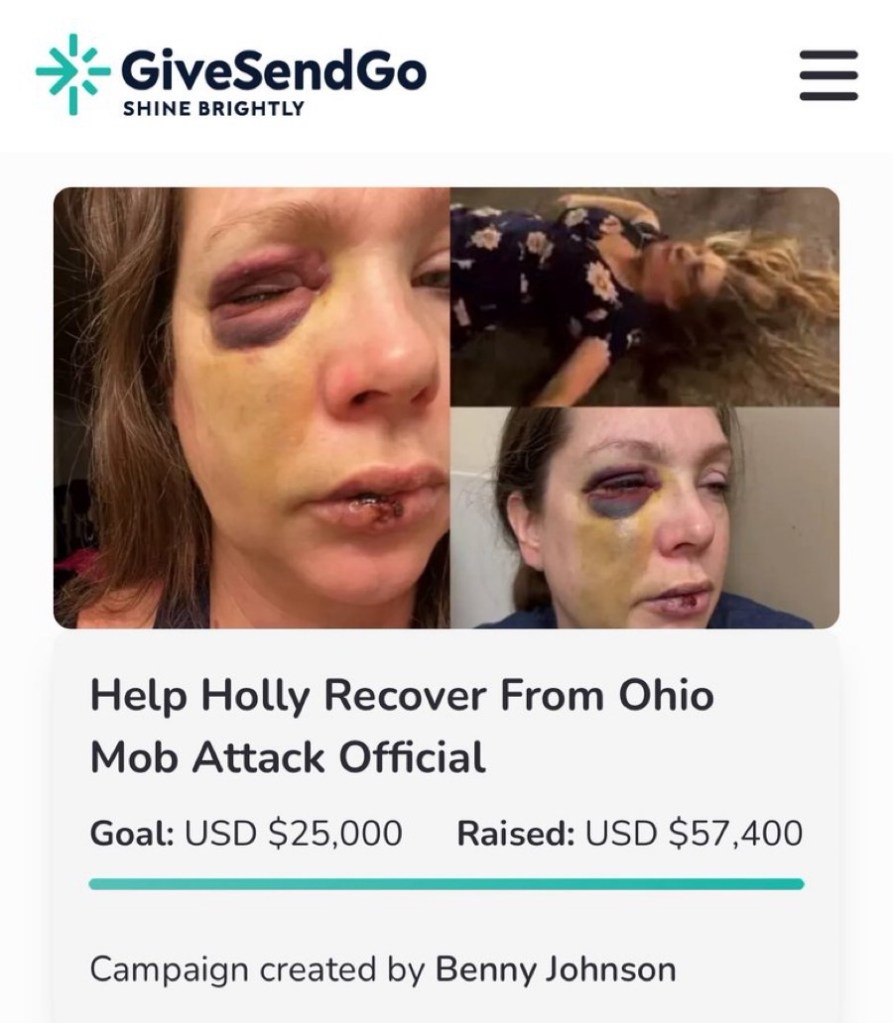
There is a lot wrong with what the mayor of Cincinnati, Aftab Pureval, did after the fight that broke out in the streets after a music festival that became a grotesque example of violence from minority communities.  And the reason for it was perfectly uttered by city councilwoman Victoria Parks, who said in the aftermath, “They begged for that beat down!  I am grateful for the whole story.”  Regarding some white victims of a horrible beating, where a mob of attackers consolidated on them ruthlessly.  A young woman by the name of Holly ended up sucker punched and knocked cold in the middle of the street, leading to what everyone already assumes: it’s dangerous for white people to walk around downtown.  Otherwise, they might get attacked like these people did after a music festival.  And they might not live through the encounter.  The whole incident has brought up something much worse that needs to be discussed, and that is how Marxism has been taught in these communities of color to destabilize capitalism in America and how they have hidden it behind skin color to always have a destabilizing element present to undercut American society.  It’s not a matter of skin color that is the problem; it’s what people believe and how racism has given them a victimized status that is always ready to advance elements of socialism to a cityscape environment, to destabilize it.  As the city leaders were getting vast amounts of criticism from Senator Bernie Moreno, Vivek Ramaswamy, Jennifer Gross, and many others, they dug in even deeper on the mob rule elements and justification for the beatings that took place on July 26th in the small hours of the morning.  It doesn’t matter what camera angle you look at; there was no justification for the mob that broke out to do what they did, because it wasn’t about words and feelings.  What they did intended permanent harm to the victims and was brutally hostile in its intent. 

There are very few people who get called as many names as I do.  Most of the people I know dislike me for some reason or another.  They might be nice to my face, but behind my back, they hate me very much and call me every name in the book, and even some in books that have never been written.  So I can say authentically that no amount of name-calling justifies the violence that we saw in Cincinnati.  It doesn’t matter what anybody said to anybody; nothing justifies a fight at that level. Remember, sticks and stones?  People would do well to teach that to young kids in school once again.  Instead, political movements like what we have experienced from Democrats have sought to use victimization status to weaponize entire groups of people, preferably by color, into doing their work of radicalism in overthrowing American society.  The things people say to me are that people wouldn’t say such nasty things about me if I fought people more.  But the truth is, I care so little for what people think of me that I don’t waste time on it.  To get violent with someone to convince them to change their mind, you have to care what they think, and I just don’t.  And for the people of color to react to something that a group of white Russians said to them that they believe provoked this level of violence, they would have to care what those white people thought of them to get upset about it.  I never get upset when people call me names because I don’t care what they think. 

And as far as conflicts, and I know Vivek Ramaswamy thinks this way as well, there is no reason to fight people with violence when you can destroy them with debate.  If you have to resort to violence to get your point across, you have already lost.  As I tell people who criticize me for my lack of engagement with my enemies, I say it’s because forcing someone to think something out of fear of a beating is an dishonest exchange.  I would rather want to know what they believe than to beat them into submission to make them think what I want them to.  The best tool for convincing people to accept your way about something isn’t to win them over the head with pain and suffering, but to convince them that what you think is in their self-interest.  So when there is violence like this, there is a lot wrong that indicates a very unhealthy society.  And racism isn’t the problem.  Racisim is the weapon of the Marxist movement in America that has been trying to advance socialism and communism in communities of color to use their lack of judgment to build armies on the street to drive through fear a social discourse, such as, white people aren’t welcome on the streets of Cincinnati, especially after dark unless they appease the tribal chiefs of the community like visitors from a foreign land.  Never forget, it was Republicans who freed the enslaved people, who fought a civil war to free people of color.  Democrats were fighting to keep people slaves, and that is still a problem, because people of color are still serving the political efforts of Democrats.  All the problems of this fight are Democrat problems.  Republicans have been the critics.

We’re talking about purposely not knowing what good conduct is in society and believing, because people on city council like Victoria Parks, or Mayor Pureval let them think it as social victims, that violence is acceptable as a means to restore to them as people of color, a restitution to the notion that all American society was built on the backs of slave labor.  Slave labor that those same Democrats utilized and fought a war to continue, against Republicans.  So racism in this case, and most cases, has been kept alive to drive forward Democrat complaints about the kind of society Republicans want to build, which then becomes a quest to destroy capitalism with Marxism, and that is the case with most race wars all across the world.  And people never get around to talking about it properly because Democrats need a hostile demographic that will fight for change, meaning a shift from capitalism to micromanaged socialism, or even communism.  A quick study around the world among most race troubles will have as its root cause provoked racism to create the ground troops for change, which is what was behind the fight in Cincinnati, Ohio, after that music festival.  White people aren’t allowed to say anything to people of color, otherwise they will get a beating down.  And that is the message of fear that is laying territorial claim to all that the taxpayer streets of Cincinnati belong to the mob, not the people with property value who pay for everything.  It doesn’t matter what anyone said to each other; there was nothing that deserved what happened.  The city was likely not well-prepared for the music festival.  It was Democrat incompetence on all levels.  But it wasn’t all because they were stupid.  Most of it was part of the planned attack against capitalist society by overt Marxists hiding their malice behind skin color to advance their diabolical cause.  And that was why there was violence in Cincinnati.  It’s not about fairness or equality.  It was exclusively about overthrowing our society and strengthening Marxist cells within American culture for power politics from a Democratic viewpoint.  And it is ruthless on all levels and can’t be tolerated. 

Rich Hoffman

Click Here to Protect Yourself with Second Call Defense https://www.secondcalldefense.org/?affiliate=20707

Violance in Downtown Cincinnati: The political result of using racism as a weapon of social unrest

It’s one of those incidents where soft policy on minority communities baked into skin color profiles and years of Democrat radicalism caused a lot of harm.  After the Cincinnati Music Festival downtown at the corner of West Fourth Street and Elm Street on July 26th, 2025, a massive fight broke out where obvious violence toward a white couple by a large gathering of people of color exploded due to a very light police presence, and it went on for way too long.  This mob hurt people, and the mob under any conditions shouldn’t have been allowed to grow like that into such a menace.  People from the scene have said that the fight broke out due to racial comments, but there isn’t anything that could have been said that justified the violence that was captured by hundreds of cell phones and was distributed online, beating all the mainstream news outlets in content.  In the video I provide, I took one of the best clips of the violence that I saw and walk people through it for context.  It was out of control, and it was a violent episode perpetuated by a large group of people who felt entitled due to their skin color, and the social acceptance of violence perpetuated by political efforts to present a degraded condition in a part of downtown Cincinnati that is supposed to be one of the best in the area.  This site was just up from the sports stadiums, so it’s a part of town where the economic situation has been a priority, and here was a massive fight that showed obvious racial violence getting national news in a very embarrassing way.  The incident itself was bad on many fronts, but under any conditions, no matter what was said by anybody, public displays of violence like this have no place in our society, and the Cincinnati Police Department, the Mayor, and the City Council are going to have to explain all this.  Because in a lot of ways, they lit the fuse to this violence through their racial policies by feeding that monster for many years leading up to this unfortunate event. 

https://twitter.com/CollinRugg/status/1949431682060189731

I was very proud of the Covington Police Department, which fought against the ICE protesters trying to shut down the bridge over into Kentucky, just a short distance from where this big fight broke out.  But what was missing was the police arresting people and beating them up for disturbing the peace.  The City of Cincinnati made great news around the nation for showing intolerance for violence in trying to shut down an important bridge and vandalizing property by a group of socialist radicals who had no right to do so.  But given the nature of any music festival that combines alcohol and late nights without much of a police presence, bad things were bound to happen, and by the way things transpired, it almost looks like the political figures involved with Cincinnati City Council wanted this kind of violence to take place.  And when it did, there was an unspoken agreement between them and the mob.  I can promise one thing about all involved in that violence: none of them were Republicans.  Law and Order, GOP voters don’t behave like that.  But Democrats who have been bred into their social positions through color revolution propaganda, where outside money pours into minority communities to create instability, the results are mobs who behave with such violence as we saw in Cincinnati during late July 2025.  The only way to describe the people doing all the punching and repeated kicks to the head was the same kind of people who would support ANTIFA rallies, or protest in flash riots after a police shooting.  And even though the police union won’t want to admit it, they might blame the light police coverage on budget restrictions, workforce supply, and other issues, the unspoken truth is that this music festival was going to involve a lot of people of color, and nobody wants that kind of controversy on their record, so they went light on the coverage and violence exploded anyway.

We need to have law and order for everyone, and everyone must play by the same rules.  We can’t allow progressive talking points to allow one set of behavior for one group of people and to let another group of people off the hook because of the color of their skin, and the propensity for public relations nightmares to happen if someone from that demographic group gets arrested and shown all over national television for roughing up minorities.  To avoid such controversy, the police would rather roll the dice and hope nothing bad happens than to have something bad happen that would attach them to international news.  And when violence like what we saw here does break out, I’m sure there is relief among their police ranks that at least it wasn’t one of their members involved in that video footage.  It was better to let it play out, watch the video, and arrest the people involved after everything cooled off.  But the fight went on for far too long.  The media didn’t want to cover the story because it was a no-win situation.  And the lack of justice only makes it easier in the future for people to get away with worse, because they didn’t get punished the first time.  In many ways, the lack of punishment for past wrongs led to this complete social breakdown because the participants felt entitled to conduct violence, due to the politics involved.

However, here’s the thing: when people wonder why people move to the suburbs, this is your reason.  They don’t want to be around gangs of thugs who behave like this.  Cincinnati has made an effort to make downtown friendly, encouraging young people to make Over-the-Rhine a cool and hip destination.  But looming among the population, there is a lot of crime and a lot of bad racial violence that happens but gets underreported because nobody wants it to explode across the nightly news.  If cars get broken into while visiting the economic zones, the news doesn’t report on it because they don’t want to destabilize the radical groups who live in the area.  And that is the genuine fault here: the failure to realize that many of the people we are luring in for economic reasons can interact with the dinosaurs, and we expect them not to be eaten by the dangerous animals is unrealistic.  And if we aren’t going to have better security than what we saw at that Cincinnati Music Festival, then we shouldn’t have events downtown.  It is because of a fear of this very thing that, after a Bengals game or the Reds, people get back in their cars and go back to the suburbs.  Because they don’t want to be attacked by wild animals, encouraged by Democrat politics to riot over anything and everything.  And now Cincinnati has a major black eye that I find embarrassing.  The police should have been there to beat the hell out of all the malcontents, no matter what their skin color was.  And their failure to support law and order under all conditions paved the way for this violence to happen.  Ultimately, that falls on the city’s politics.  They created the environment that allowed for that violence to occur because the participants had no fear at all of law enforcement.  And that is why things broke out so violently.  The footage shows clearly, no matter what was said, nobody deserved to be beaten like what that couple was, especially the woman with the dress on who was cold cocked in the face and knocked out unconscious in the middle of the street.  Those images will cause a lot more trouble than if the police had arrested troublemakers early and dealt with the political fallout later.  But it was Democratic policies that made the whole fire ready to burn, which is why people tend to avoid going downtown for anything if they can, because there is always the potential for violence, which nobody wants to deal with.

Rich Hoffman

Click Here to Protect Yourself with Second Call Defense https://www.secondcalldefense.org/?affiliate=20707

Re-elect Mark Welch to West Chester Trustee: The excitment about the future of air taxis

It began with a discussion about the new Trump executive order on air taxis and exploring how West Chester, Ohio, could become part of this exciting new trend.  But halfway through our conversation, it became apparent to me that Mark Welch was up for re-election, and it would be a good idea to continue the discussion on camera so that people could see how the spaghetti is made politically, because West Chester is at a critical time.  It has been very prosperous, and Mark, as a trustee, has been exceptionally effective in contributing to that success.  He is what remains of a long-standing government relationship that balanced power and innovation in just the right way over an extended period, resulting in great success.  I don’t think he will have a difficult time re-winning his seat.  However, there are challengers, and quite a few of them lean toward Democratic politics, and we all know what that means.  It’s a second-generation kind of thing, where the governing we do ends up being second-generation concerns.  They know they like the success, but they don’t know how to earn more of it for themselves.  And under the traditional campaign platform approach, there isn’t much opportunity for someone with extensive experience and success, like Mark Welch, to demonstrate why he is so much better than everyone else.  During our conversation, I suggested to Mark that we record the rest of our talk on camera so people could listen in and see what goes into being a good trustee.  These kinds of races cost a lot of money, because you have to buy print media, do the yard signs in a big district, and do radio and television to maintain a brand expectation that the public has for a front-running political figure.  However, the best thing Mark Welch has in his favor, campaign-wise, is his own experience, allowing people to hear it for themselves without interruption. 

One thing that Mark has always been good at is understanding the passions that business owners have and embracing a go-forward path toward fulfillment, which is why we were discussing flying cars and a vertiport in West Chester.  Over the last 14 years or so, there were numerous decisions made, including Mark’s election as a trustee, that contributed to West Chester, Ohio, becoming one of the best places to live in the world. Welch knows his stuff.  Every time I speak with him, he rattles off an enormous amount of detailed information about the subjects we’re discussing, and he finds a way to get along with just about everyone.  So he was undoubtedly the right guy to talk about an abandoned property that I had been thinking about that could use a repurpose to be a vertiport for the new Joby Air Taxi service which would take visitors to and from the local airports, CVG to the south, and Dayton International to the north, to avoid the heavy traffic that is typically associated with both routes.  Joby Aviation has relationships with Uber, Toyota, and Delta Airlines to advance personal transportation along these frontiers. All they needed was a presidential administration like Trump’s to sign an executive order allowing them to proceed, and FAA certification to advance.  Mark and I were talking about what a shame it was that Saudi Arabia and, specifically, Dubai, were going to be the first to market for this exciting new transportation system.  This is no longer science fiction, like the Jetsons cartoon or Back to the Future.  These vertical takeoff vehicles are real, very efficient, and can safely transport up to four passengers right now.  All they need at this point is the FAA certification, which they are expected to receive later in 2025.  Now was the time to discuss how West Chester, Ohio, could become part of this exciting new trend.

The reason West Chester would be a great place to start an American hub is that Joby Aviation has a manufacturing facility where it will build thousands of these sky cars in the Dayton area for many years.  And as it stands, Toyota has invested over $500 million in a partnership with Joby, which means that Japan will be using these sky cars soon, as will China.  It would be a real shame to have all these far-away places using something that was being built right down the road from West Chester.  I have people who come from all over the world to see me often, and their number one complaint is that it takes too long to get to the area airports from West Chester.  They’d rather not worry about renting a car once they get to Cincinnati to visit a business associate in West Chester.  They’d like to fly in on Delta, catch their direct shuttle service to the Joby air taxi at the Delta hub, and fly directly to West Chester, so they can walk to their hotel without worrying about traffic.  West Chester has a lot of hotels, but the other complaint is that they are always booked, so there is a genuine business need to solve this transportation problem.  It’s great to have such excellent highway access as West Chester does.  But the hour spent either to the north or the south getting to the airport could be used in a much better way, and these Joby Air Taxis are just the right thing. 

Air taxis will play a significant role in the future American economy.  The best way to deal with traffic is to fly over it; as a result, many parts of America will likely utilize air taxis after just visiting Washington D.C. I can say that they will be instrumental in flying people in and out of the city from many directions, as the traffic on the highways is always so thick.  People don’t travel long distances for business meetings only to sit in traffic.  And it happens all the time in West Chester: people from out of town want to go to a Reds game, but everyone has worked all day at their business and doesn’t have time to drive down to the stadium to sit in traffic for an hour and a half during rush hour.  If they could take a Joby air taxi to the stadium, they would do it without hesitation.  Mark and I were discussing that old building in West Chester that would make a great skyport for the southern Ohio region.  Because establishing those would be the very next problem that Joby Aviation would have to overcome, they had the technical parts worked out.  Now they had the political support.  Now, all they needed were vertiports to create a network of use that these flying cars could be a part of, so that commercial travel could begin.  But that was new information.  Mark has been down this kind of road before, with many thousands of similar enterprises that just needed a friendly place to set up shop, which is why West Chester became one of the best places in the world to live.  Mark Welch embodies the perfect politician, and if we want to protect what is so good about West Chester, Ohio, re-electing Mark Welch to his trustee position is crucial and a wise decision.  There is a lot of fun coming on the horizon for those bold enough to put their arm around innovation.  And when it comes to government leadership, Mark Welch excels at doing just that.

Rich Hoffman

Click Here to Protect Yourself with Second Call Defense https://www.secondcalldefense.org/?affiliate=20707

Its Great that the Sundance Film Festival Rejected Cincinnati: You don’t want people like that to think you are cool

I suppose I have done just about everything there is to do in life.  Along the way, I didn’t think about it; I just said yes to many adventures and jumped into many of them without ever worrying about how I’d get out.  And this came to my mind as I learned that the Sundance Film Festival had passed on Cincinnati as a host city, leaking to the media that the Midwest city didn’t have the right vibe, it wasn’t cool enough. Instead, they are seeking a mountain town in Colorado or Utah as a much more hip destination.  Well, there is a lot more to that story and I have some unique understanding of the contents leaving to reflect a bit on all these many experiences, which I don’t spend much time thinking about, but when I do slow down long enough to do so, it would be easy to wonder how I made it through life at all.  But this Sundance story has some meat to it that the media didn’t cover, other than reporting that the Sundance people didn’t like what Cincinnati had to offer.  Now I have experience with film festivals, as I have talked about my desire as a young person to be a film director and a writer of movies.  I have been to film festivals and received awards, and that was where my life was headed for a long time, until the Tea Party movement started in 2009.  My wife and I were in Cancun having a nice vacation and I decided to make a very controversial change in my life for the good of the country, and that I’d put my efforts in that direction because as we talked about at a nice dinner on the beach there, what good was telling stories in movies when heroics in real life were needed much more.  So I made a career change, and the rest is history. 

But when I was 19 and wanted to learn to direct people in front of the camera, I was a fashion model, as was my wife.  She was being groomed to be a New York model and hated all that came with it.  It was not a life for her; she was beautiful, everyone wanted to hire her, but she only wanted to find a nice man, settle down, and start raising kids.  On the other hand, I wanted to work in Hollywood, make movies, and I liked the modeling world because it was so interesting.  And I learned many valuable things during these years, but mainly I wanted to know how things were supposed to look in front of the camera so I could direct from behind it.  A lot of people thought I was a very attractive young man, and they wanted to hire me for all kinds of entertainment projects. So my wife and I did little projects for a while, with me wanting to go one way, and her wanting to get out of it.  But as a couple, we were invited to all kinds of things that taught me how the entertainment lefties think about things, so I learned firsthand what they were like.  And it wasn’t good.  When we would go to photo shoots around Cincinnati to do clothing advertisements for various department stores, the photographers would always poo poo Cincinnati for being such a conservative city.  If we were modeling jeans, for instance, they would want the models to unbutton the top of their jeans to evoke a provocative sexual tension.  But would be upset that the zipper couldn’t be lowered, otherwise the Cincinnati market would reject the photographs.  And they’d go on and on about how great the New York and Los Angeles markets were, and of Paris because you could get the models naked and the photos would get awards for the nudity, but not in Cincinnati. 

Because we were being groomed, my wife and I were invited by the director of the new play Equus to attend the premiere in Cincinnati, which was quite a scandal at the time.  It was a play at the Taft Theater that had full nudity and sex on stage and was an outright assault on the sensibilities of Cincinnati morality.  I knew this director well; she loved nudity.  I never saw her at her home where she wasn’t naked.  She only put on clothes when she had to go somewhere, and she was planning to use this play and assault on Cincinnati to launch her career in the more significant coastal and progressive markets.  Now when I say that she was always naked, that does not mean she was attractive.  Most people do not look good naked.  And she was one of them.  She would have looked better with clothes to hide her imperfections, to put it nicely.  I thought it was all bizarre, but we were young and beautiful, my wife and I, and all these people wanted a piece of us.  So we were given access to this play.  So we went and were stunned by what we saw.  Right in front of our faces was full nudity and sex on stage, and my wife wasn’t happy about it.  She didn’t like any of those people, and it became very clear to me that I couldn’t work in that business and be married to my wife.  Because the entertainment industry had so many liberal flakes in it, it took me another 20 years to finally give up on the idea because you couldn’t change what they were.  But the process for me started at that play.  We didn’t enjoy it, to say the least, and we stopped attending social events organized by people like that director. 

So when the entertainment crowd makes fun of Cincinnati, and with the Sundance people, it’s the Robert Redford crowd.  They are not good people and have all kinds of mental problems that they hide behind entertainment.  I learned a lot from those experiences, which gave me a unique perspective to this very day.  But when they reject you, consider it a badge of honor.  I learned to hate those people over the years, not because I wanted to be a filmmaker, but because I did not want to work with labor unions and crazy lefties who saturated the industry.  But because the business gave them a cover story for vast evil, they saw Cincinnati as something to destroy, not adapt to.  And that same mentality is what is behind the anti-Trump movement.  And why I got into the Tea Party when I could have done many incredible things if I had joined the Sundance types?  Every time I’d get the invitation, my wife and I would decline, though, because the people involved were all like that director of Equus.  And we’ve watched some of those people we knew from back then turn into disasters over time.  None of them are happy.  None of them knew what they were doing.  They are all living train wreck lives.  The arrogance of their social positions filled with sex and nudity took them over a cliff, and we all saw it coming even at 19 years old.  And I’m glad for the experience, it has given me the ability to speak with a lot of authority on these matters now.  But when you hear that Sundance moved on from Cincinnati, that’s great.  We don’t want people in our town who think desecration of all value is the only way to be calm and hip.  And that to have a good social vibe, you have to destroy value.

Rich Hoffman

Click Here to Protect Yourself with Second Call Defense https://www.secondcalldefense.org/?affiliate=20707

Don’t Be A Wimp: What I expect society to be

Yeah, no, it was not acceptable for everyone to turn into babies over just 7 inches of snow and stay home like scared losers.  It was embarrassing to watch people in Cincinnati turn into cowards and display part 2 of COVID-19, where they let the experts tell them to stay home locked up until the snow emergency was over.  Most of Cincinnati listened to the weather terrorists as the first real snowstorm came through shortly after the New Year of 2025.  I watched the weather porn on television, too, especially Fox 19, and they had wall-to-wall coverage.  I understand their position; they are weather geeks and get excited about this kind of thing.  This is the time of year when the spotlight gets put on them, and they relish it.  They over-dramatize everything, and it is never as bad as they say it will be.  Seven inches of snow is a significant snowfall.  But it’s not something that can’t be managed.  I got up that day and did my usual thing unimpeded, as if there wasn’t any snow.  The snowstorm didn’t impact me at all, and I usually drive around through a week more than most people do.  I watched the same weather coverage as everyone else but did not listen to them tell me to stay home like a bunch of babies.  The weather porn was more entertainment than reality.  What we should have been doing was toughing through the snowstorm without impediment.  If it took an extra fifteen minutes to get to work, fine.  If people arrived a little late to where they were going, that would be fine too.  But to stay home, as the weather news told us, and to be unproductive, waiting for some little danger to pass by, is not how any American should be.  Productivity first, and management of safety elements with skill and innovation are expected as part of the process.  Just because people were scared to drive in the snow and were unskilled does not mean we should shut down our entire society.

Of course, many people were mad at me for my opinions and asked me what I thought was the appropriate level of safety over the matter.  A good example of what I believe is appropriate occurred just a few days ago.  A good friend of mine slipped and fell on some ice and split his head open.  He immediately noticed a lot of blood flowing from his head, way too much to rub away.  So, upon letting people know about it, he went to the human resources department where he worked, and they let him know that his skull was showing and that they needed to get him to the emergency room.  After quite an adventure of blood spilling over everywhere and coordination of people who needed to drive him to the hospital, they reported to him that he had a severe cut and that it was going to take nine stables to pull his head together again.  Not nine stitches, but staples.  They, of course, checked him after the patch-up for concussion protocols, which he passed.  He had a pretty hard head but was not displaying signs of a concussion, and they sent him on his way.  He insisted at the doctor that they keep him off light duty or any other impediment to his work schedule.  So, upon his request, he returned to his job with no restrictions.  And through all this, he did not miss a single minute of work.  He fell in the parking lot after his shift of work was complete.  He returned to his third shift position on time, without any excuses, and performed as if nothing had ever happened. 

The only measure he took that gave away that he had an injury was that he covered up his bandaged head with a baseball hat that he put over it to keep it somewhat protected from the elements.  Many people in his position would have sought to milk the system; they would have taken off weeks of work and tried to get out of doing as much work as possible.  But not him.  When there are problems in the world, this kind of guy always shows up and is there to solve problems.  And given the many excuses I heard about snowfall, it was good to see that there are still people like that guy in the world.  We need more tough people who don’t crawl into a fetal position every time something occurs.  I relate to people like that guy. I have done many similar things in my life, and it is bewildering to see such a lack of work ethic among anybody.  I have worked through even worse injuries and major surgeries and missed almost no work in the process.  I’ve had bones sticking out from severe cuts.  And on surgeries where they occurred on a Thursday or Friday and were projected to keep me bedridden for months, I reported back to work that following Monday after just a weekend of rest and recovery.  So, I expect to answer everyone’s questions all at once.  That’s what I am used to and the standards I have set for myself.  And I most relate to people like that guy who busted his head open and did everything he could to fix it and get back to work. 

If you leave your life to the panic porn people, the ridiculous experts such as we did with Covid, where we let them tell us to stay home and socially distance ourselves from the world, you should not be surprised when you fail at life.  Watching the Channel 19 broadcast the night of the snowstorm, I was shocked that those people told people to stay home and ride out the weather.  Who are they to say such a thing?  There is work to do in the world.  That mentality is a loser mentality, to yield to impediments instead of managing them.  I have never been that kind of person.  When I was in school years ago, I was the one who had perfect attendance for years on end.  I am never late for anything.  And if I say I will be somewhere, people can trust it will be so.  I don’t let silly snowstorms stop what I am doing or injuries that happen along the way.  As human beings, we invent tools to overcome nature.  We don’t yield to it.  We don’t let the snow beat us and keep us from doing what we need to do.  I never have, and I never will.  And I have no respect or sympathy for those who do.  People are free to do what they do in their lives.  But I am also free to have my opinion about it.  And I do.  Excuses make people weak.  That guy with the split open head could have leaned into his doctor to get all kinds of time off work and to milk it for everything he could.  But he didn’t.  And I could not have done anything on that snow day, too, and told the world I stayed home because the news told me to, and I would have been justified under some ill-defined definition of safety.  But I’m a great driver.  I can drive through the snow without any problem, so it would cheapen my skills to yield to the masses who aren’t so good just because the experts told me I could stay home like some kid in school yielding to an authority figure.  No, I had things to do.  I had a nice car to drive with good tires; it was well-maintained and had a nice, functioning heater to protect me from the cold.  And it was no problem to drive where I needed to go.  And everyone else had the same tools, too.  But they stayed home because the news told them to, which it was not in their authority to do so.  That is one of the many reasons we are trying to make America great again. People fear a little snow, and it’s not great now.  It takes great people to make anything great.  And being scared of snow or injuries isn’t what makes people great.  Tenacity and perseverance do. 

Rich Hoffman

Click Here to Protect Yourself with Second Call Defense https://www.secondcalldefense.org/?affiliate=20707

Trouble With Reservations: How the Biden administration created a national labor crises

This was a hectic Holiday season for me, with many more social engagements than usual.  It’s usually pretty busy, but something happened this year that I have never seen before, and that is I had much trouble booking reservations for dinner engagements, which was very strange.   Because I am usually busy with this kind of thing during November and December, I have a base to say that this year differs from other years.  And that the occurrences were higher than usual indicates that statistically, we’re not dealing with an accident here, but statistical certainty.  But out of the 20 dinners I was involved in over the Holiday season, I had trouble with reservations on 18 of them.  This means that, on the first attempt, the restaurant I was trying to book for a holiday party for social engagements would not accept the reservation due to competing holiday celebrations.  I would have to make a few calls, and in all the cases, I could get a hold of somebody to overcome the apprehension.  But with that process, I also received an explanation that ticked me off.  It’s a trend toward the negative that I have been pointing out to everyone over these last few years, coming out of all the dumb COVID protocols.  That globalist poison attacked our American workforce, and now, under four years of Joe Biden, the impact on the average American worker has destroyed them to such a degree that it was showing up in restaurants and how they staff and handle their employees regarding pressure.  In all 18 cases I mentioned, the general managers explained that they were having difficulty staffing their businesses, especially their kitchens, and were very concerned about overloading them because they were afraid they might quit. 

My idea of a great restaurant is Gordan Ramsey’s signature restaurant in Chelsea, England, just to the south of London along the river.  There are a few great places in the world that I also think about regarding top-tier food.  A steakhouse in Kobe, Japan that specializes in Kobe steak, which is fantastic on every bar you measure.  But that 3 Michelin Star Chef Ramsey place in London is, I think, about as good as it gets.  They know how to prepare food and treat a customer.  And it is hard to make a reservation there.  They purposely have a tiny dining room because they are concerned about the high food quality.  It is an excellent experience if you ever get a chance to go, and it’s costly but well worth the money.  When I was there, they toured me through the kitchen, and I could see how things work behind the scenes, and it was all top-notch.  The workforce was clean, engaged, organized, and efficient.  I can say that I’ve seen the best in the world and understand what it takes to be that way.  That was why I could call shenanigans to many of these local managers in the Cincinnati area when they tried to tell me that they were hesitant to book reservations for fear that their staff might be overworked and start delivering poor food quality.  That was the case in one particularly dumb explanation: a very nice restaurant on the Ohio River overlooking downtown Cincinnati was almost empty on the night that I wanted to entertain guests, yet they were concerned about booking my reservation for more than 20 because they had during that same hour a party of 15 and a party of 10.   

After further probing, I got to the heart of the matter: many people who work in restaurant kitchens doing fine food have become very sensitive to pressure under the Biden administration and the COVID protocols that never disappeared.  While high-quality restaurants were able to hire those kinds of people, their ability to handle stress is much lower than they were just a few years ago, and if pressured in an environment where the demands were intense, these employees were prone to walk off the job rather than fight through the pressure.  So managers of nice restaurants were doing their best to keep that pressure off their kitchens in a rock, paper, scissors game of at least keeping the food quality high, even if it meant a loss of sales at the door.  Cincinnati and areas around the city, especially up in West Chester and Liberty Township, have restaurants that are as good as anywhere in the world, so I understand wanting to keep those high food quality standards by taking the pressure off the kitchen staff.  But the kitchen staff shouldn’t be such crybabies, either.  This was a big problem in my eyes because it’s not just restaurants; this is a major domestic service problem that is the direct result of bad government management by introducing minimum wage increases that were not market-driven and creating workforce shortages with government talk of universal wages and work from home policies of virus management introduced by socialist health departments.  It had taken a few years to get there, but the Biden administration policies had shown up in the reservation systems of high-quality restaurants. The artificial constraint of employees had impacted their businesses to the point where they couldn’t plan to maximize their dining room seating to maximum effect because their staff had become soft and unable to manage high amounts of stress. 

Knowing all this and keeping the managers happy with their dilemma, my approach was to let everyone take two or three hours for dinner so that the kitchens didn’t get stressed out too much and to allow the food quality to be reduced.  My logic to the managers is that they’ll make more money letting their guests wait for the food and buying appetizers and drinks than in trying to pace everything to the artificial constraint of the kitchen staff that was trying to figure out if they’d work that night or call off to play Call of Duty.  If employees are getting paid anyway, why would they work harder?  That is what happens when you take away incentives from the American worker to do more and to do it faster.  Most of these restaurants in Cincinnati are built for speed and large crowds.  This is not like Chef Ramsey’s restaurant in England, which had a purposely small dining room.  The places I was going to were meant to fill every seat, and if they could fit in a reservation, they could book it and keep their dining rooms full.  They needed to push their kitchens to perform.  However, “push” became a bad name under the Biden administration.  Employees have become radicalized and are “pushing back” by saying that they need an emotional safety animal to manage stress so they don’t cry when the pressure becomes too great for them.  The way I think, this is a national security issue.  You don’t see this from workforces when I travel around Asia.  They work hard. In the West, workers don’t work hard anymore, a change from just a few years ago.  Like I said, I do this kind of thing every year.  This year was the first time that I had reservations turned down on nights when the dining rooms were mostly empty, but the managers were purposefully trying to keep the pressure off their kitchens because their employees had become emotionally soft after four years of the Biden administration, and globalism employment practices in general.  And it’s certainly something we need to address as a nation.

Rich Hoffman

Click Here to Protect Yourself with Second Call Defense https://www.secondcalldefense.org/?affiliate=20707

‘Not in Our Town’: Standing against evil as it intends our complete destruction

Sometimes, you run into something special, which continues to be the case with the books from Chilidog Press, following what I considered a wonderful experience with the book by Karen Holcomb on the Ruppert Murders.  That might not sound like good reading, but it was because it captured a time that now seems like a long-forgotten period, only captured by literature.  I had a chance to talk to Michael Gmoser recently, who is the prosecutor for Butler County now and worked on the case back then, which was so obvious, and I have a lot of respect for what a conservative prosecutor has to go through to get a case to court, let alone successfully prosecuted.  It’s not easy; evil has been working in the background for a long time and continues to this day, the forked tongue of many devils, and they have been attacking us over a long period at a rate that human lifetimes typically don’t measure.  Yet their impediment is no less ruthless, and prosecutors have their work cut out for them.  I liked the book on the Rupert Murders so much that I turned to another one that had long been on my list, that also turned out to be a dramatic treasure, and that is Not in Our Town: The Queen City vs. The King of Smut by Peter Bronson.  I don’t think a lot of people realize how important Cincinnati has been in fighting evil on a national stage, but this book by the former Cincinnati Enquirer reporter and editor captured it all very well, from the mob infestation that started a dark path for one of the world’s cleanest cities, to what it is today, a borderland haven of cutthroats and nefarious criminals unleashed by progressive politics for the destruction of all civilization, as presented in the efforts of modern prosecutors Joe Deters and his assistant at the time, the very excellent Juvenile Court Judge Melissa Powers.  And the superb work of another famous prosecutor and sheriff, Simon Leis. 

We’re talking about the beginning attacks from a global progressive movement that hid behind organized crime and moved through policy and our courts into polite society as a menace always lurking in the background, and the efforts of reporters, police, and prosecutors to stop it as it thrived in Newport, Kentucky and migrated over into the clean image of Cincinnati to destroy the concept of families and conservative politics essentially.  There was a lot of money to be made off evil and the destruction of good community values, so there were many groups that sprang up to take advantage of such an imposition over time, whether it be outright organized crime, or corrupt government officials organizing the killing of American presidents and destroying the lives of media figures like Charlie Keating because they were all American poster boys and had to be brought down.  Just as they tried to with the former NFL star turned sheriff, George Ratterman when they drugged him and tried to ruin his squeaky clean image by drugging him and taking pictures of him in compromising positions with a hooker.  What worked and didn’t work became a playbook of the political left over the years, and much of it happened in Cincinnati, Ohio, because that was the target of much mischief.  And behind all the efforts was a mob-placed hit man of a different killer nature, Larry Flint, who was so evil and vile that he meant to lead a personal crusade of destruction against family values as he draped himself in the First Amendment to temp us all into abandoning the Constitution, just to stop him.  He went so far as to devise plans to blow up the Supreme Court. 

But Cincinnati stopped many of these attacks, which I see as the template for what is happening nationally against the same evil.  It’s not the classic mobs that we know now from movies, but globalists who have taken over, only on a much larger scale.  I always liked Peter Bronson as a reporter, but I’ll admit that I stopped reading it after their hit piece against me in 2012, and I determined to do my reporting for people to take the place of what classic newspapers used to provide with editorials and opinion pages with letters to the editor.  But Peter’s book answered many questions for me regarding what happened to The Enquirer after it was purchased by the Gannett group and lost its local flavor.  It makes a lot more sense to me now what happened, as I had a front-row seat to all this over the last forty years.  Peter Bronson managed to capture it all in that excellent book Not In Our Town, which was quite a trip down memory lane and a perspective that defines the fights of our current age.  Evil is at work in the world in all the ways that it was in the land of Canaan under biblical consideration.  And Cincinnati was the battleground that remains a hedge against its vile menace.  Cities like San Francisco, New York, and Chicago have long fallen to progressivism.  But Cincinnati has resisted thanks to prosecutors like Simon Leis and many others and a public who saw through the smoke and kept electing those kinds of representatives to fight those fights. 

I was able to see Sheriff Jones at a recent event where Attorney General Yost was there putting together a run for the next governor of Ohio shortly after I was able to read these excellent books with regional intentions, but very much defined the fight we are fighting nationally and internationally and I was feeling very reverent.  Not just in Peter Bronson for doing what he couldn’t do at the Enquirer, and that is reporting this whole truth in this battle against Larry Flynt and the way sex and pornography are used as weapons against our Constitution to destroy American society, but in the thin line that prosecutors and sheriffs utilize to fight on behalf of those who elected them.  We might not always agree on every little thing and personal issues creep in and erode the trust it takes to fight crime and prevent an insurrection against our values by vile characters always lurking in the background.  Larry Flynt was a solitary character put in place by the mob to use sex businesses to provide cover for their many other crimes, and to use that cover to keep law enforcement busy while organized crime made a killing with the results.  It worked so well that they took the game internationally, and it’s the mess we see today.  But that doesn’t mean we have to put up with it.  We can and should fight it.  We should put our differences aside and find what does join us, and that is a fight for America to be great because the people who make it up strive to be so.  And are not lured away from the task of pornography and acceptance of crime from a lawless bunch of losers who want to corrupt the world with their evil menace.  It’s the same temptation that was captured in the Bible, to fight for God or not and yield to the forces of evil whenever they corrupt, whether it be Sodom and Gomorrah or the Land of Canaan in general.  The book Not in My Town by Peter Bronson tells the authentic story of how good people fought to keep Cincinnati clean and accessible—and stood against evil when it counted most, which is a blueprint for the world to follow. 

Rich Hoffman

Click Here to Protect Yourself with Second Call Defense https://www.secondcalldefense.org/?affiliate=20707

The Modern Mobsters: When the crimes of the Kennedy Assassinations and the Arson at the Beverly Hills Supper Club were never punished, they expanded their attacks

Someone will have to explain to me what the difference is between organized crime bosses like Moe Dalitz, Frank Costello, Screw Andrews, and Red Masterson and current personalities like George Soros and his boy Alex, Bill Gates, Mark Zuckerman, and Larry Fink of BlackRock, are.  Because, like those old gangsters, these modern names use power and money to buy up “cops on the take” and use that power and leverage for organized crime.  In the mob tradition, they were after money, women, and regional power.  In the most recent, it’s ideological, their version of how a society should function, but the methods are the same.  The power gained and how it is used are  no different.  And the way to beat them is the same way that the mob was beaten and prosecuted into hiding underground.  This leads me to discuss a remarkable book by Peter Bronson, a former writer and editor at the Cincinnati Enquirer and a person I personally very much respect.  A few years ago, about the time that the insurrection of Trump occurred when Biden was put in the White House by many of these modern mobsters who have bought their way into controlling our government, I heard Peter doing media rounds for one of his books, Forbidden Fruit: Sin City’s Underworld and the Supper Club Inferno.  I picked it up and read it, but at that time, I wasn’t sure how to tie it into everything we were experiencing.  However, now that some time has passed, and we have the benefit of hindsight, it’s quite clear just how important this book is and needs to be to a lot of shell-shocked voters out there.  Any doubts I might have about talking about how the mob moved from the organized crime of gambling and bootlegging into all other aspects of government activity are now long gone.  I don’t think Peter meant to write the pretty crazy book he did, ending with a serious discussion about ghost hauntings on the hill that looks over Southgate, Kentucky up into Newport and Cincinnati.  But it starts with the history of the mob in Newport, why they were there, and how powerful they were. 

More specifically, Peter’s book Forbidden Fruit is about the ways that the mob plotted to kill the Kennedys as president and attorney general because they were messing around with the mob ownership in Newport, Kentucky, which a lot of people don’t know much about.  Well, I do because I worked for some of these characters in Newport and Covington on the riverboats The Islands, which was owned by Dick Schilling, who was the former owner of the Beverly Hills Supper Club, and Mike Finks as a busboy.  Dick Schilling, as the book confirms, was burnt out of his club, based on testimony that was never collected by the governor of Kentucky, who was under mob control, to get to the truth of why one of the biggest tragedies in the history of America occurred in 1977 when the club was burnt to the ground.  The official story was that it was an electrical fire.  But nobody ever proved it, because they didn’t want to know, that it was sabotage of the wiring meant to cause an overload on the circuits and start a fire that would burn Schilling out of the property because the mob wanted it back.  Dick had made the place profitable after years of stagnation, and the mob wanted a cut.   But Schilling wouldn’t sell, so the mob sent a few goons in to overload the wiring in the Zebra room disguised as air conditioner repairmen.  But the dummies messed up the detonation time to PM instead of AM, and the fire started while the place was full of people, killing 165 of them tragically. 

For a while, I lived next to the site of the Supper Club and was fascinated with the hauntings in the area, including Bobby Mackey’s down the hill where, in another life, I had bought a mechanical bull with some friends for a business enterprise we were involved in.  It was in the basement where all the haunted activity was at its highest.  As Peter alluded to in his book, I tend to think that hauntings like there are presently at the Beverly Hills site in Newport, which are older than the buildings on the site and predate Indian occupation of the land, are a source of a lot of psychological trouble in people over a long period of time.  I could point to a similar haunting spot in Lindenwald near Hamilton, Ohio, across the river from Fort Hill, which I say, based on evidence, is part of a mound complex of large giant people who lived in the region more than five thousand years ago.  Their ghostly presence was captured in the Bible as the giant people referred to them in the land of Canaan.  Whatever the case, the minds of humanity are still haunted and manipulated by such places, Newport was built and the people haunted to the point where, in the pre-Vegas days, the mob ran it as the sin city of the world.  And the Supper Club represented the height of that greatness before the mob came along and killed off the Kennedys and burnt out Dick Schilling, who eventually moved his operations down to Louisiana to start the first of the legalized gambling operations that now permeate the country. 

Many people don’t know just how much Governor Rhodes of Ohio was involved with the mobsters of his time, especially the Moe Dalitz-controlled Cleveland Four.  Understanding how these mob bosses owned politicians and worked against the Constitutional protections we are all supposed to be functioning from explains a lot about what we are seeing today, where even larger crimes than the Kennedy assassinations and the Beverly Hills Supper Club were covered up by law enforcement and the media culture terrified that the mob would make them their next target for killing.  Since they got away with it over many decades, these mobster types have moved into government to run attorney generals and regional district attornies, as we see applied to Trump.  And the people who directly control the strings are figures of modern crime like the Soros family, Bill Gates, and the whole Epstein Island entourage of movers and shakers.  Their most recent crimes, such as election fraud in 2020 and the creation of the Covid bioweapon that was released from China to suspend constitutional protections and commit even larger mass crimes, were purposely positioned to overwhelm our legal system.  And many of those tactics were learned from these mobsters in Newport, Kentucky.  The crimes they got away with created the playbook we are seeing now.  What’s astonishing about the Beverly Hills Supper Club fire was that it was a very high visibility target that involved a lot of money and political entanglement.  And it took everyone over 40 years to piece together the evidence, which is only now being talked about rationally.  It took many of the mob characters to die off and their sins to be buried with them before people could discuss the issue of the truth that was concealed.  Just as the mob killed JFK in a joint venture with the CIA and FBI to contain a plot to kill Castro.  And the FBI played along because J. Edgar Hoover was a transvestite, and the mob had dirt on him, and they controlled the FBI.  And why did Governor Carroll adopt the mob position against Schilling? Well, he was a closet homosexual, and at that time, there was quite a stigma about it.  And that is how the mob controls people; they provide the sin, they take pictures for extortion, and they bypass our constitutional protections because they own the politicians that are supposed to represent us in a Republic.  But what we have today are crimes on top of crimes loaded with compromised people now controlled by the same kind of money as it was in the past.  But the motives are all the same. 

Rich Hoffman

Click Here to Protect Yourself with Second Call Defense https://www.secondcalldefense.org/?affiliate=20707