Every once in a while, life hands you one of those small, perfect weeks with family — the kind that doesn’t need a grand destination or a complicated itinerary to feel meaningful. Recently, we packed up the RV and took a short family trip to The Wilds in central Ohio. It wasn’t far from home, and it wasn’t meant to be anything elaborate. But it turned into exactly the kind of experience that reminds you why family time matters and why stepping away from the noise is sometimes the best thing you can do.
My daughter put together a fantastic video from the trip, capturing the highlights in a way only she can. A few of my grandkids are featured in it, running around, laughing, exploring, and just being kids. Watching them in that setting—surrounded by open sky, quiet water, and the wide, rolling landscape—reminded me how grounding these moments can be. We spend so much of our lives dealing with big issues, heavy conversations, and responsibilities that stack up day after day. But weeks like this show the other side of life, the part that keeps you centered.
If you’ve followed my writing for any length of time, you know I spend a lot of time talking about sovereignty, community, history, politics, and the deeper questions that shape our world. Those topics matter, and they deserve the attention we give them. But it’s just as important to share the lighter moments—the real life that happens between all the big ideas. This trip was a perfect example of that balance. It wasn’t a grand expedition; it was simply a family outing, close to home, filled with the kind of memories that last longer than most of the headlines we chase. As I have said, I have spent most of 2026 on the road like this. Sometimes it’s just my wife and I. Sometimes, like this, it’s family, some of our family. Sometimes it’s all my family. I like RV travel because it lets me take my office with me. I write books, I do consulting, and I can do all that work from anywhere in the world with a TEAMS call. I never know where I’m going to be, so that’s why I do all the videos these days from the kitchen in my RV. It has good power and a comfortable, studio-like setting. Sometimes the internet isn’t great at our campgrounds, but that can be solved with Starlink, which I’ll likely do next year.
The World of Everywhere and Anything
RV camping has a way of slowing everything down. There’s something about being on the road, even for a short distance, that shifts your mindset. You’re not rushing. You’re not checking your phone every five minutes. You’re not thinking about the next meeting or the next project. You’re just present. The video my daughter made captures that feeling beautifully — the simplicity, the quiet, the laughter, the sense of being together without distraction. It’s a glimpse into how we travel, unwind, and stay connected as a family.
The Wilds itself is a unique place. Wide open spaces, wildlife roaming in the distance, and a sense of calm that settles in as soon as you arrive. It’s the kind of environment that encourages reflection without forcing it. You breathe a little deeper. You listen a little more. You notice things you might overlook in the rush of everyday life. And when your kids and grandkids surround you, those moments become even more meaningful.
It was a short trip, but it was packed with fun and full of the kind of small joys that make life feel full. These are the moments that remind us that life isn’t just about the big battles or the big ideas — it’s also about the quiet weekends, the shared meals, the kids running around, and the chance to breathe for a minute. It’s about remembering that the world is bigger than our worries and that the people closest to us are the ones who make the journey worthwhile.
So I’m sharing this little slice of our life not because it’s dramatic or extraordinary, but because it’s real. It’s honest. It’s the kind of thing we all need more of. And I think you’ll enjoy seeing that side of our world — the family side, the simple side, the part that keeps everything else in perspective.
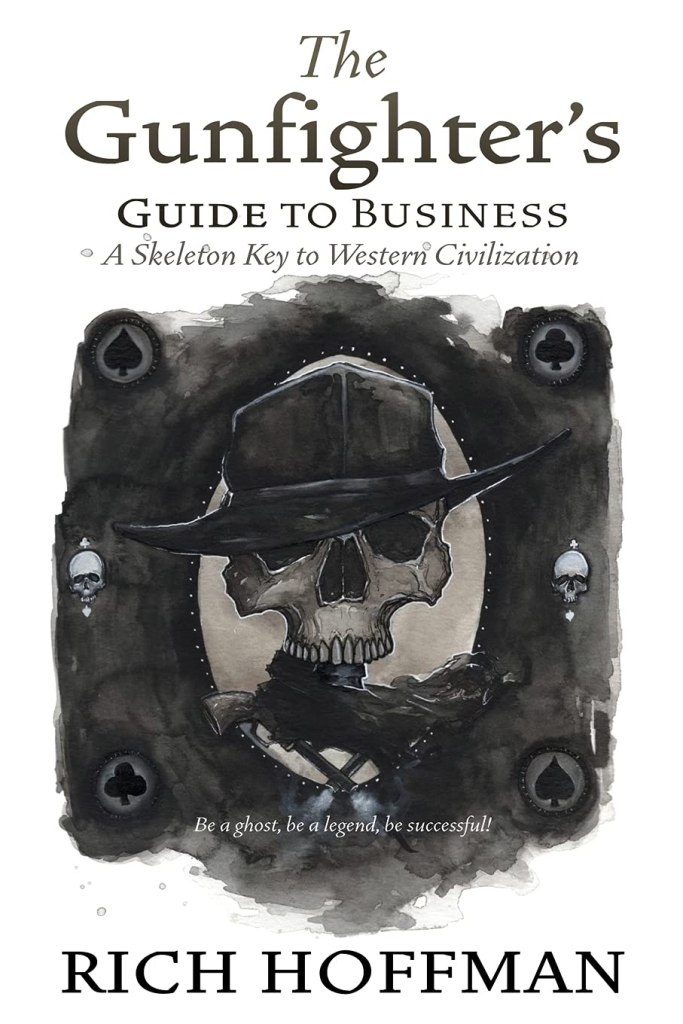
Rich Hoffman is an author, political consultant, and strategic advisor based in Cincinnati, Ohio, and the creator of The Politics of Heaven—a unique framework that connects biblical theology, ancient history, and modern power structures to explain how moral alignment and spiritual forces shape global events. Blending real-world political experience with deep research into archaeology, UFO phenomena, and suppressed historical narratives, Hoffman offers compelling commentary on topics ranging from ancient civilizations and the Dead Sea Scrolls to modern populist movements, paranormal continuity, and leadership strategy in chaotic environments. As the author of The Gunfighter’s Guide to Business and the forthcoming Politics of Heaven, he brings a grounded yet provocative voice to media discussions, supported by firsthand experiences and a cross-disciplinary approach that bridges science, history, and theology. For interviews, speaking engagements, or expert analysis, visit richhoffmanbooks.com or contact directly via phone at 513-307-5815 or email at rhoffman@richhoffmanbooks.com. If you’ve seen the movie, Disclosure Day and want to talk about it and the implications of Presidnet Trump’s UAP disclosures, let me know and we can bring some color to your coverage. https://richhoffmanbooks.com/media-inquiries-broadcast-topics-and-contact-info/?frame-nonce=ad51e7ecba I do have a firsthand UFO encounter to discuss.
Yes, George, you need to watch this video. I had to finish our discussion from lunch. I had a good lunch with Senator George Lang the other day. Nothing formal, nothing staged for the cameras, just two guys who have known each other a long time sitting outside at a place we both like, talking the way we always end up talking when the politics finally take a back seat. People assume that every time I sit down with a senator or a sheriff or a treasurer around here, it is some closed-door strategy session. It is not. George and I share a long-standing interest in ancient history, the kind of deep, layered history that most people in public life never get the chance to dig into. He likes that I run into the stranger corners of it. I like that he actually reads the books I recommend and asks the kind of questions that keep the conversation alive long after the plates are cleared.
We ran out of time that day. Rain started coming down hard while we were still outside, and I had only gotten started on the things I wanted to walk him through. So I am continuing the conversation here the same way I would if he were still sitting across from me and the rest of you were at the next table over. Nothing confidential. Nothing I would not say in front of anyone. Just the thoughts that were already in motion when we had to pack it up.
I updated him on where The Politics of Heaven stands, my next book. The manuscript is finished. The first full draft has been through enough eyes that the early feedback keeps coming back in the same surprising way. More than one reader, including people who know the publishing world, has said the same thing: this book reminds them of The Immortality Key. That 2020 book from St. Martin’s Press by Brian Muraresku, the one Graham Hancock helped put on the map. I told George that I had already decided to go back through The Immortality Key carefully, not because I think I borrowed from it, but because the comparison keeps arriving uninvited and I want to be precise about where the overlap ends and where my own line of inquiry begins. Publication is a relationship, like any other. You do not jump straight into sharing an apartment. You get dinner. You talk. You figure out whether the trust is real. That process takes time, and patience is part of the work.
What pushed me back into The Immortality Key was the same impulse that had me reading Sharon and Derek Gilbert’s Veneration in the early hours before that lunch. Timothy Alberino had been discussing related material on Joe Rogan, and the conversation turned to the older Near Eastern material that most people never hear about. The Gilberts work from a biblical frame, and they do it with real attention to the primary texts. I respect that. Their book digs into the cult of the Rephaim, those dead aristocratic warrior kings whose spirits the living kings of the Late Bronze Age still summoned by name. The Ugaritic tablet known as KTU 1.161 records the liturgy. The dead are called up. Food and drink are set for them. The living king anchors his own right to rule in a line that stretches back into a mythic age of heroes. The meal is not polite remembrance. It is consultation. It is power.
That is the system the biblical writers were confronting. When the scouts came back from Canaan and said they felt like grasshoppers beside the people living there, they were describing more than physical size. They were describing a culture that still fed and consulted the spirits of the giants who had once ruled. Og of Bashan, the last of the remnant of the Rephaim, still had an iron bedstead measured in cubits that made the point for anyone who needed numbers. The physical and spiritual threats were the same. The command to wipe the system out was not simple land hunger. It was an attempt to close the door that the cult of the dead kept trying to hold open.
Mount Hermon sits at the center of that geography. In the Book of Enoch it is the place where the Watchers came down. In the older Canaanite material it is the mountain of assembly, the seat of the divine council that opposed Yahweh. When Jesus took his disciples to the region of Caesarea Philippi at the foot of that mountain and said the gates of hell would not prevail, he was standing on the front porch of the old cult and issuing a direct challenge. The Gilberts make that geography impossible to ignore once you have seen it.
I have been reading this material with one eye on the Near East and the other on the ground under my own feet. The Wheel of the Giants, Gilgal Refaim, sits up in the Golan Heights, a massive set of concentric stone circles that some call the Stonehenge of the East. It belongs to the same broad horizon of ritual architecture that appears along the Jordan and then, in different forms, moves westward. At the same time, over here in the Ohio Valley, the Hopewell people were raising enormous ceremonial centers with the same intensity of purpose. The Milford Works, the great earthworks near the confluence of the Little Miami and the East Fork, the alignments at Newark, the mounds that once stood all through what is now Butler County and Warren County and on up the Scioto. These were not random piles of dirt. They were places where the living gathered to deal with the dead and whatever else they believed could be reached through the right rituals and alignments.
I keep coming back to the Windover site just west of Titusville, a few miles from the Kennedy Space Center. Seven to eight thousand years old. Bodies preserved in peat with brain tissue still intact. Textiles more sophisticated than anything the standard story allows for at that early stage. Directional burial practices. A people who do not fit neatly into the later tribal identities we project backward. Some of the individuals were tall by the standards of the time. The site sits in a region that later becomes part of the same trade networks that moved copper out of the Lake Superior mines and into the wider world just as the Bronze Age was taking shape. The usual explanations for exotic materials found in these contexts grow more strained the longer you look at them. Bananas and turmeric proteins in elite Near Eastern burials. Advanced textiles and possible African or Mediterranean contacts at Windover. The copper that left the Upper Peninsula in quantities that still have not been fully accounted for. At some point, the assumption that the oceans were closed until Columbus made his journey starts to look like a real leap of faith.
The Loveland Frogmen sightings sit right in the middle of this local landscape. 1955, then 1972, later reports still in the same general corridor. Small, grayish, bipedal figures near the water, not far from the old Hopewell ceremonial centers. I am not claiming they are the same entities the Ugaritic kings were feeding under the palace benches. I am saying that when you map the places where people once worked hard to open contact with the dead, and then you look at the places where anomalous encounters keep showing up in the modern record, the overlap is hard to ignore. Point Pleasant and the Mothman. The poltergeist activity that still gets reported in houses built over older burial grounds. The same pattern appears in other parts of the world whenever the old ritual centers are disturbed or left alone long enough for whatever was once invited to keep answering.
I told George that the deeper I go into this material, the clearer it becomes that the biblical story is not a late invention dropped into an empty landscape. It is a record of conflict in a world already thick with competing claims about who had the right to rule and whose spirits still held authority. The non-human intelligences that show up in the older texts, the ones that later get called demons or Watchers or the shades of the Rephaim, did not disappear when the last physical giant was killed. The cult changed its methods. Psychedelics appear to have been one of the technologies that kept the door open. Muraresku’s work on the ritual use of those substances in the ancient Mediterranean and their possible survival into early Christian practice is part of the same larger picture. If you want to understand why a culture builds a certain kind of religion, you have to understand what it was taking and what it thought it was talking to while it was under the influence.
My own book takes the next step. It treats the entire span from the deep pre-biblical period to the present as a single continuous political and spiritual struggle. The copper, the earthworks, the burial practices, the later attempts to rebury or reclassify the evidence, the modern fascination with ascended masters and ancient aliens and celebrity necromancy, all of it belongs to the same long contest. The entities that once sat at the banquet tables under the palace floors in Ugarit are still trying to claim a seat at the table. The question is whether we keep setting places for them.
I am not interested in scaring people. I am interested in making the pattern visible so that the next time someone tries to sell a new version of the old system we recognize it for what it is. The Gilberts do that work from one angle. Muraresku does it from another. Alberino keeps pushing the conversation into the open. I am simply adding the North American material and the long view that comes from living in a place where the mounds are still under the subdivisions, and the river valleys still remember older traffic.
Notes:
¹ Brian C. Muraresku, The Immortality Key: The Secret History of the Religion with No Name (New York: St. Martin’s Press, 2020). Foreword by Graham Hancock.
² Sharon K. Gilbert and Derek P. Gilbert, Veneration: Unveiling the Ancient Realms of Demonic Kings and Satan’s Battle Plan for Armageddon (Crane, MO: Defender, 2020).
³ KTU 1.161 (Ugaritic funerary liturgy), standard edition in Manfried Dietrich, Oswald Loretz, and Joaquín Sanmartín, The Cuneiform Alphabetic Texts from Ugarit, Ras Ibn Hani and Other Places (Münster: Ugarit-Verlag, 2013). See also Baruch A. Levine and Jean-Michel de Tarragon, “Dead Kings and Rephaim: The Patrons of the Ugaritic Dynasty,” Journal of the American Oriental Society 104 (1984): 649–659.
⁴ On Gilgal Refaim / Rujm el-Hiri see Yonathan Mizrachi et al., recent satellite survey work published in PLOS ONE (2026) documenting additional circular structures in the Golan; earlier discussions in Yonathan Paz and others on Early Bronze Age ritual landscapes.
⁵ Glen H. Doran, ed., Windover: Multidisciplinary Investigations of an Early Archaic Florida Cemetery (Gainesville: University Press of Florida, 2002). See also subsequent DNA and textile studies confirming the site’s uniqueness within the Archaic Southeast.
⁶ On Hopewell ceremonial centers, alignments, and ritual feasting, see Bradley T. Lepper, Ohio Archaeology (Wilmington, OH: Orange Frazer Press, various editions) and the UNESCO World Heritage documentation for the Hopewell Ceremonial Earthworks. For the Milford Works specifically, nineteenth-century surveys by Squier and Davis remain foundational.
⁷ Book of Enoch (1 Enoch) 6–16 on the descent of the Watchers at Mount Hermon; standard translation by R. H. Charles or George W. E. Nickelsburg and James C. VanderKam.
⁸ Timothy Alberino’s appearance on The Joe Rogan Experience #2530 (July 2026) discusses the Rephaim, the kispum rites, and the continued occult utility of giant remains in modern contexts.
Bibliography for further reading
Alberino, Timothy. Various lectures and the special edition of The Book of Enoch with commentary (2026).
Byers, A. Martin. Sacred Games, Death, and Renewal in the Ancient Eastern Woodlands. Knoxville: University of Tennessee Press, 2011.
Charles, R. H., trans. The Book of Enoch. Oxford: Clarendon Press, 1912 (and later editions).
Doran, Glen H., ed. Windover. Gainesville: University Press of Florida, 2002.
Gilbert, Derek P., and Sharon K. Gilbert. Veneration. Crane, MO: Defender, 2020.
———. The Great Inception. Crane, MO: Defender, 2017.
Hancock, Graham. America Before. New York: St. Martin’s Press, 2019.
Heiser, Michael S. The Unseen Realm. Bellingham, WA: Lexham Press, 2015.
Lepper, Bradley T. Ohio Archaeology. Wilmington, OH: Orange Frazer Press.
Muraresku, Brian C. The Immortality Key. New York: St. Martin’s Press, 2020.
Nickelsburg, George W. E., and James C. VanderKam. 1 Enoch: The Hermeneia Translation. Minneapolis: Fortress Press, 2012.
Pardee, Dennis. Ritual and Cult at Ugarit. Atlanta: Society of Biblical Literature, 2002.
Squier, Ephraim G., and Edwin H. Davis. Ancient Monuments of the Mississippi Valley. Washington: Smithsonian Institution, 1848 (reprint editions widely available).
Vallée, Jacques. Passport to Magonia. Chicago: Henry Regnery, 1969 (and later editions).
Additional primary Near Eastern texts are available in The Context of Scripture, ed—William W. Hallo (Leiden: Brill), and in the standard Ugaritic editions cited above.
Rich Hoffman is an author, political consultant, and strategic advisor based in Cincinnati, Ohio, and the creator of The Politics of Heaven—a unique framework that connects biblical theology, ancient history, and modern power structures to explain how moral alignment and spiritual forces shape global events. Blending real-world political experience with deep research into archaeology, UFO phenomena, and suppressed historical narratives, Hoffman offers compelling commentary on topics ranging from ancient civilizations and the Dead Sea Scrolls to modern populist movements, paranormal continuity, and leadership strategy in chaotic environments. As the author of The Gunfighter’s Guide to Business and the forthcoming Politics of Heaven, he brings a grounded yet provocative voice to media discussions, supported by firsthand experiences and a cross-disciplinary approach that bridges science, history, and theology. For interviews, speaking engagements, or expert analysis, visit richhoffmanbooks.com or contact directly via phone at 513-307-5815 or email at rhoffman@richhoffmanbooks.com. If you’ve seen the movie, Disclosure Day and want to talk about it and the implications of Presidnet Trump’s UAP disclosures, let me know and we can bring some color to your coverage. https://richhoffmanbooks.com/media-inquiries-broadcast-topics-and-contact-info/?frame-nonce=ad51e7ecba I do have a firsthand UFO encounter to discuss.
Everybody in Columbus politics knows exactly who “the Rooster” is. His real name is D.J. Byrnes—Donald J. Byrnes—, and he runs The Rooster, a Substack newsletter that bills itself as “All of Ohio’s depravity. All the time.” He’s been a fixture at the Ohio Statehouse for years now, showing up with a cameraman, ambushing lawmakers in stairwells and elevators, filming confrontations, and turning routine hallway traffic into his personal gotcha moments. He dresses like he just rolled out of bed after a rough night—sloppy, unkempt, always looking like the guy who doesn’t quite fit the professional scene he’s infiltrating. He walks the room, always angling to be “on camera,” and is purposely disruptive because he genuinely believes he’s fighting corruption. I get the impulse. I respect a free press that scrutinizes people in positions of power. What I don’t respect—and what I can’t abide—is when someone starts making stuff up, or at the very least, wildly inflating unverified rumors, because it fits their narrative or their personal demons.
I’ve interacted with the Rooster plenty of times since I first ran into him at the Capitol. He’s always struck me as someone carrying a heavy load. He’s talked openly about his own struggles with drinking. He’s written about it himself—how alcoholism nearly destroyed him around 2020-2022, how he hit rock bottom, lost relationships, and eventually got sober sometime in 2022 or 2023 after an intervention from friends. He’s admitted in his own posts that putting down the bottle saved him money, calories, and probably his life. He’s approaching 40 now, no kids, no wife, a string of failed relationships behind him. He’s described himself as having toxic habits from his college days onward. People who’ve been around him for years say it’s not exactly a secret. He comes across as socially awkward, the kind of guy who projects a “GameStop” geek—sloppy, outsider vibe, always dressed down, always seeing scandal everywhere because he knows what’s inside himself.
I feel for the guy on a human level. A lot of people have things in their lives their ashamed of. They have moments where they can’t hold it together. When you’re battling that kind of internal chaos—whether it’s the bottle, failed relationships, or just the inability to build something lasting—you look for an outlet. For the Rooster, fighting what he sees as “corruption” became that outlet. It’s a way to transfer all that restless energy into something that feels productive. From his perspective, he’s a hero shaking up the system. He’s anti-power, anti-establishment, the guy who asks the questions mainstream reporters won’t. He’s not purely partisan in every single piece. But the disproportion is glaring. The overwhelming focus, the tone, the nicknames he slaps on Republican leaders (“Governor Sleepy Tea” for DeWine, “Third-Place Frank” for LaRose, etc.)—it’s clear where his sympathies lie. He’s been a big-time active supporter, in spirit if not officially, of Amy Acton’s gubernatorial campaign, the Lockdown Lady. Acton, the former Ohio Health Director who became the face of COVID lockdowns in the state, is struggling in the polls against Vivek Ramaswamy. Everybody knows it. The Rooster knows it. And when you’re desperate to advance a campaign that’s losing steam, hit pieces start looking like a lifeline.
I’ve been around Ohio politics long enough to see the pattern. The same media ecosystem that manufactured cases and events around Trump—stuff that never stuck because it was built on sand—is now trying the same playbook here in Ohio. Vivek is out front, a successful entrepreneur, family man, someone who flies home to his wife and kids rather than lingering in hotels. He’s not the type to fall for cheap temptations. I’ve met Vivek Ramaswamy plenty of times. I’ve met his wife, Apoorva, several times. I’ve met his parents. They’re good, solid people. The Ramaswamy family is the real deal—nice, grounded, focused on bigger things than one-night scandals. Vivek travels the way high-level people do: private jet for efficiency, but he comes home. He doesn’t stay overnight chasing affairs. He’s too smart, too disciplined, and too watched. The criticism from the left is always the same: he’s a rich guy hanging with Elon Musk, flying around, must be unethical. It’s the Democrat mindset—projecting their own assumptions about success onto people who actually built something. They can’t fathom that some people don’t share their weaknesses.
The Rooster recently published a piece titled “The woman at the center of the Vivek Ramaswamy infidelity rumors.” In it, he claims—based on “more than 10 trusted Republican sources” who all independently named her—that Alicia Lang, daughter of influential State Senator George Lang (R-West Chester), is the woman at the heart of an affair with Vivek. He ties it to her work history: she managed Sharon Kennedy’s Ohio Supreme Court campaign in 2020, then served as Vivek’s Deputy Chief of Staff through December 2022, moved to Strive Asset Management (the company Vivek co-founded with J.D. Vance and others), was promoted, and later joined another venture. He mentions Vivek’s private jet being in Indianapolis for a week in late February/early March 2026 with no campaign activity. He notes rumors surfacing around the same time Vivek’s campaign ad about his third child dropped, and betting odds on Kalshi flipped in favor of Acton. He even references an anonymous tip through his “Dirt Box.” Yet he admits he hasn’t seen any photographs or video. It’s all anonymous sources and timeline speculation. No hard evidence. Just enough smoke to try lighting a fire.
I happen to know Alicia Lang well. I’ve known her since she was a young girl—12 years old, a fan of my work, someone who’s read my writing diligently. I know her mother, Debbie Lang, very well. I know the entire Lang family. These are good people who have fought real corruption behind the scenes for years. They’ve been through tough times and stayed loyal to each other. Alicia grew up in that environment—politically savvy, smart, charismatic like her mother, with a positive outlook forged in real hardship. She’s worked high-level campaigns, had access to powerful people, and conducted herself with integrity every step of the way. The idea that she would “sleep her way to the top” or get caught up in some tawdry affair with a married man who’s constantly surrounded by staff, security, and the public eye is laughable to anyone who actually knows her. She’s way too sharp for that. She’s seen how the game works—the cameras, the leaks, the scrutiny. Families like the Langs don’t survive and thrive in Ohio politics by making rookie mistakes.
I’ve talked to Vivek enough to understand his character. He’s not subject to those kinds of temptations. He’s got a nice wife at home, kids, a mission bigger than any fleeting thrill. The Rooster’s sources? I don’t buy that they’re genuine Republicans with clean hands. More likely, they’re people with a beef against George Lang, because he’s the Majority Whip in the Senate—maybe Democrats or disgruntled insiders trying to use the Rooster’s platform to settle scores. The Rooster doesn’t name them. That’s convenient when you’re pushing a narrative that could destroy reputations. He’s gambling that “some Republicans said it” is enough. It’s not. Especially when you’re talking about a young woman who isn’t even the candidate herself, she’s a staffer, a daughter, a private citizen in many respects despite her connections. There’s a higher legal standard there that the Sullivan case won’t cover, and you can’t just float rumors without consequences.
This is where the Rooster’s personal issues bleed into his work. When you can’t maintain basic relationships, when you’ve battled the bottle for years, when your own life feels chaotic, it’s easy to see chaos everywhere else. He projects his weaknesses onto others. He sees cocaine binges and sexual scandals in the Statehouse because it’s easier than looking in the mirror at his own broken life. He migrates to sexual stories. He assumes everybody’s doing what he’s done or wanted to do. It’s classic psychological projection—transferring your own sins and struggles onto others so you can fight them externally instead of dealing with them internally. I’ve seen it before in people. You feel sorry for them because you know they’re hurting, but when they start dragging innocent people into their redemption arc, sympathy turns to accountability.
He’s gone after other people I know—Jennifer Gross, for example—in ways I thought were unfair. But this crossed a line. When you target someone like Alicia, who’s conducted herself ethically her entire life, who comes from a family that’s fought real battles, who is too smart and too grounded to fall for “cheap thrills,” you’re not journalism anymore. You’re rumor-mongering. And in the age of defamation law, especially post-New York Times v. Sullivan, with the lower standards for public figures versus the higher bar for private individuals, this is dangerous territory. Alicia isn’t a public official running for office. She’s a young professional who’s worked on campaigns and big ventures. The Rooster assumes everyone has their vulnerabilities as he does. They don’t. Vivek and Alicia certainly don’t.
The Rooster has been doing this in earnest since around 2020, with Substack exploding in popularity. He’s published over 1,700 dispatches. But the style is gossip mixed with innuendo, nicknames, and sensationalism. He calls himself a “concerned citizen who commits acts of journalism.” He ambushes people, follows them upstairs, and pleads with troopers about the First Amendment. Some lawmakers call him a security threat or narcissistic. Others engage because ignoring him feeds the narrative. He’s been restricted at the Statehouse—lobby closures, doorway bans. He’s been banned from X (formerly Twitter) for extreme posts. He leans left, but claims anti-power. In practice, the targets skew Republican, especially when it helps a candidate like Amy Acton.
Acton’s campaign is struggling. The lockdowns she oversaw as Health Director are still remembered—harsh restrictions that hurt businesses, families, and kids’ education. People haven’t forgotten. Vivek represents the opposite: pro-growth, anti-woke, entrepreneurial success. So the hit pieces come out. The same playbook used on Trump—make something stick, even if it’s a rumor and speculation. The Rooster thinks he’s shaking up stuff mainstream reporters won’t touch. But you don’t fabricate or amplify lies about people who don’t deserve it. Especially not to project your own unresolved issues.
I know a lot of the people the Rooster writes about. I know what they do when they’re far from home. I know how they conduct themselves. The Statehouse isn’t the den of iniquity he paints it as—at least not to the extent he claims. Sure, human flaws exist everywhere. But the level of cocaine-fueled orgies and affairs he implies? That’s his lens, not reality for most. Good families like the Langs, successful people like Vivek—they have too much at stake, too much discipline, too many eyes on them. Alicia has her mother’s charisma and her family’s resilience. She’s not some average lowlife, like the Rooster. I think he’s going to find himself in trouble. Defamation isn’t protected speech when it’s reckless and false. He can only blame himself.
I’ve never shied away from calling out corruption when I see it. That’s why I can speak confidently here. I know these people personally. I’ve seen their character up close. The Rooster, for all his bluster, is projecting his own story onto others. It’s a redemption narrative for him—fighting the powerful to atone for his past. But when it harms the innocent, it ceases to be noble. And when wrong is done, it has to be punished.
Footnotes
1. D.J. Byrnes, “The woman at the center of the Vivek Ramaswamy infidelity rumors,” The Rooster, April 27, 2026.
2. Aaron Marshall, “Who is The Rooster? A Closer Look at D.J. Byrnes and His Controversial Blog,” Columbus Monthly, March 16, 2026.
3. D.J. Byrnes, “Retiring from alcohol was one of the best decisions of my life,” The Rooster, July 26, 2023.
4. Various posts on rooster.info detailing his sobriety journey and past struggles (2023-2024).
5. Amy Acton campaign site and related 2026 gubernatorial coverage.
6. Public records and statements on Vivek Ramaswamy’s family and travel patterns.
7. George Lang’s family public statements and known political involvement.
Bibliography
• Byrnes, D.J. The Rooster Substack (rooster.info). Multiple articles, 2023-2026, including sobriety posts and the April 27, 2026, infidelity rumor piece.
• Marshall, Aaron. “Who is The Rooster?” Columbus Monthly, March 16, 2026.
Rich Hoffman is an aerospace executive, political strategist, systems thinker, and independent researcher of ancient history, the paranormal, and the Dead Sea Scrolls tradition. His life in high‑stakes manufacturing, high‑level politics, and cross‑functional crisis management gives him a field‑tested understanding of power — both human and unseen.
He has advised candidates, executives, and public leaders, while conducting deep, hands‑on exploration of archaeological and supernatural hotspots across the world.
Hoffman writes with the credibility of a problem-solver, the curiosity of an archaeologist, and the courage of a frontline witness who has gone to very scary places and reported what lurked there. Hoffman has authored books including The Symposium of Justice, The Gunfighter’s Guide to Business, and Tail of the Dragon, often exploring themes of freedom, individual will, and societal structures through a lens influenced by philosophy (e.g., Nietzschean overman concepts) and current events.
As bad as things seem, I’ll have to say I feel privileged to live in a culture that can produce books like The Lords of Easy Money. The new book by Christopher Leonard is what I consider a real treasure to a rich culture. After reading it, it spawned in me an insatiable appetite for solving some of our modern problems, and right there in those pages, everything was clear to see. I took last week off everything essentially to read an additional 12 books of all types of wide-ranging subjects connected to the subject of the Federal Reserve and the history of Banking in America and the Constitutional problems that are part of it. I think I slept 3 hours last week as my reading list was very aggressive. Good books are better than sleep to me. We’ve all talked about this before, but never has there been a writer who was able to put their finger on the problem quite like Christopher Leonard has. For me, it was the big block in the puzzle that put everything else together, and I feel greatly enriched by it. Because of it, I am much more inclined than I was before toward the banking policies of Andrew Jackson as he let the charter expire for the second attempt to put centralized banking in charge of our central government. These subjects are too complicated for our news reporting, so they never get talked about, yet the corruption at play here is mind-blowing, and it is there that we must focus on in the future if we want to save our nation. I’ll have a lot to say about this book in the months to come, but for now, we’ll talk about the tip of the iceberg.
The problem starts with the American Constitution and Alexander Hamilton and his debates with Thomas Jefferson over the merits of centralized banking. Hamilton’s interpretation comes from Article 1 Section 8 at the very end, “to make all Laws which shall be necessary and proper for carrying into Execution and Foregoing powers, and all other Powers by this Constitution in the Government of the United States, or in any Department or Office thereof.” In other words, if the government thinks it needs it, it can have it. This is also why the duel between Aaron Burr and Hamilton should have happened on the day before Jefferson and Hamilton had this discussion. Hamilton’s argument opened the door to the kind of crazy lunacy regarding fiscal policy that we see today. Lucky for us, we have had great presidents, such as Jackson, who fought this battle before. It has taken a lot of time for the crooks and thieves of Wall Street and politics to become emboldened to the level they are now, to rob openly, loot, steal, and sell out our country in the fashion that The Lords of Easy Money articulates. But make no mistake about it, Christopher Leonard is not arguing against the Fed. He is, in fact, a Democrat. He’s not at all crazy about the Tea Party movement or President Trump. He wants the system to work. He actually makes an excellent argument for the Federal Reserve. Still, in the research he conducted, which went on for years, the actual Federal Reserve regional bank president Thomas Hoenig out of Kansas, Missouri, where this real glimpse into the problems of the Federal Reserve came to light and is the heart of the whole book.
The Federal Reserve has a consistent problem because it functions as many school boards do or any government that emphasizes consensus rather than dissent and argument. In the case of the Federal Reserve, all the bank presidents who end up on the FOMC (the Federal Open Market Commission) consist of 5 appointed positions; the other seven are rotated among the regional bank presidents. There is always one permanent seat for the Federal Reserve Chairman and another for the New York Federal Reserve. Around 2010, when Fed Chair Ben Bernanke began a policy of quantitative easing to deal with the crash of 2008, the only person on the FOMC committee to vote against it was Thomas Hoenig, which was embarrassing for Bernanke. They had always had consensus up to that point, at least what they showed the public. But Hoenig felt that the policy was dangerous, and he continued to vote that way until he retired eventually. But the Fed ignored his vote and kept the policy going anyway until things really exploded out of control after Covid came and did its damage, which is our present problem. The most obvious problem that comes to mind with this arrangement is that all the members have PHDs from socialist-oriented schools where Marxism is heavily studied. So they all think the same way. Thomas Hoenig was considered a soft “r” Republican, but they all essentially thought the same way about fiscal policy. The value of something was supposed to need Fed action for it to be useful. Rather than dealing with what elements of the economy create value, such as free people able to function and produce, the Fed believed that all activity was more or less fixed. It was their job to manipulate interest rates or print money to inspire growth. When you have 12 people who all think the same way on these matters, you will get what you are going to get.
In reaction to the housing bubble bursting in 2008 and the election of the socialist Barack Obama, who put tight controls on economic behavior, Ben Bernanke, then Janet Yellen, then Jerome Powell would turn to what they call ZIRP (zero interest rate policy) to flood the market with cheap money and to build up a massive asset bubble that Wall Street could count on a “Fed Put” strategy to bottom out the risks on an asset pricing strategy. For instance, to inspire the buy-up on all those risky mortgages after 2008 for which BlackRock became so wealthy, the Fed boosted the purchase with a public-private partnership that removed much of the risk by pumping up the potential losses with the money supply. There has never been a restoration to normal on the Fed’s balance sheet. What started as a mess on that balance sheet of 900 billion in inflated assets in 2009 ballooned to 4.5 trillion by the end of 2019. Now, after Covid, the balance sheet is at 8.2 trillion as of this writing, and it’s going up every month by 120 billion with no signs of an end to it. So now we have an asset bubble that is poised to burst at any moment, and the smoke and mirrors of the political arrangement between Congress, Wall Street, and the Fed is out of control and explains a lot of why major investors are putting so much effort into pumping up the Chinese economy. They are trying to hide the money they have gained during all this in a new economy for their own preservation. The whole situation truly is a mismanaged disaster. Of course, if money is all you care about, and you want to protect what you’ve built, China suddenly doesn’t look so bad. Why is everyone so upset over their human rights violations and communist central government?
But the first step is in understanding it all. I never was, and I’m not now a person who will say we shouldn’t have a Fed. There needs to be a way to manage the money of society. As I said in the video above, with space exploration coming on fast, spikes in the gold standard and other precious metals will need to be managed through a stabilized currency. But when you create something like the Fed and put a bunch of people trained in Marxism in charge of it, well, you get the failures of Marxism as a result. Rather than have people running these banks who actually understand the value of labor and how to apply it to actual assets made by the human mind, instead, they have created a bureaucratic nightmare that is poised to blow up out of this artificial asset bubble that they have made at the Fed and will cause significant harm to all the people who depended on the Fed to do the right thing. And in doing that right thing, Thomas Hoenig has told his story of how painful it was, which is the point of the excellent book, The Lords of Easy Money. This has been the smokescreen nobody wants to talk about, behind nearly every news story that they hope you never find out about—until it’s too late.
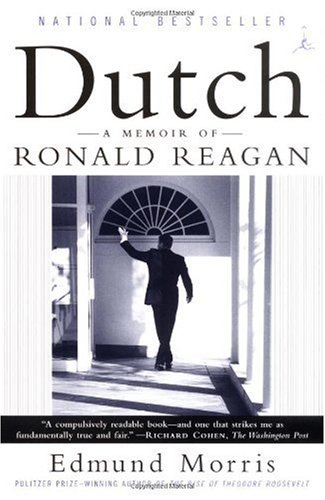
Truly one of the great writers of our time is Edmund Morris. I loved his work in The Rise of Theodore Roosevelt, and Theodore Rex. So did Ronald Reagan, because he picked Morris to be his personal biographer during his presidency due exclusively to the work of the first Roosevelt book.
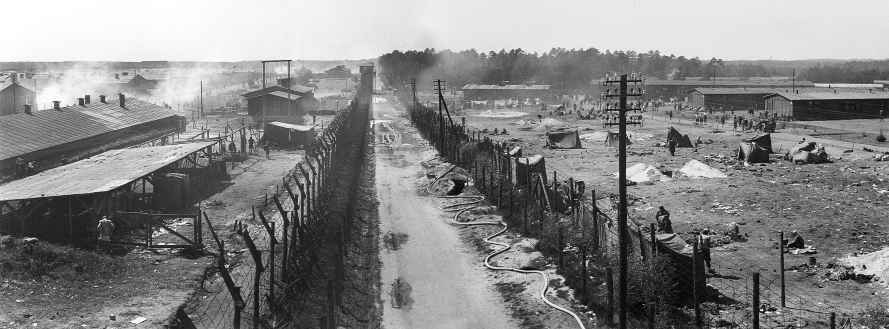
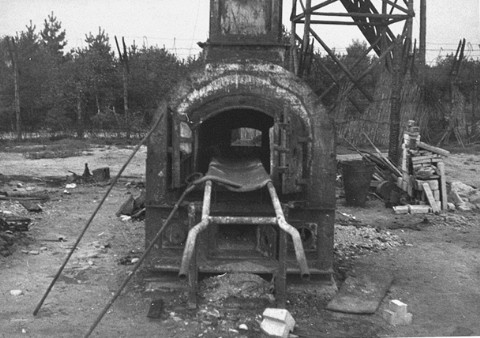
That book became after many years of writing, Dutch. I’ll get into more on that book later. But for now a caption from it I think is particularly revealing. It is in regard to a raw footage viewing of the film Lest We Forget, which was a done by Warner Brothers and filmed by Bill Graf. Ronald Reagan was slated to do the narration. Bill had managed to get some incredibly terrible footage of the tragedy that occurred at Bergan-Belsen.
The following description of Bergan-Belsen is from Wikipedia:
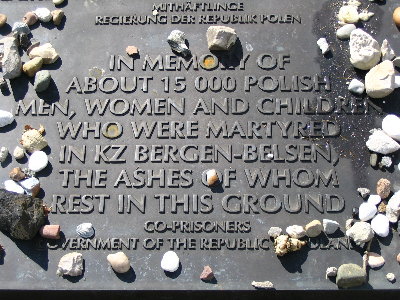
Bergen-Belsen (or Belsen) was a Nazi concentration camp in Lower Saxony in northwestern Germany, southwest of the town of Bergen near Celle. Originally established as the prisoner of war camp Stalag XI-C, in 1943 it became a concentration camp on the orders of Heinrich Himmler, where Jewish hostages were held with the intention of exchanging them for German prisoners of war held overseas[1]. Later still the name was applied to the displaced persons camp established nearby, but it is most commonly associated with the concentration camp it became as conditions deteriorated between 1943-1945. During this time an estimated 50,000 Russian prisoners of war and a further 50,000 inmates died there,[2] up to 35,000 of them dying of typhus in the first few months of 1945.[3]
The camp was liberated on April 15, 1945 by the British 11th Armoured Division.[4] 60,000 prisoners were found inside, most of them seriously ill,[3] and another 13,000 corpses lay around the camp unburied.[4] The scenes that greeted British troops were described by the BBC’s Richard Dimbleby, who accompanied them:
“…Here over an acre of ground lay dead and dying people. You could not see which was which… The living lay with their heads against the corpses and around them moved the awful, ghostly procession of emaciated, aimless people, with nothing to do and with no hope of life, unable to move out of your way, unable to look at the terrible sights around them … Babies had been born here, tiny wizened things that could not live … A mother, driven mad, screamed at a British sentry to give her milk for her child, and thrust the tiny mite into his arms, then ran off, crying terribly. He opened the bundle and found the baby had been dead for days.
This day at Belsen was the most horrible of my life………”
Once Bill’s footage was gathered it was taken to Warner Brothers to be shown to a select group of people, Reagan one of them because he had to do the voice-over. The following quotation is from the great book, Dutch, page 215.
In the projection room Col. MacDuffie took the seat of honor and next to him were Bob Carson and Ronnie Reagan. I was up front with a few other enlisted men. Together Bill Graf’s footage took us on a journey out of reality, into hell.
We saw gaunt emaciated living skeletons, wondering around like lost souls in some kind of purgatory. Some of them stood naked and shit where they stood. We saw a skull complete with face sliced in half like a melon so the camp doctor could study the special conformation of the Jewish brain. If my grandfather from Krakow hadn’t emigrated here ninety years ago, that might have been mine. We saw stacks of cured and flattened human skins. The commandant’s wife had selected inmates with colorful tattoos to be killed and flayed for lamp shades. I guess these were the rejects. Somebody told Bill Graf that she liked skins with large nipples, because of the pleasing aureole effect when light shone through them. We saw—I don’t want to tell you what else we saw. It makes me want to puke, even now. When the lights went on, I felt chilled to the bone as if I were in an ice house. I feared I was going to freeze and smother at the same time. I had trouble swallowing and desperately needed water and warmth. I rushed out into the sunlight and looked around to make certain I was not dying in Germany but was here alive, in Culver City.
The others shuffled out of the projection room more slowly, like men who had seen ghosts. Reagan was strangely silent, buried in thought. It was if we had attended a mass funeral, and that in some way we were the ones that had died.
The film Lest We Forget, made a lasting impression on everyone that had to see it that day. As for Ronald Reagan, he made his sons Michael and Ron Reagan see the film when they turned fourteen as a kind of rite of passage into adulthood.
The reason I bring all this up and show these pictures is because the human race has forgotten. When the crises of the world are these immature, half-developed children protesting in London for free education, or children in the United States that won’t get up off the couch to get exercise, or the power grab by politicians to get Net Neutrality passed, none of them understand real pain, real suffering, and the blackness capable in the human heart corrupt with evil.
These modern politicians like their predecessors from 1945 did not understand how a woman could desire a prisoner to be skinned and turned into a lamp shade so the light coming off the nipples would cast an interesting light. Such thoughts are truly evil. And such evil cannot be legislated from existence. You cannot change what hides in the soul of a human being with more laws.
You have to address the real issue of personal responsibility, and not allow evil to hide behind legislation, and black-hearted politicians corrupt with their own desires for power. And such people populate the earth in abundance, outnumbering even the stars in the sky.
Never forget Bergen-Belsen. Because in the context of history, it wasn’t the only time terrible things like this have happened to human beings, and it won’t be the last. Never take it for granted that the earth has seen the end of evil, quite the opposite. Evil hides where people are afraid, or too lazy to look. And from those places the next terrible events to be inflicted upon the human race will attack.
Here is Ronald Reagan revisiting that terrible place many years after he had seen the footage that had impacted him as a much younger man.
I read and listen to such things with humor because it would take a lifetime for many of those people to understand what and why I think the way I do. I was doing much of this work before I ever entered the Lakota School Levy issue, and I’ll be doing the same work long after it passes. It just so happens that time and fate have intersected over the issue of education funding.
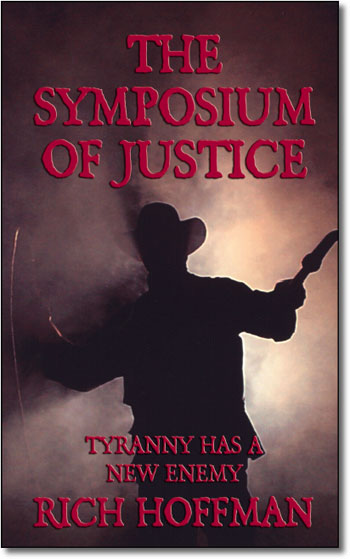
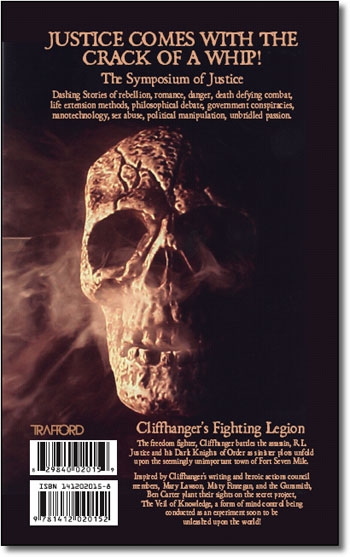
So as a contribution of insight I offer something I wrote back in 2004 in my book, The Symposium of Justice. It’s the Ten Rules for Living as displayed in the back of the book and discussed in the chapter called, The Overman. (Hint, this is where the term Overmanwarrior comes from, the term reminds me of these ten rules) It is my hope that this list might provide the needed insight for those that seek an answer to their lingering queries.
The following appears on page 187 of The Symposium of Justice, Cliffhanger’s Ten Rules to Live by
1. To honor women, they are the pillars of society.
2. Stand as an example of the highest moral order.
3. Avoid mental depletion such as intoxication, and ignorance.
4. Pursue learning like a person on fire pursues water.
5. Live with integrity, where values are in line with behavior.
6. Live the given life, not the dreams of others.
7. In a crisis handle everything calmly and without confusion.
8. Be capable of firmness in the heart.
9. Sorrow is everywhere, accept it with a smile.
10. Resist hiding in numbers, stand as an individual contributor.
I wrote the Symposium of Justice to teach my kids the values I wanted them to carry into adulthood. But I offer it to anyone looking to improve their life. I live by those values and it has always worked for me. When you are living by those principles, no amount of money, no official title, and no peer acceptance can surpass the benefits. The key to fixing the world is within you. Fix that and you fix the world.. All such things are purely cosmetic aspects to a social existence. Participation in any and all will ultimately lead to an empty life laced with dissatisfaction. So read of the above list what you will. Live your life and maybe make your own list. Because one thing is certain, and that is nothing is truly certain. All you truly ever have is what you build inside yourself and can therefore offer others in the form of relationships.
No school, political party, or career choice can give you that