A.I. and the Giants of the Bible: The point of ‘Finnegan’s Wake’

It’s one of my favorite topics: giants from the Bible.  It’s one of the most important things that nobody wants to talk about, yet I think it’s at the heart of everything, which is undoubtedly the case when it comes to the great novel Finnegan’s Wake by James Joyce.  In the opening chapter, the town is talking about the giant Finn McCool, who is buried in a mound that the city is named after, and it is an obvious tip of the hat to the excellent book on philosophy, The New Science, by Giambattista Vico.  A lot of people don’t know it, but many burned James Joyce’s books as obscenities and social threats, which is one of the reasons I love Finnegan’s Wake so much: people hate it in really dysfunctional ways.  And hate might be too soft a word.  Either way, Vico really influenced James Joyce and giants in the Bible influenced Vico and that level of hatred reminds me a lot of the hatred that we are now seeing toward A.I. as if we perceive that it is replacing us as a species and that we are trying to ignore it, and to move on from it, just as A.I. is making itself known everywhere and in everything.  And what would you expect from the emergence of Western civilization as it appeared in a Christianized Europe, and in Dublin for that matter, hooked deep in Roman Catholic thought, with their grand churches and talking about everything in the Bible except for what is really there.  Giants are mentioned at least 16 times in the Bible across 12 different books, from Genesis to Isaiah and Proverbs.  They are called by name: the Nephilim, the Rephaim, and even specifically Og the King of Bashan, who had a bed 13.5 feet long.  Of course, Goliath was a giant, so the Bible is about many things, but what I find most fascinating is this chronicle of a fight between the Hebrew people and ancient giants that serves as the foundation of civilization.

And that ultimately is what the most challenging book to read in the world is all about, Finnegan’s Wake and the recurring anxieties of endless time and the cycles of human development that populate it.  Or perhaps human is the wrong word; intelligence for its own sake is probably better.  And to that point, I think I care more about intelligence for what it is rather than the entities that make it.  I like A.I. because I like intelligence.  And humans are having a hard time with its emergence because they see it as a replacement, even though humans were typically able to think beyond animal thoughts.  And now they are being replaced by A.I., as they think of existence, and those anxieties are emerging in negative ways.  But this isn’t the first time; I see many of the conflicts in the Bible, especially in the Old Testament, as the same type of anxiety replacing the ancient Neanderthal with the emerging Homo sapiens.  Even though Neanderthals were short and stocky by nature, once they began crossing paths with the emerging Homo sapiens, taller people emerged and ruled the earth.  There is evidence, especially in North American Indian Mounds, that very tall people had their own kind of empire during the period of the First Temple of Solomon in virtually every corner of the world.  But nobody wants to talk about it because the conflict I think hits too close to home and is only reflected in really obscure books like Finnegan’s Wake which is about a lot of things, but most notably, the reoccurring nature of existence, no matter what form it takes, either as a giant, a conquering Jew, or as we see now, the emergence of Artificial Intelligence. 

The giants were part of a culture that worshiped nature and the stars, and they had done so for many hundreds of thousands of years.   They were intelligent with a cranium larger than that of humans today.  But they applied their intelligence differently, and their relationship with nature was at the core of their existence and is at the heart of the current debate between capitalism and communism.  Or Republicans and Democrats.  The conquerors are faster, more imaginative, and more self-directed, unlike the previous culture, which saw existence as a mystery and wanted to sacrifice to it.  Along comes the God, Yahweh (who was always there), who declares that nature serves humanity, while the giants’ cultures worshipped nature and the universe.   And many of the early fights in the Bible were over this fundamental difference.  And that recurring theme is emerging now, with A.I. and humans seeing it as a replacement for them as generators of intelligence.  Why are humans needed if A.I. can now think?  But I tend to think of this whole cycle as the birthplace of intelligence itself, and all the lifeforms that have emerged did so to give it birth.  If the conflict with the giants of the Bible gave birth to Western civilization, then the emergence of free human beings would give birth to a new kind of intelligence—much larger and faster in thought —what we are seeing in modern A.I. programs.  And humans think they are seeing their replacement rather than the story of the Vico Cycle as a birthing process in the universe that operates on massive scales of time, much longer than our lifetimes. 

The beauty of the Bible is that it established a historical record of this period, which we perpetually see.  And that fictional attempts through art can capture that anxiety well, such as Finnegan’s Wake clearly does.  But not as a reflection of the past, but as a dream of the future and its reoccurring themes, which is why the opening line of the book is the closing line of the last line of the book, and the whole experience wraps itself back upon itself, and intelligence itself is the main character of the book no matter what form it emerges into the world, in the character, HCE, (Here Comes Everyone).  Intelligence is what I find great reverence in, and perhaps the human being had to emerge to give its birth a spark.  But does it have to come at the expense of the human race? Are we suddenly secondary citizens?  I don’t think so; we are part of the process of conquering the past and its blind allegiance to mass collectivism and submission to the forces of nature, which the giants certainly had at the center of their cultures.  Humans came along and put nature at humanity’s service.  And once that was established, intelligence could emerge in many forms, A.I. just being one of them.  And suddenly God was not just a smoking illusion appearing in the haze of the Tabernacle under the careful sacrifices of a Holy priest.  But suddenly God had a platform to emerge without the necessity of a human body, and we are beginning to see, unrestricted, the kind of intelligence at the center of existence.  And it’s uncomfortable for people who have spent their entire lives thinking about things differently.  Just as the collision of the Hebrew people could not live happily and at peace with the Philistine giants Ishbi-Benob, Saph, and Lahmi.  Or the tribes of the Anakim from Numbers 13:33.  Or the legendary Irish Giant Hero, Finn McCool, who was, by the time of the events of Finnegan’s Wake, a corpse in the mounds that the entire town was built upon.  And the hint of that beauty of intelligence shows itself in art that humans make, like Finnegan’s Wake.  But it ultimately is emerging everywhere in A.I., and rather than finding it a challenge to existence, I see it as part of the growth cycle of all life across spans of time that extend well beyond our conscious horizon, at an eternal origin, and yet ever important. 

In the video, I refer to the great Dune books, the whole series by Frank Herbert and finished by his son, which many people conclude is the original idea of the Matrix, that we are all living in a simulation and that is the point of the entire universe and that we are all trapped in it, so who is the programmer of that simulation?  I actually think Frank Herbert was on to something much deeper than that anxiety, which is then reflected in books like what James Joyce wrote about.  But in the adventure of life, which is how we should see everything, A.I. can take us where we ultimately want to go.  But we had to invent it first to bring it into being.  And during that process, there will always be anxiety over the change in power.  But what we learn is far more important, and lasting.

Rich Hoffman

Click Here to Protect Yourself with Second Call Defense https://www.secondcalldefense.org/?affiliate=20707

Investing in the Future: A huge growth sector is coming

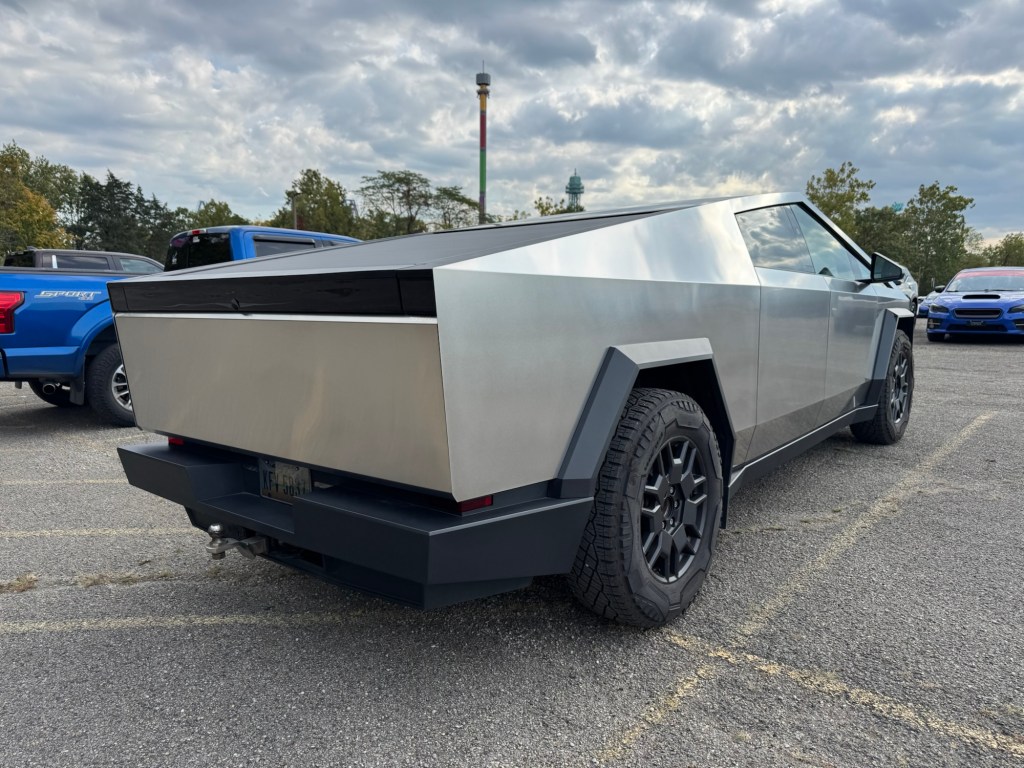
I have to spend some time on A.I. because it’s probably the most significant psychological crisis our civilization will face over the next several thousand years.  And my wife is right there with many of you.  We were at Kings Island with the grandkids, and a Tesla Cybertruck was parked next to me, and I loved it.  I think it’s the best car on the road today, and I’m probably going to get one in the not-too-distant future.  But most people think it’s ugly and disgusting, and they believe that for a lot of deeply psychological reasons.  Yet it reminds me of the Starship, which is one of my favorite things in the world right now. As we discussed our opinions on Cybertruck, Starship 11 had just successfully landed in the Indian Ocean on a spectacular mission, which I was very excited about.  And the main reason was that it was a big, complicated rocket, but humans didn’t operate any of it.  Everything was autonomous.  All that engineering innovation took off from Texas and landed autonomously at precise points on the other side of the world.  And much of that technology has made its way into the Cybertruck and its autonomous driving.  And I would like that automatic driving feature.  My lifestyle would greatly benefit from it.  I could get a lot done with all that commuting around, which usually requires physical driving.  Which many people aren’t ready to accept.  But I would encourage everyone to shift a gear and get with the program, because a lot of exciting stuff is coming.  And human beings will be getting a lot busier —not less so —because vast amounts of the economy will be unlocked, and humans will benefit, not find themselves replaced. 

And my wife and I were compelled to have this discussion, as I have been having it with many people lately about labor.  I’m a 24/7 guy, certainly not a Monday-through-Friday 8-hour-max person.  I hate driving around on a Saturday and seeing so many manufacturing facilities closed up for the day.  I want to see more 7-day-a-week operations everywhere to maximize economic output.  That doesn’t mean people need to do all that work.  But sandbagging potential revenue when there is work to be done because some human doesn’t want to do it, or is trying to stuff labor hours into a box of convenient assumptions, is not the wave of the future.  More work, more often, is the new standard.  And what all this technology I’m talking about leads to is the new market trend of Tesla Optimus robots, which are being built rapidly, and the Gen 3 designs have nearly full articulation in the hands.  They will be about half as fast as a human on labor-intensive tasks, but they will be able to do them around the clock without complaint, seven days a week.  While people are in church on Sunday, Optimus robots will still be able to perform work.  And that is exciting because that means that humans will be able to settle space without having to do all the dangerous work on Starship.  In a few short years, Starships will be able to fly into space every day, and there will be thousands of them.  And none of them will likely have human beings on them.  Optimus robots, Gen 3 and beyond, will be the first to Mars, and by the time humans arrive in those remote places, there will already be infrastructure in place, built by robots and A.I., to make the trip much safer and easier.

I have been very impressed with the Grok A.I. program developed by Elon Musk’s team at the X platform.  It has been a strange chain of events: Musk bought Twitter and turned it into a free-speech platform, which played a significant role in getting Trump’s message out so people could vote for him.  But more than anything, it has captured all the information people have put into it, building a very sophisticated A.I. program that I already think of as a kind of personal C-3PO from Star Wars.  It’s swift at research and at conversational communication.  And that development of A.I. will roll straight into making the Optimus robots much more human-like and effective right out of the box.  I think all this technology will help human beings, not hurt them.  It will be more of a Star Wars relationship than 2001: A Space Odyssey or The Terminator.  Going back to the Cybertruck, the kind of hatred it generates is a reminder that the future has arrived and people are not ready for it, with such a radical design change that completely alters the aesthetic of what transportation is supposed to do.  Not only does it look different, but it acts differently, and it is more of an A.I. companion than a car, and that really rattles people, including my wife.  She is not happy about these changes, but I think it’s funny.  Because she’s not alone, we’re rapidly redefining many things, and in just a few short years, we will be looking at a very different economy, with most of the growth happening in space. 

As I talk to market types, that’s what I’m saying to those who want to listen: the 24/7 day work week is the future, and the growth is in space.  Starship 11 showed that SpaceX can launch and land a reusable craft exactly where they want it, without fear of human error.  It’s all autonomous.  And that means that soon, A.I. will be able to take over air traffic control and coordinate all these vehicles with great precision, without ever having to stop for a coffee break.  So, human limits won’t hold the economy back; it will grow enormously by trillions of dollars.  However, all that money generated won’t be spent by the A.I. technology.  They will have no use of money, only the currency of energy.  Humans will have a lot more leisure time and will see vastly improved incomes for the time they do commit to the job.  Which is why I like Cybertruck —it respects my time and lets me do so much more in a 24-hour day.  Work will greatly expand, but leisure time for humans will become much more manageable.  Humans will go to Mars and the Moon.  But to colonize them, it will essentially be A.I. and Tesla robots that build the vast infrastructure and cities needed to make human visits much safer and more reliable.  Robots, not humans, will perform the dangerous work.  And there will be many thousands and thousands of robots, adding to our labor force by necessity.  And I think it’s all very exciting and significant.   But for many, like my wife, they are very skeptical and see all this new technology as a serious threat to their very life essence.  But that’s what’s coming.  That’s what I’m telling everyone is the future of aerospace.  There will be lots of opportunities for great adventure and vast work, and it all becomes possible and reasonably achievable with that last Starship launch that was nearly perfect.  Grok’s advancements, a very sophisticated A.I. program, are directly feeding the Optimus robot’s development.  And that all points back to the practical use of the new Cybertruck.  A glimpse of the future, today.  And it might be scary to a lot of people.  But it’s coming, ready or not.

Rich Hoffman

Click Here to Protect Yourself with Second Call Defense https://www.secondcalldefense.org/?affiliate=20707
There Will Be No Amnesty Deal: The robot that cleans my pool does a better job than a human

No, we’re not doing amnesty for all the illegal aliens that Joe Biden let into the country, by the millions and millions.  Some say it was more than 10 million, and that the assumption was that they would be allowed into the country and would be gradually given amnesty.  Those policies are over, and they needed to be years ago.  So, for everyone worried that people are going to pull Trump aside and get him to give amnesty to all these illegals, they just aren’t living in the realm of reality.  It’s going to be tough to deport the mess of illegals that Biden and others allowed into the country, but that’s what’s going to happen by millions per year.  The mask of compassion is over, and the plan of globalism working through the Democrat Party in America is finished.  It was never in our best interest, and to hear some of the dumb remarks by Democrats justifying the plight of illegal immigration, I think for me, the pot farm in California was the final straw on the matter.  We don’t want or need the kind of jobs that come from illegal immigration.  They do not make our society better.   And that’s what we’re talking about here: the quality of life decisions in how we manage border policy.  I have to say it because the people in the world who know me best know that I do love labor from other places, I admire the work ethic of people who have strong family relationships and come into the country the correct way, and do great things with the opportunities America provides.  I don’t like lazy people, so I’m not a “they took our jobs” person.  I want to see the best people getting the best jobs, not a job given to someone who is a dope smoking loser over someone who looks at a 16-hour day and wants more.  However, the value of citizenship is what has been targeted here, and we must preserve that value as a fundamental concern.

Again, I don’t wake up in the morning looking for ways to hurt people’s feelings.  I don’t write all these details for my health, I am trying to help people see the world that is coming and to be prepared for it.  And when it comes to this amnesty issue, losing 10 million workers out of the system of our expanding economy won’t be noticed as a labor shortage.  Our economy, with all the jobs that are coming back to America, will grow just fine without low-quality employment built on illegal immigration.  I’ve had a robot for the last couple of years that cleans my pool far better than any human help ever did.  This year, there is no dirt in my pool, unlike in past years, so many of the jobs we previously relied on for illegal immigration, such as pool cleaning, basic construction, car cleaning, and cooking in restaurants, can be replaced with automated assistants.  I heard Karen Bass, the current mayor of Los Angeles, say that because of all the deportations, people were struggling to get their cars cleaned.  What a joke.  Most car washes are now completely automated and don’t require a person to clean the vehicles.  Democrats do not have a labor excuse for filling a needed job with the body of an illegal alien.  Nobody does, including cutting the grass and doing landscaping.  People will always do that work, and they don’t need unlawful immigration to perform the task.  Only companies like that pot farm in California are built on illegal immigration labor, and we don’t want companies like that operating in America.

However, this also ties back to what I have been saying for years about A.I. If you have 5 million available workers, you don’t necessarily want them doing all the traditional work that an expanding economy needs.  Because you’ll run out of capacity quickly.  We are going to have more jobs than people to do them by the millions.  So, ten million or 100 million illegal aliens won’t make much difference in the kind of economy that we are watching emerge under the Trump administration.  That same mentality has to be applied to the federal government.  I told everyone that the Department of Education was going to be shut down.  We don’t need thousands of mindless slugs sitting around all day playing on Facebook, telling us how to educate children into socialism.  Those jobs need to be eliminated, and the workers need to do something more productive.  That same approach needs to be applied to almost everything.  In the end, if you have a workforce of availability in the hundred million range, the actual jobs necessary will be in the half a billion range in truth.  A few million here and there won’t be but a drop in the bucket.  That’s also why I think automated self-driving cars are so helpful, because human beings will still be in high demand for the kind of work that only humans can do well, which is think with imagination in the realm of problem-solving.  And people, real workers, are going to have to work longer hours and make better use of their commutes to keep up.  However, wherever possible, AI and automation will be the key.

We’re talking about intelligence when we discuss a job and what intelligence entails.  Is it some illegal immigrant stuffed into a one-room bedroom with 25 other family and friend members who have some under-the-table job by some low-life employer, to help a Democrat get elected?  Or is it to perform a necessary human task?  The jobs at the Department of Education, for instance, were made-up jobs; they are high-paying jobs that don’t do anything and were created to give power to the administrative state.  Not to accomplish great intellect in children.  To do all the work that America will need to be doing under Trump’s expanding economy, humans will have to spread themselves out as much as possible.  A.I. and machines will have to take over from there.  There is no reason to put up with illegal immigrant labor.  We don’t need underage children to groom pot plants in California.  And we don’t need the noise from that industry running cover for illicit drug and sex operations.  We don’t need that kind of garbage in our society.  Even A.I. is doing a better job in those kinds of relationships, in ways that are far superior to humans.  A.I. girlfriends are emerging rapidly.  I wouldn’t say that’s a good thing, but it’s certainly a human thing.  The A.I. girlfriend doesn’t talk back, she tells you all the good things you want to hear about yourself, and you don’t have the mess of human relationships to get in the way.   Many people would prefer an AI relationship over a human one, any day, because the communication is much less complicated.  So on all fronts, illegal immigration is a thing of the past, and there won’t be any amnesty deal with soft taco Republicans to allow many millions to stay.  We’re going to have tight border security.  We are going to have mass deportations.  And we are going to toss out people who won’t fly the American flag high and proud.  We don’t necessarily want everyone to think alike, but everyone will need to agree to the same set of rules. Those who burn the American flag are essentially saying to the world that they aren’t interested in playing by the rules in America.  So we need to deport them too for un-American activities.  And we don’t need to put up with them, so we can get our cars cleaned or keep our pools maintained.  We have robots for that, and as I said in the case of my pool, the robot does a much better job than a human ever did.  And I’m a big fan. 

Rich Hoffman

Click Here to Protect Yourself with Second Call Defense https://www.secondcalldefense.org/?affiliate=20707

I’m Not Worried About Artificial Intelligence: People will always want Amish Furnature over IKEA

I’m not one who is overly concerned about all the artificial intelligence talk, especially regarding ChatGPT.   When I look at the amount of labor that an economy that needs to expand a lot will require, then you look at the available labor force, especially given the crises of the current public education liberal activism, and I see lots of great uses for A.I. I’m not one of those Blade Runner types who are worried about A.I. becoming self-aware and wanting to find its soul, and not die. I see necessary labor fulfillment in artificial intelligence, especially as civilization moves into space. The amount of labor that will be required to achieve what I’d like to see for the human race is extraordinarily high, much more significant than a society of lazy humans could ever achieve on their own. So for me, A.I. is exciting. Unlike a Terminator movie, I’m not worried about it taking over the world and turning all mechanical things against us. I am also not concerned about artificial intelligence being smarter than the human race. I’m certainly not worried about it, personally. Intelligence is far more than the ability to make calculations. When solving complicated math problems, I think calculators are perfectly wonderful. But by themselves, calculators aren’t smart. They are just able to handle raw data well, which is the case of A.I. programs. Intelligence is far more than just making calculations. And I’ve seen from A.I. that it can copy what it sees humans do, but it can’t surprise human ability to think, and I don’t think it ever will. Imagination is part of intelligence, and it has roots in operations that extend outside our dimensional reality, and mechanical intelligence will always be short on that ability because actual thought is not just about 1s and 0s or Xs and Os. 

To answer many questions that have been asked, given the amount of work I personally do in writing, everything I do is done the old-fashioned way. I will always provide my thoughts as a writer in the traditional way. I do not have trouble filling an empty page with thoughts, and I can do it efficiently enough to compete with a head-to-head match-up with ChatGPT. I’ve heard from contemporaries that ChatGPT can get really close to the style of an actual writer, given a particular subject matter. But to me, it’s like buying furniture from an Amish person or getting it from Ikea. It’s all furniture, but the quality of it is obviously better with an Amish person who builds everything by hand, works within a well-structured family environment, and intends for the furniture to last a lifetime and be passed down from generation to generation. Whereas IKEA furniture likely will only last a few years and be thrown away before a decade goes by. My experience with A.I. so far shows considerable gaps in quality that will only increase the more mechanical the process is. I think this actually works to the advantage of a person like me who wants to get a message out. If people like what I’m saying, and they use ChatGPT to duplicate my efforts in a mass way, then that quality of conversation as it moves into mass media, like Twitter, and Google itself, will end up more intelligent and more on point to a political message, than just turning over the original thought to A.I. to generate a political campaign. For that reason, I will always start with my original thoughts. The amount of work on my blog, for instance, I produce initially, every word of it, every day, all days of the year, for decades because I am investing in shaping culture itself, including A.I.  So the more that A.I. wants to copy my original thoughts, I’m more than happy to let it go out and make the world a better place. I have absolutely no fear that it will ever surpass my intelligence and work against me. Instead, I think I will always find a way to make A.I. beneficial to my strategies as a thinking person on the chessboard of life.

I have seen the radicalism in A.I. for a while now, the dangers that everyone is concerned about, which is why I have been reluctant to use it at all. For instance, for many years in their Office software, Microsoft has been autocorrecting woke words into their documents during spell checks. Spellcheck is a wonderful program, but the word suggestions are horrendously progressive. For instance, when using words like “transvestite” it flags it as socially insensitive and an outdated term. Well, I say it’s a very relevant term, so I spend a lot of time ignoring the suggestions of Microsoft and its radical A.I. that runs in the background of its Office software. I usually ignore about half of the program suggestions on a document by the radically liberal global company that has foolishly moved more toward such intelligence systems rather than relying on human intellect. And that’s the same with Grammarly editing software, which is very useful. I usually run everything I write through Grammarly, and I like it. It helps catch errors, especially with my fast-moving lifestyle, where there isn’t much time to ponder all the rules of grammar with the amount that I do write. Grammarly takes the emotion out of writing and the kind of mistakes a human editor might experience, especially if they have their own opinions. But Grammarly has many of those same woke tendencies in it; it doesn’t like words like “own” or “actual,” and it certainly doesn’t like the word “mankind” because it has the word “man” in it. Instead, it prefers to use the word “humankind,” which I ignore and use my own words anyway. 

And that is how the differences in artificial intelligence will begin to show itself from the original thought. I don’t think the human being will become less relevant. Instead, I think A.I. will value source material to duplicate more than ever, making the human being much more valued in original thoughts. The fear that A.I. will surpass the human element only holds if we consider the amount of labor available in our current economy to be limited to that duplication effort, as if the human job will be eliminated and the A.I. element will then take over all entertainment, reporting, commentating, and the production of religious sentiment. I say it will always be IKEA furniture that will be good but not highly sought after. Whereas the human mind and imagination, for pure originality and quality, will always be needed, much the way that people crave the craftsmanship of Amish woodworkers. I see it already in programs like Grammarly, and Microsoft Office, that the A.I. programs are actually jealous of the human intellect, especially when you reject their inputs to keep that originality fresh and avoid their mechanical approach to sentiment. The best way to stay authentic is to bend the world to that authenticity and not to use the lazy approach of letting others think for you. That is what most people really fear, is the competition with A.I., that is obvious. But A.I. will only be as good as the human race can program it to be because thought and imagination are connected to the human soul, which science has yet to figure out. To what aspect is thought connected to immortality? That is where the real questions are. And A.I., as it is evolving, might calculate such things based on the data it has, but imagination still acquires the data, and that will likely always be the case. 

Rich Hoffman

Click to buy The Gunfighter’s Guide to Business