What is terrifyingly obvious once a little investigation is applied to school systems is that superintendents as a group seem prone to fill empty aspects of their lives with the value of money. That’s where Keynes fails as an economist, it does not account for corruption and failures of the human heart.
Here are the immediate articles from the Pulse Journal talking about the two big levy issues ofLebanon and Little Miamifresh off the defeat announcements.
By Richard Wilson, Staff Writer Updated 10:23 PM Tuesday, May 3, 2011
LEBANON – Voters soundly rejected a proposed tax to support Lebanon schools Tuesday, forcing officials to consider laying off teachers and cutting services.
With 100 percent of precincts counted, the numbers show 4,105 voters, or 56 percent, voted against the levy, while 3,202 voters, or 44 percent, were for it, according to final, unofficial results from the Warren County Board of Elections.
The defeat means the district could return to the ballot later this year with a similar proposal. If no new revenue is approved for next year, officials will be looking at cutting $6.5 million out of the district’s annual $44 million budget.
“We just lost by a pretty good margin. The results speak clearly. We have a lot of work ahead of us,” said Lebanon schools Superintendent Mark North.
As part of the defeated tax proposal, the district planned to make permanent annual cuts to the budget of $500,000, effective next school year. North said those cuts, primarily classroom teaching positions being eliminated through attrition, will still be made.
North said he and Treasurer Eric Sotzing have already recommended to the board to return to the ballot if the levy was rejected. North said Tuesday’s results did not change that recommendation.
“We can’t keep a district operating with cuts that would amount to $6.5 million,” he said.
Lebanon schools is not far behind what led to the demise of its neighbor, Little Miami schools, which is in state receivership because of an annual deficit of millions of dollars. Lebanon schools is projected to run out of cash reserves and be operating at a deficit by 2013.
That’s a scary thought for many voters, like Bryan Pennix, a district parent who is a teacher at Blanchester schools.
“I’d like for the schools not to go in the toilet,” Pennix said after exiting the polls. “If Little Miami folds, Blanchester will have to absorb some of those students. I’d hate for Lebanon to head down that path. I think the no voters are shortsighted on what that could do to a community.”
After exiting the polls at the Praise and Worship Center on Miller Road, Gary Conger of Lebanon said he voted against the proposal. He said school salaries are too high and district leaders have shown poor fiscal management.
“They need to work with the funds they got. The administrators are making too much money,” he said.
Voters narrowly defeat Little Miami levy
By Richard Wilson, Staff Writer Updated 9:50 PM Tuesday, May 3, 2011
HAMILTON TWP. — Voters narrowly rejected Issue 2 – a five year, 13.95-mill operating levy to support the Little Miami Local School District, according to early, unofficial results from the Warren County Board of Elections.
With 100 percent of precincts counted, the preliminary numbers show 51 percent voted against the levy, while 49 percent voted in favor of it.
The levy would have enabled the district to resolve its debt, balance the budget and eventually emerge from state receivership. Additional taxes would be necessary to bring back eliminated staff positions, reduced services, like high school busing, or to reopen any of three shuttered elementary buildings, school officials have said.
The school district has been forced by the state oversight commission to reduce services and staffing to state operating standards, amounting to more than $8 million being cut from the annual budget since 2008. Tuesday’s results mean the district has experienced its eighth consecutive defeat of a proposed new tax. The district is likely to return to the ballot later this year, as the key factor determining Little Miami’s future is getting a levy approved, according to the state commission’s financial recovery plan.
I’m glad that after 10 years, Osama bin Laden is finally gone. He brought it on himself. But, the impact on our airline industry will forever live in memorial to that black-hearted terrorist.
Instead, this is what air travel has been reduced to. Here is a clip of former Miss USA being groped by TSA agents. Not only is her time wasted in the lines, but she is physically molested. Is this what the value of her ticket buys her?
“Our problem is not merely to help the students to adjust themselves to world life, but to make them as unlike their fathers as we can. While we are followers of Jefferson, there is one principle of Jefferson’s which no longer can obtain in the practical politics of America. You know that it was Jefferson who said that the best government is that which does as little governing as possible…but that time has passed. America is not now and cannot in the future be a place for unrestricted individual enterprise. The people of the United States do not wish to curtail the activities of this Government; they wish, rather, to enlarge them and with every enlargement, with the mere growth, indeed of the country itself, there must come, of course, the inevitable increase of expense…It is not expenditure but extravagance that we should fear being criticized for.”
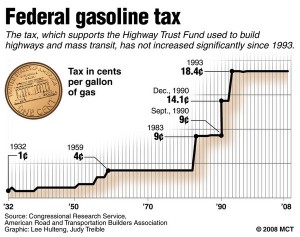
That is a quote from the father of modern education and president of progressive policy who along with Social Gospel soldiers such as John Dewey created the situation you see on the below chart. The quotes are from Woodrow Wilson.
Government is a corrosive, corruptible creature, and teachers are a reflection of everything that’s wrong with it. They take too much and do too little. Tocqueville proclaimed in 1840 “Having thus taken each citizen in turn in the powerful grasp and shaped him to its will, government then extends its embrace to include the whole of society. It covers the whole of social life with a network of petty, complicated rules that are both minute and uniform, through which even men of the greatest originality and the most vigorous temperament cannot force their heads above the crowd. It does not break men’s will, but softens, bends, and guides it; it seldom enjoins, but often inhibits, action; it does not destroy anything, but prevents much from being born; it is not at all tyrannical, but in hinders, restrains, enervates, stifles, and stultifies so much that in the end each nation is no more than a flock of timid and hardworking animals with the government as its shepherd.”
Few tax payers ever really consider how much they actually pay in taxes, which robs them of money for themselves and gives it them to the mediocre only to feed a government monster with a big appetite.
And that’s where your tax money is going ladies and gentlemen. Remember, if you vote for a school levy, a social welfare levy, a tax increase of any kind…………………………..you’re stupid!
“If we can prevent the government from wasting the labor of the people, under the pretense of caring for them, they will be happy.” Thomas Jefferson.
I spent my twenties reading Joseph Campbell who was an intellectual very well-respected among virtually everyone no matter what the political affiliation. And after I read every Campbell book, some of them several times, I read his autobiography by Stephen and Robin Larsen called A Fire in the Mind, The Life of Joseph Campbell and I remembered with some surprise the quote from that book on page 466 paragraph 3, “Campbell believed in a great revolution of the spirit, and deplored the authority figures of the world who sought to keep human-kind in line. While he seemed to be siding with the powers that be, on the other hand he felt that the revolution of the Marxists and the Maoists was no real revolution but only the triumph of a new kind of collectivism, perhaps even worse than the old religious orthodoxies, because it had totally repudiated the spiritual element—and even worse, the celebration of individuality.” That comment came on March 10th in 1969. It made Campbell very upset that many of his students at Sara Lawrence College were missing class to protest the war and that is the context of his comments.
Today is my 23rd wedding anniversary with my wife. She knows what to give me, a guy that reads and writes continuously while watching the news and cutting hours of radio broadcasts into digestible bits so people who miss valuable information can hear them at their convenience. So she made me an American flag blanket which she gave me this morning.
I agree with the Bull Dog from 700 WLW that Donald Trump is the kind of guy that can level out that curve. He may not be the guy everyone loves, but we need a media equivalent to the Marxists, Socialists, Maoists, radical extremists, union interests composed of the same elements, that are embedded in our culture and it will take someone like Trump to do it. If someone comes up with better candidate, fine, but the Bull Dog articulates the problem very well in this bit.
. To repair the nation it will take each and every person that makes up that nation to do their part, be good individuals and work toward the goal of renewal, and we’ll do it one stitch at a time, or one word at a time, but we will get there because I have committed myself to as much in this next phase of my marriage. That’s why my wife gave me that gift, to show her support of my effort.
OKLAHOMA CITY, OK — More Oklahoma families will be able to send their children to the schools of their choosing, following today’s passage of the Oklahoma Equal Opportunity Education Scholarship Act. The bill will provide partial tax credits to individuals and businesses that donate to nonprofits that distribute private-school scholarships to eligible families.
By a vote of 64-43, the Oklahoma House of Representatives approved the measure, which previously passed the Senate chamber by a vote of 30-14.
“This is another step in the direction of choice for Oklahoma’s parents and children,” Robert Enlow, president and CEO of the Foundation for Educational Choice, said. “We look forward to seeing school choice continue to flourish in the Sooner State, and we are eager to watch other states follow Oklahoma’s lead.”
The Oklahoma Equal Opportunity Education Scholarship Act, sponsored by Rep. Lee Denney (R) and Sen. Dan Newberry (R), would make families with incomes up to 300 percent of the income needed to qualify for the federal Free and Reduced-Price Lunch program eligible to receive scholarships; however, scholarship-giving nonprofits must spend a portion of their expenditures for low-income students in an amount equal to or greater than the percentage of low-income students in the state.
Eligible students, 50 percent of whom must be enrolled currently in public schools, can receive scholarships worth up to $5,000 or 80 percent of the average per-pupil expenditures in the school districts where they reside. With a “cap” of tax credits allowed set at $1.75 million—and with the tax credit itself being worth 50 percent of the donation—the program will provide potentially $3.5 million toward scholarships. The program also provides a separate $1.5 million in tax credits for donations made to nonprofits that distribute “educational improvement grants” to public schools, which is similar to a 10-year-old program in Pennsylvania.
If the Senate agrees to the changes made in the House, the bill will proceed to Gov. Mary Fallin.
The Foundation for Educational Choice is a 501(c)(3) nonprofit and nonpartisan organization, solely dedicated to advancing Milton and Rose Friedman’s vision of school choice for all children. First established as the Milton and Rose D. Friedman Foundation in 1996, the foundation continues to promote school choice as the most effective and equitable way to improve the quality of K-12 education in America. The foundation is dedicated to research, education, and outreach on the vital issues and implications related to choice and competition in K-12 education.
I have been seeking to pull together all the interested parties to get the United States into the game going as far as contacting President Obama, and General Motors after the bail-out, to help us rediscover ourselves. But there was no response from Obama or General Motors. They aren’t interested in new technology, only the old.
So China is getting ready to usher in this technology for all the reasons that you’ll hear in the below broadcast of Doc Thompson as Doc discusses how the EPA shut down oil drilling in Alaska.We are our own worst enemy in the United States because too many special interests are getting in the way of development of new technology.
Below I will disclose the non-confidential portions of my correspondence with Mollar International so the reader can see what is coming in the near future. Unfortunately because the United States is over-regulated and drags it’s feet in too many ways, it will be China that will be first.
First the letter from me to Bruce, then the response from Bruce.
Hi Bruce,
I was wondering how close your company is to a working model that could perform as a shuttle service beginning with a line running from West Chester, Ohio to Columbus.
Once Skycar performed the shuttle service for key people of this region and gained media, and political support, it would become viable for an amusement park such as Kings Island to offer a transport to Cedar Point. Both amusement parks are owned by Cedar Fair Amusements and would benefit by offering pass holders an economic way to visit both parks within the same day with their Platinum season pass offerings. The two parks are about 300 miles apart and they have a platinum package that allows season pass holders to visit those two parks for free. So a Skycar shuttle would be a great asset to their business model, and a great way to introduce the technology to the public at large and establish trust in the vehicles. Those two amusement parks are two of the largest and most spectacular in the country. A successful implementation of this type of shuttle service would then convince the Disney Parks in Florida to offer a similar shuttle service from their parks in central Florida to their cruise line in Port Canaveral.
This is something I have been considering for a while, but I believe all the above is very possible. I suppose the big question would be as to whether or not your Skycar is technically able to perform the task as of now, and if not, is there a time line that is reasonable so that I could begin to pitch this concept to the interested parties.
I’d be interested in knowing more details if you could provide them.
Dear Rich, As you know the Moller M400 Skycar is in development, and the working prototype of the M400X has successfully completed its initial hover tests. Unfortunately we are still having difficulties raising the required capital to move forward with our announced plans, therefore our present business plan calls for production of 1,000 of the M200G Neuera over the next 3+ years (2011 through 2014). We can produce this vehicle at much lower cost because of the very limited regulatory oversight that a vehicle of this type appears to require (it is a “ground effect” aircraft and therefore exempt from the traditional certification process and may not require a pilots license to operate).
The interest shown to date in this vehicle suggests that the early production models could be sold at a premium price. It is proposed that the first 40 units of the M200G be sold by auction. If a buyer indicates an interest in acquiring a M200G he will be put on a list of potential buyers. When that list totals some yet-to-be-specified number, the auction will begin. While this will require our resources to focus on the M200-series products for the next couple of years, it should enable us to raise sufficient funds to regain momentum on the M400 Skycar thereafter.
The next phase of the M400 testing will be to extend the hover flight characteristics with manned and untethered flights. We have prepared the M400X for the new, more powerful Rotapower engines required for this phase, and are working to integrate these engines with updated electronics being made for the M200 that make up the artificial stability system. When we get to the next set of tests with the M400 we will endeavor to safely demonstrate the new features with a set of piloted test flights defined by the FAA for an Experimental Aircraft.
After the completion of these tests, will hope to build up to three M400 pre-production aircraft that will incorporate changes to the fuselage and cabin and prepare us for high-speed, and mid-air VTOL to high-speed cruise transition maneuvers. It is our intent to test the full-scale preproduction Skycar in a wind tunnel to validate the transition characteristics prior to performing this transition in flight, but high-speed flight tests may be performed that originate with the nacelles (engine pods) in the horizontal position rather than their VTOL-mode orientation of 45 degrees of rotation. These tests will require that the Skycar use a conventional runway for take off and landing and will be required only for these tests. The Skycar’s VTOL mode take off and landing capabilities will continue to be demonstrated during other low-speed test flights. The earliest we anticipate an FAA certified production Skycar is now 2013, and due to the many milestones yet to be achieved it is very difficult to set an actual schedule of availability.
Regards,
Bruce Calkins General Manager Moller International www.moller.com
I will always feel pride to know that the United States still produces people like Paul Mollar who invented the Skycar, but it will be the Chinese that will most likely take the bold first step.
Below is a great article from the Daily Reckoning about Oil Shale in Colorado. There is only one reason that our country is in a financial mess, and that is because fools are standing in the way. I am thinking of a speech from John Galt uttered in the book Atlas Shrugged. “You propose to establish a social order based on the following tenets: that you’re incompetent to run your own life, but competent to run the lives of others—that you’re unfit to exist in freedom, but fit to become an omnipotent ruler—that you’re unable to earn your living by the use of your own intelligence, but able to judge politicians and to vote them into jobs of total power over arts you have never seen, over sciences you have never studied, over achievements of which you have no knowledge, over the gigantic industries where you, by your own definition of your capacity, would be unable successfully to fill the job of assistant greaser.”
Oil Shale Reserves: Stinky Water, Sweet Oil
A Daily Reckoning White Paper Report By Dan Denning
You won’t think much of Rio Blanco County if you ever drive through it. In fact, unless you take a right turn off Interstate-70 West at Rifle, head north on Railroad Avenue and then west on Government road to Colorado state highway number thirteen, odds are you’ll never even step foot in Rio Blanco County.
But even if you keep heading west toward Grand Junction, through the town of Parachute and the shuttered oil shale refineries from the 1970s, you’ll see the Book Cliffs geologic formation on your right. For miles and miles. It’s a bleak landscape. Almost lunar. At first glance, it’s the kind of land you’d never want to explore, much less settle down in.
Oil Shale Reserves : America’s Strategic Future
In the small world of geologists, though, the region is well-known. In fact, you might even say it’s the single most important patch of undeveloped, unloved, and desolate looking land in America. But you’d never guess this particular corner of the Great American Desert may play an integral role in America’s strategic future just by looking at it. You’d never guess that the whole stretch of brown, red, and orange land contains enough recoverable oil and gas to make you forget about the Middle East for the rest of time.
There are places in Rio Blanco County like Stinking Water Creek, named after the smelly mix of oil and water the first white settlers found there, that tell you oil’s always been around the Rocky Mountains. It’s just not always been easy to find. It’s one thing to find oil that bubbles out of the ground in liquid form. It’s quite another to drill a thousand feet down, and encounter oil locked up tight inside a greasy rock.
The first seeping pools of oil were discovered in Western Colorado as far back as 1876, the year the state entered the Union. But exploration didn’t get serious until drillers settled in the town of Rangely in Rio Blanco County.
By 1903, thirteen different drillers had come and gone in Rangely. According to the local museum, the only six wells that actually struck oil were producing just two to ten barrels of oil a day. Hardly a Spindeltop, the gusher that launched the Texas oil-boom on January 10th, 1901, and immediately began producing 100,000 barrels per day.
The energy reserves of the Piceance Basin, upon which Rio Blanco County sits, contain massive petroleum reserves of a very unusual nature: Oil shale.
Oil Shale Reserves : A Congressional Legacy
Most of the nation’s oil shale reserves rest under the control of the U.S. government – a legacy of a 95-year old Congressional Act. In 1910, Congress passed the Pickett Act, which authorized President Taft to set aside oil- bearing land in California and Wyoming as potential sources of fuel for the U.S. Navy. Taft did so right away. The Navy was in the process of switching from coal-burning ships to oil burning ships. And the U.S. military, conscious of the expanding role of America in the world, needed a dependable supply of fuel in case of a national emergency.
From 1910 to 1925 the Navy developed the Naval Petroleum and Oil Shale Reserves Program. The program became official in 1927 and President Roosevelt even expanded the scope of the program in 1942 as the U.S. geared up for war with Japan and Germany.
Several of the oil fields set aside for the nation’s first strategic reserve, particularly Elk Hills in California, would go on to produce oil for the U.S. government. Elk Hills was eventually sold off to Occidental Petroleum for $3.65 billion in 1998 in the largest privatization in U.S. history. The shale reserves, however, still remain, locked 1,000 feet underground in the Colorado desert.
Unlocking The Future
The destruction of Hurricane Katrina shows the importance of a strategic petroleum reserve, or, more accurately, a strategic energy reserve. But the SPR in Louisiana only holds about 800 million barrels of emergency, enough to get the country through about 90 days of regular oil usage. That’s barely a band-aid for a country that faces a potential energy heart attack.
In other words, the future of oil shale may have finally arrived. Extracting oil from shale is no simple task, which is why the reserves remain almost completely undeveloped. But an emerging new technology promises to unlock the awesome potential of the oil shale.
“The technical groundwork may be in place for a fundamental shift in oil shale economics,” the Rand Corporation recently declared. “Advances in thermally conductive in-situ conversion may enable shale-derived oil to be competitive with crude oil at prices below $40 per barrel. If this becomes the case, oil shale development may soon occupy a very prominent position in the national energy agenda.”
Estimated U.S. oil shale reserves total an astonishing 1.5 trillion barrels of oil – or more than five times the stated reserves of Saudi Arabia. This energy bounty is simply too large to ignore any longer, assuming that the reserves are economically viable. And yet, oil shale lies far from the radar screen of most investors.
But we here at The Daily Reckoning are on the case. Just yesterday, I caught a first-hand glimpse of a cutting-edge oil shale project spearheaded by Shell. I trekked out to a barren moonscape in Colorado to tour the facility with Shell geologists. To summarize my findings, oil shale holds tremendous promise, but the technologies that promise to unlock this promise remain somewhat experimental. But sooner or later, the oil trapped in the shale of Colorado will flow to the surface. And when it does, it will enrich investors who arrive early to the scene.
Can Oil Shale Change The World?
America’s oil shale reserves are enormous, totaling at least 1.5 trillion barrels of oil. That’s five times the reserves of Saudi Arabia! And yet, no one is producing commercial quantities of oil from these vast deposits. All that oil is still sitting right where God left it, buried under the vast landscapes of Colorado and Wyoming.
Obviously, there are some very real obstacles to oil production from shale. After all, if it was such a good thing, we’d be doing it already, right? “Oil shale is the fuel of the future, and always will be,” goes a popular saying in Western Colorado.
But what if we could safely and economically get our hands on all that oil? Imagine how the world might change. The U.S. would instantly have the world’s largest oil reserves. Imagine…having so much oil we’d never have to worry about Saudi Arabia again, or Hugo Chavez, or the mullahs in Tehran. And instead of ships lined up in L.A.’s port to unload cheap Chinese goods, we might see oil tankers lined up waiting to export America’s tremendous oil bounty to the rest of the world. The entire geopolitical and economic map of the world would change…and the companies in the vanguard of oil shale development might make hundreds of billions of dollars as they convert America’s untapped shale reserves into a brand new energy revolution.
Presidents Gerald Ford and Jimmy Carter may have been entertaining similar ambitions in the late 1970s when they encouraged and funded the development of the West’s shale deposits. A shale-boom ensued, although not much oil flowed. The government spent billions and so did Exxon Mobil. New boomtowns sprung up in Rifle, Parachute, Rangely, and Meeker here in Colorado.
And then came Black Monday. May 2, 1982. The day Exxon shut down its $5 billion Colony Oil Shale project. The refineries closed. The jobs left (the American oil industry has lost nearly as many jobs in the last ten years as the automobile and steel industries.) And the energy locked in Colorado’s vast shale deposits sat untouched and unrefined.
Oil Shale Technology – Old & New
Extracting oil from the shale is no simple task. The earliest attempts to extract the oil utilized an environmentally unfriendly process known as “retorting.” Stated simply, retorting required mining the shale, hauling it to a processing facility that crushed the rock into small chunks, then extracted a petroleum substance called kerogen, then upgraded the kerogen through a process of hydrogenation (which requires lots of water) and refined it into gasoline or jet fuel.
But the difficulties of retorting do not end there, as my colleague, Byron King explains:
“After you retort the rock to derive the kerogen (not oil), the heating process has desiccated the shale (OK, that means that it is dried out). Sad to say, the volume of desiccated shale that you have to dispose of is now greater than that of the hole from which you dug and mined it in the first place. Any takers for trainloads of dried, dusty, gunky shale residue, rife with low levels of heavy metal residue and other toxic, but now chemically-activated crap? (Well, it makes for enough crap that when it rains, the toxic stuff will leach out and contaminate all of the water supplies to which gravity can reach, which is essentially all of ‘em. Yeah, right. I sure want that stuff blowin’ in my wind.) Add up all of the capital investment to build the retorting mechanisms, cost of energy required, cost of water, costs of transport, costs of environmental compliance, costs of refining, and you have some relatively costly end-product.”
But a new technology has emerged that may begin to tap the oil shale’s potential. Royal Dutch Shell, in fact, has recently completed a demonstration project (The Mahogany Ridge project) in which it produced 1,400 barrels of oil from shale in the ground, without mining the shale at all.
Instead, Shell utilized a process called “in situ” mining, which heats the shale while it’s still in the ground, to the point where the oil leaches from the rock. Shell’s Terry O’Connor described the breakthrough in testimony before Congress earlier this summer (And Congress may have an acute interest in the topic, since the U.S. government controls 72% of all U.S. oil shale acreage):
“Some 23 years ago, Shell commenced laboratory and field research on a promising in ground conversion and recovery process. This technology is called the In-situ Conversion Process, or ICP. In 1996, Shell successfully carried out its first small field test on its privately owned Mahogany property in Rio Blanco County, Colorado some 200 miles west of Denver. Since then, Shell has carried out four additional related field tests at nearby sites. The most recent test was carried out over the past several months and produced in excess of 1,400 barrels of light oil plus associated gas from a very small test plot using the ICP technology…
“Most of the petroleum products we consume today are derived from conventional oil fields that produce oil and gas that have been naturally matured in the subsurface by being subjected to heat and pressure over very long periods of time. In general terms, the In-situ Conversion Process (ICP) accelerates this natural process of oil and gas maturation by literally tens of millions of years. This is accomplished by slow sub-surface heating of petroleum source rock containing kerogen, the precursor to oil and gas. This acceleration of natural processes is achieved by drilling holes into the resource, inserting electric resistance heaters into those heater holes and heating the subsurface to around 650-700F, over a 3 to 4 year period.
“During this time, very dense oil and gas is expelled from the kerogen and undergoes a series of changes. These changes include the shearing of lighter components from the dense carbon compounds, concentration of available hydrogen into these lighter compounds, and changing of phase of those lighter, more hydrogen rich compounds from liquid to gas. In gaseous phase, these lighter fractions are now far more mobile and can move in the subsurface through existing or induced fractures to conventional producing wells from which they are brought to the surface. The process results in the production of about 65 to 70% of the original “carbon” in place in the subsurface.
“The ICP process is clearly energy-intensive, as its driving force is the injection of heat into the subsurface. However, for each unit of energy used to generate power to provide heat for the ICP process, when calculated on a life cycle basis, about 3.5 units of energy are produced and treated for sales to the consumer market. This energy efficiency compares favorably with many conventional heavy oil fields that for decades have used steam injection to help coax more oil out of the reservoir. The produced hydrocarbon mix is very different from traditional crude oils. It is much lighter and contains almost no heavy ends.
“However, because the ICP process occurs below ground, special care must be taken to keep the products of the process from escaping into groundwater flows. Shell has adapted a long recognized and established mining and construction ice wall technology to isolate the active ICP area and thus accomplish these objectives and to safe guard the environment. For years, freezing of groundwater to form a subsurface ice barrier has been used to isolate areas being tunneled and to reduce natural water flows into mines. Shell has successfully tested the freezing technology and determined that the development of a freeze wall prevents the loss of contaminants from the heated zone.”
It may seem, as O’Conner said, counter-intuitive to freeze the water around a shale deposit, and then heat up the contents within the deposit. It’s energy-intensive. And it’s a lot of work. What’s more, there’s no proof yet it can work on a commercial-scale.
Yet both technologies, the freeze wall and the heating of shale, have been proven in the field to work. The freeze wall was used most recently in Boston’s Big Dig project. It was also used to prevent ground water from seeping into the salt caverns at the Strategic Petroleum reserve in Weeks Island, LA.
But still, you may be wondering, does it really make sense to heat the ground up a thousand feet down for three or four years and wait? Of course it does. In case you missed O’Conner’s math, Shell could harvest up to a million barrels per acre, or a billion barrels per square mile, on an area covering over a thousand square miles.
It’s still early days in the oil shale fields of Colorado and Wyoming, but it looks to me like someone’s gonna make a lot of money out there. I’m working hard to discover how we outside investors can play along.
Shell’s Mahogany Ridge
Last week, I paid a visit to Royal Dutch Shell’s oil shale project in Colorado. The visit left me with more questions than answers, but I came away from the place with the sense that this opportunity is very real…or, at least, it soon will be.
After driving across a vast expanse of “Nowhere,” Colorado, my brother and I met up with a few geologists from Shell. Of course it’s just those large, unpopulated tracts of high desert that make the area so appealing from a geopolitical point of view. Tapping into the oil shale 2,000 feet underground isn’t going to bother too many people. And there are no spotted owls around either. If the technology to turn shale into oil works, the entire area will become a new American boom patch.
Soon after we arrived, the geologists escorted us around the facility, chatting all the while about the successes and challenges of their venture.
The two trickiest aspects of oil shale development, as the geologists and engineers explained, are heating the shale to extreme temperatures, while simultaneously surrounding the heated area with a subterranean ice wall. Shell doesn’t know, or isn’t saying, which part of the project will be the most challenging. If you were about to change the world by making it economic to tap into as much as 2 trillion barrels of oil under the Colorado plateau, you’d be pretty careful about showing your competitors how you were going to do it.
First, anything that heats up rock around it to around 600 or 700 degrees Fahrenheit has to conduct electrically generated heat well. The most conductive metals on the Periodic Table of Elements are, in order, silver, copper, and gold. Naturally, the number of heaters you put in a place affects the amount of time it takes to turn the shale goo into API 34 crude. The more heaters, the more cost, though.
And given the fact that Shell does not know yet if the heaters will be recoverable, you can see that sticking silver, copper, or gold heaters 2000 meters underground and then leaving them there once the kerogen has been pumped has a serious effect on the economics of your operation.
At the moment, Shell is not sure what the optimal size of production zones ought to be. The big issue here is how big can a freeze-wall be to be effective and freezing the groundwater surrounding a shale deposit? The test projects, as you can see, were quite small. Shell doesn’t know, or isn’t saying, what the optimum size is for a each “pod” or “cell”. That’s what they’ll have to figure out at the next stage…and the picture with the dirt is a football field sized project….where rather than creating the freeze-wall at 50 meters down…they will do it at 1,000 ft. down…. with 2,000 being the desired and necessary depth for commercial viability. I’m not sure anyone has ever created a freeze-wall at that depth….neither is shell. But we’ll find out. The oil itself that comes from the process looks like…oil. No heavy refining needed.
Shell thinks the whole thing is economic at a crude price of $30. So barring a major reversal of geopolitical trends, they’re forging ahead.
Since the Bureau of Land Management owns about 80% of the oil shale acreage in Colorado, there is no investment play on private companies that might own land with rich shale deposits. Although, if Shell and the DOE are right that you can recover a million barrels of oil per acre…it wouldn’t take much land to make a man rich out here.
Oil Shale: Testing Public Lands
The Bureau of Land Management recently received ten applications (by eight companies) for a pilot program to develop Colorado’s shale reserves. The program allows the companies access to public lands for the purpose of testing shale-extraction technologies. You see below an interesting mix of large, publicly traded oil giants and small, privately held innovators.
Natural Soda, Inc. of Rifle, Colorado.
EGL Resources Inc. of Midland, Texas.
Salt Lake City-based Kennecott Exploration Company.
Independent Energy Partners of Denver, Colorado
Denver-based Phoenix Wyoming, Inc.
Chevron Shale Oil Company.
Exxon Mobil Corporation.
Shell Frontier Oil and Gas Inc
There is dispute within the industry over how long, if ever, demonstration extraction technologies can become commercially viable. I’ve spoken with some of the smaller companies that have applied for leases from the BLM. Some of them will have to raise money to conduct the project. And some of them have been less than forthcoming about how exactly their extraction technology is different or better than previous methods.
How will it all unfold? Well, for starters, it could all utterly fail. To me, Shell’s in-situ process looks the most promising. It also makes the most sense economically. There may be a better, less energy-intensive way to heat up the ground than what Shell has come up with. But Shell, Chevron, and Exxon Mobil clearly have the resources to scoop up any private or small firm that makes a breakthrough.
And there are a host of smaller firms involved with the refining and drilling process that figure to play a key role in the development of the industry, should that development pick up pace.
The Energy Policy Act of 2005, otherwise known as a listless piece of legislation without any strategic vision, does, at least, make provision for encouraging research into the development of shale. But government works slow, when it works at all. It’s going to take an external shock to the economy to really ratchet up interest and development of the nation’s energy reserves…say…something like a nuclear Iran.
Al Gore and his friends of communism advocates want to stop the American economy and they are what is driving up our fuel costs by standing in the way of technological development. Our country is being run by fools and idiots by our default, because while the rest of us work at real jobs, those thieves of our tax dollars are using our own resources to destroy us. Those of us that think will never get along with communists. I’m going to call them that for now on, because that’s what they are. I don’t want the world they are advocating. I want oil, fast cars and government off my back.
My wife and I took my daughter car shopping today and I made sure she didn’t pick some electric car that had trouble running under 100 MPH. My mind was on the recent reports on electric cars while we looked. The day before today’s Earthday show on WLW the Nissan Leaf won the 2011 World Car of the Year award at the New York International Auto Show, beating out the short list of three finalists — the Audi A8 and the BMW 5 Series. The Leaf was the first electric vehicle to win the award.
According to the jurors, Nissan‘s electric car has a lot going for it:
“The Leaf is the gateway to a brave new electric world from Nissan. This 5-seater, 5-door hatchback is the world’s first, purpose-built, mass-produced electric car. Dropped onto a unique platform and body, the Leaf’s lithium-ion battery modules and electric motor generate 108hp and 206 lb ft of torque, propelling the hatch from zero to 60mph in 11.5 seconds and a top speed of 90mph. It has a range of over 100 miles on a full charge (claims Nissan), takes around 8 hours to recharge using 220-240V power supply and produces zero tailpipe emissions. Its low center of gravity produced sharp turn-in with almost no body roll and no understeer. The good news? It feels just like a normal car, only quieter.”
Read the rest of the article here:
Is it any surprise that our government, which is pushing green technology isn’t doing anything about the extortion of fuel prices, so that Americans go out and buy cars like this stupid “Leaf.”
I’ve driven for many years electric-powered forklifts. They work well enough and similar to propane powered lift trucks without the emission. The biggest downfall of electric vehicles is the battery technology. It takes too long to charge them and they run out of power too fast. And they aren’t new. It’s been over a decade with millions and millions of dollars of research done and battery technology still can’t last much longer than 8 hours with constant use on a shipping dock. And a car that only goes 100 miles per 8 hour charge is not a replacement for oil powered vehicles. Not even close!
Then another problem emerges; a 220 outlet is not a typical outlet. That’s what you might run a washer and dryer off of. So to charge up the car, you’ll have to have a special outlet in your garage. A standard outlet is 110 so people won’t be able to do like I suggested at Burger King and sneak the power away secretly from an outside outlet.
All those things are bad, but the worst of all is the name of these stupid electric cars. In America we have names for cars like Mustang, Charger, Firebird, Thunderbird, that’s what American’s like to buy. What did they call this stupid car……………….a Leaf? A LEAF! Who wants to drive around a car named after a plant? Leaves are something that decays and blows away. Whose stupid idea was it to name a car after something fragile like a leaf?
That is a typical government type of name for a product. These are the same type of overly specialized fools that conceived that the solution to the unemployed in Florida was to buy people who didn’t have job capes. What a brilliant marketing idea by clueless, useless people, the same type of people who came up with the name “The Leaf.”
So, what kind of mind created those types of people? What are the students that go to college and learn how to brain-storm and come up with names like “The Leaf” and capes for the unemployed like? Have a look at what students do in their leisure time to understand how they’ll behave in business when they graduate. Here are tomorrow’s keepers of the world taking a little downtime from the hard studies of university. Progressives think all this behavior is good and healthy for young people.
While you watch the gas prices go up, know in your mind the type of fool and thief that is creating policy that is hurting your pocketbook on half-baked, thoughtless endeavors suitable only for a drunk. That is what the Leaf is and the stupid cape ideas are and the nudging of American society into electric cars while we function with our hands tied behind our backs with regulation is an attack on Americanism. Meanwhile, the Obama administration will grant Brazil a deep-sea drilling license to help that country economically and distribute the wealth of our nation and allow our economy to crumble…..on purpose.
Here are those spring break kids all grown up. These are the people who stand in the way of American growth and economic development. They are parasites that loot our taxes and fill their pockets. These are the progressive groups behind the electric car push.
So here’s how it’s going to work, and this is a note to progressives. You better respect the law because once you eliminate it, such as what the union boys of Trumka and his thugs are doing, you create a free-for-all environment where the rules can be broken the other way too.
On Monday April 18th, 2011 I did a long interview with Channel 9 News that will be shown on May 9th 2011. This will be an investigative report involving education issues and will also feature two other education reformers in Jennifer Miller formerly of the Mason School Board, and Sharon Poe, the leader of the levy defeat of the last Mason levy attempt.It promises to be a revealing report that I will not disclose until the airing of the program. Needless to say, there is a lot wrong with modern education, one of those things is in the quality of the teachers. It has been taboo to speak about this quality problem, but as evidence to those concerns look at this video just released.
Any threat to that fraternity is to be sought out and destroyed out of preservation of the government entity. I make no secret about it. I don’t like public education. It does not produce the type of students I think are relevant to society. It’s not the kids fault or even the parents directly. The school systems have for decades allowed them to become social police officers regulating life’s dangers such as making the shape of a gun with a child’s hand while they try to play cops and robbers, or discouraging any type of behavior that might be perceived as violent. And the result is that kids grow up to become passive adults that are easily steered by the persuasive words of a con artist like Barrack Obama, or even a Bob Taft. (He was a Republican) How anyone in society could listen to Jessie Jackson or Louis Farrakhanwithout asking why those people have a national platform to speak from, but just to accept it as a fact says everything, that people have allowed themselves to become so dumbed down and sensitive that they can no longer think critically. The fault of that starts with parents and then public education is to blame. As I look around at the way people vote and spend their time, I would say that public education is a miserable failure, because people are only living the lives of a fraction of what they should be.
The way the world should be is that a school should not have any business in whether or not a kid attends school. Truant officers have no place in American society. Who gave them any authority at all? Of what intention were they even conceived? Is it of the social need of a child to get an education and become a productive citizen? If so, how have the results been? Have they successfully made American civilization a better country, or just a complacent country that easily follows new rules such as seat belt legislation, or legislation against texting in a car. Look at the definition of truancy as described at Wikipedia:
Truancy is any intentional unauthorized absence from compulsory schooling. The term typically describes absences caused by students of their own free will, and usually does not refer to legitimate “excused” absences, such as ones related to medical conditions. The term’s exact meaning differs from school to school, and is usually explicitly defined in the school’s handbook of policies and procedures. It has no relation to homeschooling, although sometimes parents who practice homeschooling have been charged with this.[1]
A good friend of mine recently said to me, “kids need to be pushed, and that is the role of the teacher.” That thought drove me to consider……………………..why?
People have a natural desire to do well. So that leads to the definition of, “well.” Someone must understand what, “well,” is before they can define it. But public school defines well in a mechanical way, by grades A thru F. Wellness is somewhere between those two measures. But wellness is much more than that, so with such a narrow scope we are already setting kids up to fail. We believe that to perform “well,” we can coax them to perform with force, and that is the role of the teacher, to push the child to wellness.
This happens because of traditional learning that does not prepare the mind to think critically with divergence. If our society is to survive, we will “PRESERVE” the divergent thinking of our children and not destroy their minds with mind numbing, Marxist disguises of social engineering known as “public education.”
Reform now before it’s too late. And certainly don’t throw any more money at it. To find out why, tune in to Channel 9 in Cincinnati, Ohio on May 9th at 6 PM.