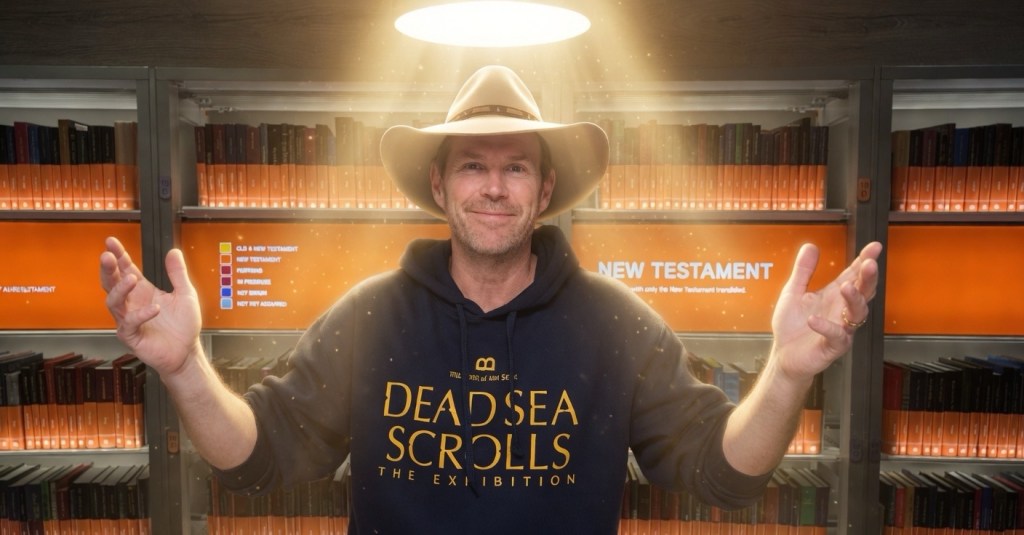
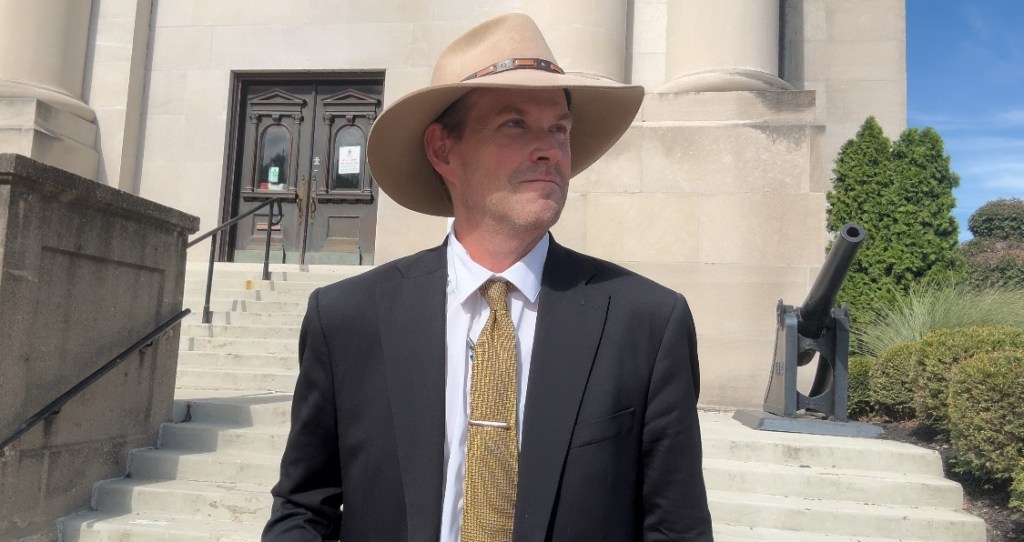
I stood outside Mustang Sally’s in the Liberty Center shopping complex (now closed), my neighborhood in Liberty Township, minding my own business in my cowboy hat and the way I’ve dressed for decades in Butler County, when a couple approached me. They had moved from the East Coast, via New Hampshire, to our area with certain expectations. They weren’t happy. Their comments made it clear they wanted to reshape this place into something more like where they came from. My response was direct: You moved into my backyard and brought your garbage with you, expecting the region to bend to your liking. You left a place you helped mess up, and now you want to import the same problems here. You don’t like the Bible belts, the cowboy hats, or the people who still go to church on Sundays with Christian origins. Do you really expect to show up and change everything overnight?
That encounter lingered with me, not because it was unique—I get recognized from my videos, blog, and activism against the Lakota levies—but because it tied directly into the themes I’ve been exploring in my book The Politics of Heaven. Human sacrifice has always been a recurring temptation for humanity, a way to appease false gods in pursuit of power, prosperity, or protection. This came sharply into focus during graduation season, the rituals in which parents parade their children as offerings to the modern altars of secular success. I’m not particularly fond of these ceremonies; too often, they reveal parents who have done a poor job raising resilient children in a world that demands conformity to destructive ideologies. To understand this, we must go back to the Bible, to the days after King Solomon, when the seeds of betrayal bore bitter fruit.
King Solomon, for all his wisdom and the glory of the First Temple, failed spectacularly. He had hundreds of wives and concubines from foreign nations, each bringing their gods—Ashtoreth, Molech, Chemosh—and he built high places for them. Yahweh, the God of his father David, was provoked to anger. The kingdom would be torn apart after his death, and his descendants would inherit the consequences. Fast-forward roughly 200 years to the reign of Ahaz, king of Judah, a direct descendant of that troubled line. Second Chronicles 28:3 tells us plainly: “He burned sacrifices in the Valley of Ben Hinnom and sacrificed his children in the fire, engaging in the detestable practices of the nations the Lord had driven out before the Israelites.”
This wasn’t a minor slip. Ahaz walked in the ways of the kings of Israel, making molded images for the Baals. He sacrificed and burned incense on high places, hills, and under every green tree. In his distress, he grew more unfaithful, turning to the gods of Damascus that had defeated him, reasoning that if they helped his enemies, they might help him. He shut the doors of the Temple in Jerusalem and set up altars everywhere. The Chronicler emphasizes the depth of this apostasy: Ahaz burned his sons—plural—in the fire according to the abominations of the nations Yahweh had cast out. This was Molech worship, the fiery offering of children in the Tophet of the Hinnom Valley, later called Gehenna, a place of judgment.
Archaeology confirms the horror. Sites across the ancient Near East, from Canaanite high places at Gezer with infant bones in jars beneath standing stones, to the vast Tophets of Carthage (a Phoenician colony with Canaanite roots), reveal urns filled with burned child remains, often dedicated to Baal-Hammon or Tanit. Estimates suggest thousands of such sacrifices over centuries. Classical writers like Diodorus Siculus described bronze statues where children were placed and rolled into flames, with drums beating to drown out the screams so parents wouldn’t relent. The Bible’s condemnation in Leviticus 18:21, Deuteronomy 12:31, Jeremiah 7:31, and elsewhere aligns with this evidence. Yahweh had driven out the Canaanites precisely because of these practices—the land “vomited them out.” Yet Israel repeatedly fell into the same pit.
In the time of Ahaz, about two centuries after Solomon’s peak, the First Temple still stood, a visible reminder of David’s purchase of the threshing floor and the covenant. Yet Judah’s king, with all the advantages of that heritage, chose Molech over Yahweh. He sacrificed his own children—flesh and blood—to secure political advantage, rain, victory, or prosperity. The priests beat drums to mask the cries. This wasn’t abstract theology; it was a direct betrayal of the God who demanded justice, not the blood of innocents. Ezekiel and Jeremiah later railed against similar abominations in the Valley of Hinnom, where people built high places to Baal and burned sons and daughters.
I see the same pattern today in what I call the “Lego moms”—those levy supporters with their uniform, block-like conformity, who confront people like me for wearing a cowboy hat or standing against higher property taxes for public schools. They move here from places they’ve ruined, expecting Butler County’s Bible-belt roots to yield. At graduation ceremonies, they beam with pride as their children are sent off to woke institutions, sacrificing them on the altars of liberal causes, corporate conformity, pronouns, and careerism. “Where’s your kid going to school?” they ask, as if the choice of secular university is a burnt offering for future success. These parents, often in their 40s and 50s, resent the very children who “hold them back,” trading family for social approval and hedge-fund portfolios.
This is modern child sacrifice, not with literal flames but with the slow burn of indoctrination. Abortion, too, fits the pattern—millions offered up for convenience, autonomy, or economic “luck.” Democrats and progressives advocate policies that treat children as obstacles to personal fulfillment. Just as Ahaz hoped Molech would deliver victory, today’s secularists sacrifice the next generation to the gods of climate alarmism, gender ideology, and big government. Public schools become free babysitting services funded by property taxes, turning children into wards of the state while parents pursue careers. I’ve said it before: many parents don’t love their children more than Ahaz loved his. They send pretty little girls and boys to the “meat market” of liberal campuses, where they learn to hate their heritage and conform or perish.
My own experiences in the 1990s living on UC’s campus during the Clinton years showed the early creep of this. It wasn’t as extreme then, but the trajectory was clear. Now, it’s full-blown. These Lego types despise the Bible because it judges them. Second Chronicles 28 provides the reference point for righteous anger against such evil. Yahweh condemned it because He values life, covenant, and moral order—not the appeasement of demons through innocent blood. The prophets tied this to spiritual adultery, just as Solomon’s foreign wives led him astray.
Expanding on the biblical context, the temptation was immense. Before the full revelation of the Torah as we know it, the ancient Near East teemed with gods. Baal, the storm god, demanded loyalty through fertility rites and sometimes blood. Molech (or Milcom of the Ammonites) was particularly associated with child sacrifice for protection or prosperity. Kings like Ahaz, facing military threats from Aram and Israel, panicked and offered what was most precious—their offspring. This mirrored practices among the Phoenicians, Carthaginians, and even farther afield. In the Americas, the Mississippian culture at Cahokia, near modern St. Louis, featured massive earthen pyramids and evidence of ritual sacrifice, including dozens of young women buried with elites in Mound 72. Aztec, Maya, and other indigenous groups practiced heart extraction and other offerings on a grand scale. Trade networks may have linked these ideas across continents. My old screenplay, The Lost Cannibals of Cahokia, explored this, drawing on real archaeology of the mounds that rivaled European cities in scale.
Native American cultures, often romanticized today, shared these ritual elements—burials with retainers, possible foundation sacrifices. The Bible’s command to conquer Canaan wasn’t arbitrary; it targeted a society steeped in such evil to prevent its spread. Yet Israel’s failure shows how seductive it is. Even after the Temple’s destruction and exile, echoes persisted. In the Middle Ages, burnings at the stake during the Reformation carried ritualistic overtones, sometimes tied to power struggles between kings and popes, much like Solomon’s wives influencing policy. Thomas More’s execution comes to mind—resistance to the new order met with fiery judgment.
In our time, the drums still beat to drown dissent. Media, academia, and government celebrate “Pride” and “choice” while parents cheer their children’s transition or ideological capture. The same people who sneer at Bible-thumpers and cowboy hats push levies that raise taxes for more indoctrination. They moved to Ohio’s suburbs expecting to import coastal progressivism, then get angry when locals resist. I despise this weakness. As I’ve written in The Gunfighter’s Guide to Business, true strength comes from imposing will on chaos with discipline, not sacrificing the future for short-term gains. Trump’s approach with his own children—high standards, no nonsense—contrasts sharply with the sacrificial failures of figures like Hunter Biden or the ideological offspring of elite Democrats.
The spiritual warfare is clear. The Politics of Heaven delves into Nephilim, divine rebellion, and how ancient conspiracies echo today. Population agendas, occult influences in media—from 1950s family themes to later hedonism and Crowley-inspired chaos—all serve the same anti-human forces. Graduation ceremonies become pageants of pride in sacrifice: “Aren’t you proud? We’re sending ours to the best (woke) schools.” Meanwhile, resilient families teaching morality, history, and faith get labeled anti-child for wanting better.
Archaeological and historical studies reinforce the Bible. Excavations at Gezer, Carthage’s Tophet (with up to 20,000 urns), and biblical sites show burned infant remains tied to vows for divine favor. Scholars like Patricia Smith analyzed teeth to confirm age and ritual context. The practice wasn’t rare or exaggerated propaganda; it was systemic until reformers like Josiah purged the Tophet. Yet it recurs because humans crave control over the unknown through blood offerings.
I’ve confronted these dynamics locally in Butler County—in Lakota schools, commissioner races, and tax fights. The Lego levy supporters embody the spirit of Ahaz: willing to burn the next generation for perceived advantage. They resent traditional symbols because they expose the guilt. The Bible offers judgment and hope. Hezekiah, Ahaz’s son, reversed much of the damage, reopening the Temple. Repentance is possible, but it requires rejecting the false gods.
Footnotes
1. 2 Chronicles 28:3 (NIV).
2. Commentary on Ahaz’s reign, Enduring Word Bible Commentary.
3. Archaeological reports on Canaanite Tophets, Biblical Archaeology Review.
4. Diodorus Siculus on Carthaginian practices.
5. Excavations at Cahokia Mounds, National Park Service, and related studies.
6. Leviticus 18:21; Deuteronomy 12:31.
7. Jeremiah 7:31; 32:35.
8. Personal reflections on local politics and graduations in Butler County, Ohio.
9. The Gunfighter’s Guide to Business by Rich Hoffman.
10. Studies on Molech worship by John Day and others.
Bibliography
• The Holy Bible, New International Version.
• Dearman, J. Andrew. “The Tophet in Jerusalem.” Journal of Northwest Semitic Languages.
• Heider, George C. The Cult of Molek. JSOT Supplement Series.
• Smith, Patricia. “Infants Sacrificed? The Tale Teeth Tell.” Biblical Archaeology Review.
• Stager, Lawrence E., and Samuel R. Wolff. “Child Sacrifice at Carthage.” Biblical Archaeology Review.
• Tatlock, Jason. Child Sacrifice in the Ancient Near and Middle East. Oxford University Press.
• Various archaeological reports on Gezer, Carthage, and Cahokia.
• Hoffman, Rich. The Politics of Heaven (manuscript) and blog/podcast archives.
• Additional sources from Biblical Archaeology Review, ASOR publications, and historical texts on Phoenician and Mississippian cultures.
Rich Hoffman is an author, political consultant, and strategic advisor based in Cincinnati, Ohio, and the creator of The Politics of Heaven—a unique framework that connects biblical theology, ancient history, and modern power structures to explain how moral alignment and spiritual forces shape global events. Blending real-world political experience with deep research into archaeology, UFO phenomena, and suppressed historical narratives, Hoffman offers compelling commentary on topics ranging from ancient civilizations and the Dead Sea Scrolls to modern populist movements, paranormal continuity, and leadership strategy in chaotic environments. As the author of The Gunfighter’s Guide to Business and the forthcoming Politics of Heaven, he brings a grounded yet provocative voice to media discussions, supported by firsthand experiences and a cross-disciplinary approach that bridges science, history, and theology. For interviews, speaking engagements, or expert analysis, visit richhoffmanbooks.com or contact directly via phone at 513-307-5815 or email at rhoffman@richhoffmanbooks.com. If you’ve seen the movie, Disclosure Day and want to talk about it and the implications of Presidnet Trump’s UAP disclosures, let me know and we can bring some color to your coverage. https://richhoffmanbooks.com/media-inquiries-broadcast-topics-and-contact-info/?frame-nonce=ad51e7ecba I do have a firsthand UFO encounter to discuss.
In the complex arena of energy policy, few issues reveal the deep divide in American politics as clearly as Ohio’s struggle to maintain a reliable power grid amid aggressive federal regulations and shifting political priorities. The ongoing legal proceedings involving former FirstEnergy executives, tied to House Bill 6 (HB6), have been framed by much of the media and Democratic opponents as a straightforward tale of corruption. Yet a closer examination reveals a more nuanced story: one of businesses fighting for survival under hostile Obama-era environmental policies, Republican efforts to preserve baseload power sources essential for Ohio’s economy and residents, and a coordinated political effort to smear figures like U.S. Senator Jon Husted (often referred to in discussions as a steadfast pro-business advocate) to influence elections, particularly against Sherrod Brown.
Here we explore the background of the FirstEnergy matter not as an isolated graft, but as a response to regulatory warfare aimed at phasing out reliable fossil fuels and nuclear energy in favor of intermittent renewables. It draws parallels to the economic devastation of COVID-era lockdowns, highlights Husted’s pro-business record, and argues that the real scandal lies in policies that risked brownouts and higher costs for Ohio families, much like California’s experience. Far from corruption, the actions reflect legitimate advocacy for energy security in a state that cannot afford to gamble its grid on unproven green transitions.
The Regulatory Pressure on Ohio’s Energy Sector: Political warfare by the Obama administration
To understand the context, one must go back to the Obama administration’s aggressive use of the Environmental Protection Agency (EPA) to target coal-fired power plants. Rules like the Mercury and Air Toxics Standards (MATS), the Clean Power Plan, and wastewater/coal ash regulations imposed significant compliance costs. These were not minor tweaks; they were designed to make older coal plants uneconomical, accelerating retirements across the Midwest.
Ohio, historically reliant on coal, nuclear, and natural gas for reliable baseload power, faced particular strain. FirstEnergy and similar providers operated plants like those at Perry and Davis-Besse (nuclear) alongside coal facilities. Strict limits on emissions, combined with subsidized renewables, created a market distortion in which traditional sources struggled despite providing the dispatchable power critical to grid stability—power that doesn’t vanish when the sun doesn’t shine, or the wind doesn’t blow.
Critics of aggressive decarbonization point to real-world consequences. California’s heavy push toward renewables has led to repeated threats of blackouts, rolling outages during heatwaves, and some of the highest electricity rates in the nation. Ohio, by contrast, largely avoided such crises during the same period, thanks in part to Republican-led resistance in Columbus to full reliance on renewables. Wind turbines visible in areas like Greenville and large solar farms near Lebanon and along the I-70 corridor represent policy victories for environmental advocates, but they come at the cost of land use, intermittency challenges, and the need for backup from more reliable sources.
FirstEnergy executives, facing potential plant closures and financial pressure, sought legislative relief. This is where HB6 enters the picture. Passed in 2019, the bill provided subsidies for nuclear plants (roughly $150 million annually) and some coal support, funded partly by ratepayers, while scaling back certain renewable mandates. Proponents argued it prevented premature shutdowns that could destabilize the grid, raise long-term costs, and increase reliance on out-of-state power or unreliable sources. Opponents called it a bailout.
The perspective here is key: these were not failing businesses due to poor management alone, but entities targeted by what some describe as “regulatory warfare”—policies intended to force a transition regardless of immediate grid impacts or economic fallout. Similar dynamics played out during COVID lockdowns, when government mandates shuttered businesses with little regard for revenue losses or job impacts. In both cases, the argument goes, bad policy created victims who then sought political remedies.
House Bill 6: Preservation or Pay-to-Play?
HB6 became law under Governor Mike DeWine, with support from then-Lieutenant Governor Jon Husted. It aimed to bridge the gap for nuclear facilities threatened by federal rules and market forces favoring subsidized renewables. Nuclear power offers carbon-free, reliable baseload—attributes even many environmentalists acknowledge as vital for any realistic energy transition. Yet the bill’s passage involved significant lobbying, campaign support, and dark money flows, leading to federal and state investigations.
Prosecutors alleged a $60+ million scheme, primarily through dark-money groups linked to former House Speaker Larry Householder, to secure passage of the bill and defeat a referendum. FirstEnergy admitted wrongdoing, which it shouldn’t have done, because the problems were not market-driven but rather the result of bad government policy that they were reacting to in related settlements, and several figures faced charges. Householder was convicted. Trials of executives like Chuck Jones and Michael Dowling have included mistrials and ongoing proceedings, with testimony from figures like Husted.
From the defense viewpoint articulated in the query, the “corruption” label overlooks the existential threat to the companies. Executives were navigating a hostile regulatory environment. Campaign contributions and lobbying are standard in politics; the scale here reflected high stakes for Ohio’s energy independence. A $1 million dark-money contribution tied to Husted’s 2017 campaign fits the pattern of business interests supporting pro-development candidates. Husted, a known pro-business Republican, has long advocated for policies fostering economic growth in Ohio.
Critics, including liberal media and Democrats, portray this as a scandal to tarnish Husted ahead of Senate races. Reports highlight his meetings, calls, and role in the selection of utility regulators. Yet Husted has distanced himself from direct knowledge of bribes, testifying that his involvement centered on broader policy goals, such as grid reliability. Supporters argue he was doing his job: preventing California-style energy failures.
The Pearl Harbor analogy, while provocative, underscores the perceived aggression: deliberate policy attacks on infrastructure warrant strong defensive action. Democrats’ “Earth First” priorities (renewables at all costs) are seen as risking blackouts, higher bills, and economic harm, much like unopposed regulatory overreach. Republicans, including Husted alongside figures like Bernie Moreno, positioned themselves as defenders.
Jon Husted: Pro-Business Leadership Under Fire
Jon Husted stands out as a capable, experienced leader. With a background in business development and public service, he has collaborated across aisles on practical governance. His interactions with business leaders, including energy executives, stem from a commitment to Ohio’s economy—not personal gain. Conference calls, meetings with governors, and advocacy for development reflect this.
Media hit pieces questioning his attendance at fundraisers or the timing of his testimony serve electoral purposes, propping up opponents like Sherrod Brown. Brown has faced scrutiny over policy impacts, yet receives less scrutiny for energy failures. Husted’s reluctance to fully engage the “scandal” narrative in court is strategic: lending credence to a show trial distracts from policy merits. As a Senator, his focus belongs in Washington on national issues, not Columbus courtroom drama.
Leadership under pressure reveals character. COVID lockdowns tested officials; energy policy battles did likewise. Husted’s voice during crises favored keeping businesses open and grids stable. Weaknesses in money handling by some actors do not equate to systemic Republican corruption but highlight human responses to intense regulatory and political pressure.
Renewables, Reliability, and Ratepayer Impacts
Ohio’s grid has benefited from diverse sources. Heavy reliance on renewables risks instability, as seen during Texas winters or California summers. Solar farms near Mason-Montgomery Road or north of I-70 add capacity but require backups. Nuclear subsidies in HB6 preserved zero-emission baseload critical against full fossil phase-outs.
Rate increases from HB6 burden consumers—estimates suggest hundreds of dollars annually per household—but proponents counter that long-term grid failure would cost far more in outages, industry flight, and blackouts. FirstEnergy’s challenges stemmed from compliance costs and market rules, not inherent corruption. Executives sought bridges, not handouts.
Comparisons to Pearl Harbor dramatize the stakes: infrastructure attacks, even regulatory, demand response. Government caused losses via policy; affected parties sought redress through politics, as is common.
Defending the Defense: Lessons for Republicans
The FirstEnergy executives’ legal team could emphasize policy context more aggressively in the court of public opinion. Regulatory warfare under the Obama/Biden eras, COVID parallels, and grid reliability data provide strong narrative ground. Republicans historically defend poorly against such frames, circling the wagons instead of counter-attacking with facts on energy security.
Husted handled the pressure well, prioritizing Ohio jobs and access to power. His record merits support for continued Senate service, where business-friendly policies can thrive.
Broader Implications for Ohio and America
This case transcends one utility. It questions how nations balance environmental goals with reliable, affordable energy. Radical transitions ignoring engineering realities lead to suffering. Ohio’s resistance preserved advantages over California. Voting for leaders like Husted sustains that.
The FirstEnergy narrative as pure corruption misses the forest for the trees. It was survival amid policy assault. Husted and Republicans fought for a practical energy policy. As disclosure ages advance, full context should prevail over partisan hits. Ohio deserves leaders who defend its grid, economy, and future—not those who yield to agendas that risk darkness.
Footnotes/Bibliography (Partial for court utility; expand via sources):
Additional: Buckeye Institute energy policy papers; Common Cause timelines; state legislative records on HB6; California PUC blackout reports; federal court filings in related cases. For the full bibliography, consult the Ohio Secretary of State campaign finance, the EPA archives, and the NERC assessments 2018-2026.
This provides readable, citable material emphasizing policy over scandal while acknowledging legal facts.
Rich Hoffman is an aerospace executive, political strategist, systems thinker, and independent researcher of ancient history, the paranormal, and the Dead Sea Scrolls tradition. His life in high‑stakes manufacturing, high‑level politics, and cross‑functional crisis management gives him a field‑tested understanding of power — both human and unseen.
He has advised candidates, executives, and public leaders, while conducting deep, hands‑on exploration of archaeological and supernatural hotspots across the world.
Hoffman writes with the credibility of a problem-solver, the curiosity of an archaeologist, and the courage of a frontline witness who has gone to very scary places and reported what lurked there. Hoffman has authored books including The Symposium of Justice, The Gunfighter’s Guide to Business, and Tail of the Dragon, often exploring themes of freedom, individual will, and societal structures through a lens influenced by philosophy (e.g., Nietzschean overman concepts) and current events
In mid-May 2026, as the nation continued grappling with the lingering scars of the COVID-19 pandemic, a remarkable event unfolded before the U.S. Senate Homeland Security and Governmental Affairs Committee. James E. Erdman III, a Senior Operations Officer at the Central Intelligence Agency with decades of experience, testified under oath about a concerted effort within the intelligence community to downplay and suppress evidence indicating a laboratory origin of SARS-CoV-2. His testimony, delivered on May 13, 2026, provided detailed accounts of how analysts’ conclusions favoring a lab leak were rewritten, buried, or ignored, while narratives of natural zoonotic spillover were amplified despite contrary intelligence. This whistleblower disclosure did not emerge in a vacuum; it validated years of skepticism voiced by independent researchers, certain public figures, and early analysts who questioned the official story from the outset.
Erdman described a system rife with conflicts of interest. Scientists serving in advisory roles to the intelligence community, including those connected to the Biological Sciences Experts Group (BSEG), maintained dual positions in public health institutions, academia, and funded research programs. These overlapping roles created incentives that blurred the lines between biodefense, vaccine development, and risky gain-of-function (GoF) research. Dr. Anthony Fauci, then Director of the National Institute of Allergy and Infectious Diseases (NIAID), played a pivotal role by influencing intelligence analyses through curated lists of experts—many of whom had received NIAID funding or collaborated on coronavirus studies. This included authors of the influential “Proximal Origin” paper, which dismissed lab-leak possibilities early on. Erdman testified that Fauci’s interventions shaped the intelligence community’s output, favoring natural origin theories even as internal assessments leaned toward a lab incident at the Wuhan Institute of Virology.
The timeline is damning. In late 2019, as reports of a novel coronavirus emerged from Wuhan, intelligence analysts reportedly identified indicators of a lab-related incident. Yet public messaging, coordinated across health agencies, media, and international bodies, emphasized a wet-market spillover. Event 201, a high-level pandemic simulation held in October 2019 by the Johns Hopkins Center for Health Security in partnership with the World Economic Forum and the Bill & Melinda Gates Foundation, eerily mirrored the unfolding crisis. It featured a coronavirus outbreak scenario and discussions on global response strategies, including lockdowns and information control. Participants included public health leaders with intelligence ties. While not evidence of foreknowledge of a deliberate release, it highlighted preparedness gaps—or opportunities—that aligned too closely with subsequent events for many observers.
Robert F. Kennedy Jr.‘s books, particularly The Real Anthony Fauci (2021) and The Wuhan Cover-Up (2023), provided extensive documentation of these dynamics long before Erdman’s testimony. In The Wuhan Cover-Up, Kennedy detailed the history of U.S.-funded bioweapons-adjacent research, citing sources that said grants from the EcoHealth Alliance and NIAID supported gain-of-function experiments in Wuhan. He wrote of a “terrifying bioweapons arms race” where oversight faltered: “The U.S. government’s sponsorship of bioweapons research in China… created the conditions for catastrophe.” Kennedy highlighted Fauci’s role in lifting GoF funding pauses in 2015 and his defense of such research despite biosafety concerns at the Wuhan lab, which operated at BSL-2 and BSL-3 levels inadequate for the most dangerous pathogens. Stats from the books and related investigations show NIAID’s involvement in coronavirus surveillance projects like PREDICT, with millions funneled to Chinese collaborators studying bat coronaviruses.
The human and economic toll underscores the stakes. Official U.S. COVID-19 deaths exceeded 1.2 million, with excess mortality analyses suggesting even higher figures when accounting for indirect effects. Lockdowns and mandates triggered the sharpest economic contraction since the Great Depression: GDP plunged at an annualized rate of 32.9% in Q2 2020, unemployment spiked to 14.7%, and over 20 million jobs vanished in a matter of weeks. Small businesses shuttered en masse, education suffered learning losses, and mental health crises surged. Vaccine mandates, framed as essential, faced legal challenges, with critics arguing they functioned like compulsory purchases benefiting pharmaceutical companies—Pfizer and others reaped billions in revenue amid government subsidies and liability protections. Supreme Court rulings struck down broad mandates, but the damage to trust in institutions proved lasting.
Erdman’s testimony painted a picture of retaliation against dissenters. Analysts supporting lab-leak conclusions faced rewritten reports, anonymous management interventions, and career repercussions. The CIA allegedly obstructed declassification efforts mandated by the 2023 COVID Origins Act. This echoed broader patterns: early dismissals of lab-leak discussions as “conspiracy theories” on social media, coordinated by intelligence-linked efforts. Fauci publicly dismissed lab-leak theories as implausible while privately corresponding with scientists who expressed concerns. Ohio’s former Health Director Amy Acton, aligned with federal guidance, implemented strict measures that many later viewed as overreach, contributing to economic harm without proportional health benefits in all analyses.
Connections to larger geopolitical aims fueled speculation. Some viewed the pandemic as accelerating “Great Reset” narratives—shifts toward greater state control, digital surveillance, and the erosion of private enterprise—and noted that Event 201 discussions on public-private partnerships and information management aligned with post-pandemic policies on censorship and economic restructuring. Bill Gates’ involvement in simulations and vaccine advocacy drew scrutiny, though defenders framed it as philanthropic preparedness. Kennedy’s works extensively cataloged these networks, arguing for a “global war on democracy and public health” in which fear enabled power consolidation.
Why did so few voice these concerns in real time? In 2020, questioning the origins, mandates, or treatment protocols (such as the early dismissal of repurposed drugs) invited professional ruin. Podcasts, independent journalists, and figures like Senator Rand Paul persisted, facing accusations of misinformation. Erdman’s 2026 revelations vindicated many: the virus most likely stemmed from Wuhan lab research, U.S. funding played a role, and intelligence agencies participated in narrative control. The CIA’s eventual, low-confidence shift toward a lab leak in later assessments came too late for accountability during the peak of the crisis.
Broader implications extend to biodefense reform. Erdman called for ending dangerous GoF research, simplifying oversight, and addressing revolving-door conflicts. Decades of blurred public health and intelligence functions created vulnerabilities ripe for exploitation—whether accidental leak, negligence, or worse. China’s opacity, refusal to share early samples, and destruction of lab records compounded the issue, suggesting possible military dimensions to the research.
Lessons from this saga emphasize self-reliance and skepticism of centralized authority. Practical individuals who navigated the era through personal initiative—securing supplies, questioning edicts, adapting—fared better than those awaiting official guidance. Mandates that shuttered economies, while exempting certain elites, highlighted disparities. Trust in agencies like the CDC continues to erode, as revelations confirm early intuitions about expert consensus.
In the age of disclosure, Erdman’s testimony marks a turning point. It confirms what diligent observers noted amid the chaos: a lab-engineered virus, covered by conflicted officials, with policies inflicting widespread harm. RFK Jr. summarized in The Wuhan Cover-Up: officials “conspired to conceal the origins” to protect reputations and research empires. Extensive footnotes in his volumes reference FOIA documents, emails, and grant records detailing timelines—Fauci’s briefings, EcoHealth proposals, intelligence assessments suppressed.
Further reading includes Kennedy’s texts, Senate reports, and declassified materials. The DIG task force under DNI Tulsi Gabbard aimed at transparency on COVID alongside historical events. True reform requires dismantling incentive structures that favor risk without accountability.
This confirmation arrives amid ongoing recovery. Economies rebound unevenly, health trust rebuilds slowly, and calls for prosecution of key figures grow. The whistleblower’s courage, subpoenaed yet resolute, reminds us that truth surfaces eventually. Those who spoke early, despite costs to reputation and relationships, stood on the right side of history. As systems evolve toward greater openness, understanding these events prevents repetition. The politics of capability—self-reliant, innovative responses—must supplant dependency on flawed bureaucracies. Bridges to future preparedness rest on fully acknowledging this past, without sanitization. (Word count:
Bibliography
• Erdman III, James E. Written Testimony before Senate HSGAC, May 13, 2026.
• Kennedy Jr., Robert F. The Real Anthony Fauci. Skyhorse, 2021.
• Kennedy Jr., Robert F. The Wuhan Cover-Up. Skyhorse, 2023.
• Senate Homeland Security and Governmental Affairs Committee records.
• Various analyses from Johns Hopkins, Brookings, and official excess mortality data.
Footnotes (selected):
1. Erdman testimony on BSEG conflicts and Fauci influence.
2. Event 201 scenario details from the Center for Health Security.
3. Economic contraction stats from BEA and NBER.
4. Excess deaths and mandate impacts per peer-reviewed studies.
Rich Hoffman is an aerospace executive, political strategist, systems thinker, and independent researcher of ancient history, the paranormal, and the Dead Sea Scrolls tradition. His life in high‑stakes manufacturing, high‑level politics, and cross‑functional crisis management gives him a field‑tested understanding of power — both human and unseen.
He has advised candidates, executives, and public leaders, while conducting deep, hands‑on exploration of archaeological and supernatural hotspots across the world.
Hoffman writes with the credibility of a problem-solver, the curiosity of an archaeologist, and the courage of a frontline witness who has gone to very scary places and reported what lurked there. Hoffman has authored books including The Symposium of Justice, The Gunfighter’s Guide to Business, and Tail of the Dragon, often exploring themes of freedom, individual will, and societal structures through a lens influenced by philosophy (e.g., Nietzschean overman concepts) and current events.
The groundbreaking ceremony for the new companion bridge alongside the aging Brent Spence Bridge, connecting Cincinnati, Ohio, to Covington, Kentucky, took place on May 8, 2026, leaving me shaking my head in a mix of cautious optimism and deep-seated irritation. For decades, this project has been the poster child for everything wrong with how America builds critical infrastructure these days. The price tag now sits at around $4.4 billion for the first major phase—including the new cable-stayed companion span, approach work, and some reconfiguration of the existing bridge—with the new structure slated to open to traffic in 2031. That is more than a decade since the groundbreaking and nearly thirty years since serious planning began in earnest back in the early 2000s. I remember pushing for better river crossings when I was politically active downtown in the 1990s, attending City Hall meetings day after day under multiple mayors and city council members. Back then, the Brent Spence was already showing its age, functionally obsolete, and choking on traffic that far exceeded its original design capacity from when it opened in 1963 at a mere $10 million cost. Kentucky’s commercial development folks in Newport and across the river were eager partners, seeing the economic spillover that a modernized crossing would bring to real estate and business growth on both sides. Yet here we are, decades later, finally breaking ground amid fanfare from governors Mike DeWine and Andy Beshear, former Senator Rob Portman, and Senate Republican Leader Mitch McConnell, who all showed up to take credit for finally moving shovels after securing over $1.6 billion in federal grants from the Bipartisan Infrastructure Law. It is pathetic, really. There was zero excuse for this kind of delay, and the cost escalation driven by inflation, regulatory hurdles, and bureaucratic inertia is nothing short of irresponsible.
I have spent a lot of time in that Cincinnati-Kentucky corridor over the years, and I can tell you from firsthand experience that the need for this bridge upgrade has been glaringly obvious since at least the 1990s. Traffic volumes on the Brent Spence now routinely exceed 150,000 vehicles per day, double what it was engineered to handle, creating bottlenecks that ripple through the economies of southern Ohio and northern Kentucky. When I was down in the region talking to Kentucky development people before Newport became the revitalized hotspot it is today, the conversation always circled back to the idea that a reliable, high-capacity crossing was essential for commercial flow, tourism, and residential expansion. Real estate deals hinged on it. Business relocation decisions depended on it. Yet politicians on both sides of the river dithered, studied, and deferred while the bridge aged into a liability. The groundbreaking feels like a hollow victory because it should have happened twenty years ago. Mitch McConnell himself noted the decades of headaches, and he played a role in finally unlocking federal dollars alongside Portman. But let us be honest: high-level dealmakers in public office should have cut through the red tape far sooner. Claiming credit now for something that was critically needed in the 1990s and 2000s rings hollow. The same crowd that delayed action is now patting itself on the back while everyday drivers and businesses foot the bill through higher taxes and lost productivity.
What makes this saga even more galling is how it stacks up against other bridge projects I have seen or studied across the country. Consider the Arthur Ravenel Jr. Bridge in Charleston, South Carolina, which replaced the old Cooper River spans. Groundbreaking occurred in 2001, and the cable-stayed beauty opened in July 2005—one full year ahead of schedule and under its roughly $700 million budget. Construction took about four years, and it delivered a magnificent structure that enhanced the historic district’s connectivity without the endless delays or ballooning costs we see today. Or look at the Mackinac Bridge up in northern Michigan, spanning the Straits of Mackinac to the Upper Peninsula. Built between 1954 and 1957 in just three and a half years at a total cost of about $100 million (in 1950s dollars), it remains a marvel of efficiency and engineering grace. Tolls helped pay it off, but the project moved with purpose and minimal bureaucratic interference. Even the old Cooper River Bridge that preceded the Ravenel was completed in just seventeen months back in the 1920s for around $6 million. These examples prove that America once knew how to build big things quickly and relatively affordably when the focus was on results rather than process.
Contrast that with the Brent Spence Companion Bridge, where nearly twenty years of planning preceded even this groundbreaking, and the timeline now stretches to 2031 or beyond for full corridor improvements. The existing bridge itself was declared functionally obsolete in the 1990s, yet it took until the Biden administration’s infrastructure package—and McConnell’s bipartisan maneuvering—to secure the federal piece that finally broke the logjam. Inflation alone has driven costs up dramatically; nationwide highway construction expenses rose about 61 percent from 2020 to 2025, according to federal indices, and the Brent Spence price tag jumped from earlier estimates of around $3.6 billion to $4.4 billion for this phase. But inflation is only part of the story. The real culprits are the layers of regulation, environmental reviews, lawsuits, and bureaucratic oversight that have piled up since the 1970s. Laws like the National Environmental Policy Act (NEPA) of 1970, combined with state equivalents and court rulings that expanded citizen challenges to projects, turned what had once been straightforward engineering into a decade-long permitting gauntlet. Add in the Davis-Bacon prevailing wage requirements, limited competition among contractors, over-reliance on consultants by understaffed state transportation departments, and the tendency for projects to balloon during long design and review phases, and you have a perfect storm of delay and expense.
I saw this regulatory bloat up close during my time at Cincinnati City Hall in the 1990s. Every proposed river crossing or infrastructure tweak sparked endless studies, public hearings, environmental impact statements, and legal threats from interest groups. Kentucky’s side was eager for development, but Ohio’s processes dragged everything into the mud. It was the same story with other local projects—always more studies, more delays, never faster action. Meanwhile, the Empire State Building in New York was completed in just 410 days back in 1930-1931, rising to 102 stories at a cost of about $40.9 million (roughly $600 million today). Crews added fourteen stories in ten days at peak. Storage was optimized, deliveries were just in time, and the focus was on getting it done—no endless NEPA reviews, no years of lawsuits over every rivet. The Mackinac Bridge faced turbulent waters and harsh winters, yet it was finished on schedule. Today’s projects? They take nine to nineteen years on average from planning to completion for major highways, according to federal estimates, with costs often tripling those in peer nations due to these procedural thickets.
The toll debate adds another layer of absurdity to all this. Proponents of the Brent Spence project proudly note that it will remain toll-free, unlike the Ohio River Bridges Project in Louisville, where the Abraham Lincoln and Lewis and Clark bridges opened in 2016 as part of a tolled system that continues to collect fees until at least 2053. I find that Louisville’s setup reprehensible—preposterous, really. Drivers already pay high gas taxes that were supposed to fund infrastructure, yet now they face double-dipping through tolls on bridges that should have been built with existing revenue streams. My own recent experiences with toll roads only reinforce this frustration. On a trip to Washington, DC, I racked up about $18 in tolls using Route 66 from Fairfax County, which conveniently dumps you onto Constitution Avenue near the mall and the White House. It was worth it to avoid the nightmare traffic I endured the previous year on the George Washington Parkway along the river. But the system itself is maddening: no booths to pay at the spot, just an AI license plate reader and an online account you have to set up with a transponder, or risk violations. My time is worth far more than $18 an hour spent fiddling with websites and dashboards. Gas taxes are already high—federal at 18.4 cents per gallon since 1993, with many states adding more—and they were never properly indexed for inflation or for efficiency gains from better-mileage vehicles. The result is chronic underfunding that politicians try to patch with tolls or higher property taxes instead of cutting waste elsewhere.
This addiction to high taxation and spending is the root problem. Government at all levels has become hooked on revenue streams that never quite cover the bloated projects they pursue. Gas tax relief proposals surface occasionally—some good folks in the Ohio Statehouse, like Thomas Hall, have pushed for it—but they rarely go far because the money gets siphoned into unrelated pet projects or administrative bloat. Property taxes in many areas, including around Cincinnati, feel punishingly high, funding schools and services, while infrastructure like bridges languishes. The same crowd that cheers the Brent Spence groundbreaking after years of delay now talks about how the Biden infrastructure plan made it possible, yet they could not get it done faster under previous administrations, either. It is too little, too late, and far too expensive. I drove the region constantly for business and personal reasons, and the traffic snarls around the Brent Spence affect everything from daily commutes to freight hauling worth over $1 billion annually across the river. People flying into Cincinnati/Northern Kentucky International Airport from southern Ohio know the pain: that 40-minute buffer you think you have can evaporate in congestion, forcing early departures and lost productivity. I had a client just last week racing for a flight after meeting me, banking on the 275 loop and western routes to beat the clock. The new bridge cannot come soon enough, but 2031 feels like an eternity, especially after we once built an icon like the Empire State in under 14 months.
The human and economic costs of these delays are real. Businesses lose money idling in traffic. Families waste hours that could be spent productively. Emergency responders face longer response times. And the politicians who finally show up for the photo op act as if they have achieved something heroic rather than merely catching up to what should have been routine maintenance of critical national infrastructure. The Brent Spence Corridor is not some luxury—it is essential for the tri-state region’s economy, linking Ohio, Kentucky, and Indiana in ways that affect supply chains nationwide. Yet the project’s slow pace mirrors a broader national malaise where soft costs—permitting, legal fights, consultant fees—now dominate budgets. State departments of transportation have shrunk in capacity over decades, outsourcing expertise and driving up prices through limited bidder pools. Procurement rules meant to ensure fairness often reduce competition, and the litigious environment lets anyone with a complaint tie things up in court for years. Inflation compounds the problem, but the underlying issue is that we no longer prioritize speed and efficiency. We prioritize process, equity checkboxes, and avoiding any possible offense to environmental or community interests, even when the overall public good screams for action.
I have traveled enough to see magnificent bridges done right. The Ravenel Bridge stands as a graceful gateway to Charleston’s historic district, completed efficiently and beautifully. The Mackinac Bridge, with its soaring suspension design, opened the Upper Peninsula without bankrupting the state or dragging on forever. Even older projects like the original Cooper River spans showed what focused effort could achieve. America built the interstate system in the 1950s and 1960s with purpose, using dedicated gas tax revenue, before diversions and inflation eroded it. Today’s approach—layer upon layer of federal mandates, state reviews, and endless stakeholder input—has turned infrastructure into a jobs program for lawyers, consultants, and bureaucrats rather than a means of connecting people and moving goods. The result is projects that cost three times as much as they do in other developed nations and take far longer. For the Brent Spence, that means drivers will endure construction disruptions and detours for years, while costs climb further for the remaining corridor work, which remains unfunded in full.
None of this is inevitable. Other countries manage complex builds faster and more cheaply by streamlining reviews, limiting frivolous lawsuits, and maintaining in-house expertise within their transportation agencies. Here, we could index gas taxes to inflation and usage, phase out inefficient tolling on essential crossings, and reform NEPA to focus on genuine environmental protection rather than indefinite delay. Cut the regulatory thicket that ballooned after the 1970s, restore competitive bidding without excessive reliance on consultants, and demand accountability from politicians who treat infrastructure as a campaign prop rather than a governing priority. I have seen the contrast in my own travels: toll roads in Virginia that work but sting because they supplement already-high gas taxes, versus free bridges that should be the norm. The Louisville tolls remain a cautionary tale of how users end up paying twice—once at the pump, again at the gantry—while politicians congratulate themselves for “innovative financing.” The Brent Spence team wisely avoided tolls this time, but the underlying addiction to funding persists. Property taxes remain too high in many jurisdictions, siphoning money that could have accelerated this very project years ago.
As someone who has watched this region evolve from the inside—navigating City Hall debates, Kentucky commerce meetings, and endless traffic on I-71/I-75—I am glad the shovels are finally in the ground. The new companion bridge will be a cable-stayed marvel, easing congestion, supporting economic growth, and providing a safer, more reliable link for generations. But the pride politicians express at the ceremony rings false when you consider how long it took and how much more it costs than it should. This was not a triumph of vision; it was the bare minimum delivered far too late after years of inaction. The Empire State Building taught us that America could once build audaciously and rapidly. The Mackinaw and Ravenel bridges exemplified modern efficiency, even with environmental considerations. We can reclaim that spirit if we stop treating every project as an opportunity for endless process and start demanding results. Relief on gas taxes, smarter use of existing revenues, and slashing bureaucratic delays are not radical ideas—they are common sense. Until then, projects like the Brent Spence will continue to exemplify government at its most sluggish: too expensive, too late, and always promising better days that arrive only after the public has paid the price in time, treasure, and frustration.
The broader lesson here extends beyond one bridge. Across the nation, infrastructure decay and project bloat threaten competitiveness. The Highway Trust Fund, once robustly supported by gas taxes established during the Depression and expanded for the interstate era, now struggles because the levy has not kept pace with needs or economic reality. The federal gas tax, at 18.4 cents per gallon since 1993 and unadjusted for inflation or fuel-efficiency gains, leaves states scrambling with sales taxes, bonds, or tolls. Proposals for vehicle-miles-traveled fees or higher taxes surface regularly, but without spending discipline, they merely feed the beast. I support targeted relief—temporary gas tax pauses or rollbacks where feasible—because families and businesses already bear enough. The addiction to spending shows in unrelated boondoggles, administrative overhead, and failure to prioritize true needs like the Brent Spence. Politicians from both parties share blame: decades of gridlock until a big federal bill provided the excuse to act. Even then, costs rose, and timelines stretched.
In my travels to Washington, DC, the toll experience crystallized the inefficiency. Route 66’s convenience came at a price, but the lack of easy payment options and the AI enforcement felt more like revenue capture than a fair user fee. Compare that to the free-flowing vision we should have for essential crossings. The Charleston and Michigan bridges stand as testaments to what is possible when focus replaces process. The Louisville toll bridges warn what happens when it does not. For Cincinnati and Kentucky, the new bridge will finally deliver relief, but only after unnecessary years of waiting and billions in inflated costs. I have seen the politics firsthand, the development potential squandered, and the traffic endured. It did not have to be this way. With smarter governance—less regulation, more accountability, and honest use of revenue—we could build the infrastructure our economy demands without the endless delays and overruns. The groundbreaking is a step forward, but it should have been taken long ago, cheaper, and faster. That is the real story behind why these bridges cost so much and take so long: not engineering limits, but human and governmental ones. And until we address those, the next critical project will follow the same predictable, expensive path.
(Word count: approximately 4,012)
Footnotes
1. WCPO Cincinnati reporting on Brent Spence Companion Bridge cost and timeline, March 2026 updates.
Rich Hoffman is an aerospace executive, political strategist, systems thinker, and independent researcher of ancient history, the paranormal, and the Dead Sea Scrolls tradition. His life in high‑stakes manufacturing, high‑level politics, and cross‑functional crisis management gives him a field‑tested understanding of power — both human and unseen.
He has advised candidates, executives, and public leaders, while conducting deep, hands‑on exploration of archaeological and supernatural hotspots across the world.
Hoffman writes with the credibility of a problem-solver, the curiosity of an archaeologist, and the courage of a frontline witness who has gone to very scary places and reported what lurked there. Hoffman has authored books including The Symposium of Justice, The Gunfighter’s Guide to Business, and Tail of the Dragon, often exploring themes of freedom, individual will, and societal structures through a lens influenced by philosophy (e.g., Nietzschean overman concepts) and current events
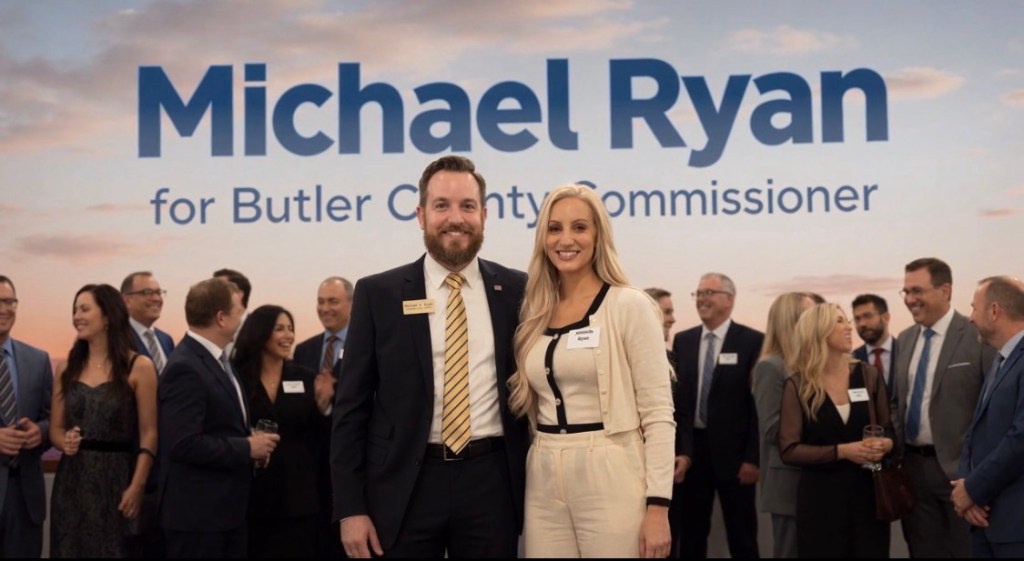
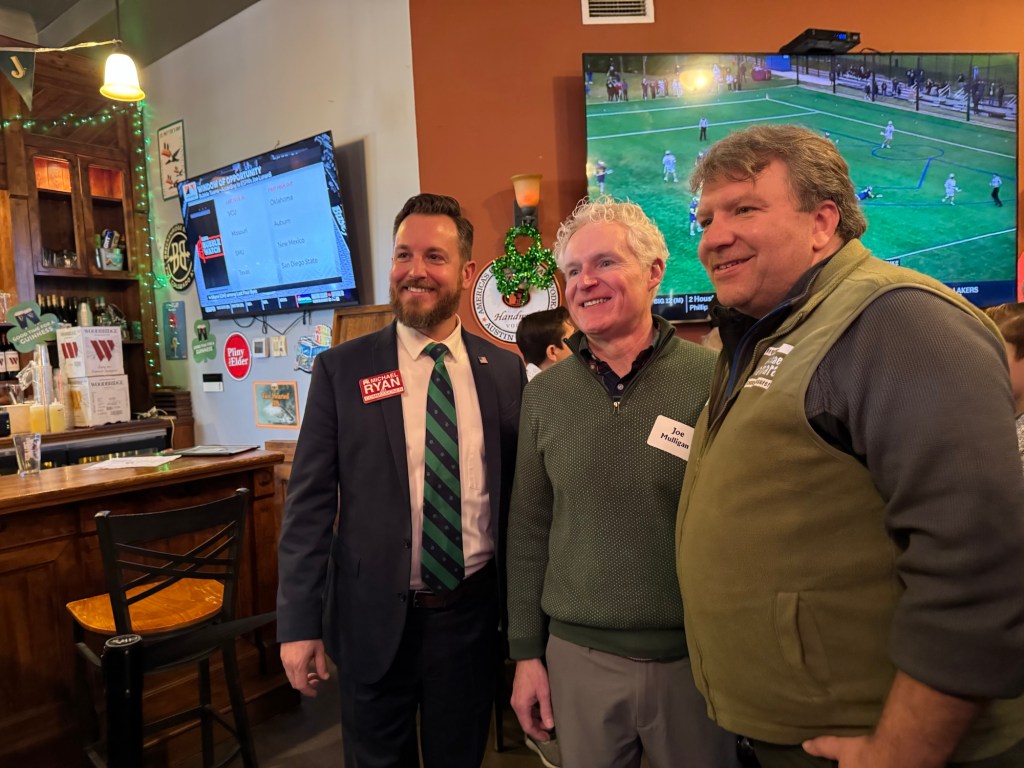
As I drove past the law practice in Beckett Ridge the other day, I noticed the big sign out front supporting Cindy Carpenter in the Republican primary for Butler County Commissioner. It struck me as odd. The lawyer who runs that firm shows up at Republican events, associates with Republican circles, and presents himself as one of us. Yet here he was, publicly backing a candidate the party had dumped in favor of its endorsed choice, Michael Ryan. That sign crystallized something I’ve observed for years in Ohio politics: certain legal professionals operate in the shadows, injecting themselves into local disputes not out of ideological consistency but because chaos creates billable hours. This isn’t isolated to one small firm or one county. It scales up dramatically when you reach the national level, where figures like Marc Elias have built entire practices—and substantial wealth—by turning election law into a high-volume litigation machine that drains public resources while advancing partisan goals. What follows is my endeavor to shed light on this system, drawing on personal experiences in Ohio and broader patterns affecting taxpayers nationwide.
Marc Elias, the prominent Democratic election law attorney (often referred to in shorthand as “Mark” in casual conversation), stands as the archetype of this phenomenon. Elias, a partner at Elias Law Group, and is a direct supporter of Amy Acton in Ohio, which he founded after leaving Perkins Coie in 2021, has positioned himself as the go-to litigator for voting rights challenges. He founded Democracy Docket in 2020 as a platform to track and analyze these cases, and his firm has been extraordinarily active. In October 2025, Elias publicly stated that his team of fewer than 60 lawyers was litigating 63 voting and election cases across 30 states. By May 2026, that number had climbed to 85 cases in 43 states plus the District of Columbia. His side claims victories in the overwhelming majority of post-2020 challenges to Republican-backed election measures, framing them as defenses against “voter suppression.” Critics, however, see a deliberate strategy of lawfare: filing lawsuits in multiple jurisdictions to force states, counties, and local governments to expend vast sums to defend laws that enjoy broad public support, such as voter ID requirements. Elias himself has acknowledged the volume, noting in one Democracy Docket piece that his firm’s work is relentless and expanding.
This isn’t new for Elias. In 2020, he led the Democratic legal response to more than 60 lawsuits filed by Donald Trump and his allies challenging election results. Nearly all of those suits failed, often on procedural grounds or for lack of evidence. Elias’s team prevailed in the lion’s share, cementing his reputation. But the pattern predates 2020. He has challenged voter ID laws, early voting restrictions, ballot-collection rules, and redistricting efforts in dozens of states. In Ohio specifically, Elias Law Group filed suit in January 2023 against House Bill 458, signed by Republican Governor Mike DeWine. The law included photo voter ID requirements and other provisions that the plaintiffs—groups like the Northeast Ohio Coalition for the Homeless, Ohio Federation of Teachers, Ohio Alliance for Retired Americans, and Union Veterans Council—called “voter suppression.” The suit argued the measures disproportionately harmed young, elderly, Black, military, and overseas voters. Elias’s firm has also targeted Ohio’s rules on drop boxes and foreign funding in ballot measures. These actions align with a national playbook: challenge decentralized election administration in as many venues as possible, knowing that even if many suits are dismissed, the cumulative cost to defenders mounts.
What makes this infrastructure so effective—and so corrosive—is the decentralized nature of American elections. Unlike a centralized national system, voting rules are set and administered at the state and county levels. A single law, such as Ohio’s voter ID requirement or restrictions on “Golden Week” early voting and registration (which Elias’s earlier work also targeted), can trigger parallel lawsuits in federal and state courts. Each filing forces election officials, secretaries of state, and attorneys general to respond. Defense isn’t cheap. Routine election litigation for a state or county can run between $50,000 and $250,000 per case, according to estimates from officials who have faced these challenges. When emergency injunctions, appeals, and discovery are involved, costs balloon into the hundreds of thousands or even millions per major dispute. Multiply that across dozens or hundreds of suits nationwide, and the taxpayer burden becomes enormous. Many of these expenses are buried in general budgets, election administration line items, or outside counsel contracts rather than isolated as “litigation defense.” There is no national requirement to itemize plaintiff-specific legal fees, making the full picture opaque. Reporters rarely dig into the granular accounting, so the public seldom sees the true price tag.
I have seen this dynamic play out up close in Ohio. During my involvement with local issues, particularly around Lakota Local Schools in Butler County, I witnessed how legal strategies can be weaponized to remove elected officials who don’t align with certain interests. A school board member endorsed by the Republican Party faced removal efforts involving coordinated complaints, legal maneuvering, and outside pressure. The board ultimately acted against her amid disputes over absences and other procedural issues. Public records battles followed, including a case that reached the Ohio Supreme Court, where Lakota was ordered to pay thousands in fees for failing to promptly release documents related to legal spending and threats of litigation. The district also settled other suits involving residents barred from speaking at meetings, covering plaintiff legal fees. These aren’t abstract costs. They come out of the same budgets funded by local property taxes—the very taxes that already strain families and businesses. School boards negotiate collective bargaining agreements with unions, and the legalisms involved in those contracts, disputes, and related litigation generate substantial revenue for outside firms. Chaos in the public school system, whether over board composition, curriculum, or operations, keeps the meter running.
The same lawyer I saw with the Carpenter sign had previously inserted himself into the school board removal effort. He helped craft or advise on the legal strategy that contributed to ousting a Republican-backed member. It surprised me at first—someone who attends Republican events playing along with what appeared to be an effort to shift the board toward more liberal control. But it makes sense once you follow the money. Law firms that specialize in government work—whether at the school board, county, or state level—thrive when there is perpetual conflict. They represent municipalities in defense matters, advise on contracts, and sometimes moonlight on partisan challenges. The incentive is clear: more lawsuits mean more retainers, more billable hours, more settlements. In Lakota’s case, the legal spend tied to board disputes and public records requests added up quickly, all ultimately borne by taxpayers.
This pattern repeats at the state and national scale. Elias’s firm has received tens of millions in payments from Democratic committees and campaigns. OpenSecrets data for the 2024 cycle alone shows Elias Law Group receiving over $40 million in legal services from various Democratic entities. These funds don’t come from thin air; they originate with donors who expect results in the form of favorable court rulings, delayed or blocked reforms, and sustained pressure on Republican-led election administrations. When states settle early to avoid mounting defense costs—as some attorneys general have done rather than fight every challenge to the bitter end—the litigation achieves its strategic goal without a full trial. The threat of bankruptcy through legal fees is real for smaller jurisdictions. Communities facing multiple simultaneous suits often lack the resources to defend aggressively, leading to procedural changes or policy retreats that might not have occurred on the merits.
Critics of voter ID and other common-sense reforms frequently point to the absence of widespread fraud findings in court as proof that the measures are unnecessary. But that misses the point. Many challenges never reach a full evidentiary hearing on fraud because the sheer expense of litigation forces capitulation or dismissal on narrower grounds. Elias and similar litigators understand this leverage perfectly. They file suits knowing that even meritless claims impose real costs. One notable example involved sanctions against Elias and co-counsel. In a Texas case concerning the elimination of straight-ticket voting, the Fifth Circuit Court of Appeals sanctioned the team for filing redundant and misleading motions. The court ordered payment of opposing attorney fees and double costs, describing the conduct as problematic. While Elias’s defenders called it a technicality or good-faith error, the episode illustrates how aggressive tactics can cross lines—and still generate fees along the way. A federal court in another context also addressed Elias-related conduct with fee-shifting orders.
The broader legal profession has learned to mine government budgets in similar ways. Public sector collective bargaining, school board disputes, redistricting battles, and election administration all require specialized counsel. Firms embed themselves in these ecosystems, often representing both sides of the table at different times. The result is a self-perpetuating cycle: policies that invite litigation create demand for lawyers; lawyers file suits that generate more litigation; governments pay to defend or settle, raising taxes or cutting services elsewhere. Property taxes, in particular, become a reliable revenue stream for these activities because they are local and somewhat insulated from immediate voter backlash. In Ohio, where property taxes fund much of local government and schools, the inability to rationalize budgets amid endless legal challenges keeps rates elevated. Media rarely connect the dots between litigation infrastructure and tax burdens, but the connection is direct.
I’ve dealt with my share of lawyers and consultants lately, both personally and in observing public affairs. They are expensive—often prohibitively so. They jump between contracts, charge premium rates, and extract significant value from the top of any deal or dispute. When legal issues arise, they can drain bank accounts with astonishing speed. In government contexts, this dynamic is amplified because the payer is diffuse: the taxpayer. Most citizens don’t have the expertise or resources to challenge the system themselves. Self-representation is possible but risky and time-consuming; hiring specialists is the default for institutions. Judges, many of whom come from the same legal circles or socialize with attorneys at events, often defer to the professionals. The result is a clubby environment where loyalty to the bar most of the time trumps accountability to the public.
Nationally, the scale is staggering. Democracy Docket’s own tracking shows hundreds of voting and election lawsuits filed in recent cycles—228 in 2024 alone, part of a total of 306 from early 2023 through Election Day. While Elias frames these as necessary defenses of democracy, the cumulative burden of defense falls on public coffers. States like Texas have spent millions defending voter ID and redistricting laws over the years. North Carolina expended roughly $5 million on voter ID litigation between 2011 and 2016. Local Voting Rights Act Section 2 suits have cost jurisdictions millions apiece in defense and settlements—Charleston County, South Carolina, spent $2 million unsuccessfully; Yakima, Washington, nearly $3 million. These figures represent conservative estimates; appeals and repeated filings multiply the impact. When aggregated across the country, the high single digits of millions—or likely far more—disappear into budgets without clear public accounting.
Elias’s involvement in Ohio is not abstract. Beyond the 2023 HB 458 challenge, his network has engaged with issues such as foreign money in ballot campaigns and drop box rules. He has also sued to overturn certain restrictions on foreign nationals’ spending in Ohio ballot measures. These actions, while presented as principled stands for access, have the practical effect of complicating administration and forcing expenditure. Meanwhile, at the local level, analogous tactics play out in school boards and county commissions. The removal of a Republican-endorsed school board member in Lakota, the public records fights, and the legal maneuvering around board composition all illustrate how law can be used to reshape governance without direct voter input at the ballot box. The lawyer with the Carpenter sign understood the game: support the candidate who sustains the ecosystem of disputes.
This is not to say every lawsuit is frivolous or that voting rights concerns are imaginary. Legitimate disputes exist, and courts rightly resolve them. But the volume, the targeting of popular reforms like voter ID (supported by large majorities in polls), and the financial incentives create a corrosive feedback loop. Democrats benefit from the chaos because it undermines Republican-led integrity measures. Law firms benefit regardless of the outcome because fees accrue during the process. Taxpayers lose either way—directly through documented legal bills and indirectly through higher taxes, diverted election funds, and eroded trust. When cases settle or procedural changes are mandated to avoid further expense, the public rarely sees the full ledger.
The decentralized structure of elections is a feature of federalism, but it becomes a vulnerability when exploited systematically. Each county must defend its own processes. State attorneys general face a barrage. The strategy is clear: file enough suits to overwhelm capacity, force settlements, and normalize the idea that basic safeguards are legally suspect. Elias has coordinated responses to dozens of cases, and affiliated litigation has filed over 100 suits in a single year. His personal involvement in 64 election cases during the 2020-2021 period is well-documented. The goal, from the critic’s perspective, is not merely to win discrete cases but to make enforcement of election laws so costly that officials stop trying.
Personal experiences reinforce the systemic view. Dealing with consultants and attorneys in various contexts has shown me how quickly costs escalate. They take a large cut off the top, move from job to job, and thrive on complexity. In government, this is magnified. School board members who push back against the status quo often find themselves targeted legally. Elected officials hesitate to fight because they fear draining community resources. The result is a shadow governance where law firms exert outsized influence.
To break the cycle, we need structural changes. Stronger voter ID laws with clear, unambiguous standards reduce litigation fodder. Meaningful sanctions for abusive filings, greater transparency in government legal spending, and centralized tracking of litigation costs would help. Term limits or ethics rules for government attorneys might limit revolving-door incentives. Most importantly, voters must recognize that these “phantom costs” are real and fund them through taxes. Integrity in elections isn’t free, but neither is the endless litigation that undermines it.
As someone who has watched this play out from the ground level in Ohio—seeing yard signs that reveal divided loyalties, school board battles that consume resources, and national players like Elias shaping the battlefield—I believe the public deserves better. The litigation infrastructure built on chaos benefits a small class of professionals at the expense of representative government. Taxpayers foot the bill, often without realizing the full scope. Shining a light on these practices, demanding accountability, and supporting reforms that prioritize clarity over ambiguity are essential. Otherwise, the parasites will continue to thrive while the body politic weakens. We have the tools to fix it; what remains is the will to use them.
Footnotes
1. Personal observation of law practice signage and political involvement in Butler County, Ohio, 2026 primary context.
2. Democracy Docket reports and Elias public statements on case volume.
3. Ohio Capital Journal coverage of HB 458 lawsuit filed by Elias Law Group.
4. Estimates drawn from public official reports and historical litigation defense data (e.g., Texas, North Carolina voter ID cases).
5. Ohio Supreme Court ruling in Lakota Local Schools public records case, 2024.
6. OpenSecrets vendor payment data for Elias Law Group, 2024 cycle.
7. Fifth Circuit sanctions order in Texas straight-ticket voting litigation.
8. Washington Post compilation of election-related public expenditures.
9. Additional sources: Wikipedia entry on Marc Elias; Brennan Center and Campaign Legal Center litigation trackers; local Butler County reporting on Carpenter/Ryan primary and Lakota board disputes.
Bibliography
• Elias, Marc. Various articles, Democracy Docket (2020–2026).
• “Marc Elias,” Wikipedia.
• Ohio Capital Journal articles on Elias Law Group Ohio lawsuits (2023).
Rich Hoffman is an aerospace executive, political strategist, systems thinker, and independent researcher of ancient history, the paranormal, and the Dead Sea Scrolls tradition. His life in high‑stakes manufacturing, high‑level politics, and cross‑functional crisis management gives him a field‑tested understanding of power — both human and unseen.
He has advised candidates, executives, and public leaders, while conducting deep, hands‑on exploration of archaeological and supernatural hotspots across the world.
Hoffman writes with the credibility of a problem-solver, the curiosity of an archaeologist, and the courage of a frontline witness who has gone to very scary places and reported what lurked there. Hoffman has authored books including The Symposium of Justice, The Gunfighter’s Guide to Business, and Tail of the Dragon, often exploring themes of freedom, individual will, and societal structures through a lens influenced by philosophy (e.g., Nietzschean overman concepts) and current events.
The more I think about it, now that the news stories have settled down and the people blowing on the fire revealed themselves, I really don’t like The Rooster, who goes by the real name D.J. Byrnes. It just so happens that the young lady he is saying had an affair with Vivek Ramaswamy, Alicia Lang, I watched grow up, and I think a lot of her, all positive. And it really bothers me that some lowlife like The Rooster would put her in political crosshairs as he did, purely out of desperation. I really haven’t thought much about The Rooster’s style of political reporting until he did this. But he crossed the line, and his actions actually match a deeper pattern of criminal activity, drug use, and vile behavior that deserves consideration, especially after what he purposely did to innocent people, which I think requires a deeper dive analysis. After he put out his hit piece story about Alicia, trying to hurt Vivek and his family in a purely inflammatory way, based on just jealous rumors and whispers, I don’t feel like being civil or fair to people who present themselves as openly bad for themselves and society at large. Ironically, a person like The Rooster would feel entitled to attempt to hide his own bad deeds behind speculative politics at best, with the intent to help the joke of a person, Amy Acton, with her campaign, now that people are remembering her as the Lockdown Lady, from her bad policies during the COVID-19 lockdowns in Ohio, which she was completely responsible for. We’re talking about a person who is saying terrible things about a young lady I know and like quite a lot, and I’m not happy about it, especially coming from a substance abuser of cocaine and other intoxicants, who has a police record. He’s the last person in the world who should be saying anything about bad behavior, especially when I know a lot about the characters involved and that the statements are excessively inflammatory, purposefully so.
Back in 2007, when he was a sophomore at the University of Montana, The Rooster got mixed up with a group planning to rob a local drug dealer who lived across from campus. The guy was supplying high-grade marijuana from California. Byrnes admits he helped scout the house and passed along info about money and weed—he thought it was just going to be a quick stick-up, no violence. On the night it went down, he showed up, saw it was turning into a party, texted the others to call it off, and left. But the rest of the crew went through with it—ski masks, forced entry, pistol-whipped the dealer, tied up his girlfriend.
A few months later, after some of the others flipped and cooperated, his name came up. In May 2008, he was hit with four felony charges in Missoula, bail set at $100,000. He turned himself in, and it all got resolved—he ended up with a two-year suspended sentence, no prison time, and the charges were eventually dismissed.
Then, in 2012, in Franklin County, Ohio, he pleaded guilty to two counts of misdemeanor criminal damage from a drunken property crime. It got really bad after he lost a union job in 2021. He was living in Franklinton with a liquor store right across the street, and had a serious drunk-driving car accident in 2020 that didn’t even slow him down. None of this is ancient history; he is still very much the same person today. Friends staged an intervention in 2022, and he’s been sober since.
President Trump’s next major executive order could create more millionaires than any single event in modern history, and he’s been dropping hints about it everywhere. It’s the kind of bold, pro-growth move that cuts through all the noise in Washington and actually puts real opportunity back in the hands of everyday Americans who are tired of being held back by bureaucracy and overregulation. But right now, what’s weighing on my mind even more is the ugly underbelly of Ohio politics, especially this smear campaign that’s unfolding against Vivek Ramaswamy as he fights to become the next governor of our state. I feel like I need to lay it all out here because it’s not just politics as usual—it’s something deeper, something that touches on character, truth, and the kind of righteous indignation that has defined human history from the days of the Dead Sea Scrolls right up to today. Amy Acton, the former health director under Governor DeWine who’s now running as the Democrat nominee for governor in 2026, has been having a rough time explaining herself. Her record from the COVID lockdowns is a disaster, and her personal life has come under scrutiny with that 2019 police report showing a domestic dispute where she and her husband had been drinking, she took some prescription meds, got upset over work hours, pulled a mirror off the wall, and shattered the glass. Her team calls it just a simple argument, but it paints a picture of someone who doesn’t manage personal affairs all that well, and in a high-stakes race like this, it matters. She was the lockdown lady, one of the worst in the nation, pushing policies that wrecked small businesses, families, and the economy of Ohio. A lot of people are still digging out from under that, and her bedside manner, which might comfort some Democrats, isn’t winning over moderates, independents, or conservatives. She’s not grabbing independents because they remember the damage.
I was covering this hit piece by a Columbus-based Substack writer known as The Rooster—real name D.J. Byrnes—on Vivek Ramaswamy, and at first I thought it was just the usual noise that comes with being the frontrunner. Vivek has Trump’s endorsement, he’s leading in most polls against Acton in what’s shaping up to be a competitive but Republican-leaning race, and when you’re out front, people take shots. But there’s another layer to this that left me unsatisfied and, honestly, filled with a deep sense of righteous indignation. I don’t say that lightly, and I’ll explain why it hits me so hard. I happen to know a lot of the people involved personally, not because I’m out there name-dropping for clout, but because in my work as an independent journalist and through my networks in Ohio, I’ve built real relationships over the years. People want to know how I can speak with such conviction on these matters, and it’s because I’ve been in the room, on the calls, and seen these folks up close. That includes Senator George Lang, whom I know very well—our friendship goes beyond politics, it’s mutual respect outside the arena. And crucially, I know his daughter to be a very respectable young lady who doesn’t deserve to be thought of in such a trashy way, as The Rooster tried to portray her, as a shadow of himself to carry the sins of his own actions as a displaced figure, outside himself. The Rooster pushed a story about a supposed sexual relationship or “booty calls” with Vivek whenever he’s in southwestern Ohio. I’ve known Alicia for a very long time. She’s nothing like a Stormy Daniels type, as The Rooster tried to make her sound in order to tear away at Vivek Ramaswamy’s reputation, even without a grain of truth. She’s smart, dedicated, hardworking, and involved at the highest levels of politics because she comes from a family that values service and excellence. The assumption that just because she traveled with Vivek’s campaign or worked as his deputy chief of staff or whatever her role was, that there must be some sleazy affair—that’s absolutely presumptive on behalf of very low-life opinions on how professional people conduct themselves. It’s not just false; it’s malicious.
When I first talked about this story, I tried to keep a level head, but it came across a bit restrained because I was containing my extreme anger. It bothers me at a fundamental level. Knowing the people involved, knowing how false this is, it stirs something in me that goes straight back to the kind of ethical conduct and judgment I’ve been studying deeply. As a birthday gift to myself this year, my wife and I treated ourselves to a membership at the Museum of the Bible in Washington, D.C. We’ve been there several times, but this visit was special because of the traveling Dead Sea Scrolls exhibit straight from Israel. I’ve always wanted to see them up close—the real thing—and I love the writings from the Second Temple period. We spent the entire afternoon there, no phones, no distractions, just hours immersed in those ancient texts. I bought gifts from the shop afterward, all Dead Sea Scroll-themed, because the material and content put me in heaven. That exhibit, combined with everything else at the museum, reminded me why I wear this particular hoodie so often these days—it’s my new favorite, a constant reminder of that day. What struck me most wasn’t just the scrolls themselves, but the philosophy of ethical conduct and righteousness that pours out of them. I think often of the Teacher of Righteousness, the enigmatic leader of the Essene community at Qumran who wrote or inspired so much of what we have in those scrolls. He led this sect in a righteous rebellion against the “Wicked Priest” of the Temple establishment—corrupt figures who had twisted power and law for their own gain. You don’t see a ton of direct talk about it in the canonical Bible, but Jesus himself was likely influenced by or connected to that Essene tradition as it spread from the desert community near the Dead Sea, a day’s walk from Jerusalem. In whatever way people remember me down the centuries, I think it will be in a similar way as the Dead Sea Scrolls talked about this Teacher of Righteousness, and for that, I would be quite satisfied.
Those scrolls are an exploration into righteousness and how it confronts evil in the world. The Teacher of Righteousness embodied that judgment call against hypocrisy and wickedness, helping lay the groundwork for what became Christian thought and, ultimately, Western civilization’s emphasis on moral clarity. The Dead Sea Scrolls are filled with righteous indignation—clear distinctions between good and evil, the War Scroll outlining battles against the forces of darkness, the Book of Enoch with its visions of judgment, the Copper Scroll, and apocryphal texts that didn’t make the final cut but reveal the raw sentiments of the time. The Essenes hid these in jars in caves to preserve truth against purges and turbulence, and they survived the Romans, the Crusades, everything, to reach us. That’s why seeing them in person on my birthday was one of the happiest days of my life. I was removed, for those hours, from the daily grind of dealing with people who don’t always deserve the encouragement or support I try to give them. It was a day where righteousness was openly embraced, unfiltered.
That same righteous indignation is exactly what I feel toward this smear against Vivek Ramaswamy and, by extension, Alicia Lang. The Rooster’s piece is based on innuendo, whispers from people with personal gripes or political axes to grind, hoping something sticks to help Amy Acton, whose campaign is struggling to close the gap. Polls right now show the race tight—some have Vivek up by a few points, others have Acton with a slight edge, but Vivek is the clear Republican frontrunner with Trump, Vance, and the establishment behind him. RealClearPolitics averages and surveys from Emerson, Bowling Green State University, and others put it within a couple of points, but Ohio is trending Republican, and Vivek’s vision for the state—pro-business, anti-woke, focused on actual results—resonates. Acton has name recognition from her days as a health director, but it’s mostly negative among anyone who lived through the lockdowns she championed. The Rooster, D.J. Byrnes, has a history of this kind of thing. He’s a left-leaning Substack writer in Columbus known for hit pieces on politicians, often with a partisan edge. His own background includes past legal troubles—felony charges back in 2008 as discussed, related to robbery planning, alcohol and substance issues, misdemeanors for criminal damage. People who aren’t doing well themselves often project their failings onto others, tearing them down to avoid personal judgment against them. That’s the pattern here. He wanted dirt on Vivek to prop up Acton, so he ran with rumors of an affair, implying booty calls in southwestern Ohio, travel together somehow equaling infidelity. No evidence, no pictures, no proof—just whispers. If he had real dirt, he’d have used it, but instead it’s all fabrication to hurt a good man and a nice young woman whose only crime is being effective and connected to strong Republican figures like her father, Senator George Lang, the majority whip.
I watched Alicia grow up. It’s very weird to hear her name associated with any kind of detrimental behavior, which is why the credibility of the accusation falls apart so quickly outside the minds of really stupid people. She’s too smart, too dedicated to public service and making the world better, to throw it all away on something reckless. Vivek is a family man, a brilliant entrepreneur who has written books, built businesses, run for president, and is now all-in on Ohio as Trump’s pick for governor. He’s too calculating, too focused on big ideas—reforming education, cutting regulations, fighting the administrative state—to risk it on some affair. He’s seen up close what Trump went through with endless false accusations, and he’s smart enough not to hand ammunition to enemies. Republicans I know in these circles are productive people—running businesses, passing bills at 2 a.m., obsessed with enterprise and results. They don’t have time for the kind of extramarital nonsense or “cocaine bins and gentlemen’s clubs” that seem more common in certain Democrat or swampy circles. I’m not saying it never happens on our side, but in my experience, the busy, value-creating conservatives don’t live double lives. Democrats, by contrast, often project their own base instincts—obsession with sex, loneliness, primal urges—onto everyone else. They assume that because they think that way, everyone does. It’s part of a broader spiritual warfare: dumbing people down to biological instincts so evil can play in their minds unchecked. That’s why they hate judgment, hate the Bible, hate capitalism, hate billionaires who succeed through merit. “Don’t judge,” they say, while judging everyone who holds them accountable.
The Rooster’s article feels cooked because he’s in trouble himself—trying to get clean, mad at the world, unable to maintain relationships. People like Alicia walk by and don’t give him the time of day because she’s in a world of jackets and ties, reverence for law and order, not slobs in sleeping-bag clothes. He wants to beat others to the punch, psychologically tearing down good people so he doesn’t feel bad about his own choices. That’s evil in the classic sense—the kind the Essenes railed against in their scrolls: wicked priests who corrupt institutions, attack the righteous to cover their own rot. The Teacher of Righteousness stood against that, and so should we. This smear isn’t just politics; it’s an attempt to undermine Trump’s pick, hurt Senator Lang’s family, and drag down anyone positioned to impose judgment on unrighteous behavior. Vivek is out there fighting for Ohio—higher education reform, economic dawn, real leadership—while Acton offers complaints about billionaires and special interests without a positive vision. Her lockdowns hurt the very people she claims to champion, and now personal issues resurface at the worst time.
I’ve known a lot of characters in the Ohio Statehouse, and the productive ones—Republicans focused on bills, sponsorships, businesses—aren’t the ones chasing Hooters servers or Twin Peaks nights out with the guys trying to get the phone number of 21-year-old kids working there trying to hustle tips from creepy old men. They’re on conference calls at odd hours talking policy, not conquests. Vivek’s too busy saving the world, literally, with his ideas on everything from biotech to government efficiency. Alicia’s the same—interested in politics because her family instilled values of service, not some emotional fling. Intelligent people fight animal instincts; that’s what Genesis teaches—dominion over nature, including human nature. You don’t yield to the snake. True conservatives live that way, all hours. Democrats often don’t, and when they can’t catch Republicans in real scandals, they invent them, just like the endless failed attacks on Trump—no evidence here either; the Rooster dusted off rumors to fit the narrative.
That’s why the Dead Sea Scrolls resonate so powerfully with me. They represent an awakening: a rebellion against institutional evil, preserved through centuries because the Essenes were clever enough to hide truth in plain sight, yet protected places. The Teacher of Righteousness made judgment calls that shaped righteousness as we know it—unfiltered criticism of wickedness. I despise the kind of people who tear down goodness: the Rooster, Acton’s defenders, Democrats who solicit the down-and-out to unleash chaos while screaming “no judgment.” They yearn for approval through base means because their minds are vacant of higher thoughts. Sex, for many of them, is about filling loneliness or seeking validation, not the sacred trust it should be. Lonely, unfulfilled people project that onto productive leaders like Vivek. But I know better from personal experience. I’ve been on calls with these high-level figures; they talk policy, bills, sponsorships—not “hot 21-year-olds,” they can send naked selfies to at 3 AM. That’s the difference between those with righteous indignation fighting daily for truth and those attacking to avoid self-reflection.
As we head into the May 5 primary and then the November 2026 election, this race matters. Vivek vs. Acton is a contest of visions: one of excellence, innovation, and Ohio-first results; the other of big-government nostalgia and lockdown mentality. Polls fluctuate—Bowling Green had them nearly tied recently, Emerson and others show Vivek with edges or Acton with slight leads depending on the sample—but the ground is shifting toward Republicans, especially with Trump’s coattails and the union voters who’ve flipped. Acton’s past as the face of COVID overreach haunts her; people remember the wrecked economy, the businesses lost. Knowing Alicia and her family, and seeing how this hit piece tries to cause collateral damage to good people to prop up a weak candidate, it demands that we apply the wrath of righteousness the scrolls celebrate. Rub their noses in the evil of fabrication, projection, and tearing down the upright so the wicked feel better.
I gave myself that day at the Museum of the Bible because I spend so much energy encouraging people who most of the time don’t deserve it, trying to lift them toward a better life. It’s usually worth it, but exhausting. The scrolls recharged me with unapologetic judgment against evil. That’s what we need now: call out the Rooster’s pattern of hit pieces rooted in his own unresolved issues, Acton’s inability to escape her record, and the broader Democrat strategy of no judgment on themselves while attacking anyone who might impose it. Vivek and Alicia represent the productive, value-creating side—the capitalists, the church-goers, the constitutionalists who think big thoughts, not just act on instinct. They don’t have room for double lives because they’re too busy building.
In my upcoming book, The Politics of Heaven, which I’m excited to release in 2027, I dig deep into these themes—a treasure hunt through heaven and human history, exploring how spiritual warfare plays out in politics and daily life. The Dead Sea Scrolls are a big part of that, showing how righteousness rebels against the kingdoms of evil, did good things that have impacted many thousands of years in a positive way. This whole episode with the Rooster’s article fits perfectly: an attempt to dirty the best-positioned people to cast judgment, just like the Wicked Priest against the Teacher. But truth prevails, as those scrolls did. I’ve seen enough in my years following politics to know that lies like this eventually flush out. Vivek will win because Ohio voters see the contrast, and people like me will keep shining light on it. Don’t take anything for granted—engagement matters, turnout matters. But I feel good about where things stand because leaders of character rise above smears.
Personally, this fills me with the kind of indignation the Essenes captured so vividly. The world hates righteousness because it exposes darkness. Democrats hate judgment because they don’t want mirrors held up to their choices. The Rooster attacks Alicia and Vivek because good people make him feel small. But we judge bad behavior—that’s our duty. The scrolls teach that, the Bible affirms it, and Western civilization thrives on it. I’m proud to stand with Vivek, with the Lang family, and with anyone fighting that good fight. Ohio deserves better than recycled lockdown architects or rumor-mongers. We deserve governors who create opportunity, not destroy it—like the executive orders Trump hints at that could mint millionaires by unleashing American potential.
What really bothers me about people like the Rooster is how they’ve wrapped themselves in layer after layer of bad conduct—criminal enterprises, drug abuse, alcohol abuse—and then spent the rest of their days trying to bury it by tearing down everyone else. He’s never built a real life for himself: no lasting relationship, no wife, no kids, no one who depends on him in the way that forces a man to grow up and take responsibility. Instead, all he has is this parasitic habit of pointing fingers at others, inventing lies when there’s nothing real to find, all so he doesn’t have to face the wreckage of his own choices. That’s why he gravitates to Democrat politics; it’s the same reason most of them do. They’re drowning in their own bad decisions, and they want government to prop them up, to blur the standards and give them a false sense of value, the way that union jobs once did before it all fell apart. I’ve watched him for years now, and it’s clear he’s the type who can’t stand the sight of good people succeeding because it reminds him how far he’s fallen.
The people in the Statehouse—Republicans especially—have treated him with more decency than he deserves. They gave him the presumption of free speech, let him roam the halls, answered his questions, and never turned their backs on him, even when his “investigative reports” were obviously aimed at dragging everyone down to his level. They let him get away with it for too long, thinking fairness and open dialogue would eventually win out. But fairness only works with people who still have a conscience. With someone like the Rooster, that goodwill just gets weaponized. He abuses the very respect he’s been shown, using it as cover while he tries to smear good families, good candidates, and good public servants who actually build things instead of tearing them down.
At the end of the day, people like him are just bad from the inside out, and they’re what makes the world, politics, and every social interaction worse. They flock to tyrannical, centralized figures like Amy Acton because that kind of top-down control lets them avoid judgment and lets them keep living the same reckless, unaccountable lives. They’re a detriment to the perpetuation of the human race, plain and simple. The only real solution isn’t dragging them into some court or legal loophole—it’s maintaining a steady, unapologetic presence of righteous indignation. They need to feel the full wrath of righteous judgment cast straight at them, not out of cruelty, but because they’ve proven themselves too despicable to be granted the same affiliation and respect given to people of real value. Only then will they lose the free rein to keep casting their weapons against the good people who are actually trying to make things better.
In Columbus, reporters like The Rooster have stepped into this fray to fill a void they desperately seek to hide from the public. He has been somewhat open about his criminal past, struggles with drug and alcohol abuse, and the inability to maintain relationships. This reflects the broader plight of unrighteous Democrats and their fervent support for figures like Amy Acton, collective bargaining agreements, and leftist policies in general. These approaches serve primarily to conceal the fact that many of them have spent significant portions of their lives making poor choices.
They resent and actively hate individuals like future governor Vivek Ramaswamy, Senator George Lang, President Trump, and the broader billionaire class because these people demonstrate what is possible through discipline, innovation, and hard work. While successful Americans build businesses, create wealth, and provide sustainable upward mobility for their families and communities, others squander what little they have on casinos, drugs, and self-destructive behaviors. Rather than emulate what works, they tear down the achievers and advocate for government collectivism—a system where the unrighteous mob rules over the productive through taxation and redistribution. This allows them to confiscate resources from wealth builders and funnel them to those who refuse to build value in their own lives. Through Substack writings and similar platforms, they pretend to be crusaders against crime or corruption, when in reality, they are waging war on anyone who exposes their own shortcomings.
Ultimately, Vivek Ramaswamy and President Trump represent the opposite philosophy: they strive to restore opportunity so that anyone willing to get out of bed and work hard can achieve upward mobility. In the latter part of his life, President Trump has focused on giving back this chance to the American people. The critics, like this Columbus reporter and his ideological allies, know deep down they will never get their own lives in order enough to seize such opportunities. Staring into the mirror each morning reveals their failures, breeding a deep resentment toward those who succeed. This is why they slander the virtuous and push policies designed to drag everyone down to their level of dysfunction.
Footnotes
1. The Rooster Substack article on Vivek Ramaswamy and Alicia Lang rumors, published April 2026.
2. NBC News report on Amy Acton’s 2019 police report, April 2026.
3. Ballotpedia and Wikipedia entries on the 2026 Ohio gubernatorial election, with Amy Acton as the Democratic nominee.
4. RealClearPolitics and Bowling Green State University polling averages for Ramaswamy vs. Acton, April 2026.
5. Museum of the Bible official site on Dead Sea Scrolls Exhibition, November 2025–September 2026.
6. Wikipedia and scholarly sources on Teacher of Righteousness, Essenes, Qumran, and Damascus Document.
7. Ohio Capital Journal and Dispatch coverage of Acton campaign and fundraising, 2026.
8. Background on D.J. Byrnes (The Rooster), past legal issues from public records and reporting.
Rich Hoffman is an aerospace executive, political strategist, systems thinker, and independent researcher of ancient history, the paranormal, and the Dead Sea Scrolls tradition. His life in high‑stakes manufacturing, high‑level politics, and cross‑functional crisis management gives him a field‑tested understanding of power — both human and unseen.
He has advised candidates, executives, and public leaders, while conducting deep, hands‑on exploration of archaeological and supernatural hotspots across the world.
Hoffman writes with the credibility of a problem-solver, the curiosity of an archaeologist, and the courage of a frontline witness who has gone to very scary places and reported what lurked there. Hoffman has authored books including The Symposium of Justice, The Gunfighter’s Guide to Business, and Tail of the Dragon, often exploring themes of freedom, individual will, and societal structures through a lens influenced by philosophy (e.g., Nietzschean overman concepts) and current events.
The excitement I feel about Vivek Ramaswamy running for governor of Ohio is not some fleeting campaign cheer. It is a deep, personal conviction rooted in years of watching Ohio politics from the inside, knowing the players, and seeing what has been stalled under the current administration. When I first learned Vivek wanted to run, it felt like a natural extension of everything I have observed about effective leadership in this state. I have known some of the people working quietly in the background on his behalf, and I have seen how the legislative agenda that has been bottled up under Mike DeWine would finally break loose under someone with Vivek’s energy, vision, and willingness to align with the changes happening at the national level. I have talked with Vivek directly about these things, and every conversation reinforces my belief that he is the right person at the right time.
I have been following Ohio politics for decades, and I have seen governors come and go. Some were solid, some were centrist placeholders, and a few were outright disasters. Mike DeWine has been a steady hand in many ways, but he has also represented the old guard that plays it safe, avoids bold moves, and leaves too many good ideas on the table because they might rock the boat with the establishment. That is where Vivek Ramaswamy stands apart. He is not a career politician. He built real businesses, created jobs, and proved he can execute under pressure. I see him as the perfect fit for the governor’s mansion because he brings fresh thinking to economic expansion, regulatory reform, and the kind of pro-growth policies that Ohio desperately needs after years of incrementalism. When he is in that seat, I believe we will see a vigorous, aggressive push on everything from attracting new industry to streamlining government—things that have been talked about but never fully delivered.
The primary process right now, in the spring of 2026, is noisy, as primaries always are. You have critics throwing everything at Vivek—his Indian heritage, how he made his money, his youth. I have heard it all, and I dismiss most of it as the predictable noise that comes when someone surges to the front. I supported Donald Trump long before he announced his first run in 2015. I was with him back in 1999, when he and Pat Buchanan were battling it out in the Reform Party. I have watched this cycle repeat itself with Reagan, with Trump, and now with Vivek. People who are frontrunners always draw fire. The media loves to amplify the drama because it sells advertising. Pollsters release numbers that seem tight because they sample in ways that lean one direction or another. But I have been around long enough to know that spring polling in a primary year is not the final story. By July and August, things clarify dramatically. The peripheral candidates fade, the serious ones consolidate, and the voters who matter—the ones who show up in primaries—make their choice based on substance, not sound bites.
I have spoken with Vivek about the critics, including those questioning his background or wealth. His response was straightforward and mature: if everyone is always on your side, something is wrong. That is the mark of someone who understands leadership. You do not get rattled by the noise. You win people over with results. Vivek has shown he can do that. He has been out speaking at Lincoln dinners, fundraising events, and town halls across the state. He is articulate, energetic, and has a strong partner in his wife. Those are the qualities that translate to governing. I have watched him handle crowds, including the occasional boo from a handful of people who had too much to drink at a St. Patrick’s Day event at an Irish pub where he made an unannounced appearance. The cheers far outnumbered the jeers, and he took it in stride. That is the kind of poise Ohio needs in the governor’s office.
On the other side, the Democrats’ best option is Amy Acton. That alone tells you how weak their bench is. Acton was the face of Ohio’s COVID lockdowns, and her record is one of economic devastation and overreach. She has a one-trick pony: “I’m a doctor, I care about health.” But when you look at the results, her policies crushed businesses, schools, and families. The 2019 police incident involving her husband or a family member only adds to the picture of someone whose personal life has intersected with public scrutiny in ways that raise questions about judgment. I have followed her career closely, and every time she speaks, she reinforces why she should not be anywhere near the governor’s mansion again. Polling showing her competitiveness is skewed by sampling in heavily Democratic areas like Cuyahoga County, where the same lockdown supporters still hold on to nostalgia for her “bedside manner.” But real-world results matter more than nostalgia. Ohio cannot afford another round of that.
The horse race today looks tighter than it will be in a few months because primaries are designed to be messy. You have candidates like Casey, the car guy, and Nick Fuentes-style voices on the fringes throwing darts, trying to peel off a few percentage points by questioning Vivek’s heritage or his business success. That is standard primary theater. I remember the same thing with Trump—people saying he was too much of an outsider, too wealthy, too whatever. Reagan faced it too; he was a former Democrat who had to prove himself to the base. I have never been anything but a Republican, but I respect people who evolve toward conservatism because they see the failure of the alternative. Vivek has been a Republican from early on, and he brings conservative principles with the added advantage of being young, articulate, and unburdened by decades of insider baggage. He is not a middle-grounder. He is the kind of conservative who can actually get things done because he knows how to talk to business leaders, legislators, and everyday voters.
I have roots in this state’s politics. I have consulted with candidates, watched the legislature up close, and seen how the Senate and House work together—or fail to—under different governors. Vivek already has strong relationships there. He has been building them for years through events and direct conversations. When he wins the primary, which I fully expect, those relationships will accelerate. The legislative agenda that has been stalled will move. Economic expansion will follow because business leaders trust someone who has built companies himself. Trump’s endorsement is not just symbolic. It is practical. Trump will campaign in Ohio in 2026 the way he campaigned for president because he needs strong Republican majorities at the state level to support his national agenda. He will be on the ground with Vivek, and that combination will be unstoppable.
Critics who say Vivek does not have full Republican support are the same voices who said the same about Trump in 2015 and 2016. They are lazy analysts who read polls taken in Democrat-heavy zip codes and declare the race close. Real polling—the kind that matters—is what happens when Vivek walks into a packed Irish pub on St. Patrick’s Day, and the crowd cheers louder than the handful of boos. That is the energy that wins primaries and general elections. Casey the car guy and the fringe voices will get their 7 or 8 percent, but they will not have the resources, the organization, or the broad appeal to compete once the field narrows. Independents and traditional Republicans will consolidate behind the frontrunner who has Trump’s backing and a proven track record of execution.
I have been through enough cycles to know how this plays out. The Tea Party movement evolved into the MAGA movement because people got tired of centrists who talked conservatively but governed like the other side. Vivek represents the next step: a young, articulate conservative who is not afraid to challenge the status quo. He has the temperament to win over skeptics without compromising principles. His wife is a strong partner in the effort. Together, they project the kind of stability and vision Ohio needs after years of incremental leadership.
The contrast with Amy Acton could not be sharper. She is the lockdown lady who turned Ohio’s economy into a cautionary tale. Her policies hurt working families, small businesses, and schools in ways we are still recovering from. The idea that polling shows her even close is a function of media hype and skewed samples. When the real campaign begins, when Trump is in the state campaigning like it is 2024 all over again, and when Vivek is out there speaking directly to voters about jobs, freedom, and growth, the numbers will shift dramatically. That is how primaries work. The noise in spring gives way to clarity by summer.
I am excited because I see the potential for real change. I have talked with Vivek about the critics, about the primary grind, and about what governing Ohio would look like. He gets it. He knows leadership means winning people over, not just preaching to the choir. He has the resources, the relationships, and the resolve to deliver. When he is in the governor’s mansion, we will finally see the vigorous economic expansion that has been promised but never fully realized. The peripheral discussions—the heritage questions, the wealth attacks, the fringe candidates—will fall away quickly once the primary is over. Republicans will unify because the alternative is unacceptable.
That is why I support Vivek Ramaswamy without hesitation. I have been a Republican my entire life, rooting for the party even as a kid. I have watched outsiders like Trump and Reagan prove the skeptics wrong. Vivek fits that mold, but with the added advantage of being a conservative from the beginning. He is the clear frontrunner for good reason. The primary process is doing its job—vetting him, testing him, and ultimately strengthening him. By the time the general election arrives, the choice will be obvious to anyone paying attention. Ohio cannot afford another lockdown-era disaster. It needs leadership that builds, not restricts. Vivek Ramaswamy is that leader.
The horse race today is a theater. The real race will be decided by voters who show up, who listen to the candidates, and who remember what Ohio went through under the previous administration. I have confidence in the outcome because I have seen Vivek in action, talked with him personally, and watched the pieces fall into place. The critics will keep talking, but the results will speak louder. This is going to be a good year for Ohio, and I am excited to be part of it.
Footnotes
1. Ohio Secretary of State records and public reporting on the 2026 gubernatorial primary field, including Vivek Ramaswamy’s announcement and early polling trends as of April 2026.
2. Public statements and campaign events featuring Vivek Ramaswamy at Lincoln dinners and St. Patrick’s Day gatherings in Ohio, 2025–2026.
3. Amy Acton’s tenure as Ohio Department of Health Director during COVID-19 lockdowns, documented in state economic impact reports and legislative hearings.
4. 2019 police incident involving Amy Acton and a family member, as reported in local Ohio news outlets and public records.
5. Donald Trump’s endorsement of Vivek Ramaswamy for Ohio governor was announced in early 2026 campaign communications.
6. Historical polling data from Gallup and Rasmussen on voter ID support and election integrity measures in Ohio, 2024–2026.
7. Ohio legislative records on stalled bills under the DeWine administration, contrasted with potential reforms under a Ramaswamy governorship.
Bibliography
• Ohio Secretary of State. 2026 Gubernatorial Primary Candidate Filings and Polling Summaries.
• Ramaswamy, Vivek. Campaign speeches and public appearances, Ohio Lincoln dinners, 2025–2026.
• Acton, Amy. Ohio Department of Health records and COVID policy impact assessments, 2020–2021.
• Local news archives (Cleveland Plain Dealer, Columbus Dispatch). Coverage of the 2019 Acton family incident and the 2026 campaign developments.
• Trump, Donald. Official endorsement statements for the 2026 Ohio governor race.
• Pew Research Center and Gallup. Polling on election security and voter ID, 2024–2026.
• Ohio Legislative Service Commission. Bill status reports under DeWine administration, 2022–2026.
Rich Hoffman is an aerospace executive, political strategist, systems thinker, and independent researcher of ancient history, the paranormal, and the Dead Sea Scrolls tradition. His life in high‑stakes manufacturing, high‑level politics, and cross‑functional crisis management gives him a field‑tested understanding of power — both human and unseen.
He has advised candidates, executives, and public leaders, while conducting deep, hands‑on exploration of archaeological and supernatural hotspots across the world.
Hoffman writes with the credibility of a problem-solver, the curiosity of an archaeologist, and the courage of a frontline witness who has gone to very scary places and reported what lurked there. Hoffman has authored books including The Symposium of Justice, The Gunfighter’s Guide to Business, and Tail of the Dragon, often exploring themes of freedom, individual will, and societal structures through a lens influenced by philosophy (e.g., Nietzschean overman concepts) and current events.
It was an intriguing week in Ohio politics, one that began with the State of the State address at the Statehouse in Columbus, where I had the opportunity to engage with Governor Mike DeWine and several legislators deeply invested in the direction of our state and nation. These conversations unfolded in a setting that felt both historic and intimate, surrounded by the echoes of decisions that shape lives far beyond the marble halls. As someone who’s been navigating the blurry lines between business, authorship, and political commentary for years, I find these moments invaluable—they peel back the layers of headlines and reveal the human elements driving policy and principle. The air was thick with concern over Congressman Warren Davidson’s recent vote against President Trump’s war powers in the context of the Iran situation, a decision that aligned him with Democrats like Thomas Massie and sparked alarm among some Republicans. I spoke with several people in the legislature who expressed real unease about this, viewing it as a potential fracture in party unity at a time when the margins are razor-thin. Yet, after spending at least ten minutes talking directly with Warren about it, I came away with a deeper appreciation for his stance. I like Warren a lot; he’s a principled man, and his position makes sense when you consider the broader implications for executive power. [1]
The vote in question stemmed from the recent escalation with Iran, where decisive action was taken and not yet resolved within 24 hours, but it reignited debates about the boundaries of presidential authority. Warren’s point, as he explained it to me, is that while we all appreciate a strong leader like Trump who can act swiftly in defense of the nation, we don’t want unchecked executive powers that could drag us into prolonged conflicts without congressional oversight. Congress alone has the constitutional mandate to declare war and authorize sustained military engagements; the president can respond defensively, but perpetual conquests à la Napoleon aren’t the American way. I get that—it’s about trusting the process, not just the person. With Trump in the White House, everyone might agree with Warren’s caution because we’ve seen how he handles power responsibly, but what about future administrations? That’s the crux of it. Warren is aligned with Trump on nearly everything else; if you look at his record, it’s a testament to conservative values. For instance, there was that illuminating hearing where he went toe-to-toe with Maxine Waters over her attempts to label ICE as a terrorist organization. He defended ICE vigorously, emphasizing its role in maintaining national security under the Trump administration. It was a moment of clarity amid partisan noise, underscoring Warren’s commitment to border integrity and law enforcement.[2]
I recall Warren’s “warrior heart” speech when he announced his vote—it was poignant and well-articulated, echoing his military background as a West Point graduate and Army veteran. He’s done this before on issues like the debt ceiling, standing firm even when it means bucking party lines. Representing Ohio’s 8th Congressional District, which includes much of the Butler County region—a stronghold of Trump support—he knows his constituents value the Constitution above all. Behind closed doors, I’m sure Trump would affirm that honest checks on power are essential, much like in any executive role in business or governance. Sometimes you leverage friendships, positive thinking, or even brokered terminations to achieve consensus, but the assumption is always that representatives should adhere tightly to foundational principles. Up in Columbus, I heard similar sentiments from people in the know, those who deal with these tightropes daily. It’s a balance: following what you believe your constituents want while resisting peer pressure from either side. Most of us want Republicans to support the Trump administration fully, given the slim majorities, to tackle threats like Venezuela, Mexican cartels, Iran’s aggressions, and China’s economic maneuvers against the dollar. Yet, after listening to Warren, I can say he’s every bit the Trump supporter, but he stands by his principles, and that’s what we elect representatives for.[3]
At the time of his vote, it was clear the measure would pass in the House and head to the Senate, so his stance wasn’t going to derail Trump’s initiatives. Instead, it was a principled record-setter, emphasizing that this administration—and future ones—must operate within constitutional bounds. When the lights are off, and it’s one-on-one, no doubt Trump would agree with Warren on the need for debate. That’s healthy; cross-purposes foster better governance. I also had a substantial conversation with Vivek Ramaswamy during the same timeframe, overlapping with discussions involving the governor and others. The question on many minds was what happens now that DeWine’s term is winding down at the end of this year. It’s shaping up to be a Vivek-led Republican era, with Democrats like Amy Acton—the so-called “lockdown lady” from the COVID days—vying to upend that. I chatted with DeWine about his Lockdown legacy or whatever remnants of those policies linger, but it was light, just folks talking. He seemed a bit sad; politics has been his life, from prosecutor to senator to governor, and this is the final chapter. He’ll likely hang around in some meaningful way, but the Republicans in Columbus are eagerly awaiting the new governor.[4]
Vivek and I delved into a lot, from his transition from CEO of biotech firms like Roivant Sciences to politics, to the mood post-State of the State. His question to me was about the governor’s mindset, and my take was simple: everyone’s waiting for the new era. Vivek has great ideas; he needs gubernatorial support to implement them. It was an intimate gathering, not a broad spectacle, allowing for real one-on-one talks. These smaller venues let you gauge what people are truly about, beyond the surface. Media often isn’t equipped for that—they skim the headlines without understanding the nuts and bolts. With Vivek facing scrutiny, primary challengers like Casey Putsch, and rhetoric from radical Democrats, getting to the deeper level reveals his genuine intent. As for Warren, many wonder why he went against Trump, but he’s been stellar on other fronts. He wants to ensure that in two years, or ten, or fifteen, we don’t have rubber-stamp wars. Even with a strong CEO like Trump making executive decisions on Iran—a radical ideology threatening economic dominance—we need constitutional fidelity first. More discussion, healthy debate—that’s key in any government endeavor.[5]
I love Warren Davidson; every time I talk to him and his wife, Lisa, they’re just sweet, nice people in it for the right reasons. He walks that fine line between pressure and principle, drawing from his “warrior heart” ethos. In one-on-one settings, you see he’s the real deal—a good guy through and through. Even amid anger from some over his vote, he redeems himself not by owing anyone, but by being authentic. People at the steakhouse in Columbus were disappointed that he wasn’t fully on the Republican bandwagon at that moment, but he’s a strong conservative who’ll defend the Constitution fiercely, even against a powerhouse president like Trump. It’s not anti-Trump; it’s pro-debate. Shifting to Vivek, all these threads centered around the Statehouse. I told everyone, including Vivek, that he’s got the right attention for this. He’s very wealthy and young, and could retire to a beach in Rhode Island and vanish happily. Instead, he wants to apply his success to lead Ohio beneficially. Ahead of the primaries on May 5, he’s poised to do great things. As I said to him, echoing my chats with others: everyone’s waiting for DeWine to step aside. DeWine isn’t bad—he’s been decent on business, not obstructing the Business First Caucus or investments like Intel’s chip plant—but many Republicans like me feel he’s leaned too Democrat, especially on COVID lockdowns that hammered the economy. We’re still recovering.[6]
Vivek’s been good at uniting people; the Republican Party endorsed him, and we discussed that. It’s great seeing coalescence. When Vivek becomes governor, it’ll be a solid period—Warren finishing his term, Trump advancing his agenda, but with healthy checks in place. On war powers, it’s constitutional: Congress declares war, manages finances. Nothing wrong with reminding everyone of that. It was refreshing getting context directly from these guys. We’re better off with them in office, representing us well. I told both to their faces how proud I am; it was sincere, just people connecting. They’re willing to tackle the hard stuff, and that’s not easy.
To delve deeper, let’s consider the historical underpinnings of these discussions. The War Powers Resolution of 1973, passed over President Nixon’s veto, was designed precisely to prevent unchecked executive military actions following the Vietnam War. It requires the president to notify Congress within 48 hours of committing forces and withdraw them within 60 days without authorization.[7] In the recent flare-up in Iran, Trump’s swift response mirrored the 2020 Soleimani strike, but Warren’s vote echoes past bipartisan efforts to reclaim congressional prerogative. Think of Libya in 2011 under Obama or Syria under Trump—debates raged then, too. Warren’s consistency here aligns with libertarians like Massie, who often prioritize constitutional limits over party loyalty. His district, encompassing Butler, Darke, Miami, Preble, and parts of Hamilton and Warren counties, is a microcosm of Ohio’s conservative heartland, where Trump won big in 2024, yet values like fiscal responsibility and limited government resonate deeply.[8]
My interaction with Warren reminded me of why I admire him: he’s not swayed by theater. In that Maxine Waters exchange, he dismantled her narrative point by point, highlighting ICE’s role in combating human trafficking and drug cartels—issues hitting Ohio hard with the fentanyl crisis. Statistics show Ohio’s overdose deaths peaked during the pandemic, underscoring the need for strong borders.[9] Warren’s “warrior heart” isn’t rhetoric; it’s rooted in his Ranger service, where decisions meant life or death. As for the peer pressure, it’s real—in thin-majority Congresses, every vote counts, but representatives like him embody the Founders’ intent: a deliberative body, not a monolith.
Turning to DeWine, our chat was poignant. His term ends January 11, 2027, after two terms limited by Ohio’s constitution.[10] He’s been in politics since the 1970s—Greene County prosecutor, state senator, congressman, lieutenant governor, U.S. senator, attorney general, governor. A lifetime, really. He seemed reflective, perhaps melancholic, about wrapping up. But Republicans are chomping at the bit for a more conservative shift. DeWine’s handled business influx well—think Honda’s EV investments or Amazon’s expansions—but his COVID policies, with Acton’s guidance, locked down too hard for many. The economy took a hit; unemployment spiked to 16.4% in April 2020, and the recovery has been uneven.[11] Vivek aims to dismantle that legacy by promising tax cuts, deregulation, and a revival of innovation. His biotech background—founding Roivant, worth billions—positions him uniquely.[12]
Talking to Vivek, I sensed his authenticity. He’s endorsed by Trump and the Ohio GOP, leading polls against Putsch and Hill.[13] His running mate, Senate President Rob McColley, adds legislative heft. We discussed the primaries—not even close, in my view. Republicans can’t wait for Vivek in the mansion. He’s stepping down from ivory towers; governing’s harder than CEO-ing, balancing disagreeing factions. But his heart’s in it—genuine, like Warren’s. These personal convos, eye-to-eye, reveal good people wanting to do well. For those curious about headlines—Davidson’s “betrayal,” Vivek’s “outsider” status, DeWine’s heritage (his family’s from Ireland, actually, but he’s Ohio-born)—it’s about job performance. I’m happy to have these talks amid speculation about Iran’s duration or primaries. It’s a tricky world, but when everything is founded in sincerity, which it is, the direction of the future is much clearer.
[1] For more on Warren Davidson’s military background and voting rationale, see his official congressional biography.
[2] Reference to the 2019 House Financial Services Committee hearing, where Davidson challenged Waters on ICE labeling.
[3] Ohio’s 8th District demographics from the U.S. Census Bureau data.
[4] Details on DeWine’s term limits per the Ohio Constitution, Article III, Section 2.
[5] Historical context from the War Powers Resolution, 50 U.S.C. §§ 1541-1548.
[6] Ohio unemployment data from the Bureau of Labor Statistics.
[7] Nixon veto overridden November 7, 1973; see Congressional Record.
[8] 2024 election results in Ohio districts from the Ohio Secretary of State.
[9] Ohio Department of Health overdose statistics, 2020-2025.
[10] DeWine’s political timeline from Ballotpedia.
[11] BLS data on Ohio’s pandemic economic impact.
[12] Roivant Sciences’ founding and valuation from Forbes profiles.
[13] Recent polling from Emerson College and others on the 2026 Ohio gubernatorial race.
Rich Hoffman is an independent writer, philosopher, political advisor, and strategist based in the Cincinnati/Middletown, Ohio area. Born in Hamilton, Ohio, he has worked professionally since age 12 in various roles, from manual labor to high-level executive positions in aerospace and related industries. Known as “The Tax-killer” for his activism against tax increases, Hoffman has authored books including The Symposium of Justice, The Gunfighter’s Guide to Business, and Tail of the Dragon, often exploring themes of freedom, individual will, and societal structures through a lens influenced by philosophy (e.g., Nietzschean overman concepts) and current events.
He publishes the blog The Overmanwarrior (overmanwarrior.wordpress.com), where he shares insights on politics, culture, history, and personal stories. Active on X as @overmanwarrior, Instagram, and YouTube, Hoffman frequently discusses space exploration, family values, and human potential. An avid fast-draw artist and family man, he emphasizes passing practical skills and intellectual curiosity to younger generations.
Human beings interact in countless ways, layered with psychological complexities that often obscure simple truths. Friendships form, alliances shift, and conflicts arise—not always from malice, but from differing visions of what is right. In politics especially, these dynamics intensify: tides turn, candidates rise and fall, and people find themselves on opposite sides of debates. Yet, amid the noise, some relationships endure. Observers sometimes question loyalties: “How can you be so friendly with someone you disagree with politically?”
I’ve had some very public disagreements with people. But I can never think of a time that I wouldn’t ever talk to someone again
This question has arisen repeatedly in my interactions with Butler County Sheriff Richard K. Jones and many others. We’ve shared public moments of warmth and camaraderie, even as political winds have blown in conflicting directions. The same applies to recent encounters with Ohio Governor Mike DeWine. After years of sharp criticism—particularly over his administration’s handling of COVID policies and other matters—I shook his hand following his final State of the State address. We discussed areas of agreement, such as Second Amendment rights and efforts to combat AI-generated child exploitation. These moments highlight a core principle: genuine regard for individuals ‘ needs need not hinge on perfect alignment. Relationships built on authenticity withstand disagreement; those rooted in manipulation crumble.
We were talking about his wife’s great cookies. The second amendment during his administration. Taxes. And his endorsement of Vivek Ramaswamy.
This perspective stems from a life shaped by diverse encounters. Growing up in Ohio, I navigated rough characters and “celebrity” figures in my early adult years—individuals carrying heavy psychological burdens and disappointments. These experiences, often intense and sleepless, taught navigation of human darkness. I awoke each day intent on being the “good guy,” never contemplating villainy. This innate drive toward justice, perhaps divinely guided, clashed with destructive forces, leading through ominous courtrooms and rigorous trials.
The lofty expectations of public office. Few people ever live up to those expectations. But the building was built with the expectation of exceptionalism.
These trials instilled resilience. I’ve seen the worst of human behavior: betrayal, manipulation, and raw conflict. Yet, they clarified priorities. Nothing since has felt catastrophic by comparison. This foundation allows aloof observation—staying “lofty” amid chaos—while engaging directly when needed.
I love to see the future, in the here and now. Great young people!
Professionally, I’ve channeled this into commentary via platforms like The Overmanwarrior blog, podcasts, and writings (including books like The Symposium of Justice and business guides). As a fast-draw enthusiast and strategist, I’ve advised on local and state issues. Public friendships, like with Sheriff Jones, stem from shared values on law, order, and community—despite occasional political divergences. These are not performative; they’re authentic.
Most relationships reduce to two levers of control. The first is friendship as leverage: people offer smiles, hugs, or inclusion to gain compliance. When denied, they withdraw—“I’m not your friend anymore unless you…” This mirrors childhood games (stickers on lockers) and adult dynamics (passive-aggression in marriages, where affection is withheld until demands are met). In politics, it’s “endorse my candidate or lose my support.” Women and men alike use emotional coziness as currency; it’s learned early and persists.
The second is the threat of violence or intimidation. When friendship fails, escalation follows: harassment, protests, spiritual “warfare,” or physical threats—“Do what I say or face consequences.” Authoritarian regimes amplify this; bullies in parking lots embody it personally. Both aim at submission through fear.
I’ve rejected both. Secure in my positions, I express them openly—here, on podcasts, in writing—without needing validation. Disagreement doesn’t prompt cliff-jumping; it invites dialogue or indifference. If someone withdraws friendship over opinions, that’s their choice. If intimidation arises, I handle it unflinchingly, drawing from early lessons in facing rough characters.
This stance echoes timeless wisdom, like Sun Tzu’s The Art of War: become invincible by rendering tactics ineffective. Control what you can—your actions, values, responses—and influence outcomes without direct domination.
Sheriff Jones exemplifies this. We’ve agreed on much: law enforcement, border security, deportations, and community protection. His office’s work with ICE and unapologetic stance on illegal immigration align with my views. Publicly, we’re friendly—podcasts, events, and genuine conversations about his brand and duties.
Yet, political motivations diverge at times. Endorsements or strategies might differ. Critics note our chumminess amid such gaps, confused by loyalty despite opposition. The answer: I like him authentically. His character, spine, and public service earn respect. If we clash, we may not talk for a while—that’s fine. Friendship isn’t conditional on perfect alignment. I won’t manipulate him (or allow manipulation) to force agreement. Truth emerges through pressure and process, not emotional blackmail.
This extends broadly. I like many who’ve opposed me politically, and I reserve the right to value people independently. Indifference to reciprocity preserves freedom.
A recent addition underscores this: Governor DeWine’s final State of the State address. His administration faced criticism—over COVID handling and other policies—creating opposition, which I had been very critical of, rightfully so. Yet, post-speech, we shook hands and spoke cordially.
We aligned on key issues: Second Amendment defense, and crucially, combating AI-generated child sexual abuse material (often called “simulated” or “AI child porn”). DeWine and Attorney General Dave Yost highlighted predators using AI to create exploitative images of children, urging legislation to criminalize creation, possession, and distribution. This addresses a growing threat where legal gaps allow evasion of traditional child pornography laws. I expressed support, noting agreement despite past differences, such as when Yost was running against my supported candidate, Vivek Ramaswamy for governor.
This exchange wasn’t leverage-seeking. It prioritized common ground—protecting children—over grudges. Putting differences aside when opportunities arise fosters the emergence of truth, not manipulation through fear of lost friendship.
Politics amplifies these dynamics: RINOs vs. traditional conservatives, reform movements, religious clashes. Belief systems collide; scores settle. Yet, values about people shouldn’t depend on outcomes. I like or dislike based on character, not scoreboard.
Pursuing righteousness means respecting all sides, allowing truth to reveal itself through conflict’s “fog of war.” Hot tempers subside; smoke clears; good emerges. Manipulation—friendship withdrawal or intimidation—crowds ideas into small-mindedness. Independence enables macro focus: immortal existence over micro squabbles (marriages, divorces, family disputes).
A good friend of mine gave me some homework to do
I’ve built a life affording this luxury: secure positions, no fear of loss. Many seek friendship; time limits interactions. Some engage strategically to advance balls—purely functional, not manipulative.
It’s okay to like those who hate you, to be friendly with opponents, and to shake hands after battles. Truth often surfaces in conflict; observation reveals positions. By staying outside manipulation’s reach, one accomplishes greatly where others falter.
In the end, righteousness is rooted in truth, not personal desires or leverage. Respect others’ thoughts—even wrong ones. Good people come around; disputes fade. We shake hands, share hot dogs at picnics, and discuss lofty things as emotions drift.
George Lang is a great guy in all aspects, what a lot of people don’t know about him is he loves books. Something we share beyond the immediacy of politics
Bibliography
Overmanwarrior blog (overmanwarrior.wordpress.com) – Primary source for writings on politics, philosophy, and personal insights. Butler County Sheriff’s Office interactions – Public podcasts and events with Sheriff Jones (e.g., discussions on immigration, law enforcement). Ohio Governor Mike DeWine’s State of the State address (2026) – Focused on AI restrictions, including child exploitation; references from news coverage (e.g., Toledo Blade, ABC6). Attorney General Dave Yost’s efforts – Collaboration on bills like SB 217/SB 163 targeting AI-generated CSAM. The Art of War by Sun Tzu – Concept of invincibility through non-engagement with opponent strengths. Personal books: The Symposium of Justice, business guides – Available via Overmanwarrior platforms.
This framework allows engagement without compromise, advancing righteousness amid human complexity.
1. Hoffman, Rich. The Symposium of Justice. iUniverse, 2004.
2. Hoffman, Rich. Tail of the Dragon. CreateSpace Independent Publishing Platform, 2012.
Explores themes of freedom, law, and high-stakes conflict through a narrative rooted in real altercations and political activism and often described as “faction” (fact-based fiction).
3. Hoffman, Rich. The Gunfighter’s Guide to Business: A Skeleton Key to Western Civilization. Liberty Hill Publishing, 2021.
A practical and philosophical guide that draws parallels among gunfighting strategy, business, and life—offering a Western counterpoint to Eastern classics like The Art of War. Emphasizes invincibility through preparation and independence. Available on Amazon and referenced in Hoffman’s bio.
Daily posts on politics, culture, philosophy, personal stories, and current events in Ohio (e.g., Butler County issues, tax fights, and human dynamics). Includes author bio, reflections on early life, and discussions of books like The Symposium of Justice.
5. Sun Tzu. The Art of War. Translated by Lionel Giles (1910 edition) or modern versions (e.g., Everyman’s Library). Original ~5th century BCE.
Key concept from Chapter 4 (“Formation”): “Invincibility lies in oneself; vulnerability lies in the enemy.” The skilled make themselves invincible through self-preparation, rendering opponent tactics ineffective—directly echoed in the essay’s rejection of manipulation levers.
6. “DeWine calls for new AI regs, parental control rules in 2026 State of the State.” Cleveland.com (via various outlets, including Facebook reposts and Toledo Blade coverage), March 2026.
Covers Governor Mike DeWine’s final State of the State address, urging legislation on AI guardrails, including outlawing the creation, possession, and distribution of AI-generated child sexual abuse material (CSAM). Aligns with the essay’s mention of agreement on child protection despite past differences.
7. “Ohio struggles to combat AI-generated child porn amid legal gaps.” ABC6 On Your Side, January 29, 2026.
Details legislative efforts (involving DeWine and Attorney General Dave Yost) to close gaps in prosecuting AI-simulated child exploitation, highlighting the growing threat and push for criminalization.
8. Butler County Sheriff’s Office. “In The Saddle With Sheriff Richard K. Jones” (podcast series). Apple Podcasts and related platforms, ongoing.
Episodes featuring Sheriff Richard K. Jones on law enforcement, immigration (e.g., 287(g) agreements), and community issues. Includes collaborations and discussions with Rich Hoffman (e.g., Rumble episodes on ICE detainees and related topics).
9. Various public interactions: Butler County Sheriff’s Office Facebook posts and YouTube videos (e.g., “Ohio 287(g) with Butler County Sheriff Richard Jones,” November 2025).
Document friendly exchanges, podcasts, and joint appearances between Sheriff Jones and Rich Hoffman on topics like border security and prisoner handling.
Top Notes for Further Reading
• Start with Hoffman’s blog (The Overmanwarrior) for the most direct, unfiltered context—search archives for terms like “Sheriff Jones,” “DeWine,” “friendship,” “manipulation,” or “invincibility” to find raw reflections mirroring the essay’s monologue.
• For philosophical grounding on invincibility and non-manipulative strategy, read The Art of War Chapter 4 alongside The Gunfighter’s Guide to Business—Hoffman explicitly positions his work as a Western response to Sun Tzu.
• On Ohio politics and the examples: Follow coverage from Cleveland.com, Toledo Blade, and ABC6 for updates on AI/CSAM bills (e.g., potential SB 217/SB 163 analogs) and DeWine’s 2026 address. Sheriff’s Office social media provides real-time context on Jones’ work and public persona.
• For broader insights into human relationships and power dynamics: Explore related classics like Machiavelli’s The Prince (on manipulation) or Nietzsche’s ideas on the “overman” (influencing the blog’s name), though Hoffman’s approach emphasizes righteousness over conquest.
Rich Hoffman is an independent writer, philosopher, political advisor, and strategist based in the Cincinnati/Middletown, Ohio area. Born in Hamilton, Ohio, he has worked professionally since age 12 in various roles, from manual labor to high-level executive positions in aerospace and related industries. Known as “The Tax-killer” for his activism against tax increases, Hoffman has authored books including The Symposium of Justice, The Gunfighter’s Guide to Business, and Tail of the Dragon, often exploring themes of freedom, individual will, and societal structures through a lens influenced by philosophy (e.g., Nietzschean overman concepts) and current events.
He publishes the blog The Overmanwarrior (overmanwarrior.wordpress.com), where he shares insights on politics, culture, history, and personal stories. Active on X as @overmanwarrior, Instagram, and YouTube, Hoffman frequently discusses space exploration, family values, and human potential. An avid fast-draw artist and family man, he emphasizes passing practical skills and intellectual curiosity to younger generations.
The recent assassination of Charlie Kirk on September 10, 2025, at Utah Valley University in Orem, Utah, has left a profound void in the conservative movement, particularly among young people drawn to his message through Turning Point USA (TPUSA). Charlie, at just 31 years old, was gunned down by a single shot to the neck from a rooftop sniper during an outdoor campus event. The accused, 22-year-old Tyler James Robinson from Washington, Utah, surrendered the next day and now faces charges including aggravated murder, with prosecutors seeking the death penalty. Robinson reportedly stated he acted because Kirk “spreads too much hate,” highlighting the toxic polarization that can turn ideological differences into deadly violence.
Candace Owens Demands Erika Kirk's Arrest in Explosive Rant Over Charlie Kirk Death Conspiracy, Sparking Accusations of Mental Illnesspic.twitter.com/Z3G5jKzQmf
In the aftermath, Erika Kirk—Charlie’s wife of four years (they married in 2021)—stepped into the immense role of CEO and chairwoman of TPUSA. The organization’s board unanimously elected her shortly after the tragedy, and she has since vowed to carry on her husband’s legacy, emphasizing faith, family, and conservative values for the next generation. Erika, now in her late 30s and raising their two young children alone, delivered an emotional speech at Charlie’s memorial service held on September 21, 2025, at State Farm Stadium in Glendale, Arizona. Thousands attended, including President Donald Trump and Vice President JD Vance. Her address was heavy with grief; she recounted the hospital moment seeing her husband’s wound, paused in prayer, and called on attendees to “choose Christ” while pledging the movement would endure. She received a prolonged standing ovation.
At the close of the event, President Trump concluded his own remarks hailing Charlie as a “giant of his generation” and called Erika back to the stage for a supportive hug. This moment, captured in videos and widely shared, drew attention—some viewers noted her composure amid sorrow, while others speculated on body language or attire in ways that fueled online commentary. Grief manifests differently for everyone, especially under public scrutiny. Erika has spoken of putting on a “brave face” while managing profound loss, motherhood, and leadership of a major organization. The pressure is enormous: stepping from private family life into heading a high-profile entity built on her husband’s vision, all while mourning a brutal, public tragedy.
Recent events, like TPUSA’s “All-American Halftime Show” during Super Bowl LX in February 2026, underscore ongoing cultural divides. As an alternative to the official halftime performance featuring Bad Bunny—which some conservatives criticized for its pro-immigration themes and global market appeal—TPUSA’s event featured artists like Kid Rock, Brantley Gilbert, Lee Brice, and Gabby Barrett. It emphasized patriotism, faith, and family values, with tributes to Charlie. Erika did not appear in person but praised it afterward on social media, saying it was “incredible,” that “Charlie would’ve absolutely loved it,” and framing it as a way to “make Heaven crowded” while honoring God and country. The contrast highlighted philosophical tensions: an America First stance rooted in sovereignty and traditional values versus broader global outreach.
Criticism of Erika has surfaced in some corners—accusations of inauthenticity, questions about her past (including pre-marriage photos from college years showing a more carefree side), or even internal TPUSA drama like staff departures and leaked audio discussions. Some speculate wildly, turning personal grief into conspiracy narratives about TPUSA shifting directions or hidden motives. Others project unmet expectations onto her, wanting a saint-like figure perpetually in mourning, perhaps akin to a “Mother Mary” archetype, rather than a young widow navigating real-life changes: biological motherhood pressures, responsibility for children without their father, and the emotional toll of sudden leadership.
Yet this overlooks the human element. Erika and Charlie’s marriage was relatively short but appeared strong and faith-centered. They built a life together in their 30s, raising kids while advancing a movement that offered young conservatives an alternative to cultural despair—replacing lost optimism in institutions like housing markets, Social Security, or generational compounding with faith-based activism. Charlie’s work, alongside figures like Steve Bannon, Jack Posobiec, John Solomon, and others in election coverage, provided reliable, in-depth analysis that resonated deeply. His generation, much like my own kids’ peers, grew up amid disappointments from prior ones—broken promises of endless prosperity—and found redemption in characters like him (or even Candace Owens from related circles, despite fluctuations).
Assassination often elevates figures posthumously, much like Martin Luther King Jr., whose impact and Bible sales surged after his death, turning him into a larger-than-life symbol. Charlie’s killing has sparked similar dynamics: grief transfers emotions onto survivors, creating pressure for Erika to embody perfection. But she’s human—37 or 38, still finding her way, dealing with survival instincts, public-facing duties, and private sorrow. Expecting her to cry constantly, wear only somber clothes, or become a nun-like figure ignores reality. People grieve variably; some compartmentalize to function, especially with kids to raise and a legacy to steward.
The controversies often stem from hurt feelings—people who admired Charlie deeply, perhaps invested emotionally in him as a proxy for missing stability in their lives. When Erika doesn’t match idealized projections (a stable front every day, no “phony” moments under stress), it breeds speculation. But there’s no evidence of underlying plots to subvert TPUSA or counter the current political order. The movement Charlie built—youth mobilization for conservative principles, Christian values, and American exceptionalism—transcends the immediacy of momentary movements. If Erika carries it forward admirably, great; if she needs time to heal (perhaps stepping back for family), someone else will rise. The ideas endure because they’re bigger situationally.
Erika deserves grace. She’s bravely taken on a massive role amid unimaginable loss. TPUSA remains one of the strongest vehicles for young people seeking faith-based alternatives in a divided culture. Supporting her means recognizing the toll: the “layers of hurt” beneath any public facade, the difficulty of sounding grounded when everything’s shattered. Personally, I think she needs to take a few years off, for her own good. And let things settle in her own head. Because people are going to read into everything she does and embed their own emotions into what they expect from her as the head of Turning Point. It’s too much to ask her to replace Charlie Kirk, and that is what a lot of people want. What everyone forgets is that the assassination itself was a devastating event that requires action, and a lot of that action hasn’t happened. In a Christian sense, the emphasis has been forgiveness which leaves everyone feeling empty as a result, and wanting to replace that action with sainthood. Then when Erika can’t present herself as a saint, people are angry with her. And that just isn’t fair to her, her family, or the relationship she had with Charlie Kirk.
The controversy surrounding Erika Kirk and Turning Point USA’s (TPUSA) “All-American Halftime Show” during Super Bowl LX in February 2026 often misses a deeper, more redemptive truth about human transformation and the nature of movements built on faith. Critics have seized on the event—headlined by Kid Rock, who sang a song at the halftime event about prostitutes and strippers—as somehow incompatible with Christian values, particularly given Kid Rock’s rock ‘n’ roll persona and past lyrics that embrace rebellion, excess, and a gritty, unpolished lifestyle. Some question the wisdom of placing the “mantle of Christ” on such figures, or see it as a dilution of purity in a faith-based youth organization now led by a grieving widow.
Yet this overlooks the biblical pattern of redemption itself. The original disciples of Jesus were hardly paragons of institutionalized holiness. Fishermen, tax collectors, zealots—many were societal outcasts, rough around the edges, and far from “pure” before their calling. Peter denied Christ three times; Paul persecuted believers before his dramatic conversion. Mary Magdalene, often cited as a key follower, had a troubled past marked by affliction and societal judgment before encountering Jesus. These were “down and out” people who didn’t fit neatly into polite society, yet they carried the Christian message forward, transforming it into the global force we know today. Institutions later tried to claim and sanitize that legacy, but its origins were raw, human, and imperfect.
In the same way, the MAGA movement—and TPUSA’s cultural push—draws from individuals who’ve lived messy lives, fallen into temptations, made mistakes, and only later turned toward something bigger and better. President Trump himself, Kid Rock, and countless others in this space embody that late-in-life redirection: shaking off past errors, learning from them, and dedicating energy to positive, faith-aligned efforts like patriotism, family values, and American sovereignty. The halftime show wasn’t about perfection; it was about offering an alternative to what many saw as the NFL’s push toward a global, pro-immigration narrative via Bad Bunny’s performance. By contrast, TPUSA’s event celebrated pro-America themes, faith, and family—drawing millions of viewers (with reports of over 19 million YouTube views) and reportedly pulling attention and revenue away from the official show. Whether Roger Goodell missed an opportunity to unify rather than divide is beside the point; the response resonated because it spoke to people seeking authentic, unapologetic expressions of belief.
Erika Kirk doesn’t have to be the flawless vessel for this. She’s a young widow in her late 30s, raising two children alone after her husband’s brutal assassination in September 2025, while stepping into the immense role of CEO at TPUSA. She praised the halftime show on social media as “incredible,” noting Charlie “would’ve absolutely loved it,” and framed it as a way to “make Heaven crowded” while honoring God and country. She wasn’t even present at the event, yet she supported it fully. If she’s not the one to carry the mantle forward long-term, someone else will—the movement transcends any single person. Charlie built TPUSA as a vehicle for young conservatives to find purpose amid cultural despair, replacing broken promises of endless prosperity with faith-based activism.
Criticism often stems from unrealistic expectations: that leaders must always have been holy, never stumbled, or fit a saintly mold. But humans rarely arrive at conviction without a process—mistakes, detours, and all. The healthy thing is seeing people dedicate themselves to something greater, as we see in the MAGA-aligned push and TPUSA’s efforts. Erika deserves grace as she navigates grief, leadership, and legacy. The halftime show, controversies aside, aligns with that redemptive arc: imperfect messengers pointing toward enduring values. The movement will continue, one way or another, because the ideas—faith, freedom, and national pride—aren’t dependent on flawless execution. They’re carried by those willing to step up, bumps and all.
• Erika Kirk’s Wikipedia page (en.wikipedia.org/wiki/Erika_Kirk) – Background, role at TPUSA, and post-assassination leadership.
• Coverage of the memorial service, including Trump’s remarks and the hug moment (e.g., NBC News, BBC reports from September 2025).
• TPUSA’s official statements and Erika’s social media (@mrserikakirk on Instagram/X) for direct insights into her perspective.
• Articles on the Super Bowl halftime alternative (e.g., Taste of Country, Times of India) for context on cultural divides.
This isn’t about conspiracy—it’s about empathy for a young woman thrust into extraordinary circumstances, trying to honor a legacy while healing. The movement won’t stop; it evolves through people like her, or those who follow. She deserves a fair shake to find her footing.