I have always believed that the music which moves me most deeply is not the disposable pop that floods the airwaves and algorithms, but the symphonic scores crafted for great films. These orchestral works possess a unique power to resonate. They do not merely accompany the images on screen; they complete them, giving emotional weight and narrative propulsion to stories that might otherwise remain flat. They fill the spaces between dialogue and action with something larger than life, something that lingers in the mind and spirit long after the theater lights come up. In a culture saturated with catchy but ultimately empty beats designed to hypnotize rather than elevate, these scores stand apart as acts of genuine artistry.
Right now I am listening, as I have nearly every day since its release in June, to the soundtrack for Steven Spielberg’s new film Disclosure Day. Once again, at the age of ninety-four, John Williams has delivered something astonishing. The orchestration is smart and purposeful, the pacing precise, the way the music weaves itself into the story’s fabric nothing short of genius. There is a contemplative main theme tinged with Americana that grounds the middle-American setting, eerie string passages that echo earlier sci-fi explorations, and moments of darker dissonance that speak to forces trying to suppress hidden truths. There are chases and revelations, wordless choral passages, and a large symphonic ensemble of ninety-six players recorded over months rather than the usual frantic weeks. Even in its more restrained passages—music that, as Spielberg has described it, accompanies the film from slightly behind, giving it a subtle nudge forward rather than dominating—it carries that unmistakable Williams signature: it makes you feel the weight of what is at stake.
This latest score, their thirtieth collaboration stretching back more than half a century to The Sugarland Express in 1974, feels like both a culmination and a gift. It arrives at a moment when the film itself grapples with disclosure, with non-human intelligence, with truths long kept in shadow. The music does not sensationalize; it deepens. It reminds us that some stories require more than spectacle. They require a composer who understands how to make the unseen feel present, how to turn tension into transcendence.
I have loved Williams’ work for as long as I can remember, but one cue in particular has lived with me for over thirty years: “Desert Chase” from Raiders of the Lost Ark. I have listened to it countless times, including this very morning. It never grows old. In that relentless, driving music, you hear the truck barreling through the canyon, the Nazi driver pushing gears, the dust and violence and desperate ingenuity of Indiana Jones. Thrown from the vehicle, he finds a way back underneath it, fights his way forward, and seizes control. The cue builds through key changes that ratchet up the intensity, like a truck driver shifting up, until it resolves in hard-won triumph. Williams captured something essential there: exceptional tenacity. The refusal to quit when every force is arrayed against you. The ability to resurrect yourself from the dirt, climb back into the fight, and take the prize. That is not just action music. It is a philosophy rendered in orchestra.
I remember standing in an eighth-grade English class when the assignment was to share our favorite song. Classmates spoke of current hits—the Police, Van Halen, whatever dominated the radio that year. When my turn came, I said, without hesitation, “Desert Chase” by John Williams. There were puzzled looks. It was not what anyone expected, and it was not what the culture was steering us toward. But it was the truth. Even then, I knew the difference between music that merely entertains for three minutes and music that tells a story of struggle and victory, that makes you believe in the possibility of overcoming. My oldest daughter later slept with the Raiders of the Lost Ark soundtrack playing in her room; I could hear those themes drifting down the hall, the same composer who had already shaped so much of what I valued in storytelling.
What made Williams different from so many others who toiled in Hollywood before Jaws and Star Wars made him a household name? He had already built a substantial body of work—scores for television, for films like Daddy-O, Valley of the Dolls, The Reivers, the innovative Jane Eyre, disaster epics such as The Poseidon Adventure, Earthquake, and The Towering Inferno, and his first collaboration with Spielberg on The Sugarland Express. He was no unknown. He had won an Oscar for his work on Fiddler on the Roof. Yet many in the industry, particularly those operating by committee consensus, did not see the full measure of his gift. They judged him against the mediocre output that surrounded them and found him wanting because he refused to stay within those narrow bounds.
I recall profiles and television pieces from the mid-1980s, around the time he was scoring Indiana Jones and the Temple of Doom, that tried to unpack why he succeeded where others plateaued. The answer was always the same: he was exceptional, and exceptional talent is often invisible or threatening to those who measure everything by average standards. Corporate and studio cultures built on consensus, consultants, and committee decision-making tend to produce safe, forgettable products. George Lucas has spoken recently about how studios now hire rooms full of people to make films by committee, with screenwriters chasing paychecks and delivering whatever the money wants. The result is rarely inspired. Most studios passed on Star Wars entirely; they did not understand it and saw only risk. Twentieth Century Fox took the chance largely because of Lucas’s prior success with American Graffiti, not because executives grasped the epic vision. They undervalued what they could not immediately commodify.
Williams endured years of that environment. Mediocre people in positions of power often surround themselves with other mediocre people; it makes them feel less exposed in the mirror. They promote the average because true excellence makes them uncomfortable. They criticize work that aims higher as “too elevated” or not what “the public wants,” when what they really fear is being outshone. Committees become hiding places for those who lack the intuition or courage to back a singular vision. Williams kept working, kept refining his craft, kept writing music that filled narrative with emotional truth rather than wallpaper. It was only when he partnered consistently with other exceptional talents—Spielberg chief among them—that the string of iconic scores began to flow in full public view. But the genius had been there all along.
Spielberg’s particular gift as a director is his ability to recognize and elevate exceptional collaborators rather than constrain them. He does not manage by committee, noting that it dilutes everything to the lowest common denominator. He trusts the people who are operating at a higher level and lets them do what they do best. The result is work that consistently rises above the average—often far above. Their partnership across thirty films has produced some of the most memorable cinematic experiences of the last half-century precisely because it has been a meeting of two minds that value quality over consensus. In Disclosure Day, even as Williams works in a more restrained mode for much of the score, the moments of power still feel earned and inevitable. Spielberg has called scoring the reward at the end of making a film—the chance to hear what Williams will bring. That trust, that mutual elevation, is rare in an industry that too often punishes it.
This is why Williams’ music has always resonated so strongly with me. It embodies the same principles I have written about elsewhere: the development of intuition that lets you act decisively and accurately, the refusal to settle for mediocrity, the willingness to impose will and vision on circumstances rather than waiting for permission or group approval. In The Gunfighter’s Guide to Business, I explored what it takes to rise above the common level, to shoot from the hip with precision because you have done the hard work of mastery. Williams’ career is a master class in that. He did not wait for the culture to catch up. He kept composing at the highest level, and eventually the culture—or at least the audiences and the exceptional partners—caught up with him.
Listening to this new score, I feel fortunate. For a man well into his nineties to pour such care, such detail, such soul into more than two hours of music—recorded across seven sessions over six months with a full orchestra, wordless choir, and meticulous attention to every nuance—is remarkable. I wish there were ten or twenty more to come. If this proves to be among the final chapters, it is a worthy one. His legacy is already secure: a body of work that has taught generations what great film music can do. It elevates ambition. It makes us believe we can overcome the truck that tries to run us over, find our way back into the fight, and claim something greater than we were handed.
In a world that often seems engineered to flatten the exceptional and reward the safe, John Williams has spent a lifetime doing the opposite. His music does not pander. It invites us upward. That is why I have never tired of “Desert Chase,” why I still listen to these scores rather than the latest pop confection, and why this latest offering from a ninety-four-year-old master feels like both a benediction and a call to keep striving.
The themes that run through Disclosure Day—the uncovering of hidden truths, the encounter with the unknown, the courage required to face what has been concealed—find their perfect counterpart in music that refuses to settle for the ordinary. As I continue my own work, including the forthcoming The Politics of Heaven, I am reminded that the battle between forces that would diminish human potential and those that call us toward greater clarity and courage is fought on many fronts. Music of this caliber is one of them. It reminds us what is possible when exceptional talent is allowed to do its work without being dragged down by committee or consensus.
I am grateful for every note John Williams has given us, and especially for this one. The hourglass may have less sand left than we would like, but what remains is still producing gold. That, more than anything, is the lesson worth carrying forward.
Notes
[^1]: John Williams was born on February 8, 1932. As of mid-2026, he is 94 years old.
[^2]: Disclosure Day (2026) marks the 30th collaboration between Spielberg and Williams, and Williams’ 105th theatrical film score since his debut in 1958. The score was recorded over seven sessions from September 2025 to February 2026 with a 96-piece orchestra.
[^3]: Notable pre-Jaws (1975) scores by Williams include work on Daddy-O (1958), Valley of the Dolls (1967), The Reivers (1969), Jane Eyre (1970), The Poseidon Adventure (1972), The Towering Inferno (1974), Earthquake (1974), and his first Spielberg film, The Sugarland Express (1974).
[^4]: Most major studios passed on Star Wars (1977). Twentieth Century Fox proceeded largely on the strength of Lucas’s prior success with American Graffiti, not full confidence in the concept itself. Lucas retained merchandising and sequel rights because the studio undervalued them.
[^5]: Spielberg has described the Disclosure Day score as “probably the most restrained score he has ever written for one of our collaborations—at least until it is not,” noting that Williams holds back in a subtle way that enriches the film by “accompanying it from slightly behind, pushing it forward.”
Bibliography / Further Reading
• Burlingame, Jon. “How John Williams Scored Steven Spielberg’s ‘Disclosure Day’.” Variety, 2026.
• “Disclosure Day: Everything you need to know about John Williams’ score.” Classic FM, 2026.
• “List of compositions by John Williams.” Wikipedia (detailed filmography).
• “TIMELINES: JOHN WILLIAMS” and related features. Film Score Monthly.
• Accounts of the development and studio reception of Star Wars in works such as J.W. Rinzler’s The Making of Star Wars and contemporary reporting.
• Spielberg’s public comments on the Disclosure Day score and his long partnership with Williams (various 2026 interviews and press notes).
The music plays on. Keep listening for what elevates.
Rich Hoffman
More about me
Click Here to Protect Yourself with Second Call Defense https://www.secondcalldefense.org/?affiliate=20707
About the Author: Rich Hoffman
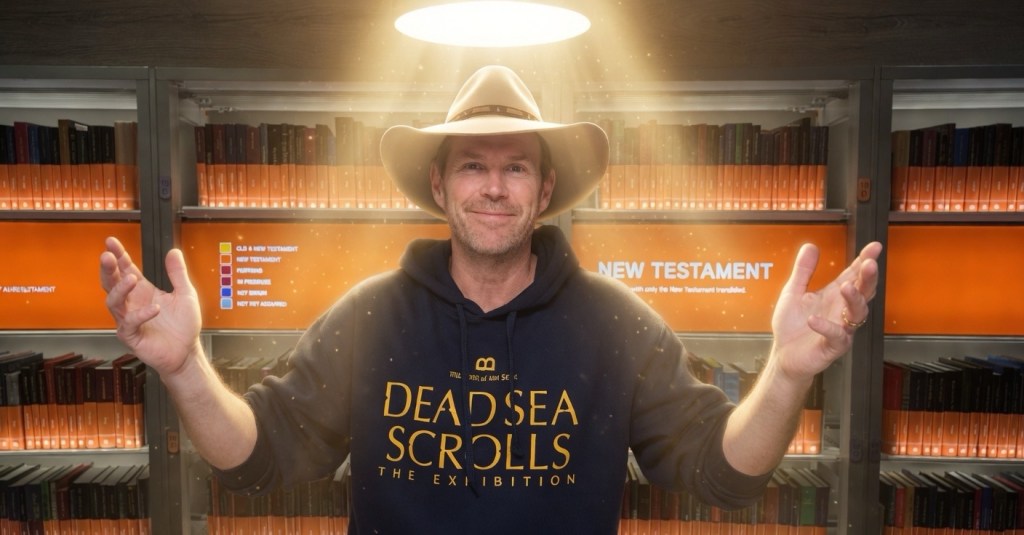
Rich Hoffman is an author, political consultant, and strategic advisor based in Cincinnati, Ohio, and the creator of The Politics of Heaven—a unique framework that connects biblical theology, ancient history, and modern power structures to explain how moral alignment and spiritual forces shape global events. Blending real-world political experience with deep research into archaeology, UFO phenomena, and suppressed historical narratives, Hoffman offers compelling commentary on topics ranging from ancient civilizations and the Dead Sea Scrolls to modern populist movements, paranormal continuity, and leadership strategy in chaotic environments. As the author of The Gunfighter’s Guide to Business and the forthcoming Politics of Heaven, he brings a grounded yet provocative voice to media discussions, supported by firsthand experiences and a cross-disciplinary approach that bridges science, history, and theology. For interviews, speaking engagements, or expert analysis, visit richhoffmanbooks.com or contact directly via phone at 513-307-5815 or email at rhoffman@richhoffmanbooks.com. If you’ve seen the movie, Disclosure Day and want to talk about it and the implications of Presidnet Trump’s UAP disclosures, let me know and we can bring some color to your coverage. https://richhoffmanbooks.com/media-inquiries-broadcast-topics-and-contact-info/?frame-nonce=ad51e7ecba I do have a firsthand UFO encounter to discuss.