
The Pursuit of Happiness Is Not a Handout: Aristotle, Jefferson, Eudaimonia, and Why Government Cannot Manufacture a Meaningful Life.

I am sitting on my porch with a book in my lap, the same way I have done it for years, and the same way I imagine Thomas Jefferson doing it at Monticello when the noise of government finally fell away. People still walk up and ask the question as if it were an accusation: you are in your prime earning years; what are you doing out here reading? I tell them the truth. I am practicing an old idea that most of modern politics has forgotten how to pronounce. The Greeks called it eudaimonia. Speech-to-text software, and more than a few hurried conversations, turn the word into “pneumonia.” That slip is almost perfect. We have caught a fever about happiness and then treated the wrong disease.

I am not an anti-machine person, and I am not an anti-data-center person. Tools are tools. I use them the way I use a library: to get to the argument faster. What I am against is the siren song that says a meaningful life can be issued by a legislature, mailed as a rebate, or confiscated from a neighbor who hit the jackpot. That song is older than the Democratic platform and older than the American republic. It is the temptation to let someone else define the good life and then charge you for the privilege.

The Declaration of Independence did not promise us a feeling. It promised us a pursuit. That difference is the whole American argument, and it is the argument I keep returning to when the season turns political, and every candidate suddenly wants to sell happiness by the pound.[1]

What Did the Founders Mean by the Pursuit of Happiness?

Schoolhouse history likes a tidy swap. Locke wrote “life, liberty, and property.” Jefferson, we are told, crossed out property and wrote happiness because he was more generous, or more poetic, or less capitalist. The tidy swap is too tidy.[2]

Jefferson had George Mason in front of him. Mason’s Virginia Declaration of Rights kept both goods on the table: the means of acquiring and possessing property, and the pursuing and obtaining of happiness and safety.[3] Jefferson compressed the line. He did not throw property into the river. He refused to let property pretend it was the whole human good. Locke himself, in the Essay Concerning Human Understanding, had already said that the highest perfection of an intellectual nature is “a careful and constant pursuit of true and solid happiness.”[4] The phrase was in the air of the eighteenth century. Adams said the happiness of society is the end of government, as the happiness of the individual is the end of man.[5]

So the Founders were not announcing a mood. They were naming a classical end: a life that can actually be lived well. Happiness, in that older English, is closer to flourishing than to a grin. It is closer to a completed form than to a shopping list. Arthur Schlesinger once wrote about the “lost meaning” of the phrase, and Pauline Maier showed how common the political language of happiness already was in American writing before July 4, 1776.[6] Jefferson did not invent a slogan for a greeting card. He put a thick word in a thin space and trusted a free people to know the difference between a right and a result.

I like to say it this way, because it is how I live it. Happiness is not a second house in Florida, a place in the Upper Peninsula, and a third address in Cincinnati. Those things can be fine. They are not the definition. I have been happier with a book and a family meal of takeout Chinese than with a ledger that looked impressive to somebody else. The money that buys the meal matters less than the hour in which you eat it. If that sounds sentimental, it is only because we have been trained to measure a soul with a bank statement.

What Is Aristotle’s Eudaimonia, and Why Is It Not a PlayStation?

Aristotle calls the highest human good eudaimonia. Translators say happiness. They should also say flourishing, living well, a complete life of excellent activity. Aristotle is blunt about the alternatives. Pleasure is not enough. Honor depends on other people. Wealth is a tool. The human function is rational activity, and the human good is that activity done with virtue, not for a weekend but across a life.[7]

Two features of that definition wreck most modern politics.

First, happiness is an activity, not a stash. Aristotle says a virtuous man who never exercises the virtue is like an athlete who never enters the stadium. You do not become happy by owning the equipment. You become happy by running the race.[8] A free PlayStation in every house would not settle the question. It would only prove we had confused amusement with a soul.

Second, external goods are real and still secondary. Aristotle is not a monk. He knows a man needs enough equipment for a complete life. He does not pretend that catastrophe is a spiritual opportunity brochure. But he will not let the equipment become the prize.[9] That is why I can be making a million dollars a year or fifty dollars a year, and the inner measure does not have to move with the account. The measure is whether I am living a life I can defend: books, family, work I own, a porch that is mine, a conscience that is not for sale.

People hear that and think I am romanticizing poverty. I am not. I am refusing the opposite romance, the one that says the state can allocate flourishing the way it allocates a tax credit. You cannot mail a man eudaimonia. You can only leave him room to practice it, or crowd the room until he forgets how.[10]

Plato vs. Aristotle: Philosopher Kings, Jedi Knights, and Limited Government

If you want the American argument in one Greek quarrel, start here. The city executes Socrates. Plato, who loved him, answers with a republic in which the wise few rule the many for their own good. The guardians own little, lie when necessary, and impose a harmony the public cannot be trusted to choose. “Until philosophers rule as kings,” Plato says, the cities will have no rest from their troubles.[11]

Aristotle studied in that household of ideas and then pushed the furniture back toward the ground. He is more empirical, more household, more individual. He does not start with a caste of golden souls. He starts with a man who must choose, a family that must hold together, a city that must mix its powers so that no class eats the rest.[12] The debate is not a museum piece. It is the difference between a government that protects your pursuit and a government that performs your virtue in your name.

I have always thought Star Wars is popular philosophy wearing a robe. When George Lucas was at his best, the Jedi looked like knighthood: discipline, apprenticeship, a refusal of cheap power. Then the story showed you the other face. A council of the enlightened, hovering above the Republic, managing fairness, announcing balance, and slowly becoming what Aristotle warned against: a class that cannot imagine the good unless it administers it.[13] That is Plato in space. It is a beautiful picture and a dangerous constitution.

Ayn Rand saw the same fork and planted her flag with Aristotle.[14] You do not have to take her whole system to see why the Founders feared the Jedi option. Once an elite is authorized to impose happiness, it will need your property, your time, and eventually your vocabulary. The Book of Judges already knew the seesaw: no king, and every man does what is right in his own eyes; then a king, and the king takes your sons and your fields.[15] America tried to cut a third path. Not chaos. Not philosopher-kings. A limited government around an unlimited soul.

How Greek Philosophy Reached the Declaration of Independence

Ideas do not float. They ride languages, armies, and churches.

Aristotle taught Alexander. Alexander broke the old map and left Greek cities, Greek speech, and Greek books across a world that had not asked for them.[16] That Hellenistic weather is the weather in which Scripture becomes Greek, in which the New Testament can be written, in which Paul can argue in cities that already have a word for a complete life. I do not claim Alexander meant to pave a road for Christ. I claim history is thick. The Teacher of Righteousness, the Maccabean revolt, the tense priesthoods, John and his cousin in the wilderness—none of that happens in a vacuum. It happens in a Near East already argued over by Greek thought and imperial power.[17]

Rome later sits on that same furniture and, when it can no longer hold the old gods together, leans on the Church to keep a civilization from flying apart. I have spent years in books that tell that long story. Paul Johnson’s A History of Christianity is one of them. Diarmaid MacCulloch’s three-thousand-year account is another, because he is honest that Christianity does not begin at the manger in an empty room. It inherits Israel and Greece.[18]

This is why I say something that makes secular lecture halls flinch. Without the Christian movement, the Aristotelian idea of a dignified individual soul does not arrive in Virginia with enough moral force to become a political principle. Cicero carried the Greek conversation into Latin. Aquinas baptized Aristotle for the schools.[19] The Reformation and the colonial pulpit then taught ordinary people that they stood before God without a philosopher-king in the way. That is not “separation of church and state” as a sterilization protocol. It is the free exercise of a faith that made limited government feel natural instead of suicidal.[20]

Jonathan Edwards and the Christian Platform Beneath American Liberty

I have been talking a lot about Jonathan Edwards, and not because I want to turn the Founders into revivalists in powdered wigs. Edwards is useful because he forced a distinction the modern state keeps trying to erase. Liberty is not the chance to do as you please. Liberty is the healed capacity to love what is good.[21]

The First Great Awakening did not write the Constitution. It did something prior. It taught crowds of uncredentialed people that the most important transaction in a human life happens between a soul and God, not between a subject and a board of guardians. Historians still fight about how straight the line runs from Edwards and Whitefield to 1776. Coolidge, speaking in Philadelphia on the Declaration’s 150th birthday, was not shy about it. He said the religious teaching of the preceding period prepared the mind of the country, and he put Edwards in that company.[22]

What I take from that fight is simple. A Christian account of human dignity—image of God, direct accountability, sin that a committee cannot cure—makes personal responsibility feel like realism rather than cruelty. If man is only appetite plus circumstance, then of course the only “fairness” left is to move piles of stuff from the disciplined to the wrecked. If man is a soul, then the first mercy is to tell him the truth: happiness cannot be injected. It has to be lived.[23]

Why Jefferson Wrote Happiness Instead of Property

Property matters. I won’t pretend otherwise. A man who cannot keep what he earns is not free; he is a tenant of whoever counts the votes. The Fifth Amendment still talks about property because the Founders were not monks. But Jefferson left the word out of the most famous sentence in American politics on purpose, or at least with a purpose that survived the editing.[24]

If he writes “property,” the sentence can be captured by the ledger. If he writes “happiness,” the sentence stays larger than the ledger. Happiness includes the right to acquire, to build, to fail, to start again, to sit down, to open a book, to refuse a treadmill that exists only so someone else can be paid from your exhaustion. Government is instituted to secure those rights, not to emit the outcome the rights were meant to make possible.[25]

Democrats who want to retire Jefferson with Sally Hemings are not, in my experience, primarily interested in the enslaved. They want to turn off the sentence.[26] I took my children to Monticello when I was in my twenties and thirties because I wanted them to see the house, the river country, the laboratory of a mind, and the wound in the same tour. A serious country can hold both. A propaganda country can hold only one. I will not surrender the idea of the pursuit because the man who wrote it failed his own measure. That would be like burning the Gospels because Peter denied Christ before sunrise.

What Is the Government’s Role in Happiness?

The government’s job is to get out of your way without disappearing. That is a narrower job than it sounds, and a harder one. Madison’s line still does the work: if men were angels, no government would be necessary.[27] Men are not angels. So you need law against force and fraud. You need a shield around the porch. You need courts that can tell a thief from a neighbor. You do not need a ministry of flourishing.

Every month people open an electric bill and feel that drop in the stomach. Some of that is the price of a physical world. Some of that is policy dressed up as compassion. When government decides it must manufacture happiness, it discovers it has no happiness in the warehouse. It only has other people’s time. So it takes. It calls the taking fairness. It calls the residue a benefit. And it is shocked—shocked—when the people being harvested stop believing the harvest is a public service.

Representatives are not Jedi. They are not there to impose a vision of the good life on Ohio or on the country. They are there to keep the framework from being eaten: contracts, speech, worship, arms, due process, the right to keep the fruit of work. The moment they start using your success to subsidize somebody else’s refusal of consequence, they have changed jobs. They are no longer guardians of liberty. They are brokers of dependence.[28]

Can Government Distribute Happiness by Taxing Success?

This is the active campaign version of the old temptation. A man goes out, takes risks, hits the jackpot, and the speech begins: tax the rich, because his surplus is the raw material of your comfort. I have watched that speech attach itself to Vivek Ramaswamy in Ohio the way it attaches itself to anyone whose success is visible enough to photograph. The names change. The metaphysics do not.

If your only picture of a human being is a stomach, then the moral task is, of course, to move food. If your picture includes a soul, the moral task is harder. Some people are broke because the world broke them. Some people are broke because they made a string of decisions that would break anyone: addiction, idleness, the refusal to be teachable. A serious country can tell those stories apart. A political machine cannot afford to. Dependent people are reliable. Independent people are inconvenient. They might stay home and read. They might not need the next check. They might not love you at the next election.

Happiness cannot be confiscated from one life and poured into another like fuel. When you sever effort from reward, you do not get fairness. You get resentment on one side and learned helplessness on the other. Aristotle would not have been confused by this. A virtue that is not practiced dies. A city that pays people not to become excellent should not act surprised when excellence becomes scarce.

Why Minimum Wage Politics Often Create Dependence Instead of Dignity

Even a hard, poorly paid job can begin eudaimonia if the work is real and the paycheck is yours. Ownership of a small life is still ownership. The political class that talks down “minimum wage work” is not protecting the worker’s dignity. It is protecting a story in which only a managed outcome counts as a human life.

Artificially jack the wage floor and two ordinary things happen. Some businesses hire fewer people—some cut hours. Prices around the worker rise. The first rung rises, and more people never reach it. Then the same political class arrives with a program for the people who cannot find the rung, and the program requires a larger state, which requires a deeper reach into the people who are still climbing.[29] That is not an accident that keeps happening to kind-hearted people. It is a machine that converts failed economics into loyal constituencies.

I am not against a man earning more. I am against the pretense that a statute can repeal scarcity without repealing somebody’s opportunity. Happiness at the bottom of the ladder is not a higher number on a poster. It is the knowledge that the step you are standing on belongs to you.

Jefferson’s Porch, Roosevelt’s Badlands, and My Own Monticello

When life got heavy, Jefferson went home. He wrote that nature intended him for the tranquil pursuits of science and that leaving power felt like a prisoner shaking off chains. In retirement, he gave up newspapers for Tacitus and Thucydides, Newton and Euclid, and said he found himself much the happier.[30] After he sold his library to rebuild Congress’s, he said the line I have loved since I first walked that hill in Virginia: “I cannot live without books.”[31]

Theodore Roosevelt learned the same lesson the hard way. On February 14, 1884, his mother and his wife died in the same house, hours apart. He put a great X in the diary and wrote that the light had gone out of his life. Then he went to the Dakota Territory, simplified the world down to cattle, weather, and work, and stayed long enough to remember he was still a man.[32] That is not “self-care.” That is the Rough Rider version of Aristotle. Unplug from the grid of other people’s noise. Choose a smaller field. Practice being alive on purpose.

I do the same thing when the complications pile up. I start unplugging. I sit on a porch that reminds me of the older American houses, and I read. Visitors think I have dropped out. I have dropped back in. A designated place for thought is not a luxury good. It is how a person remembers that he is not a device on the state’s network. Aristotle said the highest activity is contemplation.[33] Jefferson built rooms for it. I have rooms for it. If government ever decides that my unproductive hours are a public resource, it will have declared war on the very right it exists to protect.

Homelessness, Bad Decisions, and the Difference Between Charity and Clientage

I have walked into Canterbury, past the old gates toward the cathedral I love, and seen the same scene you can see outside too many American churches and civic showpieces. People sleeping rough in the shadow of a great Christian building, because the building is a good place to be seen by tourists with sandwiches. I have looked at faces there, and in Los Angeles, and in New York. I do not claim I can read a whole biography off a face. I have spoken with enough of those men to know that many of them are not there because a rich stranger refused them a rebate. They are there because addiction, or a collapsed will, or a long series of refusals, ate the mechanisms by which a person stays housed.

A Christian society is supposed to help. It is not supposed to freeze a man in his worst hour and call the freeze compassion.[34] When a system removes the cost of a bad decision while also flattening the reward of a good one, it trains people out of agency. Then it photographs the wreckage and says, see, this is why we must take more from the competent. 

Government’s legitimate role is to keep the road from being blocked so you can walk it in your own way: reading your books, staying with your family, ordering the Chinese food, building a firm, disappearing into North Dakota, disappearing onto a porch, working a first job that nobody at a fundraiser wants to brag about. The state may not decide your values and then bill you for the sermon. The state may not call your success a surplus inventory of happiness to be broken up for parts.

That is why the original quarrel still matters. Plato’s temptation is always to let the few define the good and administer it. Aristotle counters that a human life is an activity you cannot outsource. Christianity carried that dignity through empires that would have been happy to forget it. The American Founders, soaked in both Athens and the Bible, wrote a sentence telling the state to stay in its lane and not interfere with people’s happiness. 

Notes

[1] Thomas Jefferson never left a memorandum explaining why he chose the phrase. The Thomas Jefferson Encyclopedia at Monticello notes that he was almost certainly influenced by George Mason’s Virginia Declaration of Rights (June 12, 1776), which spoke of “the enjoyment of life and liberty, with the means of acquiring and possessing property, and pursuing and obtaining happiness and safety.” See “Pursuit of Happiness,” Thomas Jefferson Encyclopedia, Monticello.

[2] John Locke, Two Treatises of Government (1689), Second Treatise, §87 and §123. Locke’s triad is often summarized as “life, liberty, and property,” though Locke’s larger category of “property” includes life, liberty, and estate.

[3] George Mason, Virginia Declaration of Rights, §1 (June 12, 1776). The National Archives notes that Jefferson drew on Mason for the opening paragraphs of the Declaration.

[4] John Locke, An Essay Concerning Human Understanding (1690), Book II, ch. 21. Locke writes that “the highest perfection of intellectual nature lies in a careful and constant pursuit of true and solid happiness.”

[5] John Adams, Thoughts on Government (1776): “the happiness of society is the end of government, as all Divines and moral Philosophers will agree that the happiness of the individual is the end of man.”

[6] Arthur M. Schlesinger, “The Lost Meaning of the ‘Pursuit of Happiness,’” William and Mary Quarterly, 3rd ser., 21, no. 3 (1964): 326–327. See also Pauline Maier, American Scripture: Making the Declaration of Independence (New York: Knopf, 1997).

[7] Aristotle, Nicomachean Ethics 1098a16: the human good is “activity of the soul in accord with virtue.” The Greek εὐδαιμονία (eudaimonia) is commonly rendered “happiness” or “flourishing.” It is not a mood. It is a life well lived.

[8] Aristotle, Nicomachean Ethics 1098a7–18 (the function argument) and 1103b26–30: the point of ethical inquiry is not merely to know what virtue is, but to become good.

[9] Aristotle, Nicomachean Ethics 1099a31–1099b8 and 1101a14–16. External goods are conditions of a complete life, not the definition of the good itself. A man wrecked by catastrophe is not called happy in the full sense, but neither is a rich man who lives without virtue.

[10] For a clear popular account of eudaimonia versus hedonic pleasure, see the discussion in the Stanford Encyclopedia of Philosophy, s.v. “Aristotle’s Ethics” (Richard Kraut). Flourishing is activity, not a pile of goods.

[11] Plato, Republic 473c–e: until philosophers rule as kings, or kings philosophize, “there can be no rest from ills for the cities.”

[12] Aristotle, Politics I and III. Aristotle begins with the household and the citizen, not with a caste of guardians. He defends a mixed constitution and treats extreme concentrations of power as a constant temptation toward tyranny.

[13] George Lucas has long acknowledged that Star Wars draws on myth, knighthood, and mentor-pupil initiation. The Jedi Council, however it began, becomes a cloistered caste managing the galaxy’s “balance.” That is a Republic problem, not an Ethics problem.

[14] Ayn Rand repeatedly named Aristotle as the only philosopher to whom she owed a genuine intellectual debt. See the appendix to Atlas Shrugged and her essay “The Objectivist Ethics” in The Virtue of Selfishness (New York: New American Library, 1964). Rand’s politics are not the Founders’ politics, but her recovery of Aristotelian individualism is part of the modern American argument.

[15] 1 Samuel 8. Israel asks for a king “like all the nations.” Samuel warns that a king will take sons, daughters, fields, and a tenth. The Book of Judges had already shown the opposite problem: “In those days there was no king in Israel; everyone did what was right in his own eyes” (Judges 21:25).

[16] Plutarch, Life of Alexander; and the ancient biographical tradition that Aristotle tutored the young Alexander at Mieza. The cultural aftershock of that education was Hellenism: Greek language, cities, and books stretched from the Aegean to the Indus.

[17] The Septuagint translated Hebrew Scripture into Greek in the Hellenistic age. The New Testament was written in Greek. Without that linguistic world, the Christian movement would have traveled a narrower road. See Diarmaid MacCulloch, Christianity: The First Three Thousand Years (New York: Viking, 2010), opening chapters on Greece, Rome, and Israel.

[18] Paul Johnson, A History of Christianity (New York: Atheneum, 1976). Johnson’s one-volume narrative remains a favorite of general readers who want the political and institutional story without losing the religion itself.

[19] Cicero, in De Finibus and De Officiis, transmitted the Greek conversation about the highest good into Latin moral vocabulary that later Christian and Enlightenment writers still used. Aquinas baptized large parts of Aristotle in the Summa Theologiae.

[20] The First Amendment protects free exercise; it does not exile Christianity from the moral formation of a people. Jefferson’s Virginia Statute for Religious Freedom (1786) was written to keep the state from prescribing worship, not to keep citizens from having a faith.

[21] Jonathan Edwards, A Treatise Concerning Religious Affections (1746); and Freedom of the Will (1754). Edwards insisted that true liberty is not mere license—“opportunity to do as one pleases”—but the capacity of a converted heart to love what is good.

[22] Calvin Coolidge, Address at the Celebration of the 150th Anniversary of the Declaration of Independence, Philadelphia, July 5, 1926. Coolidge argued that the Declaration’s principles were prepared by the religious teaching of the preceding period, and he named Jonathan Edwards among those who had “aroused the thought” of the colonists.

[23] Thomas S. Kidd, The Great Awakening: The Roots of Evangelical Christianity in Colonial America (New Haven: Yale University Press, 2007); Patricia U. Bonomi, Under the Cope of Heaven: Religion, Society, and Politics in Colonial America (New York: Oxford University Press, 1986).

[24] On “happiness” as a political term already common in American writing before 1776, see Pauline Maier, American Scripture, and the Gilder Lehrman essay “The Harmonizing Sentiments of the Day.” Jefferson compressed a public language; he did not invent a private slogan.

[25] Declaration of Independence, final text adopted by Congress, July 4, 1776: governments are instituted “to secure these rights,” and the people may alter or abolish a government that becomes destructive of those ends, organizing new powers “as to them shall seem most likely to effect their Safety and Happiness.”

[26] On Jefferson’s contradictions, including slavery and the Hemings family, the honest reader does not need a campaign commercial. He needs Annette Gordon-Reed, The Hemingses of Monticello (New York: W. W. Norton, 2008), and the documentary record at Monticello. The argument of this essay is not that Jefferson was a saint. It is that the sentence he wrote still tells the truth about what a free government is for.

[27] James Madison, Federalist No. 51: “If men were angels, no government would be necessary.” Limited government is a theological and anthropological claim before it is a procedural one.

[28] See Thomas Sowell, Knowledge and Decisions (New York: Basic Books, 1980), and The Vision of the Anointed (New York: Basic Books, 1995), on the difference between process and result, and on elites who treat other people’s lives as raw material for a designed outcome.

[29] Minimum-wage literature is contested, but the basic price-control logic is not mysterious: raise the legal price of low-skill labor and some hours, some jobs, and some first rungs disappear. For a classical statement, see Henry Hazlitt, Economics in One Lesson (New York: Harper, 1946), ch. 19.

[30] Thomas Jefferson to John Adams, January 21, 1812: “I have given up newspapers in exchange for Tacitus & Thucydides, for Newton & Euclid; & I find myself much the happier.” Founders Online, National Archives.

[31] Thomas Jefferson to John Adams, June 10, 1815: “I cannot live without books; but fewer will suffice where amusement, and not use, is the only future object.” After the British burned the Capitol library in 1814, Jefferson sold his collection of more than 6,500 volumes to Congress. He immediately began assembling another library. See Endrina Tay, “I cannot live without books,” Monticello.

[32] On February 14, 1884, Martha “Mittie” Roosevelt died of typhoid fever, and Alice Hathaway Lee Roosevelt died of Bright’s disease, hours apart, in the same New York house. Roosevelt wrote in his diary, “The light has gone out of my life.” He left infant Alice with his sister and went west to the Dakota Territory. See Theodore Roosevelt National Park, “Theodore Roosevelt the Rancher,” National Park Service.

[33] Aristotle, Nicomachean Ethics X.7–8. Contemplation (theoria) is the highest activity, which is why a porch, a book, and an unhurried hour are not laziness in the Aristotelian sense. They can be the peak of a human life if the rest of the life has been ordered toward virtue.

[34] Charity that preserves agency predates the welfare state. The Christian distinction between helping a neighbor and creating a client runs from the Pauline collections for the poor to later debates inside the Church of England itself.

Bibliography for Further Reading

Primary Texts

Adams, John. Thoughts on Government. 1776.

Aristotle. Nicomachean Ethics. Translated by Terence Irwin. 2nd ed. Indianapolis: Hackett, 1999.

Aristotle. Politics. Translated by C. D. C. Reeve. Indianapolis: Hackett, 1998.

The Bible. Especially Judges; 1 Samuel 8; and the Pauline language of liberty and responsibility.

Cicero. De Officiis et De Finibus Bonorum et Malorum.

Edwards, Jonathan. A Treatise Concerning Religious Affections. 1746.

Edwards, Jonathan. Freedom of the Will. 1754.

Jefferson, Thomas. The Declaration of Independence. 1776. Drafts and final text in The Papers of Thomas Jefferson, vol. 1, and at Founders Online.

Jefferson, Thomas. Letters to John Adams, January 21, 1812, and June 10, 1815. Founders Online, National Archives.

Locke, John. An Essay Concerning Human Understanding. 1690. Book II, chapter 21.

Locke, John. Two Treatises of Government. 1689. Second Treatise.

Madison, James. The Federalist No. 51. 1788.

Mason, George. Virginia Declaration of Rights. June 12, 1776.

Plato. Republic. Especially Books IV–VII on the guardians and the philosopher-king.

Thomas Aquinas. Summa Theologiae. Treatises on happiness, law, and virtue.

The Founding and the Phrase

Allen, Danielle. Our Declaration: A Reading of the Declaration of Independence in Defense of Equality. New York: Liveright, 2014.

Ellis, Joseph J., ed. What Did the Declaration Declare? Boston: Bedford/St. Martin’s, 1999.

Maier, Pauline. American Scripture: Making the Declaration of Independence. New York: Knopf, 1997.

Schlesinger, Arthur M. “The Lost Meaning of the ‘Pursuit of Happiness.’” William and Mary Quarterly, 3rd ser., 21, no. 3 (1964): 325–327.

Thomas Jefferson Foundation. “Pursuit of Happiness.” Thomas Jefferson Encyclopedia. Monticello.org.

Yarbrough, Jean M. American Virtues: Thomas Jefferson on the Character of a Free People. Lawrence: University of Kansas Press, 1998.

Christianity, Greece, and Transmission

Copleston, Frederick. A History of Philosophy. Vols. 1 and 2. London: Burns, Oates & Washbourne, 1946–1950.

Johnson, Paul. A History of Christianity. New York: Atheneum, 1976.

MacCulloch, Diarmaid. Christianity: The First Three Thousand Years. New York: Viking, 2010.

Pelikan, Jaroslav. The Christian Tradition. 5 vols. Chicago: University of Chicago Press, 1971–1989.

Stark, Rodney. The Rise of Christianity. Princeton: Princeton University Press, 1996.

Awakening, Virtue, and the American Mind

Bonomi, Patricia U. Under the Cope of Heaven: Religion, Society, and Politics in Colonial America. New York: Oxford University Press, 1986.

Coolidge, Calvin. Address at the Celebration of the 150th Anniversary of the Declaration of Independence. Philadelphia, July 5, 1926.

Kidd, Thomas S. The Great Awakening: The Roots of Evangelical Christianity in Colonial America. New Haven: Yale University Press, 2007.

Marsden, George M. Jonathan Edwards: A Life. New Haven: Yale University Press, 2003.

Noll, Mark A. America’s God: From Jonathan Edwards to Abraham Lincoln. New York: Oxford University Press, 2002.

Jefferson, Monticello, and the Wound in the House

Gordon-Reed, Annette. The Hemingses of Monticello: An American Family. New York: W. W. Norton, 2008.

Malone, Dumas. Jefferson and His Time. 6 vols. Boston: Little, Brown, 1948–1981.

Tay, Endrina. “I cannot live without books.” Monticello.

Thomas Jefferson’s Libraries. Retirement Library Catalog. Monticello / Library of Congress.

Roosevelt, Work, and the Hard Reset

Morris, Edmund. The Rise of Theodore Roosevelt. New York: Coward, McCann & Geoghegan, 1979.

Roosevelt, Theodore. Ranch Life and the Hunting-Trail. New York: Century, 1888.

National Park Service. “Theodore Roosevelt the Rancher.” Theodore Roosevelt National Park.

Modern Arguments About Flourishing, Incentives, and the State

Hazlitt, Henry. Economics in One Lesson. New York: Harper, 1946.

Murray, Charles. In Pursuit of Happiness and Good Government. New York: Simon & Schuster, 1988.

Rand, Ayn. The Virtue of Selfishness. New York: New American Library, 1964.

Sowell, Thomas. Knowledge and Decisions. New York: Basic Books, 1980.

Sowell, Thomas. The Vision of the Anointed. New York: Basic Books, 1995.

Kraut, Richard. “Aristotle’s Ethics.” Stanford Encyclopedia of Philosophy.

Go somewhere and be happy. The pursuit is still legal.

In the age of disclosure, the politics of heaven will not be administered from a capital.

The Gunfighter’s Guide: A skeleton key to Western Civilization (gunfighterguide.shop) 

Rich Hoffman

More about me

Click Here to Protect Yourself with Second Call Defense https://www.secondcalldefense.org/?affiliate=20707

About the Author: Rich Hoffman

Rich Hoffman is an author, political consultant, and strategic advisor based in Cincinnati, Ohio, and the creator of The Politics of Heaven—a unique framework that connects biblical theology, ancient history, and modern power structures to explain how moral alignment and spiritual forces shape global events. Blending real-world political experience with deep research into archaeology, UFO phenomena, and suppressed historical narratives, Hoffman offers compelling commentary on topics ranging from ancient civilizations and the Dead Sea Scrolls to modern populist movements, paranormal continuity, and leadership strategy in chaotic environments. As the author of The Gunfighter’s Guide to Business and the forthcoming Politics of Heaven, he brings a grounded yet provocative voice to media discussions, supported by firsthand experiences and a cross-disciplinary approach that bridges science, history, and theology. For interviews, speaking engagements, or expert analysis, visit richhoffmanbooks.com or contact directly via phone at 513-307-5815 or email at rhoffman@richhoffmanbooks.com.  If you’ve seen the movie, Disclosure Day and want to talk about it and the implications of Presidnet Trump’s UAP disclosures, let me know and we can bring some color to your coverage. https://richhoffmanbooks.com/media-inquiries-broadcast-topics-and-contact-info/?frame-nonce=ad51e7ecba I do have a firsthand UFO encounter to discuss.

A Family Adventure at The Wilds: A Week of Travel That Reminds Us What Matters

Every once in a while, life hands you one of those small, perfect weeks with family — the kind that doesn’t need a grand destination or a complicated itinerary to feel meaningful. Recently, we packed up the RV and took a short family trip to The Wilds in central Ohio. It wasn’t far from home, and it wasn’t meant to be anything elaborate. But it turned into exactly the kind of experience that reminds you why family time matters and why stepping away from the noise is sometimes the best thing you can do.

My daughter put together a fantastic video from the trip, capturing the highlights in a way only she can. A few of my grandkids are featured in it, running around, laughing, exploring, and just being kids. Watching them in that setting—surrounded by open sky, quiet water, and the wide, rolling landscape—reminded me how grounding these moments can be. We spend so much of our lives dealing with big issues, heavy conversations, and responsibilities that stack up day after day. But weeks like this show the other side of life, the part that keeps you centered.

If you’ve followed my writing for any length of time, you know I spend a lot of time talking about sovereignty, community, history, politics, and the deeper questions that shape our world. Those topics matter, and they deserve the attention we give them. But it’s just as important to share the lighter moments—the real life that happens between all the big ideas. This trip was a perfect example of that balance. It wasn’t a grand expedition; it was simply a family outing, close to home, filled with the kind of memories that last longer than most of the headlines we chase.  As I have said, I have spent most of 2026 on the road like this.  Sometimes it’s just my wife and I.  Sometimes, like this, it’s family, some of our family.  Sometimes it’s all my family.  I like RV travel because it lets me take my office with me.  I write books, I do consulting, and I can do all that work from anywhere in the world with a TEAMS call.  I never know where I’m going to be, so that’s why I do all the videos these days from the kitchen in my RV.  It has good power and a comfortable, studio-like setting.  Sometimes the internet isn’t great at our campgrounds, but that can be solved with Starlink, which I’ll likely do next year. 

The World of Everywhere and Anything

RV camping has a way of slowing everything down. There’s something about being on the road, even for a short distance, that shifts your mindset. You’re not rushing. You’re not checking your phone every five minutes. You’re not thinking about the next meeting or the next project. You’re just present. The video my daughter made captures that feeling beautifully — the simplicity, the quiet, the laughter, the sense of being together without distraction. It’s a glimpse into how we travel, unwind, and stay connected as a family.

The Wilds itself is a unique place. Wide open spaces, wildlife roaming in the distance, and a sense of calm that settles in as soon as you arrive. It’s the kind of environment that encourages reflection without forcing it. You breathe a little deeper. You listen a little more. You notice things you might overlook in the rush of everyday life. And when your kids and grandkids surround you, those moments become even more meaningful.

It was a short trip, but it was packed with fun and full of the kind of small joys that make life feel full. These are the moments that remind us that life isn’t just about the big battles or the big ideas — it’s also about the quiet weekends, the shared meals, the kids running around, and the chance to breathe for a minute. It’s about remembering that the world is bigger than our worries and that the people closest to us are the ones who make the journey worthwhile.

So I’m sharing this little slice of our life not because it’s dramatic or extraordinary, but because it’s real. It’s honest. It’s the kind of thing we all need more of. And I think you’ll enjoy seeing that side of our world — the family side, the simple side, the part that keeps everything else in perspective.

Rich Hoffman

More about me

Click Here to Protect Yourself with Second Call Defense https://www.secondcalldefense.org/?affiliate=20707

About the Author: Rich Hoffman

Rich Hoffman is an author, political consultant, and strategic advisor based in Cincinnati, Ohio, and the creator of The Politics of Heaven—a unique framework that connects biblical theology, ancient history, and modern power structures to explain how moral alignment and spiritual forces shape global events. Blending real-world political experience with deep research into archaeology, UFO phenomena, and suppressed historical narratives, Hoffman offers compelling commentary on topics ranging from ancient civilizations and the Dead Sea Scrolls to modern populist movements, paranormal continuity, and leadership strategy in chaotic environments. As the author of The Gunfighter’s Guide to Business and the forthcoming Politics of Heaven, he brings a grounded yet provocative voice to media discussions, supported by firsthand experiences and a cross-disciplinary approach that bridges science, history, and theology. For interviews, speaking engagements, or expert analysis, visit richhoffmanbooks.com or contact directly via phone at 513-307-5815 or email at rhoffman@richhoffmanbooks.com.  If you’ve seen the movie, Disclosure Day and want to talk about it and the implications of Presidnet Trump’s UAP disclosures, let me know and we can bring some color to your coverage. https://richhoffmanbooks.com/media-inquiries-broadcast-topics-and-contact-info/?frame-nonce=ad51e7ecba I do have a firsthand UFO encounter to discuss.

Good Government Is Not Revenge:  Jonathan Edwards, Sheriff Richard Jones, and the Butler County Republican Party

For me, the standard is Jonathan Edwards on human government. The new Jonathan Edwards Study Bible arrived in August of 2026. I opened it on a hot afternoon after riding roller coasters at Kings Island with two of my grandchildren. That is not a cute detail. That is the point. Good government is supposed to protect ordinary life — grandchildren, county fairs, Sunday school, a sheriff who still thinks Butler County can look a little like Mayberry and a little like a serious modern county at the same time.

If Yale and Princeton were like they were during Jonathan Edwards’s time, I would likely have several PhDs by now, but over time, they have turned into globalist institutions, which I found repulsive when I was of college age.  They have turned into anti-American insurgent places that ruin the minds of young people.  But, Yale has preserved Edwards’s papers. The Study Bible puts his notes, essays, Resolutions, and miscellanies system next to the New King James text.[1][2] Everybody in this party who claims to care about order, virtue, and limited government should own a copy and actually read it. I am a small-government kind of person. I was Tea Party. I was Reform Party in the 1990s. I was talking about Donald Trump in 1999 when he was circling the Reform Party nomination against Pat Buchanan.[3] I have been in human communication and local politics for thirty years. I know what an intramural fight looks like. I also know what it costs voters.

What Jonathan Edwards Meant by Human Government

Good government as a moral order, not a branding exercise

Edwards believed that good government belongs to the highest moral order of a proper civilization.[4] I agree with him. That does not make me a big-government conservative. It makes me a person who thinks the point of the smaller government we do have is to be good — competent, restrained, honest, and aimed at the public good, not at the vanity of the people holding powerful positions.

You do not get into government to make a name for yourself. You get into government so that people have representatives. You want those representatives to be as good as possible. There is only one legitimate motivation: to make the thing good in the Edwards sense — an earthly office that still answers to a moral law it did not invent.

“The enjoyment of [God] is the only happiness with which our souls can be satisfied.”

— Jonathan Edwards, as featured in The Jonathan Edwards Study Bible (Thomas Nelson, 2026)

That sentence is about God. It is also a warning about politics. If your happiness is a title on a sample ballot, a headline, or the humiliation of a rival, you are already in the wrong temple. The party slate card exists so voters can find good candidates. It does not exist so that somebody can settle a score.

Romans 13 is not a revenge verse

Edwards read civil authority inside God’s moral government of the world.[5] Magistrates exist. They are not priests. They are not avengers of private grudges. They are supposed to keep the peace, punish actual wrongdoing, and leave room for the rest of life — family, work, church, property — to go on.

That is why I keep saying the same sentence to people who want to turn the Butler County Republican Party into a revenge shop: you do not do politics for revenge. You do not look to even scores even if you were bullied. You do not use the power of government, or the machinery of a party, to bully everybody else. If you cannot serve voters, you are not in it for the right reasons.

Why This Bible Arrived on Time

Kings Island, two grandchildren, and page 1176

I had a rare day with two of my grandchildren at Kings Island, late in the summer season. We rode the big coasters. It got hot. We came home for lunch and a cool-down. The box had been dropped at the house. I knew what it was. I sat down with that Bible for an hour while the kids recovered, and then we went back to the park to swim.

People can laugh at a grown man getting quiet over a study Bible. Fine. I have spent decades looking for a single object that holds theology, philosophy, and a usable picture of public life in one binding. This one does. There is an essay on human government that I keep pointing people to — in my copy it sits around page 1176 — and just over the next page there is another piece on the means of grace. The book is full of that mixture: doctrine with a spine, and a vision of what a people owe each other when they try to govern.

Edwards was thrown out of his own church

Edwards served the Northampton church for twenty-three years. He is the man of “Sinners in the Hands of an Angry God.”[6] By 1750 a majority of the congregation voted him out. He preached a farewell sermon and left.[7][8] He went to Stockbridge to teach and minister among Native Americans, a smaller work, after a public humiliation. Later he was respected enough to become president of the College of New Jersey — Princeton — and then he died. Yale keeps the papers. Princeton had the office. The church that made him famous also removed him.

He was not removed because he had become a thief. He was removed because he was more exacting than the politics of the room would bear. That is a lesson with teeth. Sometimes the righteous thing is to stay and fight. Sometimes the righteous thing is to step out of an equation you can no longer serve well, because the people have decided they do not want you. The question is never “What feeds my name?” The question is “What actually produces good government for the people in front of us?”

I Have Zero Tolerance for Bullies

I can already hear it: then why do you support Sheriff Jones? People call him rough. Some people call him a bully.

I have had no tolerance for bullies my entire life. I have gotten into fights over people being picked on, often. I do not care if the target is a man or a woman, big or small. I do not care which party the bully belongs to. I have no patience for personality types who use an office to get revenge on rivals.

That standard cuts in every direction. It cuts against Democrats who treat government as a punishment engine. It cuts against Republicans who treat a county central committee like a private army. It cuts against anyone who thinks the point of winning is to make the other guy miserable.

Sheriff Jones and I have not always been the best of friends. I still want him in the party. Those two sentences can both be true if you believe, with Edwards, that the office is larger than the grudge.

Sheriff Richard Jones Is My Guy

A big tent means you keep the sheriff

I like Sheriff Richard K. Jones.[9] I want Sheriff Jones in the Butler County Republican Party. I have said, more than once, that he sometimes sounds like he still has a Democrat nerve in him on a public-sector question. Good. I want a Republican Party big enough to pull people who left the other side. I want a party that can stand on a stage with him and not flinch.

He has been sheriff across multiple terms. I want him around for as long as he wants the job and the voters still give it to him. When he goes on international outlets and talks about immigration and the jail, I want him able to say he is a member of this county Republican Party. I do not want him pushed into independent exile because a faction could not share a room with him.

Seven years of silence, one parking lot, two hats

In 2011 Ohio went to war with itself over Senate Bill 5 and public-sector unions.[10] I was on one side of that fight. Sheriff Jones was not with the Tea Party types who got burned when the referendum turned. We were both on WLW in those years.[11] He was friendly with Willie. I was friendly with Doc Thompson. Doc got pushed off, went elsewhere, and later died after being hit by a train under circumstances people still talk about. Willie is still on the air. Jones is still on the air with him.

After that bill, Sheriff Jones and I did not talk for six or seven years. We would be at the same events and walk past each other. Then I took my family to Charleston, South Carolina, for a week. Charleston is a fine city. People treat it like one of the best places in the world. My daughters and I love pirate history; you cannot stand in that harbor without thinking of Blackbeard and of the Civil War forts. I liked it. I came home happier to see Butler County.

That is not a cheap patriotic line. You do not know what you have until you have walked a “better” place and realized your own county is just as good if not better in many ways, working farms, and a party that has actually produced national figures.[12] JD Vance came out of this ground. Vivek Ramaswamy has been in our orbit. Warren Davidson’s office in Washington has been a good shop. Bernie Moreno has been a serious addition.[13] Interns and staff I met this year in those offices were the kind of young people who make you think the farm system still works.

Jones and I walked out of an event toward the cars. He broke the ice. He liked my hat. I liked his hat. I liked his boots. I like his Andy Griffith picture of what a sheriff’s office should feel like. We started talking again. It took almost eight years.

The grand jury and the jail tour

I am not young. I am in my senior stretch of life, around sixty as of 2026. One of the best civic jobs I have ever held was foreman of a Butler County grand jury. It was not the money. It was the view.

People called me during that season to whisper about “corruption” in the sheriff’s office and the prosecutor’s office. That is what people do when they do not get the outcome they wanted, humans try to create political pull to get rid of people they don’t want to work with. I like our prosecutor’s office. I like Mary Swain a great deal.[14][15] I like the people who actually carry files upstairs to the prosecutors’ offices, which I was able to tour and I consider to be one of the finest places on earth.

The grand-jury room sits on the same floor as the clerk’s world. You take indictments up. You meet the assistants. You meet the deputies who work child-exploitation cases and drug cases. You get answers to questions you have had. And because a grand jury should understand what it is doing when it votes a true bill, Sheriff Jones gave me a tour of the jail. We talked. When his book came out he told me about it. I read it and reviewed it. I recommend it very highly.

That is the other side of the man some people only meet in a fight. If you cannot work with that, you probably do not have the temperament for coalition politics.

Nancy Nix Is the Benchmark

If Sheriff Jones is the law-and-order pillar I want inside the big Republican tent, Nancy Nix is the governing temperament I want the rest of the party to study.[16] I have said it until people are tired of hearing it. She pours hours into this party. She is good government from top to bottom. When she walks into a room, the room still works. That is a rare skill.

I liked Roger Reynolds for a long time. I was on his side until he turned his fight against Nancy Nix.[17] Clearing your name after a legal disaster is one thing. Using the wreckage to tear down a sitting officeholder who actually runs the shop is another. Parties are supposed to put a slate card in front of voters. They are not supposed to become instruments for a man who cares more about his name than about the taxpayers in the file.

George Lang and Debbie can sit down with almost anybody and not get moved off their mark. That is a Trump skill too: talk to the person across the table, find the deal, do not surrender the spine. I have asked George more than once whether Kathy Wyenandt (the area Democrat) can be pulled toward the party instead of left as a permanent foreign object working the community against itself. I would rather recruit than exile. Same rule as Jones. A bigger tent is not a mushier platform. It is a refusal to donate our own people to the other side because we enjoyed a feud.

What a County Party Is Actually For

Volunteers, yard signs, and jobs that do not pay

Most of the jobs that make a county party run do not pay. People do them because they love the idea of a slate card voters can trust. They stand at the county fair. They work a fundraiser. They put a name on a yard-sign list. When those people are disparaged in the paper, of course they get hurt. That does not make them fragile. It makes them human.

The job of party leadership is to keep that machine pointed at voters. A unified party that serves voters will beat a pure party that serves a clique. Purity spirals are how you lose townships you used to win in your sleep.

Butler County is a Republican county that still has to earn it

Most people in Butler County gravitate Republican. That is a blessing and a trap. It is hard to keep an identity when you win so often that winning starts to feel like weather. It is hard to remember that the point is still to make government good. Todd Hall, as chairman, understood a lot of that. I try to stay out of internal knives as much as I can, because I want the system to work and I want people to feel engaged.

Thomas Hall and Sheriff Jones had their differences on policy. They got through it. They use radio well. Once they were fine with each other, Jones and I were fine with each other, once again. That is how adults do it. You do not have to marry your coalition partners. You have to stop treating them like enemy combatants.

Trump changed the party. The county still has to govern.

Trump redefined what a Republican powerhouse looks like. The old country-club party cannot pretend he did not happen. He has also, over the years, become something closer to an evangelist of a certain American memory — Mount Rushmore more than permanent Washington. I have become a fan of Washington, D.C., in the years he has been back in the White House. The offices that represent this county have been worth visiting. The city is not the enemy. Drift is the enemy.

The next years will not be as easy as “were you for Trump after 2020.” Everybody had a simple test then. The tests now are messier: energy policy after the FirstEnergy mismanagement of the real message,[18] how statehouse fights land in a sheriff’s office, whether a township trustee race is a farm system or a grudge match, whether we run toward competent people or toward whoever promises to punish last year’s enemy.

A Personal Ledger I Had to Close

Latte Sipping Prostitutes, Lakota, and being left on the air

I am going to tell a story I almost left out, because good government requires that you put some things aside even when people wronged you.

Everybody around here remembers the meltdown on WLW when I called a class of Lakota levy politics what I thought it was. I said people were selling out children to a system that works like a taxpayer-funded babysitting service with a union attached. Democrats piled on. Some Republicans who had been with me went quiet or went woke on the spot. A donor-class press release landed on the Scott Sloan show while I was live. They confronted me on the air.

I got through the interview; it was very difficult. I did not fold. But a lot of people abandoned me when it would have cost them very little to stand there. Todd Hall was one of my people, and when it mattered most, he and many others left me hanging. It took years to get over that. I could have carried a grudge forever. I did not, because I wanted a Republican Party that could still win for the needs of the voters.  I remember very well who stood with me and who didn’t, and when people wonder even now why I feel the way I do about certain people and not others, that memory usually gives an easy answer.  

That is the whole method. You may feel one way in your chest. If the party is trying to build something voters can use, you park the personal file and work. You handle squabbles another way. You do not burn the machine to warm your pride.

I have a clean record on purpose

I sign my name to what I write. People have been looking me up for years trying to find dirt they could use against me. I have been married to the same person for a long time. I can say, as a man almost sixty, that there is not a woman who can step forward and say I bruised her or hurt her in some way that finds itself on a police report.  If you don’t have a clean background, you can’t stand in front of a party and tell other people how to live.  Even if you have your side of the story, just being in a story like that shows bad judgment, and it will cause people not to follow you as a leader.  You have to be cleaner than clean if you want to hold big responsible seats.  

If you want to be a Walmart greeter, you can often get a matter expunged and live a quiet life. If you want to be the head of a political party, or the person who starts busting heads and announcing that there is a new sheriff in town, you do not get that courtesy. Enemies come out. The past comes out. Paying someone to bury a file is not the same as righteousness. The internet keeps what the clerk seals.[19]

I am not interested in ruining people for sport. Plenty of men and women have made mistakes and then put out yard signs, joined a church, and tried to live a second chapter. Redemption is real. Leadership of a party is a different office. It has to be clean enough to survive daylight, because daylight will be applied.

Leadership, Todd Minniear, and the Problem of a Hidden Past

Todd Hall did a lot of unglamorous work in the background.  Of course people complain about it, as they do everyone in a responsible seat, and they cling to the fantasy that they could do better if only they had more power. A lot of the people who have been running this thing are tired. They show up unpaid. They love the idea of good government even when the job does not love them back.

People have asked me about running for Liberty Township trustee and school board at Lakota; I get asked about it at least once a week for many years now. I like the trustees we have. I would not shove them aside for a title. People also asked Todd Minniear to step toward more leadership.[20] I have been a fan of that instinct. He has been a great trustee. He has the kind of energy a party uses when it needs a next chapter, and I was thinking of him as the Party Chairman once I knew that Todd Hall and others wanted a break.  He and I had a good discussion not very long ago about Roger Reynolds; Todd was on one side of the discussion, and I was on the other.  We didn’t argue about it, we instead put our focus on the things we shared in common.  

If you are carrying material that political enemies can turn into a wrecking ball. I will not pretend that “nobody will notice” is a strategy. Democrats already collect this stuff and wait. Factional Republicans will use it too if the fight gets personal. That is not theory.

How to Have a Fight Without Becoming the Fight

A few rules:

1.  Serve voters first. If a move does not make the ballot better, it is probably vanity.

2.  Keep Sheriff Jones in the party. A Republican Party that exiles its own long-serving sheriff is not tough. It is insecure.

3.  Treat Nancy Nix as a working model, not as a faction mascot. Rooms that light up when she enters are rooms that can still govern well, learn from her.

4.  Recruit before you purge. Democrats who can live with limited government are more valuable than Republicans who only live to punish Republicans.

5.  Do not use government, or party office, to even a private score. That is Edwards in one line.

6.  If you want the chair, assume every sealed thing will be unsealed in public. Plan for that before you run, not after the first mailer.

7.  Put grudges in a private drawer when the county needs a unified card. You can still be a man. You do not have to be a faction.

What Voters Actually Buy When They Buy a Party

Donors and church voters do not want the same conversation in the same hour. That is fine. The chairman’s job is to put them in enough of the same room that candidates can raise money without becoming a different species from the people who staff the polls. If you cannot do that, you do not have a party. You have a club.

I want GOP picnics that feel like a county still knows how to stand around a grill. I liked watching the energy when national operators came through Ross and people actually showed up. I want campfire competence. People do not have to agree on every shade of red. They can still agree that Sunday school is not a joke and that a sheriff’s office is not a think tank.

You can make a million dollars in a lot of businesses. You cannot easily build good government. It costs time, reputation, and the ability to absorb a newspaper hit without setting the headquarters on fire. People who pour themselves into this work deserve leaders who understand that cost.

Edwards lost Northampton and still did the next faithful job. That is available to anyone in this county who is about to lose a fight. It is also a warning to anyone who thinks winning a fight is the same thing as being right. We will all stand in a different dock than a central committee. That is the farewell sermon. It is a better political theory than most of what gets posted after a poorly run meeting.

The Need

Buy the Jonathan Edwards Study Bible. Read the government material. Read the farewell sermon. Then look at Butler County and ask a simple question: are we building a party voters can take pride in, or are we building a revenge path for people whose feelings got hurt?

I support Sheriff Richard Jones. I support a big-tent Republican Party that recruits instead of exiles. I support Nancy Nix as the working picture of countywide competence. I want new leadership that can stand daylight. I do not want scandals in the background of the people who hold the keys, and I do not want the keys used to punish rivals.

That is the Edwards form of Republican politics. It is also just adulthood. Butler County has given the country more than its share of serious people. We should act like it.

Bibliography and Further Reading

Jonathan Edwards and moral government

Edwards, Jonathan. A Farewell Sermon Preached at the First Precinct in Northampton. Boston: S. Kneeland, 1751. Reprinted in The Works of President Edwards and in modern sermon collections.

Edwards, Jonathan. “Sinners in the Hands of an Angry God.” Enfield, Connecticut, July 8, 1741. In The Works of Jonathan Edwards, vol. 22. New Haven: Yale University Press.

Edwards, Jonathan. The Nature of True Virtue. In The Works of Jonathan Edwards, vol. 8, Ethical Writings. New Haven: Yale University Press.

Everhard, Matthew, ed. The Jonathan Edwards Study Bible: Experience Abiding Joy in Christ (NKJV). Nashville: Thomas Nelson, 2026.

Jonathan Edwards Center at Yale University. The Works of Jonathan Edwards Online. http://edwards.yale.edu.

Scripture

The Holy Bible, New King James Version. Romans 13; 1 Timothy 2:1–2; 1 Peter 2:13–17; 2 Corinthians 1:14.

Butler County offices and elections

Butler County Sheriff’s Office. “Sheriff.” Official biography of Richard K. Jones. https://www.butlersheriff.org/sheriff.

Butler County Auditor. “Meet Nancy.” Official biography of Nancy Nix. https://auditor.bcohio.gov.

Ballotpedia. “Butler County, Ohio, elections, 2024.” Entries for sheriff, auditor, clerk of courts, and prosecuting attorney.

Butler County Republican Party. https://www.butlercountygop.org.

Reported local history

Callahan, Denise G. “Butler County GOP selects Nancy Nix as new auditor.” Journal-News, February 3, 2023.

Journal-News. Coverage of the Roger Reynolds prosecution, removal from the auditor’s office, and 2024 efforts to contest Nancy Nix’s tenure.

Dayton Daily News. “Jones easily re-elected as Butler County sheriff.” July 6, 2020.

WLWT. “Butler County sheriff speaks out on deportation… and high-profile local crimes involving illegal immigrants.” June 28, 2025.

ProPublica. “The Sheriff Gets His Man.” November 15, 2016. Background on Jones’s early Trump-era profile.

Ohio context

Ohio Senate Bill 5 (2011) and Issue 2 referendum materials, Ohio Secretary of State.

Reporting on Ohio House Bill 6 and the FirstEnergy scandal, 2019–2023, for the state-level energy fight mentioned in passing.

The author’s related work

Hoffman, Rich. The Man Warrior Podcast. Episodes on Butler County party politics, county government, and Edwards.

Hoffman, Rich. Signed columns and posts at overmanwarrior channels. The radio history with WLW is part of that public record.

Footnotes

[1] The Jonathan Edwards Study Bible: Experience Abiding Joy in Christ (NKJV), ed. Matthew Everhard (Nashville: Thomas Nelson, 2026). Publication date August 18, 2026. ISBN 978-1-4003-3953-2. Official product page: https://www.thomasnelsonbibles.com/product/the-jonathan-edwards-study-bible-nkjv/

[2] Yale University’s Jonathan Edwards Center hosts The Works of Jonathan Edwards Online at http://edwards.yale.edu. Edwards himself was not president of Yale. He served as the third president of the College of New Jersey (now Princeton University) in 1758 and died shortly after taking office.

[3] The Reform Party presidential contest of 2000 included Patrick J. Buchanan and a brief exploratory effort by Donald J. Trump in 1999–2000. Trump later ran as a Republican and won the presidency in 2016 and 2024.

[4] Edwards’s most sustained treatment of government is not a single short “essay on human government” in the modern magazine sense. It is woven through his moral theology: God’s moral government of the world, the duty of magistrates, and the obligation of citizens. See especially “The Justice of God in the Damnation of Sinners”; sermons on Romans 13; and the dissertation The Nature of True Virtue. The Study Bible gathers related notes and essays beside the biblical text. Page references in this piece follow the author’s personal copy.

[5] Romans 13:1–7; 1 Timothy 2:1–2; 1 Peter 2:13–17. Edwards read civil authority as part of God’s moral government, not as a substitute for the church and not as a theater for private vengeance.

[6] Jonathan Edwards, “Sinners in the Hands of an Angry God,” preached at Enfield, Connecticut, July 8, 1741. Standard text in The Works of Jonathan Edwards, vol. 22, Sermons and Discourses, 1739–1742 (New Haven: Yale University Press).

[7] On June 22, 1750, after twenty-three years as pastor of the Northampton church, Edwards was dismissed following a congregational vote over qualifications for church membership (the “communion controversy”). He preached A Farewell Sermon on 2 Corinthians 1:14. He then served the Stockbridge mission among Native Americans before his Princeton appointment.

[8] Edwards, A Farewell Sermon (Boston: S. Kneeland, 1751). The sermon’s central claim is that pastor and people will meet again before Christ’s tribunal, where controversies and treatment of one another will be judged. That is the moral frame the author applies to party fights.

[9] Richard K. Jones, 45th Sheriff of Butler County, Ohio. Born Hamilton, Ohio, October 11, 1953. Elected sheriff in 2004; took office January 3, 2005; subsequently re-elected, including 2020 and 2024. Official biography: https://www.butlersheriff.org/sheriff.

[10] Ohio Senate Bill 5 (2011) restricted collective bargaining for public employees. It passed the General Assembly and was signed by Governor John Kasich, then repealed by statewide referendum (Issue 2) in November 2011. The fight split many Ohio Republicans from public-safety unions and local officials.

[11] WLW (700 AM), Cincinnati. Long-running talk hosts associated with this period include Doc Thompson and Willie. The Lakota schools controversy and on-air confrontations described here are from the author’s firsthand radio work, not from a single official transcript.

[12] Charleston Harbor, Fort Sumter, and the early-eighteenth-century pirate history of the Carolina coast (including Edward Teach, “Blackbeard”) are standard public history. The comparison to Butler County is the author’s travel observation.

[13] Vivek Ramaswamy (Ohio) and J.D. Vance (Middletown, Butler County) are the two most nationally visible political figures to come out of the modern Ohio / Butler County conservative pipeline. Vance is Vice President of the United States as of 2025. Rep. Warren Davidson represents Ohio’s 8th Congressional District. Bernie Moreno was elected U.S. Senator from Ohio in 2024.

[14] Mary L. Swain, Butler County Clerk of Courts. Michael T. Gmoser, Butler County Prosecuting Attorney. Both Republicans holding countywide office as of 2024–2026. See Ballotpedia, Butler County, Ohio, elections, 2024.

[15] Ohio grand juries are convened under the Ohio Revised Code and local court practice. Foreman service is a civic appointment. Descriptions of jail tours and floor layout are from the author’s service and are not a disclosure of secret grand-jury deliberations or votes.

[16] Nancy Nix, CPA, Butler County Auditor. Appointed February 2023 by the Butler County Republican Party Central Committee after the felony conviction and removal of Auditor Roger Reynolds; sworn in February 13, 2023; elected November 2024. Previously Butler County Treasurer for nearly sixteen years. Office: https://auditor.bcohio.gov.

[17] Roger Reynolds, former Butler County Auditor, was convicted in December 2022 of a felony count of unlawful interest in a public contract related to Lakota Local Schools and a golf-training facility. He was removed from office. In 2024 he unsuccessfully sought to oust Auditor Nancy Nix through Ohio Supreme Court action and a Board of Elections protest. See Journal-News coverage, 2023–2024.

[18] FirstEnergy / House Bill 6 is the shorthand for Ohio’s 2019 nuclear-and-coal subsidy scandal, which produced federal prosecutions and years of state-level fallout. Democrats and Republicans both own pieces of the policy environment that made Ohio’s generation politics toxic. The point in this essay is party discipline after a scandal, not a legal brief.

[19] On public records, expungement, and political research: Ohio sealing and expungement statutes do not erase every trace of a matter from news archives, court indexes, or opposition research files. Leadership of a county party is a public role. That is a practical warning, not a legal opinion.

[20] Todd Hall has served as Executive Chairman of the Butler County Republican Party. See butlercountygop.org. Todd Minniear ran for Liberty Township Trustee (at-large) in 2025. References here to party leadership conversations are the author’s personal political judgment, not an official party endorsement.

Rich Hoffman

More about me

Click Here to Protect Yourself with Second Call Defense https://www.secondcalldefense.org/?affiliate=20707

About the Author: Rich Hoffman

Rich Hoffman is an author, political consultant, and strategic advisor based in Cincinnati, Ohio, and the creator of The Politics of Heaven—a unique framework that connects biblical theology, ancient history, and modern power structures to explain how moral alignment and spiritual forces shape global events. Blending real-world political experience with deep research into archaeology, UFO phenomena, and suppressed historical narratives, Hoffman offers compelling commentary on topics ranging from ancient civilizations and the Dead Sea Scrolls to modern populist movements, paranormal continuity, and leadership strategy in chaotic environments. As the author of The Gunfighter’s Guide to Business and the forthcoming Politics of Heaven, he brings a grounded yet provocative voice to media discussions, supported by firsthand experiences and a cross-disciplinary approach that bridges science, history, and theology. For interviews, speaking engagements, or expert analysis, visit richhoffmanbooks.com or contact directly via phone at 513-307-5815 or email at rhoffman@richhoffmanbooks.com.  If you’ve seen the movie, Disclosure Day and want to talk about it and the implications of Presidnet Trump’s UAP disclosures, let me know and we can bring some color to your coverage. https://richhoffmanbooks.com/media-inquiries-broadcast-topics-and-contact-info/?frame-nonce=ad51e7ecba I do have a firsthand UFO encounter to discuss.

Swinging for the Fences: Why I Am Betting on Butler County’s Advanced Air Mobility Future

People have been asking me what I am doing. They have wondered about me. They have watched the episodes, read the blog, seen me in rooms around Butler County for years, and then I went quiet in the way a person goes quiet when they are changing the work under their feet and are not ready to turn it into content. 

I am not looking for a safe job that pays well so I can run out the clock. I have had those offers. I appreciate them. I am affiliating myself with a team of very sharp engineers and builders at Volynt Aero, as a senior consultant, with a path toward the COO seat, and I am doing it because I am in a stage of life where I want to swing for the fences. Not out of desperation. Out of refusal. I have watched too many capable people spend their best remaining years hitting ground balls and calling it wisdom.[1][2]

On Monday, September 21, 2026, at 7:00 p.m., at 20 South Elm Street, Oxford, Ohio 45056, inside Fisher Innovation College@Elm on Miami University’s campus, we are going to talk in public about economic vitality and what I believe is an enormous opportunity for Butler County. The event is free. Nobody is asking you to bring a checkbook. Just eat some snacks, shake hands, and hear the plan. I told my wife to go to Costco and get Doritos, punch, and whatever else makes a room feel welcoming instead of processed. That is the tone—serious work. Easy room. If you have wanted a reason to see me after a decade of reading or listening, that is the date. My schedule jumps around a lot, but I will be there for this.[3][4]

Oxford. The university town on the west side of the county. The building is the renovated old food-service and workforce site at 20 S. Elm Street — College@Elm — not a lecture hall buried in the academic core. Volynt Aero lists that building as its home. Miami’s Advanced Air Mobility Hub lives in that same incubator. The door you want is on Elm.[1][2][3][5]

I still dislike the word consultant, even though I now wear it, because I spent years chained to a success I had already built, and I felt embarrassed standing next to men who had already swung and connected. And why I would rather strike out in public, in Butler County, in the aerospace market I have been talking about for years, than spend the rest of my working life protecting ground that other people were already trying to steal.

I am a job-creator kind of person. I want to make jobs. I do not want to get a job someone else already made. That distinction sounds like a slogan until you have lived both sides of it. Most of the professional class measures adulthood by getting a job. Making jobs is how a county stays alive. I am happiest when I create work for other people—hundreds, or thousands. If I can help build something that employs a thousand people or more, that is the scoreboard I care about. Upper mobility. Payrolls that put gas in cars. Families that can stay in Butler County instead of exporting their kids to Texas, North Carolina, or the coasts and then coming home at Christmas to tell us how much better the schools are somewhere else.

I have done versions of this before. I have hired. I have built programs. I have kept a business alive longer than I wanted to because I brought people into it and felt responsible for the lives attached to those paychecks. That loyalty was not branding. It cost me years. It also taught me the thing the consultant class never learns: once you make something valuable, you become a target. Pirates do not always arrive with hooks and flags. Sometimes they arrive with decks, retainers, and a vocabulary about “professionalizing the operation.”

Go back to 2019. We had a Trump rally at a place where I had spent much of my life building a business. The owner was my friend. I stayed with that business a long time because of that friendship and because I didn’t want to deal with the woke corporatism that evolved from 2015 through 2020. Then COVID. Then the years after COVID, when the work stopped being about building and started being about keeping the lights on for people I had hired. I felt chained to their ability to put gas in the car. In a lot of ways I felt like I was lashed to a white whale. From the outside, that can look like success. The people who still had jobs were glad the jobs existed. I was glad they still had them. Inside, I was resentful — not of the people, of the process. I had created jobs, and then I became the janitor of those jobs while other people bought in, layered in, and tried to change what I didn’t want changed.[6]

It felt like trying to stay married to someone who wanted to cheat. Every time you turned around, they were climbing out a window toward some new lover with a fancier spreadsheet and phony EBITA numbers propped up by a shell game. I poured my heart into a company I didn’t fully control. Other people wanted to change it. I didn’t like the changes or the people who came with them. I still liked the people I had encouraged to become part of it. So I stayed. I defended. I hit ground balls to advance other people already safely on base. I kept the lights on.

Over the last couple of years, I went through multiple cycles of consulting firms imposed on me by, come what may, financial institutions who thought they knew best, after the best was already placed in their lap and worked out for them. Three waves. Then a fourth. I will say it the way I say it when I am not dressing it up for a chamber breakfast: a lot of them are dumb as rocks, and I do not mean to insult rocks. They are paid like industry professionals while the world under their feet has already changed. They exist to maintain ground already taken. They do not create the ground. They arrive after value exists and explain to the people who made the value how the value should now be managed. That is not a free market. That is a priesthood of fools.[7][8]

I worked at the same place for many years because of loyalty to the owner and because I wanted his family to benefit from what had been built. I still want that. Friendship does not expire because a corporate process gets stupid. But I also wanted an excuse to get away from a machine that had stopped being a build and had become a defense. The first opening that would let me play where I actually wanted to play showed up in these guys at Miami, in vertical takeoff, in the new space-adjacent aerospace market I have been putting episodes on for a long time. I have been interested in vertical aerospace for years. I wanted into that market for all kinds of reasons. Then my life opened a gap; I met them, I liked them, I wanted them to succeed, and they started introducing me to people. That was the intention. That is why I said yes.

They have introduced me as the coming COO. Right now I am a consultant. A senior consultant. I have a path toward the COO role at the scale they are trying to reach. I was apprehensive about the word. I have been stunned by how many places want me to consult for them. I had personal reservations about putting my name on that label. I still have them. I am also proud to be affiliated with this particular team. The title is not the prize. The prize is whether we can turn a sharp technical package into manufacturing, customers, and jobs.

Vivek Ramaswamy and J.D. Vance were at that 2019 rally I hosted. Warren Davidson has been in the orbit. I have had conversations with Bernie Moreno. I had a good talk with Jim Renacci after an event at Jags in West Chester. I have watched a lot of people I know leave the safe lane, take a real risk, and come back with independent wealth—enough to enter politics, or to refuse to be owned by it.[9][10]

Vivek was already on a steep wealth curve then. He wasn’t quite in the billionaire club the way magazines like to print it, but he was headed that way, and since then he’s been in that conversation and has taken the political path back toward Ohio’s governorship. Years later the call came through other people: he wanted to announce a governor’s race at my place, because the place still represented a free-enterprise culture that had not gone fully woke, and because we were doing things that did not look like everybody else. I said yes. I meant yes. I also felt a private embarrassment I should admit here, because if I do not admit it, the rest of this sounds like a victory lap instead of a confession.

When you stand next to people who built or sold large enterprises and then used that capital to change the map, and you are the guy still defending last decade’s success against the fourth wave of consultants, you feel the difference in your chest. They look at you the way a hitting coach looks at a veteran who will not let the bat get through the zone. You are at this stage of life. Why are you hitting ground balls? Why are you taking the walk? Why are you protecting a single when the bases are loaded? You are a guy who could drive the ball with runners on. Why are you trying to beat out a roller to short?

The honest answer, for a long time, was loyalty. Loyalty to the owner who was my friend. Loyalty to the people I hired. I do not apologize for that. I also will not pretend it was the same thing as ambition. Ambition would have left earlier. Loyalty stayed. Then loyalty, after enough waves of professional stupidity, became a kind of self-betrayal. I felt like I was underperforming in front of people I respected. I felt like I was wasting a bat. When Vivek talked about using the place because it still stood for the free-enterprise system, I felt a flicker of pride and a bigger flicker of “I should have more to put on the table than a good venue and a good story about the past.”

I watched them swing. Some of the balls went over the fence. The crowd enjoyed it. The players enjoyed it. Everybody enjoys seeing a ball leave the yard, including the man who hit it. I wanted that feeling again — not the celebrity, the creation. I want to make other people wealthy. I want payrolls large enough that a community can even start talking about abolishing property taxes without gutting the services people actually like. That is a standard, not a slogan. If you are not trying to create billions in new market value, I am not sure the conversation is worth the evening. A few hundred million in annual revenue is what the coastal startup press calls a win. I do not think that is a win. Ten billion in new market growth is the starting point for a conversation about success. To me, success looks like a hundred billion. That is how you change a county instead of decorating it.

I haven’t built a job base that employed a thousand people or more in over a decade. I have been trying to hang on to the success I had already built. That work has its honor. It also became boring to me, and boredom in an operator is a warning light. When the fourth wave of consultants arrived with different ideas about how we should do the thing I had already done, I was happy to leave and not look back. They did not like me. I did not like their ideas. I did not want to be part of another cycle of ground balls. I took the off-ramp. I would rather hit the reset button and start over with people who want to build than spend another year arguing with people who think a slide deck is an airplane.  I’m sure I’ll write a book about all this once I get some distance from the immediacy of it all.  It will make a very interesting business book.  But first, such books are only valuable to people once you are looking back from a position of success; otherwise, it’s just another story about a down-and-out situation.  Success has to be attached to the narrative.  

That is how I landed at Volynt.

The building matters, and I am going to stay on the building for a minute because “Miami University” is a large map, and people get lost on large maps. College@Elm is Miami’s innovation and workforce hub at 20 S. Elm Street. It used to sit vacant. The university, the City of Oxford, alumni, the state capital budget, and JobsOhio money turned it into a technology, entrepreneurship, and light-manufacturing incubator — office, design and testing, startup space, a workforce resource function, and room for real production instead of just posters about production. Miami alumni Lee and Rosemary Fisher put their name on it. Randi Thomas and the ASPIRE shop treated it as a way to drag Oxford out of an eight-month student economy and toward a twelve-month one. That is the room.[3][4][11][12]

Volynt Aero’s address is that building. Suite language has appeared in their capability materials as 20 S. Elm St., Suite 117. Miami has also stood up an Advanced Air Mobility Hub in the same incubator, aimed at autonomous, hybrid-electric, and eVTOL aircraft, in collaboration with Butler County and Middletown Regional Airports, Cincinnati/Northern Kentucky International Airport, Butler Tech, and industry partners including Volynt.[1][2][5]

Volynt is not a passenger flying-taxi pitch dressed up for a TED talk. I need to say that because the popular press only knows one picture of this industry: a four-seat air taxi humming over a downtown skyline in a rendering that has never paid a supplier. The company is building large hybrid-electric uncrewed aircraft for cargo logistics, disaster response, contested logistics, mobile power generation, and forward communications—ugly work. Useful work. The work that can find a customer before the lifestyle brochure does. They call the aircraft line Vyper in their public materials. The founding team came out of UAS and eVTOL work dating to 2012, including AFWERX Agility Prime flight-test experience on a full-scale electric aircraft; University of Cincinnati aerospace engineering; Rose-Hulman and Illinois mechanical engineering; and FAA experimental airworthiness work. Together, they have forty-plus years of experience in electric vehicles, eVTOL, and manned and uncrewed aircraft. Jeffrey Bennett is the CEO. Justin Jantzen is the CTO. The rest of the technical bench is the kind of bench a county should want to keep.[2][5][13]

They have proposed a Hybrid Propulsion and Energy Lab — the HyPE Lab — at Miami University Airport in Oxford, a facility in the neighborhood of seven million dollars aimed at hybrid-electric, hydrogen fuel cell, and electric aviation development. They have already pulled Ohio Third Frontier / TVSF grant support in partnership with Miami and the Entrepreneurs’ Center. That is not a finished factory. That is a package with technology laid out, customer logic laid out, and a county sitting in the birthplace of powered flight, next to Wright-Patterson, next to a new Butler Tech aviation hangar beside Middletown Regional, next to Joby and BETA and Electra planting metal in the Miami Valley, in a state that has spent years trying to own advanced air mobility instead of applauding it from the stands.[14][15][16][17][18]

Ohio’s own AAM studies are not modest. DriveOhio and the NEXA work done for the state put the prize at roughly thirteen billion dollars in economic activity over twenty-five years, about fifteen thousand jobs, and about two and a half billion in tax revenue — if Ohio actually captures the market. Cargo, emergency services, and vehicle manufacturing are a large share of that stack. That is the lane Volynt is in. I do not treat a consultant forecast as destiny. I have spent too many years watching forecasts get used as incense. I treat the number as a fastball I can see. If the state leaves that stack on the table, California and Texas will take it and send us a newsletter about thought leadership.[19][20]

I want to give this some color, because “economic vitality” is a phrase chambers of commerce use until it means nothing.

Vitality is not a social-hour calendar. Vitality is surplus. It is when a county produces so much new value that young people do not have to leave, old industrial sites get reused, airports become more than weekend-pilot hobbies, and tax fights become less vicious because the base is growing faster than the government. I have spent a lot of my public life as the tax-killer in this county. I didn’t do that because I hate roads, sheriffs, and firehouses. I did it because a government that cannot stop growing will eat a private economy that has stopped growing. The only durable answer is not a clever levy. The durable answer is so much new payroll and new production that the argument changes temperature.

Butler County already has pieces of the machine. Miami’s Oxford campus and the regional campuses. Middletown’s steel and manufacturing memory, including the kind of heavy industry that still knows what a shift is. The I-75 corridor. Two relevant airports inside the conversation — Miami University Airport in Oxford and Middletown Regional — plus CVG as the big-hub partner on the AAM map. Butler Tech’s new aviation center, a roughly fifteen-million-dollar hangar and classroom pile next to the Middletown airport, with county, city, and JobsOhio money in it, training kids who can see an aerospace job without leaving home. And a university incubator on Elm Street, explicitly sold as a way to create year-round work in a town that used to hibernate when students left.[1][15][11]. And let’s not forget about the wonderful Butler County Regional, which has the prospect of enormous significance in a way that it has always been poised to bring forth. 

Advanced air mobility is one of the few new industrial stacks that can still be built in the Midwest instead of being imported as a finished product from the coasts. Ohio has been recruiting it on purpose. Joby has been planting manufacturing near Dayton and talking about thousands of jobs and hundreds of aircraft a year if the production curve holds. Electra has committed a huge Ohio production bet out of an MIT classroom idea that turned into a short-takeoff hybrid aircraft and an $850 million manufacturing story in Springfield and Clark County, with job counts in the neighborhood of two thousand. BETA and the National Advanced Air Mobility Center of Excellence in Springfield are part of the same weather system. JobsOhio has treated AAM as a super-sector and has been walking that story all the way to Paris. Hartzell in Piqua certified an electric-aircraft propeller. The FAA’s eVTOL Integration Pilot Program is on the 2026 calendar. Ohio entered that fight with a multi-state medical-logistics proposal.[16][17][18][21]

Most of the passenger eVTOL story is still a certification and capital-markets story. That is not an insult. It is a timeline. Certification is slow. Air-taxi unit economics are a sermon until the aircraft is legal, maintainable, and paid for by someone other than a vision fund. The cargo, disaster, defense-adjacent, and mobile-power story can move sooner because the customer is not waiting for a four-seat taxi to become socially fashionable. An uncrewed hybrid aircraft that can haul, generate, and communicate in ugly terrain is a product a government buyer and a logistics company can understand without a lifestyle brochure. That is why I like this package. It is closer to a truck than to a fashion object.

I have talked about the new space economy and vertical aerospace for years.  All these things mentioned here are merging at a very unique time in Southern Ohio, and I’ve known it for a long time, and I had felt stuck, unable to participate because of my other commitments. I wanted into that market, not stuck to loyal obligations. Not as a fan. As an operator. I have walked the producer culture at SpaceX and looked at what happens when a company treats manufacturing as the product instead of treating the press release as the product. Reusability. Iteration. Catching the thing and flying it again. That is the version of aerospace I want in Ohio. I do not need Volynt to be SpaceX. I need Volynt to be as serious as SpaceX: close the gap between the drawing and the floor. California and Texas will take a lot of the gold rush. They should not take all of it. Ohio invented powered flight. It should not rent the sequel from the coasts and call the rental economic development.

There is a second vitality problem I will not dance around. A lot of American corporate culture imported a compliance religion that I believe tracks, in spirit if not in every memo, to the same managerial habits that made Wall Street comfortable with Communist China’s labor and governance model while lecturing American manufacturers about virtue. ESG-era asset managers scolded domestic firms and stayed hungry for China exposure. Larry Fink could write letters telling American CEOs that climate and stakeholders would reshape finance, and the same apparatus could treat Beijing as a growth market. That split personality cost real companies real billions in distracted leadership. It also trained a consultant class to speak fluent morality while missing the factory. I have watched it up close. I have watched financial institutions send in the next wave of advisors because they thought a firm that had not gone woke yet still had juice that could be squeezed if only the culture were more compliant. They do not like Elon Musk. They do not like being told the world will change through building instead of through postings. I have been a target of that instinct. I am done volunteering for it.[22][23][24]

I want to lead a very dramatic change that changes entire industry standards, around the world. I want to help build a company that makes money the old way: a customer pays for a machine that works. Easy money and financial engineering can look like vitality for a while. Then inflation shows up, and the community realizes the jobs were never as solid as the press release. I want the other kind. Output. Exports. Aircraft. Power systems. Maintenance hangars. Suppliers. Kids from Butler Tech and Miami who can stay home and get paid. I want so much money coming into this community that property taxes become a conversation you can have without destroying the services people like. That is where my mind is. Getting on base is not enough.

Swinging for the fences is a moral choice, not a motivational poster. Baseball metaphors get cheap. I am keeping this one because it is the cleanest picture of the decision.

Most people in operating roles at this stage of life take the safe route. Get on base. Take the walk. Protect the pension. Let someone else hit the homer. You have already done the hard thing once. Now you need to keep your place in the lineup. I understand that instinct. I rejected it.

Swinging for the fences can end in a strikeout. I know that. I am a realist in business. Success is not entirely up to me. Other people have to get on base. The pitcher has to leave a pitch you can actually hit. Certification, capital, customers, suppliers, and timing all have to arrive in something like the right order. I have said on the air that this is a poker game more than a guaranteed jackpot. The risk is real. I do not think the risk is stupid. They have a gap I think they can close. I know what I can do in an operating seat. That part is not in doubt in my mind. I have done versions of it many times. The barrier most early technical teams cannot cross is not the CAD model. It is the factory floor, the hiring machine, the customer close, and the culture that does not dissolve when the first institutional money arrives. In this case, I see all those coming together in very unique and profitable ways.  It’s always about timing, and the timing for this is right now. 

Even so, a strikeout while swinging for the fence feels more honest to me than a career of ground balls. I have wanted a window to build from the ground up again. I got one. Before the window closes, I want a grand slam for Butler County — or at least a swing that everybody in the stands can respect. Safety is not my default setting. Loyalty is. Those two traits fought each other for years. Loyalty won, until the fourth wave of consultants made it obvious that staying was no longer protecting the people I hired. It was protecting a process I did not believe in.

I enjoy risk. I enjoy my life most when there is real risk in it. People who have known me a long time know that. They also know I will hang onto a job base I created longer than a purely rational careerist would, because I do not like being the person who collected a check and left other people’s mortgages on the table. When the money showed up to go somewhere else, and I knew the new layer was going to take it in a direction I would not sign off on, I did not feel like I was letting anybody down by leaving. I felt like I was buying my freedom from a process that had already decided I was the problem.

I want to be a version, in Ohio, of what the serious aerospace builders are doing in Texas. I expect that of myself. I was embarrassed, in those conversations with people like Vivek Ramaswamy and Bernie Moreno who had already swung and connected in their own lives, because I could hear the unasked question from them: you love the free-enterprise system enough to host a speech, why aren’t you in the game at that scale? I hosted the speech. I meant it. I also needed a moment of my own — the kind where you roll the dice large enough that the win, if it comes, is visible from the rest of the world.

September 21 is not a fundraiser with a soft-ask after the punch. It is not the Rich Hoffman show. It is not a secret society. It is a public conversation about a plan for economic vitality in Butler County, hosted where the work is already living, on a Monday night, with the people doing the engineering in the room. If you come, you will not be listening to me invent a company out of a microphone. You will be listening to why I think this particular team, in this particular building, in this particular county, is a bat worth swinging.

Monday, September 21, 2026. Seven o’clock. Fisher Innovation College@Elm. 20 South Elm Street. Oxford, Ohio 45056. Free. Come as you are.

If the evening works, you will leave less interested in me and more interested in what a serious advanced-air-mobility build could do to the tax base, the talent pipeline, and the self-respect of a manufacturing region that has been told for twenty years that the future lives somewhere else. There is a lot of affiliation possible in this — Miami engineers, Butler Tech kids, airport boards, suppliers who already know composites and power electronics, people across Ohio who are tired of watching the next factory announcement land in another state. I want these guys among the names people mention when they talk about who actually built the upper-mobility market instead of posting about it on LinkedIn.

Let me stay in Butler County long enough that the vitality claim isn’t a vibe.

This county sits between Cincinnati and Dayton with a population now in the high 380,000s to about 400,000 depending on which vintage of the estimate you trust, employment in the neighborhood of 190,000 people, and a local GDP north of twenty billion dollars. Manufacturing is not the largest headcount sector—healthcare and retail usually win that race—but it is still the spine. County profile data puts manufacturing employment in the mid-teens of thousands, with hundreds of manufacturing establishments. That is the difference between a bedroom county and a producing county. Bedroom counties import paychecks and export children. Producing counties keep a reason to stay.[26][27]

I have lived in this county my whole adult life. I did not stay because it was fashionable. I stayed because this is the ground I know, and because I think a person who talks about job creation while quietly arranging his own exit to a coastal zip code is running a different play than the one they are selling. The future I want is not a TED talk in Austin about the Midwest. The future I want is a payroll in Oxford, Middletown, Hamilton, Trenton, West Chester, Fairfield, and the townships not named in the brochures.

Middletown still knows steel. Cleveland-Cliffs putting real capital into Middletown Works is the kind of story that should shame anyone who wrote this valley off as a twentieth-century museum. Hamilton is growing again, according to the latest Census slice of incorporated places. Oxford shrinks a little when the student count wobbles, which is exactly why College@Elm was sold as a twelve-month economy instead of an eight-month one. The I-75 corridor still moves freight. The airports are not theoretical. Miami University Airport is a tool if someone treats it as one. Middletown Regional now has a Butler Tech aviation hangar next door — roughly thirty thousand square feet and fifteen million dollars, with millions from the county commissioners, JobsOhio, and the city — so a kid can learn airframes and powerplants without buying a plane ticket to Dayton on the first day of class.[28][15][11]

That is the county I am talking about on the 21st. Not a fantasy county. This one.

I should talk about the industry itself, because vitality without an industry is just a mood.

The Wright brothers did not invent flight so Ohio could become a spectator. Huffman Prairie is a cow pasture with a better story than most nations ever get, and Wright-Patterson plus the Air Force Research Laboratory turned that story into a century of metal, propulsion, sensors, and people who know how to hold a tolerance. The National Advanced Air Mobility Center of Excellence in Springfield gave the new stack a hangar and a test culture. Ohio was early on beyond-visual-line-of-sight work. JobsOhio has been walking AAM around the world as a super-sector. That is nothing. It is also not finished. A super-sector that does not produce aircraft, batteries, blades, software, and trained hands in this state is just a brand.[16][21]

Joby is the loudest nearby proof. In 2023, the state stood at Hawthorn Hill and announced a Dayton-area manufacturing bet aimed at two thousand jobs, hundreds of millions in investment, and a long-run rate described as up to five hundred aircraft a year if the curve holds. By late 2025 they were making propeller blades in Dayton — thirty blades per aircraft across six rotors, with talk of fifteen thousand blades a year at scale. In January 2026 they bought a 700,000-square-foot building in the Vandalia / Dayton orbit to support a doubling of production toward four aircraft a month in 2027, while California still does final assembly in Marina. That is what a real company looks like when it stops rendering and starts buying floor. I do not work for Joby. I am not pretending Volynt is Joby. I am saying the weather system is here, and a county that refuses to fly in that weather is choosing to stay on the ground for sport, and just hitting ground balls when they should be home runs.[18][29][30]

Electra is the other loud proof. An MIT classroom argument about short takeoff versus pure eVTOL turned into a hybrid-aircraft story, then into an $850 million Ohio manufacturing commitment in Springfield and Clark County, with job figures in the neighborhood of two thousand. That architecture differs from Volynt’s unmanned hybrid cargo and power mission, and that is the point. A healthy industrial stack is not one company. It is a density of companies that can share suppliers, schools, airports, and a labor pool that already knows composites, wiring harnesses, thermal problems, and shift work.[17]

BETA, Wisk, Archer, and the rest of the passenger field will keep eating capital and calendar until the FAA is satisfied. That is their fight. Ohio’s eIPP proposal — medical cargo, multi-state coordination, existing infrastructure north of a billion dollars already in the AAM pipeline by the state’s telling — is an attempt to make the fight operational instead of ceremonial.[21]

Volynt’s lane is the one I keep coming back to because it does not need a downtown skyline to make sense. Contested logistics. Disaster. Mobile power. Forward comms. Cargo that does not care whether the landing zone has a concourse. Hybrid propulsion because batteries alone still lose arguments with range, weather, and payload. Unmanned because the scarce resource in a bad place is often the trained crew, not the box. If you have listened to me talk about cargo drones, battlefield and hurricane power, and the difference between a toy and a truck, this is that conversation with a company attached to it.[2][5][13]

I have been drawing and talking through those vehicles for a long time — American-flag and camouflage workhorses, five-hundred-pound-class cargo, relief power after a storm, the ugly missions that do not photograph like an air taxi over a football stadium. The point of affiliation is not that I became a CAD operator. The point is that I know what it looks like when a technical team has the machine but doesn’t yet have the operating company around it. That gap is where COOs either earn their keep or become another slide.

What do I think I bring? I am not going to write myself a brochure. I will say this. I have hired at scale. I have built programs. I have kept operations alive under pressure. I have sat through the consultant priesthood, and I know which parts of their language are anesthesia. I have a public voice in this county, which is either an asset or a liability depending on whether you want the work known. I want the work known. I want suppliers to walk in. I want kids from Butler Tech to see a ladder. I want Miami engineers to have a reason to stay on Elm Street after graduation instead of taking the first offer that spells California correctly. I want political people who talk about jobs to have to look at an actual floor instead of a resolution.

I also want to be honest about scale. Volynt is early. Public profiles put the firm in the small-headcount startup band, founded in 2024, grant-supported, incubator-housed, airport-lab proposed. That is not a criticism. That is the inning.  I am walking in at the inning where the bat still matters.

People will ask why a person who distrusts consultants became one. I have answered it, and I will answer it again because the contradiction is the point. I distrust consultants as a class because the class profits from ambiguity and from other people’s sunk costs. I accepted this particular affiliation because the team asked me to help them become a company, not to help them become a presentation about a company. If that changes — if the work becomes another layer of process laid on top of people who actually know how to build aircraft — I will not stay for the fee. I have already lived that movie. I did not like the ending.

The same is true of the COO language. A COO at this stage is not a parking place for a résumé. A COO at this stage is the person who turns a technical core into hiring, suppliers, quality, customers, cash discipline, and a culture that can survive the first serious outside money. Most startups die in that translation. They have smart founders and a concept that connects, and they cannot get distance. I think I can get them distance. That is the only reason to say the letters out loud.  A COO has to be top notch and able to build at scale to achieve the kind of revenue I think is meaningful, and you won’t get that by playing it safe and hitting ground balls.  

I want to address a risk that the safe people often overlook. Risk isn’t the same as recklessness. Recklessness is swinging at everything. Risk is knowing the count, knowing the pitcher, and still letting the bat go because a walk will not change the game. I have been offered safe work that paid well. I know what that work is. It is a ground ball with a 401(k). It is a walk with better catering. It is other people’s home runs. I have lost years to loyalty, and I am not going to lose the next window to comfort. Comfort is how a producing region becomes a commenting region.

A cultural fight runs beneath the industrial one, and I am not going to pretend I do not see it. LinkedIn-era corporate America learned a language that came into American firms through compliance, banking, and the HR stack, and a lot of that language treats production as a moral problem to be managed instead of a good to be multiplied. I have called that language anti-American in the sense that it distrusts the producer and trusts the administrator. I have called out the China contradiction because it is the tell. If your virtue system cannot survive contact with the actual labor and governance model of the country that ate so much of our manufacturing, your virtue system is a costume. I don’t want a company that puts on the costume to raise a round. I want a company that makes a machine a customer will pay for, then makes another one faster.[22][23][24]

That is why I talk about SpaceX the way I do. Not because I think every Ohio startup is going to catch a booster. Because the method is the method: iterate in public, treat the factory as the product, refuse the cost-plus fog, and accept that some days the thing blows up and you learn. The consultant class hates that method because it makes their timelines look like prayer. I like that method because it is the only one that has recently changed what a country can do in the air.

I also like it because it creates the thing I actually want to be judged by. Jobs. Not jobs as a press-release noun. Jobs as a person who can buy a house in this county, raise children who do not have to apologize for staying, and look at a factory or a hangar and know the work is real. I have not had a run at a thousand-plus job base in more than ten years. That sentence bothers me. It should. A person who knows how to do a thing and spends a decade defending a smaller version of the thing is not being humble. They are being delayed.

Vertical aerospace does not sit in a vacuum. The same decade that made reusable orbital machines ordinary made a lot of people rich and made a lot of other people angry that wealth could still be created without a committee. I have said that a few hundred million in revenue is not the definition of a serious company in this era. I meant it. The markets being built around launch, satellite constellations, lunar logistics, point-to-point cargo, and now advanced air mobility are not cottage markets. They are the next industrial revolution, and they still have an American accent if we keep it. If we treat them as branding exercises for cities that want to look modern, the accent moves to Shenzhen, to a Gulf sovereign fund, or to whatever coastal firm learned to speak Ohio long enough to take the incentive and leave the toolpath somewhere else.

Vertical takeoff is the part of that revolution that touches a county like mine first. You do not need a Cape to build a hybrid cargo aircraft. You need engineers, a hangar, a certification strategy, suppliers, and a customer with a problem a road cannot solve. Disaster is that customer. Defense logistics is that customer. A hospital network that cannot wait for a truck in snow is that customer. A grid that dies in a hurricane is that customer. I have watched too many AAM conversations start at the air-taxi rendering and stay there until the money gets bored. Start at the ugly mission. The ugly mission pays. The pretty mission might pay later.

I kept doing episodes on this because it would have been easier to do another week of political weather. Politics matters. I am not walking away from it. But politics without production is commentary. I got tired of being excellent at commentary while the production problem in my own working life was a whale I was feeding. That is the private engine under this public announcement. I wanted my workdays to match the thing I have been telling this audience is coming.

I also wanted my community to have a shot at the kind of wealth that does not arrive as a transfer payment. Transfer wealth makes clients. Produced wealth makes citizens. I have watched federal money, state money, levy money, and foundation money wash through this region and leave behind a professional class that knows how to apply for the next wash. I am not against a smart grant. Volynt has used Ohio Third Frontier support and I am not going to pretend that seed capital is sinful. I am against a culture that thinks the grant is the business. The business is an aircraft that flies, a customer who pays, a shop that can build the next one, and a payroll that does not vanish when the appropriation cycle turns.

Consultants love the grant cycle. They measure it in the way they understand measurement: hours, decks, compliance language, a ribbon, a quote in the paper. Builders love the second aircraft. The second aircraft is the only metric that means the first one was not a stunt. If you come on the 21st and you only want to hear about the first rendering, you will be in the wrong room. I want to hear about the second, the tenth, and the factory that makes the tenth boring.

Boring is the compliment. SpaceX became important when landing a booster stopped being a miracle and started being a Tuesday. Joby becomes important in Ohio when a blade is just a blade and an airframe is just an airframe and the third shift is staffed. Volynt becomes important in Butler County when a hybrid unmanned cargo aircraft is a product you can point at, not a paragraph in an incubator newsletter. I am here for the Tuesday. I am willing to live through the miracles to get there. I am not willing to live through another decade of process about the miracles.

People who have known me since the car lots and the plants and the courtrooms and the long years in aerospace programs know I do not have a clean corporate story. I have a Western story. I worked young. I learned in rooms that did not care about my feelings. I wrote a book that used a gunfighter as the American stand-in for Sun Tzu and Musashi because I thought this civilization had forgotten that speed plus competence is a moral achievement, not a personality defect. That book was not a merch play. It was meant to give operators a language that did not come from a consultancy or from a monastery. If you read it and then watch me take a safe COO job at a firm that wants to be liked by the same class the book was written against, you should reject the book and I would never want you to do that.[7]

The loyalty years complicate the legend, and I am leaving the complication in. I could tell this as a clean break: woke capital arrived, I left, I found the future. That is too clean. I stayed because of a friend. I stayed because of people I hired. That is a virtue until it becomes a cage. The cage ended when the fourth wave made it obvious that the fight was no longer about the work. It was about who got to narrate the work. I do not give that away anymore.

If you are a young engineer at Miami and you are reading this, I want you in the room. If you are a trades kid at Butler Tech who can hold a torque spec, I want you in the room. If you are a supplier who already sells to the Dayton aerospace pile and you are curious whether Oxford is serious, I want you in the room. If you are a mover and shaker, a trustee, a mayor, or a staffer who only knows this industry from a JobsOhio slide, I want you in the room. If you are a person who has listened to me for ten years and thought I would never come back to a build, I want you in the room so you can see that I meant what I said when it really mattered most.  Not when the game was on the line and we were hitting ground balls just to get and stay on base.  But to hit home runs and to win the game in ways that nobody ever forgets.  

So come to Elm Street.

If you are coming from Middletown or Liberty Township, you are driving west toward Oxford, not south toward Cincinnati and not north toward Dayton unless you like extra highway. You want 20 South Elm Street. You want the College@Elm building. You want 7:00 p.m. on Monday the 21st. Park like a person who has been to Oxford before, the building has its own parking lot— the streets are tight, the students exist, the building is the old food-service site that does not look like a cathedral and should not. Walk in. Eat a Dorito. Shake a hand. Listen to engineers. Listen to why I think this is the fence we need to knock the ball over with the bases loaded.

If you have known me for a long time and you have been waiting for a reason that was not another levy fight or another school-board night, this is a different reason. I still care about taxes, because a county that cannot grow its base will keep reaching into the same pockets. I still care about schools, because a talent pipeline that hates production will not staff a hangar. I still care about the sheriff’s side of a functioning county, because none of this works in a place that cannot keep law and order. But the 21st is not a political rally. It is an economic conversation with a company in the room.

I have said I want wealth large enough that property tax abolition becomes thinkable without wrecking services. People hear that as a joke or as a campaign line. Hear it as a measuring stick. If the new stack in Ohio is really thirteen billion over twenty-five years and fifteen thousand jobs, and if Butler County captures even a serious slice of the cargo, power, training, and supplier work, the tax argument in this county changes. If we capture nothing, we will keep fighting over the same pie and calling the fight civic engagement.[19][20]

I wrote The Gunfighter’s Guide to Business because I thought America needed its own book of strategy — not another imported mystic manual, and not another consultant workbook that teaches people how to manage decline politely. Shooting from the hip, in that book, is not sloppiness. It is mastery under time pressure.  I have made a lot of people money before. I have given a lot of people jobs they could live on. I am proud of that. I want to do it again, bigger than I have had a chance to do it in more than a decade. That is why I am standing where I am standing. That is why I stopped protecting the whale. That is why I am swinging.

If the ball goes over the fence, Butler County should feel it in the payrolls. If it does not, at least nobody will be able to say I spent the late innings bunting.

Notes

[1] Miami University ASPIRE, “Advanced Air Mobility Hub,” The Miami Difference. Hub housed in Fisher Innovation College@Elm; collaborators include Butler County and Middletown Regional Airports, CVG, Butler Tech, and Volynt Aero. https://miamioh.edu/aspire/miami-difference/stories-2025/advanced-air-mobility-hub.html

[2] Volynt Aero LinkedIn company page: Oxford headquarters; hybrid unmanned eVTOL mission; 20 S. Elm St. address; Ohio TVSF / Third Frontier grant with Miami University. https://www.linkedin.com/company/volynt-aero

[3] Miami University, “Economic and Community Impact of College@Elm,” 20 S. Elm St., Oxford, OH 45056. https://miamioh.edu/college-at-elm/impact/

[4] Hailee Perry, “Miami starts process of renovating workforce development building,” Oxford Observer, September 10, 2021.

[5] Volynt Aero, Capability Statement (2024): cargo, mobile power, forward comms; AFWERX Agility Prime background; 20 S. Elm St. Suite 117. https://volynt.aero/uploads/VolyntAero_CapabilityStatement_2024.pdf

[6] Author’s firsthand account, Overman Warrior podcast and contemporaneous notes, 2019–2026.

[7] Rich Hoffman, The Gunfighter’s Guide to Business: A Skeleton Key to Western Civilization (Liberty Hill Publishing, 2021).

[8] Rich Hoffman, video commentary on consultants, pricing, and corporate process theater, including “Affordability and Pricing” (2025).

[9] C-SPAN, “Gubernatorial Candidate Vivek Ramaswamy (R-OH) Campaign in Middletown,” August 2026.

[10] Public biographies and campaign records of Vivek Ramaswamy, J.D. Vance, Warren Davidson, Bernie Moreno, and Jim Renacci, used only to locate the author’s personal encounters.

[11] “The new Fisher Innovation College@Elm center hopes to drive economic growth in the community,” The Miami Student, March 9, 2023.

[12] Miami University, “Miami, city of Oxford receive JobsOhio Vibrant Community Grant for visionary College@Elm project,” June 2021.

[13] Volynt Aero, company site and team page. https://volynt-aero-site.netlify.app/

[14] Lauren Steen, “Manufacturer proposes $7M aviation facility at Miami University Airport,” Cincinnati Business Courier / Local 12, January 6, 2025.

[15] Aidan Cornue, “Butler Tech Aviation Education Hangar opens to students,” Oxford Free Press, February 14, 2026.

[16] “The Birthplace of Flight Is Going Electric,” Midstory, March 2, 2026.

[17] MIT News, “A new kind of aircraft departs an MIT classroom and arrives at an Ohio factory,” August 25, 2026.

[18] CoStar / industry coverage of Joby’s Dayton-area manufacturing expansion and production targets.

[19] DriveOhio, “Advanced Air Mobility Economic Impact Study.” Roughly $13 billion in activity, 15,000 jobs, $2.5 billion in tax revenue over 25 years if Ohio captures the market. https://drive.ohio.gov/programs/advanced-aviation/advanced-air-mobility/advanced-air-mobility-economic-impact-study

[20] Michael J. Dyment and Chase Leeby, Advanced Air Mobility Business Case Assessment: State of Ohio, NEXA Capital Partners / NEXA Advisors.

[21] JobsOhio, Ohio eIPP / AAM coalition materials, including the January 28, 2026 GlobeNewswire release on Ohio’s FAA eVTOL Integration Pilot Program proposal.

[22] “BlackRock’s China Hypocrisy Highlights ESG’s Shortcomings,” National Review, February 3, 2022.

[23] “China Has One Powerful Friend Left in the U.S.: Wall Street,” The Wall Street Journal.

[24] “‘Woke’ Capitalists Sell Out U.S. to China Behind a Mask of Virtue,” RealClearPolitics, June 4, 2020.

[25] Rich Hoffman, author bio and Politics of Heaven project description, The Overmanwarrior / richhoffmanbooks.com.

[26] St. Louis Fed (FRED), Employed Persons in Butler County, OH, 2025 annual: 189,920.

[27] Butler County / BCFA community profile: population near 388,000–399,000; manufacturing employment in the mid-teens of thousands; GDP reported above $22 billion in profile materials.

[28] Journal-News, May 26, 2026, Census estimates on Hamilton and other Butler County cities.

[29] JobsOhio, “Joby Aviation Doubles Down on Ohio,” 2026, and DeWine / Husted 2023 Dayton manufacturing announcement: 2,000 jobs targeted, up to 500 aircraft per year at full ambition.

[30] Dayton Daily News, June 15, 2026, Joby Dayton blade work and Vandalia 700,000-square-foot assembly building.

Bibliography and Further Reading

Hoffman, Rich. The Gunfighter’s Guide to Business: A Skeleton Key to Western Civilization. Liberty Hill Publishing, 2021. Hoffman, Rich. Tail of the Dragon. CreateSpace, 2012. Hoffman, Rich. The Symposium of Justice. Hoffman, Rich. The Overmanwarrior (blog). https://overmanwarrior.wordpress.com/ Hoffman, Rich. https://richhoffmanbooks.com/ Volynt Aero. https://volynt.aero Volynt Aero. Capability Statement. 2024. Miami University ASPIRE. Advanced Air Mobility Hub. Miami University. Economic and Community Impact of College@Elm. DriveOhio. Advanced Air Mobility Economic Impact Study. Dyment, Michael J., and Leeby, Chase. Advanced Air Mobility Business Case Assessment: State of Ohio. JobsOhio eIPP and AAM super-sector materials, 2025–2026. Ohno, Taiichi. Toyota Production System. Productivity Press, 1988. Goldratt, Eliyahu M. The Goal. Womack, Jones, and Roos. The Machine That Changed the World. 1990. Christensen, Clayton M. The Innovator’s Dilemma. 1997. Grove, Andrew S. Only the Paranoid Survive. 1996. Drucker, Peter F. Innovation and Entrepreneurship. Ries, Eric. The Lean Startup. 2011. Fink, Larry. Annual letters to CEOs, BlackRock, 2018–2025. Ramaswamy, Vivek. Woke, Inc. 2021. Ramaswamy, Vivek. Nation of Victims. 2022. Vance, J.D. Hillbilly Elegy. 2016. Rand, Ayn. Atlas Shrugged. 1957. Rand, Ayn. The Fountainhead. 1943. NASA / Booz Allen Hamilton urban air mobility market studies. FAA eVTOL Integration Pilot Program (eIPP) announcements, 2026. AFWERX Agility Prime program overviews. Kahn, Roger. The Boys of Summer. 1972. Lewis, Michael. Moneyball. 2003. Nietzsche, Friedrich. Thus Spoke Zarathustra. Sun Tzu. The Art of War. Musashi, Miyamoto. The Book of Five Rings.

The Gunfighter’s Guide: – A skeleton key to Western Civilization (gunfighterguide.shop) 

Rich Hoffman

More about me

Click Here to Protect Yourself with Second Call Defense https://www.secondcalldefense.org/?affiliate=20707

About the Author: Rich Hoffman

Rich Hoffman is an author, political consultant, and strategic advisor based in Cincinnati, Ohio, and the creator of The Politics of Heaven—a unique framework that connects biblical theology, ancient history, and modern power structures to explain how moral alignment and spiritual forces shape global events. Blending real-world political experience with deep research into archaeology, UFO phenomena, and suppressed historical narratives, Hoffman offers compelling commentary on topics ranging from ancient civilizations and the Dead Sea Scrolls to modern populist movements, paranormal continuity, and leadership strategy in chaotic environments. As the author of The Gunfighter’s Guide to Business and the forthcoming Politics of Heaven, he brings a grounded yet provocative voice to media discussions, supported by firsthand experiences and a cross-disciplinary approach that bridges science, history, and theology. For interviews, speaking engagements, or expert analysis, visit richhoffmanbooks.com or contact directly via phone at 513-307-5815 or email at rhoffman@richhoffmanbooks.com.  If you’ve seen the movie, Disclosure Day and want to talk about it and the implications of Presidnet Trump’s UAP disclosures, let me know and we can bring some color to your coverage. https://richhoffmanbooks.com/media-inquiries-broadcast-topics-and-contact-info/?frame-nonce=ad51e7ecba I do have a firsthand UFO encounter to discuss.
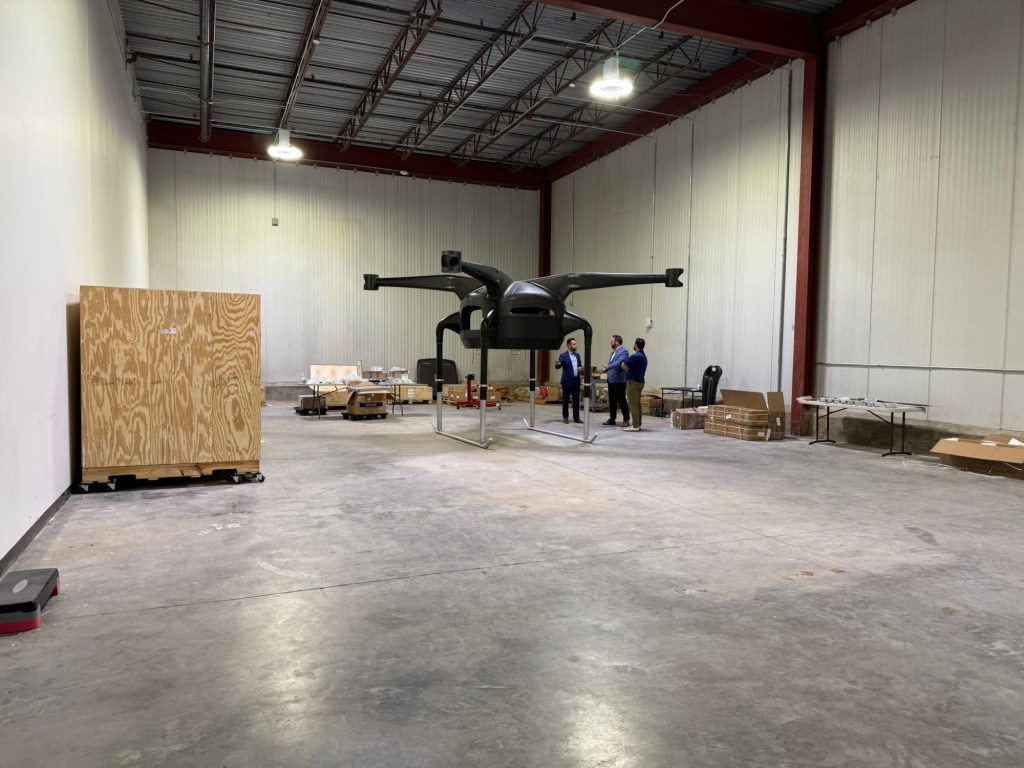
Preparing for the Space Economy: Cargo Drones, Robotics, and Why Software Learns Faster Than Humans and Is Much Safer

This past week I gave a lecture to a room of college students I never physically entered. A professor at a prestigious university—someone who had been watching my videos, commenting on them, and treating the work as if it belonged in a classroom—asked me to talk to her students about aerospace and how a young person might prepare for the space economy, in the old arrangement that invitation meant a check from the university, a plane ticket, a hotel for two nights, and a professor who got to sit in the back of the hall while an outsider did the talking. The students got a visitor who had been out in the world doing the thing the syllabus only described.

That is not what happened. I asked the practical questions. Do I fly out? Do I book a hotel? Do we do lunch? She said no. We would do it on Teams. She plugged her laptop into the classroom monitor, ran the microphone system through the room, and about two hundred people—some in the seats, some on the call—looked at me the way people now look at a talking rectangle. Class was at 12:30 PM. I sat down at 12:30 from my RV and called into Teams, and spoke to the class. An hour later everybody went about their business.

I am not pretending I am above being paid for that kind of work. The geometry of expertise has changed. The old lecture tour burned three days to deliver one hour. The new version burns one hour to deliver one hour. It feels slightly wild, and I will take it. The students still asked good questions. The professor still got a guest. I still had to earn the room. The only thing missing was the airport.

What the Space Economy Actually Means in 2026

I have been doing a run of shows on the change of state coming for the American economy—how much work, how much income, how much industrial capacity the orbital and near-space markets are going to pull into existence. The phrase “space economy” still sounds to some people like a poster in a guidance counselor’s office. It is not a poster. Industry tallies put the global space economy at around $626 billion in 2025, with commercial activity already the large majority of that total and serious forecasts pointing toward a trillion dollars in the early 2030s.[1] Other estimates run higher still. McKinsey and the World Economic Forum have published a scenario near one-point-eight trillion by 2035. The commercial share is already about four-fifths of the whole.[2]

That money is not only rockets on television. It is satellite broadband, navigation, Earth observation, ground equipment, launch cadence, defense architectures, and the unglamorous logistics that will feed commercial stations as NASA tries to hand low-Earth orbit to private operators before the International Space Station is retired.[3] If you are a student sitting in a lecture hall in 2026, the relevant question is not whether space will become an industry. It already is. The question is whether you will be the kind of person an industry like that can use.

Cargo Drones Are Not the Toys You Buy at Target

The conversation turned, as these conversations always do, toward drones. People hear the word and picture a camera quadcopter over a soccer field. That is not the machine I have been around in Butler County. The airframes I have been involved with are in a different weight class. They are built to move real mass—on the order of five hundred pounds of cargo—not a birthday balloon and a GoPro.

That number is no longer science fiction. In the last year, Elroy Air’s Chaparral hybrid-electric cargo aircraft has been flying autonomous missions under the federal eVTOL Integration Pilot Program, with production ratings above five hundred pounds and ranges measured in hundreds of miles.[4] Other developers are in the same neighborhood. AIR has put a heavy-lift uncrewed aircraft into flight operations with a published payload near 550 pounds and a cargo bay large enough for bulky freight.[5] China has flown even heavier fixed-wing cargo drones. The point for a classroom is simple: the sky is about to carry freight the way the interstate already does.

My wife heard that payload number and immediately produced the sentence every civilian produces. She did not want a drone flying over her car on the way to a Cincinnati Reds game and dropping a refrigerator on the hood. I have now heard that joke, or some cousin of it, enough times that it has become the unofficial civic motto of advanced air mobility. The students had the same fear. A bright young woman put it to me cleanly: she had seen the YouTube talk about Elon Musk and the Tesla bots, she could tell I was excited about robots, and she still wanted to know what happens when one of these things fails over a building or a highway.

The Question Every Classroom Asks: What If a Drone Hits My Car?

I told her the truth as I see it. These machines will be driven by software that, over a short run of years, is more practical and more consistent than the average human behind the wheel. That is not a hymn to perfection. Automated systems have already had ugly days. Robots have done stupid things. Self-driving stacks have had incidents that made the evening news. I do not wave those away. I treat them the way a manufacturer treats first-article failures: as the tuition you pay to get a repeatable process.

Tesla’s own published safety figures—imperfect, debated, and still the largest public data set of its kind—have, for several quarters, shown that miles driven with Autopilot and Full Self-Driving (Supervised) between crashes are far above the national average. In one quarterly snapshot, the company reported one crash per 6.69 million miles with the system engaged, compared with a U.S. average near one per 702,000 miles.[6] A later breakout put Full Self-Driving (Supervised) at roughly five million miles per major collision in North America.[7] Critics correctly note that the comparisons are not laboratory-clean. Highway mix, supervision, and crash definitions all matter. Fine. The direction of the curve still matters more than the purity of the press release. The stack learns. The humans who hate the stack do not update overnight.

Amazon drones will crash. Walmart drones will drop a payload early. Vandals will take shots at anything that flies low and looks expensive. Crosswinds, density altitude, summer heat, winter air thickness, and the occasional solar geometry the original coder did not anticipate will all produce a bad afternoon. That is what new technology does. Then the software gets a patch, and that particular stupidity is supposed to happen only once. A human being who wraps a truck around a pole at 2 a.m. does not receive a firmware update before the next Friday night.

It Is Not a Skill Gap. It Is an Engagement Gap.

The student’s question sat atop a second problem I have been hearing in manufacturing offices for years, and I have heard it with unusual frequency in the last two weeks. When you try to hire, you get applicants. A painful share of them cannot pass a drug test. A painful share of the rest do not want the job in any durable sense. I do not mean they lack a certificate. I mean they lack the old animal willingness to get up, go, and stay. People keep calling this a “skill gap” because “skill gap” is a polite phrase that can be used in a grant. What I am looking at is an ambition gap. An engagement gap.

It is not mysterious if you watch how a generation was fed. Old-time Facebook already trained people to receive a stream rather than make one. Video-game platforms now complete the circuit. The machine sends you the next mission, the next season pass, the next reason to tap a credit card. If public assistance covers the floor of a life, and a console covers the ceiling of a day’s stimulation, the case for gasoline money and a 5:30 a.m. alarm clock gets thin. You can stay in the house and still feel as if the world is happening to you.

The labor statistics are not a sermon, but they are not a hallucination either. U.S. labor force participation dropped to 61.6 percent in June 2026, the weakest non-pandemic reading since the mid-1970s.[8] Teen employment is a shadow of what it was when summer work was a normal American education. In July 2026, only 36.5 percent of sixteen-to-nineteen-year-olds were working, compared with a late-1970s peak near 60 percent.[9] Young men have fallen out of the market with particular force. Participation among men aged 16 to 24 has been reported at near 56 percent, down from about 69 percent in 2000.[10]

Survey research on Gen Z fills in the mood. Deloitte’s 2026 global survey found that more than half of that cohort were delaying major life decisions under financial pressure, and only a sliver named leadership as their primary career aim.[11] Gallup has been describing a “Great Detachment”: engagement at decade lows, and half the workforce either hunting or half-hunting for the exit.[12] You can argue about causes until the sun goes down—student debt, housing costs, phones, opioids, the aftertaste of lockdowns, the collapse of certain male-coded industries. I will not pretend one variable explains a civilization. I will say that a space economy cannot be staffed by people trained to wait for the next push notification.

Kiosks, Tesla Bots, and the Quiet Replacement of Human Attention

Robotics has already walked into the most ordinary American rooms. You go to a fast-food restaurant now, and the building would prefer you not talk to anyone. You poke a kiosk. You pay the kiosk. Somewhere behind the stainless steel, a smaller, often older crew still performs the last human motions the equipment has not yet absorbed. When you do get a live person at the counter, there is a fair chance that person is over fifty and still practicing the old religion of showing up. The shortage of willing labor is intense enough that automation no longer feels like a futurist pamphlet. It feels like the manager’s only remaining idea.

That is the part of the Tesla-bot conversation the internet likes to turn into a cartoon. I am not excited about robots because I dislike people. I am excited about robots because I have watched the labor pool thin out in real businesses, in real counties, with real drug tests and real no-call no-shows. If the country will not produce enough people who want the work, the work will still get done. It will get done by a machine that does not need a second chance on Monday.  Remember, the enemies of America have been attacking America a long time, and our workforce has been their target.  Globalism is dangerous to a productive society. 

The Video Game Patch Model Is Moving Into the Physical World

The last fifteen minutes of the class were the part I did not fully script. I could see the professor’s face on the feed. I could not see the faces of two hundred others clearly, which is the new condition of public speech. I reached for an analogy the room already understood.

It is August and early September, which means another Madden cycle has either just landed or is about to. How many times has that game shipped perfect on day one? Rarely. Characters clip through each other. A play-call menu eats itself. The engine meets an input it was not trained to expect and throws a fit. Then the telemetry goes home. PlayStation, EA, and every live-service shop of any size collect crash codes from millions of copies overnight. Developers walk in the next morning to a pile of bug reports harvested from the wild. They push a patch. Digital distribution exists so they never have to mail you another piece of plastic.

That is the industrial model now traveling out of entertainment and into vehicles, drones, and humanoid robots. If a robot drops your hamburger, the correction is not a congressional hearing. It is a software update. If a cargo drone flying at five hundred feet decides, because the sun is vicious or the air is thin or an eclipse confuses a sensor suite, that it would rather be at twenty feet, the fleet can be taught not to make that particular mistake again. Weather, payload, battery sag, and GPS drift become parameters in a model that gets revised on a cadence no legislature can match.

I told the students I still see the old hardware in the wild. I was at a Cracker Barrel not long ago, and there was an Atari 2600 sitting there like a museum piece you could still buy. I am going to pick one up. Those machines were honest in a way modern software is not. The game was the cartridge. If Combat shipped with a quirk, that quirk lived in your living room until you sold the console at a garage sale.[13] We have inverted that world. The physical object is now a temporary container for a mind that can be rewritten after midnight.

A Short History of How America Managed Traffic Before Software

People talk as if safety were a mood. It is not. It is a pile of statutes, standards, advocacy campaigns, and ugly metal that accumulated because the alternative was a death rate this country finally decided it would not live with.

In 1966, after years of treating highway slaughter as the price of modernity, President Johnson signed the National Traffic and Motor Vehicle Safety Act and the Highway Safety Act. The Department of Transportation followed that same season, and out of that machinery came the agency that became the National Highway Traffic Safety Administration.[14] The results, stretched across half a century, are not subtle. The U.S. highway fatality rate fell from about 5.5 deaths per 100 million vehicle miles traveled in 1966 to about 1.1 by the mid-2010s.[15] Federal vehicle standards from 1960 through 2012 have been credited with saving more than 600,000 lives. Seat belts alone account for a huge share of that total.[16]

The hardware inside the cabin changed as well. Airbags moved from an exotic option to a federal requirement in new light vehicles by the late 1990s, and then spread to side-impact protection.[17] Crumple zones, better steels, electronic stability control, and an entire crash-test priesthood at NHTSA and the Insurance Institute for Highway Safety made it much more likely that a person who should have died in 1978 would walk out of a 2018 wreck talking.[18]

Drunk driving, MADD, and the years when Friday night was a slaughterhouse

Behavior took longer. Drinking and driving was illegal in a formal sense long before it was shameful. New Jersey passed an automobile-specific drunk-driving statute in 1906. For most of the twentieth century, the culture still treated the offense as a joke with a badge. That broke in 1980, when Candace Lightner founded Mothers Against Drunk Driving after a repeat offender killed her thirteen-year-old daughter, Cari, in Fair Oaks, California.[19] Within a few years, the country had a presidential commission, a federal drinking-age hammer in 1984, a march toward 0.08 blood-alcohol limits, and a new vocabulary: designated driver, friends don’t let friends, administrative license suspension.[20]

NHTSA only began clean national tracking of alcohol-involved deaths in 1982, a year when those deaths ran above twenty-one thousand and approached half of all traffic fatalities. The later curve bent down hard. Analyses of the post-1980 campaign put the decline in impaired-driver fatalities in the neighborhood of forty percent across four decades.[21] I grew up on the early side of that bend. I remember what the road felt like before the country got religion about it.

Stop signs, signals, and the roundabout as a mechanical conscience.

Infrastructure learned more slowly than slogans. On the kind of two-lane state route I knew as a kid, the first political answers to a string of wrecks were the obvious ones: a stop sign, then a light, then a lower speed, then a different way of feeding cars through a conflict point. Later came the modern roundabout—not the old American traffic circle that locked up in the 1950s, but the yield-on-entry European design that forces a driver to slow down and keep turning.

The first modern U.S. roundabout was installed in Summerlin, Nevada, in 1990. FHWA spent the 1990s studying the form and published its informational guide in 2000.[22] The safety case is now ordinary engineering. Roundabouts cut speeds and slash the number of conflict points. Federal evaluation work estimated that the roughly 2,400 American roundabouts built from 1990 to 2014 prevented tens of thousands of injury crashes and saved more than nine billion dollars in social cost.[23][24] Drivers complain about them the way drivers complain about every device that interrupts a straight line. The geometry does not care. It makes you engage the road.

That is the whole history in miniature. First you change the vehicle. Then you change the law. Then you change the pavement. Then you wait a generation for the culture to catch up. Software compresses that sequence. A drone fleet can receive a correction in a week that used to require a legislative session, a standards docket, and a decade of funerals.

Two O’Clock in the Morning on a Two-Lane Road

Here is why I told the class a story instead of another slide about mean time between failures. Human beings do not attach to mean time between failures. They attach to a night they can still hear.

When I was a kid, we lived off a busy two-lane state route, the kind of industrious road that carried trucks all day and all night. The house sat a good stretch back from the pavement—on the order of a hundred fifty yards—but in summer the windows were open because we did not have air conditioning. One Friday night, about 2 a.m., a truck left the road and took the telephone pole at the end of our driveway.

I did not hear the impact so much as I woke inside the sound that came after it. Through the screen I heard a man screaming for his mother. Not a movie scream. The real thing: high, terrified, the voice of somebody who had just understood what had been done to his body. I got my parents up. The whole house heard it. I went down the driveway in the dark.

The first cars were already slowing down, staring, then speeding up because staring felt like involvement. Nobody official had arrived yet. The truck had come off the road, hit the mailbox, hit the pole, and folded the driver’s side of the cab until metal from one side was occupying the space where a man is supposed to sit. The violence had done what violence does when steel meets a wooden pole at highway speed. Parts of him were in the road. In the poor light I first thought I was looking at roadkill. Traffic had already run over it. It was not an animal.

He had smashed the glass with his head, trying to get out of a window that no longer framed a living person. Blood ran down his face. He was jammed, trying to crawl, and still calling for his mother. He got quiet soon after I reached the end of the drive. There was nothing to do for him. He was gone when the screaming started. He just had not finished being gone.

I have thought about that night for a lifetime, and the thought I keep is not a policy memo. It is this: that was a software problem in a human body. It was the early 1980s, before Mothers Against Drunk Driving had finished turning a private grief into a national prohibition. The man was almost certainly tired, almost certainly drinking, almost certainly carrying whatever mess a night driver carries home at 2 a.m.—money, a shift, a marriage, a rumor, a clock. Human beings drive with all of that in the cab. They drive with a mother still installed in the nervous system. When the pole arrives, they call for her.

I do not tell that story because I enjoy the memory. I tell it because every time someone says they do not want a five-hundred-pound drone over their roof, they are asking for a world with no new risk, and they are asking it in a country that already accepted far worse risk for a hundred years of human drivers. Those particular wrecks—the ones that take a body apart against a pole—are rarer now—not gone. Rarer. Police still work Friday and Saturday nights. They will tell you the texture of the crashes has changed. Vehicles stay together. People crawl out who would have been listed in the morning paper in years prior. Airbags, belts, better steel, and slower intersections did that.[25]

Why Machines Will Make Fewer of Those Mistakes

A cargo drone does not have a wife. It does not have a mistress. It does not drink through a shift and then try to beat the sunrise home. It does not experience shame, jealousy, exhaustion, or the sudden need to call for its mother. It has sensors, limits, and a model of the world that can be rewritten when the world refuses to match it.

That is the moral of the old wreck, and it is the part of the lecture the room understood. We did not abolish tragedy on American roads by hoping drivers would become better people. We put constraints around them. We put belts on their chests, bags in their wheels, and lights in their path, and eventually computers in the loop. The next constraint is the loop taking the wheel. You will still get incidents. You will get a season of ugly film. You will get a class of people who do not want to compete with the machine and who will feed every failure to a news cycle that is addicted to the wreck.

I called that the Don Henley problem in class—the dirty laundry impulse. Automation that replaces visible human jobs will be covered as a crime even when the body count falls. That coverage will not be fair. It does not have to be fair to be loud. Anyone building drones, robots, or space logistics has a better budget for the noise.

Planning a Space Economy Around People Who Do Not Want the Job

This is the uncomfortable planning assumption. The space economy will not arrive as a clean poster of astronauts and lecture-hall ambition. It will arrive in a labor market where a large cohort under thirty is unevenly attached to work, where drug tests still sink hiring classes, and where firms that need reliability will buy it from software and silicon vendors if they cannot buy it from applicants.

I do not treat that as a reason to sneer at young people. Plenty of them are hungry. The young woman who asked the question was hungry. She was trying to square a future she could see with a risk she could feel. That is what a serious student does. The problem is the volume of people who will not ask the question because they are already being entertained past the point of hunger.

If you are building workforce policy for orbital industry, advanced manufacturing, or unmanned logistics in a place like Butler County, you plan for three tracks at once. First, the people who still want the work—train them harder and pay them like the scarce resource they are. Second, the machines that will do the work the missing people will not do—design them to be patched like games, not worshipped like monuments. Third, the public argument—tell the refrigerator story before the opponent tells it, and keep telling the 2 a.m. story so the public remembers what human error actually looked like when it was allowed to run wide open down a state route.

What I Took Away from a Classroom I Never Entered

I ended the hour the way I have ended a version of this talk too many times in the last two weeks. Software will take the first years to be clumsy. Then it will stop repeating the same clumsiness. Human beings repeat theirs for decades, because the bug is not in a repository. The bug is in the life.

We already proved, as a species, that we can cut the worst traffic deaths without waiting for every driver to become a saint. We proved it with belts, bags, blood-alcohol statutes, a drinking age tied to highway money, crash-test scores, and those unpopular roundabouts that make you turn the wheel whether you feel like it or not. The space economy will require the same kind of proof at higher altitudes. Cargo will fly. Robots will stand at counters and on factory floors. Some of the coverage will be poison. Some of the early flights will be ugly. And then the patch will ship.

I did not have to get on a plane to say any of that. I thought that was strange when the invitation first arrived. I think it’s less strange now. The tools that let a professor in another city put me on a wall in front of two hundred students are cousins of the tools that will keep a five-hundred-pound airframe from treating a parking lot like a telephone pole. Same family of updates. Same refusal to leave the mistake in the cartridge.

If you want the longer argument in the form I use with operators and owners, read the business guide I have already put out. The lecture was a compact version of it, told to a room that still has time to decide what kind of worker—and what kind of citizen—it is going to be when the drones are no longer a joke about refrigerators.

Notes

Numbered citations in the text correspond to the footnotes. The bibliography below is offered for further reading and is organized by subject rather than by the order of appearance.

[1] Novaspace, Space Economy Report, 12th ed. (January 2026), valuing the global space economy at $626.4 billion in 2025 and projecting $1.01 trillion by 2034 at a 12 percent compound annual growth rate. McKinsey and the World Economic Forum have published a higher $1.8 trillion scenario for 2035.

[2] Brookings Institution, Darrell M. West, “Artemis II and the Rapid Rise of a Global Space Economy,” April 8, 2026. Commercial activity accounted for roughly 78 percent of 2025 space spending; U.S. space employment was estimated near 400,000.

[3] U.S. Government Accountability Office, Low-Earth Orbit: NASA Faces Impending Decisions for Replacing International Space Station with Commercial Stations, GAO-26-107805 (June 2026).

[4] Elroy Air and Federal Aviation Administration statements on the eVTOL Integration Pilot Program flights at Houma-Terrebonne Airport, August–September 2026. Production Chaparral aircraft are rated for more than 500 pounds of payload and a range of up to 450 miles.

[5] AIR company announcements, 2025–2026, describing a production heavy-lift cargo UAS with a 550-pound payload and a 70-cubic-foot cargo bay for civil and military logistics.

[6] Tesla Vehicle Safety Report, Q2 2025: one crash per 6.69 million miles with Autopilot or Full Self-Driving (Supervised) engaged, compared with a U.S. average of roughly one crash per 702,000 miles (NHTSA/FHWA 2023 data as cited by Tesla). Independent analysts have noted that highway-heavy use cases and definitional choices affect the comparison.

[7] Tesla safety dashboard release, November 2025, reporting approximately 5.1 million miles per major collision with Full Self-Driving (Supervised) in North America across road classes. Tesla defines a major collision using Federal Motor Vehicle Safety Standards criteria, including airbag or pyrotechnic restraint deployment.

[8] St. Louis Federal Reserve, “What’s Behind the Sharp Drop in Labor Force Participation?” (August 2026). The U.S. labor force participation rate fell to 61.6 percent in June 2026, the lowest reading outside the pandemic period since 1976.

[9] U.S. Bureau of Labor Statistics, The Economics Daily, August 26, 2026. In July 2026, the employment–population ratio was 36.5 percent for teens ages 16–19 and 67.5 percent for young adults ages 20–24, both well below late-twentieth-century peaks.

[10] American Institute for Boys and Men analysis cited in reporting on July 2026 labor data: labor force participation among men ages 16–24 fell to 56.1 percent, down from about 69 percent in 2000.

[11] Deloitte Global Gen Z and Millennial Survey 2026. More than half of Gen Z respondents reported delaying major life decisions for financial reasons; only 6 percent named a leadership position as their primary career goal.

[12] Gallup workplace tracking through Q4 2025 described a “Great Detachment,” with engagement at decade lows and 51 percent of U.S. employees either actively looking or watching for other work.

[13] The Atari Video Computer System, later branded the Atari 2600, reached North American retail shelves in 1977. It used interchangeable ROM cartridges and a MOS 6507 processor; software, once pressed into plastic, could not be patched overnight.

[14] President Lyndon B. Johnson signed the National Traffic and Motor Vehicle Safety Act and the Highway Safety Act on September 9, 1966. Congress established the U.S. Department of Transportation the following month; the agency that became NHTSA followed.

[15] Bureau of Transportation Statistics, “A Half Century of Highway Safety Innovations—1966 to 2016.” The U.S. highway fatality rate fell from 5.5 deaths per 100 million vehicle miles traveled in 1966 to 1.1 by 2014.

[16] NHTSA estimates that technologies under the Federal Motor Vehicle Safety Standards saved more than 613,000 lives from 1960 through 2012, with seat belts accounting for nearly 330,000 of those savings.

[17] Front airbags were required in all new cars, light trucks, and vans beginning with the 1998–1999 model years. Side-impact protection standards later made side air bags effectively standard equipment.

[18] National Highway Traffic Safety Administration, Traffic Safety Facts annual series, and Insurance Institute for Highway Safety historical crashworthiness work. Occupant survival in serious crashes improved sharply after the introduction of airbags, crumple zones, electronic stability control, and structural redesign.

[19] Mothers Against Drunk Driving was founded in 1980 by Candace Lightner after her 13-year-old daughter, Cari, was killed in Fair Oaks, California, by a repeat drunk driver. NHTSA began systematic tracking of alcohol-related fatalities in 1982, when such deaths exceeded 21,000.

[20] The National Minimum Drinking Age Act of 1984 tied federal highway funds to a statewide minimum purchase age of 21. A later federal incentive pushed every state to a 0.08 blood-alcohol per se standard by 2004.

[21] NHTSA and related analyses have credited the post-1980 impaired-driving campaign with large fatality reductions. One commonly cited figure is a decline of roughly 44 percent in fatalities involving impaired drivers between 1982 and 2022.

[22] FHWA Research and Technology Evaluation: Roundabout Research Final Report (June 2018). The first modern U.S. roundabout was built in Summerlin, Nevada, in 1990. FHWA published Roundabouts: An Informational Guide in 2000.

[23] Federal Highway Administration, Proven Safety Countermeasures: Roundabouts, FHWA-SA-21-042. Modern roundabouts reduce vehicle speeds and conflict points compared with conventional intersections.

[24] FHWA estimated that roughly 2,400 U.S. roundabouts installed between 1990 and 2014 averted between 38,000 and 53,000 injury crashes, with societal cost savings above $9 billion over that period.

[25] National Highway Traffic Safety Administration, Traffic Safety Facts annual series, and Insurance Institute for Highway Safety historical crashworthiness work. Occupant survival in serious crashes improved sharply after the introduction of airbags, crumple zones, electronic stability control, and structural redesign.

Bibliography and Further Reading

This list is intentionally broader than the footnotes. It is a reading path for students and operators who want the lecture’s claims tested against primary sources.

Space Economy, Commercial LEO, and Aerospace Industry

Brookings Institution. West, Darrell M. “Artemis II and the Rapid Rise of a Global Space Economy.” April 8, 2026. https://www.brookings.edu/articles/artemis-ii-and-the-rapid-rise-of-a-global-space-economy/

McKinsey & Company. “From Moonshots to Markets: The $1.8 Trillion Space Economy.” April 2026. https://www.mckinsey.com/featured-insights/themes/from-moonshots-to-markets-the-1-point-8-trillion-dollar-space-economy

Novaspace. Space Economy Report. 12th edition. Paris, January 2026. Summary coverage: SpaceNews, “Global Space Economy Reaches $626 Billion, Marking a New Phase of Growth,” January 29, 2026.

Orbital Radar. “The Space Economy 2026: $626B, Heading for $1 Trillion.” March 2026. https://orbitalradar.com/space-economy

UBS. Space economy total addressable market outlook to 2040. Analyst commentary summarized in Yahoo Finance / Investing.com, July 18, 2026.

U.S. Government Accountability Office. Low-Earth Orbit: NASA Faces Impending Decisions for Replacing International Space Station with Commercial Stations. GAO-26-107805. June 2026. https://www.gao.gov/products/gao-26-107805

World Economic Forum. “3 Commercial Trends Propelling a $1.8 Trillion Space Market.” June 10, 2026.

NewSpace Tracker. “Space Economy Outlook 2026: Trends, Challenges, and Opportunities.” April 2026.

NASA. Commercial Low Earth Orbit Development Program documentation and Commercial Lunar Payload Services program pages. nasa.gov.

Satellite Industry Association. Annual State of the Satellite Industry reports, 2024–2026 editions.

Cargo Drones, eVTOL, and Unmanned Logistics

Elroy Air. Chaparral program materials and eVTOL Integration Pilot Program flight announcements, Louisiana, August–September 2026.

Interesting Engineering. “US Startup Tests Cargo Drone with 500-lb Payload, 450-mile Range.” September 2026.

Tech Times. “Autonomous Cargo Drone Clears First FAA Hurdle at Gulf Coast’s Busiest Heliport.” September 1, 2026.

AIR. Production heavy-lift cargo UAS announcements, 2025–2026, including 550-pound payload configuration.

Defense Blog. “AIR Launches Heavy Lift Cargo Drone with 550 Pound Payload Capacity.” April 17, 2026.

Urban Air Mobility News. “AIR Unveils New eVTOL Cargo Drone with 550 lb Payload for Civil and Military Operations.”

Federal Aviation Administration. eVTOL Integration Pilot Program (eIPP) materials; Executive Order 14307, “Unleashing American Drone Dominance,” June 2025.

Drone as a Service. “Heavy Lift Drones: Payload, FAA Rules & Top Models (2026).” Updated June 2026.

Sopowers. “Top 10 Cargo Drones in 2026: Payload, Range, Battery Systems & Logistics Trends.”

Zuri (Czech Republic). Hybrid VTOL cargo-drone specifications and 2027 flight-test schedule. NextGen Defense, September 2026.

Northern Changying / NORINCO. Changying-8 (CY-8) heavy cargo UAV maiden-flight reporting, March 31, 2026.

Vehicle Automation and Software-Defined Safety

Tesla, Inc. Vehicle Safety Reports, quarterly series, especially Q2 2025 Autopilot and Full Self-Driving (Supervised) statistics. tesla.com/VehicleSafetyReport.

Tesla, Inc. Full Self-Driving (Supervised) safety dashboard release, November 2025, including major-collision definitions keyed to 49 C.F.R. § 563.5.

TechCrunch. “Tesla Releases Detailed Safety Report after Waymo Co-CEO Called for More Data.” November 14, 2025.

Drive Tesla Canada. “Tesla’s Q2 2025 Vehicle Safety Report: Autopilot & FSD Remain Nearly 10x Safer than U.S. Average.” July 23, 2025.

Electrek. “Tesla’s Own Data Confirms Autopilot Safety Regressed in 2025.” July 23, 2025. (Critical reading of the same quarterly series.)

National Highway Traffic Safety Administration. Standing General Order on crash reporting for automated driving systems; ADS and Level 2 ADAS incident dashboards.

Federal Motor Vehicle Safety Standards. Occupant crash protection and event-data-recorder definitions, including 49 C.F.R. § 563.5.

Insurance Institute for Highway Safety / Highway Loss Data Institute. Autonomous vehicle and advanced driver-assistance system research pages.

History of U.S. Traffic Safety and Transportation Management

Johnson, Lyndon B. Remarks on signing the National Traffic and Motor Vehicle Safety Act and the Highway Safety Act, September 9, 1966.

U.S. Congress. National Traffic and Motor Vehicle Safety Act of 1966, Pub. L. 89-563; Highway Safety Act of 1966, Pub. L. 89-564.

Bureau of Transportation Statistics. “A Half Century of Highway Safety Innovations—1966 to 2016.” https://www.bts.gov/archive/publications/passenger_travel_2016/tables/half

Johns Hopkins Bloomberg School of Public Health. “A Brief History of Traffic Deaths in the U.S.” 2024. https://magazine.publichealth.jhu.edu/2024/brief-history-traffic-deaths-us

Haddon, William, Jr. Foundational NHTSA-era public-health approach to crash injury. See also the Haddon Matrix literature.

National Highway Traffic Safety Administration. Lives Saved by Vehicle Safety Technologies and Associated Federal Motor Vehicle Safety Standards, 1960 to 2012. DOT HS 812 069.

National Highway Traffic Safety Administration. Traffic Safety Facts annual compilations, alcohol-impaired driving chapters, 1982–present.

Kahane, Charles J., and related NHTSA evaluation reports on seat belts, airbags, and electronic stability control.

Williams, Allan F., et al. “Fruits of 20 Years of Highway Safety Legislative Advocacy in the United States.” Annals of Advances in Automotive Medicine / PMC 3256822 (2011).

Ehsani, Johnathon P., et al. “The Future of Road Safety: Challenges and Opportunities.” PMC 10126980.

Insurance Institute for Highway Safety. Historical belt-use rates and crashworthiness ratings.

Impaired Driving Law and Advocacy

Mothers Against Drunk Driving. Organizational history; founded after the death of Cari Lightner, Fair Oaks, California, May 3, 1980.

MADD. 25th anniversary historical pamphlet (archival). https://web.archive.org/web/20070213040405/http://www.madd.org/docs/25years.pdf

U.S. Congress. National Minimum Drinking Age Act of 1984, 23 U.S.C. § 158.

LegalClarity. “When Were DUI Laws Enacted? History and Evolution.” Updated 2026.

Fell, James C., and colleagues. Evaluations of minimum drinking-age laws and 0.08 BAC limits, NHTSA and peer-reviewed series.

National Institute on Alcohol Abuse and Alcoholism / NIH syntheses of impaired-driving fatality reductions after BAC and age reforms.

Roundabouts, Signals, and Roadway Engineering

Federal Highway Administration. Proven Safety Countermeasures: Roundabouts. FHWA-SA-21-042. 2021. https://rosap.ntl.bts.gov/view/dot/66809

Federal Highway Administration. Roundabouts: An Informational Guide. 2000; later editions and NCHRP updates.

Federal Highway Administration. Research and Technology Evaluation: Roundabout Research Final Report. June 2018.

Transportation Research Board. NCHRP Synthesis 264, Modern Roundabout Practice in the United States.

Steyn, Hermanus, Ashleigh Griffin, and Lee A. Rodegerdts. Accelerating Roundabout Implementation in the United States, Vol. IV: Review of Fatal and Severe Injury Crashes at Roundabouts. FHWA, 2015.

Federal Highway Administration. Safe Streets and Roads for All (SS4A) program materials under the Bipartisan Infrastructure Law.

Labor Force Participation, Youth Work, and Engagement

U.S. Bureau of Labor Statistics. Current Population Survey public data and The Employment Situation monthly releases, 2025–2026.

U.S. Bureau of Labor Statistics. “Teens Ages 16 to 19 Were Employed at Nearly Half the Rate of Young Adults Ages 20 to 24 in July 2026.” The Economics Daily, August 26, 2026.

Federal Reserve Bank of St. Louis. “What’s Behind the Sharp Drop in Labor Force Participation?” August 2026.

Center for American Progress. “Teen Employment Remains Weak.” August 7, 2026.

Deloitte. Global Gen Z and Millennial Survey 2026. https://www.deloitte.com/global/en/issues/work/genz-millennial-survey.html

Gallup. “U.S. Worker Thriving Declines as Job Market Pessimism Grows.” 2026 workplace series, including Q4 2025 engagement and job-search tracking.

American Institute for Boys and Men. Research on young-male labor force participation and disconnection, 2024–2026.

New York Post. “Male Gen Zers Are Dropping Out of the U.S. Job Market in Droves.” August 17, 2026. (Journalistic summary of BLS and AIBM figures.)

U.K. Department for Work and Pensions / related. Young People and Work: Interim Report. 2026. Useful comparative reading on youth participation outside the United States.

Video Games, Live-Service Software, and the Patch Economy

Atari, Inc. Atari Video Computer System / Atari 2600 launch materials, 1977; subsequent branding change, 1982.

Wikipedia contributors. “Atari 2600.” Encyclopedia entry with production history, hardware constraints, and cartridge-era economics.

PCMag. “The Atari 2600 at 45: The Console That Brought Arcade Games Home.” September 10, 2022.

Electronic Arts / EA Sports. Madden NFL annual release notes and title-update histories, illustrating same-week patch cadence.

Sony Interactive Entertainment. PlayStation Network crash-reporting and title-update architecture, public developer documentation.

Industry discussions of live-service telemetry, crash dumps, and over-the-air vehicle/robotics updates as an extension of the games-industry model.

Regional and Author Context

Hoffman, Rich. Business guide and related commentary on manufacturing, drones, and local economic development in Butler County, Ohio.

Cincinnati/Northern Kentucky International Airport (CVG) cargo-hub reporting, for local context on freight aviation near the author’s home region.

Butler County, Ohio, economic-development and unmanned-systems coverage, 2024–2026.

Rich Hoffman

More about me

Click Here to Protect Yourself with Second Call Defense https://www.secondcalldefense.org/?affiliate=20707

About the Author: Rich Hoffman

Rich Hoffman is an author, political consultant, and strategic advisor based in Cincinnati, Ohio, and the creator of The Politics of Heaven—a unique framework that connects biblical theology, ancient history, and modern power structures to explain how moral alignment and spiritual forces shape global events. Blending real-world political experience with deep research into archaeology, UFO phenomena, and suppressed historical narratives, Hoffman offers compelling commentary on topics ranging from ancient civilizations and the Dead Sea Scrolls to modern populist movements, paranormal continuity, and leadership strategy in chaotic environments. As the author of The Gunfighter’s Guide to Business and the forthcoming Politics of Heaven, he brings a grounded yet provocative voice to media discussions, supported by firsthand experiences and a cross-disciplinary approach that bridges science, history, and theology. For interviews, speaking engagements, or expert analysis, visit richhoffmanbooks.com or contact directly via phone at 513-307-5815 or email at rhoffman@richhoffmanbooks.com.  If you’ve seen the movie, Disclosure Day and want to talk about it and the implications of Presidnet Trump’s UAP disclosures, let me know and we can bring some color to your coverage. https://richhoffmanbooks.com/media-inquiries-broadcast-topics-and-contact-info/?frame-nonce=ad51e7ecba I do have a firsthand UFO encounter to discuss.
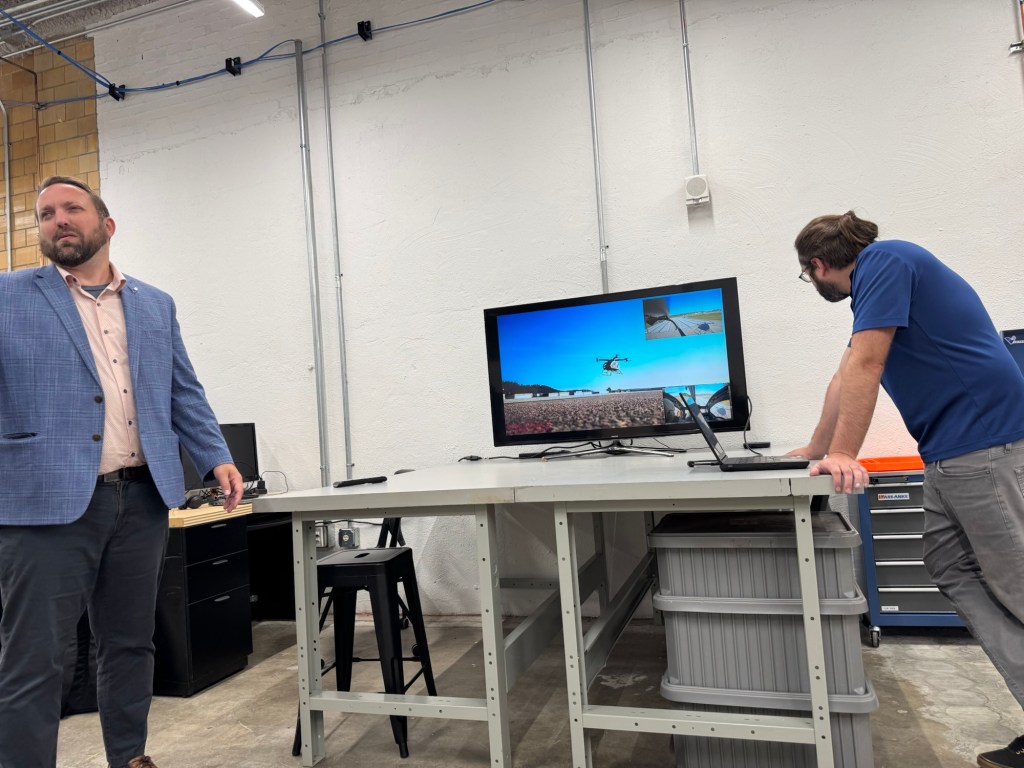
The Day the Past Arrives in the Mail: Why Biblical Archaeology Review Is My Favorite Thing in the World. 

It is always a special day whenever one of these comes in the mail.

I have been saying that for most of a lifetime, and I have not found a reason to take it back. I have been reading Biblical Archaeology Review since I was a kid in the 1970s.[1] The magazine was new then. Hershel Shanks had just pried a door open between the trench and the kitchen table, and a generation of ordinary readers suddenly had access to the same arguments the professors were having in Jerusalem, Amman, and Cambridge.[2] I am still on that list. The issue still arrives every few months. And when it does, I have a ritual. I block the calendar. I throw the noise out of the room. I turn the phone face down. I let the house go quiet, and I go through the thing article by wonderful article until the night is gone.

If I milk it—and I usually do—I stay up while everyone else has gone to bed. Two o’clock in the morning, a glass of water, the window dark, the mind finally unhurried. I never get tired of it. They do such a good job on this magazine that I can disagree with half of what I am reading and still close the cover grateful. That is a rarer virtue than most publications admit.

A Rough Day, a Small Face, and Japanese Dumplings from Costco

Today was a rough day. There were problems stacked on problems, the kind of list that makes a person keep working because stopping would only let the list talk louder. I was at it when my wife went to the mailbox. She saw the mailman go down the road. She came back in with that smaller face she wears when she is carrying a gift she already knows will land, and she pulled the issue out of the stack as if she had found a holiday hiding in ordinary paper.

She knows the ritual. She has known it for years. Shut everything down. Give him the hours. Let him disappear into the Bronze Age and come back when he is done. She also knows the other half of the ceremony, which is not in any style guide and would not impress a tenure committee: Japanese dumplings from Costco. They are our favorite meal in the world. I put my work away. We ate. Then I came back to the magazine and started turning pages again.

I can tell you, without much fear of contradiction from anyone who has lived a long marriage, that there is not much better in the world than those two things arriving on the same evening. Life is already wonderful. The dumplings do not create the wonder. They just have the good manners to show up when the past does.

That is not a small thing. A culture is what it chooses to interrupt itself for. Some houses interrupt themselves for a game. Some interrupt themselves for a crisis. In this house we interrupt ourselves for a quarterly argument with the dirt of the ancient Near East, served with dumplings. I will defend that liturgy against any number of more fashionable ones.

I Do Not Read This Magazine Because I Agree with It

I do a lot of coverage on alternative history. The people who write Biblical Archaeology Review are, by and large, the academics who write the official history. In a seminar room, we would probably disagree on most of the load-bearing claims. Over coffee, one on one, we would discover we have more in common than the professional costumes suggest. We both love the ground. We both hate a lazy sentence. We both know it takes years to get one good layer out of a tell and only minutes for a man in an armchair to declare the layer silly.

I do not want to disparage their work. It takes a special kind of patience to spend a salary’s worth of afternoons on ancient Mediterranean studies, to draw a wall, to weigh a sherd, to argue about a burn layer until the argument itself becomes a kind of craft. Thank God people go out and dig. I love them for it. What they hand a general reader is the compressed labor of thousands of hours. That bandwidth is the gift. I can sit with their results at two in the morning and ask what the weight of the discovery actually does to the historical narrative.

The gift is not the same thing as a verdict. I come out of aerospace, which is a culture that slings a thousand things at the wall at the same time and then forces smart people to defend their assumptions out loud. You get them in a room. You make them spell the claim. When they stumble—because the evidence is not quite obtained enough, not quite clear enough—you put a mark next to that line and you keep going. A 5-Why breakdown is just the civilian name for the same habit.[3] You are trying to get to the bottom. You often end with more questions than you started with. That is not failure. That is the work confessing that the universe is larger than the first memo.

So I read BAR the way I used to sit in those rooms. I take the facts they sweat for. I refuse to inherit the spellings they cannot finish. Conviction, if it is worth anything, has to be able to look a trench report in the eye and still ask the next why.

What These Pages Teach Better Than Almost Anything

If you want a working grasp of the land of Canaan, of Israel, of the First Temple and the Second, this magazine is still one of the best public teachers in the English language. It will not give you a Sunday-school flannelgraph. It will give you walls, seals, bullae, burnt rooms, inscription fights, and the slow humiliation of theories that looked inevitable in 1986. That is how you learn a period well enough to ask an intelligent question about what is not on the page.

The Dead Sea Scrolls are the obvious example. Once you have sat with what those caves actually held—the textual habits, the calendar arguments, the purity rules, the war language—you can hear Second Temple Judaism thinking out loud.[4] You stop treating “what people believed” as a slogan. You start treating it as an artifact. Belief leaves residue. So does politics. So does fear. A society is whatever it bothers to bury, copy, smash, or hide in a jar.

That is also why I read this magazine as a student of business and politics, not only as a student of Scripture. If you are trying to build a company culture, you are already in the archaeology business. You are asking what a group worships when no one is watching, what it will pay for, what it will kill a project to protect, and what story it tells itself about why the last city fell. Civilizations rise for reasons. They decline for reasons. The reasons are never only economic and never only theological. They are psychological, liturgical, and military at the same time.[5] The Bronze Age did not end because a professor needed a chapter title. It ended because systems that looked permanent discovered they were not.

I like politics. I like business. I like understanding how cultures work so I can apply the lesson before the lesson applies itself to me. You cannot do that on vibes. You do it by watching how a people handled copper, kingship, covenant, and collapse when the outcome was still in doubt.

The Questions the Trench Reports Keep Leaving Off the Table

Here is where I stop being a grateful subscriber and start being the guy from aerospace with a marker in his hand.

Everybody who reads widely in this field knows the argument about Bronze Age copper and long-distance trade. I have said for years that North American copper belongs in that conversation. The Old Copper Culture of the Great Lakes was not a footnote. The people working the Keweenaw and Isle Royale were among the earliest miners and metalsmiths on the planet.[6] Mainstream archaeology is prepared to praise that fact and then change the subject when the next question arrives: where did all that copper go, and what does the timing do to the usual map of Bronze Age supply? I know the consensus answer. The consensus answer is that European and Near Eastern copper is accounted for by Old World mines, and that a transatlantic trade remains unproven.[7] Fair enough. Unproven is not the same as unaskable. In a review room, “we have not found the shipwreck yet” is a status report. It is not a gag order.

The same habit shows up closer to home. When I talk about stone monuments in northern Michigan—dolmens, capstones, arrangements that look like cousins of the chambers you can walk through in the British Isles and across Atlantic Europe—the geological reflex is always waiting. Displacement. Glaciers. The ice did it.[8] Ice did a great many things. Ice does not get a monopoly on every balanced stone in the Upper Midwest. We already know that people in the Great Lakes arranged rock on purpose. Under Lake Huron, on the old Alpena-Amberley Ridge, there are drive lanes and hunting blinds nine thousand years old. That is not a glacier having a hobby. That is a culture thinking in stone.[9] If a people can build that under what is now water, I am not required to call every terrestrial chamber an accident of meltwater.

I am not asking BAR to become a magazine of North American diffusionism. I am asking the older question the magazine itself taught me to ask: if you know a period well, you are obligated to notice the silence around it. Why this map and not the larger one? Why this set of ancestors and not the ones standing in the next drainage? Absence from a journal is not the same thing as absence from the world. Spilled milk can disappear from the fossil record. That does not mean the glass was never full.

Canaan, Yahweh, and the Politics That Did Not Stay in the Ground

Once you have a good grip on what the excavators actually know about Canaan and the highlands of Israel, you can ask the question the field sometimes treats as bad manners: what kind of culture was already there when the Hebrew Bible says Yahweh told a people to go in?[10] I do not treat that command as a campfire exaggeration and I do not treat it as a modern war-crimes pamphlet. I treat it as politics in the older sense—the ordering of a people under a claim about who runs the unseen world.

The Bible is not embarrassed by a populated heaven. Psalm 82 puts God on his feet in a council of gods and tells them they are going to die like men. Deuteronomy 32, in the reading preserved by the Dead Sea Scrolls and the Septuagint, says the nations were parceled out according to the number of the sons of God, while Yahweh kept Israel as his own portion.[11] That is not a children’s story. That is a jurisdictional map. Babel is the administrative crisis that precedes the map. The conquest traditions are what the map looks like when it reaches the ground. You do not have to like the theology to see the structure. You only have to stop flattening the text until it resembles a modern committee.

This is the argument of the book I have been writing, The Politics of Heaven. Blood, loyalty, and throne-claims do not stay in one register. They move between temples, palaces, and the beings the temples were built to negotiate with. If that sounds speculative from the cheap seats, I would only note that the Bible itself is less shy about the subject than many of its professional interpreters.[12]

Eve, the Fruit, and a Remark I Have Not Been Able to Shake

Most of my readers do not leave public comments. They send texts. They send emails. They would rather be known by a sentence than by a handle. One of them said something I have been turning over ever since: Eve was the original Ayn Rand.

It is a mischievous line, and it is sharper than it first sounds. Rand was an atheist who treated knowledge as security. Eve reaches for the fruit she was told not to eat because the fruit promises the knowledge of good and evil—which is to say, it promises a kind of coverage. If I can see the whole field, I will not be surprised. If I cannot be surprised, I might not need to trust. The serpent’s pitch is not “become wicked.” The serpent’s pitch is “become independently briefed.” That is a political offer. It is also a religious one. The two are not different departments in Genesis.

There is good and evil. That part is not subtle. There is also the other tree, the one that did not get eaten, the one that has to do with eternal life. We were built for a purpose and we fell out of the purpose. Ever since, there has been a disorder in the world that would prefer the purpose stay fallen. The snakes are still in the catalog. They still talk. They still offer fruit at the expense of every Adam who thought he could manage the garden by intelligence alone.

I am not above a joke when I say that Jesus was crucified in the middle of that argument. I am thinking of Job, and of Satan telling the court that loyalty is only loyalty until the invoice arrives.[13] I am thinking of the wilderness, with the kingdoms of the world placed on a ridgeline and the offer to jump, to seize, to save himself. “My God, my God, why have you forsaken me” is what it sounds like when a man refuses the offer and pays the price the offer was designed to avoid. If Eve reached for knowledge as security, the cross is the opposite transaction: knowledge of the worst thing, accepted without the security.

That is not a footnote to archaeology. It is the reason archaeology of the biblical world still matters to a person who also thinks about elections, companies, and the way a culture decides what it is allowed to notice. The past is not a museum. It is a set of unfinished negotiations.

How to Read a Magazine Without Becoming Its Disciple

The method is simple, and I commend it to anyone who is going to spend a night with BAR or with any other serious journal.

First, grant the labor. A published excavation is not a blog post. Treat it that way.

Second, separate the find from the frame. The wall is one fact. The paragraph that tells you what the wall “means for early Israelite state formation” is another fact, and a softer one.

Third, ask the aerospace question: can they spell the assumption without coughing? If the dating depends on a circular pottery sequence, say so. If the absence of evidence is doing the work of a conclusion, say so. If a whole continent has been ruled out because it would rearrange the lecture notes, say so.

Fourth, keep a second ledger for the questions the article makes possible and then declines to ask. Those questions are often the real harvest.

Fifth, take the night. Do not speed-read a civilization. The quiet is part of the instrument. A magazine like this is built for the hours when the house has stopped performing and a reader can finally hear himself think.

Why I Will Keep Subscribing

I can say the things I say about these topics because other people did the unglamorous work first. They published. I sat with what they published. Sometimes I said, that is not good enough. Sometimes I said, that changes the picture. Either way, the picture moved because they went into the ground.[14]

That is how you connect the past to the future without turning either into a costume. You learn a period until you can feel its joints. You watch what a people did when copper was wealth, when a temple was a government, when a scroll was a survival strategy. Then you look at your own shop floor, your own county, your own country, and you ask whether the same joints are moving.

If you have ever read The Gunfighter’s Guide to Business, you already know I do not treat culture as decoration. Culture is the operating system. Archaeology is one of the few disciplines that lets you watch an operating system fail in slow motion and leave the wreckage where a later age can still touch it. That is why this magazine remains, for me, one of the best publications in the world. Not because it is always right. Because it keeps putting first-rate evidence in the hands of people who are willing to stay up with it.

My wife knew what kind of day I was having. She also knew the cure that would not insult the day by pretending it had been easy. She brought in the mail. She made the dumplings. She gave me the hours. It does not get any better than that.

Life is wonderful with or without the dumplings. It is more wonderful when the past arrives on the same plate. 

Notes

The numbered notes in the essay appear as footnotes on each page. The list below is a reading path, not a claim that every title agrees with me. A good bibliography should be a room you can walk around in, not a unanimous chorus.

A Working Bibliography for Further Reading

Biblical Archaeology Review and the Public Craft

Biblical Archaeology Society. Biblical Archaeology Review. Washington, D.C., 1975–present. https://www.biblicalarchaeology.org/.

Cline, Eric H. “Larger Than Life.” Biblical Archaeology Society, February 8, 2021.

Shanks, Hershel, ed. Understanding the Dead Sea Scrolls. New York: Random House, 1992.

Shanks, Hershel. The Mystery and Meaning of the Dead Sea Scrolls. New York: Random House, 1998.

VanderKam, James C. The Dead Sea Scrolls Today. 2nd ed. Grand Rapids: Eerdmans, 2010.

Collins, John J. The Dead Sea Scrolls: A Biography. Princeton: Princeton University Press, 2013.

Schiffman, Lawrence H. Reclaiming the Dead Sea Scrolls. New York: Doubleday, 1995.

Magness, Jodi. The Archaeology of Qumran and the Dead Sea Scrolls. 2nd ed. Grand Rapids: Eerdmans, 2021.

Canaan, Israel, Judah, and the Temples

Mazar, Amihai. Archaeology of the Land of the Bible, 10,000–586 B.C.E. New York: Doubleday, 1990.

Mazar, Amihai, and Ephraim Stern. Archaeology of the Land of the Bible. Vol. 2, The Assyrian, Babylonian, and Persian Periods. New York: Doubleday, 2001.

Dever, William G. What Did the Biblical Writers Know and When Did They Know It? Grand Rapids: Eerdmans, 2001.

Dever, William G. Beyond the Texts: An Archaeological Portrait of Ancient Israel and Judah. Atlanta: SBL Press, 2017.

Finkelstein, Israel, and Neil Asher Silberman. The Bible Unearthed. New York: Free Press, 2001.

Finkelstein, Israel. The Forgotten Kingdom: The Archaeology and History of Northern Israel. Atlanta: Society of Biblical Literature, 2013.

Kitchen, K. A. On the Reliability of the Old Testament. Grand Rapids: Eerdmans, 2003.

Provan, Iain, V. Philips Long, and Tremper Longman III. A Biblical History of Israel. 2nd ed. Louisville: Westminster John Knox, 2015.

Rainey, Anson F., and R. Steven Notley. The Sacred Bridge: Carta’s Atlas of the Biblical World. 2nd ed. Jerusalem: Carta, 2014.

Stern, Ephraim. Archaeology of the Land of the Bible. Vol. 2. New York: Doubleday, 2001.

Ussishkin, David. Biblical Lachish. Jerusalem: Israel Exploration Society, 2014.

Mazar, Eilat. The Palace of King David. Jerusalem: Shoham, 2009.

Faust, Avraham. The Archaeology of Israelite Society in Iron Age II. Winona Lake: Eisenbrauns, 2012.

Killebrew, Ann E. Biblical Peoples and Ethnicity. Atlanta: Society of Biblical Literature, 2005.

Levy, Thomas E., ed. Historical Biblical Archaeology and the Future. London: Equinox, 2010.

Bronze Age Worlds, Collapse, and Trade

Cline, Eric H. 1177 B.C.: The Year Civilization Collapsed. Rev. ed. Princeton: Princeton University Press, 2021.

Cline, Eric H. After 1177 B.C.: The Survival of Civilizations. Princeton: Princeton University Press, 2024.

Tainter, Joseph A. The Collapse of Complex Societies. Cambridge: Cambridge University Press, 1988.

Yoffee, Norman, and George L. Cowgill, eds. The Collapse of Ancient States and Civilizations. Tucson: University of Arizona Press, 1988.

Drews, Robert. The End of the Bronze Age. Princeton: Princeton University Press, 1993.

Broodbank, Cyprian. The Making of the Middle Sea. Oxford: Oxford University Press, 2013.

Kristiansen, Kristian, and Thomas B. Larsson. The Rise of Bronze Age Society. Cambridge: Cambridge University Press, 2005.

Kristiansen, Kristian. “The Rise of Bronze Age Peripheries and the Expansion of International Trade.” In Trade and Civilisation, edited by Kristian Kristiansen, Thomas Lindkvist, and Janken Myrdal. Cambridge: Cambridge University Press, 2018.

Roberts, Benjamin W., and Christopher P. Thornton, eds. Archaeometallurgy in Global Perspective. New York: Springer, 2014.

Radivojević, Miljana, et al. “The Provenance, Use, and Circulation of Metals in the European Bronze Age.” Journal of Archaeological Research 27 (2019): 331–98.

Muhly, James D. Copper and Tin. Hamden, CT: Archon Books, 1973.

Kassianidou, Vasiliki, and A. Bernard Knapp. “Archaeometallurgy in the Mediterranean.” In The Archaeology of Mediterranean Prehistory, edited by Emma Blake and A. Bernard Knapp. Oxford: Blackwell, 2005.

Great Lakes Copper, Stone, and the North American File

Pompeani, David P., et al. “On the Timing of the Old Copper Complex in the Keweenaw Peninsula and Isle Royale.” Radiocarbon, 2021.

Wade, Lizzie. “Great Lakes people among first coppersmiths.” Science 371, no. 6536 (2021): 1299.

Martin, Susan R. Wonderful Power: The Story of Ancient Copper Working in the Lake Superior Basin. Detroit: Wayne State University Press, 1999.

Pleger, Thomas C. “A Brief Introduction to the Old Copper Complex of the Western Great Lakes.” The Wisconsin Archeologist 82 (2001).

O’Shea, John M., and Guy A. Meadows. “A 9,000-year-old caribou hunting structure beneath Lake Huron.” Proceedings of the National Academy of Sciences 111, no. 19 (2014): 6911–15.

Howey, Meghan C. L., et al. “Geospatial modeling approach to monument construction using Michigan from A.D. 1000–1600 as a case study.” Proceedings of the National Academy of Sciences 113, no. 29 (2016).

Griffin, James B. “The Late Prehistory of the Ohio Valley.” In Handbook of North American Indians, vol. 15. Washington, D.C.: Smithsonian, 1978.

Cunningham, Wilbur M. A Study of the Glacial Kame Culture in Michigan, Ohio, and Indiana. Ann Arbor: University of Michigan Press, 1948.

Squier, E. G., and E. H. Davis. Ancient Monuments of the Mississippi Valley. Washington, D.C.: Smithsonian, 1848.

Fell, Barry. America B.C. New York: Quadrangle, 1976. Read as a document in the history of a controversy, not as a closed case.

Feder, Kenneth L. Frauds, Myths, and Mysteries. 10th ed. New York: Oxford University Press, 2020. The standard skeptical counterweight.

Midgley, Magdalena S. The Megaliths of Northern Europe. London: Routledge, 2008.

Divine Council, Genesis, and the Unseen Politics of Scripture

Heiser, Michael S. The Unseen Realm: Recovering the Supernatural Worldview of the Bible. Bellingham, WA: Lexham Press, 2015.

Heiser, Michael S. “Deuteronomy 32:8 and the Sons of God.” Bibliotheca Sacra 158 (2001): 52–74.

Heiser, Michael S. “Divine Council.” In Lexham Bible Dictionary, edited by John D. Barry et al. Bellingham, WA: Lexham Press, 2012.

Smith, Mark S. The Origins of Biblical Monotheism. Oxford: Oxford University Press, 2001.

Smith, Mark S. The Early History of God. 2nd ed. Grand Rapids: Eerdmans, 2002.

Day, John. Yahweh and the Gods and Goddesses of Canaan. Sheffield: Sheffield Academic Press, 2000.

Mullen, E. Theodore, Jr. The Divine Council in Canaanite and Early Hebrew Literature. Chico, CA: Scholars Press, 1980.

Boyd, Gregory A. God at War. Downers Grove: InterVarsity Press, 1997.

Walton, John H. The Lost World of Genesis One. Downers Grove: IVP Academic, 2009.

Walton, John H. Ancient Near Eastern Thought and the Old Testament. 2nd ed. Grand Rapids: Baker Academic, 2018.

Sarna, Nahum M. Understanding Genesis. New York: Schocken, 1966.

Alter, Robert. The Five Books of Moses. New York: Norton, 2004.

Levenson, Jon D. Creation and the Persistence of Evil. Princeton: Princeton University Press, 1994.

Pagels, Elaine. The Origin of Satan. New York: Random House, 1995.

Wright, N. T. Jesus and the Victory of God. Minneapolis: Fortress, 1996.

Wright, N. T. The Resurrection of the Son of God. Minneapolis: Fortress, 2003.

Culture, Business, and Why the Past Still Issues Orders

Hoffman, Rich. The Gunfighter’s Guide to Business. Author’s edition.

Hoffman, Rich. The Politics of Heaven. Forthcoming.

Ohno, Taiichi. Toyota Production System. New York: Productivity Press, 1988.

Schein, Edgar H. Organizational Culture and Leadership. 5th ed. Hoboken: Wiley, 2017.

Girard, René. Violence and the Sacred. Baltimore: Johns Hopkins University Press, 1977.

Girard, René. I See Satan Fall Like Lightning. Maryknoll, NY: Orbis, 2001.

Voegelin, Eric. Order and History. 5 vols. Baton Rouge: Louisiana State University Press, 1956–1987.

Eliade, Mircea. The Sacred and the Profane. New York: Harcourt, 1959.

Bellah, Robert N. Religion in Human Evolution. Cambridge, MA: Harvard University Press, 2011.

Scott, James C. Against the Grain. New Haven: Yale University Press, 2017.

Graeber, David, and David Wengrow. The Dawn of Everything. New York: Farrar, Straus and Giroux, 2021.

Jordan, the East Bank, and the Neighbors the Text Will Not Leave Alone

MacDonald, Burton. East of the Jordan: Territories and Sites of the Hebrew Scriptures. Boston: American Schools of Oriental Research, 2000.

Bienkowski, Piotr, ed. Early Edom and Moab. Sheffield: J. R. Collis, 1992.

Dearman, J. Andrew, ed. Studies in the Mesha Inscription and Moab. Atlanta: Scholars Press, 1989.

Routledge, Bruce. Moab in the Iron Age. Philadelphia: University of Pennsylvania Press, 2004.

Herr, Larry G., and Douglas R. Clark. “Madaba Plains Project.” Multiple season reports in Annual of the Department of Antiquities of Jordan.

Savage, Stephen H., and Steven E. Falconer. “Spatial and Temporal Trends in Levantine Settlement.” Journal of Archaeological Science, various.

A note on method. I have not required the bibliography to agree with me, and I have not required myself to agree with the bibliography. That is the same rule I bring to Biblical Archaeology Review. Read the people who dug. Read the people who doubt the people who dug. Then keep the night watch and decide which assumptions still refuse to be spelled.

[1] Biblical Archaeology Review (ISSN 0098-9444) has been published by the Biblical Archaeology Society since March 1975. The magazine is presently issued quarterly. See “About Biblical Archaeology Review,” Biblical Archaeology Society, https://www.biblicalarchaeology.org/magazines/.

[2] Hershel Shanks (1930–2021), a Washington lawyer turned editor, founded the Biblical Archaeology Society in 1974 and launched BAR in March 1975. He remained editor-in-chief until 2018. See Eric H. Cline, “Larger Than Life,” Biblical Archaeology Society, February 8, 2021; and “Setting the BAR,” Biblical Archaeology Society, 2025.

[3] The 5 Whys method is associated with Taiichi Ohno and the Toyota Production System. It is a root-cause drill: ask “why” until the chain of causation is exposed. In aerospace and other high-reliability cultures the same spirit appears as assumption-busting reviews, red teams, and formal failure analysis. See Taiichi Ohno, Toyota Production System (New York: Productivity Press, 1988).

[4] On the Dead Sea Scrolls as a window into Second Temple belief, see James C. VanderKam, The Dead Sea Scrolls Today, 2nd ed. (Grand Rapids: Eerdmans, 2010); and Hershel Shanks, ed., Understanding the Dead Sea Scrolls (New York: Random House, 1992).

[5] On collapse and regeneration as a comparative problem, see Joseph A. Tainter, The Collapse of Complex Societies (Cambridge: Cambridge University Press, 1988); Eric H. Cline, 1177 B.C.: The Year Civilization Collapsed, rev. ed. (Princeton: Princeton University Press, 2021); and Norman Yoffee and George L. Cowgill, eds., The Collapse of Ancient States and Civilizations (Tucson: University of Arizona Press, 1988).

[6] David P. Pompeani et al., “On the Timing of the Old Copper Complex in the Keweenaw Peninsula and Isle Royale,” Radiocarbon (2021); and Lizzie Wade, “Great Lakes people among first coppersmiths,” Science 371, no. 6536 (2021): 1299. Sediment and radiocarbon work now places intensive Great Lakes copper working as early as ca. 9500 years ago, peaking roughly 7000–5000 years ago.

[7] The hypothesis that Lake Superior native copper supplied Bronze Age Europe remains outside the archaeological consensus. Mainstream syntheses locate European copper in Alpine, Iberian, Balkan, Cypriot, and British Isles sources. See Benjamin W. Roberts and Christopher P. Thornton, eds., Archaeometallurgy in Global Perspective (New York: Springer, 2014); and “The Provenance, Use, and Circulation of Metals in the European Bronze Age,” Journal of Archaeological Research 27 (2019). I record the disagreement rather than pretend it does not exist.

[8] On European and Levantine dolmens, see Magdalena S. Midgley, The Megaliths of Northern Europe (London: Routledge, 2008); and James L. Swauger, work on petroforms and stone constructions in the Upper Great Lakes. Geologists commonly classify northern Michigan capstone-and-pedestal arrangements as glacial erratics. I do not find that explanation sufficient for every specimen.

[9] John M. O’Shea and Guy A. Meadows, “A 9,000-year-old caribou hunting structure beneath Lake Huron,” Proceedings of the National Academy of Sciences 111, no. 19 (2014): 6911–15. The Alpena-Amberley Ridge drive lanes are a reminder that stone work in the Great Lakes is not exhausted by the glacial-dumping story.

[10] On the archaeology of Canaan, Israel, and Judah in the Iron Age, standard entry points include Amihai Mazar, Archaeology of the Land of the Bible, 10,000–586 B.C.E. (New York: Doubleday, 1990); Israel Finkelstein and Neil Asher Silberman, The Bible Unearthed (New York: Free Press, 2001); and William G. Dever, What Did the Biblical Writers Know and When Did They Know It? (Grand Rapids: Eerdmans, 2001). I read all three and do not baptize any of them.

[11] Michael S. Heiser, The Unseen Realm: Recovering the Supernatural Worldview of the Bible (Bellingham, WA: Lexham Press, 2015); and Heiser, “Deuteronomy 32:8 and the Sons of God,” Bibliotheca Sacra 158 (2001): 52–74. The Dead Sea Scrolls and the Septuagint support “sons of God” rather than “sons of Israel” at Deuteronomy 32:8.

[12] Rich Hoffman, The Gunfighter’s Guide to Business (author’s edition); and Hoffman, The Politics of Heaven (forthcoming). Related essays appear at overmanwarrior.wordpress.com.

[13] Job 1–2; Luke 4:1–13; Matthew 4:1–11. The Accuser’s wager in Job and the wilderness temptations of Jesus are two scenes in the same political drama: a claim on loyalty, tested under pressure, with the kingdoms of the world placed on the table.

[14] Biblical Archaeology Society All-Access membership presently includes the print magazine, the digital BAS Library (every issue of BAR since 1975, plus Bible Review and Archaeology Odyssey), lecture video, and curated collections. See https://www.biblicalarchaeology.org/.

Rich Hoffman

More about me

Click Here to Protect Yourself with Second Call Defense https://www.secondcalldefense.org/?affiliate=20707

About the Author: Rich Hoffman

Rich Hoffman is an author, political consultant, and strategic advisor based in Cincinnati, Ohio, and the creator of The Politics of Heaven—a unique framework that connects biblical theology, ancient history, and modern power structures to explain how moral alignment and spiritual forces shape global events. Blending real-world political experience with deep research into archaeology, UFO phenomena, and suppressed historical narratives, Hoffman offers compelling commentary on topics ranging from ancient civilizations and the Dead Sea Scrolls to modern populist movements, paranormal continuity, and leadership strategy in chaotic environments. As the author of The Gunfighter’s Guide to Business and the forthcoming Politics of Heaven, he brings a grounded yet provocative voice to media discussions, supported by firsthand experiences and a cross-disciplinary approach that bridges science, history, and theology. For interviews, speaking engagements, or expert analysis, visit richhoffmanbooks.com or contact directly via phone at 513-307-5815 or email at rhoffman@richhoffmanbooks.com.  If you’ve seen the movie, Disclosure Day and want to talk about it and the implications of Presidnet Trump’s UAP disclosures, let me know and we can bring some color to your coverage. https://richhoffmanbooks.com/media-inquiries-broadcast-topics-and-contact-info/?frame-nonce=ad51e7ecba I do have a firsthand UFO encounter to discuss.

The Moon-Eyed People: The Real Indigenous People:  How the Cherokee’s Own Story Breaks the Stolen-Land Timeline 

I am not trying to mess everybody up. I am trying to ask a question that the indigenous-people argument cannot survive if you let it breathe.

How do you decide that somebody is indigenous to an area? Do you draw the line at 1500 and call whoever is standing there when Columbus arrives the eternal landlord? What about everyone who was there before that tribe? What about the people that tribe says it ran off?

That is the academic question. The Cherokee of the southern Appalachians, through the story that reached print and through the story I have heard with my own ears in the Smoky Mountain country, say they were not the first people on that ground. They say a people were already there. They call them moon-eyed. They say they could not live with them. They say they drove them out. Then later the United States removed the Cherokee west, and the same word — indigenous — is used as if the Cherokee had been the beginning of the clock.

If the Cherokee took the land from someone, the Cherokee, in that hour, were not indigenous in the way the pamphlet uses the word. They were the latest people on the ridge. The moon-eyed people, if the story is even half a memory, would be the prior claim. So I want to know why we freeze the frame at the Cherokee and call that history, and why we treat Andrew Jackson as the original sinner of the mountains while treating the Cherokee expulsion of the earlier people as folklore too thin to count.

I used to love going down to the Cherokee country south of Gatlinburg. The museum. The dances. The ceremonies. I still like that culture. I am not here to rob a living nation of its art. I am here because I have always had the same question sitting in the back of my mind while the drums were going: if these people tell you they displaced somebody, why is that chapter a tourist shrug and the next chapter a moral law?

Who Were the Moon-Eyed People?

The moon-eyed people of Appalachia are described as small, pale, often bearded, with eyes that could not bear the day. They lived in caves and came out at night. They were already in the mountains when the Cherokee arrived. In the version that stuck, the last fight came under a full moon, when the light that should have helped them ruined them, and the Cherokee drove them out for good.[1]

That is not a Columbus story. That is not a settler pamphlet about noble savages. The first printed English version is 1797, Benjamin Smith Barton, who said he had it from a man connected to the Cherokee: when the Cherokee first came into the country they now inhabit, they found it possessed by certain moon-eyed people who could not see in the daytime, and they expelled them.[2] John Haywood picked it up in Tennessee. James Mooney put related material in the great Cherokee folklore collection. A marker at Fort Mountain in Georgia still tells visitors that a people who could not see in certain phases of the moon were annihilated, and that some believe they built the wall on the ridge.[3]

I have heard the short version from people who work the mountain tourist circuit and from Cherokee performers who will say, if you ask, that those people used to be here and that they got rid of them. That is not a controlled oral-history sample. When a people keep a story that makes them the invaders, they are not doing themselves a public-relations favor. Most nations bury that chapter. The Cherokee did not bury it well enough to keep it out of Barton, Haywood, the park signs, or the talk around Gatlinburg.

Commentary — what the paper trail actually is. The cautious version is real and should be said out loud. The highly specific package — small, white, bearded, giant light-sensitive eyes, cave-only, full-moon battle — is thickest in late-eighteenth- and nineteenth-century print, written down by Euro-American men. Living Cherokee tradition also has the Yunwi Tsunsdi, the Little People: small beings of the rocks and caves, sometimes helpers, sometimes dangerous if watched. Lynn King Lossiah’s Eastern Band collection treats them as spiritual neighbors more than as a lost white tribe.[4] Some modern writers fuse the two. Some Cherokee cultural workers say the pale-bearded, moon-eyed story is not central to tribal history. So the honest sentence is this: the Cherokee world contains stories of earlier and other people in the mountains. The 1797 CE English sentence is one such channel. It is not a DNA report. It is also not a story that Europeans needed to invent to feel better about President Jackson. It makes the Cherokee look like what every people in history have been: successors.

Fort Mountain, the Lost Sea, and a Livable Dark

Fort Mountain in north Georgia has a low, wandering stone wall that nobody understands. Dates guessed for it range from 500 CE to 1500 CE. Park lore has given it to the moon-eyed people, to the Creek, to a Welsh prince named Madoc who is supposed to have crossed the Atlantic in the twelfth century.[5] I do not need Madoc. Madoc is what happens when a vacuum meets a romance. I need the simpler fact: there is stone on a ridge, there is a story of earlier people, and there are later people who say they won.

Then there is the underground. I have driven from Cincinnati to Florida enough times to know the halfway logic of Sweetwater, Tennessee. The Lost Sea, in Craighead Caverns, is the largest underground lake in the United States. You walk a long sloping path into fifty-eight-degree rock and take a boat on water that has no published end. Cherokee artifacts have been found in those caverns. So has a Pleistocene jaguar. The place is now a tourist dock. It was a world before that.[6]

A people who hated daylight and needed water, fish, cool air, and a door you could defend would not have to invent a habitat. The Appalachians are a limestone country. Caves are not a metaphor there. They are inventory. If you spent generations in that dark, your eyes would not be the eyes of a ridge farmer. Cave animals lose pigment and rewrite their sight because the sun stops paying them. I am not saying the moon-eyed people were salamanders. I am saying the description is not a gnome from a lawn catalog. It is what a human population might look like if the mountain taught it a different shift.

I know how this sounds—spilled milk. Someone cleans the floor, and in the morning you only notice the carton is light. That is the archaeological problem of a people who lived in holes and lost. The absence of a labeled skeleton is not proof that they were a symbol. It is proof we have not been paying for the kind of cave work that would settle it.

The Statue in Murphy and the Eyes at Three Rivers

In Murphy, North Carolina, at the Cherokee County Historical Museum, there is a strange stone. People point to a sculpture of two flat-faced figures with oversized crescent eyes and say, “There.” I have stood in that county’s history and felt the same jolt. It does not look like the museum-brochure Indian. Whether that particular piece is a portrait of the moon-eyed people is unproven. The museum’s public landscape also holds Nuya Saligugi, the soapstone turtle pulled out of a quarry on the Nottely, which is a different object and a different claim.[7] I mention both because the mountains keep coughing up faces that do not fit the costume.

Then you go west. I have been to Three Rivers in New Mexico. More than twenty thousand petroglyphs on a basalt ridge, Jornada Mogollon work, roughly from the early centuries into the 1400s. Masks. Goggle eyes. Almond eyes. Tablita headdresses. Figures that look at you like lamps.[8] Most southwestern archaeologists will tell you those are gods, rain-beings, Tlaloc-cousins, ceremonial masks — not a census of pale cave-dwellers from Georgia.

I am not going to pretend a thousand miles of dry country is a sidewalk. I am also not going to accept the lazy rule that two similar eyes cannot be related because a textbook put them in different chapters. People moved. Copper moved. Obsidian moved. Ideas move faster than bones. If a people were driven out of the Smokies, the next habitable dark and the next carved rock need not be in the next county. The Three Rivers eyes may be spirits. They may be masks. They may be a memory of faces that bothered everybody who met them. I have not seen a laboratory close that file. I have seen a habit of closing it with a tone.

Commentary — pattern is not proof, and proof is not a grant narrative. Big-eyed figures show up in the Amazon, in Mesoamerica, in Japan, in modern cryptid talk from Loveland, Ohio, on down. That pattern is real. It does not, by itself, make the moon-eyed people a separate biological species or “aliens.” Psychedelic vision, spirit-world encounter, mask tradition, and ordinary human portraiture can all produce a staring eye. What I will not do is use distance as a veto. Distance is a research problem. The political use of “indigenous” treats distance as a wall so that Appalachia and New Mexico cannot talk to each other, and so that 9000-year-old copper in Superior cannot talk to 8000-year-old burials in Florida. That wall is convenient. It is not science.

Windover, Superior, and the Clock That Does Not Start in 1492

We already know the continent was busy long before the tribes that met the English. The Windover people of Florida buried their dead in a pond seven to eight thousand years ago — brain tissue, fiber, a last meal still readable.[9] The Old Copper Complex around Lake Superior was hammering native copper as early as the ninth millennium before the present, with mining signatures argued even earlier. That metal moved.[10] Paleoindian presence goes deeper still.

So when someone says “indigenous people of North America” and means the nations of 1500, they are not doing archaeology. They are choosing a photograph. The moon-eyed story, even at its thinnest, is a local version of the same problem. There were people before the people we memorialized. The Cherokee say so about the Smokies. The dirt says so about Florida and the Keweenaw. The political argument needs those earlier people to stay fog, because fog cannot file a claim against the claim.

If we dug the caves with the same money we spend explaining why we must not dig, we would know more. I want archaeologists rich. I want them in campers only if they like campers. I want them paid like the story they are sitting on is worth a civilization’s attention. A profession that has to please a grant office will find what the grant office can stand. That is not a conspiracy in a cloak. That is how payroll works.

Why Jackson Is the Villain and the Earlier Removal Is a Campfire

Trail of Tears was terrible. I am not going to sand that down. Jackson signed a removal. People died on the road west. The Cherokee have a right to that grief, and the United States has a duty not to lie about it.[11]

I also like Andrew Jackson more than the people who run the tone of American finance like him. He went after the Bank. He thought a private money power sitting on the republic was a problem. Every summer, the same class of people gathers in Jackson Hole and manages not to notice the joke. They will tell you Jackson was a brute. They will not tell you that a president who breaks the bank is the kind of executive they do not want to see repeated. They are wary of Trump for the same reason as a cousin. Control of the executive is control of the weather around money.[12]

Watch how the two stories are weighted. Cherokee removal by the United States: sacred text, museum wing, school unit, moral veto on the founding. Cherokee removal of the moon-eyed people: cute legend, maybe Barton made it up, no bones so no crime. One removal is allowed to organize a nation’s shame. The other is not allowed to organize a question. That is not a difference in evidence quality sufficient to explain the difference in volume. That is a difference in usefulness.

I have a friend who thinks of himself as a red-white-and-blue, gun-owning, Republican-voting man. In the garage there is a Don’t Tread on Me. On the flagpole in the yard there is only the one flag he thinks the neighborhood can bear. He does not want the trouble. He likes his paycheck. Human resources and compliance offices do not need a politburo when they have a mortgage. Marxism in the nineteenth-century sense is not required. Capture of the story is enough. Academia, in the indigenous-people version I am talking about, serves the cause of stability. It freezes a timeline that makes the creation of America the original theft and makes every prior theft a myth. Markets like a simple guilt. Simple guilt is predictable.

How Do You Decide Someone Is Indigenous?

Here is the test I want applied without flinching.

If indigenous means first on the ground, the Cherokee of the Smokies fail their own story. The moon-eyed people, or whoever those prior people were, would hold the word.

If indigenous means the culture that was here when Europeans arrived, then the word is a 1492 stamp. It is not a deep history. It is a diplomatic category invented for a later fight.

If indigenous means continuous living nation with language, law, and memory, the Cherokee qualify and so do many others — and the word still does not make them the beginning of the mountain.

If “indigenous” means a moral title against the United States, then we are not doing anthropology. We are doing a brief. Briefs pick their plaintiffs. They do not fund caves.

Oral tradition is not a lesser archive. Rock art is not a lesser archive. I will not sneer at “white guys writing it down” as if ink were a racial sin. Writing is how my civilization keeps a sentence still. The Cherokee kept sentences moving by mouth, by stone, by dance. Both methods lose things. Both methods keep things. The method that survived in English is the method I can footnote. That does not make it holier. It makes it checkable. When Barton writes that the Cherokee said they expelled a moon-eyed people, you can argue he distorted it. You cannot argue that the existence of a prior-people story is a European need. Plenty of Native nations have prior-people stories. The honest ones sound like history because history is replacement.

The Cherokee later walked a road they did not choose. That is true. It does not erase the road they chose for the people they found in the dark. Two things can be true. The indigenous-people argument, in its left-wing political form, cannot afford two things to be true. It needs a single innocent and a single thief. The mountain will not give it that.

What I Think Happened

I think the Cherokee encountered someone unusual in those mountains. The encounter was bad enough to keep. I think caves like the Lost Sea system show that, at night, people did not need magic to eat. I think some of the staring faces in American rock are spirits, and some may be memories of faces. I think pale skin and bad day-eyes could be isolation, cave life, albinism, an early Atlantic crossing we have not proved, or a story that picked up European furniture as it passed through Barton and Haywood. I do not know which. I will not pretend I do.

I do know this. The Windover Dead and the Superior miners are not legends. They shatter any sentence that starts the indigenous clock at the tribes of contact. The moon-eyed story is the Appalachian version of that shatter, whether the people were a hidden band, a Little People tradition later dressed in English adjectives, or a real population whose bones are still in the limestone. The designation “indigenous” is being applied to serve a political and financial peace, not to record the stack of peoples who actually stood on the ridge.

That is why I say the moon-eyed people — or the unnamed prior people for whom they stand — are the indigenous question the Smokies cannot close. The Cherokee said they were there, and because the continent’s deeper archaeology says somebody always was.

NOTES

[1] Standard elements of the Appalachian moon-eyed story as circulated in Barton (1797), later Tennessee and Georgia antiquarian writing, Fort Mountain park interpretation, and popular retellings: prior occupation, light-sensitive eyes, night activity, expulsion by the Cherokee, sometimes under a bright moon.

[2] Benjamin Smith Barton, New Views of the Origin of the Tribes and Nations of America (Philadelphia, 1797), reporting via Col. Leonard Marbury that “the Cheerake tell us, that when they first arrived in the country which they inhabit, they found it possessed by certain ‘moon-eyed-people,’ who could not see in the day-time. These wretches they expelled.”

[3] John Haywood, The Natural and Aboriginal History of Tennessee (Nashville, 1823); James Mooney, Myths of the Cherokee (Washington: Bureau of American Ethnology, 1900); Georgia State Parks marker text at Fort Mountain State Park, Chatsworth, Georgia, on the stone wall and moon-eyed / Creek traditions.

[4] Lynn King Lossiah, Secrets and Mysteries of the Cherokee Little People (1998); discussion distinguishing Yunwi Tsunsdi from the pale-bearded 1797 type in recent public-history treatments, including Atlas Obscura (2024) and Appalachian Historian (2025).

[5] Fort Mountain wall: locally attributed in various decades to moon-eyed builders, Creek action, or Madoc of Wales. Archaeological authorship remains unassigned. Madoc material enters through later American antiquarianism and a tradition associated with John Sevier’s report of a conversation with Oconostota; it is not a solution to the wall.

[6] The Lost Sea, Craighead Caverns, Sweetwater, Tennessee. Largest underground lake in the United States; visible surface about 4.5 acres, 140 feet below ground, further rooms mapped by divers. Cherokee artifacts and Pleistocene jaguar remains reported from the cavern system. Commercial tours currently.

[7] Cherokee County Historical Museum, Murphy, North Carolina. Popular identification of a flat-faced, oversized-eye sculpture with the moon-eyed people is traditional among visitors and some local writers; it is not a demonstrated archaeological attribution. Nuya Saligugi, the soapstone turtle from a Nottely River quarry, sits on the museum grounds as a separate ancient carving.

[8] Three Rivers Petroglyph Site, Otero County, New Mexico, Bureau of Land Management. More than 21,000 Jornada Mogollon petroglyphs, commonly dated across roughly 200–1450 CE (village occupation often cited ~500–1450). Large corpus of masks and goggle-eye figures; standard interpretation is ceremonial / rain-and-deity iconography with Mesoamerican echoes, not a portrait gallery of Appalachian cave-dwellers.

[9] Windover Archaeological Site, Brevard County, Florida. Early/Middle Archaic pond cemetery, roughly 8,000–7,000 years before present; 168 individuals; exceptional organic preservation. Glen H. Doran, ed., Windover (Gainesville: University Press of Florida, 2002).

[10] Old Copper Complex of the western Great Lakes. Dates on organic material in copper artifacts from about 8500 to 3580 cal BP; sediment work around Isle Royale and Keweenaw used to argue for earlier mining signatures. Pompeani et al., The Holocene (2015) and Radiocarbon (2021); Susan R. Martin, Wonderful Power (Detroit: Wayne State University Press, 1999).

[11] Indian Removal Act (1830); Cherokee removal of 1838–39; Fort Butler at Murphy among the North Carolina collection points. Theda Perdue and Michael D. Green, The Cherokee Nation and the Trail of Tears (New York: Viking, 2007).

[12] Jackson’s Bank War, 1832–36, against the Second Bank of the United States, is a separate historical file from removal policy. The claim that the financial memory of the Bank War explains the modern moral volume of the Trail of Tears is an inference about incentives, not a documented conspiracy by the Federal Reserve.

BIBLIOGRAPHY FOR FURTHER READING

Moon-eyed people, Fort Mountain, and Cherokee prior-people stories Barton, Benjamin Smith. New Views of the Origin of the Tribes and Nations of America. Philadelphia, 1797. Haywood, John. The Natural and Aboriginal History of Tennessee. Nashville, 1823. Mooney, James. Myths of the Cherokee. Washington: Bureau of American Ethnology, 1900. Lossiah, Lynn King. Secrets and Mysteries of the Cherokee Little People. 1998. Meares, Hadley. “The Moon-Eyed People of Appalachia.” Atlas Obscura, October 22, 2024. “The Moon-Eyed People and the Fort Mountain Wall.” Appalachian Historian, 2025. Georgia Department of Natural Resources. Fort Mountain State Park interpretive materials.

Cherokee removal and the mountain country. Perdue, Theda, and Michael D. Green. The Cherokee Nation and the Trail of Tears. New York: Viking, 2007. Wilkins, Thurman. Cherokee Tragedy. 2nd ed. Norman: University of Oklahoma Press, 1986. Cherokee County Historical Museum, Murphy, North Carolina. Site histories of Fort Butler and local collections. “Nuya Saligugi (Stone Turtle), Murphy.” Commemorative Landscapes of North Carolina, DocSouth.

Caves and the Lost Sea: Accounts of Craighead Caverns and the Lost Sea, Sweetwater, Tennessee. U.S. largest underground lake; tour and geological summaries.

Three Rivers and the goggle-eye motif. Bureau of Land Management. Three Rivers Petroglyph Site, Otero County, New Mexico. Miller, Myles R. “Dating Perishables to Refine the Chronology of Shrine Cave Use, the Goggle-eye Motif…” Kiva 90 (2024). Schaafsma, Polly. Rock Art in New Mexico and related Jornada Mogollon studies. Duran, Meliha S., and Helen K. Crotty. Three Rivers documentation of masks and figures.

Deeper American clocks. Doran, Glen H., ed. Windover. Gainesville: University Press of Florida, 2002. Martin, Susan R. Wonderful Power: The Story of Ancient Copper Working in the Lake Superior Basin. Detroit: Wayne State University Press, 1999. Pompeani, David P., et al. Papers on Isle Royale / Keweenaw copper chronology. The Holocene (2015); Radiocarbon (2021). Mann, Charles C. 1491. New York: Knopf, 2005.

Jackson, banks, and the fight over founding stories. Remini, Robert V. Andrew Jackson and the Bank War. New York: Norton, 1967. Wilentz, Sean. The Rise of American Democracy. New York: Norton, 2005. Hannah-Jones, Nikole, et al. “The 1619 Project.” The New York Times Magazine, August 18, 2019. McClay, Wilfred M. Land of Hope. New York: Encounter, 2019.

Forthcoming Hoffman, Rich. The Politics of Heaven. Forthcoming. Naming, order, and the hunger to fit in as contested ground — including the question of who is allowed to be called indigenous, and who pays when the clock is moved.

Rich Hoffman

More about me

Click Here to Protect Yourself with Second Call Defense https://www.secondcalldefense.org/?affiliate=20707

About the Author: Rich Hoffman

Rich Hoffman is an author, political consultant, and strategic advisor based in Cincinnati, Ohio, and the creator of The Politics of Heaven—a unique framework that connects biblical theology, ancient history, and modern power structures to explain how moral alignment and spiritual forces shape global events. Blending real-world political experience with deep research into archaeology, UFO phenomena, and suppressed historical narratives, Hoffman offers compelling commentary on topics ranging from ancient civilizations and the Dead Sea Scrolls to modern populist movements, paranormal continuity, and leadership strategy in chaotic environments. As the author of The Gunfighter’s Guide to Business and the forthcoming Politics of Heaven, he brings a grounded yet provocative voice to media discussions, supported by firsthand experiences and a cross-disciplinary approach that bridges science, history, and theology. For interviews, speaking engagements, or expert analysis, visit richhoffmanbooks.com or contact directly via phone at 513-307-5815 or email at rhoffman@richhoffmanbooks.com.  If you’ve seen the movie, Disclosure Day and want to talk about it and the implications of Presidnet Trump’s UAP disclosures, let me know and we can bring some color to your coverage. https://richhoffmanbooks.com/media-inquiries-broadcast-topics-and-contact-info/?frame-nonce=ad51e7ecba I do have a firsthand UFO encounter to discuss.

Ayn Rand, Elon Musk, Non-Human Intelligence, and the Eternal War on the Human Creator: Data Centers, Dolmens, Consciousness, and the Kaaba Stone in Mecca

I have been thinking about this for a long time, and the thoughts keep circling back like they always do when something important is trying to get out. American philosophy did not end with Ayn Rand. Human beings keep innovating. She was a powerful contributor to American thought and the American system of individual achievement, but philosophy is not a closed book. We keep going. What bothers me, what has always bothered me, is the character of the human spirit in her books and how that spirit keeps getting attacked in the real world. I look at the hatred directed at the creators, and I see something deeper than politics or economics. I see a pattern that stretches back before Abraham, before the Bible as we have it, into a world of giants, dolmens, fallen intelligences, and religions that look a lot like control systems.

Ayn Rand’s Heroes and the Rational Adult Mind That Still Misses the Eternal

I have always defended the producers in her stories. Howard Roark in The Fountainhead, building according to his own vision. The men and women in Atlas Shrugged who refuse to apologize for creating value. John Galt. These are the characters who understand that achievement is moral. Yet something has always bothered me about the fully rational adult framework she used. She saw clearly the envy and the looters. She saw the morality of production. What she did not fully reach, in my view, is the layer underneath the learned adult mind.

Watch a toddler. I have done this with my own grandchildren. I try to meet them in their eternal aspect, not just as small physical packages that look like someone else in the family. The baby is learning by mimicry: the walk, the talk, the habits, the prejudices of the adults around them. Consciousness arrives already as something, then gets trained into the grooves of the culture. Children can still see outside the box. Adults often cannot. There is the old story from the war of the truck that would not fit under the bridge. All the officers and engineers were stuck until a kid suggested letting the air out of the tires. Simple. Outside the groove.

Psychedelics strip some of those learned limits. Ancient cultures knew this. The rituals around Göbekli Tepe and the Jordan Valley were not empty. The Teacher of Righteousness among the Essenes, a century or so before Jesus, was already working in a mystical stream that the later Christian story partly absorbed and redirected. Jesus emerging in the Galilee region is not an accident of geography. That land had already been thick with older practices. The Eucharist practices that closely resembled Greek mystery traditions north of Athens had been circulating for centuries. When you strip away adult prejudices, the question becomes obvious: is the body the consciousness, or is it a temporary vehicle for something that already exists?

I argue the latter. The older adult whose body is failing still carries the same eternal spirit behind the eyes. The physical form degrades. The consciousness does not. This is where I part company with pure Objectivism and with the hard materialist reading of consciousness that stops at the hardware. Elon Musk has read Rand. He has called Atlas Shrugged useful as a counterpoint to communism, though he says it needs to be tempered with kindness. He is not a hard-core Objectivist. His real drive is the expansion of consciousness across the universe, making humanity multi-planetary, and advancing AI so that intelligence itself can understand reality more fully. Curiosity is his guiding star. That is close to the creators’ spirit, but it is bigger than rational self-interest alone.

The Same Hatred That Hit Ayn Rand Now Targets Elon Musk and the Data Centers

Look at the pattern. The same kind of people who hated Rand’s uncompromising creators now hate Elon Musk. They hated him for Tesla. They hated him when he tried to cut wasteful spending. They show up on the National Mall to protest him. The hatred feels disconnected from ordinary disagreement. It has the flavor of something that reacts against any force that empowers the human race to become more than it currently is.

Data centers are the current flashpoint. I am strongly for them. They are the physical infrastructure of expanded human intelligence. They consume power and water. Local grids feel the strain. Bills can rise. Noise from cooling systems is real. In some polls, 71% of Americans express concern when one is proposed near them. The irony is thick. People who once carried copies of Atlas Shrugged and The Fountainhead during the Tea Party years suddenly discover selective individualism when the factory of the mind appears in their backyard. It is easier to love the hero in a novel than when his power plant sits next door. The abstract principle is easy. The concrete implementation is hard. That does not make the principle wrong.

The deeper issue is philosophical. Data centers and AI force the question of what consciousness is. Is it locked inside the biological body forever, or can it be extended, preserved, transferred, and expanded through tools we build? Elon talks about brain-computer interfaces and spreading life to other planets. He stays close to the physical substrate. I go further. I think non-human intelligences have been manipulating the human story for a very long time, erasing footprints, using religions and cultural systems as control mechanisms. Anything that expands human capacity becomes a threat to that older order. The hatred of Musk and the hatred of Rand share that root.

Pre-Abrahamic World: Dolmens, Giants, Copper, and the Religions of the Fallen

Go back before the Hebrews. The Book of Enoch, preserved by the Ethiopians and never fully brought into the Western canon, records the story of the Watchers and the giants. That text should have been more central. People are discovering it now through popular channels, but the evidence was always there. The Jordan Valley is covered with dolmens from the Early Bronze Age. Large fields of them. Similar table-like megalithic tombs appear across Europe and into the British Isles. In North America there are stone constructions and earthworks that early observers compared to the Old World forms. In the Upper Peninsula of Michigan, particularly in the Keweenaw, the Old Copper Culture was mining pure native copper on a large scale by 7000–5000 BCE, possibly earlier. Artifacts moved across the continent. Some researchers have argued for long-distance trade connections that mainstream archaeology still resists.

The same experts who misled the public on other matters now demand absolute trust in their claims about migration patterns and the impossibility of earlier contact. I am not required to give them that trust. Sea levels were lower twelve thousand years ago. Island-hopping routes across the Pacific were more available. The geometric and mathematical patterns that appear in distant places are not automatically a coincidence. The Wheel of the Giants near the Sea of Galilee sits in the same general region where later religious eruptions continued to occur. Jesus did not appear in a vacuum.

What was the religion of the people who built the dolmens and practiced in that landscape before the Hebrew arrival? What gods did they serve? The later duel between Yahweh and Baal on Mount Carmel only makes sense if people already believed Baal could answer with fire. North American indigenous traditions contain figures and practices that echo Canaanite and broader Near Eastern patterns more closely than random parallel development would predict. The experts dismiss the connections. I keep looking at the ground.

The Black Stone, the Monolith, and Consciousness Transfer

The Black Stone in the eastern corner of the Kaaba is a physical object that Muslims circle and try to touch or kiss. The official explanation is clear: it is an act of following the Prophet’s example. One of the companions said he knew it was only a stone that could neither harm nor benefit, but he kissed it because he had seen the Messenger do so. Fair enough as far as it goes. The deeper history is older. The stone was already sacred in pre-Islamic Arabian pagan pilgrimage. Muhammad did not invent the reverence. He cleaned out the idols and redirected an existing sacred site. Circling seven times, the annual pilgrimage, the sacred enclosure—these were already in place among the tribes.

I look at that stone the way I look at the monolith in 2001: A Space Odyssey. An object that appears, catalyzes a leap in consciousness or culture, then continues to exert influence long after its origin is forgotten. Religions can function as programming languages for human groups. They can lock certain patterns of behavior and thought into place across generations. Some of those patterns serve the human race. Others appear designed to keep it fragmented, sacrificial, or subordinate. Islam’s historical expansion has often been framed as a victory and a display of dominance, built on conquered sites. That is not unique to one faith, but it collides hard with the American experiment, which was designed as a vehicle for individual consciousness to flourish rather than submit to collective religious or political control.

Christianity itself absorbed and redirected earlier practices. The Hebrew system still carried ritual elements that older powers could work with. The radical break that Jesus represented threatened those older arrangements. Non-human intelligence does not need to appear as little green men from space. It can operate through dreams, through psychedelic states, through recurring religious forms, through the static that certain people seem to hear and obey without understanding the source.

Collectivism, the Scapegoat, and the Continuing Attack on the Builder

The same people who once cheered when Elon stood near Trump now turn on him when the practical costs of building appear. Collectivism wears religious clothes or secular clothes. It always needs a scapegoat. The independent creator who refuses to apologize for winning becomes that scapegoat. Rand never fully cracked why the businessman-as-moral-hero failed to win over the culture. She stayed inside the rational adult frame. The hatred is older and deeper than economics. It is a hatred of the human spirit when that spirit refuses to stay small.

I see the data centers as the current concrete expression of the same fight. Expanding intelligence, expanding the reach of consciousness, giving ordinary people tools that were once reserved for the few—this is exactly what the older manipulative forces would want to slow or stop. The power and water arguments are real and must be handled honestly. Local communities deserve straight talk and real mitigation. That does not justify the deeper philosophical rejection of the very idea of scaled human intelligence.

I will keep arguing this. The body is the vehicle. Consciousness is older. The record in the ground, in the texts that almost made it into the canon, in the recurring sacred stones and geometric patterns, and in the irrational hatred directed at the builders of each new age all point in the same direction. American philosophy did not stop with Ayn Rand.  Elon Musk is one of the living characters who force the question into the open. The rest of us get to decide whether we side with the creators or with the forces that have been trying to keep the human race in its place for a very long time.

Footnotes

1.  On Elon Musk’s engagement with Atlas Shrugged as a counter to communism tempered by kindness, see contemporary reporting and his own public comments referencing Rand’s work alongside his broader curiosity-driven philosophy.

2.  Jordan Valley and Levantine dolmens date primarily to the Early Bronze Age (roughly 3700–2000 BCE), with large fields documented east of the Jordan Rift; early European explorers noted formal similarities to Western European megaliths.

3.  Old Copper Culture mining on the Keweenaw Peninsula and Isle Royale began at least 7000–9500 years ago and produced extensive pure native copper artifacts traded across eastern North America.

4.  The Newark Holy Stones (Decalogue Stone and Keystone) are regarded by the large majority of professional archaeologists and epigraphers as 19th-century forgeries.

5.  The Black Stone of the Kaaba was already an object of pre-Islamic Arabian pilgrimage and veneration; Islamic tradition preserves the practice of touching or kissing it as emulation of the Prophet while explicitly denying that the stone itself possesses independent power.

6.  The Book of Enoch (1 Enoch) was preserved in the Ethiopian canon and contains the Watchers narrative; it influenced Second Temple Jewish thought and early Christian writers.

7.  Local opposition to data centers frequently cites electricity demand comparable to small cities, water use for cooling, and noise; polling shows majority concern in many proposed locations while the long-term productivity and intelligence gains remain more abstract to nearby residents.

Bibliography for Further Reading

•  Rand, Ayn. The Fountainhead. 1943.

•  Rand, Ayn. Atlas Shrugged. 1957.

•  1 Enoch (various critical editions and translations, including those based on the Ethiopian manuscripts).

•  Fraser, James A. Studies on Early Bronze Age dolmens of the Levant and Jordan Valley.

•  Pompeani, David, et al. Research on the chronology of prehistoric copper mining in the Lake Superior region (RadiocarbonThe HoloceneAnthropocene).

•  Steimer-Herbet, Tara. Work on dolmens and tower tombs in Jordan.

•  Clarke, Arthur C. 2001: A Space Odyssey. 1968.

•  Vallée, Jacques. Passport to Magonia.

•  Biblical Archaeology Review (long-running coverage of Near Eastern sites, copper production, and Second Temple period).

•  Primary Islamic historical sources on the Kaaba and Black Stone (Ibn Ishaq, al-Azraqi, and related early chronicles).

•  Contemporary reporting and polling on data-center siting conflicts in the United States (2023–2026).

•  Materials on the Teacher of Righteousness and the Essene community from the Dead Sea Scrolls scholarship.

This is the ground I keep walking. The creators keep building. The older forces keep reacting. I intend to keep looking.

Rich Hoffman

More about me

Click Here to Protect Yourself with Second Call Defense https://www.secondcalldefense.org/?affiliate=20707

About the Author: Rich Hoffman

Rich Hoffman is an author, political consultant, and strategic advisor based in Cincinnati, Ohio, and the creator of The Politics of Heaven—a unique framework that connects biblical theology, ancient history, and modern power structures to explain how moral alignment and spiritual forces shape global events. Blending real-world political experience with deep research into archaeology, UFO phenomena, and suppressed historical narratives, Hoffman offers compelling commentary on topics ranging from ancient civilizations and the Dead Sea Scrolls to modern populist movements, paranormal continuity, and leadership strategy in chaotic environments. As the author of The Gunfighter’s Guide to Business and the forthcoming Politics of Heaven, he brings a grounded yet provocative voice to media discussions, supported by firsthand experiences and a cross-disciplinary approach that bridges science, history, and theology. For interviews, speaking engagements, or expert analysis, visit richhoffmanbooks.com or contact directly via phone at 513-307-5815 or email at rhoffman@richhoffmanbooks.com.  If you’ve seen the movie, Disclosure Day and want to talk about it and the implications of Presidnet Trump’s UAP disclosures, let me know and we can bring some color to your coverage. https://richhoffmanbooks.com/media-inquiries-broadcast-topics-and-contact-info/?frame-nonce=ad51e7ecba I do have a firsthand UFO encounter to discuss.

Principalities and Powers: What Ephesians 6:12 Means When the Same Spirit Shows Up in Two Unrelated People

After the mistrial of Lindsay Clancy today, people are wondering a lot about evil, which I just so happen to spend a lot of time talking about. So let’s set some ground rules here and talk about what makes evil work in the world so that we can prepare ourselves to defeat it. Emphatically! And ruthlessly. Let’s begin. When we see a jury of our peers unable to see right from wrong, we have to understand the strategy of evil to weaken the resolve of jurors, the manipulations of lawyers, and the antics of political persuasion, and ultimately, the power of government. I would suggest, in addition to this text, that you watch this video. It has a lot of different kinds of things in it.

What the Word Actually Means

The New Testament word behind “principalities” is archai, rulers, first things, authorities at the head of an order. It is almost always paired with exousiai, powers, the right to act. In Ephesians 6:12 Paul adds two more phrases: the kosmokratores of this darkness, world-rulers, and the pneumatika of wickedness in the heavenly places. The sentence is built to take the fight off the sidewalk. “We wrestle not against flesh and blood.”¹. This is a political statement, not a religious one.  And I will likely spend the next 20 years of my life proving it and defining it for people.  But it’s quite a statement, and a big, major political problem. 

Colossians 1:16 says thrones, dominions, principalities, and powers were created through Christ and for Him. The vocabulary is larger than demons. It can name any organized spiritual authority, loyal or rebel. In the spiritual-warfare conversations most people know, the word has narrowed in scope. Principalities are treated as territorial, as the unseen administration behind nations, systems, and persons. I use the word that way because that is how the encounter presented itself. I do not use it as a slogan. “Satan is working” is a bumper sticker. The question is the work. Against whom. Through whom. Toward what political end.

Our eyes were built for human scale. They miss the microbe and the principality. That is not an argument that the unseen is imaginary. It is an argument that the instrument is limited. I would not take a courtroom’s word that a virus does not exist because the jury cannot see it.

I Met the Same Character in Two Different People

I met a personality recently. I met it in two people, in two different business settings, close enough in time that I could not pretend I was imagining a mood. The bodies were unrelated. The personality was not. Same language. Same pressure. This thing made sure to let me know it was the same “thing” in two different bodies.  It was very specific to me almost with a wink and a nod.  Same intent. Same way of coming at the conversation. If you have ever watched a driver get out of one car and into another and keep the same hands on the wheel, you know the feeling. The vehicle changed. The driver did not.²

I have written in The Politics of Heaven that people who drink hard, who live on painkillers, who hollow out the pronoun I, surrender the vehicle they live in. I do not mean every drinker is possessed. I mean an empty house is easier to occupy than a house with a resident who knows his own name. The two men I am talking about were not sophisticated. They were not formidable on their own. They were vacant enough to be used. Both had the same kind of tattoo on the inner arm, the kind you can cover with a sleeve in a professional room and flash when the Monday-night crowd wants to know you are still one of the rebels at BW3s half drunk by the second quarter of a Monday Night Football game. I do not think the ink is the spirit. I think the ink, in those cases, was a marker of a type: the man who wants the title of an executive and the alibi of a slob, who will fold under peer pressure, who has already practiced not being fully present in his own skin.³

If you have a tattoo on the inside of your arm and you are reading this to see whether I just called you evil, I did not. Sit with the other layer. When the lights are out, what do you rehearse in your head? That is the question I am asking about susceptibility, not about ink.

I have seen the same signature in places that could not have compared notes. A café. A terminal. Tokyo, Paris, Heathrow. A young waitress who has no idea she is being used, who thinks she is only tired and behind on a car payment, and then another person on another continent running the same play against the same target. The temptation is not always lust. Sometimes it is the attempt to get a man to blow up his public life so the rest of his work becomes easy to dismiss. That is a political move. It is not a horror-movie fog. It is an operation.

The Book of Enoch Is No Longer a Basement Subject

Jude quotes Enoch. Genesis 6 leaves the door open rather than closing it. The Book of the Watchers, preserved in 1 Enoch and among the Dead Sea Scrolls, tells the story the short biblical verses assume the reader already knows: two hundred Watchers conspire, descend, take wives from the daughters of men, beget the giants, and teach what heaven had not authorized.⁴ The text is not in most Protestant canons. It is nothing. A book the New Testament can cite is a book a serious reader of the Bible has to account for.

Timothy Alberino has been making that case for years in Birthright and in his commentary on Enoch. In late 2025, he sat down with Glenn Beck on episode 274 of the podcast, and the conversation moved from Genesis 6 to the Watchers to transhumanism in front of an audience that does not live on fringe forums.⁵ Ten years ago, this was a few tens of thousands of people online. I have been in the subject more than twenty years. Millions can now hear the same file. That does not make every inference true. It does mean the subject is no longer easy to exile with a laugh track.

Alberino’s warning about “Nephilim 2.0” is not that a chatbot is a demon. It is that the old pattern—hybridizing the human, seizing Adam’s brief, rewriting the creature so the Cross no longer applies to it—can return as gene editing, machine merger, and the dream of becoming an immortal without God. Fire is not evil. The heart that uses fire to burn a village is. I use AI as a tool on this show. I do not think the tool is the Watcher. I think the Watcher would be happy to have a new kind of empty vessel.

Augustine, Giants, and What the Flood Did Not Wash Away

City of God is one of the books I go back to a lot and I absolutely love it.  I love it so much so that if I wasn’t already married to my wife, I’d marry it!. It takes time. It is worth the time. Augustine is writing as Rome is coming apart and as Christianity is being asked to explain why the city of man is not the City of God. In Book XV he talks about giants. He says sepulchers give up bones of incredible size. He says he himself, with others, saw on the shore at Utica a human molar so large that, cut down to ordinary teeth, it might have made a hundred. He believed it belonged to a giant. He thought the bodies of the ancients were larger, and the giants larger still.⁶

That is a fifth-century report, not a modern osteology paper. I do not need Augustine to have measured a femur correctly to take his witness seriously. He assumed his readers around the Mediterranean already knew the old world had held larger men. Goliath is in the canon. Og’s bed is in the canon. Genesis says the Nephilim were in the earth in those days, and also after.⁷

I live with the Hopewell and Adena earthworks in my own river valley. I have written about copper culture and the mounds for years. I think we have been timid about what the ground still holds. I also think a spirit does not have to maintain the skeleton of a fifteen-foot body to keep working. A soul is not required to be the size of the corpse. If a soul can be smaller than a cell, then the death of a giant does not retire the intelligence that used the giant. The flood judged a world. I do not believe it vacuumed every rebel power out of the air. If it had, Paul would not have written Ephesians 6 to a church living after Noah, after Abraham, after the Cross.

Job Is the Political Text People Skip

The book of Job is not only a book about suffering. It is a book about a courtroom. Satan presents himself among the sons of God and asks permission to wreck a loyal servant. The motive is political. Prove that worship is a transaction. Prove that the kingdom is only as strong as the hedge. Take that lesson off the page, and you have a method. Harass the person who would otherwise be a problem. Empty the person who can be worn like a coat. Conceal the operation by making the subject sound unhinged, so the Trojan horse never has to come out of the wood in daylight.⁸

That is why I keep using the word political. Democrats in a Republican county do not need a majority on Tuesday if they can spend two years sanding down trust. Principalities do not need to win a show of hands if they can unmake the image they hate. The conspiracy, if you want the old word, is not a committee in a basement. It is the long project of erasing the original: the garden, the image, the Son. The Watchers’ crime in Enoch is not only lust. It is a vote against the arrangement God had made. Two hundred of them decided heaven’s rule was negotiable.

The empty vessel is useful because it does not argue. Legalize the solvents, praise the erasure of the pronoun I, call rootedness oppression, and you have manufactured occupancy. I am not saying every short man who drinks after work is a portal. I am saying, from what I have watched, insecure people who already live outside themselves are cheaper to run than people who wake up intending to be good.

What I Saw, and What I Cannot Photograph

I cannot put the principality on a slide. I can report the pattern. Same speech in two mouths that had no business sharing a script. Same type of compromised body. Same objective: get inside the work, dirty the witness, keep the war from being named. Quantum talk about entanglement is a modern vocabulary for an old claim: that distance and clock time do not bind a spirit the way they bind a truck. I do not pretend that vocabulary is a proof. I am saying the observed thing is older than the vocabulary.

Spider-Man: Far From Home put a body-jumping antagonist on a screen because storytellers keep stumbling into the mechanic. I did not get the idea from the movie. I got it from the meeting. Science fiction is often late to the church’s mail.

If you stay in the Bible and refuse this subject, you stay in a censored Bible. The inconvenient pages are the ones that tell you the war did not end when the water receded. We assume God has won at the end of the story, and I believe He does. That is not the same as assuming the field is quiet. Turning the other cheek is a command about revenge. It is not a claim that no one is swinging.

A Tool, a Book, and the Work in Front of Us

I will keep using the tools in front of me, including this one, because a principality is not allergic to electricity, and neither is the other side. The point is the heart. Play God, rewrite the creature, chase deathlessness without the Creator, and you are back in Genesis 6 with better lab equipment. Ask a question, solve a problem, put language on an encounter you would rather not leave in a fog, and you are doing what readers of Scripture have always done with the instruments of their century.

Alberino’s books are on the table. Enoch is on the table. Augustine is on the table. Paul is on the table. The Politics of Heaven is my effort to write the psychology and the politics of that war in one place, because quoting Ephesians 6:12 is not the same as understanding why the enemy wants the city. I will not agree with every explorer on every bone in every mound. I will not pretend I did not recognize the same face in two different, short men with tattoos on the inside of their arms, to conceal who they are. 

Do not give a principality the courtesy of silence just because it would prefer to stay in the shadows.  Hey, I’ve been traveling a lot and thinking about these things on long camping trips while everyone else has been sleeping inside my camper, with the smell of woodsmoke from our campfire dying away into the deep night. I think I understand and can relate to Paul as he wrote Ephesians.  You have to go through some tough stuff, then think in isolation before you can begin to see the tormentors of existence.  And I think it is there that we have to focus on the real war at hand.   I think Paul, and only Paul, could have written the marvelous work of Ephesians and begin to contemplate the efforts of principalities. 

Notes

1.  Greek of Ephesians 6:12: palē, wrestling, not a vague struggle; archas, exousias, kosmokratoras tou skotous toutou, pneumatika tēs ponērias en tois epouraniois. See also Ephesians 1:21; 3:10; Colossians 1:16; 2:15; Romans 8:38; 1 Corinthians 15:24.

2.  This is testimony, not a lab result. I am describing two business encounters within days of each other and a recognition I have had in other cities. I am not asking a reader to take my word as canon. I am asking a reader of Paul to leave room for the thing Paul said we wrestle.

3.  Inner-arm tattoos as a tell are my field notes from these cases and from a type I have watched for years. They are not a doctrine. Plenty of marked skin belongs to people who are awake in their own lives. The question is occupancy, not decoration.

4.  1 Enoch 6–16, the Book of the Watchers. Jude 14–15 cites Enoch. Genesis 6:1–4 remains the canonical hinge. 1 Enoch fragments are among the Dead Sea Scrolls; the full Ethiopic corpus preserved the book for the Ethiopian Church.

5.  “The RETURN of a Hidden Biblical Alien Race?” Timothy Alberino with Glenn Beck, The Glenn Beck Podcast, Ep. 274, November 2025. Alberino, Birthright: The Coming Posthuman Apocalypse and the Usurpation of Adam’s Dominion on Planet Earth (2020), and The Book of Enoch, with commentary on the Book of the Watchers.

6.  Augustine, City of God 15.9, the Utica Murmur; 15.23 on angels and the daughters of men. Written in the years after 410. I read him as an early Christian mind defending the faith inside a failing imperial order, not as a modern archaeologist.

7.  Genesis 6:4; Deuteronomy 3:11; 1 Samuel 17. “Also after that” is the phrase that keeps the subject from dying in the Flood chapter.

8.  Job 1–2. The Accuser’s politics are the demand that loyalty be exposed as a deal. Homer’s Trojan Horse is only a later picture of concealment. I use it as an image, not as Scripture.

Bibliography for Further Reading

Scripture and the Powers

The Holy Bible. Especially Genesis 6; Deuteronomy 3; 1 Samuel 17; Job 1–2; Daniel 10; Matthew 4; Mark 5; John 12:31; Romans 8:38–39; 1 Corinthians 15:24–26; Ephesians 1:21; 2:2; 3:10; 6:10–20; Colossians 1:16; 2:10, 15; Jude 6, 14–15; Revelation 12.

Arnold, Clinton E. Powers of Darkness: Principalities and Powers in Paul’s Letters. InterVarsity, 1992.

Arnold, Clinton E. Ephesians: Power and Magic. Baker, 1989.

Caird, G. B. Principalities and Powers. Clarendon, 1956.

Heiser, Michael S. The Unseen Realm. Lexham, 2015.

Heiser, Michael S. Reversing Hermon. Defender, 2017.

O’Brien, Peter T. “Principalities and Powers.” Evangelical Review of Theology 16 (1992).

Wink, Walter. Naming the Powers. Fortress, 1984. Read as a map of the vocabulary even where the theology diverges.

Wright, N. T. Paul and the Faithfulness of God. Fortress, 2013. For the larger Pauline world in which the powers sit.

Enoch, Watchers, and Second Temple Literature

1 Enoch. Translations by R. H. Charles (1912); George W. E. Nickelsburg and James C. VanderKam (Fortress); and the Alberino / Blurry Creatures edition with commentary on the Book of the Watchers.

2 Enoch and 3 Enoch, in Charlesworth, James H., ed. The Old Testament Pseudepigrapha. 2 vols. Doubleday, 1983–85.

Nickelsburg, George W. E. 1 Enoch 1. Hermeneia. Fortress, 2001.

VanderKam, James C. Enoch and the Growth of an Apocalyptic Tradition. Catholic Biblical Association, 1984.

Collins, John J. The Apocalyptic Imagination. 3rd ed. Eerdmans, 2016.

Stuckenbruck, Loren T. The Myth of Rebellious Angels. Mohr Siebeck, 2014.

Boccaccini, Gabriele. Beyond the Essene Hypothesis. Eerdmans, 1998.

The Dead Sea Scrolls Study Edition. García Martínez and Tigchelaar.

Vermes, Geza. The Complete Dead Sea Scrolls in English.

Augustine and the Early Church

Augustine. The City of God. Especially Books XI–XV. Translations by Marcus Dods; R. W. Dyson; and the Loeb edition.

Augustine. Confessions.

Kelly, J. N. D. Early Christian Doctrines. Harper, 1978.

Pelikan, Jaroslav. The Christian Tradition, Vol. 1. University of Chicago Press, 1971.

Giants, Genesis 6, and the Old World

Doak, Brian R. The Last of the Rephaim. Brown Judaic Studies, 2012.

Hendel, Ronald. “The Nephilim Were on the Earth.” In The Fall of the Angels, ed. Auffarth and Stuckenbruck. Brill, 2004.

Annus, Amar. “On the Origin of Watchers.” Journal for the Study of the Pseudepigrapha 19 (2010).

Homer. Iliad. For the older-and-larger-bodies tradition Augustine also cites through Pliny.

Pliny the Elder. Natural History 7.

Alberino, Beck, and the Present Conversation

Alberino, Timothy. Birthright: The Coming Posthuman Apocalypse and the Usurpation of Adam’s Dominion on Planet Earth. 2020.

Alberino, Timothy. The Book of Enoch. With Blurry Creatures. Commentary on 1 Enoch 1–36.

Beck, Glenn, host. The Glenn Beck Podcast, Ep. 274, “The RETURN of a Hidden Biblical Alien Race?” with Timothy Alberino. November 2025.

Heiser, Michael S. Demons. Lexham, 2020.

Missler, Chuck. Return of the Nephilim. Briefings and notes, Koinonia House.

Spiritual Warfare, Discernment, and the Occupied Life

Lewis, C. S. The Screwtape Letters. 1942.

Lewis, C. S. The Great Divorce. 1945.

Peretti, Frank. This Present Darkness. Crossway, 1986. Fiction that taught a generation the furniture of the subject. Not evidence. Atmosphere.

Nee, Watchman. The Spiritual Man. Christian Fellowship Publishers.

Bounds, E. M. Power Through Prayer and the Satan volumes.

Leahy, Frederick S. Satan Cast Out. Banner of Truth, 1975.

Unger, Merrill F. Biblical Demonology. Scripture Press, 1952.

Politics, Concealment, and the Long War

Hoffman, Rich. The Politics of Heaven. Forthcoming.

Hoffman, Rich. The Gunfighter’s Guide to Business. Liberty Hill Publishing, 2021.

Ellul, Jacques. The Presence of the Kingdom and The Subversion of Christianity.

O’Donovan, Oliver. The Desire of the Nations. Cambridge, 1996.

Schaeffer, Francis A. How Should We Then Live? Revell, 1976.

Voegelin, Eric. The New Science of Politics. University of Chicago Press, 1952. For the old habit of immanentizing what belongs to another city.

Consciousness, Tools, and the Limit of the Eye

Chalmers, David J. The Conscious Mind. Oxford, 1996. For the hardness of the problem, not for angels.

Penrose, Roger. The Emperor’s New Mind. Oxford, 1989.

Polkinghorne, John. Quantum Physics and Theology. Yale, 2007.

Scruton, Roger. The Face of God. Continuum, 2012.

Local Ground and the Older America

Squier and Davis. Ancient Monuments of the Mississippi Valley. 1848.

Webb, William S., and Charles E. Snow. The Adena People.

Romain, William F. Mysteries of the Hopewell. University of Akron Press, 2000.

Baldwin, John D. Ancient America. 1872. Read with a modern filter and an open map.

Rich Hoffman

More about me

Click Here to Protect Yourself with Second Call Defense https://www.secondcalldefense.org/?affiliate=20707

About the Author: Rich Hoffman

Rich Hoffman is an author, political consultant, and strategic advisor based in Cincinnati, Ohio, and the creator of The Politics of Heaven—a unique framework that connects biblical theology, ancient history, and modern power structures to explain how moral alignment and spiritual forces shape global events. Blending real-world political experience with deep research into archaeology, UFO phenomena, and suppressed historical narratives, Hoffman offers compelling commentary on topics ranging from ancient civilizations and the Dead Sea Scrolls to modern populist movements, paranormal continuity, and leadership strategy in chaotic environments. As the author of The Gunfighter’s Guide to Business and the forthcoming Politics of Heaven, he brings a grounded yet provocative voice to media discussions, supported by firsthand experiences and a cross-disciplinary approach that bridges science, history, and theology. For interviews, speaking engagements, or expert analysis, visit richhoffmanbooks.com or contact directly via phone at 513-307-5815 or email at rhoffman@richhoffmanbooks.com.  If you’ve seen the movie, Disclosure Day and want to talk about it and the implications of Presidnet Trump’s UAP disclosures, let me know and we can bring some color to your coverage. https://richhoffmanbooks.com/media-inquiries-broadcast-topics-and-contact-info/?frame-nonce=ad51e7ecba I do have a firsthand UFO encounter to discuss.

George Lang’s Bible in the Backseat, Jonathan Edwards, Darbi Boddy: Lessons to build a better, and stronger, GOP in Butler County

I am not a separation of church and state guy the way the left has used it to push a secular agenda. But to understnad that, you have to understand history, and many people just don’t. And those same people don’t know much about one of the people I consider to be one of the early American Founding Fathers, Jonathan Edwards. I say, use what works and is healthy for a great society, and don’t argue with the poliitcal left the interpritation of law and order when they want to destroy America by using its own laws and policy against its creation. Since that is their method, I would advise that we drop the polite veil and admit what we are all thinking: churches go well with Republican politics, and we should be a whole lot more open about it, and just let the Marxists of the Democratic Party have their faces melt. Art Sauerwein is the new chairman of the Butler County Republican Party. The Journal-News piece I have been talking about put his wish list in public: take back the schools and make them more conservative; see more Christian values in the community; and, most of all, Republicans already in office need to learn to cut spending and cut taxes. I agree with most of that list. I would put the disagreement, if there is one, in a sliver. Five percent, maybe. The problem is not the nouns. The problem is that a county chairman saying he is displeased with his own officeholders signals to every Democrat and every reporter in the room that the party is not united.¹

I have a particular soft spot for people who take thankless chairs. I also have a long memory of what happens when the Bush years go slack, when Clinton years teach the other side to use government as a wealth-transfer machine, and when a Republican majority forgets that it was elected to stop that machine, not to learn its levers. Small-government capitalism is not the same project as confiscating through the tax code and redistributing under a better letterhead. I have been on that argument since before the Tea Party years. I have not left it.

What I will not do is pretend that the way you get Christian schools and lower taxes is to twist the arms of the people you still need on the card. That is the Democrat tactic with different hymns. Ostracize, purity-test, call the holdout a RINO, and then act surprised when the tent is an empty Sunday-school classroom with folding chairs and no majority.

Why I Walked George Lang to His Car

People tell me I cannot be trusted because I am friends with George Lang. I was invited to an evening with him and his wife, Debbie. We get along. I like them. I like George. Not because he is a state senator from the 4th District. Because we can stay on a subject until the parking lot lights are the only ones left.²

We started years ago with a mutual fascination with Ayn Rand and the long story of human order. She was an atheist. I was not. We did not make religion the ticket into the room. We made taxes, small business, the Ohio caucus work, jobs that let a family buy nice things without the government picking the neighbor’s pocket. Those are the planks you can stand on with a man who is not yet where you are on Sunday morning. Then you walk him to the car.

This year, 2026, not a decade ago, we were still talking when we got to his car, extending the evening as much as possible because the conversation was good. He knows what I carry. He knows the maps and the notes. He pulled out a Bible that had been given to him in the Senate. It was beautiful. I would have liked it for the shelf. It was his. He had been going through it. Debbie has said, in the way honest people say it, that they have not always lived in that lane. I did not need a performance. I needed the book’s facts in the car of a man who helps write Ohio law. That is how influence works. That is Nicodemus in a parking lot instead of a midnight stair.³

If the chairperson’s job is to get people on the card, then the chairman’s job is to make nights like that more common, not to publish a scolding that makes the next senator keep the Bible in the trunk.

Jonathan Edwards Did Not Found America From a Letter to the Editor

The Jonathan Edwards Study Bible came out in August 2026 from Thomas Nelson, NKJV, notes drawn from Edwards’s own work, edited by Matthew Everhard. I saw it advertised in Biblical Archaeology Review, which is still the magazine I would take to a desert island and be happy with nothing else.   I will likely make that Edwards volume my next daily Bible. The one I have carried through airports is full of notes. Every blank space they left me has writing in it.⁴

Edwards did his public work in the 1730s through the 1750s, while a young George Washington was still making himself and Franklin was already allergic to other people’s piety and still able to hear the weather. The Awakening put biblical speech in the streets. The colonies that broke from England were not a faculty workshop. They were a people who had been arguing, singing, and frightening themselves with sermons about a God who was not a mascot. I do not claim Edwards “founded” the United States. I claim the country is harder to imagine without that pressure in the air.

He was also the grandfather of Aaron Burr, who later killed Alexander Hamilton. I am not a Hamilton man. I mention the grandson so nobody thinks I am selling a stained-glass window. Edwards’s own church in Northampton eventually threw him out because he would not lower the table to the town’s comfort. He finished in a smaller charge at Stockbridge, among the Mahican, and then the College of New Jersey—Princeton—made him president. He lasted about a month. He took the smallpox inoculation during an outbreak, fever followed, and he died on March 22, 1758. His last counsel was to trust God and not be afraid. The same college that begged him to come later drifted into the progressive machine that now congratulates itself for unmaking the civilization he helped catechize.⁵

That arc is the warning. You can put a Christian on a letterhead and still lose the building. You can also lose the building by refusing to put your arm around anyone who is not already converted.

Darbi Boddy and the Noble Death That Vacates the Seat

I have always had a soft spot for Darbi Boddy on the Lakota school board. She came out of a Puritan temperament: right is right, wrong is wrong, say it, take the heat. I admired the spine. The political class asked whether she knew she had to go to other people and shake hands. She drew a line so hard that the people who should have been part of her coalition treated her as a problem to be managed. She was removed. Not enough Republicans came to her defense in the way that kept the seat. I was very angry about that. I still am.⁶

There is a Christian imagination that treats the pike as the only honorable furniture—burned, sawn, beheaded, and therefore faithful. The martyrs were real. Rome tried to kill the church, and the church outlived the attempt. I am asking a different question for a school board and a county party. Are we here to die beautifully and hand the district back to the purple-haired people eaters or are we here to keep the chair and put more than one adult in the room?

A public school system designed as an agent of social reconstruction will not become conservative because a chairman tells the Journal-News he would like that very much. You need people on the board who can last. You need people around them who do not run at the first ugly headline. You need a farm team that was not raised only in a sanctuary, because most of the county was not. Maybe forty percent can make the born-again jump on a timetable that satisfies a Sunday-school teacher. The rest will come, if they come, the way George came toward a Bible in a backseat: over years, over taxes, over ancient history, over the proof that you will still walk them to the car when they are not yet where you are.

The Church That Taught Me Business Had Classrooms and a Mortgage

I saw my grandson today, and I told him about my years between eleven and sixteen, High Adventure, the Scout post that met at a big church on RT42 in West Chester. We made pizzas in the church kitchen, and people came to pick them up. That was a fundraiser, a civics lesson, and a first business plan. My family church in Fairfield was the other building. My wife and I were married there. Catechism, Sunday school, the pastor’s house on the property, the side rooms where a kid learned how adults talk when they think they are only running a troop meeting. Then the money ran out. They sold it. It broke my family’s heart. It is not on the market presently. I have been thinking about buying it back for a couple of million. dollars In any other use, that ground in Fairfield is a different number. Because it is a church, the market treats it like a problem.⁷

I am not announcing a closing. I am saying the thought is serious, and Jonathan Edwards is the reason the thought got louder. Churches decline when they have no profit model and a pastor who thinks Jesus only ever taught under a tree. Jesus could walk from village to village. A sanctuary in a hot real-estate corridor has a mortgage. Nicodemus money, the quiet help that keeps a ministry on its feet, is not a compromise with Egypt. It is how a thing survives long enough to teach the next boy how to sell a pizza and keep the books.

The West Chester Tea Party lost a church venue while I was in Japan not that long ago. A guest, a fight, and the door closed. For years the movement lived on donated fellowship halls and cookies after the meeting. Streamers, Republicans, whoever would come. That was a big tent that still knew the room had been a sanctuary an hour earlier. I want a building in this county that Tea Party groups and Republican meetings can use without a landlord who gets nervous. Not a state church. A civic table with a steeple still on it.

Princeton Forgot. The Party Should Not Copy the Forgetting.

Edwards as president of Princeton is the picture I cannot shake. The college wanted the man who could make seniors write on divinity and then talk about it. A short generation later, the heirs of that project began the long surrender. Liberty University and the older schools are not the same charter, but the temptation is the same: keep the Christian name, lose the Christian nerve, export Democrats with verse numbers. Complaining about that in a newspaper will not reverse it. Buying a pulpit, filling a room, putting your arm around a senator who keeps a Bible in the backseat, teaching a Scout to make change for a pizza—that is the slower work.

Peer pressure is not evangelism. “Agree, or we will put you outside” is what the other party already does. If we do it with better footnotes, we still lose the county. Jesus did not recruit from the Sanhedrin’s banquet list. He took the people who had fallen out of the wagon. Edwards could fill a town and still get voted out. Both facts matter. The first tells you preaching works. The second tells you preaching without a coalition becomes a memorial service.

What I Want the Chairman to Do Instead of Being Displeased

Help officeholders get elected. Help them get money. Help them get on the slate card. If you want Christian values in the community, put a beautiful Bible in more backseats by being the kind of man a senator will linger with in a parking lot. If you want the schools, do not design another martyr and then wonder why the seat is empty after they are killed or lose their seat in the next election. If you want taxes cut, stay on the subject with people who will go to the small-business caucus before they will go to your Wednesday Bible study volunteer class.

I will keep reading BAR. I will keep the Edwards volume in the rotation. I will keep walking George to the car. I will keep thinking about the Fairfield church, not because nostalgia is a strategy, but because the kids I see now do not have the side room I had, and a party that cannot raise its own young in a hall it does not have to rent is a party that will keep leasing its future from people who do not like its hymn.

Lead. Do not write the other side’s headline for them.

Notes

1.  Art Sauerwein, Butler County GOP executive chairman, quoted in late-August 2026 Journal-News coverage on local Republicans, schools, Christian values, spending, and taxes. A public rebuke of sitting Republican officeholders is usable copy for the other party. That is not mind-reading. That is how newspapers work.

2.  George F. Lang, Republican, Ohio Senate 4th District since 2021; previously Ohio House 52nd; West Chester. Married to Debbie Lang. I am describing a private evening in 2026 and a longer friendship. I am not claiming he has asked me to speak for him.

3.  John 3; 7:50–51; 19:39–42. Nicodemus keeps his station and still moves toward the teacher. Influence that can only speak in the sanctuary will not reach the people who write statutes.

4.  The Jonathan Edwards Study Bible (NKJV), Thomas Nelson, August 18, 2026, general editor Matthew Everhard. Biblical Archaeology Review, Biblical Archaeology Society, 1975–present.

5.  Edwards was inaugurated at the College of New Jersey on February 16, 1758; died March 22, 1758, after smallpox inoculation. Buried in the Presidents’ Lot, Princeton Cemetery. Esther Edwards married Aaron Burr Sr.; their son was Aaron Burr Jr. Northampton dismissed Edwards in 1750 over communion discipline; Stockbridge followed.

6.  Darbi Boddy won a Lakota Local Schools board seat in 2021 on a conservative platform and was removed by the board in March 2024 after a long, ugly fight and a 90-day absence tied to a protection-order conflict with another member. I am not retrying that case here. I am talking about coalition and what happens when courage has no bench.

7.  The Fairfield church of my childhood and marriage is named as a family fact and a present thought, not as a listed property and not as a pledge. High Adventure and the West Chester church on the Cincinnati-Dayton Road corridor are the Scout years as I lived them.

Bibliography for Further Reading

Local Politics and the People Named

Journal-News (Hamilton). Late-August 2026 coverage of Butler County Republicans and Chairman Art Sauerwein.

Lang, George F. Ohio Senate, District 4. Public record, 2021–present; Ohio House, 2017–2020.

Ballotpedia and the Ohio Legislature biographical pages for George Lang.

Journal-News. “2 conservative newcomers, incumbent win Lakota seats.” November 2021.

WVXU. “Darbi Boddy is removed from Lakota’s school board.” March 20, 2024.

WLWT. Lakota board appointment coverage following the vacant seat, April 2024.

FOX19. “Criminal charge dismissed against former Lakota school board member.” August 1, 2024.

Jonathan Edwards and the Awakening

The Jonathan Edwards Study Bible: Experience Abiding Joy in Christ (NKJV). Edited by Matthew Everhard. Thomas Nelson, 2026.

Edwards, Jonathan. The Works of Jonathan Edwards. 26 vols. Yale University Press.

Edwards, Jonathan. Religious Affections; Freedom of the Will; “Sinners in the Hands of an Angry God.”

Marsden, George M. Jonathan Edwards: A Life. Yale University Press, 2003.

Marsden, George M. A Short Life of Jonathan Edwards. Eerdmans, 2008.

McClymond, Michael J., and Gerald R. McDermott. The Theology of Jonathan Edwards. Oxford, 2012.

Noll, Mark A. The Rise of Evangelicalism. InterVarsity, 2003.

Kidd, Thomas S. The Great Awakening. Yale University Press, 2007.

Princeton University. Presidential biographies: Jonathan Edwards, 1758.

This Day in Presbyterian History. “February 23: Jonathan Edwards.” On the inoculation and death.

Princeton and the Long Drift

The Princetonians and official presidential histories of the College of New Jersey.

Noll, Mark A. Princeton and the Republic, 1768–1822. Princeton University Press, 1989.

Marsden, George M. The Soul of the American University. Oxford, 1994.

Burtchaell, James Tunstead. The Dying of the Light. Eerdmans, 1998.

Church, Money, and the Nicodemus Problem

The Gospel of John, chapters 3, 7, 19.

Luke 8:1–3. The women who funded the ministry.

Acts 4:32–37; 16:14–15. Property and hospitality in the first churches.

Wesley, John. “The Use of Money.”

Newbigin, Lesslie. The Gospel in a Pluralist Society. Eerdmans, 1989.

Bonhoeffer, Dietrich. Life Together.

Schaeffer, Francis A. The Church at the End of the 20th Century.

Schools, Boards, and the Limits of Martyrdom

Sowell, Thomas. Inside American Education. Free Press, 1993.

Hirsch, E. D., Jr. The Schools We Need. Doubleday, 1996.

Murray, Charles. Real Education. Crown Forum, 2008.

Gatto, John Taylor. Dumbing Us Down. New Society, 1992.

Ohio Department of Education standards files for the official language boards to actually vote on.

Parties, Tents, and Coalition

Burke, Edmund. Reflections on the Revolution in France. 1790.

Rauch, Jonathan. Political Realism. Brookings, 2015.

Riker, William H. The Theory of Political Coalitions. Yale, 1962.

Skocpol, Theda, and Vanessa Williamson. The Tea Party and the Remaking of Republican Conservatism. Oxford, 2012.

Hoffman, Rich. The Gunfighter’s Guide to Business. Liberty Hill, 2021.

Hoffman, Rich. The Politics of Heaven. Forthcoming.

Scripture, Friendship, and Slow Conversion

Lewis, C. S. Mere Christianity and The Four Loves.

Newby, Elizabeth. On ordinary friendship as the delivery system of belief, read against Lewis.

Augustine. Confessions. The long way toward a book that was already in the house.

Biblical Archaeology Review. For the magazine that sits on the table while the political argument goes on.

Boy Scouts of America. Handbook and the old troop-and-post structure. The side room was a civics school whether the adults knew it or not. 

Rich Hoffman

More about me

Click Here to Protect Yourself with Second Call Defense https://www.secondcalldefense.org/?affiliate=20707

About the Author: Rich Hoffman

Rich Hoffman is an author, political consultant, and strategic advisor based in Cincinnati, Ohio, and the creator of The Politics of Heaven—a unique framework that connects biblical theology, ancient history, and modern power structures to explain how moral alignment and spiritual forces shape global events. Blending real-world political experience with deep research into archaeology, UFO phenomena, and suppressed historical narratives, Hoffman offers compelling commentary on topics ranging from ancient civilizations and the Dead Sea Scrolls to modern populist movements, paranormal continuity, and leadership strategy in chaotic environments. As the author of The Gunfighter’s Guide to Business and the forthcoming Politics of Heaven, he brings a grounded yet provocative voice to media discussions, supported by firsthand experiences and a cross-disciplinary approach that bridges science, history, and theology. For interviews, speaking engagements, or expert analysis, visit richhoffmanbooks.com or contact directly via phone at 513-307-5815 or email at rhoffman@richhoffmanbooks.com.  If you’ve seen the movie, Disclosure Day and want to talk about it and the implications of Presidnet Trump’s UAP disclosures, let me know and we can bring some color to your coverage. https://richhoffmanbooks.com/media-inquiries-broadcast-topics-and-contact-info/?frame-nonce=ad51e7ecba I do have a firsthand UFO encounter to discuss.