

I first learned that Sheriff Richard K. Jones had put a book out when a few people in the county mentioned it in passing, and the moment I heard the title I knew I would read it. They Call Me Jonesy: Let’s Get Real About Saving America arrived on the front porch the day my family and I returned from being out of town at Put-in-Bay, in Ohio. I had ordered it so it would be waiting, because I had already promised myself and others that I would get through it promptly. After more than two decades of knowing the man, shaking his hand at events, watching him work a room in that cowboy hat of his, and hearing him on WLW or in national spots talking immigration and law and order, I still carried questions about how he became who he is, what shaped the priorities he brings to the office every morning, and how a man decides day to day what matters most when the badge is on. The book answered more of those questions than casual conversation ever could.
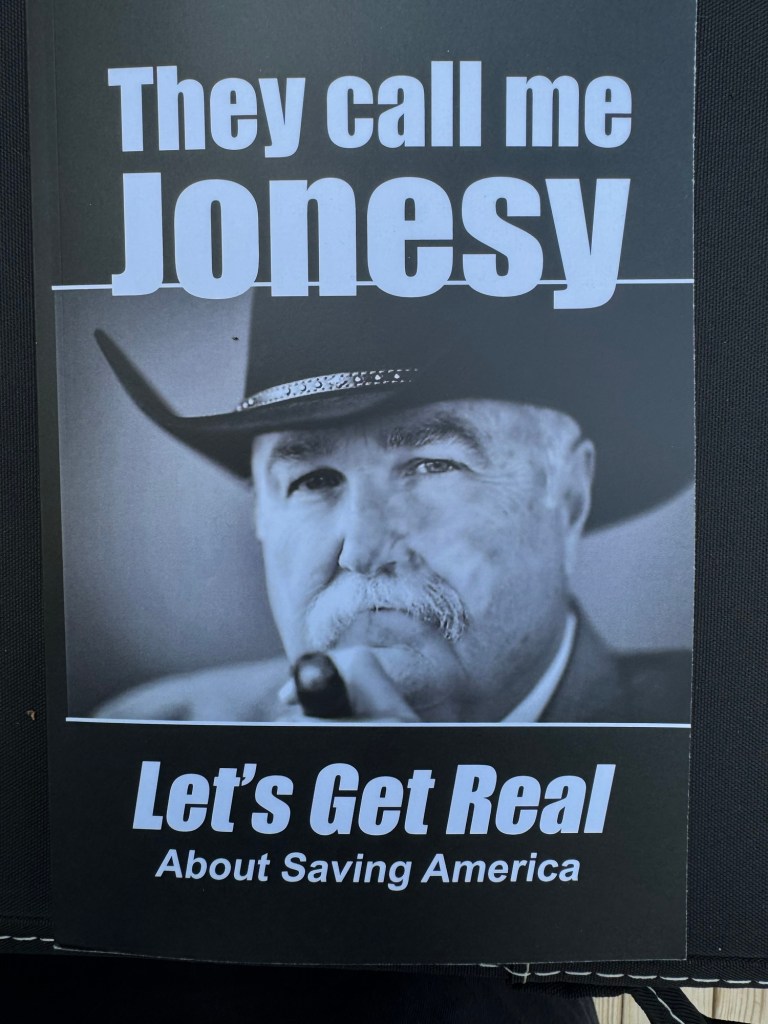
What struck me first is that this is not merely a campaign volume or a greatest-hits collection of media appearances. It reads like a man who has spent a lifetime speaking into microphones and cameras finally realizing that the voice does not last forever. There is a quiet urgency underneath the stories. He talks about the burial plot, about the friend at the funeral home who will one day see him prepared for the last service. He is only a little more than a decade older than I am, yet the public job ages a person in ways private life does not. Six terms as sheriff of Butler County, with the possibility of more, still brings the knowledge that one day the hat comes off for the last time. Writing the book becomes a way of leaving the voice behind so that the things he believes still matter after the daily briefings and the press conferences stop.
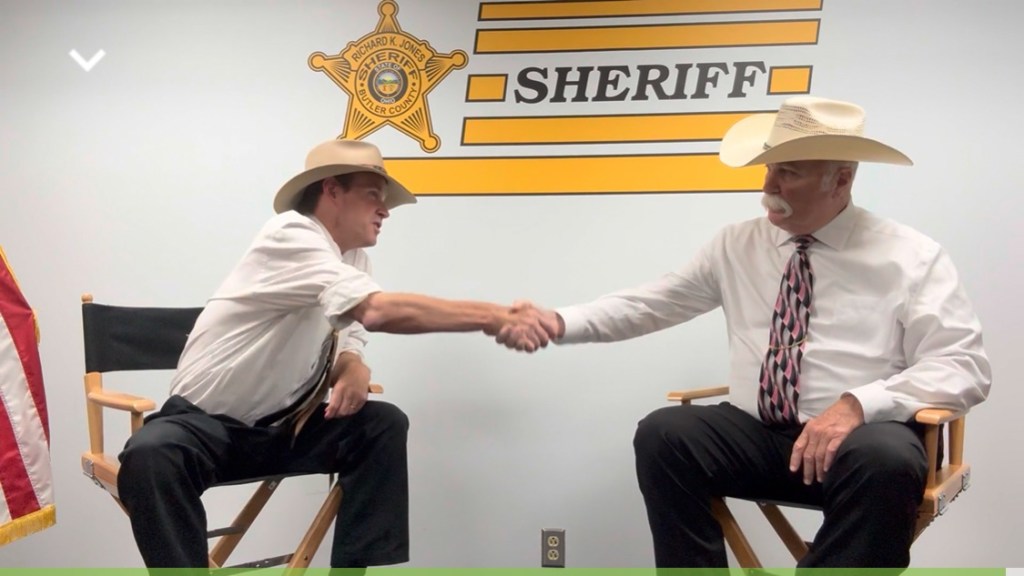
I have always liked the Gunsmoke in him. He admits the debt openly. The old black-and-white shows, the clear line between the man who upholds the law and the men who break it, the sense that a sheriff walks the street and talks to people and puts things right when he can. Andy Griffith is there too, the Mayberry instinct to put an arm around the troubled soul and try to set him back on the path. Those two shows formed a generation of men who believed law enforcement could be both firm and decent. Jonesy lives that combination more than most. He is black-and-white on the big questions. Drugs destroy families and communities; illegal immigration brings more of the same; the jail is full of people who made choices that wrecked their own lives and the lives of others. Yet the book reveals a softer edge than the public persona sometimes allows. He is a compassionate conservative in the older sense of the term. He wants the county to feel more like the place he grew up, where most of the kids he knew had parents who stayed married twenty or thirty years and worked through their troubles instead of walking away at the first hard stretch.
That observation about divorce rates is one of the strongest passages. He watched the numbers climb across his adult lifetime and saw the downstream damage in the jail, in the overdose calls, in the children who never had a stable home to push against. Stable families produce the work ethic and the self-control that keep a community from tipping into chaos. When the marriages fracture as a matter of course, the sheriff’s office ends up dealing with the wreckage. He does not present himself as a sociologist, but the pattern is plain to anyone who has spent decades answering the same kinds of calls. The data back the instinct. The sharp rise in divorce after the introduction of no-fault laws, the parallel growth in single-parent households, and the measurable links to higher rates of juvenile trouble, drug use, and later criminality are not left-wing inventions or right-wing inventions. They are simply what happened.
I share the same cultural memory. I grew up with Gunsmoke playing in the background at my grandparents’ place near Oxford, rabbit ears and all, the same black-and-white morality on the screen while the adults talked about the real world. The shows did not prepare a man for the full depth of certain modern evils. Pornography addiction of the kind that turns a phone into a nonstop delivery system, and the further slide into the sexual exploitation of children, sit outside the frame of those old stories. Jonesy is of an era when a teenager might sneak a look at a dirty magazine on a high shelf in an old bookstore hoping that the cashier wouldn’t catch them. The scale and the numbness of what exists now are harder for that generation to metabolize, not because the men lack courage, but because the evil itself is newer in its accessibility and its intensity. He is devastatingly clear on drugs. On the deeper sexual corruptions that have grown in the last thirty years, the book leaves the impression of a man who sees the damage and still struggles to find language adequate to the thing itself. That is not a failing of character. It is the honest limit of a worldview formed before the internet made every darkness instantly available.
His record on the drug side is long and consistent. The seizures, the public messaging, the refusal to treat overdose deaths as inevitable background noise, all of it tracks with the same black-and-white view. He has been equally consistent on illegal immigration, which is why the national media found him useful for color and why the comparisons to Joe Arpaio sometimes surface. Arpaio paid a political and legal price for enforcing the same principles under a different administration; the pardon that followed was a recognition that the prosecution had been selective. Jonesy has not faced that level of federal hostility, and Butler County is not Maricopa. The local political climate has allowed him to keep doing the work. I expect him to keep winning as long as he wants the job, and I hope that is for a good while yet. The county is better for his presence.
There is a section on the COVID years that brought back the tension of those days. He kept the office functioning, kept the messaging straightforward, and refused to let the panic dictate every decision. Leadership under that kind of pressure reveals the man. The same instinct shows up in the smaller habits. He likes the Waffle House on Main Street in Hamilton enough that they named an omelet after him. I understand the attraction. Walk in, sit at the counter, talk to the cooks and the waitresses and whoever else is there about the country and the county and what needs fixing. It is the modern version of the saloon without the whiskey, a place where a sheriff can still be a citizen among citizens. I took my granddaughter to a Waffle House on a trip toward Columbus for the same reason. The American flags and the unapologetic patriotism on the walls feel like home. Jonesy belongs in that atmosphere the same way he belongs in the cowboy hat.
The book is full of the personal details that never surface in a sound bite. Garfield High School. The long marriage. The children and grandchildren. The zoo trips. The quiet pride in having built a life that looks something like the ones he saw around him as a boy. He is not trying to present himself as a sophisticated theorist. He is trying to say that the old model still works if enough people insist on it. Strong families, clear laws, a sheriff who shows up every day ready to lock up the people who refuse to live by them, and a willingness to put an arm around the ones who might still be pulled back. That combination is rarer than it should be.
I have found myself on the opposite side of primary fights from time to time, the normal friction of people who share a party but not always a candidate. None of that changed the basic respect. The man has brought real public relations value to the office and to the county. When national outlets need a sheriff who will speak plainly about the border or the drug crisis, they know where to find him. Locally he has kept the department visible and the standards high. The book makes plain that the visibility is not an end in itself. It is a tool for keeping the public on the side of the people who have to make the hard calls at three in the morning.
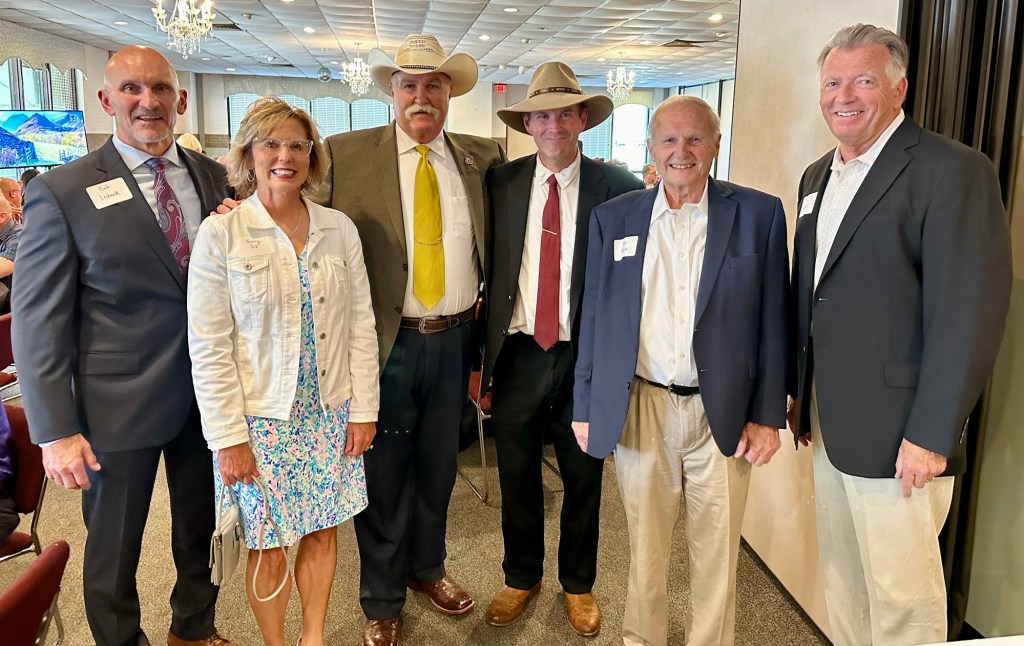
What lingers after the last page is the sense of a man measuring the distance between the county he inherited and the county he will leave. He wants the next generation of law enforcement and the next generation of citizens to remember that the job is still worth doing it the old way. The book is his attempt to make that memory portable. It is not perfect. No book written by a working sheriff in the middle of the job is going to be. It is honest in the places that matter. The love of the old shows, the sadness over the collapse of stable families, the daily refusal to treat drug dealers as unfortunate victims of circumstance, the recognition that the voice will one day go quiet, all of it lands cleanly.
If the goal is still to make the country better starting from the ground up, then more sheriffs who think like this would help. Fix the families and a large part of the downstream crime and addiction begins to shrink. Keep the border and the drug pipelines under pressure. Keep the local office present and accountable. Jonesy has practiced that combination for a long time in one midwestern county. The book lets the rest of the country see the method without the filter of a three-minute television hit. I finished it glad I had waited for the porch delivery, and gladder still that the man who wrote it is still on the job. Butler County has been better for it. The country would be better if more places had the same standard.
I will keep endorsing him for as many terms as he chooses to run. The hat still fits. The instincts are still sound. And the book ensures that even after the last term the voice remains available to anyone willing to listen. Which they should.
Notes
1. Richard K. Jones, They Call Me Jonesy: Let’s Get Real About Saving America (2026). Official description and author framing appear at theycallmejonesy.com and the Amazon listing for the title.
2. Biographical details drawn from the Butler County Sheriff’s Office official profile and contemporary reporting: born October 11, 1953, Hamilton, Ohio; military service 1973–1975; long career in Ohio corrections before becoming chief deputy and then sheriff in 2005; multiple reelections including the 2020 cycle that secured a fifth term.
3. Comparison to Joe Arpaio references the 2017 presidential pardon following the contempt conviction tied to immigration enforcement practices under the prior administration. See White House statement of August 25, 2017, and contemporaneous coverage.
4. Historical divorce and family-structure trends are well documented in Census and CDC data showing the post-1960s acceleration after no-fault divorce reforms, the rise in single-parent households, and correlated social outcomes. See also the long-term cultural commentary in works such as Charles Murray’s Coming Apart and the earlier observations of Daniel Patrick Moynihan.
5. Jones’s public commentary on immigration, fentanyl, and COVID-era policy is extensively recorded in local outlets (Journal-News, Local 12), national appearances, and the sheriff’s own podcast In the Saddle.
Bibliography for Further Reading
Arpaio, Joe, and Tom Fitton. Joe’s Law: America’s Toughest Sheriff Takes On Illegal Immigration, Drugs, and Everything Else That Threatens America. New York: AMACOM, 2008.
Murray, Charles. Coming Apart: The State of White America, 1960–2010. New York: Crown Forum, 2012.
Moynihan, Daniel Patrick. The Negro Family: The Case for National Action. Washington, D.C.: U.S. Department of Labor, 1965. (The original memorandum remains foundational for understanding family-structure effects on social outcomes.)
Putnam, Robert D. Our Kids: The American Dream in Crisis. New York: Simon & Schuster, 2015.
Sheriff Richard K. Jones. Official biography and news archive at butlersheriff.org.
They Call Me Jonesy official site: theycallmejonesy.com.
U.S. Census Bureau and National Center for Health Statistics historical tables on marriage, divorce, and household composition, 1950–present.
Vance, J.D. Hillbilly Elegy: A Memoir of a Family and Culture in Crisis. New York: Harper, 2016. (Useful companion reading on the cultural and family pressures in the broader Ohio Valley region.)
Rich Hoffman
More about me
Click Here to Protect Yourself with Second Call Defense https://www.secondcalldefense.org/?affiliate=20707
About the Author: Rich Hoffman
Rich Hoffman is an author, political consultant, and strategic advisor based in Cincinnati, Ohio, and the creator of The Politics of Heaven—a unique framework that connects biblical theology, ancient history, and modern power structures to explain how moral alignment and spiritual forces shape global events. Blending real-world political experience with deep research into archaeology, UFO phenomena, and suppressed historical narratives, Hoffman offers compelling commentary on topics ranging from ancient civilizations and the Dead Sea Scrolls to modern populist movements, paranormal continuity, and leadership strategy in chaotic environments. As the author of The Gunfighter’s Guide to Business and the forthcoming Politics of Heaven, he brings a grounded yet provocative voice to media discussions, supported by firsthand experiences and a cross-disciplinary approach that bridges science, history, and theology. For interviews, speaking engagements, or expert analysis, visit richhoffmanbooks.com or contact directly via phone at 513-307-5815 or email at rhoffman@richhoffmanbooks.com. If you’ve seen the movie, Disclosure Day and want to talk about it and the implications of Presidnet Trump’s UAP disclosures, let me know and we can bring some color to your coverage. https://richhoffmanbooks.com/media-inquiries-broadcast-topics-and-contact-info/?frame-nonce=ad51e7ecba I do have a firsthand UFO encounter to discuss.

