Why Democrats are Against the SAVE Act: How else can “the will of the people” be determined without secure elections

The federal law in question, which has major implications for retirement savings, is not some hidden raid on IRAs or 401(k)s held by those over 60. Recent IRS updates for 2026 have actually increased contribution limits, including catch-up provisions for older savers, and executive actions have aimed to expand investment options in these accounts, such as greater access to alternative assets. Claims of it being the “single biggest threat” to retirement often stem from broader debates over taxes, inflation, or regulatory shifts, but the real vulnerability many see in the system lies elsewhere: in the integrity of the democratic process that ultimately decides who controls fiscal policy, spending, and the rules governing those very retirement accounts.

In my observations from years of following politics closely in Ohio and nationally, the maintenance of razor-thin margins in elections has preserved a balance of power that benefits entrenched interests. Close races allow for leverage, delay, and negotiation that keep big decisions hostage. Without stronger safeguards, speculation persists about how votes are cast, verified, and counted. This ambiguity creates opportunities that should not exist in a representative republic. The push for basic security measures—like requiring proof of citizenship to register and photo identification to vote—is not about making it harder for legitimate citizens to participate. It is about removing doubt so that the true will of the people can be known without question. When elections are secure, majorities reflect actual voter intent rather than procedural fog.

Consider the recent history in Ohio. In 2024, Republican Bernie Moreno defeated longtime Democrat incumbent Sherrod Brown in the U.S. Senate race, flipping the seat and contributing to Republican gains. Brown had held the position since 2006, but the state’s shift toward stronger Republican performance at the presidential and statewide levels made the outcome decisive.  Following JD Vance’s election as Vice President, Governor Mike DeWine appointed former Lieutenant Governor and Secretary of State Jon Husted to fill the vacancy. Husted, with his background in election administration, has brought a focus on common-sense integrity measures. In early 2026, Husted proposed an amendment requiring photo ID at the polls for federal elections, listing straightforward options such as a state driver’s license, state ID, U.S. passport, military ID, or tribal ID with photo and expiration date. This aligns with practices already in place in Ohio, where photo ID has been required for in-person voting. 

Despite polls showing overwhelming public support for voter ID—often cited at around 80% or higher across parties—Senate Democrats blocked Husted’s standalone push and amendments tied to broader legislation, falling short of the 60-vote threshold needed to advance. Opponents labeled it unnecessary or intimidating, echoing arguments from figures like Chuck Schumer. Yet the logic is straightforward: if showing ID to board a plane, purchase alcohol, or handle banking transactions is uncontroversial, why resist it for the act that selects our elected representatives? In Ohio, we have seen how paper ballots, voter-verified trails, and ID requirements provide layers of protection. Electronic systems can have vulnerabilities, as demonstrated in various audits and tests nationwide, but the ability to cross-check against a physical record and confirm identity reduces the risk of unauthorized or duplicate votes. 

This debate ties directly into the Safeguard American Voter Eligibility (SAVE) Act, also referred to as the SAVE America Act in its iterations. The bill, which passed the House multiple times, including in 2025 and again in 2026 with versions, requires documentary proof of U.S. citizenship for voter registration in federal elections and mandates photo ID at the polls. It also directs states to maintain cleaner voter rolls by cross-referencing with federal databases. Proponents argue it closes loopholes that allow non-citizens or ineligible individuals to register, while ensuring one person, one vote. Critics claim it creates barriers, but evidence from states with similar rules shows turnout among eligible citizens remains strong or even increases when trust in the system rises. The bill has faced filibuster threats in the Senate, highlighting how procedural tools and narrow majorities sustain the status quo. 

Sherrod Brown’s path back into contention for the 2026 special election in Ohio underscores the stakes. After his 2024 loss to Moreno, Brown has signaled interest in reclaiming influence, framing voter ID efforts as voter suppression. This rhetoric aligns with Democrat resistance to the SAVE Act and Husted’s proposals.  Yet in practice, making voting “easier” through loose verification—mail-in voting without strict ID matching, same-day registration without robust checks, or reliance on systems prone to untraceable alterations—opens the door to abuse. Practices such as ballot harvesting, vote-buying, or remote manipulation of tabulation equipment have been alleged in tight contests. While courts often dismiss broad claims due to procedural hurdles and resource disparities, the pattern of suspiciously close outcomes in key races raises legitimate questions. Maintaining ambiguity benefits those who thrive in fog, allowing legal maneuvers that drain challengers’ resources through prolonged litigation rather than transparent resolution.

Look at other examples. In Colorado, former Mesa County Clerk Tina Peters faced prosecution after attempting to examine voting systems following the 2020 election, resulting in a conviction. In April 2026, a Colorado appeals court upheld her convictions but reversed her nine-year sentence, ruling that the original judge improperly considered her public statements on election integrity, and remanded the case for resentencing. Peters became a symbol for those questioning machine security and access protocols. Her case illustrates how efforts to audit or expose potential weaknesses can lead to severe personal consequences, while defenders of the system emphasize existing safeguards. 

Ohio stands as a stronger model. With requirements for in-person photo ID, options for absentee verification, and a mix of paper ballots in many counties, officials have maintained that elections here are among the most secure. Voters receive receipts or can confirm their selections, and machines are not internet-connected in ways that allow remote interference. Yet even here, vigilance is needed against mail-in vulnerabilities or chain-of-custody gaps. Husted’s experience as former Secretary of State gives him credibility on these issues—he understands both the administrative realities and the public demand for confidence. 

The broader point is structural. When elections remain artificially competitive due to lax rules, it distorts representation. Democrats have argued that stricter ID laws suppress turnout among certain groups, but data from implementing states contradicts widespread disenfranchisement. Instead, secure processes deter fraud, whether through ineligible voting, duplicate ballots, or sophisticated interference with tabulation. Public examples of vulnerabilities in voting machines—such as flipping votes in controlled tests or weak passcodes—have been documented over the years. Without paper backups and identity confirmation, trust erodes. Opponents of reform often pivot to “voter intimidation” claims, but requiring basic documentation is no more intimidating than everyday transactions.

This connects to retirement security because policy outcomes depend on who holds power. With secure majorities reflecting genuine voter will, Congress could more effectively address threats to savings—whether through inflation control, tax stability, or protecting accounts from overreach. Loose election practices have historically enabled narrow Democrat leverage in the Senate or House, stalling reforms or forcing compromises that favor special interests. If Republicans secure clear mandates through integrity measures, they can deliver on promises without constant obstruction. The SAVE Act and photo ID amendments are foundational: they eliminate speculation, affirm citizenship as a prerequisite, and make “making it harder to vote” mean “making it harder to cheat.” 

In my view, based on observed patterns, media suppression of dissenting voices, and the incentives in tight races, the system has rewarded ambiguity for too long. Platforms and institutions have incentives to throttle visibility on controversial topics, pushing creators toward paid promotion to reach audiences. This mirrors how legal and procedural barriers discourage challenges to outcomes. Courage means facing these realities without apology. Voter intent should drive governance, not backroom balances or fear of scrutiny.

For those over 60 relying on IRAs and 401(k)s, the true long-term threat is not a single “federal law” targeting accounts directly, but rather unstable policy driven by questionable electoral foundations. Secure elections lead to accountable majorities that prioritize economic strength, lower inflation, and protection of private savings. Proposals like Husted’s—allowing multiple common forms of ID—are logical, minimal barriers that align with public opinion and existing successful state practices.

Further reading and sources for deeper exploration include official congressional records on the SAVE Act, Ohio Secretary of State voter ID guidelines, Husted’s Senate statements on his amendment, court filings in the Tina Peters case, and analyses of 2024 Ohio Senate results. Public polling on voter ID consistently shows broad bipartisan support. Engaging these materials reveals that the push for integrity is about restoring faith in the republic, not restricting rights. When every eligible citizen’s vote is verifiable, and every ineligible one prevented, the system self-corrects toward the actual preferences of the people—often favoring policies that safeguard retirement security and individual prosperity.

This is not speculation but a call grounded in witnessed close contests, administrative experience, and the simple principle that a republic functions best when its elections are beyond reasonable doubt. Implementing the SAVE Act and supporting leaders like Husted who advance photo ID requirements would remove the fog, deter abuse, and allow true majorities to govern without perpetual hostage-taking over funding or critical legislation. The path forward requires rejecting the narrative that basic verification equals suppression. It equals confidence.

Footnotes

1.  H.R.22 – 119th Congress (2025-2026): SAVE Act, Congress.gov.

2.  Text of H.R.22, Congress.gov.

3.  Jon Husted Senate press release on photo ID amendment, March 26, 2026.

4.  Bernie Moreno defeats Sherrod Brown, 2024 Ohio Senate results, Politico, and Wikipedia summaries.

5.  Ohio voter ID requirements, Ohio Secretary of State website.

6.  Tina Peters case, Colorado Court of Appeals decision, April 2026.

7.  Public polling on voter ID, Gallup and Pew Research references via White House summary, 2026.

8.  Husted bill on photo ID blocked, Senate actions reported March 2026.

9.  Sherrod Brown 2026 special election context, Ballotpedia and Ohio Capital Journal.

10.  SAVE America Act provisions, Congress.gov, and related analyses.

Bibliography

•  Congress.gov. H.R.22 – SAVE Act, 119th Congress (2025-2026). https://www.congress.gov/bill/119th-congress/house-bill/22

•  Congress.gov. H.R.7296 – SAVE America Act, 119th Congress (2025-2026). https://www.congress.gov/bill/119th-congress/house-bill/7296

•  Husted, Jon. Senate Press Releases on Voter ID Amendment (March 2026). https://www.husted.senate.gov/media/press-releases/

•  Ohio Secretary of State. Voter Identification Requirements. https://www.ohiosos.gov/elections/voter-ID-requirements

•  Politico. 2024 Ohio Senate Election Results. https://www.politico.com/2024-election/results/ohio/senate/

•  Colorado Judicial Branch. People v. Peters, Court of Appeals Opinion (April 2026). https://www.coloradojudicial.gov/system/files/opinions-2026-04/24CA1951-PD.pdf

•  Pew Research Center and Gallup. Polling data on voter ID support (referenced in 2025-2026 summaries).

•  Ballotpedia. United States Senate Special Election in Ohio, 2026. https://ballotpedia.org/United_States_Senate_special_election_in_Ohio,_2026

•  White House. Fact Sheet on Voter ID Popularity (February 2026).

These sources provide the factual backbone drawn from public records, official statements, and court documents. They support the emphasis on election integrity as essential to a functioning republic and, by extension, to stable policies that protect retirement savings. My opinions on the patterns of close races and the need for courage in addressing them are based on long-term personal observations of Ohio and national politics.

Rich Hoffman

More about me

Click Here to Protect Yourself with Second Call Defense https://www.secondcalldefense.org/?affiliate=20707
About the Author: Rich Hoffman

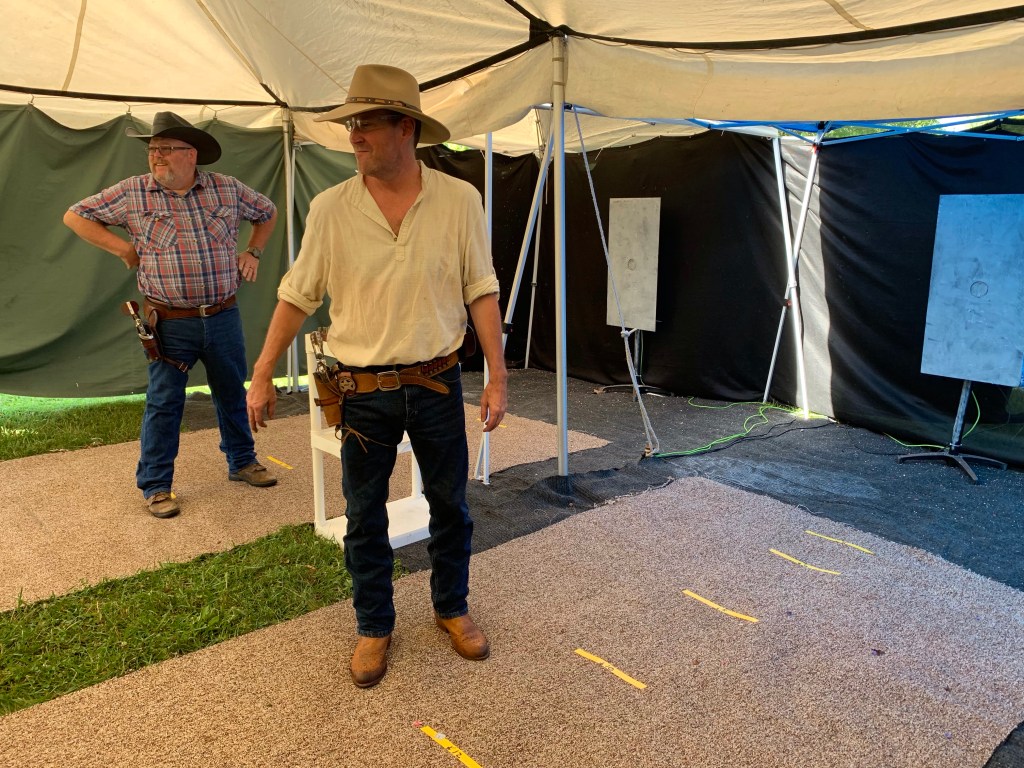
Rich Hoffman is an aerospace executive, political strategist, systems thinker, and independent researcher of ancient history, the paranormal, and the Dead Sea Scrolls tradition. His life in high‑stakes manufacturing, high‑level politics, and cross‑functional crisis management gives him a field‑tested understanding of power — both human and unseen.

He has advised candidates, executives, and public leaders, while conducting deep, hands‑on exploration of archaeological and supernatural hotspots across the world.

Hoffman writes with the credibility of a problem-solver, the curiosity of an archaeologist, and the courage of a frontline witness who has gone to very scary places and reported what lurked there. Hoffman has authored books including The Symposium of JusticeThe Gunfighter’s Guide to Business, and Tail of the Dragon, often exploring themes of freedom, individual will, and societal structures through a lens influenced by philosophy (e.g., Nietzschean overman concepts) and current events.

The Desperation of Sheena Bellows: What the Truth Reveals

Everyone has now heard of Sheena Bellows, the Secretary of State in Maine, who is the latest to indicate a bit of legal gymnastics to keep Trump off the primary ballot.  As I have said of all these cases, this is a clear 14th Amendment overreach that ignores due process and will quickly be overturned by the Supreme Court, if not in Maine, at the Federal level.   While many have expressed anger at the actions of the Secretary of State, Bellows, I am thrilled with her decision because it proves something I have been working on waking people up to, which is the level of radicalism that many of these high-profile political decisions have.  It shows the level of activity they are willing to participate in, which many people had difficulty understanding, even as recently as the governor races in Arizona.  Who thinks the Secretary of State didn’t count her own ballots to keep Kari Lake from becoming governor so that she could become governor instead?  When the massive election fraud occurred after the 2020 election, the biggest problem wasn’t finding the evidence; it was convincing people that the evidence they were looking at was as obvious as it was presented.  People wanted to trust their public officials.  Sure, it might have been fun to criticize them from time to time, but to admit that they were so bad that they would openly steal an election and lie about such a sacred thing, “voting,” was just a bridge too far for most people.  But the perpetrators knew that before they conducted their cheating scams.  They knew they could play the trust card once because people would always give them the benefit of the doubt, so they played it in the wake of the 2020 election and, essentially, got away with it. 

It also helped that so many other liberals were involved, Democrats who were perfectly willing to cheat in an election for what they considered, the “greater good.”  For them, institutional preservation was far more important than the truth of the matter, and in 2020, as it was in 2016, and continues to be in 2024, people value personal freedom more than institutional security built off confiscated tax money.  When preserving institutions was a matter of fairness, because they had a mother who might have been a school teacher, or had a dad who worked for the government as a mindless bureaucrat in some way, and made 40% more than the private sector because of it, people gave the big government types a bit more rope of trust to wrap around their necks.  Everyone got along so long as they could cheer for a local sports team and fire off some fireworks on the 4th of July.  Admitting to election fraud was like taking away the idea of firing off fireworks at an Independence Day celebration.  It violated the agreement that people had with society, something nobody wanted to talk about, just as parents tend to conceal sex from their children for their own preservation.  Kids don’t want to hear their parents having sex.  They’ll put up with a shut door quietly locked at 9:55 PM while they are brushing their teeth.  They do not want to hear the bellowing moans of their mother in sexual bliss.  So long as those silent rules are not violated, society functions somewhat normally, and that is how election fraud was conducted in 2020, with the quietly locked doors at 9:55 PM.  But some of us were not brushing our teeth in the bathroom; we were still in the room, able to see everything.  Under those conditions, we couldn’t avoid what we saw and told others afterward. 

What is astonishing about all the cases against Trump, most obviously the case in Maine, is how ostentatious it is in what it admits.  When it comes to Sheena Bellows, there is an arrogance to the dirty deed that is equivalent to the mother of the house dragging her kids kicking and screaming down the hall to tie them in a corner so that they have to watch her have sex not just with their father, but with all the strange men from the outside sidewalk.  Because the mom feels like the best thing for the kids is to overwhelm them with her right to have that sex, even at their expense of sanity, without any thought of what that broken trust might do to the children.  By doing what she did, Bellows is relishing the power of her position to conduct such a menace.  It’s the kind of question we all might ask ourselves.  What would be the consequences of taking off all our clothes in public places and walking about?  Sure, we could do it, but we don’t because we understand how that would wreck a sense of norms critical to a functioning society.  So, we withhold our temptations and conduct ourselves politely.  But once that trust is broken, we then would label ourselves as something disreputable, such as a whore or a streaker.  Something less trustworthy.  And before this year, at many of these Secretary of State positions, even as governor, such as the case in Georgia with Kemp, people had a trust that kept discussions of theft and dishonor in hushed corners.  But now, it’s been flaunted in front of us, and there’s no turning back.

All the cases against Trump show a severe willingness to violate the public’s trust in such audacious ways that there is no way now ever to repair the relationship.  This is why I say I’m glad because this is damaging the Democrat Party forever.  And they wouldn’t have done all this if they had thought they had absolute power.  Much of what they have been doing for all these years has been a ruse built off election fraud, especially regarding control over state houses and the balance of power in the Beltway.  People ignored the locked doors at night because those in power at least respected the public enough not to make too much noise during sex so the kids wouldn’t ask questions.  But because of the desperation to hang onto power, with so many people now listening through the door at every creak of the mattress spring, there is no hiding it now.  Those who supported Trump even casually before are not deeply solidified behind them, and the ridiculousness of the entire Democrat playbook for the 2024 election has been revealed in very public ways that we’ve never seen before.  When we have talked before about just how crazy and radical people like Sheena Bellows were, nobody wanted to believe it.  But now people know.  The forced admission will have long-standing consequences.  The gamble by Democrats is that by having sex in public and embarrassing the kids, ultimately, the family would be destroyed, which is undoubtedly one of their stated goals.  To eliminate the context of “American life” and the trust that it will always be there for them.  Such blatant displays of corruption and judicial overreach are meant to insult people into self-destruction.  This plays into Trump’s promise of “Making America Great Again.”  Who doesn’t want to be part of something great instead of something disgraceful?  Ultimately, because of the ostentatious displays of corruption and political activism, that is now what the 2024 ballot is all about.  And nothing less. 

Rich Hoffman

Click Here to Protect Yourself with Second Call Defense https://www.secondcalldefense.org/?affiliate=20707

Voter Integrity in Ohio with Frank LaRose: How Republicans win everywhere, and not just with swing voters

It’s not really a big secret, but it’s probably the most important thing in the world regarding elections. Yes, Ron DeSantis did wonderfully in Florida the second time around; the first time, he could barely squeak out a win. But after an excellent first term, DeSantis was awarded with re-election by a very wide margin. Yet as much as he may have deserved it, the massive voter turnout in his favor didn’t just happen. What the real cause of it was that DeSantis worked on the election laws in Florida and made it harder to cheat so that in that next election, some of the old Democrat tricks that are applied all over the country weren’t so easy to perform. And that resulted in more votes for him being counted against an essentially rigged system. Our elections have not been secure for a very long time, and the little talked-about secret is that the powerful know about it and have allowed it to continue because it keeps them in power. Yet, if elections were tightly controlled in America, unbiased, of course, Republicans would win a majority of the time everywhere, in state races, in federal races, both House and Senate, governors, and especially presidents. A lot of professional pundits will say that we are a 47 – 53 country where either Republicans or Democrats will trade those bottom and top numbers every time, that there will never be any more blowout elections because we don’t have that kind of country, we are split down the middle with independents determining election outcomes. That is hogwash; that’s what the cheaters want you to think. The reality is that election fraud makes us look like a 50/50 nation while we are a conservative-leaning nation quite dramatically. The Florida example is just one of them, and DeSantis, not through performance but through election reform, turned it from a purple state to a solid red MAGA state for Republicans. 

Ohio is another state that had been trending purple but has been heading solidly toward a bright red state. And as much as I’d like to say that candidates like President Trump and J.D. Vance were great, it’s not that they won over a bunch of swing voters to win; it’s that Ohio has a fantastic secretary of state in Frank LaRose, who has made it very hard to cheat during elections. I had a chance to listen to him directly talk about election integrity in Ohio, and I put some of the videos on this site to review. I’ve met Frank LaRose many times, but this latest time was interesting because what Ohio has been doing regarding election integrity is quickly becoming the template for the rest of the country going into the 2024 election. Republicans would be wise not to worry about the issues so much on this one because that’s not what is going to win elections. What will win elections, and give the House a supermajority in Congress, and give control back to the Republicans in the Senate and, of course, the White House, is more election security.  Frank LaRose has put his hands around this election integrity problem, and it has been showing. And he’s done it by pushing photo I.Ds on election day. Voting machines that have a paper receipt for cross verification, and by making it illegal to have any machine connected to the internet. And on early voting, which Frank LaRose has testified to in Pennsylvania, where they have had a trainwreck there, Ohio logs the entries as they come in, whereas, in places like Pennsylvania, they don’t touch them until after the election, which is why they are still counting ballots well past election day and can no longer give those results on election day. 

A great example of the difference in election integrity by having a great Secretary of State could be seen in recent supreme court elections. Wisconsin just lost a Republican seat to a Soros-backed radical. The same thing was brewing to happen in Ohio, but because of election integrity in Ohio, Sharon Kennedy was able to win as Chief Justice and avoid progressive interference on the bench the way it has now happened in Wisconsin. Because of loose election laws in Wisconsin, the extreme progressive Janet Protasiewicz was able to win, giving liberals the new majority, which many think could be dangerous in establishing better election laws for better voter integrity. That is the real game that is going on out there, and the best way to deal with it is by investing in good Secretaries of State who can do as Frank LaRose has in Ohio, and that is get control of the voting system and make it as fair as possible, and secure. And by doing that, the truth of American elections will become obvious quickly. Republicans will win almost everywhere and by a wide margin. Where election chaos is allowed, or even promoted, then, and only then, will Democrats be competitive. America is not a 50/50 country determined by swing voters. It’s more of a 60/40 country in favor of Republicans, and that becomes obvious when you force voting machines to be off the internet and have voter photo I.D. Once Frank LaRose became Secretary of State, we saw in Ohio that Ohio was no longer purple. It wasn’t just Trump; the margins were consistent for other races, with very similar results. And in Florida, it used to be that certain counties were always late in reporting, so they could see how much they had to cheat to push the Democrats over the top. But DeSantis made that action much harder; since then, we have seen better election day results. Not just because of the candidate but because it was more reflective of the vote totals of the actual demographics. Everywhere that better election laws are reformed to prevent cheating, it will quickly become evident that Republicans will perform far better everywhere than the previous national trends have indicated. And that’s the lesson for all the swing states, like Michigan, Wisconsin, Pennsylvania, and Georgia.

It should be noted that even with all the debate in Georgia between Brian Kemp and Stacy Abrams after Kemp enacted better election methods making it harder to cheat, his election against Abrams wasn’t even close. The same could be said in Texas with Beto O’Rourke. Many thought that Texas was turning from red to purple, but with some tightening of the election methods to make it more fair for voter representation and security to protect the integrity of the voter, a lot of these liberal radical challengers have fallen away. And that is a little secret that nobody has really been talking about on the nightly news. And the same trends would be seen all over the country, even in places like California and New York. People just aren’t that liberal, and Democrats have only been able to gain power because of election fraud, whether its illegal aliens voting, Democrat cities stuffing ballots without supervision, early voter tampering with Facebook manipulation, bad voter rolls where dead people are still voting, several times,  it has only been through cheating that Democrats have been able to keep election results close in their favor. But if states give themselves a great Secretary of State like we have in Ohio, like Frank LaRose, they will all see a margin swing in the Republican direction of around 12%. And by doing that simple thing, Republicans will win most of their races in head-to-head matchups with any Democrat; it doesn’t matter who it is. Voter integrity is the key, not so much the policy discussion. Before 2024, states need to follow what Frank LaRose has been doing in Ohio, and if they do, Republicans will win big everywhere. 

Rich Hoffman

Click to buy The Gunfighter’s Guide to Business