The Mystery of Ishi-no-Hoden: foundations of Any Successful soceity

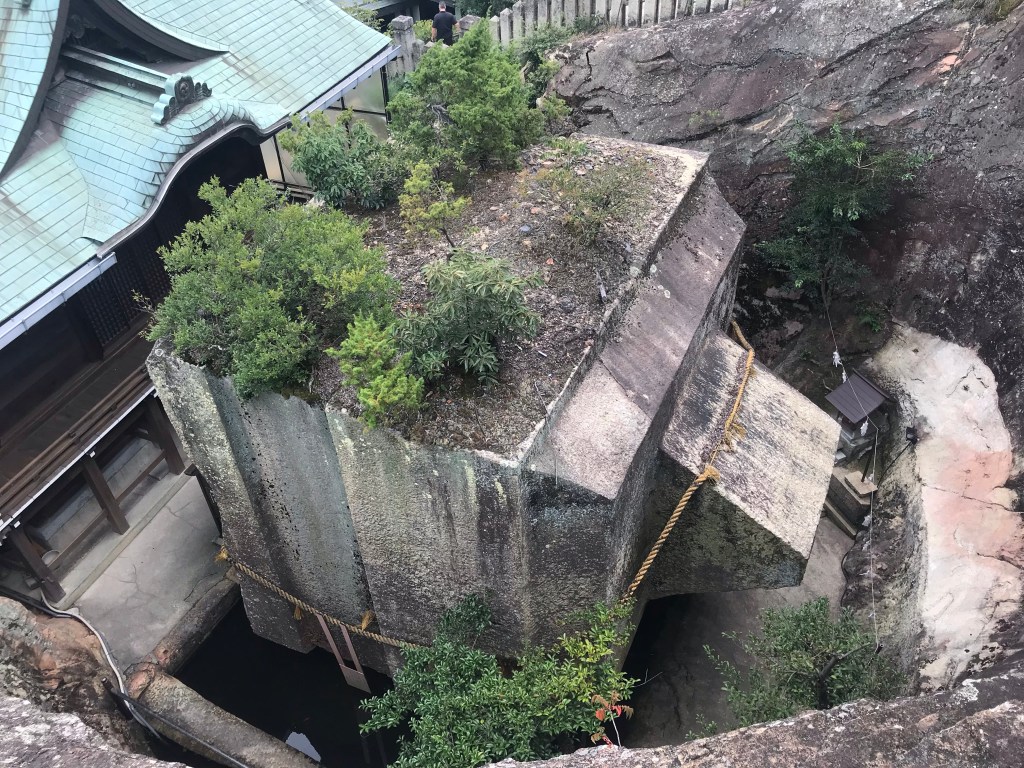
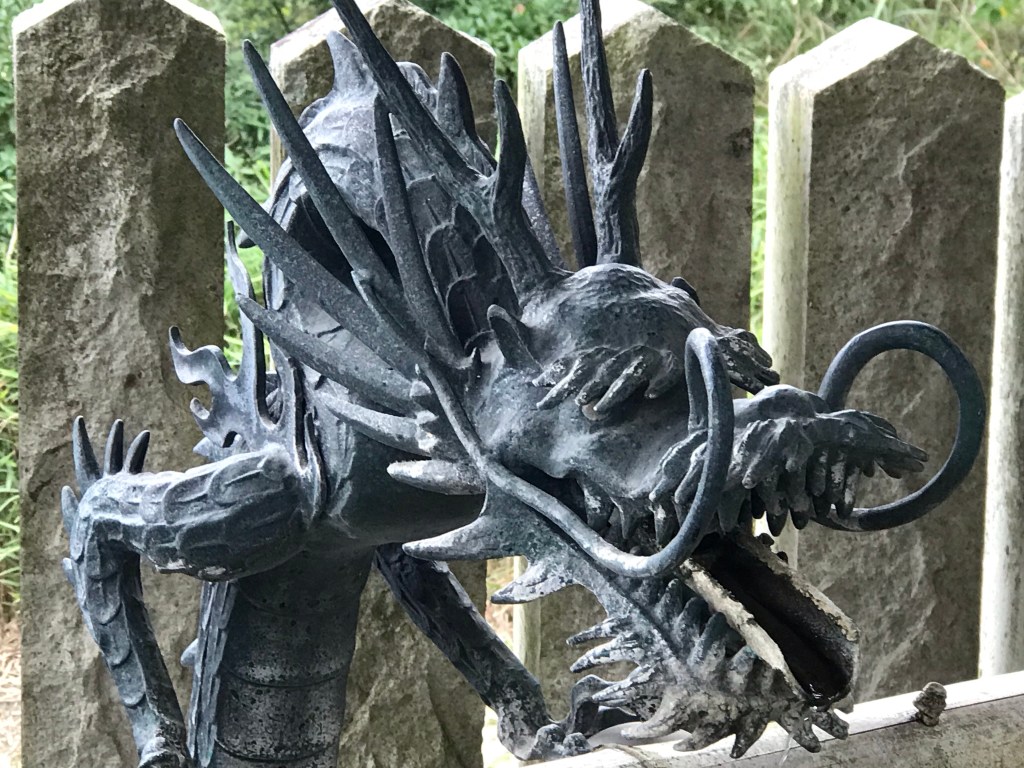
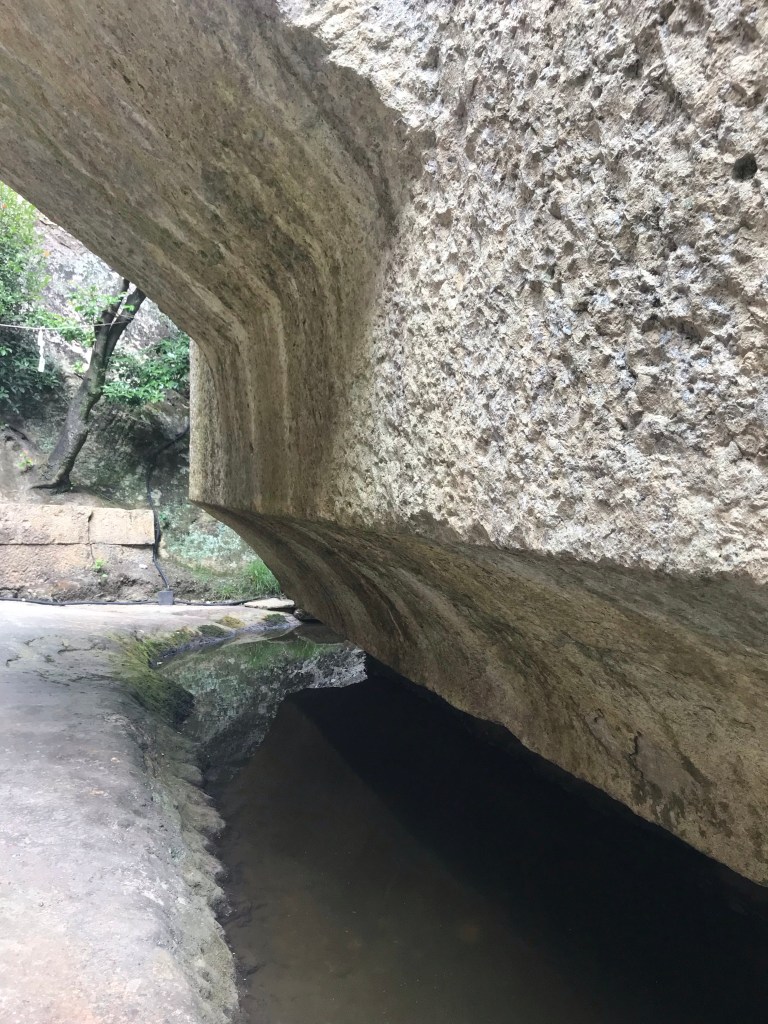
It is one of the most mysterious sites in the world, the megalithic site of Ishi-no-Hoden just south of Osaka, Japan. And I happened to be in the neighborhood and wanted to see it myself. The dates are ridiculous; many say it is 14,000 years old, which would put it in the Ice Age period and that of Gobeki Tepe in Turkey. There is plenty of evidence, and Ishi-no-Hoden is one of them, of a global culture that mass communicated and worked with large stones for purposes we are just beginning to scratch the surface of. Our previous assumptions have been pretty much shattered on this idea of evolutionary science that progressed through trade and a slow awakening of the human race. Ishi-no-Hoden shatters those beliefs, which is why it is one of the holiest sites in Japan and certainly one of their most mysterious places. So I wanted to see it for myself. Some of the most pervasive thoughts were that the creators tried to mimic a spaceship that landed in that part of the world many years ago but never finished carving it out of the rock. In that region of the world, a few miles south of Kobe, in a very dense area of suburbs along the coast, as bullet trains flash across the landscape, this strange enigma reminded me of the monolith from the 2001 Space Odyssey. It was there, and nobody understood it, so the people of Japan set up a Shinto shrine to worship it, which I witnessed several people do while I was present. It consisted of washing your hands outside from a dragon’s mouth; then you stepped into the shrine, clapping a few times, bowing a bit, and then clapping again before stepping inside. And to what god, to what force? That much isn’t all that important to the people of Japan. But showing respect and reverence was necessary, which is the real takeaway of this spectacular mystery.

I haven’t been to everything I want to see in life, all the things I have read about in books. But I’ve been to enough far-flung places in the world to see a pattern emerging that you get through diverse and voluminous reading. Then, it is validated through an actual site visit, which was undoubtedly the case with Ishi-no-Hoden. We are looking at a lost art of working rugged rock and transporting it over vast distances for unknown reasons. There are plenty of places in the world where these things have been significantly studied, but not so much in the oriental cultures of Japan, China, the Koreas, and down into India. Due to political currents and their religious nature, they don’t approach these kinds of mysteries like we do in the West, so putting the puzzle together has been slow. But the path to Ishi-no-Hoden is essentially a single-lane road that zig zags through numerous suburbs of very compact living by the Japanese people. Access to such an area is intended for tiny cars without much traffic. But once we did arrive at the site, it was pretty unspectacular from the outside. Not much of a parking lot and some industrial buildings in the surrounding vicinity. Ishi-no-Hoden was a project of carving this massive structure out of the mountainside, as many such quarries have been conducted in that precise region to get the foundation stones for the many castles and temples built all over Japan. If such a site had been in America or England, it would have had an amusement park entrance, much like Stonehenge. This site is just as spectacular as any place in the world. Yet, it is undoubtedly not presumptuous.
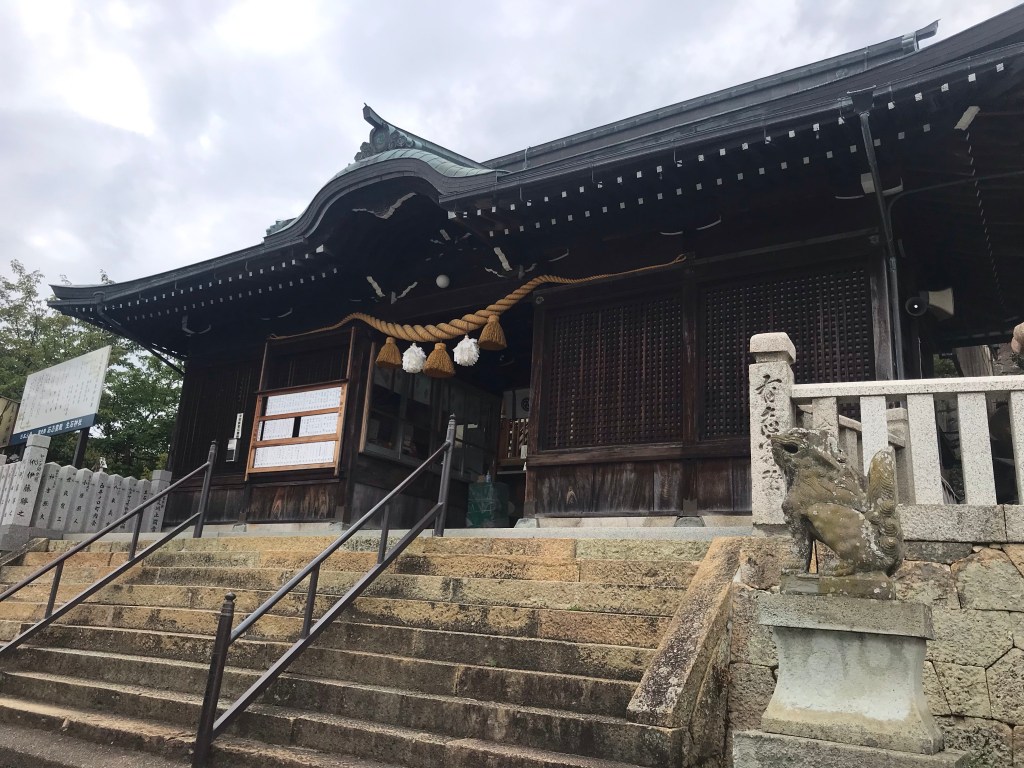
I love the amusement park-like tourism at Stonehenge. I think it’s good for science to make it so that so many people can visit it and get involved in its mystery. But there is nothing like that at Ishi-no-Hoden. There is nothing much on its history or relevancy. Only a shrine, the emphasis was on worship rather than understanding, which is good and bad, depending on what you want to take from the experience. During my visit to the area and interacting with the people, knowing what was happening around my home, I distinctly appreciated this site and its Japanese reaction. Ishi-no-Hoden has no relationship to modern-day Japanese culture, and they have not claimed it. Only to pay it respect, which says a lot about them as a people. It is just as logical to say that aliens landed from the planet Sirus, which many believe because of the high diet of ocean goods and reverence for dragons that are distinct from Western viewpoints, or to say that a race of giants was making some mechanical device that was to be used in some vast structure. When you see Ishi-no-Hoden and put your hands on it, its dimensions are exact and purposeful. And not applicable to the kind of cultures we have been studying throughout our historical understanding. Which is why I wanted to visit this site mainly. It is one of those places where you can still put your hands on the object and consider it as it was constructed, not as humans have attempted to interpret it meagerly.
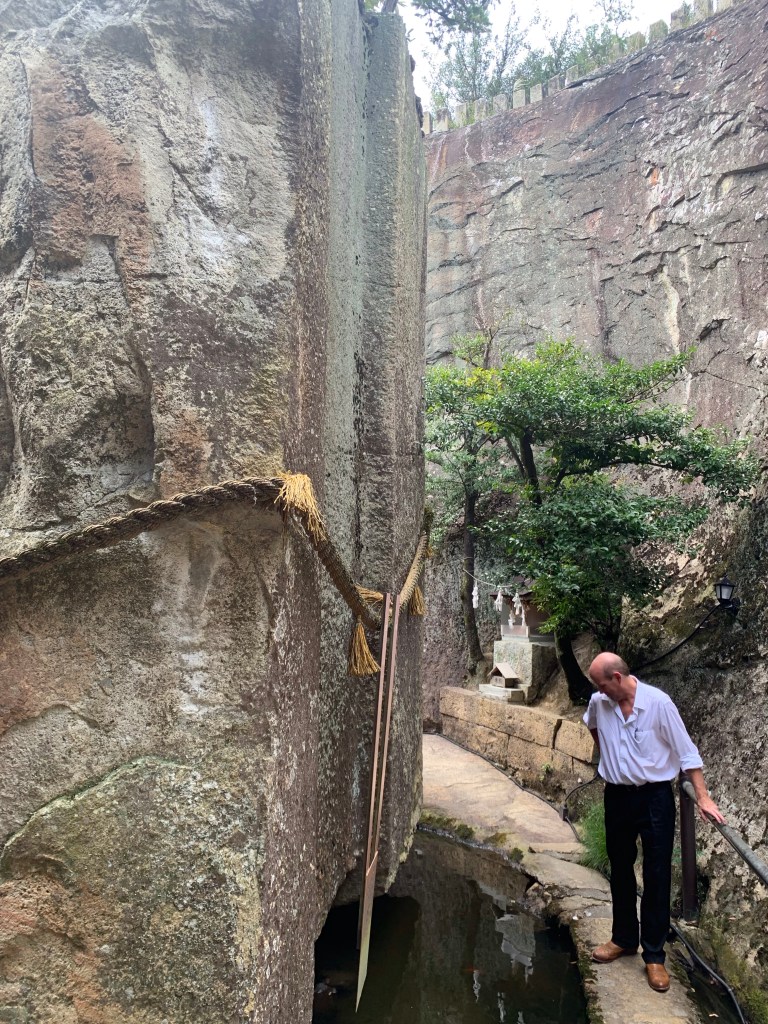
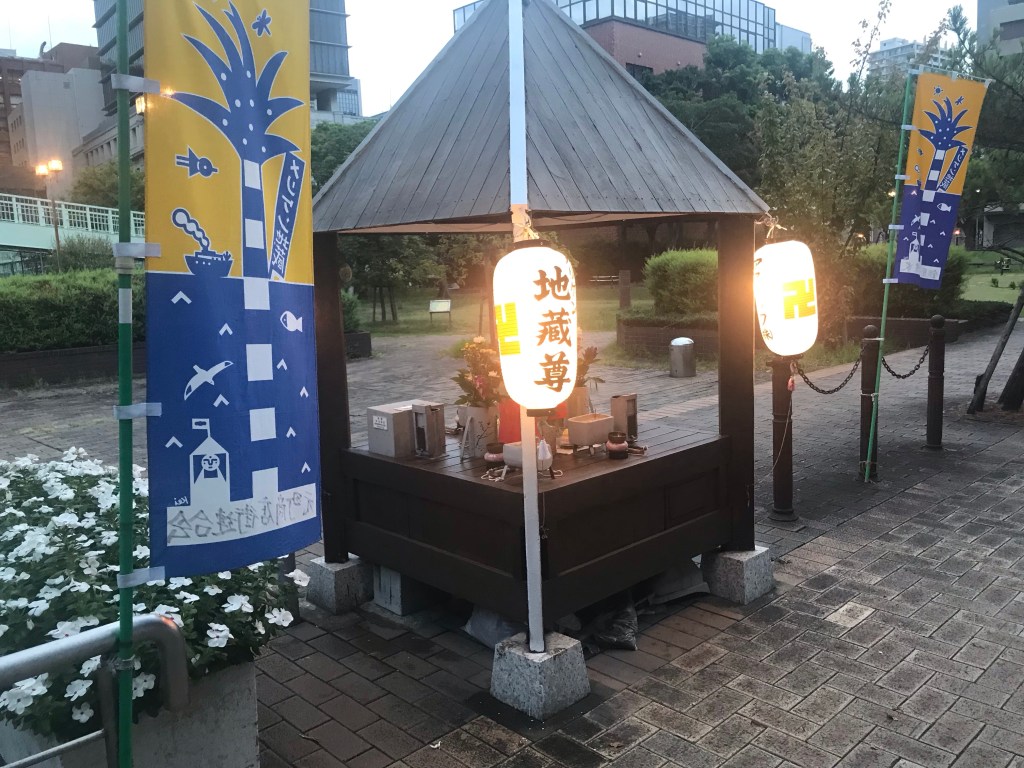
I’ve been to Japan before, but this particular time, I couldn’t help but compare it to other places in the world that I’ve been and notice how polite and together the people of Japan are. As I interacted a lot with Kobe just to the north of Ishi-no-Hoden, I saw a lot of shrines with incense burning right in the heart of town. And the people are so polite, crime is way down, and the people themselves are good to deal with. These are cultural traits that come straight from their Shinto-Buddhist beliefs. I get along best with these people because I understand their firm convictions. In the West, we should have the same kind of reverence for our Bible. It’s not so much in believing that what you believe is correct but that you have some foundation of thought rooted in a belief in something. Visiting Ishi-no-Hoden and seeing these beliefs play out with so many people was interesting. The function of their rituals gave their souls comfort, leading to a productive society in all aspects, from business to buying a Coke in Chinatown. All the transactions with the Japanese people were respectful and effective, which comes directly from their belief systems. It doesn’t matter that Ishi-no-Hoden is connected to their Shinto religion. But what matters is that it is an object of mystery and deserves respect. Which they then functionally give it. And in that transaction of care, the essential elements of their culture are revealed in very productive ways. For them, it doesn’t matter where Ishi-no-Hoden came from. What does matter is that they honor its existence with respect, which comes from a culture that believes such things are essential because they are. The lesson of places like Ishi-no-Hoden, which can be applied worldwide, and to many different religions, isn’t the truth about the past, but in respecting what it has taught us, and using that knowledge for our future. And that belief is always paved with respect as the basic foundation, and from there, whatever happens, will at least be rooted in value.
Rich Hoffman


“The Serpent Mound Disturbance”: A giant hole opens in Siberia–again

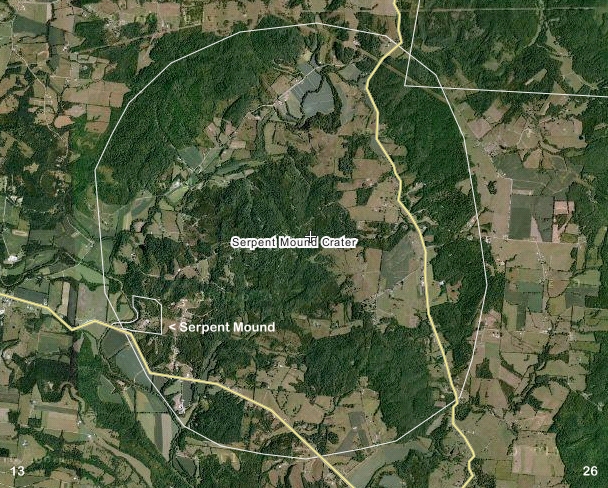
For those living near Cincinnati, Ohio they would likely know of the strange archaeological remains of Serpent Mound off to the east—a mound built by an ancient people several thousand years ago clearly displaying a serpent design visible to the air which has astronomical calculations built into certain points of the large site. The people who built it went to incredible trouble for reasons that are even more mysterious. Thickening the plot the site sits on a significant portion of a crypto explosion which took place over 300 million years ago. There was no way that the ancient people could have at the time known of the explosion as erosion had removed most of the sight references visible without advanced scientific equipment.   Yet out of all the locations that Serpent Mound could have been built—it was on the edge of this gigantic 4 mile wide crater that looks to have come from inside the earth as opposed to a traditional meteor impact from space. The reason this is significant is that modern scientists are mystified–a helicopter spotted a large mysterious hole in Siberia Tuesday July 15th, 2014—and it has left scientists largely perplexed thus far. The first explanation rationed was that gas from deep in the earth exploded due to the mystical global warming phenomena perpetuated by paper-thin intellectuals—a falsehood designed to disguise their ignorance.

The massive hole, about 260 feet wide, is located in the Yamal peninsula and can easily fit several helicopters inside the entrance, according to the U.K.’s Independent. It is believed to be about two years old, RT.com reported.

The area’s name, Yamal, translates to “end of the world” and is home to some of Russia’s largest gas reserves.

http://www.theblaze.com/stories/2014/07/18/a-giant-mysterious-hole-has-opened-up-at-the-end-of-the-world-in-siberia-and-its-left-scientists-baffled/

Yet this wasn’t the first such hole to appear in Siberia.

On June 30,1908, a giant fireball exploded in Siberia’s remote Tunguska region, leveling trees for more than 20 miles around and causing atmospheric shock waves that were detected round the world. At the time, scientists thought that a giant meteorite had crashed into the earth. Later, when they failed to find a major crater or clearly identifiable meteorite fragments at the site, they began to question their earlier theory.

Many scientists have since attributed the phenomenon to a comet head that exploded in the air before hitting the earth. Others suggest that a stray clump of antimatter from elsewhere in the universe was the cause through some dimensional portal—a fold of space and time which is concealing the evidence.

http://content.time.com/time/magazine/article/0,9171,908001,00.html

971521_574480222593899_774166430_nBack at Serpent Mound just outside of Cincinnati, hardly a location at the “end of the world” the same type of thing occurred long ago. The valley beneath the effigy is really the western rim of a mysterious, four-mile-wide, circular crater – the eroded remains of a huge, catastrophic event geologists call “The Serpent Mound Disturbance.” About 300 million years ago, either an asteroid collision or an underground explosion blew apart more than seven cubic miles of rock. The central area was uplifted more than 1000 feet, while an outer rim dropped more than 400 feet.

What we see today results from eons of erosion, although the shattered fragments of the “Central Uplift” remain among the hills above Serpent Mound. The distant ridge tops, visible from the overlooks, stand high today because they are the much harder Ordovician bedrock that was offset by the event.

The strange geology of this spot was first noticed in modern times by Dr. John Locke of Cincinnati, who named it “Sunken Mountain” in 1838. Yet, it’s not hard to imagine that the ancient effigy builders could have recognized the unusual land forms. The serpent looks out from the edge of the Central Uplift zone.

http://mobile.ancientohiotrail.org/sp-5.html

This little recent hole in Siberia is much smaller than the four mile wide one that occurred at Serpent Mound but one thing is for sure about the Serpent Mound crater—it wasn’t caused by global warming and much stronger forces were at work.   At this time the two craters may have been caused by entirely different forces but what is clear is that even with all of our modern equipment and satellite analysis the hole in Siberia wasn’t even noticed for two years.   This confirms that there is very little that modern science really knows about anything as our study into nature is still infantile. The cause and effects of forces known and yet to be discovered are not complete, so static conclusions are impossible at this time.

But what is most mysterious of all is that a so-called primitive people knew enough about the geology of the Ohio area which had filled back in after hundreds of millions of years of erosion to build a tribute to it as if they knew that their monument in the shape of a serpent might appease the forces that created the impact.

Many societies could have risen and fallen over several hundred million years and not all of them may have been terrestrial. Yet by some word of mouth or written documentation which is no longer seen, the ancient people who constructed Serpent Mound likely knew about the strange ancient events that took place on that site. And in our modern times similar holes are opening up right under our feet and we have no explanation for them but to blame the occurrences on our own development and science. That only goes to prove how feeble our modern grasp on reality truly is. The mysteries of the earth are alive and well, and mankind looks upon them with fear of the unknown for which they lack the courage to probe with honesty to an origin that does not reside on this planet—but out into the Milky Way toward one of NASA’s recent proclamations—that within 25 years life will be discovered afar and the answers to some of these mysteries will then become known—and we may not like the answer as it will disturb our religions, mythologies and basic concept of existence.   If history is to be followed when matched up against a superior intellect and culture—it is likely that we might want to build a monument to appease them in the same way that a weak-willed politician licks the boots of those they perceive to be their superiors. In that future time the real answer to the mysterious crypto explosions on earth will then be provided by documents that left long ago only to return by the minds responsible.

The term cryptoexplosion structure (or cryptovolcanic structure) means an explosion of unknown cause. The term is now largely obsolete. It was once commonly used to describe sites where there was geological evidence of a large-scale explosion within the Earth’s crust, but no definitive evidence for the cause such as normal volcanic rocks. These sites are usually circular with signs of anomalous rock deformation contrasting with the surrounding region, and often showing evidence that crustal material had been uplifted and/or blown outwards. The assumption was that some unusual form of volcanism, or a gas explosion originating within the crust, was the cause. The use of the term went away with the rise of the science of impact crater recognition in the late 20th Century. Most structures described as cryptoexplosions turned out to be eroded impact craters, caused by the impact of meteorites. Today geologists discount former cryptoexplosion theories.[1]

http://en.wikipedia.org/wiki/CryptoexplosionSerpent_mound_Crater

Yet, geologists have yet to explain what caused “The Serpent Mound Disturbance” and have relegated their investigation to the back of their desk drawers and left investigations to theorists who must resurrect the term, “cryptoexplosion” once again to properly term the classification.  And such explosions are not regulated to the distant past, but still occur right under the nose of science who believed that just because they stopped using a term, that the need would cease to call attention to itself.  By the evidence of the new hole that has opened in Russia–“cryptoexplosion” would appear to be much more appropriate as a term than “global warming.”

http://magnetic.me/Serpent/crater.htm

Rich Hoffman


www.OVERMANWARRIOR.com


The Ghost Ship of Cincinnati: John Rogers Maxwell’s spectral remains and lifetime of adventure

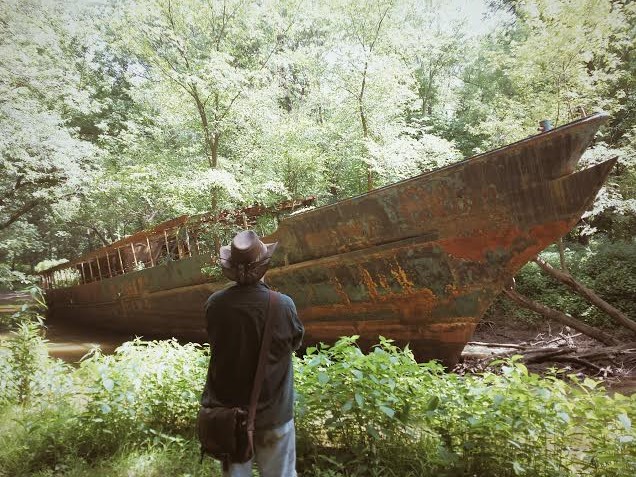
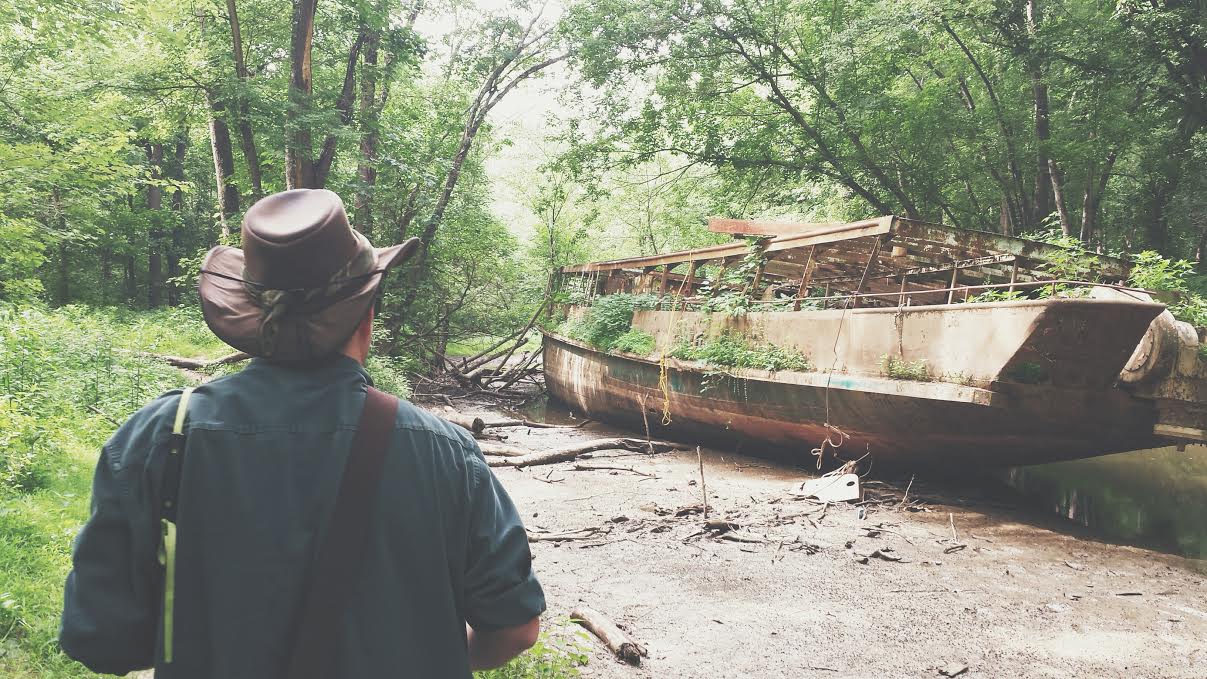
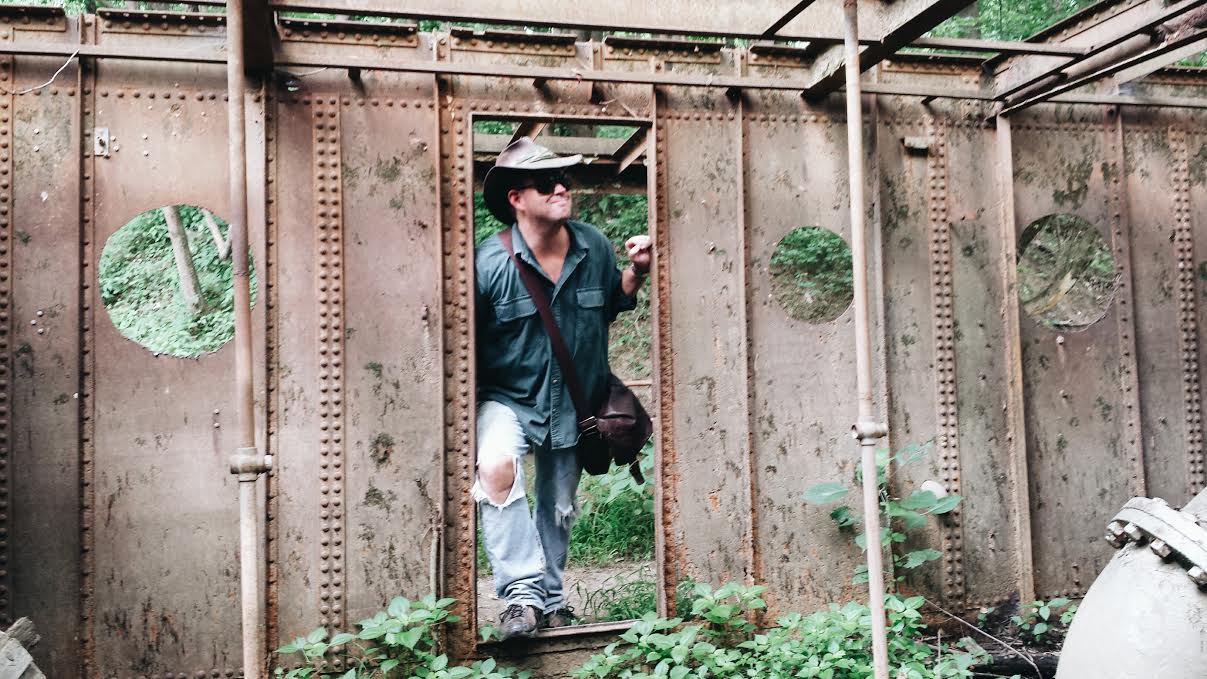
Ship2I have spent a lifetime climbing in and around human creations that once felt timeless and permanent in a historical context only to erode away into nothing glimpsed one last time by only a few curious eyes.  The process is actually remarkably fast.  I have seen towns die, homes vanish, and entire cultures philosophically collapse on themselves.  I have seen companies come and go, family dynasties raise and fall and the creations of mankind flourish then founder.  I have explored the empty carcasses of many old homes, cars, and cemeteries to study the static patterns of previous societies so to come to conclusions about the direction of our current one.  Many of my opinions about all manners of discussion were formulated in these explorations.  My mild obsessions with a giant race of men who once lived in Ohio, or the supernormal happenings in and around some of the darkest corners of our planet are rooted in observed fact and come from putting my hands and eyes on a flickering light from the past one last time before it leaves our eyes forever.  So before such a thing happened to a unique part of our history residing directly across from Lawrenceburg, Indiana nearly across from the Hollywood Casino, I had to go with my daughter to visit, and chronicle the mysterious “Ghost Ship” which is quickly fading into history.  See the video of our trip here:   

The ship really isn’t a ghost at all, but rather was a luxury yacht named the Celt and has a real life history that is nothing short of remarkable.  It was best known during World War II as The Phenakite, a training vessel designed to detect and destroy submarines.  So the story of how it ended up in a tributary of the Ohio River is a complex one that carries with it the winds of dreams contemplated by the many thousands which graced its decks.  From the bow of that ship enemies were destroyed, ruckus parties were conducted, beasts were tamed, musical careers were launched, and America celebrated the re-lighting of the Statue of Liberty by President Ronald Reagan.  Through all of its owners, the now known “Ghost Ship” all shared a sense of permanence where they believed that their lives, culture, and history were as steady as that ship.  They believed they could change its name but that the thing itself would always be there—but as the evidence of that old relic shows—nothing lasts unless it is maintained.  If things fall into disrepair they end and that goes for all things created by mankind including the culture of the countries they inhabit.

The Phenakite was built 1902 as the yacht Celt by Pusey and JonesWilmington, Delaware, for J. Rogers Maxwell, a railroad executive. It was launched on 12 April 1902.

Shortly after the United States entry in to the First World War, it was acquired by the U.S. Navy 3 July 1917. It was placed in service as USS Sachem (SP 192) on 19 August 1917 and used as a Coastal Patrol Yacht.[1] During its Navy service, it was loaned to inventor Thomas Edison who conducted government-funded experiments with it as a submarine killer.

After the end of World War I, the Sachem was returned to her owner, Manton B. Metcalf of New York, 10 February 1919. It was sold to Philadelphia banker Roland L. Taylor. It was resold in 1932 to Jacob “Jake” Martin who converted it into a fishing boat and adventure vessel.  For $2.00 Jake would take anybody anywhere they wanted to go in the Caribbean.

It was reacquired by the Navy on 17 February 1942 for $65,000 and converted for naval service at Robert Jacobs Inc., City Island, New York. It was commissioned as USS Phenakite (PYc-25), 1 July 1942 at Tompkinsville, New York and patrolled the waters off of the Florida Keys as a training vessel for sonar reading. It was decommissioned to undergo modifications and placed back in service 17 November 1944. It was used for testing sonar systems before being placed out of service on 2 October 1945 at Tompkinsville, and transferred to the Maritime Commission for disposal on 5 November 1945.[1]

The vessel was then returned to her previous owner, Mr. J. Martin of Brooklyn, NY and renamed Sachem on 29 December 1945. It was struck from the Naval Register 7 February 1946. It was subsequently resold to the Circle Line of New York City and renamed Sightseer, but was later renamed Circle Line V. It served as a tour boat until 1983. It appeared in Madonna‘s Papa Don’t Preach video in 1986.

It was purchased by Robert Miller in 1986.Ship 4

The Circle Line V was reportedly scrapped in 1984 but was found abandoned outside of Lawrenceburg, Indiana, on the Kentucky side of the Ohio River, where it has been since 1987.[1] It is a popular destination for kayak enthusiasts in the Cincinnati area and is commonly referred to as “The Ghost Ship”[2] [3]

In March 2014 it was the subject of a story on the Internet comedy news podcast Broken News Daily.  CLICK THE LINK to see a condensed visual history of the vessel.

http://en.wikipedia.org/wiki/USS_Phenakite

It is one thing to read about these kinds of things, it is quite another to put your hands on them.  When you see it with your own eyes, it is quickly determined how something can be lost to the slipping sand of an hourglass into the context of historical documentation.  History is often lost because that same hourglass of time measurement is turned upside down just to keep the sand moving leaving all the patterns of the previous measurement lost forever.  The Phenakite (Ghost Ship) is only 110 years old, but within a few years it will be gone only memorialized by articles like this one and a few fragmented documents.  This erosion of history is happening right in front of our faces and actually right near a resort complex that houses tens of thousands of people and moves millions of dollars of economic activity per year—but is invisible to the rest of the world.

The ironic story of The Phenakite is that it has had one of the most glorious pasts that a man-made creation can have, it has known celebrity, it has known two World Wars, it has been around and done it all and even with all that prestige, it is rotting away in plain sight little known to the rest of the world.  The same could be said of the Malden Island mysteries, my Giants of Ohio and their bones which sit as objects of curious speculation in private collections and museum back rooms not fitting in well with the fossil history of our known past.  The crystal pyramids sitting on the bottom of the Atlantic Ocean.  The knowledge that North America was actually settled by the Chinese during the Ming Dynasty and that most of what we think of as Native Americas were a result of these voyages which took place well before the Europeans had equal naval ability.  As magnificent as the yacht named Celt was in 1902 built for John Rogers Maxwell, Chairman of the Executive Committee of the Central Railroad of New Jersey, and President of the Atlas Portland Cement Company, it was only a flash in the mind of history which had been audaciously neglected by those same sands of time which vanish all too quickly by minds unable to behold the meaning of that history.   The yacht like its original owner who had been a director of many railroads and other companies, and an enthusiastic and widely known yachtsman died suddenly on December 10th 1910 at his home on 78 Eighth Avenue, Brooklyn, of cerebral apoplexy.  Even though the yacht would go on to embark on a century of further adventures it was the heart and will of John Rogers Maxwell that breathed the life of creation into the future “ghost ship,” which began to end the moment that creator died.Ship3

And this is the same story no matter what the topic—history is a poor caretaker of itself no matter how proud it may be of its accomplishments.  Without the efforts of a dreamer and producer, all the achievements accomplished in a lifetime vanish in less than an instant.  Without question Robert Miller was a man like Maxwell and had intentions of giving the old yacht new life but those goals fell short on the shores of the Ohio River.  The ship became a ghost of its former owner even during its heyday as the life which was breathed into it vanished just as the history which followed soon will as well.  This is the common thread that can be seen in virtually anything that is created—once that driving force is gone, the history of that object, culture, or living thing begins to end.  Once the drive of a producer leaves the life of anything—decline back into the realm of nothingness begins.  The force which drives history is not museums, academic scholarship, or text books—but the life of producers which advance the story for future generations so long as neglect does not enter into the equation.  For The Phenakite history stopped once it was dropped off in the tributary of the Ohio River by Miller who obviously had a change in his ability to preserve the craft.  But the process of that ghostly decline actually began the moment John Rogers Maxwell died in his home after a life lived well, and fully for The Phenakite and all its service to the nation, Thomas Edison, Madonna and Ronald Reagan’s Statue of Liberty lighting party in 1986 were all second-handers to the creation of a railroad tycoon.  Without him, none of the magnificent history centering on The Phenakite would have happened and because of him, there is at least a history to come to an end quietly and without much notice across from Lawrenceburg, Indiana.

In tomorrow’s article, I will cover in more detail the present owner, Robert Miller and explore what might be done to save this ship from being lost to history forever. Ship1

 For more on this topic see my article on Kerr City.  CLICK HERE. For further reading and discovery about the Cincinnati Ghost Ship see the links below:

  1. http://www.navsource.org/archives/12/1425.htm
  2. http://ohiokayak.blogspot.com/2012/11/a-trip-to-historic-lost-ghost-ship.html
  3. http://www.wcpo.com/entertainment/ship-lends-ghostly-history-to-paddlefest

Rich Hoffman   www.OVERMANWARRIOR.com