Thank Goodness for the Predator Poachers: The world needs more people like Alex Rosen

The December 2025 arrest of a Christ Hospital scheduler in Cincinnati, following a filmed confrontation by the citizen group Predator Poachers, has become a focal case for debating how modern communities should respond to the immense scale and evolving dynamics of child sexual exploitation online and offline. In the incident, local coverage documented that a 31‑year‑old employee, Benjamin Naylor, was charged with three counts of pandering sexually oriented material involving a minor and one count of illegal use of a minor in a nudity‑oriented performance after police intervened following a videotaped encounter outside a hospital facility; the hospital confirmed immediate termination and cooperation with law enforcement. 1 In companion reporting, Predator Poachers’ founder, Alex Rosen, described how his team tracked online activity, confronted Naylor at the workplace, elicited admissions on camera, and then contacted police; local court documents referenced the regional electronics investigations unit, underscoring the role of formal multi‑agency coordination once a citizen tip triggers official action. 23

The case illustrates the messy frontier where citizen “predator‑hunting” content intersects professional criminal investigations. On the one hand, watchdog groups can function as high‑visibility tip generators, producing leads that law enforcement may otherwise not receive as quickly; on the other hand, police departments have repeatedly warned that unsanctioned stings can create safety risks, contaminate evidentiary chains, and imperil prosecutions. This tension was evident in the 2025 Branson, Missouri episode, where Rosen himself was arrested during a restaurant confrontation and later received probation for a disturbance; police emphasized the primacy of trained investigators, lawful procedures, and prosecutable evidence, even while acknowledging that some private groups are dedicated to protecting victims. 45 There is nothing less safe than in letting predators get away with the crimes even if the professionals paid to do the job can’t get to the cases in time to save kids.  If not for people like Rosen, how many kids would have been saved because he and his organization do the work that the professionals don’t have time for?  The Cincinnati arrest thus points to a practical equilibrium: citizen content may catalyze attention and yield tips, but sustainable enforcement rests on institutional capacity, formal task forces, and prosecutorial standards that will withstand judicial scrutiny. 3  And that may not be the desired outcome, because based on my own grand jury experience on these matters, we don’t have time to wait for professional institutions to expand their capacity to the enormity of the problem.  We need more Rosens in the world, for sure.

To understand the enforcement backbone, it helps to map the architecture that operates primarily out of public view. The Internet Crimes Against Children (ICAC) Task Force Program—funded and coordinated by the Office of Juvenile Justice and Delinquency Prevention—supports 61 task forces and more than 5,000 federal, state, local, and Tribal agencies nationwide. In fiscal year 2024 alone, ICAC task forces helped conduct approximately 203,467 investigations, led to more than 12,600 arrests, and trained roughly 46,000 criminal justice professionals. 6 These numbers, staggering as they are, capture the organizational scale needed to process the torrent of digital evidence and to convert leads into lawful warrants, forensic examinations, and prosecutable cases. They also suggest why any model that relies only on citizen stings, rather than specialized units, will be outmatched by the complexity of technology‑facilitated offending.

Parallel infrastructure operates on the reporting side. The National Center for Missing & Exploited Children’s (NCMEC) CyberTipline received 20.5 million reports in 2024—adjusted to about 29.2 million distinct incident submissions once bundled events were de‑duplicated—and these figures remain deeply concerning given recent statutory expansions of mandatory reporting to cover online enticement and child sex trafficking. 7 Such volume escalations reflect how offenders adapt to encrypted platforms, decentralized networks, and rapidly advancing generative tools; they are precisely the kind of workload for which systematized triage, investigative handoffs, and specialized forensics are essential. Enforcement outputs, such as the Department of Justice’s Operation Restore Justice—an FBI‑led nationwide crackdown conducted over five days in May 2025 that resulted in 205 arrests and 115 rescues—show what concentrated, interagency campaigns can achieve when intelligence, victim services, and prosecutorial resources are aligned. 89

Sentencing data illuminate the gravity of production‑ and distribution‑related offenses and the judicial response. According to the U.S. Sentencing Commission’s FY 2024 Quick Facts, sexual‑abuse offenses have increased by 62.5% since FY 2020, with an average sentence of 221 months; production of child pornography cases averaged 273 months, and those involving mandatory minimum penalties averaged 305 months of imprisonment. 10 Beyond the raw years, these figures communicate policy priorities: that federal courts treat the creation and dissemination of child sexual abuse material (CSAM) as among the most severe crimes short of direct contact offenses. The scale, technology, and interstate elements common to such cases make them well-suited to federal prosecution, reinforcing why lasting outcomes depend on the rigor of official investigative processes rather than the drama of public confrontations.  But the problem remains: there are not enough jails to hold all these offenders, and their cost to society is enormous, given the prison terms provided.  And we aren’t coming close to catching them all, not by a long shot.  There aren’t enough law enforcement officers available to perform the task to match the enormity of the problem.

Still, enforcement statistics do not occur in a vacuum. The geography of victimization and offending has long been associated with socioeconomic conditions, a link that modern data reiterate and refine. Bureau of Justice Statistics analysis of the National Crime Victimization Survey (2008–2012) shows that individuals in poor households experienced more than double the rate of nonfatal violent victimization compared to those in high‑income households; firearm‑involved violence was also higher among the poor. 11 A foundational meta‑analysis by Hsieh and Pugh pooled 34 aggregate studies and found that 97% of the zero‑order correlations between violent crime and either poverty or income conditions were positive, with homicide and assault more closely associated than rape or robbery. At the same time, the precise effect sizes vary by covariates, the overall pattern confirms the persistence of the relationship. 12 Complementing that, Pratt and Cullen’s macro‑level meta‑analysis concluded that indicators of concentrated disadvantage (poverty, family disruption, heterogeneity) are among the strongest and most stable predictors of area‑level crime. At the same time, get‑tough variables have comparatively weak and inconsistent effects once structural conditions are considered. 13

The time‑series evidence adds nuance. A review of 17 studies by Rufrancos and colleagues indicates that property crime tends to increase with rising income variation, and specific violent crimes such as homicide and robbery display sensitivity to social standards over time; aggregated violent‑crime measures show inconsistencies likely driven by reporting differences, but the signal remains strongest for offense types with clearer opportunity structures. 14 Policy‑oriented synthesis by Brookings similarly argues that public safety and economic opportunity are intertwined across urban, suburban, and rural America, recommending investment in youth, family supports, and neighborhood revitalization alongside law enforcement. 15 Critics have cautioned against deterministic readings of poverty‑crime relationships by pointing to heterogeneity across demographic groups and cultures, yet the caution itself supports a more granular philosophy: crime does not rise because a single variable shifts but because a constellation of social and situational conditions permits opportunities and reduces guardianship. 16

Situational criminology offers a complementary lens. Routine Activity Theory (RAT), first articulated by Cohen and Felson, proposes that crime occurs when three elements converge in time and space: a motivated offender, a suitable target, and the absence of capable guardianship. In their seminal 1979 analysis, the authors linked postwar social change to increased dispersion of daily activities away from the home, thereby increasing opportunities (targets) while reducing guardianship, even as many socioeconomic indicators improved—a sociological paradox. 17 Contemporary crime‑science research emphasizes spatio‑temporal rhythms—hours of day, seasons, school days versus non‑school days—as crucial dimensions for understanding and preventing offenses, urging analysts to disaggregate crime by time and place to identify high‑risk windows where motivated offenders and unguarded targets are most likely to coincide. 18 Recent empirical work indicates that unstructured spare time, particularly out of home, is a robust predictor of adolescent offending—often rivaling or exceeding traditional predictors—while structured activities and effective place‑management reduce opportunities. 1920  I would add that substantial income paired with too much leisure time is a significant contributor to the problem and is why we find so many sexual perversion cases common among high-income earners with shorter worker hours per week. 

Against this secular framework, many communities also appeal to moral, religious, and cultural narratives to motivate vigilance and civic responsibility. The biblical tradition contains several motifs relevant to civic idleness and social decay without resorting to graphic description. Ezekiel’s diagnosis of Sodom faults the city for pride, excess of food, and prosperous ease, coupled with neglect of the poor—an image of complacent affluence that tracks closely with modern concerns about idle time, conspicuous consumption, and weakened neighborly care. 23 The wisdom literature warns of the slow ruin that flows from idleness: Proverbs exhorts the sluggard to observe the ant who prepares in season, while Ecclesiastes observes that negligence leads to a sagging roof and leaking house; in the New Testament, Paul admonishes early Christian communities not to enable chronic idleness, insisting that others should not subsidize those unwilling to work. 242526

Situating the Cincinnati case within this dual framework—professional enforcement and civic guardianship—points toward practical synthesis. First, jurisdictions should continue strengthening the official channels for reporting and triage, including the CyberTipline and ICAC Task Forces, since the sheer torrent of suspected exploitation demands coordinated investigative capacity and rigorous evidentiary standards. 67 The episodic spectacle of citizen stings may momentarily galvanize public outrage, but without chain‑of‑custody integrity, digital forensics, and lawful interviews, outcomes may falter in court; even advocates of citizen engagement concede that lawful interviews and case construction are non‑negotiable. 4 Second, prosecutors and judges should continue deploying sentence lengths proportionate to the harm involved in production and distribution, endorsing the pattern seen in federal data as a deterrent and as an expression of seriousness aligned with victim rights. 10 Third, city governments and school systems can translate situational theory into design and schedule: expand structured evening and weekend programming for adolescents, target guardianship to high‑risk time blocks, and apply place‑management strategies to venues where exposure and anonymity co‑exist. 18 Fourth, civic leaders should recognize the empirical linkage between disadvantage and victimization without succumbing to fatalism or simplistic causation; invest in youth, family supports, and neighborhood revitalization as partners to enforcement, since both reduced opportunity and strengthened social ties weaken the conditions that exploitation preys upon. 1513

None of this precludes a role for citizen vigilance, but that role must be channeled wisely. The Cincinnati episode demonstrates how citizen video can surface a lead and prompt police response; yet it equally explains why the decisive act—the arrest, charges, and eventual adjudication—belongs to sworn officers and courts. 13 As police advisories note, confrontations can escalate unpredictably, bystanders may be endangered, and suspects may be alerted prematurely; even when the target is arrested, procedural missteps can weaken a case. 4 A safer ethic encourages watchers to collect publicly accessible information, preserve it carefully, and deliver it to authorities, then allow specialized units to conduct interviews, obtain warrants, and secure devices for forensic examination. Such collaboration honors both the community’s desire to protect children and the criminal justice system’s duty to prosecute with integrity.  But even with those legal statements to consider in prosecutions of cases, there is nothing more dangerous than inaction.

The broader crime environment provides context for urgency and hope. Multi‑city analyses indicate violent crime declined across many U.S. cities through mid‑2025, with homicides down about 17% compared to the first half of 2024 in the Council on Criminal Justice sample, and key property offenses also falling; trends are not uniform, and some places remain above 2019 baselines, but the direction suggests that sustained policing and community strategies can move the needle. 2122 The implication for exploitation cases is twofold: first, neither victory nor defeat is foregone, and second, the most effective strategies weave together many threads—rapid interagency action, prevention programs, civic vigilance, and economic opportunity. 15

If one reads Ezekiel’s admonition against prosperous ease alongside Routine Activity Theory’s emphasis on guardianship, a striking consonance emerges. The ancient critique is not a rejection of prosperity or leisure per se, but of complacency that neglects the vulnerable and allows the roof to sag. 2325 The modern theory similarly warns that unstructured spare time and poorly managed spaces constitute opportunity structures that invite harm. 1719 In concrete terms, this means that while we rightly prioritize arresting and sentencing those who produce, trade, or consume CSAM, we also need to rebuild the social and temporal architecture of guardianship: parents, mentors, teachers, coaches, community workers, and place‑managers who ensure that the hours and places where children move are watched, equipped, and purpose‑filled. The Cincinnati case, unsettling as it is, can therefore be read as a summons to strengthen both the formal machinery of justice and the informal networks of neighborly care.

Turning citizen outrage into lasting protection requires reframing the debate. The drama of a cell‑phone confrontation is not the whole of justice, just the start; the hard work of forensic analysis, interagency coordination, and courtroom proof is. 8 The moral energy that motivates citizens is not wasted; it is most helpful when directed through lawful channels that enable the ICAC network and prosecutors to do what they are designed to do at scale. 6 The correlations between disadvantage and victimization are not destiny; they are instructions to policymakers to counteract concentrated risk through economic opportunity and structured guardianship, especially at specific times and places where routine activities and reduced supervision coincide. 1318 And the theological warnings against idleness are not antiquated; they are invitations to cultivate diligence, hospitality, and care for people experiencing poverty, which, in civic practice, look like programming, mentorship, and watchfulness over those who are most exposed. 2426 The lessons reach beyond one hospital’s perimeter and one city’s court docket. They teach that when a community aligns citizen vigilance with professionalized enforcement, when it pairs strategy against opportunity structures with investment in families and neighborhoods, and when it roots its energy in a moral vision that rejects complacency, exploitation becomes harder to commit and easier to prosecute. The path forward is not glamorous, but it is clear: keep the tips flowing to the CyberTipline and local task forces; sustain interagency actions like Operation Restore Justice; maintain sentencing severity for production and distribution; expand structured leisure and guardianship; and attend to the economic and cultural conditions that alter daily routines.  Socialism makes more poor people for instance.  Capitalism builds more wealth, which gives society as a whole more upward mobility and expectations of good conduct. 78101915 If Cincinnati’s unsettling episode is to yield anything more than outrage, it should be this disciplined integration—one that honors both the call to protect children and the rule of law that ultimately secures them.  But ultimately, if it hadn’t been for the Predator Poachers extra work, this child predator case in Cincinnati would have gone unpunished. 13

Footnotes:

1. Cincinnati Enquirer: Predator Poachers says sting led to arrest of Christ Hospital worker (Dec. 9, 2025). https://www.cincinnati.com/story/news/crime/2025/12/09/predator-poachers-says-sting-led-to-arrest-of-christ-hospital-worker/87686900007/

2. WCPO: Court docs—Cincinnati man charged after child sexual abuse material allegedly found on phone (Dec. 9, 2025). https://www.wcpo.com/news/local-news/hamilton-county/cincinnati/court-docs-cincinnati-man-charged-after-child-sexual-abuse-material-allegedly-found-on-phone

3. WCPO: National predator-catching group says it helped lead police to Cincinnati man arrested on child porn charges (Dec. 10–11, 2025). https://www.wcpo.com/news/crime/national-predator-catching-group-says-it-helped-lead-police-to-cincinnati-man-arrested-on-child-porn-charges

4. Police1 / Merced Sun-Star: Online vigilante group leader arrested; Branson PD statement on risks (Mar. 30, 2025). https://www.police1.com/arrests-sentencing/articles/online-vigilante-group-leader-arrested-trying-to-take-down-alleged-pedophile-mo-officers-say-XcWQJz8z0qXGTS3f/

5. OzarksFirst: ‘Predator Poachers’ leader sentenced for Branson disturbance (Aug. 26, 2025). https://www.ozarksfirst.com/news/predator-poachers-branson-court/

6. OJJDP ICAC Task Force Program (FY 2024 overview, training, and investigations). https://ojjdp.ojp.gov/programs/internet-crimes-against-children-task-force-program

7. NCMEC CyberTipline Data (2024 report). https://www.missingkids.org/gethelpnow/cybertipline/cybertiplinedata

8. DOJ Press Release: Operation Restore Justice (May 7, 2025). https://www.justice.gov/opa/pr/justice-department-announces-results-operation-restore-justice-205-child-sex-abuse-offenders

9. USA TODAY: Over 200 alleged child sex offenders arrested nationwide after 5-day FBI crackdown (May 7–8, 2025). https://www.usatoday.com/story/news/nation/2025/05/07/child-sex-offenders-arrests-fbi/83504362007/

10. U.S. Sentencing Commission: FY24 Quick Facts—Sexual Abuse Offenses. https://www.ussc.gov/sites/default/files/pdf/research-and-publications/quick-facts/Sexual_Abuse_FY24.pdf

11. BJS Special Report: Household Poverty and Nonfatal Violent Victimization, 2008–2012 (Nov. 2014). https://bjs.ojp.gov/content/pub/pdf/hpnvv0812.pdf

12. Hsieh & Pugh (1993): Poverty, income inequality, and violent crime—meta-analysis (Criminal Justice Review). https://psycnet.apa.org/record/1994-33910-001

13. Pratt & Cullen (2005): Assessing macro-level predictors and theories of crime—meta-analysis (Crime and Justice). https://www.jstor.org/stable/3488363

14. Rufrancos et al. (2013): Income Inequality and Crime—time-series review. https://rufrancos.org/1.pdf

15. Brookings Metro (Mar. 11, 2025): The path to public safety requires economic opportunity. https://www.brookings.edu/articles/the-path-to-public-safety-requires-economic-opportunity/

16. City Journal (Feb. 21, 2025): A critique of poverty-crime explanations. https://www.city-journal.org/article/brookings-institution-crime-report-poverty-race-violence

17. Cohen & Felson (1979): Social Change and Crime Rate Trends (American Sociological Review). https://www.jstor.org/stable/2094589

18. Crime Science editorial (2015): Crime patterns in time and space—Newton & Felson. https://link.springer.com/article/10.1186/s40163-015-0025-6

19. Buil-Gil (2025): The Structure of Unstructured Time and Crime (British Journal of Criminology). https://academic.oup.com/bjc/advance-article/doi/10.1093/bjc/azaf035/8128661

20. CrimRxiv preprint (2025): Unstructured Spare Time as an International Predictor of Adolescent Crime. https://www.crimrxiv.com/pub/13s4t4td

21. Council on Criminal Justice: Crime Trends in U.S. Cities—Mid-Year 2025 update. https://counciloncj.org/crime-trends-in-u-s-cities-mid-year-2025-update/

22. Stateline (July 24, 2025): Violent crime continues to drop across U.S. cities (summary of CCJ). https://stateline.org/2025/07/24/violent-crime-continues-to-drop-across-us-cities-report-shows/

23. Ezekiel 16:49 (OpenBible topical). https://www.openbible.info/topics/idleness

24. Proverbs 6:6–11 (ESV—BibleGateway). https://www.biblegateway.com/passage/?search=Proverbs%206:6-11&version=ESV

25. Ecclesiastes 10:18 (BibleHub). https://biblehub.com/ecclesiastes/10-18.htm 26. 2 Thessalonians 3:10 (ESV—BibleGateway). https://www.biblegateway.com/passage/?search=2%20Thessalonians%203:10&version

Rich Hoffman
Click Here to Protect Yourself with Second Call Defense https://www.secondcalldefense.org/?affiliate=20707
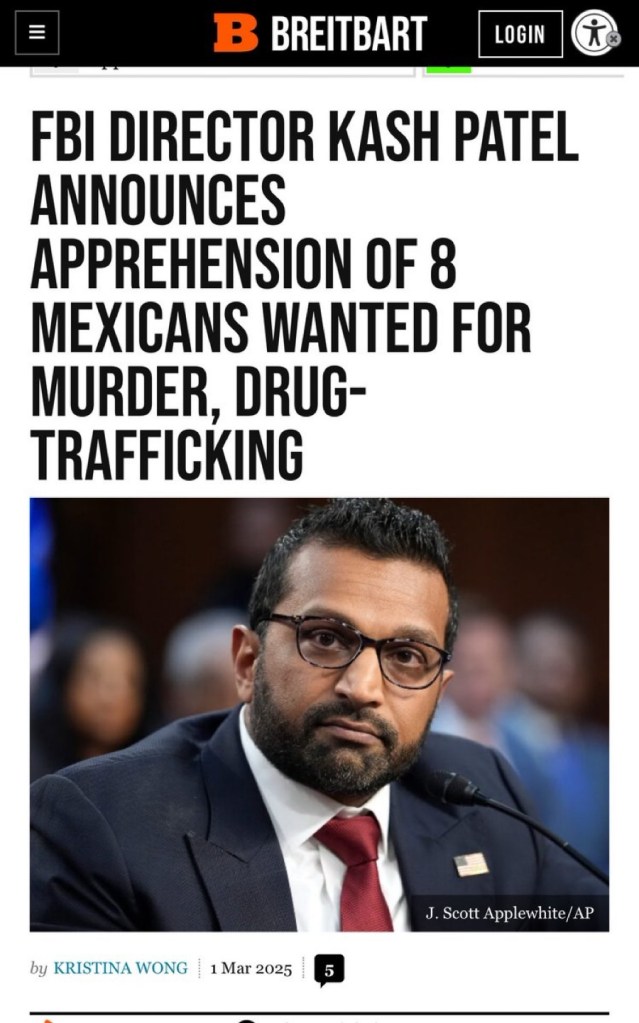
I Like the FBI A Lot More Today: With Kash Patel in charge, we’re a lot better off

This is another one of those spike-the-football moments that I usually don’t do.  But when it comes to the FBI, they deserve it.  I have not been a big supporter of them all this time, so they are lucky to have Kash Patel as their director.  The FBI has too often abused its power and shown that it cannot be trusted, and I thought the only way to deal with it was to let it go, dismiss the entire department, and start over with something else.  After they were caught doing this multiple times, having someone like Kash Patel run them was the only way to keep them around.  It wasn’t that long ago that I did a piece on CNN that dealt with James Comey at the height of his career. Once President Trump fired him a few months into his first administration, I accurately described the former FBI Director as a bad person.  I’ve done a lot of media over the years, but that CNN spot is one that I am proud of because of the circumstances under which it occurred.  Trump had just fired Comey, I think it was May of 2017, just a few months into the first term of President Trump, for mishandling the illegal email case of Hillary Clinton.  But deeper than that, Comey was leading a series of coups against Trump, especially regarding the Russia hoax that would become the central issue of his entire first presidency.  So CNN came to Cincinnati to talk to hard-core Trump supporters about whether or not they still trusted Trump after firing the Boy Scout image of James Comey.  The bet at the time was that people would turn on Trump because they liked Comey so much.  But the CNN broadcast ran into a buzz saw in Butler County politics for Anderson Cooper’s show live on the air when the camera and question was on me, did I think that Comey lied about what he had done and I had essentially told them yes, using a spy novelist metaphor.  Comey was more fiction than fact. 

After the cameras were off and we were all in the parking lot where the interview had been shot, which was a sports bar that was very popular in Fairfield, Ohio, I had some hard talks with the producers that they found astonishing.  These CNN producers were friendly people; we had gotten to know them well because before that, they had given us a kind of party where we watched the James Comey hearings together before the interview later that night, which they thought was going to be a slam dunk against Trump’s corruption.  Over that duration, they had taken a particular liking to me and wanted to know what I thought about many things.  As I usually do, I was more than happy to give them plenty of answers.  So we were talking after the interview, and they were stunned by what I had said, which is that I thought Comey lied in his testimony and was an open activist against Trump in trying to perform a coup against him.  Also at that time was the thought that the Russian dossier was accurate and that Trump had been caught with prostitutes allowing them to urinate on him while staying in Russia on business.  I told them that no way that story was true, which turned out to be accurate, because Trump would never allow himself to be urinated on by dirty prostitutes.  He’s way too clean for something like that.

And this was before we learned what we did about Lisa Page and Peter Strzok, the two senior FBI employees working directly for Comey who had an illicit affair and comforted each other with a series of text messages assuring the young woman that the FBI had the power to stop Trump, no matter what.  So what I was saying to these CNN producers in this parking lot was mind-blowing stuff for them.  They had complete trust in our American institutions and thought it was impossible for a career appointment like Comey, leading one of our most important institutions, to show himself untrustworthy.  They couldn’t understand it but liked me and thought I said many brilliant things.  So, they couldn’t understand how I could feel the things I did about the FBI.  Well, I was right about everything, as I usually am.  And everyone learned some hard lessons.  But the important thing was that I was right about it when it was very unpopular to suggest such a thing.  We are in a different world now, 8 years later.  And I would say that I certainly did my part to get that truth out and to start turning some of these noes into yeses regarding the issue of trusting Trump.  We had to go through some actual cleansing, and ultimately, it was good that we’ve now had Trump for eight years and are going for four more, essentially.  Otherwise, the Director of the FBI would be a much more conventional pick.  However, only someone like Kash Patel could reform the FBI as it has been needed for decades.  Trump appointed Christopher Wray to replace Comey, but he wasn’t much better.  And he would turn out to lead the FBI to further try to destroy Trump after he left office in raiding his home at Mar-a-Lago and taking the classified documents that Trump had kept for himself after his first term, which he had every right in the world to do. 

One of the first things that President Trump did upon winning the White House for the third time was to get back the documents that were taken from him in the Mar-a-Lago raid of his home in 2022.  From the time that I gave that CNN interview, to the time that the boxes taken from Trump were restored to him just a few days ago, we saw enough out of the FBI to see that they had become a fourth branch of government that had drifted away from voter oversight and had become highly corrupt and power hungry.  And the only way to save them was to put Kash Patel in charge so that he could reform them completely.  I had thought they were beyond reform, but even I like the FBI now that Kash Patel is in charge and Pam Bondi is running the Justice Department.  I have never been an anti-government person.  But I expect my government to be run by good people, and institutional preservation is not warranted when good people are hard, if not impossible, to find.  So, for the FBI’s sake, they are lucky that Trump won.  They get a chance to live again under Kash Patel.  And with him in charge, I like the FBI much more than I did before Kash was sworn in.  Now that he has been sworn in, I can get behind the FBI in ways I haven’t in over four decades.  But the lesson here is that you should listen when I tell you something, even if it sounds pretty wild and unbelievable.  And if you do, you’ll find that life is a lot easier for you, no matter what it is.  Lessons learned is wisdom gained.

Rich Hoffman

Click Here to Protect Yourself with Second Call Defense https://www.secondcalldefense.org/?affiliate=20707

The Trouble with a Police State: A “swatting” strategy designed to test the fences

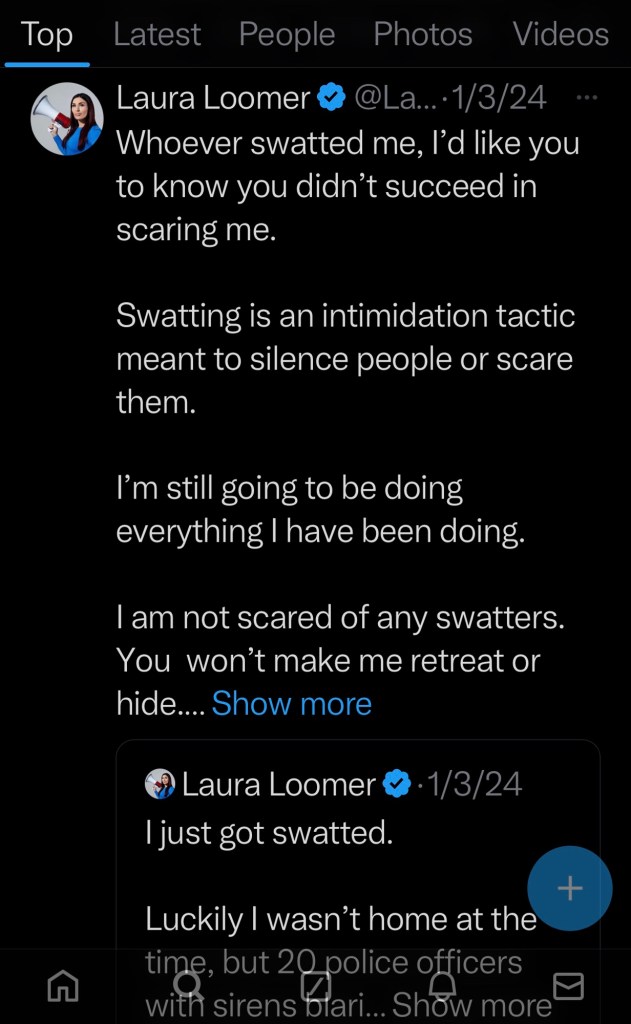
Over the last few years, there have been several times that I thought it was time for a very unpleasant experience involving the police. This started around the time of the lockdowns in Ohio, where I was one of the only people still behaving normally as it looked like road checkpoints might be a genuine concern to keep people off the roads and complying with a corrupt governor’s insane mandates. I lived my life mostly normal generally during the Covid lockdowns, and for a few weeks, it wasn’t clear if, at any moment, there might be some shootout with corrupt forces trying to impose on society a direct violation of the Bill of Rights. I kept playing the mistakes made by the FBI at Ruby Ridge and Waco through my head and considered how I might approach that problem differently. And probably because of the region and the type of people in it, that checkpoint problem never happened, and everyone eventually lived happily ever after. But those same concerns returned on Christmas Day this year as reports of swatting were being reported everywhere, where someone calls the police against a political target and reports that person as being dangerous. It has happened to Steve Bannon on the Warroom several times, Marjorie Taylor Green, and Laura Loomer, and on Christmas morning, it looked like it was happening to me. As my children were coming over to have Christmas at my house, two police vehicles sectioned off my road in front of my house with their noses of their squad cars blocking the road, pointing into traffic, and it looked like that was going to be it. So, figuring that to be the case, since I am on several “political enemy” lists, I did what I did. As it turned out, a few minutes later, they were leaving, which I was not unhappy about. They indicated they were looking for a place to hang out because it was Christmas Day, and they had nowhere else to go. Well, hanging out in front of my house wasn’t a good idea. So we parted ways for that day.

As we get further into 2024, I think this will become a much more prevalent problem as very desperate political characters turn to the police, who serve whatever administration is in power, and use this swatting strategy to harass political opponents.  There have been increased incidents between both Republicans and Democrats of this “swatting” strategy, and they have certainly become more aggressive since the days of Covid, where the apparent problems of a massive police state showed us just how dangerous it is to have too many police on the payroll reporting to corrupt politicians not following the Constitution and honoring our American Bill of Rights.  The Bill of Rights explicitly limits what a government can and cannot do, and for me, there is no compromise, especially regarding the Third, Fourth and Fifth Amendments.  I did a radio show many years ago over this topic on WLW with Darryl Parks about the dangers of the newly written NDAA that Congress passed back then and how the military could be weaponized against the people who were supposed to control it.  I have a pretty good relationship with my local law enforcement.  I will always say that we need law enforcement.  But I am always weary of their power and the tendency to abuse it.  I call it the “mall cop” syndrome.  Even the best-intentioned people can turn into maniacs once they gain the ability to carry a gun and kick in someone’s door for the “safety of society.”  This policy idea that your Bill of Rights is suspended until they determine that you are not a threat is completely wrong as far as I am concerned.  And when someone “swats” you, the assumption is that the police then have a constitutional breaking mandate to violate your rights until they prove to the contrary, which is at the heart of the problem.   

I would go even further and discuss this as a strategy of sheer evil that steps beyond the veil of conscious reality, which is why I have been writing a lot lately about the hostility of the spirit world and those occult practices that seek an alliance with help from the quantum realm.  My interest is in what makes people do bad things and why they think the things they do, especially under a crisis management scenario.  I took the incident on Christmas Day at my house as the raptors testing the fences to see what they could and couldn’t get away with.  But what made them want to try?  Those are the things I spend a lot of time thinking about.  Behind that concern is this push to continuously expand the reach of government with more police with prominent stories that we hear about all the time, where police brutality causes race riots, and it forces society to pick one side or the other.  The Democrats come up with a “defund the police” strategy to decrease police killings of innocent people.  Republicans want to fund more police and “back the blue.”  But the real menace is the political characters, both spiritual and terrestrial, who want to play these forces against each other with the result of getting people screaming for more police protection and submission of their Bill of Rights over to a police state of massive government expansion so that when they do come and arrest you in the middle of the night by kicking down your door and you suddenly have to “prove you are not guilty” before they let you go, you won’t expect anything else.  You’ll want police brutality so that you can be “safe” when the real bad guys are out there causing the trouble to begin with.

This isn’t, after all, a conspiracy strategy; we have seen lawfare applied to President Trump, a former president, so the blueprint is out.  Big governments run by corrupt people expect that they can raid your home, go through your wife’s underwear drawer, and push your face into the ground with your hands behind your back whenever they decide to.  They might apologize later, but they genuinely do intend to embarrass you in front of your friends and neighbors to show that they have domination over you.  They don’t care about the arrest; they care about letting people see how much power they have so that you’ll be ready to submit if they decide to use it.  And when they want to go after political targets, one way to diminish them in the eyes of their followers is to show the world how little power they have.  This is why conservatives have been getting swatted a lot lately.  And I think it will continue to increase as the insanity of the communist left realizes they are losing power and that crimes they have been involved in will now have to be paid for.  While they can, they plan to abuse their power for all its worth.  So we should expect to deal with these things accordingly.  No matter what party you are affiliated with, this is a problem for everyone because it is a strategy of the Deep State that has no respect for the American Constitution, and they intend to cause trouble that we beg for more police so that the police can then become an extension of government power who then give them the right and ability to violate your rights with just a phone call and to take out political enemies so that the state can grow and gain public power as a net result.  We saw during COVID-19 that this is a real problem; the bad guys were testing out what they could and could not get away with regarding massive abuses of authority.  And since then, this swatting strategy has become much more frequent.  And on Christmas Day of 2023, I thought my knowledge of the Constitution would be tested.  Which everyone knows there is no compromise on.  We live in that world, and I advise everyone not to take the bait.  Keep government as minimal as possible, including the amount of local police you have.  Because with just a phone call, they can indeed become your enemy at a moment’s notice.

Rich Hoffman

Click Here to Protect Yourself with Second Call Defense https://www.secondcalldefense.org/?affiliate=20707
Only Idiots Follow Orders: There is no excuse for the abuse of authority by the FBI and other policing agencies

Some of the worst crimes in all of human history have come from people just following orders. Defying orders is often the right thing to do because a corrupt person can’t impose behavioral applications on a good person. Instead, a weak person accepts the decisions of a bad person to commit vast crimes, which has been the history of much of the human race. To justify non-thinking behavior, people say, “but I was just following orders.”  We have been taught all our lives to follow directions. We first learn it from our parents. Then we learn it in our schools. We are told what to do in our religions, politics, and social circles. So, of course, when a weak person is told to do some terrible thing under orders, our default mode is to obey. For so many people, their desire to obey authority is their first and primary concern, to be a nice, compliant human being. Because we have been told all our lives that doing what we are told is good. Not following orders is bad. We never question the validity of the person giving the orders, only that they were followed to the letter. And under such a guise, so much crime has been committed against so many people over the entire span of the human race. And vast evil has been spread to every corner of the earth. 

That is why there is so much anger at the FBI for President Trump’s Florida home break-in. If they were filled with good people, the FBI would have defied the orders and not conducted the break-in. It was not honorable for them to follow the orders of the Biden White House and his Department of Justice for the political witch-hunt that it was. That the 30 FBI officers who did conduct the raid considered their orders more important than actually following the law says everything. It does not give them a free pass for their behavior. For the idiot that follows corrupt orders, they then become just as corrupt. If bad people take over your government, who is to stop them from controlling all the levers of power if compliance with orders is more important than following the law? Defiance is mandated when corruption speaks, and the authority figures who demand injustice for the morality of following orders are evil and must be defeated with rebellion. Yes, people have a right to be upset with the FBI in the wake of the Trump raid and the abuse of Peter Navarro, Roger Stone, Paul Manafort, Steve Bannon, and many others who the FBI and other police agencies have unjustly attacked by a government that has drifted into corruption. It is not the good cop who follows the orders of bad politicians who deserves understanding. In defiance of corrupt orders, the human race should be defined. Not by the quality of compliance but by the standard of efficacy that the individual upholds. 

The purpose of being an intelligent human being is to use the freedom of intellect to make proper decisions. Leaders bring people into following them out of showing the path to self-preservation, not sacrifice to a Liberal World Order. That is what the nature of orders requires: a thoughtless commitment to organizational structure. Once evil penetrates that structure, a commitment to evil is unleashed for all to suffer. And from there, evil rules the day to the misery of everyone. And it only takes one bad person in the chain of command to perpetrate such evils. And just because law enforcement wears the blue uniform and carries the star of law and order on their breast pocket, it doesn’t mean they stand for truth and justice. It means they follow orders and expect their entire existence to base their moral quandaries on compliance with higher authorities regardless of whether or not those higher authorities work for good or evil. Definitions of evil are not relevant to such systems of authority, only compliance to the highest established authority that is present to give the orders. So in that regard, the FBI and CIA, and other three lettered agencies that conduct government business and commit major infractions on innocent people every day, are just as bad as those at the top who have been captured by the evils of politics in the Biden administration, or Merrick Garland who is still upset that he’s not a lifelong Supreme Court judge appointed under Obama instead of the Trump pick who knocked him out of contention.   That is really the root of all politics that some people like Biden and Garland will do anything to capture high office positions because they believe that if they acquire them that they will then be able to tell vast bureaucracies what to do because they know they will follow orders, regardless of if the orders are good or evil. When the FBI raided Trump’s home and went through the personal belongings of Melania Trump, the agents knew it was evil, yet they did it anyway. Then after, when they wanted the country to forgive them, they said, “but we were only following orders.” 

Following orders blindly and without question is not moral or good. Only the person who pushes back against immoral orders can be considered to be a good person. We are thoughtful people for a reason, not mindless dogs or horses that can be ridden anywhere by anybody at the whim of a fool. We were designed to rebel; it’s the basic nature of a human being. That doesn’t mean that people won’t follow a leader. But what it means is that the best leaders know how to get people to follow them out of the self-interest of the participants rather than the mindless obedience of a cog in the wheels of life. It is not good to allow law enforcement under orders of a corrupt government to allow them to accost you and your belongings and embarrass you to the public, which is clearly what the FBI was doing to Peter Navarro and Steve Bannon, and the attack on Trump was to show dominance and authority over the former President. So how can you tell if the government giving orders is good? Well, if people find they can find advantages through mutual morality for self-preservation and the best interests of those involved are the most obvious. When people know that a leader knows what they are talking about, they will be willing to get advice on the best strategy. But blind compliance to an evil intention does not give soldiers and law enforcement a free pass to the golden gates of morality without question. It doesn’t even take them to the door. There is no path for the ruthless dictator and their followers to gain morality through blind compliance, which is what is expected. And why the FBI finds themselves in a public relations nightmare on a basic concept that they perhaps never contemplated, that people would hold them accountable for their actual actions, not just in their ability to follow orders, which they all thought was all that mattered. In the world of truly free people, orders and compliance are just chains to stupidity, the same stupidity that has followed every act of evil since the beginning of time.

Rich Hoffman

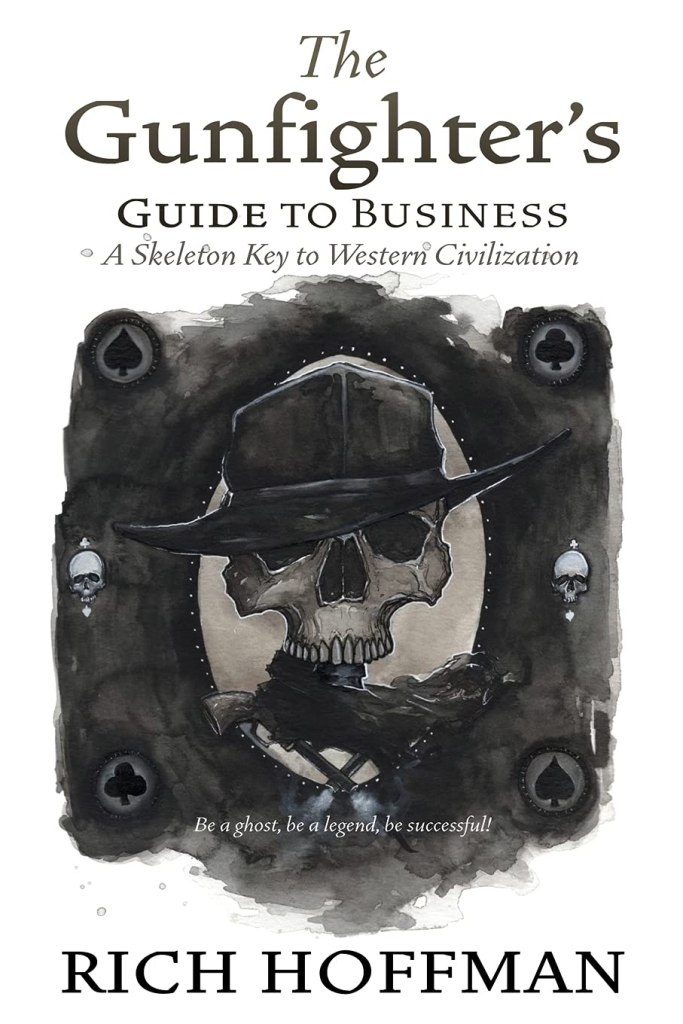
Click to buy The Gunfighter’s Guide to Business

Thomas Hall Wins the 46th Ohio Representative Seat: Sheriff Jones has no clothes

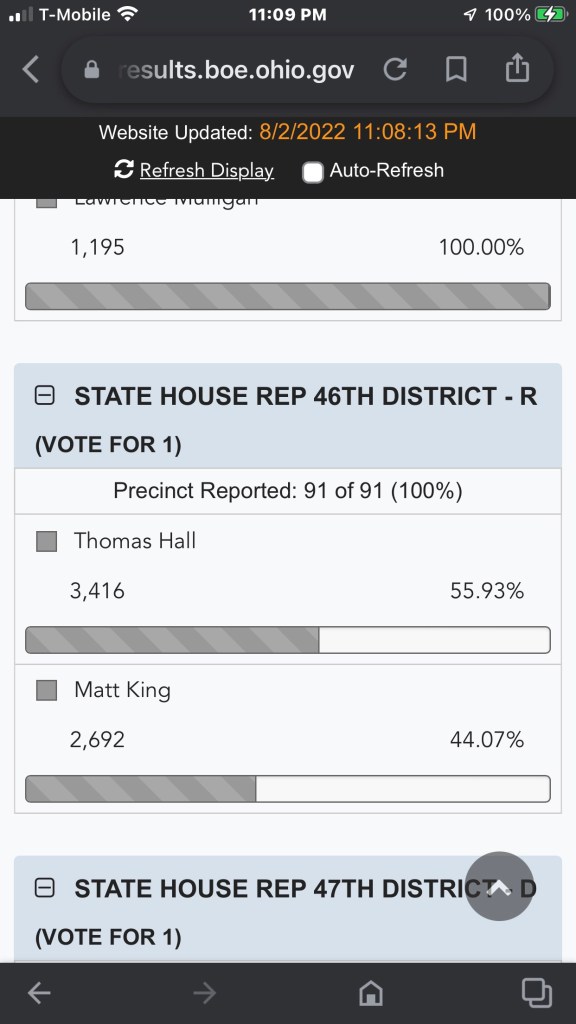
I don’t think I’ve ever seen a political candidate who deserved election or re-election more than Thomas Hall did in a very tough year where districts were redrawn at the last minute. There was more internal party opposition against an opponent than what he not only survived in an August 2022 primary but excelled. In the end, Thomas Hall beat his rival, Matt King, by almost 12%, although with the addition of Liberty Township to the new 46th district, it looked like the race might tighten up. By the time the smoke cleared, it was an easy win for Thomas Hall despite the opposition. Part of that was that he has had an excellent record during his first term. But the rest of it was that he just worked so hard to win, personally knocking on over 6000 doors and meeting voters face to face. And many members of the Butler County Republican Party, led by Sheriff Jones, threw everything they had at him, including the kitchen sink and all the plumbing, to defeat him. But it didn’t make a dent in Thomas, which didn’t surprise me in the least. I had called the race over eight months ago and given my personal endorsement. And as history shows, when I endorse someone, they tend to win. Not so much for anything I do, but for the quality of people, the candidates tend to be and for knowing the trends in politics. Nobody was going to outwork Thomas Hall, and as I have come to know him, he’s a good, sincere person to his very core. Nobody would beat Thomas Hall as long as he let voters know who he was, which he did, walking neighborhoods for many weeks now, shaking hands and talking to people instead of just sending out mailers, robocalls, and hit pieces on Facebook. Thomas was well funded and did all the usual political stuff, which I mentioned. But in addition to that, his campaign put in many thousands of hours of labor into direct communication with real people cutting out all the traditional media from hijacking the process. And for voters, they have come to realize they are lucky to have someone like Thomas to vote for. 

The sad part of this story, as positive as it has been, was the tragic fall of Sheriff Jones, who made it his personal vendetta to destroy Thomas Hall in every way, shape, and form. For several months now, I have felt sorry for Sheriff Jones. I see what he is going through now in many of the competitive shooting events that I do throughout the year. It’s tough to be the best at something, then suddenly, some young kid who can do it better, faster, and more often than you comes along, and it hurts. I’ve seen that kind of jealousy destroy many people, and many never recover from it. Thomas Hall wasn’t willing to kiss the ring of one of Butler County’s kingmakers in the Republican Party. Jones obviously took it personally and decided to primary Hall for a second term in the Ohio legislature as a Representative. I watched over much of the fall of 2021 as many fellow Republicans were unified and would attend events together in great camaraderie, to suddenly being enemies with one another. That’s about when Sheriff Jones went on WLW radio and went out of his way to embarrass Thomas Hall because the Sheriff didn’t like his voting record. So, he wanted to show himself as the kingmaker in Butler County and put his aggressive efforts behind Matt King to primary out of office Thomas Hall. Suddenly, many of those same Republicans weren’t getting together anymore, and by the spring of 2022, the sides were split. Most Republicans who wanted to maintain a relationship with Sheriff Jones had turned against Thomas, betting that his political career was over because Sheriff Jones had decided it was. 

I’ve known Sheriff Jones for a long time. I have liked him most in the early days of the Tea Party movement, then again during the first Trump term. To his credit, he was one of the first area Republicans to join behind Trump in 2016. But I remind people often that Trump used to be a Democrat. So did Kari Lake, for that matter. Sheriff Jones, to me, has shown himself to be a big government Democrat who dresses as a 50s-style cowboy sheriff. I like the look. But his actions are much more Democrat than conservative. We had a mutual friend in David Kern, so we have tolerated each other the way relatives do at Thanksgiving Dinner. Sometimes we got along, sometimes not so much. I’ve always liked what he brought to the “Republican” brand as an image. But have been embarrassed by him often as a public official. I understand that he’s never done anything but public life. So it’s been a relationship I’ve been willing to take the good with the bad. That holds until I see him start abusing his power as he clearly did with Thomas Hall. Then anything good Sheriff Jones had done all these years suddenly gets tossed out the window as he does the very Democrat thing, abusing his authority to exert power over others. He went way out of his way to make an example out of Thomas Hall, and many other Republicans followed after him. 

In the end, the good guys won. Thomas won due to his great reputation and his very hard work. He didn’t need a party endorsement, even though he should have had it as a good incumbent. Nobody wanted to cross Sheriff Jones and feared what their own political futures might become if they did. So, things got very ugly during the campaign. Nobody would have thought poorly of Thomas Hall if he had caved under pressure. I always thought he was the clear winner, and I would tell him that. I knew if people could get to know Thomas the way I had, that they’d easily vote for him no matter what Sheriff Jones said. I also knew that Sheriff Jones didn’t have the political capital that he thought he had. Outside of some Lakota school board members, some reporters at Fox 19, and some thankful tax increase moms in the neighborhoods around his house in Liberty Township, a lot of people don’t like Sheriff Jones because they have come to know him as a bully. And so long as Jones has stayed in that bubble, he hasn’t had to face the truth about how people really feel about him when his back was turned. I have often thought some of those feelings were unfair. I always thought Sheriff Jones meant well, looking at him through the eyes of someone like the late Liberty Township trustee, David Kern. But after what Jones did to Thomas Hall during this election cycle and other Republicans who dared to support him, I could see why so many people would not like the Sheriff. So, I knew when it came time to vote; people would pick Thomas Hall. And, of course, they did. After all the money that was spent against Hall by the Sheriff Jones-led Matt King challenge, it’s evident that many of those characters were stuck in the past and had not learned the lessons of recent political trends. You couldn’t buy elections anymore with ads in the paper, simple yard signs, or robocalls with the Sheriff talking endorsements. I had many tens of thousands of hits on this site over the last several months from people looking for more information on Thomas. And what they found was the truth, the truth better than paid ads and sheriff endorsements can give. People were able to see Thomas Hall for the excellent person that he was. And that’s why he won and will continue to well into the future. 

Rich Hoffman

Click to buy The Gunfighter’s Guide to Business

We Teach Cops to Panic and Exploit Every Little Danger: No wonder they are left vulnerable to the insurgents of chaos

I don’t talk about it much; much of it was a long time ago.  I wouldn’t say I’m lucky to be alive.  I would say it was mostly skill, so I made it through some wild and deadly years.  I didn’t think it was so unusual, but it was quite clear that it was an extraordinary life as I’ve grown older.  But needless to say, I’ve had lots of guns pointed at me, and I’ve been shot at plenty of times.  And I enjoy those kinds of things, so it disgusts me a lot to hear people being babies about how they fear for their lives when they are shot at.  Police unions spend much of their lives defending dumb things that their members do, and they have cried wolf too much on the danger that police officers engage.  As I said in the above video, I don’t relate to people who panic.  I don’t panic about anything, and I never have, so all these police shootings that are happening on what mobs want to make into riots result from a loss of masculinity in the gunfighter process.  There are lots of causes for it.  But with all that said, we still need the police to protect law and order in our society.  If the police make mistakes, I consider it collateral damage based on lousy training.  I believe in this topic so much that I wrote a book called Tail of the Dragon, published about a decade ago now.  My first book, The Symposium of Justice, published nearly two decades ago, was about this issue to a large extent also.  So, I have some passionate thoughts about police efforts, the need for police and justice, and the kind of cool persona needed when in a firefight or a fistfight that requires a lot of experience. 

I understand mistakes happen.  I don’t understand the female cop who didn’t know she had a gun instead of a taser and accidentally killed the kid they were trying to arrest. I’m sure she feels terrible about it.  Like many of these victims, the kid didn’t respect the police, which is a significant problem.  Police are trained to subdue their arrestees no matter what.  That power goes to the heads of a certain percentage of cops, and that is another problem.  And the kind of training we give cops just doesn’t fit the circumstances. I’ve been to lots of gun classes and been around many gun users, and there is a tendency among them to overplay the danger of the weapons, which makes the gun users into panicky messes by the end of it.  I prefer the stone-cold competence of the old cowboys who spent so much time with guns that they could spin them in their hands and never injure themselves or others while using firearms. I’m used to people who shoot in SASS and Cowboy Fast Draw who have guns as natural extensions of themselves, not some armed villain that might accidentally go off and kill people on a cross draw.  The female cop should have never had a chambered weapon in her gun otherwise would have never mistaken a taser for a real gun ready to shoot.  Yeah, I get it; mistakes happen, but these communist plotters who control these inner cities are looking to exploit every mistake for a change state in law enforcement, which is an even worse problem. 

However, for context, everyone always says that until you know the raised heartbeat of chasing down some dangerous kid down a back alley who may be armed and ready to kill you, you don’t know what you’d do.  Or some guy freaked out on drugs might resist arrest, meaning you need to use deadly force; I can relate.  And it doesn’t bother me in the least.  People then ask, well, why aren’t you a cop?  My answer is that police are too structured for me, and they don’t make enough money.  Doing a job for the thrill of it isn’t enough in a world full of options.  But deadly encounters are not a deterrent, and there are plenty of people in the world who feel the same way.  We need them as cops, not some of this progressive stuff we see today where we can’t discuss the necessity of courage in the workplace or the differences in the sexes.  Instead, to avoid the discussion, we give aggressive police training and turn them loose politically ill-equipped for the political circumstances.  And when corruption is detected, the police unions cover for their members, making the public suspect every deed was done with suspicion, which has, in the long run, worked against the police.

That’s where the parasite insurgents have come into the picture.  They are using these political elements of policing, and the overreactions typical of most police encounters to their advantage whenever a mistake does happen.  The people crying over all these black kids dying under police hands don’t care for anything about the black-on-black violence in Chicago every day and night.  They don’t care about the many abortions that happen in black neighborhoods all year long.  They don’t care about the gunning down of drugged-out thugs by police, only what they can exploit it for to gain political power.  And that is the hard truth of the matter. It’s a shame, but that’s what we have before us. It’s not a problem that will solve itself, but one that must be identified, even if the admission is difficult.

Even with all that said, we must stand by our police.  The system is imperfect because we are inspiring the wrong kind of people to work in law enforcement.  The cool cats who have ice water in their veins are not going to the police academy.  There is too much bureaucracy in police work, and people like that don’t have the patience for uniformed work.  Who wants the rigidity of police work for payment under 70K?  Not the kind of people born with ice water in their veins.  But the power-hungry, the overdramatized attention getters, they do. I’ve had excellent friends who went on to become cops, and they made a game of pulling over young girls and making them exchange sexual favors to get out of tickets.  Not something they are talking about in the mainstream news, but it happens in every community, and that is because we fail to distinguish the good from the bad and reward the tough and fearless.  And in the wake, we end up with a mess.  The communists and socialists in these black neighborhoods want to exploit these tragedies to collapse the American way of life.  And the media is there to throw gas on the fire to help make it happen.  They don’t wish to preserve law and order.  They only cheer on the destruction of our nation and the laws that should bring peace but instead usher in an age of terror. It’s a path to hell paved with good intentions, and despite the trouble, we must stand by the cops because it is evident that nobody else will.  They need us more than ever and should not be penalized because of their terrible training in the arts of panic rather than courage. 

Cliffhanger the Overmanwarrior


Share, subscribe, and see you later,https://rumble.com/embed/vciikp/?pub=3rih5#?secret=FUwbbCpIjT


Sign up for Second Call Defense at the link below. Use my name to get added benefits.
http://www.secondcalldefense.org/?affiliate=20707