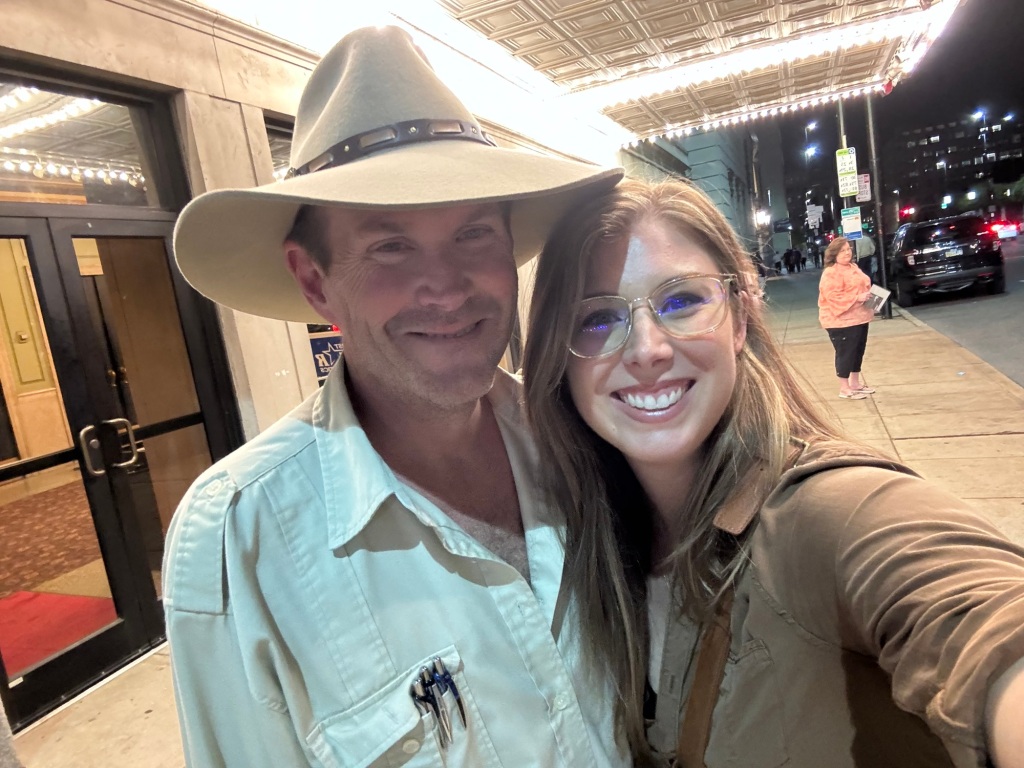
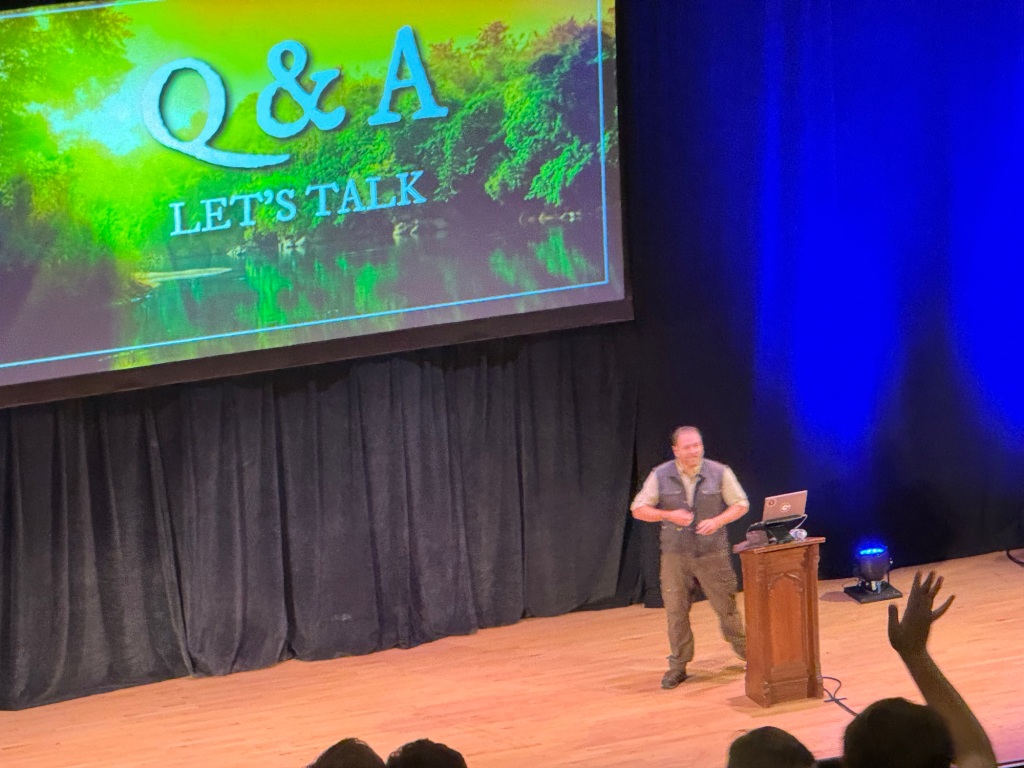
This is a widespread problem in all professional fields. What we are seeing these days from the field of archaeology is certainly not unusual. However, the story surrounding Gobekli Tepe in Turkey, the ancient Neolithic site dating back to approximately 9600-7000 BCE, is at the center of a lot of conversation that reveals many mistakes regarding the study of the human race. The problem is that the site predates any other known human site in the world in a sophisticated manner, and appears to be something not unusual, overturning many of our previous assumptions about the evolution of our species by many years. And Gobekli Tepe isn’t the only place like it; there are other sites nearby that are just as old and just as sophisticated. So I was curious at the beginning of August 2025 when Josh Gates from Expedition Unknown covered the ancient site on his television show. I have always liked Josh Gates, and when he’s in town for one of his live shows, I like to take my daughters to see him. However, to have a mainstream show on television, Josh has turned more toward mainstream ideas about science than toward what is called pseudoscience, where people question, with great speculation, the established opinions of academia. Gobekli Tepe certainly challenges this assumption, because we know the dates of the site, we can see how articulate the stone work is for a group of people who were supposedly hunters and gatherers, and we know that the site as it is now in Turkey is a tiny part of a much larger complex, much of it still underground. The answers to many questions about Göbekli Tepe still need to be uncovered in the surrounding hills, but for some reason, Archaeologists have limited themselves to the same portion of the discovered site and used that minimal knowledge to tell the complete story. So, yes, given all the controversy, I was curious to see how Josh Gates would handle it.
For a qualifier, I don’t like to trash archaeologists. I am glad they work hard and dig in the ground to provide us with evidence to discuss. I am not shy about it, but my favorite organization in the world is the Biblical Archaeology Society, which publishes the Biblical Archaeology Review magazine. I find it fascinating to see evidence for the validation of events from the Bible, the most essential piece of literature the human race has ever produced. And to watch various groups dispute, or use that evidence to validate their religious perspectives. I love archaeologists because they dig in the dirt, analyze data, and reveal new things about the world. However, I also don’t like the term ‘pseudoscience,’ which is often applied to Graham Hancock and others who question the established narrative presented by institutionalized science. I think that archaeology and anthropology, as general fields of endeavor, are too young to be conclusive about anything. Just over one hundred years is not enough time to do anything, so defending conclusions from the field of archaeology is ridiculous. We have only just begun to dig in the world, and there is still a lot of evidence that we will yet discover. So conclusions about anything at all are premature at this point. The story will continue to evolve as new information becomes available, which we find out all the time. Gobekli Tepe is just the tip of a lot more hidden below the surface, all over the world. We tend to see a lot more archaeology in the Holy Land region, which is where Göbekli Tepe is located, because of the Bible. I think there are sites older around the world that we don’t yet know about because nobody is looking for them. They look in the Bible land because of the Bible. However, similar sites are likely in China, Russia, and all over South America. And likely, when we reach Mars, we will find archaeology there too.
My rule of thumb for analyzing data from the archaeological community is based on James Frazer’s excellent book, The Golden Bough. The 12-volume set, which evolved into two enormous volumes, was a magnificent contribution to the early field of anthropology, spanning approximately from 1890 to 1923. It was the study of global culture and its use of magic and religion to navigate existence, and it essentially laid the groundwork for the fields of anthropology and archaeology. The study of human cultures was significantly better before institutionalized science attempted to confine it within a box, and that is the problem with all static cultures when dynamic ideas are introduced. But I judge scientists in these fields by their knowledge of that large book by Frazer. I’ve read it many times and it’s one of my favorites. It answers many questions that were hard to get at the time the book was written, for instance, why do headhunters seek to steal the head of their neighbors and eat their bodies? Or why are kings sacrificed through ritual regicide once they lose their powers of youth? Understanding these kinds of things, of course, carries over into our modern world, from psychology to politics. Understanding why people do what they do is crucial to grasping the fundamentals of human existence. And in management cultures, even when managing a McDonald’s drive-thru, understanding human behavior is the key to success.
So it was painful to watch Josh Gates try to take what is known about Göbekli Tepe and fit everything into the academic box of hunters and gatherers, because archaeologists have already established a timeline of discovery, and with Göbekli Tepe, they were purposefully trying to fit the evidence into the assumption, rather than the other way around. That’s why I like old books like Frazer’s over modern work. Because when the field of anthropology was established, it was done so with a great deal of human imagination and ambition attached to it. However, once we institutionalize that information, it loses its authenticity and becomes part of a corrupt static order, which is what we find in the Gobekli Tepe case. The answers are in digging the whole hill, which will tell everyone most of the answers they want to know. However, because there is an apparent fear that what they will discover will destroy their institutionalized status, they are not digging in those areas and instead try to plant trees over those sites to prevent future excavation. So, rather than trying to understand what Gobekli Tepe is, mainstream archaeologists, including Josh Gates on the Discovery Channel, are trying to fit what they know into what they want it to be. Which is just as ridiculous as what we saw during COVID with the mask policy, where we were told to stop the spread, yet we had to wear a mask. The game is about accepting an authority figure’s opinions over the flighty assumptions of the casual observer. Because there is power in defining the truth, and that holds even when we are talking about presenting evidence that might run counter to previous assumptions, which gives the people who provided it power over their sector of society. So it was fascinating to watch. I enjoyed the broadcast. However, the answer to Gobekli Tepe and other sites in the region is that there is much more to the story, just waiting to be uncovered. And rather than concluding that it was hunters and gatherers who built the site, the evidence suggests a much older human race that was more sophisticated. And if we want to know the truth, we should withhold our opinions until we gather all the evidence. Anything else would be premature.
Rich Hoffman

Click Here to Protect Yourself with Second Call Defense https://www.secondcalldefense.org/?affiliate=20707