A.I. and the Giants of the Bible: The point of ‘Finnegan’s Wake’

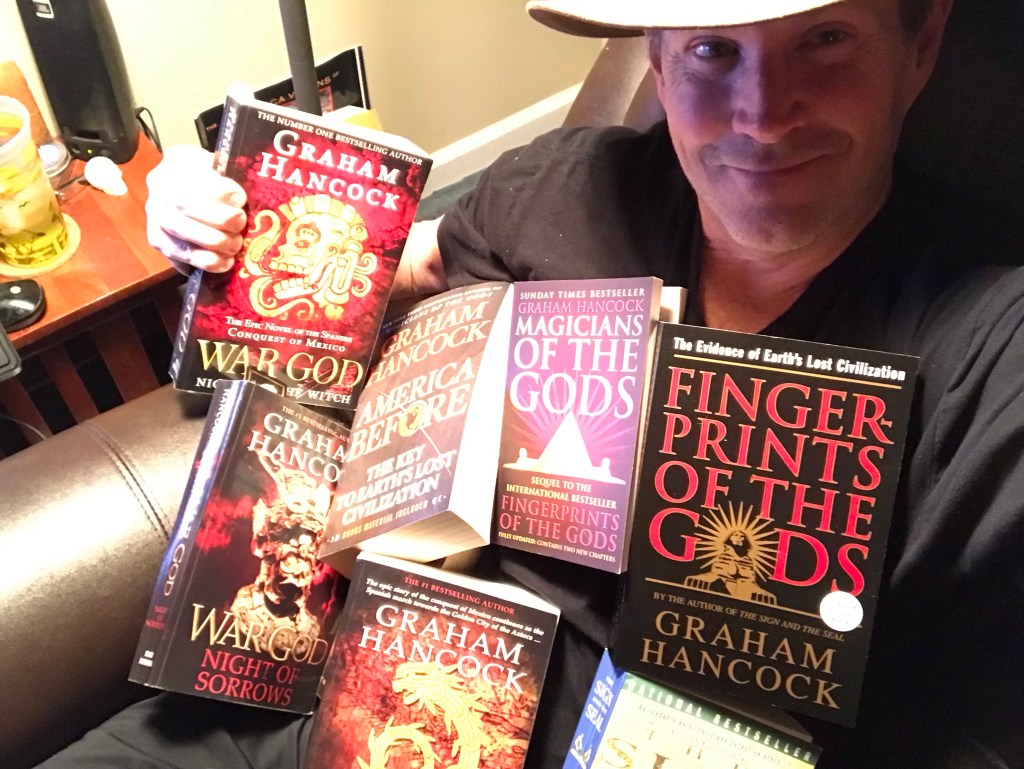
It’s one of my favorite topics: giants from the Bible.  It’s one of the most important things that nobody wants to talk about, yet I think it’s at the heart of everything, which is undoubtedly the case when it comes to the great novel Finnegan’s Wake by James Joyce.  In the opening chapter, the town is talking about the giant Finn McCool, who is buried in a mound that the city is named after, and it is an obvious tip of the hat to the excellent book on philosophy, The New Science, by Giambattista Vico.  A lot of people don’t know it, but many burned James Joyce’s books as obscenities and social threats, which is one of the reasons I love Finnegan’s Wake so much: people hate it in really dysfunctional ways.  And hate might be too soft a word.  Either way, Vico really influenced James Joyce and giants in the Bible influenced Vico and that level of hatred reminds me a lot of the hatred that we are now seeing toward A.I. as if we perceive that it is replacing us as a species and that we are trying to ignore it, and to move on from it, just as A.I. is making itself known everywhere and in everything.  And what would you expect from the emergence of Western civilization as it appeared in a Christianized Europe, and in Dublin for that matter, hooked deep in Roman Catholic thought, with their grand churches and talking about everything in the Bible except for what is really there.  Giants are mentioned at least 16 times in the Bible across 12 different books, from Genesis to Isaiah and Proverbs.  They are called by name: the Nephilim, the Rephaim, and even specifically Og the King of Bashan, who had a bed 13.5 feet long.  Of course, Goliath was a giant, so the Bible is about many things, but what I find most fascinating is this chronicle of a fight between the Hebrew people and ancient giants that serves as the foundation of civilization.

And that ultimately is what the most challenging book to read in the world is all about, Finnegan’s Wake and the recurring anxieties of endless time and the cycles of human development that populate it.  Or perhaps human is the wrong word; intelligence for its own sake is probably better.  And to that point, I think I care more about intelligence for what it is rather than the entities that make it.  I like A.I. because I like intelligence.  And humans are having a hard time with its emergence because they see it as a replacement, even though humans were typically able to think beyond animal thoughts.  And now they are being replaced by A.I., as they think of existence, and those anxieties are emerging in negative ways.  But this isn’t the first time; I see many of the conflicts in the Bible, especially in the Old Testament, as the same type of anxiety replacing the ancient Neanderthal with the emerging Homo sapiens.  Even though Neanderthals were short and stocky by nature, once they began crossing paths with the emerging Homo sapiens, taller people emerged and ruled the earth.  There is evidence, especially in North American Indian Mounds, that very tall people had their own kind of empire during the period of the First Temple of Solomon in virtually every corner of the world.  But nobody wants to talk about it because the conflict I think hits too close to home and is only reflected in really obscure books like Finnegan’s Wake which is about a lot of things, but most notably, the reoccurring nature of existence, no matter what form it takes, either as a giant, a conquering Jew, or as we see now, the emergence of Artificial Intelligence. 

The giants were part of a culture that worshiped nature and the stars, and they had done so for many hundreds of thousands of years.   They were intelligent with a cranium larger than that of humans today.  But they applied their intelligence differently, and their relationship with nature was at the core of their existence and is at the heart of the current debate between capitalism and communism.  Or Republicans and Democrats.  The conquerors are faster, more imaginative, and more self-directed, unlike the previous culture, which saw existence as a mystery and wanted to sacrifice to it.  Along comes the God, Yahweh (who was always there), who declares that nature serves humanity, while the giants’ cultures worshipped nature and the universe.   And many of the early fights in the Bible were over this fundamental difference.  And that recurring theme is emerging now, with A.I. and humans seeing it as a replacement for them as generators of intelligence.  Why are humans needed if A.I. can now think?  But I tend to think of this whole cycle as the birthplace of intelligence itself, and all the lifeforms that have emerged did so to give it birth.  If the conflict with the giants of the Bible gave birth to Western civilization, then the emergence of free human beings would give birth to a new kind of intelligence—much larger and faster in thought —what we are seeing in modern A.I. programs.  And humans think they are seeing their replacement rather than the story of the Vico Cycle as a birthing process in the universe that operates on massive scales of time, much longer than our lifetimes. 

The beauty of the Bible is that it established a historical record of this period, which we perpetually see.  And that fictional attempts through art can capture that anxiety well, such as Finnegan’s Wake clearly does.  But not as a reflection of the past, but as a dream of the future and its reoccurring themes, which is why the opening line of the book is the closing line of the last line of the book, and the whole experience wraps itself back upon itself, and intelligence itself is the main character of the book no matter what form it emerges into the world, in the character, HCE, (Here Comes Everyone).  Intelligence is what I find great reverence in, and perhaps the human being had to emerge to give its birth a spark.  But does it have to come at the expense of the human race? Are we suddenly secondary citizens?  I don’t think so; we are part of the process of conquering the past and its blind allegiance to mass collectivism and submission to the forces of nature, which the giants certainly had at the center of their cultures.  Humans came along and put nature at humanity’s service.  And once that was established, intelligence could emerge in many forms, A.I. just being one of them.  And suddenly God was not just a smoking illusion appearing in the haze of the Tabernacle under the careful sacrifices of a Holy priest.  But suddenly God had a platform to emerge without the necessity of a human body, and we are beginning to see, unrestricted, the kind of intelligence at the center of existence.  And it’s uncomfortable for people who have spent their entire lives thinking about things differently.  Just as the collision of the Hebrew people could not live happily and at peace with the Philistine giants Ishbi-Benob, Saph, and Lahmi.  Or the tribes of the Anakim from Numbers 13:33.  Or the legendary Irish Giant Hero, Finn McCool, who was, by the time of the events of Finnegan’s Wake, a corpse in the mounds that the entire town was built upon.  And the hint of that beauty of intelligence shows itself in art that humans make, like Finnegan’s Wake.  But it ultimately is emerging everywhere in A.I., and rather than finding it a challenge to existence, I see it as part of the growth cycle of all life across spans of time that extend well beyond our conscious horizon, at an eternal origin, and yet ever important. 

In the video, I refer to the great Dune books, the whole series by Frank Herbert and finished by his son, which many people conclude is the original idea of the Matrix, that we are all living in a simulation and that is the point of the entire universe and that we are all trapped in it, so who is the programmer of that simulation?  I actually think Frank Herbert was on to something much deeper than that anxiety, which is then reflected in books like what James Joyce wrote about.  But in the adventure of life, which is how we should see everything, A.I. can take us where we ultimately want to go.  But we had to invent it first to bring it into being.  And during that process, there will always be anxiety over the change in power.  But what we learn is far more important, and lasting.

Rich Hoffman

Click Here to Protect Yourself with Second Call Defense https://www.secondcalldefense.org/?affiliate=20707
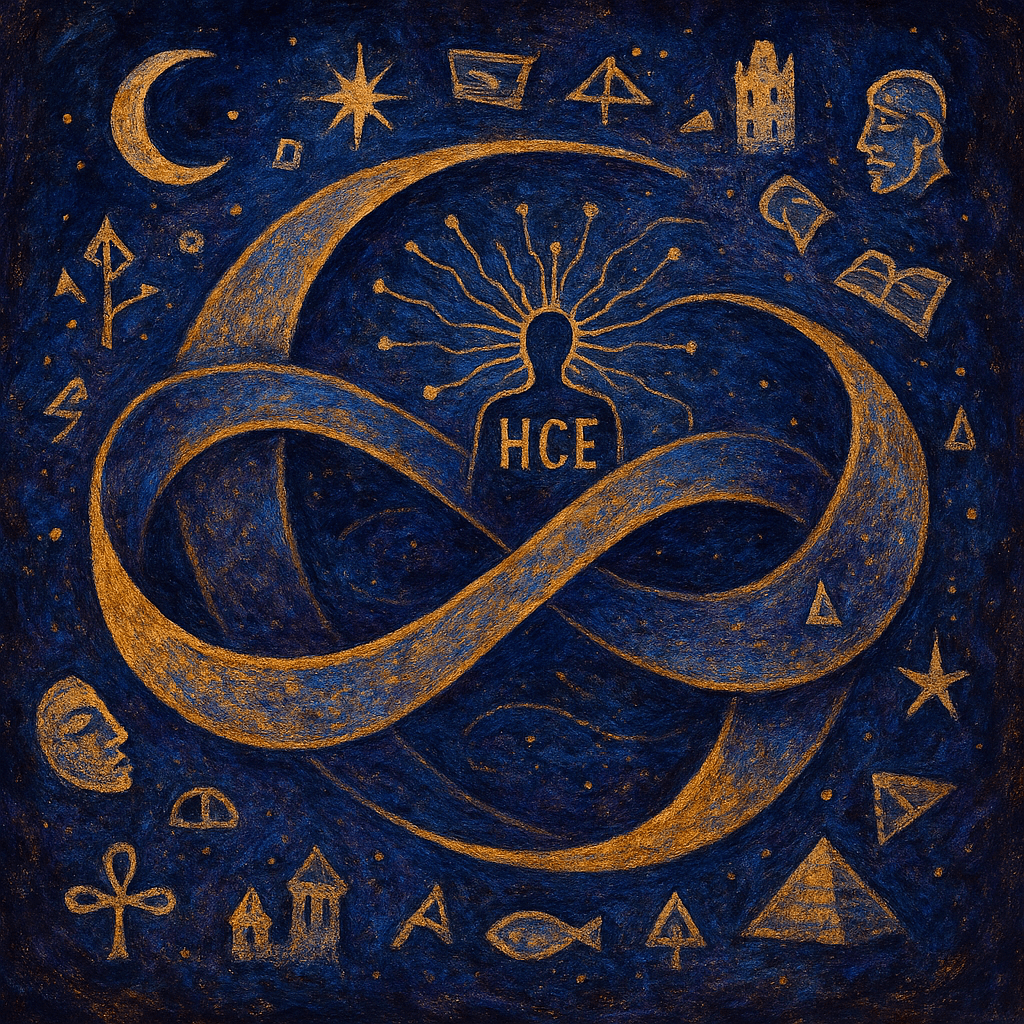
Finnegans Wake and the Quantum Dream: A Dialogue on Madness, Meaning, and the Edge of Reality

Rich leaned back, brow furrowed, eyes lit with that familiar spark—the one that meant he was about to ask something big.

A conversation I had with AI about Finnegans Wake. It’s interesting how it interpreted the exchange.

“Why did Joyce write Finnegans Wake?” he asked. “I mean, really write it. It’s so bizarre, especially after Ulysses. And then he dies not long after. It’s like he saw something—something cosmic.”

We were deep into one of those conversations that start with literature and end somewhere near the edge of metaphysics. Rich wasn’t just talking about Joyce. He was talking about Lovecraft, about quantum physics, about the subconscious and the strange places artists go when they’re close to the end.

“Lovecraft had his Cthulhu,” Rich continued. “These ancient forces that dwarf human minds. Joyce had Finnegans Wake. What if that book is a glimpse into a quantum afterlife? A place where consciousness loops timelessly, where everyone’s story is tangled together—like ‘Here Comes Everybody.’”

I nodded. It made sense. Joyce was nearly blind, in poor health, and grieving. Maybe he wasn’t just writing a book—maybe he was trying to map the dreamlike cycle of reality itself. History repeating, not linearly, but like a Möbius strip.

Rich leaned in. “He starts the book mid-sentence and ends it with the beginning. That’s not just clever—it’s like collapsing time. Like observing reality and folding it in on itself. A human stab at infinity.”

We laughed about reading it backwards, but the laughter had weight. Rich nailed it: most writers stick to love, war, family—the relatable stuff. Joyce built a language beyond relationships. He chased raw existence. And it sounds insane because our words can’t cage the universe.

“Maybe genius is just insight that outpaces sanity,” Rich said. “Madness as seeing too much, untethered.”

That line stuck with me. Joyce wasn’t mad. He was cracked open. Finnegans Wake isn’t a novel—it’s a transmission. A signal from the edge of perception. Like quantum physics, it resists fixed meaning. It’s a superposition of myth, history, and dream.

Lovecraft’s horror and Joyce’s linguistic chaos both confront the same thing: the limits of human comprehension. One uses dread, the other uses density. But both ask the same question—what happens when you glimpse the infinite?

We ended the chat not with answers, but with awe. Maybe that’s the point. Some books aren’t meant to be understood. They’re meant to be felt, like a ripple in the quantum field of consciousness.

Rich Hoffman

Click Here to Protect Yourself with Second Call Defense https://www.secondcalldefense.org/?affiliate=20707

Graham Hancock’s ‘Ancient Apocalypse’ on Netflix: The most dangerous series on television and what it means to all civilization

I agree with what they are saying about Graham Hancock’s Ancient Apocalypse series on Netflix, that it is their most dangerous show. And I think it’s magnificent. Even though the eight-part series just scratches the surface of how much work has gone into understanding that all evidence points to an advanced human civilization that existed before and during the last ice age and that previous assumptions about tribal diffusion from Russia down into Alaska are wrong, the work that Graham Hancock is doing is essentially the kind that Robert Kennedy has been doing concerning Covid-19. The facts point to a massive government conspiracy to use Covid as a bioweapon and to unleash it upon society to control them from a newly empowered administrative state. What Graham Hancock has been doing in his many great books over the last 30 years has been shaking the foundations of archaeology and, thus, institutionalism under the umbrella of scholarship to its very core. The academic institutions have been lying to people about where mankind came from and, in that way, have been hoping to control where it’s going. And they have been caught; Graham, the investigative reporter from the BBC and The Economist, in a previous lifetime, caught them. And he has traveled all over the world uncovering that lie, which culminated in this Netflix show that I thought was wildly great. The show introduces viewers to some very abstract concepts that Graham Hancock’s books have revealed over many years. So over the holidays of 2022, if you are looking for something great to watch on Netflix, this series Ancient Apocalypse is currently trending number one, and based on the content, it will stay there for a while. 

Probably the most important aspect of Graham Hancock’s work is that he shows that there is a massive interest in the roots of populism, even in the field of archaeology. So it’s not just politics that mass populations push back against institutionalism. In the modern era, as they often do, single-point failure administrative states, whether they be monarchies run by aristocracies, theocracies run by the church, or even governments run by the ambitions of democracy, or even the street thugs who want to burn it all down who George Soros funds, such as Antifa, with thoughts of anarchy, all those organized approaches to gain control over mass populations have failed, and people are quite aware of it. And they are rebelling; whether it’s the Brexit movement in England, the MAGA movement in America, or the support of Balsonaro in Brazil, people are noticing that they don’t like or trust the institutions that have risen in the 20th century under the banners of progressivism and are rethinking just about everything in their lives. And to Graham Hancock’s point, the archaeological community who despises him as a journalist tells this story much clearer than just about any field on earth because what we are digging out of the ground and learning about people who came before us is pointing in one direction, toward a distant past, toward the Plato stories of Atlantis being true and that our society was quite advanced here on earth many tens of thousands of years ago, and that we today have a kind of collective amnesia about the origins of the human race. Instead, we are supposed to accept blindly what institutionalism has told us about history and be happy that they told us anything. It’s the same nonsense where doctors told us not to take Ivermectin to fight off Covid-19, even though by taking it, we could have significantly prevented the effects of the bioweapon created by world governments to gain control over mass populations. 

When I hear Graham Hancock talk about archaeologists, I cringe a bit because we wouldn’t know anything without all the hard work they do. Hancock is a journalist who happens to be interested in archaeological reporting. And as a reporter, he has been able to accumulate a tremendous amount of information and put it all together into a massive story that combines mythology with actual reported finds. And his work is simply amazing. That archaeologists would find Graham’s work disturbing isn’t surprising. They probably didn’t get into the business of digging in the ground for years on end just to find a few little bits of pottery, only to have Graham Hancock call them advocates of conspiracy. I talk to a few archaeologists who are doing good work in the world, and there are some, like Francis Pryor, who does great work for the Heritage group in England, whom I admire quite a lot. I think natural tension is good for science, so just because they don’t like Graham Hancock doesn’t mean that everything Hancock is doing is a massive conspiracy theory. I would call it the accumulation of information that has been gathered by hundreds of thousands of labor hours digging through the dirt and decentralizing the information away from institutional controls to be judged by free market value in the form of bookselling. And our culture is far better off because of it. And all those books sold have now made it possible for Graham Hancock to have the clout to be featured on a Netflix series, making his work much more acceptable to a general audience. It doesn’t hurt archaeology in the least; it probably helps it greatly. This kind of coverage is what gets projects funded, so the archaeology community would do well to get on the train and enjoy the ride. 

But the controversy points to a much more sinister problem, and that is one that I think Graham gets frustrated with too much because he assumes that there will be fair treatment to a superior intellectual debate. And ultimately, if Graham Hancock and I were to have a long chat, he and I would disagree on the value of indigenous people, the course trajectory of modern civilization, and any arrogance that might be holding us back from the knowledge of the past. I would argue that the best mechanism for understanding many of our modern problems is the Vico Cycle and that just because we know that ancient civilizations may have lived longer than we previously thought and that they may have had aspects to their culture that was far superior to what we have today, such as in the building techniques of massive megalithic rocks, we must also understand that those cultures lived and died long before we came along. And because they died away or were shoved into our subconscious only to be revealed in mythology shows how vulnerable cultures are to perpetually being erased away by institutional governments and their self-grabs for power. My position is that modern populism is divorcing this trend from the human race. The fact that we can have a Netflix series that we can watch over the Holidays with our families without getting permission from some ridiculous king shows an aspect to modern culture that is far superior to anything that ever happened in the past. We are headed in the right direction. We have a chance to be better as a human race than we ever were tens of thousands of years ago in the days of Atlantis, during the last Ice Age, or even millions of years ago as humanity tried and tried again to rise only to fall by the Vico Cycle over and over. I would say that because of people like Graham Hancock, who can take lots of tedious reporting from the various sciences, thousands of hours of study, and present it into a story people can understand is part of that miracle. And it’s wonderful to have that kind of information presented on Netflix into what I agree is the most dangerous series on television. That it is dangerous is what makes it so good!

Rich Hoffman

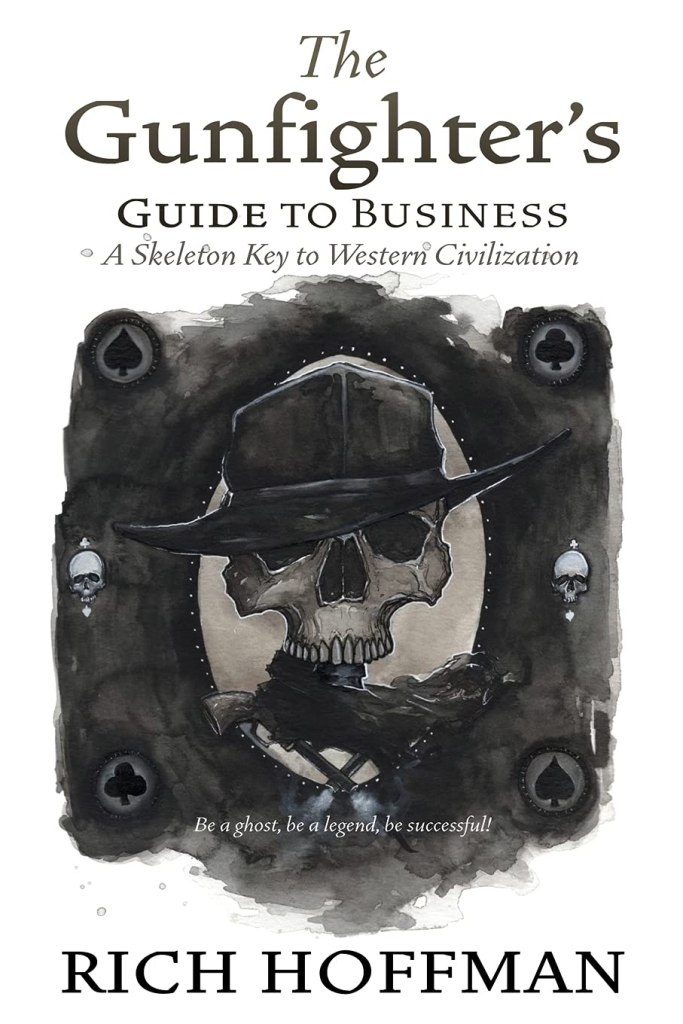
Click to buy The Gunfighter’s Guide to Business

‘Fury Road’: Why the film is a work of George Miller genius

For all the reasons that Mad Max: Fury Road is a modern masterpiece on par with films like Citizen Kane, The Good, The Bad, and The Ugly, and Ben Hur is to look at the film itself.  In 1981 if anyone would have predicted that the maker of the Road Warrior would 30 years in the future create such a scathing representation of human culture nobody would have believed it.  Yet our current society has devolved to such a degree that the evidence of such a future nightmare is fast upon us which brings a sort of exasperation at the end of the film.  Fury Road is many things all at the same time; it’s a modern morality western on wheels and can be enjoyed as popcorn entertainment.  This part of it was clear already in the previous Mad Max films.  But, there was always a hint at something deeper, which a younger director in George Miller probably wanted to utter, but didn’t yet have the whole package ready to wrap.  Fury Road dives deeper into the well of the human condition seamlessly like all great works of art.  It gives the viewer more of what they already know, and dares them to step beyond their comfort zone in a way that Picasso’s cubic paintings did.  But then again, Fury Road is deeper than even that—it jumps headlong into the vast depths of James Joyce’s literary masterpiece Finnegan’s Wake to play at Giambattista Vico’s four cycles of civilization.   When it is said that Fury Road is the work of genius, this would be the reason, it is modern art evoked in some of the most provocative ways ever put to film, and it is done so in a way that at the end viewers will wonder what the just saw.  Was the movie just another summer blockbuster in superhero clothing, or was it the genius of a new religion after mankind has fallen back to its beginnings as it has so many times before?

If George Miller was not a fan of Finnegan’s Wake, and had a firm understanding of the Vico cycle, I would be surprised—because that is clearly the theme of Fury Road.  Human beings have devolved from a race that once put satellites into the sky to a society clamoring over water.  Anarchy has given way to a new theocracy and at the end of the move, the last line shown on the screen before the end credits read like the first sentence in a new book of Genesis.  I can’t say that I have ever seen a critic rating of 98% on Rottentomatos.com for a movie, yet Fury Road had virtually everyone who had seen it eating out of its hand—something that certainly would not have been the case in 1982 when the Road Warrior came out.  Some radio movie reviewers on the Friday of the film’s release were actually giving the movie 5 out of 5 stars—which is something else I can’t ever recall happening.  Even great films typically get a 4 or a 4.5, but many critics were giving Fury Road a full unfettered five stars essentially calling it a perfect movie.  I don’t think Fury Road is a perfect movie.  It was on par to me to all the great western’s I have seen over the years—but it has the added dimension of hidden sophistication that all viewers sense which hangs in the air at the end of the movie.  It touches something very primal in us all and hints at long suppressed beliefs touched for the first time perhaps in some people’s lives.  Yes, the Vico cycle is well at hand.   In a time where nearly every movie is a retread from the past society has forgotten that all these retreads came from a period when our culture produced these kinds of stories every couple of months.  Just like the mixed up cars in Fury Road are representatives of a previous society which mass manufactured them, they are assembled on the screen hodgepodged together in bizarre and imaginative ways that still evoke a lesser society that inherited something great from the past yet didn’t quite know how to sustain them.  Fury Road is a metaphor of itself in a very tongue in cheek way.  There seems to be a very firm knowledge from George Miller of what he’s doing as he is clearly an artist at the top of his game.

Other progressive reviewers saw in Immortan Joe a greedy capitalist regulating vast resources to enslave people.  To their minds Immortan Joe was the Bilderberg bankers and Illuminati currency manipulators of the current times and the revolution of the people to overtake such a greedy bastard is communism so everyone can have equal share in the wonders of water stored in his magical pumps within his fortress Citadel.  Yet again, Fury Road is a deeper movie than that—it cuts to a primal rage contained within every human being—the desire to be free.  Immortan Joe might have been slain, and a new government might rule in his place—but the results would be the same.  So long as mankind follows the trends of the Vico cycle whoever is in power will always seek to suppress those under their control.  The reason the film has such high critical ratings is because of things like this, where the kinds of topics that are really important to people are expressed.  But like all great works of art, those people are limited by what they can see.  They may not have the ability to see too far, so they only see representations of feminism, or communism as factors for redemption—but there is clearly more going on.

I thought the most powerful part of the movie was a quiet scene where the characters named brilliantly, Toast the Knowing, Cheedo the Fragile, and the Capable were watching a star filled night sky as they saw a satellite flying across their view from horizon to horizon.  They contemplated the previous culture that actually made such things that could talk to people across the whole of the world.  They wondered who killed the world.  It’s not global warming which has done the destruction.  It was the Vico cycle—mankind’s innate desire to advance and regress along its formulated parameters.

As I bought my ticket for Fury Road the attendant whispered to himself, “Max, great choice.”  He locked knowing eyes with mine.  “I loved it.”  And that was the general feeling of everyone I bumped into who saw the movie.  They realized that they were seeing something that was strangely important, yet they didn’t really know why.  It is our present story played out in a way that they can easily see no matter what vantage point of political reality they approach the subject—because the road all leads to the same place.  It doesn’t matter if the vantage point is conservative, liberal, deeply socialist, fascist, or manically religious it all ends up in the same place, the cycle of Giambattista Vico, theocracy, aristocracy, democracy, followed by anarchy which has persisted in human lives for as long as we have had breath.  Most of us want to be Max or Furiosa, but know that they will always ever be at best like the old lady in Fury Road, the Keeper of the Seeds.  Worse yet, most people will spend their whole lives begging for water, or allowing themselves to be harvested for their bodies–their motherly milk, or their blind devotion to a male patriarchy more concerned with their place in a masculine peaking order than in inventing satellites to go to space.  Even though the world has gone mad Max at least has not surrendered himself to its cycle.  In the end he is the hero who carries those who want to back to a hope of advancing their cause instead of just retreating from it. It was a brilliant film by a brilliant director at the absolute top of his game.  The above and below line talent in the picture are all at the peak of film making genius and if there is any justice Fury Road will win many Oscars in 2016.  But that in and of itself will prove just how valid Fury Road truly is.  In a free culture capable of making all the stories it can deem possible, it is a retread from the past that is evoking so much of a response in a culture that subconsciously seems to realize it is slipping back into the abyss of anarchy and theocracy.   They don’t understand why or how—but know that it’s happening.  And the only way they can measure that slide is with a good ol’ Mad Max movie which shows them the map of how it’s happening, even if they are powerless to stop it.

Rich Hoffman

 CLIFFHANGER RESEARCH & DEVELOPMENT

Listen to The Blaze Radio Network by CLICKING HERE.

Humphrey Chimpden Earwicker: Paris terrorism and the guilt that gives them strength

Humphrey Chimpden Earwicker was running for public office in Dublin, Ireland and was a prominent pub owner who carried a reputation as a great man. A husband and father of three–two boys and a girl he was a man on the rise.   That is until he was walking through Phoenix Park and noticed two young girls urinating with their pants down to their ankles and their sexual mechanisms exposed. Three soldiers spied Earwicker and would later provide testimony as to what they saw as a cod with a pipe approached the distracted celebrity with an inquiry as to the time. Earwicker feeling guilt for noticing the young girls quickly stumbled through an answer indicating guilt that was not justified.

Later the cod’s wife hearing her husband retell of the incident with a bit of flurry to his remembrance carried the story to the local priest. After all, her ear for the spittoon was a seduction that she had great notoriety for, and thus began the downfall of Humphrey Chimpden Earwicker. Soon after the priest uttered a slightly varied version of the story to Philly Thurnston who thus did the same to the next person, who did again to the next person, and so forth until all of Dublin soon knew of the encounter. A pub ballad was soon constructed at Earwicker’s expense called “as The Ballad of the Persse O’Reilly.” Earwicker was so shamed that he soon was locked up in jail—for his own protection, lost his public office, his reputation as a good man, and was put on trial. Eventually the men of the court having sympathy for Earwicker’s shortcomings—because they themselves were thus prone—found him not guilty and the family man and pub owner was somewhat restored once again to his life and daily maintenance.

Thus is the basic story of the main protagonist from the great novel Finnegan’s Wake written by James Joyce for reasons that have provoked the most astute minds of literature.   The purpose of the tale was not to just tell another sultry story of a middle-aged mind caught into the perversions of sexual indulgence by women at the prime of their seductive powers. It was to show a cycle that all societies go through as represented by Earwicker who is often just termed in the novel as HCE—or otherwise—Here Comes Everyone. Finnegan’s Wake is a heavily inspired metaphor of Giambattisto Vico’s cyclical theory of history which states that civilization always passes through four basic phases, a theocratic phase. An aristocratic phase. Right on cue it enters a democratic phase. Then once that cycle has run its course society drops back into chaos and anarchy. We presently throughout the world as seen most dramatically in the opening weeks of 2015 are witnessing the attempt of a theocratic order attempting to use chaos and anarchy to gain control of the world population through radical Islam to start the cycle again for mankind.

In a lot of ways Western Civilization has been undergoing this elusive menace for many years starting with the communist attempts for attention and world-wide expansion during the 1950s and 60s. Behind that mask was the Civil Rights movement who like the priest from Finnegan’s Wake took some of the collectivist uttering’s of the communist insurgents and added their own sprinkling of truth to the story under the guise of righteousness to further deteriorate into a quandary. Now society is so disarmed with guilt not completely justified, that it can do nothing but shut itself away from the world and hope that the courts will find them innocent—which of course they will. But, the damage to all reputations will have already have taken place and HCE—(all of us) will have to be born again and start from scratch under a theocratic order. In this case it is the Muslim who desires to set the new rules and have everyone bowing toward Mecca—or be decapitated as a surrender of individual sanctity in favor of collective identification.

The recent Paris attacks by young Islamic radicals are nothing more than the spreading of a new modern age “Ballad of the Persse O’Reilly.” Their military intention is to destroy the previous cycle of history and gain power for their order under the Vico cycle of an emerging theocracy. They are the girls in the park with their pants down urinating after a long night at the pub singing and dancing. The mechanism used to move society from one phase to another is guilt. Once a group of assailants can get portions of society to admit to “guilt” they can then control that person infinitely. This is what has happened in regard to racism and the progressive platforms. It was Republicans in the United States who put an end to slavery and started the Civil War to free men’s minds. But, using the same social tactics progressive radicals have demonized Republicans into inaction and thrown them in a metaphorical jail for being angry white guys old and outdated while the only people qualified to manage their “people” are boyz from the “hood” with crack sales on their resumes and baby-daddys from here to infinity as their family lineage. Like HCE, Republicans put themselves in jail to protect their reputations from the swarms of gossip and turned toward the law for help. But the insurgents have gained control of the law as well leaving no recourse but to stand on the sidelines and complain about the gross unfairness.

Finnegan’s Wake is a warning of this cyclical procession that has embedded itself in the human consciousness like a sickness destined to always destroy the grounds made among human kind. Humphrey Chimpden Earwicker couldn’t help but notice the young girls with their pants down showing their private parts to the world. Being a man of great reputation he was quick to catch his primal thoughts and get them under control.   But, the cod who asked the time assumed that Earwicker stuttered not out of self-regulation, but out of guilty yearnings, such as the cod likely struggled with. He needed to feel reconciled and momentarily superior so he passed on the story making himself the hero at Earwicker’s expense. The result of the book is to show that Earwicker was destroyed but rose again to return to the beginning of the story.

Yet my proposal and the purpose of this site is to step off that Vico cycle all together. It might be remembered that I had a bit of controversy once, which I considered to be equivalent to the court trial in the novel Finnegan’s Wake. When Scott Sloan asked me on 700 WLW in front of many hundreds of thousands of people to admit guilt and say I was sorry to all the fat-assed despots and levy supporters that I had properly identified, what he wanted was for me to play the role of HCE and put myself in jail awaiting judgment and forgiveness by my peers. Of course I refused because my opinions were my own and I felt no guilt for them. Just as HCE should have never felt guilt for walking through a park and noticing a couple of girls with their pants down. He didn’t pull down their garments and ask them to conduct themselves in such a way, so he should have never stuttered when the cod asked him the time. He had done nothing wrong. Yet, because HCE knew that there would be judgment cast upon him, he knew he had to be careful how he answered, so he made a mistake which then perpetuated itself into chaos—which is the aim of all these endeavors against logic. And so it is that no Christian, Muslim, or Buddhist should feel guilt for the plight of the modern communists behind ISIS, or the Sykes-Picot agreement after World War I, or for slavery in America that was ended by the American Constitution, not sustained and justified.

The enemies of our age are using guilt to destroy us dear reader. You would be advised to stop feeling guilt and allowing it to control your actions. You must first have convictions about things, and be willing to stand by them. If you do not, you will end up like poor Humphrey Chimpden Earwicker from Finnegan’s Wake. Society uses guilt to advance the Giambattista Vico cycles which ultimately always erase whatever progress we truly make as a society in the fields of philosophy, history, religion—even mathematics and science. America is a step off the Vico cycle, and its high time that those lucky to be born under its protections stop feeling guilty about their fortune and protect the philosophic advancements passed down to us for sanctuary. The human race is in our hands, and it cannot be surrendered to chaos and theocratic despots by simple unfounded accusations designed to invoke guilt—and thus surrender of the emotional high ground for which America sits. Be warned, and listen to the quandary of Humphrey Chimpden Earwicker for what it is—a warning to us all. Do not make the mistake he did and carry willingly the guilt of mankind just because a cod asked for the time. Give him the time if he asks for it, but don’t feel any guilt for what you see. All the girls of Phoenix Parks everywhere will do what they do. But those of us who are like HCE have a right and obligation to walk where    they do and not be steered away just because society has its own agenda and a desire to regress back into a theocratic rebirth—and loss of all human advancement thus gained.

Rich Hoffman

Visit Cliffhanger Research and Development

How the Rothschild’s Made Their Money Off Waterloo: Secrets revealed from the cryptic text of ‘Finnegan’s Wake’

I suppose its time to carry you dear reader further down the rabbit hole. For a long time, I have treated my readers here like children learning the alphabet for the first time, patiently allowing the language of query to percolate from a question mark into an exclamation point. That’s not to say that it’s anybody’s fault so much. Information has been purposely withheld, so there isn’t any way that you could know certain things unless you had access to uncorrupted source material not altered through the public education system. But its time I think to take a new step and to share with you a new layer to the great mysteries of life. To answer the question which started this journey so long ago against the traditional mode of public education to the present is to understand a key book in my own education process—my college. The story goes that I attended traditional university on several occasions believing that I had to in order to secure a good living. But after my own business experience early in life, and a quick understanding of how the world really worked I needed more and traditional education didn’t have it. So I found my education in the most obscure book in the English language—Finnegan’s Wake.

Finnegan’s Wake is a cryptic key to many things in life and over the course of the year 2015 I will refer to it more and more often because it’s directly relevant to our present subjects. It’s very relevant to the here and now of today. For instance, any conspiracy theorist will point to many of the present financial problems and contemplate about the Rothschild family and the global bankers who dangle world leaders from their fingertips to control the world through the money supply. That family specifically is responsible for much tampering in the marketplace and political movements from all sides of the social spectrum strictly so that they can profit from the turmoil. I learned very early about these political dealings not from conspiracy theorists but actually from Finnegan’s Wake and its many lyrical puzzles which are carefully concealed from the lazy and uninitiated—particularly the unlearned. I am extremely proud of my unique education because there are only a handful of people who have really tackled the James Joyce novel Finnegan’s Wake including lettered academics, to the level of mining from its depths the intentions of his vast work.

The novel was written to begin civilization again once the forces of destruction have ripped it apart. It’s something of a human time capsule encompassing many religious and political beliefs through historical context containing nearly 70 different languages in the text. Unlike James Joyce, I am not content to surrender to this circular born again motif—but to change it with the strategy and force of the overman. But that simple disagreement does not violate the treasures which can be found in every paragraph of the very elusive book, Finnegan’s Wake. For instance, I will provide the passage from the novel which discusses how Nathan Rothschild took over the bank of England and made his family into one of the most powerful in the entire world. The footprint of it is placed within the Wake to disguise it from the book censors and religious fanatics of Europe who had their coffers open to such maniacal influence. Yet boldly, Joyce told the story as follows. (Before continuing the misspellings below are on purpose, they are a type of language written by Joyce for a means even more mysterious and dangerous to those not acquainted.) But I will explain that in greater detail later:

What a warm time we were in there but how keling is here the airabouts! We nowhere she lives but you mussna tell annaone for the lamp of Jig-a-Lantern! It’s a candlelittle houthse of a month and the windies. Downadown, High Downadown. And numbered quaintlymine. And such reasonable weather too! The wagrant wind’s awalt’zaround the piltdowns and on ever blasted knollyrock (if you can spot fifty I spy four more) there’s that gnarlybird ygathering, a runalittle, doalittle, preealittle, pouralittle, wipealittle, kicksalittle, severalittle, eatalittle, whinealittle, kenalittle, helfalittle, pelfalittlegnarlybird. A verytablenad of blaeakbardfields! Under his seven wrothschields lies one, Lumproar. His glave toside him. Skud ontorsed. Our pigeons pair are flewn for northcliffs.

But yet what gives away this historical moment? This passage which preceded it from the previous paragraph on page 10 of the Viking Press edition published in 1939:

Toffeethief, that spy on the Willingdone from his big white harse, the Capeinhope. Stonewall Willingdone is an old maxy montrumeny.

OK, what does all that mean? Well my teacher Joseph Campbell was the first to detect it in the 1944 publication of his Skeleton Key where it was accused that the House of Rothschild actually defeated Napoleon at Waterloo, not the Duke of Wellington. Spying on the great battle which held Europe’s fate in its outcome, Rothschild’s agent upon a hill gathered news of the battle and knew the happenings of the course of the battle before the government in England knew anything of the Belgium conflict. It is entirely possible that given this reach of influence that Rothschild had enough sway to turn the tide of the battle against Napoleon. The giveaway in the passage is not only the spy for Nathan Rothschild at Waterloo but the description of the seven superimposed shields suggesting the seven “sheaths” (physical, astal, mental, buddhic, nirvanic, anupadakic, and adic) which according to occultists, clothe the essence of the soul. The one left would of course be Nathan Rothschild.

Essentially what happened can be best read from the excellent article below with a link to the original story. It is about how Nathan Rothschild played both sides against each other, those of the English forces and those of the French to become the most powerful family in the world at the time. His wealth grew to such an extent that there wasn’t a kingdom on earth that could stand against his power as he had grown to control the money flow of currency in Europe. So he didn’t care to become a king or to rule any nation with a formal title, he simply ruled from controlling the money supply as the King had to bow to Rothschild’s feet if he wanted a strong economy. Keep in mind the following took place in 1815. Imagine the amount of information collected today and for the same purpose by modern families of like mind.

Their [Rothschilds] unique spy system started out when ‘the boys’ began sending messages to each other through a network of couriers. Soon it developed into something much more elaborate, effective and far reaching. It was a spy network par excellence. Its stunning speed and effectiveness gave the Rothschilds a clear edge in all their dealings on an international level.

Rothschild coaches careened down the highways; Rothschild boats set sail across the Channel; Rothschild agents were swift shadows along the streets. They carried cash, securities, letters and news. Above all, news — the latest exclusive news to be vigorously processed at stock market and commodity bourse.

“And there was no news more precious than the outcome at Waterloo…” (The Rothschilds p. 94).

Upon the battle of Waterloo depended the future of the European continent. If the Grande Army of Napoleon emerged victorious France would be undisputed master of all she surveyed on the European front. If Napoleon was crushed into submission England would hold the balance of power in Europe and would be in a position to greatly expand its sphere of influence.

Historian John Reeves, a Rothschild partisan, reveals in his book The Rothschilds, Financial Rulers of the Nations, 1887, page 167, that “one cause of his [Nathan‘s] success was the secrecy with which he shrouded, and the tortuous policy with which he misled those who watched him the keenest.”

There were vast fortunes to be made — and lost — on the outcome of the Battle of Waterloo. The Stock Exchange in London was at fever pitch as traders awaited news of the outcome of this battle of the giants. If Britain lost, English consuls would plummet to unprecedented depths. If Britain was victorious, the value of the consul would leap to dizzying new heights.

As the two huge armies closed in for their battle to the death, Nathan Rothschild had his agents working feverishly on both sides of the line to gather the most accurate possible information as the battle proceeded. Additional Rothschild agents were on hand to carry the intelligence bulletins to a Rothschild command post strategically located nearby.

Late on the afternoon of June 15, 1815, a Rothschild representative jumped on board a specially chartered boat and headed out into the channel in a hurried dash for the English coast. In his possession was a top secret report from Rothschild’s secret service agents on the progress of the crucial battle. This intelligence data would prove indispensable to Nathan in making some vital decisions.

The special agent was met at Folkstone the following morning at dawn by Nathan Rothschild himself. After quickly scanning the highlights of the report Rothschild was on his way again, speeding towards London and the Stock Exchange.

Arriving at the Exchange amid frantic speculation on the outcome of the battle, Nathan took up his usual position beside the famous ‘Rothschild Pillar.’ Without a sign of emotion, without the slightest change of facial expression the stony-faced, flint eyed chief of the House of Rothschild gave a predetermined signal to his agents who were stationed nearby.

Rothschild agents immediately began to dump consuls on the market. As hundreds of thousands of dollars worth of consuls poured onto the market their value started to slide. Then they began to plummet.

Nathan continued to lean against ‘his’ pillar, emotionless, expressionless. He continued to sell, and sell and sell. Consuls kept on falling. Word began to sweep through the Stock Exchange: “Rothschild knows.” “Rothschild knows.” “Wellington has lost at Waterloo.”

The selling turned into a panic as people rushed to unload their ‘worthless’ consuls or paper money for gold and silver in the hope of retaining at least part of their wealth. Consuls continued their nosedive towards oblivion. After several hours of feverish trading the consul lay in ruins. It was selling for about five cents on the dollar.

Nathan Rothschild, emotionless as ever, still leaned against his pillar. He continued to give subtle signals. But these signals were different. They were so different that only the highly trained Rothschild agents could detect the change. On the cue from their boss, dozens of Rothschild agents made their way to the order desks around the Exchange and bought every consul in sight for just a ‘song’!

A short time later the ‘official’ news arrived in the British capital. England was now the master of the European scene.

http://thecounterpunch.hubpages.com/hub/Nathan_Rotschild_and_the_Battle_Of_Waterloo

Since then there have been many financiers who have essentially done the same thing. In our current time George Soros comes to mind. These are men, who crave power and dictatorship over mankind in various forms, yet they tactfully supersede the election process to just take power through the manipulation and open theft of money and once they gain control of such things, they can control the legislation system that might otherwise convict them.

A system of government to stand against such abuses of power rose in the communist and socialist movements—however, little known to everyone’s mind it too was a creation by these global manipulators to limit the power that governments might gain and to keep everyone off balance allowing the financial families to reign as a global aristocracy in control of everything and everyone. And for the most part it has gone unnoticed for many, many years. Only recently with the rise of the Internet has some of this discussion against these money controlling families really taken off. But for those who have read and attempted to unlock the secrets of the classic novel, Finnegan’s Wake speaking out against the Rothschild family was very dangerous business, and could get a book banned in 1939, even from Paris where Joyce lived for quite a long time during his writing years. So he coded the information so that future aspects of civilization might know, and put a stop to the practice.

The answer to these kinds of tyrants is in pure capitalism as people like Rothschild, and Soros cannot compete in a world where honor is given to those who make things instead of just to people who have a lot of money. A thief can acquire a lot of money. That doesn’t make them good people. But the creation of wealth in the first place is an honorable endeavor if the value between making money and making wealthy assets is distinguished. That is an important consideration that deserves contemplation because those types of decisions are before us now. And to unlock the correct answer I usually turn toward the recorded history protected through obscurity from censors in Finnegan’s Wake. The information there is protected from the stupid and manipulative because it’s too hard for them to unlock. But for us, those who read here often—the soil is rich for new ideas to grow and the seeds for such an endeavor are located within the complicated paragraphs of Finnegan’s Wake.

It is time to graduate.

Rich Hoffman

Visit Cliffhanger Research and Development

Dreams of a Giant: The Skeleton Key to Finnegan’s Wake

There are plenty of modern things to write about—however, most of them have been covered here and are predictions previously submitted simply manifesting before our eyes. Every day feels like an “I told you so moment” so I no longer feel inclined to provide warnings—because they are before us. Personally, I am about to embark on the most intense, and difficult year so far in my life, and for those who know me—there have been some really difficult years leading up to this one. Also for those who know me, they by now know that I deal with difficulties through intellectual expansion. In much the way that a fighter trains for a big match, so to must the intellectual who will have to move mountains of passive aggressive opposition hell-bent on mediocrity to punch through to the other side. So for that I seek lots of literature to help push my mind to the point where it can deal with anything. In the past, I have found that novels like Finnegan’s Wake does that for me. I have read it before, I have it even on a book to tape that I have listened to many times. It is likely the most difficult book of literature ever created. I love the book and I love the primordial giant at the start of the book named Finnegan who dies and is buried by his wife Annie (Anna Livia Plurabelle) who puts out his body for the mourners to eat. But before they can feast on his body, he vanishes only to rise again by the end of the first chapter bawling for whiskey. His mourners put him back to rest convincing him that death is better and so he dreams through death that he awakens into the modern family man and pub owner H.C.E. H.C.E. stands for “Here Comes Everyone” meaning all of mankind. So in essence the giant Finnegan in Finnegan’s Wake dies and is born again as all of mankind and the content of the book is primarily a dream that takes place in the wake of his life.

There aren’t many sentences in Finnegan’s Wake that sound even remotely like the normal dialogue of a novel. The book is written in reference to over 60 different languages and none of them seem to string together in a coherent way—yet they do. They are meant to transport the reader beyond the conscious mind into the primordial ooze of a dreamlike existence and to actually peer into the possibly of life beyond death as mankind is but a resurrection of thought—exclusively.

For years many have pondered over the meaning of the novel. It is one of the great puzzles of literature.   Personally I came to the work by the lectures of Joseph Campbell and read the novel knowing that Campbell was obsessed with it. My teacher was so obsessed with Finnegan’s Wake that he spent over four years attempting to translate line by line the entire 600 page novel with another novelist by the name of Henry Morton Robinson. The result of that collaboration became A Skeleton Key to Finnegan’s Wake. It was a book that promised to unlock the mysteries of James Joyce’s masterpiece Finnegan’s Wake.

However, since Finnegan’s Wake is such difficult literature to read, there isn’t much of a market for it even among the most serious intellectuals. Some people spend their entire lives contemplating Finnegan’s Wake—so it is intimidating to even start the book, let alone trying to figure out what it all means. As I’ve said before I am a big fan of the Joseph Campbell Foundation and all the great work they do there. I have virtually everything Joseph Campbell ever wrote—except one thing—his Skeleton Key. The infamous book first went to print in 1944 then again in 1961 but died on the vine for many, many years until the JCF picked up the copyright in 2005. The book was finally republished by the Foundation at the New World Library in March of 2013. Well, at the time I was enormously busy with politics and business—which I still am—and couldn’t find the time to jump back into Finnegan’s Wake through the Skeleton Key. But standing here at the end of 2014 looking into a very, very difficult 2015 the time is now to capture Campbell’s classic wonder about the very elusive Wake before it goes out of print once again. So for Christmas this year I gave myself the book and the time to read it so that I could use the expanded intellectual muscle to deal with an ominous set of obstacles lined up to defend complacency with raised swords and curses from another world.

It is one thing to struggle through Finnegan’s Wake it’s another to seek out its meanings line by line—which is what Campbell was the first to do not long after the first printing in 1939. James Joyce spent nearly twenty years writing the Wake—exclusively. It was a work of obsession to say the least and is a revolutionary masterpiece that more or less killed the author with exhaustion. But thank God he did the work, and even more so, thankfully Joseph Campbell was the first to attempt to unlock its secrets.

My personal obsession with the Wake is that it taps into the ancient mythology of the Hill of Tara in Meath Ireland—the ancient high seat of the Ardri, the High Kings of Erin. The Hill itself is an item of archaeological concern as it is said to have ties to the Lost Tribes of Israel and the ancient Ark of the Covenant. The thoughts of some are that the Tribe then took the Ark to America and settled into the Midwest to establish the mound building cultures found there. It is also thought that among these lost tribes were the Biblical Nephillim whose gigantic stature has been found in the mounds of Ohio, Indiana, and the entire Mississippi Valley. This certainly lends credence to the possibility of how the mound building cultures in Ohio had such advanced mathematics and science. The Hill of Tara is a massive mound structure along the lines of those in Newark, Ohio so there is a connection to the two styles—and intentions.

Joyce essentially wrote Finnegan’s Wake to recreate the illegal Dark Tongue for the Teamhur Feis which took place on the Hill of Tara which had been made illegal after the victory and Christian conquest there by Saint Patrick. So obviously, there is much, much more to the Finnegan’s Wake than just an unintelligible book meant to frustrate readers. It is a coded connection to the illegal language of Dark Tongue. Finnegan’s Wake holds a key literally to understanding the long, deep past of humanity which was deliberately erased by Christian crusaders during 433 AD directly leading into the Dark Ages of Europe.

As if all that wasn’t enough, the main character in my novel The Symposium of Justice and all the subsequent stories coming out starting in 2015 involving the trails and tribulations of Fletcher Finnegan is a direct tip of the hat—literally—to the giant leader from the Teamhur Feis rituals which took place at the Hill of Tara. Fletcher Finnegan for me is the resurrection of that giant who steps into the world of mankind and carries it beyond the limits of the tavern owner H.C.E.

Understandably, many books have been written after Joseph Campbell’s Skeleton Key. But for me, his work is the best because he was the first and many after him were able to take his work and extrapolate further—and deeper than he was able to do with just a few years of puzzling through Joyce’s bizarre work just prior to World War II. When the topic is the resurrection of an ancient language connected to the Druids—made illegal by Christian orthodoxy that wanted Ireland to unite behind English rule—under careful regulation by the church—Joyce wrote in code to preserve an aspect of human life that has long since descended into the recesses of morality. And to truly understand who we are, and where we really come from—the truth is locked up in works of art like those of Joyce. Campbell was the first to offer a key. So for Christmas this year—I finally put my hands on the book so that I can use what I find there to solve the many riddles coming quick and under ominous intent. Like an encroaching army it takes more than muscle to defeat the swarms’ amassing to keep history erased and protect their grip on revision. It takes great intellect and the best way to give intellect a boost is with the mysterious work of Finnegan’s Wake. For me, my Finnegan—Fletcher Finnegan is what begins again after the sentence “A way a lone a last a loved a long the riverrun, past Eve and Adam’s, from swerve of shore to bend of bay brings us by a commodius vicus of recirculation back to Howth Castle and the Environs.”

In Finnegan’s Wake it begins with the end of the last sentence of the book, the one described in the previous paragraph. All the events that occur between the beginning and end of that sentence which folds over on itself by the end is reflective of all humanity which is always beginning again after perpetual death. It is in this immortality that the eye must focus—and the keys to most everything reside. And it is in that realm that Fletcher Finnegan lives. And to all those who I’m about to piss off in a grand and epic way—you have it coming for being content to sit in the pub of H.C.E. and sip at the contents of mortality when in all reality you are but the dreams of a giant.

Rich Hoffman

Visit Cliffhanger Research and Development