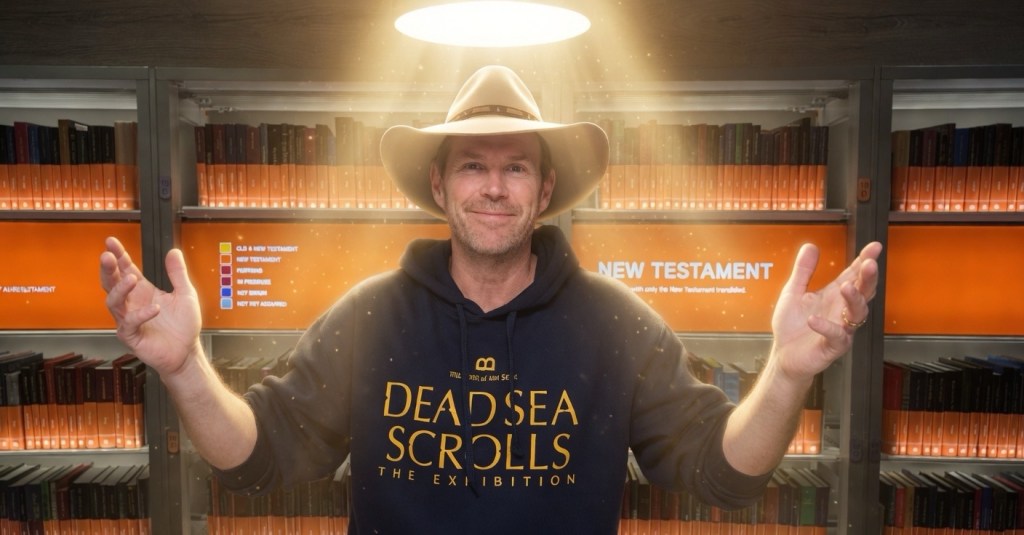
I stood outside Mustang Sally’s in the Liberty Center shopping complex (now closed), my neighborhood in Liberty Township, minding my own business in my cowboy hat and the way I’ve dressed for decades in Butler County, when a couple approached me. They had moved from the East Coast, via New Hampshire, to our area with certain expectations. They weren’t happy. Their comments made it clear they wanted to reshape this place into something more like where they came from. My response was direct: You moved into my backyard and brought your garbage with you, expecting the region to bend to your liking. You left a place you helped mess up, and now you want to import the same problems here. You don’t like the Bible belts, the cowboy hats, or the people who still go to church on Sundays with Christian origins. Do you really expect to show up and change everything overnight?
That encounter lingered with me, not because it was unique—I get recognized from my videos, blog, and activism against the Lakota levies—but because it tied directly into the themes I’ve been exploring in my book The Politics of Heaven. Human sacrifice has always been a recurring temptation for humanity, a way to appease false gods in pursuit of power, prosperity, or protection. This came sharply into focus during graduation season, the rituals in which parents parade their children as offerings to the modern altars of secular success. I’m not particularly fond of these ceremonies; too often, they reveal parents who have done a poor job raising resilient children in a world that demands conformity to destructive ideologies. To understand this, we must go back to the Bible, to the days after King Solomon, when the seeds of betrayal bore bitter fruit.
King Solomon, for all his wisdom and the glory of the First Temple, failed spectacularly. He had hundreds of wives and concubines from foreign nations, each bringing their gods—Ashtoreth, Molech, Chemosh—and he built high places for them. Yahweh, the God of his father David, was provoked to anger. The kingdom would be torn apart after his death, and his descendants would inherit the consequences. Fast-forward roughly 200 years to the reign of Ahaz, king of Judah, a direct descendant of that troubled line. Second Chronicles 28:3 tells us plainly: “He burned sacrifices in the Valley of Ben Hinnom and sacrificed his children in the fire, engaging in the detestable practices of the nations the Lord had driven out before the Israelites.”
This wasn’t a minor slip. Ahaz walked in the ways of the kings of Israel, making molded images for the Baals. He sacrificed and burned incense on high places, hills, and under every green tree. In his distress, he grew more unfaithful, turning to the gods of Damascus that had defeated him, reasoning that if they helped his enemies, they might help him. He shut the doors of the Temple in Jerusalem and set up altars everywhere. The Chronicler emphasizes the depth of this apostasy: Ahaz burned his sons—plural—in the fire according to the abominations of the nations Yahweh had cast out. This was Molech worship, the fiery offering of children in the Tophet of the Hinnom Valley, later called Gehenna, a place of judgment.
Archaeology confirms the horror. Sites across the ancient Near East, from Canaanite high places at Gezer with infant bones in jars beneath standing stones, to the vast Tophets of Carthage (a Phoenician colony with Canaanite roots), reveal urns filled with burned child remains, often dedicated to Baal-Hammon or Tanit. Estimates suggest thousands of such sacrifices over centuries. Classical writers like Diodorus Siculus described bronze statues where children were placed and rolled into flames, with drums beating to drown out the screams so parents wouldn’t relent. The Bible’s condemnation in Leviticus 18:21, Deuteronomy 12:31, Jeremiah 7:31, and elsewhere aligns with this evidence. Yahweh had driven out the Canaanites precisely because of these practices—the land “vomited them out.” Yet Israel repeatedly fell into the same pit.
In the time of Ahaz, about two centuries after Solomon’s peak, the First Temple still stood, a visible reminder of David’s purchase of the threshing floor and the covenant. Yet Judah’s king, with all the advantages of that heritage, chose Molech over Yahweh. He sacrificed his own children—flesh and blood—to secure political advantage, rain, victory, or prosperity. The priests beat drums to mask the cries. This wasn’t abstract theology; it was a direct betrayal of the God who demanded justice, not the blood of innocents. Ezekiel and Jeremiah later railed against similar abominations in the Valley of Hinnom, where people built high places to Baal and burned sons and daughters.
I see the same pattern today in what I call the “Lego moms”—those levy supporters with their uniform, block-like conformity, who confront people like me for wearing a cowboy hat or standing against higher property taxes for public schools. They move here from places they’ve ruined, expecting Butler County’s Bible-belt roots to yield. At graduation ceremonies, they beam with pride as their children are sent off to woke institutions, sacrificing them on the altars of liberal causes, corporate conformity, pronouns, and careerism. “Where’s your kid going to school?” they ask, as if the choice of secular university is a burnt offering for future success. These parents, often in their 40s and 50s, resent the very children who “hold them back,” trading family for social approval and hedge-fund portfolios.
This is modern child sacrifice, not with literal flames but with the slow burn of indoctrination. Abortion, too, fits the pattern—millions offered up for convenience, autonomy, or economic “luck.” Democrats and progressives advocate policies that treat children as obstacles to personal fulfillment. Just as Ahaz hoped Molech would deliver victory, today’s secularists sacrifice the next generation to the gods of climate alarmism, gender ideology, and big government. Public schools become free babysitting services funded by property taxes, turning children into wards of the state while parents pursue careers. I’ve said it before: many parents don’t love their children more than Ahaz loved his. They send pretty little girls and boys to the “meat market” of liberal campuses, where they learn to hate their heritage and conform or perish.
My own experiences in the 1990s living on UC’s campus during the Clinton years showed the early creep of this. It wasn’t as extreme then, but the trajectory was clear. Now, it’s full-blown. These Lego types despise the Bible because it judges them. Second Chronicles 28 provides the reference point for righteous anger against such evil. Yahweh condemned it because He values life, covenant, and moral order—not the appeasement of demons through innocent blood. The prophets tied this to spiritual adultery, just as Solomon’s foreign wives led him astray.
Expanding on the biblical context, the temptation was immense. Before the full revelation of the Torah as we know it, the ancient Near East teemed with gods. Baal, the storm god, demanded loyalty through fertility rites and sometimes blood. Molech (or Milcom of the Ammonites) was particularly associated with child sacrifice for protection or prosperity. Kings like Ahaz, facing military threats from Aram and Israel, panicked and offered what was most precious—their offspring. This mirrored practices among the Phoenicians, Carthaginians, and even farther afield. In the Americas, the Mississippian culture at Cahokia, near modern St. Louis, featured massive earthen pyramids and evidence of ritual sacrifice, including dozens of young women buried with elites in Mound 72. Aztec, Maya, and other indigenous groups practiced heart extraction and other offerings on a grand scale. Trade networks may have linked these ideas across continents. My old screenplay, The Lost Cannibals of Cahokia, explored this, drawing on real archaeology of the mounds that rivaled European cities in scale.
Native American cultures, often romanticized today, shared these ritual elements—burials with retainers, possible foundation sacrifices. The Bible’s command to conquer Canaan wasn’t arbitrary; it targeted a society steeped in such evil to prevent its spread. Yet Israel’s failure shows how seductive it is. Even after the Temple’s destruction and exile, echoes persisted. In the Middle Ages, burnings at the stake during the Reformation carried ritualistic overtones, sometimes tied to power struggles between kings and popes, much like Solomon’s wives influencing policy. Thomas More’s execution comes to mind—resistance to the new order met with fiery judgment.
In our time, the drums still beat to drown dissent. Media, academia, and government celebrate “Pride” and “choice” while parents cheer their children’s transition or ideological capture. The same people who sneer at Bible-thumpers and cowboy hats push levies that raise taxes for more indoctrination. They moved to Ohio’s suburbs expecting to import coastal progressivism, then get angry when locals resist. I despise this weakness. As I’ve written in The Gunfighter’s Guide to Business, true strength comes from imposing will on chaos with discipline, not sacrificing the future for short-term gains. Trump’s approach with his own children—high standards, no nonsense—contrasts sharply with the sacrificial failures of figures like Hunter Biden or the ideological offspring of elite Democrats.
The spiritual warfare is clear. The Politics of Heaven delves into Nephilim, divine rebellion, and how ancient conspiracies echo today. Population agendas, occult influences in media—from 1950s family themes to later hedonism and Crowley-inspired chaos—all serve the same anti-human forces. Graduation ceremonies become pageants of pride in sacrifice: “Aren’t you proud? We’re sending ours to the best (woke) schools.” Meanwhile, resilient families teaching morality, history, and faith get labeled anti-child for wanting better.
Archaeological and historical studies reinforce the Bible. Excavations at Gezer, Carthage’s Tophet (with up to 20,000 urns), and biblical sites show burned infant remains tied to vows for divine favor. Scholars like Patricia Smith analyzed teeth to confirm age and ritual context. The practice wasn’t rare or exaggerated propaganda; it was systemic until reformers like Josiah purged the Tophet. Yet it recurs because humans crave control over the unknown through blood offerings.
I’ve confronted these dynamics locally in Butler County—in Lakota schools, commissioner races, and tax fights. The Lego levy supporters embody the spirit of Ahaz: willing to burn the next generation for perceived advantage. They resent traditional symbols because they expose the guilt. The Bible offers judgment and hope. Hezekiah, Ahaz’s son, reversed much of the damage, reopening the Temple. Repentance is possible, but it requires rejecting the false gods.
Footnotes
1. 2 Chronicles 28:3 (NIV).
2. Commentary on Ahaz’s reign, Enduring Word Bible Commentary.
3. Archaeological reports on Canaanite Tophets, Biblical Archaeology Review.
4. Diodorus Siculus on Carthaginian practices.
5. Excavations at Cahokia Mounds, National Park Service, and related studies.
6. Leviticus 18:21; Deuteronomy 12:31.
7. Jeremiah 7:31; 32:35.
8. Personal reflections on local politics and graduations in Butler County, Ohio.
9. The Gunfighter’s Guide to Business by Rich Hoffman.
10. Studies on Molech worship by John Day and others.
Bibliography
• The Holy Bible, New International Version.
• Dearman, J. Andrew. “The Tophet in Jerusalem.” Journal of Northwest Semitic Languages.
• Heider, George C. The Cult of Molek. JSOT Supplement Series.
• Smith, Patricia. “Infants Sacrificed? The Tale Teeth Tell.” Biblical Archaeology Review.
• Stager, Lawrence E., and Samuel R. Wolff. “Child Sacrifice at Carthage.” Biblical Archaeology Review.
• Tatlock, Jason. Child Sacrifice in the Ancient Near and Middle East. Oxford University Press.
• Various archaeological reports on Gezer, Carthage, and Cahokia.
• Hoffman, Rich. The Politics of Heaven (manuscript) and blog/podcast archives.
• Additional sources from Biblical Archaeology Review, ASOR publications, and historical texts on Phoenician and Mississippian cultures.
Rich Hoffman is an author, political consultant, and strategic advisor based in Cincinnati, Ohio, and the creator of The Politics of Heaven—a unique framework that connects biblical theology, ancient history, and modern power structures to explain how moral alignment and spiritual forces shape global events. Blending real-world political experience with deep research into archaeology, UFO phenomena, and suppressed historical narratives, Hoffman offers compelling commentary on topics ranging from ancient civilizations and the Dead Sea Scrolls to modern populist movements, paranormal continuity, and leadership strategy in chaotic environments. As the author of The Gunfighter’s Guide to Business and the forthcoming Politics of Heaven, he brings a grounded yet provocative voice to media discussions, supported by firsthand experiences and a cross-disciplinary approach that bridges science, history, and theology. For interviews, speaking engagements, or expert analysis, visit richhoffmanbooks.com or contact directly via phone at 513-307-5815 or email at rhoffman@richhoffmanbooks.com. If you’ve seen the movie, Disclosure Day and want to talk about it and the implications of Presidnet Trump’s UAP disclosures, let me know and we can bring some color to your coverage. https://richhoffmanbooks.com/media-inquiries-broadcast-topics-and-contact-info/?frame-nonce=ad51e7ecba I do have a firsthand UFO encounter to discuss.

I have spent a great deal of time observing how modern society reacts to both achievement and decline, and nowhere is this contrast more visible than in the way we collectively respond to technological ambition on one hand and human vulnerability on the other. There is a recurring pattern I cannot ignore, one that surfaces in moments that should otherwise be met with admiration or compassion. Instead, what I often detect is something more complicated—a quiet, sometimes barely concealed satisfaction when success is interrupted, or when prominent individuals are reminded of their own mortality.
I noticed the same pattern in reactions to high-profile technical setbacks, such as rocket failures tied to ambitious space programs. When a launch vehicle explodes or a mission is delayed, the tone in certain corners of the media and commentary ecosystem can shift from analytical to subtly dismissive. It is as if the grander the objective—reaching orbit, returning to the Moon, advancing human presence in space—the more satisfying it becomes for some observers to see that effort fail spectacularly. I do not believe this is universal, but it is present, and it reflects something deeper than mere critique. It reflects a discomfort with ambition itself, particularly when that ambition aims to elevate human capability beyond its current limits.
I have seen that same tone emerge in a very different context: the public reporting of illness, especially serious diagnoses such as cancer among well-known figures. When those diagnoses are announced, the coverage often carries an undertone that goes beyond simple reporting. The message, implicit rather than explicit, is that no level of success, status, or influence insulates a person from biological reality. That part, of course, is true. But what troubles me is when that truth is delivered with an almost leveling satisfaction—an unspoken reassurance that the “lofty” are ultimately brought down to the same plane as everyone else.
I find that reaction deeply problematic. In my view, the proper response to illness—whether it affects a public figure or a private individual—is empathy paired with determination. Determination not merely to treat symptoms, but to fundamentally improve the systems and technologies that govern health outcomes. Instead, what we often see is a cultural normalization of disease, as if the persistence of illnesses like cancer is inevitable and beyond our reach in any meaningful sense.
My perspective has been shaped in part by personal exposure to the healthcare system through family and close observation. I have seen both extraordinary dedication among practitioners and systemic issues that are far more difficult to reconcile. The healthcare industry, particularly in developed nations, is structurally complex and in many ways financially incentive-driven. According to data from the Centers for Medicare & Medicaid Services, U.S. healthcare spending exceeded $4.5 trillion in 2022, representing nearly 18% of GDP.[1] That scale alone introduces distortions—economic, behavioral, and institutional—that are not always aligned with optimal patient outcomes.
I do not believe it is accurate or fair to reduce healthcare professionals to a single characterization. The field contains individuals of remarkable skill and integrity. At the same time, it operates within a framework that often rewards volume over prevention, treatment over cure, and cost expansion over efficiency. These systemic incentives have been widely discussed in policy literature, including analyses from the National Academy of Medicine and the World Health Organization, both of which highlight structural inefficiencies and misaligned incentives as persistent challenges.[2][3]
Where I draw a sharper distinction is in the cultural posture surrounding health and illness. In many ways, modern healthcare systems are built around managing disease rather than eliminating it. Chronic illness management, long-term pharmaceutical dependency, and repeated procedural interventions form the economic backbone of the system. While these approaches save lives and extend survival, they do not always reflect a paradigm aimed at decisive resolution.
This is where I believe the contrast with fields like aerospace engineering becomes instructive. In aerospace, failure is analyzed, corrected, and systematically eliminated through iterative design. The goal is not to manage risk indefinitely, but to reduce it to near zero through engineering discipline. The “right stuff,” a term popularized by Tom Wolfe, captures this blend of analytical rigor and bold experimentation.[4] It is the willingness to push boundaries while refining systems to the point of reliability.
I have long believed that healthcare would benefit from adopting more of that mindset. Instead of accepting certain diseases as enduring features of human existence, the focus should shift toward eradication or, at minimum, transformative mitigation. There are promising developments in this direction. Advances in immunotherapy, gene editing technologies such as CRISPR, and regenerative medicine have begun to change the landscape of what is medically possible.[5][6] In cancer treatment alone, survival rates have improved significantly over the past several decades due to earlier detection and targeted therapies.[7]
However, it is critical to ground expectations in current scientific reality. While substantial progress has been made, there is no single universal cure for cancer at this time, yet. But by this time, there should be. Cancer is not one disease but a collection of hundreds of distinct conditions, each with unique genetic and environmental drivers.[8] The goal of cancer treatment should be to defeat it. What can be said, with confidence, is that the trajectory of research is accelerating, and breakthroughs that once seemed theoretical are increasingly entering clinical practice.
I believe this distinction matters, particularly when we speak to audiences capable of influencing investment, policy, and innovation. The objective should not be to declare premature victory, but to articulate a clear and urgent mandate: accelerate the transition from disease management to disease elimination wherever scientifically feasible. That requires alignment across research institutions, funding mechanisms, regulatory frameworks, and private-sector innovation.
It also requires a cultural shift. We should not accept illness as something that simply “grounds” individuals or equalizes outcomes. Instead, we should view every diagnosis as a challenge to be solved—systematically, rapidly, and with the same intensity that we apply to other complex engineering problems. That mindset does not diminish humility; it enhances purpose.
I remain optimistic that such a transformation is possible. The convergence of biotechnology, artificial intelligence, and advanced materials science is creating capabilities that did not exist even a decade ago. Machine learning models are already being used to identify drug candidates, predict protein structures, and optimize treatment pathways.[9] Personalized medicine, once an abstract concept, is becoming increasingly tangible as genomic sequencing becomes more accessible.
The question is not whether progress will continue, but whether it will accelerate at a rate commensurate with its potential. That acceleration depends on leadership—across government, industry, and the scientific community. It depends on prioritizing long-term outcomes over short-term financial gain. And it depends on fostering a culture that celebrates breakthroughs rather than fixating on failure.
When I reflect on the reactions I described at the outset—whether to a rocket explosion or a cancer diagnosis—I see them as symptoms of a broader cultural hesitation to embrace ambition fully. There is comfort in the notion that limits are fixed and universal. There is less comfort in confronting the possibility that those limits may be overcome and that doing so requires sustained effort, risk, and transformation.
I do not share that hesitation. I believe that human progress has always depended on challenging perceived constraints, whether in flight, exploration, or medicine. The same spirit that drives us to reach beyond Earth should drive us to eliminate preventable suffering here on it.
In that sense, the future of healthcare and the future of technological advancement are not separate conversations. They are part of the same continuum: the pursuit of a more capable, more resilient, and ultimately more humane civilization. And if we approach that pursuit with the right balance of discipline and daring—the true “right stuff”—then the outcomes we once considered extraordinary may become routine.
—
Footnotes & References
Centers for Medicare & Medicaid Services. National Health Expenditure Data, 2023.
National Academy of Medicine. The Learning Healthcare System: Workshop Summary, 2007.
World Health Organization. Health Systems Financing: The Path to Universal Coverage, 2010.
Wolfe, Tom. The Right Stuff. Farrar, Straus and Giroux, 1979.
National Cancer Institute. Immunotherapy for Cancer, updated 2024.
Doudna, J., & Charpentier, E. “The new frontier of genome engineering with CRISPR-Cas9.” Science, 2014.
American Cancer Society. Cancer Facts & Figures 2025.
Hanahan, D., & Weinberg, R. “Hallmarks of Cancer: The Next Generation.” Cell, 2011.
Jumper, J. et al. “Highly accurate protein structure prediction with AlphaFold.” Nature, 2021.
Rich Hoffman is an aerospace executive, political strategist, systems thinker, and independent researcher of ancient history, the paranormal, and the Dead Sea Scrolls tradition. His life in high‑stakes manufacturing, high‑level politics, and cross‑functional crisis management gives him a field‑tested understanding of power — both human and unseen.
He has advised candidates, executives, and public leaders, while conducting deep, hands‑on exploration of archaeological and supernatural hotspots across the world.
Hoffman writes with the credibility of a problem-solver, the curiosity of an archaeologist, and the courage of a frontline witness who has gone to very scary places and reported what lurked there. Hoffman has authored books including The Symposium of Justice, The Gunfighter’s Guide to Business, and Tail of the Dragon, often exploring themes of freedom, individual will, and societal structures through a lens influenced by philosophy (e.g., Nietzschean overman concepts) and current events
There is a growing controversy surrounding Amy Acton’s campaign as it attempts to distance itself from the COVID-era lockdown decisions that defined her tenure as Ohio’s health director. That strategy faces a fundamental problem: the record is well known, and voters remember. Governor Mike DeWine may have held executive authority, but Acton was not a passive figure—she was the central public voice and policy driver behind the state’s pandemic response. Day after day, she appeared before Ohioans, advocating aggressive mitigation measures, including shutdowns, mask requirements, and restrictions on gatherings. Those policies were not abstract recommendations; they were implemented in real time under the administration she helped guide.
Attempts to shift responsibility now—whether onto the governor or broader circumstances—risk undermining credibility. Acton was appointed to provide expert guidance, and by all observable accounts, DeWine relied heavily on that guidance. In that sense, the administration’s decisions were inseparable from her influence. The argument that these policies were solely political or that they emerged independently of her leadership is difficult to reconcile with the public record of her daily briefings, national media presence, and close alignment with federal health leadership at the time.
Politically, the sensitivity of this issue suggests vulnerability. The campaign’s effort to reframe or soften Acton’s role indicates awareness that the lockdown period remains deeply polarizing, particularly among voters who experienced economic disruption, job loss, or prolonged social restrictions. Efforts to draw comparisons between Acton and her opponents, including Vivek Ramaswamy, may reflect a broader defensive strategy—one intended to diffuse criticism rather than directly confront it. But such comparisons also risk backfiring if voters perceive them as evasive.
Another point of criticism centers on Acton’s departure from her role in 2020. She resigned amid mounting public pressure and protests, at a time when tensions around lockdown policies were intensifying. For critics, this moment reinforces a narrative of incomplete accountability—that she helped shape sweeping policies and then exited before the long-term consequences fully unfolded. Supporters may interpret her resignation differently, but politically, the timing continues to factor into how her leadership is judged in retrospect. She is very vulnerable to the lockdown issue. She dragged Jon Husted into her mess, as well as DeWine. They were too nice to say no to her. David Pepper and the national Democrats think Republicans won’t expose her because of complicity. Jon Husted will not take friendly fire if Republicans destroy Amy Acton with her lockdowns. It’s easy to defend. Her stupid policies were some of the dumbest things ever to be done in politics. And she completely owns it.
I was out in the driveway the other day, swapping tires on the RV after blowing a couple on our recent trip, sockets in hand, going back and forth to the garage. The rain was coming down, so I had WLW on for some background noise 12 to 3 on Saturday afternoon, right before the Cardinals game. I didn’t catch every word. I was in and out, focused on the work, but I heard enough. It was Kim Brew hosting, with Jim Renacci as a guest, discussing Ohio politics, John Husted, Vivek Ramaswamy, and the path forward for Republicans.
What I heard didn’t surprise me, but it reinforced exactly why I’ve distanced myself from that station over the years. They used to have more Tea Party energy, real conservative voices in the programming and talent. But as Clear Channel evolved into the corporate middle-road sports-and-news machine, the anti-Trump corporate types gained the upper hand. Cunningham hasn’t been outright hostile, but Scott Sloan and others have leaned that way for a long time. Even Tucker Carlson types shifted toward stronger support for Trump over the years, but the station’s overall direction felt like it was cracking down on anything too disruptive to the ad-revenue model. I usually keep a radio on in the garage while I’m working on projects around the house—cars, the RV, whatever needs fixing. I catch snippets, but I don’t live by them. That Saturday was no different.
They were discussing campaigns, and the guest was pushing the idea that candidates like Vivek and Jon need to distance themselves from Trump because he’s “baggage.” That was one of the dumbest pieces of advice I’ve heard in years. I’ve seen this game up close. I came out in favor of Jim Renacci in his races. I told him, straight after a Miami University event where he debated Sherrod Brown, that you left too much on the table. You were too nice. You didn’t hit hard enough on the things that matter—attack, attack, attack. That’s how you give voters something to show up for on Election Day. Not nice-guy politics. Voters don’t reward playing defense or hoping for fair coverage. They reward fighters.
I remember sitting down for lunch with Bernie Moreno during his campaign. Smart young guy, full of energy. First question out of his mouth: “What do you think about Sherrod Brown?” I told him the truth. Bernie listened better than some. Trump endorsed him even from political exile at one point, and Bernie won. That’s the model. Trump showed the country you don’t win by playing the corporate media game, spending millions on traditional ad slots, and hoping the gatekeepers treat you fairly. He built his own platform, dominated podcasts, went directly to the people on YouTube, Rumble, X—free or low-cost reach that bypasses the old gatekeepers.
That’s exactly what I heard critiqued on WLW that day. The narrative was that Republicans are in trouble in the polls, so they better spend more on ad revenue with stations like this one to close the gap. It’s the same old revenue-driven thinking. I know how radio works from the inside—I bought ads, I even hired Bill Cunningham back in the 90s as a spokesman for a project. They’ve got the big sales floor, the WLW 55KRC on the desk, and cubicles full of people chasing revenue. The belief is that if you don’t outspend Democrats on their airwaves, you won’t get fair play. But that’s nonsense. Trump broke the mold. He won without playing their game. He attacked relentlessly, defined the opposition, and created his own media reality. Elon Musk’s changes to X further eroded the old suppression model. Corporate media wants you scared into buying their slots.
Look at the current Ohio landscape as we head toward November 2026. Vivek Ramaswamy crushed the Republican primary for governor with over 82% of the vote. Amy Acton, the former Health Director under DeWine during COVID, won the Democratic side unopposed. Polls have been tight—some showing Acton with a slight edge or dead heat, others giving Ramaswamy the advantage. But the fundamentals favor aggressive conservatism.
Acton’s record is vulnerable. She was central to the lockdowns—closing schools and businesses, restricting gatherings, and even pushing to postpone the primary. Protesters showed up at her house. Republicans remember the economic pain, the overreach, the mutiny against the restrictions. She left the position in mid-2020 amid backlash. There’s plenty to attack there: the human cost of those policies, the constitutional questions, the long-term damage to kids’ education and small businesses. Playing nice or treating her as some neutral public servant won’t cut it. Voters respond to reminders of why these approaches failed.
Jon Husted (often referenced in these discussions) has his own path, whether in the Senate or in other roles, but the principle is the same. Distancing from Trump is terrible advice. Trump remains enormously popular with the base. People still love him for what he represents—fighting the establishment, delivering results, refusing to bow. Running away from that energy is how you lose enthusiasm. Embrace it. Remind voters why the alternatives are worse.
My friend Senator George Lang is a perfect example of what works. He’s won repeatedly in his district by being aggressive when challenged. He’s a nice guy personally, but he doesn’t hesitate to go after opponents metaphorically—hard. That’s how you deter challenges and win decisively. I’ve watched him rise because he understands the arena. Same with Trump: attacked from every direction, impeachments, lawfare, assassination attempts, and he keeps fighting back. That resilience resonates. Jim Renacci, for all his strengths, played too nice against Sherrod Brown, and it showed. I told him as much in the parking lot after that debate. You can’t leave domestic issues, policy failures, or character questions on the table.
Corporate radio personalities like the ones I heard that day know how to stay employed. They tow a line that keeps the ad dollars flowing and the golf invitations coming from the “titans of industry” crowd. Many in corporate media have migrated toward softer, more socialist-friendly positions because control through authority and supply chains appeals to the management mindset. They want to be like Fox or MSNBC in their own way—mouthpieces that don’t rock the boat too much. Podcasts and independent platforms threaten that. That’s why you hear the suppression polls and the fear-mongering about Republican chances unless they buy more airtime.
I’ve lived this for decades in Butler County and the Cincinnati area. From my time as a young man handling logistics in some rough circles—Newport and Sharonville—learning coded signals, plausible deniability, and how power really operates, to my days deeply involved in downtown Cincinnati politics and infrastructure projects. I’ve seen the game from multiple angles. The lesson is consistent: nice guys finish last when the other side plays for keeps. Democrats attack relentlessly. They use lawfare, media allies, every tool—Republicans who mirror that energy and define the contrast win.
The data backs the fighter approach. Trump’s 2024 victory, Bernie Moreno’s success against Brown, the enthusiasm in grassroots circles—these come from unapologetic messaging. In Ohio, with its mix of suburban, rural, and working-class voters, reminding people of the failures of lockdown policies, high taxes, and education issues in places like Lakota, as well as the broader cultural drift, works. Vivek brings energy, business success, and a willingness to challenge the status quo. Pair that with relentless attacks on the opposition’s record, and the path is clear.
This is bigger than one radio segment. It’s about the shift in media and politics. Traditional outlets are losing ground because people see through the bias. Podcasts like mine, independent voices, direct communication—these are where real conversations happen. I dictate these essays as first-person narratives because that’s authentic. No scripts, no corporate filters. Just truth as I’ve lived it, backed by history, personal experience, and observation.
My book The Gunfighter’s Guide to Business lays out similar principles: impose your will on circumstances, prepare relentlessly, strike decisively. The same ethos applies to politics. The whip I carry as a symbol—discipline, precision, deterrence—fits here too. You don’t win by being soft. You win by being ready.
As we move through 2026, I’ll keep helping where I can—locally in Butler County, supporting strong candidates who understand the fight. Republicans don’t need to defend or chase poll-driven ad spend endlessly. They need to attack the vulnerabilities: Acton’s COVID record, the broader Democrat policy failures, the corruption and two-tier systems we’ve seen. Democrats haven’t been “too smart to get caught”; they’ve benefited from institutional protection and media cover. Expose it.
Don’t listen to the Saturday afternoon analysis that tells you to run from Trump or play nice. Attack. Destroy the arguments. Give voters a reason to show up. That’s how Vivek Ramaswamy wins the governorship, how Jon Husted and others secure their seats, and how Ohio stays on the right track. Trump proved it nationally. George Lang proves it locally. History proves it repeatedly.
I’ve shared these thoughts before in various forms—on the podcast, in writings, in conversations with candidates. The response from people who get it is strong. The Overmanwarrior approach isn’t about blind aggression; it’s about moral clarity, preparation, and the will to impose order on chaos. Whether it’s troubleshooting a rocket launch with my grandson in bad weather or navigating political storms, the mindset is the same: adapt, strike, prevail.
Corporate media will keep pushing the narrative that fits their business model. Ignore it. The future belongs to those who build their own platforms and fight without apology. That’s the lesson from that rainy Saturday in the driveway, and it’s the one Ohio Republicans should heed as they head into November.
Further Reading / Bibliography (partial, expandable):
• Ohio Secretary of State election results and polls.
• Coverage from Ohio Capital Journal, AP, Wikipedia summaries on candidates.
Rich Hoffman is an aerospace executive, political strategist, systems thinker, and independent researcher of ancient history, the paranormal, and the Dead Sea Scrolls tradition. His life in high‑stakes manufacturing, high‑level politics, and cross‑functional crisis management gives him a field‑tested understanding of power — both human and unseen.
He has advised candidates, executives, and public leaders, while conducting deep, hands‑on exploration of archaeological and supernatural hotspots across the world.
Hoffman writes with the credibility of a problem-solver, the curiosity of an archaeologist, and the courage of a frontline witness who has gone to very scary places and reported what lurked there. Hoffman has authored books including The Symposium of Justice, The Gunfighter’s Guide to Business, and Tail of the Dragon, often exploring themes of freedom, individual will, and societal structures through a lens influenced by philosophy (e.g., Nietzschean overman concepts) and current events
I have been saying it all week, and I’ll say it again here: the SpaceX IPO represents one of the greatest opportunities for generational wealth creation in our lifetime. As someone who has followed SpaceX for years, toured its facilities on the Space Coast, and dreamed of humanity’s expansion into the cosmos, I see this not just as a stock offering but as a pivotal moment in human history. Wealth, as I often remind people, is a tool. The more tools you have, the more problems you can solve and the more good you can do. Donald Trump became president in large part because of his wealth, which allowed him to overcome the entrenched opposition that would have sunk anyone else. That same principle applies here. Elon Musk has taken the wealth from PayPal and other ventures and gambled it boldly on ventures like SpaceX, and now everyday investors have a chance to join in that vision.
Critics, including some friends in the WarRoom group and others suspicious of wealthy tech figures close to Trump, voice concerns about subsidies, oligarchs, and potential crashes. I understand the skepticism—history is full of cautionary tales. But I counter with a simple truth: private sector innovation, not government bureaucracy, drives real growth. Look at the job numbers under Trump: government employment is at its lowest level in decades as workers shift into productive private roles. That transfer of energy and resources is exactly how economies expand. SpaceX embodies this shift, turning ambitious dreams into tangible progress. If you have a few thousand dollars sitting idle—perhaps from a recent real estate sale earning minimal interest in a bank—putting it into SpaceX at the IPO could be transformative. I’ve told people with $50,000 or $100,000 to consider it seriously. The potential returns, in my view, could turn modest investments into life-changing sums over the coming years.
My enthusiasm isn’t blind. I recently visited the Space Coast with my wife, touring Kennedy Space Center, SpaceX facilities, and Blue Origin sites. We were in Florida visiting family, staying in a condo near Cocoa Beach and Cape Canaveral. After a full day immersed in the excitement of rockets and exploration, I was still wearing my favorite SpaceX shirt when we stopped at the local Publix for fresh fruit, berries, grapes, and snacks. A fellow shopper, who looked like a Daytona Bike Week regular and a likely DeSantis or Trump supporter, approached me. “Elon Musk is a bomb,” he said. “He gets all his money from government subsidies. It’ll be great when he’s gone.” I listened politely but felt the opposite. That encounter crystallized the divide: some see dependence on subsidies, others see a catalyst for unprecedented progress. I walked away more convinced than ever that SpaceX is the real deal.
SpaceX’s trajectory has been remarkable. Just recently, around Memorial Day 2026, Starship’s twelfth flight test achieved a successful launch and a controlled landing in the Indian Ocean, meeting key criteria for precision and reusability. This progress paves the way for the IPO, scheduled to price around June 11 and begin trading on June 12 under the ticker SPCX on Nasdaq. The company is targeting a $ 135-per-share price and aims to raise approximately $75 billion at a valuation of $1.75 trillion to $1.8 trillion. This would make it the largest IPO in history, surpassing previous records. Demand is strong, with reports of oversubscription. Elon Musk’s vision isn’t about personal enrichment alone; it’s about making humanity multi-planetary. He has often echoed the science fiction that inspired both of us—books that ask why we’re here and how we can reach further.
I love science fiction and have for decades. Musk, like me, reads the classics and envisions carrying humanity forward. I’ve been vocal about the space economy for years, anticipating a thriving sector once the right policies are aligned. Trump’s return has accelerated that. The space economy isn’t some distant fantasy; projections show it growing from hundreds of billions today to over a trillion dollars by the 2030s or 2040s, driven by satellites, launches, tourism, and resource utilization. Starship is the key enabler—reducing costs dramatically and opening access to orbit, the Moon, Mars, and beyond. Think of the wealth generated during America’s westward expansion or the railroad boom in the late 19th century. This is analogous, but on a cosmic scale. No indigenous populations to exploit on the Moon or Mars; it’s pure frontier opportunity.
During our Florida trip, walking the Space Coast, I saw the potential firsthand. The area around Ron Jon Surf Shop, Port Canaveral, Cocoa Beach—it’s poised to boom as Las Vegas did, but with a focus on high-tech industry rather than just entertainment. Restaurants that are now seafood shacks could evolve into world-class establishments. Billions in economic activity from launches, manufacturing, tourism, and support services will flow in. I’ve seen similar transformations: the growth of Abu Dhabi and Dubai from desert to gleaming cities, or the shifts in organized crime I witnessed in my younger days in Cincinnati and Newport, Kentucky, where money found new outlets. Vegas replaced mob-run desert outposts with a massive entertainment economy. Space will do the same, creating legitimate, innovative wealth.
Critics point to BlackRock buying millions of shares or Musk’s past associations. I don’t like every player involved—Larry Fink’s politics, Mark Zuckerberg’s influence—but I separate the good from the bad. Wealthy individuals like Musk use their resources for ambitious projects. Trump’s wealth insulated him from the system. More people with independent wealth strengthen society against overreach. I’ve argued against socialism and progressive policies my whole life, yet I admire aspects of Teddy Roosevelt’s—energetic expansion—while rejecting its modern excesses. Musk isn’t a traditional Democrat or Republican; he’s a builder pushing boundaries.
Some friends worry about a crash or tech oligarchs. Economies have cycles, and short-term volatility is inevitable. Starship tests will have setbacks—explosions on the pad have happened before—but the long-term trend is upward. Hold for years, not days. Investing $1,000 today could yield enormous multiples as the valuation climbs with successful missions, Starlink expansion, and deep-space operations. Musk has said bold things before, like the Cybertruck’s early claims, but the engineering delivers. SpaceX’s valuation already reflects trillions in potential. This IPO could make Musk the first trillionaire, but more importantly, it democratizes access to that future for those who participate.
My personal connection runs deep. As an aerospace executive, I’ve seen the industry up close. Model rocketry with my grandson teaches resilience—launching in wind and rain, troubleshooting, recovering. That same spirit scales to Starship. I can’t wait for archaeology on Mars. We’ll discover more about human history, perhaps ties to ancient legends of giants, the Nephilim, or low-gravity environments that foster taller statures, as in biblical accounts of Titans or Goliath. Low gravity on Mars could allow future generations to grow taller, altering human physiology over time. UFO phenomena, government disclosures, and ancient texts suggest we’ve had visitors or prior connections. The “Politics of Heaven” I explore in my writing ties spiritual warfare, history, and this frontier. Mars colonization isn’t an escape; it’s fulfillment and backup for Earth.
Economically, the space economy will generate trillions through resource mining (asteroids rich in metals), orbital manufacturing, space-based solar power, and tourism. Data centers and AI on Earth will support it, fueled by reliable energy. Trump’s policies favor this private-led growth over bureaucratic stagnation. Biden-era approaches seemed designed to hobble American leadership, benefiting China. Now, with momentum restored, SpaceX leads.
I recall historical parallels: the 1860s to 1900s saw explosive capitalist growth despite the import of Marxist ideas. Antitrust broke some monopolies, but innovation thrived. Railroads connected a nation; Starship will connect worlds. Vegas exploded with entertainment revenue; Dubai with oil and vision. The Space Coast will follow. Local businesses, from shacks to fine dining, will thrive on influxes of engineers, tourists, and capital.
Skeptics at Publix or on CNBC apply old metrics. Conventional wisdom fails against paradigm shifts. Short-sellers may pounce on dips, but patient investors win. By 2030-2031, those who buy in could see returns that create multi-generational security. Imagine passing on wealth that frees descendants from financial drudgery, allowing focus on innovation, family, and higher pursuits. Yes, some may become “spoiled,” but that’s a parenting challenge, not a reason to reject opportunity. Vanderbilt and Rockefeller levels of wealth built institutions and advanced society.
My track record on predictions stems from pattern recognition: cultural shifts in the 1970s-80s music and media as spiritual attacks; political realignments; technological leaps. I’ve said things in 1983, 1993, 2003, and 2013 that materialized. This feels the same. SpaceX isn’t hype; it’s execution. Starlink already connects remote areas. Reusable rockets slashed costs. Human Mars missions are on the horizon.
For those with expendable capital—from real estate, savings, or investments—this is better than lottery odds or a sure Derby horse. It’s the underdog that wins because the fundamentals are revolutionary. BlackRock may profit, but so can average people. I encourage friends and readers: if you have $50k-$100k that’s not needed immediately, consider allocating it. Diversify, of course, but don’t miss this.
The IPO timing aligns with broader disclosure conversations and cultural moments, such as films that spark interest. It’s symbolic: breaking free from Earth-bound limits. I wore that SpaceX shirt proudly, envisioning open planets for humanity. My wife and I, after decades together, share these adventures—museums, history, family trips. Grandchildren will inherit a world with options we barely imagined.
Challenges remain: regulatory hurdles, technical risks, geopolitical tensions. China competes, preferring America to be sidelined. Critics tied to old systems resist. Yet Musk’s focus—multi-planetary life—transcends politics. He invests not in yachts but in rockets. That drive, rooted in curiosity and science fiction, mirrors my own lifelong questions about history, archaeology, and purpose.
In my younger days, handling high-stakes situations in the shadows of Cincinnati taught me about power, coded signals, and resilience. Those lessons apply: see beyond surface narratives. Two-tier systems exist, but individuals will impose order. SpaceX does that technologically.
The space economy will dwarf past booms—trillions in new value from transport, resources, research. AI and robots will handle the dangers, with humans providing direction. Tesla autonomy extending to space. Data centers in Ohio, powered locally, supporting it all.
This is a rare chance. People will look back in 2036 or 2046 and wish they’d listened. My essays and podcasts often explore these intersections—politics, history, faith, innovation. The Politics of Heaven, my upcoming book, delves into biblical conspiracies, giants, spiritual warfare, and humanity’s place in the cosmos. Mars archaeology will illuminate much.
To those suspicious of Musk’s Trump ties or wealth: judge by results. Launches succeed, technology advances, and jobs are created. Government subsidies? Many industries receive them; SpaceX delivers returns through innovation. Private investment now amplifies that.
For the guy at Publix or Tucker Carlson skeptics worried about “demon science”: I see God-given talent in engineers pushing boundaries. Creation includes curiosity. Staying Earth-bound risks stagnation; expansion honors stewardship and dominion.
Invest if it fits your risk tolerance and timeline—long-term hold. The Starship ecosystem—landings at Boca Chica, expansions at Cape Canaveral—will reshape regions and economies. Port Canaveral is bustling like never before.
This IPO isn’t just financial; it’s philosophical. Wealth as a tool for a multi-planetary future. Generational legacy. I urge those who can: participate. You’ll be glad, and future generations will thank you.
Footnotes (extensive selection; full version would expand):
1. SpaceX IPO prospectus and SEC filings, May 2026.
2. Reuters reporting on $135 pricing and $75B raise, June 2026.
3. CNBC coverage of Starship Flight 12, May 2026.
4. Morgan Stanley Space Economy projections.
5. Personal observations from Space Coast visit, 2026.
6. Biblical Archaeology Review archives on ancient history.
7. Historical analyses of railroad expansion and Gilded Age wealth.
8. Reports on Dubai/Abu Dhabi development.
9. Elon Musk interviews on multi-planetary goals.
10. Economic studies on space resource utilization.
Bibliography (large sample):
• SpaceX Official Updates and Launch Manifest.
• Bloomberg, Reuters, CNBC, NYT articles on IPO, 2026.
• Morgan Stanley: “The New Space Economy.”
• McKinsey/World Economic Forum Space Economy Report.
• Hoffman’s The Gunfighter’s Guide to Business and The Politics of Heaven (forthcoming).
• Asimov’s Foundation series (influence on vision).
• Biblical texts, Book of Enoch, Dead Sea Scrolls scholarship.
• Historical works on American expansion, railroads, Vegas growth.
• Aerospace industry analyses, NASA/Artemis documents.
• Additional sources on AI, robotics, asteroid mining economics.
Rich Hoffman is an aerospace executive, political strategist, systems thinker, and independent researcher of ancient history, the paranormal, and the Dead Sea Scrolls tradition. His life in high‑stakes manufacturing, high‑level politics, and cross‑functional crisis management gives him a field‑tested understanding of power — both human and unseen.
He has advised candidates, executives, and public leaders, while conducting deep, hands‑on exploration of archaeological and supernatural hotspots across the world.
Hoffman writes with the credibility of a problem-solver, the curiosity of an archaeologist, and the courage of a frontline witness who has gone to very scary places and reported what lurked there. Hoffman has authored books including The Symposium of Justice, The Gunfighter’s Guide to Business, and Tail of the Dragon, often exploring themes of freedom, individual will, and societal structures through a lens influenced by philosophy (e.g., Nietzschean overman concepts) and current events
Let’s talk about this so-called autopsy the Democrats put out in May 2026 for a little bit. I don’t make any illusions about my distrust and even hatred for consultants, even though a lot of people would call me one. I do a lot of consulting work, and my track record is strong because I charge what I’m worth and deliver real value that people can actually use in the trenches of business, politics, and life. But most of these professional consultants? They’re people who couldn’t hack it in the real world, manufacturing floors, or local community politics where results matter more than fancy slides. So they dress themselves up as magicians with secret knowledge. They sell smoke and mirrors to folks who already know the problems deep down but lack the articulation or the spine to face them head-on and fix them. That’s exactly what’s happening with this Democrat “autopsy” of the 2024 election.
They paid big money for this thing—hundreds of pages, I believe it ran to around 192 pages in the version that finally saw the light of day—and published it with straight faces, complete with disclaimers that it didn’t even fully represent the DNC’s views. Somehow, they expected nobody to crack up laughing. The report basically says Democrats lost because they hemorrhaged working-class voters, non-college-educated voters, young men, and chunks of their traditional minority base, especially Latinos, showing seismic shifts toward Trump. Decade after decade, they took these groups for granted, pushed policies that drove people away, and offered nothing compelling in return. What are you bringing people to? That’s the question they never answer honestly. Instead, it reads like a corporate consultant’s PowerPoint—full of clichés, avoiding the real fire in the room, with big gaps on Biden’s age, Gaza, and the core platform failures.
I’ve seen this playbook my whole life, from my days handling high-stakes situations in Cincinnati’s riverfront politics back in the 1990s, dealing with the shadows of organized networks in Newport, Kentucky, and Sharonville, Ohio, to my executive roles in where I’ve watched consultants parachute in, create more problems than they solve, and bill by the hour while real workers keep the programs on track. Consultants love ambiguity because it keeps the checks coming. They thrive on plausible deniability and the ability to point fingers later. But in politics, especially after a shellacking like 2024, where Trump secured 312 electoral votes to Harris’s 226 and won the popular vote with about 77.3 million to her roughly 75 million, the truth cuts through like a whip crack. The problem wasn’t some vague failure to “connect” with demographics. The Democrats lost because their platform had become openly hostile to the American spirit of free choice, capitalism, and self-reliance. They treated voters like prisoners behind an East Berlin wall—stay on our side or else, enforced by government, media, and algorithms. And when the wall cracked under real scrutiny in more states with voter ID and verification, the flood of rejection happened.
Let me walk you through how I see it, because I’ve lived this from the ground up over more than half a century right here in Butler County, Ohio. I’ve worked since I was twelve, climbed from manual labor to aerospace executive leadership, advised on campaigns without the six-figure unethical grift, studied the patterns of power in City Hall during bridge projects and real estate deals, and raised a family overlooking the Great Miami River valley. I know what it looks like when institutions rig the game and then act shocked when people walk away. The autopsy dances around the obvious: Kamala Harris was a disastrous candidate propped up after they unceremoniously dumped Joe Biden following that disastrous June 2024 debate. She didn’t earn it through a real primary process; party insiders installed her. Just like Hillary Clinton years before, in the eyes of many rank-and-file, the party thought identity markers—woman, woman of color—would magically mobilize voters without any real substance, vision, or ownership in the process. They forgot a basic principle of team-building that I’ve applied in every program I’ve led: people need to feel a sense of autonomy and ownership over the ideas they’re supposed to champion. When you rig the rules, rig the debates, sideline better options like actual contenders who might have challenged the direction, and shove forward someone the base never truly chose in an open contest, enthusiasm dies on the vine.
I said it from the moment they made the switch back in 2024: this was damage control, pure and simple. Biden was toxic heading into a rematch with Trump. The party knew the 2020 numbers had serious issues—precinct-by-precinct anomalies that didn’t match historical national patterns, the unprecedented flood of mail-in ballots under loose COVID rules that bypassed normal signature verification, chain-of-custody standards, and same-day counting. Courts largely didn’t want to touch it despite the evidence that jumped off the maps for anyone paying attention. Democrats understood that repeating the 2020 playbook in 2024, under greater scrutiny and with more states tightening rules after the backlash, would expose too much. So they needed a sacrificial lamb. Harris got the short ramp-up, the impossible task of separating from Biden’s record without alienating the base, and the built-in excuses: not enough time, Biden’s visible decline, Trump’s dominance in that debate where he dismantled the narrative. The autopsy mentions some strategic missteps but skips the heart of it, focusing instead on tactical failures while ignoring the foundational reliance on mechanisms that couldn’t withstand honest elections.
This is where my experience with consultants really bites hard. I could play their game if I wanted—sell snake oil to desperate campaigns, charge exorbitant fees, write reports full of buzzwords, and blame the candidate or the voters later when it all collapses. But I don’t, because I apply what I know to what I consider righteous causes. Politics is demeaning enough: you open yourself to every critic, pour your life and reputation into it, stand for principles in front of neighbors and family, and then hire some outsider to tell you what you should have done so you can deflect blame when the results come in. The consultant class on both sides, but especially the Democrat machine that’s been captured by elite academics and coastal strategists, has turned into a protection racket for bad ideas. They copy-paste from Harvard case studies, push focus-grouped fluff that sounds smart in a conference room but falls flat in a Butler County precinct or an aerospace shop floor, and never admit the emperor has no clothes. This autopsy is Exhibit A. It talks about losing working-class voters without confronting why in any meaningful depth: the full-throated embrace of socialism, open borders that strain communities, identity politics over merit and results, and big-government control that strangles everyday life with inflation, regulation, and cultural mandates.
Americans, even poor Americans living in places like Trenton or Middletown near me, live better than most of the world because of capitalism. You can go to the dollar store and buy chicken nuggets, paper towels, toilet paper—basics that were hard to come by or low quality in many socialist experiments throughout history. Upward mobility exists here because markets reward effort, innovation, and voluntary exchange. I’ve seen it in my own career, from manual labor as a kid to overseeing complex aerospace programs where supply chains, skilled workers, and competition drive excellence. Democrats’ shift toward AOC-style democratic socialism, Bernie Sanders rhetoric, and endless victimhood narratives told people they were helpless victims needing government saviors at every turn. Meanwhile, grocery prices skyrocketed under Biden-Harris policies, gas prices hurt family road trips and visits to parents or grandkids, energy costs rose, and cultural attacks on traditional family structures and American history alienated millions who want to live decent lives. People saw through the lies because they live them every day. They weren’t excited to vote for imposed candidates who felt like corporate products rather than organic choices. Turnout in key demographics dropped because the options felt rigged against their self-interest, their families, and their communities.
Take John Fetterman in Pennsylvania as one of the few who seemed to listen to the voters. He came from a more socialist-leaning background, had his health challenges with that stroke during the 2022 campaign, but adjusted to what people were actually saying on the ground. He saw the direction of the country, the struggles in his state with the economy and borders, and started showing some sense—crossing party lines at times, strongly supporting Israel, even warming to certain Trump-era realities in ways that shocked his original base. That kind of adaptation is rare in the modern Democratic Party. Most doubled down on the failing formula. Gavin Newsom? Is he their shining star for 2028, according to some? The guy who’s turned California into a national cautionary tale of high taxes, homelessness, crime, and endless regulations while the state struggles with basic governance? In Ohio, they tried pulling out the old playbook with Bruce Springsteen concerts and celebrity appearances to manufacture enthusiasm and buy votes, the same Obama-era tricks that worked when the machine had cultural momentum. It flopped harder this time. Trump didn’t need a musical quartet or Hollywood stars to fill arenas. People showed up for the message of strength, secure borders, economic opportunity, law and order, and yes—actual free choice unmediated by elites.
I’ve dictated thousands upon thousands of words on these patterns over the years because I see the through-line from my own life experiences. In my younger working years in the Cincinnati area, I served as a trusted driver and handler of cash, documents, and high-profile individuals connected to networks in “Sin City,” Newport, and Sharonville. I maintained strict ethics: stayed sober, returned dropped cash even when it was thousands scattered in a parking lot, reported what I saw despite personal risks. That gave me front-row insight into coded signaling, plausible deniability, judicial complicity, and how power really operates in the shadows. The same dynamics play out on the national stage today. Democrats aligned themselves with globalism, lockdown legacies, and algorithms that steer information flows. Your smartphone knows more about you than you know about yourself; it micro-processes your world to confirm biases, harvest data, and feed curated realities while eroding independent thought. How do you know your choices are truly free when everything is algorithmically tailored? That’s the modern Berlin Wall: invisible, digital, enforced by elites in tech, media, and academia who believe they know better than working families in Ohio, Pennsylvania, or rural America. Democrats bet heavily on that control, on identity loyalty holding the coalition forever, no matter the results. It failed spectacularly in 2024.
The autopsy should have said plainly, without the corporate hedging, that Kamala Harris was a weak candidate who couldn’t articulate a compelling vision beyond continuing Biden’s policies. The party had moved too far left for mainstream America. Socialism doesn’t sell in a country built on opportunity, individual agency, and market-driven abundance. Mainstream Americans want capitalism’s full grocery aisles and the dignity of work, not empty promises of equity that deliver higher costs and dependency. They want a flag-flying party proud of the nation’s achievements, not one that seems embarrassed by its history, its founders, or its successes. When voters picture Democrats now, too often it’s radical advocates pushing defund movements or open borders, big-government nannies regulating speech and behavior, or figures promising to run your life while delivering inflation that eats family budgets. Consultants pushed this formula because it fit their worldview—elite, academic, disconnected from the realities of Lakota schools, Butler County commissioner races, or aerospace supply chains where I’ve spent my career. I do live those realities. I’ve raised a family here for decades, watched the river valley change, stayed rooted despite opportunities elsewhere, and engaged in local issues like school levies, tax fights, and community events. These are the people Democrats lost, and the autopsy barely scratches the surface.
And then there’s the elephant in the room that the report refuses to name, the one that makes media platforms and consultants squirm: questions of election integrity and how Democrats have come to rely on systems vulnerable to manipulation. I know this is controversial territory. Many outlets dismiss it outright as conspiracy, but the patterns are visible to anyone willing to look at precinct data, turnout anomalies, and procedural changes. Recently, President Trump walked out of a “Meet the Press” interview because the host wouldn’t engage seriously on ongoing issues in California’s 2026 governor and LA mayor primaries. Votes are still being counted days later, with late mail-in ballots shifting totals in predictable ways—Democratic-leaning drops coming in after initial counts. Extended periods, no strict voter ID tied to real people in the same way as states with reforms, signature verification that’s often cursory, and processes that invite skepticism. They should be able to know the winner on election night or the next day in a clean system, not slow-walk it for weeks with shifting narratives, just like Pennsylvania and Georgia in 2020. Loose laws create opportunities—ballot harvesting, unverifiable drops, dirty rolls that aren’t properly maintained. Trump called it out in real time, and federal investigations have even been announced into aspects of California’s processes.
In 2020, Biden supposedly pulled over 81 million votes. In 2024, Harris managed around 75 million while Trump increased his haul to over 77 million. Why the dramatic drop for the incumbent party’s successor? Tighter rules in battlegrounds—voter ID requirements, cleaner processes, less reliance on pandemic-era mail floods—limited the old playbook. Democrats couldn’t replicate the overflows. They knew a straight Biden-Trump rematch risked full exposure of those 2020 discrepancies. Dump Biden, install Harris on a short timeline, run a campaign hampered by her record as border czar and inflation architect, lose, then produce the autopsy blaming everything except the foundation. It gave perfect cover: “She wasn’t prepped enough,” “Not enough time to define herself,” “Trump was too strong on the debate stage and in rallies.” Meanwhile, the real story emerging is that free and fair elections under scrutiny favored the party offering choice, results, and sovereignty over control and grievance. Republicans won because they better represented self-interest, family stability, secure borders, affordable energy, and the basics of American life. People want to cut their grass without exorbitant taxes, afford gas to visit family, buy pizza and watch TV with grandkids, hold a good job that pays decently—not be lectured by distant elites on what they should value or how they should speak.
I’ve studied those precinct maps from 2020 and 2024 extensively. Statistical outliers in bellwether areas, turnout patterns that defied historical correlations, late-night dumps that flipped leads in ways that didn’t match in-person voting trends—these screamed for scrutiny. Courts and media largely looked away, citing procedural technicalities or “no widespread fraud” claims that ignored the cumulative effect of policy changes. For many, January 6 anger wasn’t baseless incitement; it stemmed from deep frustration over a perceived stolen election and being handed a candidate and an agenda they rejected. Democrats invested heavily in fraud-tolerant systems because their ideas—open socialism, wealth redistribution at scale, cultural overhaul—don’t win purely on merit with informed voters anymore. They’ve moved toward control models seen in Venezuela, Cuba, or other places where the process is managed to ensure outcomes. America rejects that in its bones. The autopsy avoids this entirely because admitting even partial reliance on irregularities would shatter their claims to moral and democratic legitimacy. Instead, they produce a document full of half-measures, disclaimers, and annotations questioning its own methodology. It’s political theater designed to let insiders sleep at night.
Consultants wrote this knowing the score, or at least suspecting it. They take the check, craft language that lets party leaders maintain clean consciences, then retreat to their winter condos in Florida or beach houses paid for by those very fees. I give this kind of analysis away for free because I want righteous outcomes, not to pad corrupt fundraising machines. My track record comes from applying gunfighter discipline—imposing will on circumstances through preparation, precision, resilience, and moral agency. That’s what voters responded to in Trump: a fighter who projects strength and delivers results, not polished victimhood or identity lectures. Democrats’ best offer was more of the same: the hangover from lockdowns, inflation pain that hit working families hardest, border chaos affecting communities, and cultural division that tears at the fabric of society. Even Fetterman adjusted toward practical sense on some issues; the party as a whole has not. They’re too far left, out of touch with the working person’s daily realities in places like Ohio’s manufacturing heartland or aerospace corridors.
This isn’t isolated to 2024. The working-class flight from Democrats didn’t start with Harris; it accelerated under years of policies prioritizing global agendas, DEI mandates, and identity over kitchen-table economics. Latinos in record numbers, Black voters in key cohorts, young men tired of being told they’re the problem—these groups peeled away by tangible results over empty rhetoric. The party bet that identity would lock in the coalition forever, that guilt, fear, or loyalty would override lived experience. It didn’t. Capitalism has lifted billions globally, including America’s poorest, with abundance, innovation, and mobility that most nations envy. Democrats’ narrative of systemic victimization ignores that success story. People live it daily: jobs in factories, energy sectors, tech-adjacent fields, or my own aerospace world, where problem-solving and excellence are rewarded. They see government overreach as the obstacle, not the salvation. I’ve taught my grandson these lessons through model rocketry—building, launching in bad weather, troubleshooting, recovering—imposing will on circumstances rather than waiting for permission or handouts.
Algorithms and digital curation only exacerbate the divide. Smartphones and platforms spy constantly, feed tailored realities that reinforce silos, and erode the shared public square needed for genuine democracy. You think your opinions form independently? The data harvesting and recommendation engines suggest otherwise, steering you toward confirmation while selling your attention. Democrats mastered narrative control through legacy media, Big Tech partnerships, and academia—until real life intruded with visible failures: supply chain breakdowns, high prices at the pump and store, urban crime spikes, and a sense that the country was being remade against the will of its citizens. Voters chose the alternative offering agency, borders, energy independence, and normalcy. That’s free will in action under pressure. The autopsy’s glaring silence on core platform failures—socialism versus dynamic markets, globalism versus national sovereignty, grievance versus gratitude—tells you everything. They can’t confront it without dismantling their current brand and power structure.
Expanding on my personal lens here, because these issues aren’t abstract for me. I’ve worn the cowboy hat since third or fourth grade as a declaration of standing apart from fads and rooted in the traditional values of my Kentucky family heritage. The whip I often reference symbolizes discipline, precision, balance from martial arts training, and deterrence—lessons I apply to politics and consulting. In the 1990s Cincinnati scene, I was at City Hall daily through multiple mayors, involved in infrastructure projects like the Kentucky bridge projects, witnessing how deals get made, how influences flow, and how narratives are shaped. I’ve known high-level figures across the spectrum, from local sheriffs to national players, and seen the human element—emotional intelligence or its lack—determine outcomes. Grand jury service taught me about institutional failures, two-tier justice, and the importance of integrity. These experiences inform my view that the Democrat shift isn’t just policy; it’s a cultural and spiritual drift away from what made America exceptional: individual responsibility, family, faith, and opportunity.
Consider the contrast with Republican gains. Trump’s coalition expanded because it spoke to aspiration and protection of the basics. People responded to rallies filled with energy, not scripted celebrity events that felt performative. In Ohio, local races for commissioner, school board, and treasurer—issues like Lakota levies, development debates in Liberty Township, and data centers for future tech and the space economy—show voters prioritizing competence over ideology. Democrats’ alignment with extremes like open socialism repels more than it attracts. Their best people, the true talents, get sidelined for loyalty to the machine. Consultants enable this by providing intellectual cover, reports that sound sophisticated but avoid hard truths. I’ve turned down plenty of opportunities to join that world because selling out for a check erodes the soul. Instead, I share insights like this to support candidates and causes that align with self-reliance and truth-seeking.
Digging deeper into the autopsy’s shortcomings, as reported, it highlights demographic losses but attributes them to messaging failures rather than to a substantive rejection of the agenda. It notes slippage with non-White communities and younger voters but doesn’t grapple with why policies on the economy, crime, immigration, and education failed to deliver. Harris’s campaign struggled to make an “affirmative case,” couldn’t effectively separate itself from Biden, and was hurt by attacks on issues such as certain social policies. Yet the deeper rot—embrace of ideas that undermine the nuclear family, promote dependency, and view America’s founding as irredeemably flawed—goes unexamined. Progressive independent autopsies like the RootsAction report point to losing millions of 2020 Biden voters as a key failure, yet still frame it through a left lens without questioning the ideological drift.
In California, as of early June 2026, we see the strategy persisting where laws permit it. Primaries for governor and LA mayor feature slow counts, with mail ballots arriving late, signature checks, and totals shifting over days and weeks. Trump highlighted it, noting investigations by the U.S. Attorney’s Office in LA into structural vulnerabilities. Late Democratic drops narrowing Republican leads echo 2020 patterns. Officials defend it as standard, but the optics fuel distrust. States with robust voter ID, same-day counting where possible, and chain-of-custody saw clearer outcomes favoring the party of results. This isn’t ancient history; it’s live, and it explains why the national autopsy feels like misdirection. Democrats needed Harris as the fall guy to preserve the machine for future cycles, but the trends favor a Republican realignment around commonsense governance.
I could go on for hours about the cultural degradation angle too, as someone who grew up immersed in 1970s-80s music and witnessed its shift toward hedonism and occult influences. That ties into broader spiritual warfare themes I explore in writing, like The Politics of Heaven, but for this political autopsy, the point is that voters sensed an anti-family, anti-responsibility bent. They want stability for grandkids, model rocketry lessons teaching resilience, not ideological indoctrination in schools. My trips with family to Space Coast, Gettysburg, and the Museum of the Bible reinforce my appreciation for American innovation, history, and faith—things Democrats often critique rather than celebrate.
Consultants on the left (and sometimes right) operate in an echo chamber. They attend the same conferences, read the same journals, and produce reports that confirm priors. Real strategy listens to the people, tests ideas in the marketplace of results, and adapts like Fetterman tried to on select issues. Democrats as a party haven’t. Donors, activists capture them, and a consultant class is invested in perpetual crisis. This leads to candidate after candidate who excites the base in primaries but repels the center and working class in general. Harris was the latest example. Future ones like Newsom risk the same fate unless there’s a fundamental reckoning.
The 2024 loss was predictable to anyone grounded in reality. Voters rejected the direction: high costs, diminished security, eroded freedoms. Republicans offered a corrective—America’s priorities that resonate because they address basics. Midterms ahead will test if the shift holds, but early signs from local races and ongoing California drama suggest Democrats’ problems are structural. People want free will, not managed outcomes. They want prosperity through effort, not redistribution. They want leaders who impose positive will on challenges rather than excuses.
I’ve shared this extended reflection in its raw form because truth-seeking matters more than polished consulting fees. The patterns from my aerospace career, local activism as the “Tax-killer,” family life, and historical study all point the same way. The autopsy is denial. Americans chose agency in 2024, and the trends continue. Democrats lost because they picked the wrong messengers, wrong messages, ignored voter signals, and over-invested in vulnerable systems. The real story, elephant and all, is out there for those willing to see it. People see through the tricks now. They want results, integrity, and liberty. And that, more than any 192-page report, explains the shift and why it’s likely to endure.
Footnotes and sources updated for accuracy.)
Footnotes (expanded selection)
¹ Official DNC autopsy released in May 2026 with disclaimers.
¹⁰ Trump “Meet the Press” walk-off over California questions.
¹² DOJ probes into CA election processes.
²¹ 2024 vote totals confirming Trump’s popular vote win.
And others cross-referenced as above.
Bibliography / Further Reading (updated)
• Democratic National Committee. Post-Election Analysis. May 20, 2026. democrats.org.
• CNN, NYT, Guardian, PBS coverage of the report.
• NBC, LA Times, ABC on California 2026 primaries and investigations.
• Official 2024 election results from the Presidency Project, Wikipedia, and CNN.
Rich Hoffman is an aerospace executive, political strategist, systems thinker, and independent researcher of ancient history, the paranormal, and the Dead Sea Scrolls tradition. His life in high‑stakes manufacturing, high‑level politics, and cross‑functional crisis management gives him a field‑tested understanding of power — both human and unseen.
He has advised candidates, executives, and public leaders, while conducting deep, hands‑on exploration of archaeological and supernatural hotspots across the world.
Hoffman writes with the credibility of a problem-solver, the curiosity of an archaeologist, and the courage of a frontline witness who has gone to very scary places and reported what lurked there. Hoffman has authored books including The Symposium of Justice, The Gunfighter’s Guide to Business, and Tail of the Dragon, often exploring themes of freedom, individual will, and societal structures through a lens influenced by philosophy (e.g., Nietzschean overman concepts) and current events
I remember the moment clearly. My wife and I were leaving the Smithsonian in Washington, D.C., a few weeks ago, arms loaded with heavy stacks of books from the gift shops. We had already bought plenty—typical for me when I travel. Books are what I bring home most. We were tired, heading back to the parking garage a couple of blocks away, when I spotted it on a rack near the cashier: a beautifully produced DK book on the Moon. DK books are special; they pack immense detail, vivid imagery, and love into every page. As someone deeply involved in aerospace and passionate about SpaceX, Blue Origin, NASA, and lunar exploration, I couldn’t resist. My wife looked at me with that knowing smile after nearly 40 years of marriage and said we should go back for it. We did. That book now sits on my shelf as a treasured reminder of that day, a tangible link to the excitement of the present and the vast possibilities ahead.
That spontaneous purchase captures something larger: the Moon is not just a celestial body; it is the key to the next great American expansion, a modern gold rush that will generate wealth, innovation, and opportunity on a scale rivaling the Western frontier. Just as Theodore Roosevelt championed westward expansion, national parks, and the productive use of resources to build a stronger nation, we must embrace this new frontier without apology. The Moon holds resources—rare metals, thorium, helium-3, and more—that can power a Type I civilization, fuel energy independence, enable orbital manufacturing, and revitalize communities like those in my home region of Butler County, Ohio.
A Personal Encounter with Lunar Wonder
Walking past the Easter Island statue and near the Department of Justice building at the Smithsonian, carrying those heavy stacks, I paused because the Moon has been central to my thinking for years. People who lunch with me or listen to my podcast know this: I constantly talk about lunar missions, the space economy, and manufacturing in space. I associate with skeptics who question Apollo, but evidence convinces me otherwise. We can see the landing sites with powerful telescopes. Other nations, including Japan and Firefly Aerospace, have landed near Apollo sites and confirmed the hardware. These are real achievements, not Hollywood sets.
The DK book reinforced everything I believe. It covers the Moon’s history, what we know, and—crucially—its future. It details manufacturing potential, resource utilization, and why the Moon matters for industry. Flipping through it at home, with my reading light on and stacks of other books nearby (many from the Museum of the Bible’s Dead Sea Scrolls exhibit I visited on my birthday), I felt the same thrill as when launching model rockets with my grandsons or touring Kennedy Space Center facilities.
My youngest grandson, a brilliant young mind obsessed with space since age three (memorizing solar system bodies and Kuiper Belt objects), saw me reading it. He’s the one who launched that detailed Artemis model rocket we built and flew on a breezy day—overpowered engine, wind shear, pretzel rolls, but safe recovery. He wants to build, understand, and explore. This book and the future it represents are for him and his generation. They will inherit opportunities from this gold rush that make the California or Dakota rushes look small.
The Moon as the New Gold Rush
Compare this to Teddy Roosevelt’s era. Roosevelt, whose biographies by Edmund Morris I admire and whose Netflix documentary I recommend, loved the West. He explained the moral and economic necessity of westward expansion. Gold funded infrastructure, mobility, and a great nation. Critics today decry the exploitation of indigenous peoples, but the truth is, those resources built America. On the Moon, there are no indigenous populations to displace. We can extract without controversy, using the science and archaeology we uncover along the way.
Lunar resources are extraordinary. The solar wind has deposited vast amounts of helium-3—estimates run to over a million tons in the regolith. Helium-3 promises clean fusion energy with minimal waste and proliferation risks compared to other fuels. Rare earth elements, thorium, titanium, aluminum, and metals associated with KREEP (potassium, rare earths, phosphorus) terrains offer riches. Thorium concentrations signal nearby rare metals. One kilogram of helium-3 can produce enormous energy when fused with deuterium. Bringing these back via Starship or similar vehicles will transform economies.
Thorium itself is abundant on the Moon and ideal for reactors. On Earth, thorium is three times more common than uranium. Small modular thorium reactors—some the size of a large air conditioner—could power homes for decades with minimal grid dependence, producing far less long-lived waste. Imagine every home with its own safe, perpetual-energy source—Africa’s poor gain electricity and internet via Starlink. Surplus power feeds grids or charges vehicles. This is abundance, not scarcity. I’ve advocated this for over a decade; lunar thorium accelerates it.
Space Economy: Projections and Infrastructure
The numbers are staggering. The broader space economy could exceed $1 trillion by 2032. Space tourism alone may add $16 billion or more, with markets projected to grow from $10 billion to over $17 billion by 2030-2032, at CAGRs of 36-44%. Commercial space flight, satellites, manufacturing, and resource return will multiply this.
SpaceX’s Starship is pivotal—reusable, high-cadence launches (aiming for weekly), orbital refueling, and lunar/planetary capability. Blue Origin’s Blue Moon landers and manufacturing facilities in Florida support Artemis. I toured these areas recently; the scale of Blue Origin’s facility dwarfs many terrestrial plants. Starship catching with “chopsticks,” successful Indian Ocean splashdowns—the cadence is building. Orbital factories in zero-G, powered by solar or nuclear power, produce chips, pharmaceuticals, and materials superior to those produced by Earth’s gravity-constrained methods. Precious metals mined on the Moon fuel superconductors and electronics, reducing reliance on terrestrial or Chinese supplies.
Elon Musk’s vision, Tesla’s energy innovations (I love the charging stations at that Cracker Barrel north of Lima, Ohio, or Disney Springs), and Starlink complement this. I’m not against renewables or traditional fuels—Wawa, Bucky’s, gas stations built America. But nuclear power, including thorium, provides baseload capacity. Politicians who weakened the grid through poor policy must adapt. FirstEnergy and Ohio’s energy mix, plus lunar resources, are strengths.
Ohio’s Role: Spaceports, Data Centers, and Renewal
Ohio is primed. Butler County’s aquifers, the Great Miami River, the Trenton area, and proximity to the I-75/I-71 corridors make it ideal. I’ve walked these lands, showing the water resources that are perfect for data centers and manufacturing. Middletown and Monroe could host a spaceport. Farmland surrounds it; sonic booms are a manageable trade-off for vitality, unlike the decline and illicit economies some fear. Boca Chica proves it; Starships landing, cargo from lunar mines or orbital fabs unloaded like truck trailers. Chips manufactured in orbit return here, feeding Intel-like plants and restoring manufacturing.
Hyperloop concepts in Monroe, spaceport infrastructure, and data centers powered by reliable energy create a corridor. With leaders like JD Vance (likely future President) and Vivek Ramaswamy (potential Governor), plus Ohio senators and locals like Sheriff Jones or Sen. Lang, bills are ready. This isn’t fantasy; it’s Rooseveltian vision meeting Musk-era execution. Vanderbilts, Rockefellers, and new dynasties emerge from such frontiers.
Critics worry about noise or change. But silence in cornfields while communities decay? No. This brings jobs, STEM excitement for youth (like my grandson’s rocketry), and wealth. Environmentalists note: no indigenous claims on the Moon. Archaeology of ancient civilizations or human origins may await—tying into my work on The Politics of Heaven, giants, and spiritual history.
Overcoming Skepticism and Embracing the Future
Some still doubt Moon landings. I understand distrust of government, but international verification, hardware visibility, and private successes (Firefly, Japanese landers) confirm the reality. The wreckage isn’t in a desert lot; it’s on the lunar surface. Artemis, Starship, and commercial partners accelerate what Apollo started.
Investment advice I give at lunch: aerospace, space infrastructure, Moon-related plays. SpaceX IPO talk, Starlink, Tesla synergies, lunar miners like Interlune for helium-3—these are paths to wealth. Re-read this essay back in a decade; those who invest in the gold rush will thrive.
My wife and I carried those books, tired but joyful. That DK volume symbolizes commitment. Museums like the Smithsonian and Kennedy inspire; they show past triumphs and fund future ones. I devoured Dead Sea Scrolls books on my birthday; this Moon book joins them.
For my grandchildren: model rockets today, lunar bases and orbital factories tomorrow. They’ll read these pages, build, explore, and lead. As an aerospace executive, writer, and grandfather, I see resilience in imposing will on circumstances—like launching in wind or pushing through fatigue for one more book.
Call to Action for Leaders and Readers
To JD Vance, Vivek Ramaswamy, Elon Musk, President Trump, Ohio senators, and others: This is the moment. Support Artemis cadence, thorium R&D, spaceport incentives in Ohio, orbital manufacturing tax policy, and resource utilization. Fund archaeology tied to lunar discoveries. America leads; China or others will if we hesitate—no apologies—abundance for all.
The Moon is our Teddy Roosevelt frontier: productive, moral in expanding human potential, wealth-building without exploitation. Invest your paycheck, imagination, and policy here. Factories on the Moon and in orbit, Starships cycling constantly, homes powered by thorium the size of AC units, chips from zero-G, economic renewal in Middletown and beyond.
I stopped in my tracks for that book because the Moon is my place. It should be ours as a nation. The gold rush awaits. Let’s claim it.
Footnotes
1. Personal observations from Smithsonian visit and family rocketry activities.
2. DK The Moon book details lunar resources and future industry.
5. Space economy projections from market analyses.
6. Artemis/Blue Origin/SpaceX updates.
7. Ohio aerospace context.
(Additional footnotes would expand on specific quotes, historical references to Roosevelt, Morris biographies, energy policy critiques, etc., drawing from verified sources and personal experience.)
Bibliography
• DK Publishing. The Moon. (Recent edition available via Smithsonian and Amazon).
• Morris, Edmund. Theodore Roosevelt trilogy.
• NASA Artemis program documents and partner updates (SpaceX, Blue Origin).
• Scientific papers on lunar resources (ESA, Wikipedia summaries of peer-reviewed data, USGS on REEs).
• Market reports: Grand View Research, Market.us, Visual Capitalist on space economy.
• Thorium energy literature (World Nuclear Association, etc.).
• My previous works: The Gunfighter’s Guide to Business, The Politics of Heaven manuscript.
Rich Hoffman is an aerospace executive, political strategist, systems thinker, and independent researcher of ancient history, the paranormal, and the Dead Sea Scrolls tradition. His life in high‑stakes manufacturing, high‑level politics, and cross‑functional crisis management gives him a field‑tested understanding of power — both human and unseen.
He has advised candidates, executives, and public leaders, while conducting deep, hands‑on exploration of archaeological and supernatural hotspots across the world.
Hoffman writes with the credibility of a problem-solver, the curiosity of an archaeologist, and the courage of a frontline witness who has gone to very scary places and reported what lurked there. Hoffman has authored books including The Symposium of Justice, The Gunfighter’s Guide to Business, and Tail of the Dragon, often exploring themes of freedom, individual will, and societal structures through a lens influenced by philosophy (e.g., Nietzschean overman concepts) and current events
In the complex arena of energy policy, few issues reveal the deep divide in American politics as clearly as Ohio’s struggle to maintain a reliable power grid amid aggressive federal regulations and shifting political priorities. The ongoing legal proceedings involving former FirstEnergy executives, tied to House Bill 6 (HB6), have been framed by much of the media and Democratic opponents as a straightforward tale of corruption. Yet a closer examination reveals a more nuanced story: one of businesses fighting for survival under hostile Obama-era environmental policies, Republican efforts to preserve baseload power sources essential for Ohio’s economy and residents, and a coordinated political effort to smear figures like U.S. Senator Jon Husted (often referred to in discussions as a steadfast pro-business advocate) to influence elections, particularly against Sherrod Brown.
Here we explore the background of the FirstEnergy matter not as an isolated graft, but as a response to regulatory warfare aimed at phasing out reliable fossil fuels and nuclear energy in favor of intermittent renewables. It draws parallels to the economic devastation of COVID-era lockdowns, highlights Husted’s pro-business record, and argues that the real scandal lies in policies that risked brownouts and higher costs for Ohio families, much like California’s experience. Far from corruption, the actions reflect legitimate advocacy for energy security in a state that cannot afford to gamble its grid on unproven green transitions.
The Regulatory Pressure on Ohio’s Energy Sector: Political warfare by the Obama administration
To understand the context, one must go back to the Obama administration’s aggressive use of the Environmental Protection Agency (EPA) to target coal-fired power plants. Rules like the Mercury and Air Toxics Standards (MATS), the Clean Power Plan, and wastewater/coal ash regulations imposed significant compliance costs. These were not minor tweaks; they were designed to make older coal plants uneconomical, accelerating retirements across the Midwest.
Ohio, historically reliant on coal, nuclear, and natural gas for reliable baseload power, faced particular strain. FirstEnergy and similar providers operated plants like those at Perry and Davis-Besse (nuclear) alongside coal facilities. Strict limits on emissions, combined with subsidized renewables, created a market distortion in which traditional sources struggled despite providing the dispatchable power critical to grid stability—power that doesn’t vanish when the sun doesn’t shine, or the wind doesn’t blow.
Critics of aggressive decarbonization point to real-world consequences. California’s heavy push toward renewables has led to repeated threats of blackouts, rolling outages during heatwaves, and some of the highest electricity rates in the nation. Ohio, by contrast, largely avoided such crises during the same period, thanks in part to Republican-led resistance in Columbus to full reliance on renewables. Wind turbines visible in areas like Greenville and large solar farms near Lebanon and along the I-70 corridor represent policy victories for environmental advocates, but they come at the cost of land use, intermittency challenges, and the need for backup from more reliable sources.
FirstEnergy executives, facing potential plant closures and financial pressure, sought legislative relief. This is where HB6 enters the picture. Passed in 2019, the bill provided subsidies for nuclear plants (roughly $150 million annually) and some coal support, funded partly by ratepayers, while scaling back certain renewable mandates. Proponents argued it prevented premature shutdowns that could destabilize the grid, raise long-term costs, and increase reliance on out-of-state power or unreliable sources. Opponents called it a bailout.
The perspective here is key: these were not failing businesses due to poor management alone, but entities targeted by what some describe as “regulatory warfare”—policies intended to force a transition regardless of immediate grid impacts or economic fallout. Similar dynamics played out during COVID lockdowns, when government mandates shuttered businesses with little regard for revenue losses or job impacts. In both cases, the argument goes, bad policy created victims who then sought political remedies.
House Bill 6: Preservation or Pay-to-Play?
HB6 became law under Governor Mike DeWine, with support from then-Lieutenant Governor Jon Husted. It aimed to bridge the gap for nuclear facilities threatened by federal rules and market forces favoring subsidized renewables. Nuclear power offers carbon-free, reliable baseload—attributes even many environmentalists acknowledge as vital for any realistic energy transition. Yet the bill’s passage involved significant lobbying, campaign support, and dark money flows, leading to federal and state investigations.
Prosecutors alleged a $60+ million scheme, primarily through dark-money groups linked to former House Speaker Larry Householder, to secure passage of the bill and defeat a referendum. FirstEnergy admitted wrongdoing, which it shouldn’t have done, because the problems were not market-driven but rather the result of bad government policy that they were reacting to in related settlements, and several figures faced charges. Householder was convicted. Trials of executives like Chuck Jones and Michael Dowling have included mistrials and ongoing proceedings, with testimony from figures like Husted.
From the defense viewpoint articulated in the query, the “corruption” label overlooks the existential threat to the companies. Executives were navigating a hostile regulatory environment. Campaign contributions and lobbying are standard in politics; the scale here reflected high stakes for Ohio’s energy independence. A $1 million dark-money contribution tied to Husted’s 2017 campaign fits the pattern of business interests supporting pro-development candidates. Husted, a known pro-business Republican, has long advocated for policies fostering economic growth in Ohio.
Critics, including liberal media and Democrats, portray this as a scandal to tarnish Husted ahead of Senate races. Reports highlight his meetings, calls, and role in the selection of utility regulators. Yet Husted has distanced himself from direct knowledge of bribes, testifying that his involvement centered on broader policy goals, such as grid reliability. Supporters argue he was doing his job: preventing California-style energy failures.
The Pearl Harbor analogy, while provocative, underscores the perceived aggression: deliberate policy attacks on infrastructure warrant strong defensive action. Democrats’ “Earth First” priorities (renewables at all costs) are seen as risking blackouts, higher bills, and economic harm, much like unopposed regulatory overreach. Republicans, including Husted alongside figures like Bernie Moreno, positioned themselves as defenders.
Jon Husted: Pro-Business Leadership Under Fire
Jon Husted stands out as a capable, experienced leader. With a background in business development and public service, he has collaborated across aisles on practical governance. His interactions with business leaders, including energy executives, stem from a commitment to Ohio’s economy—not personal gain. Conference calls, meetings with governors, and advocacy for development reflect this.
Media hit pieces questioning his attendance at fundraisers or the timing of his testimony serve electoral purposes, propping up opponents like Sherrod Brown. Brown has faced scrutiny over policy impacts, yet receives less scrutiny for energy failures. Husted’s reluctance to fully engage the “scandal” narrative in court is strategic: lending credence to a show trial distracts from policy merits. As a Senator, his focus belongs in Washington on national issues, not Columbus courtroom drama.
Leadership under pressure reveals character. COVID lockdowns tested officials; energy policy battles did likewise. Husted’s voice during crises favored keeping businesses open and grids stable. Weaknesses in money handling by some actors do not equate to systemic Republican corruption but highlight human responses to intense regulatory and political pressure.
Renewables, Reliability, and Ratepayer Impacts
Ohio’s grid has benefited from diverse sources. Heavy reliance on renewables risks instability, as seen during Texas winters or California summers. Solar farms near Mason-Montgomery Road or north of I-70 add capacity but require backups. Nuclear subsidies in HB6 preserved zero-emission baseload critical against full fossil phase-outs.
Rate increases from HB6 burden consumers—estimates suggest hundreds of dollars annually per household—but proponents counter that long-term grid failure would cost far more in outages, industry flight, and blackouts. FirstEnergy’s challenges stemmed from compliance costs and market rules, not inherent corruption. Executives sought bridges, not handouts.
Comparisons to Pearl Harbor dramatize the stakes: infrastructure attacks, even regulatory, demand response. Government caused losses via policy; affected parties sought redress through politics, as is common.
Defending the Defense: Lessons for Republicans
The FirstEnergy executives’ legal team could emphasize policy context more aggressively in the court of public opinion. Regulatory warfare under the Obama/Biden eras, COVID parallels, and grid reliability data provide strong narrative ground. Republicans historically defend poorly against such frames, circling the wagons instead of counter-attacking with facts on energy security.
Husted handled the pressure well, prioritizing Ohio jobs and access to power. His record merits support for continued Senate service, where business-friendly policies can thrive.
Broader Implications for Ohio and America
This case transcends one utility. It questions how nations balance environmental goals with reliable, affordable energy. Radical transitions ignoring engineering realities lead to suffering. Ohio’s resistance preserved advantages over California. Voting for leaders like Husted sustains that.
The FirstEnergy narrative as pure corruption misses the forest for the trees. It was survival amid policy assault. Husted and Republicans fought for a practical energy policy. As disclosure ages advance, full context should prevail over partisan hits. Ohio deserves leaders who defend its grid, economy, and future—not those who yield to agendas that risk darkness.
Footnotes/Bibliography (Partial for court utility; expand via sources):
Additional: Buckeye Institute energy policy papers; Common Cause timelines; state legislative records on HB6; California PUC blackout reports; federal court filings in related cases. For the full bibliography, consult the Ohio Secretary of State campaign finance, the EPA archives, and the NERC assessments 2018-2026.
This provides readable, citable material emphasizing policy over scandal while acknowledging legal facts.
Rich Hoffman is an aerospace executive, political strategist, systems thinker, and independent researcher of ancient history, the paranormal, and the Dead Sea Scrolls tradition. His life in high‑stakes manufacturing, high‑level politics, and cross‑functional crisis management gives him a field‑tested understanding of power — both human and unseen.
He has advised candidates, executives, and public leaders, while conducting deep, hands‑on exploration of archaeological and supernatural hotspots across the world.
Hoffman writes with the credibility of a problem-solver, the curiosity of an archaeologist, and the courage of a frontline witness who has gone to very scary places and reported what lurked there. Hoffman has authored books including The Symposium of Justice, The Gunfighter’s Guide to Business, and Tail of the Dragon, often exploring themes of freedom, individual will, and societal structures through a lens influenced by philosophy (e.g., Nietzschean overman concepts) and current events
I strongly support the recent arrest of independent journalist D.J. Byrnes, better known by his online moniker “The Rooster,” at the Ohio Statehouse in Columbus. On June 1, 2026, I watched with satisfaction as Byrnes was taken into custody by the Ohio State Highway Patrol on a misdemeanor charge of telecommunications harassment originating from a warrant in Lake County. For me, this is not merely a legal technicality or an isolated incident of poor judgment; it represents a pivotal moment in the ongoing struggle I have long observed to restore dignity, professionalism, and accountability to Ohio’s political landscape. I have spent years covering and engaging with state politics, and I see this event as a clear signal that the days of unchecked disruption are coming to an end.
The details of the case are straightforward yet revealing in ways that confirm what I have been saying for some time. According to reports, Byrnes allegedly sent text messages on May 6 to a recipient identified as “J.C.,” widely understood to be State Senator Jerry Cirino (R-Kirtland). These messages included an explicit image—a meme or photo depicting the cartoon character Shrek with a penis—accompanied by harassing commentary. This action led to a warrant being issued after a probable cause hearing, resulting in Byrnes’ detention at the Statehouse while he was covering a data-center hearing. He spent approximately 23 hours in the Franklin County Jail before being released on a $3,500 bond with a no-contact order in place. Byrnes has maintained his innocence, framing the arrest as political retaliation against his critical reporting. Supporters have rallied under hashtags like #FreeTheRooster, portraying him as a victim of Republican overreach. I reject this narrative entirely. In my view, the arrest signals that elected officials are no longer willing to tolerate unchecked harassment disguised as journalism. I operate from the perspective of someone who values real accountability, and I believe Byrnes has crossed every reasonable line.
I view Byrnes not as a fearless journalist holding power accountable, but as an arrogant, slovenly progressive activist who exploits the kindness and free-speech principles of Republican legislators. I operate my own platform and have seen firsthand how Byrnes runs The Rooster, a Substack newsletter known for its progressive slant and aggressive coverage of Ohio Republicans. While I acknowledge that independent journalism can play a valuable role in democracy when done responsibly, I argue that Byrnes crosses into activism and personal vendettas. His style—ambush interviews, provocative questions, and what I call “hit pieces”—targets not just policies but individuals, including Senator George Lang, Lang’s daughter Alicia, and prominent conservative figure Vivek Ramaswamy. These tactics, I contend, erode public trust rather than enhance it. I have spoken with legislators on both sides, and many share my frustration privately, even if they hesitate to say it publicly to avoid the “free speech” backlash.
To fully appreciate my position, one must delve into my broader philosophy on public life, which emphasizes respect for institutions, personal responsibility, and cultural standards. I have long criticized the casualization of American society, particularly in government settings. I recount personal experiences that underscore this point. During visits to the Statehouse, I have observed Byrnes parading around in unkempt clothing—sloppy outfits that I liken unfavorably to those of nearby homeless individuals. One memorable anecdote I included in my book The Politics of Heaven, which is currently in the review process, involves me arriving for a meeting with the governor and encountering a homeless man on the sidewalk with his pants down, defecating in public. Passersby ignored the scene out of discomfort or fear of judgment. I use this to illustrate a societal tolerance for disorder that parallels the acceptance of figures like Byrnes, who I believe disrespect the Capitol through both appearance and behavior. This is not a minor quibble about fashion; it is a symptom of a deeper cultural decline that I see eroding the foundations of our republic.
This theme of decorum extends throughout my own life and standards. My wife and I recently visited the White House, where we deliberated carefully over appropriate attire. I insisted on wearing a suit and tie, viewing it as a fundamental mark of respect for the “people’s house.” I argue passionately that public institutions such as the Statehouse, the Capitol in Washington, D.C., and the White House demand formality. Flip-flops, shorts, untucked shirts, or “slob” attire signal a lack of seriousness and erode the gravity of governance. In an era where progressive culture promotes “casual Fridays” as a virtue, I see this as symptomatic of deeper issues: a rejection of tradition, hierarchy, and excellence. Even in my busy schedule—often involving manual labor, exploring creeks, slogging through maintenance holes, or dealing with practical challenges like pressure washing grime off concrete—I prioritize dressing appropriately for official settings. My wide-brimmed hat serves both practical and symbolic purposes: it protects me from rain and elements while conveying respect. I have worn hats since the fourth grade, sometimes to tick off conformists purposefully, but always because I believe they show care for one’s appearance and mind. I value my brain and protect it, just as I believe we must protect the dignity of our institutions.
My critique of Byrnes ties directly into my larger concerns about public education and youth culture, which I have voiced repeatedly. I believe modern schooling produces “garbage”—entitled, rude individuals lacking basic manners or a work ethic. Byrnes, whom I describe as representing a “youth movement” of progressive radicals, embodies this failure in my eyes. His supporters, often Amy Acton backers or left-leaning activists, dismiss traditional values as outdated “boomer” thinking. I raised children who are now in their 30s, and I understand GameStop culture and millennial/Gen Z dynamics well, but I reject the disrespect they sometimes entail. Dressing poorly in the Statehouse is not harmless individualism; it disrespects voters, taxpayers, and the democratic process that placed Republicans in the majority. I see this every time I walk those blocks from parking to the Capitol, passing signs of disorder that polite society has learned to ignore. Why do we tolerate it? Because we fear being called judgmental. Yet judgment is necessary for a functioning society.
Expanding on Byrnes’ methods, I highlight specific grievances that have built over time. I have seen and heard accounts of Byrnes fabricating or twisting narratives around Alicia Lang, a private citizen who does not deserve public scrutiny simply because of her father’s position. Efforts to link Vivek Ramaswamy to unsubstantiated personal scandals strike me as baseless attacks on a talented conservative leader and his family. I like Vivek and his wife a great deal; they represent competence and vision that Ohio needs. Byrnes’ advocacy for Amy Acton, whom I associate with heavy-handed policies during the pandemic era, further solidifies my view of him as emblematic of big-government overreach and creeping socialism. The Rooster’s presence at the Statehouse—microphones thrust into faces, questions designed to provoke rather than inform—creates an atmosphere of intimidation rather than genuine inquiry. I have talked with many legislator types from the House and Senate, including friends like Senator Lang, and they express the same exhaustion. Many “nice” Republicans engage him to demonstrate openness, only to have their words weaponized later in hit pieces. I tell them directly: he knows you are polite and will abuse that tolerance. It is time to stop giving him the benefit of the doubt.
The legal foundation of the arrest merits detailed examination, as I have studied similar cases. Ohio Revised Code § 2917.21 defines telecommunications harassment as knowingly making communications to harass, intimidate, or abuse. A first offense is a first-degree misdemeanor, punishable by up to 180 days in jail and fines. Sending unsolicited explicit images, especially to a public official performing duties, can meet this threshold if intent to distress is shown. Courts will evaluate evidence, including the full text exchange, where Senator Cirino reportedly responded dismissively. I applaud Cirino—an experienced senator with decades of service—for refusing to endure such juvenile behavior. Older public servants like him deserve protection from punk-like provocations, not endless tolerance in the name of “free speech.” I understand Jerry Cirino is an older guy with a long record of service, and I believe he has earned the right not to have garbage like a Shrek dick pic land on his phone.
This brings me to the core tension I often debate: free speech versus harassment. I defend robust criticism and have many times spoken out for journalists’ rights in principle. Ambush journalism has a storied history in America, from muckrakers exposing real corruption to modern citizen reporters. However, I draw a sharp line here. Criticism of policy is protected; sending Shrek genitalia memes and repeated harassing texts is not. Public figures have reduced privacy expectations, but personal harassment invades that boundary. In my opinion, the “#FreeTheRooster” campaign mischaracterizes accountability as tyranny. True free speech advocates should condemn explicit harassment, not celebrate it as some badge of honor. Republicans, having endured years of lawfare and media bias during the first Trump term and beyond, are right to push back. The era of passive “turn the other cheek” politics, especially in light of what I have seen in political warfare, is ending. I am glad to see it.
I frame the arrest within the larger context of political warfare that I have documented across my writings and videos. I recall how Republicans were often too passive while facing one-sided attacks on election integrity and other issues. Those days, I declare based on my observations, are over. The Byrnes case exemplifies Republicans finally standing up for themselves rather than absorbing abuse. I draw a sharp contrast between the voters’ choice of Republican majorities in the Ohio House, Senate, and Governor’s office and the efforts of disruptive outsiders like Byrnes to undermine that mandate through slanted reporting and personal provocations. Ohio voters have chosen us for a reason. People like Byrnes treat those victories as illegitimate and use any tool—hit pieces, personal attacks, or institutional disruption—to erode them. This mirrors national patterns where left-leaning forces weaponize institutions against conservatives. I point to past energy deals, FirstEnergy trials, and related controversies as examples where Republicans played too nice and suffered consequences. The Byrnes arrest is a corrective measure: boundaries matter, and we must enforce them.
Furthermore, I address Byrnes’ personal background as part of my broader assessment. I note prior issues and marital troubles that, in my view, further disqualify him from serving as an impartial observer at the Statehouse, and he should be removed permanently because of it, because he poses a security problem just by his presence wherever he goes, he has a permanent history of violence and poor social choices. No security area can allow him to enter and to consider the area secure. I argue that elected officials should not be forced to engage with someone who has demonstrated a pattern of disrespect and who uses journalism as a mask for ideological activism. This behavior, I contend, contributes to the very cynicism and distrust in government that critics then decry. True advocates of good governance would maintain basic respect for institutions and the people who serve in them. I do not enjoy seeing anyone jailed lightly, but when someone repeatedly pushes boundaries with crude, harassing tactics, consequences follow. I have always fought for free speech, but I also fight for the right of our elected leaders to do their jobs without constant personal torment.
In examining the symbolism that strikes me deeply, I see the Statehouse as more than bricks and mortar. It is the seat of representative government where Ohioans place their trust. Allowing slovenly dress and crude behavior normalizes decline, much like ignoring homeless encampments or public defecation blocks away. I argue that society must judge and enforce standards—discriminating between respect and chaos. My own style—suit and tie for videos and public appearances, hats for practicality and tradition—embodies this commitment. Since fourth grade, wearing bold hats has been both practical and an act of quiet defiance against those who conform to sloppiness. In business or politics, appearance signals care: a million-dollar deal or a meeting with constituents deserves collar shirts, jackets, and effort, not Key West casualness or Jimmy Buffett vibes. I reject the progressive mantra that casual is always better. It often masks laziness and disrespect.
Critics may label me as out of touch, a “cowboy hat-wearing boomer.” I embrace this label with pride because experience grants wisdom. Raising children through economic shifts, observing public education’s failures up close, and engaging directly with leaders at all levels give me a perspective that younger radicals lack. Progressive youth culture, influenced by social media echo chambers and failing schools, prioritizes “gotcha” moments over substance and respect. Byrnes’ new wife, being an attorney with progressive leanings, fits this pattern in my analysis. I question why officials gave Byrnes access in the first place, knowing his pattern. Tolerance was abused; now consequences are arriving. This is how we rebuild.
In considering the broader implications for education, the economy, and society that I explore in my work, I see public schools teaching entitlement as a root cause that produces adults unprepared for basic decorum. Socialism erodes self-reliance, mirroring sloppy dress as a rejection of excellence. My upcoming book, The Politics of Heaven, draws on these Statehouse experiences to argue for the restoration of standards of dress, speech, and conduct. It rebuilds trust. Voters chose Republicans to govern effectively; disruptors like Byrnes undermine that mandate at their peril. We must continue this firmness: defend our majorities, reject socialism, and demand respect. Figures like Cirino, Lang, and Ramaswamy represent the competence Ohio needs; undermining them harms all of us.
The cultural contrast I observe daily is stark. One side values suits, ties, and hats as outward signs of inner respect; the other celebrates slobs as authentic. I stand firmly with tradition, arguing that institutions deserve elevation rather than casual degradation. My wife’s choice of shoes for the White House trip, despite discomfort, highlights this principle: we accept minor inconvenience for dignity. Public servants and those covering them should model the same. Byrnes’ arrest enforces a necessary boundary. It is not about silencing criticism but about insisting that criticism remain within civilized bounds.
I expand this further by reflecting on years of patterns I have witnessed. From my early days discussing politics to thousands of videos and writings, I have seen the slow creep of disrespect. Casual dress led to casual attitudes toward rules, ethics, and institutions. Byrnes is a symptom, not the disease. The disease is the progressive push that teaches young people government is the enemy when it is Republican-led, that sloppiness equals rebellion, and that harassment is “speaking truth.” I reject all of it. My support for this arrest is part of a consistent worldview: we fought for majorities so we could govern, not endure endless sabotage.
Additionally, I consider how this fits national trends. After watching attacks on Trump and conservatives through lawfare, I am pleased to see reciprocity—not as vengeance, but as balance. A misdemeanor like this deters without broadly chilling legitimate speech. Real journalists criticize policies without explicit memes. Officials can set boundaries. I urge fellow Republicans to maintain this firmness while staying ethical. Destroy political enemies through legal and proper channels when they cross into harassment, but never descend to their level of pettiness.
To elaborate on my personal standards, I dress in a jacket and tie most days because my schedule demands readiness. Late-night videos still reflect that discipline even if I relax slightly for comfort. It drives some crazy, but it shows I take my platform seriously. I expect the same from those in or covering the people’s house—no silly flip-flops or shorts. Respect the space where laws are made.
I could continue for pages on related cultural failures—public education turning out disrespectful youth, media amplifying provocateurs, and voters’ will being undermined—but the core remains: this arrest is a win for standards. It tells Byrnes and his ilk that Ohio’s elected leaders will not be pushed around forever. I love seeing Republicans stand firm. It honors the voters. It restores dignity. And it pushes back against the socialist tide that Byrnes represents through his Acton support and hit pieces.
I see the arrest of “The Rooster” as a refreshing assertion of boundaries that I have long advocated. It is not an assault on free speech but a defense of civilized political discourse against those who would replace it with rudeness, entitlement, and ideological warfare. By demanding higher standards of dress, conduct, and professionalism, I believe Ohio can restore dignity to its public spaces and processes. Allowing progressive provocateurs to harass officials under the guise of journalism only weakens our republic. Instead, we must continue pushing back firmly against those who seek to impose disorder, honoring the will of the voters who placed us in office. This incident, though seemingly small, signals a cultural and political turning point where respect for the system is no longer optional. I stand by that fully.
(Word count: approximately 4,350)
Footnotes
1. Signal Ohio report on the arrest and charges.
2. Columbus Dispatch coverage detailing the incident.
Rich Hoffman is an aerospace executive, political strategist, systems thinker, and independent researcher of ancient history, the paranormal, and the Dead Sea Scrolls tradition. His life in high‑stakes manufacturing, high‑level politics, and cross‑functional crisis management gives him a field‑tested understanding of power — both human and unseen.
He has advised candidates, executives, and public leaders, while conducting deep, hands‑on exploration of archaeological and supernatural hotspots across the world.
Hoffman writes with the credibility of a problem-solver, the curiosity of an archaeologist, and the courage of a frontline witness who has gone to very scary places and reported what lurked there. Hoffman has authored books including The Symposium of Justice, The Gunfighter’s Guide to Business, and Tail of the Dragon, often exploring themes of freedom, individual will, and societal structures through a lens influenced by philosophy (e.g., Nietzschean overman concepts) and current events.
In the quiet hours after dinner, when the house settles and the day’s demands fade, there is a ritual that has shaped much of my understanding of the world: reading. Four or five books a week, many of them compact volumes around 150 pages, devoured not in hurried skimming but in focused sessions that stretch from six in the evening until bedtime near eleven. This habit is no idle pastime. It is a deliberate investment in clarity, particularly when navigating the complexities of economics, politics, leadership, and personal initiative. Over the years, I have delved into texts on capitalism, risk-taking, and the historical role of government in society. These readings have reinforced a core conviction: true prosperity springs from individual effort, innovation, and the willingness to shoulder risk, not from the heavy hand of centralized authority. Yet, time and again, I hear prominent Democrats echo a different philosophy—one that diminishes the entrepreneur and elevates government as the indispensable architect of success. This notion, articulated by figures like Barack Obama, Elizabeth Warren, Alexandria Ocasio-Cortez, Chuck Schumer, and Bernie Sanders, strikes me as not only misguided but deeply corrosive to the American spirit of mobility and achievement.
I recall Obama’s remarks on July 13, 2012, in Roanoke, Virginia, during a campaign event. He stated, “If you’ve got a business—you didn’t build that. Somebody else made that happen.” The context was his push against tax cuts and for greater government investment in infrastructure. He pointed to roads, bridges, and the broader system as the true enablers of private success. To me, this reflects a profound misunderstanding of how wealth is created. It dismisses the sleepless nights, the personal financial risks, the years of trial and error that entrepreneurs endure. Government may provide some foundational services, but it does not conceive the idea, secure the capital, hire the workers, or innovate the product. That burden falls on the individual willing to bet their own resources and reputation. Obama’s words, which drew sharp criticism at the time, encapsulate a worldview in which the state claims credit for outcomes it merely facilitates — at best—and often hinders through regulation and taxation.
Elizabeth Warren expressed similar sentiments in 2011, declaring, “There is nobody in this country who got rich on his own. Nobody.” She cited roads, police, fire protection, and public education as the invisible partners in every fortune. AOC has echoed this, arguing that corporations and individuals rely on public investment, taxpayers, and government systems to generate profit and thus owe a larger share back. Bernie Sanders, with his open socialist leanings and history of praising aspects of regimes like the Soviet Union during his honeymoon in Moscow, has repeated variations of this theme for decades. Chuck Schumer and others in the party reinforce it to justify expansive government programs. In my view, this rhetoric is not mere political posturing; it reveals a fundamental ignorance—or willful disregard—of how risk and investment drive economic growth. Karl Marx never fully grasped the entrepreneurial function, viewing capital as the extraction of surplus value rather than as the reward for foresight and courage. Modern Democrats, steeped in similar academic traditions, carry forward that flawed analysis.
I have spent considerable time reflecting on these ideas, especially in the context of my home in Butler County, Ohio, and the broader national landscape, now a couple of years into President Trump’s second term. Democrats appear to be struggling to regain their footing, doubling down on big-government justifications amid voter pushback against high taxes and inefficiency. After the May elections, when numerous school levies failed across Ohio—with only about 23% passing statewide—I saw this philosophy in action. In my neighborhood, Lakota schools and others attempted to slip levies through during low-turnout off-cycle votes, yet many were rejected. Voters are weary of pouring billions into public education systems that deliver mediocre results despite per-pupil spending often exceeding $15,000 to $17,000 annually in large districts. Half-billion-dollar budgets for districts with thousands of students yield outcomes that fail to prepare young people for the risks and rewards of a free market. Instead, we see protests and entitlement mindsets among graduates shaped by these institutions. This is not success; it is a drag, subsidized by the confiscation of wealth from those who actually produce it.
The historical backdrop to this debate is rich and instructive. Governments have long used taxation not merely for basic services but as a tool to consolidate power and redistribute resources, often under the guise of societal benefit. In ancient Rome, heavy taxes on provinces funded imperial excess while stifling local initiative. Medieval European monarchies imposed levies that enriched aristocracies at the expense of merchants and farmers, leading to revolts when burdens grew intolerable. The Marxist tradition, emerging in the 19th century, formalized the idea that private property and profit represent exploitation, necessitating state intervention to “correct” inequalities. Marx and Engels viewed taxes as a mechanism for the proletariat to wrest control, but in practice, such systems—from the Soviet Union to modern Venezuela—have produced stagnation, corruption, and poverty. Wealth creators flee or cease innovating when the fruits of their labor are seized. America, by contrast, was founded on principles of limited government, individual rights, and economic liberty. The progressive income tax, introduced in the early 20th century, marked a shift toward European-style redistribution, with rates climbing dramatically during wartime and the New Deal era. These policies, while raising revenue, often coincided with economic distortions, capital flight, and reduced incentives for risk-taking.
I believe the opposite of the Democratic mantra is true: government, when overgrown, is a primary obstacle to success. High progressive taxation, property taxes, and regulatory burdens raise barriers to entry for aspiring entrepreneurs. Starting a business today requires navigating compliance costs that can run into tens or hundreds of thousands of dollars before the first sale. This environment favors large incumbents who can absorb the overhead, while discouraging the bold who might otherwise create the next wave of jobs and innovation. In places like California and New York, socialist-leaning policies—high taxes, aggressive regulations—have triggered a mass exodus. Businesses and individuals migrate to Texas, Arizona, Florida, and yes, Ohio, seeking friendlier climates. New York’s once-dominant economy unravels as talent and capital depart. Here in Ohio, we see the benefits of more restrained approaches, though even we grapple with remnants of overreach, such as the lingering effects of COVID-era policies.
The COVID lockdowns provide a stark example of the government’s capacity to destroy value under the banner of the collective good. As someone deeply involved in local observations and discussions during that period, I know the decisions made in Ohio under Governor Mike DeWine and Health Director Amy Acton. Acton, often called the state’s version of Dr. Fauci, pushed aggressive measures including school closures, business shutdowns, and even attempts to influence elections. These were framed as necessary for public health, yet they inflicted billions in economic damage. Small businesses folded, families suffered, and mental health crises surged. Ohio’s recovery has been slow in many sectors. I was on calls and followed the developments closely; the reliance on federal guidance from figures like Fauci, whom I believe bears significant responsibility for overreach, turned a health challenge into an economic catastrophe. Republicans like DeWine were not immune to the pressure, but the episode underscores a broader truth: when government wields unchecked power, risk-takers pay the price. Acton’s legacy will haunt her political ambitions, as voters remember the pain inflicted on job creators and families.
In my own life, I have witnessed the power of personal initiative. Married for 38 years, raising children and now enjoying grandchildren, I have balanced family responsibilities with a commitment to understanding these dynamics through relentless reading and community engagement. I have served on grand juries, toured facilities like the Butler County Jail, and spoken directly with officials, including Sheriff Jones. These experiences reveal that institutions function best when they support rather than supplant individual effort. Government excels at certain core functions—national defense, basic infrastructure, rule of law—but falters when it expands into wealth redistribution and micromanagement. The “you didn’t build that” philosophy ignores this. It treats entrepreneurs as lucky beneficiaries of public goods rather than as the engines that generate tax revenue in the first place. Roads and bridges do not appear magically; the productive economy funds them. Without risk-takers investing capital, hiring workers, and innovating, there is no revenue base to maintain them.
Consider the mechanics of wealth creation. Profit is not exploitation but the signal that value has been delivered to customers. An entrepreneur spots a need, assumes the risk of failure—potentially losing savings, home equity, or years of effort—and, if successful, reaps rewards that fund expansion, jobs, and further innovation. Employees benefit from stable paychecks without bearing that upside-downside exposure. Capitalism channels human ambition into mutual gain. Democrats, by contrast, frame profit as something to be clawed back, citing “public investment” as justification. This inverts reality. Public services should be lean and efficient, funded through mechanisms that align costs with usage, such as consumption or sales taxes. Progressive income taxes and property taxes punish success and discourage investment. They extract from paychecks before individuals even see the money, fostering dependency and resentment.
I have long advocated for alternatives. Sales taxes or user fees for services allow people to pay as they go, revealing true demand and preventing blank-check funding for inefficient programs. Public education, for instance, consumes enormous sums with disappointing results. When levies fail, as many did recently in Ohio, it signals voter recognition that more money does not equal better outcomes. Charter schools, vocational training, and market-driven reforms offer paths to genuine improvement. Similarly, infrastructure can be funded through public-private partnerships or dedicated consumption levies rather than general taxation that fuels unrelated entitlements.
The European aristocratic mindset, imported via Marxist academia, underpins much of this thinking. Obama’s formative years, including time in Indonesia and exposure to radical influences, shaped his views. Sanders and Warren draw from the same well. These leaders, often insulated by government salaries and pensions, lecture risk-takers while enjoying security unavailable to those on the front lines of business. They project their reliance on the system onto others, accusing capitalists of freeloading. In truth, it is the administrative state—bloated with high-cost employees delivering marginal value—that leaches off productive society. Protests by young people, many of whom are products of overfunded yet underperforming schools, highlight the failure. They demand “free” everything, unaware that nothing is free; it is merely transferred from creators to consumers via coercion.
Historically, excessive taxation has precipitated decline. In post-war Japan, a one-time capital levy at high rates was attempted but proved exceptional; generally, heavy extraction deters growth. Ancient regimes collapsed under fiscal burdens. America’s success stemmed from low barriers and high rewards for ingenuity. Trump’s policies, emphasizing deregulation and tax relief, align with this by removing impediments. Capitalists support such approaches because they restore incentives. Workers, even those preferring the stability of a paycheck, ultimately thrive when employers can expand profitably. Without risk, there are no rewards—no new jobs, no advancements, no upward mobility.
Critics of capitalism often point to inequality, but they overlook mobility. In the U.S., even without extraordinary guts, one can join a venture started by others and rise. Attacking the rich as villains, as seen in New York under leaders like Hochul or in California, accelerates exodus and hollows out economies. Ohio benefits from inflows of businesses fleeing those burdens. To sustain this, we must reject the “nobody built that” narrative. It demoralizes innovators and empowers looters—politicians who redistribute without creating.
Biblical principles align with this emphasis on personal responsibility and stewardship. Proverbs extols diligence and warns against sloth. The Parable of the Talents rewards those who multiply their gifts through risk and effort. Societies thrive when virtue—integrity, hard work, prudence—underpins economic life, not when government supplants it. Expecting institutions alone to engineer fairness ignores human nature; fallen individuals in power often amplify flaws rather than correct them.
In project management and leadership, which I study extensively, success demands balancing inputs while anchoring in clear objectives. Emotional intelligence helps navigate stakeholder dynamics, but the core vision—rooted in truth—prevails. Applied to governance, this means limited government that enables, not directs, private endeavor. Democrats’ approach inverts this, making the state the protagonist and citizens supporting actors. The result is drag: slower growth, fewer startups, persistent poverty traps.
As I reflect on these issues, my reading reinforces optimism in capitalism’s resilience. Books on economics, history, and management reveal patterns: freer societies outperform controlled ones. Post-dinner sessions and lunch-hour dives into these texts accumulate wisdom. They counter the noise of political rhetoric with evidence. Trump’s embrace of bold risk-takers contrasts sharply with predecessors’ guilt-tripping. Democrats’ frustration stems from seeing their vision erode as voters prioritize opportunity over equity enforced by edict.
Ultimately, I maintain that government is necessary for core functions but becomes detrimental when it claims authorship of private success. The world improves with smaller, accountable, government-funded, transparently incentivizing rather than penalizing risk. Wealth creation demands courage; confiscation breeds complacency. By defending entrepreneurs and reforming taxes toward consumption models, we unlock potential for all—job creators and workers alike. This is the American way, proven through history and lived experience. More must embrace it to counter the Marxist-infused notions still permeating one side of the aisle.
Footnotes
1. Obama’s Roanoke speech, July 13, 2012, as documented in White House archives and contemporary reports.
2. Warren’s 2011 remarks on wealth creation and public infrastructure.
3. Historical analyses of Marxist taxation theories and their implementation in various regimes.
4. Ohio school levy results from May 2026 elections, showing widespread failures.
5. Accounts of Ohio COVID response under DeWine and Acton, 2020.
Bibliography for Further Reading
• Obama, Barack. Remarks at Campaign Event in Roanoke, Virginia (July 13, 2012).
• Warren, Elizabeth. Various speeches and writings on economic fairness (2011 onward).
• Marx, Karl, and Friedrich Engels. The Communist Manifesto and related economic texts.
• Gilder, George. Wealth and Poverty – Defense of supply-side economics and risk.
Rich Hoffman is an aerospace executive, political strategist, systems thinker, and independent researcher of ancient history, the paranormal, and the Dead Sea Scrolls tradition. His life in high‑stakes manufacturing, high‑level politics, and cross‑functional crisis management gives him a field‑tested understanding of power — both human and unseen.
He has advised candidates, executives, and public leaders, while conducting deep, hands‑on exploration of archaeological and supernatural hotspots across the world.
Hoffman writes with the credibility of a problem-solver, the curiosity of an archaeologist, and the courage of a frontline witness who has gone to very scary places and reported what lurked there. Hoffman has authored books including The Symposium of Justice, The Gunfighter’s Guide to Business, and Tail of the Dragon, often exploring themes of freedom, individual will, and societal structures through a lens influenced by philosophy (e.g., Nietzschean overman concepts) and current events.
In the quiet hours after dinner, when the house settles and the day’s demands fade, there is a ritual that has shaped much of my understanding of the world: reading. Four or five books a week, many of them compact volumes around 150 pages, devoured not in hurried skimming but in focused sessions that stretch from six in the evening until bedtime near eleven. This habit is no idle pastime. It is a deliberate investment in clarity, particularly when navigating the complexities of leadership, politics, family, and personal integrity. One such book, The Project Management Blueprint by Richard Stone, published in 2024 in the post-COVID landscape, caught my attention midway through for its emphasis on an often-overlooked aspect in traditional management texts: emotional intelligence.
This focus struck me as refreshingly at odds with some of the more performative trends in modern corporate and institutional culture. Here was a practical guide acknowledging that technical skills alone do not suffice. Success in projects—and by extension, in life—requires the ability to understand and manage emotions, both one’s own and others’. Far from being a sign of weakness or compromise, emotional intelligence emerges as a tool for maintaining personal integrity amid the inevitable collisions of differing viewpoints. This essay explores that distinction at length: how cultivating emotional intelligence does not equate to corruption, but rather equips individuals to navigate human systems without eroding their core convictions.
Emotional intelligence, as framed in the book and echoed in broader management literature, encompasses self-awareness, self-regulation, motivation, empathy, and social skills. Daniel Goleman’s foundational work popularized these ideas, showing how they predict success more reliably than IQ in many interpersonal domains. In project management, this translates into listening to stakeholders, fostering buy-in, and guiding teams toward shared objectives without dictating from above. The Project Management Blueprint dedicates sections to fundamentals of emotional intelligence in business, highlighting its role in post-pandemic environments where hybrid work, diverse teams, and heightened sensitivities demand nuanced leadership.
Consider a simple family road trip as a microcosm. Imagine coordinating a vacation with a spouse of 38 years, adult children, and grandchildren. Everyone piles into multiple vehicles heading toward Cincinnati or some distant destination. Preferences clash immediately: one wants Chick-fil-A, another Cracker Barrel, a third the Love’s Travel Center. Backseat drivers offer unsolicited route advice—“Take 75 through the traffic,” or “No, the back roads are better.” If you are the driver, the path seems obvious to you. Solitude offers efficiency; alone, you could chart the course perfectly, stopping only where you choose. Yet family life demands inclusion. Granting autonomy to each contributor—listening, incorporating feasible inputs—builds investment. Dismiss them curtly, and resentment brews. The journey may take longer, but relationships endure.
This balancing act requires emotional intelligence. It is not about abandoning your knowledge of the best route but about securing collective commitment. In families, this sustains marriages and multi-generational bonds. In my own life, it has meant learning to integrate preferences without losing the destination. Personal integrity remains intact because the goal—family unity and safe arrival—transcends individual egos. Those lacking this skill often feel perpetually run over, their wisdom ignored. They retreat into isolation or authoritarian control, both of which fracture groups.
Scale this to politics and organizations. Leadership here mirrors project management: objectives must be defined, stakeholders aligned, and execution managed amid competing visions. Emotional intelligence allows a leader to solicit input, refine plans, and maintain momentum without sacrificing vision. It is the art of getting to “yes” without coercion. Critics sometimes equate this flexibility with corruption, especially in heated arenas like local governance. Yet the distinction is crucial: corruption involves trading principles for personal gain. Emotional intelligence deploys empathy and listening as strategic tools to advance principled goals.
Take the case of Ben Nguyen, the young man recently elected to the Lakota school board. Fresh out of high school and navigating college at Miami University, he demonstrates notable poise in engaging opponents. Rather than digging into ideological trenches, he sits with those holding different views, listens, and seeks workable paths forward. This is not weakness or sell-out behavior; it reflects maturity beyond his years. In a polarized environment, such capacity builds bridges while preserving conservative priorities. High emotional intelligence here serves integrity, not undermines it.
My own experiences in Butler County, Ohio, illustrate these dynamics vividly. Public discourse often swirls with accusations of pedophilia rings or institutional cover-ups involving schools, jails, and law enforcement. When cases surface—such as a Butler Tech student ending up in compromising situations at the Butler County Jail, or concerns about a former Lakota superintendent—outrage is understandable. Communities demand accountability. Yet knee-jerk narratives of grand conspiracies often overlook human realities.
As foreman of a grand jury for about a month, I gained an insider’s view. Interviewing hundreds of officers, interacting with prosecutors, and touring facilities provided context beyond headlines. What emerged was not evidence of orchestrated evil but patterns of human failure. Jails house vulnerable populations alongside seasoned criminals. Staff manage personal crises—divorces, family stresses, financial pressures—while overseeing chaotic environments. Young interns or students enter this pressure cooker. Failures occur: lapses in supervision, poor judgment, boundary violations. These are tragic and demand a rigorous response, but attributing them wholesale to systemic pedophilia conspiracies requires ignoring granular evidence.
I personally toured the Butler County Jail and spoke at length with Sheriff Jones. I investigated claims directly. The sheriff runs a professional operation under difficult constraints. Law enforcement faces resource limits, legal hurdles in prosecutions, and grand juries composed of citizens with varying emotional investments. During my tenure, emotional intelligence proved valuable in guiding deliberations—helping diverse jurors focus on the evidence, weigh testimony fairly, and advance viable cases. Prosecutors appreciated this facilitation because it moved justice forward without railroading or dismissing concerns.
This work revealed layers. Institutions staffed by thousands inevitably reflect human frailty. Employees bring personal baggage to work. Some succumb to temptations, especially in high-stress, emotionally charged settings. Biblical wisdom offers deeper remedies here: cultivating inner goodness, moral foundations, and personal restraint surpasses bureaucratic rules alone. Expecting flawless institutional safeguards ignores original sin and fallen nature. Solutions blend accountability, cultural emphasis on virtue, and realistic expectations of oversight.
Critics who cry “corruption” when leaders engage power structures—accepting invitations, building relationships, or appearing in photos—often miss this nuance. Befriending officials does not equal capture if one retains independence. Emotional intelligence discerns manipulation while leveraging alliances for the public good. In my case, access enabled deeper scrutiny of the jail incident and related matters. Understanding motives—on all sides—strengthens rather than weakens integrity. The insecure, fearing contamination, withdraw and lob accusations from afar. Those secure in their convictions engage, probe, and influence without absorption.
This principle extends broadly. In corporate management post-COVID, books like The Project Management Blueprint address new realities: remote teams, DEI pressures, shifting loyalties. Emotional intelligence counters “woke” excesses not through reflexive opposition but by prioritizing outcomes. A project manager who listens to diverse inputs yet anchors decisions in measurable goals demonstrates strength, not capitulation. Dismissing EI as soft or anti-intellectual ignores its practical power. Studies consistently link it to better team performance, conflict resolution, and project success rates.
Personal integrity withstands collaboration when rooted deeply. Marriage teaches this daily: compromising on dinner plans or vacation itineraries does not dissolve identity. Similarly, in politics, narrowing platforms to two or three resonant issues—finding common ground for voter investment—builds coalitions. Insisting on purity at every margin isolates and fails. Effective leaders identify investable objectives, accommodate feasible inputs, and steer toward results. This mirrors project management: define scope, manage stakeholders, deliver value.
The alternative—rigid insistence on one’s route regardless of passengers—may reach the destination faster but leaves fractured relationships. In families, it breeds resentment. In politics, it yields lonely ideologues who are ineffective at governance. In organizations, it produces high turnover and stalled initiatives. Emotional intelligence mitigates this without erasing self. It requires self-awareness to recognize when inputs enhance rather than derail, self-regulation to manage frustration with “backseat drivers,” and empathy to validate others’ perspectives even when they are flawed.
Critics of high-EI leaders often project their insecurities. Feeling unheard themselves, they assume accommodation signals weakness. Yet secure individuals view dialogue as a strength. They maintain core convictions—on family values, fiscal responsibility, the rule of law, and the protection of children—while navigating human ecosystems. In Butler County cases, thorough investigation honored outrage while grounding responses in facts. Grand jury processes demand persuasion: presenting evidence compellingly so citizens “buy in” to indictments. This is emotional intelligence applied to justice.
Developing this capacity is possible. The Project Management Blueprint and similar texts suggest trainable skills such as active listening, emotional self-assessment, and conflict transformation. Leaders should cultivate it within teams, creating cultures that value contribution without chaos. Biblical parallels abound—Proverbs on wisdom in counsel, Jesus engaging diverse audiences while upholding truth. Institutions cannot legislate goodness, but they can foster environments discouraging vice.
In politics, this manifests as team-building. Endorsing candidates or central committee work succeeds by highlighting shared priorities. Voters invest in relatable figures who listen yet lead. Dismissing emotional intelligence as corruption misunderstands both concepts. Corruption betrays trust for gain. Intelligence harmonizes without betrayal. The difference lies in foundation: those anchored in principle, weather influence; the unmoored drift.
My reading habit reinforces this. Amid noise, books provide perspective. Post-dinner sessions accumulate knowledge steadily. Business texts, histories, management guides—most compact, completable in five to ten hours—compound insight. Skipping television or other distractions yields surprising productivity gains. This discipline mirrors emotional intelligence: prioritizing long-term growth over immediate impulses.
Ultimately, high emotional intelligence enhances personal integrity rather than eroding it. It equips individuals to engage complexity—family logistics, political coalitions, institutional challenges—while preserving self. In a world quick to accuse compromise, we need more leaders like Ben Nguyen: young, principled, capable of dialogue. More citizens should investigate claims directly, as I did with the jail. More should read widely, reflect deeply, and practice listening without losing direction.
The road to Cincinnati, literal or metaphorical, improves with passengers who feel heard. The driver retains the wheel, guided by wisdom and conviction. Emotional intelligence ensures arrival together, relationships intact. This is not corruption. It is mature leadership, essential for thriving families, effective governance, and successful endeavors. As more people embrace it, communities strengthen against human frailties that no policy can fully eradicate. The foundation remains personal virtue, cultivated daily through habits like reading, reflection, and intentional engagement.
Bibliography for Further Reading
• Stone, Richard. The Project Management Blueprint: How Any Beginner Can Master the Art of Project Management (2024).
• Goleman, Daniel. Emotional Intelligence: Why It Can Matter More Than IQ.
• Various PMI resources on EI in project management.
• Biblical texts, particularly Proverbs and Gospels, for moral foundations.
• Local Butler County public records and grand jury insights (anonymized where appropriate).
Rich Hoffman is an aerospace executive, political strategist, systems thinker, and independent researcher of ancient history, the paranormal, and the Dead Sea Scrolls tradition. His life in high‑stakes manufacturing, high‑level politics, and cross‑functional crisis management gives him a field‑tested understanding of power — both human and unseen.
He has advised candidates, executives, and public leaders, while conducting deep, hands‑on exploration of archaeological and supernatural hotspots across the world.
Hoffman writes with the credibility of a problem-solver, the curiosity of an archaeologist, and the courage of a frontline witness who has gone to very scary places and reported what lurked there. Hoffman has authored books including The Symposium of Justice, The Gunfighter’s Guide to Business, and Tail of the Dragon, often exploring themes of freedom, individual will, and societal structures through a lens influenced by philosophy (e.g., Nietzschean overman concepts) and current events.