Getting ‘The Right Stuff’ Again in American Manufacturing: NASA needs a lot more than bold talk to beat China to the Moon

The recent interview between Fox News host Jesse Watters and NASA Administrator Jared Isaacman, which aired amid the high-stakes momentum of the Artemis program, captured more than just technical difficulties with an earpiece that briefly cut out audio during a live segment. It encapsulated a deeper tension roiling American aerospace ambitions: the urgent race to establish a permanent lunar presence before China, set against decades of bureaucratic drift, cultural shifts in the workforce, and policy choices that prioritized social engineering over raw engineering excellence. Isaacman, the billionaire entrepreneur and commercial astronaut who assumed the role of NASA’s 15th administrator in December 2025 after President Trump’s nomination and swift Senate confirmation, has injected a dose of private-sector urgency into the agency. Yet the exchange with Watters—where questions about beating China to a sustained moon base prompted the glitch—sparked immediate online speculation about whether it was a genuine malfunction or narrative control. Those who follow space policy closely understand the subtext: the United States holds a lead today, but sustaining it demands confronting uncomfortable truths about how DEI-driven mandates, union-influenced work cultures, and regulatory bloat have eroded the very foundations that once propelled America to the moon in under a decade during the Apollo era. 

To appreciate the stakes, one must revisit NASA’s trajectory since the glory days of Apollo 11 in 1969. That achievement, born of Cold War necessity and a national commitment to excellence under Presidents Kennedy and Johnson, saw the agency operate with a singular focus: land humans on the moon and return them safely. The program succeeded through relentless innovation, round-the-clock engineering, and a workforce ethos that tolerated risk in pursuit of national objectives. By contrast, the post-Apollo decades brought complacency, budget constraints, and the rise of the Space Shuttle and International Space Station as routine operations rather than frontier-pushing endeavors. Human spaceflight stagnated, with the shuttle program ending in 2011 after the Columbia and Challenger tragedies highlighted safety concerns but also exposed layers of bureaucracy. Enter the Obama administration in 2009, which inherited a Constellation program already strained but pivoted sharply. In a 2010 Al Jazeera interview, then-NASA Administrator Charles Bolden articulated what he described as one of President Obama’s top priorities for the agency: reaching out to the Muslim world to highlight historic contributions to science, math, and engineering. The White House quickly clarified that this was not NASA’s foremost mission—emphasizing inspiration for children and international partnerships instead—but the remark crystallized a broader reorientation. Funding for human exploration was curtailed in favor of commercial partnerships and Earth science, while SLS (Space Launch System) development, mandated by Congress as a jobs program across multiple states, ballooned in cost and timeline. By 2012-2013, as the administration emphasized diversity and inclusion initiatives across federal agencies, NASA and its contractors began integrating DEI frameworks into hiring, training, and performance evaluations. Executive performance plans incorporated DEI metrics, and contractors faced pressure to align with equity action plans that emphasized demographic targets over merit-based selection. 

These policies did not emerge in isolation. Across aerospace and manufacturing sectors, similar mandates proliferated, often tied to federal contracts worth billions. NASA’s 2022 Equity Action Plan, for instance, embedded DEIA (Diversity, Equity, Inclusion, and Accessibility) requirements into mission leadership selection, mentorship programs, and supplier diversity goals. While proponents argued that diverse teams foster innovation—as evidenced by claims about the Mars Curiosity rover mission, where varied perspectives allegedly enhanced problem-solving—critics pointed to measurable performance drag. OpenTheBooks analyses from the period revealed NASA allocating tens of millions to DEI-specific contracts and training between fiscal years 2021 and 2024, even as core programs like Artemis faced delays. Boeing and SpaceX, major NASA partners, navigated these pressures amid their own unionized workforces and supplier chains, where compliance sometimes trumped speed. The result? Extended timelines and cost overruns that dwarfed Apollo’s efficiency. Artemis I, the uncrewed SLS test flight, finally launched in 2022 after years of slippage; Artemis II, the crewed lunar flyby, occurred in early 2026 following further postponements linked to technical issues, hydrogen leaks, and integration challenges. Cumulative costs for the program through 2025 exceeded $93 billion according to NASA’s Office of Inspector General, with SLS launches now priced at around $4 billion each—far beyond initial projections of $500 million. These figures reflect not just inflation or complexity but systemic inefficiencies: multilayered oversight, “safety-first” cultures that sometimes masked risk aversion, and a workforce environment where political correctness and work-from-home mandates during COVID exacerbated disconnects between salaried administrators and shop-floor technicians. 

From an insider’s perspective in aerospace manufacturing—where physical hardware must meet unforgiving tolerances for flight—the cultural erosion becomes glaring. Large primes and their tiered suppliers adopted elements of the Toyota Production System (TPS) in the 1980s and 1990s, inspired by Japan’s post-war industrial miracle. Taiichi Ohno’s lean principles emphasized waste elimination, just-in-time inventory, and the Andon cord: a mechanism empowering any line worker to halt production upon spotting a defect, triggering immediate problem-solving by cross-functional teams. In Japanese facilities, this system thrived on a cultural bedrock of exceptional work ethic—deep bows at convenience stores, meticulous attention to detail in every task, and a societal emphasis on collective diligence rooted in post-war reconstruction values. Workers viewed line stops as a matter of quality and the customer, not as excuses for downtime. NUMMI, the 1984 Toyota-GM joint venture in Fremont, California, demonstrated that these principles could be transplanted to American soil, transforming a dysfunctional GM plant into a high-performing operation through rigorous training, respect for workers, and a kaizen (continuous improvement) mindset. Yet scaling this across U.S. aerospace proved elusive, largely due to entrenched differences in labor culture. 

American manufacturing, particularly in union-heavy sectors like aerospace and autos, evolved differently. Labor unions, while securing wages and protections, often fostered adversarial dynamics that prioritized job security and grievance processes over rapid resolution. The United Auto Workers (UAW), for example, navigated the bankruptcies of GM and Chrysler in 2009, yet patterns persisted: when issues arose—defective parts, process deviations—responses frequently involved slowdowns, Netflix viewing on phones during waits, or leveraging downtime for personal pursuits rather than pursuing aggressive root-cause fixes. This contrasts sharply with TPS’s “stop to fix” ethos, where Japanese teams swarm problems relentlessly. In aerospace, where suppliers cascade behaviors from primes like Boeing or Lockheed, the ripple effects compound. During the COVID-era mandates, remote work for administrators clashed with the impossibility of “building stuff” from home, revealing the fragility of cultures detached from physical production. Safety protocols, essential after historical tragedies, sometimes became pretexts for caution that bordered on paralysis, inflating costs and timelines. A recent tour of NASA facilities underscored this: late on a Saturday night, parking lots sat half-empty, with activity levels insufficient for the compressed schedules needed to outpace rivals. Contrast this with SpaceX’s Hawthorne and Boca Chica operations, where engineers and technicians work extended shifts, holidays included, driven by founder Elon Musk’s “hardcore” ethos of iteration and urgency. The Falcon and Starship programs demonstrate that meritocratic, high-engagement cultures can deliver reusable hardware at a fraction of traditional costs, pressuring NASA and legacy contractors to adapt. 

The geopolitical dimension amplifies these internal frailties. China’s lunar ambitions are no secret and proceed with authoritarian efficiency. Having landed robotic missions on the far side of the moon and established the Tiangong space station, Beijing aims to achieve a crewed landing by 2030 using the Long March 10 rocket, Mengzhou spacecraft, and Lanyue lander. Follow-on plans include an International Lunar Research Station (with Russia) by 2035, featuring habitats, resource utilization, and sustained presence near the south pole. Wu Weiren, chief designer of China’s lunar program, has outlined aggressive resource-development goals, unhindered by the democratic debates or union negotiations that constrain the U.S. As of April 2026, NASA’s Artemis architecture—post-Isaacman’s overhaul—targets crewed landings in 2028 via Artemis III or IV, pivoting from the canceled Lunar Gateway to direct south pole infrastructure: habitats, pressurized rovers, nuclear power, and ISRU (in-situ resource utilization) for oxygen and construction. NASA’s Ignition event in March 2026 laid out a $20-30 billion, multi-phase plan over seven to ten years for a base that supports month-long crew stays, leveraging commercial partners like SpaceX and Blue Origin. Yet without cultural acceleration, China’s state-directed workforce—operating under conditions that Americans might deem “unhealthy” but that yield results—could close the gap. The lead is “too great” only if maintained; hesitation invites reversal. 

Isaacman’s leadership signals a potential inflection. A veteran of the Inspiration4 and Polaris Dawn missions, he brings entrepreneurial grit, having overseen infrastructure demolitions at the Marshall Space Flight Center to modernize for Trump-era goals. The Watters interview, despite the glitch (deemed technical by most accounts, not evasion), highlighted Artemis II’s successes and Mars-forward experiments. But sustaining momentum requires a broader resurrection of the American manufacturing base. This means rejecting leniency toward policies that dilute merit—hiring, promotions, and evaluations rooted in competence rather than quotas. It demands seven-day operations, holiday shifts without complaint, and full parking lots at 3 a.m. Safety must remain paramount, but not as a shield for disengagement; engaged teams, as SpaceX proves, reduce errors through vigilance rather than bureaucracy. Unions supporting political shifts (many backed Trump in recent cycles) face a reckoning: adapt to competitive realities or risk irrelevance as smaller, agile players—Firefly, Blue Origin, and commercial upstarts—overtake sluggish giants. Suppliers must follow suit, cascading urgency downward rather than mirroring top-down complacency. 

Historical parallels abound. The original space race demanded Apollo-era grit: engineers sleeping under desks, welders iterating prototypes until flawless, a nation unified against Soviet threats. Today’s competition, while economic and scientific rather than purely military, carries strategic weight. Lunar resources—helium-3 for fusion, water ice for propellant, regolith for construction—could dictate cislunar dominance, influencing satellite networks, planetary defense, and future Mars missions. An American flag on the first sustained base is not symbolism but necessity, setting norms for celestial governance amid rising multipolarity. Sacrificing lives recklessly is unacceptable, yet charging forward with calculated risk mirrors historical precedents: D-Day assaults or Pacific island-hopping campaigns where objectives justified intensity. NASA’s suppliers, from avionics to propulsion, must internalize this; half-asleep workers awaiting problem resolution or LinkedIn job-hunting administrators undermine the mission.

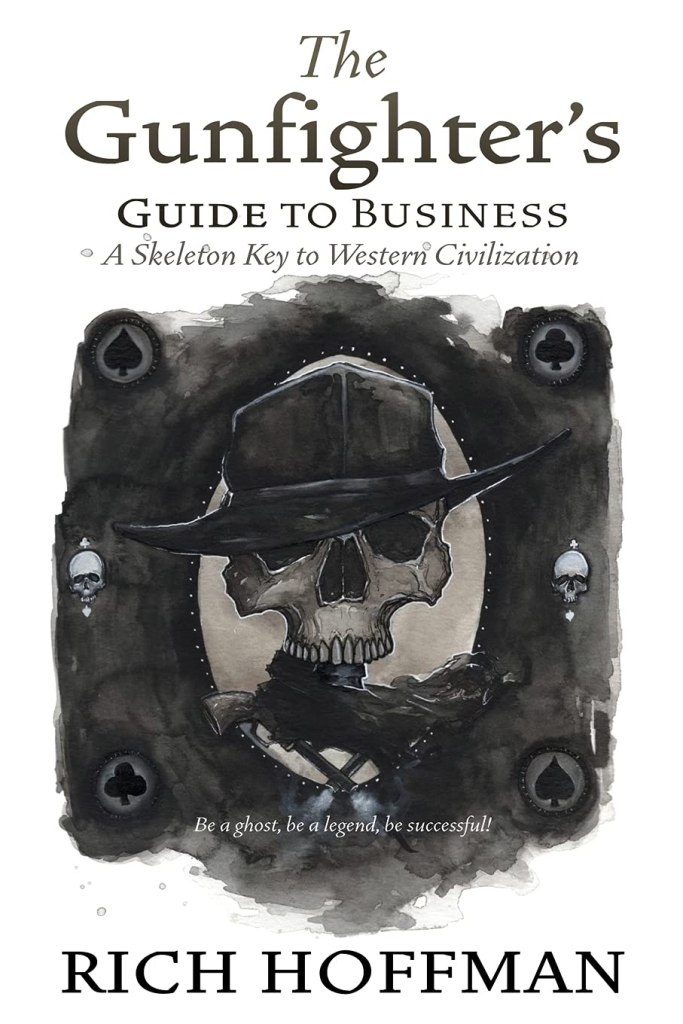
My book, The Gunfighter’s Guide to Business (2021), anticipated these manufacturing and cultural crossroads. Hard-learned truths from COVID—when intent behind policies crystallized as micromanagement and reduced output—demand a return to basics: merit over mandates, engagement over entitlement, innovation over regulation. Trump’s second term, with Isaacman at the helm, has already accelerated Artemis restructuring, but longevity matters. Republican continuity post-2028 ensures that policies endure beyond a single administration, preventing a reversion to pre-2025 drift. This is not partisan rhetoric but pragmatic necessity for a workforce revival that dusts off “the right stuff”—the toughness, curiosity, and dedication that defined mid-20th-century America.

In aerospace, where atmospheric or orbital flight shares the same adventurous DNA, success hinges on compressing timelines rather than extending them. Japan’s lean techniques succeeded not through rote imitation but cultural alignment; America must forge its hybrid, leveraging individual initiative within disciplined systems. Parasite-like drags—DEI overhead, union-enabled slowdowns, safety-as-excuse—must yield to vitality. Recent conferences with major manufacturers reveal lingering Toyota envy without the execution; presentations touting incremental lean gains ignore root cultural mismatches. Smaller innovators will force adaptation, as they already do via commercial crew and cargo.

Ultimately, the moon base vision—sustainable habitats and a continuous presence akin to the ISS but extraterrestrial—demands more than hardware. It requires human capital aligned with purpose: passionate, grid-tough teams working around the clock because the frontier calls. China pushes aggressively, accepting trade-offs for primacy; the U.S. can lead by reclaiming its edge without mirroring authoritarianism, simply by unleashing latent American ingenuity. The Watters-Isaacman moment, glitch and all, reminds us that the stakes are real. With policies favoring merit, excellence, and intelligence (MEI) supplanting prior frameworks, and commercial pressure from SpaceX et al., NASA can reclaim leadership. The American manufacturing base, long crippled by self-inflicted wounds, stands poised for resurrection—if leaders and workers alike embrace the grind. This is the undercurrent of the current space drama: not mere technical hurdles, but a call to cultural renewal. Sustaining it ensures not just lunar victory but a broader renaissance, where adventure, innovation, and unapologetic excellence propel humanity outward. The 2030 deadline looms; meeting it—and beyond—restores what decades of deviation nearly forfeited. The right stuff awaits rediscovery, and the time is now. 

Bibliography and Footnotes for Further Reading

1.  NASA Office of Inspector General. Artemis Program Cost and Schedule Overruns. 2025-2026 reports detailing $93 billion+ expenditures through FY2025.

2.  Bolden, Charles. Al Jazeera Interview (July 2010), as documented in Reuters and CBS News archives on NASA outreach priorities. 

3.  Isaacman, Jared. NASA Official Biography and Confirmation Records (December 2025). NASA.gov

4.  Planetary Society. Cost Analysis of SLS/Orion Programs. Updated 2026.

5.  Ohno, Taiichi. Toyota Production System: Beyond Large-Scale Production. Productivity Press, 1988 (foundational TPS text, including Andon system).

6.  Adler, Paul S. “Cultural Transformation at NUMMI.” MIT Sloan Management Review, 1994. 

7.  OpenTheBooks. “NASA’s One Giant Leap Toward DEI.” Substack analysis of FY2021-2024 spending. 

8.  Reuters. “China’s Crewed Lunar Program Eyes Astronaut Landing by 2030.” April 2026. 

9.  NASA. Artemis Ignition Event and Moon Base Plan. March 2026 announcements. 

10.  Hoffman, Rich. Gunfight Guide to Business (2021). Self-published insights on manufacturing resilience and cultural factors in industry.

11.  National Academies of Sciences, Engineering, and Medicine. Advancing DEIA in Competed Space Missions. 2022 report (context for pre-2025 policies). 

12.  U.S. Government Accountability Office. Audits on NASA project overruns, 2025.

13.  JETRO Surveys on U.S.-Japan manufacturing challenges (labor and workforce data).

14.  Nature. “China Planning Lunar Landing and Base.” April 2026. 

15.  Fox News Archives. Watters-Isaacman Interview Transcripts and Clips (April 2026). 

16.  Lean Blog. Analyses of Andon cord and Japanese vs. Western implementation. 

17.  CSIS. Reports on U.S.-Japan economic ties and workforce development (2026).

18.  Additional historical: Logsdon, John. John F. Kennedy and the Race to the Moon. Palgrave Macmillan, 2010 (Apollo context).

19.  Musk, Elon, and SpaceX public updates on operational culture (various 2020s interviews).

20.  Trump Administration Executive Orders on Ending DEI Programs (January 2025 onward). 

Rich Hoffman

More about me

Click Here to Protect Yourself with Second Call Defense https://www.secondcalldefense.org/?affiliate=20707

About the Author: Rich Hoffman

Rich Hoffman is an aerospace executive, political strategist, systems thinker, and independent researcher of ancient history, the paranormal, and the Dead Sea Scrolls tradition. His life in high‑stakes manufacturing, high‑level politics, and cross‑functional crisis management gives him a field‑tested understanding of power — both human and unseen.

He has advised candidates, executives, and public leaders, while conducting deep, hands‑on exploration of archaeological and supernatural hotspots across the world.

Hoffman writes with the credibility of a problem-solver, the curiosity of an archaeologist, and the courage of a frontline witness who has gone to very scary places and reported what lurked there. Hoffman has authored books including The Symposium of JusticeThe Gunfighter’s Guide to Business, and Tail of the Dragon, often exploring themes of freedom, individual will, and societal structures through a lens influenced by philosophy (e.g., Nietzschean overman concepts) and current events.
Justice in the Shadows: The Asiah Slone Murder and America’s Hidden Epidemic of Unsolved Crime


On a quiet street in Middletown, Ohio, a small house stands as a grim monument to the collapse of a once-thriving community. Behind that house, in a trash bin parked in an alley, police discovered the dismembered remains of Asiah Slone—a woman whose life ended violently in June 2024. Her murder was shocking not only for its brutality but for what it revealed about the social decay festering in America’s forgotten towns. Slone’s death was not an isolated tragedy; it was a symptom of a deeper disease—economic collapse, drug addiction, homelessness, and the erosion of moral and civic order.


The Slone case is a lens into the broader epidemic of violent crime in economically depleted communities.  Murders, like Slone’s, are usually prosecuted successfully, but many countless others remain unsolved, creating an illusion of justice—celebrating convictions in high-profile cases—masks a systemic failure to address the conditions that breed violence and what these failures mean for law enforcement, policy, and the future of American society.


Asiah Slone disappeared in late June 2024. For weeks, her absence drew little attention. In neighborhoods hollowed out by poverty and addiction, people vanish often—sometimes to rehab, sometimes to jail, sometimes to the grave. It wasn’t until July 1, when the stench of decomposition led authorities to a trash bin behind a house on Centennial Avenue, that the horror came to light. Inside were Slone’s remains, cut into pieces and stuffed into garbage bags.¹


Investigators quickly focused on Brandon Davis, a 46-year-old man with a long history of drug abuse and petty crime. Witness testimony and forensic evidence revealed that Davis shot Slone in the head while she slept, then ordered Perry Hart, who has an addiction, to finish the job in the basement. Hart complied, firing a second shot to ensure death. Together, they dismembered the body and disposed of it in the alley.²


The motive was depressingly banal: a dispute over stolen items and simmering resentment among a group of people living on society’s margins. Drugs were everywhere. Homelessness was common. Violence was inevitable.³


As grand jury foreman, I signed the indictment that set the case in motion. The prosecutors did their job well, securing a conviction in February 2025. Davis received life without parole for 45 years. Hart pleaded guilty to involuntary manslaughter and kidnapping. Justice, in the narrow sense, was served. But the deeper question remains: What does justice mean in a world where desperation breeds murder, and where countless similar crimes go undetected or unpunished?

Slone’s case was prosecuted because it was apparent. The evidence was overwhelming: a body in a dumpster, confessions, and DNA on the weapon. But what about the murders that leave no such trail? What about the victims whose bodies are never found, or whose killers are careful enough to erase their tracks?


The numbers are sobering. In 1964, the U.S. homicide clearance rate—the percentage of murders solved—was 83.7%. Today, it hovers around 50%.⁴ In 2022, the rate hit a historic low of 52.3%.⁵ Even with slight improvements in 2024, nearly half of all murders in America remain unsolved. In Ohio, the rate is about 64%, meaning one in three killings goes unpunished.⁶


Why? Several factors converge:
• Resource Constraints: Police departments are understaffed and underfunded.
• Community Distrust: Witnesses fear retaliation or don’t trust law enforcement.
• Complexity of Cases: Drug-related killings often involve transient populations and chaotic circumstances.
• Legal Barriers: Prosecutors need airtight evidence to avoid wrongful convictions.


The Slone case stands out because it was reckless. The killers left a body in a public alley. They talked. They confessed. Most killers are not so careless.  This case is emblematic of a much larger crisis. Across the United States, violent crime statistics reveal a staggering reality.  The Bureau of Justice Statistics confirms that more than 250,000 homicides since 1980 remain unsolved. These numbers represent not just data points but shattered families and communities living under the shadow of fear.

Drug epidemics amplify this violence. The CDC reports that fentanyl-related overdose deaths reached 72,776 in 2023, accounting for 69% of all overdose fatalities. DEA intelligence shows cartels dominate fentanyl distribution, sourcing precursors from Chinese suppliers and flooding U.S. streets with synthetic opioids. These networks fuel turf wars, retaliatory killings, and systemic corruption, creating a perfect storm of addiction and violence.

Racial disparities compound the crisis: murders of Black victims are significantly less likely to be solved than those of White victims, according to a 2023 study by the Murder Accountability Project.  A lot of that reason is cultural, because of a lack of cooperation in black communities to provide testimony against crime.  Police departments face chronic staffing shortages, and under labor union guidelines, paint themselves in corners that don’t match public sentiment all too often, with the International Association of Chiefs of Police reporting a 14% vacancy rate nationwide. Forensic labs struggle with DNA backlogs exceeding 100,000 cases. Community distrust further hampers investigations, as witnesses fear retaliation or lack confidence in the justice system.  The overall story on the labor side of crime fighting is that too many employees in the industry are too lazy to do the job, causing serious capacity problems in doing the actual work.  So the industry sets the bar low, goes after all the most obvious cases, while many of the real crimes go unreported and unpunished. 

The opioid crisis intersects with violent crime in devastating ways. Cartels have diversified beyond narcotics into human trafficking, generating $236 billion annually through forced labor and sexual exploitation. Millions of women and children are entrapped in these networks, often under the same criminal syndicates orchestrating narcotics flows. This duality magnifies humanitarian crises, rendering cartels not merely criminal enterprises but systemic violators of fundamental rights.

Solutions require investment in technology, expansion of cold case units, and robust witness protection programs. Federal funding for violent crime investigations has stagnated, even as homicide rates rise. Legislative initiatives must prioritize improvement in the clearance rate as a metric of justice, not just crime reduction.  But the reality of the story is that we have a society that has stopped looking in trash cans. When they smell something bad, they don’t regulate crime in their own communities for fear of that crime coming in their direction.  Cops don’t work enough, and the unions frustrate full employee engagement.  There aren’t enough volunteer law enforcement efforts.  I can say that when I was on the grand jury, I was the top cop of my community for a month.  I didn’t get paid, but a minimal amount for the effort.  But it was one of the best jobs I ever did, and I was very proud to sign the indictment on Brandon Davis, the murderer of Asiah Slone.  I would do that every day for free.  So I don’t understand cops who have to go to Walgreens for a tampon run every time they have to work a few hours of overtime.  Getting shot at and living dangerously is part of the fun.  So I’m not sympathetic to complaining at all.  Because the criminals know that the cops really don’t care, that for most of them, it’s just a job.  And the courts are only prosecuting the most obvious cases, the easy ones.  And the Slone case was an easy one.  But one thing is sure in all this, it can’t continue at this rate.  Society has to reform at the level of the family, because none of this is working.

[1] FBI Uniform Crime Reports, Historical Clearance Data, 1964–2024.

[2] Bureau of Justice Statistics, Homicide Trends in the United States, 2023.

[3] Murder Accountability Project, Clearance Rate Analysis, 2023.

[4] Centers for Disease Control and Prevention, Drug Overdose Mortality Data, 2023.

[5] U.S. Drug Enforcement Administration, Fentanyl Threat Assessment, 2024.

[6] International Association of Chiefs of Police, Workforce Crisis Report, 2024.

[7] National Institute of Justice, Forensic Backlog Study, 2023.

Rich Hoffman

Click Here to Protect Yourself with Second Call Defense https://www.secondcalldefense.org/?affiliate=20707

The Astonishing Trump Rally at Butler, Pennsylvania: Christopher Macchio gave the MAGA movement a soundtrack

It’s been a few days since the event, but I think it was one of the most pivotal events in all political history, President Trump’s return to Butler, Pennsylvania, where an assassin tried to kill him and almost succeeded.  Shots were projected, and people were hurt in the crowd, and a person died.  It was serious stuff, and in this overly litigious world where the safety nazis are ruining everything with a mind-numbing existence of compliance to the authoritative experts of the world, it just doesn’t happen where tragedy is overcome by dramatic optimism.  But that was the message Trump brought with him for this return to the site on July 13th, 2024.  For Trump to return to the scene of the crime and dominate it with an optimistic speech that was attended by a larger group than before was breathtaking.  This second speech on October 5th, 2024, was something America needed to see, and it was probably expressed best by Elon Musk, who attended and spoke, jumping around on stage like a little boy happy to go to a baseball game with his father.  There was an innocence to the wealthiest man in the world and one of the most successful acting like a young kid happy about the future.  It was a sincere moment that history will never forget and Trump set it all up by returning to a place of doom with an optimism very few people in the world could ever hope to achieve.  Yet that is what Trump has been offering: a way to defeat the machine of communism that is present in our current captured government and to rise above it by pushing fear aside and leading the world back to health.  But in the wake of it all, there are a few things to think about that are unique and life-changing and that everyone should be aware of. 

First of all, the crowd defied modern conventions.  It was like the day of the assassination attempt, with bullets flying around everyone, and nobody knew where the shots were coming from or even how many shooters there were.  Essentially, in the middle of a large crowd, there was a shootout because a well-placed sniper did get the shot off that killed the assassin.  People in the audience were hit and killed, and there was blood everywhere.  It was a significant tragedy.  But the Trump supporters didn’t run from the area like a bunch of cowards.  Instead, they ducked, they looked around, and they remained calm.  This is a reaction that years of Hollywood productions by skinny pants losers from Santa Monica screenwriting don’t understand about real Americans.  Not the latte-sipping sissies of Democrat areas, but the meat and potatoes people from the flyover states who aren’t afraid of their own shadow.  People under fire weren’t cowards and did not leave Trump’s side when, at that time, they had to assume he was killed.  Elon Musk was watching from afar and had the same reaction that everyone else did once Trump stood up and pumped his fist to the sky, saying fight, fight, fight with blood running down his face in defiance of the killer’s intentions.  That is the American spirit, and it was at that moment, Elon Musk decided to endorse President Trump, which was something I didn’t think would ever happen.  Given that Musk is a Democrat and had been trending toward Republicans over the last few years, supporting Ron DeSantis early in the process.  Trump’s courage under fire and real danger inspired Musk and many others to join the effort to reelect the president, which was a story that Musk retold while on stage to a captivated audience. 

But knowing what happened the first time, why would people want to come back and stand in line for more than 24 hours only to hear the same speech repeatedly?  Why would people even want to risk their lives to attend an outside rally where there are people who want to kill Trump, and they might be killed themselves in the process?  This was like having people return to the Kennedy assassination after it had happened and give a motivational speech about America from the spot of the killing.  What would provoke people to want to do such a thing?  Most people, including conservative commentators, had no idea how to answer that question.  Yet the rally had people there, many more than the previous time in July, as far as the eye could see.  People wanted to be there and tried to put danger on notice.  They were not going to be afraid.  They wanted to support Trump, be near him, and be a part of history, which was a magnificent occasion after all that has happened over the last several years.  The event was live-streamed to over 5 million people on social media, but millions would see it and witness a unique historical event in the days that followed.  The plans for America’s demise were failing, and people could feel it in the air. They wanted to play their part in recapturing our country from the clutches of vile globalism.  It was more of a military occasion without the bullets flying toward an enemy, but the impression was the same.  If global communism ruled with fear, these people defied that intention by attending and participating in that rally. 

However, Trump understood that he had brought something new to his typical rally format before the rally started.  He invited the noted tenor Christopher Macchio to perform before and after the speech in a display that I thought was jaw-dropping audacious.  And for Trump to flex that celebrity muscle then was ominously bold.  Macchio has performed for Trump before, most recently at the RNC event in Wisconsin, but again at the White House.  However, for Macchio to perform at the Butler, Pennsylvania Trump rally was a touch of class that could only come from the Trump Organization as a statement.  It was a statement that wasn’t needed, yet Macchio brought opera to a culture that doesn’t usually get exposed to that kind of thing.  And Macchio performed several songs after the rally; once the typical YMCA song ended with Trump dancing on stage, Christopher sang “Nessun Dorma,” “How Great Thou Art,” and “Hallelujah” to a stunned crowd.  I was stunned.  I thought it was incredibly classy and bold.  Obviously, like Musk, this very talented and rare individual and a top New York celebrity was full-throated in support of Trump.  Christopher Macchio was jumping around on stage in his own way with a compelling performance that was cheerleading Americans in the ways of the Power of Positive Thinking to overcome years of massive tragedy and to restore America to health in ways that people are just now coming to understand.  That was essentially what Trump was offering with this rally: not just returning to the spot to overcome the attempted fear but also overcoming it and overwhelming it by laughing at danger, even dancing on top of it.  But boldly, we continue our triumph over evil the way only opera as an art form could even be conceived.  Yet there it was, and now the MAGA movement had a soundtrack to march to, to take back our country from those who have been stealing it away for a long time.  Now, there was music to give life to the movement captured so wonderfully by Christopher Macchio.  And the world will never be the same. 

Rich Hoffman

Click Here to Protect Yourself with Second Call Defense https://www.secondcalldefense.org/?affiliate=20707

The Attack Vector of Globalism: Immigration and drugs are their strategy to destroy America and make a ‘global citizen’

Of course, we have been at war for a long time, but not in the conventional sense.  Most of the wars, if not all of them, in the last century, even going back to the Civil War, were concoctions of finance, the tampering of globalism to destroy the concept of sovereign nations and create “united nations.”  The delivery method has been propaganda, not overt domination with ground troops the way wars have been traditionally fought and defined.  And when you understand the political leanings of finance, where the wives traditionally leaned far left and dabbled in the occult, the men followed their wives socially and lent themselves to progressive causes.  This is to say, there is some degree of global socialism as designed by Karl Marx baked into high finance societies.  And in high society, they contemplated what they thought people were or weren’t.  And when they turned their gaze to America, to destroy all concepts of nationalism in favor of global identity, they studied what had been done to the American Indian as the method to kill those who became members of the greatest nation on earth.  This is very obvious when the point of reference is westerns, such as Kevin Costner’s newest Western, Horizon, which is very good.  The Indians were hostile savages who were in the way of Manifest Destiny, and the Christian notion of destiny and rule-based fate are ideas that global communists chide against even today, including what they think they learned from Westward Expansion.  It’s important to understand that what these globalists are doing to America is purposeful and an act of war once you place yourself in their shoes and see the world somewhat as they do.  They do not like Americans.  They do like primitive people from all over the world because they make good subjects to rule over, so they tend to embrace societies that are tribal as opposed to inventive. 

They see how Americans flooded the West with immigrants after wave after wave of migrants continued to perpetually come.  No matter how fast the Indians killed off the settlers, they just kept coming until it wasn’t long before the Indians were gone, and the immigrants replaced an entire race of indigenous people.  That’s not how I see it, but it is how global communists (progressives) in high finance see it from their limited understanding of life in general.  The open border policies of globalists are only to be understood one way: as an attack on sovereign nations to change their country from one thing to another.  The open borders in America, for instance, is a military exercise meant to reverse what happened to the Indians by the Americans.  In the circles of high finance and the movement of the many sophists in the wives clubs of the early last century, permeating today into the various feminist movements and communist offshoots, the belief is that the way to beat America for its sins of the past, for its society built on slavery, is to kill them off the way they killed off the Indian, with wave after wave of immigration, until they are all outvoted, or gone by interbreeding.  Of course, there are lots of holes in this understanding of the world, and it’s very limited, but if you sit in most dinner conversations of high society, they think this is the objective view of history and the way to destroy those pesky American capitalists once and for all.  For what they did to the American Indians, they will have then turned back on them, and within a few generations, they will be destroyed from the face of the earth, forgotten by history.

The other thing that occurred during western expansion was that trade with Indians introduced them to alcohol, a poison that utterly ruined them.  Indians couldn’t deal with the requirements of their culture, leading to the very rapid demise of their men and, therefore, the ability to continue reproducing as heads of a family.  So, as Indians were killed off in battles and range wars, they could not replace their populations with a new generation because they were ruined and drunk. After years of casual study by a lot of communist-oriented history professors, they have analyzed the destruction of the American Indian down to these two objectives, and they have rolled those sentiments into this modern strategy of creating a global citizen, using what worked against the American Indian and applying it to the contemporary American and European.  You don’t see mass migration, for instance, going into China or Japan.  It’s only in areas of the world where finance is sponsoring social change for a military incursion, designed by the desire and need to create a United Nations global citizen.  The drugs flooding our border and culture, even down to the persistent trap to make marijuana legalized and normalized, are attempts to poison our youth culture outright and destroy any notion of a work ethic.  The amount and desire to use drugs and intoxicants of all kinds is a military objective that has been cast upon American society not as a pleasure but as a destructive element of chaos meant to destroy all traces of the Anglo-Saxon influence and Bible thumpers of Western civilization.  To see it, you must understand the people behind the bioweapon COVID-19, a proven fact with plenty of evidence.  But the evil intention is well beyond the scope of most trusting people.  The same desire to kill off entire races of people is behind permissive drug use, and they are using the fate of what was witnessed with the American Indian and alcoholism as their model for destruction presently.

The new movie Horizon captures the sentiment perfectly.  I’ve watched every Western movie made many times.  I’ve read books and studied history, and that film reminds me a lot of Teddy Roosevelt’s Winning the West books and Alen Eckert’s Frontiersman novels, which are some of my favorites ever written.  But you can see the impact of high finance in these modern stories, where Indians previously would have been referred to as “savages” because, compared to the immigrants of Western Expansion, they were hostile and vicious.  But in Horizon, they are always, at worst, referred to as “indigenous people.”  Politically, they would dare go no further because the globalist citizen movement behind all financial frontiers would not put up with any reference to “savages” when talking about Indians.  That’s how new wars are fought, and it happens over a long time.  But when you see films like Horizon and what ends up being cut together into a finished form and released to the public by a product of Hollywood like Kevin Costner, you get a good insight into the way that Hollywood lefties think about the matter and what they think ruined the Indians at the cruel hands of incoming immigrants. And you can almost hear the wine glasses banging at a dinner with George Soros and his little boy Alex as they fund the destruction of America with such thoughts about how the Indians were treated and how the white Anglo-Saxon deserves the same fate, and worse.  For anybody to just take it as anything but an act of war is criminal at this point.  The strategy is obvious: globalism is at war with the American citizens, and our government has not done its job in protecting our culture.  They have sponsored illegal immigration, hoping to replace our entire population with immigrants out of revenge for how America was settled to begin with.  Part of that strategy is to poison our culture with drugs and alcohol so that there is nothing left in a few decades to defend America but brain-dead slugs looking for their next hit of drugs to savor intoxication over the benefits of accomplishment.  It all started with an attack, not by tradition but by point of reference from a progressive culture that has as its objective global domination and a one-world rule.  These are the weapons of war from their minds of mayhem, as history has taught them, and they are utilizing them aggressively to this day.

Rich Hoffman

Click Here to Protect Yourself with Second Call Defense https://www.secondcalldefense.org/?affiliate=20707

The Meaning of the Pride Flag: It’s a religious debate, not about fairness

It’s time to stop arguing obvious progressive intrusions as unfair. When Lakota school board member Darbi Boddy took pictures of obvious sexual grooming in the halls of Lakota, and the defense was that the evidence was the result of political tolerance of sexual lifestyles, the reality was much more severe. The rainbows that were being taught to young children in the schools of public school were not just symbols of sexual alternative lifestyles; they were the roots of a cult that was religious in its nature which actually goes back many thousands of years to the worship of the goddess Ishtar from the Mesopotamian region. In essence, the rainbows in the halls of Lakota schools were the same religious symbols with precise meanings, as though there were images of the Christian Cross hanging on the walls with the Ten Commandments. And when the issue of transsexual rights came up at Lakota schools in April of 2023 regarding the bathrooms, the nature of the discussion was not one of fairness but of a religious cult that is actually behind the trans movement, which exploded into American culture late in June 1969, just a few months before the Woodstock music festival and a month before the Moon landing. Many things were happening to America to sabotage the space program from NASA, and the KGB was hard at work to backdoor communism to an unsuspecting public through its young people, which is what happened at the Stonewall Inn in Greenwich Village in New York City.

The examination into the root cause of the Stonewall Inn riots was that many of the participants were worshipers of the Cult of Ishtar and were using its sentiments to undermine the Christian nature of America through alternative sex practices, such as gay rights, trans rights, and the ritual practices of drunkenness and ostentatious pornography. Since that time in 1969, since the rest of the world was not landing on the moon, and there were lots of hostilities toward America that wanted to sabotage the effort, the same kinds of religious cults that destroyed previous civilizations, such as those from Sumer were introduced to do essentially the same in the United States. And for the diligent lawyers out there, the foundation argument for all this is in the excellent book by Jonathan Cahn called The Return of the Gods. In that book, he presents lots of evidence regarding the Cult of Ishtar that argues that the Trans movement is not about fairness or tolerance but is strictly a religion that should have the same rules applied to it that have been used to any Christian reference. If we cannot hang the Ten Commandments on the walls of our public schools and court houses, then we can’t put any rainbow references toward the Goddess Ishtar either. Because that is what the rainbow symbols refer to, Ishtar and her cult of followers. The rainbow was the battle flag of Ishtar, and the colors have particular meanings. So the argument that we have had regarding the use of rainbows in the halls of public schools and the evidence that America is a tolerant nation that will show compassion for people who are confused about how they feel inside and what biology they were given at birth, and the desire to desecrate their sexual rolls socially, the real issue was that of competing religions, the desire of one religion, the Cult of Ishtar and the Cross of Christ. If we had to accept Trans rights and activism, then public places had to tolerate prayer in the classroom and reference to the cross as the symbol of Christ’s crucifixion to die for the sins of mankind.  

The rainbow flag dedicated to the Goddess Ishtar was designed by Gilbert Baker, a drag queen and very openly gay man, on June 25th, 1978, just nine years after the riots at Stonewall. By 1994 that rainbow symbol was adopted as the official symbol of gay Pride and became recognized worldwide for that effort. Now the goddess Ishtar was a symbol of sex; she was a prostitute who was very promiscuous sexually. Whether she evoked in mankind the primary traits of sexual conduct and their perversion to satisfy the whims of a perverted deity or whether her reverence was purposely promiscuous intent on the downfall of whatever civilization adopted her practices as a priority, the results cannot be ignored. A worship of her by occult practitioners is why we have such a desire for drunkenness and sexual misconduct in our public schools and colleges to this very day. As stated, the KGB, which very much wanted to destroy the kind of culture from within that could put a man on the moon, was dusting off whatever aspects of ancient occult that might ruin America. And we are seeing the wheels set in motion then clearly in our present times because nobody has made an honest attempt to stop the madness. We instead have reacted by answering the argument posed, are we a tolerant nation? The answer obviously is yes, and we have been putting all our effort into fighting that accusation rather than the actual merits of the case that a religious ideology has been purposely trying to alter our country and destroy it at the foundations of its Christian belief. 

In the rainbow flag of Ishtar are definite meanings to the eight primary colors, with pink representing sex, red representing life, orange representing healing, yellow representing the sun (sun worship as a deity, turning the culture to worship of solar gods, solar power, reverence to the forces of the sun) green representing nature, (climate change, ESG measures) turquoise representing magic, (dark art, occult practices) indigo representing serenity, and the last color violet represented the spirit of sexuality, in whatever form it manifested, gayness, lesbianism, transsexuality, all the alphabet sex practices that are being shoved at us today as a value system. The purpose of the priority is to desecrate our traditionally Christian nation and replace it with the flag of domination by the Goddess Ishtar. It truly has nothing to do with sexual tolerance and social inclusion but desecration and undermining of our culture from its roots by hiding behind the concept of Church and State. I do not doubt among my readers that some very clever lawyers can see these implications. Once case law is established that the rainbow symbols are references the same as the Cross of Christ and prayer in public places, we have a whole new way of looking at this vast evil that has been cast upon our culture. Darbi Boddy at Lakota schools has had the right instincts about this issue from the start of her term. And the anger at her for pointing it out goes back to the kind of social activism that was evident at the breakout of the transexual movement beginning at Stonewall in New York City in 1969. These things didn’t happen by accident and aren’t about fairness. They were always attacks on American culture meant to corrupt our youth, and now many of those corrupted youth are running our country from a political position and are embedded in our media and other places of authority. And they worship the Cult of Ishtar, and their reverences, such as the rainbow flags of the Pride movement, are religious. Not symbols of inclusion but the battle flag of cultural domination and social destruction purposely invoked from ancient history to destroy America and everyone in it.

Rich Hoffman

Click to buy The Gunfighter’s Guide to Business

The Art of the Comeback: A plan for the future

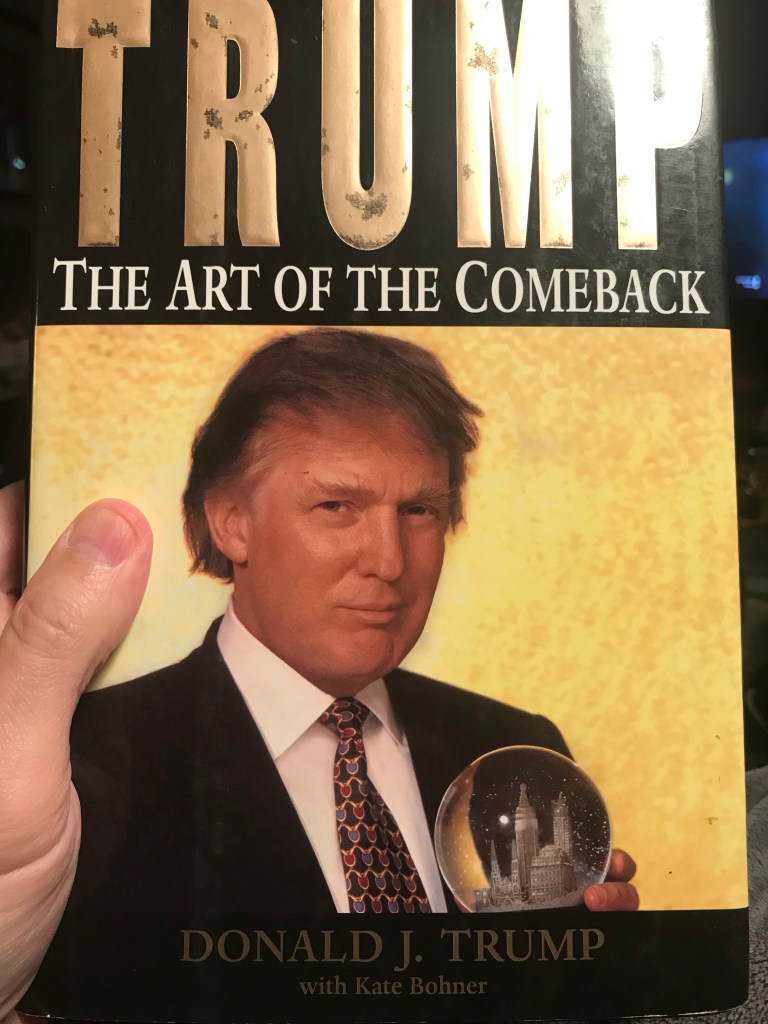
Even though the short-term consequences have been terrifying, the best thing that could have happened is that the secret losers who have hidden behind the curtain of world events for many decades with occult practices and hokey religions are now apparent. Their climate change occult isn’t just one that is socialist against capitalism but is against life itself in favor of protecting a planet they cleave to like a frightened child cleaves to a mother’s skirt, even as they should be grown up enough to let go and face danger with boldness. And with Trump’s first presidency, his “Art of the Deal” term in office, he showed what was possible in politics where all those manipulators had been hiding all along, and he quickly fixed much of the world in a few short years. This provoked an extreme reaction to him, revealing the truth of their nature, which conspiracy theories had only suspected over the last century. Many thought we were having an honest discussion between socialism and capitalism, for which Donald Trump was an unapologetic representative of the Reagan years of bold capitalism. It was easy to focus on the degradation of communist states in Iran and Russia. But the 90s were a different story, Reagan was out of the White House, and the Russian empire crumbled to dust, falling with its perceptions of communism. And Bill Clinton was elected as President of the United States. Compared to the 80s, when I came of age, got married, and started having children, the 90s were horrible, corrupt, and detrimental to the human condition. And during that time, Donald Trump, who had it all, had fallen into being billions of dollars poorer than a homeless person. The world was falling apart, but by the end of the decade, Trump was on top again, and his journey was written in a sequel to his Art of the Deal book, which was called The Art of the Comeback.

Reading The Art of the Comeback now, in the 2020s, is quite a time capsule. It is interesting to see so many celebrities kissing up to Trump, who was one of the world’s wealthiest people at that time. Michael Jackson, Steven Spielberg, Tiger Woods, and many celebrities, who are now professed liberals, were hungry to get their pictures next to Trump. And compared to the 90s, our modern environment is perilously bleak and unhopeful. Covid has changed people in terrible ways; they are afraid to socially interact even years after the CDC nearly destroyed the world with white lab coat bureaucracy and misdiagnosed precautions meant to destroy capitalism at its roots. The occult of earth worship is always lingering behind the political theater and entertainment scenes. It’s a much less optimistic world than it was in the 90s when The Art of the Comeback was written.   But it didn’t need to be that way; it was a choice for the human race to penalize ourselves with politics globally. We saw something unique happen from 2016 to 2020, Trump became President, and America was Great Again. The managed decline planned for us was averted, and the political left and their minions of doom behind the global curtain were in a panic, and they would do anything to get rid of him. But in so doing, they showed us all their cards, and at least now we know what we are dealing with and where they reside. 

I’ve been saying that The Art of the Comeback needs to be the campaign model for Trump’s re-election strategy. So far, the political enemies of America First have been defining who Trump is as a political radical, an unhinged lunatic, and a far-right insurgent. But Trump didn’t ever get where he was by allowing others to define him. He always knew how to build a brand and then to control how people viewed that brand. And that’s what he needs to do now that 2024 is coming into focus. Many thought Trump was done for coming out of the 80s. He and his Trump Tower were doomed, and he was going down. These were the years of his famous divorce from Ivana Trump and his marriage to Marla Maples before Melania Trump. During these days, he took a picture with Hillary Clinton and honored the First Lady for handling pressure well. It was, in fact, that picture that kept me from thinking of him as a presidential candidate in 2015 when Bill O’Reilly was interviewing Trump’s announcement for a run. He had made nice with the Clintons; I couldn’t forgive him for that. But it looks like after he married Melania, he finally found the right woman. I’ve met Melania, and she is a really nice person. And, of course, she is beautiful. But she’s also extremely smart. She has obviously been a great stabilizing factor for Donald Trump, and re-reading his Art of the Comeback, knowing that he would eventually become President himself, the path to his comeback success is evident through his optimism combined with the right woman to stabilize his extremely A Type personality. 

And so it can be again with America. Trump has shown that he can navigate impossible odds to put himself back on top with personal success. And his book The Art of the Comeback is a guidebook for how to do it again, only this time for America. America has been the target of hostile forces for more years than many people want to admit to themselves.   And as things look now, it looks pretty hopeless that the bad guys have been winning and will continue to win. That’s why these next few elections are so important. If we can keep Democrats from cheating and put reasonable people in office positions, we have a chance. But for that to happen, there needs to be a recognizable brand that people can follow toward that success. And of all the people out there, only President Trump has a track record of that kind of success. His success was personal, but during his first term in office, he showed that The Art of the Deal was very relevant, from personal business to international politics. All that really changed was the setting. And that would undoubtedly be the case for The Art of the Comeback. I personally think it was great that Trump had a break at the end of 2020 and could have time to reflect on how things could be improved from his first term. He did a lot of things very right, but there were lots of things done wrong, particularly in his trust in the Administrative State to respect him and not work against him. He learned the hard lesson of just how hard that snake can bite. And people needed to see just how bad liberals really were when they were suddenly on the clock and under pressure to perform. Knowing that they had to steal the election to put their guy in power, they knew time was not on their side, so they had to rush forward all their initiatives, which has scared America because now they saw what was always behind the curtain. And that’s a good thing. It might bring short-term pain, but knowing who they are would only help long-term planning, which is at the heart of it all and is what matters next. 

Rich Hoffman

Click to buy The Gunfighter’s Guide to Business

The CISA Halderman Report: What the Jan 6th Commission is trying to hide–Joe Biden likely didn’t get 40 million votes, and lost badly

I’ve been asked hundreds of times over the last several days my opinion about the Congressional Witch Hunt that is the January 6th Committee that put on a primetime show in an attempt to hide the most significant crimes in human history. My reply is that the Committee itself is a criminal class of white-collar bandits who are trying to suppress a massive scam that has been a Beltway secret for years, that we have not had control of our elections for many decades, and that the many socialist countries around the world, including France, England, all of South America, Asia, Russia, Europe, everywhere that the United Nations influences, are socialists who need the illusion of the people’s support to gain and stay in power, and their key to that manipulation has been the digital voting machines, which were built to allow for election fraud. And everyone who has signed off to use them in their states has known it from the start. That’s not the utterings of conspiracy theory; it’s actually the content of the CISA Halderman Report that was released to the world quietly at 5 PM on Friday, June 3rd, 2022. The Jan. 6th Committee had one goal in the effort: to hide the election fraud that occurred in the 2020 election by focusing on the people who were upset that the election was stolen. It’s like in an NFL game when one player punches another in front of the ref after the first player punched first. The ref only sees the second act, and it is that player that gets the penalty. That’s what the Jan. 6th Commission is. It’s a scam to hide a crime committed by the type of government that wants inclusion with all the rest of the communist and socialist countries worldwide.

The 96-page report was a damning admission by a government agency that essentially validated everything Sydney Powell, Mike Lindell, and Rudy Giuliani had been saying about digital voting machines. I read it with great interest over the weekend; it should have been the biggest story in the world, but ironically, just a few days later, as it was scheduled for Thursday, June 9th, during prime time television, where all the nation’s networks, except Fox News, was set to cover-up the information, where the hearings to talk about the violence on January 6th, 2021 would happen and where they wanted to blame President Trump essentially for existing. They knew when they set up the timing of the January 6th hearings what the goal was, and that was to hide the evidence that all digital machines had obvious vulnerabilities that would allow for the destruction of evidence and vote switching from the candidate that a voter picks to one that is determined by this new global established order. The Halderman Report is enough to create a policy where all states in America should completely rethink their election laws and return to one day of voting with paper ballots and no drop boxes. What we saw in 2020 clearly shows that there is intent in the world to steal elections and that American elections can easily be manipulated by foreign interests; as I pointed out, the many socialist and communist countries who have an obvious interest in destroying the United States. And plenty of RINO Republicans don’t want to think about that possibility because life in their Beltway jobs is pretty good for them. They don’t want to think of the consequences of such a reality. So they are hiding their complicity in the entire scandal behind the January 6th Committee, attempting to paint bad behavior in a light favorable to them. Because if people ever find out just how rigged the 2020 election really was, much worse violence than happened on that day in January might be unleashed. 

As far as I’m concerned, I don’t think this new information matters much about the 2020 election. I don’t want to see Trump have a short term. I want people to see the full mess of Democrat policies that have been shaped by many of those communist and socialist countries. I want them to feel the pain entirely. Obviously, the digital voting machines are appealing to these tyrants around the world because not only does it change votes by giving the illusion of voter participation but ultimate control to whatever established order is in charge at the time, but it destroys the evidence along the way. So for the sake of future elections, knowing this tendency is important, but it won’t change what happened; we can use the knowledge to shape election law. It just helps us decide what we should be doing about it in the future. I was watching the Jimmy Kimmel interview with Joe Biden, where the old man loser said that he won 81 million votes in the election the night before the January 6th hearings on primetime, so the messaging was coordinated to control the story and hide the public from the Halderman Report. Based on that report and traveling all over the country the way I have, then doing some basic math about what we have learned from the Dinesh D’Souza movie 2000 Mules, I don’t think Joe Biden received 40 million votes. If Obama won 69 million votes, Biden didn’t get more than 40, which is the reality of a boots-on-the-ground perspective. Just knowing what Facebook funded with a half a billion dollars of investment into nonprofits that then paid for the ballot trafficking mules to steal the 2020 election, we have all the evidence we need to close the gap on the 45,000 votes that were required to flip the election back to Trump if only legal ballots were counted. 

The truth about the January 6th Committee was that many thousands of people, including networks, got caught participating in election fraud on November 3rd. And they justified it because they believe more in the established global order than in the power of the people to pick. They might only suspect that the voting machines could flip votes, but what they believe in is the system of authoritarian rule itself, such as what was exposed during the Covid crisis that the same people manufactured for the same global goals. I point the ultimate villainy to the Desecrators of Davos types in the World Economic Forum, the general tyranny of the economic union of the European Union. They wanted to put down their own problems with Brexit, so they had to destroy Trump in hopes of quelling the effects of populism around the world. The election fraud of 2020 was meant to take the air out of the balloon. But instead, they saw that people were outraged over certifying an election they knew in their hearts was bogus, and it scared the politicians involved. The guilty parties assumed, as all socialists do, that the ends justify the means, that the group is greater than the individual. Hence, the sacrifice of the voter to the authoritarian systems of global governance was something they would lie, steal, and cheat to achieve. And they did, clearly. Yet, they can’t cover it up because not enough people voted for Biden to sell the steal, so the apparent overvote has revealed the truth, even if the results are lied about. People know they didn’t vote for Joe Biden. Now with all the trouble that has come from his occupancy in the White House, there is more anger now than on January 6th, 2021. The socialists who have been trying to take over America for a long time, by capturing both political parties and using these digital voting machines for the silent insurrection have a lot to be afraid of now. Revenge is hell and a dish best served with a chill. 

Rich Hoffman

Click to buy The Gunfighter’s Guide to Business