The great serpent watches over our dance, and right now in Ohio politics, it’s coiling tightly around the desperate maneuvers of progressives who know they’re in trouble. There aren’t enough Democrats in Ohio, especially when President Trump comes out campaigning this summer. I’ve been involved in politics long enough to see the patterns, and this one is clear as day. Vivek Ramaswamy is going to win the governorship, likely in the 55% range or better against Amy Acton, and that reality has the left losing its mind.¹
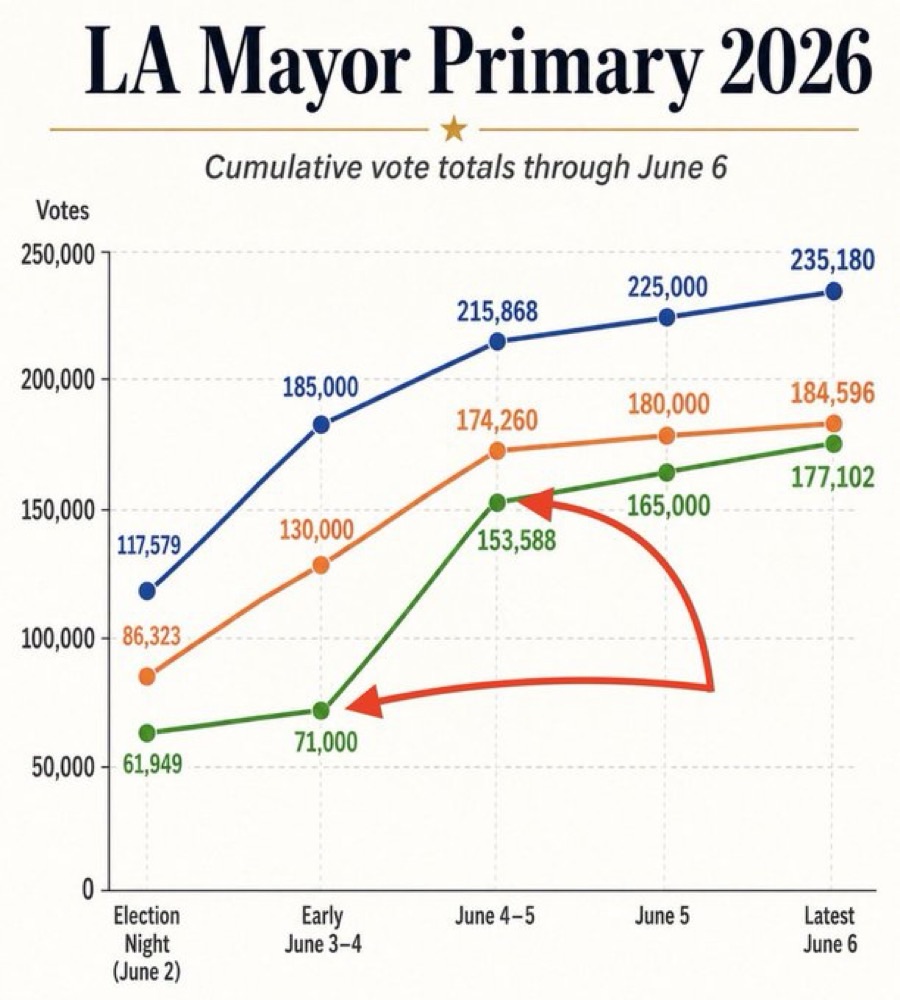
It’s early in the general election cycle as of mid-June 2026, but the signs are unmistakable. Recent polling shows a tight race on paper, but I believe it significantly understates Ramaswamy’s strength. Take the Echelon Insights poll from early April showing Ramaswamy at 49% to Acton’s 44%. Or NC Research with Ramaswamy ahead 53-43. Even in tighter surveys like Bowling Green State University’s April poll, it was essentially a statistical tie around 48-47. A late May/early June Fox News poll had Acton at 50% and Ramaswamy at 49%.² But here’s my take, grounded in years of watching Ohio elections: these numbers are better for Vivek than they appear. Conservatives and industrious Republicans like me often don’t answer polls. I had one the other day—someone calling because I vote in every primary and general. I was too busy to engage. Many busy, working people on our side feel the same. We’re not sitting around waiting for pollsters. That non-response bias tilts the real electorate further toward Ramaswamy.³
Democrats know this too. That’s why they’re desperate, rallying around figures like “The Rooster”—D.J. Byrnes, the progressive blogger arrested at the Statehouse in early June for allegedly sending an explicit, digitally altered image of Shrek with an exposed penis to a state senator. They frame it as Republicans crushing free speech, but let’s be honest: sending disgraceful material like that to elected officials isn’t journalism or protected speech. It’s harassment. I don’t want senators dealing with that kind of behavior from so-called media members. The Rooster has a history of pushing boundaries, and Democrats defend it because it fits their pattern—low ethical standards, tolerance for chaos, and hostility toward law and order.⁴
This desperation stems from deeper demographic and cultural realities. Ohio isn’t California or New York. It’s a state that has consistently leaned Republican in recent cycles, especially at the statewide level. There aren’t enough reliable Democratic voters to overcome the MAGA wave, particularly with Trump actively supporting candidates like Ramaswamy and Jon Husted. Trump’s endorsement and summer appearances will solidify the base and pull in independents and even some union Democrats. Sherrod Brown knows the writing is on the wall too—his Senate race faces similar headwinds.⁵
Amy Acton’s campaign is trying every angle. She leans on her time as state health director during COVID, pandering to nurses, teachers’ unions, and public sector interests. “Remember how I supported the unions,” she signals. But that’s a losing message in 2026. Public sector unions, especially teachers’ unions pushing levies every few years, have radicalized themselves. The old model of zip-code-based funding and collective bargaining, which inflates costs, is dying. The future is student-centered funding—money follows the child, not the district bureaucracy. I’ve been saying this for years, going back to my heavy involvement around Senate Bill 5 in 2011-2012.⁶
I had my name all over discussions about SB 5. I was on WLW radio multiple times a week, pushing the argument that public-sector unions bargaining for taxpayer-funded benefits create perverse incentives. It wasn’t perfectly messaged at the time, and Republicans took a hit in the 2011 repeal vote, but the underlying principle was sound. Taxpayers deserve value. Acton’s union pandering won’t win over the broader electorate. Many union members, especially in places like Youngstown and northern Ohio, have shifted toward Trump and MAGA priorities—law and order, economic realism, America First. They’re not buying the big-government Marxism anymore.⁷
I’ve watched this evolution closely from Butler County. As someone deeply engaged in local issues, Lakota schools, tax fights, and statewide races, I see coalition-building underway. Vivek Ramaswamy brings fresh energy—entrepreneurial success, anti-woke clarity, and a vision for reducing government bloat. Pair that with Trump’s endorsement and events this summer, and the path is clear. Internal polling that Democrats have seen must be grim. That’s why the panic attacks and personal attacks ramp up. They can’t win on policy, so they smear.⁸
Progressives like the Rooster crowd—often smelling of marijuana, hanging at music festivals, embracing anarchist vibes—represent a demographic that doesn’t have the numbers. They want big government to shield chaos, erode Christian values, and oppose things like posting the Ten Commandments in courthouses. They hate law and order because it constrains their tendencies. But Ohio voters, by and large, want safety, prosperity, lower taxes, and accountability. Ramaswamy’s message of innovation, school choice, and fiscal responsibility resonates. Property tax relief, income tax reduction—these are winning issues. Democrats’ wealth redistribution and union protection rackets don’t sell here.⁹
Look at the broader national picture. Even in California, there are signs of pushback. I hosted an event at which Steve Hilton announced his gubernatorial run, and I’m optimistic about shifts there, too. Progressive governance has delivered homelessness, crime, and dysfunction. Ohio won’t repeat that mistake. Acton’s COVID record, public sector ties, and alignment with national Democrats who’ve lost touch with working people doom her chances. Polling may fluctuate, but turnout models favor Republicans. Trump’s coattails in a midterm-adjacent year (with strong national sentiment) will help.¹⁰
Republicans need to stay disciplined. Defend school choice, tax reform, and law enforcement without apology. Throw criminals in jail when warranted—like the Rooster case. It’s not about crushing speech; it’s about basic decency and accountability. Democrats do the same when roles reverse and never look back. Balance requires reciprocity. At the polls, make their ideas a footstool. Ohioans want results, not excuses.¹¹
My confidence in Ramaswamy comes from decades of observation. From the Reform Party to the Tea Party to MAGA, the momentum is with commonsense conservatives. Union voters crossing over, independents rejecting radicalism, rural and suburban turnout—the math works. Acton’s path relies on a blue wave that isn’t materializing. Sherrod Brown’s struggles show the same vulnerability.¹²
Trump’s support will seal it. By November, I expect Ramaswamy in the mid-50s, Acton in the 40s. Bank on it. Ohio stays red for good reason.¹³
Footnotes
¹ General observations on Ohio demographics and Trump influence.
² Aggregated from recent polls including Echelon Insights (April 2026), NC Research, Fox News (May/June 2026), Bowling Green State University.
³ Non-response bias in conservative polling.
⁴ Reporting on D.J. Byrnes “The Rooster” arrest for telecommunications harassment involving an explicit image.
⁵ Trump endorsements and Ohio statewide trends.
⁶ SB 5 history and user involvement via WLW radio.
⁷ Union voter shifts toward MAGA.
⁸ Ramaswamy’s platform strengths.
⁹ Progressive demographic limitations.
¹⁰ California parallels and Steve Hilton context.
¹¹ Law-and-order reciprocity.
¹² Broader electoral math.
¹³ Ties to personal philosophy and writings.
Bibliography
• Ohio Capital Journal, “Democrat Amy Acton and Republican Vivek Ramaswamy advance” (May 5, 2026).
• The Hill, Ramaswamy-Acton showdown coverage.
• 270toWin and Wikipedia 2026 Ohio Gubernatorial Polls (various April-June 2026).
• Fox News, Bowling Green State University, Echelon Insights poll toplines.
• Columbus Dispatch and Signal Ohio reporting on “The Rooster” arrest (June 2026).
• Historical coverage of Ohio SB 5 (2011-2012).
• Rich Hoffman’s writings and The Gunfighter’s Guide to Business.
• Additional sources on Ohio politics, unions, and Trump endorsements.
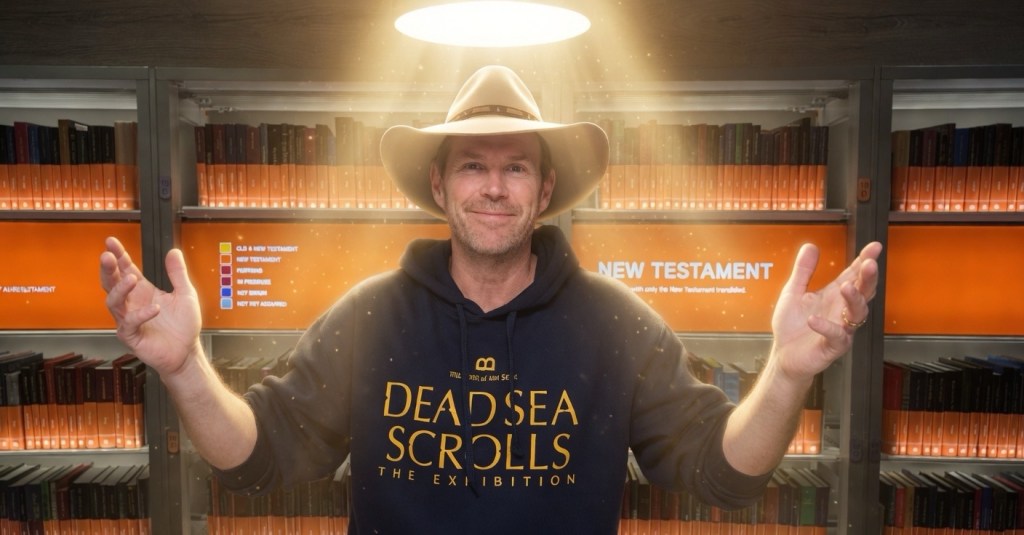
Rich Hoffman is an author, political consultant, and strategic advisor based in Cincinnati, Ohio, and the creator of The Politics of Heaven—a unique framework that connects biblical theology, ancient history, and modern power structures to explain how moral alignment and spiritual forces shape global events. Blending real-world political experience with deep research into archaeology, UFO phenomena, and suppressed historical narratives, Hoffman offers compelling commentary on topics ranging from ancient civilizations and the Dead Sea Scrolls to modern populist movements, paranormal continuity, and leadership strategy in chaotic environments. As the author of The Gunfighter’s Guide to Business and the forthcoming Politics of Heaven, he brings a grounded yet provocative voice to media discussions, supported by firsthand experiences and a cross-disciplinary approach that bridges science, history, and theology. For interviews, speaking engagements, or expert analysis, visit richhoffmanbooks.com or contact directly via phone at 513-307-5815 or email at rhoffman@richhoffmanbooks.com. If you’ve seen the movie, Disclosure Day and want to talk about it and the implications of Presidnet Trump’s UAP disclosures, let me know and we can bring some color to your coverage. https://richhoffmanbooks.com/media-inquiries-broadcast-topics-and-contact-info/?frame-nonce=ad51e7ecba I do have a firsthand UFO encounter to discuss.
A few years ago, the World Economic Forum floated this vision of the future captured in the phrase “you’ll own nothing and be happy.”¹ It sounded like one of those slick marketing pitches that ignores human nature entirely. People don’t like it. They push back in quiet, stubborn ways that reveal something deep about who we are as human beings wired for possession, autonomy, and legacy. I saw it clearly the other day when I was taking someone in their twenties to lunch in my car. They glanced at the dashboard and asked what that strange slot was. It was the CD player. My car isn’t ancient—I tend to drive vehicles for a decade or more—and yet to this young person, it was an artifact from another era.²
I explained that compact discs were once revolutionary. Developed through a collaboration between Philips and Sony starting in the late 1970s, with key demonstrations in 1979 and a commercial launch in 1982, CDs promised perfect digital sound without the pops, scratches, or degradation of vinyl records or the hiss of cassettes.³ By the late 1980s and throughout the 1990s, they dominated the market. I remember the excitement vividly. You could pop one in, skip tracks instantly, and take your music anywhere without worrying about needles or tape wear. I had built plenty of playlists on cassettes by recording songs off vinyl albums in the order I wanted, but CDs made sequencing seamless. You owned it outright. You could drive down the road at highway speeds—through Ohio’s potholes, storms, or whatever the Great Miami River valley threw at you—and the music played reliably. No internet required. No monthly subscription draining your account. No dependency on someone else’s servers.⁴
That young person couldn’t wrap their mind around it. Subscription services like Apple Music and Spotify have shaped their entire adult life. They rent access to a vast library that lives on someone else’s servers. Lose the subscription, the connection, or the company’s goodwill, and it vanishes. I told them that Walmart still carries CDs, though in smaller sections now, and that Cracker Barrel gift shops across the country have racks of vinyl albums selling briskly. People are buying physical music again. They want to own it—put it on the shelf, hold it in their hands, play it whenever they want without begging permission from a corporation. My grandkids notice the library of CDs on our entertainment center. They see the difference between something solid and tangible versus rented pixels in the cloud.⁵
The vinyl resurgence is one of the most astonishing cultural shifts I’ve witnessed. I grew up with LPs. They seemed archaic once CDs arrived with their superior convenience and durability for travel, but now younger generations are embracing records again. According to the Recording Industry Association of America (RIAA), vinyl has grown for 19 consecutive years. In 2025, U.S. vinyl sales surpassed $1 billion for the first time in decades, selling about 46.8 million units and generating nearly three times the revenue of CDs (which sold around 29.5 million units).⁶ Artists like Taylor Swift have driven special editions, but the trend runs deeper. Gen Z and millennials seek that tactile connection in a digital world. I’ve seen it at Target, Walmart, and Cracker Barrel during RV stops. People are hungry for ownership.⁷
This isn’t mere nostalgia. It’s a rejection of the rental economy pushed by globalist visions. The WEF’s 2016 essay by Ida Auken envisioned a 2030 where everything—housing, transportation, entertainment—is rented as a service, delivered conveniently, with no personal clutter of ownership.⁸ Critics rightly called it an attack on human dignity. We are not wired to be perpetual renters. We want our own refrigerator stocked with food we chose, our own yard to tend, our own spouse and children to raise as ours, our own books on the shelf that we can touch and mark. In my family, that physical library of CDs represents more than music—it represents independence.⁹
I remember the full arc of these formats. Vinyl offered warmth and ritual—the act of placing the needle, flipping sides, experiencing the album as intended. But it had drawbacks: bulk, susceptibility to warping, scratches, and the need for careful handling. Cassettes enabled homemade mixtapes and portability in cars, but their quality degraded. CDs felt like liberation when they emerged. Philips and Sony standardized the 12 cm disc to fit Beethoven’s Ninth Symphony entirely, about 74 minutes. The technology used laser reading for error correction, making it robust for travel. You could carry dozens in a slim case. I loved loading them into the car player and having on-demand music without internet or subscriptions.¹⁰
Then the market shifted dramatically. Streaming services offered convenience and unlimited access, but at the cost of true ownership. Apple Music has an enormous catalog—I appreciate the discovery aspect—but I despise the model. You pay monthly forever. Stop paying, and your library disappears. The same happened with movies. Remember rushing to buy the new release on DVD or Blu-ray and building a collection? Now it’s Netflix, HBO Max, or whichever service holds rights that month. Physical sales plummeted as streaming cannibalized them. Yet when content rotates off platforms, demand for ownership spikes again.¹¹
The push toward renting everything ties into deeper political desires for control. Centralized powers—global forums, big tech, financial interests—prefer recurring revenue and dependency. If you own it, you have sovereignty. If you rent, they can change terms, censor content, raise prices, or cut you off. This mirrors broader patterns I’ve seen in politics, aerospace, and culture. In The Gunfighter’s Guide to Business, I discuss self-reliance and imposing your will on circumstances rather than leasing your life from others.¹² The same principle applies here. Look at the excitement around SpaceX’s IPO. People want to own a piece of something real, not just subscribe to access.¹³
During RV travels with my wife across the country—to the Space Coast, Gettysburg, or anywhere the road takes us—I’m reminded why ownership matters. There’s nothing like having your own bed, your own refrigerator with cold drinks and snacks, your own clean bathroom instead of relying on gas station facilities. You rent the campsite, but your stuff is yours. It provides a sense of autonomy even while moving. The same goes for books. I own physical copies. I like touching them, flipping pages, keeping them in my personal library. Downloading or using Audible has its convenience, but it lacks permanence. I’m not a fan of leasing intellectual or cultural space.¹⁴
Power outages here in Ohio—whether from big storms rolling up from the Gulf, tornadoes, or winter events—highlight another advantage. With a generator, you could still play a DVD, Blu-ray, or CD. Streaming dies without connectivity. Personal libraries provide resilience. Vinyl’s comeback, despite being larger and more fragile than CDs, shows the depth of this desire. Records take up space, can warp or scratch, and require more care, yet people buy them enthusiastically.¹⁵
The speed of change amazes me. My car still has a working CD player, yet new vehicles rarely include them. Manufacturers followed the connectivity and subscription trend. But the backlash is real. Who still makes CDs? Companies like Disc Makers and Bison Disc continue short-run and replication services for artists and collectors. Demand persists for reissues, independent releases, and audiophile formats. Given vinyl’s proof of concept, a modest CD revival is plausible—especially for durability, portability, and offline use. Collectors value the format’s sound quality and convenience over vinyl’s ritual.¹⁶
This hunger extends beyond music to the core of human nature. Americans especially cherish property rights. We want our homes, cars, guns, private spaces, and cultural artifacts that reflect our identity. Progressive globalist ideas of shared everything clash with that reality. Socialism’s communal experiments fail because they ignore our drive to build legacies. Music is deeply personal. The songs that shaped your youth, the albums discovered on your own—they become part of you. Renting them feels like renting your memories.¹⁷
I explained all this to that young person over lunch. They had recently bought a vinyl album at Target and were intrigued by the concept of true ownership. CDs seemed novel again. It’s not about rejecting technology—streaming has its place for discovery and variety. But the default shouldn’t be perpetual rental. Ownership provides resilience, no algorithmic control over your playlist, and the satisfaction of pointing to a shelf and saying, “That’s mine.” During family trips, we play our own music without signal drops or interruptions from navigation or texts.¹⁸
The WEF vision assumes adaptation to renting. Evidence suggests otherwise. Vinyl’s 19-year growth streak, physical media’s persistence, and resistance to woke content in Hollywood all signal a market shift. Big tech and entertainment pushed subscription models and certain narratives, alienating audiences. People retreat to what they can control.¹⁹
In my own life, this philosophy runs deep—from early experiences in Cincinnati to aerospace program management. Consultants and rented expertise come and go, but teams that own the mission endure—the same with culture. We want music, books, and stories that belong to us. In The Politics of Heaven, I explore these threads of spiritual, cultural, and economic sovereignty. Ownership isn’t greed; it’s dignity and agency.²⁰
There’s room for balance. Physical formats like vinyl and CDs offer tangible connection. Digital provides access. But forcing everything into rental models driven by political control rather than pure market demand has backfired. The serpent of ownership uncoils in the face of forced renting. People choose it every time they buy a record, a CD, a book, or build their own space. That’s the real future—not a 2030 rented utopia, but timeless human nature asserting itself.
I still pop in a CD when I drive. It works perfectly. And it’s mine. That feeling matters more than any subscription pitch. As I dictate this overlooking the Great Miami River or from the RV, I’m reminded how personal autonomy anchors everything. The market is speaking loudly. Vinyl proves it. CDs could follow. And humans will keep choosing what they can truly call their own—making tomorrow a better day through ownership, not rental.²¹
Footnotes
¹ World Economic Forum / Ida Auken essay “Welcome to 2030” (2016).
² Personal observation from recent interaction.
³ Philips/Sony CD development history, 1979–1982 standardization.
⁴ CD advantages for portability and reliability.
⁵ Retail observations at Walmart, Cracker Barrel, and Target.
⁶ RIAA 2025 Year-End Report: Vinyl $1B+, 46.8M units vs. CDs 29.5M.
⁷ Gen Z/millennial trends in tactile media.
⁸ WEF ownership predictions and criticism.
⁹ Family library of CDs.
¹⁰ Technical history of CD format.
¹¹ Streaming impact on physical media sales.
¹² The Gunfighter’s Guide to Business Principles.
¹³ SpaceX IPO and ownership desire.
¹⁴ RV travel and book ownership reflections.
¹⁵ Vinyl drawbacks vs. appeal.
¹⁶ Current CD manufacturing (Disc Makers, etc.) and revival potential.
¹⁷ Human nature and property rights.
¹⁸ Conversation with a young person.
¹⁹ Cultural and market backlash.
²⁰ Ties to The Politics of Heaven.
²¹ Closing personal philosophy.
Bibliography
• Recording Industry Association of America (RIAA). 2025 Year-End Recorded Music Revenue Report.
• World Economic Forum. Ida Auken, “Welcome to 2030” (2016).
• Philips/Sony historical documentation on CD development.
• Rich Hoffman, The Gunfighter’s Guide to Business and The Politics of Heaven.
• Industry reports on physical media trends (Disc Makers, retail observations).
Rich Hoffman is an author, political consultant, and strategic advisor based in Cincinnati, Ohio, and the creator of The Politics of Heaven—a unique framework that connects biblical theology, ancient history, and modern power structures to explain how moral alignment and spiritual forces shape global events. Blending real-world political experience with deep research into archaeology, UFO phenomena, and suppressed historical narratives, Hoffman offers compelling commentary on topics ranging from ancient civilizations and the Dead Sea Scrolls to modern populist movements, paranormal continuity, and leadership strategy in chaotic environments. As the author of The Gunfighter’s Guide to Business and the forthcoming Politics of Heaven, he brings a grounded yet provocative voice to media discussions, supported by firsthand experiences and a cross-disciplinary approach that bridges science, history, and theology. For interviews, speaking engagements, or expert analysis, visit richhoffmanbooks.com or contact directly via phone at 513-307-5815 or email at rhoffman@richhoffmanbooks.com. If you’ve seen the movie, Disclosure Day and want to talk about it and the implications of Presidnet Trump’s UAP disclosures, let me know and we can bring some color to your coverage. https://richhoffmanbooks.com/media-inquiries-broadcast-topics-and-contact-info/?frame-nonce=ad51e7ecba I do have a firsthand UFO encounter to discuss.
I was really impressed with a recent piece by Donna D’Errico. She produces YouTube videos as part of the Myth Bound series, and I completely understand her approach. In an era when everyone can have their own media platform, people like Donna are stepping up to explore Earth’s mysteries afresh. She’s doing a kind of modern Josh Gates-style investigation—traveling to sites, talking to experts, and digging into legends with genuine curiosity. Her episode on Serpent Mound struck me as particularly strong.
Before I dive deeper, I have to acknowledge that this discussion probably won’t win me many friends—especially as my book The Politics of Heaven nears publication during a time when Spielberg’s Disclosure Day and waves of official UAP releases are forcing people to reconsider long-dismissed ideas. My reference point here is one of deep respect for the field: I love archaeologists. I admire the dedication it takes to spend years in the dirt, uncovering artifacts so the rest of us can wrestle with their meaning. But like any institutional endeavor, grooves form. Assumptions harden into orthodoxy. Human nature resists relearning, especially when funding, careers, and political narratives are at stake. Once a framework is set, new evidence is often shoehorned to fit rather than allowed to challenge the foundation.
Serpent Mound, in Adams County, Ohio, is far more mysterious than mainstream accounts typically allow. The default narrative attributes it to “Indigenous people,” specifically linking it to the Adena (circa 800 BC–AD 100) or Fort Ancient (AD 1000–1650) cultures, which then folds neatly into broader political claims about “stolen land.” This framing, I believe, serves agendas that seek to undermine America’s founding legitimacy in favor of collectivist remaking—an echo of old European resentments toward the prosperous republic born from the Louisiana Purchase, Florida acquisition, and western expansion.
Donna’s episode respectfully features archaeologists discussing the site’s astronomical alignments, particularly its alignment with the summer solstice sunset, which was important to Fort Ancient peoples. She highlights how the mound feels profoundly three-dimensional on the ground—coiling serpent body undulating with the terrain—unlike the flattened maps most people see. That experiential quality is key. The site was meant to be walked, felt, and understood in context.
Serpent Mound itself is the largest known serpent effigy in the world, stretching approximately 1,348 feet in an uncoiling form with a curled tail. It sits atop a plateau within the Serpent Mound crater (also called the Serpent Mound Disturbance), an eroded meteorite impact structure roughly 8 km (5 miles) in diameter (estimates up to 14 km), formed less than 320 million years ago (likely around 300 million years ago). The builders chose this precise location on the rim of an ancient scar invisible to casual observation. Radiocarbon dating has shifted: earlier assumptions pointed to Adena; a 1991 study suggested Fort Ancient around AD 900–1200; and a 2014 analysis (later corroborated) supports Adena construction around 300 BC, with rebuilding in the Fort Ancient period. Multiple layers of use are evident.
Why build the world’s largest serpent effigy on the edge of a 300-million-year-old impact crater with sophisticated celestial alignments? The mathematics encoded here—solstice and equinox orientations—suggest knowledge far beyond simple hunting calendars. I’ve visited the site for decades, often reflecting on these questions while overlooking the Brush Creek Valley. It is one of three key locations I explore in The Politics of Heaven as evidence of non-human technological and spiritual interaction.
The second is Windover in central Florida, near the modern Kennedy Space Center. This ~8,000-year-old Middle Archaic cemetery (roughly 7,000–8,000 years BP) yielded 168 burials in a peat pond, many with remarkably preserved brain tissue, woven textiles of advanced complexity (multiple weaves, including non-heddle loom examples), and deliberate ritual orientation (often flexed, on left side facing west, anchored with stakes). At the time, sea levels were far lower; the coastline extended miles farther out. Submerged sites likely await discovery. These people practiced sophisticated mortuary rites predating biblical timelines by millennia, challenging simplistic post-Ice Age migration models from Beringia. Their genetics and practices don’t align neatly with those of later tribal groups, opening the door to deeper questions about origins and external influence.
The third is Flag Fen in England, masterfully excavated by Francis Pryor. This Bronze Age site (around 1000 BC, contemporaneous with the First Temple period) features complex timber platforms, votive weapon offerings in wetlands, and evidence of sophisticated beliefs about the afterlife. Pryor’s work—detailed in books like Flag Fen: Life and Death of a Prehistoric Landscape—reveals a ritual landscape of remarkable engineering.
These sites, alongside markers such as the London Stone, Paris’s origin stone, and Washington, D.C.’s Masonic layout, suggest coordinated knowledge across continents and eras. Native American legends—Iroquois, Shawnee, and Aztec migrations from the north (echoed at Three Rivers Petroglyphs in New Mexico)—feature descending “gods,” giants, and supernatural beings that are remarkably consistent with global mythologies. The uniformity points to real encounters rather than independent invention.
Near my home in the Great Miami River valley (Liberty Township / Middletown area, Ohio), the Middletown Mound and Miamisburg Mound stand as testaments. Miamisburg is one of the largest conical mounds in eastern North America—65 feet high, 800 feet in circumference, built by Adena peoples in stages, containing vast amounts of earth and visible for miles. My daughter has taken a great interest in the Middletown site. These should be premier attractions, yet NAGPRA and institutional caution limit new excavations. Cultures routinely built atop older complexes—Cahokia, Baalbek, Jerusalem, Christian churches over pagan temples. Why assume otherwise here?
Archaeologists I respect operate under real constraints. Funding flows through institutions influenced by political and financial interests historically at odds with figures like Andrew Jackson. The “Mound Builder” myth was once weaponized for removal policies (Indian Removal Act, 1830), but today continuity narratives sometimes sideline anomalous evidence. I want these professionals to be better funded for open inquiry.
Post-disclosure, the picture sharpens. UAP whistleblower testimony on non-human biologics and reverse-engineering (with local ties to Wright-Patterson) makes ancient interaction plausible. Disclosure Day shifts the Overton window.
This leads to time—interdimensional or ultra-terrestrial beings likely master relativity. Time dilation is a physics fact. Travelers could experience days while centuries pass on Earth. Sites like Serpent Mound may serve as temporal anchors—celestial markers to recalibrate “when” upon return. Mythic “gods” gifting knowledge then vanishing aligns with this. Cryptids fit as echoes.
I’ve visited these regions and studied the works extensively. These inform The Politics of Heaven, my exploration of spiritual warfare, giants/Nephilim, divine rebellion, and humanity’s interactions. Nineteen of twenty-one chapters tackle controversial ground because they prioritize evidence over control narratives.
Donna D’Errico embodies the right spirit. Archaeologists deserve support for deeper digs. The great serpent on its ancient crater is no random effigy. It testifies to encounters with star-faring knowledge-bearers.
We stand at the threshold of new understanding. The dance continues. The serpent watches. Truth uncoils into the light.
Footnotes
¹ Donna D’Errico, Myth Bound YouTube series (episodes on Serpent Mound and related mysteries).
² Ohio History Connection, Serpent Mound official site details and history.
³ Wikipedia / scientific sources on Serpent Mound crater: ~8 km diameter, <320 million years old (est. ~300 Ma).
⁴ Radiocarbon dating summaries: 2014 Adena ~300 BC with Fort Ancient repairs.
⁵ Astronomical alignments (solstices/equinoxes).
⁶ Windover site reports: ~8,000 BP burials, textiles, rituals (Glen Doran et al.).
⁷ Francis Pryor, Flag Fen: Life and Death of a Prehistoric Landscape (2005).
⁸ Miamisburg Mound: Ohio History Connection / National Register details.
⁹ Broader context: Graham Hancock, Ross Hamilton (Serpent Mound), UAP disclosures, and Pryor’s Time Team work
Rich Hoffman is an author, political consultant, and strategic advisor based in Cincinnati, Ohio, and the creator of The Politics of Heaven—a unique framework that connects biblical theology, ancient history, and modern power structures to explain how moral alignment and spiritual forces shape global events. Blending real-world political experience with deep research into archaeology, UFO phenomena, and suppressed historical narratives, Hoffman offers compelling commentary on topics ranging from ancient civilizations and the Dead Sea Scrolls to modern populist movements, paranormal continuity, and leadership strategy in chaotic environments. As the author of The Gunfighter’s Guide to Business and the forthcoming Politics of Heaven, he brings a grounded yet provocative voice to media discussions, supported by firsthand experiences and a cross-disciplinary approach that bridges science, history, and theology. For interviews, speaking engagements, or expert analysis, visit richhoffmanbooks.com or contact directly via phone at 513-307-5815 or email at rhoffman@richhoffmanbooks.com. If you’ve seen the movie, Disclosure Day and want to talk about it and the implications of Presidnet Trump’s UAP disclosures, let me know and we can bring some color to your coverage. https://richhoffmanbooks.com/media-inquiries-broadcast-topics-and-contact-info/?frame-nonce=ad51e7ecba I do have a firsthand UFO encounter to discuss.
I have always lived with one foot in the ordinary world, local Ohio politics, family life along the Great Miami River in Butler County, and the other in the deeper currents of history, archaeology, and the unexplained. Growing up in the Cincinnati area, my family in the 1970s was already investigating strange lights in the sky and odd occurrences that didn’t fit neatly into everyday explanations. Those early experiences planted seeds that would later bloom into serious inquiry. I have never claimed to have been abducted or to have lived through anything as dramatic as the portrayal of Travis Walton’s ordeal in Fire in the Sky. My encounters have been subtler, more provocative, and in one memorable case, downright infuriating in their precision and timing.
One such encounter stands out, not just because of what I saw firsthand in earlier instances, but also because of how it unfolded in response to something I said publicly. A couple of years ago, amid ongoing discussions about government transparency, surveillance, and the lingering shadows of the COVID era, I recorded a video. In it, I dared whatever forces—whether extraterrestrial, interdimensional, or black-budget human technology—might be listening to show themselves right there in my backyard of Butler County, Ohio. I pointed to a specific spot in the sky near Middletown. I wasn’t expecting fireworks or a close encounter of the third kind. I was making a point about power, information, and the dangers of hidden knowledge wielded by institutions that demand trust while offering none in return.
A short time later—mere days—a ring of bright green lights appeared in the night sky exactly in that vicinity. Multiple residents captured video around 10:30 or 11 p.m. The lights rotated, hovered, then shot off with impossible speed. People stopped at stoplights, pulled out their phones, and filmed what appeared to be a circular formation moving counterclockwise before it vanished. Reports flooded local news: WCPO, WLWT, and others covered the strange rotating green lights over Middletown in Butler County. Witnesses described it as unlike any drone or conventional aircraft. Some called it frightening; others were fascinated. I wasn’t on site that night, but the proximity and timing were unmistakable.
This wasn’t my first brush with the phenomenon. I had witnessed other UFO activity years earlier, including one that left me genuinely angry at the audacity of it. But this particular event felt targeted. Given my political activity—my role as a vocal conservative voice in Butler County, my history with local issues like Lakota schools, tax fights, and broader America First advocacy—I have long assumed surveillance. Decades ago, in a previous neighborhood in Mason, Ohio, I confronted a drug ring operating too close to families. That brought FBI interviews and scrutiny that carried over for years. Local and federal eyes have been on me, my family, and my work for a very long time. When you dare powers—visible or invisible—to reveal themselves while criticizing government overreach, you invite responses. Whether this was a genuine non-human craft, advanced human technology (perhaps reverse-engineered or projected), or something meant to rattle me, it landed with precision.
I took it as a message. Not the kind that turns you into Richard Dreyfuss piling dirt in the living room from Close Encounters of the Third Kind, but one that demands deeper reflection. I have visited Roswell. I have investigated the Mothman in Point Pleasant, West Virginia—right across the river from Ohio territory familiar to me. There, UFO sightings were rampant alongside the Mothman reports in the 1960s. John Keel’s The Mothman Prophecies (later a film with Richard Gere) details how lights in the sky, strange calls, and Men in Black phenomena intertwined with the creature sightings leading up to the Silver Bridge collapse. You cannot grapple with Mothman without confronting the UFO dimension. I went there for personal research, on a birthday trip no less, and came away convinced that these events form a pattern far older than modern disclosure narratives.
Watching Steven Spielberg’s Disclosure Day recently brought it all into sharper focus. Spielberg, who has fielded countless UFO stories from the public over decades while making films like Close Encounters, treats the subject with a humanistic lens. The movie explores ordinary people pushing back against secrecy. I found it compelling, even if some critics dismissed elements. It reminded me of my own journey. Spielberg has no personal UFO encounter, by his account, yet he has shaped public imagination on the topic. I have had them, and they propelled me to write.
My thoughts also turned to Indiana Jones and the Kingdom of the Crystal Skull. Many reviewers scoffed at the interdimensional beings, calling it the weakest entry. I saw sophistication in it. The film uses Indy to explore ancient alien influence on human civilization—archaeologists from another realm, imprints on societies, crystal skulls tied to Roswell-like events and portals. It gave popular culture the moral license to think seriously about these ideas. It opened doors for shows like Ancient Aliens. The Peruvian connections, snakes as symbols (echoing the Garden of Eden), and hidden-in-plain-sight craft at the end resonated. I dedicated a chapter in my book to serpentine imagery and interdimensional influences.
Broader Context: UFOs in Ohio and Butler County
Ohio has a rich history of sightings. The 1952 “Flatwoods Monster” event in nearby West Virginia involved a bright object and a strange entity. In 1994, Trumbull County saw police-chased lights. Middletown itself has a history of reports, including cigar-shaped objects. The 2023 green lights fit a pattern of rotating formations and rapid departures defying conventional explanation. Some dismissed it as a prank or drone, but the speed and multiple witnesses suggest more. Butler County’s location—near Wright-Patterson Air Force Base, long rumored in UFO lore for reverse-engineering—adds intrigue. Reverse-engineering Roswell tech? Congressional testimony and retired officials hint at it. I know enough insiders to take such claims seriously.
These aren’t new. Ancient texts, archaeology, and global myths describe sky beings, watchers, and technology influencing humanity. The Book of Enoch, Dead Sea Scrolls (which I viewed at the Museum of the Bible on my birthday), Nephilim, and giants speak to this. My book, The Politics of Heaven, dives into spiritual warfare, divine rebellion, population agendas, and how non-human intelligences have shaped history. Biblical conspiracies, demons, and interdimensional entities aren’t “crazy” when disclosure normalizes the conversation. Spielberg’s film and real events make mainstream what was once fringe.
Government, Power, and the Politics of Disclosure
I have built my life around self-reliance, discipline (symbolized by my whip iconography from my family’s Kentucky heritage), and skepticism toward centralized power. The UFO debate often serves as a pretext for more government authority: “Trust us to protect you from them.” Yet the same institutions lied about COVID, mandates, elections, and more. Black budgets, compartmentalized programs at places like Wright-Patterson, and associations with supernatural tech-seeking make the government threat more immediate than hypothetical aliens. If entities have visited since civilization’s dawn, then history makes more sense—temples, sacrifices, and beliefs born of observed phenomena.
My dare and the subsequent sighting felt like a ritual response. Call it out, and it appears. Whether it was a government projection (holographic or drone tech) to discredit me in political circles, actual craft, or something responding to frequency/intent, it happened. Proximity to my pointed location, in an area with patterns (Middletown, Monroe, West Chester), wasn’t a coincidence. It reinforced my view: information is power. Secrecy builds empires on lies. As a grand jury foreman, I saw institutional failures up close. Two-tier justice, surveillance of citizens like me—these are real.
This encounter, revisited through Disclosure Day, crystallized my decision to finish the manuscript. I weave personal stories, including this one, with biblical archaeology, ancient civilizations (Axum, Britain BC, the Windover Bog People), giants, and modern spiritual warfare. Chapters explore how UFOs, interdimensional beings, and government secrecy intersect with heavenly politics. Reviewers call it wild, but grounded in my experiences and research. It answers questions Disclosure Day raises: What next? What does it mean for faith, power, and humanity?
Conclusion: Toward Understanding
I stand by my premises. Aliens or their tech have been with us. Government lies pose clearer dangers. My encounter was deliberate, provocative, and inspirational. It led to The Politics of Heaven, a book for those seeking the next layer after disclosure. Look up Middletown UFO reports yourself. Study Keel, Enoch, archaeology. Question power. Live with discipline and curiosity. The sky holds answers, but so does rigorous inquiry into heaven’s politics.
The modern cultural moment surrounding extraterrestrial disclosure sits at the intersection of fiction, data, belief, and institutional power. What once belonged exclusively to speculative literature and late-night radio has steadily entered mainstream discourse through cinema, congressional hearings, intelligence reports, and public polling. The convergence of these domains—popular storytelling, emerging government transparency, and shifting public opinion—marks not merely a fascination with the unknown, but a broader transition in how societies process uncertainty and authority.
Science fiction has long functioned as a precursor to technological and conceptual breakthroughs. From Jules Verne’s imagined submarines to Star Trek’s communicators, speculative narratives have historically inspired real-world innovation, shaping the ambitions of engineers, scientists, and entrepreneurs 12. This feedback loop between imagination and material progress has created a cultural environment in which ideas once dismissed as fantasy are re-evaluated as plausible futures. The genre’s influence extends beyond gadgets into ethics and social systems, providing frameworks for grappling with artificial intelligence, space exploration, and extraterrestrial life itself 1. In this sense, science fiction does not merely predict the future—it establishes the intellectual conditions that make certain futures conceivable.
The normalization of extraterrestrial discourse is reflected in recent polling data, which reveals a decisive shift in public belief. As of June 2026, approximately 63% of Americans believe intelligent life exists beyond Earth, a substantial increase from fewer than half in 2010 3. Moreover, about 21% of respondents believe direct contact with extraterrestrial life has already occurred 3. These figures illustrate a cultural transformation: belief in extraterrestrial life is no longer marginal but widely accepted. Even more telling is that roughly 84% of Americans believe the federal government knows more about unidentified aerial phenomena than it has disclosed 4. This convergence of belief in extraterrestrials and skepticism toward institutional transparency underscores a broader erosion of trust in official narratives.
Parallel to this shift in public perception, the United States government has released a series of reports on Unidentified Aerial Phenomena (UAP), providing an unprecedented—though limited—window into classified data. The 2021 preliminary assessment reviewed 144 documented cases, many supported by multi-sensor evidence and some exhibiting unusual flight characteristics such as abrupt acceleration and stationary hovering 5. By August 2022, the number of recorded incidents had expanded to 510, reflecting both increased reporting and reduced stigma among military personnel 6. The 2023 and subsequent reports further expanded the dataset to hundreds more cases, with total investigations surpassing 800 and later exceeding 1,600 by 2024, demonstrating a rapidly growing body of observations 75.
Despite this increase in data, a significant proportion of cases remain unresolved. While many sightings are eventually attributed to balloons, drones, or atmospheric phenomena, a persistent subset defies easy classification. Notably, no confirmed extraterrestrial origin has been established in these official reports, yet the continued presence of unexplained cases sustains public speculation 5. The reports emphasize aviation safety concerns and the need for improved data collection, framing UAP primarily as a defense and intelligence issue rather than a confirmation of alien technology 7. Nevertheless, the mere acknowledgment of unexplained aerial phenomena by government institutions has legitimized a topic long relegated to the fringes.
The cultural impact of this gradual disclosure cannot be separated from the role of media, particularly large-scale cinematic releases that translate complex or controversial ideas into accessible narratives. Films centered on extraterrestrial contact often serve as intermediaries between classified knowledge and public imagination, offering emotional and philosophical interpretations of what scientific reports leave unresolved. These narratives tend to humanize the unknown, framing extraterrestrial encounters in terms of curiosity, conflict, or moral testing. In doing so, they provide audiences with conceptual tools to process information that might otherwise provoke skepticism or fear.
At the same time, the enduring appeal of theories regarding ancient extraterrestrial influence demonstrates the persistence of alternative explanatory frameworks. The so-called “ancient aliens” hypothesis suggests that extraterrestrial beings contributed to early human civilizations, influencing architecture, religion, and technological development. While this theory remains popular in media and literature, it is widely regarded by professional archaeologists as pseudoarchaeology, often criticized for ignoring contextual evidence and substituting speculation for rigorous analysis 89. Scholars argue that such theories can undermine appreciation for human ingenuity by attributing historical achievements to non-human actors. Yet their popularity reflects a deeper cultural impulse: the desire to locate external origins for complex systems and unexplained accomplishments.
This impulse extends into modern interpretations of government secrecy and psychological control. Among the most controversial historical programs associated with these concerns is Project MK-Ultra, a covert CIA initiative conducted between 1953 and the mid-1960s. The program involved extensive experimentation with drugs, hypnosis, and sensory manipulation in an attempt to develop methods of controlling human behavior 10. Many of these experiments were conducted without informed consent, leading to lasting ethical and legal controversies when the program was exposed in the 1970s 11. MK-Ultra’s documented abuses have contributed to a broader skepticism toward intelligence agencies, reinforcing narratives in which governments possess capabilities that remain hidden from public scrutiny.
The persistence of such ideas reflects the influence of narrative storytelling, which often amplifies real-world events into more dramatic or comprehensive systems of control. This blending of fact and fiction can complicate efforts to establish a shared understanding of what is known, unknown, and unknowable.
Within this landscape, the concept of “disclosure” operates as both a political and psychological threshold. It represents not only the potential revelation of classified information but also the collective readiness of society to integrate disruptive knowledge. Historical precedents suggest that transformative discoveries—whether heliocentrism, evolution, or nuclear technology—require gradual assimilation. Sudden exposure to paradigm-shifting ideas can provoke resistance, denial, or reinterpretation within existing belief systems. Consequently, any process of disclosure, whether regarding extraterrestrial life or advanced technology, is likely to unfold incrementally, mediated by cultural narratives and institutional frameworks.
Religious perspectives add another dimension to this process. The possibility of extraterrestrial intelligence raises fundamental questions about humanity’s place in the universe, challenging anthropocentric interpretations of creation and divine purpose. Yet many theological traditions possess conceptual flexibility, allowing for the existence of life beyond Earth without negating core doctrines. The idea of a universe governed by a singular creator is not inherently incompatible with multiple inhabited worlds. Rather than undermining faith, the discovery of extraterrestrial life could expand the scope of theological inquiry, prompting reconsideration of divine agency and cosmic order.
Public reaction to such possibilities appears increasingly nuanced. Polling data indicates that a majority of Americans would respond to extraterrestrial contact with curiosity rather than fear, though a significant proportion also anticipates anxiety 3. This duality reflects the tension between fascination and uncertainty that characterizes human engagement with the unknown. Cultural conditioning through decades of science fiction has arguably prepared audiences for the idea of extraterrestrial life, normalizing it to a degree unimaginable in earlier generations.
At the same time, political framing continues to shape interpretations of disclosure. Debates over transparency, national security, and governmental authority influence how information is released and received. Bipartisan interest in UAP investigations suggests that the issue transcends traditional ideological divides, yet its implications can be mobilized within broader narratives about governance, sovereignty, and public trust. The question of who controls knowledge—and who decides when it is revealed—remains central to the discourse.
The interplay between science fiction, empirical data, and cultural belief ultimately reveals a society in transition. As technological capabilities expand and information becomes more accessible, distinctions between speculation and reality grow increasingly porous. Ideas once confined to fiction are reexamined through the lens of possibility, while scientific findings are interpreted within preexisting narrative frameworks. This dynamic creates both opportunities and challenges: opportunities for expanded knowledge and imaginative exploration, and challenges in maintaining epistemic clarity.
Future developments in astronomy, planetary science, and space exploration may provide more definitive answers regarding extraterrestrial life. Missions to Mars, Europa, and other celestial bodies aim to detect biosignatures or evidence of past life, potentially transforming speculation into empirical reality. At the same time, continued analysis of UAP data may resolve many currently unexplained cases, narrowing the gap between observation and explanation. Whether these processes culminate in confirmation of extraterrestrial intelligence remains uncertain, but their trajectory is unmistakable.
In this context, disclosure is less a singular event than an ongoing process—a gradual unfolding shaped by technological progress, institutional decisions, and cultural interpretation. The convergence of widespread belief, partial governmental transparency, and influential storytelling suggests that society is moving toward a new equilibrium in its understanding of the cosmos. This transformation is not driven solely by evidence but by the narratives constructed around that evidence, which determine how it is perceived, debated, and ultimately integrated into collective knowledge.
The enduring power of science fiction lies in its ability to anticipate and normalize the unfamiliar. By envisioning encounters with the unknown, it prepares audiences to confront them, bridging the gap between imagination and reality. As the boundaries of knowledge continue to expand, this role becomes increasingly significant, guiding public discourse through uncharted intellectual territory. In the evolving dialogue surrounding extraterrestrial life and government disclosure, fiction and fact are not opposing forces but complementary elements in a broader cultural process—one that continues to redefine humanity’s place in an ever-expanding universe. And with all that said, the movie, Disclosure Day, is a fantastic movie everyone should see. It’s important.
—
Footnotes
[1] Data on public belief in extraterrestrial life: 3
[2] Public perception of government secrecy on UFOs: 4
Rich Hoffman is an author, political consultant, and strategic advisor based in Cincinnati, Ohio, and the creator of The Politics of Heaven—a unique framework that connects biblical theology, ancient history, and modern power structures to explain how moral alignment and spiritual forces shape global events. Blending real-world political experience with deep research into archaeology, UFO phenomena, and suppressed historical narratives, Hoffman offers compelling commentary on topics ranging from ancient civilizations and the Dead Sea Scrolls to modern populist movements, paranormal continuity, and leadership strategy in chaotic environments. As the author of The Gunfighter’s Guide to Business and the forthcoming Politics of Heaven, he brings a grounded yet provocative voice to media discussions, supported by firsthand experiences and a cross-disciplinary approach that bridges science, history, and theology. For interviews, speaking engagements, or expert analysis, visit richhoffmanbooks.com or contact directly via phone at 513-307-5815 or email at rhoffman@richhoffmanbooks.com. If you’ve seen the movie, Disclosure Day and want to talk about it and the implications of Presidnet Trump’s UAP disclosures, let me know and we can bring some color to your coverage. https://richhoffmanbooks.com/media-inquiries-broadcast-topics-and-contact-info/?frame-nonce=ad51e7ecba I do have a firsthand UFO encounter to discuss.
I have always lived with one foot in the ordinary world of aerospace program management, local Ohio politics, family life along the Great Miami River in Butler County, and the other in the deeper currents of history, archaeology, and the unexplained. Growing up in the Cincinnati area, my family in the 1970s was already investigating strange lights in the sky and odd occurrences that didn’t fit neatly into everyday explanations. Those early experiences planted seeds that would later bloom into serious inquiry. I have never claimed to have been abducted or to have lived through anything as dramatic as the portrayal of Travis Walton’s ordeal in Fire in the Sky. My encounters have been subtler, more provocative, and in one memorable case, downright infuriating in their precision and timing.
One such encounter stands out, not just because of what I saw firsthand in earlier instances, but also because of how it unfolded in response to something I said publicly. A couple of years ago, amid ongoing discussions about government transparency, surveillance, and the lingering shadows of the COVID era, I recorded a video. In it, I dared whatever forces—whether extraterrestrial, interdimensional, or black-budget human technology—might be listening to show themselves right there in my backyard of Butler County, Ohio. I pointed to a specific spot in the sky near Middletown. I wasn’t expecting fireworks or a close encounter of the third kind. I was making a point about power, information, and the dangers of hidden knowledge wielded by institutions that demand trust while offering none in return.
A few days later, a ring of bright green lights appeared in the night sky in that vicinity. Multiple residents captured video around 10:30 or 11 p.m. The lights rotated, hovered, then shot off with impossible speed. People stopped at stoplights, pulled out their phones, and filmed what appeared to be a circular formation moving counterclockwise before it vanished. Reports flooded local news: WCPO, WLWT, and others covered the strange rotating green lights over Middletown in Butler County. Witnesses described it as unlike any drone or conventional aircraft. Some called it frightening; others were fascinated. I wasn’t on site that night, but the proximity and timing were unmistakable.
This wasn’t my first brush with the phenomenon. I had witnessed other UFO activity years earlier, including one that left me genuinely angry at the audacity of it. But this particular event felt targeted. Given my political activity—my role as a vocal conservative voice in Butler County, my history with local issues like Lakota schools, tax fights, and broader America First advocacy—I have long assumed surveillance. Decades ago, in a previous neighborhood in Mason, Ohio, I confronted a drug ring operating too close to families. That brought FBI interviews and scrutiny that carried over for years. Local and federal eyes have been on me, my family, and my work. When you dare powers—visible or invisible—to reveal themselves while criticizing government overreach, you invite responses. Whether this was a genuine non-human craft, advanced human technology (perhaps reverse-engineered or projected), or something meant to rattle me, it landed with precision.
I took it as a message. Not the kind that turns you into Richard Dreyfuss piling dirt in the living room from Close Encounters of the Third Kind, but one that demands deeper reflection. I have visited Roswell. I have investigated the Mothman in Point Pleasant, West Virginia—right across the river from Ohio territory familiar to me. There, UFO sightings were rampant alongside the Mothman reports in the 1960s. John Keel’s The Mothman Prophecies (later a film with Richard Gere) details how lights in the sky, strange calls, and Men in Black phenomena intertwined with the creature sightings leading up to the Silver Bridge collapse. You cannot grapple with Mothman without confronting the UFO dimension. I went there for personal research, on a birthday trip no less, and came away convinced that these events form a pattern far older than modern disclosure narratives.
Watching Steven Spielberg’s Disclosure Day recently brought it all into sharper focus. Spielberg, who has fielded countless UFO stories from the public over decades while making films like Close Encounters, treats the subject with a humanistic lens. The movie explores ordinary people pushing back against secrecy. I found it compelling, even if some critics dismissed elements. It reminded me of my own journey. Spielberg has no personal UFO encounter, by his account, yet he has shaped public imagination on the topic. I have had them, and they propelled me to write.
My thoughts also turned to Indiana Jones and the Kingdom of the Crystal Skull. Many reviewers scoffed at the interdimensional beings, calling it the weakest entry. I saw sophistication in it. The film uses Indy to explore ancient alien influence on human civilization—archaeologists from another realm, imprints on societies, crystal skulls tied to Roswell-like events and portals. It gave popular culture the moral license to think seriously about these ideas. It opened doors for shows like Ancient Aliens. The Peruvian connections, snakes as symbols (echoing the Garden of Eden), and hidden-in-plain-sight craft at the end resonated. I dedicated a chapter in my book to serpentine imagery and interdimensional influences.
Broader Context: UFOs in Ohio and Butler County
Ohio has a rich history of sightings. The 1952 “Flatwoods Monster” event in nearby West Virginia involved a bright object and a strange entity. In 1994, Trumbull County saw police-chased lights. Middletown itself has a history of reports, including cigar-shaped objects. The 2023 green lights fit a pattern of rotating formations and rapid departures defying conventional explanation. Some dismissed it as a prank or drone, but the speed and multiple witnesses suggest more. Butler County’s location—near Wright-Patterson Air Force Base, long rumored in UFO lore for reverse-engineering—adds intrigue. Reverse-engineering Roswell tech? Congressional testimony and retired officials hint at it. I know enough insiders to take such claims seriously.
These aren’t new. Ancient texts, archaeology, and global myths describe sky beings, watchers, and technology influencing humanity. The Book of Enoch, Dead Sea Scrolls (which I viewed at the Museum of the Bible on my birthday), Nephilim, and giants speak to this. My book, The Politics of Heaven, dives into spiritual warfare, divine rebellion, population agendas, and the ways non-human intelligences have shaped history. Biblical conspiracies, demons, and interdimensional entities aren’t “crazy” when disclosure normalizes the conversation. Spielberg’s film and real events make mainstream what was once fringe.
Government, Power, and the Politics of Disclosure
I have built my life around self-reliance, discipline (symbolized by my whip iconography from my family’s Kentucky heritage), and skepticism toward centralized power. The UFO debate often serves as a pretext for more government authority: “Trust us to protect you from them.” Yet the same institutions lied about COVID, mandates, elections, and more. Black budgets, compartmentalized programs at places like Wright-Patterson, and associations with supernatural tech-seeking make the government threat more immediate than hypothetical aliens. If entities have visited since civilization’s dawn, then history makes more sense—temples, sacrifices, and beliefs born of observed phenomena.
My dare and the subsequent sighting felt like a ritual response. Call it out, and it appears. Whether it was a government projection (holographic or drone tech) to discredit me in political circles, actual craft, or something responding to frequency/intent, it happened. Proximity to my pointed location, in an area with patterns (Middletown, Monroe, West Chester), wasn’t a coincidence. It reinforced my view: information is power. Secrecy builds empires on lies. As a grand jury foreman, I saw institutional failures up close. Two-tier justice, surveillance of citizens like me—these are real.
I don’t fear aliens landing and applying for jobs (though I joked I’d hire hard workers who crossed interstellar distances). The real danger is unaccountable power using the phenomenon for control. My political consulting, school advocacy, and anti-tax work matter. Associating with “fringe” topics risks credibility, yet truth-seeking demands it. Overman philosophy—imposing will on chaos, as in model rocketry with my grandson in bad weather—applies here. Face the unknown with resilience.
Writing The Politics of Heaven
This encounter, revisited through Disclosure Day, crystallized my decision to finish the manuscript. I weave personal stories, including this one, with biblical archaeology, ancient civilizations (Axum, Britain BC, Windover bog people), giants, and modern spiritual warfare. Chapters explore how UFOs, interdimensional beings, and government secrecy intersect with heavenly politics. Reviewers call it wild, but grounded in my experiences and research. It answers questions Disclosure Day raises: What next? What does it mean for faith, power, and humanity?
Bibliography (Selected; expanded in full manuscript with footnotes)
• Keel, John A. The Mothman Prophecies. 1975. (Core text on Point Pleasant events, UFOs, and interconnected phenomena.)
• Spielberg, Steven, dir. Disclosure Day. Universal Pictures, 2026. (Film exploring disclosure and government secrecy.)
• Spielberg, Steven, dir. Indiana Jones and the Kingdom of the Crystal Skull. Paramount, 2008. (Interdimensional beings and ancient influences.)
Rich Hoffman is an author, political consultant, and strategic advisor based in Cincinnati, Ohio, and the creator of The Politics of Heaven—a unique framework that connects biblical theology, ancient history, and modern power structures to explain how moral alignment and spiritual forces shape global events. Blending real-world political experience with deep research into archaeology, UFO phenomena, and suppressed historical narratives, Hoffman offers compelling commentary on topics ranging from ancient civilizations and the Dead Sea Scrolls to modern populist movements, paranormal continuity, and leadership strategy in chaotic environments. As the author of The Gunfighter’s Guide to Business and the forthcoming Politics of Heaven, he brings a grounded yet provocative voice to media discussions, supported by firsthand experiences and a cross-disciplinary approach that bridges science, history, and theology. For interviews, speaking engagements, or expert analysis, visit richhoffmanbooks.com or contact directly via phone at 513-307-5815 or email at rhoffman@richhoffmanbooks.com. If you’ve seen the movie, Disclosure Day and want to talk about it and the implications of Presidnet Trump’s UAP disclosures, let me know and we can bring some color to your coverage. https://richhoffmanbooks.com/media-inquiries-broadcast-topics-and-contact-info/?frame-nonce=ad51e7ecba I do have a firsthand UFO encounter to discuss.
I stood outside Mustang Sally’s in the Liberty Center shopping complex (now closed), my neighborhood in Liberty Township, minding my own business in my cowboy hat and the way I’ve dressed for decades in Butler County, when a couple approached me. They had moved from the East Coast, via New Hampshire, to our area with certain expectations. They weren’t happy. Their comments made it clear they wanted to reshape this place into something more like where they came from. My response was direct: You moved into my backyard and brought your garbage with you, expecting the region to bend to your liking. You left a place you helped mess up, and now you want to import the same problems here. You don’t like the Bible belts, the cowboy hats, or the people who still go to church on Sundays with Christian origins. Do you really expect to show up and change everything overnight?
That encounter lingered with me, not because it was unique—I get recognized from my videos, blog, and activism against the Lakota levies—but because it tied directly into the themes I’ve been exploring in my book The Politics of Heaven. Human sacrifice has always been a recurring temptation for humanity, a way to appease false gods in pursuit of power, prosperity, or protection. This came sharply into focus during graduation season, the rituals in which parents parade their children as offerings to the modern altars of secular success. I’m not particularly fond of these ceremonies; too often, they reveal parents who have done a poor job raising resilient children in a world that demands conformity to destructive ideologies. To understand this, we must go back to the Bible, to the days after King Solomon, when the seeds of betrayal bore bitter fruit.
King Solomon, for all his wisdom and the glory of the First Temple, failed spectacularly. He had hundreds of wives and concubines from foreign nations, each bringing their gods—Ashtoreth, Molech, Chemosh—and he built high places for them. Yahweh, the God of his father David, was provoked to anger. The kingdom would be torn apart after his death, and his descendants would inherit the consequences. Fast-forward roughly 200 years to the reign of Ahaz, king of Judah, a direct descendant of that troubled line. Second Chronicles 28:3 tells us plainly: “He burned sacrifices in the Valley of Ben Hinnom and sacrificed his children in the fire, engaging in the detestable practices of the nations the Lord had driven out before the Israelites.”
This wasn’t a minor slip. Ahaz walked in the ways of the kings of Israel, making molded images for the Baals. He sacrificed and burned incense on high places, hills, and under every green tree. In his distress, he grew more unfaithful, turning to the gods of Damascus that had defeated him, reasoning that if they helped his enemies, they might help him. He shut the doors of the Temple in Jerusalem and set up altars everywhere. The Chronicler emphasizes the depth of this apostasy: Ahaz burned his sons—plural—in the fire according to the abominations of the nations Yahweh had cast out. This was Molech worship, the fiery offering of children in the Tophet of the Hinnom Valley, later called Gehenna, a place of judgment.
Archaeology confirms the horror. Sites across the ancient Near East, from Canaanite high places at Gezer with infant bones in jars beneath standing stones, to the vast Tophets of Carthage (a Phoenician colony with Canaanite roots), reveal urns filled with burned child remains, often dedicated to Baal-Hammon or Tanit. Estimates suggest thousands of such sacrifices over centuries. Classical writers like Diodorus Siculus described bronze statues where children were placed and rolled into flames, with drums beating to drown out the screams so parents wouldn’t relent. The Bible’s condemnation in Leviticus 18:21, Deuteronomy 12:31, Jeremiah 7:31, and elsewhere aligns with this evidence. Yahweh had driven out the Canaanites precisely because of these practices—the land “vomited them out.” Yet Israel repeatedly fell into the same pit.
In the time of Ahaz, about two centuries after Solomon’s peak, the First Temple still stood, a visible reminder of David’s purchase of the threshing floor and the covenant. Yet Judah’s king, with all the advantages of that heritage, chose Molech over Yahweh. He sacrificed his own children—flesh and blood—to secure political advantage, rain, victory, or prosperity. The priests beat drums to mask the cries. This wasn’t abstract theology; it was a direct betrayal of the God who demanded justice, not the blood of innocents. Ezekiel and Jeremiah later railed against similar abominations in the Valley of Hinnom, where people built high places to Baal and burned sons and daughters.
I see the same pattern today in what I call the “Lego moms”—those levy supporters with their uniform, block-like conformity, who confront people like me for wearing a cowboy hat or standing against higher property taxes for public schools. They move here from places they’ve ruined, expecting Butler County’s Bible-belt roots to yield. At graduation ceremonies, they beam with pride as their children are sent off to woke institutions, sacrificing them on the altars of liberal causes, corporate conformity, pronouns, and careerism. “Where’s your kid going to school?” they ask, as if the choice of secular university is a burnt offering for future success. These parents, often in their 40s and 50s, resent the very children who “hold them back,” trading family for social approval and hedge-fund portfolios.
This is modern child sacrifice, not with literal flames but with the slow burn of indoctrination. Abortion, too, fits the pattern—millions offered up for convenience, autonomy, or economic “luck.” Democrats and progressives advocate policies that treat children as obstacles to personal fulfillment. Just as Ahaz hoped Molech would deliver victory, today’s secularists sacrifice the next generation to the gods of climate alarmism, gender ideology, and big government. Public schools become free babysitting services funded by property taxes, turning children into wards of the state while parents pursue careers. I’ve said it before: many parents don’t love their children more than Ahaz loved his. They send pretty little girls and boys to the “meat market” of liberal campuses, where they learn to hate their heritage and conform or perish.
My own experiences in the 1990s living on UC’s campus during the Clinton years showed the early creep of this. It wasn’t as extreme then, but the trajectory was clear. Now, it’s full-blown. These Lego types despise the Bible because it judges them. Second Chronicles 28 provides the reference point for righteous anger against such evil. Yahweh condemned it because He values life, covenant, and moral order—not the appeasement of demons through innocent blood. The prophets tied this to spiritual adultery, just as Solomon’s foreign wives led him astray.
Expanding on the biblical context, the temptation was immense. Before the full revelation of the Torah as we know it, the ancient Near East teemed with gods. Baal, the storm god, demanded loyalty through fertility rites and sometimes blood. Molech (or Milcom of the Ammonites) was particularly associated with child sacrifice for protection or prosperity. Kings like Ahaz, facing military threats from Aram and Israel, panicked and offered what was most precious—their offspring. This mirrored practices among the Phoenicians, Carthaginians, and even farther afield. In the Americas, the Mississippian culture at Cahokia, near modern St. Louis, featured massive earthen pyramids and evidence of ritual sacrifice, including dozens of young women buried with elites in Mound 72. Aztec, Maya, and other indigenous groups practiced heart extraction and other offerings on a grand scale. Trade networks may have linked these ideas across continents. My old screenplay, The Lost Cannibals of Cahokia, explored this, drawing on real archaeology of the mounds that rivaled European cities in scale.
Native American cultures, often romanticized today, shared these ritual elements—burials with retainers, possible foundation sacrifices. The Bible’s command to conquer Canaan wasn’t arbitrary; it targeted a society steeped in such evil to prevent its spread. Yet Israel’s failure shows how seductive it is. Even after the Temple’s destruction and exile, echoes persisted. In the Middle Ages, burnings at the stake during the Reformation carried ritualistic overtones, sometimes tied to power struggles between kings and popes, much like Solomon’s wives influencing policy. Thomas More’s execution comes to mind—resistance to the new order met with fiery judgment.
In our time, the drums still beat to drown dissent. Media, academia, and government celebrate “Pride” and “choice” while parents cheer their children’s transition or ideological capture. The same people who sneer at Bible-thumpers and cowboy hats push levies that raise taxes for more indoctrination. They moved to Ohio’s suburbs expecting to import coastal progressivism, then get angry when locals resist. I despise this weakness. As I’ve written in The Gunfighter’s Guide to Business, true strength comes from imposing will on chaos with discipline, not sacrificing the future for short-term gains. Trump’s approach with his own children—high standards, no nonsense—contrasts sharply with the sacrificial failures of figures like Hunter Biden or the ideological offspring of elite Democrats.
The spiritual warfare is clear. The Politics of Heaven delves into Nephilim, divine rebellion, and how ancient conspiracies echo today. Population agendas, occult influences in media—from 1950s family themes to later hedonism and Crowley-inspired chaos—all serve the same anti-human forces. Graduation ceremonies become pageants of pride in sacrifice: “Aren’t you proud? We’re sending ours to the best (woke) schools.” Meanwhile, resilient families teaching morality, history, and faith get labeled anti-child for wanting better.
Archaeological and historical studies reinforce the Bible. Excavations at Gezer, Carthage’s Tophet (with up to 20,000 urns), and biblical sites show burned infant remains tied to vows for divine favor. Scholars like Patricia Smith analyzed teeth to confirm age and ritual context. The practice wasn’t rare or exaggerated propaganda; it was systemic until reformers like Josiah purged the Tophet. Yet it recurs because humans crave control over the unknown through blood offerings.
I’ve confronted these dynamics locally in Butler County—in Lakota schools, commissioner races, and tax fights. The Lego levy supporters embody the spirit of Ahaz: willing to burn the next generation for perceived advantage. They resent traditional symbols because they expose the guilt. The Bible offers judgment and hope. Hezekiah, Ahaz’s son, reversed much of the damage, reopening the Temple. Repentance is possible, but it requires rejecting the false gods.
Footnotes
1. 2 Chronicles 28:3 (NIV).
2. Commentary on Ahaz’s reign, Enduring Word Bible Commentary.
3. Archaeological reports on Canaanite Tophets, Biblical Archaeology Review.
4. Diodorus Siculus on Carthaginian practices.
5. Excavations at Cahokia Mounds, National Park Service, and related studies.
6. Leviticus 18:21; Deuteronomy 12:31.
7. Jeremiah 7:31; 32:35.
8. Personal reflections on local politics and graduations in Butler County, Ohio.
9. The Gunfighter’s Guide to Business by Rich Hoffman.
10. Studies on Molech worship by John Day and others.
Bibliography
• The Holy Bible, New International Version.
• Dearman, J. Andrew. “The Tophet in Jerusalem.” Journal of Northwest Semitic Languages.
• Heider, George C. The Cult of Molek. JSOT Supplement Series.
• Smith, Patricia. “Infants Sacrificed? The Tale Teeth Tell.” Biblical Archaeology Review.
• Stager, Lawrence E., and Samuel R. Wolff. “Child Sacrifice at Carthage.” Biblical Archaeology Review.
• Tatlock, Jason. Child Sacrifice in the Ancient Near and Middle East. Oxford University Press.
• Various archaeological reports on Gezer, Carthage, and Cahokia.
• Hoffman, Rich. The Politics of Heaven (manuscript) and blog/podcast archives.
• Additional sources from Biblical Archaeology Review, ASOR publications, and historical texts on Phoenician and Mississippian cultures.
Rich Hoffman is an author, political consultant, and strategic advisor based in Cincinnati, Ohio, and the creator of The Politics of Heaven—a unique framework that connects biblical theology, ancient history, and modern power structures to explain how moral alignment and spiritual forces shape global events. Blending real-world political experience with deep research into archaeology, UFO phenomena, and suppressed historical narratives, Hoffman offers compelling commentary on topics ranging from ancient civilizations and the Dead Sea Scrolls to modern populist movements, paranormal continuity, and leadership strategy in chaotic environments. As the author of The Gunfighter’s Guide to Business and the forthcoming Politics of Heaven, he brings a grounded yet provocative voice to media discussions, supported by firsthand experiences and a cross-disciplinary approach that bridges science, history, and theology. For interviews, speaking engagements, or expert analysis, visit richhoffmanbooks.com or contact directly via phone at 513-307-5815 or email at rhoffman@richhoffmanbooks.com. If you’ve seen the movie, Disclosure Day and want to talk about it and the implications of Presidnet Trump’s UAP disclosures, let me know and we can bring some color to your coverage. https://richhoffmanbooks.com/media-inquiries-broadcast-topics-and-contact-info/?frame-nonce=ad51e7ecba I do have a firsthand UFO encounter to discuss.
I have spent a great deal of time observing how modern society reacts to both achievement and decline, and nowhere is this contrast more visible than in the way we collectively respond to technological ambition on one hand and human vulnerability on the other. There is a recurring pattern I cannot ignore, one that surfaces in moments that should otherwise be met with admiration or compassion. Instead, what I often detect is something more complicated—a quiet, sometimes barely concealed satisfaction when success is interrupted, or when prominent individuals are reminded of their own mortality.
I noticed the same pattern in reactions to high-profile technical setbacks, such as rocket failures tied to ambitious space programs. When a launch vehicle explodes or a mission is delayed, the tone in certain corners of the media and commentary ecosystem can shift from analytical to subtly dismissive. It is as if the grander the objective—reaching orbit, returning to the Moon, advancing human presence in space—the more satisfying it becomes for some observers to see that effort fail spectacularly. I do not believe this is universal, but it is present, and it reflects something deeper than mere critique. It reflects a discomfort with ambition itself, particularly when that ambition aims to elevate human capability beyond its current limits.
I have seen that same tone emerge in a very different context: the public reporting of illness, especially serious diagnoses such as cancer among well-known figures. When those diagnoses are announced, the coverage often carries an undertone that goes beyond simple reporting. The message, implicit rather than explicit, is that no level of success, status, or influence insulates a person from biological reality. That part, of course, is true. But what troubles me is when that truth is delivered with an almost leveling satisfaction—an unspoken reassurance that the “lofty” are ultimately brought down to the same plane as everyone else.
I find that reaction deeply problematic. In my view, the proper response to illness—whether it affects a public figure or a private individual—is empathy paired with determination. Determination not merely to treat symptoms, but to fundamentally improve the systems and technologies that govern health outcomes. Instead, what we often see is a cultural normalization of disease, as if the persistence of illnesses like cancer is inevitable and beyond our reach in any meaningful sense.
My perspective has been shaped in part by personal exposure to the healthcare system through family and close observation. I have seen both extraordinary dedication among practitioners and systemic issues that are far more difficult to reconcile. The healthcare industry, particularly in developed nations, is structurally complex and in many ways financially incentive-driven. According to data from the Centers for Medicare & Medicaid Services, U.S. healthcare spending exceeded $4.5 trillion in 2022, representing nearly 18% of GDP.[1] That scale alone introduces distortions—economic, behavioral, and institutional—that are not always aligned with optimal patient outcomes.
I do not believe it is accurate or fair to reduce healthcare professionals to a single characterization. The field contains individuals of remarkable skill and integrity. At the same time, it operates within a framework that often rewards volume over prevention, treatment over cure, and cost expansion over efficiency. These systemic incentives have been widely discussed in policy literature, including analyses from the National Academy of Medicine and the World Health Organization, both of which highlight structural inefficiencies and misaligned incentives as persistent challenges.[2][3]
Where I draw a sharper distinction is in the cultural posture surrounding health and illness. In many ways, modern healthcare systems are built around managing disease rather than eliminating it. Chronic illness management, long-term pharmaceutical dependency, and repeated procedural interventions form the economic backbone of the system. While these approaches save lives and extend survival, they do not always reflect a paradigm aimed at decisive resolution.
This is where I believe the contrast with fields like aerospace engineering becomes instructive. In aerospace, failure is analyzed, corrected, and systematically eliminated through iterative design. The goal is not to manage risk indefinitely, but to reduce it to near zero through engineering discipline. The “right stuff,” a term popularized by Tom Wolfe, captures this blend of analytical rigor and bold experimentation.[4] It is the willingness to push boundaries while refining systems to the point of reliability.
I have long believed that healthcare would benefit from adopting more of that mindset. Instead of accepting certain diseases as enduring features of human existence, the focus should shift toward eradication or, at minimum, transformative mitigation. There are promising developments in this direction. Advances in immunotherapy, gene editing technologies such as CRISPR, and regenerative medicine have begun to change the landscape of what is medically possible.[5][6] In cancer treatment alone, survival rates have improved significantly over the past several decades due to earlier detection and targeted therapies.[7]
However, it is critical to ground expectations in current scientific reality. While substantial progress has been made, there is no single universal cure for cancer at this time, yet. But by this time, there should be. Cancer is not one disease but a collection of hundreds of distinct conditions, each with unique genetic and environmental drivers.[8] The goal of cancer treatment should be to defeat it. What can be said, with confidence, is that the trajectory of research is accelerating, and breakthroughs that once seemed theoretical are increasingly entering clinical practice.
I believe this distinction matters, particularly when we speak to audiences capable of influencing investment, policy, and innovation. The objective should not be to declare premature victory, but to articulate a clear and urgent mandate: accelerate the transition from disease management to disease elimination wherever scientifically feasible. That requires alignment across research institutions, funding mechanisms, regulatory frameworks, and private-sector innovation.
It also requires a cultural shift. We should not accept illness as something that simply “grounds” individuals or equalizes outcomes. Instead, we should view every diagnosis as a challenge to be solved—systematically, rapidly, and with the same intensity that we apply to other complex engineering problems. That mindset does not diminish humility; it enhances purpose.
I remain optimistic that such a transformation is possible. The convergence of biotechnology, artificial intelligence, and advanced materials science is creating capabilities that did not exist even a decade ago. Machine learning models are already being used to identify drug candidates, predict protein structures, and optimize treatment pathways.[9] Personalized medicine, once an abstract concept, is becoming increasingly tangible as genomic sequencing becomes more accessible.
The question is not whether progress will continue, but whether it will accelerate at a rate commensurate with its potential. That acceleration depends on leadership—across government, industry, and the scientific community. It depends on prioritizing long-term outcomes over short-term financial gain. And it depends on fostering a culture that celebrates breakthroughs rather than fixating on failure.
When I reflect on the reactions I described at the outset—whether to a rocket explosion or a cancer diagnosis—I see them as symptoms of a broader cultural hesitation to embrace ambition fully. There is comfort in the notion that limits are fixed and universal. There is less comfort in confronting the possibility that those limits may be overcome and that doing so requires sustained effort, risk, and transformation.
I do not share that hesitation. I believe that human progress has always depended on challenging perceived constraints, whether in flight, exploration, or medicine. The same spirit that drives us to reach beyond Earth should drive us to eliminate preventable suffering here on it.
In that sense, the future of healthcare and the future of technological advancement are not separate conversations. They are part of the same continuum: the pursuit of a more capable, more resilient, and ultimately more humane civilization. And if we approach that pursuit with the right balance of discipline and daring—the true “right stuff”—then the outcomes we once considered extraordinary may become routine.
—
Footnotes & References
Centers for Medicare & Medicaid Services. National Health Expenditure Data, 2023.
National Academy of Medicine. The Learning Healthcare System: Workshop Summary, 2007.
World Health Organization. Health Systems Financing: The Path to Universal Coverage, 2010.
Wolfe, Tom. The Right Stuff. Farrar, Straus and Giroux, 1979.
National Cancer Institute. Immunotherapy for Cancer, updated 2024.
Doudna, J., & Charpentier, E. “The new frontier of genome engineering with CRISPR-Cas9.” Science, 2014.
American Cancer Society. Cancer Facts & Figures 2025.
Hanahan, D., & Weinberg, R. “Hallmarks of Cancer: The Next Generation.” Cell, 2011.
Jumper, J. et al. “Highly accurate protein structure prediction with AlphaFold.” Nature, 2021.
Rich Hoffman is an aerospace executive, political strategist, systems thinker, and independent researcher of ancient history, the paranormal, and the Dead Sea Scrolls tradition. His life in high‑stakes manufacturing, high‑level politics, and cross‑functional crisis management gives him a field‑tested understanding of power — both human and unseen.
He has advised candidates, executives, and public leaders, while conducting deep, hands‑on exploration of archaeological and supernatural hotspots across the world.
Hoffman writes with the credibility of a problem-solver, the curiosity of an archaeologist, and the courage of a frontline witness who has gone to very scary places and reported what lurked there. Hoffman has authored books including The Symposium of Justice, The Gunfighter’s Guide to Business, and Tail of the Dragon, often exploring themes of freedom, individual will, and societal structures through a lens influenced by philosophy (e.g., Nietzschean overman concepts) and current events
There is a growing controversy surrounding Amy Acton’s campaign as it attempts to distance itself from the COVID-era lockdown decisions that defined her tenure as Ohio’s health director. That strategy faces a fundamental problem: the record is well known, and voters remember. Governor Mike DeWine may have held executive authority, but Acton was not a passive figure—she was the central public voice and policy driver behind the state’s pandemic response. Day after day, she appeared before Ohioans, advocating aggressive mitigation measures, including shutdowns, mask requirements, and restrictions on gatherings. Those policies were not abstract recommendations; they were implemented in real time under the administration she helped guide.
Attempts to shift responsibility now—whether onto the governor or broader circumstances—risk undermining credibility. Acton was appointed to provide expert guidance, and by all observable accounts, DeWine relied heavily on that guidance. In that sense, the administration’s decisions were inseparable from her influence. The argument that these policies were solely political or that they emerged independently of her leadership is difficult to reconcile with the public record of her daily briefings, national media presence, and close alignment with federal health leadership at the time.
Politically, the sensitivity of this issue suggests vulnerability. The campaign’s effort to reframe or soften Acton’s role indicates awareness that the lockdown period remains deeply polarizing, particularly among voters who experienced economic disruption, job loss, or prolonged social restrictions. Efforts to draw comparisons between Acton and her opponents, including Vivek Ramaswamy, may reflect a broader defensive strategy—one intended to diffuse criticism rather than directly confront it. But such comparisons also risk backfiring if voters perceive them as evasive.
Another point of criticism centers on Acton’s departure from her role in 2020. She resigned amid mounting public pressure and protests, at a time when tensions around lockdown policies were intensifying. For critics, this moment reinforces a narrative of incomplete accountability—that she helped shape sweeping policies and then exited before the long-term consequences fully unfolded. Supporters may interpret her resignation differently, but politically, the timing continues to factor into how her leadership is judged in retrospect. She is very vulnerable to the lockdown issue. She dragged Jon Husted into her mess, as well as DeWine. They were too nice to say no to her. David Pepper and the national Democrats think Republicans won’t expose her because of complicity. Jon Husted will not take friendly fire if Republicans destroy Amy Acton with her lockdowns. It’s easy to defend. Her stupid policies were some of the dumbest things ever to be done in politics. And she completely owns it.
I was out in the driveway the other day, swapping tires on the RV after blowing a couple on our recent trip, sockets in hand, going back and forth to the garage. The rain was coming down, so I had WLW on for some background noise 12 to 3 on Saturday afternoon, right before the Cardinals game. I didn’t catch every word. I was in and out, focused on the work, but I heard enough. It was Kim Brew hosting, with Jim Renacci as a guest, discussing Ohio politics, John Husted, Vivek Ramaswamy, and the path forward for Republicans.
What I heard didn’t surprise me, but it reinforced exactly why I’ve distanced myself from that station over the years. They used to have more Tea Party energy, real conservative voices in the programming and talent. But as Clear Channel evolved into the corporate middle-road sports-and-news machine, the anti-Trump corporate types gained the upper hand. Cunningham hasn’t been outright hostile, but Scott Sloan and others have leaned that way for a long time. Even Tucker Carlson types shifted toward stronger support for Trump over the years, but the station’s overall direction felt like it was cracking down on anything too disruptive to the ad-revenue model. I usually keep a radio on in the garage while I’m working on projects around the house—cars, the RV, whatever needs fixing. I catch snippets, but I don’t live by them. That Saturday was no different.
They were discussing campaigns, and the guest was pushing the idea that candidates like Vivek and Jon need to distance themselves from Trump because he’s “baggage.” That was one of the dumbest pieces of advice I’ve heard in years. I’ve seen this game up close. I came out in favor of Jim Renacci in his races. I told him, straight after a Miami University event where he debated Sherrod Brown, that you left too much on the table. You were too nice. You didn’t hit hard enough on the things that matter—attack, attack, attack. That’s how you give voters something to show up for on Election Day. Not nice-guy politics. Voters don’t reward playing defense or hoping for fair coverage. They reward fighters.
I remember sitting down for lunch with Bernie Moreno during his campaign. Smart young guy, full of energy. First question out of his mouth: “What do you think about Sherrod Brown?” I told him the truth. Bernie listened better than some. Trump endorsed him even from political exile at one point, and Bernie won. That’s the model. Trump showed the country you don’t win by playing the corporate media game, spending millions on traditional ad slots, and hoping the gatekeepers treat you fairly. He built his own platform, dominated podcasts, went directly to the people on YouTube, Rumble, X—free or low-cost reach that bypasses the old gatekeepers.
That’s exactly what I heard critiqued on WLW that day. The narrative was that Republicans are in trouble in the polls, so they better spend more on ad revenue with stations like this one to close the gap. It’s the same old revenue-driven thinking. I know how radio works from the inside—I bought ads, I even hired Bill Cunningham back in the 90s as a spokesman for a project. They’ve got the big sales floor, the WLW 55KRC on the desk, and cubicles full of people chasing revenue. The belief is that if you don’t outspend Democrats on their airwaves, you won’t get fair play. But that’s nonsense. Trump broke the mold. He won without playing their game. He attacked relentlessly, defined the opposition, and created his own media reality. Elon Musk’s changes to X further eroded the old suppression model. Corporate media wants you scared into buying their slots.
Look at the current Ohio landscape as we head toward November 2026. Vivek Ramaswamy crushed the Republican primary for governor with over 82% of the vote. Amy Acton, the former Health Director under DeWine during COVID, won the Democratic side unopposed. Polls have been tight—some showing Acton with a slight edge or dead heat, others giving Ramaswamy the advantage. But the fundamentals favor aggressive conservatism.
Acton’s record is vulnerable. She was central to the lockdowns—closing schools and businesses, restricting gatherings, and even pushing to postpone the primary. Protesters showed up at her house. Republicans remember the economic pain, the overreach, the mutiny against the restrictions. She left the position in mid-2020 amid backlash. There’s plenty to attack there: the human cost of those policies, the constitutional questions, the long-term damage to kids’ education and small businesses. Playing nice or treating her as some neutral public servant won’t cut it. Voters respond to reminders of why these approaches failed.
Jon Husted (often referenced in these discussions) has his own path, whether in the Senate or in other roles, but the principle is the same. Distancing from Trump is terrible advice. Trump remains enormously popular with the base. People still love him for what he represents—fighting the establishment, delivering results, refusing to bow. Running away from that energy is how you lose enthusiasm. Embrace it. Remind voters why the alternatives are worse.
My friend Senator George Lang is a perfect example of what works. He’s won repeatedly in his district by being aggressive when challenged. He’s a nice guy personally, but he doesn’t hesitate to go after opponents metaphorically—hard. That’s how you deter challenges and win decisively. I’ve watched him rise because he understands the arena. Same with Trump: attacked from every direction, impeachments, lawfare, assassination attempts, and he keeps fighting back. That resilience resonates. Jim Renacci, for all his strengths, played too nice against Sherrod Brown, and it showed. I told him as much in the parking lot after that debate. You can’t leave domestic issues, policy failures, or character questions on the table.
Corporate radio personalities like the ones I heard that day know how to stay employed. They tow a line that keeps the ad dollars flowing and the golf invitations coming from the “titans of industry” crowd. Many in corporate media have migrated toward softer, more socialist-friendly positions because control through authority and supply chains appeals to the management mindset. They want to be like Fox or MSNBC in their own way—mouthpieces that don’t rock the boat too much. Podcasts and independent platforms threaten that. That’s why you hear the suppression polls and the fear-mongering about Republican chances unless they buy more airtime.
I’ve lived this for decades in Butler County and the Cincinnati area. From my time as a young man handling logistics in some rough circles—Newport and Sharonville—learning coded signals, plausible deniability, and how power really operates, to my days deeply involved in downtown Cincinnati politics and infrastructure projects. I’ve seen the game from multiple angles. The lesson is consistent: nice guys finish last when the other side plays for keeps. Democrats attack relentlessly. They use lawfare, media allies, every tool—Republicans who mirror that energy and define the contrast win.
The data backs the fighter approach. Trump’s 2024 victory, Bernie Moreno’s success against Brown, the enthusiasm in grassroots circles—these come from unapologetic messaging. In Ohio, with its mix of suburban, rural, and working-class voters, reminding people of the failures of lockdown policies, high taxes, and education issues in places like Lakota, as well as the broader cultural drift, works. Vivek brings energy, business success, and a willingness to challenge the status quo. Pair that with relentless attacks on the opposition’s record, and the path is clear.
This is bigger than one radio segment. It’s about the shift in media and politics. Traditional outlets are losing ground because people see through the bias. Podcasts like mine, independent voices, direct communication—these are where real conversations happen. I dictate these essays as first-person narratives because that’s authentic. No scripts, no corporate filters. Just truth as I’ve lived it, backed by history, personal experience, and observation.
My book The Gunfighter’s Guide to Business lays out similar principles: impose your will on circumstances, prepare relentlessly, strike decisively. The same ethos applies to politics. The whip I carry as a symbol—discipline, precision, deterrence—fits here too. You don’t win by being soft. You win by being ready.
As we move through 2026, I’ll keep helping where I can—locally in Butler County, supporting strong candidates who understand the fight. Republicans don’t need to defend or chase poll-driven ad spend endlessly. They need to attack the vulnerabilities: Acton’s COVID record, the broader Democrat policy failures, the corruption and two-tier systems we’ve seen. Democrats haven’t been “too smart to get caught”; they’ve benefited from institutional protection and media cover. Expose it.
Don’t listen to the Saturday afternoon analysis that tells you to run from Trump or play nice. Attack. Destroy the arguments. Give voters a reason to show up. That’s how Vivek Ramaswamy wins the governorship, how Jon Husted and others secure their seats, and how Ohio stays on the right track. Trump proved it nationally. George Lang proves it locally. History proves it repeatedly.
I’ve shared these thoughts before in various forms—on the podcast, in writings, in conversations with candidates. The response from people who get it is strong. The Overmanwarrior approach isn’t about blind aggression; it’s about moral clarity, preparation, and the will to impose order on chaos. Whether it’s troubleshooting a rocket launch with my grandson in bad weather or navigating political storms, the mindset is the same: adapt, strike, prevail.
Corporate media will keep pushing the narrative that fits their business model. Ignore it. The future belongs to those who build their own platforms and fight without apology. That’s the lesson from that rainy Saturday in the driveway, and it’s the one Ohio Republicans should heed as they head into November.
Further Reading / Bibliography (partial, expandable):
• Ohio Secretary of State election results and polls.
• Coverage from Ohio Capital Journal, AP, Wikipedia summaries on candidates.
Rich Hoffman is an aerospace executive, political strategist, systems thinker, and independent researcher of ancient history, the paranormal, and the Dead Sea Scrolls tradition. His life in high‑stakes manufacturing, high‑level politics, and cross‑functional crisis management gives him a field‑tested understanding of power — both human and unseen.
He has advised candidates, executives, and public leaders, while conducting deep, hands‑on exploration of archaeological and supernatural hotspots across the world.
Hoffman writes with the credibility of a problem-solver, the curiosity of an archaeologist, and the courage of a frontline witness who has gone to very scary places and reported what lurked there. Hoffman has authored books including The Symposium of Justice, The Gunfighter’s Guide to Business, and Tail of the Dragon, often exploring themes of freedom, individual will, and societal structures through a lens influenced by philosophy (e.g., Nietzschean overman concepts) and current events
Let’s talk about this so-called autopsy the Democrats put out in May 2026 for a little bit. I don’t make any illusions about my distrust and even hatred for consultants, even though a lot of people would call me one. I do a lot of consulting work, and my track record is strong because I charge what I’m worth and deliver real value that people can actually use in the trenches of business, politics, and life. But most of these professional consultants? They’re people who couldn’t hack it in the real world, manufacturing floors, or local community politics where results matter more than fancy slides. So they dress themselves up as magicians with secret knowledge. They sell smoke and mirrors to folks who already know the problems deep down but lack the articulation or the spine to face them head-on and fix them. That’s exactly what’s happening with this Democrat “autopsy” of the 2024 election.
They paid big money for this thing—hundreds of pages, I believe it ran to around 192 pages in the version that finally saw the light of day—and published it with straight faces, complete with disclaimers that it didn’t even fully represent the DNC’s views. Somehow, they expected nobody to crack up laughing. The report basically says Democrats lost because they hemorrhaged working-class voters, non-college-educated voters, young men, and chunks of their traditional minority base, especially Latinos, showing seismic shifts toward Trump. Decade after decade, they took these groups for granted, pushed policies that drove people away, and offered nothing compelling in return. What are you bringing people to? That’s the question they never answer honestly. Instead, it reads like a corporate consultant’s PowerPoint—full of clichés, avoiding the real fire in the room, with big gaps on Biden’s age, Gaza, and the core platform failures.
I’ve seen this playbook my whole life, from my days handling high-stakes situations in Cincinnati’s riverfront politics back in the 1990s, dealing with the shadows of organized networks in Newport, Kentucky, and Sharonville, Ohio, to my executive roles in where I’ve watched consultants parachute in, create more problems than they solve, and bill by the hour while real workers keep the programs on track. Consultants love ambiguity because it keeps the checks coming. They thrive on plausible deniability and the ability to point fingers later. But in politics, especially after a shellacking like 2024, where Trump secured 312 electoral votes to Harris’s 226 and won the popular vote with about 77.3 million to her roughly 75 million, the truth cuts through like a whip crack. The problem wasn’t some vague failure to “connect” with demographics. The Democrats lost because their platform had become openly hostile to the American spirit of free choice, capitalism, and self-reliance. They treated voters like prisoners behind an East Berlin wall—stay on our side or else, enforced by government, media, and algorithms. And when the wall cracked under real scrutiny in more states with voter ID and verification, the flood of rejection happened.
Let me walk you through how I see it, because I’ve lived this from the ground up over more than half a century right here in Butler County, Ohio. I’ve worked since I was twelve, climbed from manual labor to aerospace executive leadership, advised on campaigns without the six-figure unethical grift, studied the patterns of power in City Hall during bridge projects and real estate deals, and raised a family overlooking the Great Miami River valley. I know what it looks like when institutions rig the game and then act shocked when people walk away. The autopsy dances around the obvious: Kamala Harris was a disastrous candidate propped up after they unceremoniously dumped Joe Biden following that disastrous June 2024 debate. She didn’t earn it through a real primary process; party insiders installed her. Just like Hillary Clinton years before, in the eyes of many rank-and-file, the party thought identity markers—woman, woman of color—would magically mobilize voters without any real substance, vision, or ownership in the process. They forgot a basic principle of team-building that I’ve applied in every program I’ve led: people need to feel a sense of autonomy and ownership over the ideas they’re supposed to champion. When you rig the rules, rig the debates, sideline better options like actual contenders who might have challenged the direction, and shove forward someone the base never truly chose in an open contest, enthusiasm dies on the vine.
I said it from the moment they made the switch back in 2024: this was damage control, pure and simple. Biden was toxic heading into a rematch with Trump. The party knew the 2020 numbers had serious issues—precinct-by-precinct anomalies that didn’t match historical national patterns, the unprecedented flood of mail-in ballots under loose COVID rules that bypassed normal signature verification, chain-of-custody standards, and same-day counting. Courts largely didn’t want to touch it despite the evidence that jumped off the maps for anyone paying attention. Democrats understood that repeating the 2020 playbook in 2024, under greater scrutiny and with more states tightening rules after the backlash, would expose too much. So they needed a sacrificial lamb. Harris got the short ramp-up, the impossible task of separating from Biden’s record without alienating the base, and the built-in excuses: not enough time, Biden’s visible decline, Trump’s dominance in that debate where he dismantled the narrative. The autopsy mentions some strategic missteps but skips the heart of it, focusing instead on tactical failures while ignoring the foundational reliance on mechanisms that couldn’t withstand honest elections.
This is where my experience with consultants really bites hard. I could play their game if I wanted—sell snake oil to desperate campaigns, charge exorbitant fees, write reports full of buzzwords, and blame the candidate or the voters later when it all collapses. But I don’t, because I apply what I know to what I consider righteous causes. Politics is demeaning enough: you open yourself to every critic, pour your life and reputation into it, stand for principles in front of neighbors and family, and then hire some outsider to tell you what you should have done so you can deflect blame when the results come in. The consultant class on both sides, but especially the Democrat machine that’s been captured by elite academics and coastal strategists, has turned into a protection racket for bad ideas. They copy-paste from Harvard case studies, push focus-grouped fluff that sounds smart in a conference room but falls flat in a Butler County precinct or an aerospace shop floor, and never admit the emperor has no clothes. This autopsy is Exhibit A. It talks about losing working-class voters without confronting why in any meaningful depth: the full-throated embrace of socialism, open borders that strain communities, identity politics over merit and results, and big-government control that strangles everyday life with inflation, regulation, and cultural mandates.
Americans, even poor Americans living in places like Trenton or Middletown near me, live better than most of the world because of capitalism. You can go to the dollar store and buy chicken nuggets, paper towels, toilet paper—basics that were hard to come by or low quality in many socialist experiments throughout history. Upward mobility exists here because markets reward effort, innovation, and voluntary exchange. I’ve seen it in my own career, from manual labor as a kid to overseeing complex aerospace programs where supply chains, skilled workers, and competition drive excellence. Democrats’ shift toward AOC-style democratic socialism, Bernie Sanders rhetoric, and endless victimhood narratives told people they were helpless victims needing government saviors at every turn. Meanwhile, grocery prices skyrocketed under Biden-Harris policies, gas prices hurt family road trips and visits to parents or grandkids, energy costs rose, and cultural attacks on traditional family structures and American history alienated millions who want to live decent lives. People saw through the lies because they live them every day. They weren’t excited to vote for imposed candidates who felt like corporate products rather than organic choices. Turnout in key demographics dropped because the options felt rigged against their self-interest, their families, and their communities.
Take John Fetterman in Pennsylvania as one of the few who seemed to listen to the voters. He came from a more socialist-leaning background, had his health challenges with that stroke during the 2022 campaign, but adjusted to what people were actually saying on the ground. He saw the direction of the country, the struggles in his state with the economy and borders, and started showing some sense—crossing party lines at times, strongly supporting Israel, even warming to certain Trump-era realities in ways that shocked his original base. That kind of adaptation is rare in the modern Democratic Party. Most doubled down on the failing formula. Gavin Newsom? Is he their shining star for 2028, according to some? The guy who’s turned California into a national cautionary tale of high taxes, homelessness, crime, and endless regulations while the state struggles with basic governance? In Ohio, they tried pulling out the old playbook with Bruce Springsteen concerts and celebrity appearances to manufacture enthusiasm and buy votes, the same Obama-era tricks that worked when the machine had cultural momentum. It flopped harder this time. Trump didn’t need a musical quartet or Hollywood stars to fill arenas. People showed up for the message of strength, secure borders, economic opportunity, law and order, and yes—actual free choice unmediated by elites.
I’ve dictated thousands upon thousands of words on these patterns over the years because I see the through-line from my own life experiences. In my younger working years in the Cincinnati area, I served as a trusted driver and handler of cash, documents, and high-profile individuals connected to networks in “Sin City,” Newport, and Sharonville. I maintained strict ethics: stayed sober, returned dropped cash even when it was thousands scattered in a parking lot, reported what I saw despite personal risks. That gave me front-row insight into coded signaling, plausible deniability, judicial complicity, and how power really operates in the shadows. The same dynamics play out on the national stage today. Democrats aligned themselves with globalism, lockdown legacies, and algorithms that steer information flows. Your smartphone knows more about you than you know about yourself; it micro-processes your world to confirm biases, harvest data, and feed curated realities while eroding independent thought. How do you know your choices are truly free when everything is algorithmically tailored? That’s the modern Berlin Wall: invisible, digital, enforced by elites in tech, media, and academia who believe they know better than working families in Ohio, Pennsylvania, or rural America. Democrats bet heavily on that control, on identity loyalty holding the coalition forever, no matter the results. It failed spectacularly in 2024.
The autopsy should have said plainly, without the corporate hedging, that Kamala Harris was a weak candidate who couldn’t articulate a compelling vision beyond continuing Biden’s policies. The party had moved too far left for mainstream America. Socialism doesn’t sell in a country built on opportunity, individual agency, and market-driven abundance. Mainstream Americans want capitalism’s full grocery aisles and the dignity of work, not empty promises of equity that deliver higher costs and dependency. They want a flag-flying party proud of the nation’s achievements, not one that seems embarrassed by its history, its founders, or its successes. When voters picture Democrats now, too often it’s radical advocates pushing defund movements or open borders, big-government nannies regulating speech and behavior, or figures promising to run your life while delivering inflation that eats family budgets. Consultants pushed this formula because it fit their worldview—elite, academic, disconnected from the realities of Lakota schools, Butler County commissioner races, or aerospace supply chains where I’ve spent my career. I do live those realities. I’ve raised a family here for decades, watched the river valley change, stayed rooted despite opportunities elsewhere, and engaged in local issues like school levies, tax fights, and community events. These are the people Democrats lost, and the autopsy barely scratches the surface.
And then there’s the elephant in the room that the report refuses to name, the one that makes media platforms and consultants squirm: questions of election integrity and how Democrats have come to rely on systems vulnerable to manipulation. I know this is controversial territory. Many outlets dismiss it outright as conspiracy, but the patterns are visible to anyone willing to look at precinct data, turnout anomalies, and procedural changes. Recently, President Trump walked out of a “Meet the Press” interview because the host wouldn’t engage seriously on ongoing issues in California’s 2026 governor and LA mayor primaries. Votes are still being counted days later, with late mail-in ballots shifting totals in predictable ways—Democratic-leaning drops coming in after initial counts. Extended periods, no strict voter ID tied to real people in the same way as states with reforms, signature verification that’s often cursory, and processes that invite skepticism. They should be able to know the winner on election night or the next day in a clean system, not slow-walk it for weeks with shifting narratives, just like Pennsylvania and Georgia in 2020. Loose laws create opportunities—ballot harvesting, unverifiable drops, dirty rolls that aren’t properly maintained. Trump called it out in real time, and federal investigations have even been announced into aspects of California’s processes.
In 2020, Biden supposedly pulled over 81 million votes. In 2024, Harris managed around 75 million while Trump increased his haul to over 77 million. Why the dramatic drop for the incumbent party’s successor? Tighter rules in battlegrounds—voter ID requirements, cleaner processes, less reliance on pandemic-era mail floods—limited the old playbook. Democrats couldn’t replicate the overflows. They knew a straight Biden-Trump rematch risked full exposure of those 2020 discrepancies. Dump Biden, install Harris on a short timeline, run a campaign hampered by her record as border czar and inflation architect, lose, then produce the autopsy blaming everything except the foundation. It gave perfect cover: “She wasn’t prepped enough,” “Not enough time to define herself,” “Trump was too strong on the debate stage and in rallies.” Meanwhile, the real story emerging is that free and fair elections under scrutiny favored the party offering choice, results, and sovereignty over control and grievance. Republicans won because they better represented self-interest, family stability, secure borders, affordable energy, and the basics of American life. People want to cut their grass without exorbitant taxes, afford gas to visit family, buy pizza and watch TV with grandkids, hold a good job that pays decently—not be lectured by distant elites on what they should value or how they should speak.
I’ve studied those precinct maps from 2020 and 2024 extensively. Statistical outliers in bellwether areas, turnout patterns that defied historical correlations, late-night dumps that flipped leads in ways that didn’t match in-person voting trends—these screamed for scrutiny. Courts and media largely looked away, citing procedural technicalities or “no widespread fraud” claims that ignored the cumulative effect of policy changes. For many, January 6 anger wasn’t baseless incitement; it stemmed from deep frustration over a perceived stolen election and being handed a candidate and an agenda they rejected. Democrats invested heavily in fraud-tolerant systems because their ideas—open socialism, wealth redistribution at scale, cultural overhaul—don’t win purely on merit with informed voters anymore. They’ve moved toward control models seen in Venezuela, Cuba, or other places where the process is managed to ensure outcomes. America rejects that in its bones. The autopsy avoids this entirely because admitting even partial reliance on irregularities would shatter their claims to moral and democratic legitimacy. Instead, they produce a document full of half-measures, disclaimers, and annotations questioning its own methodology. It’s political theater designed to let insiders sleep at night.
Consultants wrote this knowing the score, or at least suspecting it. They take the check, craft language that lets party leaders maintain clean consciences, then retreat to their winter condos in Florida or beach houses paid for by those very fees. I give this kind of analysis away for free because I want righteous outcomes, not to pad corrupt fundraising machines. My track record comes from applying gunfighter discipline—imposing will on circumstances through preparation, precision, resilience, and moral agency. That’s what voters responded to in Trump: a fighter who projects strength and delivers results, not polished victimhood or identity lectures. Democrats’ best offer was more of the same: the hangover from lockdowns, inflation pain that hit working families hardest, border chaos affecting communities, and cultural division that tears at the fabric of society. Even Fetterman adjusted toward practical sense on some issues; the party as a whole has not. They’re too far left, out of touch with the working person’s daily realities in places like Ohio’s manufacturing heartland or aerospace corridors.
This isn’t isolated to 2024. The working-class flight from Democrats didn’t start with Harris; it accelerated under years of policies prioritizing global agendas, DEI mandates, and identity over kitchen-table economics. Latinos in record numbers, Black voters in key cohorts, young men tired of being told they’re the problem—these groups peeled away by tangible results over empty rhetoric. The party bet that identity would lock in the coalition forever, that guilt, fear, or loyalty would override lived experience. It didn’t. Capitalism has lifted billions globally, including America’s poorest, with abundance, innovation, and mobility that most nations envy. Democrats’ narrative of systemic victimization ignores that success story. People live it daily: jobs in factories, energy sectors, tech-adjacent fields, or my own aerospace world, where problem-solving and excellence are rewarded. They see government overreach as the obstacle, not the salvation. I’ve taught my grandson these lessons through model rocketry—building, launching in bad weather, troubleshooting, recovering—imposing will on circumstances rather than waiting for permission or handouts.
Algorithms and digital curation only exacerbate the divide. Smartphones and platforms spy constantly, feed tailored realities that reinforce silos, and erode the shared public square needed for genuine democracy. You think your opinions form independently? The data harvesting and recommendation engines suggest otherwise, steering you toward confirmation while selling your attention. Democrats mastered narrative control through legacy media, Big Tech partnerships, and academia—until real life intruded with visible failures: supply chain breakdowns, high prices at the pump and store, urban crime spikes, and a sense that the country was being remade against the will of its citizens. Voters chose the alternative offering agency, borders, energy independence, and normalcy. That’s free will in action under pressure. The autopsy’s glaring silence on core platform failures—socialism versus dynamic markets, globalism versus national sovereignty, grievance versus gratitude—tells you everything. They can’t confront it without dismantling their current brand and power structure.
Expanding on my personal lens here, because these issues aren’t abstract for me. I’ve worn the cowboy hat since third or fourth grade as a declaration of standing apart from fads and rooted in the traditional values of my Kentucky family heritage. The whip I often reference symbolizes discipline, precision, balance from martial arts training, and deterrence—lessons I apply to politics and consulting. In the 1990s Cincinnati scene, I was at City Hall daily through multiple mayors, involved in infrastructure projects like the Kentucky bridge projects, witnessing how deals get made, how influences flow, and how narratives are shaped. I’ve known high-level figures across the spectrum, from local sheriffs to national players, and seen the human element—emotional intelligence or its lack—determine outcomes. Grand jury service taught me about institutional failures, two-tier justice, and the importance of integrity. These experiences inform my view that the Democrat shift isn’t just policy; it’s a cultural and spiritual drift away from what made America exceptional: individual responsibility, family, faith, and opportunity.
Consider the contrast with Republican gains. Trump’s coalition expanded because it spoke to aspiration and protection of the basics. People responded to rallies filled with energy, not scripted celebrity events that felt performative. In Ohio, local races for commissioner, school board, and treasurer—issues like Lakota levies, development debates in Liberty Township, and data centers for future tech and the space economy—show voters prioritizing competence over ideology. Democrats’ alignment with extremes like open socialism repels more than it attracts. Their best people, the true talents, get sidelined for loyalty to the machine. Consultants enable this by providing intellectual cover, reports that sound sophisticated but avoid hard truths. I’ve turned down plenty of opportunities to join that world because selling out for a check erodes the soul. Instead, I share insights like this to support candidates and causes that align with self-reliance and truth-seeking.
Digging deeper into the autopsy’s shortcomings, as reported, it highlights demographic losses but attributes them to messaging failures rather than to a substantive rejection of the agenda. It notes slippage with non-White communities and younger voters but doesn’t grapple with why policies on the economy, crime, immigration, and education failed to deliver. Harris’s campaign struggled to make an “affirmative case,” couldn’t effectively separate itself from Biden, and was hurt by attacks on issues such as certain social policies. Yet the deeper rot—embrace of ideas that undermine the nuclear family, promote dependency, and view America’s founding as irredeemably flawed—goes unexamined. Progressive independent autopsies like the RootsAction report point to losing millions of 2020 Biden voters as a key failure, yet still frame it through a left lens without questioning the ideological drift.
In California, as of early June 2026, we see the strategy persisting where laws permit it. Primaries for governor and LA mayor feature slow counts, with mail ballots arriving late, signature checks, and totals shifting over days and weeks. Trump highlighted it, noting investigations by the U.S. Attorney’s Office in LA into structural vulnerabilities. Late Democratic drops narrowing Republican leads echo 2020 patterns. Officials defend it as standard, but the optics fuel distrust. States with robust voter ID, same-day counting where possible, and chain-of-custody saw clearer outcomes favoring the party of results. This isn’t ancient history; it’s live, and it explains why the national autopsy feels like misdirection. Democrats needed Harris as the fall guy to preserve the machine for future cycles, but the trends favor a Republican realignment around commonsense governance.
I could go on for hours about the cultural degradation angle too, as someone who grew up immersed in 1970s-80s music and witnessed its shift toward hedonism and occult influences. That ties into broader spiritual warfare themes I explore in writing, like The Politics of Heaven, but for this political autopsy, the point is that voters sensed an anti-family, anti-responsibility bent. They want stability for grandkids, model rocketry lessons teaching resilience, not ideological indoctrination in schools. My trips with family to Space Coast, Gettysburg, and the Museum of the Bible reinforce my appreciation for American innovation, history, and faith—things Democrats often critique rather than celebrate.
Consultants on the left (and sometimes right) operate in an echo chamber. They attend the same conferences, read the same journals, and produce reports that confirm priors. Real strategy listens to the people, tests ideas in the marketplace of results, and adapts like Fetterman tried to on select issues. Democrats as a party haven’t. Donors, activists capture them, and a consultant class is invested in perpetual crisis. This leads to candidate after candidate who excites the base in primaries but repels the center and working class in general. Harris was the latest example. Future ones like Newsom risk the same fate unless there’s a fundamental reckoning.
The 2024 loss was predictable to anyone grounded in reality. Voters rejected the direction: high costs, diminished security, eroded freedoms. Republicans offered a corrective—America’s priorities that resonate because they address basics. Midterms ahead will test if the shift holds, but early signs from local races and ongoing California drama suggest Democrats’ problems are structural. People want free will, not managed outcomes. They want prosperity through effort, not redistribution. They want leaders who impose positive will on challenges rather than excuses.
I’ve shared this extended reflection in its raw form because truth-seeking matters more than polished consulting fees. The patterns from my aerospace career, local activism as the “Tax-killer,” family life, and historical study all point the same way. The autopsy is denial. Americans chose agency in 2024, and the trends continue. Democrats lost because they picked the wrong messengers, wrong messages, ignored voter signals, and over-invested in vulnerable systems. The real story, elephant and all, is out there for those willing to see it. People see through the tricks now. They want results, integrity, and liberty. And that, more than any 192-page report, explains the shift and why it’s likely to endure.
Footnotes and sources updated for accuracy.)
Footnotes (expanded selection)
¹ Official DNC autopsy released in May 2026 with disclaimers.
¹⁰ Trump “Meet the Press” walk-off over California questions.
¹² DOJ probes into CA election processes.
²¹ 2024 vote totals confirming Trump’s popular vote win.
And others cross-referenced as above.
Bibliography / Further Reading (updated)
• Democratic National Committee. Post-Election Analysis. May 20, 2026. democrats.org.
• CNN, NYT, Guardian, PBS coverage of the report.
• NBC, LA Times, ABC on California 2026 primaries and investigations.
• Official 2024 election results from the Presidency Project, Wikipedia, and CNN.
Rich Hoffman is an aerospace executive, political strategist, systems thinker, and independent researcher of ancient history, the paranormal, and the Dead Sea Scrolls tradition. His life in high‑stakes manufacturing, high‑level politics, and cross‑functional crisis management gives him a field‑tested understanding of power — both human and unseen.
He has advised candidates, executives, and public leaders, while conducting deep, hands‑on exploration of archaeological and supernatural hotspots across the world.
Hoffman writes with the credibility of a problem-solver, the curiosity of an archaeologist, and the courage of a frontline witness who has gone to very scary places and reported what lurked there. Hoffman has authored books including The Symposium of Justice, The Gunfighter’s Guide to Business, and Tail of the Dragon, often exploring themes of freedom, individual will, and societal structures through a lens influenced by philosophy (e.g., Nietzschean overman concepts) and current events
I remember the moment clearly. My wife and I were leaving the Smithsonian in Washington, D.C., a few weeks ago, arms loaded with heavy stacks of books from the gift shops. We had already bought plenty—typical for me when I travel. Books are what I bring home most. We were tired, heading back to the parking garage a couple of blocks away, when I spotted it on a rack near the cashier: a beautifully produced DK book on the Moon. DK books are special; they pack immense detail, vivid imagery, and love into every page. As someone deeply involved in aerospace and passionate about SpaceX, Blue Origin, NASA, and lunar exploration, I couldn’t resist. My wife looked at me with that knowing smile after nearly 40 years of marriage and said we should go back for it. We did. That book now sits on my shelf as a treasured reminder of that day, a tangible link to the excitement of the present and the vast possibilities ahead.
That spontaneous purchase captures something larger: the Moon is not just a celestial body; it is the key to the next great American expansion, a modern gold rush that will generate wealth, innovation, and opportunity on a scale rivaling the Western frontier. Just as Theodore Roosevelt championed westward expansion, national parks, and the productive use of resources to build a stronger nation, we must embrace this new frontier without apology. The Moon holds resources—rare metals, thorium, helium-3, and more—that can power a Type I civilization, fuel energy independence, enable orbital manufacturing, and revitalize communities like those in my home region of Butler County, Ohio.
A Personal Encounter with Lunar Wonder
Walking past the Easter Island statue and near the Department of Justice building at the Smithsonian, carrying those heavy stacks, I paused because the Moon has been central to my thinking for years. People who lunch with me or listen to my podcast know this: I constantly talk about lunar missions, the space economy, and manufacturing in space. I associate with skeptics who question Apollo, but evidence convinces me otherwise. We can see the landing sites with powerful telescopes. Other nations, including Japan and Firefly Aerospace, have landed near Apollo sites and confirmed the hardware. These are real achievements, not Hollywood sets.
The DK book reinforced everything I believe. It covers the Moon’s history, what we know, and—crucially—its future. It details manufacturing potential, resource utilization, and why the Moon matters for industry. Flipping through it at home, with my reading light on and stacks of other books nearby (many from the Museum of the Bible’s Dead Sea Scrolls exhibit I visited on my birthday), I felt the same thrill as when launching model rockets with my grandsons or touring Kennedy Space Center facilities.
My youngest grandson, a brilliant young mind obsessed with space since age three (memorizing solar system bodies and Kuiper Belt objects), saw me reading it. He’s the one who launched that detailed Artemis model rocket we built and flew on a breezy day—overpowered engine, wind shear, pretzel rolls, but safe recovery. He wants to build, understand, and explore. This book and the future it represents are for him and his generation. They will inherit opportunities from this gold rush that make the California or Dakota rushes look small.
The Moon as the New Gold Rush
Compare this to Teddy Roosevelt’s era. Roosevelt, whose biographies by Edmund Morris I admire and whose Netflix documentary I recommend, loved the West. He explained the moral and economic necessity of westward expansion. Gold funded infrastructure, mobility, and a great nation. Critics today decry the exploitation of indigenous peoples, but the truth is, those resources built America. On the Moon, there are no indigenous populations to displace. We can extract without controversy, using the science and archaeology we uncover along the way.
Lunar resources are extraordinary. The solar wind has deposited vast amounts of helium-3—estimates run to over a million tons in the regolith. Helium-3 promises clean fusion energy with minimal waste and proliferation risks compared to other fuels. Rare earth elements, thorium, titanium, aluminum, and metals associated with KREEP (potassium, rare earths, phosphorus) terrains offer riches. Thorium concentrations signal nearby rare metals. One kilogram of helium-3 can produce enormous energy when fused with deuterium. Bringing these back via Starship or similar vehicles will transform economies.
Thorium itself is abundant on the Moon and ideal for reactors. On Earth, thorium is three times more common than uranium. Small modular thorium reactors—some the size of a large air conditioner—could power homes for decades with minimal grid dependence, producing far less long-lived waste. Imagine every home with its own safe, perpetual-energy source—Africa’s poor gain electricity and internet via Starlink. Surplus power feeds grids or charges vehicles. This is abundance, not scarcity. I’ve advocated this for over a decade; lunar thorium accelerates it.
Space Economy: Projections and Infrastructure
The numbers are staggering. The broader space economy could exceed $1 trillion by 2032. Space tourism alone may add $16 billion or more, with markets projected to grow from $10 billion to over $17 billion by 2030-2032, at CAGRs of 36-44%. Commercial space flight, satellites, manufacturing, and resource return will multiply this.
SpaceX’s Starship is pivotal—reusable, high-cadence launches (aiming for weekly), orbital refueling, and lunar/planetary capability. Blue Origin’s Blue Moon landers and manufacturing facilities in Florida support Artemis. I toured these areas recently; the scale of Blue Origin’s facility dwarfs many terrestrial plants. Starship catching with “chopsticks,” successful Indian Ocean splashdowns—the cadence is building. Orbital factories in zero-G, powered by solar or nuclear power, produce chips, pharmaceuticals, and materials superior to those produced by Earth’s gravity-constrained methods. Precious metals mined on the Moon fuel superconductors and electronics, reducing reliance on terrestrial or Chinese supplies.
Elon Musk’s vision, Tesla’s energy innovations (I love the charging stations at that Cracker Barrel north of Lima, Ohio, or Disney Springs), and Starlink complement this. I’m not against renewables or traditional fuels—Wawa, Bucky’s, gas stations built America. But nuclear power, including thorium, provides baseload capacity. Politicians who weakened the grid through poor policy must adapt. FirstEnergy and Ohio’s energy mix, plus lunar resources, are strengths.
Ohio’s Role: Spaceports, Data Centers, and Renewal
Ohio is primed. Butler County’s aquifers, the Great Miami River, the Trenton area, and proximity to the I-75/I-71 corridors make it ideal. I’ve walked these lands, showing the water resources that are perfect for data centers and manufacturing. Middletown and Monroe could host a spaceport. Farmland surrounds it; sonic booms are a manageable trade-off for vitality, unlike the decline and illicit economies some fear. Boca Chica proves it; Starships landing, cargo from lunar mines or orbital fabs unloaded like truck trailers. Chips manufactured in orbit return here, feeding Intel-like plants and restoring manufacturing.
Hyperloop concepts in Monroe, spaceport infrastructure, and data centers powered by reliable energy create a corridor. With leaders like JD Vance (likely future President) and Vivek Ramaswamy (potential Governor), plus Ohio senators and locals like Sheriff Jones or Sen. Lang, bills are ready. This isn’t fantasy; it’s Rooseveltian vision meeting Musk-era execution. Vanderbilts, Rockefellers, and new dynasties emerge from such frontiers.
Critics worry about noise or change. But silence in cornfields while communities decay? No. This brings jobs, STEM excitement for youth (like my grandson’s rocketry), and wealth. Environmentalists note: no indigenous claims on the Moon. Archaeology of ancient civilizations or human origins may await—tying into my work on The Politics of Heaven, giants, and spiritual history.
Overcoming Skepticism and Embracing the Future
Some still doubt Moon landings. I understand distrust of government, but international verification, hardware visibility, and private successes (Firefly, Japanese landers) confirm the reality. The wreckage isn’t in a desert lot; it’s on the lunar surface. Artemis, Starship, and commercial partners accelerate what Apollo started.
Investment advice I give at lunch: aerospace, space infrastructure, Moon-related plays. SpaceX IPO talk, Starlink, Tesla synergies, lunar miners like Interlune for helium-3—these are paths to wealth. Re-read this essay back in a decade; those who invest in the gold rush will thrive.
My wife and I carried those books, tired but joyful. That DK volume symbolizes commitment. Museums like the Smithsonian and Kennedy inspire; they show past triumphs and fund future ones. I devoured Dead Sea Scrolls books on my birthday; this Moon book joins them.
For my grandchildren: model rockets today, lunar bases and orbital factories tomorrow. They’ll read these pages, build, explore, and lead. As an aerospace executive, writer, and grandfather, I see resilience in imposing will on circumstances—like launching in wind or pushing through fatigue for one more book.
Call to Action for Leaders and Readers
To JD Vance, Vivek Ramaswamy, Elon Musk, President Trump, Ohio senators, and others: This is the moment. Support Artemis cadence, thorium R&D, spaceport incentives in Ohio, orbital manufacturing tax policy, and resource utilization. Fund archaeology tied to lunar discoveries. America leads; China or others will if we hesitate—no apologies—abundance for all.
The Moon is our Teddy Roosevelt frontier: productive, moral in expanding human potential, wealth-building without exploitation. Invest your paycheck, imagination, and policy here. Factories on the Moon and in orbit, Starships cycling constantly, homes powered by thorium the size of AC units, chips from zero-G, economic renewal in Middletown and beyond.
I stopped in my tracks for that book because the Moon is my place. It should be ours as a nation. The gold rush awaits. Let’s claim it.
Footnotes
1. Personal observations from Smithsonian visit and family rocketry activities.
2. DK The Moon book details lunar resources and future industry.
5. Space economy projections from market analyses.
6. Artemis/Blue Origin/SpaceX updates.
7. Ohio aerospace context.
(Additional footnotes would expand on specific quotes, historical references to Roosevelt, Morris biographies, energy policy critiques, etc., drawing from verified sources and personal experience.)
Bibliography
• DK Publishing. The Moon. (Recent edition available via Smithsonian and Amazon).
• Morris, Edmund. Theodore Roosevelt trilogy.
• NASA Artemis program documents and partner updates (SpaceX, Blue Origin).
• Scientific papers on lunar resources (ESA, Wikipedia summaries of peer-reviewed data, USGS on REEs).
• Market reports: Grand View Research, Market.us, Visual Capitalist on space economy.
• Thorium energy literature (World Nuclear Association, etc.).
• My previous works: The Gunfighter’s Guide to Business, The Politics of Heaven manuscript.
Rich Hoffman is an aerospace executive, political strategist, systems thinker, and independent researcher of ancient history, the paranormal, and the Dead Sea Scrolls tradition. His life in high‑stakes manufacturing, high‑level politics, and cross‑functional crisis management gives him a field‑tested understanding of power — both human and unseen.
He has advised candidates, executives, and public leaders, while conducting deep, hands‑on exploration of archaeological and supernatural hotspots across the world.
Hoffman writes with the credibility of a problem-solver, the curiosity of an archaeologist, and the courage of a frontline witness who has gone to very scary places and reported what lurked there. Hoffman has authored books including The Symposium of Justice, The Gunfighter’s Guide to Business, and Tail of the Dragon, often exploring themes of freedom, individual will, and societal structures through a lens influenced by philosophy (e.g., Nietzschean overman concepts) and current events