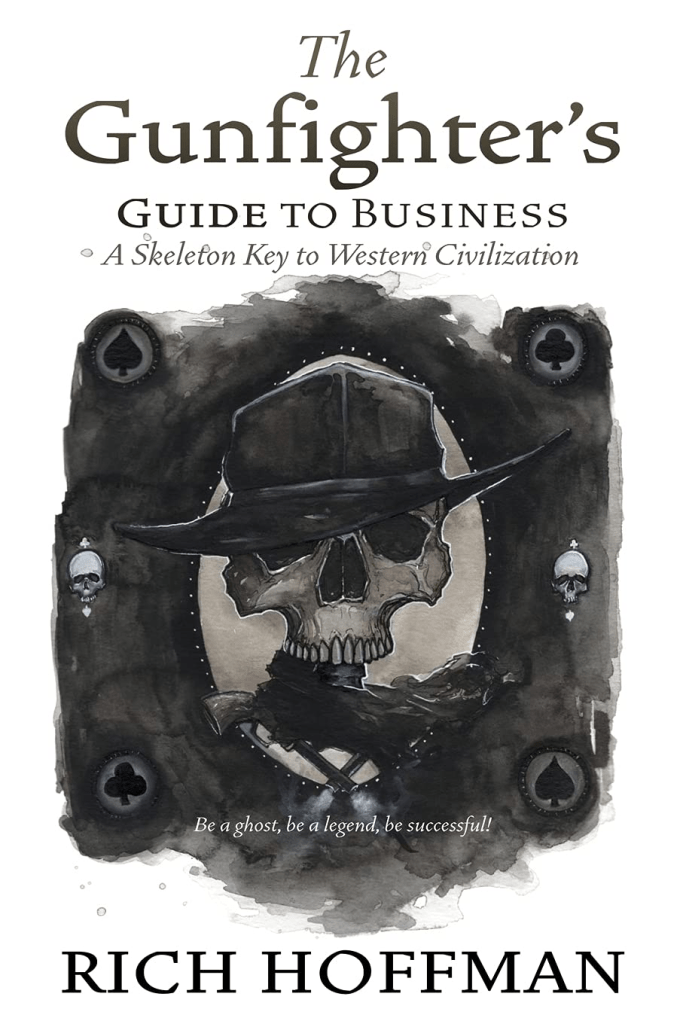
I was never a big fan of LinkedIn, even before they banned my account over my book The Gunfighter’s Guide to Business, which they thought was disparaging to their excellent relationship with China. So, to answer the question I get at least 50 times a week, no, I am not on LinkedIn. I was, for a while, out of some obligation I thought was part of the modern world. But I had little value for it, so at the first dispute, we parted ways happily, which has provided me with just enough emotional distance to have an objective opinion about it. LinkedIn has a very menacing presence in all actuality and is laced with communism in ways that an entire generation has not considered, and I find it despicable. I view people with a job with a good company yet still maintain a LinkedIn profile as adulterous married people who always look at their dating apps with an eye on something better. It is impossible to be in a committed relationship with a spouse while always looking out to see if there is someone better. A job, like a good marriage, requires a commitment, and dating apps are a clear sign that one or both spouses are not committed to the relationship. That is essentially what LinkedIn does; it is a dating app for job seekers. And if someone has a good job and a good employer, well, they should be committed to that relationship, and they shouldn’t always be looking for a better job. Some people out there, just like people who get divorced a lot, are always looking for the next best thing, and by jumping from job to job, they might find opportunities that they otherwise wouldn’t have had. But that is my position on LinkedIn. It’s a dating app that shows a lack of commitment to an employer and that people who are on it all the time are one-foot-in, one-foot-out types of people who are not very valuable to an organization.
Yet, there is something far worse with LinkedIn that indicates its Chinese roots, which it is well known for supporting. The hidden message of LinkedIn is that people don’t matter and that leadership is embodied in the collective, not the individual. LinkedIn goes against the gunfighter metaphor that I use often, the comparison of the lone gunfighter who steps into a saloon out of a heavy rain and orders whiskey at the bar with their back turned to the room. The gunfighter knows that nobody will make a move because the room is full of parasites who want to use anybody they can meet to further their life in some way. So the gunfighter doesn’t worry about some assassin that might try to shoot them in the back. Such thoughts are Hollywood fantasy. In real life, people are much more malicious and lazy. They’ll use them before trying to kill someone for all they are worth. Therefore, people of worth are precious in the world because most people fall well short. Instead, most people reside in the crowd, happy to follow others, which is why the gunfighter knows they can order a whisky at the bar and enjoy it without concern for potential assassins. Nothing in the world is more valuable than leadership, and leadership is not formed through networks and relationships. It’s in understanding the motivations of other human beings and what they are willing to do to obtain value, then directing them toward some state of usefulness. LinkedIn is an audience of people in the saloon looking at the gunfighter, measuring to see if something can be gained from a relationship. When discussing networking, we are talking about building relationships in this fashion.
Yet China, as a collectivist, communist society, does not strive to empower its individuals into greatness. They look for compliance as their primary objective, so they have much trouble building their economy. Without the outside influence of globalists from the World Economic Forum mentality, China would still be a poor country. All their wealth has been stolen; it wasn’t generated through individual achievement, as in Western capitalist countries. In many ways, the designers of Linkedin are well aware of this. The hidden message of LinkedIn is that individuals do not matter, nor do other companies. By filtering down individual achievement, the people on LinkedIn are not looking for the next Jack Welsh or President Trump in the world, who ran a very successful show on television about the values of business in The Apprentice. They want a society of bootlickers who are not committed to corporate leadership and are ultimately easy to control from the centralized state. By always being willing to jump from one job to another, nobody has deep roots of commitment to their employers, making them weak toward centralized control. The LinkedIn audience is looking for compliant, noncommitted people to populate the workplaces of the world, and the effect is noticeable. Professionally, there are a lot of non-committed people out there who show fragile leadership toward their organizations. And that is by design. LinkedIn tells the professional world that people don’t matter; they can all be traded like baseball cards and easily replaced. So, puff yourself up to potential employers looking for just such a poison and destroy the concept of capitalism by destroying the notion of authentic leadership among the corporate community.
You have to watch these tech firms and understand their overall philosophy for getting into business, to begin with. Facebook was a dating app that tapped into the human need to be wanted and then exploited that desire with a sense of community or communism. That same approach was introduced to Western cultures by attacking the concept of marriage with easy divorce. If you were unhappy with your spouse, get a new one. Don’t fight out the problems; go somewhere else, which has destroyed the concept of the American family or even a European family. And in so doing, that gives the state more power over the individuals involved. Rather than the family or the corporate culture having the strength and ability to resist such temptations. The way to attack the concept of family was to make divorce more socially acceptable and too tempting whenever things got tough in a marriage. LinkedIn has sought to do the same in corporate structure, making it easy for talent to leave at the first sign of trouble and keeping CEOs always turning toward the state for approval rather than providing leadership through the frequent storms of life. In many ways, we see the essential conflict of our times: Do you follow the leadership of Yahweh, or do you seek the many gods of Canaan and sacrifice your firstborn children to appease them? LinkedIn says to appease the gods, make whatever sacrifices you need to make, and surrender leadership to the state. I say, be the gunfighter, follow after the individual Yahweh and the rebellion against collectivism that he represented, which formulated the foundations of all Western culture. Be the leader, not a follower. And don’t seek the arms of always some new opportunity. Instead, continuously make the best of what you have and fight for a better day. And stay away from the communist desires of LinkedIn.
Rich Hoffman