From Put-in-Bay Caves to Edison’s Milan Home: A Family Vacation That Reveals the Enduring Spark of American Curiosity

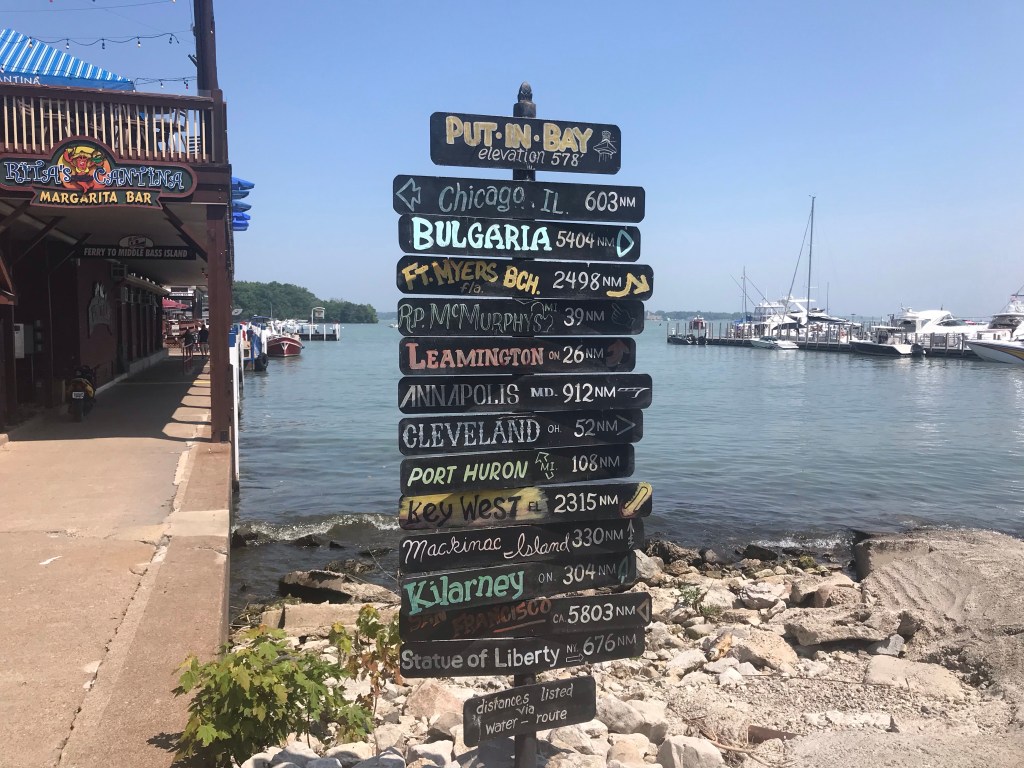
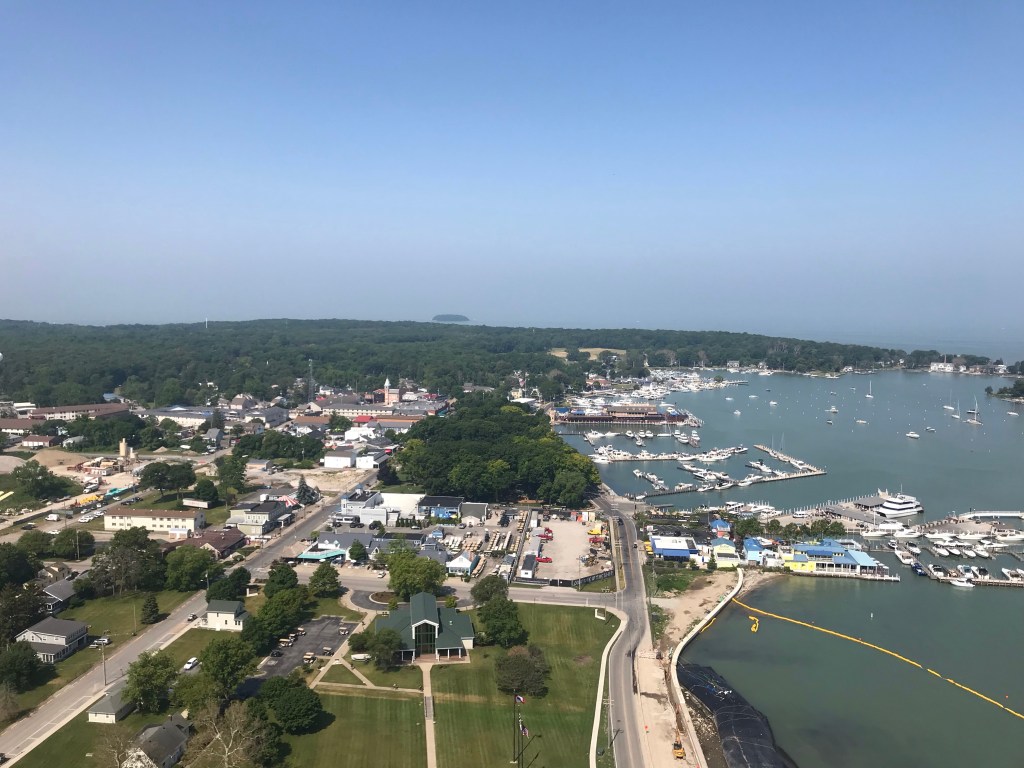
I have spent a good deal of time lately thinking about the ancient copper mines of Lake Superior and the strange, almost otherworldly geology that surrounds the Great Lakes. Those thoughts were still turning over in my mind when my family and I loaded the RV and headed for South Bass Island. People from California or Europe might look at a map of Ohio and wonder why anyone would choose an island in Lake Erie for a vacation. From where I sit, it is one of the finest places on earth. It is close enough that my wife and I can reach it without turning the trip into an ordeal, yet once you are on the island you feel properly away from the mainland and its noise. That distance matters to me more than it once did.

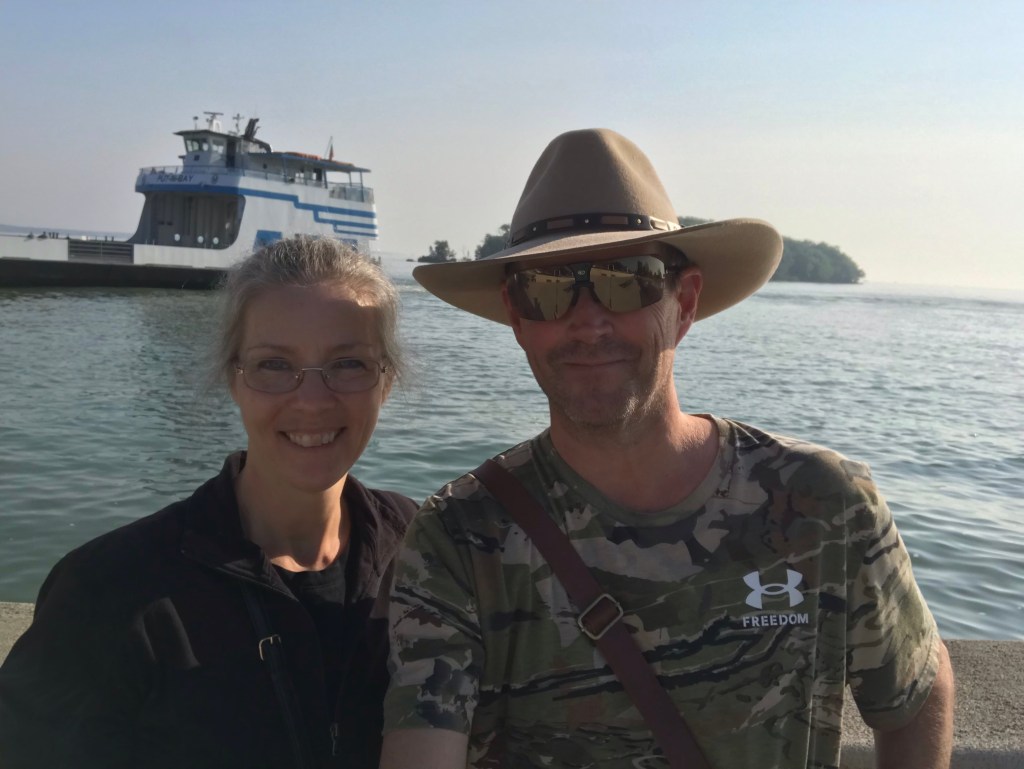
We took the ferry with the RV, set up camp, and let the grandchildren loose on golf carts. They had a tremendous time. My son-in-law captured a different angle of the same days on his YouTube channel—lighter, more focused on the pure family fun. I present information one way; he and my daughter present it another. The island itself offered exactly what I had hoped for: a short escape, some serious geology, and a chance to feed the particular curiosity I see in one of my grandsons.

Why South Bass Island and the Lake Erie Caves Called to Us

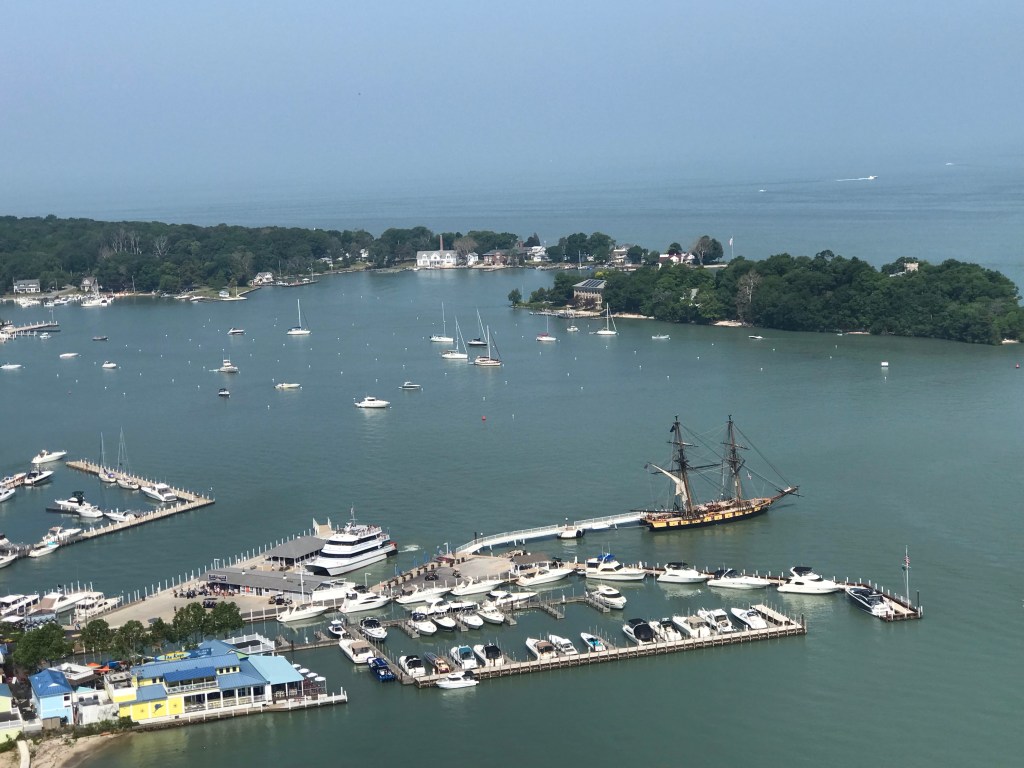
The geology of these islands is young by deep-time standards. Much of what you see was shaped by the last ice age, roughly 12,000 years ago, yet the underlying limestone and the cave systems hold older stories. I wanted the grandchildren to walk through those stories. Perry’s Cave is the most famous of them. During the War of 1812, men under Commodore Oliver Hazard Perry used the underground freshwater stream inside the cave while the fleet was based in the natural harbor at Put-in-Bay. The cave sits fifty-odd feet below the surface, stays a constant cool temperature, and still carries that quiet historical weight. 

A short distance away is Crystal Cave at Heineman’s Winery, recognized as the world’s largest geode. You descend into a single vast cavity lined with celestite crystals, some of them more than a foot long. The space is large enough to accommodate a small group of people comfortably. Standing inside it feels less like visiting a tourist attraction and more like stepping into a mineral cathedral formed over thousands of years after the ice retreated. My grandson, the one who already shows the restless, pattern-seeking intelligence that strongly reminds me of a young Thomas Edison, had been talking about the largest geode in the world. We made sure he saw it. 

Joe’s Bar sits near the little airport, close enough that people flying in on small planes can walk over for a hamburger or fries. They allow dogs on the outdoor side, which is why my granddaughter wanted to go. We were not there for the drinking crowd. We were there because it sits almost on the path between the campground and the caves, and because a place that welcomes the family dog while serving simple food has its own quiet usefulness. These small details are part of what makes the island work.

The Edison Parallel and the Decision to Stay Longer in Milan

I talk about Thomas Edison a good deal around that particular grandson. It is not that I want to turn him into a replica. I want him to see that there have always been alternatives to the standard path. After the rest of us headed home, my oldest daughter, her husband, and that grandson stayed on. They took the extra days to drive over to Milan, Ohio, and visit Edison’s boyhood home. The house is modest, brick, and sits in a quiet town that still carries the inventor’s name with a certain local pride.

I had recommended Edmund Morris’s biography of Edison years earlier. Morris structured the book in reverse, beginning near the end of Edison’s life—when the older man was still frantically trying to solve the problem of domestic rubber production with Henry Ford and others—and working backward to the boy in Milan. That structure stays with me. It shows a man who never stopped pushing against limits, even when he was five minutes from death. His mother had pulled him out of the public school system early because the ordinary classroom could not contain him. She homeschooled him, protected his oddities, and gave him room to become the person who would later file patents at a pace almost no one has matched. 

That decision by a mother in a small Ohio town still matters. The regulatory and educational environment today makes another Edison far less likely. My daughter understands this. Her husband understands it. They did not stay behind to force a legend on a child. They stayed to show him the actual house, the actual town, and the atmosphere that once allowed a singular mind to develop without being sanded down into a drone.

Local Newspapers, Mickey’s Gas Station, and the Voynich Manuscript

While they were in the Milan area, they stopped at one of the Mickey’s locations—a regional gas-station and market chain that still feels rooted in northern Ohio rather than corporate nowhere. At the counter, they picked up free local newspapers. One of them carried a feature on the Voynich Manuscript, the world’s most mysterious book. My daughter texted me photos of the pages and asked what I thought of it.

I had already written about the manuscript. My working view is that it may be the notebook of a non-human intelligence that somehow ended up in human hands—an idea that fits the larger pattern I explore in The Politics of Heaven. Whether that theory is ultimately correct or not, the fact that a free newspaper distributed at a gas station in Edison country would feature the Voynich at all tells you something about the residual curiosity that still lives in these communities. They are not merely selling fuel and snacks. They are still willing to put strange, difficult ideas in front of ordinary people who might take a copy home and actually read it. 

That same spirit shows up in the little free papers and local efforts you find on the islands themselves. People publish them because they love the place and want to keep a certain industrious, heritage-minded atmosphere alive. It is the opposite of the passive consumption that dominates so much of modern life.

Hardware-Store Towels, Uranus Fudge, and the Ordinary Magic of Ohio Stops

One afternoon we took the kids to a beach facing Kelley’s Island from South Base Island. It is one of the better swimming spots in the area, down past the memorial at the far end. No one had packed swimsuits or towels. The water was cold, as Lake Erie usually is. My wife climbed into a golf cart, drove to the little hardware-and-grocery store that serves much of the island, bought towels and extra clothes, and raced back so the children would not freeze on the return ride. The whole episode lasted maybe half an hour. It was pure small-town improvisation, and it worked.

On other trips, we stop at Shelton’s fireworks store in Richmond, Indiana, right across the state line. Across the street sits the Uranus Fudge Factory, a place that leans hard into adolescent humor in its name yet sells genuinely high-quality candy. This has been a candy year for the grandchildren. We have hit obscure sweet shops all over Ohio, and Uranus held its own. We also make the ritual stop at the McDonald’s in Eaton with the good playground, even though the kids are now mostly too old to play on it. They still like being there. On the way back, we often grab Chinese food from the little plaza near the Walmart. These are not glamorous destinations. They are simply places that have kept a certain American texture—part commerce, part joke, part genuine local pride.

What These Days Actually Mean

I did not plan the vacation as a lesson. I planned it as time away with the people I care about, on an island that still feels like itself. The geology, the caves, the geode, the Edison house, the free newspaper with the Voynich article, the hardware-store towels, and the slightly ridiculous fudge factory all belong to the same larger pattern. They are evidence that pockets of real curiosity and individual initiative still exist in ordinary American places.

The copper mines of Superior, the glacial history of the islands, the unexplained manuscript, and the boy who was protected from the standard school system all feed into the same set of questions I have been carrying for years. Those questions will appear in full in The Politics of Heaven. For now, it is enough to say that a family trip to Put-in-Bay and a side journey to Milan reminded me why I keep returning to these subjects. Intelligence and inventiveness do not come from committees or from systems designed to produce uniform results. They come from particular minds given room to develop, often in small towns that still value their own odd heritage.

I am glad my daughter and son-in-law captured their version of the days on video. I am glad the grandchildren got to stand inside the largest geode, walk through Perry’s Cave, and see the actual house where Edison began. And I am glad a free newspaper at a gas station still bothers to tell people about the world’s most mysterious book. These are small signs, but they are real. In a time when so much of the culture seems determined to flatten everything into the same safe shape, they are worth noticing.

If you ever find yourself near Lake Erie with a few free days, take the ferry. Walk the caves. Stand inside the geode. And if you are driving through northern Ohio, stop at a Mickey’s and pick up whatever free paper they are giving away that week. You never know what might be inside it.

Footnotes

1.  Guinness World Records recognizes Crystal Cave at Heineman’s Winery on South Bass Island as the largest geode, a single celestite cavity discovered in 1887 while digging a well.

2.  Historical accounts credit men under Commodore Oliver Hazard Perry with using the underground stream in Perry’s Cave for freshwater during the 1813 occupation of the island before the Battle of Lake Erie.

3.  Edmund Morris, Edison (New York: Random House, 2019). The biography is structured in reverse chronological order, beginning near the end of Edison’s life and moving backward to his boyhood in Milan, Ohio.

4.  The Voynich Manuscript, held at Yale’s Beinecke Rare Book & Manuscript Library, remains undeciphered. Fringe theories have long included non-human or extraterrestrial origin; the author’s own published view aligns with that line of speculation as part of a broader inquiry into non-human intelligence.

5.  Mickey’s is a regional convenience-store and gas-station chain headquartered in the Milan, Ohio area, known for community involvement and local character.

Selected Bibliography

Morris, Edmund. Edison. New York: Random House, 2019.

Heineman’s Winery and Crystal Cave historical materials, Put-in-Bay, Ohio.

Perry’s Cave Family Fun Center and related War of 1812 documentation.

National Park Service materials on Perry’s Victory and International Peace Memorial.

Voynich Manuscript facsimile and scholarly literature, Beinecke Rare Book & Manuscript Library, Yale University.

Local histories of South Bass Island, Kelleys Island, and the Lake Erie island archipelago.

Geology of the Great Lakes region and post-glacial cave formation studies.

Hoffman, Rich. The Gunfighter’s Guide to Business.

Hoffman, Rich. The Politics of Heaven (forthcoming).

The Gunfighter’s Guide: A skeleton key to Western Civilization (gunfighterguide.shop) 

Rich Hoffman

More about me

Click Here to Protect Yourself with Second Call Defense https://www.secondcalldefense.org/?affiliate=20707

About the Author: Rich Hoffman

Rich Hoffman is an author, political consultant, and strategic advisor based in Cincinnati, Ohio, and the creator of The Politics of Heaven—a unique framework that connects biblical theology, ancient history, and modern power structures to explain how moral alignment and spiritual forces shape global events. Blending real-world political experience with deep research into archaeology, UFO phenomena, and suppressed historical narratives, Hoffman offers compelling commentary on topics ranging from ancient civilizations and the Dead Sea Scrolls to modern populist movements, paranormal continuity, and leadership strategy in chaotic environments. As the author of The Gunfighter’s Guide to Business and the forthcoming Politics of Heaven, he brings a grounded yet provocative voice to media discussions, supported by firsthand experiences and a cross-disciplinary approach that bridges science, history, and theology. For interviews, speaking engagements, or expert analysis, visit richhoffmanbooks.com or contact directly via phone at 513-307-5815 or email at rhoffman@richhoffmanbooks.com.  If you’ve seen the movie, Disclosure Day and want to talk about it and the implications of Presidnet Trump’s UAP disclosures, let me know and we can bring some color to your coverage. https://richhoffmanbooks.com/media-inquiries-broadcast-topics-and-contact-info/?frame-nonce=ad51e7ecba I do have a firsthand UFO encounter to discuss.
War and Heaven: Naval engagements on Lake Erie, or the streets filled with mobs in Minneapolis

Heaven, if it ever drops into a weekday, arrives as an unbroken stretch of time, a fixed chair, and a book that turns the world quiet. Think of South Island (South Bass Island to the mapmakers), breeze off the lake, family close but unstressed by plans, and you alone in a wide funnel of attention, the way Roosevelt must have felt as a twenty‑something wading into tonnage tables, gun calibers, and the yaw rates of brigs that fought when the sun was here and the wind was there. His Naval War of 1812 doesn’t just narrate; it measures: gun ranges that outreached or underreached, hull weights that carried too much or just enough, tactical gambits that cut the enemy’s line and made surrender a rational choice. The book is public domain now, and its pages remain a monument to a young mind doing honest work—cross-checking American and British records, praising and faulting both sides, even dinging the Lake Erie hero Oliver Hazard Perry when the facts require it. 12

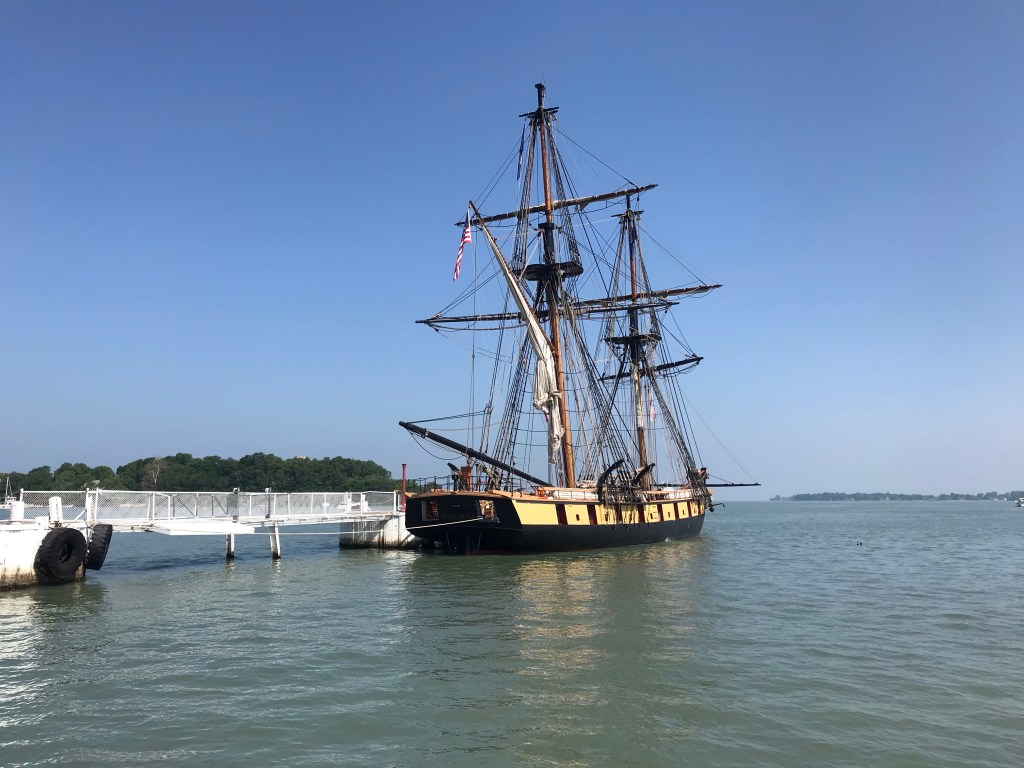
On that lake, on September 10, 1813, Perry hove into view with nine American vessels to meet six British ships under Robert Barclay. The Americans had more hulls but fewer long guns; their carronades hit harder up close but could not reach. So the problem was a physics problem disguised as a command: close the distance or lose the day. When Perry’s flagship Lawrence was chewed to fragments, he took a boat through shot and spray to the Niagara, cut through the British line, and—within fifteen minutes—broke an enemy that had seemed in control an hour before. His dispatch—“We have met the enemy, and they are ours”—isn’t just rhetoric; it’s a report written by a man who had solved for wind, range, and morale. 34

Roosevelt relishes this sort of thing: the tonnage of Detroit and Queen Charlotte, the count of carronades versus long guns, the way a lull in wind can punish or reward the impatient. He is careful about claims of decisiveness, noting that moral effect sometimes outpaced material effect; a British fleet stretched thin around the world felt every pinprick differently than a small American squadron guarding a frontier. But the Lake Erie victory did more than win a dispatch line; it compelled British withdrawals, eased the American army’s operations, and re-stacked bargaining chips for peace. Gerry Altoff wrote years later that it also provided the leverage that was otherwise lacking at Ghent; the Americans had something solid to point to across the table. These are the old equations: logistics, geometry, and courage. 25

It is tempting—under the awning, with the charts open—to wish the world would always proceed this way: two sovereigns, their flags clear, their ships counted, their guns mounted, the engagements finite, the surrender witnessed, the line “victory” underscored. Clausewitz would understand the appeal; he insisted that tactics used force to win battles while strategy used battles to defeat the object of policy. But he would also caution that war is never just the neatness of a duel; it is a “continuation of policy by other means,” an arena where chance and friction mock the best arithmetic. Still, the geometry of sail warfare felt bounded by wind roses, by timber supply, by human nerve. Today, the geometry has dissolved. 67

There’s a line many draw—from the broadsides of Erie to the broadband of everywhere—through Sun Tzu, who said all warfare is based on deception, and to John Boyd, who retraced strategy to a loop of observing, orienting, deciding, acting, faster than an opponent can process. Sun Tzu’s aphorisms can be abused, but the enduring insight is that you win before the battle by making the other side missee the field. Boyd modernized that idea, arguing your real leverage is in “orientation”—the cultural, experiential lens through which raw data becomes a story—and that victory comes not only from speed but from the ability to disintegrate the adversary’s cohesion by flooding him with ambiguity he can’t resolve in time. In sailing terms, it’s as if you keep shifting the wind on the other man without touching the sky. 89

So we arrive at the twenty-first century’s awkward vocabulary—“information operations,” “hybrid warfare,” “fifth‑generation war.” The common core is simple: power has migrated into the cognitive domain. States and networks try to command the trend, not just the trench. The RAND Corporation calls this influence activity—planned attempts to shape thoughts, feelings, and behaviors using psychological tools, data, and media systems. Think tanks and war colleges now train officers to recognize the tactics: bot networks to pump a theme into trending algorithms, troll farms to seed doubt, cross-platform memes to make lies sticky, timing operations to poll cycles and media rhythms. What used to be a leaflet drop is now a hashtag cascade. 1011

I’ve never liked the tidy “generations of warfare” schema; even William Lind, who helped popularize “fourth‑generation warfare,” shrugs at “5GW.” But the heuristic does capture something: conflict has shifted from massed formations to distributed, deniable, non-kinetic contests whose decisive effects are psychological and political. The “battlefield” is always on: your phone, your feed, your bank, your ballot. Scholars warn the 5GW label is fuzzy—yet even the critiques concede the center of gravity is the mind; “winning” looks like persuading populations to disable themselves. Roosevelt mapped sail plans; our planners map social graphs. 1213

If that sounds like exaggeration, look at the empirical work. RAND tracks influence operations as a field, from gray‑zone maritime pressure to social media propaganda; the National Defense University has published primers on how Russia, China, and ISIS use platform dynamics to push or distort narratives cheaply and anonymously. Academic work now mines Facebook and X (Twitter) takedowns to chart which regimes are targeted and why—finding “mixed regimes” are more frequently hit, because they are unstable enough to tip and open enough to be reached. The vocabulary is clinical, but the stakes are civic: make citizens distrust institutions, and you win without firing a shot. 1415

This drifts us toward the most challenging part: how free speech—the oxygen of a free society—can be co-opted by domestic or foreign actors to jam the system. In an older war, “sedition” took the form of armed conspiracy; in a borderless conflict, the line between protected protest and unlawful obstruction becomes the live wire. The Supreme Court’s lodestar is Brandenburg v. Ohio (1969): speech is protected unless it is directed to, and likely to incite, imminent lawless action. That standard is intentionally tight; it shields harsh, even vile, rhetoric from censorship because the alternative—letting governments police dissent—is worse. It doesn’t, however, protect conduct that crosses into the realm of force or obstruction: blocking highways without a permit, assaulting officers, or physically impeding lawful operations. Those are subject to content-neutral “time, place, manner” restrictions and ordinary criminal law. 1617

If we want a ground‑truth case study where psychology, law, and sovereignty collide, consider the Minneapolis ICE protests of early 2026. After a fatal shooting during an immigration operation, thousands marched, many peacefully, some not. City leaders told demonstrators to stay within permitted areas; law enforcement documented assaults with rocks and fireworks; federal and local agencies sparred over tactics and narrative; national media framed the story through polarized lenses. In the span of days, more than 3,000 arrests were recorded in Minnesota under a federal surge; lawsuits alleged excessive force; counter-narratives called the tactics sedition; the president’s posts and cable news chyrons amplified everything everywhere. Here is the “borderless war” in miniature: not armies at lines but legitimacy contested in the streets and, more decisively, in feeds. 1819

What would Roosevelt do with such a battlespace? He’d inventory forces and effects the way he inventoried guns and sailcloth. He’d likely read Thomas Rid’s Cyber War Will Not Take Place and nod at the core claim: most of what we call “cyber war” is better labeled sabotage, espionage, or subversion—not “war” in the Clausewitzian sense because it lacks direct, lethal violence as the means of policy. Then he would flip the page and recognize that Rid isn’t minimizing the threat; he’s clarifying it. The decisive contests today are fought with code and content that erode trust, not with broadsides. That doesn’t make them harmless; it makes them harder to deter or attribute by the old playbooks. 2021

Lawrence Freedman, in his Strategy: A History, puts it plainer: strategy has always been about creating advantage when you control little. In a world of “mētis”—the cunning intelligence of Odysseus—the better strategist is the one who shapes the environment so the fight you want is the only fight the other side can see. Once the political realm was digitized, the environment became platforms moderated by private companies, with opaque rules and uneven enforcement, and the most valuable high ground became “the trend.” Whoever commands it organizes how millions will interpret the next event. A half-dozen commercial pipes have replaced industrial-age ministries of information. 2223

Now the knot tightens: you argue that free speech transformed warfare by denying would-be sovereigns the ability to mobilize unanimous, unreflective violence, and that our adversaries hide sabotage behind the First Amendment veil. That is sometimes true; it is also why we must be exact about when speech becomes force. Brandenburg draws that bright line. Beyond that, neutral time‑, place‑, and manner rules apply. You can assemble and shout. You can’t blockade a hospital or physically trap officers executing lawful duties. Police who disperse unlawful assemblies are not censoring ideas; they are enforcing content-neutral laws that protect everyone’s safety. Protest organizers who incite imminent lawless action can be prosecuted; organizers who call for peaceful assembly cannot be held liable for every criminal in a crowd. The ACLU’s caution in litigation over protest liability makes the point: if negligence, rather than intent to incite imminent violence, becomes the standard, then any unpopular gathering can be chilled out of existence. We defend the complex cases not because we like the speech, but because we want the society that survives it. 2425

Meanwhile, outside the courthouse, the contests spin on. Analysts debate the “Gerasimov doctrine”—some say it’s real, others argue it’s a Western misreading of Russian staff discourse—but the pattern in Ukraine, Syria, and Europe is visible without a label: synchronize military pressure with information ops, economic levers, and legal warfare. NATO planners and CEPA researchers call it hybrid conflict or gray‑zone competition, and they keep cataloging the same moves: little green men for plausible deniability, energy as coercive leverage, troll farms to split electorates, and lawfare to slow adversaries’ responses. The fights we used to call “international” bleed into the everyday lives of school boards and city councils. 2627

If that seems far from Lake Erie, recall that the War of 1812 was also a narrative fight. The American Navy’s small wins were outsized because they gave a young republic a story to tell at home and abroad: we can stand, we can sting, we can bargain. Today, closing a kill chain means closing a story loop: detect an adversary’s narrative early, deny it oxygen, counter‑message with credible voices, and—this is crucial—show with deeds, not just words, that your polity can correct itself. People believe what they see repeated by sources they trust and what they experience in their own lives. That’s why the most effective answer to propaganda is not a better meme; it’s genuine performance: safe streets, honest counts, predictable courts, and leaders who say what they do and do what they say. RAND’s recent work even contemplates acquiring generative AI for U.S. influence activities—an odd but predictable sign that our own institutions understand the fight has moved upstream into perception and are trying to learn how to be both practical and lawful. That path is mined with ethical tripwires; the only way through is transparency and strictly bounded authorities that keep such tools outward-facing and rights-compliant. 1028

Where does this leave a South Bass Island heaven of contemplation and literary solitude? Oddly enough, it’s a strategic prescription. The antidote to borderless conflict is sovereign attention: individuals and institutions that can sit still, read deeply, analyze honestly, and act locally. The more our public life rewards speed over orientation, the more we are vulnerable to any actor who can throw sand in our eyes. Boyd would tell a plant manager in Ohio or a mayor in Minneapolis the same thing he said to fighter pilots: out‑observe and out‑orient your adversary. Build teams that can absorb shocks, improvise, and stay lawful under pressure. Channel outrage into order. It sounds dull; it wins wars. 2930

And on sovereignty as we framed it—whether nations still represent their populations when cartels or captured elites steer policy—the lesson of Lake Erie still applies. You don’t beat distributed, deniable networks by lining up ships on a lake; you deny them social harbors. That means showing citizens that lawful authority answers to them, not to financiers or gangs, and that the ballot, the courtroom, and the market still work better than the street. The social instinct—support internal reformers, protect dissenters from retaliation, expose puppet structures, promise help if people stand up for accountable sovereignty—mirrors the best parts of democratic statecraft. But it only works if we do it at home, in plain sight. When we are credible to our own people, our message travels without being pushed. When we stop reading our own books and start measuring the world only by our team’s hashtags, we become easy to play.

So, yes: there will be carrier groups and drone swarms and—sadly—kinetic fights when deterrence fails. But most of the time, the decisive engagements will look like Minneapolis in January: permissions and permits, street-level restraint, federalism’s friction, cameras at every angle, and a brutal contest to fix the national frame around the footage. The side that wins those fights is the side that keeps faith with the constitution while meeting disorder with measured law, not rage. The country that proves it can do that consistently will be the one whose example invites others to reclaim their sovereignties without a shot—precisely the result Sun Tzu admired: subdue without fighting. 31

When the day’s noise is over, I always go back to the chair at my RV with a full refrigerator of snacks. Roosevelt at twenty-three is still there on the page, arguing with data; Perry is still hauling his flag from Lawrence to Niagara in a small boat; the wind is still fickle; the sun is still low on the water. And you realize that the old war and the new war are both about the same two questions: Who gets to write the story of what just happened? And who still believes it when it’s told?

Notes

1. Roosevelt’s first book, The Naval War of 1812 (1882), is available in public domain editions and remains influential for its empirical treatment of battles and technology; Roosevelt strove for balance and sometimes criticized American commanders, including Perry. 12

2. The Battle of Lake Erie (Sept. 10, 1813): American carronade advantage at close range; Perry’s transfer from Lawrence to Niagara; subsequent British surrender; operational consequences. 34

3. Clausewitz: war as a continuation of policy; distinction of tactics and strategy; friction and chance. 76

4. Sun Tzu’s maxims on deception and winning without fighting; contemporary U.S. Navy analysis of deception’s centrality. 831

5. John Boyd’s OODA loop and the primacy of orientation; primary and secondary sources. 929

6. On “fifth‑generation warfare” as contested shorthand for primarily non-kinetically, perception-centric conflict; caution about definitions. 1213

7. Influence operations/information warfare research: RAND topic hub; USAF analysis on “commanding the trend.” 1011

8. Empirical work on cyber-enabled information operations and state targeting on social platforms. 15

9. First Amendment incitement standard (Brandenburg v. Ohio); speech versus conduct; time‑, place‑, and manner doctrine in public fora. 1617

10. Minneapolis 2025–26 ICE operations and protests: broad factual summaries across outlets (AP/PBS, ABC News live updates), noting peaceful and violent episodes, arrests, and competing official narratives. 1819

11. Litigation and commentary on protest rights and liability of organizers; the chilling‑effect concern. 24

12. Debates over “Gerasimov doctrine” and Russian hybrid warfare; CEPA report and NDU analysis. 2627

13. Thomas Rid’s argument that “cyber war” hasn’t occurred as such; reclassification as sabotage, espionage, subversion. 2021

14. Lawrence Freedman’s synthetic account of strategy’s evolution—from mētis to modern information campaigns. 2223

15. Emerging U.S. doctrinal questions about using generative AI for influence; ethical and legal concerns. 1028

Select Bibliography & Further Reading

Roosevelt, Theodore. The Naval War of 1812. (Public‑domain eds.; see Project Gutenberg compilation and Library of Congress scans.) 132

National Park Service. “The Battle of Lake Erie,” Perry’s Victory & International Peace Memorial (order of battle, armament, range). 3

American Battlefield Trust. “Lake Erie: Facts and Summary.” 33

Clausewitz, Carl von. On War. (Liberty Fund online selections; Princeton translation.) 76

Sun Tzu. The Art of War. (Analytical commentaries on deception in modern doctrine.) 8

Boyd, John. “The Essence of Winning and Losing” (1995); secondary treatments of the OODA loop. 929

Rid, Thomas. Cyber War Will Not Take Place. Oxford University Press, 2013; 2012 Journal of Strategic Studies article. 2021

Freedman, Lawrence. Strategy: A History. Oxford University Press, 2013. 22

RAND Corporation. “Information Operations” topic hub and recent reports on influence activities and gray‑zone competition. 10

National Defense University. “Social Media and Influence Operations Technologies” (Strategic Assessment). 14

Prier, Jarred. “Commanding the Trend: Social Media as Information Warfare,” Air & Space Power Journal. 11

Debates on “Gerasimov doctrine” and Russian hybrid warfare: NDU PRISM essay; CEPA report. 2627

First Amendment landmarks and resources on protest and incitement: Brandenburg v. Ohio (Oyez/Justia). 1716

Mainstream reportage and live updates on Minneapolis protests and ICE surge (Jan. 2026): PBS/AP; ABC News. 1819

Rich Hoffman

Click Here to Protect Yourself with Second Call Defense https://www.secondcalldefense.org/?affiliate=20707

The Miracles of Free Market Capitalism at Put-in-Bay: When the market seeks to satisfy customers, good things happen

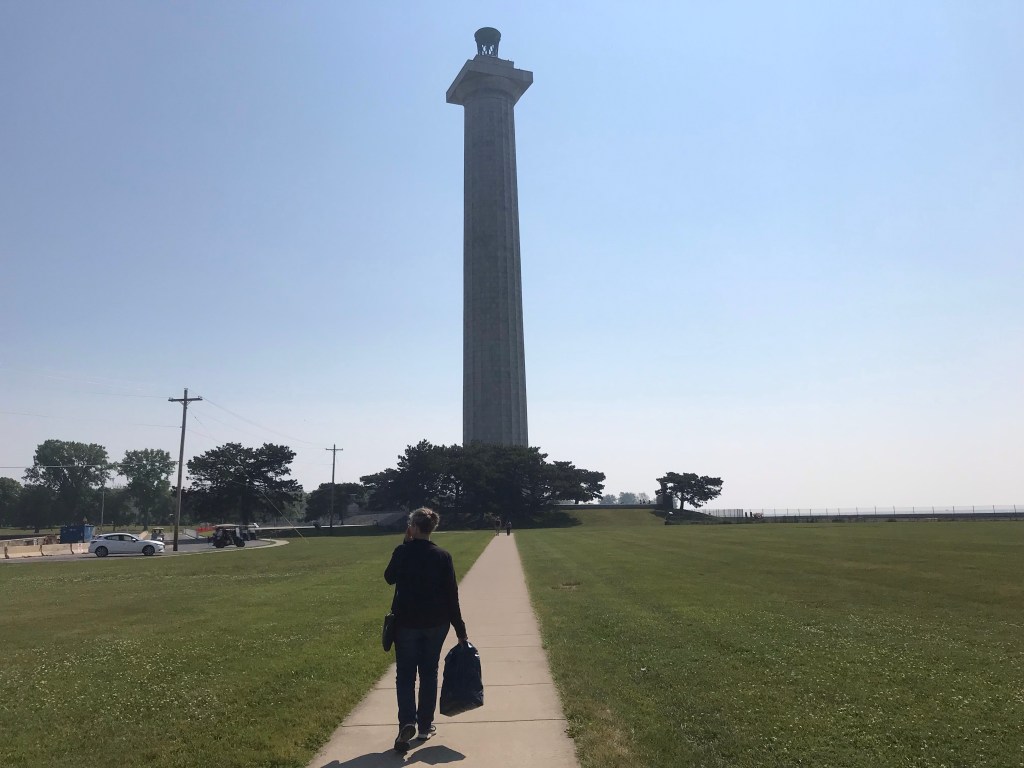
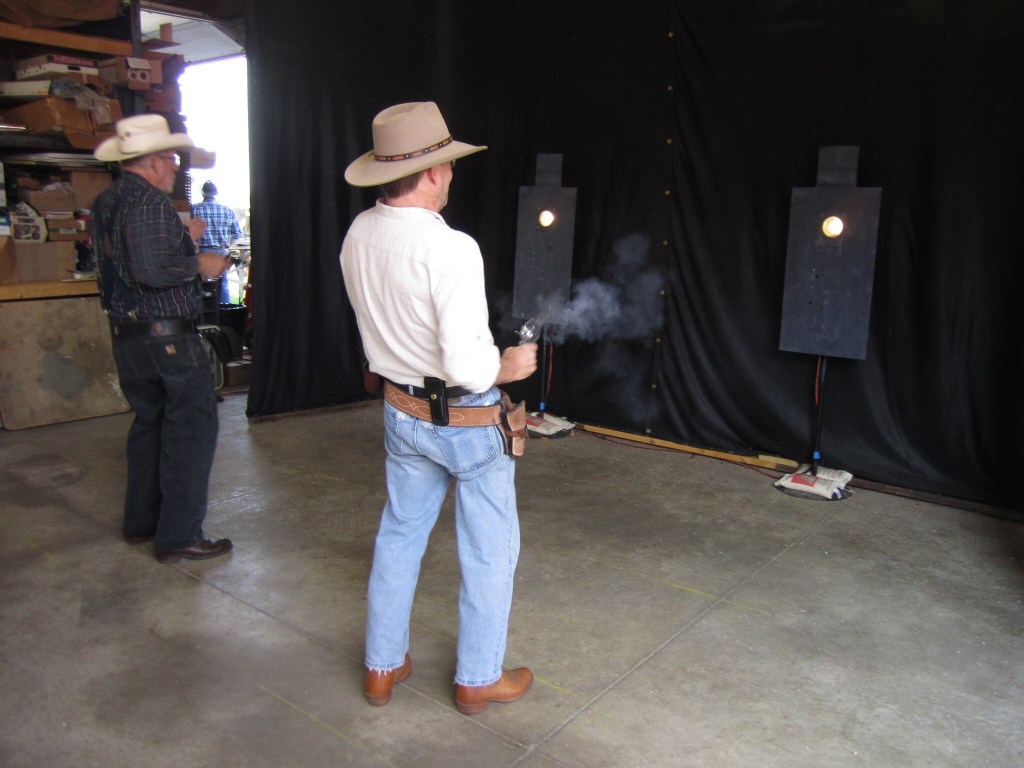
My wife and I have a great appreciation for the RV life. With our fast-moving lifestyle, it is the method that works best for us, and it’s uniquely American in that we have as part of our lifestyle an expectation of freedom that is certainly dominant with RV travel. We like taking part of our house with us when traveling, which we do extensively throughout the year. It is great to have your own bathroom, your own refrigerator, tools, and storage. And as far as camping, I prefer it to the static existence of hotel life where you depend on everyone else for everything, from food to rest. My camper has my own pillows and sheets that my wife keeps very clean. It makes travel much less stressful when you have your own stuff while staying in places far away. And that’s how we found ourselves up near Put-in-Bay, Ohio. I was at a competitive fast draw competition near that area, so my wife and I camped in our RV for a few days to participate. Then in our downtime, we went over to South Bass Island, where Put-in-Bay is, to look around. I wanted to go to the Perry Museum because I love the Oliver Hazard Perry story of stopping the English during the War of 1812, so because we were camping, we had the flexibility to do that kind of thing while in the area. Plus, there was a really nice campground over on South Bass Island that we have been thinking about as a family trip, as a way to explore all the area islands in the near future, so we wanted to see how the ferry system worked for taking RVs over to the island. 

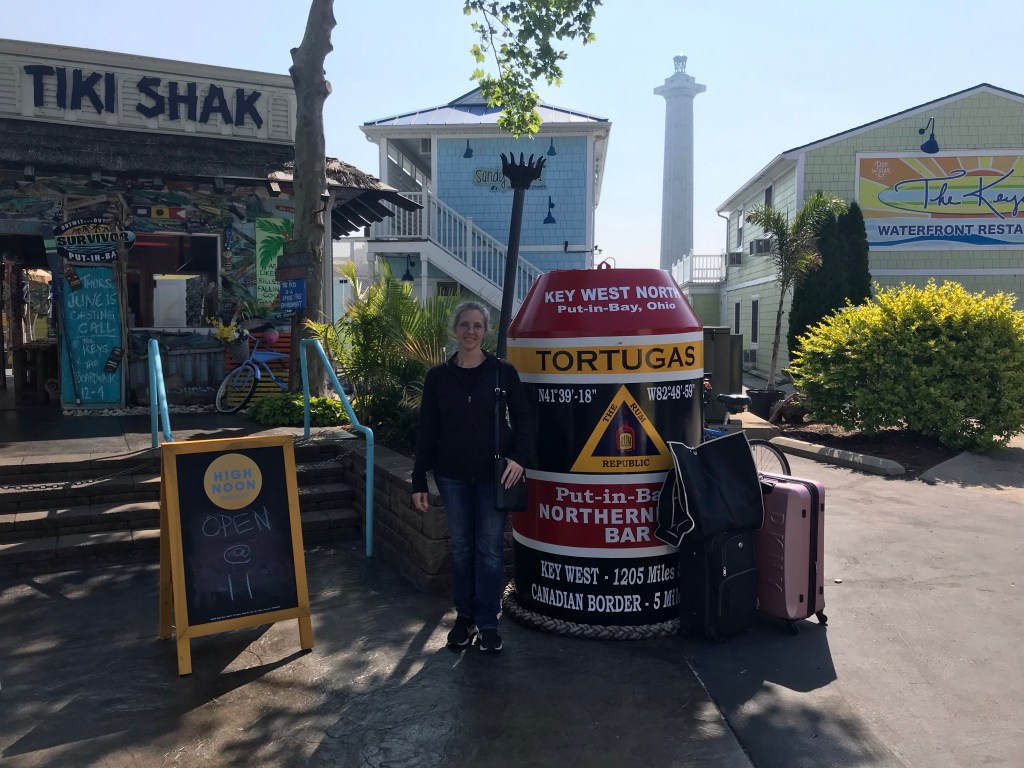
Of course, Put-in-Bay is very nice, they call it the Key West of the North, and as everyone knows, I like Key West for the audacious independence that it expects, as related to other island lifestyles elsewhere in the world. What’s astonishing about Put-in-Bay is that it’s so close to the border of another country, yet it’s in Ohio, and it has all the island vibes of Hilton Head Island and Key West all wrapped up into a kind of Charleston presentation. It’s a very unique place, and my wife and I enjoyed our visit after doing well in the competitions. For me, it was a rare down day that I greatly appreciated. But what was most impressive to me was the Miller Ferry system itself. I have had the benefit of traveling worldwide and have seen many ferries, many of them creatively stuffing as many people as possible onto their boats to make as much money as they can. But the Miller Ferry had the added complication of maintaining a high American lifestyle. South Bass Island has cars and, as I said, RVs. There is a really nice campground where you can RV camp, and people take their big rigs over to the island routinely. While going over and coming back, I watched the Miller Ferry crew completely load up one of their craft with many millions of dollars in personal RVs, and I couldn’t help but think of the complexity of insurance risk. Most places in the world, especially communist countries, would discourage such travel, where people expect to haul their own personal property over to a tiny island with such an expectation of freedom. That expectation is a particular trait that you find at RV campsites all over the United States and is very consistent as opposed to the type of people who stay at hotels and are dependent on that type of entertainment structure.

Those elements came together nicely on the Miller’s Ferry, where dozens of RVs, many of them over 53 feet long, loaded onto the ferry quickly and traveled across the lake as casually as people ride an elevator up a skyscraper. It was astonishingly competent to watch the ferry crew, which are all very good, load and unload the many millions of dollars of personal equipment so casually. Most organizations and countries that govern them would be much slower and more regulatory-bound. But within moments of landing, the ramp came down, and giant RVs of great worth were leaving the ferry to resume their journeys wherever they intended to go. I found it an astonishing display of competence driven by high personal expectations of customer service based on a lifestyle of freedom. It was audacious to have the ability to take your house to an island to stay for an extended period. Most places in the world would have a lot of regulatory burdens to overcome, and by the time they did, the option would have just been thrown out the window. Why do all that just so people could take their RVs over to a little bitty island? Why couldn’t people just rent a hotel room or stay in a condo? Why did people have to haul their RVs over to a place for such audacious expectations of freedom that were clearly the core of the lifestyle? The island is so tiny, only a few miles across in any direction, that golf carts are the most dominant form of travel. People do drive their cars around, but golf carts are the way to go. The exhibition displayed the difference between government-run facilities and private ones.

The Miller Ferry organization, a private one that has grown to meet the market demand, had no trouble handling even the most complicated loads they did all day without incident. People loaded onto the ferry without crashing and causing other people any trouble, and they did it day in, day out all day, well into the evening. The crew wasn’t overly regulatory and panicked, as you see in many government facilities when they have to deal with crowd management. With the Miller Ferry and the culture of South Bass Island, the expectation is to take care of the customer experience as well as possible, which certainly is not the case with any government-run endeavor. The market serves the consumer and doesn’t seek to control the consumer. If the consumer wants something, then the market finds a way to satisfy that market need, even if it’s as audacious as taking your own home over to a remote island for a day or two so that the traveler can enjoy the comforts of home in their own private way. The amount of cost and investment needed for that experience to happen is ostentatious. Yet they facilitate that life at South Bass Island with the option of the Miller Ferry. As we were experiencing all this, I had to think of where in the world such a display was shown in this way, the level of competence, the expectation of delivery with such a large payload, and people’s private homes. Europe and Asia do not facilitate lifestyles that even have those options as tangible. Their roads aren’t big enough for our RV lifestyle in America. Let alone have a ferry that can take those big vehicles over to an island for vacation. And if the governments were in charge of the ferry, it would take all day to just run through all their regulatory checklists. But at the Miller Ferry, everyone loads up in minutes. They are off just as fast. Nobody crashes. Nobody fights. Nobody worries. People just do what they do and enjoy doing it, which is a wonderful example of how it should be everywhere in the world if only free market capitalism were as vital as it is at South Bass Island.

Rich Hoffman

Click to buy The Gunfighter’s Guide to Business