I notice that during holidays, especially on Spike TV, they have John Wayne marathons, so people my age and even younger still enjoy the old westerns. Why do you think that is? Because those westerns convey values that we still have.
Black Swan is one of those critically acclaimed films that Natalie Portman won a best actress award for. So I wanted to see the film. Is it a good film? Sure, as art, I’d say it’s a good film. Is it one of the “best” that Hollywood has to offer? No. It reminds me of how critically acclaimed The Crying Game was back in 1993. Oh, notice how they don’t show The Crying Game on TV during the Holidays? Why do you think that is?
The Black Swan is a dark movie about a good girl who is obviously schizophrenic to a unique degree, and the director of a ballot company is putting on a show of The White Swan which pulls his lead dancer into the role he desires for her by pushing her to her dark side, so she can perform a dance called The Black Swan. The whole film is about Natalie Portman’s dark decent into her most uninhibited behavior, self provoked by the director who encourages her to masturbate, and participate in illicit sex, to “loose herself,” in preparation of the role.
During the film, there is girl on girl sex with Mila Kunis and Natalie Portman where Mila performs oral sex on Natalie and it was quite explicit.
This film is just one more film in a long line that is of an obvious overton window push to more and more progressive thought. The goal is to cast good girl Natalie Portman into a role that shows young women everywhere that it’s ok to do the things Portman does in the film. Anne Hathaway did the same things this year in her most recent film. Notice how they sell the film in this clip.
In exchange for this behavior, Portman gets her Academy Award and the respect of the Hollywood community as a serious actress, because that’s what it takes in a progressive community to be considered successful. Anne Hathaway didn’t win an award this year even though she took her clothes off, but she did get to host the Oscars.
The girl in the film, Natalie Portman, the hero from Star Wars, is undressed and turned inside out emotionally and shown to be just as weak as the average girl in American.She masturbates like every other girl. She has sex with other girls just like every other girl. And she aspires to be the center of attention on a stage all clapping in her honor, and achieving the feat by flirting with the director of the enterprise. This is the message of Black Swan and why it won awards, so that other filmmakers are hungry to make the same kind of movie, and to perhaps push the boundaries even further the next time for the next film with the next icon of womanhood. Is it any wonder that former glories such as Britney Spears and Lindsey Lohan are self-abusing young people lost in a space somewhere between the act they live and the lives they act? They are kicked to the curb by the same producers that look at their sales numbers and think they are successful titans of industry, when all they really made was a high production porno, which deflowered what used to be an honorable Natalie Portman.
Good movie, bad message.
Meanwhile, millions of us will still watch Spike TV and enjoy the films that are over 40 years old, because in those films men know who they are and aren’t afraid to be it. And women loved to be women, and never considered making out with another woman just to fulfill the animal fantasies of men that have forgotten what it means to be one.
Below is a great article from the Daily Reckoning about Oil Shale in Colorado. There is only one reason that our country is in a financial mess, and that is because fools are standing in the way. I am thinking of a speech from John Galt uttered in the book Atlas Shrugged. “You propose to establish a social order based on the following tenets: that you’re incompetent to run your own life, but competent to run the lives of others—that you’re unfit to exist in freedom, but fit to become an omnipotent ruler—that you’re unable to earn your living by the use of your own intelligence, but able to judge politicians and to vote them into jobs of total power over arts you have never seen, over sciences you have never studied, over achievements of which you have no knowledge, over the gigantic industries where you, by your own definition of your capacity, would be unable successfully to fill the job of assistant greaser.”
Oil Shale Reserves: Stinky Water, Sweet Oil
A Daily Reckoning White Paper Report By Dan Denning
You won’t think much of Rio Blanco County if you ever drive through it. In fact, unless you take a right turn off Interstate-70 West at Rifle, head north on Railroad Avenue and then west on Government road to Colorado state highway number thirteen, odds are you’ll never even step foot in Rio Blanco County.
But even if you keep heading west toward Grand Junction, through the town of Parachute and the shuttered oil shale refineries from the 1970s, you’ll see the Book Cliffs geologic formation on your right. For miles and miles. It’s a bleak landscape. Almost lunar. At first glance, it’s the kind of land you’d never want to explore, much less settle down in.
Oil Shale Reserves : America’s Strategic Future
In the small world of geologists, though, the region is well-known. In fact, you might even say it’s the single most important patch of undeveloped, unloved, and desolate looking land in America. But you’d never guess this particular corner of the Great American Desert may play an integral role in America’s strategic future just by looking at it. You’d never guess that the whole stretch of brown, red, and orange land contains enough recoverable oil and gas to make you forget about the Middle East for the rest of time.
There are places in Rio Blanco County like Stinking Water Creek, named after the smelly mix of oil and water the first white settlers found there, that tell you oil’s always been around the Rocky Mountains. It’s just not always been easy to find. It’s one thing to find oil that bubbles out of the ground in liquid form. It’s quite another to drill a thousand feet down, and encounter oil locked up tight inside a greasy rock.
The first seeping pools of oil were discovered in Western Colorado as far back as 1876, the year the state entered the Union. But exploration didn’t get serious until drillers settled in the town of Rangely in Rio Blanco County.
By 1903, thirteen different drillers had come and gone in Rangely. According to the local museum, the only six wells that actually struck oil were producing just two to ten barrels of oil a day. Hardly a Spindeltop, the gusher that launched the Texas oil-boom on January 10th, 1901, and immediately began producing 100,000 barrels per day.
The energy reserves of the Piceance Basin, upon which Rio Blanco County sits, contain massive petroleum reserves of a very unusual nature: Oil shale.
Oil Shale Reserves : A Congressional Legacy
Most of the nation’s oil shale reserves rest under the control of the U.S. government – a legacy of a 95-year old Congressional Act. In 1910, Congress passed the Pickett Act, which authorized President Taft to set aside oil- bearing land in California and Wyoming as potential sources of fuel for the U.S. Navy. Taft did so right away. The Navy was in the process of switching from coal-burning ships to oil burning ships. And the U.S. military, conscious of the expanding role of America in the world, needed a dependable supply of fuel in case of a national emergency.
From 1910 to 1925 the Navy developed the Naval Petroleum and Oil Shale Reserves Program. The program became official in 1927 and President Roosevelt even expanded the scope of the program in 1942 as the U.S. geared up for war with Japan and Germany.
Several of the oil fields set aside for the nation’s first strategic reserve, particularly Elk Hills in California, would go on to produce oil for the U.S. government. Elk Hills was eventually sold off to Occidental Petroleum for $3.65 billion in 1998 in the largest privatization in U.S. history. The shale reserves, however, still remain, locked 1,000 feet underground in the Colorado desert.
Unlocking The Future
The destruction of Hurricane Katrina shows the importance of a strategic petroleum reserve, or, more accurately, a strategic energy reserve. But the SPR in Louisiana only holds about 800 million barrels of emergency, enough to get the country through about 90 days of regular oil usage. That’s barely a band-aid for a country that faces a potential energy heart attack.
In other words, the future of oil shale may have finally arrived. Extracting oil from shale is no simple task, which is why the reserves remain almost completely undeveloped. But an emerging new technology promises to unlock the awesome potential of the oil shale.
“The technical groundwork may be in place for a fundamental shift in oil shale economics,” the Rand Corporation recently declared. “Advances in thermally conductive in-situ conversion may enable shale-derived oil to be competitive with crude oil at prices below $40 per barrel. If this becomes the case, oil shale development may soon occupy a very prominent position in the national energy agenda.”
Estimated U.S. oil shale reserves total an astonishing 1.5 trillion barrels of oil – or more than five times the stated reserves of Saudi Arabia. This energy bounty is simply too large to ignore any longer, assuming that the reserves are economically viable. And yet, oil shale lies far from the radar screen of most investors.
But we here at The Daily Reckoning are on the case. Just yesterday, I caught a first-hand glimpse of a cutting-edge oil shale project spearheaded by Shell. I trekked out to a barren moonscape in Colorado to tour the facility with Shell geologists. To summarize my findings, oil shale holds tremendous promise, but the technologies that promise to unlock this promise remain somewhat experimental. But sooner or later, the oil trapped in the shale of Colorado will flow to the surface. And when it does, it will enrich investors who arrive early to the scene.
Can Oil Shale Change The World?
America’s oil shale reserves are enormous, totaling at least 1.5 trillion barrels of oil. That’s five times the reserves of Saudi Arabia! And yet, no one is producing commercial quantities of oil from these vast deposits. All that oil is still sitting right where God left it, buried under the vast landscapes of Colorado and Wyoming.
Obviously, there are some very real obstacles to oil production from shale. After all, if it was such a good thing, we’d be doing it already, right? “Oil shale is the fuel of the future, and always will be,” goes a popular saying in Western Colorado.
But what if we could safely and economically get our hands on all that oil? Imagine how the world might change. The U.S. would instantly have the world’s largest oil reserves. Imagine…having so much oil we’d never have to worry about Saudi Arabia again, or Hugo Chavez, or the mullahs in Tehran. And instead of ships lined up in L.A.’s port to unload cheap Chinese goods, we might see oil tankers lined up waiting to export America’s tremendous oil bounty to the rest of the world. The entire geopolitical and economic map of the world would change…and the companies in the vanguard of oil shale development might make hundreds of billions of dollars as they convert America’s untapped shale reserves into a brand new energy revolution.
Presidents Gerald Ford and Jimmy Carter may have been entertaining similar ambitions in the late 1970s when they encouraged and funded the development of the West’s shale deposits. A shale-boom ensued, although not much oil flowed. The government spent billions and so did Exxon Mobil. New boomtowns sprung up in Rifle, Parachute, Rangely, and Meeker here in Colorado.
And then came Black Monday. May 2, 1982. The day Exxon shut down its $5 billion Colony Oil Shale project. The refineries closed. The jobs left (the American oil industry has lost nearly as many jobs in the last ten years as the automobile and steel industries.) And the energy locked in Colorado’s vast shale deposits sat untouched and unrefined.
Oil Shale Technology – Old & New
Extracting oil from the shale is no simple task. The earliest attempts to extract the oil utilized an environmentally unfriendly process known as “retorting.” Stated simply, retorting required mining the shale, hauling it to a processing facility that crushed the rock into small chunks, then extracted a petroleum substance called kerogen, then upgraded the kerogen through a process of hydrogenation (which requires lots of water) and refined it into gasoline or jet fuel.
But the difficulties of retorting do not end there, as my colleague, Byron King explains:
“After you retort the rock to derive the kerogen (not oil), the heating process has desiccated the shale (OK, that means that it is dried out). Sad to say, the volume of desiccated shale that you have to dispose of is now greater than that of the hole from which you dug and mined it in the first place. Any takers for trainloads of dried, dusty, gunky shale residue, rife with low levels of heavy metal residue and other toxic, but now chemically-activated crap? (Well, it makes for enough crap that when it rains, the toxic stuff will leach out and contaminate all of the water supplies to which gravity can reach, which is essentially all of ‘em. Yeah, right. I sure want that stuff blowin’ in my wind.) Add up all of the capital investment to build the retorting mechanisms, cost of energy required, cost of water, costs of transport, costs of environmental compliance, costs of refining, and you have some relatively costly end-product.”
But a new technology has emerged that may begin to tap the oil shale’s potential. Royal Dutch Shell, in fact, has recently completed a demonstration project (The Mahogany Ridge project) in which it produced 1,400 barrels of oil from shale in the ground, without mining the shale at all.
Instead, Shell utilized a process called “in situ” mining, which heats the shale while it’s still in the ground, to the point where the oil leaches from the rock. Shell’s Terry O’Connor described the breakthrough in testimony before Congress earlier this summer (And Congress may have an acute interest in the topic, since the U.S. government controls 72% of all U.S. oil shale acreage):
“Some 23 years ago, Shell commenced laboratory and field research on a promising in ground conversion and recovery process. This technology is called the In-situ Conversion Process, or ICP. In 1996, Shell successfully carried out its first small field test on its privately owned Mahogany property in Rio Blanco County, Colorado some 200 miles west of Denver. Since then, Shell has carried out four additional related field tests at nearby sites. The most recent test was carried out over the past several months and produced in excess of 1,400 barrels of light oil plus associated gas from a very small test plot using the ICP technology…
“Most of the petroleum products we consume today are derived from conventional oil fields that produce oil and gas that have been naturally matured in the subsurface by being subjected to heat and pressure over very long periods of time. In general terms, the In-situ Conversion Process (ICP) accelerates this natural process of oil and gas maturation by literally tens of millions of years. This is accomplished by slow sub-surface heating of petroleum source rock containing kerogen, the precursor to oil and gas. This acceleration of natural processes is achieved by drilling holes into the resource, inserting electric resistance heaters into those heater holes and heating the subsurface to around 650-700F, over a 3 to 4 year period.
“During this time, very dense oil and gas is expelled from the kerogen and undergoes a series of changes. These changes include the shearing of lighter components from the dense carbon compounds, concentration of available hydrogen into these lighter compounds, and changing of phase of those lighter, more hydrogen rich compounds from liquid to gas. In gaseous phase, these lighter fractions are now far more mobile and can move in the subsurface through existing or induced fractures to conventional producing wells from which they are brought to the surface. The process results in the production of about 65 to 70% of the original “carbon” in place in the subsurface.
“The ICP process is clearly energy-intensive, as its driving force is the injection of heat into the subsurface. However, for each unit of energy used to generate power to provide heat for the ICP process, when calculated on a life cycle basis, about 3.5 units of energy are produced and treated for sales to the consumer market. This energy efficiency compares favorably with many conventional heavy oil fields that for decades have used steam injection to help coax more oil out of the reservoir. The produced hydrocarbon mix is very different from traditional crude oils. It is much lighter and contains almost no heavy ends.
“However, because the ICP process occurs below ground, special care must be taken to keep the products of the process from escaping into groundwater flows. Shell has adapted a long recognized and established mining and construction ice wall technology to isolate the active ICP area and thus accomplish these objectives and to safe guard the environment. For years, freezing of groundwater to form a subsurface ice barrier has been used to isolate areas being tunneled and to reduce natural water flows into mines. Shell has successfully tested the freezing technology and determined that the development of a freeze wall prevents the loss of contaminants from the heated zone.”
It may seem, as O’Conner said, counter-intuitive to freeze the water around a shale deposit, and then heat up the contents within the deposit. It’s energy-intensive. And it’s a lot of work. What’s more, there’s no proof yet it can work on a commercial-scale.
Yet both technologies, the freeze wall and the heating of shale, have been proven in the field to work. The freeze wall was used most recently in Boston’s Big Dig project. It was also used to prevent ground water from seeping into the salt caverns at the Strategic Petroleum reserve in Weeks Island, LA.
But still, you may be wondering, does it really make sense to heat the ground up a thousand feet down for three or four years and wait? Of course it does. In case you missed O’Conner’s math, Shell could harvest up to a million barrels per acre, or a billion barrels per square mile, on an area covering over a thousand square miles.
It’s still early days in the oil shale fields of Colorado and Wyoming, but it looks to me like someone’s gonna make a lot of money out there. I’m working hard to discover how we outside investors can play along.
Shell’s Mahogany Ridge
Last week, I paid a visit to Royal Dutch Shell’s oil shale project in Colorado. The visit left me with more questions than answers, but I came away from the place with the sense that this opportunity is very real…or, at least, it soon will be.
After driving across a vast expanse of “Nowhere,” Colorado, my brother and I met up with a few geologists from Shell. Of course it’s just those large, unpopulated tracts of high desert that make the area so appealing from a geopolitical point of view. Tapping into the oil shale 2,000 feet underground isn’t going to bother too many people. And there are no spotted owls around either. If the technology to turn shale into oil works, the entire area will become a new American boom patch.
Soon after we arrived, the geologists escorted us around the facility, chatting all the while about the successes and challenges of their venture.
The two trickiest aspects of oil shale development, as the geologists and engineers explained, are heating the shale to extreme temperatures, while simultaneously surrounding the heated area with a subterranean ice wall. Shell doesn’t know, or isn’t saying, which part of the project will be the most challenging. If you were about to change the world by making it economic to tap into as much as 2 trillion barrels of oil under the Colorado plateau, you’d be pretty careful about showing your competitors how you were going to do it.
First, anything that heats up rock around it to around 600 or 700 degrees Fahrenheit has to conduct electrically generated heat well. The most conductive metals on the Periodic Table of Elements are, in order, silver, copper, and gold. Naturally, the number of heaters you put in a place affects the amount of time it takes to turn the shale goo into API 34 crude. The more heaters, the more cost, though.
And given the fact that Shell does not know yet if the heaters will be recoverable, you can see that sticking silver, copper, or gold heaters 2000 meters underground and then leaving them there once the kerogen has been pumped has a serious effect on the economics of your operation.
At the moment, Shell is not sure what the optimal size of production zones ought to be. The big issue here is how big can a freeze-wall be to be effective and freezing the groundwater surrounding a shale deposit? The test projects, as you can see, were quite small. Shell doesn’t know, or isn’t saying, what the optimum size is for a each “pod” or “cell”. That’s what they’ll have to figure out at the next stage…and the picture with the dirt is a football field sized project….where rather than creating the freeze-wall at 50 meters down…they will do it at 1,000 ft. down…. with 2,000 being the desired and necessary depth for commercial viability. I’m not sure anyone has ever created a freeze-wall at that depth….neither is shell. But we’ll find out. The oil itself that comes from the process looks like…oil. No heavy refining needed.
Shell thinks the whole thing is economic at a crude price of $30. So barring a major reversal of geopolitical trends, they’re forging ahead.
Since the Bureau of Land Management owns about 80% of the oil shale acreage in Colorado, there is no investment play on private companies that might own land with rich shale deposits. Although, if Shell and the DOE are right that you can recover a million barrels of oil per acre…it wouldn’t take much land to make a man rich out here.
Oil Shale: Testing Public Lands
The Bureau of Land Management recently received ten applications (by eight companies) for a pilot program to develop Colorado’s shale reserves. The program allows the companies access to public lands for the purpose of testing shale-extraction technologies. You see below an interesting mix of large, publicly traded oil giants and small, privately held innovators.
Natural Soda, Inc. of Rifle, Colorado.
EGL Resources Inc. of Midland, Texas.
Salt Lake City-based Kennecott Exploration Company.
Independent Energy Partners of Denver, Colorado
Denver-based Phoenix Wyoming, Inc.
Chevron Shale Oil Company.
Exxon Mobil Corporation.
Shell Frontier Oil and Gas Inc
There is dispute within the industry over how long, if ever, demonstration extraction technologies can become commercially viable. I’ve spoken with some of the smaller companies that have applied for leases from the BLM. Some of them will have to raise money to conduct the project. And some of them have been less than forthcoming about how exactly their extraction technology is different or better than previous methods.
How will it all unfold? Well, for starters, it could all utterly fail. To me, Shell’s in-situ process looks the most promising. It also makes the most sense economically. There may be a better, less energy-intensive way to heat up the ground than what Shell has come up with. But Shell, Chevron, and Exxon Mobil clearly have the resources to scoop up any private or small firm that makes a breakthrough.
And there are a host of smaller firms involved with the refining and drilling process that figure to play a key role in the development of the industry, should that development pick up pace.
The Energy Policy Act of 2005, otherwise known as a listless piece of legislation without any strategic vision, does, at least, make provision for encouraging research into the development of shale. But government works slow, when it works at all. It’s going to take an external shock to the economy to really ratchet up interest and development of the nation’s energy reserves…say…something like a nuclear Iran.
Al Gore and his friends of communism advocates want to stop the American economy and they are what is driving up our fuel costs by standing in the way of technological development. Our country is being run by fools and idiots by our default, because while the rest of us work at real jobs, those thieves of our tax dollars are using our own resources to destroy us. Those of us that think will never get along with communists. I’m going to call them that for now on, because that’s what they are. I don’t want the world they are advocating. I want oil, fast cars and government off my back.
But in essence, it’s no different from what Lenin did. But the idea is to create an army from within our own nation. Guns and frontal attacks are such a messy business. People don’t engage in war like that anymore, especially against a technologically superior opponent. You have to bring them down from the inside out, and the first step is to undermine the economy so the superior enemy can’t produce those powerful weapons. That’s what’s happening to us whether the weak-kneed want to believe it or not.
And we all know that it is a majority of the people described above that are drawn to politics. So it is simply a math problem to deduce that communist leaning politicians have infested our political system like termites since the middle of the 19th century. And they have done their damage.
Don’t believe me. Ok, you want proof. Fine.
Here are the 10 Planks of Communism as listed in The Communist Manifesto. Does any of this sound like the kind of activity you’re pouring your hard-earned tax money in to?
The 10 PLANKS stated in the Communist Manifesto and some of their American counterparts are… 1. Abolition of private property and the application of all rents of land to public purposes. Americans do these with actions such as the 14th Amendment of the U.S. Constitution (1868), and various zoning, school & property taxes. Also the Bureau of Land Management (Zoning laws are the first step to government property ownership)
2. A heavy progressive or graduated income tax. Americans know this as misapplication of the 16th Amendment of the U.S. Constitution, 1913, The Social Security Act of 1936.; Joint House Resolution 192 of 1933; and various State “income” taxes. We call it “paying your fair share”.
3. Abolition of all rights of inheritance. Americans call it Federal & State estate Tax (1916); or reformed Probate Laws, and limited inheritance via arbitrary inheritance tax statutes.
4. Confiscation of the property of all emigrants and rebels. Americans call it government seizures, tax liens, Public “law” 99-570 (1986); Executive order 11490, sections 1205, 2002 which gives private land to the Department of Urban Development; the imprisonment of “terrorists” and those who speak out or write against the “government” (1997 Crime/Terrorist Bill); or the IRS confiscation of property without due process. Asset forfeiture laws are used by DEA, IRS, ATF etc…).
5. Centralization of credit in the hands of the state, by means of a national bank with State capital and an exclusive monopoly. Americans call it the Federal Reserve which is a privately owned credit/debt system allowed by the Federal Reserve act of 1913. All local banks are members of the Fed system, and are regulated by the Federal Deposit Insurance Corporation (FDIC) another privately owned corporation. The Federal Reserve Banks issue Fiat Paper Money and practice economically destructive fractional reserve banking.
6. Centralization of the means of communications and transportation in the hands of the State. Americans call it the Federal Communications Commission (FCC) and Department of Transportation (DOT) mandated through the ICC act of 1887, the Commissions Act of 1934, The Interstate Commerce Commission established in 1938, The Federal Aviation Administration, Federal Communications Commission, and Executive orders 11490, 10999, as well as State mandated driver’s licenses and Department of Transportation regulations.
7. Extension of factories and instruments of production owned by the state, the bringing into cultivation of waste lands, and the improvement of the soil generally in accordance with a common plan. Americans call it corporate capacity, The Desert Entry Act and The Department of Agriculture… Thus read “controlled or subsidized” rather than “owned”… This is easily seen in these as well as the Department of Commerce and Labor, Department of Interior, the Environmental Protection Agency, Bureau of Land Management, Bureau of Reclamation, Bureau of Mines, National Park Service, and the IRS control of business through corporate regulations.
8. Equal liability of all to labor. Establishment of industrial armies, especially for agriculture. Americans call it Minimum Wage and slave labor like dealing with our Most Favored Nation trade partner; i.e. Communist China. We see it in practice via the Social Security Administration and The Department of Labor. The National debt and inflation caused by the communal bank has caused the need for a two “income” family. Woman in the workplace since the 1920’s, the 19th amendment of the U.S. Constitution, the Civil Rights Act of 1964, assorted Socialist Unions, affirmative action, the Federal Public Works Program and of course Executive order 11000.
9. Combination of agriculture with manufacturing industries, gradual abolition of the distinction between town and country, by a more equitable distribution of population over the country. Americans call it the Planning Reorganization act of 1949 , zoning (Title 17 1910-1990) and Super Corporate Farms, as well as Executive orders 11647, 11731 (ten regions) and Public “law” 89-136. These provide for forced relocations and forced sterilization programs, like in China.
10. Free education for all children in public schools. Abolition of children’s factory labor in its present form. Combination of education with industrial production. Americans are being taxed to support what we call ‘public’ schools, but are actually “government force-tax-funded schools ” Even private schools are government regulated. The purpose is to train the young to work for the communal debt system. We also call it the Department of Education, the NEA and Outcome Based “Education” . These are used so that all children can be indoctrinated and inculcated with the government propaganda, like “majority rules”, and “pay your fair share”. WHERE are the words “fair share” in the Constitution, Bill of Rights or the Internal Revenue Code (Title 26)?? NO WHERE is “fair share” even suggested !! The philosophical concept of “fair share” comes from the Communist maxim, “From each according to their ability, to each according to their need! This concept is pure socialism. … America was made the greatest society by its private initiative WORK ETHIC … Teaching ourselves and others how to “fish” to be self-sufficient and produce plenty of EXTRA commodities to if so desired could be shared with others who might be “needy”… Americans have always voluntarily been the MOST generous and charitable society on the planet.
The poor and sick need help you say………then let me give them a job. Get out of my way and I’ll put them to work. Don’t waste my time in court over your silly laws and I might eliminate the poor class altogether. What about the sick and handicapped, or the elderly? Get the hell out of my way and I’ll solve that problem for you too. Why do people need to get sick and die? And why do people have to be handicapped? Genetic engineering and regenerative medicine eliminates those archaic forms of medicine completely. But that’s not the real motive here.The real motive is the same as the superintendents of these school systems. Government has token positions that are all about power. Nobody actually wants to solve a problem. They want a needy public addicted to their services. That’s all communism understands. On a daily basis, how much tax is stolen from us to be spent on anti-American activities?
Item Rate Notes
Federal personal income tax 17%
(2011 est. – 18.2%) Top 25% rate. It ranges from a credit up to well over 40%. Source
State & local income taxes 10.1%
(2009 – 10.6%) State taxes range from under 6% to over 12%. Local taxes run from zero to 2.75%. Source, source, source, 2009 source
Sales tax 9.7%
(2009 – 10.3%) Figure is the average rate. State sales taxes range up to 8% and local taxes run from zero to over 5%. Source, source, source, 2008 source, 2009 source
Social security & Medicaid 7.65% Total rate is actually 15.3% since half is paid by the employer, but we’re ignoring that to be kind. Source, box 1
Federal corporate income tax share 3% Based on corporate taxes being approximately 1/6 of personal taxes, and that they are paid by individuals in the final analysis. Source
Property tax 2.5%
(2007 – 2.7%) Yearly average actual costs range from under $200 in Alaska to almost $1900 in New Jersey. Source
Fuel/gasoline tax .5%
(2009 est. – .6%) Approximately 23% of the 2005 gasoline price is for federal & state taxes. The federal excise tax is 18.4 cents per gallon. Per the CPI, about 6% of the average budget is for transportation. Estimated. 2010 estimate, $.45 per gallon average. Source
Other 5%
(2009 est. – 7%) Includes estate tax, fees, licenses, inflation losses, inheritance, deficit allowance, gift, and others too numerous to mention. Estimated.
Total tax percentage paid by the above average US citizen, 2005 – 54.4% Total tax percentage paid by the above average US citizen, 2009 est. – 57.7%
It went up 3% points in just 4 years. With that type of trend what will it be like four years from now? How about 10 years from now? What about when your children are raised and trying to start a life for themselves.
When I was reading Atlas I was shocked at the weapon revealed in the third part of the book which is a sound wave weapon that can destroy targets with just waves of sound including flesh. In the Symposium I had a water tower in the town that emitted a radio wave that affected the pituitary gland in people and made them more impulsive, wanting to buy more items, encouraging them to have more sex, and be spontaneous. In this way the government was able to control the population as it desired.
On Monday April 18th, 2011 I did a long interview with Channel 9 News that will be shown on May 9th 2011. This will be an investigative report involving education issues and will also feature two other education reformers in Jennifer Miller formerly of the Mason School Board, and Sharon Poe, the leader of the levy defeat of the last Mason levy attempt.It promises to be a revealing report that I will not disclose until the airing of the program. Needless to say, there is a lot wrong with modern education, one of those things is in the quality of the teachers. It has been taboo to speak about this quality problem, but as evidence to those concerns look at this video just released.
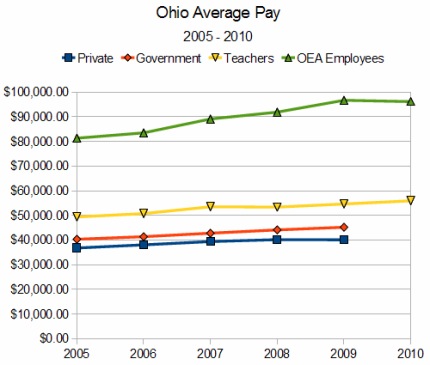
Any threat to that fraternity is to be sought out and destroyed out of preservation of the government entity. I make no secret about it. I don’t like public education. It does not produce the type of students I think are relevant to society. It’s not the kids fault or even the parents directly. The school systems have for decades allowed them to become social police officers regulating life’s dangers such as making the shape of a gun with a child’s hand while they try to play cops and robbers, or discouraging any type of behavior that might be perceived as violent. And the result is that kids grow up to become passive adults that are easily steered by the persuasive words of a con artist like Barrack Obama, or even a Bob Taft. (He was a Republican) How anyone in society could listen to Jessie Jackson or Louis Farrakhanwithout asking why those people have a national platform to speak from, but just to accept it as a fact says everything, that people have allowed themselves to become so dumbed down and sensitive that they can no longer think critically. The fault of that starts with parents and then public education is to blame. As I look around at the way people vote and spend their time, I would say that public education is a miserable failure, because people are only living the lives of a fraction of what they should be.
The way the world should be is that a school should not have any business in whether or not a kid attends school. Truant officers have no place in American society. Who gave them any authority at all? Of what intention were they even conceived? Is it of the social need of a child to get an education and become a productive citizen? If so, how have the results been? Have they successfully made American civilization a better country, or just a complacent country that easily follows new rules such as seat belt legislation, or legislation against texting in a car. Look at the definition of truancy as described at Wikipedia:
Truancy is any intentional unauthorized absence from compulsory schooling. The term typically describes absences caused by students of their own free will, and usually does not refer to legitimate “excused” absences, such as ones related to medical conditions. The term’s exact meaning differs from school to school, and is usually explicitly defined in the school’s handbook of policies and procedures. It has no relation to homeschooling, although sometimes parents who practice homeschooling have been charged with this.[1]
A good friend of mine recently said to me, “kids need to be pushed, and that is the role of the teacher.” That thought drove me to consider……………………..why?
People have a natural desire to do well. So that leads to the definition of, “well.” Someone must understand what, “well,” is before they can define it. But public school defines well in a mechanical way, by grades A thru F. Wellness is somewhere between those two measures. But wellness is much more than that, so with such a narrow scope we are already setting kids up to fail. We believe that to perform “well,” we can coax them to perform with force, and that is the role of the teacher, to push the child to wellness.
This happens because of traditional learning that does not prepare the mind to think critically with divergence. If our society is to survive, we will “PRESERVE” the divergent thinking of our children and not destroy their minds with mind numbing, Marxist disguises of social engineering known as “public education.”
Reform now before it’s too late. And certainly don’t throw any more money at it. To find out why, tune in to Channel 9 in Cincinnati, Ohio on May 9th at 6 PM.
So when I hear people say that Donald Trump is not a serious enough candidate to even consider for the American Presidency, that Trump’s desire to throw his hat in the ring as a kind of circus stunt and not to be taken seriously is misguided. I say why?
I remember the negotiations Reagan had with the Soviet Union during the 80’s and Reagan held the line in his sheer belief that he was on the moral side of God. His determination shocked many of his advisors who second guessed him to no end. But Reagan did us all a favor with his hard-line negotiations and in hind-sight appeared to be a brilliant negotiator. The United States could use the best that we have in that department, and in this modern age, it’s Donald Trump.
So I say put Donald Trump on the ticket. Let him go at Obama, because the next election will be a fist fight, and that’s the kind of guy it’s going to take to win this presidential election. Not some soft-spoken nice guy that is super smart but doesn’t have the ability to convey their ideas to a public that just wants to watch TV reality shows. Trump understands how to do that. He’s currently a TV star, so why not?
I have a kindergartner at one school and two kids at Independence. Both schools start at the same time. She will have to take the older ones early and the process at each school will be at least 25 minutes. So she will have to take the other child to the other school and then pick her up at noon since kindergarten will NOT be a full day, and then at 4:00, she has to pick up the older ones. Thanks for the loss of income!
This leads me to some obvious questions that she should ask herself. Is it my fault she has kids so close together? Why isn’t she home during the day? Does she have to work because she and her husband bought too much house, too many cars, or ran up their credit card debt too high? Is she a single woman and if so why did the marriage not work? What is she doing about finding someone to help her with her family burdens? Is there a mom that can help, a dad, a brother or a sister? If not why? Do they live in another town? If so, why does she live away from them? Are all three of these children from the same man? Are all three of these children from her, or did she obtain a few of them from a new marriage with a man who has kids from a previous marriage? If so, why did she marry a man with kids from another woman? Didn’t she think that she might have trouble raising them?
I’m sure some of that doesn’t apply to her, and I’m sure that some of it does. But as a tax payer, none of it is any of my business. It’s her life and her decisions………………….until she asks me for money. Or until the school system has to engage in a program to help a woman like her by supplying buses or schedule deviations to accommodate her busy life. In fact, the school issues where the school attempts to be everything to everybody for every possible circumstance is the microcosm of the macrocosm to the federal problems. Every program created to help women like her is money, it’s expensive, and it plays to the weaknesses of our population by pandering to them. So I do not support it. I do not want to pay for behavior that will perpetuate the destruction of our population psychologically. And I don’t want my personal property taxes to go up just so she can get her three kids to kindergarten. That’s her job to figure out. Not mine and certainly not the school system.
Human beings like to be challenged. Competition is a natural process that cannot be engineered out of evolution. You can see it in young people when they play video games. In the video game world, all things are equal. Strength, speed, agility, it is the mind that guides the characters, and if you have ever played a game online, you’ll see that human beings are a competitive species. So to make the most of the human race, competition must be a part of the society. This is why capitalism is the economy that produces skyscrapers and communism produces village huts. And we are teaching our children to create village huts. That is the direction of our current society and I do not support it without question. It is not important whether or not it’s inconvenient for a mother to get her three kids to kindergarten. What’s important is that she thinks of a way to do so. The competition and will to survive is the key to making a prosperous human being. So to my mind I would help that woman best by giving her the challenge of figuring out the problem. Not throwing money at more convenience, because that makes people lazy. It’s the “I can’t find the remote” syndrome. You know, where you keep the TV on the same channel even though you don’t want to watch what’s on that station, because you can’t find the remote to change the channel. You could still get up and change the channel manually on the cable unit itself, but often that isn’t even an option in the mind of the lazy TV viewer. When I was a kid, before TV remotes we always had to change the channel by hand. It is with the invention of the TV remote that such a task seemed laborious.
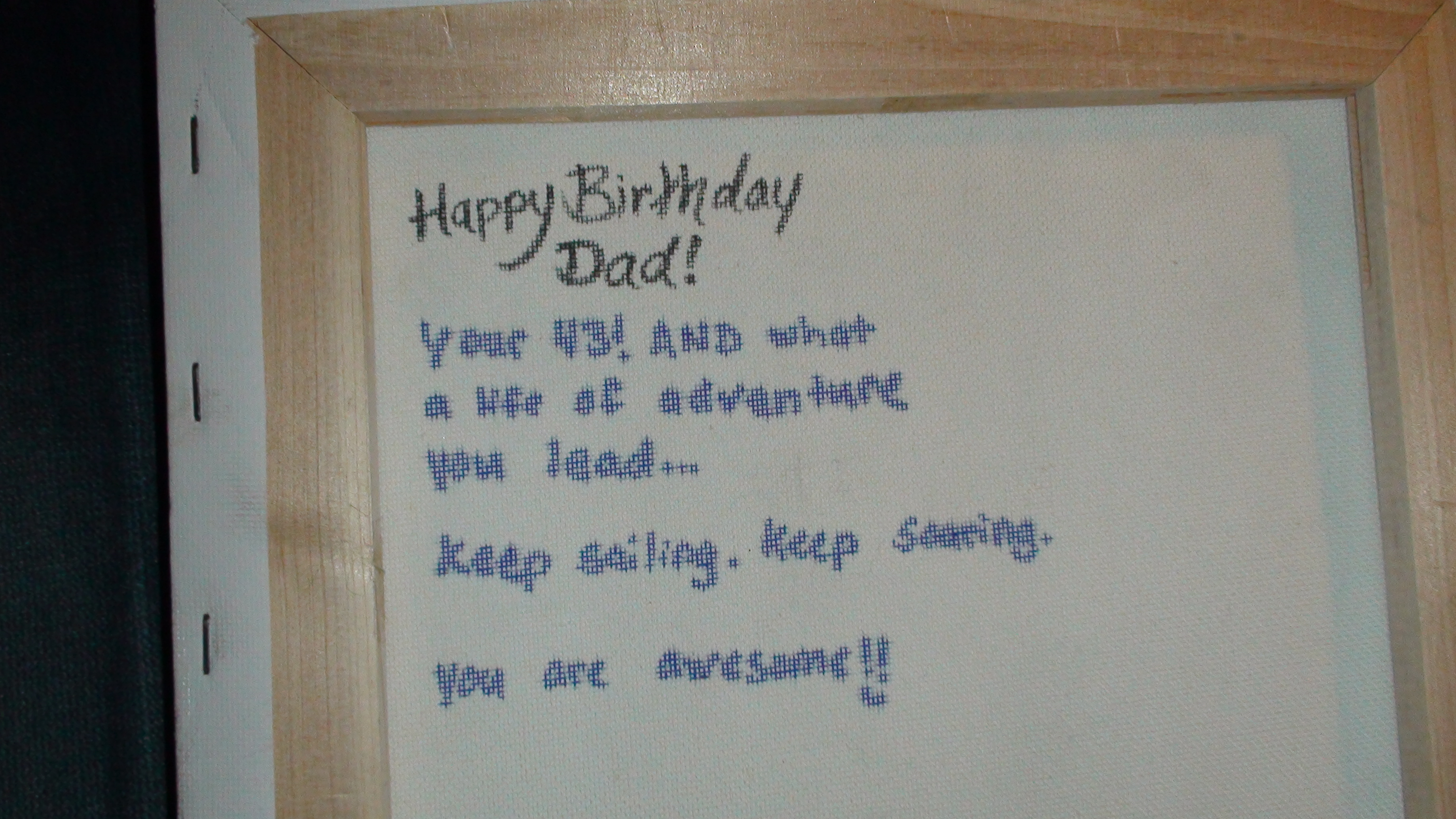
Now, as a father it was my job to make sure that she has things to think about on such a day. It means a great deal more to receive a gift like that, which she made by hand, as opposed to some manufactured item produced by someone else. Because there is value in her production, and her production is a reflection of how she feels about me. And if I didn’t give her anything to feel, that would make me a bad parent. And if I had just done what everyone told me to all my life, I would have been a crappy parent.
But when my kids were growing up, I didn’t follow the rules of society. I took what I valued, and rejected the rest as tripe. I picked the path I wanted instead of the one provided. I do that at state and national parks too. I seldom ever stay on the trail. I break the rules often, proudly.
The rally at Glendale was very metaphoric. As I stood in the square filming and taking pictures there were three trains that passed by the station there, each at least 20 to 30 cars each. That meant there were 60 to 90 train cars going someplace coming from somewhere and that made me feel happy. The reason was that I had butterflies in my stomach over the premier of Atlas Shrugged Part 1 down at Newport on the Levy and I had read a lot of bad reviews from the Hollywood establishment and I loved the book and really wanted the movie to be good. The reviewers criticized the film for not adopting to the modern age by getting rid of the train oriented story line. And here I was watching three trains roar by in a half an hour from the CSX Line. Trains are a sign of an economy where things are happening. So it was my first inclination that the reviewers were missing the point of the film and were wrong about it. I had promised the booking agent for the film that Cincinnati would be a great market and I promised a sellout at the Newport on the Levy location, so all during the rally with the Cincinnati Tea Party I was thinking of our next destination which was the 8:20 PM showing of Atlas.
My wife and I left the rally to arrive at Newport in the drifting rain. The lights were on at Great American Ball Park across the river as the Reds were playing the Pirates. We arrived at around 7:45 and much to my relief, Atlas Shrugged was SOLD OUT! I have never been so glad to not be able to buy a ticket. We picked up tickets to the 10:45 show and headed to the Claddagh Irish Pub which is a favorite of ours when we go to Newport. We had a few beers, and watched the Reds game on the big screen while a major storm rolled in across the river outside. We like Claddagh because it’s a medieval looking place full of cubbyholes for the kind of meetings I attend a lot, where your neighbor can’t listen to what you’re saying. If offers the good kind of privacy for passing time, especially with your wife.
But that only went so far and after an hour or so, we went over to our favorite book store where I finished reading The Coming Insurrection. I became angry at the tone of that book, especially what was on the back cover shown in that picture.
We went to our movie; I was relieved that it was good. I already put up a review, so there isn’t any reason to repeat it here. Needless to say the weekend numbers were reputable. The film made a respectable $1,676,917 gross, averaging $5,608 per theater. The producers are considering expanding to over 1000 screens for the next weekend so that’s great.
I went to bed with hope that a violent future can be averted. If enough people become educated, watch movies that aren’t controlled by radical left-winged filmmakers which is just about everyone, and reading books that pander to a liberal publishing industry, while liberal unions are pushing for even more taxes to pay for their very expensive public wages, if the Tea Party continues to do its work and films like Atlas Shrugged are shown to people who haven’t or won’t read the book, this country has a chance.
If there is anything that one must reflect on tax day it’s, why do we pay so much in taxes, and why are there so many that want us to pay more!
I like the trend and I hope that the pendulum will continue to swing to the right and bring things more to the middle, because the radical talk I’m hearing from the left are fighting words that can only lead to one end, and that’s not what they want, believe me.
The Coming Insurrection might work in Europe where their minds are soft and their hearts are softer, but you can forget about it in the United States. Don’t even try it.
I am reminded of that little piece of history because so many critics seem hungry to criticize Atlas director Paul Johansson for his lack of experience directing only One Tree Hill episodes. The criticism that the film received a flat screen treatment meaning it seemed to resemble a high production value television show is sophomoric and is uttered strictly from the mouths of the unions, and have no merit. What are they comparing Atlas to as far as a film of value, something like Jackass 3-D? Atlas Shrugged is an ambitious film that takes on a lot of ground. I personally think they went too fast in the development of the story. They could have gotten away with another 50 minutes of film time, something the producers may want to release as a director cut when the film comes out on DVD. There were exposition shots of the government action in the macrocosm that needed to be there to develop why building the train line was such a big deal, and people who have not read the book might find it difficult to follow the story without repeated viewings. Because the cut of the film is trying to fit into under 2 hours at 1 hour and 40 minutes Atlas focused on the microcosm of the characters Dagney and Rearden. I understood it because I know the book so well, and people who do know the book will be happy to see that the filmmakers went to a lot of trouble to stay true to the nature of the book.
Atlas Shrugged because of the amount of characters and scale of the story will not work as a traditional film, with a lead like Angelina Jolie as Dagney and Brad Pitt as Rearden with a top-level director making over one million for his work along with all the supporting characters of John Galt, Francisco, James Taggert, and the other 50 or 60 characters that would all require SAG minimums depending on the scale driven off Jolie’s 20 million minimum and Pitt’s 20+ million per picture. Before anybody shot one frame of film there would be over 80 million in just wages alone committed to the film, which is why the movie had not been done up to this point. And a movie like Atlas Shrugged will never pull a ROI at the box office if the budget exceeds 100 million. This is a film for thinking people, so the scope of the film must match the intention, and that is to bring an epic story to thinking people and keep the budget to where the filmmakers can actually produce parts 2 and 3 without the contingency of waiting for DVD sales to refill the budget coffers.
My wife and I sat till the last credit scrolled across the screen at approximately 12:45 in the morning. I had to catch the late show because I attended the Tax Day Rally in Glendale where Doc Thompson was the MC. We left that event to catch the 8:20 showing at Newport on the Levee. I arrived about 7:45 to find the film sold out! Crowds of people swarmed around the ticket windows trying to get a ticket to Atlas Shrugged. So we bought a ticket to the 10:45 showing and killed our time at a nearby Irish Pub and enjoyed the storm that swept across the Ohio River while we waited. Our late show was about half full, which surprised me. What also surprised me was that many of the viewers were by themselves. I can’t recall seeing a movie that had a majority of the audience showing up by themselves. Now, the left normally would criticize those types of people as loners, and belittle them. But wishing them not to exist will not make them go away. These loners are the people who reject TV shows like How I Met Your Mother, or Two and a Half Men. These are also the types that reject reality TV shows, so their only entertainment is books, and the History Channel, because Hollywood isn’t making their kind of movies anymore. Atlas Shrugged is their kind of movie and many of them clapped at the end and stayed for most of the credits.
It was well acted. I thought Dagney was a believable person. In fact, the characters weren’t so beautiful that they were beyond the realm of reality which I think helps the film a lot. Again, with A list actors, that would have been a problem. Our society has become used to seeing extraordinarily beautiful people in leading roles, and that takes the situations out of our contemporary realities. When we leave the theater people don’t look like what we see in the films. So films take on a mystic of escapism. Atlas Shrugged is not out to do that. It seeks to place itself into the mind of the viewer’s experience, which is another reason for the cast to appear as it was. I thought the casting of Francisco D’Anconia played by Jsu Garcia was very good. Also of Paul Larkin by Patrick Fischler, that actor captured perfectly the treason of the good friend that was supposed to be of Mr. Larkin. Grant Bowler who played Rearden was excellent. This film is an obvious set-up for the part two which goes down the psychological rabbit hole, and I can’t wait to see Bowler stand in front of the federal court and tell them he does not acknowledge their authority or right to exist. Bowler will be able to pull it off.
Now the criticism that I’ve read is one from people who don’t understand what the big deal is. “Why is she so upset?” “What’s going on?” “So what, the guy left and burnt down his oil field. All conservatives are a bunch of greedy, oil loving bastards, serves them right!”Besides the fact that fuel costs were excessively high and Ellis was one of the only hopes in the United States for bringing the costs back down, why don’t people make the connection between oil and their own prosperity? Reardon asked the question in Atlas Shrugged, “What’s wrong with people?” Paul answered, “Why ask questions that have no answer?” He’s right, because the reason for those statements is because there are an alarming number of people in our society that no longer feel the pressure of a promise, because to care about a promise to a friend, wife or business partner, you have to care, and sadly, many people no longer care about things like a promise. So the lack of understanding directed at the confusion of Dagney’s motives in the film is more of a commentary on modern life, which is what Dagney is screaming at. She is afraid of becoming what we actually are. I would pay to see Atlas Shrugged 20 more times just to see that last scene. I thought it was vividly powerful. I loved how the camera pulled back to reveal the sign that Ellis left as his oil fields burned while she stood helpless to stop it. The reason for her “robotic” behavior is because she is determined to succeed no matter what the cost. My wife nailed Dagney’s performance by saying, “she reminds me of the terminator from Terminator 3.” And she’s right, Dagney will not be stopped. If she wants something, she will achieve it. And the scream represents that with all her ambition, with all her good will, all her energy, cleverness, and innovation, she could not stop Ellis from giving up. She saw the look in his eyes when Ellis was in her office chastising her for her brother’s incompetence and she thought if she did everything right, that she could keep Ellis from leaving wherever all the “men of the mind” were going.
I also read criticism of how the exposition was displayed with news broadcasts and this was somehow bad. I don’t agree. I think it was wonderfully done in this film. It reminded me of how the director Paul Verhoeven used newscasts from the film Robocop to propel the complicated aspects of the story along. Hollywood and critics in general have gotten used to the type of films produced in the 90’s and 2000’s that pamper to their every wish. This is something that Roger Ebert and Gene Siskal started. Those two reviewers created an industry of film critics and gave them much more power than they deserve. Movie reviewers have become breakers or makers of box office results, and that’s not necessarily healthy. Because the views of the reviewers become the editors of public opinion, and if those reviewers are progressive types, then studios will cater to those reviewers to get the “thumbs up.” I actually respect Roger Ebert quite a bit. He’s usually right on. But when he runs into something above his intellectual capacity, he gets stumped. You can see how Siskal and Ebert used to bounce off each other in this review of White Hunter Back Heart, which is one of my personal favorites films.
Ebert was fair from his perspective in his review. He knows Atlas Shrugged is loved by millions so he was careful in his comments. I think his mistake is he should have reviewed the film more the way he’d review an independent film like Koyannisquatsi. He like many people who go to see this film will mistakenly watch this film as a literal film, not as an atmosphere of images reflecting a philosophy. That’s the reason for the cityscape shots and the views of the mountains. Once all the films are completed, it will make sense. This first film is just an introduction. It’s also an experiment in filmmaking that I think is very healthy. It’s bold and deserves credit for that boldness alone. The merit of Atlas Shrugged will be felt down the road. It is the first step of bringing a new kind of entertainment to popular culture so it will suffer from opinion in the short run, but will stand the test of time over the long haul.
My review of the film is that I like it a lot. I think it will be better when viewed with the other two films. For the DVD release I hope they can lengthen the running time with more exposition that had to be cut to keep the film under two hours. (the reason is to squeeze more showings in a day, very important for recovering a films costs.) And I think the film needs to be watched in the context of an artistic piece, just to sit back and enjoy the sights and sounds without trying to follow every word. The film moves too fast to be watched once. Repeated viewings are essential.