The Communism of LinkedIn: It’s a dating app for job seekers who desire the destruction of corporate America

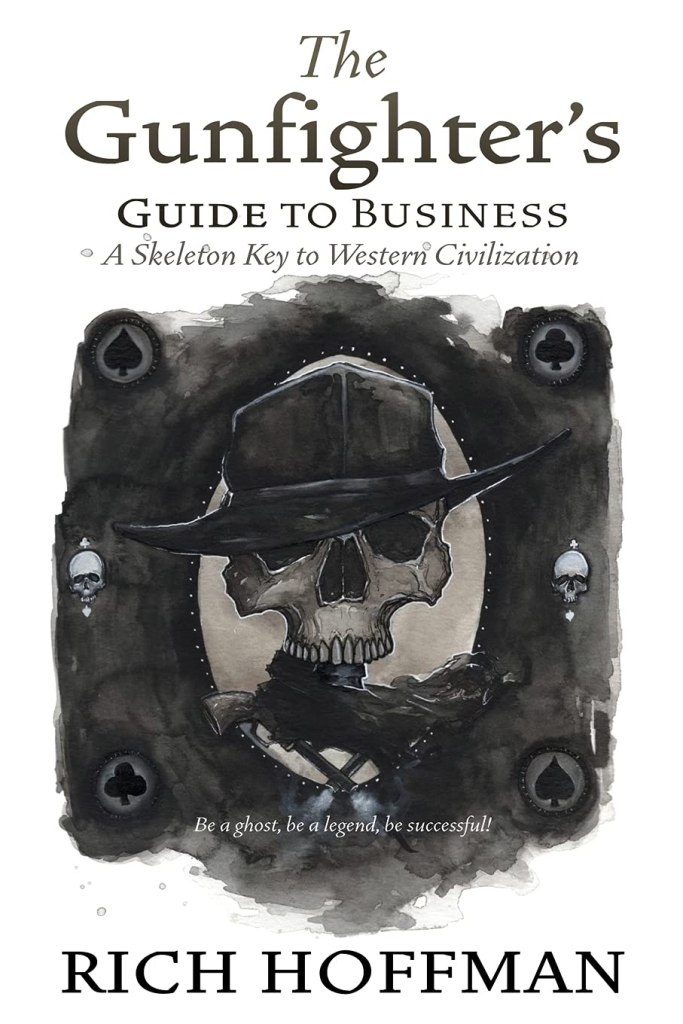
I was never a big fan of LinkedIn, even before they banned my account over my book The Gunfighter’s Guide to Business, which they thought was disparaging to their excellent relationship with China.  So, to answer the question I get at least 50 times a week, no, I am not on LinkedIn.  I was, for a while, out of some obligation I thought was part of the modern world.  But I had little value for it, so at the first dispute, we parted ways happily, which has provided me with just enough emotional distance to have an objective opinion about it.  LinkedIn has a very menacing presence in all actuality and is laced with communism in ways that an entire generation has not considered, and I find it despicable.  I view people with a job with a good company yet still maintain a LinkedIn profile as adulterous married people who always look at their dating apps with an eye on something better.  It is impossible to be in a committed relationship with a spouse while always looking out to see if there is someone better.  A job, like a good marriage, requires a commitment, and dating apps are a clear sign that one or both spouses are not committed to the relationship.  That is essentially what LinkedIn does; it is a dating app for job seekers.  And if someone has a good job and a good employer, well, they should be committed to that relationship, and they shouldn’t always be looking for a better job.  Some people out there, just like people who get divorced a lot, are always looking for the next best thing, and by jumping from job to job, they might find opportunities that they otherwise wouldn’t have had.  But that is my position on LinkedIn. It’s a dating app that shows a lack of commitment to an employer and that people who are on it all the time are one-foot-in, one-foot-out types of people who are not very valuable to an organization. 

Yet, there is something far worse with LinkedIn that indicates its Chinese roots, which it is well known for supporting.  The hidden message of LinkedIn is that people don’t matter and that leadership is embodied in the collective, not the individual.  LinkedIn goes against the gunfighter metaphor that I use often, the comparison of the lone gunfighter who steps into a saloon out of a heavy rain and orders whiskey at the bar with their back turned to the room.  The gunfighter knows that nobody will make a move because the room is full of parasites who want to use anybody they can meet to further their life in some way.  So the gunfighter doesn’t worry about some assassin that might try to shoot them in the back.  Such thoughts are Hollywood fantasy.  In real life, people are much more malicious and lazy.  They’ll use them before trying to kill someone for all they are worth.  Therefore, people of worth are precious in the world because most people fall well short.  Instead, most people reside in the crowd, happy to follow others, which is why the gunfighter knows they can order a whisky at the bar and enjoy it without concern for potential assassins.  Nothing in the world is more valuable than leadership, and leadership is not formed through networks and relationships.  It’s in understanding the motivations of other human beings and what they are willing to do to obtain value, then directing them toward some state of usefulness.  LinkedIn is an audience of people in the saloon looking at the gunfighter, measuring to see if something can be gained from a relationship.  When discussing networking, we are talking about building relationships in this fashion. 

Yet China, as a collectivist, communist society, does not strive to empower its individuals into greatness.  They look for compliance as their primary objective, so they have much trouble building their economy.  Without the outside influence of globalists from the World Economic Forum mentality, China would still be a poor country.  All their wealth has been stolen; it wasn’t generated through individual achievement, as in Western capitalist countries.  In many ways, the designers of Linkedin are well aware of this.  The hidden message of LinkedIn is that individuals do not matter, nor do other companies.  By filtering down individual achievement, the people on LinkedIn are not looking for the next Jack Welsh or President Trump in the world, who ran a very successful show on television about the values of business in The Apprentice.  They want a society of bootlickers who are not committed to corporate leadership and are ultimately easy to control from the centralized state.  By always being willing to jump from one job to another, nobody has deep roots of commitment to their employers, making them weak toward centralized control.  The LinkedIn audience is looking for compliant, noncommitted people to populate the workplaces of the world, and the effect is noticeable.  Professionally, there are a lot of non-committed people out there who show fragile leadership toward their organizations.  And that is by design.  LinkedIn tells the professional world that people don’t matter; they can all be traded like baseball cards and easily replaced.  So, puff yourself up to potential employers looking for just such a poison and destroy the concept of capitalism by destroying the notion of authentic leadership among the corporate community. 

You have to watch these tech firms and understand their overall philosophy for getting into business, to begin with.  Facebook was a dating app that tapped into the human need to be wanted and then exploited that desire with a sense of community or communism.  That same approach was introduced to Western cultures by attacking the concept of marriage with easy divorce.  If you were unhappy with your spouse, get a new one.  Don’t fight out the problems; go somewhere else, which has destroyed the concept of the American family or even a European family.  And in so doing, that gives the state more power over the individuals involved.  Rather than the family or the corporate culture having the strength and ability to resist such temptations.  The way to attack the concept of family was to make divorce more socially acceptable and too tempting whenever things got tough in a marriage.  LinkedIn has sought to do the same in corporate structure, making it easy for talent to leave at the first sign of trouble and keeping CEOs always turning toward the state for approval rather than providing leadership through the frequent storms of life.  In many ways, we see the essential conflict of our times: Do you follow the leadership of Yahweh, or do you seek the many gods of Canaan and sacrifice your firstborn children to appease them?  LinkedIn says to appease the gods, make whatever sacrifices you need to make, and surrender leadership to the state.  I say, be the gunfighter, follow after the individual Yahweh and the rebellion against collectivism that he represented, which formulated the foundations of all Western culture.  Be the leader, not a follower.  And don’t seek the arms of always some new opportunity. Instead, continuously make the best of what you have and fight for a better day.  And stay away from the communist desires of LinkedIn. 

Rich Hoffman
They Banned Me on LinkedIn: Another case of a private tech company doing government work as an arm of censorship

LinkedIn Banned Me over Election Fraud Discussion

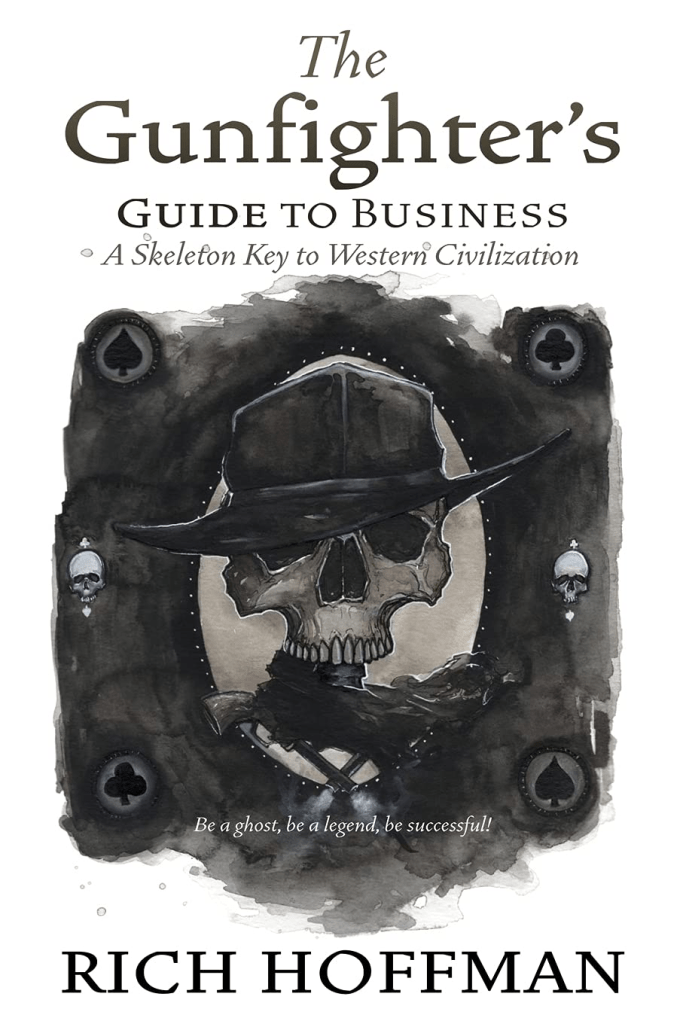
I’ve never been a fan of social media.  Sure, to promote the blog and some of my work to people interested in it, I have used Twitter in the past and YouTube. I’ve never done Facebook. I’ve always viewed it as garbage for a lot of reasons.  When everyone in the world was using it, and I wasn’t, people thought it was odd.  But as is usually the case with most things, I turned out to be correct.  Facebook is a creepy attachment of the government, which took over a private company to do its public bidding.  Eventually, the courts will work it out, but I’m not giving away free stuff to the government through Facebook data collection until then.  But I have a book out and on my professional profile on LinkedIn, which I’ve had forever since it started as a site; I was banned because I accepted election fraud on my feed as I was talking about my book The Gunfighter’s Guide to Business.  They saw my responses and found them detrimental to good conversation, and they banned me, which pissed me off.  The thought of some weak-kneed progressive pieces of crap having some influence over my life was more than enough to set me on fire, which I’m sure they’d enjoy knowing.  But that’s what I get for participating in their stupid free social media platform.  It’s their playground, and we all chose to play in it on their terms.  Yet, I won’t be going back to LinkedIn.  They are no different from Facebook or Twitter, and all the rest of those government traps put on the internet freeway to manage society from a new kind of compliance standpoint.  Accept that 2+2 is 10, or you will be banned from the platform and not allowed to play in any reindeer games.  They can pound sand.

Oh, of course, they try to kill you with niceness.  LinkedIn keeps sending me emails telling me how many hits my site is getting, trying to contact them to turn the site back on.  They want me to produce a government I.D. of some kind, either a driver’s license or a passport with a photo of the front and back, and send it to LinkedIn to review whether or not my site has been banned by accident.  What bothers me is that they should know my personal information.  By forcing the government I.D., it has a creepy orthodoxy that is all too related to what’s going on with the attempted vaccine mandates.  My message to all those skinny jeans losers running LinkedIn who are dumb as a rock; it’s a free site.  It can come and go, and I could care less.  They were better off with me being a content provider. They’ll miss me more than I’ll miss them.  I am not accepting a partnership between a professional social networking tool and government intrusion.   They are acting as agents of the government, and that’s where I draw the line. I’d rather spend my social media time on platforms like Gettr, Gab, and Mike Lindell’s Frank Speech. 

Yet think of the audacity of these social media platforms inspired by communist China.  They view themselves as members of the government, censoring the public.  For LinkedIn to become an arbitrator of truth over election fraud, for instance, is way over their mandate.  As a professional, if I want to talk about election fraud, it is part of the public debate.  It might harm me professionally, or it might help.  That is up to the marketplace to decide, and I, as an individual, determine how I want to play it.  But LinkedIn took it further; they were editing speech and claiming it’s for civility causes that they made up independently.  Essentially the goal of LinkedIn is to create and enforce wokeness in corporate culture, not just to connect people for job placement or professional engagement.  Their goal is to lure in professionals with the nectar of professional communication but to embed in them wokeness as established by the global rules of government into thinking what they tell you to, and keep an excellent lucrative job, for you to follow those rules without question.

I had put on my feed on LinkedIn a good video by Anna Perez from Real America’s Voice about Larry Elder and the election in California.  I commented that Democrats wouldn’t have a chance if they couldn’t cheat, and for that, LinkedIn freaked out, pulled down my page, and started the process I reported on the government I.D. issue. It’s the same argument about a private versus public company.  If LinkedIn or Facebook, Twitter, or any of the rest of them want to be employees of the government, then they need to announce that.  It’s not their job to shape the argument of election fraud, which is a problem.  They don’t get to hide behind a private façade to avoid litigation for a government conspirator doing public work.  Yet that’s what they did; they participated in the election narrative by limiting one side from presenting the evidence to facilitate the false report that there wasn’t election fraud.  Well, professionally, if a company or CEO is trying to operate a business in California, isn’t it something they would be concerned about to know if Larry Elder was going to be the governor and Newsom was going to be recalled?  I would think so.  And if LinkedIn were concerned about the “business community,” they’d want to see such speech conducted for the betterment of society in general. 

However, like the rest of those older social media platforms, LinkedIn was created to do what they are attempting to do in 2020 and 2021, tell people what to think about things and be soft arms of government agency and compliance.  Ultimately, they are how wokeness has been spread into American culture, and we should be pretty angry about it.  I am more infuriated that I gave them a chance than anything.  It was disappointing to be so right about them; I was hoping for a bit that maybe they were different.  But no, they are just as bad as the rest of the communist scumbags.  And I am done with them forever.  Rather than send them my government I.D. so I can play in their sandbox, I would instead put 100 times more energy into seeing their demise.  Fighting for election integrity, change the governor of California and ultimately the tech companies that reside there, and putting Trump back into office to fix all these massive screw-ups that we have seen at a record pace since Biden was put into power.  All those woke companies who have been seeking to erode the American Constitution with social media bylaws created by tech geeks and their Starbuck’s-stained fingers have attempted a coup.  They deserve punishment, which will come their way very soon.  They never had a right to operate as government censors.  They can do what they want as a private company, but when they involve themselves in public work, well, that’s a different story.  And that day of reckoning will come quick.  For my part, I won’t miss them, and when the opportunity comes to sink them, I won’t hesitate.  They crossed the line, and there is a cost for that.

Rich Hoffman

The Gunfighter’s Guide to Business
Click to buy The Gunfighter’s Guide to Business