He Who Owns the Gold Rules: But Knowledge is the new currency, and the only one, that really matters

I was sitting upstairs in that restaurant on the boardwalk at Put-in-Bay, looking out over the water while the Teams calls kept coming in. The view pulls you in if you’ve been there. There’s the big central park, the U-shaped stretch of bars and shops wrapped around it, and then the thick forest of masts and hulls filling the harbor in front of it. From the second story you can pick out the bigger boats if you know who owns them. I had a bowl of shrimp and ice water in front of me and the restaurant’s Wi-Fi was solid enough that I could answer questions from people who wanted me on their advisory boards for twenty minutes at a stretch. Manufacturing people mostly. Plastic bottles one day, ship parts another. They all want to know the same basic things: how do you use capital, how do you hire the people who will build something the market actually needs, and how do you keep the whole machine from coming apart when the rules keep changing under your feet.

I told the woman who seated me I needed a quiet corner with good reception because I had a couple of these calls to get through before I could rejoin my family. She set me up where I could still see the bay. Between questions I kept glancing left at those boats and thinking about the men I know who keep them there. A slip and a vessel in that harbor is not a cheap hobby. You’re talking real money, the kind of money that used to stay inside a company so the owners could make payroll and renegotiate supply contracts when things got tight. A lot of those boats are paid for by people who once sat in the CFO chair of companies that no longer belong to the families who built them.

It put me in mind of an old bakery owner I used to deal with years ago when I was younger and still learning how the world actually worked. Transactions did not always go my way. When they didn’t, he would look at me with that half-amused, half-hard expression and say the line I have never forgotten: who owns the gold rules. It was a ruthless statement and a true one. I lived by it, learned from it, and used it for a long time. Gold meant control. Gold meant the ability to set terms. Gold meant you could decide who got paid and who got squeezed. In that older economy it was still possible for a privately held company to own its own gold, to keep its own books, and to weather a rough season without selling the whole enterprise to strangers.

That economy is gone. The currency changed. The Federal Reserve prints money at a scale that would have been unthinkable when I was dealing with that baker, and that printed money does not stay neutral. It floods into investment channels that then go looking for hard assets—companies, homes, anything that can absorb the excess liquidity and launder it into legitimate ownership. After the COVID disruption the process accelerated. Supply chains seized up. Costs for materials and labor jumped. Minimum-wage pressures and regulatory layers that had been building for years suddenly became impossible to absorb on the old margins. A lot of long-standing private companies found themselves carrying debt loads they never would have taken on in a tighter money environment, or they found their CFOs more interested in the lifestyle the easy capital could buy than in protecting the cash flow that kept the doors open.

I know seven different CFOs who keep boats in that same harbor at Put-in-Bay. They are not moral monsters. They are shortsighted in the particular way the new rules reward. When the money was flowing they took what the system offered. Some of them sold the companies out from under the owners who had built them. Others loaded the balance sheets with leverage that looked smart on paper until the interest rates and the inventory costs and the slower collections all hit at once. The blood in the water brought the sharks. Private equity and institutional capital showed up with the printed money and the patience to wait out the distressed sellers. The old privately held firms that had lasted decades suddenly could not hold. Bankruptcy or forced sale became the only remaining moves that preserved anything at all.

The numbers back up what I have been watching on the ground. Since 2000 the count of private-equity-backed companies in the United States has climbed from roughly two thousand to more than eleven thousand five hundred, and by late 2025 the figure was approaching thirteen thousand. Over the same stretch the number of publicly listed companies on the major exchanges fell by about thirty-five percent, from around seven thousand to roughly forty-five hundred. Private equity did not invent the pressures that hollowed out traditional ownership, but it has been the primary vehicle that absorbed the wreckage. Business bankruptcy filings, which dropped to historic lows in the immediate post-stimulus years, have been climbing steadily again. In the twelve months ending in mid-2025 they were up more than eleven percent year over year, with business filings themselves rising into the twenty-three to twenty-four thousand range. That is still below the peaks of earlier crises, yet the direction is unmistakable and the casualties are concentrated among the mid-sized and long-private firms that once formed the backbone of local manufacturing and distribution. 

The people who call me for advice are trying to figure out how to survive inside this new arrangement. They still think in the old terms. They believe that if they can just get enough gold—enough capital, enough line of credit, enough valuation—they will be able to rule the way the bakery owner once ruled. I tell them the truth as I see it from that restaurant window. Gold is still useful, but knowledge has become the scarcer and more powerful resource. The man who understands how to turn knowledge into something the market will pay for can acquire gold whenever he needs it. The man who only knows how to hold gold, or how to extract it from someone else’s balance sheet, is playing a game that is already being rewritten around him.

A lot of the capital washing through these deals is not patient industrial capital. It is money that needs a home after the Federal Reserve expanded the money supply at rates that had not been seen in modern times. M2 grew by roughly forty percent in the two years after the pandemic began. That liquidity had to go somewhere. It went into private equity funds, into real-estate investment vehicles, into every channel that could convert paper claims into ownership of real productive assets. The result is a quiet transfer. Private ownership is not outlawed. It is simply made more expensive, more leveraged, and more vulnerable to the next policy shock until the original owners are forced to sell or fold. What replaces them is often a portfolio company whose ultimate decision-makers sit in New York or London or some other distant place and whose primary obligation is to the limited partners who supplied the capital, not to the community that once depended on the firm. 

I do not pretend this is a conspiracy theory that requires secret handshakes. The mechanisms are public. Monetary policy that treats inflation as a temporary inconvenience while asset prices soar. Regulatory and wage policies that raise the fixed costs of running a small or mid-sized operation. A financial culture that rewards the extraction of value over the patient creation of it. And a political culture that has grown comfortable talking about “stakeholders” and “public interest” while the actual private owners who built the companies are being squeezed out. Whether you call the endpoint socialism or simply the financialization of everything, the practical effect is the same: fewer people who own the means of production in any meaningful sense, and more people who work for capital that answers to no local loyalty.

I keep taking the advisory calls because the people on the other end still need answers faster than the next book or the next documentary will deliver them. I tell them what I told the people on those Teams sessions while I watched the boats bob in the harbor. The old rule still has force, but the gold itself has changed. Knowledge that can be turned into products people actually want is the only form of capital that cannot be printed into existence by a central bank or diluted by the next round of leverage. The companies that survive the current slaughter will be the ones that treat knowledge as the real scarce resource and that refuse to let short-term extraction destroy the long-term ability to create value.

Private ownership of productive enterprises is not a nostalgic preference. It is the practical foundation of a free economy. When that foundation erodes far enough, the language of free markets remains but the substance is gone. I have watched enough of it happen in the last several years, including a long-standing company not far from my own house, to know the pattern is not accidental and not temporary. The people who still believe they can simply steal or leverage their way to the gold and then rule forever are the ones who have not yet noticed that the rules themselves have shifted under them. Knowledge compounds. Printed money does not. That difference is going to decide more than most of the current players seem to understand.

I give the advice away freely because the window for acting on it is already narrower than most people realize. The next decade will not look like the last one, and the companies that still answer to actual owners rather than to distant capital will be rarer still unless enough people decide that knowledge is the only gold worth owning.

Notes

1.  Citizens Bank analysis drawing on industry data shows the private-equity-backed company count in the United States rising from approximately 2,000 in 2000 to more than 11,500 in recent years, a gain exceeding 400 percent, while the number of companies listed on the NYSE and NASDAQ fell from roughly 7,000 to about 4,500. PitchBook data for Q3 2025 places the number of U.S. PE-backed companies near 12,900.

2.  Administrative Office of the U.S. Courts data show business bankruptcy filings rising from 18,926 in the year ending December 2023 to 23,107 in the year ending December 2024 (a 22 percent increase), with further elevation into 2025. Total bankruptcy filings for the twelve months ending June 2025 reached 542,529, an 11.5 percent increase over the prior period.

3.  Federal Reserve data and analyses from the St. Louis Fed and other sources document the rapid expansion of M2 money supply during 2020–2022, with year-over-year growth rates exceeding 25 percent at peak and cumulative increases on the order of 40 percent from early 2020 levels, contributing to the inflationary and asset-price pressures that followed.

Bibliography

Citizens Bank. “The Public to Private Equity Pivot Continues.” Capital Markets & Advisory insights, December 2024.

PitchBook. Data on U.S. private-equity-backed company counts and holding periods, various releases through 2025–2026.

Administrative Office of the U.S. Courts. Bankruptcy Statistics, twelve-month periods ending 2023–2025.

Federal Reserve Bank of St. Louis. “The Rise and Fall of M2.” On the Economy, May 2023, and subsequent H.6 Money Stock Measures releases.

Davis, Steven J., et al. “The Economic Effects of Private Equity Buyouts.” NBER Working Paper 26371 (and related Chicago Booth / BFI versions).

McKinsey & Company. Global Private Markets Report 2026.

S&P Global Market Intelligence. Reports on private-equity portfolio company bankruptcies and corporate distress, 2024–2025.

U.S. Small Business Administration, Office of Advocacy. Frequently Asked Questions About Small Business, 2024–2025 editions, for context on the continuing dominance of small private firms even as mid-market ownership concentrates.

Rich Hoffman

More about me

Click Here to Protect Yourself with Second Call Defense https://www.secondcalldefense.org/?affiliate=20707
About the Author: Rich Hoffman

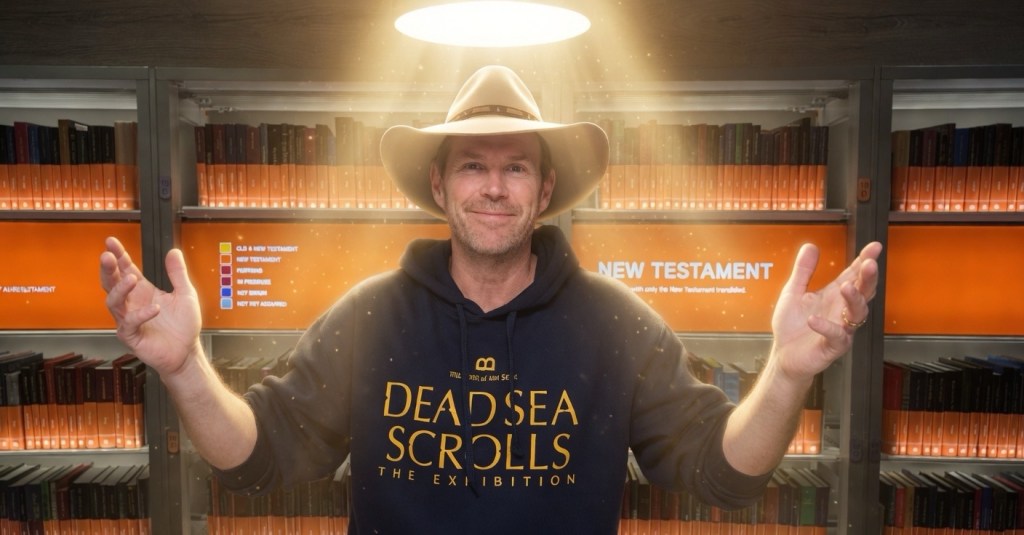
Rich Hoffman is an author, political consultant, and strategic advisor based in Cincinnati, Ohio, and the creator of The Politics of Heaven—a unique framework that connects biblical theology, ancient history, and modern power structures to explain how moral alignment and spiritual forces shape global events. Blending real-world political experience with deep research into archaeology, UFO phenomena, and suppressed historical narratives, Hoffman offers compelling commentary on topics ranging from ancient civilizations and the Dead Sea Scrolls to modern populist movements, paranormal continuity, and leadership strategy in chaotic environments. As the author of The Gunfighter’s Guide to Business and the forthcoming Politics of Heaven, he brings a grounded yet provocative voice to media discussions, supported by firsthand experiences and a cross-disciplinary approach that bridges science, history, and theology. For interviews, speaking engagements, or expert analysis, visit richhoffmanbooks.com or contact directly via phone at 513-307-5815 or email at rhoffman@richhoffmanbooks.com.  If you’ve seen the movie, Disclosure Day and want to talk about it and the implications of Presidnet Trump’s UAP disclosures, let me know and we can bring some color to your coverage. https://richhoffmanbooks.com/media-inquiries-broadcast-topics-and-contact-info/?frame-nonce=ad51e7ecba I do have a firsthand UFO encounter to discuss.
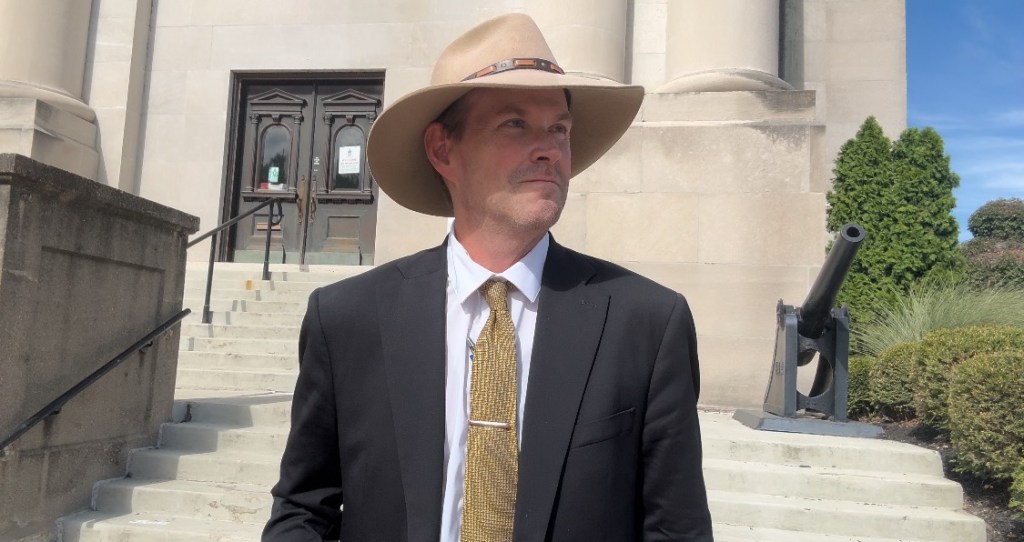
The Merger Is Complete: All Assets Secure – Why Ohio (and America) Cannot Talk Financial Stabilization Without Confronting Financialization and Returning to Real Production

The merger is complete. All assets are secure. That phrase has been echoing in my mind lately as I sit down with state leaders like Senator George Lang, the Ohio State Treasurer, and others in the growing movement here in the Buckeye State. We are not just talking about balancing budgets or tweaking tax policy anymore. We are staring down the barrel of a much deeper conversation—one that cannot happen in a vacuum. Preserving Ohio’s financial future, and by extension the country’s, demands we confront a natural byproduct of decades of drift into pure financial engineering: the dominance of financialization. It is the term that has surfaced repeatedly in our private discussions, and it is the invisible force that has warped our economy into something unrecognizable from the one the Founders envisioned.

Kevin Freeman, the author of Pirate Money: Discovering the Founders’ Hidden Plan for Economic Justice and Defeating the Great Reset, has laid out the principles that are now gaining traction. Under a potential Vivek Ramaswamy administration in 2026–2027—and with leaders like Senator Lang stepping forward—this idea is poised to evolve into policy. The core concept is straightforward yet revolutionary: states create a gold reserve managed directly by the treasurer. Citizens can hold value in physical gold or silver, stored securely in a state depository, and access it through a modern debit card or electronic transfer for everyday purchases. The money in your account is not fiat paper subject to endless printing; it is backed ounce-for-ounce by hard metal. You spend gold without ever carrying a coin. The value stays anchored to something real.  

Senator Lang has been vocal about this in legislative circles. Ohio House Bill 206, introduced by Representatives Jennifer Gross and Riordan McClain, already proposes exactly this framework: a state-managed transactional currency rooted in gold and silver. The treasurer would hold the bullion in a protected reserve, and citizens could buy, hold, and spend it electronically. Every “dollar” spent would be convertible to actual metal. It is optional, constitutional (states have clear authority under Article I, Section 10), and already working in pilot form in Texas, Florida, Louisiana, and elsewhere. Freeman calls it “gold you can spend.” I call it sanity.  

But here is the catch—and this is where the conversation with Lang and the treasurer always turns serious: you cannot build the infrastructure for a gold-backed system while the economy remains addicted to financialization. That addiction is the black hole at the center of everything. It is the reason Main Street has been swallowed by Wall Street. It is why so many companies that used to make things now make money off money. And it is why a growing number of us—myself included—have deliberately refused to play the game.

Financialization is not some abstract academic term. It is the process by which the financial sector—banks, hedge funds, private equity, asset managers—stops serving the real economy and instead becomes the economy. Profits come not from producing better hamburgers, better tires, better homes, or better steel, but from trading debt like baseball cards, leveraging interest rates, securitizing everything, and extracting fees from every layer of the transaction. BlackRock is the poster child. With over $10 trillion in assets under management, it is the largest shareholder in nearly 90 percent of the S&P 500. Larry Fink’s firm does not build factories; it owns pieces of every factory, every airline, every retailer. It profits whether the underlying company succeeds or fails because the game is now about ownership of the capital structure itself, not the output. 

This is not capitalism as Adam Smith or even Henry Ford understood it. This is a casino layered on top of the real economy. When you buy someone’s debt, package it, sell it, insure it, and then bet against it—all while the Federal Reserve keeps interest rates artificially low or high to favor the house—you create wealth that has no anchor in physical reality. The Dow Jones Industrial Average looks healthy on paper, but much of that “growth” is stock buybacks funded by cheap debt, not new factories humming three shifts a day. BlackRock and its peers have perfected this. They gained enormous power during the 2008 crisis by managing toxic assets for the Fed, then used the same tools to consolidate control. Today the Big Three (BlackRock, Vanguard, State Street) control roughly a fifth of all S&P 500 shares. They vote those shares, influence boards, and extract fees regardless of whether the company actually produces anything of lasting value. 

I have had a front-row seat to this vortex my entire adult life. I made deliberate choices—every single year, every opportunity—to stay out of it. I could have leveraged real estate deals, flipped debt instruments, ridden the private-equity wave, or parked money in funds that profited from the very inflation the Fed engineered. Many friends did exactly that. They have swimming pools of cash, second homes in the Bahamas, and portfolios that look impressive on a spreadsheet. I do not begrudge them the money. But I watched what it did to their thinking. Success became detached from making something people genuinely wanted. It became about timing the next rate cut, the next bailout, the next round of quantitative easing. The forbidden fruit of financialization tastes sweet in college textbooks and MBA programs, but it rots the soul of production.

This is why I have always measured my own economic decisions by a simple test: Does this create a better physical product or service that competes in the open market? If I make a better hamburger, I get rich because people buy more of them. If I build better homes with honest materials at honest prices, the market rewards me. The value is in the wood, the stone, the craftsmanship—not in how cleverly I can leverage a bank loan or securitize the mortgage payments into a derivative. When companies start measuring success by how much debt they can service or how many assets they can flip rather than how many units they ship, the culture shifts. Plants close on weekends. Third shifts disappear. Executives leave at 5 p.m. sharp and do not answer the phone. Why work harder when the real money comes from the interest-rate spread, the management fee, or the carried-interest loophole?

The data backs this up brutally. Since the United States fully abandoned the gold standard—first under FDR in 1933 with Executive Order 6102 (which confiscated private gold holdings) and then under Nixon in 1971—the dollar has lost roughly 90 percent of its purchasing power. That is not an accident. When money can be printed without limit, the incentive structure flips. Central bankers at Jackson Hole sip lattes and debate “monetary theory” while companies learn that the fastest path to shareholder value is not innovation but financial engineering. The Federal Reserve keeps rates high enough to reward bondholders and asset managers but low enough (in crisis) to bail them out. The result? An entire generation of executives who treat labor as a cost to minimize rather than a partner in production. They do not need to run three shifts seven days a week when leverage and cheap debt do the heavy lifting.  

Trump’s short-term approach—flood the system with energy, tariffs, and stimulus—will ignite the wet wood and create a roaring blaze of apparent prosperity. People will feel wealthier in their pockets for a while. That is the point of the first four years: get the engine turning again. But the long-term conversation, the one Lang, the treasurer, and Freeman are pushing in Ohio, is what happens next. How do we protect the value of that freshly created wealth? How do we prevent it from being inflated away or siphoned into the same financial black hole?

The answer is not complicated, but it is hard. We must divorce the economy from financialization and re-anchor it to Main Street production. A state gold reserve with a debit card is step one. It gives citizens an escape hatch from fiat volatility. But the deeper reform is cultural and structural: companies must be measured—and rewarded—by what they actually make, how efficiently they make it, and how many people willingly pay for it in the open market. Not by how cleverly they shuffle debt or extract fees. Not by how many weekends they can take off because the balance sheet looks good on paper.

I have lived this choice for thirty-plus years. I have walked past opportunities that would have made me “rich” by Wall Street standards because they required me to play the game I instinctively knew was phony. I would rather build something real—something that lasts, something people value—than swim in a pool of spreadsheet wealth that evaporates the moment the Fed changes course. That is not sacrifice; it is principle. And it is the principle Ohio must adopt if we are serious about a gold-backed system.

Look around manufacturing today. Plants that once ran 24/7 now shutter at 5 p.m. Friday and stay dark until Monday. Executives brag about “work-life balance” while the balance sheet is propped up by financial tricks. The workforce has absorbed the lesson: show up, collect the paycheck, go home. Why push for excellence when the real profits come from the Delta between phony valuation and actual output? This is the lazy class financialization has bred—not just at the top, but throughout the ranks. People with nice houses and nice cars who have never felt the exhaustion of building something that actually competes. They are the modern equivalent of the Ferris Bueller dads—out of touch, coasting on leverage, wondering why their kids do not respect them.

The Founders understood this danger. They wrote gold and silver into the Constitution precisely because they had lived through the chaos of unbacked paper money during the Revolution. States were explicitly forbidden from issuing bills of credit for good reason. Hamilton and Jefferson debated banks, but both agreed the ultimate measure of wealth was productive capacity, not financial sleight of hand. We drifted away from that wisdom first in 1933 and then decisively in 1971. The result is the hollowed-out economy we see today: record stock valuations alongside shuttered factories, record CEO pay alongside stagnant wages for those who still make things.

Ohio is at a crossroads. With leaders like Senator Lang and a treasurer willing to explore transactional gold, we have a chance to lead. Texas and Florida have already moved. More states are watching. If we pair a state gold depository and debit-card system with policies that reward actual production—tax incentives for three-shift operations, penalties for excessive financial engineering, honest accounting that separates real assets from leveraged paper—we can rebuild what was lost.

This is bigger than monetary policy. It is about the soul of work. Do we want an economy where success is measured by how many physical goods and services we create that the world actually wants? Or do we want one where success is measured by how cleverly we game the spreadsheets? The first path builds real wealth that can be passed to grandchildren. The second builds a pyramid that eventually collapses.

I have made my choice. I attach myself to hard assets and real output. I have sacrificed short-term paper gains for long-term substance. I will not change course now, even as the financialization racket reaches its peak. The game is ending. Trump’s four years will provide the fuel, but the states—and Ohio in particular—must provide the guardrails. A gold standard without a return to production-based measurement is just another pretty facade. We need both.

The merger is complete. All assets are secure. Now the real work begins: making sure those assets are real, not phantom. Ohio has the leaders, the moment, and the model. The question is whether the rest of the country—and especially the next generation—will have the courage to follow.

Footnotes

[1] Kevin Freeman, Pirate Money (Post Hill Press, 2024); see also his presentations to state legislatures on transactional gold, October 2024.

[2] Ohio House Bill 206 (2025), establishing state-managed gold/silver transactional currency.

[3] Senator George Lang, sponsor testimony on related financial legislation, Ohio Senate, 2025–2026 sessions.

[4] Executive Order 6102 (April 5, 1933), Franklin D. Roosevelt; full text available in Federal Register.

[5] BlackRock 10-K filings and asset-under-management reports, 2025–2026; see also analyses in Harvard Business Review on the “Big Three” asset managers.

[6] U.S. dollar purchasing-power loss since 1971, calculated via BLS and ShadowStats methodologies.

[7] Constitutional Currency / TransactionalGold.com resources on state-level gold legislation.

[8] Federal Reserve History essays on Roosevelt’s gold program and Nixon shock.

[9] Economic War Room with Kevin Freeman (BlazeTV) episodes on state depositories and debit-card systems.

Bibliography (selected for further research)

•  Freeman, Kevin D. Pirate Money: Discovering the Founders’ Hidden Plan for Economic Justice and Defeating the Great Reset. Post Hill Press, 2024.

•  Ohio Legislative Service Commission analyses of HB 206 and Senate Bill 269 (2025–2026).

•  “States Work To Make Gold And Silver Alternative Currencies,” Guildhall Precious Metals / Epoch Times, 2025–2026 reporting.

•  “How Asset Managers Like BlackRock Took Over the World,” LSE Review of Books, June 2025.

•  Federal Reserve History: “Roosevelt’s Gold Program” and related primary documents.

•  U.S. Senate Permanent Subcommittee on Investigations: “Wall Street and the Financial Crisis: Anatomy of a Financial Collapse,” 2011 (updated analyses available).

•  Constitutional Currency / TransactionalGold.com policy toolkits and model legislation.

•  Biblical Archaeology Review and related economic history archives for broader context on ancient sound-money systems (cross-reference for philosophical grounding).

•  Ohio Senate GOP and Business First Caucus materials on economic growth targets to $1 trillion GDP by 2030.

This is not theory. This is the hard conversation we must have before the next cycle of phony prosperity pulls us back under. The merger is complete. The assets are secure. Now let us make sure they stay that way—anchored to what we actually build, not what we pretend to own on paper.

Rich Hoffman

More about me

Click Here to Protect Yourself with Second Call Defense https://www.secondcalldefense.org/?affiliate=20707

About the Author: Rich Hoffman

Rich Hoffman is an independent writer, philosopher, political advisor, and strategist based in the Cincinnati/Middletown, Ohio area. Born in Hamilton, Ohio, he has worked professionally since age 12 in various roles, from manual labor to high-level executive positions in aerospace and related industries. Known as “The Tax-killer” for his activism against tax increases, Hoffman has authored books including The Symposium of JusticeThe Gunfighter’s Guide to Business, and Tail of the Dragon, often exploring themes of freedom, individual will, and societal structures through a lens influenced by philosophy (e.g., Nietzschean overman concepts) and current events.

He publishes the blog The Overmanwarrior (overmanwarrior.wordpress.com), where he shares insights on politics, culture, history, and personal stories. Active on X as @overmanwarrior, Instagram, and YouTube, Hoffman frequently discusses space exploration, family values, and human potential. An avid fast-draw artist and family man, he emphasizes passing practical skills and intellectual curiosity to younger generations.

My Advice on Bitcoin: The goal by America’s enemies is to collapse the dollar

Most days, and several times during those days, I get asked my opinion on Bitcoin and how much I’ve invested in it.  The answer is that I don’t support Bitcoin, and I have not invested any money in it, no matter how much speculators talk it up.  To me, it’s a mechanism to collapse the American dollar as the dominant force in the world, and I’d advise against participating in cryptocurrency.  Sure, some money might be made, but the revolution itself is more scam than reality.  As I say in the video above, under a collapsed America instigated by a Biden presidency, I can see how hiding money in a cryptocurrency like Bitcoin would be attractive.  A pirate currency isn’t a bad idea when the world falls apart and ends up flat on its face, as things appear to be today.  My focus is on electing Trump to a second term, and up and down the tickets Republicans strong enough to last for the next 30 to 40 years.  I have invested in America First and a strong USA dollar that continues to lead the world.  Running from that world and hiding money in places like cyberspace is not a good idea—because, ultimately, the internet is not free.  The governemnts of the world control cyberspace.  You don’t run to cyberspace to rebel or hide from them.  It would help if you faced them directly.  And take power away from them and put it where it belongs, in our Republic backed by the American currency.  That is how to preserve and retain value in our financial health.

Cliffhanger the Overmanwarrior


Share, subscribe, and see you later,https://rumble.com/embed/vciikp/?pub=3rih5#?secret=bniNjt4gIIhttps://rumble.com/embed/vd9a53/?pub=3rih5#?secret=I8cwvuaVB9


Sign up for Second Call Defense at the link below. Use my name to get added benefits.
http://www.secondcalldefense.org/?affiliate=20707