For those who want to know why tensions these days feel so elevated—why headlines keep circling Jewish identity, Islamic claims, Christian end‑times talk—the short answer is that Jerusalem’s Temple Mount sits at the junction of theology and sovereignty, where small shifts can echo like earthquakes and often do more and more these days. Since 1967, Israel has retained overall security control in East Jerusalem while delegating day-to-day religious administration of the Mount to the Jordanian-backed Islamic Waqf—the long-standing “status quo” under which Jews may visit but overt Jewish prayer has been restricted, and Al‑Aqsa Mosque and the Dome of the Rock remain under Waqf management. That arrangement has been incrementally eroded and repeatedly contested, with some Israeli politicians openly praying on the Mount and advocacy groups pressing for expanded Jewish worship, while Jordan, the Palestinian Authority, and others warn that changes risk broader violence. Over time, there has been so much violence involved with that piece of real estate that, regardless of the threats, the Jewish people are preparing to retake the Temple. 1234 This isn’t just some fringe group in Jerusalem making these plans; it has operated in the background for hundreds of years. Everyone in Masonic circles knows about Hiram Abiff, the architect of the first Temple, and that Sykes-Picot was always behind this story, and that the creation of the state of Israel after World War II was this intention to rebuild the Temple and get back into the sacrifice cycle that the Temple performed for over a thousand years. There is a lot of effort behind this momentum that is colliding at this particular moment in history, and there really isn’t anything Muslims can do to stop it. The Jewish people are the oldest known people in the world to have remained intact, and they believe that to be close to God, they must restore his house so he can literally reside on Earth in his home, and must be fed through sacrifice the contents of a voracious appetite of animal blood.
Within parts of Orthodox and evangelical circles, preparatory efforts linked to a future Third Temple—from crafting ritual vessels to interest in the red heifer purification rite described in Numbers 19—regularly attract media attention. Most people in the media, in politics, and even in theology don’t understand the scope of this situation and how it translates into the United States. When the Jewish people are accused of all that they are, and for being in control of so much of our modern world, especially economically, the end goal for them is the rebuilding of the Temple. And a partnership with the United States gives them the scale and weight to execute their long-term plans. In 2025, organizers publicized a practice run of a red‑heifer burning (not the formal rite required by traditional rabbinic standards), and there have been conflicting claims about whether any heifers currently meet halakhic criteria; some religious institutions have trained would-be priests and reconstructed implements, while others emphasize the legal, halakhic, and geopolitical barriers. The ritual itself—rare, exacting, and historically attested in rabbinic sources—remains halakhically complex and politically explosive given the Mount’s Islamic sanctuaries. Right now, out of five red heifers bred in Texas, Jewish authorities believe they have two. 5678910
On the militant front, Hamas has explicitly framed the October 7, 2023, attack (“Al‑Aqsa Flood”) in religious‑national terms, repeatedly declaring Jerusalem and Al‑Aqsa as the conflict’s core. Its official documents claim the assault was a “necessary step,” emphasize Al‑Aqsa’s Muslim sanctity, and deny intentional targeting of civilians—statements contradicted by extensive evidence and casualty counts; the movement continues to cast any shift on the Mount as existential. Whatever one’s view of prophecy or politics, the practical reality is that any perceived move toward “Jewish sovereignty” on the Mount—whether expanded prayer or talk of Temple reconstruction—triggers immediate backlash from Hamas, the PA, Jordan, and others, with regional and global reverberations. 111213 What all this means is that there is no scenario in which Islam maintains control over the Temple Mount, and the time is very near when the Jewish people are planning to move back onto it, which means everything that is there now will be erased away. So the spill-over conflicts, such as the hostile terrorist attacks in the United States, and the efforts to build mosques in Texas for Islam, are to erode what they think of as the Big Satan, by supplying Israel with the military power to defend itself from further attacks. A lot of people are saying that Trump is the anti-Christ who is ushering in peace in the Middle East, and is taking away the leverage that Hamas has through fear over the region. By making peace, they lose the Temple Mount because it only emboldens the Jewish people to reclaim their sovereignty over it. It has only been the threat of violence that has kept the Jewish people from rebuilding the Temple up to this point. So there is no scenario where there is peace for all parties involved. Regulating the Jewish people to only pray at the Wailing Wall has been ridiculous and was always poised to a spillover point.
Historically, even emperors were singed by this terrain—Julian’s 363 CE attempt to rebuild the Temple is recorded in both pagan and Christian sources, with reports that fires erupted near the foundations, halting the works. Whether natural phenomena or theological messaging, those accounts underline how fiercely charged the site has been for centuries. Today, polling on a Third Temple is fragmentary and politically inflected, but the legal and diplomatic constraints—from status-quo understandings to security controls and international reactions—are heavy. Any durable path forward will be less about end-times scripts and more about clear legal frameworks, de-escalation mechanisms, and credible guarantees of access for all faiths—because the place where prophecy meets police lines is where small changes become significant crises. 1415
Many would even go so far to say, in Masonic circles, that the creation of the United States, the New Jerusalem was made to enable all this to happen, the re-creation of the State of Israel, the acquisition of the greatest military in the world, so that war in the Middle East could efficiently be utilized to fight the Islamic forces practicing their caliphate over the region. Everyone has played nicely together for over a thousand years, but the Crusades never stopped, and there are very dedicated efforts behind finance, politics, and religion to make a move for Temple restoration once and for all. So this debate that we are having, this anti-Israel position, the anti-Jew talk, the utterings of anti-Christ emergence, it all falls on deaf ears because the momentum is moving in the direction of rebuilding the Temple for the third time, and even Jesus was reluctant to say when and where. But to fulfill the Messianic promise, the Temple has to be rebuilt, and it is the story, behind the story, behind the story of our modern news cycle. And there is nothing that Islam will be able to do to prevent it from happening. And that is why all the deterioration is happening now, on every front. And the fight between Christians and Jews is that the Jewish people refuse to accept Christ as the Messiah because, unless he rebuilds the temple, he cannot be the Messiah. But for Christ, the body was the Temple, and for that to be true, it ruins thousands of years of carefully constructed plans to feed literal blood to the deity Yahweh and maintain an ancient order rooted in sacrifice. Yet Jesus, through his acts, took away the need.
—
Sources
Temple Mount status quo/prayer restrictions
• Miami Law review of Israel’s Protection of Holy Places Law and the status‑quo arrangement (overview; prayer limits). 1
• INSS paper on risks of altering the Mount’s status quo; notes gradual changes and political pressure. 2
• Jerusalem Institute study on the erosion of the status quo since 1967. 3
• Times of Israel coverage of a senior minister praying openly on the Mount (Aug. 3, 2025), and regional condemnations. 4
Third Temple and red‑heifer debates
• Religion News Service: practice run of a red‑heifer ritual (July 1, 2025) publicized by organizers; context on Numbers 19 requirements and controversy. 5
• Charisma/Prophecy Watchers reports on disqualification claims and disputes over location and rabbinic standards (Aug. 8, 2025). 6
• Encyclopaedia Britannica, My Jewish Learning, and Sefaria: Numbers 19 and classical sources on the red‑heifer rite and halakhic constraints. 91617
Hamas framing of “Al‑Aqsa Flood” (Oct. 7)
• Al Jazeera coverage of Hamas’s “Our Narrative” document (Jan. 21, 2024) describing motives and denials. 11
• Asharq Al‑Awsat summary of the same Jan. 2024 document and context. 12
• JustTheNews recap of Hamas statements tying the conflict to Jerusalem/Al‑Aqsa. 13
• GlobalSecurity hosts the PDF of Hamas’s “Our Narrative” pamphlet. 18
Late‑antique attempt to rebuild the Temple
• JSTOR/Brill scholarship compiling sources on Julian’s 363 CE project and reported fire phenomena near the foundations. 1419
• BAS Library overview of Julian’s motives and the Christian reaction. 15
Jake Paul’s recent fight with Anthony Joshua is the perfect illustration of what happens when spectacle replaces substance. Paul, a YouTube celebrity with millions of followers, stepped into the ring against a world-class heavyweight—a man with Olympic gold and years of professional dominance. The pre-fight theatrics were designed to sell the drama, but anyone who understood boxing knew the outcome was inevitable. Paul fought briefly, suffered a broken jaw in two places, and left the arena humiliated in front of tens of millions of viewers. Yet, for him, the payday—reportedly $92 million—made the beating worthwhile. It was never about winning; it was about monetizing attention, even at the cost of personal dignity.
In many ways, that’s exactly what Nick Fuentes is doing with his attacks on Vivek Ramaswamy and, by extension, the MAGA movement. Vivek is the Trump-endorsed candidate for Ohio governor, a heavyweight in political terms, and Nick is trying to build his brand by picking a fight he cannot win. The goal isn’t policy or principle—it’s clicks, donations, and notoriety. Like Paul, Fuentes is willing to take a beating if it means short-term gains. But compromising integrity for a few bucks is a dangerous trade. Real influence comes from credibility, not shock-jock theatrics, and when the dust settles, Vivek will be fine. Nick, on the other hand, risks being remembered as the guy who sold his future for a viral moment.
Before we get lost in the weeds on Nick and the “war” he’s trying to gin up against Vivek Ramaswamy in Ohio, the first thing to understand is that this is a publicity grab, a brand‑building exercise in the attention economy dressed up as a crusade. Tucker Carlson’s long sit‑down with Nick dropped late October 2025 and lit up the right for weeks—not because Nick said anything new, but because platforming him without hard pushback sparked a visible fracture among conservatives: Shapiro condemned the interview as “normalizing” a Hitler apologist, Heritage’s president defended Tucker as a free‑speech stand, and even Senate Republicans openly rebuked the tone and content. That intra‑movement rift is real, it’s documented, and it tells you what lane Nick is driving in: controversy converts to cash. 12345
When Nick went on Piers Morgan Uncensored in December 2025, he doubled down—“Hitler was very f***ing cool,” he said, shrugging off historical atrocity with aesthetic fanboy talk about uniforms and parades. That wasn’t clipped speculation; it aired, it was challenged in real time, and it produced the predictable outrage cycle. He also conceded “at least six million” Jews were killed, but framed Holocaust memory as a mechanism to browbeat white Christians—a rhetorical move that’s been part of his pattern: push past decency, trivialize mass murder, court the shock. The point isn’t whether he “means” it; the point is that publicly saying it pays in a donor‑driven creator market. 678
And sure, people will ask how a 27‑ or 28‑year‑old ends up with this microphone. There’s a timeline: Unite the Right 2017, Groyper wars harassing mainstream conservative events in 2019, deplatforming cycles from YouTube for hate speech, and then re‑ascendance on platforms willing to host him; he even turned up at Mar‑a‑Lago in November 2022 when Ye (Kanye) brought him to dinner with Trump—a fiasco the former president later said he didn’t foresee. That dinner is a hinge in the public memory; it proved how oxygen flows to extremism when spectacle meets lax vetting. 910111213
Now, does Nick hurt Vivek in Ohio? No—he helps him by contrast. Ohio 2026 is shaping up as Ramaswamy vs. Acton, and the fundamentals are what they are: Vivek’s cash advantage, statewide endorsements, and consolidated GOP backing set the terrain; Acton’s own story is COVID‑era and compassion‑branded, but even Gov. DeWine has publicly said those shutdown decisions were his, not hers—undercutting the “Lockdown Lady” moniker his party uses. Because, DeWine is really a Democrat, and Amy was his girl. On balance, the race is competitive in public polling but leans Republican in a red‑trending Ohio; when the smoke clears, voters will choose jobs, affordability, and competence over influencer theatrics. That’s why a shock‑jock swipe from Nick won’t move the needle—it hardens a tiny niche while most Ohioans tune out the performative nihilism. 141516171819
And here’s the part nobody wants to say out loud: this is a business model. The pundit economy rewards dopamine spikes—outrage, taboo, transgression—because creator monetization has shifted from legacy ad rails to direct fan funding. Platforms like Rumble now integrate Bitcoin tipping (with Tether) so audiences can spray micro‑payments across controversial content in seconds. You don’t need brand safety; you need attention. That’s why “Hitler is cool” becomes an economic lever: it draws fire, it drives views, it pulls in tips from an aggrieved subculture that feels ignored by institutions. In this incentive structure, “being unhinged” is not a bug; it’s a feature. 202122
So, the math here is straightforward. Nick’s short‑term revenue maximizes by attacking Trump‑aligned figures like Vivek; it creates a pseudo‑rebellion narrative (“I speak the truths your gatekeepers won’t”), harvests donations, and inflates his standing with under‑30 males who see no path in a culture saturated with porn, atomized dating markets, and collapsing family formation—all frustrations he riffs on. But that same strategy destroys long‑term trust and any real governing coalition. Tucker’s interview gave Nick oxygen; Shapiro’s response—and the broader backlash—marked the boundary lines of mainstream conservatism. Vivek will do well to stay above it, keep on policy‑first, and connect with Ohio’s economy and families, and let the theatrics burn themselves out. That contrast, in the end, will decide everything. 3235
I’ll add one more note because I’ve lived this choice set: taking money and chasing the algorithm means someone else owns your argument. Independent voices who refuse the pay‑to‑play goose—whether that’s bot‑inflated follower counts or crypto tip farms—give up the easy ego pop in exchange for credibility with serious people who need facts, not theatrics. In Ohio, facts look like campaign filings, union endorsements crossing over, county‑by‑county organizing, and policy planks about taxes, education, and industry. That’s where Vivek is playing. That’s where this race will be decided. 1516
While Vivek Ramaswamy will be fine in Ohio—his strategy is solid, his Trump endorsement is strong—he could easily swat away Nick Fuentes by pointing to the Jake Paul fight as a metaphor. Picking a fight with a heavyweight when you’re clearly outmatched is reckless, and Nick’s attempt to derail Vivek’s campaign is no different. It’s a stunt, not a strategy, and it will fail.
But here’s the deeper truth Nick is tapping into: the rise of a disenfranchised generation. Under‑30 men are angry, disconnected, and increasingly unwilling to pursue marriage or family because they see the culture as broken—porn saturation, hookup norms, and progressive narratives have eroded trust. Nick speaks to that frustration, and that’s why his voice resonates even when his tactics are self‑destructive. This is the future of media and politics: decentralized, unfiltered, and without institutional guardrails. Legacy platforms can’t contain it, and the genie isn’t going back in the bottle. Even when Vivek wins and MAGA thrives for now, the next wave will be shaped by these angry young men who feel robbed of a normal life—and commentators like Nick will only grow louder in that vacuum.
—
Footnotes
1. Tucker Carlson’s interview with Nick Fuentes published Oct. 27, 2025; episode listings and YouTube analytics confirm timing and reach. 12
2. Coverage of the interview’s fallout and intra‑GOP rift (Heritage defense; Shapiro’s critique; Senate Republicans’ reactions). 345
3. Piers Morgan interview (Dec. 8–9, 2025) where Fuentes said “Hitler was very f***ing cool”; additional reportage on his Holocaust remarks. 687
4. Fuentes background and extremism timeline: Unite the Right, Groyper wars, deplatforming, ideological positions. 9
5. Mar‑a‑Lago dinner (Nov. 22–25, 2022) with Ye and Fuentes; Trump’s later statements on not recognizing Fuentes. 10111213
8. Shapiro’s extended takedown of Tucker/Fuentes; the boundary between mainstream conservatism and the groyper fringe. 235
—
Selected Bibliography
• Tucker Carlson x Nick Fuentes: “Tucker Carlson Interviews Nick Fuentes” (Podchaser listing, Oct. 27, 2025); “Tucker Carlson Interviews Nick Fuentes” (YouTube). 12
• Intra‑movement rift: USA TODAY analysis of interview fallout; POLITICO on Shapiro’s critique and Heritage backlash; Fox News coverage of the AmericaFest sparring. 345
• Piers Morgan interview: The Independent, Jewish Telegraphic Agency, and The Forward reports on Fuentes’ Hitler comments and Holocaust remarks (Dec. 2025). 687
• Mar‑a‑Lago dinner (2022): USA TODAY, NBC News, ABC News, POLITICO accounts and Trump’s statement. 10111213
• Ohio 2026: Cleveland Scene and Columbus Underground on fundraising and endorsements; Acton campaign site; NBC4 on DeWine’s COVID responsibility remarks; Ohio Capital Journal profile. 1415241718
• Creator monetization: Cointelegraph and industry reports on Rumble’s Bitcoin tipping rollout and Tether partnership. 20
You want the switch flipped in the storage locker, the last light turned off, and the chain of events made to click—clean, audible—like a bolt sliding home. So here’s the Brown shooter case, the way I see it, the way the case sounds when you’ve done the hard part and need the paperwork to catch up to the conclusion, but it never does, because that’s the nature of conspiracy. So, let’s start at Brown University, finals week, Barus & Holley—the engineering building, a first-floor classroom, kids huddled into a study session—and an assailant who walked in with a 9mm and fired around forty rounds, killing two, wounding nine, and triggering a search that ran across states and ended in a New Hampshire storage unit with a body, two pistols, body armor, phones, and the kinds of IDs and thumb drives that investigators comb for motives that never quite appear. The suspect: Claudio Manuel Neves Valente, 48, Portuguese national, former Brown physics grad student circa 2000–2001, withdrew by 2003, last known address in Miami. Claimed alone; matched by ATF/FBI ballistics; found dead by a self-inflicted gunshot wound; autopsy timed his death likely two days before discovery. The police narrative is linear, methodical, and, to their credit, supported: surveillance, a rental car, a license plate reader, a tip originating on Reddit from “John,” a mysterious witness who cracked the case open, tracing a grey Nissan with Florida tags to an Alamo rental, anchoring the suspect’s name to paperwork and video frames—then running the string to Salem, New Hampshire, where the locker doors were breached and the search ended. 12345
“Okay,” you say, “but MIT? How does Brookline link into Providence?” That’s where it gets tight: Professor Nuno F.G. Loureiro, 47, was shot in his home two days after Brown. Federal prosecutors say the suspect previously attended the same Portuguese university as Loureiro; classmates recall the suspect as brilliant but volatile. The U.S. attorney connected the rental car movements from Boston to Providence and back, and later to New Hampshire. ATF and FBI say two 9mm pistols recovered with the body correlate—one to Brown, one to Loureiro. Rapid DNA preliminarily matched the suspect to Brown-scene evidence. Motive? Unclear. But the official chain is stitched: a single offender acting alone, two crimes linked by ballistics, travel records, and surveillance timelines. 67358
I’ve seen neat narratives before—too neat, there are a lot of problems with this case. Homeless tip, locker, suicide, no interview, gun matches, case closed. We’ve been here many times before. San Bernardino had the ‘terrorism-or-not’ dance before the bureau put a label on it.” In 2015, the FBI designated San Bernardino as a terrorism homegrown violent extremist, self-radicalized. It took days; the public memory often compresses the sequence. But the record shows Comey’s official framing and the FBI’s documentation of the radicalization indicators, alongside caution that the attackers weren’t part of a larger network. That’s all in the transcripts and the DOJ-COPS incident review that dissected command and communications. I’ve covered this case extensively over the years, and the FBI clearly contaminated the crime scene with the media to shake the case into an easy conclusion where they controlled the narrative. 91011 This kind of behavior would later be revealed in Comey’s handling of the incoming presidency of Trump.
I’ve been around rooms where hit men get green lights and walk out with tacit immunity. I know the feeling of a case that’s been pre-sorted. I hear ‘MKUltra’ in the pattern of this Brown University shooting. Operation CHAOS ran domestically even when the charter said otherwise. Drugs. Leverage. Control. Charlie Manson—how do we not see it?” And this is where disciplined skepticism meets documented history. MKUltra happened. It was clandestine, unethical. Gottlieb ran it; LSD and other substances were tested on unwitting subjects; much of the paper trail was destroyed. That’s not “theory”—it’s recorded, investigated, and widely sourced. Operation CHAOS existed: inter-agency projects surveilling domestic movements amid Cold War paranoia, overlapping with the FBI’s COINTELPRO. Those programs are in official histories and journalism. Where the debate sharpens is the degree to which MKUltra or CHAOS tangibly shaped specific criminal acts or assassinations, and whether Manson was an instrument rather than merely a manipulative sociopath who exploited a drug-saturated counterculture. Tom O’Neill’s book CHAOS pushes hard on those linkages; Errol Morris’s 2025 Netflix doc explores O’Neill’s material while stating on camera he isn’t entirely convinced. Reason’s review captures that tension: dogged reporting, provocative connections, and a frank admission about what’s not proven. People Magazine and The Standard recapitulate the operation’s history and O’Neill’s framing. Wikipedia’s CHAOS entry, while tertiary, anchors dates and publication context. All of that gives you a scaffold: MKUltra and CHAOS are real; the “Manson-as-mind-control asset” remains a hypothesis with intriguing circumstantial roads and contested conclusions. 1213141516
Intelligence programs did pursue capabilities that, left ungoverned, warp into precisely the abuses I’m describing. In 2025, Brown/MIT investigators found no writings, no cohort, no direct ideological manifesto—no Islamist tie, despite early rumor fog. The autopsy nails suicide—the ballistics match. The timeline is complete with the standard drudgework—video canvases, LPR hits, rental contracts, financial traces, and an eyewitness who chased the suspect on foot and recorded enough detail to triangulate the car. If there’s an invisible hand, it left no fingerprints in the evidence boxes presented to the press, which is why controlling the narrative is so important in these cases, and is at the heart of the conspiracy, and the cover-up. These are authority figures who have lost the trust of the public because of their vast past incompetence. 123
Like the Brown killings and the Manson case, the Charlie Kirk hit has the smell of trained escalation. The record on Kirk is, tragically, public and detailed: shot on Sept. 10, 2025, at Utah Valley University, an outdoor event, a single lethal shot, a search, a strong consensus describing the act as a political assassination, with subsequent reporting documenting the suspect’s surrender and charges. Across mainstream outlets—PBS/AP live updates, USA TODAY analysis on rising political violence, ABC News coverage of the search, Fox’s timeline, and even Britannica’s digest—the event is treated as targeted political violence. No credible outlet has publicly substantiated an MKUltra-style control narrative here; the official storyline is a sniper attack amid a documented rise in politically motivated threats and violence across the spectrum. The timeline of the killer in that case, engineered radicalization through online interactions, the Furry culture, and likely drug use among the peers produced evidence of orchestrated programming that we’ll never learn about, because the same investigators who set up the scenario are the same ones doing the investigation. As long as they can put a logical ribbon on the story, the details will be lost to the whims of chaos. The present, verifiable truth is that assassinations “work” in the brutal arithmetic of power vacuums and coalition fragmentation; Matt Walsh’s comments on that point echo a centuries-old grim reality: kill one leader and you often create chaos rather than a million martyrs. 1718192021
We have a long history of the intelligence state learning to steer populations. Drugs are the lever; compromise is the clamp. Here, the record is mixed but consequential. MKUltra’s intent included behavior control. The technique set—psychoactive dosing, sensory manipulation, psychological breaking—was documented, condemned, and dismantled in public view. Operation CHAOS and COINTELPRO surveilled and infiltrated domestic groups. It’s fair—and historically supportable—to argue that those programs sought influence over mass behavior. It’s also fair to say that the cultural legacy—mistrust, prosecutorial skepticism, and persistent fear of engineered radicalization—survived well beyond the programs’ official end dates. O’Neill’s book treats Manson as a possible node in a larger pattern; Morris’s film examines but does not authenticate every link. That is the present epistemic posture. 1213
Now, let’s stitch the Brown/MIT narrative into cohesive, investigative, clean of rumor, clearly flagged as such, and consider the story under the lens of history. Start with the site: Barus & Holley, Providence, Dec. 13, 2025, 4:05 p.m. Shelter-in-place; grainy surveillance; early misidentifications; a person detained and later released Sunday; FBI announces a $50,000 reward Monday; a public map showing movements near campus; a “John” in the footage that police seek to identify. By Thursday, a breakthrough: a Reddit post about a grey Nissan with Florida plates, believed to be rented; “John” identifies himself; police find the rental company, pull the contract, and get the suspect’s name, plus video stills matching the clothing worn by the shooter. Then the license-plate readers point to the vehicle’s path; the car is seen intermittently around Brown from Dec. 1–12; the suspect travels, swaps plates to an unregistered Maine tag, and heads north; FBI SWAT executes warrants and finds the suspect dead in Salem, NH, at 9 p.m. Two firearms. A satchel. Body armor. Phones. Thumb drives. The autopsy on Friday calls suicide; estimates death occurred Dec. 16. ATF/FBI match the guns—one to Brown, one to Loureiro—and report preliminary rapid DNA linking the suspect to Brown-scene evidence. Press conferences at Providence and Boston lock the conclusion: one offender, two related crimes. No manifesto. No accomplices. Motive unknown. 122234235 The main question that arises, who is John from Reddit?
And now we had a mass shooter and an immigrant program intersecting at the podium, enough meat to wave away critics of the case with a shiny new toy. Within twenty-four hours, Homeland Security announces a pause on DV lottery-linked green card cases, the State Department pauses diversity visas, and the political layer lights up—evidence that the suspect entered on DV1 in 2017. Policy, blame, deterrence—the usual sequence. This is how a hidden hand remains so in these cases, how public bandwidth is used to conceal the real story; it is proof of the political reflex to attach immigration architecture to tragedies involving foreign nationals. That reflex is its own story. 724
The Brown/MIT case can be laid out in verifiable terms that contradict early social media claims about Islamist motives or campus cover-ups, because the ballistics and autopsy are hard facts, and the investigative timeline is coherently documented across outlets, conveniently, both guns were at the scene, set out nicely to remove all doubt. But we have a historical record: MKUltra’s existence, Operation CHAOS’s framework, COINTELPRO’s domestic operations, and the known ways agencies pursued behavioral leverage via drugs, surveillance, infiltration, and disinformation. From there, we can and should argue that modern patterns still exhibit the signatures of chaos management: misinformation storms, rapid political pivots, and neat closures that evade deep motive accounting.
Charlie Kirk’s assassination is a wound in the nation’s nervous system added to an already long list; the Brown/MIT chain is a wound in a university community; San Bernardino was a wound that aged into a permanent scar on policy and practice. In every case, the first narratives are unstable, and the final narratives may be incomplete. Reading back through O’Neill and Morris, through FBI releases and DOJ reviews, through PBS/AP live logs and USA TODAY retrospectives, you can say: America’s institutions have proven they can both investigate well and fail spectacularly; the intelligence state can both protect and overreach; and the line between manipulation and enforcement remains the most dangerous seam in our civic fabric. Drugs, kompromat, pressure—those are tools. The question is who wields them now and to what documented effect. And the crimes of concealment are in erasing the evidence before anybody can uncover it, such as witness statements indicating that the shooter yelled an Islamic reference during the killings, which turned out in the end to be reported, “he barked like a dog.”
What makes the Brown University case so unsettling isn’t just the violence—it’s the speed and neatness of the official narrative. A suspect identified, a body found, a motive declared “unknown,” and the story sealed before the public could even process the contradictions. If you’ve studied the history of covert influence—from MKUltra’s mind-control experiments to Operation CHAOS and COINTELPRO—you know these patterns aren’t new. They rely on complexity that exceeds the average person’s ability to digest, then offer a simplified explanation that satisfies curiosity without exposing the machinery behind it. That’s how power protects itself: by controlling not just events, but the interpretation of those events.
The lesson is bigger than one crime. When institutions learn they can steer perception, they will—whether through media framing, selective disclosure, or outright fabrication. Oversight exists for a reason, because unchecked authority becomes a self-perpetuating system of manipulation. Today, those same psychological levers pioneered in the Cold War are embedded everywhere: politics, advertising, entertainment, and yes, intelligence operations. The Brown case is a reminder that truth often hides behind the curtain of “closure,” and unless we demand transparency, the cycle will continue—quietly shaping the world while most of us accept the story we’re given.
—
Supplemental Notes & Footnotes (by topic)
Brown University shooting & MIT professor killing (Dec. 2025):
• Suspect identified as Claudio Manuel Neves Valente, 48; former Brown physics grad student; found dead by suicide in a Salem, NH storage unit; linked to both crimes via ballistics/DNA; motive unknown. 135
• Investigative breakthrough came via eyewitness “John” and a Reddit post about a grey Nissan with Florida plates; rental contract and surveillance confirmed ID; Flock Safety LPRs helped track the vehicle. 27
• Evidence recovered from storage unit: two 9mm pistols, ammo, body armor, multiple phones, thumb drives, IDs; FBI analyzing for motive. 4
• Autopsy: self-inflicted gunshot; estimated date of death Dec. 16; body found Dec. 18. 23
• Policy reaction: DHS and the State Department pause DV lottery-related processes after confirmation that a suspect entered via DV1 in 2017. 247
San Bernardino (Dec. 2015) for historical comparison:
• FBI officially designated the attack an act of terrorism, citing indications of radicalization and attempted destruction of digital evidence; emphasized no larger directed network. 910
• MKUltra: CIA mind-control experiments (1950s–’60s), led by Sidney Gottlieb; documented use of LSD and other methods; evidence partly destroyed; later investigations and bans. 12
• Operation CHAOS: CIA domestic surveillance/infiltration of antiwar/counterculture movements; referenced in O’Neill’s CHAOS. 14
• Tom O’Neill’s book CHAOS (2019) argues alternative linkages among Manson, MKUltra, and intelligence programs; Errol Morris’s 2025 Netflix documentary explores, but with measured skepticism. 13
• Pop and press summaries of MKUltra’s history and claimed Manson connections provide accessible context but are not dispositive proof. 1516
Charlie Kirk assassination (Sept. 10, 2025):
• Live updates and mainstream reporting document the assassination, search, suspect surrender/charges, and political reverberations; no verified evidence of MKUltra-style programming made public. 171819
• Commentary on the political impact and the grim efficacy of assassinations in creating leadership vacuums. 21
—
Bibliography & Further Reading
Primary/current-event reporting (Brown/MIT 2025)
• Boston Globe/Boston.com live coverage: “Man suspected of Brown University shooting, MIT professor slaying found dead in N.H. storage facility” (Dec. 18–19, 2025). 1
• ABC News: “What investigators know about suspected Brown, MIT shooter and hero tipster” (Dec. 19–20, 2025). 2
• USA TODAY: “What we know after authorities find Brown shooting suspect dead” (Dec. 19, 2025). 3
• NBC News live blogs (Dec. 19, 2025): suspect found dead; ballistics/DNA updates. 65
• CBS News live updates: motive sought; DV program pause. 7
(I wrote this before Trump signed that stupid pot executive order. I won’t write any more support for Trump, or speak favourably of him in any more videos. This article is still true, and is the case with Ohio in general. People can do what they want. For me, this is where I step off the Trump train. It was fun while it lasted. He said people from my side didn’t call him to warn him away from making that really dumb decision. Well, I warned him, and he did it anyway. So I’ve cooled off a lot on Trump and don’t feel like defending him any longer, as it’s a waste of my time. With that said, the facts of this article still hold. The Democrats are offering worse people, with even dumber ideas about pot and civilization in general. So the facts are the facts. But because of Trump’s all talk and no action on the essential things, and his alignment with pot, I am done with his administration. I took down all my Trump signs and got rid of all my Trump collectibles. I didn’t throw them away; I put them away and out of sight. They are part of history. But I am no longer as proud of Trump as I have been for 10 years. Needless to say, between him and the Democrats, Ohio will still pick him.)
Ohio didn’t suddenly sour on Trump because one online poll said so, and the breathless headlines that tried to turn a three-month, opt-in web survey into a pronouncement on the Buckeye State’s political soul tell you more about the media’s incentives than about voters. The story making the rounds came from Morning Consult’s December state-level approval tracker, which rolled up interviews from September through November and reported Ohio at 49% disapprove, 48% approve, 2% don’t know—net −1, same as Iowa. That is the entire basis for the “Ohio flips negative” narrative. It’s wafer-thin, within the plausible margin for any nonprobability sample, and it relies on online panel responses that are later weighted to look representative. If you know how Ohio votes, and who actually shows up on Election Day, the “flip” reads like a media convenience, not a signal. 12
Start with what the poll is, not what people pretend it is. Morning Consult’s state approval series is an online, quota‑- and sample-tracking program; they interview registered voters every day via a network of web panels, then weight those respondents to government benchmarks and past vote, and publish a three-month rolling average for each state. They’re transparent about it: a July 2025 methodology primer spells out the quota sampling, ranking, and the +/-1 to +/-6 point state-level margins, depending on population. In other words, these are not random samples drawn from a known frame of all Ohio voters; they are scaled, modeled estimates built from opt-in online interviews, aggregated across a quarter. That matters when the “movement” being hyped is a one-point net change. 34
If you want to understand why these numbers gyrate month to month, look at how they’re constructed. Nonprobability online panels can be excellent for speed and topic tracking; they also introduce two significant vulnerabilities in politics: coverage and self-selection. Every serious polling standards body has wrestled with this. AAPOR’s task force reports—one classic from 2013 and another extensive update in 2022—explain that opt-in online samples don’t give you known selection probabilities for respondents, so you rely on weighting and modeling to back into representativeness. That’s defensible for many uses, but it’s also where nonresponse and selection biases can sneak in, mainly when partisan participation differs across modes. The reports also catalog quality metrics to diagnose panel drift and response attentiveness; the punchline is that online panels can be made useful, but you must keep their inferential limits in mind. None of that supports turning a −1 net in a rolling average into “Ohio abandons Trump.” 56
It’s not just theory. The lived reality in Ohio has been three straight presidential cycles of double-digit rightward lean relative to the country and consistent Trump wins. In 2024, Trump carried Ohio by about eleven points—roughly 55% to 44%—adding more raw votes than he had in 2020, even as total turnout dipped slightly. That outcome reinforced the long glide from swing‑state status to reliable red terrain, with the GOP broadening margins across most counties. Anyone living here saw the on-the-ground coalition: working-age voters in exurbs and small industrial towns whose politics are shaped by affordability, energy, and cultural stability—not by who answers online surveys on their phone during lunch. That’s the fundamental disconnect between online approval tracking and honest Ohio elections. 789
Media framed the December tracker as a “flip” because it fits a larger storyline about Trump underwater in swing states and a blue wave threat in 2026, but step back and you see the core fact the headlines buried: even Morning Consult’s own map shows Trump net‑positive in 22 states, with Ohio and Iowa moving to net −1 inside an error band. When your method can swing a couple of points on panel composition changes or weighting updates, you don’t declare reversals—you caution readers. The Cincinnati Enquirer piece, which repeats the 49/48/2 figures, at least notes that margins vary by state and are derived from a three-month roll-up; it still presented the “flip” as a dramatic change without grappling with how fragile a one-point net is on an online panel. That’s precisely how suppression narratives work: take noisy readings, build a doom arc, hope the mood sticks. 110
Iowa and Ohio were singled out, but notice how the same tracker had Florida at 50/46 approval for Trump—net positive—and Pennsylvania at 47 approve/50 disapprove—basically what you would expect from a purple state. If you are trying to tell the story of collapsing support in former GOP strongholds, Florida’s numbers don’t help that narrative, so they get footnoted, while the two net −1 states get the spotlight. That’s selection by headline, not by method. And again, we’re talking about slim differences inside modeled margins: it’s a map designed for trend reading, not knife-edge pronouncements. 11
Now, to the core critique: online panels systematically underrepresent the kind of “silent majority” MAGA voters most common in Ohio. You can hear it in any shop floor breakroom: people who work fifty or sixty hours a week aren’t clicking survey invites, and they’re not keen on sharing opinions with strangers for points or coupons. AAPOR’s work on nonprobability sampling and online panels acknowledges the coverage problem and the dependence on weighting to correct for it. Pollsters like YouGov defend their panels as high‑quality with strong fraud detection and advanced weighting; they also admit that recruitment tilts toward the more digitally connected. Even when you calibrate to census and voter file benchmarks, you’re still correcting a nonrandom, volunteer sample. When the political signal you’re measuring is heavily driven by turnout and preference intensity among people who aren’t panel joiners, you can miss a lot of real-world support until ballots are counted. 12136
There’s also the “shy” question. In 2016 and 2020, analysts argued about social desirability creating a hidden Trump vote. The academic record is mixed: a Yale list experiment found no evidence that Trump support was under-reported; FiveThirtyEight suggested shy voters weren’t the main driver of error. On the other hand, the USC Dornsife team showed systematic differences across modes, with self-administered polls showing higher Trump support than live interviewer surveys, consistent with a discomfort effect. The newest work on social pressure finds cross-pressured partisans on both sides, with the aggregate bias likely dampened. Put all that together, and I’d call the shy effect situational, not universal—more relevant where stigma is high, less relevant in places where Trump is a social norm. In Ohio, especially outside a handful of urban neighborhoods, there’s not much stigma in saying you’re for Trump. The bigger bias here is availability: who answers at all—online, by phone, or at the door. 14151617
When the media reach for “approval” to make a case about electoral strength, they also conflate two different animals. Approval is a temperature check about job performance; elections are about choice under constraints—issues, opponents, down-ballot dynamics, mobilization, and rules. Look at Emerson’s December 2025 Ohio survey: it used mixed mode (cellphone text/IVR plus an online panel), and found Trump approval 46/48 among Ohio voters—again a slight net negative—, but in the same poll, Democrats gained some ground in governor and Senate horse races as women consolidated for Amy Acton while men stayed with Vivek Ramaswamy. That’s not a collapse; it’s issue sorting. It tells you that campaign narratives and mobilization matter more than a two-point swing in approval. And even Emerson’s series acknowledged that, since August, Trump’s approval fell by three points while disapproval rose by six—but the economy remained the top issue (44%), immigration (8%), and education (7%)—a profile that has historically favored Republicans in Ohio. 1819
There’s an additional wrinkle: turnout validation. When researchers link surveys to voter files, they consistently find that self-reported voting overstates actual turnout, and that this bias is disproportionately among the more educated and politically attentive—precisely the groups who are more likely to complete online polls. Harvard’s Kosuke Imai and UNC’s Ted Enamorado showed that once you validate against the voter file, inflated turnout claims drop, and the sample’s voting behavior looks more like the real electorate. If your online panel tilts toward habitual survey‑takers who also overreport civic activity, no amount of ranking thoroughly fixes the difference between “people who like to answer surveys” and “people who actually vote.” This is one reason approval and intention measures in opt-in panels can underperform in high‑salience elections—turnout composition swamps neat demographic weights. 2021
So what can you actually learn from the Ohio “flip” month? Two things: first, the national mood in late fall 2025 went sour around affordability and government dysfunction; national aggregates showed Trump underwater at the end of the shutdown, with Gallup at 36% approve, NBC/YouGov, and Quinnipiac similarly negative. That atmospheric dip can tint state panels—even red ones—for a few weeks. Second, you should watch trajectories across methods, not a single three-month roll-up. Emerson’s Ohio series put Trump’s approval in the mid-40s; Morning Consult’s national tracker had him in the mid-40s, too; RealClear’s compilation showed a spread across outlets from the high 30s to the mid-40s. All consistent with a choppy environment, not with Ohio turning blue. 2223
The media hook—“Ohio flips negative”—also ignores a simple, durable counter‑fact: elections here continue to break for Republicans, even when national approval wobbles. The 2024 map showed GOP dominance across nearly all counties, and state certification confirmed that Trump netted more votes than his 2020 Ohio total despite slightly lower turnout. That doesn’t happen in a state “flipping away”; it occurs in a state consolidating. 89
Let’s talk method faults more directly, because that’s the part that actually teaches you something worthwhile. Nonprobability online polling faces four recurring problems in U.S. electoral work:
First, coverage error. Not all likely voters are reachable or inclined to join web panels. Internet access is high, but panel participation has its own skews: time availability, digital comfort, and willingness to trade opinions for incentives. AAPOR’s reports and YouGov’s own methodology notes acknowledge this and lean on active sampling and propensity scoring to compensate. In practice, compensation helps; it does not erase differences in contactability. The working-age, shift-based voters who anchor Ohio’s GOP strength are precisely under-covered by panel culture. 125
Second, selection and nonresponse. Even if you invite a demographically balanced slice of your panel, the people who respond to political surveys at a given moment are not random. During periods of partisan enthusiasm, one side may “show up” more in surveys; during periods of disgust or cynicism, response rates fall unevenly. AAPOR’s 2022 task force walks through how response quality metrics can improve detection, but it doesn’t change the fact that in high‑polarization cycles, panel response is a mood-weighted sample. When affordability becomes the top issue—as it did in late 2025—people irritated with politics may be less inclined to answer; that alone can shift approval by 2 points without any underlying change in vote intent. 6
Third, mode effects. In political polling, live‑caller phone, IVR, text‑to‑web, and online panel surveys can produce different distributions, especially on sensitive questions. USC’s 2016 work showed online self-administered surveys yielded higher Trump support than interviewer-administered phone polls, consistent with social comfort patterns. In Ohio, where “Trump talk” is everyday in many communities, the mode effect probably flattens, but nationally, when media storms frame a narrative of controversy, online samples can absorb more activism from the left—people who like surveys and like being heard. That can tilt a short‑window tracker. 16
Fourth, translating approval to a vote. Approval is not a ballot. Ohio voters have repeatedly separated “job rating” judgments from vote choice, prioritizing affordability, energy prices, border policy, and cultural guardrails. Emerson’s December Ohio poll confirmed the issue stack: economy at 44%, then “threats to democracy” at 13%, healthcare at 11%, housing at 9%, immigration at 8%. That landscape, coupled with historic vote margins, suggests Republicans will remain favored unless they become complacent. A one-point net approval drift in a web panel doesn’t rewrite that reality. 18
Now, some readers will push back with other online trackers. Civiqs, for instance, had Ohio at 51% disapprove/44% approve of Trump in early December after the shutdown, and local coverage highlighted the dip among younger voters and college-educated respondents. That’s a data point; it shows how shifts in subgroup composition can affect approval. But even that report noted the split by age—50+ approve, 18–49 disapprove—and the gender gap. Translate that to turnout and geographic distribution—older voters vote more, and Ohio’s GOP strength is outside the big metros—and the electoral consequences look less dire than the topline suggests. 22
If you want Ohio-specific reassurance that the fundamentals haven’t changed, look at actual 2024 results and how they mapped across counties: red strength intensified almost everywhere; Democrats tightened only in a few suburban counties like Union, Clermont, and Delaware. The new coalition here is anchored in places the media rarely visits, and it shows up when it matters—not in online panels, but on paper ballots. That’s the silent majority phenomenon people talk about—not “shy,” just disinterested in surveys. 24
Two practical lessons for reading polls as we head into 2026:
First, weigh the method, not the headline. An online three-month tracker is useful for trend sense; don’t treat a one-point net as a regime change. Check whether other modes—mixed IVR/text, live‑caller statewide polls—show the same movement. In December, Emerson’s mixed-mode Ohio survey clocked Trump at 46/48 approval, consistent with Morning Consult’s national mid-40s; RealClear’s national batteries ranged from 39–46 approve, depending on the house effects. That triangulation tells you the mood was softer, not collapsing. 1823
Second, remember the reality of turnout and election timing. Polls measure talking; elections measure doing. Pew’s “validated voter” work makes this plain: the people who say they vote are not always the ones who do, and compositional differences matter more in midterms. The Ohio electorate that shows up in 2026 will look more like 2024 Ohio voters than like a national online panel. That means more weight on the working class and the 50+ cohort, less on the disengaged younger respondents who fill out online surveys between classes. 25
Gas will be under $2 going into the next election cycle. What matters politically: perceived affordability. Voters judge by weekly spend—fuel, utilities, groceries—and by whether they feel their community is stabilizing or fraying. Trump’s rallies have leaned hard into affordability and border policy precisely because those resonate in Ohio. Even the USA Today roundups that touted the “flip” acknowledged that Florida remains net‑positive on Trump and that national averages ticked up slightly after the November low. If energy stays cheaper and wages steady, approval will follow—but more importantly, votes will hold. 11
Is the left trying to plant suppression narratives through poll headlines? Of course, that’s politics. The tactic is as old as Gallup: shape mood, depress the other side’s excitement, declare inevitability. The antidote is local reality: county maps, early vote patterns, precinct work, and actual field operations. Ohio Republicans have a structural advantage here; if they keep “same‑day, paper, ID” as a rallying cry and focus on precinct captains instead of Twitter fights, they’ll out-organize online sentiment. The 2024 map already proved the coalition is resilient. 8
For readers who want receipts—the footnotes that help you judge the robustness—here’s a compact reference set you can use whenever the following “flip” headline drops:
• Morning Consult’s tracker and its state-level methodology primer, detailing the three-month roll-up and weighting to CPS benchmarks. 23
• The Cincinnati Enquirer and USA Today write-ups that summarized the December update (the 49/48/2 Ohio figure and the context of 22 net‑positive states) are useful to see how reporters framed the same dataset. 111
• Emerson College Polling’s December 2025 Ohio survey, showing mixed‑mode data for gubernatorial and Senate matchups and Trump approval at 46/48 with issue salience led by the economy. Local TV and NBC4 coverage of that same poll adds clarity on sample size (n≈850, MOE ±3.3). 1819
• Civiqs-based local coverage indicating a post-shutdown approval dip (Ohio 51 disapprove / 44 approve), with subgroup splits by age and education—worth reading but always weighed against turnout patterns. 22
• The election result confirmations: NBC News Ohio 2024 live results (55–44), county breakdowns from NBC4, and certification notes from Cleveland.com on turnout and vote totals. These ground everything. 789
• AAPOR’s nonprobability sampling reports (2013; updated task force on online panels and data quality metrics in 2022/2023). These are the “how the sausage is made” documents for opt-in online surveys. 5626
• Mode‑effect and shy‑vote literature: Yale’s list experiment (no shy effect), FiveThirtyEight’s skeptical analysis, USC’s 2016 mode comparison, and recent work on social pressure showing cross-pressured partisans on both sides. Use these to push back when someone waves “shy voters” as either a cure-all or a fantasy. 14151617
• Turnout validation studies: linking surveys to voter files to debias self-reported voting, which underscores why online samples overrepresent habitual survey‑takers. 20
If you collect those sources, you’ll see how flimsy the “Ohio flips negative on Trump” headline is in methodological terms. It’s a cautious tracker’s small net move during a rough national month, not a realignment. And even inside the tracker’s own series, Florida and other GOP states remained net‑positive, with the number of above-water states still exceeding similar points in Trump’s first term. The narrative breaks under its own weight. 11
What should Ohio Republicans do with this? Treat it as a lesson in media jujitsu. When a web panel drifts two points, smile and keep organizing. Push precinct-level turnout plans, show up in the workplaces and churches where surveys don’t go, and keep beating the drum on affordability with receipts: local gas averages, utility bills, grocery basket comparisons over six months. You don’t need a poll to tell you what the checkout line tells you. And if you want a poll, prefer mixed‑mode, registration-based samples connected to the voter file (SSRS’s Voter Poll methods statement is a good model). Those designs reduce the self-selection bias of pure opt-in panels and tend to track the actual electorate more accurately. 27
Ohio didn’t flip. It yawned while national pundits tried to turn a rounding error into prophecy. The people who will decide 2026 are not filling out online “approval” pulse checks; they’re making shifts, fixing machines, and then voting. And when you look past the headlines to the county maps and the validation studies and the complex math of turnout, the story is the same one you’ve seen for three cycles: Ohio is MAGA country, not a trending blue lab experiment. Polls will keep trying to tell a different story because it sells. But the ballots—paper, same day, with ID—are what count. Those who have told the truth about Ohio for years now will continue to do so. 7 Ohio won’t turn away from Trump in exchange for the kind of people who buy lottery tickets and fill out online polls.
—
Sources for further reading (a handy set to clip under the essay body for footnoted context):
• Morning Consult state tracker and methodology: “Tracking Trump” and “Methodology Primer—State‑Level Tracking (July 2025).” 23
• Local coverage of the December Ohio/Iowa net‑one reading: Cincinnati Enquirer; USA Today overview. 111
• Emerson College Polling—Ohio (Dec. 6–8, 2025) plus NBC4/WLWT write-ups. 181928
Trump did what he should not have done, and I can no longer support him the way I have for ten years. It’s time for me to move on to other things and people. To put it mildly, we’re talking about a Tree of Knowledge of Eternal Life issue, where pot is the snake in the garden, trying to push humanity to eat from the Tree of Knowledge of Good and Evil. God puts all these trees in the garden, but wants human beings to make free choices about what is best. And this is one of those kinds of issues. Can a plant be evil? Sure, it can; the snakes of the world will, of course, say no.
Donald Trump’s decision to reclassify marijuana from Schedule I to Schedule III is, in my view, a catastrophic mistake. It’s not just a technical change—it’s an open door for the cannabis lobby and progressive forces that have been pushing for mass legalization under the guise of “medical necessity.” This move mirrors the same vulnerability Trump showed during COVID: trusting white-coat experts who present themselves as saviors while advancing agendas that weaken society.
Cannabis is not harmless. It’s a gateway drug, a cognitive depressant, and a cultural detriment. Studies link marijuana use to lower IQ, impaired memory, psychosis, and increased risk of schizophrenia. Emergency room visits and traffic fatalities spike in states after legalization. THC potency has skyrocketed, amplifying addiction and mental health crises. These aren’t fringe claims—they’re documented realities.
The argument that marijuana is needed for pain relief is a false choice. We should be solving cancer and chronic pain at the root, not normalizing an intoxicant tied to decades of social decay and, yes, deeper occult influences that seek to compromise human clarity and autonomy. Legalization advocates have always framed this as compassion, but the real goal is control: a dulled, compliant population.
Trump thinks this is an 85% approval issue. He sees polls, not principles. But leadership isn’t about chasing popularity—it’s about protecting civilization from corrosive forces. On this issue, he failed. For me, it’s a deal-killer. I’ve supported Trump for a decade, but endorsing marijuana—even under the medical banner—is embracing evil. Ohio’s recent rollback of legalization shows the right path: resist the progressive push, restore sanity. Donald Trump’s decision to reclassify marijuana isn’t just bad policy—it’s political deceit. He waited until the Christmas season to slide this under the door, the same way Obama did with Obamacare, hoping conservatives would be distracted. He announced it right after addressing the nation and during the release of the Epstein findings, burying the story behind bigger headlines. That’s not leadership; that’s manipulation.
Why? To appease his new left-leaning allies—the Kennedy health crowd and cannabis advocates who’ve been pushing this agenda for decades. Trump gave them a bone, thinking it would broaden his coalition. But in doing so, he embraced a cultural Trojan horse. And the enemies of our nation are hidden inside, clapping because they see in Trump a sucker they easily manipulated and turned into their weapon of doom.
This isn’t about being rigid; it’s about survival. Drugs erode minds, and compromised minds are easy to control. Trump got played, and America will pay the price if we don’t fight back. What follows may be heavy on the legal terminology and statistics. But the evidence is quite extensive, and for those who need further proof, well beyond just opinion, well, here it is:
On December 18, 2025, President Donald J. Trump signed an executive order directing federal agencies to expedite the rescheduling of marijuana from Schedule I to Schedule III under the Controlled Substances Act (CSA), the most consequential U.S. cannabis policy shift in over half a century (White House Fact Sheet, 2025; POLITICO, 2025). The action accelerates a process begun after the Department of Health and Human Services (HHS) recommended Schedule III in August 2023 and the Drug Enforcement Administration (DEA) issued a Notice of Proposed Rulemaking in May 2024 (CRS, 2023; DEA, 2024). While rescheduling may ease research constraints and alter tax treatment, it does not legalize recreational use nor eliminate associated public-health risks (POLITICO, 2025; All About Lawyer, 2025). But it is an open door to the pot advocates which is trying to ignore the evidence on neurocognitive outcomes, addiction epidemiology, psychosis risk, pediatric exposures and emergency presentations, and traffic safety to assess ethical and policy implications—using Ohio’s late-2025 legislative retrenchment as a case example (Ohio Capital Journal, 2025; Cincinnati Enquirer/USA Today, 2025).
President Trump’s order directs the Attorney General to complete rescheduling to Schedule III, aligning with HHS’s 2023 scientific review that recognized currently accepted medical uses for marijuana (White House Fact Sheet, 2025; CRS, 2023). Media and legal analyses concur that the order expedites but does not itself finalize DEA rulemaking—and thus does not legalize adult-use marijuana at the federal level (POLITICO, 2025; All About Lawyer, 2025). The DEA’s 2024 proposed rule explicitly states that even if marijuana moves to Schedule III, manufacture, distribution, and possession remain subject to applicable controls, and FDA drug-approval requirements still apply (DEA, 2024). At the same time, the executive order frames rescheduling as a research- and access-facilitating initiative (White House Fact Sheet, 2025). Which I propose is a declining state of any nation, once that path is opened to public acceptance.
2.1 Longitudinal Evidence of Cognitive Decline, the Dunedin cohort (n≈1,037) provides prospective evidence: persistent cannabis use beginning in adolescence was associated with an average drop of ~8 IQ points between ages 13 and 38, with broad impairments in memory and executive functions; reductions were not fully reversed by cessation (Meier et al., 2012; Nature News, 2012).
2.2 Methodological Challenges and Confounding, critics argue that socioeconomic and familial confounders may explain part or all of the observed IQ decline, warning against strong causal claims from observational data (Rogeberg, 2012).
2.3 Consensus Reviews. Authoritative reviews conclude that regular adolescent use is associated with deficits in learning, attention, and memory, with stronger evidence for harms among youths (Volkow et al., 2014 NEJM).
Cannabis can lead to clinically significant use disorders. Classic estimates report ~9% dependence among experimenters, rising to ~17% for adolescent initiators and 25–50% for daily users (Volkow et al., 2014). JAMA Psychiatry analyses found that past-year marijuana use doubled from 4.1% (2001–2002) to 9.5% (2012–2013), and nearly 3 in 10 users met criteria for a marijuana use disorder; overall past-year cannabis use disorder prevalence reached ~2.8% of U.S. adults (Hasin et al., 2015; Columbia Mailman School release, 2015). Prospective U.S. data link baseline cannabis use to elevated odds of subsequent alcohol, cannabis, other drug use disorders, and nicotine dependence, even when adjusting for extensive confounders (Blanco et al., 2016).
Case-control and multicenter studies associate daily use—especially of high-potency cannabis—with substantially higher odds of first-episode psychosis (adjusted OR ≈3.2 for daily use; ≈4.8 for daily high-potency), and estimate population-attributable fractions up to ~30% in London and ~50% in Amsterdam under high-potency exposure scenarios (Di Forti et al., 2019; King’s College London, 2019). Danish nationwide registry analyses (n>7 million) report that the fraction of schizophrenia cases attributable to cannabis use disorder rose from ~2% (mid-1990s) to ~6–8% since 2010; among young males, PARF estimates reach ~15% by 2021 (Hjorthøj et al., 2021; Hjorthøj et al., 2023). Critiques caution that genetic and environmental confounding may inflate causal interpretations; however, registry time-trend analyses and sensitivity checks strengthen the case that rising potency and heavy use contribute materially (Gillespie et al., 2019; ESPE Yearbook summary, 2022).
Following legalization in Colorado, pediatric poison-center calls and hospital visits for marijuana exposures increased, with edibles frequently implicated; rates roughly doubled in hospital data and quintupled in poison-center reports from 2009 to 2015 (Wang et al., 2016 JAMA Pediatrics; ScienceDaily, 2016). Subsequent analyses through 2017 confirmed continued increases despite packaging reforms (Clinical Pediatrics, 2019). Recent U.S. pediatric hospital-system data (2016–2023) show sharp rises in adolescent cannabinoid hyperemesis syndrome (CHS) emergency-department encounters, with higher rates in recreational-legal states, though increases occur in both legal and non-legal settings (Toce et al., 2025).
Meta-analyses indicate that acute cannabis use is associated with increased motor-vehicle crash risk—approximately 1.2–1.9 times higher odds overall, with stronger associations in fatal collisions and case-control designs; combined alcohol and THC further magnifies risk (Asbridge et al., 2012 BMJ; Rogeberg & Elvik, 2016 Addiction). Updated reviews summarize impairments in reaction time, attention, and lane keeping, and recommend conservative post-use waiting windows (≈6–8 hours inhaled; ≈8–12 hours oral) (Cannabis Evidence, 2025).
In December 2025, Ohio enacted SB 56, banning most intoxicating hemp outside licensed dispensaries, vetoing THC beverages, lowering THC caps, criminalizing possession of products purchased in other states, and tightening public-use rules—changes framed as child-safety and regulatory harmonization (Ohio Capital Journal, 2025; Cincinnati Enquirer/USA Today, 2025). Reporting notes that the law rolls back portions of the voter-approved 2023 statute (Issue 2) and may trigger legal and political challenges (WLWT, 2025; NORML, 2025). Ohio’s trajectory exemplifies how states recalibrate post-legalization to address pediatric exposures, product potency, interstate transport, and community norms (Statehouse News Bureau, 2025; APA Ohio summary of Issue 2, 2023).
Respect for autonomy is constrained by predictable harms to minors, vulnerable populations, and public safety. The empirical record—rising adolescent CHS encounters, increased unintentional pediatric ingestions, measurable crash-risk elevations, and signals linking heavy/high-potency use to psychosis—supports precautionary regulation even as research into therapeutic cannabinoids proceeds (Toce et al., 2025; Wang et al., 2016; Asbridge et al., 2012; Di Forti et al., 2019).
• Age-targeted prevention and potency controls: Restrict high-potency products for adolescents and young adults; fund longitudinal potency-exposure surveillance (Di Forti et al., 2019; Hjorthøj et al., 2023).
• Packaging, retail, and home-storage safeguards: Enforce child-resistant, opaque packaging; limit candy-like edibles; and conduct statewide campaigns on home storage (Wang et al., 2016; Clinical Pediatrics, 2019).
• Clinical readiness for CHS and psychosis: Resource EDs with CHS protocols; ensure early detection and treatment pathways for cannabis-associated psychosis, especially for young males (Toce et al., 2025; Hjorthøj et al., 2023).
• Impaired-driving enforcement and guidance: Invest in drug-recognition training, public messaging on waiting windows post-use, and integrated alcohol-THC deterrence strategies (Asbridge et al., 2012; Rogeberg & Elvik, 2016).
• Research integrity post-rescheduling: Use Schedule III easing to fund randomized trials and mechanistic studies; maintain transparency about limitations of observational data (White House Fact Sheet, 2025; CRS, 2023).
Rescheduling marijuana to Schedule III is a structural change that may boost research and alter industry economics—but epidemiologic signals argue for a prudential approach prioritizing youth protection, potency regulation, impaired-driving prevention, and clinical readiness for CHS and psychosis. The Ohio experience demonstrates that, after initial liberalization, states often recalibrate to safeguard public health. Policymakers should balance putative benefits against quantifiable risks, keeping protection of the vulnerable at the center of cannabis governance (Ohio Capital Journal, 2025).
The data piles on: youth brain changes from cannabis are lasting, altering connectivity in executive networks and reducing hippocampal volume.[11] Gateway effects, though debated, show associations where cannabis precedes harder drugs in sequences, with some studies finding fivefold increases in likelihood.[12] Societal costs mount—emergency visits for hyperemesis and psychoses rise, impaired driving fatalities involving THC climb post-legalization, and cognitive deficits compound into lifelong disadvantages. So, in many ways, marijuana is a gateway drug, in whatever form it’s presented, to a declining civilization, and a condition of individual integrity. The medical profession should be ending cancer, not yielding to it with pain relief. The goal should be to correct sickness, not bend the knee to pain and suffering. We should be eating from the Tree of Eternal Life. Trump got bit by the snake of deception here, and for me, it’s the off-ramp to continued support. I’ve stood by Trump on everything for over ten years, and more. But now, it’s time for all that to come to an end, over this issue. Because for me, there is no compromise with evil. Under any form that it presents itself. And marijuana under any form that its presented is evil. There are no blurred lines of consideration. Trump got suckered by the same kind of people in the medical profession who suckered him on Covid. And that isn’t forgivable.
Appendix: Cannabis Impact Metrics (Selected)
Metric
Finding
Population/Study
Key Citation
IQ decline (adolescent-onset, persistent)
~8 points from 13 to 38; broad deficits
Dunedin cohort (n≈1,037)
Meier et al., 2012; Nature News, 2012
Cannabis use disorder prevalence
≈2.8% past-year adults; ~30% of users with CUD
NESARC 2012–2013; national surveys
Hasin et al., 2015; Volkow et al., 2014
Psychosis risk (daily, high-potency)
Adj. OR ≈4.8; PAF up to 30–50% in some cities
EU-GEI multicenter case-control
Di Forti et al., 2019
Schizophrenia PARF (young males)
~15% in 2021; rising since 1990s
Denmark registry >7M
Hjorthøj et al., 2023; 2021
Pediatric exposures (Colorado)
Hospital rate ~2×; RPC calls ~5× increase
Colorado 2009–2015
Wang et al., 2016; ScienceDaily, 2016
Adolescent CHS ED encounters
Rates rose sharply 2016–2023
PHIS database, adolescents
Toce et al., 2025
Driving crash risk (acute use)
OR ≈1.2–1.9; higher with alcohol co-use
Meta-analyses 1982–2015
Asbridge et al., 2012; Rogeberg & Elvik, 2016
References
Asbridge, M., et al. (2012). Acute cannabis consumption and motor vehicle collision risk: systematic review and meta-analysis. BMJ, 344:e536. https://doi.org/10.1136/bmj.e536
Blanco, C., Hasin, D. S., Wall, M. M., et al. (2016). Cannabis Use and Risk of Psychiatric Disorders: Prospective Evidence. JAMA Psychiatry, 73(4), 388–395. https://doi.org/10.1001/jamapsychiatry.2015.3229
Di Forti, M., et al. (2019). Contribution of cannabis use to variation in psychotic disorder incidence across Europe. The Lancet Psychiatry, 6(5), 427–436. https://doi.org/10.1016/S2215-0366(19)30048-3
Meier, M. H., et al. (2012). Persistent cannabis users show neuropsychological decline from childhood to midlife. PNAS, 109(40), E2657–E2664. https://doi.org/10.1073/pnas.1206820109
Rogeberg, O. (2012). Correlations between cannabis use and IQ change in the Dunedin cohort are consistent with confounding. PNAS, 109(40), E2657–E2664. https://doi.org/10.1073/pnas.1215678110
Rogeberg, O., & Elvik, R. (2016). The effects of cannabis intoxication on motor vehicle collision revisited. Addiction, 111(8), 1348–1359. https://doi.org/10.1111/add.13347
Wang, G. S., Roosevelt, G., & Heard, K. (2016). Unintentional pediatric exposures to marijuana in Colorado, 2009–2015. JAMA Pediatrics, 170(9):e160971. https://doi.org/10.1001/jamapediatrics.2016.0971
Clinical Pediatrics (2019). The Continued Impact of Marijuana Legalization on Unintentional Pediatric Exposures in Colorado. https://doi.org/10.1177/0009922818805206
You know the feeling when something awful happens in a place that prides itself on being civilized, thoughtful, safe, and should represent the best of what the human race is, but instead, we get hazy excuses and an obvious diversion from what the truth presents. That’s where Brown University ended up after a school shooter unleashed a terror that was purposeful and laced with evil. A packed review session for Principles of Economics, the biggest class on campus, half the undergrads take it, stadium seating in that first-floor lecture hall in Barus & Holley, doors at the top, TAs running the show, and then chaos—someone comes through those doors, yells something unintelligible in the panic, and starts firing. Students scrambling down rows to get lower, some shot, some trampled, alarms, sirens, the whole nightmare—and then a lockdown that stretches for hours while families text, call, pray, and wait. That’s the scene; it’s not conjecture. Professor Rachel Friedberg told reporters the TA described that exact sequence: doors, a shout, gunfire, scramble. Nearly all of those shot were students; two died that day. 12
From minute one, the mechanics of the response mattered. You could see the institutional muscle memory kick in—alerts pushed to phones, shelter-in-place orders, police perimeter, “RUN, HIDE, FIGHT” language in the official notice. Within an hour, Brown’s president said two from the university community were dead; later briefings clarified the count—two dead, nine wounded, most in critical but stable condition—and confirmed that the shooting happened inside a classroom during finals. The police and FBI released surveillance clips: a stocky figure in dark clothing, face masked, moving around the neighborhood before the attack, caught again crossing Hope Street as police cruisers with lights flashing arrived at the scene. The timeline—about 4:03 p.m. for the shooting, 4:07 p.m. for that clip—was explicit; investigators even asked the public to study the body language to see if it sparked recognition. 345
Here’s where I’m at on the issue, because I’ve been saying for years that modern surveillance, paired with AI pattern analysis, can collapse manhunts from weeks into hours if the institutions decide they want the speed more than they want the story managed. The gait stood out, yes—law enforcement and media experts flagged the unique, waddling cadence, the hurried cross-mid-block stride, the right hand in pocket, and the loitering pre-attack pacing. That’s all on tape. But while a body-language expert can talk about “markers,” the discipline of turning that to a name requires clean, corroborated links—vehicles, plate readers, rental contracts, receipts, corroborating cameras—because if you try to “enhance” a masked face with consumer AI and call it evidence, you don’t just get noise; you get harm. That’s not my opinion alone; local broadcasters ran analyses warning that AI reconstructions of masked faces are statistical guesses, not reconstructions, and can lead to doxxing and false accusations. In that sense, the authorities’ public posture—“help us with gait and posture, not with invented faces”—was technically prudent. 67
But prudence doesn’t restore trust. Asking people to trust after decades of institutional hedging is like asking a bruised muscle to sprint. Students lit Hanukkah candles under lockdown snow the next night, rabbis and the mayor speaking against a backdrop of grief and uncertainty, and speculation churned online about motive—was this connected to the Jewish identity of the professor? Was it random? Was it ideological? Officials initially said they couldn’t name the suspect, and the motive was unclear. The campus felt the vacuum, and vacuums invite narratives. 89
Meanwhile, the world wasn’t quiet. On that same weekend, a father-and-son pair opened fire on a Hanukkah celebration at Bondi Beach in Sydney. Authorities there called it a terrorist attack inspired by Islamic State ideology, found two ISIS flags in a car, and said the suspects had traveled to the Philippines weeks prior; the victims ranged from a 10-year-old girl to a Holocaust survivor. Leaders promised tightened gun laws, and journalists confirmed the attempted disarming of one gunman by a bystander—Ahmed al Ahmed—who was shot while saving lives. You can mark the contrast: officials clearly named ideology, travel, devices, firearms licenses, and even the number of guns. In Australia, they showed the receipts—and promised reforms. 1011
Back to Rhode Island—there was a long stretch of days when Providence officials asked for footage, published a map of streets to canvass, and said flatly, “We still don’t know who the person is or where he is.” People kept asking why the investigation felt slow. The attorney general said they had “actual physical evidence,” including DNA, that they were working through; the FBI posted a $50,000 reward and shared a video timeline. Hundreds of tips poured in; one person of interest was detained—and released when the evidence didn’t hold. The official line was careful; the campus mood was unsteady. 121314
Then came the break. It wasn’t gait analysis that cracked it open—it was a custodian’s memory, a description of a suspicious Nissan with Florida plates, and the network effect of license-plate cameras and rental-counter paperwork. Once the detectives traced the vehicle, they obtained the name, pulled the rental footage, and matched the clothing and satchel to the images from Hope Street. That led them north across multiple states to a storage facility in Salem, New Hampshire, where the suspect—Claudio Manuel Neves Valente, 48, a Portuguese national and former Brown physics doctoral student from the early 2000s—was found dead from a self-inflicted gunshot, with guns and matching evidence nearby. Investigators later said they were also confident he had fatally shot an MIT professor, Nuno F. G. Loureiro, at his home days after the Brown attack. With that, the press conferences got definitive: identity, movement, car, storage unit, firearms, interstate warrants, and a closed case—“We are 100% confident that this is our target.” 1516
Do you hear the rhetorical scrape there? For days, the messaging was uncertain and public help was sought; then, in an instant, it became certainty and closure—but closure without a motive. The U.S. attorney said they didn’t know “why Brown” or “why now.” The governor lauded professionalism and said the unthinkable happened. The university clarified the suspect’s past enrollment and withdrawal dates. And Washington moved on policy—pausing the diversity visa lottery program after officials said the suspect had gained permanent residency through it years earlier. For families, the policy swing doesn’t restore the missing person in the group photo or erase the trauma of barricaded rooms. For the public, it felt like a familiar script: massive lag, then sudden certainty, no motive, and a fresh policy hammer that lands faster than the story of “why.” 1718
I’ll say the quiet part out loud: people have lost faith in the way elite institutions and public agencies narrate the truth under pressure. It isn’t simply ideology; it’s pattern recognition born from repetition. When authorities say “we have no idea” while also asking citizens to analyze gait and posture, the precision of modern surveillance feels conspicuously underused—until a break comes from a janitor on Reddit who notices a car that matches his memory. When the very same weekend presents a comparative case abroad in which law enforcement explicitly names ideological inspiration and shows the chain of evidence, it throws Rhode Island’s cautiousness into sharper relief, whether you agree with it or not. 199
Now, let’s be rigorous about the AI claim. In theory, yes: combine high-resolution video, gait signatures, anthropometric metrics, and citywide camera networks with license-plate readers, and you can shrink the suspect pool to a handful. In practice, Providence officials publicly leaned on posture cues while emphasizing they were combing “terabytes of data” for “a moment shorter than a breath.” That suggests two things: first, the imagery they had wasn’t strong enough for facial recognition; second, they needed the car to anchor the identity. Once the vehicle entered the story, the rest snapped into place—rental desk, documents, clothing, satchel, routes, storage unit. The resolution didn’t come from gait alone; it came from the classic triad of witness memory, instrumented roads, and transactional paper trails. 920
Does that mean there was no “cover-up mode”? I can say that multiple outlets reported public frustration with the pace, and officials’ answers were too careful by design. They were also consistent in their lack of a named suspect—until they had one. And because the suspect died by suicide, you can’t cross-examine his timeline in court. That adds oxygen to conspiracies: a killer found dead, firearms present, case closed—no trial, no cross-examination, no motive, no sworn testimony from the defendant. If you’ve followed enough of these events, you know the narrative pressure points. But pressure points aren’t proof of deception. Proof rides on documents, timestamps, chain-of-custody, ballistics, travel records, and phone metadata; according to authorities, their confidence rested on that stack. 15
There is a lot to be concerned with. I understand the instinct: pushback against bureaucratic hesitation to name a violent, extremist motivation when it exists, and a call to stop euphemizing it. That’s justified when evidence supports it. In Sydney, senior officials and the prime minister explicitly said the attack was inspired by Islamic State ideology, citing ISIS flags and devices. They didn’t smear all Muslims; they named a violent extremist as it happened. That distinction matters. It’s why mainstream Muslim leaders and everyday Muslims often stand up first to condemn such violence, because they reject the perversion of their faith. The Bondi coverage included witness heroism by a Muslim Syrian immigrant who risked his life to disarm a gunman—facts that complicate broad-brush claims and remind us that the line is between extremists and everyone else. 1011
Back at Brown, online speculation immediately mapped a motive—Jewish professor, Jewish studies affiliation, finals week, world context. The Providence Journal made clear that, at least in the early days, authorities had not indicated an antisemitic motive and cautioned readers against jumping to conclusions. Other outlets amplified the classroom details and the professor’s biography without asserting a motive. The sober position was that these facts are relevant but not determinative. In hindsight, once the suspect was identified as a former physics student with old ties to the building and with a separate alleged killing of an MIT physicist two days later, the working narrative shifted from ideology to the suspect’s personal path, still without motive. That absence keeps the speculation alive, but again, speculation is not evidence. 216
That doesn’t mean the public should be docile. Ask for transparency. Demand the release of non-sensitive investigation timelines, anonymized chain-of-custody summaries, camera maps, ballistic counts, and forensic procedure summaries. It is entirely appropriate to ask why, in a campus saturated with cameras and controlled-access doors, it took the outside tip to tie the car to the suspect, and whether earlier deployment of license-plate analytics could have shortened the search. Authorities did say they were analyzing terabytes and looking for “moments shorter than a breath,” but post-incident review could compare actual practice against best-practice benchmarks—how quickly do you push plate-reader networks, and who holds the trigger to expand search radii beyond city lines? Those are procedural questions, not ideological accusations. 9
And there’s a separate theme that is critical here: gun-free zones as magnets for predation. The Australian case complicates that idea—New South Wales has some of the strictest gun laws in the western world, and officials are now proposing even laws more stringent after the attack, while acknowledging that one gunman legally owned six firearms. In Providence, the shooter carried a 9mm handgun and fired more than forty rounds; the campus went into lockdown; the suspect fled. Whether a “gun-free zone” policy on an Ivy League campus changes the tactical reality of a fast indoor attack is a hard discussion, and different jurisdictions answer it differently. What the record shows here is a rapid, lethal attack and a suspect who escaped—followed by a multi-day search, which could have been resolved if someone in that class could have shot back, immediately. 104
AI’s ability to identify someone from gait within minutes would have pointed authorities in the right direction quickly if they wanted to use it. But, instead authorities dug in with a narrative acting like we were in the 1950s again. They knew right away through computer analysis who the shooter was. But what they needed was a story that fit the scenario and wouldn’t open up a whole new can of worms, even if they had to open up a whole can of new worms to divert everyone’s attention to something else. Technically, gait biometrics can reduce search pools, but most U.S. departments do not have turnkey, court-hardened gait-to-ID pipelines, and the legal risks of false matches are nontrivial. That’s why investigators publicly asked for help with posture recognition while privately chasing corroborating leads. But they were stalling for time.
The deeper historical piece—is that high-capacity surveillance changes evidentiary expectations. When officials deploy city cameras and ask the public for “any footage,” people expect 24-hour clarity. If they don’t get it, they suspect misdirection. But surveillance still relies on links—vehicle-to-person, person-to-transaction, transaction-to-route. Brown’s investigators said they were overwhelmed with tips and terabytes; the bottleneck wasn’t will—it was filtering. And that’s perhaps the most honest critique: if institutions are going to lean on surveillance-heavy narratives (“we have enhanced video”), they need surge capacity to parse the data within hours, not days. 14
As is usual these days we are dealing with institutional incompetence that terrorist minded individuals, and groups use to unleash their intents of violence. Below is a timeline that shows a lot of chaos that wraps up suddenly, under a lot of pressure, too neatly, an attempt to make a homeless person the hero of the story instead of the very defined evidence produced by the walk of the killer and the vulnerability of the university security. Or the motivations of radical Islam that may have been connected to the shooting. Early reports suggested that the shooter yelled out Islamic references during the violence. The police reported that he barked like a dog.
Here’s what I think happened: Brown University had a small pocket of radical leftists who moved to shoot up the classroom of a Jewish professor, and a particular student was targeted in the attack who was affiliated with the Christian religion. The attack was purposeful on a Saturday as opposed to other days because it was the second day of Hanukkah. The apparent target of the attack was young, 19-year-old Ella Cook, a very Christian student who had considered motherhood the highest calling. The proximity of the bullets in her direction lends purpose to the observation. And instantly Brown University went into cover-up mode, knowing they had a major problem on their hands that involved an ideology they support, the Muslim overthrow of Western Civilization. And to contain the panic from the press, they tried to buy time. Meanwhile, intelligence agents found some loser who was going nowhere in life, and set him up to be the killer. This is an easy thing to do with MK Ultra techniques such as was the case with Operation Chaos involving Charlie Manson and the Family of the Helter Skelter killings. Once the proposed killer had left a correct paper trail that they could deflect to, they put his body in that storage unit and orchestrated the evidence to cause his discovery, so they could close this case to almost everyone’s satisfaction. But, that is far from the case. That’s my opinion based on what is known so far.
• Time and place: Shooting inside Barus & Holley, shortly after 4 p.m. on Dec. 13; review session for ECON0110; two killed, nine wounded. 2
• Visuals: Multiple videos of a stocky, masked person of interest; FBI timeline shows the individual near police minutes after the attack; officials asked for gait recognition help. 5
• Public messaging: A person of interest was detained and released; hundreds of tips, enhanced videos; a public canvassing map was issued. 414
• Investigative break: Tip identifying a car with Florida plates; plate-reader network and rental paperwork yield the suspect’s name; clothing and satchel in rental footage match scene images. 1920
• Resolution: Suspect identified as Claudio Manuel Neves Valente, 48; found dead by suicide in Salem, NH storage unit; linked to the killing of MIT professor Nuno Loureiro; case closed without stated motive. 1618
• Comparative context: Bondi Beach attack labeled as ISIS-inspired by Australian authorities, with explicit evidence (flags, devices, travel) and legislative pledges. 10
[1] Professor’s account of the review session setting, doors at the top, shout, gunfire; confirmation that ECON0110 is Brown’s most-attended course. 1
[2] Providence Journal explainer on the class context, professor’s biography, and official statements about lack of indicated antisemitic motive early on. 2
[3] FBI and police video timeline showing person of interest before and after the attack; posture/gait emphasis; reward announcement. 5
[4] AP/PBS summary of investigation status, release of a person of interest, 9mm rounds, and a classroom setting. 4
[5] USA Today timeline of campus alerts and briefing cadence; detailed chronology of the first 6 hours after the shooting. 3
[6] Providence Journal live updates confirming suspect identification, suicide, and link to MIT killing; attorney general’s “100% confident” language. 15
[7] USA Today and ABC News on the suspect’s identity, prior Brown enrollment dates, New Hampshire discovery, and federal remarks. 1618
[8] CBC/AP detailed narrative on the tip about the vehicle, use of license-plate networks, and rental-counter documentary evidence. 19
[9] PBS and NBC accounts of the Bondi Beach attack designation as ISIS-inspired; flags, devices, and gun-law reform proposals. 1011
[10] Reuters/U.S. News details on suspects’ travel to the Philippines; investigation notes on weakened extremist networks there. 21
Footnotes / Supplemental Data
— Brown ECON0110 session description and professor remarks: WBUR; Providence Journal. 12
— Law enforcement video timelines, posture/gait emphasis, reward: ABC News; PBS NewsHour. 54
— Campus alert chronology and initial casualty updates: USA Today timeline. 3
— Investigation process, canvassing map, terabytes of data, quote: PBS NewsHour; CBS News briefing notes. 914
— Identification of suspect, storage-unit suicide, former Brown enrollment, link to MIT professor’s killing: USA Today; ABC News; Providence Journal live updates. 161815
— Bondi Beach attack facts: ISIS flags, devices, travel to the Philippines, reform proposals; eyewitness hero Ahmed al Ahmed: PBS/AP; NBC News live updates; Reuters. 101121
It is truly encouraging to witness President Donald Trump returning to the campaign trail with renewed vigor, particularly as he emphasizes the critical issue of affordability for everyday Americans. His recent appearance in Pennsylvania, a key battleground state, marked a strong start to what promises to be an aggressive push leading into the 2026 midterms. In that rally on December 9, 2025, at the Mount Airy Casino Resort in Mount Pocono, Trump delivered a message centered on economic relief, highlighting how his policies are already beginning to address the lingering burdens placed on families by years of misguided governance. While he critiqued the notion of an “affordability crisis” as overstated by opponents, he underscored tangible progress, such as falling gas prices and efforts to deregulate burdensome rules that drive up costs for essentials like appliances and vehicles. This approach resonates deeply because it acknowledges the real struggles Americans face while pointing to proactive solutions.
Timing could not have been more poignant, coming just days before the Federal Reserve’s decision on December 10, 2025, under Chairman Jerome Powell, to cut interest rates by another 25 basis points, bringing the benchmark range to 3.50%-3.75%. This modest reduction, the third in a series that year, was met with division within the Fed, reflecting broader uncertainties in the economy. Trump has rightly pointed out that such moves, while welcome, come far too late for many households battered by prolonged high borrowing costs. The damage inflicted by inflationary policies during the Biden administration, compounded by the Fed’s earlier hesitance, has created a deep hole from which recovery will demand time and deliberate action. Mortgages, car loans, and credit card debt remain elevated for millions, eroding purchasing power even as some indicators improve. It will take sustained effort to restore true economic confidence, and piecemeal rate adjustments alone cannot undo the entrenched effects overnight. [1]
The root causes trace back further, to policies initiated under the Obama era and radically amplified under Biden. From expansive spending programs that fueled demand without matching supply increases, to regulatory overreach that stifled energy production and manufacturing, these approaches disrupted the robust growth trajectory established during Trump’s first term from 2017 to 2020. In those years, deregulation, tax reforms, and pro-energy policies drove unemployment to historic lows, wage growth for middle- and lower-income workers, and a manufacturing renaissance. Many initiatives launched then—such as opportunity zones and criminal justice reform—laid foundations for broader prosperity. Yet, the abrupt shift under Biden reversed much of that momentum, prioritizing ideologically driven agendas over practical economics. The result was supply chain vulnerabilities exposed by the pandemic, energy dependence that empowered adversaries, and inflation that peaked at levels not seen in decades. [2]
Even now, in late 2025, the lingering shadows of those policies manifest in persistent affordability challenges. Groceries, housing, and energy costs remain elevated compared to pre-2021 levels, squeezing family budgets despite cooling inflation rates. Americans are understandably impatient; they want relief in their pockets today, not promises deferred. Trump’s return to the trail signals a commitment to accelerating that relief through bold measures, including tariff strategies designed to protect domestic industries and encourage reshoring of jobs.
Tariffs, often misunderstood, are a vital tool in this equation. Ongoing disputes and legal challenges surrounding their implementation highlight the complexities, but they also underscore their potential to rebuild American leverage in global trade. By addressing unfair practices from trading partners, tariffs aim to level the playing field, fostering investment here at home and ultimately contributing to lower long-term costs through stronger domestic production. Uncertainties remain as courts review certain authorities, but the principle stands: protecting American workers and consumers requires resolve against imbalances that have eroded manufacturing bases for decades. [3][4]
This context sets the stage for the 2026 midterms, where Republicans must demonstrate aggression and unity to retain control of Congress and advance an agenda of renewal. Keeping the House majority is paramount, given its narrow margins and the historical tendency for the president’s party to face headwinds in off-year elections. With key races across battlegrounds, the party needs to articulate a clear vision: continuing deregulation, securing borders to curb illicit flows impacting communities, and prioritizing policies that put money back in citizens’ pockets. [5]
On a personal note, as someone who has long engaged in sharing insights through daily blog postings and videos, I have observed how information dissemination plays a pivotal role in shaping outcomes. Over time, my content has evolved to reach a targeted audience—movers and shakers at various levels of society, particularly those in influential positions across industries and politics. These individuals are the ones driving change, seeking substantive arguments to deploy in boardrooms, legislatures, and conversations that matter. My aim has never been to cater to the broadest crowd but to equip those in power with ammunition: well-reasoned points, backed by facts, that can influence decisions.
This requires independence. I deliberately steer clear of entanglements in fields dominated by self-serving structures, such as much of the legal profession. Having navigated legal battles in recent years, I have grown profoundly disenchanted with a system that often prioritizes complexity and billing over justice and efficiency. Lawyers, with rare exceptions, overcharge for routine tasks, perpetuating a judicial framework so convoluted that ordinary citizens cannot navigate it without “experts.” This setup discourages principled individuals from entering politics, as many politicians emerge from law backgrounds laden with legalistic mindsets ill-suited to real-world problem-solving. Conservatives in these roles may hold decent values, but their training often hampers innovative thinking. By remaining outside such ecosystems, I can offer objective, unfiltered opinions that resonate precisely because they cut through the noise.
People cling to these perspectives because they are articulated coherently, stringing ideas into comprehensive narratives. In a landscape flooded with superficial commentary, originality stands out. High-level attorneys and political consultants, constrained by their professions’ lack of creativity, frequently seek external inspiration. My role is to provide that—freely, without the exorbitant fees that characterize traditional consulting. Charging thousands per hour for insights that should be shared as civic contribution strikes me as exploitative. True proficiency yields abundance without needing to monetize every interaction; giving information away elevates society as a whole. [7]
Recently, I have adapted my blog postings to enhance their utility. Where once I offered straightforward opinions for consumption and action, I now incorporate detailed footnotes, akin to academic sourcing. This shift allows readers to delve deeper, verifying claims and building upon them. On affordability, for instance, statistics abound—housing starts, wage growth relative to inflation, energy independence metrics—that bolster arguments when properly cited. Influential readers can then integrate these into strategies, legislation, or campaigns with confidence.
This adaptation aligns with technological evolution, particularly the rise of AI tools that scan vast information streams. In an era where traditional reading habits wane and content is often consumed via audio or summaries, making material AI-friendly accelerates its impact. Footnotes provide structured entry points for algorithms to extract supplemental data, enabling users to rapidly develop informed positions on legislation, legal analyses, or political tactics.
Looking ahead to 2026, these efforts support broader goals: retaining Republican control of the House, electing strong candidates like Vivek Ramaswamy to the Ohio governorship—where recent polls show a tight race against Democrat Amy Acton, with affordability central to both platforms—and ensuring Trump’s agenda succeeds. Ohio exemplifies states where principled leadership can address major challenges, from economic revitalization to public health and education reforms. Nationwide, down-ballot races will determine whether progress continues or stalls. [8]
Trump’s unique strength lies in his ability to distill complex issues into messages that captivate mass audiences at rallies. His communication style energizes supporters and clarifies stakes in ways few can match. Yet, sustained success demands more: pervasive, enduring content that outlasts news cycles. By enhancing accessibility—opinions paired with verifiable sources—individuals can adapt ideas, add personal spins, and act swiftly. [6]
Information access is half the battle. Equipping decision-makers with tools to research further empowers them to craft platforms efficiently. My high-volume output risks fading in daily overload, but strategic adjustments ensure longevity. As AI perpetuates and amplifies quality content, it becomes an ally in disseminating strategies.
Ultimately, my contribution is clarifying paths to tactical victories. Trump rallies inspire and mobilize, but translating enthusiasm into electoral wins requires groundwork: candidate recruitment, message refinement, voter turnout. In this exciting juncture, with 2026 poised for Republican gains and extensions to 2028, collective roles interlock. Providing clear, actionable insights helps successors pick up the baton—new governors, senators, representatives—and run effectively.
We stand at a pivotal moment. Economic direction is shifting rightward, but vigilance is essential. Sharing substantiated views, subscribing to aligned channels, and engaging actively can make tomorrow better. The business of renewal thrives on informed participation; and lasting prosperity.
References:
[1] Associated Press, NBC News coverage of Trump rally in Pennsylvania, December 9, 2025.
[2] Federal Reserve Board, FOMC Statement, December 10, 2025; CNBC report on rate cut.
[3] Bureau of Labor Statistics, Real Earnings Report, September 2025.
[4] Harvard Joint Center for Housing Studies, State of the Nation’s Housing 2025.
[5] Congressional Research Service, Report R48549 on tariff actions and trade policy.
[6] The Hill and Ohio Capital Journal coverage of Ohio governor race polling, late 2025.
[7] Thomson Reuters, State of the US Legal Market 2025; JDJournal billing rate analysis.
[8] McKinsey Global Survey on AI Adoption, 2025; Ahrefs State of AI in Content Marketing report.
I’ve decided that I don’t like England anymore. I did like England when Brexit was the rallying cry—a nation reclaiming sovereignty, shaking off the European Union’s bureaucratic grip. Nigel Farage embodied that spirit of independence, and I could respect that. But who they are now, or have really, always been? That’s a different story. Since COVID, my view has shifted dramatically, and not without reason.
The pandemic exposed something deep in the English psyche: a cultural obsession with compliance. During lockdown, police in England enforced rules with a zeal that bordered on authoritarian. They issued over 120,000 Fixed Penalty Notices for breaches of COVID regulations, ranging from meeting a friend outdoors to traveling without a “reasonable excuse.” Officers even had the authority to enter homes and forcibly return individuals to their residences if they were found outside without justification.¹ This wasn’t just about health—it was about control. It revealed a society that values safety over liberty, process over spontaneity, and certainty over courage.
And then came the social media policing. In England today, posting the wrong thing online can land you in handcuffs. Under Section 127 of the Communications Act 2003 and the Malicious Communications Act 1988, police made 12,183 arrests in 2023 alone for “offensive” or “grossly offensive” posts—a staggering 58% increase since 2019.² That’s about 30 arrests every single day for speech crimes. Think about that. In a country that once gave the world John Locke and the principles of liberty, people are now being dragged from their homes for tweets.
Consider the case of Graham Linehan, co-creator of Father Ted. He was arrested at Heathrow Airport after returning from the U.S., his crime being posts critical of transgender ideology.³ Or the IT consultant who posted a photo with a shotgun during a Florida trip—police raided his home, seized his devices, and subjected him to 13 weeks of investigation.⁴ Then there’s Maxie Allen and Rosalind Levine, who faced a six-officer raid over a sarcastic WhatsApp message criticizing a school official.⁵ These aren’t isolated incidents—they’re part of a pattern. The UK now has elite police units dedicated to monitoring online speech for “hate” or “extremism,” often targeting those with anti-migrant views.⁶
This is not freedom. It’s thought control. And the cultural soil that allows this to grow is England’s love of process—its obsession with rules, procedures, and certainty. They plan everything: the route to the gas station, the tea ritual, the itinerary for a simple drive. It’s a society that trades spontaneity for safety, adventure for predictability. That might sound quaint until you realize what it means in practice: a population conditioned to obey.
Even their illusion of free speech is telling. London’s Speaker’s Corner is often romanticized as a bastion of open dialogue, but in reality, it’s a monitored zone—a symbolic gesture that says, “You can speak here, under our watch.” Outside that corner, the state’s grip tightens. Arrests for silent prayer near abortion clinics, for tweets deemed “offensive,” for Facebook posts criticizing politicians—these are not anomalies; they are the norm.⁷ The U.S. State Department has even flagged the UK for “serious restrictions on freedom of expression.”⁸ That should alarm anyone who values liberty.
And while the state clamps down on speech, another force reshapes the cultural landscape: demographic change. The Muslim population in England has grown from 4.9% in 2011 to about 6.5% in 2021—roughly 4 million people—and is projected to reach 13 million by 2050.⁹ This isn’t just a statistic; it’s a transformation. In urban centers, Islamic fundamentalism finds fertile ground in a society already conditioned to compliance. When a culture is beaten into submission by its own government, it becomes vulnerable to ideologies that demand even stricter obedience. That’s not diversity—that’s a recipe for cultural collapse.
Contrast this with America’s founding spirit. The United States exists because people rejected monarchy, hierarchy, and the suffocating weight of tradition. They fled Europe’s kingdoms for the unknown, embracing risk and adventure. That courage—the willingness to live without guarantees—is what built America. England, by contrast, never shed its psychological chains. Even now, with a “token” King Charles, the monarchy persists as a cultural anchor, a reminder that the people are subjects, not sovereigns. That mindset matters. A society that wants to be ruled already has something broken in its DNA.
Brexit was a flicker of rebellion, a moment when England seemed ready to reclaim its independence. Nigel Farage gave voice to that impulse, railing against the EU’s bureaucratic overreach. But where is that spirit now? Drowned in lockdown mandates, speech policing, and a nanny-state mentality that arrests citizens for jokes. Farage’s Reform UK party still fights, but it’s swimming against a cultural tide that prefers process to freedom.¹⁰
I’ve tried to rationalize some affection for England over the years. I admired their bookstores, their literary tradition, and their politeness. My own family ties made it tempting to look the other way. But honesty demands clarity: England today is not a beacon of liberty. It is a cautionary tale—a society that traded freedom for safety, individuality for compliance, and courage for comfort. And the world is watching. When London becomes the attack vector for global liberalism, when its cultural weakness enables ideological invasions, when its police knock on doors for tweets, we should ask: Is this the future we want?
America must never follow that path. Our strength lies in the unknown, in the willingness to risk, in the refusal to bow. England chose differently. And for that reason, I can no longer admire what it has become. I would say that England has always been this way, and it has only excelled as a culture when it has endeavored to be more like America, as it did with Brexit. But remember, this is the same culture that literally tortured and killed William Wallace, the Scottish rebel shown so well in the movie Braveheart. When they killed him, to quell any future rebellions, they gutted him in front of the crowd and burned his intestines while he was still alive. After they cut off his head after a very torturous death, they cut up his body and sent his arms and legs to the far reaches of the kingdom. And they put his head on a pike on London Bridge and kept it there for a long time. To remind people of what would happen to other rebels should they think to take the same path. And that same behavior is present in their policing of social media posts. Any culture that is willing to put up with that kind of oppression is not a good culture for the world. And that is the value system they seem to support most: compliance with authority over freedom of thought. English culture is built on compliance, and history shows us over an extended period what a disaster that is. Which is why I no longer like or respect England and its role in the world.
—
Footnotes:
¹ UK lockdown enforcement: Fixed Penalty Notices and home entry powers 123
² Arrest statistics under Section 127 and the Malicious Communications Act 4
The Butler County 2026 primary election is shaping up to be one of the most consequential political battles in recent memory. For years, local politics have simmered under the surface, but now, with Cindy Carpenter’s long tenure as commissioner under scrutiny, the stakes couldn’t be higher. This isn’t just another election—it’s a referendum on leadership, accountability, and the future direction of Butler County. And when it mattered most, how did Cindy Carpenter present herself? Well, she flipped off everyone in a wild, out-of-control tirade that could have easily been avoided, showing the world that what people say about her behind closed doors is actually true. When everyone was out of the room at the Level 27 apartment complex at Miami University, we saw on camera what Cindy Carpenter thinks of people who disagree with her. [1]
As the Journal-News reported, witnesses described the scene as ‘shocking and unbecoming of an elected official,’ noting that Carpenter was visibly angry and used gestures that ‘crossed the line of professionalism.’ [1] One resident quoted in the article said, ‘We expect leaders to solve problems, not escalate them.’ These words echo what many voters already feel: that Carpenter’s behavior reflects a deeper problem of temperament and judgment.
Cindy Carpenter has held her seat for a long time, and with that longevity comes a confident expectation of stability and integrity. Unfortunately, recent events have cast a long shadow over her reputation. For years, whispers of her being a ‘RINO’—Republican In Name Only—have circulated among grassroots conservatives. Those whispers turned into shouts last year when she was caught openly campaigning for a Democrat in Middletown. For a commissioner in a county that prides itself on conservative values, this was more than a lapse in judgment—it was a betrayal of trust. At the time, she was the endorsed Republican commissioner, and she showed tremendous disrespect for that endorsement. As one Journal-News editorial put it, ‘Carpenter’s actions raise serious questions about her loyalty to the party and her constituents.’ [2]
Cindy Carpenter, at her best
But if that weren’t enough, another controversy erupted that speaks volumes about character and temperament. A video surfaced from a security camera at an apartment complex where a family member of Carpenter—reported as her daughter by some, her granddaughter by others—was facing eviction for unpaid rent. Instead of handling the matter privately and with grace, Carpenter was caught on camera engaging in a heated argument and flipping off someone during the dispute. This isn’t the behavior of a seasoned leader; it’s the optics of chaos, entitlement, and poor judgment. When you’re an incumbent fighting to keep your seat, the last thing you want is to look like an overbearing parent abusing influence to protect a relative. [3]
Michael Ryan, one of Carpenter’s challengers, issued a press release shortly after the incident, stating: ‘The people of Butler County deserve leaders who act with dignity and respect, even in difficult situations. What we saw on that video does not reflect those values.’ [4] Ryan’s statement went further, pledging to ‘restore trust and transparency in county government’ and to ‘end the cycle of favoritism and dysfunction.’ These are not just campaign slogans—they are commitments grounded in a vision for better governance.
Ryan’s involvement in the Spooky Nook Sports Complex development showcased his ability to think big and deliver results. In his press release, he reminded voters of that success: ‘When others said it couldn’t be done, we brought stakeholders together and made it happen. That’s the kind of leadership Butler County needs.’ [4]
Contrast that with Roger Reynolds, another challenger in this race. While Reynolds may present himself as a viable alternative, his baggage is well-documented. From ethical questions to controversies that have dogged his career, Reynolds represents the kind of old-guard politics that Butler County needs to move beyond. Supporting Reynolds would be a step backward—a return to the same entrenched interests that have stifled progress for years. As Michael Moser commented in a recent interview, ‘We cannot afford to recycle the same problems under a different name.’ [5]
This primary isn’t just about personalities; it’s about the future of Butler County. Will voters choose a path of renewal and accountability, or will they cling to incumbency and compromise? Carpenter’s recent behavior suggests a leader out of touch with her constituents’ values and expectations. Ryan, on the other hand, embodies the principles of transparency, collaboration, and forward momentum.
Michael Ryan and his wife, Amanda. A fresh start without the baggage for Butler County
As we approach May 2026, the choice is very clear. Butler County deserves leadership that reflects its best qualities—not the worst impulses of entitlement and political expediency. Cindy Carpenter’s controversies aren’t just unfortunate—they’re disqualifying. Michael Ryan offers a better way forward, and for those who care about the integrity and prosperity of this community, the time to act is now. And this isn’t just an opportunity to talk about Michael Ryan, or to re-assess the Roger Reynolds case, but Cindy should have known better. The impaired judgment alone should be enough to eliminate her from the job now, without even waiting for the primary to be over. When you walk into an apartment complex and communicate with people who work with students at a college or university, and you end up turning the whole room against you, which is clearly the case when she finally did leave, which was seen on camera, it’s a lack of skill thing more than any other attribute. Whether or not Cindy Carpenter abused her authority, depending on who’s telling the story, what we did see was what she does when nobody is looking. Being in a public place and giving the finger to employees of a business in anger is irrational at best. We need people who build relationships, not those who can turn entire groups of people against them. Dealing with this apartment payment issue with cash in hand should have been easy, and for anybody who does business at a high level, she should have had much better command of the situation. But instead, she only confirmed what all her critics have said about her and showed why politicians can be so dangerous. On the one hand, they put on a happy face, but when they think no one is looking, they flip people off when they fail to convince them to listen to reason. A good negotiator never does something like this. They should be, at a high level of politics, skilled in negotiations. Because Cindy has been caught on camera doing really dumb things as a politician many times, I am excited to have someone like Michael Ryan running for a commissioner seat. When we talk about the need for fresh, new faces in government, it’s because of failures like Cindy Carpenter that we make the statement. And there is only one person to blame; this isn’t dirty politics or a gotcha to harm Cindy out of some sense of unfairness. She walked into this buzzsaw, willingly on her own accord. And she wasn’t even smart enough to be careful in a public place full of cameras. So when we talk about these offices and who should be in them, no matter who is voting, I think we can all agree, that we need someone in an important office that doesn’t give young people the finger at a very public apartment complex when trying to resolve a family members back payment on rent, all events that could have been handled, much, much, better.
References: [1] Journal-News, ‘Video Shows Cindy Carpenter in Heated Exchange at Apartment Complex,’ 2025. [2] Journal-News Editorial, ‘Carpenter’s Campaign Misstep Raises Questions,’ 2024. [3] Security Footage Report, Level 27 Apartments, Miami University, 2025. [4] Michael Ryan Campaign Press Release, ‘Restoring Trust in Butler County,’ 2025. [5] Interview with Michael Moser, Butler County GOP Leadership Forum, 2025.
Unidentified Flying Objects (UFOs), now officially termed Unidentified Anomalous Phenomena (UAPs), have transitioned from fringe speculation to mainstream discourse in recent years. The concept of UFO disclosure refers to the systematic release of information by governments, military agencies, and credible institutions regarding unexplained aerial phenomena. This shift has profound implications for science, security, and culture. While the notion of extraterrestrial visitation has long captivated the public imagination, recent developments—including congressional hearings, Pentagon reports, and high-profile media coverage—suggest that the phenomenon warrants serious consideration beyond conspiracy theories. The question is no longer whether UFOs exist, but what they represent and how society should respond to their disclosure.
Historically, UFO sightings surged in the mid-20th century, coinciding with technological advancements and geopolitical tensions during the Cold War. The Roswell incident of 1947, often cited as the genesis of modern UFO lore, sparked widespread speculation about crashed alien spacecraft and government cover-ups. In response, the U.S. Air Force launched Project Sign in 1947, followed by Project Grudge in 1949, and ultimately Project Blue Book in 1952. Project Blue Book became the most extensive government program investigating UFOs, collecting over 12,000 reports before its termination in 1969. While most cases were attributed to natural phenomena or misidentified aircraft, 701 remained unexplained (Britannica, 2025; Wikipedia, 2025). The official stance concluded that UFOs posed no threat to national security and lacked evidence of extraterrestrial origin. However, critics argue that the Condon Report, which justified the program’s closure, reflected institutional bias rather than scientific rigor (History.com, 2025). These early investigations established a pattern of secrecy and skepticism that shaped public perception for decades.
The modern era of disclosure began in 2017 when The New York Times revealed the existence of the Pentagon’s Advanced Aerospace Threat Identification Program (AATIP). This revelation, coupled with the release of declassified Navy videos depicting objects with extraordinary flight characteristics, reignited global interest. Subsequent reports by the Office of the Director of National Intelligence (ODNI) and the Department of Defense’s All-Domain Anomaly Resolution Office (AARO) have documented hundreds of UAP incidents, some defying conventional explanations (ODNI, 2023; DoD, 2024). The 2024 consolidated report noted that while many sightings were attributable to balloons or drones, a subset exhibited anomalous behavior, including transmedium travel and acceleration beyond known propulsion systems (DoD, 2024). Congressional hearings featuring whistleblowers such as David Grusch further intensified the debate, with claims of crash retrieval programs and non-human biologics entering the public record. Although these assertions remain controversial, they underscore a growing consensus that UAPs merit scientific investigation rather than dismissal.
Media figures have played a pivotal role in amplifying the disclosure narrative. Tucker Carlson, once reticent on the subject, has devoted extensive coverage to UAPs, interviewing lawmakers like Rep. Tim Burchett and discussing classified briefings that suggest underwater UFOs—so-called USOs—capable of moving at 200 mph in ocean trenches (Carlson Interview, 2025). Carlson has hinted at a “spiritual component” to the phenomenon, describing aspects so disturbing that he hesitates to share them publicly (Newsweek, 2023). Similarly, Megyn Kelly has hosted discussions with historian Victor Davis Hanson and former intelligence officials, exploring claims of reverse-engineered alien technology and the cultural ramifications of disclosure (Kelly Show, 2025). Joe Rogan’s podcast has featured prominent voices such as Bob Lazar, Jacques Vallée, and David Grusch, delving into theories ranging from extraterrestrial visitation to simulation hypotheses (JRE Library, 2025). These platforms have not only normalized UFO discourse but also framed it within broader philosophical and scientific contexts, challenging audiences to reconsider humanity’s place in the cosmos.
The cultural impact of UFO disclosure extends beyond media sensationalism. It intersects with epistemology, theology, and sociology, raising questions about authority, trust, and existential meaning. Historically, UFO narratives have mirrored societal anxieties—from Cold War fears of Soviet technological superiority to contemporary concerns about government transparency. Today, disclosure challenges entrenched paradigms, compelling institutions to reconcile empirical anomalies with scientific orthodoxy. Popular culture, from Hollywood films to streaming documentaries like The Age of Disclosure, reflects this tension, oscillating between skepticism and wonder. As anthropologist Diana Walsh Pasulka observes, UFOs function as “technological angels,” embodying both scientific mystery and spiritual symbolism (Pasulka, 2019). This duality explains why disclosure evokes not only curiosity but also apprehension, as it destabilizes ontological certainties that underpin modern civilization.
Speculative theories about UAP origins further complicate the discourse. The extraterrestrial hypothesis (ETH), positing that UFOs are spacecraft from other planets, remains the most popular explanation. However, the interdimensional hypothesis (IDH) has gained traction among scholars and ufologists. Pioneered by thinkers like J. Allen Hynek and Jacques Vallée, IDH suggests that UAPs may originate from parallel realities or higher dimensions, exploiting quantum anomalies to traverse spacetime (Patheos, 2024; Vallée, 1975). Contemporary research in quantum physics and multiverse theory lends conceptual plausibility to this idea, even if empirical validation remains elusive. Tim Lomas (2023) argues for “epistemic humility” in evaluating such hypotheses, noting that UAP behavior—such as instantaneous acceleration and materialization—defies classical physics and may indicate non-local phenomena (Lomas, 2023). If true, the implications are staggering: reality may be far more complex than the materialist paradigm assumes, encompassing layers of existence beyond human perception. This perspective resonates with ultraterrestrial models proposed by physicist Harold Puthoff, which entertain scenarios involving time travelers, ancient civilizations, or entities operating outside conventional spacetime (Journal of Cosmology, 2024).
The philosophical and theological ramifications of these theories are profound. If UAPs represent interdimensional intelligences, traditional dichotomies between science and spirituality collapse, inviting a synthesis of metaphysics and empirical inquiry. Such a paradigm shift could redefine humanity’s understanding of consciousness, agency, and destiny. It may also catalyze ethical debates about contact protocols, planetary stewardship, and the moral status of non-human intelligences. As Vallée cautions, disclosure is not merely a scientific event but a cultural transformation with unpredictable consequences for religion, governance, and social cohesion. Governments have reportedly convened think tanks to assess these impacts, with some concluding that full disclosure could destabilize global institutions—a rationale often cited for continued secrecy (NewsNation, 2025). Whether this paternalism is justified remains contentious, but it underscores the gravity of the issue.
UFO disclosure represents a watershed moment in human history, challenging epistemic boundaries and cultural norms. From the secrecy of Project Blue Book to the transparency of ODNI reports, the trajectory of UAP discourse reflects a gradual shift from ridicule to legitimacy. Media figures like Carlson, Kelly, and Rogan have accelerated this transition, framing UFOs as both scientific enigmas and philosophical provocations. While the extraterrestrial hypothesis dominates popular imagination, interdimensional models invite deeper reflection on the nature of reality and consciousness. Ultimately, disclosure is not an end but a beginning—a call to expand our intellectual horizons and prepare for a future where the unknown becomes knowable. Whether humanity meets this challenge with wisdom or hubris will determine the contours of the next great chapter in our cosmic story.
UFO disclosure has evolved from Cold War secrecy under Project Blue Book to contemporary transparency through ODNI and AARO reports. Media figures such as Tucker Carlson, Megyn Kelly, and Joe Rogan have mainstreamed the debate, while documentaries like The Age of Disclosure amplify claims of crash retrieval programs and non-human biologics. Beyond empirical anomalies, disclosure raises cultural, philosophical, and theological questions, challenging materialist assumptions and inviting consideration of interdimensional hypotheses. Whether UAPs are extraterrestrial, ultraterrestrial, or manifestations of higher-dimensional realities, their study demands epistemic humility and interdisciplinary inquiry. Disclosure is not merely about UFOs—it is about redefining humanity’s place in a universe that is likely far stranger than imagined.
• Department of Defense. (2024). Fiscal Year 2024 Consolidated Annual Report on Unidentified Anomalous Phenomena. Retrieved from https://media.defense.gov
• Lomas, T. (2023). The Ultraterrestrial Hypothesis: A Case for Scientific Openness to an Interdimensional Explanation for UAP. Journal of Transpersonal Psychology.
• Newsweek. (2023). Why Tucker Carlson’s Scared to Report on UFOs. Retrieved from https://www.newsweek.com
• Patheos. (2024). UAP: The Interdimensional Hypothesis. Retrieved from https://www.patheos.com


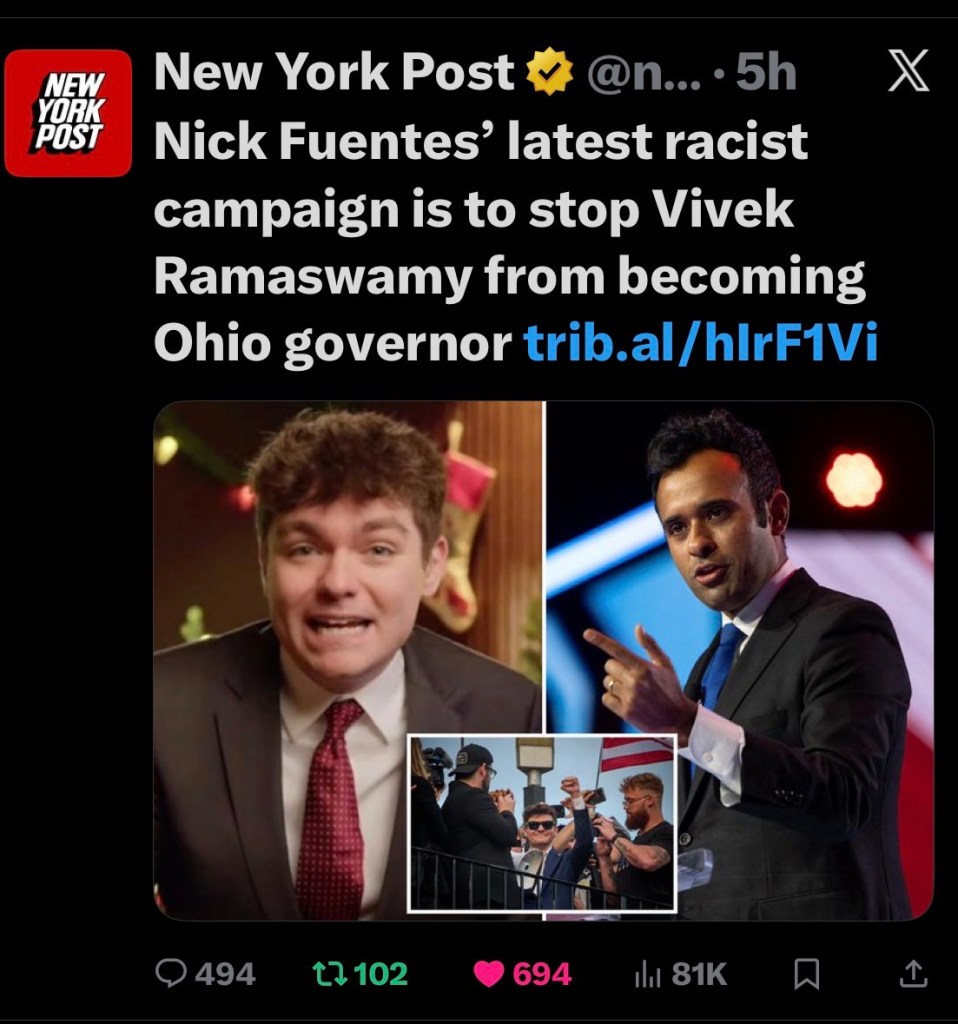
 The Overmanwarrior