

I received another round of texts and calls this week from people at the place where I spent twenty-five years. One of them came from a man I hired years ago, a man from Ghana who later introduced me to his children and, in time, began to treat me as a father figure in America. He is not the only one who has reached out. Several people have asked when I am coming back, whether I can fix what has become a nightmare, and whether there is any path for a return to the way things used to be. I appreciate the respect and the loyalty. It is an honor when someone from another continent decides you are the person he trusts that way. At the same time, the honest answer I need to give him—and everyone else who has written—is straightforward: go back and watch The Lion King. That is the clearest picture of what is happening, and it explains why I have no plans to return.
Twenty-Five Years and the Obligation to Set Everyone Up
I spent years trying to put people in a position where the paychecks would keep coming. That was the practical obligation. Mortgage payments, car notes, and ordinary life do not pause while leadership changes. I did what I could to arrange sustainable arrangements so that people who stayed would continue to receive regular pay for a year, two years, three years, or longer. From my side of the transaction, that was the success criterion. I left because the situation had become miserable for me personally, not because I wanted to abandon anyone. There are many ways to make money in the world; staying in a place that drains you is not required once the basic obligations have been met. I feel that I fulfilled those obligations as thoroughly as the circumstances allowed.
The man who considers me his American father was a leader on the machines and someone with whom the professional relationship grew into something more personal over time. When he told me years ago that God had directed him to come see me, I took that seriously. People of genuine faith do not say such things lightly. The same respect he showed then is present in the way he has reached out now. I value that. I also know that affection and loyalty do not change the structural facts of the place I left.
Scar’s Conspiracy and the Ruined Pride Lands
The Lion King (1994) remains one of the clearest popular stories about what happens when someone schemes for a title he cannot actually carry. Scar, Mufasa’s brother, conspires with the hyenas, engineers a stampede, and kills the king so he can seize the throne. Once he has the position, the Pride Lands deteriorate. The grass dies, the herds leave, and the remaining lions live under scarcity and fear. Scar’s rule is not an improvement; it is a slow collapse. The film makes the point without subtlety: taking the title does not confer the competence, the loyalty, or the capacity to sustain the kingdom. Ambition organized around grievance produces depletion rather than abundance.
That pattern appears in real organizations more often than people like to admit. Someone decides he can do the job better, works in the background to undermine the person currently holding it, and eventually obtains the role. The immediate result is often not improved performance but declining morale, reduced trust, and a workplace that feels worse for the people still inside it. Research on leadership transitions consistently shows measurable drops in engagement, trust, and retention after a change at the top. One global study found that after a reorganization, 88 percent of senior leaders believed the new structure would succeed while only 36 percent of employees agreed; only 22 percent of employees said they received adequate support to adapt. Other data indicate that poorly managed transitions can reduce employee performance by roughly 15 percent and that a substantial share of executive transitions are later judged failures. Communication often falls by about 20 percent in the first months after a CEO change as uncertainty rises. None of this is abstract when the people living it are calling and texting.
The Reality of Leadership Transitions
I have told people who reached out that I did my part. I arranged what I could so that paychecks would continue. Beyond that, I have no capacity or intention to re-enter the situation. I am busy. I am also taking time to recover from years of long hours and physical demand—time that was unavailable while I was responsible for keeping everyone paid. The desire for the former leader to return is understandable. Employees who trusted the previous arrangement naturally hope the person who made the place function will come back and restore it. In the film, Nala and others eventually find Simba and urge him to return. The difference is that Simba does return, confronts Scar, and restores the land. I am not that figure, and I have not left any door open for that role.
There is no Simba waiting to take the kingdom back. The place will continue in its current direction or it will not; that is now outside my control. People who need a regular paycheck can stay and work under the existing conditions. Those who find the conditions intolerable have the same option I exercised: they can leave and find another arrangement. I do not say that lightly. Changing jobs is disruptive. It is also sometimes necessary when the alternative is remaining in a declining environment run by people whose primary qualification was the desire for the title.
Why There Is No Simba Coming Back
I have no plans to return and save the pride from Scar. The years spent trying to set people up were already costly in personal terms. I did that work out of loyalty and a sense of obligation. Repeating it would not be healthy, and I have no desire to reopen that chapter. Greatness, for me, is now located elsewhere. Scar-type figures exist in many organizations; they scheme, obtain the position, and then discover that competence and care for the people under them are not automatically transferred with the title. The remaining employees have to navigate that reality themselves.
I appreciate every message that expresses affection or asks me to come back. It is good to be missed. It is also important to be clear. I fulfilled the practical duty of arranging sustainable pay where I could. I am not available to re-enter the role, and I do not expect that to change. For the man who calls me father in America, and for everyone else who wrote, the clearest reply remains the same: watch The Lion King again. Scar takes the throne through conspiracy. The Pride Lands decline under his rule. Simba eventually returns in the story. In this particular case, that return is not available. The circle of life continues either way, but it continues without me in that particular pride.
Notes
1. The Lion King, directed by Roger Allers and Rob Minkoff (Walt Disney Pictures, 1994). The film’s plot centers on Scar’s conspiracy to murder Mufasa, seize the throne, and the subsequent ecological and social collapse of the Pride Lands under his rule.
2. Standard plot summaries of The Lion King (1994) detail Scar’s alliance with the hyenas, the engineered stampede, the betrayal of Mufasa, and the later return of Simba. See also analyses of Scar as an archetype of toxic or subtractive leadership that obtains power through deception but cannot sustain the conditions that made the kingdom viable.
3. Bain & Company research (reported 2026) on organizational restructuring found large gaps between leader confidence and employee experience; only 22 percent of employees reported receiving sufficient support. Related findings appear in Gallup data on engagement declines after disruptive change and in studies of communication volume after CEO transitions (roughly 20 percent drop in the initial months). McKinsey and other sources have estimated that successful transitions reduce attrition while failed ones can reduce performance by double-digit percentages; estimates of transition failure rates commonly range into the 40 percent range within two years.
4. Leadership literature on succession and toxic leadership frequently uses narrative examples such as Scar to illustrate the difference between obtaining a title and possessing the capacity to lead. See also research on Leader-Member Exchange and engagement drops following top-level change.
Bibliography
Allers, Roger, and Rob Minkoff, dirs. The Lion King. Walt Disney Pictures, 1994.
Bain & Company. Research on organizational restructuring and employee adaptation (reported 2026).
Gallup. State of the Global Workplace reports and related analyses of engagement, change, and leadership levels.
Harvard Business School Working Knowledge. Studies on communication volume and uncertainty following CEO transitions.
McKinsey & Company. Research on executive transitions, retention, and performance outcomes.
Analyses of toxic leadership and narrative archetypes in The Lion King (various academic and popular treatments of Scar as manipulator versus competent steward).
Additional recommended reading: works on succession planning, employee trust after leadership change, and the practical limits of personal loyalty in organizational settings.
Rich Hoffman
More about me
Click Here to Protect Yourself with Second Call Defense https://www.secondcalldefense.org/?affiliate=20707
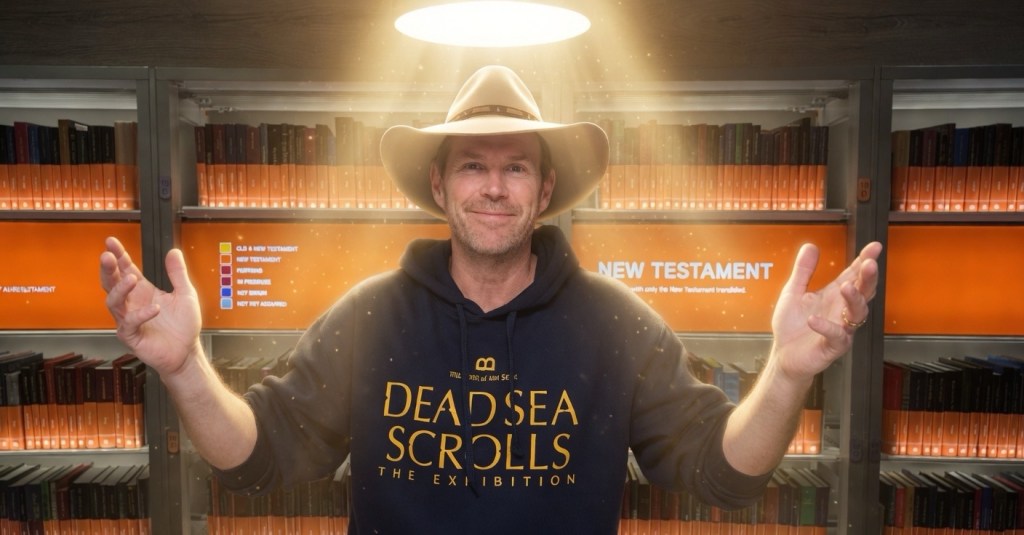
About the Author: Rich Hoffman
Rich Hoffman is an author, political consultant, and strategic advisor based in Cincinnati, Ohio, and the creator of The Politics of Heaven—a unique framework that connects biblical theology, ancient history, and modern power structures to explain how moral alignment and spiritual forces shape global events. Blending real-world political experience with deep research into archaeology, UFO phenomena, and suppressed historical narratives, Hoffman offers compelling commentary on topics ranging from ancient civilizations and the Dead Sea Scrolls to modern populist movements, paranormal continuity, and leadership strategy in chaotic environments. As the author of The Gunfighter’s Guide to Business and the forthcoming Politics of Heaven, he brings a grounded yet provocative voice to media discussions, supported by firsthand experiences and a cross-disciplinary approach that bridges science, history, and theology. For interviews, speaking engagements, or expert analysis, visit richhoffmanbooks.com or contact directly via phone at 513-307-5815 or email at rhoffman@richhoffmanbooks.com. If you’ve seen the movie, Disclosure Day and want to talk about it and the implications of Presidnet Trump’s UAP disclosures, let me know and we can bring some color to your coverage. https://richhoffmanbooks.com/media-inquiries-broadcast-topics-and-contact-info/?frame-nonce=ad51e7ecba I do have a firsthand UFO encounter to discuss.

