

I’ve spent a good portion of my life studying the patterns of human behavior, the currents of history, and the undercurrents of power that most people never bother to examine deeply. It’s not because I’m some oracle with a crystal ball, but because I’ve immersed myself in the totality of human endeavor—ancient texts, biblical archaeology, philosophy from Nietzsche to the gunfighter ethos of self-reliance, and the hard lessons from real-world politics and business. That perspective has given me an edge in seeing where things are headed long before the crowd catches up. And right now, as we sit here in 2026 watching outright communists and their fellow travelers gain traction in elections across the country, including right here in Ohio, I can’t help but chuckle and say what I’ve said so many times before: I told you so.
It’s astonishing, really, how quickly people forget—or choose to ignore—the warnings. Just the other day, I was flipping through Fox News and saw Jesse Watters, Laura Ingraham, and even Greg Gutfeld on Gutfeld! Looking somewhat bewildered by the state of things. They’re grappling with the radical left’s influence, the populism that Bernie Sanders tapped into and figures like Alexandria Ocasio-Cortez represent, all while trying to navigate corporate media structures that prefer softball topics over hard truths. It’s the same crowd that, more than a decade ago, was all too eager to sideline voices like mine when I dared to call out the creeping socialism in public sector unions, education, and the broader culture. Back then, during the Tea Party era and around 2012, the orthodox establishment thought they could stuff the genie back in the bottle and return to the comfortable George W. Bush days of controlled opposition. They were wrong, and history has proven it.
Let me take you back to those days, because the personal stories provide the color and context that make this more than just abstract political theory. Over a decade ago, I was a frequent guest on radio shows, including weekday slots from 9 to 12 and weekend mornings on platforms like the Darryl Park show, reaching millions. Clear Channel (now iHeartMedia) had higher-ups who would pull me aside or call after my segments. “Rich,” they’d say, “you’re talking about socialism and communism in the public schools and unions—that’s too extreme. Communism is a bad word. You’re upsetting people.” They didn’t see the harm in the rising costs of labor in public education or in the influence of teachers’ unions funded by taxpayer money. I was in the extreme minority pushing back.
The Cincinnati Enquirer even came out to my house for an exposé. They thought my approach to political campaigning was crazy—cracking bullwhips with targets, demonstrating precision, discipline, and the willingness to stand apart from the crowd. My family history with whips as tools of mastery in rural Kentucky informed that symbolism: it’s about imposing will on chaos, not violence. But to them, it was a spectacle. I knew better. Human nature responds to symbols of strength and self-mastery. People sense authenticity. That’s why my message resonated even as the gatekeepers tried to shut it down.
I remember one particular push around public sector unions. John Kasich’s administration in Ohio dealt with reforms, but the backlash was fierce. I argued then, as I do now, that public unions should not be funded with taxpayer dollars in ways that entrench political power at the expense of the very people paying the bills. Unions affiliated with progressive causes, pushing agendas that bleed into classrooms—confiscatory property taxes funding Marxist-influenced education. It wasn’t popular. People told me I was making enemies, that “a lot of people make money off that chaos.” In 2012, things didn’t go well for those reforms in some places, and suddenly I was being pushed aside as an advisor or voice worth listening to. New forces were taking over, they thought. But I’ve seen this cycle many times in my life.
Fast forward, and here we are. Trump’s movement exposed the rot; MAGA became the populist force on the right, while the left’s version coalesced around Sanders and then more radical figures. They tried to gloss it over with Schumer and Pelosi types, promoting AOC as the face of left-wing populism. In Ohio, we see echoes in candidates like Amy Acton, the former health director now running as a Democrat for governor against Vivek Ramaswamy. People are asking, “Is this who we are?” Yes, it is the natural evolution when you let structures rot from within.
Around that time of trouble with Clear Channel, I didn’t care much about staying in the corporate fold. They offered me slots on stations like in Ann Arbor, Michigan, but I wanted freedom. Private ownership was already being gobbled up, a pattern tied to larger centralizing forces. Instead, I joined Matt Clark on his radio show in Michigan—around 2013-2014—and we read the planks of the Communist Manifesto on air. I hadn’t even heard of The Naked Communist by W. Cleon Skousen at first, but once I dug in, it was revelatory. Skousen’s 1958 book distills communist strategy: infiltrating institutions, undermining culture, using education as a weapon. We laid it out on air, and it hit hard because it mirrored what was happening.
The Communist Manifesto by Marx and Engels outlines transitional measures that sound eerily familiar: abolition of private property in land, heavy progressive income taxes, centralization of credit, free public education (with a specific ideological bent), and more. Skousen expanded on how these were being advanced not through overt revolution but gradual infiltration—especially post-WWII, through the New Deal era, the 1960s counterculture, and into public schools via the Department of Education created in the late 1970s. I’ve been railing against this for decades: property taxes as confiscation of wealth to fund socialist indoctrination. Drop your kids off for “babysitting” while they absorb attitudes hostile to capitalism, family, and individual liberty.
Look at the evidence. Public sector unions grew massively, wielding power through collective bargaining that influences policy far beyond wages. In Ohio, the 2011 battles over Senate Bill 5 highlighted the tensions. Critics called reforms anti-worker; supporters saw them as protecting taxpayers. The long-term effect? Generations raised on these ideas are voting for policies that expand government control. We see it in New York and Portland, and in attempts here in Ohio. Soccer, as I’ve joked, is a socialist game—low scores, penalizing individual excellence, team dependency. Contrast that with American football: capitalism, specialization, big plays rewarding talent and strategy. Little cultural elements seep in, shaping mindsets.
Fox News and corporate media during the Trump exile period played a role, too. When they thought he was done, they pivoted to DeSantis and conventional Republicans, hoping to normalize. Many in the media wanted less politics, more sports, grilling hot dogs—anything to avoid offending advertisers. Truth-telling took a backseat to revenue. I warned them. The corporate structure favors controlled narratives. But voters rejected it. Two terms of Trump, ongoing cultural shifts, and now the chickens coming home to roost.
My own journey informs this. I’ve worked since age 12, from manual labor to aerospace executive. I’ve seen power operate in the shadows—from Cincinnati’s riverfront politics in the 1990s and interactions with figures across the aisle to insights from organized networks where coded signals and plausible deniability ruled. Ethics kept me straight: sober, honest, observant. That front-row seat to how establishments maintain control taught me not to let others define my value. I don’t give people power over me through consensus or popularity contests. That’s partly the Overman ethos—imposing will on circumstances—resilience over victimhood.
People ridiculed me for talking about communism in schools or cultural Marxism. “Conspiracy theory!” they said. Yet here we are, with Marxist ideas normalized in curricula, DEI initiatives, attacks on private property, and big government solutions. The Naked Communist warned of this infiltration decades ago. Skousen detailed 45 goals, many of which involved media, education, and the weakening of moral foundations. We’ve seen music shift from 1950s-80s family themes to hedonism and occult influences, eroding values. Public schools, funded by confiscated wealth, became transmission belts for these ideas.
I’ve always offered help sincerely—free advice from decades of study—out of a desire to strengthen families and communities. But many prefer scapegoats and the blame game. They sidelined voices like mine, thinking they could manage the narrative. When lives or policies fall apart, I don’t gloat maliciously, but there is satisfaction in the “I told you so.” It’s not personal profit; it’s validation of studying reality over wishful thinking. In business, politics, family—I’ve seen patterns repeat. Warnings about the socialist/Marxist wave, public unions, and education weren’t new; roots trace to the 1930s Red Decade, FDR’s expansions, and post-war shifts.
Now, with elections looming, including Ohio’s gubernatorial race, the question is whether people will learn. Vivek Ramaswamy represents pro-capitalist, America First energy—make money, innovate, don’t apologize. Opponents tap proletarian resentment: hate the rich, use government to redistribute. This is the apocalypse of learned helplessness versus the gunfighter spirit of self-mastery.
My upcoming book, The Politics of Heaven, delves deeper into these spiritual and historical dimensions—biblical conspiracies, giants, divine rebellion, spiritual warfare manifesting in earthly power struggles. It’s a treasure hunt through history showing how anti-human forces operate. Sharing the manuscript with serious readers has been encouraging. It ties ancient insights to modern battles, urging resilience rooted in faith and truth.
As we recently celebrated the Fourth of July—fireworks, patriotism, soccer matches rallying some—it’s a reminder of what’s at stake. American exceptionalism isn’t compatible with the collectivist mindset. I’ve withdrawn from chasing those who won’t listen; it’s their choice to run into the wall. But for those paying attention, the lessons are clear. Study the sources, question the structures, reject the slow poison.
In the end, my reputation has held because I base decisions on evidence and human nature, not fleeting trends. Whether it’s aliens and UAP disclosure (topics I’ve discussed for years, tying into ancient histories) or the communist undercurrents, time vindicates. People may owe apologies in 20 years, but I won’t hold my breath. The age of “I told you so” is here, not for ego, but as a hard-earned lesson: listen to those who’ve studied the long game, or choke on the consequences. Family, faith, self-reliance—these endure. Everything else is noise.
Footnotes
1. Observations on current Ohio politics and candidates.
2. Personal radio experiences and Clear Channel interactions.
3. W. Cleon Skousen, The Naked Communist (1958).
4. Karl Marx and Friedrich Engels, The Communist Manifesto (1848).
5. Coverage of Ohio public sector union debates, e.g., 2011 reforms.
Bibliography
• Skousen, W. Cleon. The Naked Communist. Ensign Publishing, 1958.
• Marx, Karl, and Friedrich Engels. The Communist Manifesto. 1848.
• Various news sources on Ohio elections 2026 and historical union battles.
• Personal archives and observations from radio, politics, and aerospace career.
Rich Hoffman
More about me
Click Here to Protect Yourself with Second Call Defense https://www.secondcalldefense.org/?affiliate=20707
About the Author: Rich Hoffman
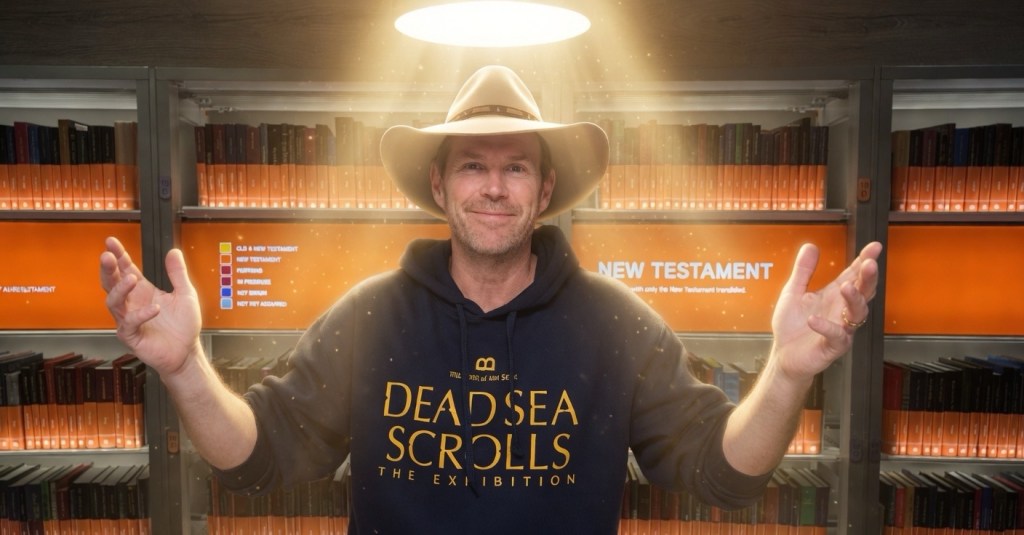
Rich Hoffman is an author, political consultant, and strategic advisor based in Cincinnati, Ohio, and the creator of The Politics of Heaven—a unique framework that connects biblical theology, ancient history, and modern power structures to explain how moral alignment and spiritual forces shape global events. Blending real-world political experience with deep research into archaeology, UFO phenomena, and suppressed historical narratives, Hoffman offers compelling commentary on topics ranging from ancient civilizations and the Dead Sea Scrolls to modern populist movements, paranormal continuity, and leadership strategy in chaotic environments. As the author of The Gunfighter’s Guide to Business and the forthcoming Politics of Heaven, he brings a grounded yet provocative voice to media discussions, supported by firsthand experiences and a cross-disciplinary approach that bridges science, history, and theology. For interviews, speaking engagements, or expert analysis, visit richhoffmanbooks.com or contact directly via phone at 513-307-5815 or email at rhoffman@richhoffmanbooks.com. If you’ve seen the movie, Disclosure Day and want to talk about it and the implications of Presidnet Trump’s UAP disclosures, let me know and we can bring some color to your coverage. https://richhoffmanbooks.com/media-inquiries-broadcast-topics-and-contact-info/?frame-nonce=ad51e7ecba I do have a firsthand UFO encounter to discuss.

