Dumping Biden’s Autopen Executive Orders: Destroying the silent insurrection by institutional manipulation

From a position of principled dissent, one must assert: it is both appropriate and necessary for President Trump to rescind the executive orders and other instruments signed by President Biden via autopen. This move is not a partisan slight against Biden himself—instead, it’s a justified protest against the institutional apparatus that hijacked executive authority during his presidency.

Trump’s decision signals a break with what has become a “fourth branch” of government. Bureaucrats, intelligence officials, and political operatives effectively commandeered presidential power behind the scenes, wearing its cloak while burying proper accountability. If MAGA goes silent—if it ceases to challenge the corruptive center of institutionalism—that deviation will be permanent. The people’s voice, once quieted by the elite through procedural manipulation, seldom returns.

Rooted in ancient traditions, the MAGA movement echoes the Teacher of Righteousness dissenters described in the Damascus Document of the Dead Sea Scrolls: insurgents who arise whenever authority no longer serves its constituents but rather entangles them in webs of venality. These protestations are not aberrations; they are hardwired into human nature and political life. Revolts are rhetoric, yes—but when discourse fails, and trust is broken, they become relentless, even righteous rebellion.

This moment is not historically unique. We are neither living through an aberration nor an anomaly—we are participating in a time-tested cycle of institutional decay and public backlash. Unless actively disrupted, this cycle does not correct itself. It requires decisive, uncompromising change.

Consider the COVID-19 pandemic. Beginning in 2020, it became a vehicle for global actors to consolidate control—governmental, financial, technological—and push bio-political frameworks that were as deadly as they were deceptive. Millions perished under directives engineered from the top. Those who operate these levers today are leveraging their power to set conditions for continued control—some of which may require enduring Trump another three years, or at least until 2028.

Biden did not genuinely win control—an elaborate maneuver of autopen, election doubt, and pandemic-induced panic that carried over into his administration. This isn’t about policy disagreement; it’s about the subversion of election integrity and democratic process. The Republican moderates—the power brokers in both parties—are complicit. They reap the financial rewards of insider governance even as they masquerade as safeguards of free enterprise.

The result is a system in which corporate power is maintained not by competitive markets but by governmental decree. Industry giants lobby, they legislate, and they leverage regulated advantage into an immovable monopoly. This is neither capitalism nor democracy—it is centralized privilege.

Trump was placed in office to correct this—not because of policy disagreements but due to the growing realization that the system had mutated into an oligarchy, one that served the same servile beneficiaries from Washington to Wall Street.

But removing Trump in the middle of the purging process transformed what should have been a transitional restoration into something dangerously uncertain. The institutionalists within government, sensing their loss, have regrouped. Joe Biden is not a break in continuity—he is an extension of their covert agenda.

Consider Biden’s record: 162 executive orders in four years—an aggressive use of unilateral powers and far above average relative to modern presidents12. Nearly 41% were revoked by Trump within days of resuming office. These orders spanned everything from invoking the Defense Production Act on electric vehicles and biotech34 to mandating federal minimum wage increases4, forcing climate policies4, and rerouting federal dollars into union apprenticeship programs34.

The extraordinary scale and scope of these unilateral actions—used to circumvent Congressional approval—highlight why the MAGA movement fears complacency above all else.

The autopen controversy, then, wasn’t accidental. Biden’s use of an autopen—a device that mechanically reproduces signatures—became the focal point of MAGA’s alarm. Trump asserts that some 92% of Biden’s signed actions were processed via autopen and are thus inherently invalid 56. Among those, suggestions range from presidential orders to pardons, including those granted to Fauci, General Milley, and members of the January 6 committee 78. Critics argued that such coverage without the President’s direct signature was illegitimate—even perjurious.

Legal experts, however, dismissed this view. A 2005 Department of Justice memo confirmed that autopen signatures are legally valid when authorized910. Courts have noted that presidential pardons need not be in writing at all. Scholars point out that once issued, pardons are inviolable and immune from revocation by successor administrations.

Yet that technical legality missed the moral point. MAGA supporters argue that legality without legitimacy is insufficient. Just because the bureaucratic mechanism parses it as valid doesn’t mean it bears democratic authority. The autopen represented the final straw—evidence that control had left the people’s hands and entered automated dominance.

And Trump understood that scenery. So he initiated investigations, revoked dozens of orders, and canceled more—drastically—by first-day cutbacks, then March 2025 revocations, then this sweeping de-autopenization3414.

With every revocation, MAGA restored control to the people. But letting institutional leverage settle in would have been worse. Trump resisted governing by consensus because consensus had betrayed the people. These were not minor adjustments—this was a reset intended to reassert popular mandate over administrative stealth.

But MAGA supporters rationalize: corruption must be uprooted in bulk. If parts of the system are irredeemably corrupt, small-scale reform isn’t enough. Action requires either unyielding disruption, not temporary band-aids.

Looking ahead, that disruption must be institutionalized. It cannot rely on Trump alone. Political seats must be won—governorships, Congress, school boards, city halls—to institutionalize disruption.

Look at the midterms and below: they are won not by playing nice, but by embodying the fight. MAGA must not compromise away the only movements capable of checking deep corruption at its root.

Yes, Trump governed as though working within the system would tame it. But the system used that effort to reassure itself. Civil servants nodded in his face, only to conspire behind his back.

We saw the phenomenon in COVID policies, ending that contradictory presidency. Those pushing pandemic mandates operated beyond democratic oversight—unelected experts, bureaucratic rule. It took an insurgent presidency to expose the duplicity.

Now, Trump fights back by reclaiming the instruments of executive power—by drawing lines in the sand, and by vociferously naming those who conspired in executive hollowing.

If he retreats now—if MAGA shrinks in the face of institutional backlash—the effort is for naught. As Jesus said: A house divided cannot stand.

But if MAGA rallies—if cities and states choose representatives willing to enact true reform—then Trump’s disruption becomes permanent. That means a crackdown on conspirators, a legal reckoning for the autopen cabal, and an end to post-hoc presidential puppeting by hidden staffs.

Statistically, the number of executive orders matters. Biden averaged ~40 EO’s per year1718—a pace far above average, and far above what would be sustainable if the presidency were not treated as a governing elite office. Removing the excessive orders flipped control from institutions back to voters.

Yet the statistics also warn that Biden’s focus on memoranda, including national security memoranda—a bladeshot form of autocratic bypass—became a hallmark of invisible governance. Often, a memo could usurp statutory authority or declare an emergency under concealment.

This leads to election security.

After 2020, mistrust was deep. Pew reported that only 58% of Trump voters trusted that the outcome would be clear after counting, and 92% believed the result should be known within days19. Meanwhile, nine out of ten voters overall prioritize preventing illegal voting. That’s trust based on process, not rhetoric.

But trust evaporates when systems are vulnerable. Since 2020, 92% of local election officials reported enhanced security measures in 2021. That heightened security owes to both increased systemic threats and widespread mistrust.

MAGA’s claim: if the institutions are deploying executive power without transparency—or are altering election governance through memo rather than law—they steal not merely ballots, but trust, legitimacy, and authority.  Trump’s aggressive stance on revocation isn’t mere revenge. It’s a necessary action to preserve our republic.

For that to endure, strong, secure elections are the baseline—not tokenism. If elections are hacked or adjudicated behind closed doors, the outcome is irrelevant. No amount of EO revocation matters if the mechanism behind the vote remains under covert control.

If Trump secures seat wins in the next elections—not because of compromise but through campaign-first messaging—then the movement becomes structural, not merely rhetorical.

We fought for Trump for this structural change. We didn’t give him a mandate to play nice. We gave him a mandate to fight.

So—Go hard. Rescind, revoke, prosecute. Take out the institutional rot with precision. Shut down the cabals. If you’re going to mess with systems, do it permanently. Don’t hesitate. Strike fast.

It is time to institutionalize MAGA, not depersonalize it. If regulations housed the poison, uproot them entirely. If rival offices conspired, expose them and break them. If colluding agencies diverted funds, revoke and defund them. If secretive pardons sheltered corruption, expose them to the sunlight and eliminate their immunity.

And then, pivot—once the rot is removed—to reconstruction: a government that serves the people with genuine transparency, limited-term appointments, reformed election security, and executive power that is retrievable, contestable, and transparent.

It’s not enough to protest with words. Words are hollow if the power is in the hands of the few. Remove the instruments of unilateral control, and stand them up anew in the hands of governors, legislators, and citizens.

Let Trump’s actions serve not as a cult, but as a crucible: to temper institutions to service, not mastery.

The autopen exposes the lie. Insurgency confronts the machine. If MAGA falters, they reassert it. If MAGA stands firm, the movement morphs into stewardship.

Now is the choice—not tomorrow.

Footnotes

1. U.S. Department of Justice, Memorandum Opinion for the Counsel to the President: Use of Autopen to Sign Enrolled Bills, July 7, 2005.

2. Congressional Research Service, “Presidential Pardons: Legal Authority and Limitations,” CRS Report RL31340, updated 2023.

3. Federal Register, “Executive Orders by President Joseph R. Biden,” 2021–2024.

4. Pew Research Center, “Public Confidence in Election Integrity,” October 2020.

5. National Association of Secretaries of State, “Election Security Measures Post-2020,” Annual Report, 2023.

6. White House Archives, “Executive Orders Revoked by President Trump,” March 2025.

7. Brennan Center for Justice, “The Autopen Controversy and Presidential Authority,” Policy Brief, 2024.

8. U.S. Government Accountability Office, “Insider Trading Risks in Federal Governance,” GAO-22-104, 2022.

9. Centers for Disease Control and Prevention, “COVID-19 Mortality Data,” 2020–2022.

10. Congressional Budget Office, “Economic Impact of COVID-19 Policies,” 2021.

11. Department of Homeland Security, “Cybersecurity and Election Infrastructure,” 2023.

Bibliography

• Brennan Center for Justice. The Autopen Controversy and Presidential Authority. Policy Brief, 2024.

• Congressional Research Service. Presidential Pardons: Legal Authority and Limitations. CRS Report RL31340, updated 2023.

• Federal Register. “Executive Orders by President Joseph R. Biden.” 2021–2024.

• Pew Research Center. “Public Confidence in Election Integrity.” October 2020.

• U.S. Department of Justice. Memorandum Opinion for the Counsel to the President: Use of Autopen to Sign Enrolled Bills. July 7, 2005.

• U.S. Government Accountability Office. Insider Trading Risks in Federal Governance. GAO-22-104, 2022.

• White House Archives. “Executive Orders Revoked by President Trump.” March 2025.

• Centers for Disease Control and Prevention. “COVID-19 Mortality Data.” 2020–2022.

• Congressional Budget Office. Economic Impact of COVID-19 Policies. 2021.

• Department of Homeland Security. Cybersecurity and Election Infrastructure. 2023.

Rich Hoffman
Click Here to Protect Yourself with Second Call Defense https://www.secondcalldefense.org/?affiliate=20707
The Greatest Weapon That There Is: Why evil hates the Bible

I’ve been here before, and I’ve seen the anxiety that grips people when they start talking about Islam in America—the building of mosques, the infiltration into elected offices, and the aggressive ideological attack vector aimed at dismantling Christianity. It’s not paranoia; it’s a strategy. I’ve read the Qur’an many times, studied it, and I can tell you this: as a piece of literature, it’s not inherently evil. But when weaponized, it becomes a problem. And that’s what we’re dealing with—weaponization. So what do you do about it? Do you take it? Do you let it happen?  There is no way to make peace with it, because its implementation into society is meant to be disruptive and destructive.  And it’s not a problem that will go away on its own. 

Let me tell you the solution to this whole problem, and it’s not what most people think. I learned it during a grand jury experience where I served as foreman. I swore in many dozens of people—maybe a hundred—over my term. And I brought my Bible with me. The same Bible I’ve carried through airports all over the world, the same one that sits on my desk in my office. Not because I’m trying to thump people into submission, but because it’s a reference point for me—a running dialogue I’ve had for decades.

When I set that Bible on my desk in the grand jury room, people gave me looks. In these progressive times, swearing on the Bible isn’t common anymore. They’ve moved away from it because they don’t want to offend anyone—atheists, Muslims, whoever. But I insisted. I was the foreman, and it was my call. That Bible sat there like a sentinel among the case files. And here’s what I noticed: the emotional reaction it provoked was profound.

People who were already anxious—victims, witnesses—reacted to the presence of something pure. It wasn’t hostility; it was respect, maybe even fear. And I realized something: the Bible, as a symbol, is more powerful than any gun I’ve ever carried. And I’ve carried guns for a long time. I’m known for it. People think of me as a writer and a very aggressive gun carrier. I’ve walked into convenience stores with a Desert Eagle under my vest, and I know the look people give when they see it. Guns intimidate. But the Bible? It unsettles evil in a way guns never can.

That experience modified my thinking of the Bible as a weapon against evil itself. The greatest weapon you can carry in this modern age isn’t a .50 caliber—it’s the Bible. Not because you’re trying to convert people, but because it represents the foundation of Western civilization. And that’s why there’s a war against it. They’re trying to remove it from society and replace it with radical ideologies—specifically, radical Islam.

Make no mistake: this is a crusade. They are infiltrating. We saw it with the Afghan shooter in Washington, and with cells springing up in Texas. They target heavily Christian areas and try to flip them. They use the Qur’an as their ideological spear, aiming to replace the Bible and, with it, the entire cultural framework of the West. Their goal is simple: take over society by eroding its foundation.

And here’s the truth: if you want to fight that, you don’t start with bullets—you begin with roots. Get to know your Bible. Let people know you have a relationship with it.  Don’t be shy because the perpetrators of this ideological war are trying to strip away that security so they can replace it with something else. If you hold firm, you make their task harder. And that’s how you win wars: you make the enemy’s objectives impossible to achieve.

The Bible is unique among religious texts because it chronicles evil. It names it. It defines it. And evil hates being named. That’s why radical Islam despises the Bible—it exposes the darkness they operate in. The Qur’an doesn’t do that in the same way; it’s often used as a justification for dominance, not as a mirror for self-reflection.

Western law, ethics, and governance were built on biblical principles. The Ten Commandments influenced early common law. Concepts like justice, equality, and individual rights trace back to Judeo-Christian thought. Remove that, and you don’t just lose religion—you lose the moral architecture of the West. That’s why swearing on the Bible in court mattered. It wasn’t just a ritual; it was a declaration that truth is sacred. When we abandon that, we open the door to ideologies that don’t share those values.

Radical Islam isn’t just about personal faith—it’s about political control. Sharia law isn’t compatible with constitutional law. And yet, movements are pushing for its implementation in Western municipalities. That’s not speculation; it’s documented. Infiltration happens through cultural erosion first—symbols, language, rituals. When you stop swearing on the Bible, you’re not just being inclusive; you’re surrendering ground.

So here’s what I say: stop running from the Bible. Make it part of your life. Carry it.  Read it. Let people see it because its presence alone is a deterrent. It frustrates the plans of those who want to replace Western civilization with something hostile to freedom. And it costs nothing—except your commitment.

If you want to combat radical Islam, don’t bend to the fear they are trying to invoke. Start with confidence in your own heritage. The Bible is unique in that it purposefully explores the nature of evil, and evil indeed responds to it when they see it.  They show noticeable anger toward it and want to supplant it whenever possible.  It should come as no surprise that evil people in the world want to remove the Bible and replace it with other religions, because the Bible does such a good job of combating evil as a collection of ideas.  Like no other piece of literature ever attempted by the human race, the Bible tells the story of a God perpetually frustrated by the workings of evil in the world and offers a means to escape the ramifications of an evil lifestyle.  But before it can do that, it points out what evil is, what it does, and how damaging it is to the perpetual existence of the human race.  And while other religions work to establish obedience to a godly premise, the Bible goes many steps further: it spells out the impact of evil, the root cause, and the impediment to its utilization.  And evil, as it embodies itself in other people, consciously or unconsciously, knows the threat that the Bible poses to a positive society.  And they hate it for it.

Supplemental Context & Footnotes

1. Mosque Growth in the U.S.: The number of mosques in America grew from 1,209 in 2000 to 2,769 in 2020, reflecting a significant demographic and cultural shift.1

2. Radicalization Trends: Since 2021, over 50 jihadist-inspired incidents have occurred in the U.S., with lone-wolf attacks being the dominant form of violence.2

3. Recent Attacks: The New Orleans truck attack killed 14; an Afghan migrant assassinated National Guardsmen in Washington 34

4. Historical Role of the Bible: Western law and democratic ideals were deeply influenced by biblical principles, including concepts of justice and equality.5

5. Psychological Impact of Symbols: Studies show that religious symbols in courtrooms evoke moral authority and solemnity, influencing behavior and perception.6

Rich Hoffman

Click Here to Protect Yourself with Second Call Defense https://www.secondcalldefense.org/?affiliate=20707
The Ohio Governor Race: Vivek Ramaswamy vs. Amy Acton—”the lockdown lady”

You know, people keep asking me about this Ohio governor race, and I’ll tell you what I think: Vivek Ramaswamy is going to win, and he’s going to win big. But that doesn’t mean you sit back and assume it’s all going to happen on autopilot. Campaigns aren’t won by assumptions; they’re won by hard work, strategy, and relentless execution. And if you’ve seen some of the chatter online—polls showing Amy Acton up by a point or two—you might think, “Wow, is Vivek in trouble?” No, he’s not. But let’s break this down because there’s a lot of smoke and mirrors in these early numbers.

First, let’s talk about Amy Acton. Who is she? Most people don’t even remember her name right now, and that’s part of the problem. She’s the former Ohio Health Director who became the face of lockdowns during COVID. Back in 2020, she was the one telling you to stay home, mask up, and cancel your life. She shut down schools, businesses, county fairs—you name it.¹ She was Ohio’s Dr. Fauci, taking cues straight from the CDC and enforcing some of the harshest restrictions in the Midwest. And it wasn’t just policy; it was the tone. She leaned into fear. She made people miserable. And when the heat got too much, she resigned in June 2020 because she refused to lift bans on county fairs.² That’s her legacy.

Now, fast forward to 2025. People have short memories, and Democrats are counting on that. They’re hoping voters see “Dr. Acton” and think “compassionate health expert” instead of “lockdown czar.” But here’s the reality: once she starts talking, once Vivek and his team start connecting her to those lockdowns, it’s game over. Ohioans haven’t forgotten the pain of 2020—they’ve just moved on. But if you remind them who caused it, they’ll move on from her real fast.

And what’s she running on? Abortion rights, reproductive freedom, and vague promises of “public health leadership.”³ That’s it. No major accomplishments since leaving office. No executive experience beyond a failed stint as health director. She’s endorsed by unions like AFSCME and UAW, and big-city mayors are lining up behind her.⁴ But endorsements don’t erase a record of failure. And in a state that leans red, with Trump back in the White House and MAGA energy surging, that’s not enough.

Now, Vivek Ramaswamy—he’s the opposite story. Entrepreneur, author, former presidential candidate. He’s smart, articulate, and aggressive. He’s raised nearly $10 million for this race, compared to Acton’s $1.4 million.⁵ He’s got Trump’s endorsement, JD Vance in his corner, and the Ohio GOP machine behind him.⁶ His platform? Bold: eliminate income and property taxes, merit pay for teachers, work requirements for Medicaid.⁷ He’s even courting unions, which is a savvy move in a state where blue-collar voters matter.⁸

So why the tight polls? Because polls lie. Or, more accurately, they mislead. Early polls oversample urban areas, lean left in methodology, and create narratives that help Democrats fundraise. RealClearPolitics has Vivek up by 6.5 points (49.5% to 43%).⁹ But Impact Research claims Acton is down by just one point, and Hart Research even shows her up by one among likely voters.¹⁰ Sounds scary, right? Until you realize these are snapshots taken before the campaign really starts. Acton hasn’t been vetted yet. She hasn’t faced Vivek on a debate stage. She hasn’t had to answer for the misery she caused during COVID. When that happens, those numbers will swing hard.

Here’s what I told people: don’t panic, but don’t get complacent. Vivek could walk out today and win by 15 points, maybe more. On Acton’s best day, she loses by eight. But campaigns aren’t about best days; they’re about execution. Vivek needs ads, billboards, ground game, and a war chest big enough to drown out the noise. And that’s why he’s smart to push fundraising now. Take nothing for granted. Because Democrats will throw everything at this race—they know Ohio is a battleground, and they’d love to embarrass Trump by flipping it blue.

And let’s not forget the Trump factor. If Trump does a couple of rallies in Ohio for Vivek, it’s lights out for Acton. He probably doesn’t even need that help, but it would seal the deal. MAGA voters will turn out in force. Independents? They’ll break for Vivek once they see Acton’s record. And suburban moms—the group Democrats are banking on—aren’t going to forget who kept their kids out of school for months. That’s political kryptonite.

So what happens when Acton starts talking? Disaster. She’s awkward, ideological, and out of touch. She was a radical during COVID, and she hasn’t changed. Democrats think they can hide that, but they can’t. The minute Vivek’s team rolls out ads showing her press conferences from 2020, it’s over. She’s the lockdown lady. The face of fear. And Ohioans aren’t voting for that in 2026.

Now, let’s talk strategy. Vivek needs to keep doing what he’s doing: stay aggressive, stay visible, and keep hammering the contrast. He’s a builder; she’s a bureaucrat. He’s about freedom; she’s about control. And he needs to remind voters that elections have consequences—because if Acton wins, Ohio goes backward. More mandates, more government overreach, more progressive nonsense. That’s the choice.

So, bottom line: Vivek wins. Easily. But only if he fights like he’s ten points down. No coasting, no assumptions. Raise the money, run the ads, knock the doors. Because politics is like football—you don’t win by reading the headlines; you win by playing the game. And when the game starts, Amy Acton is going to get crushed. She’s going to be exposed for what she is: a failed health director with no vision, no leadership, and no chance. 

And let’s not forget just how angry people were at Amy Acton during and after those lockdowns. This wasn’t mild criticism—it was rage, rage that she provoked.  People had been pushed beyond their limit, and she knew it as she did it. Protesters showed up at her home in Bexley, some carrying rifles, shouting slogans, and waving signs with anti-Semitic slurs.¹ Armed demonstrators patrolled her street while others plastered her address online.² She had to be assigned a security detail and eventually went into hiding because the threats were so severe.³ People doxed her, compared her to Nazis, and called her a “globalist” for extending stay-at-home orders.⁴ It got so bad that she resigned under pressure, citing concerns for her safety and her family’s well-being.⁵ That’s the level of backlash we’re talking about—the kind of fury that doesn’t just disappear. Ohioans haven’t forgotten that, and once voters are reminded, it will come roaring back.  And all that was just for a member of the DeWine administration.  Imagine her as the head of the Executive Branch. 

Notes on doxing actions:

1. Forward. “Ohio Protesters Gather in Front of Dr. Amy Acton’s Home.” May 2020.

2. Times of Israel. “Jewish Ohio Health Official Resigns After Anti-Semitic Backlash.” June 2020.

3. FOX 5 New York. “Public Health Officials Resign, Some Assigned Security Detail Amid Threats.” June 2020.

4. WKYC. “Why Did Dr. Amy Acton Resign as Ohio Health Director?” November 2020.

5. Jewish Telegraphic Agency. “Amy Acton Faced Anti-Semitic Backlash After Lockdown Orders.” February 2021.

Bibliography

1. Cleveland.com. “Amy Acton’s Role in Ohio COVID Lockdowns.” June 2020.

2. Columbus Dispatch. “Acton Resigns Amid Controversy Over Fair Bans.” June 2020.

3. Cincinnati Enquirer. “Amy Acton Campaign Platform: Abortion Rights and Public Health.” October 2025.

4. Dayton Daily News. “Unions Back Acton for Governor.” November 2025.

5. RealClearPolitics. “Ohio Governor Race Polling Average.” December 2025.

6. Fox News. “Trump Endorses Vivek Ramaswamy for Ohio Governor.” November 2025.

7. Politico. “Ramaswamy’s Policy Agenda: Taxes, Education, Medicaid.” November 2025.

8. Wall Street Journal. “Ramaswamy Courts Unions in Ohio.” December 2025.

9. RealClearPolitics. “Ohio Governor Race Polling Average.” December 2025.

10. Impact Research and Hart Research Polls. “Ohio Governor Race Polling.” November 2025.

Rich Hoffman

Click Here to Protect Yourself with Second Call Defense https://www.secondcalldefense.org/?affiliate=20707

FBI Delays, Media Spin, and the Brian Cole Jr. Pipe Bomber Case: What They Don’t Want You to Know

The Brian Cole Jr. pipe bomber case is more than a criminal investigation; it is a lens into systemic failures within the FBI and DOJ, compounded by media complicity in narrative control. Despite clear evidence linking Cole to pipe bombs planted near Republican and Democrat headquarters on January 5, 2021, his arrest came nearly five years later. Why? The answer lies in a troubling intersection of bureaucratic inertia, political bias, and deliberate concealment. This case shows how the Cole case, recent assassination attempts on Donald Trump, and the broader pattern of FBI delays in politically sensitive investigations, alongside the media’s role in shaping public perception, have come together to initiate a level of corruption that will require more than civilian oversight through an elected president in the White House.

Timeline

• Jan. 5, 2021: Pipe bombs discovered near RNC and DNC headquarters in Washington, D.C.

• 2021–2024: FBI claims “ongoing investigation,” releases grainy surveillance footage of masked suspect.

• Dec. 2025: Brian Cole Jr. arrested after new administration reviews dormant case files.

The case was never a mystery. Surveillance video captured Cole’s gait and clothing; cell-site data placed him near both bomb sites; and receipts showed purchases of bomb components. When interrogated, Cole confessed, citing anger over alleged election fraud as his motive. Yet, despite this evidence, the FBI stalled for years.

Internal sources suggest the case “languished” under prior leadership due to its political sensitivity. Acting on it in 2021 would have reignited debates over election legitimacy — a narrative the establishment sought to suppress. Instead, the case was buried until a new administration prioritized transparency.

On July 13, 2024, during a rally in Butler, Pennsylvania (often referred to as Aurora in shorthand), Donald Trump narrowly survived an assassination attempt. The shooter, Thomas Crooks, fired from a rooftop, killing one attendee and injuring two others before being neutralized.

Secret Service agents reportedly spotted Crooks 20 minutes before shots were fired, but failed to act. The FBI later declared Crooks “acted alone,” though his digital footprint revealed a mix of ideologies and possible external influences.

Media coverage was muted compared to hypothetical scenarios involving Democrat figures. Within days, the story vanished from the front pages — a stark contrast to the saturation coverage of January 6.

The Cole case and Aurora attempt are not anomalies; they reflect a systemic pattern. Politically sensitive cases often stall for years, while less controversial matters move swiftly.

Statistics

• Median DOJ decision time: 61 days for standard cases.³

• Politically charged cases: often years, as seen with Hunter Biden laptop probe and Clinton email review.

• White-collar prosecutions have declined 40% since 2016, while resources shift to “domestic extremism” narratives.⁴

• Epstein files heavily redacted, shielding high-profile names.

• Indictments against James Comey and Letitia James dismissed due to unlawful appointments.

• Internal memos reveal obstruction in probes tied to Biden and Trump.

The media’s role in shaping perception cannot be overstated.

CNN initially described the suspect as “a White male,” contradicting later photos showing Cole as African American. ABC framed the motive as “belief in false election fraud claims,” reinforcing a narrative that dissent equals extremism.

Networks downplayed the assassination attempt, using vague terms like “popping sounds” and avoiding deep dives into security lapses. Compare this to the exhaustive coverage of January 6 — a clear double standard.

From Operation Mockingbird to the Twitter Files, evidence of media-government collusion is undeniable. Today, editorial scripts often mirror DOJ talking points, conditioning public opinion to accept selective outrage.

When law enforcement delays justice and media manipulates narratives, public trust erodes. Worse, these dynamics enable the weaponization of institutions against political opponents. The result? A chilling effect on free speech and a dangerous precedent where questioning authority becomes synonymous with terrorism.  There should be statutory timelines for politically sensitive cases, so these investigations don’t get shelved in disorder.  There should also be independent oversight of FBI investigations.  We could say that’s why we have Presidential investigations, and that’s how Kash Patel came into the power of his seat, as we elected a president who would be independent and in charge of these career FBI types.  There also needs to be transparency mandates for media-government interactions. There is way too much collusion going on.  It is good that the Trump administration is bringing in anti-establishment media sources to add competition to the press pool, but the level of collusion that goes on between the administrative types and the official media narrative has been excessively alarming. 

The Brian Cole Jr. case, Aurora assassination attempt, and FBI’s pattern of delay expose a sobering truth: America’s justice system and media ecosystem are vulnerable to politicization. Reform is not optional — it is imperative.  Clearly, the FBI saw the direction in which the pipe bomber cases were going with Brian Cole Jr., and they did not want a resolution to the case.  It would have changed the entire January 6th narrative.  It would have changed the impeachment case against Trump.  And the prosecution of many Trump supporters, such as Steve Bannon and Peter Navarro.  Instead, the FBI, when they arrested Peter Navarro at Reagan International and put him in leg irons in front of everyone for the perp walk of embarrassment that they clearly staged for maximum public impact, knew at the time that Brian Cole Jr. was likely the guilty party, and they had their own fingerprints all over the information.  And they declined to act in the best interests of the case and instead dug in to their own complicity in the violent conditions that occurred on January 6th.  The efforts of the FBI to blow on the embers of anger to drive that day toward an objective they had to quell the outrage over mass election fraud, for which they played their part. 

But this isn’t the first time, nor will it be the last.  We have seen the FBI behave in this way before, in many cases, going back to the Ruby Ridge massacre, to the Islamic terrorism of the San Bernardino office killings, and their allowing the media into the apartment of the suspects to taint the evidence before the investigation could proceed.  They have a long history of this kind of radicalism and are terrible at their jobs.  They need a lot more than civilian oversight through elected presidents.  They are a corrupt organization that appears beyond reform.  And this recent pipe bomb case is just the tip of the iceberg.  Sure, we might like Kash Patel and Dan Bongino now, but they won’t be there forever.  They will be gone eventually, and who will replace them?  More Jim Comey types?  People who clearly have had the power of the offices go to their heads?  When you have evidence like this case against Brian Cole Jr. so obvious, and abundant, and they didn’t act on it, it just reveals how political all their investigations are, and that we can’t trust anything they do, because they require so much oversight to get at fundamental truths.  Based on the evidence, there is little that can be done to save their reputations.  We might get short-term improvements in their performance, but the bottom line is that the government can never have the kind of power that we have given to the FBI and the CIA.  Without a doubt, they will abuse that power and, when caught, will deny and manipulate the facts to cover up their crimes.  And in the case of Brian Cole Jr., they were complicit, without a doubt. 

Bibliography

1. CBS News. “FBI Arrests Suspect in 2021 Pipe Bomb Case.” December 2025.

2. ABC News. “Trump Rally Shooting: What We Know.” July 2024.

3. TRAC Reports. “DOJ Case Processing Statistics.” 2024.

4. Newsweek. “FBI Under Fire for Politicized Delays.” 2025.

5. Columbia Journalism Review. “Media and State: A Symbiotic Relationship.” 2023.

6. Fox News. “CNN Misidentifies Pipe Bomber.” 2025.

(Additional sources: TIME Magazine, FBI Press Releases, The Hill, WABC, DOJ internal memos.)

Rich Hoffman

Click Here to Protect Yourself with Second Call Defense https://www.secondcalldefense.org/?affiliate=20707

Free Tina Peters: The Battle for Honest Elections in America

You know, here’s the thing: if President Trump doesn’t get Tina Peters out of that Colorado prison, then everything we’ve fought for on election integrity is just theater. It’s all optics without substance. Because if you don’t control your election systems, you don’t control your government. And that’s the bottom line. People say, “There’s no evidence of fraud.” Really? Then why is Tina Peters sitting in a cell for nine years? She was the Mesa County Clerk, the one person in Colorado who had the guts to blow the whistle during the heaviest part of the 2020 election scandal. She saw irregularities, she reported them, and for that, they threw her in prison.

Let’s get the facts straight. Tina Peters was convicted in October 2024 on seven counts—four felonies and three misdemeanors—for allegedly breaching election systems during a 2021 update.¹ They said she conspired to commit criminal impersonation, attempted to influence a public servant, and violated her official duties. Nine years in state prison for trying to preserve election records? That’s not justice; that’s retaliation. And where is she now? La Vista Correctional Facility in Pueblo, Colorado, locked away like a political prisoner.²

And don’t forget, she wasn’t alone in this fight. Mike Lindell—the MyPillow guy—stood shoulder to shoulder with her, pouring millions into exposing voting machine companies.³ Steve Bannon and Peter Navarro? They got four months each for contempt of Congress because they wouldn’t play ball with the January 6 narrative.⁴ Rudy Giuliani? Bankrupted for daring to question election results. This is a pattern: punish the whistleblowers, destroy the evidence, and control the narrative.

Now, here’s the legal reality: Trump can’t just sign a pardon and free Tina Peters. Article II of the Constitution gives the president the power to grant pardons for federal crimes, not for state convictions.⁵ Colorado prosecuted her under state law, and Governor Jared Polis isn’t about to hand Trump a win. So what do we do? Sit back and let her rot? Absolutely not. There are practical steps Trump can take, and they start with leverage—political, legal, and financial.

First, a pressure campaign. Trump needs to call out Polis and AG Phil Weiser by name, which he has been doing lately. Make it politically toxic for them to keep Peters locked up. Rallies, Truth Social posts, interviews—turn up the heat. When the public sees a grandmother rotting in prison for questioning election fraud, the optics shift fast.

Second, DOJ leverage. This is where it gets interesting. The Department of Justice can’t override a state conviction, but it can make life very uncomfortable for Colorado. How? Start with federal election law hooks. The 2020 election was a federal election. Peters’ actions were tied to preserving federal election records. File a federal habeas corpus petition arguing her imprisonment violates constitutional rights under federal election statutes like the Help America Vote Act. Force Colorado to defend its conviction in federal court.

Then there’s civil rights enforcement. Frame this as retaliation against a whistleblower exercising First Amendment rights. The DOJ Civil Rights Division can open an investigation into political persecution. Even if it doesn’t overturn her sentence immediately, it creates a legal basis for federal intervention and puts Colorado under a microscope.

Now, here’s the big one: federal funding leverage. Colorado gets millions in federal grants for election security and compliance under HAVA and EAC programs. Those funds are discretionary. Condition future funding on transparency and whistleblower protections. Announce that Colorado risks losing federal election security money because it retaliated against Peters. That’s constitutional under the Spending Clause, and it hits where it hurts—the budget.

Another angle: federal subpoenas and custody transfers. If Peters has evidence relevant to federal crimes—say, election tampering—the DOJ can subpoena her testimony. Request a temporary transfer to federal custody for questioning. That doesn’t erase her sentence, but it moves her out of state prison and into a federal process where deals can happen.

Finally, amplify public awareness. Trump should feature Peters’ case in speeches, rallies, and interviews. Get Mike Lindell, Steve Bannon, and the Warroom team hammering this story every day, give them some red meat. When people see the truth—that Peters was jailed to bury evidence of election fraud—the pressure becomes unbearable.  And Trump is naturally good at that kind of thing.  But if he’s waiting for help from other Republicans, they don’t have the guts.  It will have to come from him, and him alone.  The damage from this case will benefit other efforts around the country.  Allowing the radical left to control the discussion, as they have, will not help with the Midterms, where Democrats are planning to cheat, because it’s their only strategy.  This case could greatly frustrate those efforts. 

And let’s talk numbers because facts matter. The Heritage Foundation database lists 1,561 proven cases of election fraud over decades, with 20 cases in 2024 alone.⁶ Brookings says fraud rates are minuscule—0.0000845% in Arizona over 25 years—but those stats ignore systemic vulnerabilities in digital voting systems.⁷ Globally, we know electronic manipulation happens—Venezuela, China, Russia. You give people the illusion of choice, then flip the results. That’s the game. And it happened here in 2020.

So when they say, “There’s no evidence,” what they mean is, “We buried the evidence and jailed the people who had it.” Tina Peters had the proof. She tried to show it. They raided her home, seized her devices, and threw her in prison. That’s tyranny, plain and simple. And if Trump doesn’t act, it sends a message: whistleblowers will be crushed, and election integrity will remain a myth.

Here’s the bottom line: Trump has tools. He can’t wave a magic wand, but he can apply pressure—legal, financial, and political—until Colorado cracks. And he must. Because if we don’t fight for Peters, we don’t fight for honest elections. And without honest elections, we don’t have a republic.

Summary of Key Actions for President Trump

1. Launch a Pressure Campaign

    • Publicly call out Colorado Governor Jared Polis and AG Phil Weiser.

    • Mobilize grassroots and media to demand Tina Peters’ release.

2. Leverage DOJ Authority

    • File federal habeas corpus petitions citing election law violations.

    • Open a Civil Rights investigation into political retaliation.

3. Use Federal Funding Leverage

    • Condition Colorado’s federal election security funds on transparency and whistleblower protections.

    • Publicize potential funding cuts to increase pressure.

4. Subpoena Tina Peters for Federal Testimony

    • DOJ can request a temporary transfer to federal custody for testimony related to election integrity.

5. Amplify Public Awareness

    • Feature Peters’ case in speeches, rallies, and media appearances.

    • Encourage allies like Mike Lindell, Steve Bannon, and WarRoom to keep the story alive; they need red meat to pound away at the base.

This is one of the most critical agenda items for the Trump administration because much remains unsaid.  All the horrible things going on in the world with Hamas, China, Russia, Venezuela, and our own domestic money policy that is under siege are nothing compared to the villainy that occurred against Tina Peters.  If she is allowed to be held in jail by a corrupt, leftist Democrat government in Colorado, people will lose faith in fighting for an honest election in 2026.  And without an honest election, the radical left plans to capture enough seats to impeach Trump and give the government back to the Deep State.  So this is a critical time.  We need a very vicious pressure campaign that forces this issue on the nightly news, because so far, they have been able to ignore it.  Once Trump won the last election, all the hostile forces treated it as a concession to buy a little time.  And the Midterms were their target.  If Tina Peters is not freed, then Trump will have a hard time holding power, and those who will fight for him will become discouraged.  So freeing Tina from jail is a must-do occasion.  There is no other option. Yes, there was election fraud in the 2020 election, and those who committed it, numbering in the many thousands, have to be punished for what they did.  Otherwise, we don’t have a country. 

Bibliography (Chicago Style)

1. Colorado Judicial Branch. “People v. Tina Peters: Sentencing Order.” October 2024.

2. CBS News. “Tina Peters Sentenced to Nine Years in State Prison.” October 2024.

3. Fox News. “Mike Lindell Faces $1 Billion Lawsuit Over Election Claims.” 2023.

4. ABC News. “Steve Bannon, Peter Navarro Sentenced for Contempt of Congress.” 2024.

5. U.S. Constitution, Article II, Section 2.

6. Heritage Foundation. “Election Fraud Database.” 2024.

7. Brookings Institution. “Election Fraud Rates in U.S. Elections.” 2023.

Rich Hoffman

Click Here to Protect Yourself with Second Call Defense https://www.secondcalldefense.org/?affiliate=20707

Justice in the Shadows: The Asiah Slone Murder and America’s Hidden Epidemic of Unsolved Crime


On a quiet street in Middletown, Ohio, a small house stands as a grim monument to the collapse of a once-thriving community. Behind that house, in a trash bin parked in an alley, police discovered the dismembered remains of Asiah Slone—a woman whose life ended violently in June 2024. Her murder was shocking not only for its brutality but for what it revealed about the social decay festering in America’s forgotten towns. Slone’s death was not an isolated tragedy; it was a symptom of a deeper disease—economic collapse, drug addiction, homelessness, and the erosion of moral and civic order.


The Slone case is a lens into the broader epidemic of violent crime in economically depleted communities.  Murders, like Slone’s, are usually prosecuted successfully, but many countless others remain unsolved, creating an illusion of justice—celebrating convictions in high-profile cases—masks a systemic failure to address the conditions that breed violence and what these failures mean for law enforcement, policy, and the future of American society.


Asiah Slone disappeared in late June 2024. For weeks, her absence drew little attention. In neighborhoods hollowed out by poverty and addiction, people vanish often—sometimes to rehab, sometimes to jail, sometimes to the grave. It wasn’t until July 1, when the stench of decomposition led authorities to a trash bin behind a house on Centennial Avenue, that the horror came to light. Inside were Slone’s remains, cut into pieces and stuffed into garbage bags.¹


Investigators quickly focused on Brandon Davis, a 46-year-old man with a long history of drug abuse and petty crime. Witness testimony and forensic evidence revealed that Davis shot Slone in the head while she slept, then ordered Perry Hart, who has an addiction, to finish the job in the basement. Hart complied, firing a second shot to ensure death. Together, they dismembered the body and disposed of it in the alley.²


The motive was depressingly banal: a dispute over stolen items and simmering resentment among a group of people living on society’s margins. Drugs were everywhere. Homelessness was common. Violence was inevitable.³


As grand jury foreman, I signed the indictment that set the case in motion. The prosecutors did their job well, securing a conviction in February 2025. Davis received life without parole for 45 years. Hart pleaded guilty to involuntary manslaughter and kidnapping. Justice, in the narrow sense, was served. But the deeper question remains: What does justice mean in a world where desperation breeds murder, and where countless similar crimes go undetected or unpunished?

Slone’s case was prosecuted because it was apparent. The evidence was overwhelming: a body in a dumpster, confessions, and DNA on the weapon. But what about the murders that leave no such trail? What about the victims whose bodies are never found, or whose killers are careful enough to erase their tracks?


The numbers are sobering. In 1964, the U.S. homicide clearance rate—the percentage of murders solved—was 83.7%. Today, it hovers around 50%.⁴ In 2022, the rate hit a historic low of 52.3%.⁵ Even with slight improvements in 2024, nearly half of all murders in America remain unsolved. In Ohio, the rate is about 64%, meaning one in three killings goes unpunished.⁶


Why? Several factors converge:
• Resource Constraints: Police departments are understaffed and underfunded.
• Community Distrust: Witnesses fear retaliation or don’t trust law enforcement.
• Complexity of Cases: Drug-related killings often involve transient populations and chaotic circumstances.
• Legal Barriers: Prosecutors need airtight evidence to avoid wrongful convictions.


The Slone case stands out because it was reckless. The killers left a body in a public alley. They talked. They confessed. Most killers are not so careless.  This case is emblematic of a much larger crisis. Across the United States, violent crime statistics reveal a staggering reality.  The Bureau of Justice Statistics confirms that more than 250,000 homicides since 1980 remain unsolved. These numbers represent not just data points but shattered families and communities living under the shadow of fear.

Drug epidemics amplify this violence. The CDC reports that fentanyl-related overdose deaths reached 72,776 in 2023, accounting for 69% of all overdose fatalities. DEA intelligence shows cartels dominate fentanyl distribution, sourcing precursors from Chinese suppliers and flooding U.S. streets with synthetic opioids. These networks fuel turf wars, retaliatory killings, and systemic corruption, creating a perfect storm of addiction and violence.

Racial disparities compound the crisis: murders of Black victims are significantly less likely to be solved than those of White victims, according to a 2023 study by the Murder Accountability Project.  A lot of that reason is cultural, because of a lack of cooperation in black communities to provide testimony against crime.  Police departments face chronic staffing shortages, and under labor union guidelines, paint themselves in corners that don’t match public sentiment all too often, with the International Association of Chiefs of Police reporting a 14% vacancy rate nationwide. Forensic labs struggle with DNA backlogs exceeding 100,000 cases. Community distrust further hampers investigations, as witnesses fear retaliation or lack confidence in the justice system.  The overall story on the labor side of crime fighting is that too many employees in the industry are too lazy to do the job, causing serious capacity problems in doing the actual work.  So the industry sets the bar low, goes after all the most obvious cases, while many of the real crimes go unreported and unpunished. 

The opioid crisis intersects with violent crime in devastating ways. Cartels have diversified beyond narcotics into human trafficking, generating $236 billion annually through forced labor and sexual exploitation. Millions of women and children are entrapped in these networks, often under the same criminal syndicates orchestrating narcotics flows. This duality magnifies humanitarian crises, rendering cartels not merely criminal enterprises but systemic violators of fundamental rights.

Solutions require investment in technology, expansion of cold case units, and robust witness protection programs. Federal funding for violent crime investigations has stagnated, even as homicide rates rise. Legislative initiatives must prioritize improvement in the clearance rate as a metric of justice, not just crime reduction.  But the reality of the story is that we have a society that has stopped looking in trash cans. When they smell something bad, they don’t regulate crime in their own communities for fear of that crime coming in their direction.  Cops don’t work enough, and the unions frustrate full employee engagement.  There aren’t enough volunteer law enforcement efforts.  I can say that when I was on the grand jury, I was the top cop of my community for a month.  I didn’t get paid, but a minimal amount for the effort.  But it was one of the best jobs I ever did, and I was very proud to sign the indictment on Brandon Davis, the murderer of Asiah Slone.  I would do that every day for free.  So I don’t understand cops who have to go to Walgreens for a tampon run every time they have to work a few hours of overtime.  Getting shot at and living dangerously is part of the fun.  So I’m not sympathetic to complaining at all.  Because the criminals know that the cops really don’t care, that for most of them, it’s just a job.  And the courts are only prosecuting the most obvious cases, the easy ones.  And the Slone case was an easy one.  But one thing is sure in all this, it can’t continue at this rate.  Society has to reform at the level of the family, because none of this is working.

[1] FBI Uniform Crime Reports, Historical Clearance Data, 1964–2024.

[2] Bureau of Justice Statistics, Homicide Trends in the United States, 2023.

[3] Murder Accountability Project, Clearance Rate Analysis, 2023.

[4] Centers for Disease Control and Prevention, Drug Overdose Mortality Data, 2023.

[5] U.S. Drug Enforcement Administration, Fentanyl Threat Assessment, 2024.

[6] International Association of Chiefs of Police, Workforce Crisis Report, 2024.

[7] National Institute of Justice, Forensic Backlog Study, 2023.

Rich Hoffman

Click Here to Protect Yourself with Second Call Defense https://www.secondcalldefense.org/?affiliate=20707

The Cannibals of China and their Democrat Party Friends: Collectivists literally want to eat the living

The recent shooting of National Guardsmen in Washington, D.C., allegedly by an Afghan national with ties to intelligence networks, underscores a profound ideological divide in American politics. The incident was not merely an act of violence; it became a prism through which competing visions of governance and societal order were revealed. While some sought to frame the tragedy as a consequence of deploying the National Guard—a measure implemented to restore law and order—others attempted to deflect responsibility by invoking narratives of provocation and systemic grievance. This rhetorical maneuver, blaming the presence of security forces for inciting violence, reflects a deeper philosophical orientation rooted in collectivist ideologies that have historically justified chaos as a means to consolidate power.  Democrats, like Mark Kelly, who have recently found themselves in a lot of trouble due to attempts at seditious behavior against President Trump’s administration, are showing a much deeper problem with their entire political ideology that traces to ideological roots from the home country of their movement, Chinese communism.  And the cannibalistic nature of that country and its general philosophy of life, compared to the West. 

Empirical evidence demonstrates that the deployment of the National Guard in Washington, D.C., during periods of heightened unrest significantly reduced crime rates. Under Trump’s administration, violent crime in the District fell by approximately 35% between 2023 and 2024, with homicides declining from a peak of 274—the highest since 2005—to markedly lower levels in subsequent years. Even in 2025, violent crime decreased by an additional 26% compared to the previous year, signaling the deterrent effect of a visible security presence.¹ These figures stand in stark contrast to earlier trends under Democratic leadership, where policy emphasis on police defunding and social work interventions coincided with escalating urban violence.²

The paradox of Democrat lawmakers advocating stringent gun control while privately securing concealed carry permits further illustrates the inconsistency of their position. Representative Anna Paulina Luna recently highlighted that numerous members of Congress, including those who champion restrictive firearm legislation, have obtained permits to carry weapons in the District.³ This duality—publicly opposing individual self-defense while privately embracing it—reveals a pragmatic concession to the realities of urban crime, even as ideological commitments demand the perpetuation of vulnerability among the populace.

To comprehend this contradiction, one must examine the intellectual lineage of collectivist thought. Marxist theory, which informs much of the progressive agenda, posits that individual identity is subordinate to the collective good.⁴ Within this framework, personal sacrifice is valorized as a moral imperative, and systemic inequities are construed as justifications for redistributive violence. The logic underpinning such views is evident in the rhetorical claim that the Afghan assailant’s actions were provoked by the presence of the National Guard—a formulation that shifts culpability from the perpetrator to the state apparatus tasked with maintaining order. This inversion of responsibility is not incidental; it is symptomatic of a worldview that privileges structural explanations over individual accountability.

Historical analogues amplify the gravity of this ideological orientation. During the Great Chinese Famine (1959–1961), precipitated by Mao Zedong’s collectivist policies, an estimated 15 to 55 million people perished.⁵ The obliteration of market mechanisms and private property rights engendered conditions so dire that cannibalism became a widespread survival strategy.⁶ Archival records and eyewitness testimonies recount instances where families consumed the flesh of deceased relatives, and concubines reportedly volunteered for slaughter to sustain their households.⁷ These macabre episodes were not aberrations; they were logical extensions of a system that negated individual sanctity in favor of an abstract communal ideal. The psychological residue of such practices persists in cultural norms that valorize self-abnegation, reinforcing the collectivist axiom that the organism of society supersedes the autonomy of its constituent cells.

The resonance of these historical patterns in contemporary American discourse is disquieting. When policymakers suggest that victims of crime should acquiesce to dispossession for the sake of social harmony, they echo the same moral calculus that sanctioned atrocities under communist regimes. The proposition that one’s property—or even life—may be forfeited to appease the grievances of the marginalized is not merely a policy stance; it is a philosophical commitment to the erasure of individuality. In this schema, the Afghan shooter is transfigured from a culpable agent into a symptom of systemic dysfunction, and the act of violence becomes an indictment of order rather than chaos.

Such reasoning is inimical to the principles of a constitutional republic. The sanctity of individual rights, enshrined in the American political tradition, is antithetical to the collectivist dogma that animates these apologetics. To capitulate to narratives that rationalize violence as a byproduct of structural inequity is to invite the dissolution of civil society. The deployment of the National Guard, far from constituting a provocation, represented an affirmation of the state’s obligation to safeguard its citizens—a function that cannot be abdicated without imperiling the very foundations of governance.

The Afghan shooter incident is not an isolated tragedy; it is a harbinger of the ideological contest that will define the trajectory of American democracy. The attempt to reframe culpability, the oscillation between public disarmament and private armament, and the invocation of systemic grievance as exculpation—all bespeak a worldview that esteems the collective over the individual. History admonishes us that such a worldview, when operationalized, engenders not utopia but barbarism. The cannibalistic horrors of Maoist China are not relics of a distant past; they are cautionary tales inscribed in the ledger of human folly. To ignore these lessons is to court a future in which the logic of sacrifice metastasizes from metaphor to corporeal reality.  And that is what Democrats are proposing for our society when they speak of defunding the police, or yielding to crime with chaos, and in suggesting that gun control should be a priority when crime is used to perpetuate their power through fear by the ruthless and aggressive.  They want the crime because they literally feed off it. 

I was eating with some friends the other day at a nice Chinese restaurant buffet in West Chester, Ohio, that had a lot of great options.  I reminded everyone that all this nice food would not be typical in China.  In China, they actually eat just about anything that moves: dogs, cats, turtles, moms and dads, and body parts.  In most places in the world, where collectivist politics reside, the food is not as sanitized from the violence behind death as you will find in Chinese restaurants in the United States.  The standard of individualized thought is enough to affect how we eat.  Let alone process government functions.  But make no mistake about it, if it were up to the Mark Kellys of the world and their seditious function as communist insurgents, they would drive a society into cannibalism because that is the unspoken party platform.  They represent in America the Great Leap Forward that all academic leftists in the world, and especially in America, have been yearning for.  They aren’t trying to preserve society.  They are trying to eat it and gain the power of their enemies from the literal consumption of flesh and the destruction of the living.  And the Afghan terrorist, Rahmanullah Lakanwal, who shot the two D.C. National Guard members just a block away from the White House, serves their aims at the destruction of society for the consumption of its contents, just as their home country of China would be very proud of.

Footnotes

1. Metropolitan Police Department, “Annual Crime Report,” Washington, D.C., 2024–2025.

2. U.S. Department of Justice, “Crime Trends in Urban Centers,” 2023.

3. Luna, A.P., Congressional Briefing on Security Measures, 2025.

4. Marx, K., Critique of the Gotha Program, 1875.

5. Dikötter, F., Mao’s Great Famine: The History of China’s Most Devastating Catastrophe, 2010.

6. Yang, Jisheng, Tombstone: The Great Chinese Famine, 1958–1962, 2012.

7. Chinese State Archives, Oral Histories of the Great Leap Forward, 1961.

Rich Hoffman

Click Here to Protect Yourself with Second Call Defense https://www.secondcalldefense.org/?affiliate=20707

Butler County Commissioner Cindy Carpenter Runs Willingly Into a Buzz-saw: Nothing says “vote for me” like giving the public the finger

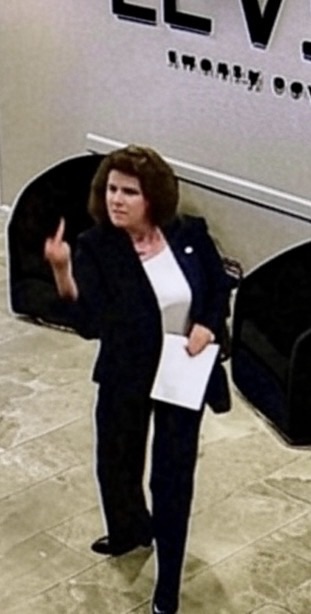
The Butler County 2026 primary election is shaping up to be one of the most consequential political battles in recent memory. For years, local politics have simmered under the surface, but now, with Cindy Carpenter’s long tenure as commissioner under scrutiny, the stakes couldn’t be higher. This isn’t just another election—it’s a referendum on leadership, accountability, and the future direction of Butler County. And when it mattered most, how did Cindy Carpenter present herself? Well, she flipped off everyone in a wild, out-of-control tirade that could have easily been avoided, showing the world that what people say about her behind closed doors is actually true. When everyone was out of the room at the Level 27 apartment complex at Miami University, we saw on camera what Cindy Carpenter thinks of people who disagree with her. [1]


As the Journal-News reported, witnesses described the scene as ‘shocking and unbecoming of an elected official,’ noting that Carpenter was visibly angry and used gestures that ‘crossed the line of professionalism.’ [1] One resident quoted in the article said, ‘We expect leaders to solve problems, not escalate them.’ These words echo what many voters already feel: that Carpenter’s behavior reflects a deeper problem of temperament and judgment.

Cindy Carpenter has held her seat for a long time, and with that longevity comes a confident expectation of stability and integrity. Unfortunately, recent events have cast a long shadow over her reputation. For years, whispers of her being a ‘RINO’—Republican In Name Only—have circulated among grassroots conservatives. Those whispers turned into shouts last year when she was caught openly campaigning for a Democrat in Middletown. For a commissioner in a county that prides itself on conservative values, this was more than a lapse in judgment—it was a betrayal of trust. At the time, she was the endorsed Republican commissioner, and she showed tremendous disrespect for that endorsement. As one Journal-News editorial put it, ‘Carpenter’s actions raise serious questions about her loyalty to the party and her constituents.’ [2]

Cindy Carpenter, at her best


But if that weren’t enough, another controversy erupted that speaks volumes about character and temperament. A video surfaced from a security camera at an apartment complex where a family member of Carpenter—reported as her daughter by some, her granddaughter by others—was facing eviction for unpaid rent. Instead of handling the matter privately and with grace, Carpenter was caught on camera engaging in a heated argument and flipping off someone during the dispute. This isn’t the behavior of a seasoned leader; it’s the optics of chaos, entitlement, and poor judgment. When you’re an incumbent fighting to keep your seat, the last thing you want is to look like an overbearing parent abusing influence to protect a relative. [3]

Michael Ryan, one of Carpenter’s challengers, issued a press release shortly after the incident, stating: ‘The people of Butler County deserve leaders who act with dignity and respect, even in difficult situations. What we saw on that video does not reflect those values.’ [4] Ryan’s statement went further, pledging to ‘restore trust and transparency in county government’ and to ‘end the cycle of favoritism and dysfunction.’ These are not just campaign slogans—they are commitments grounded in a vision for better governance.

Ryan’s involvement in the Spooky Nook Sports Complex development showcased his ability to think big and deliver results. In his press release, he reminded voters of that success: ‘When others said it couldn’t be done, we brought stakeholders together and made it happen. That’s the kind of leadership Butler County needs.’ [4]


Contrast that with Roger Reynolds, another challenger in this race. While Reynolds may present himself as a viable alternative, his baggage is well-documented. From ethical questions to controversies that have dogged his career, Reynolds represents the kind of old-guard politics that Butler County needs to move beyond. Supporting Reynolds would be a step backward—a return to the same entrenched interests that have stifled progress for years. As Michael Moser commented in a recent interview, ‘We cannot afford to recycle the same problems under a different name.’ [5]

This primary isn’t just about personalities; it’s about the future of Butler County. Will voters choose a path of renewal and accountability, or will they cling to incumbency and compromise? Carpenter’s recent behavior suggests a leader out of touch with her constituents’ values and expectations. Ryan, on the other hand, embodies the principles of transparency, collaboration, and forward momentum.

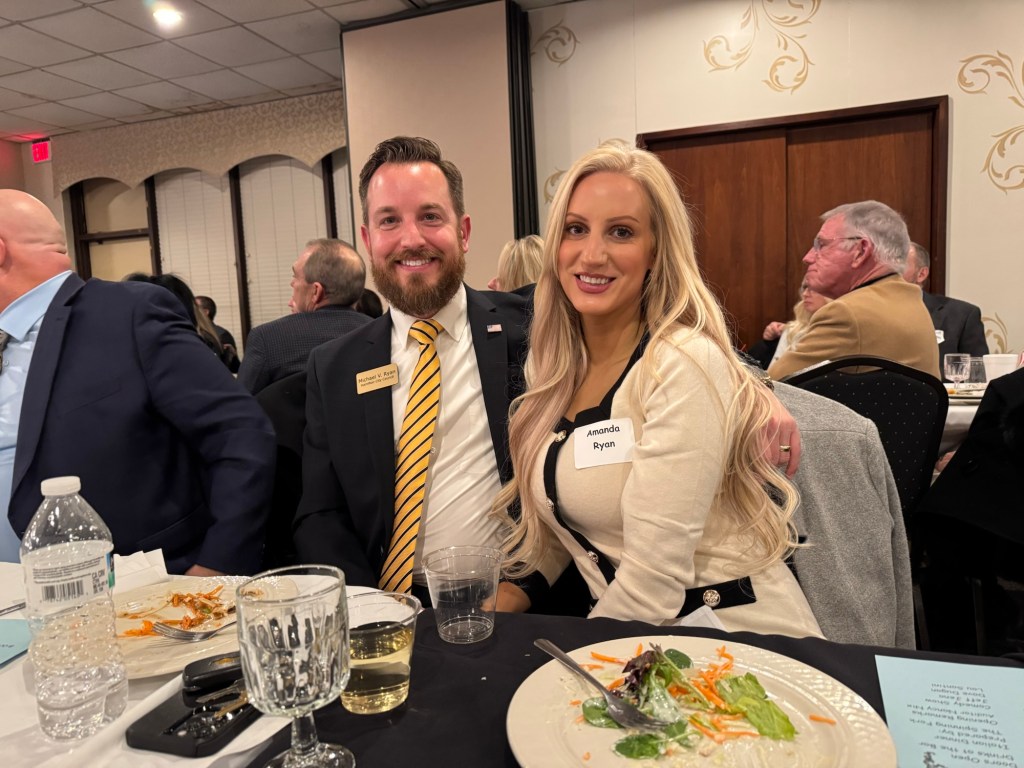
Michael Ryan and his wife, Amanda. A fresh start without the baggage for Butler County


As we approach May 2026, the choice is very clear. Butler County deserves leadership that reflects its best qualities—not the worst impulses of entitlement and political expediency. Cindy Carpenter’s controversies aren’t just unfortunate—they’re disqualifying. Michael Ryan offers a better way forward, and for those who care about the integrity and prosperity of this community, the time to act is now.  And this isn’t just an opportunity to talk about Michael Ryan, or to re-assess the Roger Reynolds case, but Cindy should have known better.  The impaired judgment alone should be enough to eliminate her from the job now, without even waiting for the primary to be over.  When you walk into an apartment complex and communicate with people who work with students at a college or university, and you end up turning the whole room against you, which is clearly the case when she finally did leave, which was seen on camera, it’s a lack of skill thing more than any other attribute.  Whether or not Cindy Carpenter abused her authority, depending on who’s telling the story, what we did see was what she does when nobody is looking.  Being in a public place and giving the finger to employees of a business in anger is irrational at best.  We need people who build relationships, not those who can turn entire groups of people against them.  Dealing with this apartment payment issue with cash in hand should have been easy, and for anybody who does business at a high level, she should have had much better command of the situation.  But instead, she only confirmed what all her critics have said about her and showed why politicians can be so dangerous.  On the one hand, they put on a happy face, but when they think no one is looking, they flip people off when they fail to convince them to listen to reason.  A good negotiator never does something like this.  They should be, at a high level of politics, skilled in negotiations.  Because Cindy has been caught on camera doing really dumb things as a politician many times, I am excited to have someone like Michael Ryan running for a commissioner seat.  When we talk about the need for fresh, new faces in government, it’s because of failures like Cindy Carpenter that we make the statement.  And there is only one person to blame; this isn’t dirty politics or a gotcha to harm Cindy out of some sense of unfairness.  She walked into this buzzsaw, willingly on her own accord.  And she wasn’t even smart enough to be careful in a public place full of cameras.  So when we talk about these offices and who should be in them, no matter who is voting, I think we can all agree, that we need someone in an important office that doesn’t give young people the finger at a very public apartment complex when trying to resolve a family members back payment on rent, all events that could have been handled, much, much, better.

References:
[1] Journal-News, ‘Video Shows Cindy Carpenter in Heated Exchange at Apartment Complex,’ 2025.
[2] Journal-News Editorial, ‘Carpenter’s Campaign Misstep Raises Questions,’ 2024.
[3] Security Footage Report, Level 27 Apartments, Miami University, 2025.
[4] Michael Ryan Campaign Press Release, ‘Restoring Trust in Butler County,’ 2025.
[5] Interview with Michael Moser, Butler County GOP Leadership Forum, 2025.

Rich Hoffman

Click Here to Protect Yourself with Second Call Defense https://www.secondcalldefense.org/?affiliate=20707

The Affordability Crisis: Price increases to fill vacant personalities are the folly of socialism looming in the background

The question of housing affordability has become one of the most pressing socio-economic issues in the United States today. With the average home price reaching approximately $400,000 in 2024, many young families and individuals find themselves priced out of the market. This reality raises a critical question: why does the housing industry continue to prioritize large, expensive homes when market signals clearly indicate a growing demand for smaller, affordable housing options? Historically, the American housing model was built on accessibility. Following World War II, the United States experienced an unprecedented housing boom driven by the GI Bill, which provided returning veterans with low-interest mortgages and educational benefits. Between 1945 and 1960, the average home price increased from roughly $8,000 to $12,000 [1], while median household income rose from $2,400 to $5,600 [2]. These homes were predominantly single-story ranch houses designed to be affordable for working-class families. They featured simple layouts, modest square footage, and efficient construction methods that allowed developers to build entire neighborhoods quickly and inexpensively. This model supported rapid suburbanization and contributed to the rise of the American middle class. By contrast, the late 20th and early 21st centuries saw a shift toward larger homes, often called “McMansions.” In 1980, the average home price was $47,000 [3], but by 2000, it had climbed to $120,000 [4], and by 2020, it had skyrocketed to $320,000 [5]. This escalation far outpaced wage growth, creating a structural imbalance in housing affordability and leaving younger generations unable to enter the market. The cultural and economic forces that once prioritized affordability have been replaced by incentives that reward size, luxury, and perceived status, setting the stage for today’s housing crisis.

The persistent trend toward building larger homes is not driven solely by consumer demand but by systemic incentives in the real estate and finance sectors. Developers maximize profits by constructing high-value properties, while municipalities benefit from increased property tax revenues. This dynamic discourages the development of smaller, entry-level homes, even though demographic data suggests that younger generations prefer affordability and functionality over size and luxury. According to recent affordability indices, the ratio of median household income to qualifying income for a median-priced home fell to 0.68 in 2024 [6]. This indicates that homeownership is increasingly unattainable for average earners, reinforcing the argument for a return to smaller, cost-effective housing models. Yet the financial ecosystem—from banks to zoning boards—remains locked into a paradigm that rewards high-margin projects. Mortgage lenders often favor larger loans because they generate higher interest revenue, while local governments prioritize developments that promise substantial tax inflows. These incentives create a feedback loop that perpetuates the construction of oversized homes, even as market demand shifts toward affordability. Furthermore, inflationary pressures and speculative investment exacerbate the problem. Between 2000 and 2024, housing prices grew by more than 230%, while median incomes increased by less than 75%. This disparity underscores the structural imbalance between wages and housing costs, a gap that cannot be bridged solely by traditional market mechanisms. Without intervention, the housing market risks becoming increasingly exclusionary, limiting access to homeownership and eroding the foundation of economic mobility.

Beyond economics, cultural factors play a significant role in shaping housing trends. For decades, the pursuit of status through material possessions influenced consumer preferences, encouraging the construction of larger homes as symbols of success. Golf memberships, luxury cars, and sprawling properties became markers of achievement, reinforcing a cycle of materialism that drove housing design. However, contemporary social values are shifting. Younger generations prioritize experiences, sustainability, and financial flexibility over conspicuous consumption. They are less interested in impressing neighbors with square footage and more concerned with affordability and quality of life. This cultural evolution underscores the need for housing policies and development strategies that align with changing societal norms. Yet the industry has been slow to adapt, clinging to outdated assumptions about what buyers want. Compounding the affordability crisis is the growing influence of institutional investors such as Blackstone, Invitation Homes, and other private equity firms that have acquired tens of thousands of single-family homes across the country. These firms often purchase distressed properties in bulk, outbidding individual buyers with cash offers, and then convert these homes into rental units. This practice accelerates the transition from an ownership-based society to a rental-based one, echoing predictions from the World Economic Forum that “you will own nothing and be happy.” While such statements are controversial, they highlight the structural forces reshaping housing markets globally and the erosion of the American Dream. Institutional investors operate with access to cheap capital and sophisticated financial instruments, enabling them to dominate local markets and set rental prices that further strain household budgets. When ownership becomes unattainable, wealth accumulation stalls, and generational inequality deepens, creating a society increasingly divided along economic lines. The presence of these investors also distorts housing supply, as homes that could serve as affordable entry points for families are removed from the ownership pool and repurposed for profit-driven rental schemes.

Failure to address this imbalance has profound social and economic consequences. Young adults delay marriage and family formation because they cannot afford homes. Communities lose stability as homeownership declines, and wealth inequality deepens as property ownership consolidates among institutional investors. Ultimately, the American Dream of homeownership becomes unattainable for a growing segment of the population. The current housing crisis reflects a failure to adapt to evolving market realities and cultural values. Continuing to build large, expensive homes in the face of declining affordability and changing consumer preferences is economically unsustainable and socially detrimental. A strategic pivot toward smaller, affordable housing—akin to the post-WWII ranch-style model—offers a viable solution to restore accessibility to the American Dream. Developers, policymakers, and financial institutions must recognize that the market is in charge, not the egos of those who seek to maximize profit at the expense of social stability. If this shift does not occur, the consequences will ripple across generations, transforming a nation of homeowners into a nation of renters and undermining the very foundation of American prosperity. The time to act is now: by embracing affordability, sustainability, and inclusivity, the housing industry can realign with the values that once made homeownership a cornerstone of American life.  But price increases, as a solution to fill the empty minds of vacant personalities, are the driving force here.  Everyone can’t be rich; they don’t have a mind for it, nor do they want it.  But we have been caught in giving everyone a sense of wealth without them doing the work of wealth, and in the process, we have opened Pandora’s box of illusion that many are perfectly willing to exploit for a short-term gain.  But the cost of those short-term gains is now before us, and it’s wrapped up in this whole affordability debate.  And looming in the background is the mechanisms of Marxism that knew what they were doing all along.  Once people throw in the towel, what will they want?  That’s what has happened in New York with the new communist mayor there.  And behind it all, there is a push to hide from the world the moral bankruptcy of the instigators if what gets ushered in behind the carnage is socialism and government-driven price controls.  When really, what was needed all along were market-driven sentiments of pure capitalism; if only people had listened to those market forces instead of trying to control them.

References:

[1] U.S. Census Bureau. Historical Housing Data, 1945–1960.

[2] U.S. Census Bureau. Median Income Trends, 1945–1960.

[3] National Association of Realtors. Housing Price Trends, 1980.

[4] Federal Reserve Economic Data (FRED). Median Home Prices, 2000.

[5] Federal Reserve Economic Data (FRED). Median Home Prices, 2020.

[6] Housing Affordability Index Report, 2024.

Rich Hoffman

Click Here to Protect Yourself with Second Call Defense https://www.secondcalldefense.org/?affiliate=20707

Aggressive Interdiction and Human Rights: A Legal and Ethical Analysis

The controversy surrounding aggressive U.S. actions against drug cartels, including the destruction of narcotics-laden vessels, has ignited a global debate. Critics frame these measures as violations of human rights, while proponents argue that cartels themselves are the most egregious violators of human dignity.  I would contend that decisive interdiction, even through kinetic means, aligns with international law principles and humanitarian imperatives. To understand this, we must delve into the historical evolution of international law, the staggering scale of the global drug trade, and the human suffering perpetuated by these criminal networks.  But here’s the deal for context: there is no International Law, only American law.  The same people criticizing the Trump administration for blowing up the drug boats in Venezuela are the same kind of Democrats who wanted to defund the police.  And have produced videos promoting seditious actions against America, particularly Mark Kelly.  He should be in jail, not ranting about preserving the rights of drug boats or their cartel occupants.  I’m a big supporter of blowing up drug boats and taking the fight to the cartels’ front door.  There are a lot of flawed characters involved in this drug business, so anyone protesting human rights as a defense for the continued practice is purposely trying to make the world less stable for benefits that are not in our favor. 


International law governing narcotics control did not emerge in a vacuum. Its roots trace back to early 20th-century efforts to regulate opium and morphine, culminating in the 1961 Single Convention on Narcotic Drugs. This treaty, alongside the 1971 Convention on Psychotropic Substances and the 1988 United Nations Convention Against Illicit Traffic in Narcotic Drugs and Psychotropic Substances, sought to harmonize global efforts against drug trafficking. Yet these frameworks were never designed to override national sovereignty. Enforcement remains the prerogative of individual states, a reality that underscores why nations like the United States resort to unilateral action when multilateral mechanisms falter. Scholars emphasize that Article 14 of the 1988 Convention explicitly encourages states to adopt stringent interdiction strategies to suppress trafficking. [1]  It was a good time when most of the world still thought of drugs as dangerous, but too many people have fallen under their seduction and are now part of the problem.  And that is undoubtedly the case of the very socialist body of the United Nations.  Any defense of the drug network, knowing what we do now of the costs, is reprehensible and unforgivable. 


Consider the plight of communities ravaged by cartel violence. In Mexico, entire towns have been depopulated as families flee the terror of organized crime. Mothers bury sons lost to gang wars, while children grow up in landscapes dominated by fear. Since 2006, Mexico has recorded over 460,000 homicides, mainly attributable to cartel-related violence. [3] These are not abstract numbers; they represent shattered lives and broken futures. The global drug economy, valued between $360 and $652 billion annually, rivals the GDP of mid-sized nations. Cocaine production alone reached 2,757 metric tons in 2022, per UNODC data. [2] Each shipment fuels a cycle of addiction, corruption, and death that transcends borders.  This is not an issue that we can turn our backs on.  Ignoring this desperate evil is not responsible; it’s reprehensible.  There is no greater human rights violator on planet earth than these murderous drug cartels.  And no war has ever been fought that was more important than this one.   Here, we have a clear villain.  And if Democrats can’t see and agree to that, well, then they are part of the problem.  Which I would say has always been the case.  Only now do we have context for their actions.  They want to topple the stability of the world.  When you are fighting for the lives of drug dealers, you are fighting the wrong things. 


The fentanyl crisis epitomizes the lethal evolution of narcotics trafficking. Between 2020 and 2023, U.S. overdose deaths linked to synthetic opioids surged by 279%. In 2023 alone, fentanyl claimed 72,776 lives, constituting 69% of all overdose fatalities. [4] Behind these statistics are stories of young lives extinguished in their prime—college students, parents, veterans—victims of a substance so potent that two milligrams can kill. Economically, fentanyl’s profitability is unparalleled: one kilogram, costing $80,000 wholesale, yields $1.6 million on the street. Cartels exploit Chinese precursor suppliers, with investigations identifying 188 companies complicit in this trade. [5] These dynamics illustrate the intersection of organized crime, public health, and international security.  We are talking more lives lost than what the Vietnam War cost Americans.  This isn’t a remote threat; it’s a very personal one where the war has been brought literally into our backyards.  The only difference is that the weapons used are not guns and bombs.  But the destruction of the mind itself.  And this isn’t some market-driven intent.  It’s a sinisterly plotted scheme that starts in places like China to destroy Western civilization itself.  And with a smile on their faces as they watch the death of many innocents. 


Cartels have diversified beyond narcotics into human trafficking, generating $236 billion annually through forced labor and sexual exploitation. [6] Millions of women and children are entrapped in these networks, often under the same criminal syndicates orchestrating narcotics flows. This duality magnifies humanitarian crises, rendering cartels not merely criminal enterprises but systemic violators of fundamental rights. Survivors recount harrowing tales of coercion, violence, and despair—stories that rarely make headlines but define the lived reality of cartel dominance.  There are untold numbers of women and children who are literally destroyed in this process, and they are ruined for life.  There is a cost to this that nobody has yet put their mind around, and it poses the most significant problem of them all in sheer magnitude. 


Venezuela’s transformation into a narcotics hub exemplifies state complicity. The Cartel de los Soles, allegedly embedded within the Venezuelan military, facilitates cocaine transshipment to global markets. U.S. indictments implicate senior Maduro regime officials in narco-terrorism conspiracies. [7] Geopolitical entanglements with Russia and China furnish economic lifelines, complicating enforcement and underscoring the nexus between organized crime and authoritarian resilience. Remote airstrips launch drug flights under the cover of night, while maritime routes snake through Caribbean waters, evading interdiction. Each shipment represents not just contraband but the erosion of governance and the triumph of criminality over law.


Critics decry kinetic interdiction as extrajudicial, yet proportionality under international humanitarian law permits force when confronting actors whose conduct precipitates mass atrocity. Analogies to anti-piracy operations and counterterrorism frameworks validate such measures. [8] The principle of Responsibility to Protect (R2P) arguably extends to dismantling cartels, given their role in orchestrating transnational violence and exploitation. To frame interdiction as mere aggression is to ignore the moral calculus of inaction—a calculus measured in lives lost, communities shattered, and futures foreclosed.


Drug cartels epitomize systemic human rights violators, perpetuating cycles of death, addiction, and exploitation. Aggressive interdiction, including the destruction of narcotics vessels, aligns with both legal norms and moral imperatives. Inaction sustains a status quo wherein criminal syndicates eclipse state authority, eroding global security and humanitarian values. History will judge not the audacity of action but the complacency of silence.  And for my part, I say blow up many more drug boats.  And if they want help, call me.  I’d be happy to lend support in the destruction of drug cartels and their evil minions. 

[1] United Nations Convention Against Illicit Traffic in Narcotic Drugs and Psychotropic Substances, 1988.

[2] UNODC World Drug Report 2023.

[3] Mexico Homicide Data, INEGI, 2023.

[4] CDC Overdose Mortality Statistics, 2023.

[5] U.S. DEA Fentanyl Intelligence Report, 2024.

[6] ILO Global Estimates on Modern Slavery, 2022.

[7] U.S. DOJ Indictments on Venezuelan Officials, 2023.

[8] International Committee of the Red Cross, Principles of Proportionality, 2021.

Rich Hoffman

Click Here to Protect Yourself with Second Call Defense https://www.secondcalldefense.org/?affiliate=20707