
Why DEI Was Always a Dumb Idea: What we learned from the Swordsman Scene in ‘Raiders of the Lost Ark’

I really loved the book about Howard Kazanjian called A Producer’s Life.  I’ve referenced it many times over the last several weeks because it was an enjoyable book.  It’s the most fun I’ve had reading a book in a while, and it is one that I promised myself I’d read if Trump was re-elected into the White House.  I wouldn’t let myself think about these kinds of things as what is in Howard’s book prior, even if I do love the topic.  For a large part of my life, I wanted to be a filmmaker, and Hollywood producers like Howard Kazanjian were the kind of people who inspired me.  He produced most of my favorite movies from a key period, when he was on top of the Hollywood pile with Steven Spielberg, George Lucas, and many others, with films from 1975 until 1982.   Howard was always good, but if you are trending good movies and who made them over the entire history of Hollywood, this specific period set the stage for what the industry would become, and mean to the world as a whole regarding entertainment.  So, I find it very interesting to study what went right and wrong during this period.  Ironically, learning these things is precisely why understanding DEI policies and why they failed is important.  Because currently, after the Trump election and his spectacular victory, the world is giving up on Diversity, Equity, and Inclusion programs, and rightfully so.  We’re not talking about a Republican versus Democrat position here; Howard Kazanjian, I would say, probably leans toward Hollywood liberalism and likely wanted Kamala Harris to win the election.  But with Trump back in office, the world is a lot better, and I have more tolerance for people who are not so bright on political matters.  Which is why I couldn’t let myself read a book like this before the election. 

In that book, I read a good illustrative example of why DEI failed and why companies needed to get rid of it for the sake of everyone.  Picking employees based on their skin color or assuming they are equal to other people and that they should be included in something just because they exist was always ridiculous.  Some people are better than others, and if you want something to be good, you have to find the best people and put them in place; that’s good management.  And in the movie business, good people are few and far between.  But Howard Kazanjian, during that period I mentioned, found a way to be around the best people in the business, and specifically, a conversation I had never heard about regarding the famous swordsman scene from Raiders of the Lost Ark, being filmed in 1980 for a 1981 release.  Everyone, no matter who they are, knows the scene.  Indiana Jones is looking for his lost girlfriend, Marian, who the Nazis have captured on the streets of Cairo.  And he has to stop them with a glorious shootout with lots of explosions and good stuff.  Along the way, Indiana Jones is stopped by an Arab swordsman who wants to fight.  But the hero doesn’t have time for it.  What does he do?   People remember with great recollection that Indy pulls out his gun, shoots the villain on the spot with no fanfare, and gets back to looking for his girlfriend.  In all the documentaries of how that movie was made, we learned that Harrison Ford was sick that day and just did the scene as a joke because there was supposed to be a fight with bullwhips that was very elaborate, and the whole crew was sick of filming take after take.  When Spielberg saw what Harrison Ford did, he wanted to keep it as a new version and print it for the film.  But there was more to the story I heard in this book on Howard Kazanjian for the first time.

George Lucas still wanted his bullwhip fight scene.  One of the reasons he was making Raiders of the Lost Ark as the executive producer was to create a modern version of the kind of movies he liked as a kid, and he wanted a classic bullwhip fight like might have been in Don Q Son of Zorro, or Zorro’s Fighting Legion.  And he wasn’t convinced that just having Indiana Jones shoot the bad guy and get on with his business was the right thing to do.  So, here were the most talented filmmakers in movie-making history who disagreed with this famous scene.  So what were they going to do?  George Lucas decided to run two film versions by a test audience, one Spielberg’s way, the other with the bullwhip fight.  They were going to let market desire determine the film’s final version.  So they played George’s version first to a test audience.  People came out of the movie liking it, and Paramount Pictures felt they had a hit.  It was a good movie.  But when Spielberg’s version was seen, people applauded when Indiana Jones shot the swordsman.  And it became everyone’s favorite moment in the movie, even after all these years.  They made 5 Indiana Jones films over the next 40 years, but none would ever have a better moment than that one to mass audiences. 

Ultimately, even with all the talent of all these people involved, it was the marketplace that picked the scene. The filmmakers came up with ideas, but to determine the success of the enterprise, they tested the waters with market analysis. The audience clearly picked one version over the other, and the rest is filmmaking history.  Presently, they are test-screening the new Captain America movie for Disney, and it is going through all kinds of trouble because nothing is working.  The film is filled with a bunch of woke politics, and people don’t like it.  It’s going to bomb when it hits theaters in February.  Ultimately, that is why DEI programs destroyed market share and value for all companies, from cookie makers to high-tech offerings.  DEI was an imposed value put on the marketplace that would have been similar to George Lucas keeping his whip fight in the movie because he wanted it, to force the audience to like it because he did.  Instead of listening to them, which is what happened.  When companies try to impose themselves on the public and force values on them that they don’t have, failure is almost assured.  However, when products appeal to the audience’s sentiment, great success is possible.  It is rare because good ideas are complex, and companies often hang on to them even if the market pressure rejects them.  Only to plot an enterprise to its doom.  But when we say that getting rid of DEI suits all businesses everywhere, this is what we mean and why.  In capitalism, value serves the marketplace.  In authoritarian governments, values are imposed, and a monopoly status is sought that limits the viability of options.  And the world is far worse off because of it.  The best example of why some ideas work over other ideas can sometimes come from interesting places, which is undoubtedly the case with a movie most people agree has some value to them over time, and that is how Indiana Jones was created in that old classic movie, Raiders of the Lost Ark

Rich Hoffman

Click Here to Protect Yourself with Second Call Defense https://www.secondcalldefense.org/?affiliate=20707
Steven Spielberg: Just another Hollywood political hack

It pains me to say this, I love Steven Spielberg, I love John Williams, I even like Amazon’s Jeff Bezos—so what on earth are these idiots talking about regarding the merit of the “free press.”  In his new movie The Post, Spielberg, Tom Hanks and the eternally liberal feminist Meryl Streep act like they are changing the world with this rush job loser of a movie yet they had to get it out before the close of 2017 to qualify for the awards season.  Aside from the obvious political message the film is very sloppy—like it was made by college students—not the most successful filmmaker in the history of mankind.  The story is amazingly political.  The premise suggested by the movie—that the free press is our only vanguard against corrupt presidencies is completely ridiculous.  The Washington Post—the newspaper currently owned by Jeff Bezos isn’t a free press—it’s a liberal mouthpiece for the political left and a tool for trying to eliminate conservative politicians from races of consideration.  They are as corrupt as any K-Street lobbyists and couldn’t be considered trustworthy by any stretch of the imagination.  It’s amazing to me that Spielberg and Hanks would even suggest that there is some moral authority for which The Post had to speak from—because such a thought is one of the biggest fantasies in Spielberg’s long career at making movies—and that includes his version of Peter Pan in the movie Hook.

Like most things on the political left the foundations of thinking are rooted in disjointed emotions and a viewpoint from the bubble of the liberal neighborhoods they currently live in. The Obama administration as we have learned very late in the game was one of the most corrupt administrations in the history of the world—you’d have to go back to the Roman emperor Nero for a comparison—and The Washington Post has been silent on the matter—yet it has fully advanced the false notion that Russians are the reason Donald Trump won the presidency.  The American people don’t have faith in the left leaning “free press” of The Washington Post, The New York Times, and CNN.  Liberal people do because those outlets say what they want to hear just as Fox News traditionally might feed the political right a viewpoint favorable to their sentiments.  But facts are facts and many news outlets including Disney owned ABC has deliberately sat on stories to prevent the political left from looking bad.

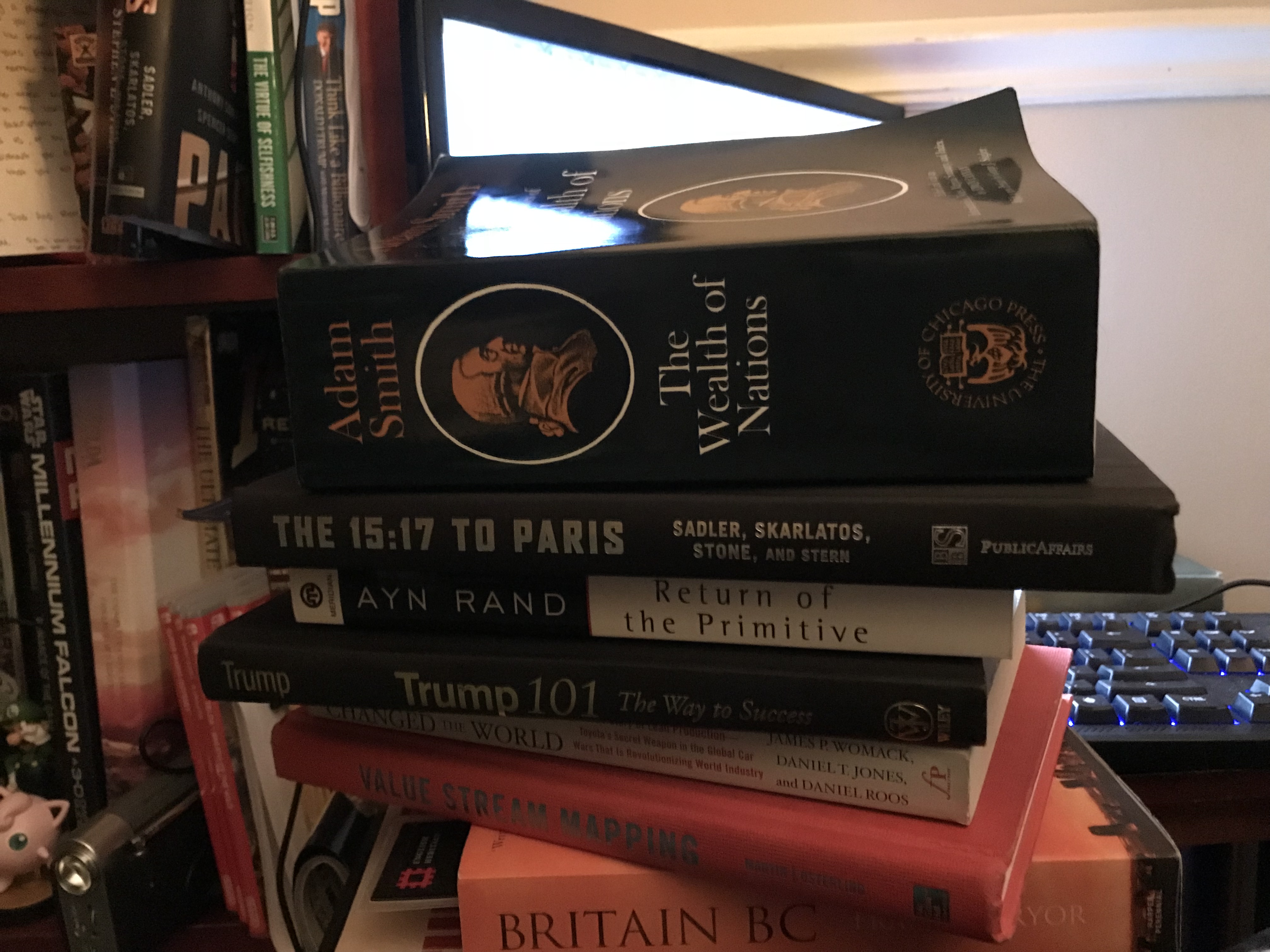
Before Donald Trump’s election to the presidency I would occasionally buy a New York Times newspaper at my local Barnes and Nobel bookstore just to thumb through the pages and see what was going on in the world from the viewpoint of New York City.  I was able to overlook their obvious liberal bias because it wasn’t nearly as “in your face” as today’s anti-Trump media has been.  I even would read The New Yorker from time to time to keep up with the cultural drivers of our time—so I’m hardly a closed-minded Republican.  I’m a Ohio conservative so I am used to dealing with propaganda from the political left, even Fox News is now owned by the Disney Company so if I want to participate in the world, I have to deal with liberals.  But my beliefs aren’t just regional—because I was born in a conservative area, had conservative parents, and conservative grandparents—etc.  I’ve navigated through my adult life as an avid reader of history.  I never get drunk for any kind of entertainment as I love my mind more than anything in the world—and I enjoy feeding it good things—so my thoughts on things are formed by evidence as it plays out in the world—not what “people” and their viewpoints think of it.  For instance, for the third time in my life I am reading the big version of Adam Smith’s An Inquiry in the Nature and Causes of The Wealth of Nations shown in the included picture.  All the books in that stack for instance are my January 2018 projects and I will have them all read before the upcoming Super Bowl.  That stack is a continuous one that resides next to my reading chair.  The contents of the stack are ever-changing, but the stack is always there.  The point of the matter is that I am not drawing my conclusions about the nature of the “free press” based on any kind of pop culture sentiment—it is through the long view of historical perspective—so it deeply surprises me that Steve Spielberg—as an artist would allow himself to get so caught up in the local vantage points of his liberal Hollywood friends—because if they think the current Washington Post is anything more than a blog for the liberal views of Jeff Bezos—they are smoking crack and should be arrested immediately.

When the free press becomes part of the problem as it is now, we have no choice but to fight them.  We have watched them actively hide crimes from our faces much more severe than The Pentagon Papers ever were.  If that is the criteria of merit as shown in The Post—then where is the outrage over the crimes Hillary Clinton herself committed?  What about the FBI using the press as a way to hide their crimes and manipulate public opinion in ways they approved of?  What about that smidgen of evidence which continues to pour out of the Obama White House when it used the powers of government to crush political opponents and unmask competing administrations as they came into power?  The Trump administration was just trying to put together their team when Obama and his activist Justice Department was unmasking members of the transition team as a way to destroy them before they ever got started.  What they learned they leaked to that “free press” to work in cahoots with the aims of the political left to advance a sentiment for which the American public had just voted against–so much for a “righteous” Washington Post.

The essential premise of the movie, The Post is completely ridiculous and I’d expect much more out of these seasoned filmmakers than to propose that the free press especially in this modern era is anything less than another potential villain of misinformation with an agenda.  I’ve been involved in some of those little parties where some ditzy blond starlet yaks on and on about animal rights, women in the work place, and how wonderful Bill Clinton was in the White House with her tits falling out of her dress, drunk hoping to seduce her way into a movie role.  That is the world of Tom Hanks and Steven Spielberg—they are bombarded by those types of people almost every day.  And actresses like that don’t really care about animal rights.  If by some chance she thought the film producers were conservative, she’d go on and on about the greatness of the NRA and how tax cuts helped her buy a new car as she was trying to make ends meet until her next movie role—(wink—look at my boobies).  But we expect more out of filmmakers who are as seasoned as Spielberg is.  Sadly it appears he’s become caught up in all this anti-Trump Hollywood sentiment and he is looking for another Oscar by appeasing those liberal members of the Academy with some red meat to fulfill their fantasies.  Yet all he’s really shown us is that he can’t be trusted to tell the truth either—as an artist.  He has become just another political hack, like the rest of them.

Rich Hoffman

Sign up for Second Call Defense here:  http://www.secondcalldefense.org/?affiliate=20707  Use my name to get added benefits.

How College Destroyed Steven Spielberg: Losing the magic touch by thinking collectively


At a commencement speech to Harvard graduates, Steven Spielberg revealed why his movies have evolved into a much less blockbuster status than his previous work—his pre-college work.  After his outstanding success, colleges looking to ride the coattails of the famous director as second-handers gave out honorary degrees as a way to attach themselves to his genius.  Unfortunately, Steven grew up a little insecure and the sudden attention and social acceptance was enjoyable and he found himself bending more toward the liberal view of things as progressives had infiltrated Hollywood at every level, from finance, marketing, to actual manufacture—and Spielberg was the top of the heap, the standard-bearer of the entire movie industry.  Unfortunately, the last brilliant movie of Steven Spielberg was Schindler’s List which he made the same year as the first Jurassic Park.  From a box office standpoint, and the quality of art perspective, Spielberg has been in decline since 1993.  He has done good work, but it hasn’t been on nearly the same level largely because of his acceptance of the global education he received from his honorary degrees and return to college to finish what he started before success interrupted his education at USC.

During the commencement speech Spielberg explained that he attended California State University, Long Beach but dropped out of school in favor of an internship at Universal — a choice, he said, that affected his filmmaking: “Up until the 1980s my films are what you could call escapist, but I was in a celluloid bubble because I cut my education short and my world view was limited to what I could dream up in my head and not what the world could teach me.”

He later re-enrolled and, in 2002, he completed the credits that were necessary for a B.A. from CSULB. He joked: “It helped that they gave me a course credit in paleontology for the work I did on Jurassic Park.”

Spielberg has since garnered an impressive list of honorary degrees from schools like Boston University, Yale and the University of Southern California, which rejected the director from its film school when he applied out of high school.

http://www.hollywoodreporter.com/news/steven-spielberg-tells-harvard-graduates-897659

I watched Bridge of Spies recently while on an oversea trip and I thought it was good.  But it wasn’t great.  The same with Lincoln.  It was a pretty average movie, certainly not on par with Spielberg’s earlier work—like The Color Purple or Always.  Now in my opinion, Steven Spielberg earned the right to make whatever movie he wants to.  He had a string of films from 1975 to 1993 that dominated the box office and essentially made Universal Studios a successful business.  Without Steven Spielberg, there would be no Universal Studios, Florida theme park.  From E.T. to Jaws, Jurassic Park, to the Transformer series—even Back to the Future—if it wasn’t for Spielberg, there would be nothing.  Likely, the brilliant film composer John Williams would still be in obscurity and unknown if he had not fallen into the fortune of working with Spielberg then his friend George Lucas in the late 70s.  It is important to understand that all of Spielberg’s early success and the industry of Hollywood essentially, came as a result of him dropping out of college.  Clearly, Spielberg doesn’t understand the Metaphysics of Quality.  He has natural talent that was best utilized as a direct result of his individual mind, not the collective efforts of team collaboration.  He is a collaborator, obviously, otherwise he wouldn’t be a great film director, but in essence, his trust in his abilities drove everyone from the front, not from the boardroom of collective input.  Once Spielberg allowed for that type of collective—“worldly” thinking, the value of his work decreased immensely.  Spielberg no longer means GREAT!  Now it just means—interesting.

All the world can teach us is to be average, and submissive to its limits.  That is the Spielberg after 1993 to the present—a broken man who has fallen into the rut of “average.”  He no longer strives for perfection, or his place in history as a great filmmaker.  He is surrounded by “yes men” and second-handers—and that includes the last four presidents of the United States.  I still watch his movies, but often I wait until I can catch up to them a few years after their release.  They are no longer for me opening night events—and that makes the world not a better place, but a far worse one.  I would say that the movie industry was better off with Spielberg produced films like Batteries Not Included and Gremlins than it is with Munich or that stupid movie he did with Oprah recently about French food.

Spielberg upon reading this might think I don’t know what I’m talking about, but he’d be wrong.  I grew up just a few miles from where he did in Cincinnati.  I’ve read many of the same books and have very similar interests.  The difference is, I never really grew up into an adult, and that was something that made Spielberg appealing as a filmmaker to many people who had lost their childhoods—as cynical adults.  I have fought that “growing up,” because I don’t see the value in it.  Colleges are more about crushing individuality into a collective mush, and that is not a good thing.  Intellectuals call that “worldly” I call it “defeated.”   I deal with really smart people every day—several of them with doctoral degrees and often they require me to navigate for them through the mine fields of business.  I have to waste a lot of time “re-teaching” them how to unthink all the garbage they learned in college to get back to their inner child.  Personally, I don’t think human beings should stop learning with the wonderment of children.  Sure adults need to be responsible caretakers of civilization, but getting through Harvard doesn’t do it—nor does getting honorary degrees.  Success comes from individuality, and it is something that is very unique.  They don’t’ teach success in college.  They teach compliance.

I honestly miss Steven Spielberg.  I am grateful he has done what he did, but I miss the energy and hope of his pre-college work.  He calls them “escapism” films but the important thing to ask is why people feel a need to escape in the first place.  What is it they want relief from?  It is the world of college destroyed autonomous thinking that has ruined the minds of millions of otherwise very smart people.   Steven used to give people hope that life wasn’t so bland.  Now his movies are about accepting how bland it is—because that’s the world view he learned in college—and it’s quite sad.  What he told the Harvard graduating class is probably the worst advice anybody could probably give those young minds.  But then again, Steven had the same advice given to him—which he followed toward his own destruction—and the eventual destruction of the entire film industry coming soon to a multiplex near you.  Escapism is good when the world wants to throw shackles on your mind and destroy it for collectivist consumption.  And that used to be why Spielberg films were always so special—and why they no longer are.

Rich “Cliffhanger” Hoffman

 CLIFFHANGER RESEARCH & DEVELOPMENT

Sign up for Second Call Defense here:  http://www.secondcalldefense.org/?affiliate=20707  Use my name to get added benefits.